Home Blog Page 35

The AI Resurrection of Val Kilmer and the Future of Cinema | Metaverse Planet

The AI Resurrection of Val Kilmer and the Future of Cinema | Metaverse Planet


I still can’t believe what I just read. Hollywood isn’t just making movies anymore; they are literally raising the dead with AI.

When I first found out that the legendary Val Kilmer was being digitally cloned for the new movie As Deep as the Grave, my jaw completely dropped. I had to sit back, refresh the page, and make sure I wasn’t reading some elaborate sci-fi fan fiction. I mean, sure, the family gave their official permission, and the legal teams have everything signed in ink, but I can’t stop thinking about how inherently creepy this entire concept is.

I am seriously wondering if the future of cinema will just be digital ghosts instead of real, living, breathing actors. As someone who spends hours every day diving into the latest tech and metaverse developments, I honestly find this both incredibly fascinating and completely terrifying. Let’s really break down what is happening behind the scenes, why studios are pushing for this, and what it means for the movies we love.

The Evolution of the Digital Clone

We need to clear something up right away: this is not just advanced CGI. For years, we’ve seen Hollywood use digital de-aging or body doubles to finish a film when tragedy strikes mid-production. But what I am looking at now is an entirely different beast. We have crossed the line from visual effects into generative AI resurrection.

When I researched the tech stack being used for these new projects, I was blown away by the sheer computational power involved. Studios are no longer just mapping a 3D face onto a stunt double. They are feeding decades of a human being’s life into neural networks.

The Mechanics Behind the Magic

Here is what goes into creating a modern “Digital Ghost”:

Volumetric Facial Mapping: AI doesn’t just copy a face; it learns it. Algorithms scan thousands of hours of old footage to understand exactly how an actor’s specific muscles moved, how their eyes reacted to different lighting, and the exact asymmetry of their smile.Neural Voice Synthesis: Audio models are trained on past interviews, movie dialogue, and even outtakes. The AI learns the exact timbre, breathing patterns, and emotional inflection of the actor. We saw a touching, early version of this with Val Kilmer in Top Gun: Maverick, but the technology I am seeing now has leaped lightyears ahead.Behavioral Emulation: This is the part that gives me chills. The newest algorithms attempt to predict how an actor would deliver a line they never actually read, mimicking their unique artistic choices and mannerisms.

As a tech enthusiast, I have to applaud the raw engineering behind this. It is a modern miracle of data processing. But as a guy who loves going to the movies? It makes my stomach tie in knots.

The Ethical Tightrope: Who Owns a Legacy?

The loudest argument defenders of this technology use is consent. For As Deep as the Grave, Val Kilmer’s estate signed off. They gave the green light, and they are compensated for it.

But I keep asking myself: does legal permission automatically make it artistically ethical?

When a human actor delivers a performance, they are making hundreds of micro-decisions based on their lived experience, their mood that morning, and the unscripted chemistry they share with their co-stars. A digital clone doesn’t feel any of that. It just computes the most statistically probable facial expression based on a dataset.

Are We Buying Tickets for a Parlor Trick?

If I go to the theater to watch a digitally cloned legend, what am I actually paying for?

Pure Nostalgia Bait: Am I just being emotionally manipulated by my love for an actor’s past work?A Technical Showcase: Am I marveling at the AI rendering rather than actually engaging with the emotional core of the story?The Erasure of New Talent: This is my absolute biggest fear.

Why would a major movie studio take a multi-million dollar financial risk on an unknown, rising actor when they can just license the digital likeness of a proven box-office legend? Think about it from a corporate perspective: a digital ghost never ages, never demands a bigger trailer, never gets involved in a PR scandal, and never goes on strike.

This isn’t a sci-fi hypothetical anymore. When I followed the recent SAG-AFTRA strikes, this exact nightmare scenario was at the heart of the protests. Actors were literally fighting on the picket lines for the right to own their own faces.

The Metaverse Connection: Immortal IP

Since we talk about the Metaverse a lot here, I can’t ignore how this AI cloning tech ties into virtual worlds. We are standing on the edge of a massive paradigm shift in how entertainment IP is handled.

I can easily imagine a future—maybe only five or ten years from now—where you put on a VR headset and act alongside a digitally resurrected Marlon Brando, Marilyn Monroe, or Heath Ledger in a fully interactive metaverse environment.

The companies that own the rights to these digital likenesses are going to make an absolute fortune licensing these AI ghosts out for:

Immersive VR Video GamesInteractive Digital MoviesVirtual Brand Ambassadors The potential for monetization is endless. But while the business model is brilliant, the cultural impact feels a bit hollow. We are turning human beings into software updates.

Finding Our Bearings in the Uncanny Valley

I am genuinely torn. Part of me is eager to see As Deep as the Grave just to witness the sheer capability of this technology on the big screen. I want to see if the AI can actually make me feel genuine emotion, or if I’ll just feel like I’m staring at a highly rendered video game character pretending to be a Hollywood legend.

But the other part of me feels like we are opening Pandora’s Box. Once mainstream audiences accept digital ghosts as leading men and women, the film industry will never be the same.

I love the beautiful, messy unpredictability of human acting. I love seeing an actor make a strange, weird choice that no algorithm could ever predict. I love the happy accidents that happen on a chaotic movie set. AI can perfectly mimic the past, but I am not convinced it can create the raw, emotional lightning in a bottle that makes true cinematic magic.

I’ve been reading the early reactions online, and the internet is completely split down the middle. Some people are calling it a beautiful, touching tribute to immortalize our favorite stars, while others are calling it straight-up digital necromancy.

I will be reading all the comments because I really need to know which side to choose in this technological revolution!

So, be honest with me: If your absolute favorite actor passed away tomorrow, would you buy a ticket to see their AI clone star in a brand-new movie, or should we let sleeping legends lie?

You Might Also Like;


Source link

Kelp DAO Bridge Drained for $292M in 2026’s Biggest DeFi Hack

Kelp DAO Bridge Drained for 2M in 2026’s Biggest DeFi Hack


An attacker exploited Kelp DAO’s LayerZero bridge, draining 116,500 rsETH worth $292 million
The stolen funds were redeployed as collateral on Aave, Compound, and Euler to borrow 74,000 ETH
Kelp’s emergency multisig paused contracts 46 minutes later, thwarting follow-up drain attempts worth $200 million

Kelp DAO, one of the largest liquid restaking protocols in the EigenLayer ecosystem with over $1 billion in TVL before Saturday, has been hit with the biggest DeFi exploit of 2026. At 17:35 UTC on April 18, an attacker walked away with 116,500 rsETH, roughly $292 million and about 18% of the token’s entire circulating supply in a single transaction targeting Kelp’s LayerZero-powered cross-chain bridge.

Blockchain sleuth ZachXBT was first to flag the drain publicly on his Investigations Telegram channel around 2:52 PM ET. Within minutes, the rest of DeFi security accounts on X were piling on. From Cyvers and PeckShield to SlowMist, all confirming the worst. Security firm Cyvers revealed that the attacker had been pre-funded via Tornado Cash roughly 10 hours before the exploit, which is about as textbook as laundering prep gets.

By the time Kelp DAO posted its first public acknowledgment on X, the attacker had already moved on to the second stage of the heist.

What actually got hit

The target was Kelp’s Omnichain Fungible Token (OFT) adapter on Ethereum, the contract that holds the reserve rsETH backing every wrapped version of the token on 20+ Layer-2 chains. That list includes Arbitrum, Base, Blast, Linea, Mantle, Scroll, Mode, Swellchain, Zircuit, Berachain, zkSync, and others.

The way it’s supposed to work: a user burns wrapped rsETH on, say, Arbitrum. LayerZero delivers a cryptographically verified message to Ethereum. Kelp’s adapter sees the burn, checks it, and releases the same quantity of real rsETH from the reserve. One-to-one, clean, verifiable.

Kelp Dao Attack | Source: The CryptoTimes

On Saturday, the verification step failed. The attacker “tricked LayerZero’s cross-chain messaging layer into believing a valid instruction had arrived from another network, which triggered Kelp’s bridge to release 116,500 rsETH to an attacker-controlled address.” One forged lzReceive call. No burn on the other side. No deposit. Just a packet that said “release the funds” — and the contract obliged.

What exactly broke? Kelp hasn’t said. The three plausible root causes are a DVN (Decentralized Verifier Network) misconfiguration accepting a forged packet, an OApp peer-mapping flaw trusting messages from an unauthorized source chain, or — worst case — an admin key compromise that let the attacker change the adapter’s config directly. Each one implies a very different fix, and until Kelp publishes an RCA, everyone else using LayerZero OFTs is operating on guesswork.

The second hack inside the first

Here’s what makes this one different from your standard bridge drain: the attacker didn’t just cash out and run.

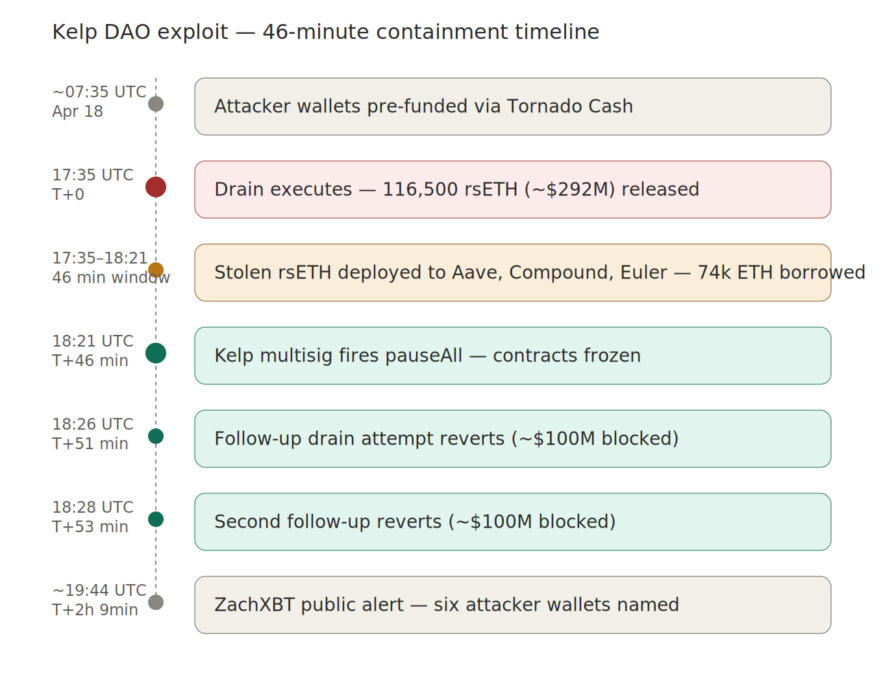
Kelp DAO Attack Timeline
46 Minutes of Contamination | Source: The CryptoTimes

Within minutes of the drain, the stolen rsETH was deposited as collateral on Aave V3, Compound V3, and Euler across Ethereum and Arbitrum. Against that collateral, the attacker borrowed roughly 74,000 ETH and WETH building over $236 million in debt positions across three major lending markets. One wallet reportedly ended up sitting on about $120 million in borrowed ETH from Aave alone.

Solidity auditor 0xQuit, watching the positions build in real time, cut through the noise with a single tweet: “If you have WETH on Aave V3 Core, withdraw now.”

The trick here is sinister but simple. The attacker posted collateral whose redemption claim he himself had just stolen. The rsETH contract verifies normally. The price oracle quotes it at full value. To Aave, Compound, and Euler, it looks like legitimate collateral worth $292 million. Except the real rsETH backing it is already in the attacker’s wallet.

This is the mechanic that turns a bridge hack into cascading bad debt across DeFi. The $292M drain was just the entry ticket. The $236M+ borrow was the actual payout — because ETH is cleaner, more liquid, and not frozen behind a pause button.

What saved another $200M?

Kelp’s emergency pauser multisig finally triggered at 18:21 UTC — 46 minutes after the initial drain. The pause hit the LRT Deposit Pool, the Withdrawal Module, the LRTOracle, and the rsETH token contract itself. Everything froze.

And it’s a good thing it did. At 18:26 and 18:28 UTC, two follow-up transactions tried to drain another 40,000 rsETH each — roughly $100 million a pop. Both reverted. The pause held.

Without those 46 minutes of response time, total losses could have pushed near $391 million. The containment worked. The problem is that by the time the pause fired, the secondary attack on Aave, Compound, and Euler was already complete. You can’t unwind a loan that’s already been issued.

The contagion list is long

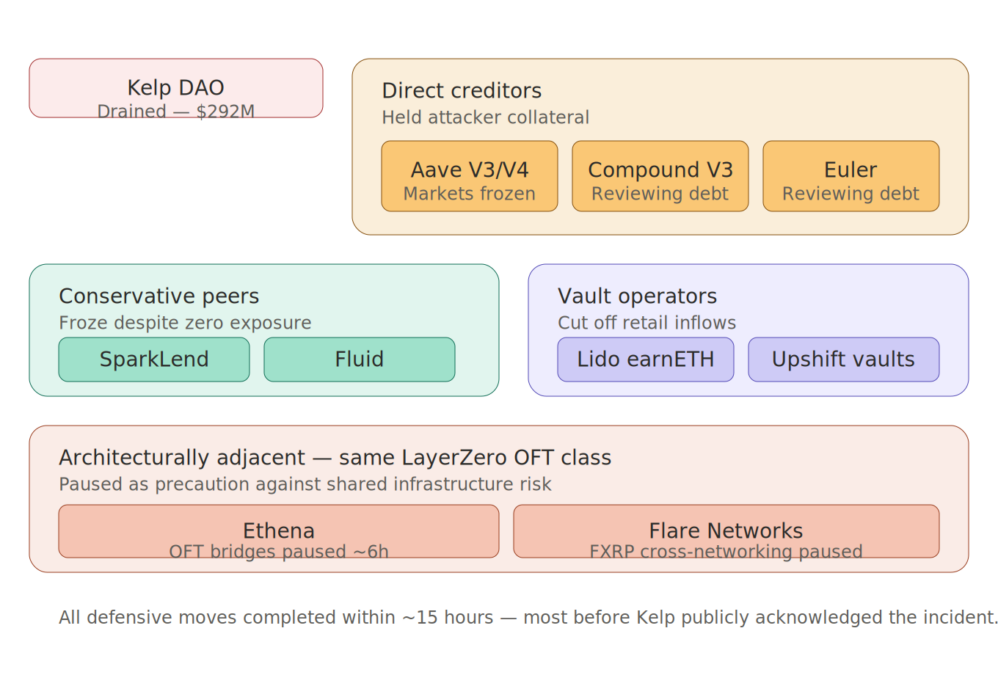
rsETH isn’t just a token. It’s a composable piece of DeFi infrastructure embedded in dozens of protocols. Once the exploit went public, the defensive freezes started rolling in fast.

Kelp Dao Contagion Map
Kelp Dao Contagion Map | Source: The CryptoTimes

Aave froze rsETH markets on V3 and V4. Founder Stani Kulechov posted on X that Aave’s own contracts were not compromised and that the freeze was precautionary.

SparkLend and Fluid froze their rsETH markets. SparkLend reported zero actual exposure, crediting its conservative risk posture.

Lido Finance paused deposits into its earnETH vault, which carries rsETH exposure — while stressing that stETH and wstETH are completely unaffected.

Ethena temporarily shut down its own LayerZero bridges from Ethereum mainnet for roughly six hours, despite having no rsETH exposure.

Flare Networks paused FXRP cross-networking via OFTs between Flare, Ethereum, Base, and other supported networks the following morning.

Upshift paused its High Growth ETH and Kelp Gain vaults.

AAVE the token fell about 10–13% on the day as the market priced potential bad debt. ETH dipped around 3% in the same window. stETH and wstETH took mild sympathy hits around 4% before recovering.

Where’s the money now?

The six attacker wallets identified by ZachXBT sit across Ethereum and Arbitrum, holding a mix of rsETH, ETH, and WETH. As of April 19, none of it has moved to centralized exchanges. None of it has been pushed through Tornado Cash beyond the initial gas funding. No sanctions labels have been applied by OFAC or any other agency.

That’s unusual. Most exploiters in 2026 either move to mixers within hours or start testing CEX deposits to see what gets frozen. This one is just sitting. Which could mean a few things: the attacker is waiting out the initial attention, negotiating quietly, or — less charitably — figuring out which mixer still works after a year of aggressive OFAC designations.

What hasn’t happened yet is notable too. No white-hat bounty offer has been posted by Kelp as of this writing. No on-chain negotiation message to the attacker. No confirmed freezes at Binance, Coinbase, OKX, or Kraken. No public engagement with Chainalysis, TRM Labs, or law enforcement — or at least, nothing disclosed. The Euler ($197M, 2023), Poly Network ($611M, 2021), and KiloEx playbooks all involve some combination of those moves within 24–48 hours. Kelp is past that window and still quiet.

Kelp’s track record doesn’t help

This isn’t Kelp’s first rodeo. In July 2024, a GoDaddy domain-redirection attack hijacked the Kelp DAO frontend, draining multiple user wallets before the team caught it. Kelp pledged reimbursement and said it would move DNS providers. In April 2025, a fee-contract bug triggered a precautionary Aave freeze — no user losses that time, but it rattled confidence.

Saturday’s $292M drain is the third incident in under two years. The protocol has been audited by SigmaPrime, Code4rena, and MixBytes, and runs an Immunefi bug bounty capped at $250,000 (10% of funds at risk, with a $100K minimum for critical smart contract bugs). None of that stopped this one.

The pattern isn’t fatal plenty of blue-chip DeFi protocols have had multiple incidents and recovered — but it changes the recovery narrative. Kelp doesn’t get the benefit of the doubt this time. Users and integrators will want to see the full RCA, a concrete remediation plan, and ideally some form of compensation structure before trust rebuilds.

Where things stand right now

As of April 19, Kelp DAO’s contracts remain paused. No RCA has been published. No reimbursement plan has been announced. The attacker still holds the ~74,000 ETH. Aave, Compound, and Euler are still sitting with attacker-opened debt positions that they may or may not be able to cleanly liquidate.

The next 72 hours will tell us three things: whether rsETH’s peg survives when redemptions resume, whether the lending markets can absorb the bad debt without governance intervention, and whether anyone at Kelp can explain what actually broke.

This story is still developing. We’ll keep tracking the attacker wallets, any law enforcement updates, and whatever Kelp eventually puts in the RCA.

Also Read: Aave V4 Witnesses Accelerating Traction Just After Mainnet Launch


Source link

Nicole Kidman Recalls the Heartbreaking Moment She Found Out Her Mom Died: ‘Completely Devastated’

    0
    Nicole Kidman Recalls the Heartbreaking Moment She Found Out Her Mom Died: ‘Completely Devastated’


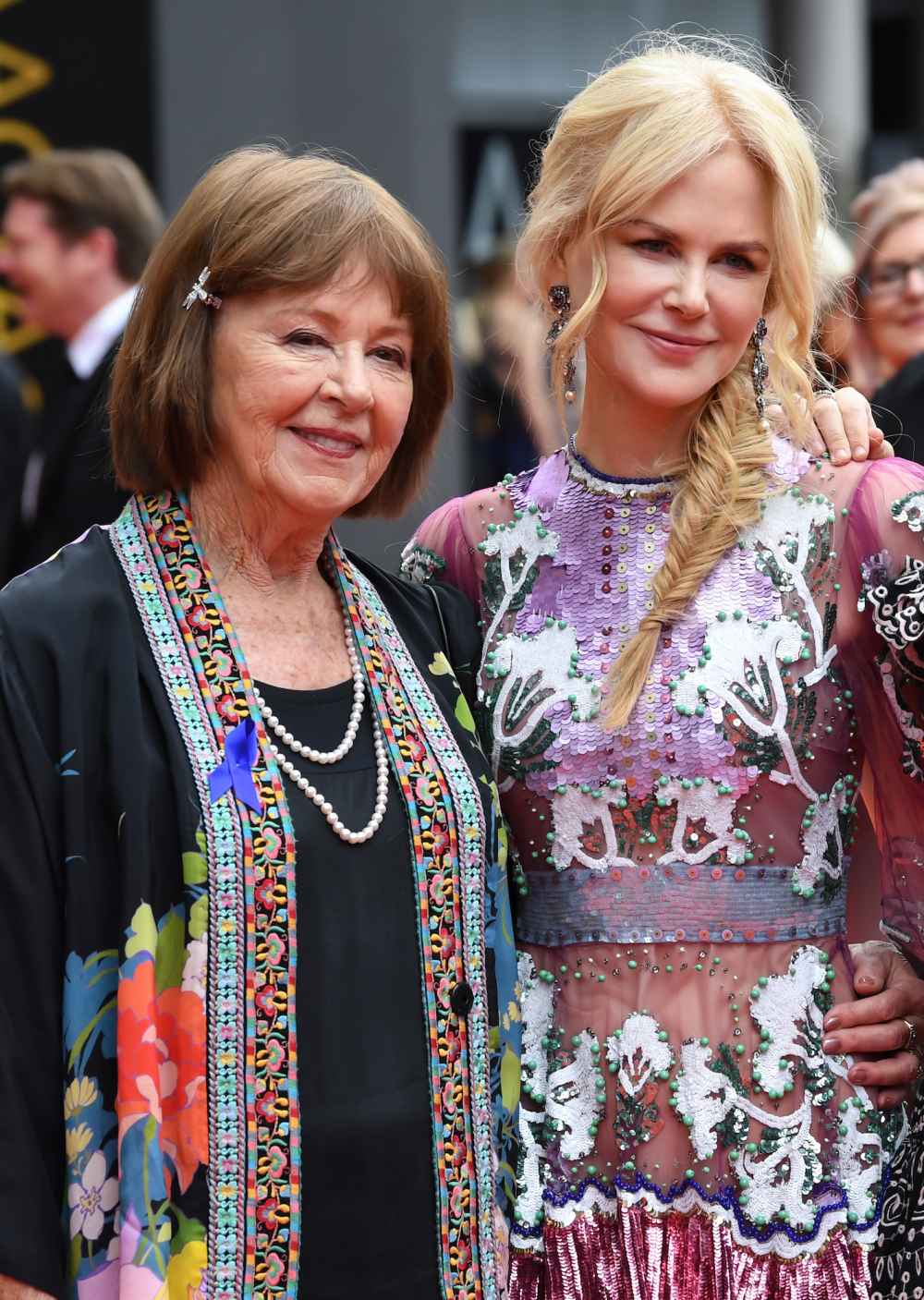
    Nicole Kidman is reflecting on the moment she was told her mother Janelle Kidman had died right before she was about to go on stage to accept an award.

    Speaking to Variety on Saturday, April 18, Nicole, 58, detailed how she found out about the loss at the Venice International Film Festival as she was preparing to accept a best actress award for her role in Babygirl.

    “I was about to go out on stage, and I found out that my mother had passed,” Nicole told the outlet. “I went right back to my room in Venice, was getting into bed, and I was completely devastated.”

    Nicole added that as she digested the sad news at the time, she thought to herself, “‘I’m not sure how I’m going to move forward or function now.’ She was so much a part of my existence.”

    Related: Nicole Kidman Addresses Mom’s Death: ‘I Wish My Mama Was Here’

    Nicole Kidman spoke about missing her late mother Janelle, who died last month at age 84. “It’s been hard,” Nicole, 57, told The Hollywood Reporter on Wednesday, October 23 at the Lioness season 2 premiere in Los Angeles. “It’s a hard road. I’m hanging in there.” The actress admitted it was bittersweet to be celebrating […]

    In September 2024, the Big Little Lies actress left Venice early to make her way home to Australia after learning of Janelle’s death.

    Speaking to Variety on Saturday, Nicole also described her “harrowing” attempt to leave Venice in the middle of the night trying to return to her home country.

    “I remember getting into a boat in the canal, literally at night, trying to find my way to the airport, and then turning around going, ‘I can’t even do this,’” she said. “Then I went back to bed. And I was alone. My husband wasn’t there, my children weren’t there. I was there to win an award, which should’ve been a beautiful thing. That there is the contrast of life.”  (Nicole was married to Keith Urban at the time, with whom she shares daughters Sunday Rose, 17, and Faith Margaret, 14. Nicole and Urban finalized their divorce in January.)

    GettyImages-1077526660Nicole-Kidman-Recalls-the-Heartbreaking-Moment-She-Found-Out-Her-Mom-Died.jpg

    Janelle and Nicole Kidman.
    (Photo by James D. Morgan/Getty Images)

    At the time, Babygirl director Halina Reijn confirmed Janelle’s death as she read a statement on behalf of Nicole during a Venice International Film Festival panel.

    “Today I arrived in Venice to find out shortly after, that my beautiful, brave mother Janelle Ann Kidman has just passed,” Reijn, 50, read on Nicole’s behalf. “I am in shock and I have to go to my family, but this award is for her, she shaped me, she guided me and she made me.”

    Nicole Kidman Opens Up About 'Missing' Her Late Parents on Her Mother’s Birthday

    Related: Nicole Kidman Opens Up About ‘Missing’ Her Late Parents

    Nicole Kidman paid tribute to her late parents in honor of her mother’s birthday. “Missing Mumma and Papa so much on what would have been her birthday today ❤️,” the actress, 57, wrote via Instagram on Wednesday, March 12, alongside a throwback pic of her mom, Janelle Ann, and dad, Antony. The photograph showed Kidman’s […]

    The statement continued, “I am beyond grateful that I get to say her name to all of you through Halina, the collision of life and art is heart-breaking, and my heart is broken.”

    Less than a week after their mother’s death Nicole and her sister Antonia, 55, took to Instagram to share a joint post thanking friends and fans for their condolences and well wishes.

    “My sister and I along with our family want to thank you for the outpouring of love and kindness we have felt this week,” Nicole and Antonia wrote. “Every message we have received from those who loved and admired our Mother has meant more to us than we will ever be able to express. Thank you from our whole family for respecting our privacy as we take care of each other ❤️”


    Source link

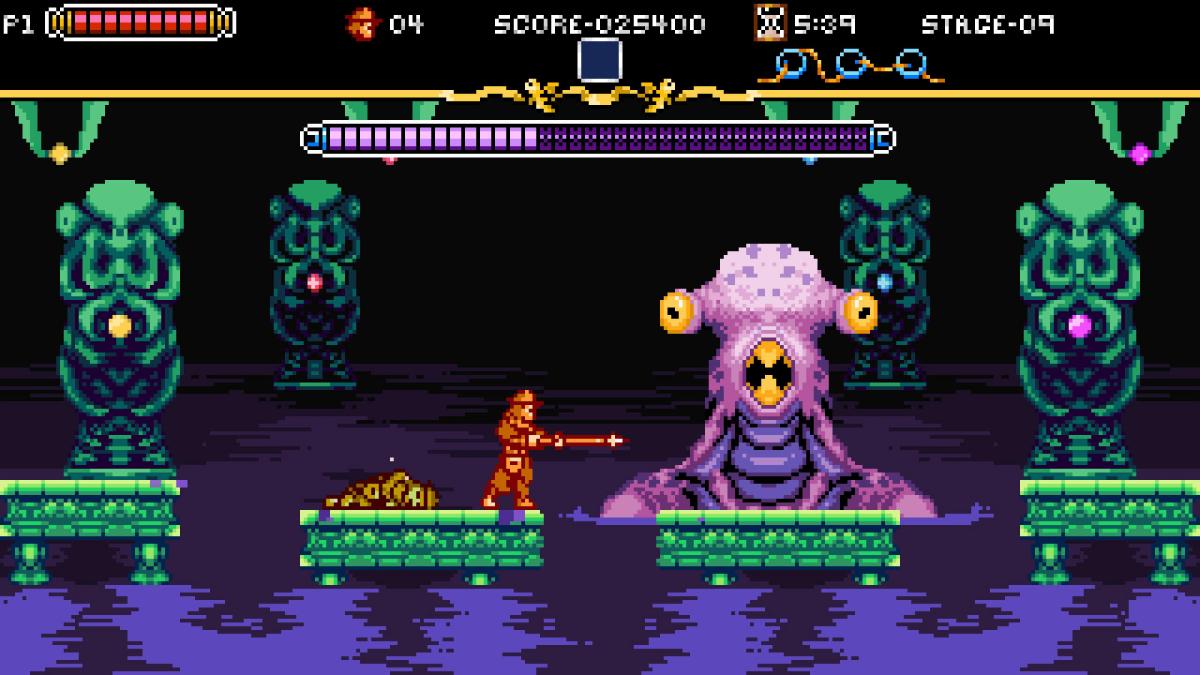
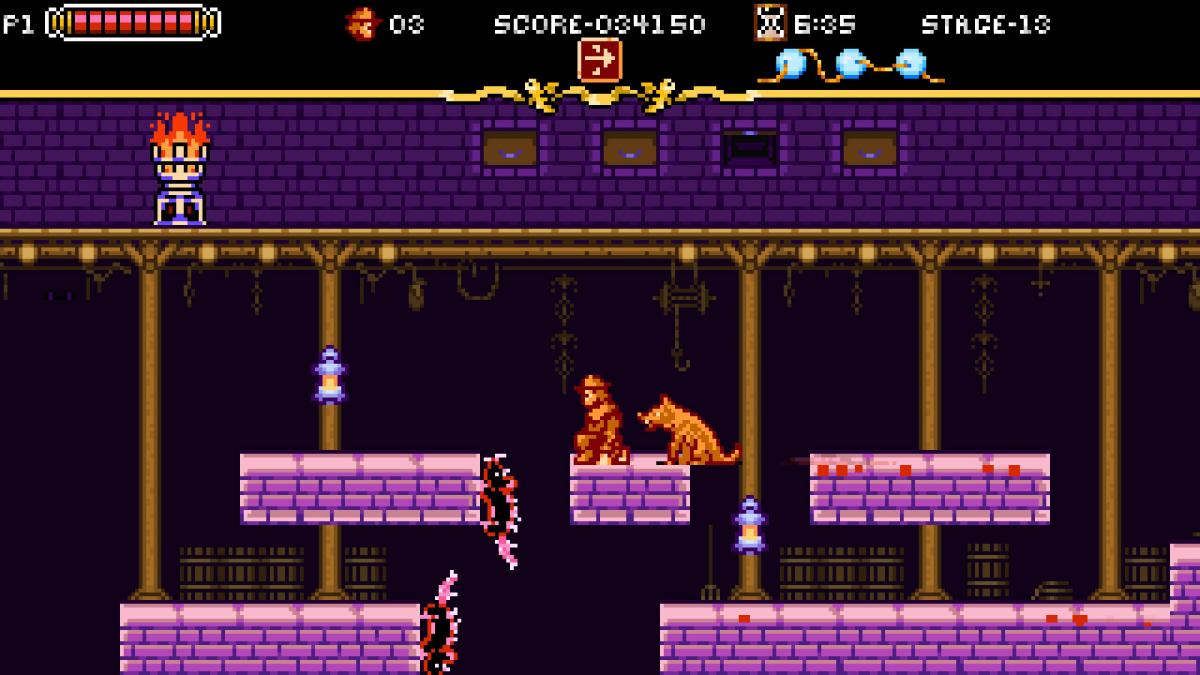
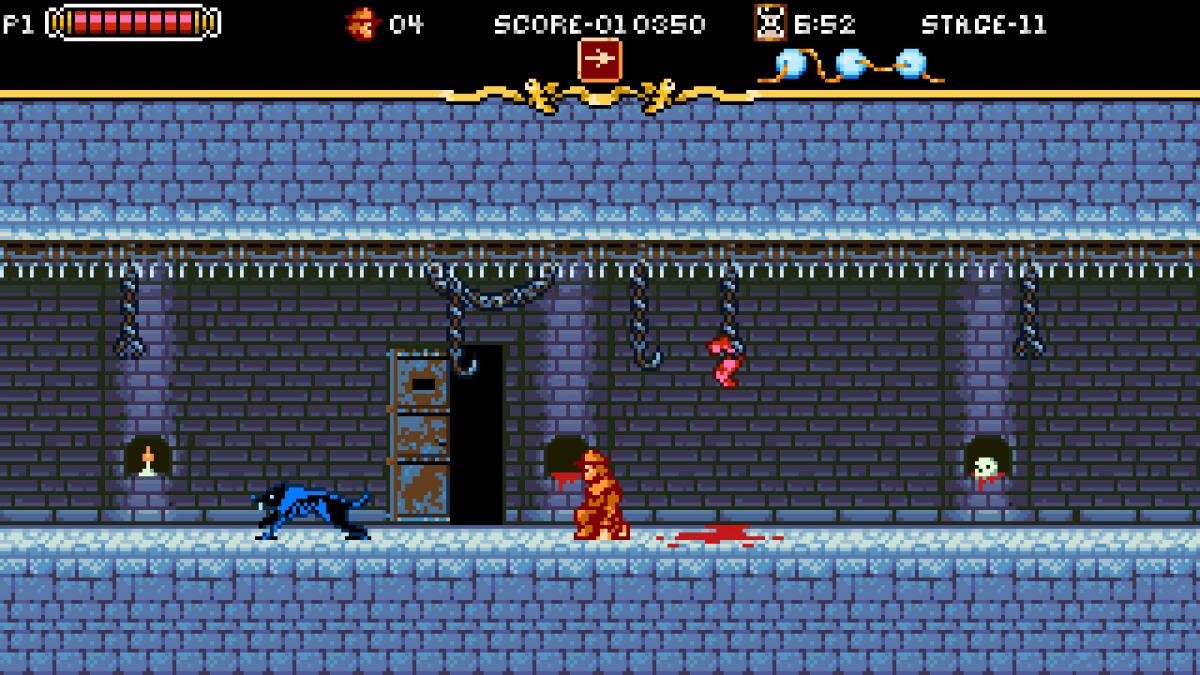
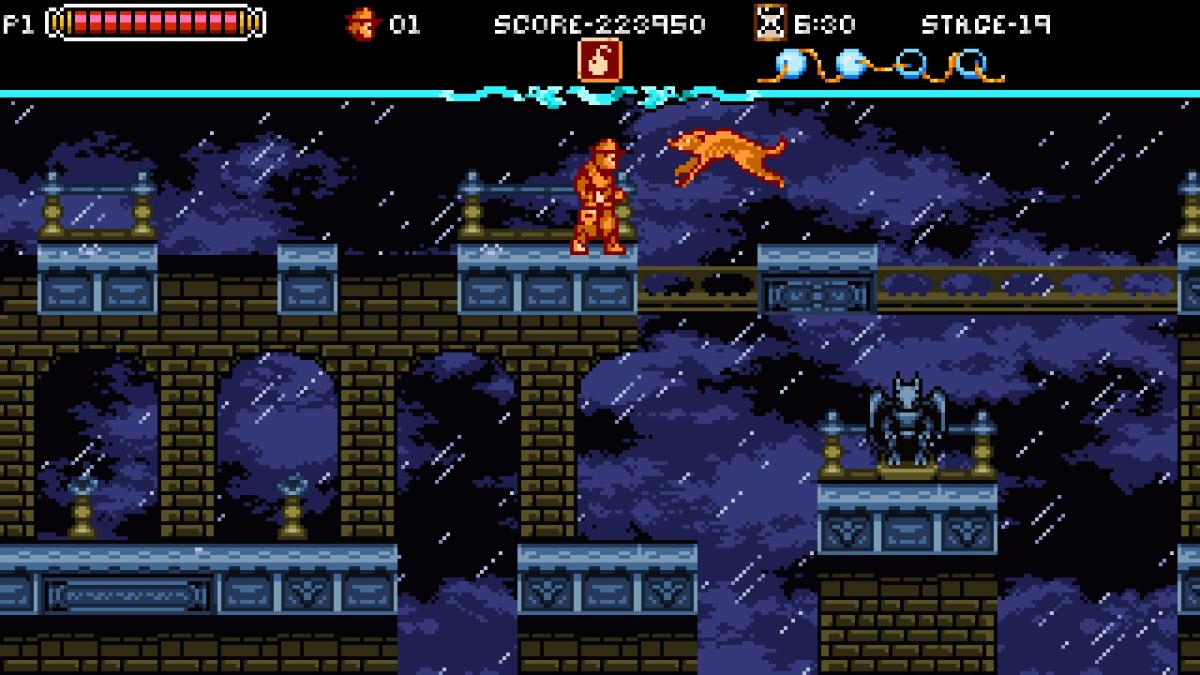
    Saint Slayer: Spear of Sacrilege Review – A Brilliant NES Throwback That I Hated Playing

    0
    Saint Slayer: Spear of Sacrilege Review – A Brilliant NES Throwback That I Hated Playing


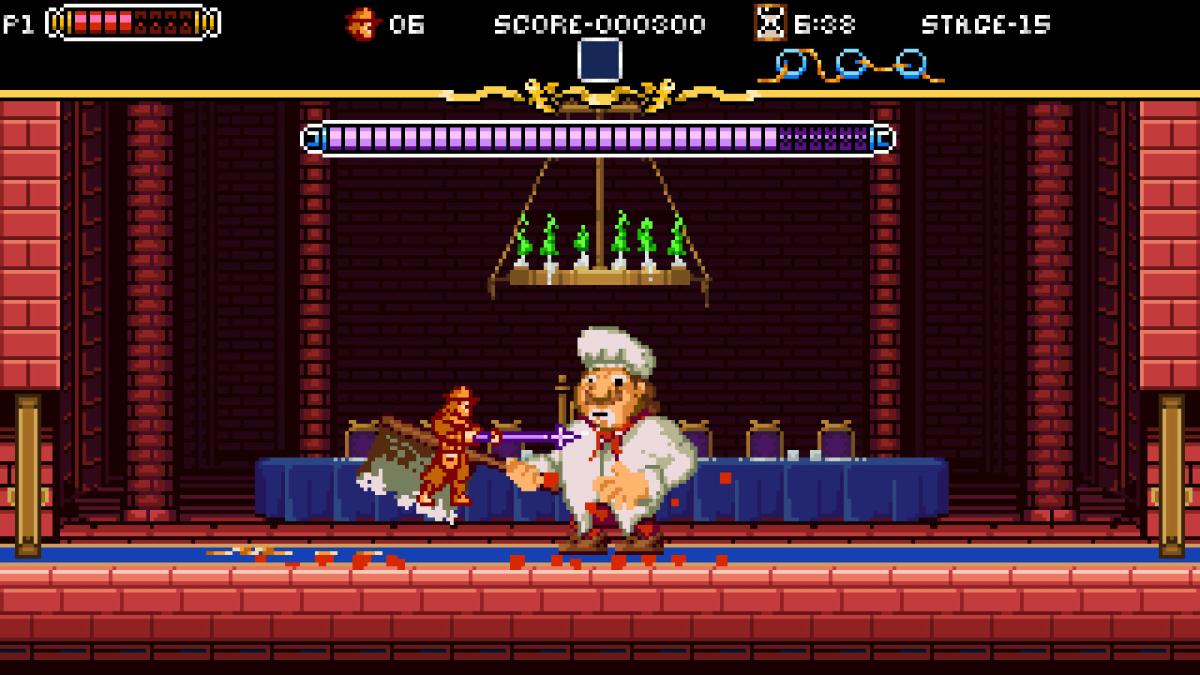
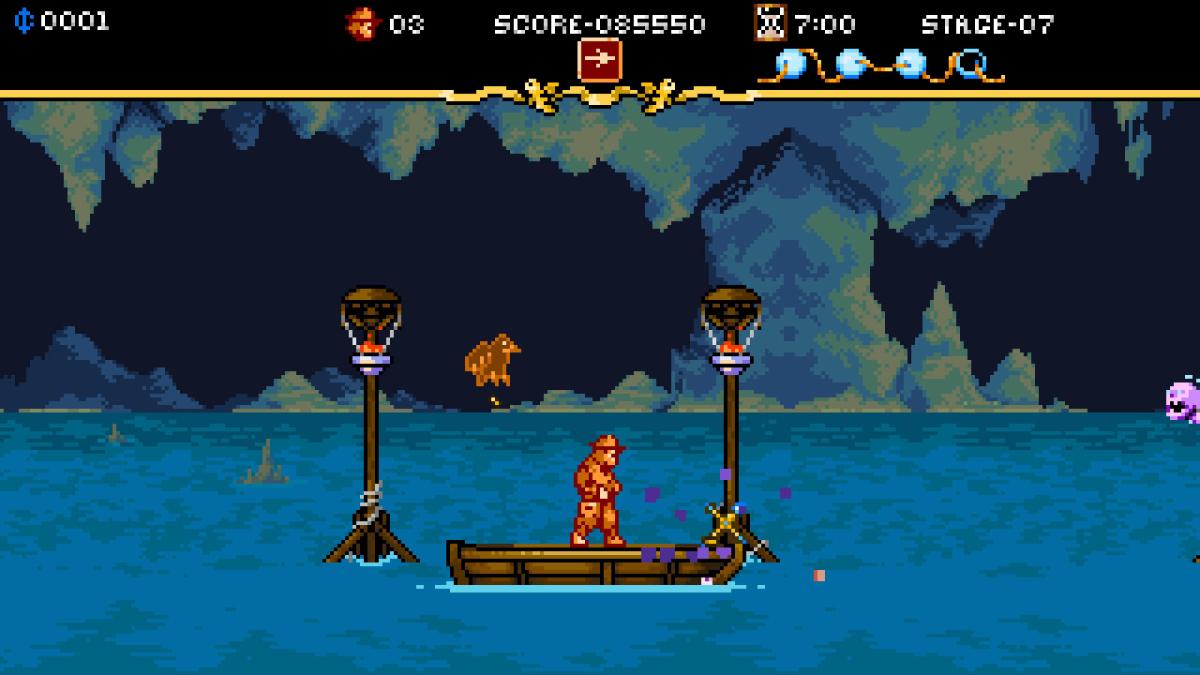
    Saint Slayer: Spear of Sacrilege is a ridiculous, brilliant name—and the game behind it is just as committed to the bit: a gory, gothic throwback to when games were hard and gave zero shits about holding your hand. As developer Lilymo’s sixth title in their quest to replicate those days, the question is simple: is it their best? Arguably, yes.

    Before diving in, I should probably address a potential bias. Lilymo is co-owned by Colin Moriarty, a former IGN writer turned podcaster whose work I actively follow and support. I like what he and the Sacred Symbols crew do—enough to support them on Patreon. I like what Lilymo stands for. And that meant I came into this wanting to love Saint Slayer.

    Which is why it pains me to say this: I didn’t. Not on a personal level, anyway. And the truth is, that’s not the game’s fault—it’s mine. I’d like to say this just isn’t the game for me, but the reality is harsher than that. I’m just not the right person for the game. It came looking for a boss and it got me, someone who wanted to be able to revisit the olden days and found out he couldn’t.

    This is a NES-ass NES game, and it plays by a completely different set of rules. It’s stiff, unforgiving, and demands a kind of rhythm that doesn’t come naturally if you didn’t grow up with it. As an early ’90s kid, the NES was already history. I was raised on the Sega Genesis and PlayStation, and it wasn’t until the Xbox 360 era that I really began to understand game design, how the industry worked, and cemented the hobby as my main love.

    So yeah—I struggled. I got my ass whooped, my pride hurt.

    Playing Saint Slayer felt like trying to speak a language I don’t understand. I couldn’t settle into its rhythms, couldn’t read its patterns, couldn’t quite grasp what it wanted from me—even when the answer was obvious. My brain kept trying to translate it into something more modern. It doesn’t work like that.

    And yet, despite all of this, I can confidently say: this is an excellent game.

    And Now, The Review.

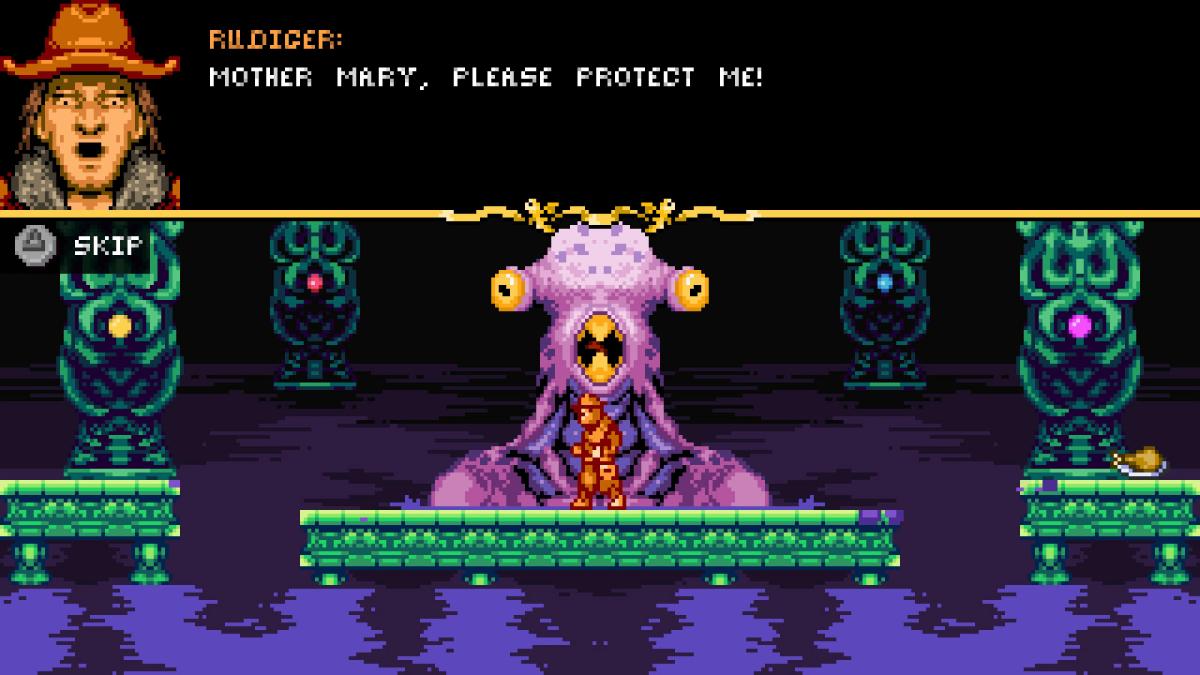
    The story follows Rudiger, a former soldier turned farmer in a gothic version of late seventeenth-century Europe. But one day, tragedy comes knocking, and Rudiger sets out to defeat a crazed Catholic priest who is stealing relics and leading cults like he’s gunning for his own Netflix documentary. In the process, Rudiger ends up wielding the Spear of Sacrilege, a powerful poker that gradually gets powered up through the game. Cue 21 stages of platforming, combat, boss battles, gore, and weirdness.

    The developers describe the game as a “blood-drenched homage to the 8-bit era of horror-tinged, side-scrolling action,” and that pretty much nails it. For every slightly wacky moment or tongue-in-cheek line of dialogue, there are bodies hanging from crucifixes, or messy piles of blood and bone. For every time you’re knocked off a cliff by a donkey or stab a weird monster in the eye, there’s rescuing barely alive prisoners from dungeons.

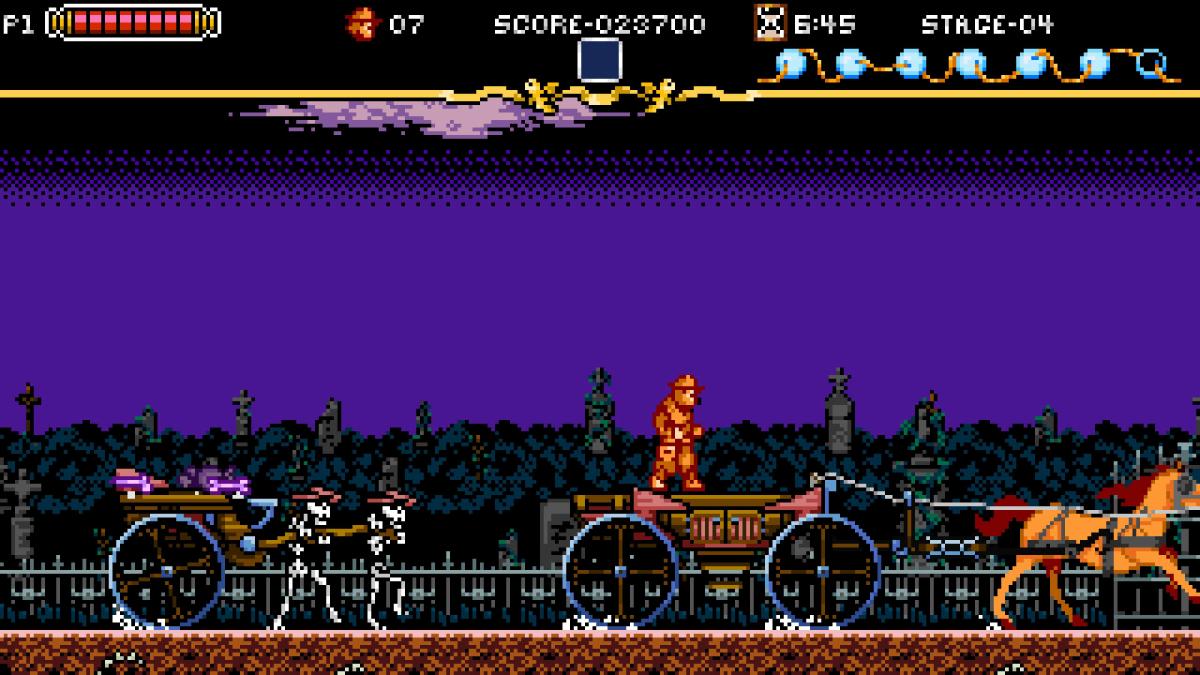
    The other obvious inspiration is Castlevania, found in the level design, the gothic tone, and the gameplay. What feels stiff and unwieldy to modern sensibilities is entirely deliberate. You commit to jumps. Attacks have no lunge. Take damage, and the resulting pushback can send you straight into a pit and all the way to the start of the stage again. It’s punishing, but the rewarding kind that beats the shit out of you but is nice enough to call the ambulance afterwards.

    I like how the game makes most of the story optional. The majority of the dialogue is a few lines here or there from bosses and NPCs you meet, painting in just enough of the background plot so that you can mentally fill in the gaps. But if you really want to delve into the story proper, you need to talk to the travelling merchant wherever possible, and see the different endings. It’s worth the extra effort, revealing a slim, interesting tale that does exactly what it needs to—be an excuse to move from stage to stage.

    Rudiger has a simple moveset befitting his NES aspirations. He can stab hapless hooligans with his spear, or throw it provided he has enough Rosary Beads. A thrown spear can even be used as a climbing platform, a mechanic that could have been utilised a bit more, I reckon. He also has a DuckTales-style pogo stick bounce, another moment of absurdity. A few later upgrades add extra moves, putting Rudiger in real danger of becoming a competent human being.

    With this diet moveset, the devs craft a fiendish death trap that must be battled and survived. You need to learn the patterns, figure out when to attack and when to just ignore your problems and sidle onwards into the pixelated sunset. Success must first be earned through failure. Probably quite a bit of it, if you aren’t an old head.

    Dropping down to the easiest difficulty will help quite a bit. You get extra health and the enemies die quicker, but the biggest difference is the lack of knockback. And for those looking for a challenge, Classic mode removes lives as well, so death means instant failure and a desire to punch the nearest object.

    Lose all your lives and you’ll be given that stage’s password, which you can use to jump to that specific stage from the main menu. There’s a cost, though: you’ll spawn in fresh as a proverbial daisy with no health upgrades or anything else that you would have acquired by playing normally.

    You also get passwords when you manage to locate the various treasures hidden throughout stages. These passwords are more fun because they unlock cool stuff that you can then use to run through the game again, or extra challenging modes. Want to play exclusively with Rudiger’s first-stage dirk that has the reach of a baby’s arm? You can! And who knows how many other passwords are waiting to be discovered?

    There is a slightly more modern idea: a persistent currency called Orbs. These stick with you across playthroughs and can be spent at a travelling merchant. It’s an interesting system, but one I didn’t find very useful until much later in the game, where I hoarded Orbs until attempting a run on the harder difficulty. At that point, my trove of treasure helped a lot.

    And if you’re still struggling, it is possible to farm Orbs pretty easily.

    Speaking of the passwords and treasures, this is a game that’s intended to be replayed, again just like you would have done back in the NES days. There’s four different endings to achieve in Saint Slayer: Spear of Sacrilege, along with Trophies/Achievements for completing the game with the various treasure passwords and on all the difficulties.

    Again, it’s very Castlevania-coded. The first couple of playthroughs will be slow and clunky, but as you get the hang of the gameplay and map everything out, you’ll go from an hour or two to probably 15–30 minutes, if you really nail it.

    You can also tackle the whole thing via local co-op. Yes, another Rudiger can take up the spear, and like most things, it’s even more fun with friends. Well, right up until you turn on friendly fire—then it’s a cause for shattered friendships and therapy.

    Presentation is an area where SS:SoS is excellent in every aspect. Do you see those pixels? Aren’t they lovely? The artist, Josh Gossage, does an excellent job of emulating the style of the time with a couple of modern touches here or there. My only complaint is one or two levels are quite plain or could do with a touch more variety.

    Meanwhile, the score—composed by Josh Davis—is a banger. Again, perfectly retro to match the time period, with a couple of tracks that had me bopping my head along to the beat.

    And finally, let’s throw a little extra kudos Lilymo’s way for their continued usage of Trophies. Previously, the company has offered up different levels of Trophy difficulty for their titles: easier on PS4 and harder on the PS5 versions. This time around, they opted to ditch the difficulty and instead just have two different Trophy lists, each one sharing some Trophies while also having some completely different ones, too. It should make it fun to chase the Platinum on both versions of the game.

    In Conclusion….


    Rating: 4 out of 5.

    The obvious negative is that SS:SoS is so dedicated to its inspirations that it doesn’t do anything particularly new. But that’s not much of a criticism. It isn’t trying to be shiny and new. It wants to be a game that could have been released during the NES days, and it succeeds wildly at that task.

    There’s a couple of levels that overstay their welcome, some of the deaths felt a bit cheap, and then there’s my own personal issues.

    None of them detract from how much of a fitting, touching homage to the classics Saint Slayer: Spear of Sacrilege is. It is not for everyone—it isn’t for me—and that’s exactly how it should be.

    The official "Recommended" logo of www.wolfsgamingblog.com


    Source link

    Happy 18th Anniversary, University of Fashion — From Digital Pioneer to Global Classroom — – University of Fashion Blog

    Happy 18th Anniversary, University of Fashion — From Digital Pioneer to Global Classroom — – University of Fashion Blog


    On April 1, 2026, the University of Fashion proudly celebrated its 18th anniversary. We are honored to continue serving and preserving the art & craft of fashion design through this vital and evolving educational resource.

    For decades, becoming a fashion designer or launching a brand meant gaining admission to a prestigious school, taking on significant debt, and relocating to a global fashion capital. The barriers were high and narrow, shaped by cost, geography, and an industry culture that favored a select few. Then broadband, video technology, and digital tools converged with a generation unwilling to wait for permission. From that intersection emerged a new kind of classroom—streaming platforms, virtual critiques, and on-demand courses covering everything from draping to digital marketing. Enter the University of Fashion.

    Our Mission

    Francesca Sterlacci Founder and CEO University of Fashion Francesca Sterlacci – CEO/Founder University of Fashion 2008

    Founded in 2008 by fashion design entrepreneur, educator, and author Francesca Sterlacci, the University of Fashion (UoF) was an early innovator in online learning, delivering step-by-step, industry-driven instruction accessible anywhere with an internet connection. A student in Lagos can follow the same patternmaking lesson as a boutique owner in Ohio or a high schooler in Palm Springs—pausing, replaying, and learning at their own pace.

    From its inception, UoF has been dedicated to preserving the art and craft of fashion design. What began with just 100 lessons has grown into a comprehensive library of over 525+ lessons across 13 disciplines, serving learners from beginner to advanced levels.

    Certificate of Completion Program

    University of Fashion Certificate of CompletionExample of University of Fashion’s Certificate of Completion

    The introduction of Certificates of Completion in 2022 marked a turning point, elevating the platform from a library of tutorials to a source of recognized achievement. In an industry where, demonstrated skill often outweighs institutional pedigree, these credentials help redefine what it means to be “qualified.”

    UoF Rolls Out Expanded Tech Lessons 

    UoF 3D and AI Fashion Design

    University of Fashion’s 3D and AI fashion design lessons (Image credit: University of Fashion)

    At the same time, fashion itself has undergone a digital transformation. 3D prototyping, virtual fittings, AI-driven design and trend forecasting, and e-commerce are no longer optional—they are essential. While traditional programs work to keep pace, online platforms like UoF can evolve in real time, integrating digital patternmaking, virtual product development, and sustainability into their traditional hands-on curriculum as the industry shifts. UoF’s ever-growing library, created and updated by working professionals, sits at the intersection of craftsmanship and innovation, allowing learners to move seamlessly from couture hand sewing to AI in fashion design.

    UoF’s Global Reach

    Global Access image

    University of Fashion serves thousands of individuals, colleges, fashion industry companies, groups, associations and public libraries. (Image credit: University of Fashion)

    Perhaps the most significant shift is who now has access. People from 208 countries, worldwide, visited UoF’s website in 2025. Online education gives people not living near a good, bricks-and-mortar fashion school a chance to learn fashion design. In addition, it removes the burden of relocation and commuting, opening opportunities for mid-career professionals, parents, and students whose lives don’t align with rigid academic schedules. It also supports the entrepreneurial spirit that defines today’s fashion landscape, combining design skills with branding, social media strategy, and retail knowledge so learners can build labels, side businesses, or freelance careers on their own terms.

    UoF — Complement to Fashion CollegesE-learning image

    University of Fashion serves thousands of individuals, colleges, fashion industry companies, groups, associations and public libraries. (Image credit: University of Fashion)

    In this evolving landscape, the University of Fashion is not a replacement for traditional education but a dynamic extension of it—a global, always-open studio where skills are sharpened, careers are reshaped, and the center of fashion education expands far beyond a handful of cities to wherever the learner logs in. Its flexible format and varied learning approaches continue to resonate with modern students, particularly those seeking accessible, self-paced alternatives to conventional programs.

    Industry-Relevant Skill DevelopmentUpskilling image

    University of Fashion’s library of lessons are intentionally designed to align with industry demands, by focusing on technology utilization in fashion. This direct correlation between coursework and market needs gave students enhanced employability, making their program an attractive choice compared to traditional competitors.

    As the University of Fashion enters its next chapter, its mission remains clear: to democratize fashion education while honoring the discipline’s rich traditions and advancing its future. By bridging craftsmanship with technology and access with excellence, UoF continues to empower a global community of creators to learn, innovate, and lead on their own terms. In doing so, it not only reflects the evolution of fashion education—it helps shape it, ensuring that talent, not circumstance, defines who gets to participate in the industry.


    Source link

    Developers Of Moon Child Resurface To Bask In All The Shitposts

    0
    Developers Of Moon Child Resurface To Bask In All The Shitposts


    In 1993, Dutch developers Team Hoi began work on Moon Child, an Amiga platformer starring the titular green space lad with a dinosaur-like companion. The Amiga version never made it to shelves and its eventual 1997 PC port only had a regionally limited release. Builds of the game have been available online for years, but a recent post from Games That Weren’t seemingly kicked off a frenzy of love and shitposts, summoning its original creators back to social media.

    “I decided to re-register an account to enjoy the memes of our 1990s #MoonChild game,” posted original designer Metin Seven. “I’m having soo much fun reading and viewing all the Moon Child love. I’m also forwarding stuff to the other guys, including Ramon [Braumuller], our music composer.”

    Moon Child features a lot of your standard Amiga strangeness. Fast-paced, floaty, vibrant, overloaded, unrefined. Like a dream you’ve had about playing Super Mario. A jaunty and fun prototype, Moon Child pitched itself around to find a publisher, even building a prototype for Psygnosis’ attention (their famed title card opening one of the builds). When Commodore and the Amiga went under, Team Hoi pivoted to making a PC version from scratch. When that came out in 1997, resources were stretched pretty thin. The game was not released outside of the Netherlands.

    While everyone loves a tiny little goblin, what’s hooked everyone is some extremely catchy demo scene music. A theme track peppered with uncanny lines like “The story is true” and “You’ve got the power to be his friend,” the latter a phrase so magnetic and hypnotic it may never leave my mind. Once those assets and samples were isolated and shared, it was off to the races.

    After just a few days the feeds have been thoroughly seasoned with Moon Child mania. Fan art, remixes, videos, shitposts alike, especially from YTP luminary icesnort. It’s an outpouring of affection for a game that barely got out the door. The original creators would like to pay this kind gesture forward. Since resurfacing to social media, Seven has begun sharing all kinds of Moon Child goodies, including old photos, concept art, storyboards, design documents, assets and source files. All materials that will ensure Moon Child’s second lunar life orbits circles around its original.


    Source link

    Rep. Ilhan Omar Claims Accounting Error Made It Appear Net Worth Exploded

      0
      Rep. Ilhan Omar Claims Accounting Error Made It Appear Net Worth Exploded


      Rep. Ilhan Omar
      My Accountant Made Me Rich on Accident!!!

      Published
      April 18, 2026
      12:56 PM PDT
      |
      Updated
      April 18, 2026
      1:26 PM PDT

      Representative Ilhan Omar says she and her husband aren’t multimillionaires as indicated in their last tax return … an accounting error just made it look that way.

      Here’s the deal … Omar’s 2024 financial disclosure form claimed she and her husband, Tim Mynett, had somewhere between $6 million and $30 million in assets — a massive increase from her 2023 disclosure.

      ilhan omar  Tim Mynett sub getty 2

      Many people online — mostly right-wingers, though some centrists and left-leaning people as well — called out the representative from Minnesota … demanding to know how the couple developed a vast fortune overnight.

      Welp, Omar’s team says it was all a mistake … an accountant incorrectly listed several companies Mynett’s part of as pure assets — without factoring in the liabilities.

      Ilhan Omar sub getty swipe

      Omar didn’t notice the discrepancy, her spokesperson said, because she isn’t involved in those businesses … and she trusted the accountant to do the filing correctly.

      According to the Wall Street Journal … in the filing for 2025, Omar now says she and her husband are worth between $18,004 and $95,000 — a pretty massive difference.

      ilhan omar sub getty

      WSJ also reports the amended filing shows between $102,503 and $1,005,200 in 2024 income from the assets Omar and Mynett own. Omar has between $15K and $50K worth of student loans and between the same range of credit card debt.

      President Donald Trump has tried to paint Representative Omar as a fraudster benefitting from an alleged welfare scam in her home state. Omar has repeatedly denied the allegations and fired back by saying the prez is obsessed with her.

      The Office of Congressional Conduct — a nonpartisan agency that looks into possible misconduct by members of Congress — sent a letter to Omar last month demanding answers about the filing … which her attorney immediately responded was due to the mistake.

      Pay attention in math, kids … put a comma in the wrong place and pay the price!


      Source link

      Gwen Stefani Pregnant: ‘Miracle’ Baby With Blake Shelton Happening?

        0
        Gwen Stefani Pregnant: ‘Miracle’ Baby With Blake Shelton Happening?


        Reading Time: 4 minutes

        First came love, then came marriage, but a pregnant Gwen Stefani? Is that really a possibility?

        Ever since Gwen and Blake Shelton got together, fans have been eager for them to start a family of their own.

        Rumors have been flying for years, with “sources” suggesting everything from medical miracles to secret pregnancies and beyond.

        On the flip side, there have also been reports that the pair are headed for a split, but we choose to ignore that noise.

        So, is Gwen Stefani, who turned 56 in October, pregnant? Let’s discuss what we know.

        Blake Shelton, his wife Gwen Stefani and her children pose during his Hollywood Walk of Fame Star ceremony, in 2023. ((Photo by FREDERIC J. BROWN/AFP via Getty Images))

        Gwen Stefani & Blake Shelton Love Being Parents 

        Gwen Stefani and Blake Shelton started dating in late 2015, shortly after both of them divorced their respective spouses.

        While they seemingly had nothing in common, it was clear from the start that they were perfectly aligned when it came to the importance of family.

        Gwen gave birth to three children with her ex, Gavin Rossdale: Kingston, Zuma and Apollo.

        Meanwhile, Blake had no children of his own with his ex-wife, Miranda Lambert. In fact, some insiders suggested that the lack of kids was the reason for their split. 

        From the moment Blake joined the family, it was clear he was eager to be a role model for Gwen’s boys and took to being a “stepdad” even before it was official. 

        In fact, he’s become such a mentor to the boys, he’s even started helping them launch their own musical careers! How about that!

        Gwen Stefani pregnant in 2006 with her then husband Gavin Rossdale at the GrammysGwen Stefani pregnant in 2006 with her then husband Gavin Rossdale at the Grammys
        Gwen Stefani pregnant in 2006 with her then husband Gavin Rossdale at the Grammys ((Photo by Stephen Shugerman/Getty Images))

        Is Gwen Stefani Pregnant with Blake Shelton’s Child?

        Cards on the table: no, Gwen isn’t pregnant. At least, not that she has announced. 

        But it’s not completely out of the question that these two will still have a kid together – especially since they have been trying for over 7 years!

        Gwen and Blake did not get married until 2021, but for years before that, it was reported that the pair were “hyper-focused on getting pregnant.”

        Insiders close to the couple told outlets like Us Weekly that their bond was so strong, Blake and Gwen put having a kid ahead of getting married for many years.

        Blake Shelton and Gwen Stefani attend the 48th Annual AFI Life Achievement Award Honoring Julie Andrews at Dolby Theatre on June 09, 2022 in Hollywood, California. (Photo by Emma McIntyre/Getty Images for TNT))

        “They believe there is still a chance for Gwen,” said an Shelton insider. “They are incredibly hopeful.”

        Despite having 3 successful pregnancies, Gwen was in her late 40’s when she started dating Blake.

        While celebs like Janet Jackson welcomed children into their 50’s, insiders explained that Gwen needed some help if she was going to conceive. 

        “Gwen would love to get pregnant, things with Blake are so perfect, having a baby with him would be the icing on the cake.,” a Gwen insider told HollywoodLife.com. 

        “She’s a big believer in alternative medicine so she wants to do it in the most natural way possible. She’s been getting acupuncture and working with a Chinese herbalist to increase her fertility.” 

        Gwen Stefani and Blake Shelton attend the 62nd Annual GRAMMY Awards at STAPLES Center on January 26, 2020 in Los Angeles, California. ( (Photo by Emma McIntyre/Getty Images for The Recording Academy))

        However, as we know, as of 2024, any attempts to have a baby have not proven fruitful yet. 

        Still, there is always adoption and surrogacy. And ,with them both off The Voice now, there would be no real time to focus on a family.

        Gwen Stefani Loves Being A Mother 

        “I waited my whole life to be a mom. That’s all I wanted, my entire life”

        The rock star mom appeared on a 2024 episode of The Skinny Confidential Him & Her Show‘s podcast, and she discussed how hard it was to juggle her kids while working, even though she loved being a mom. 

        From working on her solo album to touring with No Doubt, Kingston was always by her side.

        “It just felt so real and right. I got so ripped off on that tour because I was so sick. I ended up taking the baby when he was 9 months and going and doing a world tour, like 120 shows … We’re in a hotel one day and I thought that I had to stop nursing because I was like, ‘How am I going to nurse and be on stage?’”

        Blake Shelton and Gwen Stefani attend the 2023 CMT Music Awards at Moody Center on April 02, 2023 in Austin, Texas. (Photo by Jason Kempin/Getty Images)

        With all that said, Gwen had thought, once upon a time, that she was too old to have another child. Then her oldest,  Kingston started asking her to have another sibling.

        “I was like, ‘I’m too old. I’m not having any more babies. I’m sorry, love,’ ” she said. “He just wanted a baby, so he would start praying every night for this baby. Four weeks later, praying every night like, ‘Please, let my mom have a baby,’ and I’m pregnant with Apollo.”

        Gwen calls that pregnancy a miracle. She also admits she’s been lucky enough to have 3 miracles happen in her lifetime. 

        “[Hosting The Voice] was the second miracle. The first miracle was getting pregnant. The second was The Voice. And then the third was, obviously, meeting Blake.”

        Perhaps a fourth miracle is due? Fourth baby, fourth miracle – stranger things have happened!


        Source link

        GalaxyOne Head Wants Retail Investors to Stake More, Predict Less – Decrypt

        0
        GalaxyOne Head Wants Retail Investors to Stake More, Predict Less – Decrypt


        In brief

        GalaxyOne Head Zac Prince said he’s “not particularly excited” about prediction markets when it comes to enabling customers to build long-term wealth.
        The executive highlighted the retail investment platform’s recent support of Solana staking and associated lending products in the firm’s pipeline.
        Staking has enabled competitors like Coinbase to diversify revenue, while others like Robinhood have embraced prediction markets as growth drivers.

        For Galaxy’s retail investment platform, enabling customers to bet on the news isn’t a priority, according to Zac Prince, head of GalaxyOne. Rather, the service that debuted in October is being built in a way that’s intended to reward investors’ patience, he told Decrypt.

        Within the context of Galaxy’s broader business, Prince said the financial services and investment management firm is already in a good place as far as prediction markets are concerned, providing institutional clients with internal trading and risk management.

        When it comes to consumers that GalaxyOne was built for, who have anywhere between $100,000 and $1 million in investible assets, he described prediction markets as tools that may not align with many affluent consumers for building long-term wealth.

        “For individual consumers, I’m not particularly excited about it versus other things we have on our roadmap,” he said. “I haven’t been able to find a use case for someone who’s building a diversified portfolio—that they’re going to allocate to for the long term—for prediction markets.”


        In some ways, the sentiment echoes commentary from Charles Schwab President and CEO Rick Wurster, who indicated this week that America’s largest discount brokerage would limit prediction-market access to wagers focused on financial events if it enters that territory.

        Prince argued that there are two ways to be successful as a consumer-facing financial services offering: cater to investors who want time in the market to be the driving force, like Vanguard or Betterment, or seek customers that view themselves as active traders. 

        Retail brokerages like Robinhood have embraced prediction markets by working with Kalshi, providing what analysts have described as a sports-fueled tailwind. Still, Prince indicated GalaxyOne isn’t trying to develop a platform “where you want people to log in every day.”

        GalaxyOne began supporting Solana staking last month, enabling individuals to earn rewards by locking up tokens and participating in the process of validating the network’s transactions. In the not-too-distant future, Prince said that GalaxyOne plans to support Ethereum staking.

        Until the end of this year, the firm has waived commissions on Solana staking rewards that customers receive. Lending services that GalaxyOne plans to offer in the future will allow investors to borrow against staked Solana and Ethereum while still earning rewards. 

        “We’re really excited about that product,” Prince added.

        Staking has enabled competitors like Coinbase to diversify revenue away from a reliance on trading fees, which tend to fluctuate alongside market conditions. The crypto exchange disclosed in February that it generated $677 million from staking in 2025, down 4% year-over-year, citing lower average crypto prices in a shareholder letter.

        Currently, GalaxyOne’s customers are showing a preference for 8% returns on cash that the platform’s “premium yield” product supports, Prince said, describing the offering as among the most differentiated that the company has debuted so far.

        This week, Galaxy announced that its retail investment platform was poised to begin accepting U.S. businesses and entities as customers. Prince noted that the move provides an all-in-one place for those customers to manage bank, brokerage, and crypto accounts.

        “I think business accounts will get some traction because it is relatively unique,” Prince said. “For individuals, there’s other platforms that have that.”

        Daily Debrief Newsletter

        Start every day with the top news stories right now, plus original features, a podcast, videos and more.


        Source link

        BTC, ETH, XRP Dips Following Strait of Hormuz Closure 

        BTC, ETH, XRP Dips Following Strait of Hormuz Closure 


        Key Highlights

        Cryptocurrencies, such as Bitcoin, Ethereum, and XRP, fell due to geopolitical tensions associated with the Strait of Hormuz closure.

        Overall markets showed signs of weakness, with the CoinMarketCap 20 Index falling more than 2.8% within 24 hours.

        Increased tensions between Iran and the United States created a risk-off sentiment in global markets.

        The cryptocurrencies markets registered a dip on April 18, 2026, due to geopolitical tensions that arose from the closing of the Strait of Hormuz, an important passage for oil worldwide. The event led to risk-off sentiment and affected the performance of top digital currencies. 

        Iran has closed the Strait of Hormuz once again, referring to the decision as a response to a continued blockade of its ports by the US, as reported by Al Jazeera. 

        Based on data from CoinMarketCap, the CoinMarketCap 20 Index (CMC20) was at $154.99, indicating a decrease of 0.07% in the last hour and 2.83% in 24 hours. 

        Top crypto tokens | Source: CoinMarketCap

        Bitcoin (BTC), the biggest cryptocurrency in terms of market cap, recorded a price of $75,891.40, a fall of 0.14% in the last hour and 1.95% in 24 hours. Market cap was around $1.52 trillion, backed by the trade volume of over $30 billion over the last 24 hours. 

        Ethereum (ETH) was valued at $2,361.22, indicating a fall of 0.29% in the last hour and 3.03% over the day. XRP was valued at $1.43, with a decrease of 0.30% in the last hour and 3.94% over 24 hours but an increase of 5.87% over the week.

        Stable coins such as USDT and USDC were seen trading at parity values of $1.00 and $0.9996, respectively. This was meant to provide a liquidity cushion during the move. BNB was quoted at $633.07 and experienced small losses on the hourly and daily charts.

        More liquidation in the market 

        According to the latest data provided by CoinGlass on its liquidation heatmap, total liquidations in the past 24 hours amounted to $263.50 million, impacting 161,235 traders. More losses were observed from long positions, as $192.06 million in liquidation came from them, whereas only $71.44 million came from short positions. 

        BTC led all coins in terms of total liquidations, amounting to $62.00 million, followed by RAVE with $38.93 million and ETH with $47.02 million. Others accounted for $31.89 million in liquidation. Total long liquidations in the past 24 hours totaled $192.06 million, and short liquidations amounted to $71.44 million. 

        Geopolitical tensions affecting the market

        The Strait of Hormuz, which accounts for about 20-30% of all oil traded through maritime routes globally, has recently become the center of controversy between Iran and the US in recent times. There have been reports of the blockage of the strait, increasing the concern regarding supply problems, sending the price of oil up at times, and strengthening the dollar. 

        Cryptocurrencies, which are considered to be risky assets at times of geopolitical tension and uncertainty, came under sell-off as traders moved towards safer assets or cash. Previously, geopolitical events in the region had impacted cryptocurrencies indirectly via factors such as inflation expectations, energy costs, and market sentiment. 

        However, the market reacted positively yesterday when the news of the opening of the passage circulated over the market. 

        Situation may influence the future moves 

        Further events taking place in the Middle East may cause further short-term fluctuations in the crypto market. Even though cryptocurrency is considered a possible hedge when there is extended volatility, the current move shows similarities with what is happening in equities and traditional stocks. 

        The situation in the Strait of Hormuz may influence future moves, as oil prices, the US dollar, and even statements from the government may provide new signs to follow. As per the data available at the moment, we have consolidation and weakness in the major cryptos.

        Also Read: ARK Invest Sells Circle Shares as USDC Lawsuit Heats Up


        Source link

        Popular Posts

        My Favorites

        AI Helped Researchers Block a Virus Before Infection Began – Decrypt

        0
        In brief Researchers identified a key molecular interaction that viruses rely on to enter cells and disrupted it in lab experiments. The work used AI...