Home Blog Page 1464

Exploring Innovations in the New Digital Customer Experience
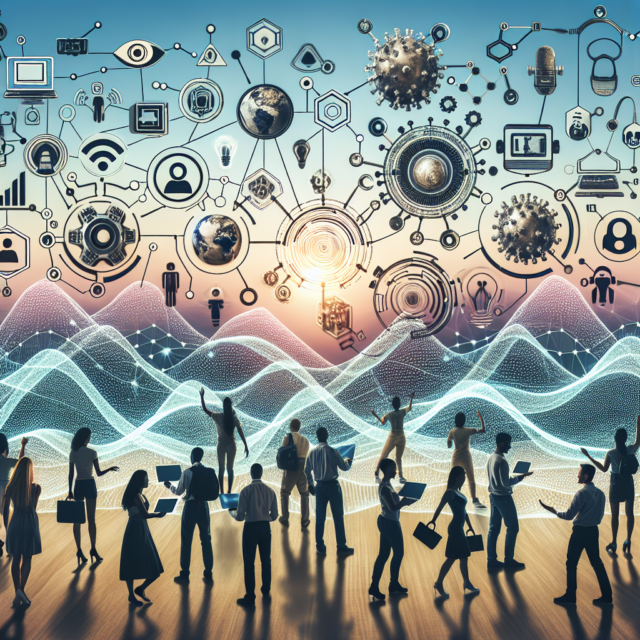
Exploring Innovations in the New Digital Customer Experience

In today’s rapidly evolving digital landscape, customer experience (CX) has become a critical differentiator for businesses across industries. As technology continues to advance at an unprecedented pace, companies are increasingly focusing on creating seamless and engaging digital experiences for their customers. This article delves into the future of digital customer interaction, highlighting key innovations and transformative technologies that are reshaping the way businesses engage with their customers. Through an exploration of these developments, we aim to understand how the digital customer experience is being redefined and what it means for businesses striving to maintain a competitive edge.

Unveiling the Future of Digital Customer Interaction

The future of digital customer interaction is poised to be more personalized and intuitive than ever before. As businesses harness the power of data analytics and artificial intelligence, they are able to tailor interactions to meet individual customer needs and preferences. This shift towards personalized experiences is driven by the growing expectation for businesses to anticipate customer needs and deliver relevant, timely solutions. With predictive analytics, companies can analyze historical data to forecast future behaviors, enabling them to offer proactive support and recommendations that enhance customer satisfaction.

Another exciting development in digital customer interaction is the rise of conversational interfaces. Chatbots and virtual assistants are becoming increasingly sophisticated, capable of understanding and responding to complex customer queries in real-time. These AI-powered tools not only improve efficiency by handling routine inquiries but also provide a more engaging and interactive experience for customers. As natural language processing continues to advance, we can expect these conversational interfaces to become even more intuitive and human-like, further enhancing the digital customer experience.

The integration of augmented reality (AR) and virtual reality (VR) technologies is also set to revolutionize digital customer interactions. By offering immersive and interactive experiences, AR and VR enable customers to engage with products and services in entirely new ways. For instance, customers can visualize how furniture will look in their home using AR apps or explore virtual showrooms for a more dynamic shopping experience. These technologies not only enhance engagement but also provide customers with valuable information that aids in decision-making.

Moreover, the future of digital customer interaction will be defined by the seamless integration of multiple channels. Customers today expect a consistent experience across various touchpoints, whether they are interacting via mobile apps, websites, or social media platforms. To meet this expectation, businesses are investing in omnichannel strategies that ensure a unified and cohesive customer journey. By breaking down silos and integrating data across channels, companies can provide a more holistic and satisfying experience for their customers.

As we look to the future, it’s clear that data privacy and security will play a crucial role in shaping digital customer interactions. With the increasing amount of personal data being collected and analyzed, customers are becoming more concerned about how their information is used and protected. Businesses must prioritize data security and transparency to build trust and maintain strong customer relationships. Implementing robust data protection measures and communicating clearly about data usage will be essential in fostering a sense of security and confidence among customers.

Finally, the future of digital customer interaction will be influenced by the growing importance of ethical considerations. As technology becomes more integrated into our daily lives, businesses must navigate the ethical implications of their digital strategies. This includes ensuring fairness in AI algorithms, avoiding biased decision-making, and considering the broader societal impact of technological innovations. By adopting ethical practices, companies can create digital experiences that not only delight customers but also contribute positively to society as a whole.

Key Innovations Shaping Customer Experience Today

One of the most significant innovations shaping customer experience today is the use of artificial intelligence (AI) to deliver personalized experiences. AI algorithms analyze vast amounts of data to understand customer preferences and behaviors, allowing businesses to tailor their offerings accordingly. From personalized product recommendations to targeted marketing campaigns, AI enables companies to engage with customers on a more individual level, enhancing satisfaction and loyalty. This level of personalization is becoming a baseline expectation for customers, driving businesses to continuously innovate in this area.

The proliferation of voice technology is another key innovation transforming customer experiences. With the rise of smart speakers and voice-activated devices, customers can now interact with brands using voice commands, creating a more convenient and hands-free experience. Voice technology is being integrated into various aspects of customer service, from placing orders to accessing information, and is expected to become even more prevalent as accuracy and understanding improve. This shift towards voice-activated interactions is reshaping how customers engage with businesses, making it imperative for companies to adapt to this evolving trend.

In addition to AI and voice technology, the Internet of Things (IoT) is playing a pivotal role in shaping customer experiences. IoT devices, such as smart appliances and wearable technology, are generating real-time data that businesses can leverage to enhance customer interactions. By connecting physical products to the digital world, IoT enables companies to offer more personalized and context-aware services. For example, a smart thermostat can learn a user’s preferences and adjust the temperature accordingly, creating a more comfortable and personalized environment.

Augmented reality (AR) is also emerging as a powerful tool in enhancing customer experiences. By overlaying digital information onto the physical world, AR offers customers a unique and interactive way to engage with products and services. Retailers are using AR to allow customers to virtually try on clothing or visualize how products will look in their homes. This not only enhances the shopping experience but also reduces the likelihood of returns, as customers have a clearer understanding of what they are purchasing. As AR technology continues to advance, its applications in customer experience are expected to expand further.

Moreover, the adoption of blockchain technology is beginning to influence customer experiences, particularly in terms of transparency and trust. Blockchain’s decentralized and immutable nature allows for secure and transparent transactions, which can enhance customer confidence in digital interactions. For example, in the supply chain industry, blockchain can provide customers with visibility into the origin and journey of products, promoting transparency and accountability. As more industries explore the potential of blockchain, its impact on customer experience is likely to grow, offering new opportunities for innovation.

Finally, the focus on customer feedback and sentiment analysis is reshaping how businesses approach customer experience. Advanced data analytics and machine learning techniques allow companies to analyze customer feedback in real-time, gaining valuable insights into customer satisfaction and areas for improvement. By actively listening to customers and responding to their needs, businesses can create more meaningful and responsive experiences. This emphasis on feedback-driven innovation is becoming a cornerstone of modern customer experience strategies, enabling companies to stay agile and customer-focused in a competitive landscape.

Transformative Technologies in Customer Engagement

Artificial intelligence (AI) stands out as a transformative technology in customer engagement, offering capabilities that were once unimaginable. AI-driven chatbots and virtual assistants have revolutionized customer service by providing instant, 24/7 support. These tools can handle a wide range of inquiries, from simple FAQs to complex troubleshooting, freeing up human agents to focus on higher-value interactions. The ability of AI to learn and adapt over time means that customer interactions become increasingly efficient and personalized, enhancing overall engagement.

Machine learning, a subset of AI, is also playing a significant role in transforming customer engagement. By analyzing customer data, machine learning algorithms can identify patterns and trends that inform decision-making processes. This enables businesses to anticipate customer needs and offer relevant solutions proactively. For example, in the retail sector, machine learning can predict which products a customer is likely to purchase next, allowing for targeted promotions and recommendations. The predictive power of machine learning is driving more personalized and engaging customer experiences across industries.

Virtual reality (VR) is another transformative technology reshaping customer engagement, particularly in sectors such as real estate, travel, and retail. VR allows customers to immerse themselves in a virtual environment, offering a unique and interactive experience. In real estate, potential buyers can take virtual tours of properties from the comfort of their homes, while travel companies can offer virtual previews of destinations. This not only enhances customer engagement but also provides valuable information that aids in decision-making. As VR technology becomes more accessible, its impact on customer engagement is expected to grow.

The integration of IoT devices is transforming customer engagement by providing real-time, context-aware interactions. IoT devices collect data from various sources, enabling businesses to offer personalized services based on real-time information. For instance, in the automotive industry, connected cars can provide drivers with personalized recommendations for nearby services or maintenance reminders based on vehicle data. This level of connectivity and personalization enhances customer engagement by creating a more seamless and intuitive experience.

Augmented reality (AR) is also making waves in customer engagement by bridging the gap between the digital and physical worlds. AR applications allow customers to interact with products in a more immersive way, enhancing their overall experience. In the beauty industry, for example, AR apps enable customers to virtually try on makeup products, helping them make informed purchasing decisions. This interactive and engaging approach not only captures customer attention but also builds brand loyalty by offering a unique and memorable experience.

Finally, the rise of blockchain technology is beginning to transform customer engagement by promoting transparency and trust. In industries such as finance and supply chain, blockchain provides a secure and transparent way to verify transactions and track products. This fosters trust between businesses and customers, as they have visibility into the authenticity and origin of products or services. As blockchain adoption continues to grow, its potential to enhance customer engagement through increased transparency and accountability is becoming increasingly evident.

As we navigate the ever-evolving digital landscape, it is clear that innovations in customer experience are reshaping the way businesses interact with their customers. From personalized AI-driven experiences to immersive AR and VR interactions, the future of digital customer engagement is bright and full of potential. These innovations not only enhance customer satisfaction and loyalty but also provide businesses with valuable insights to drive continuous improvement. As companies embrace these transformative technologies, they must also remain mindful of ethical considerations and data privacy to build trust and foster long-lasting customer relationships. Ultimately, the journey towards an enhanced digital customer experience is one of continuous exploration and adaptation, as businesses strive to meet the changing expectations of their customers in an increasingly connected world.

Emerging Voices: Today’s Pioneers in Digital Art

Emerging Voices: Today’s Pioneers in Digital Art

In the ever-evolving landscape of art, digital art has emerged as a vibrant and transformative force, reshaping how we perceive and interact with creativity. With technology as their canvas, today’s digital artists are redefining traditional boundaries, creating a dynamic and inclusive global art scene. This article explores the pioneering voices in digital art, delves into the innovative techniques and tools they employ, and examines the profound impact of digital art on global culture.

Unveiling the Innovators of Digital Art Today

Digital art is a realm that thrives on innovation and experimentation, and at its forefront are a new generation of artists who are pushing the boundaries of creativity. These emerging voices are not confined to any single style or medium; instead, they are characterized by their diverse approaches and unique perspectives. From virtual reality installations to intricate digital illustrations, these artists are exploring new dimensions and possibilities that were previously unimaginable.

One such pioneer is Beeple, whose real name is Mike Winkelmann. He gained international recognition with his project "Everydays: The First 5000 Days," a digital collage that sold for a staggering $69 million at a Christie’s auction. Beeple’s work exemplifies the fusion of art and technology, as he meticulously creates a piece of digital art every day, showcasing the evolution of his style and the limitless potential of digital media.

Another notable figure is Refik Anadol, a media artist and director known for his immersive installations that blend art, architecture, and artificial intelligence. Anadol’s works often involve data-driven narratives, where he transforms vast datasets into mesmerizing visual experiences. His projects, such as "Melting Memories" and "Infinity Room," invite viewers to engage with art in entirely new ways, blurring the lines between the virtual and the real.

Then there’s Krista Kim, a digital artist and founder of the Techism movement, which advocates for the convergence of art and technology. Kim’s work often features vibrant gradients and minimalist compositions, reflecting her belief in the healing power of digital art. Her Mars House, a digital home sold as an NFT, represents a groundbreaking step in the intersection of digital and physical spaces.

In addition to individual artists, collectives like TeamLab are making waves in the digital art scene. Based in Tokyo, TeamLab is an interdisciplinary group of artists, programmers, and engineers who create interactive digital installations that redefine the viewer’s relationship with art. Their work, such as "Borderless" and "Planets," exemplifies the collaborative nature of digital art and its potential to create immersive experiences.

These innovators, among many others, are not only transforming the art world but also challenging societal norms and expectations. By embracing technology as a tool for expression, they are paving the way for future generations of artists to explore new realms of creativity.

Exploring Techniques and Tools of Modern Creators

The tools and techniques employed by modern digital artists are as varied and dynamic as the art they produce. At the heart of digital creation is software, with programs like Adobe Photoshop, Procreate, and Blender serving as essential tools for artists across the globe. These platforms offer a wide range of possibilities, allowing artists to manipulate images, create 3D models, and experiment with textures and colors in ways that traditional media cannot.

Virtual reality (VR) and augmented reality (AR) have also become integral to the digital art process. Artists like Rachel Rossin use VR to create immersive environments that challenge the viewer’s perception of space and reality. By incorporating VR and AR, artists can expand their canvases beyond the physical world, inviting audiences to step into their creations and experience art from within.

Artificial intelligence (AI) is another groundbreaking tool in the digital artist’s arsenal. Artists like Mario Klingemann, known for his work with neural networks, use AI to generate art that is both unpredictable and thought-provoking. By training algorithms on vast datasets, these artists can produce unique pieces that blur the line between human and machine creativity.

The rise of blockchain technology and non-fungible tokens (NFTs) has revolutionized the way digital art is bought, sold, and owned. NFTs provide a new avenue for artists to monetize their work while ensuring authenticity and provenance. This technology has democratized the art market, allowing artists from all backgrounds to reach global audiences without the need for traditional galleries or intermediaries.

Collaborative platforms and social media have also played a pivotal role in the digital art landscape. Websites like DeviantArt and ArtStation offer artists a space to share their work, receive feedback, and engage with a global community. Social media platforms like Instagram and TikTok allow artists to reach a broader audience, fostering a sense of community and collaboration among creators worldwide.

Finally, the accessibility of digital art tools has empowered a new generation of artists who may not have had the resources or opportunities to pursue traditional art forms. With a computer and an internet connection, anyone can explore their creative potential, leading to a more diverse and inclusive art scene.

The Impact of Digital Art on Global Culture

Digital art’s influence extends far beyond the confines of the art world, permeating various aspects of global culture and society. As digital technologies become increasingly integrated into daily life, digital art has become a powerful medium for commentary and reflection on contemporary issues. Artists use their digital creations to address topics such as climate change, social justice, and the digital divide, sparking conversations and inspiring change.

The accessibility and shareability of digital art have also contributed to its cultural impact. Unlike traditional art forms, digital art can be easily disseminated across the internet, reaching a global audience in a matter of seconds. This has led to a democratization of art, where creators from diverse backgrounds can share their perspectives and engage with viewers worldwide.

In the realm of entertainment, digital art plays a crucial role in shaping visual narratives. From video games to films, digital artists create immersive worlds that captivate audiences and push the boundaries of storytelling. The rise of virtual concerts and digital performances, especially during the COVID-19 pandemic, highlights the potential of digital art to create new forms of cultural experiences that transcend physical limitations.

Digital art has also influenced the fashion and design industries, with designers incorporating digital elements into their creations. Virtual fashion shows and digital clothing collections are becoming more prevalent, showcasing the versatility and innovation of digital art in redefining traditional industries.

Moreover, the rise of NFTs and blockchain technology has sparked debates about the value and ownership of digital art. These discussions have challenged conventional notions of art and commerce, prompting a reevaluation of what it means to create, own, and experience art in the digital age.

As digital art continues to evolve, it serves as a bridge between technology and culture, reflecting the complexities and possibilities of our interconnected world. By embracing digital art, societies can foster a greater appreciation for innovation, creativity, and the diverse voices that shape our global cultural landscape.

Digital art is more than just a new medium; it is a movement that is reshaping the cultural and creative landscapes of the 21st century. The pioneers of digital art today are not only redefining artistic expression but also challenging societal norms and expanding the boundaries of what is possible. By exploring the innovative techniques and tools of modern creators, we gain insight into the limitless potential of this dynamic field. As digital art continues to influence global culture, it offers a glimpse into a future where creativity knows no bounds and where art is accessible to all.

Exploring the Intersection of Technology and Art

Exploring the Intersection of Technology and Art

The realms of technology and art have historically been viewed as disparate domains—one rooted in logic and the other in emotion. However, in recent years, the line between these two fields has become increasingly blurred. Artists and technologists are coming together to explore new possibilities, creating a dynamic interplay that is reshaping how we perceive both art and innovation. This article delves into the fascinating intersection of technology and art, examining how digital tools are transforming artistic expression and bridging the gap between traditional and digital mediums.

Unveiling the Fusion of Creativity and Innovation

The fusion of creativity and innovation is no longer a mere concept; it is a reality that is being manifested in various forms across the globe. Artists are leveraging technology to push the boundaries of their craft, exploring new mediums and techniques. This fusion allows for the creation of artwork that is not only visually stunning but also intellectually stimulating, challenging traditional notions of what art can be. Through the use of algorithms and artificial intelligence, artists are able to generate complex patterns and designs that were previously unimaginable.

Moreover, technology has democratized the art world, providing artists with tools that were once accessible only to those with significant resources. Digital platforms have emerged as powerful venues for showcasing and selling art, enabling artists to reach global audiences without the constraints of physical galleries. This accessibility has led to a surge in creativity, as artists from diverse backgrounds and cultures can share their unique perspectives and collaborate across geographical boundaries.

In addition, the fusion of technology and art has given rise to interactive and immersive experiences that engage audiences in unprecedented ways. Virtual reality (VR) and augmented reality (AR) are being used to create environments that allow viewers to step inside a piece of art, experiencing it from multiple dimensions. This interactivity transforms passive observers into active participants, fostering a deeper connection between the audience and the artwork.

Artists are also utilizing technology to address contemporary social and environmental issues, creating pieces that provoke thought and inspire change. By blending art with data visualization, artists can communicate complex information in a way that is both accessible and impactful. This intersection of art and technology serves as a powerful tool for advocacy, raising awareness and driving conversations on critical global challenges.

The collaboration between technologists and artists has led to the development of new art forms, such as generative art and digital installations, which challenge traditional definitions of art. These innovative practices are expanding the possibilities for creative expression, allowing artists to explore new narratives and engage with audiences in novel ways. As technology continues to evolve, the potential for artistic innovation is limitless.

Ultimately, the fusion of creativity and innovation is reshaping the art world, offering exciting opportunities for artists and audiences alike. By embracing technology, artists are not only expanding their creative horizons but also redefining the role of art in contemporary society. This dynamic intersection promises to continue evolving, inspiring future generations to explore the limitless possibilities at the crossroads of art and technology.

How Digital Tools Transform Artistic Expression

Digital tools have revolutionized artistic expression, providing artists with new mediums and techniques to explore. One of the most significant transformations has been the rise of digital painting, which allows artists to create intricate works of art using software and styluses. This medium offers a level of precision and flexibility that is difficult to achieve with traditional paintbrushes, enabling artists to experiment with colors, textures, and styles without the constraints of physical materials.

The advent of 3D modeling software has also opened up new possibilities for artists, allowing them to create complex sculptures and installations in virtual spaces. These tools enable artists to visualize and manipulate their creations in ways that were previously impossible, pushing the boundaries of what can be achieved in the realm of sculpture. The ability to print these digital models using 3D printers further blurs the line between the digital and physical worlds, bringing virtual creations to life.

Digital tools have also transformed the way artists collaborate and share their work. Online platforms and social media have become vital spaces for artists to connect, share their creations, and receive feedback from a global audience. This interconnectedness fosters a sense of community and collaboration, allowing artists to draw inspiration from one another and explore new ideas collectively. The digital realm has become a melting pot of creativity, where artists can experiment and innovate without the limitations of geography or traditional gatekeepers.

Furthermore, digital tools have democratized access to art education, providing aspiring artists with resources and tutorials that were once only available in formal settings. Online courses and tutorials have made it possible for individuals to learn new techniques and develop their skills at their own pace, regardless of their location or financial means. This accessibility has empowered a new generation of artists, who are using digital tools to express their unique voices and challenge conventional norms.

The integration of artificial intelligence (AI) in the creative process is another way digital tools are transforming artistic expression. AI algorithms can assist artists in generating new ideas, patterns, and compositions, serving as a collaborative partner in the creative process. While some may argue that AI-generated art lacks the human touch, others see it as an opportunity to explore new forms of expression and push the boundaries of creativity.

Ultimately, digital tools have expanded the possibilities for artistic expression, offering artists new ways to create, collaborate, and share their work. As technology continues to advance, the potential for innovation in the art world is boundless. Artists who embrace these tools are not only redefining their craft but also challenging traditional notions of what art can be in the digital age.

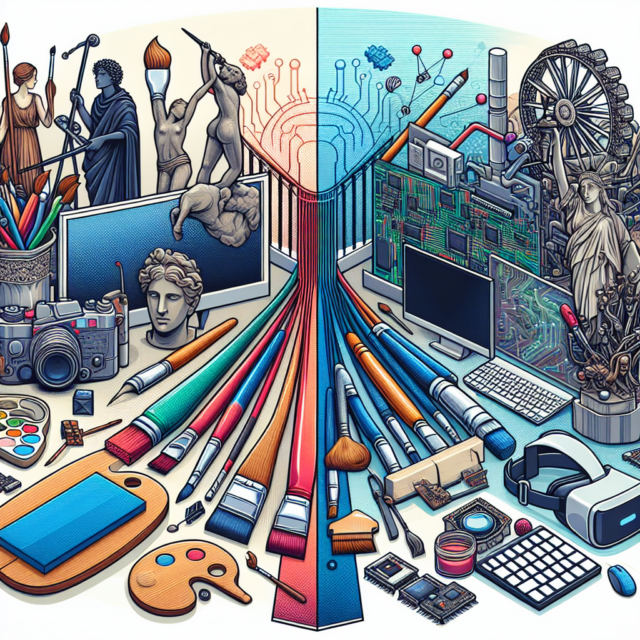
Bridging the Gap Between Pixels and Paintbrushes

The convergence of digital and traditional art forms is bridging the gap between pixels and paintbrushes, creating a hybrid space where artists can explore the best of both worlds. This intersection allows for a seamless blending of techniques, enabling artists to incorporate digital elements into traditional artworks and vice versa. By merging these mediums, artists are able to create pieces that are rich in texture, depth, and complexity, offering viewers a unique visual experience.

One of the ways artists are bridging this gap is through the use of mixed media, combining digital prints with traditional materials such as paint, charcoal, and ink. This fusion allows artists to experiment with different textures and layers, adding a tactile quality to digital works. By integrating digital components into traditional art, artists can create pieces that are both innovative and grounded in the physical world, challenging the notion that digital art is less "real" than its traditional counterparts.

Another approach to bridging the gap between pixels and paintbrushes is the use of digital techniques to enhance traditional artworks. For example, artists can use digital software to plan compositions, experiment with color palettes, or refine details before committing to a physical canvas. This process allows for greater precision and flexibility, enabling artists to push the boundaries of their craft while maintaining the authenticity of traditional techniques.

The rise of digital art galleries and exhibitions is also contributing to the convergence of digital and traditional art forms. These platforms provide artists with opportunities to showcase their work in both virtual and physical spaces, reaching a wider audience and challenging traditional perceptions of art. By embracing digital technologies, galleries can create immersive and interactive experiences that engage viewers in new and exciting ways, further blurring the line between the digital and physical realms.

Educational institutions are also playing a role in bridging the gap between pixels and paintbrushes by incorporating digital art courses into their curricula. By teaching students how to integrate digital tools with traditional techniques, educators are preparing the next generation of artists to navigate the evolving landscape of art and technology. This holistic approach to art education encourages students to embrace innovation while respecting the rich history of traditional art forms.

Ultimately, the convergence of digital and traditional art forms is creating a dynamic and inclusive space for artistic expression. By bridging the gap between pixels and paintbrushes, artists are able to explore new possibilities and create works that are both innovative and grounded in tradition. This intersection not only enriches the art world but also invites audiences to experience art in new and transformative ways.

The intersection of technology and art is a testament to the power of human creativity and innovation. As artists continue to explore new tools and techniques, they are redefining the boundaries of their craft and challenging conventional notions of what art can be. This dynamic interplay between technology and art promises to inspire future generations, fostering a culture of creativity and exploration that transcends traditional boundaries. As we look to the future, the possibilities at the crossroads of art and technology are limitless, offering exciting opportunities for artists and audiences alike to experience and engage with art in new and transformative ways.

Exploring Future Digital Trends in Brand Strategy

Exploring Future Digital Trends in Brand Strategy

In the rapidly evolving digital landscape, brand strategy is undergoing a profound transformation. As technology continues to advance at an unprecedented pace, companies are compelled to rethink how they engage with consumers and position their brands. This article delves into the future of digital trends in brand strategy, exploring the evolving dynamics, key technological advances, and the necessary adaptations required for brands to thrive in a digital-first world.

Navigating the Evolution of Digital Brand Strategies

Digital brand strategies have undergone significant changes over the past decade. The shift from traditional marketing methods to digital-first approaches has been driven by the rise of the internet and the proliferation of connected devices. As consumers become increasingly tech-savvy, brands must navigate this evolution by embracing digital channels and platforms to effectively reach their target audiences. This transition requires a fundamental rethinking of how brands communicate their value propositions and engage with consumers in a digitally dominated environment.

The evolution of digital brand strategies is marked by the growing importance of personalization. Consumers today expect tailored experiences that resonate with their individual preferences and needs. Brands are leveraging data analytics and artificial intelligence to gather insights into consumer behavior and deliver personalized content and recommendations. This trend is reshaping brand strategies, as companies strive to create meaningful connections with consumers through personalized interactions that foster brand loyalty and advocacy.

Another significant aspect of this evolution is the rise of social media as a powerful branding tool. Social media platforms have become integral to brand strategies, offering a direct line of communication between brands and their audiences. Brands are leveraging social media to build communities, engage with consumers in real-time, and amplify their messaging. The evolution of social media algorithms and features requires brands to stay agile and adapt their strategies to maximize reach and engagement in this dynamic digital ecosystem.

The evolution of digital brand strategies is also influenced by the increasing importance of brand storytelling. In a crowded digital landscape, brands need to differentiate themselves by crafting compelling narratives that resonate with their audiences. Storytelling allows brands to connect with consumers on an emotional level, creating a lasting impact. Digital platforms offer diverse storytelling formats, from short-form videos to immersive experiences, enabling brands to experiment and innovate in their storytelling approaches.

Furthermore, the evolution of digital brand strategies is characterized by the growing emphasis on brand authenticity and transparency. Consumers today are more discerning and value brands that are genuine and transparent in their communications. Brands are responding by embracing authenticity in their messaging, showcasing their values, and addressing social and environmental issues. This shift towards authenticity is reshaping brand strategies, as companies strive to build trust and credibility in an increasingly skeptical digital landscape.

Lastly, the evolution of digital brand strategies is driven by the need for agility and adaptability. The digital landscape is constantly evolving, with new technologies and trends emerging at a rapid pace. Brands must be agile in their strategies, ready to pivot and adapt to changing consumer expectations and market dynamics. This requires a flexible approach, where brands continuously monitor and analyze digital trends, experiment with new technologies, and iterate their strategies to stay ahead of the curve.

Key Technological Advances Shaping Brand Futures

Artificial intelligence (AI) stands at the forefront of technological advances shaping the future of brand strategies. AI is transforming how brands interact with consumers by enabling personalized experiences, predictive analytics, and automated customer service. With AI, brands can analyze vast amounts of data to gain insights into consumer behavior, preferences, and trends, allowing them to tailor their strategies and offerings to meet individual needs. This technology empowers brands to deliver highly targeted and relevant content, enhancing customer satisfaction and brand loyalty.

The rise of augmented reality (AR) and virtual reality (VR) is revolutionizing brand experiences. These immersive technologies offer brands new avenues to engage with consumers by creating interactive and memorable experiences. AR and VR enable brands to showcase products in innovative ways, allowing consumers to visualize and interact with them virtually. This technology is particularly impactful in industries such as retail, real estate, and tourism, where consumers can explore products and destinations from the comfort of their homes, enhancing their decision-making process and driving brand engagement.

Blockchain technology is another key advancement shaping the future of brand strategies. With its decentralized and transparent nature, blockchain offers brands opportunities to enhance trust and security in their interactions with consumers. Brands can leverage blockchain for supply chain transparency, ensuring the authenticity and origin of products. Additionally, blockchain-based loyalty programs and digital currencies enable brands to create unique and secure customer experiences, fostering brand loyalty and differentiation in a competitive market.

The Internet of Things (IoT) is transforming brand strategies by connecting devices and enabling seamless interactions between brands and consumers. IoT allows brands to gather real-time data on consumer behavior, preferences, and usage patterns, providing valuable insights for personalized marketing and product development. Brands can leverage IoT to create connected experiences, such as smart home devices and wearables, that enhance convenience and engagement. This technology offers brands the opportunity to become an integral part of consumers’ daily lives, strengthening their brand presence and relevance.

Voice technology is rapidly gaining traction and reshaping brand strategies. With the rise of voice-activated devices and virtual assistants, brands are exploring new ways to engage with consumers through voice interactions. Voice technology enables hands-free and convenient experiences, allowing consumers to interact with brands effortlessly. Brands are optimizing their content for voice search and developing voice-enabled applications to enhance customer experiences. As voice technology continues to evolve, brands must adapt their strategies to leverage this emerging trend and stay connected with their audiences.

Data analytics and big data are pivotal in shaping the future of brand strategies. The ability to collect, analyze, and interpret vast amounts of data empowers brands to make informed decisions and drive their strategies. Data analytics enables brands to understand consumer behavior, identify trends, and measure the effectiveness of their marketing efforts. By leveraging data insights, brands can optimize their campaigns, personalize experiences, and identify new growth opportunities. The integration of data analytics into brand strategies is essential for brands to remain competitive and relevant in an increasingly data-driven digital landscape.

Adapting Brand Strategies for a Digital-First World

In a digital-first world, brands must prioritize digital channels and platforms to effectively reach and engage with their audiences. This shift requires brands to adapt their strategies to leverage the full potential of digital technologies. Brands need to invest in building a strong online presence, optimizing their websites for search engines, and creating compelling content that resonates with their target audiences. By embracing a digital-first approach, brands can expand their reach, increase brand visibility, and drive customer engagement in an increasingly digital landscape.

To adapt brand strategies for a digital-first world, brands must embrace a customer-centric approach. Understanding consumer behavior, preferences, and needs is crucial for developing effective digital strategies. Brands need to invest in data analytics and consumer insights to gain a deep understanding of their audiences. By leveraging this information, brands can create personalized experiences, tailor their messaging, and deliver relevant content that resonates with consumers. A customer-centric approach enables brands to build meaningful connections, foster brand loyalty, and drive long-term success in a digital-first world.

Brands must also adapt their strategies to leverage the power of social media in a digital-first world. Social media platforms offer brands the opportunity to connect with their audiences, build communities, and amplify their messaging. Brands need to develop a strong social media presence, engage with their audiences in real-time, and create compelling content that sparks conversations and drives engagement. By harnessing the power of social media, brands can enhance brand awareness, drive customer loyalty, and stay relevant in a fast-paced digital landscape.

In a digital-first world, brands need to prioritize mobile optimization in their strategies. With the increasing use of smartphones and mobile devices, consumers are accessing digital content on the go. Brands must ensure that their websites, applications, and content are optimized for mobile devices to provide seamless experiences. Mobile optimization includes responsive design, fast-loading pages, and intuitive navigation. By prioritizing mobile optimization, brands can enhance user experiences, drive mobile engagement, and capture the attention of their audiences in a mobile-driven digital landscape.

To adapt brand strategies for a digital-first world, brands must embrace innovation and experimentation. The digital landscape is constantly evolving, with new technologies and trends emerging at a rapid pace. Brands need to stay agile and open to exploring new opportunities. This includes experimenting with emerging technologies, such as AI, AR, and voice, and exploring new digital channels and formats. By embracing innovation and experimentation, brands can stay ahead of the curve, differentiate themselves from competitors, and drive growth in a digital-first world.

Lastly, brands must prioritize data privacy and security in their digital strategies. With the increasing amount of personal data being collected and shared, consumers are becoming more concerned about their privacy and security. Brands need to ensure that they are transparent in their data practices, comply with relevant regulations, and prioritize data protection. By prioritizing data privacy and security, brands can build trust and credibility with their audiences, mitigate risks, and maintain strong relationships in a digital-first world.

As we look to the future, the digital landscape will continue to evolve, presenting both challenges and opportunities for brands. By navigating the evolution of digital brand strategies, embracing key technological advances, and adapting to a digital-first world, brands can position themselves for success. The future of brand strategy lies in the ability to leverage digital technologies, deliver personalized experiences, and build meaningful connections with consumers. By staying agile, innovative, and customer-centric, brands can thrive in the ever-changing digital landscape and create lasting impact in the minds of their audiences.

AI Fashion: Redefining Style in the Digital Age

AI Fashion: Redefining Style in the Digital Age

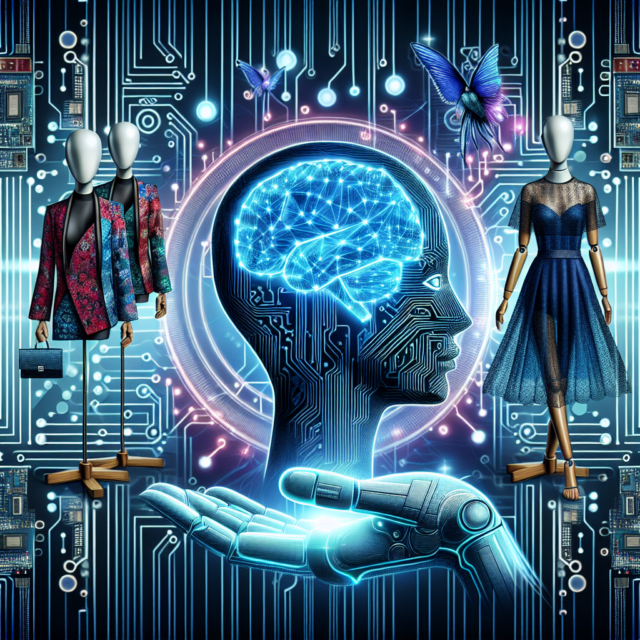
In recent years, the fashion industry has undergone a significant transformation, driven by advancements in technology, particularly artificial intelligence (AI). This evolution is reshaping the way designers create, consumers shop, and brands operate. As AI continues to integrate into the fashion world, it promises to redefine style in ways previously unimaginable. In this article, we explore the dynamic intersection of AI and fashion innovation, the impact of algorithms on modern design, and the emergence of virtual runways as the future of fashion shows.

The Intersection of AI and Fashion Innovation

The fashion industry has always been a fertile ground for innovation, with its cyclical nature and relentless pursuit of the new. AI is the latest technological advancement to make waves in this creative field. By leveraging its capabilities, designers and brands are redefining traditional processes and exploring new frontiers. AI has the potential to analyze vast amounts of data, offering insights that were previously inaccessible. This data-driven approach is transforming how fashion trends are predicted, allowing brands to stay ahead of the curve.

One of the most significant impacts of AI in fashion is its ability to personalize consumer experiences. Through AI-powered recommendation systems, retailers can offer personalized suggestions based on individual preferences and past purchases. This level of customization not only enhances the shopping experience but also increases customer satisfaction and loyalty. As a result, brands are able to build stronger connections with their audience, fostering a more engaging and interactive relationship.

Moreover, AI is playing a crucial role in sustainability, an increasingly important issue within the fashion industry. By optimizing supply chains and reducing waste, AI helps brands minimize their environmental impact. Predictive analytics enable companies to produce the right amount of inventory, reducing the likelihood of overproduction and unsold stock. This shift towards sustainability is not only beneficial for the planet but also appeals to the growing number of eco-conscious consumers.

In the realm of design, AI is revolutionizing the creative process. Designers are using AI tools to generate new patterns, styles, and color combinations, expanding their creative horizons. These tools can analyze historical and cultural data to inspire designs that resonate with contemporary tastes. As a result, fashion is becoming more diverse and inclusive, reflecting a broader range of influences and perspectives.

AI is also enhancing the way fashion is marketed and sold. Through advanced image recognition and natural language processing, AI can analyze social media trends and consumer feedback, providing valuable insights into market demands. Brands can then tailor their marketing strategies to target specific demographics more effectively. This data-driven approach not only boosts sales but also helps brands maintain relevance in a rapidly changing market.

Finally, AI is contributing to the democratization of fashion. By providing access to powerful design tools and data insights, it allows smaller brands and independent designers to compete with established fashion houses. This democratization fosters creativity and innovation across the industry, ensuring that fashion remains dynamic and ever-evolving.

How Algorithms Are Influencing Modern Design

Algorithms are becoming an integral part of the design process in the fashion industry, offering a new lens through which creativity is viewed. By analyzing data from various sources, algorithms can identify emerging trends and consumer preferences with remarkable accuracy. This information allows designers to create collections that resonate with their target audience, ensuring their work is both relevant and commercially viable.

The use of algorithms in design extends beyond trend analysis. They are also being employed to generate new ideas and concepts. By processing vast amounts of visual data, algorithms can suggest unique patterns, textures, and color palettes that might not have been considered otherwise. This capability allows designers to explore uncharted territories and push the boundaries of traditional fashion design.

In addition to inspiring creativity, algorithms can streamline the design process, making it more efficient and cost-effective. By automating certain tasks, such as fabric selection and pattern making, designers can focus on the more creative aspects of their work. This efficiency not only speeds up the production timeline but also reduces costs, making fashion more accessible to a broader audience.

Furthermore, algorithms are facilitating greater collaboration between designers and consumers. Through AI-powered platforms, consumers can participate in the design process by providing feedback and preferences. This collaborative approach ensures that the final product aligns with consumer expectations, increasing the likelihood of success in the market.

The influence of algorithms is also evident in the realm of customization. AI enables brands to offer bespoke products tailored to individual preferences, from fit and style to color and fabric. This level of personalization is not only appealing to consumers but also sets brands apart in a competitive market. By leveraging algorithms, fashion companies can create unique, one-of-a-kind pieces that cater to the desires of their clientele.

Lastly, algorithms are playing a pivotal role in addressing the issue of inclusivity within fashion. By analyzing diverse datasets, AI can help designers create collections that cater to a wide range of body types, skin tones, and cultural backgrounds. This inclusivity ensures that fashion is representative of the diverse world we live in, fostering a sense of belonging and acceptance among consumers.

Virtual Runways: The Future of Fashion Shows

The traditional fashion show, with its grand catwalks and exclusive audiences, is undergoing a transformation in the digital age. Virtual runways, powered by AI and augmented reality (AR), are emerging as the future of fashion shows, offering a new way to experience the latest collections. These digital platforms provide an immersive experience that transcends geographical boundaries, making fashion shows accessible to a global audience.

Virtual runways offer numerous advantages over traditional fashion shows. They eliminate the need for physical venues, reducing the environmental impact and logistical challenges associated with organizing large-scale events. This shift towards digital showcases aligns with the industry’s growing emphasis on sustainability, making it an attractive option for eco-conscious brands and designers.

Moreover, virtual runways provide an opportunity for greater creativity and innovation in presentation. Designers can experiment with digital environments, using AI and AR to create immersive experiences that enhance the storytelling aspect of their collections. These virtual showcases can incorporate interactive elements, allowing viewers to engage with the designs in ways that were not possible with traditional shows.

The accessibility of virtual runways is another significant benefit. By removing the barriers of location and exclusivity, these digital platforms democratize the fashion show experience. Viewers from around the world can attend, regardless of their physical location or social status. This inclusivity fosters a sense of community among fashion enthusiasts and broadens the reach of designers and brands.

Virtual runways also offer valuable data insights that can inform future collections. By analyzing viewer engagement and feedback, designers can gain a deeper understanding of consumer preferences and trends. This information enables them to refine their designs and marketing strategies, ensuring that their work resonates with their audience.

Finally, the rise of virtual runways is paving the way for new business models within the fashion industry. Brands can leverage digital platforms to sell directly to consumers, bypassing traditional retail channels. This direct-to-consumer approach not only increases profit margins but also allows brands to build stronger relationships with their audience. As virtual runways continue to evolve, they are poised to become a central component of the fashion industry’s future.

As AI continues to permeate the fashion industry, it is clear that its impact is both profound and far-reaching. From redefining design processes to revolutionizing fashion shows, AI is reshaping the way we perceive and interact with fashion. As technology advances, the possibilities for innovation and creativity within the industry are limitless. This digital transformation is not only enhancing the consumer experience but also ensuring that fashion remains relevant and inclusive in the modern age. As we look to the future, it is evident that AI will continue to play a pivotal role in shaping the style and substance of the fashion world.

Crafting Your Brand: Building a Strong Digital Presence

Crafting Your Brand: Building a Strong Digital Presence

In today’s digital age, establishing a robust online presence is not merely an option but a necessity for businesses and individuals alike. Crafting a brand that resonates in the digital realm requires a thoughtful approach and a clear understanding of one’s identity and audience. This article explores the essential elements of creating a compelling digital presence through effective branding, engagement strategies, and adaptive measures to ensure lasting success.

Understanding the Core Elements of Your Brand

Understanding the core elements of your brand is the foundational step in crafting a strong digital presence. At its essence, a brand represents the collective perception of your business by the public. It encompasses your mission, vision, and values, which should be clearly articulated and consistently communicated across all digital platforms. A well-defined brand identity provides direction and coherence, helping to distinguish your offerings in a crowded marketplace.

To begin, identify the unique selling proposition (USP) of your brand. This involves pinpointing what sets your products or services apart from the competition. A clear USP not only attracts potential customers but also fosters loyalty among existing ones. It’s important to ensure that your USP is reflected in all digital content, from website copy to social media posts, to create a cohesive brand narrative.

Visual elements are equally critical in establishing a recognizable brand. This includes your logo, color scheme, typography, and overall design aesthetic. Consistency in visual branding helps build familiarity and trust, making it easier for your audience to recognize and remember your brand. Invest in high-quality design elements that reflect the personality and tone of your brand, and use them consistently across all digital platforms.

Your brand voice is another essential element that requires careful consideration. Whether formal, friendly, or quirky, your brand voice should align with your target audience and be consistent in all communications. Crafting a distinct voice involves understanding your audience’s preferences and tailoring your messaging to resonate with them. This not only enhances engagement but also reinforces your brand’s identity.

A crucial aspect of your brand’s core elements is understanding your target audience. Conduct thorough research to identify their demographics, preferences, and behaviors. This insight enables you to tailor your brand messaging and digital presence to meet their needs effectively. By aligning your brand with the values and expectations of your audience, you create a more meaningful connection and foster long-term loyalty.

Finally, your brand’s online presence is an extension of its offline persona. Ensure that your digital activities reflect the values and promises you make in the real world. Authenticity is key; consumers are more likely to engage with brands that are genuine and transparent. By maintaining consistency between your online and offline branding efforts, you build credibility and trust with your audience.

Strategies for Effective Online Engagement

Effective online engagement is pivotal in building a strong digital presence. It involves creating meaningful interactions with your audience across various digital platforms. To achieve this, it’s important to develop a comprehensive content strategy that aligns with your brand’s objectives and resonates with your target audience.

Start by creating valuable and relevant content that addresses the needs and interests of your audience. This could include blog posts, videos, infographics, or podcasts, depending on your audience’s preferences. The key is to provide content that is informative, entertaining, or inspiring, encouraging your audience to engage, share, and return for more. Consistency in content creation and distribution helps keep your audience engaged and builds anticipation for future offerings.

Social media platforms offer unique opportunities for engagement, allowing brands to interact with their audience in real-time. Identify the platforms where your target audience is most active and tailor your content accordingly. Use a mix of organic and paid strategies to reach a broader audience and engage them through comments, direct messages, and interactive features such as polls or live sessions.

Personalization is another powerful tool for online engagement. By leveraging data and analytics, you can create personalized experiences for your audience, such as tailored recommendations or targeted messaging. Personalization enhances the user experience, making your audience feel valued and understood. This, in turn, increases the likelihood of engagement and conversion.

Building a community around your brand is a strategic approach to fostering engagement. Encourage discussions and interactions among your audience by creating forums, groups, or online events. By facilitating connections between your audience members, you create a sense of belonging and loyalty to your brand. Active community management is essential to ensure a positive and engaging environment.

Listening to your audience is crucial for effective engagement. Monitor feedback, comments, and reviews to gain insights into their preferences and concerns. Use this information to refine your content and engagement strategies, ensuring that they align with your audience’s evolving needs. Responding to feedback promptly and thoughtfully demonstrates that you value your audience’s input and are committed to meeting their expectations.

Finally, collaboration with influencers or other brands can enhance your online engagement efforts. Partnering with individuals or organizations that share your values and have a similar target audience can expand your reach and credibility. Influencers can introduce your brand to new audiences, while collaborations with other brands can create unique and engaging content that resonates with your shared audience.

Measuring Success and Adapting Your Approach

Measuring the success of your digital branding efforts is essential to understanding what works and what needs improvement. Establish clear objectives and key performance indicators (KPIs) that align with your brand’s goals. These could include metrics such as website traffic, social media engagement, conversion rates, or customer retention. Regularly track these metrics to assess the effectiveness of your strategies.

Analytics tools provide valuable insights into your audience’s behavior and preferences. Use these tools to analyze data and identify trends or patterns that can inform your decision-making. For example, understanding which content resonates most with your audience can guide future content creation efforts. Similarly, identifying peak engagement times can optimize your posting schedule for maximum impact.

Adapting your approach based on data insights is crucial for continuous improvement. Be open to experimenting with different strategies and tactics to see what resonates best with your audience. A/B testing, for example, allows you to compare different versions of content or campaigns to determine which performs better. This iterative process helps refine your strategies over time, enhancing your brand’s digital presence.

Feedback from your audience is another valuable source of information for adapting your approach. Encourage reviews, surveys, or direct feedback to gain insights into their experiences and expectations. Use this feedback to identify areas for improvement and make necessary adjustments to your brand messaging or engagement strategies. Demonstrating responsiveness to feedback builds trust and strengthens your relationship with your audience.

Regularly review and update your brand’s digital presence to ensure it remains relevant and aligned with your evolving goals. This includes refreshing your website design, updating your social media profiles, and revisiting your content strategy. Staying current with industry trends and technological advancements is essential to maintaining a competitive edge in the digital landscape.

Finally, celebrate your successes and learn from your failures. Recognize the achievements and milestones you’ve reached in building your digital presence, and use them as motivation to continue striving for excellence. Reflect on any setbacks or challenges as opportunities for growth and improvement. By maintaining a proactive and adaptive mindset, you can ensure the long-term success of your brand’s digital presence.

Building a strong digital presence is an ongoing journey that requires a deep understanding of your brand’s core elements, effective engagement strategies, and a commitment to continuous improvement. By defining your brand identity, engaging meaningfully with your audience, and adapting based on data insights, you can craft a digital presence that not only resonates with your audience but also stands the test of time. Embrace the dynamic nature of the digital landscape and remain open to change, and your brand will thrive in the ever-evolving online world.

Integrating Technology into the World of Couture Fashion

Integrating Technology into the World of Couture Fashion

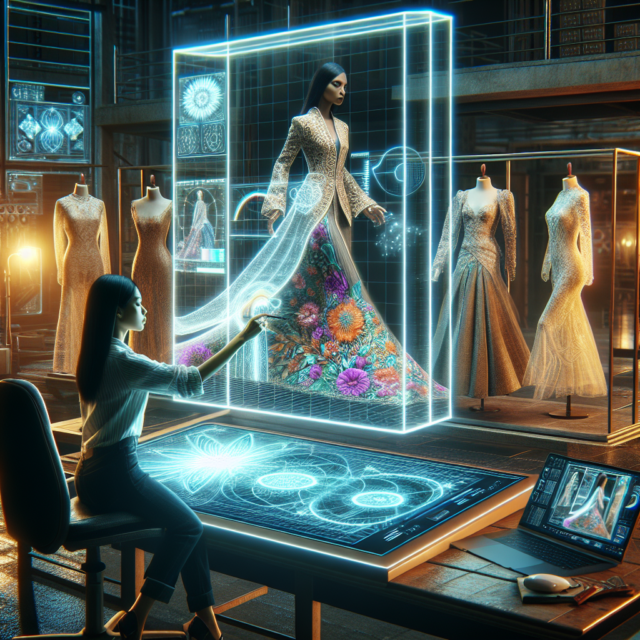
The world of couture fashion has long been synonymous with meticulous craftsmanship, exclusive designs, and a celebration of artistic expression. Today, this traditional domain is experiencing a transformative shift as technology becomes an integral part of its evolution. The integration of technology into couture fashion is reshaping the industry, offering designers new tools for creativity and consumers a more personalized experience. This article explores how technology is intersecting with couture fashion, the innovative changes it is bringing to high-end design, and the challenges and opportunities that digital couture presents.

The Intersection of Technology and Couture Fashion

The fusion of technology and couture fashion marks a significant turning point in the industry, where tradition meets innovation. Historically, couture fashion has been characterized by its dedication to handcrafting and bespoke tailoring, with each piece being a labor of love and creativity. However, the introduction of technology is redefining these age-old processes, allowing designers to push the boundaries of what is possible in garment creation. From digital sketching tools to 3D modeling software, technology is providing designers with new ways to conceptualize and bring their visions to life.

One of the most compelling aspects of this intersection is the rise of wearable technology. Designers are increasingly incorporating tech elements into their garments, such as LED lights, smart fabrics, and interactive features that respond to environmental stimuli. This blend of fashion and technology not only enhances the aesthetic appeal of couture pieces but also adds a functional layer that engages the wearer in a unique experience. Such innovations are paving the way for a new era of fashion that is as much about experience as it is about appearance.

The role of technology extends beyond the design phase into the realm of manufacturing and production. Advanced machinery and robotics are being used to streamline the creation of couture garments, ensuring precision and efficiency without compromising on quality. These technological advancements are particularly beneficial in handling intricate details and complex patterns that are a hallmark of haute couture. As a result, designers can focus more on creativity and less on the limitations of manual production techniques.

Virtual and augmented reality (VR/AR) are also playing a pivotal role in the couture fashion industry. Through virtual showrooms and fashion shows, designers can reach a global audience without the constraints of physical space. This technology not only democratizes access to high fashion but also offers an immersive experience that can be tailored to individual preferences. Consumers can virtually try on garments, explore different styles, and even customize designs, making couture fashion more accessible and interactive than ever before.

The integration of technology into couture fashion is also fostering collaborations across industries. Designers are partnering with tech companies, engineers, and scientists to explore new materials and processes. This interdisciplinary approach is leading to groundbreaking innovations, such as biodegradable fabrics, self-healing materials, and garments that adapt to different climates. These collaborations are not only expanding the possibilities of couture fashion but also addressing important issues related to sustainability and environmental impact.

While technology is undoubtedly transforming the couture fashion landscape, it is important to recognize that it is not replacing traditional craftsmanship but rather enhancing it. The essence of couture lies in its attention to detail and dedication to artistry, qualities that technology can complement rather than overshadow. By embracing technology, the couture industry is poised to continue its legacy of innovation and excellence, offering a glimpse into the future of fashion where creativity knows no bounds.

Innovations Transforming High-End Fashion Design

In the realm of high-end fashion design, technology is acting as a catalyst for innovation, enabling designers to explore uncharted territories and redefine the standards of luxury. One of the most significant innovations is the use of 3D printing technology. This cutting-edge tool allows designers to create intricate patterns and structures that would be impossible to achieve through traditional methods. With 3D printing, designers can experiment with complex geometries and produce garments that are both visually stunning and structurally sound.

Another transformative innovation is the use of artificial intelligence (AI) in fashion design. AI algorithms are being utilized to analyze trends, predict consumer preferences, and even generate design concepts. By leveraging AI, designers can gain valuable insights into market demands and tailor their collections accordingly. This data-driven approach not only enhances the creative process but also ensures that designs resonate with the target audience, leading to greater success in a competitive market.

Smart textiles are also making waves in the high-end fashion industry. These advanced materials are embedded with electronic components that can monitor and respond to various stimuli. For example, garments made from smart textiles can change color based on temperature, emit light, or even charge electronic devices. Designers are using these innovative materials to create dynamic and interactive fashion pieces that blur the line between clothing and technology.

The advent of digital fashion design tools is revolutionizing the way designers conceptualize and create their collections. Software programs that offer virtual prototyping, pattern making, and fabric simulation are streamlining the design process, allowing for greater experimentation and creativity. These tools enable designers to visualize their creations in a digital space, make real-time adjustments, and perfect their designs before they are physically produced. This not only saves time and resources but also reduces waste, aligning with the growing emphasis on sustainability in fashion.

Sustainability is a key focus in the integration of technology into couture fashion, and innovations in eco-friendly materials and processes are leading the charge. Designers are exploring the use of biodegradable fabrics, recycled materials, and zero-waste production techniques to minimize the environmental impact of their creations. Technology is facilitating these efforts by providing new methods for fabric production, dyeing, and garment construction that prioritize sustainability without compromising on quality or aesthetics.

The integration of technology in high-end fashion design is also enhancing the consumer experience. Virtual fitting rooms, personalized styling recommendations, and interactive shopping platforms are transforming the way consumers engage with luxury fashion. These technological advancements offer a more personalized and convenient shopping experience, allowing consumers to explore and purchase couture pieces from anywhere in the world. As a result, the boundaries between designers and consumers are blurring, creating a more inclusive and dynamic fashion industry.

Challenges and Opportunities in Digital Couture

As technology becomes increasingly embedded in the world of couture fashion, it brings with it a unique set of challenges and opportunities. One of the primary challenges is the preservation of craftsmanship and artistry in an era dominated by digital tools. While technology offers new possibilities for creativity, there is a concern that the traditional skills and techniques that define couture may be overshadowed or lost. The challenge lies in finding a balance between embracing innovation and maintaining the integrity of artisanal craftsmanship.

Another challenge is the accessibility and affordability of digital couture. High-end fashion has always been associated with exclusivity, and the integration of technology can exacerbate this by adding an additional layer of complexity and cost. The development and implementation of cutting-edge technologies require significant investment, which can limit access to only the most established designers and brands. Ensuring that digital couture remains inclusive and accessible is a challenge that the industry must address to avoid widening the gap between different market segments.

The rapid pace of technological advancement also presents a challenge in terms of sustainability and environmental impact. While technology offers solutions for eco-friendly fashion, it also raises concerns about the lifecycle of digital products and the disposal of electronic components. The fashion industry must navigate these challenges by adopting sustainable practices and finding ways to minimize the environmental footprint of digital couture.

Despite these challenges, the integration of technology into couture fashion offers numerous opportunities for growth and innovation. One such opportunity is the potential for greater customization and personalization. With digital tools, designers can create bespoke garments tailored to individual preferences and measurements, offering consumers a truly unique fashion experience. This level of personalization enhances the value of couture pieces and strengthens the connection between designers and their clientele.

Technology also opens up new avenues for storytelling and brand engagement in couture fashion. Through digital platforms, designers can share the creative journey behind their collections, offering insights into the inspiration, process, and craftsmanship involved. This transparency and storytelling not only enhance brand loyalty but also create a deeper appreciation for the artistry of couture fashion. By leveraging technology, designers can build a more engaged and informed audience, fostering a sense of community and connection.

Ultimately, the integration of technology into couture fashion is reshaping the industry in profound ways. It challenges designers to think beyond traditional boundaries and explore new possibilities for creativity and expression. While there are hurdles to overcome, the opportunities for innovation, sustainability, and consumer engagement are vast. As designers continue to embrace technology, the future of couture fashion promises to be a dynamic and exciting landscape where tradition and innovation coexist harmoniously.

The intersection of technology and couture fashion is a testament to the ever-evolving nature of the fashion industry. As designers navigate this new landscape, they are redefining the meaning of luxury and creativity. While challenges remain, the opportunities for innovation and growth are boundless. By embracing technology, the couture fashion industry is not only preserving its rich heritage but also paving the way for a future where art, fashion, and technology seamlessly intertwine. As we look to the future, it is clear that the fusion of tradition and innovation will continue to drive the evolution of couture fashion, offering endless possibilities for designers and consumers alike.

Integrating Technology into Modern Fashion Design

Integrating Technology into Modern Fashion Design

In the ever-evolving world of fashion, the integration of technology has emerged as a transformative force, reshaping how designers conceptualize and create garments. The fusion of these two fields has led to innovative approaches that challenge traditional methods, offering exciting possibilities for the future of fashion. This article delves into the intersection of fashion and technology, explores the innovations shaping modern design, and examines the challenges and opportunities presented by this tech-driven evolution.

Exploring the Intersection of Fashion and Technology

Fashion and technology may seem like disparate worlds, but their intersection has become increasingly seamless. At its core, this convergence is about more than just incorporating digital tools into the design process; it’s about redefining the very essence of what fashion can be. Designers are now able to push the boundaries of creativity by using technology as a catalyst for innovation. For instance, 3D printing has allowed for the creation of intricate designs that were once impossible to realize using traditional techniques. This technology empowers designers to experiment with new textures, forms, and structures, offering a fresh perspective on garment construction.

Moreover, wearable technology has emerged as a key area where fashion and tech meet, blending functionality with style. From smart fabrics that can change color or adapt to temperature, to garments embedded with sensors that monitor health metrics, the possibilities are vast. This intersection has also led to the rise of fashion tech startups, which are dedicated to developing products that enhance the consumer experience. These innovations are not only about aesthetics but also about creating clothing that interacts with the wearer in meaningful ways, thus enhancing the utility of fashion.

The digital revolution has also transformed the way fashion is marketed and consumed. Social media platforms and e-commerce have democratized fashion, making it accessible to a global audience. Virtual and augmented reality technologies are being used to create immersive shopping experiences, allowing consumers to visualize how garments will look and fit before making a purchase. This shift has not only enhanced customer engagement but also streamlined the supply chain, allowing for more efficient production and distribution processes.

Another fascinating aspect of this intersection is the use of artificial intelligence (AI) in fashion design. AI algorithms can analyze consumer data to predict trends, offering designers insights into what styles are likely to resonate with their audience. Additionally, AI can assist in the design process itself, generating new patterns and styles that may not have been conceived by a human designer. This collaboration between human creativity and machine intelligence is paving the way for a new era in fashion design.

Sustainability is another critical area where technology is making a significant impact. The fashion industry is notorious for its environmental footprint, but advancements in tech are providing solutions to mitigate this issue. From biodegradable materials to digital design processes that reduce waste, technology is playing a crucial role in creating a more sustainable fashion ecosystem. This shift not only benefits the environment but also aligns with the growing consumer demand for eco-friendly products.

Finally, the intersection of fashion and technology is fostering a new level of personalization. With the help of data analytics and machine learning, brands can offer customized experiences to consumers, tailoring products to individual preferences and needs. This level of personalization extends beyond fit and style, encompassing aspects such as fabric choice and functionality. As a result, consumers are more likely to find garments that truly resonate with their personal style, enhancing their overall satisfaction with the fashion industry.

Innovations Shaping the Future of Fashion Design

The landscape of fashion design is being reshaped by a host of technological innovations that are pushing the boundaries of creativity and functionality. One of the most groundbreaking developments is the use of 3D printing technology in garment production. This innovation allows designers to create complex structures and patterns that were previously unattainable, offering a new level of artistic expression. By using 3D printing, designers can experiment with unconventional materials and designs, resulting in unique and avant-garde fashion pieces that challenge the norms of traditional apparel.

Smart textiles represent another significant advancement in the fashion industry. These fabrics are embedded with electronic components, enabling them to interact with the environment and the wearer. For example, some smart textiles can change color or texture in response to external stimuli, such as temperature or light. Others are designed to monitor the wearer’s vital signs, providing real-time health data. This integration of technology into textiles not only enhances the functionality of garments but also opens up new possibilities for personalization and customization in fashion design.

Augmented reality (AR) and virtual reality (VR) are revolutionizing the way fashion is experienced and consumed. These technologies allow designers to create immersive environments where consumers can interact with virtual garments and accessories. For instance, virtual fitting rooms enable customers to see how clothes will look and fit on their bodies without physically trying them on. This innovation not only enhances the shopping experience but also reduces the need for physical inventory, contributing to a more sustainable fashion industry.

Artificial intelligence is playing an increasingly prominent role in fashion design, offering solutions that streamline the creative process. Designers can use AI algorithms to analyze vast amounts of data, identifying trends and consumer preferences that inform their collections. AI can also assist in the design process itself, generating new styles and patterns that reflect current trends while incorporating innovative elements. This collaboration between human creativity and machine intelligence is leading to the development of fashion that is not only aesthetically pleasing but also highly relevant to contemporary consumers.

Sustainability is a key focus for many fashion designers, and technology is playing a vital role in advancing this goal. Innovations such as digital design processes and eco-friendly materials are helping to reduce the environmental impact of fashion production. For example, digital prototyping allows designers to create and test garments virtually, minimizing waste and resource consumption. Additionally, advancements in material science are leading to the development of biodegradable fabrics that decompose naturally, reducing the burden on landfills.

Finally, the rise of the Internet of Things (IoT) is influencing fashion design by enabling garments to connect with other devices and systems. This connectivity allows for the creation of clothing that can communicate with smartphones, home automation systems, and other IoT-enabled devices. For example, a jacket with built-in GPS capabilities can provide navigation assistance, while a shirt with integrated LED lights can display notifications from a smartphone. This integration of technology into fashion not only enhances the functionality of garments but also aligns with the growing trend of connected living.

Challenges and Opportunities in Tech-Driven Fashion

The integration of technology into fashion design presents a unique set of challenges and opportunities that are shaping the industry’s future. One of the primary challenges is the rapid pace of technological advancement, which can make it difficult for designers to keep up with the latest innovations. Staying current with technology requires continuous learning and adaptation, which can be resource-intensive for fashion brands. However, this challenge also presents an opportunity for designers to differentiate themselves by embracing cutting-edge technologies and incorporating them into their collections.

Another challenge is the high cost associated with implementing new technologies in fashion design. Developing and producing tech-enhanced garments often require significant investment in research and development, as well as specialized equipment and materials. This financial barrier can be prohibitive for smaller brands and independent designers, limiting their ability to compete with larger companies. However, as technology becomes more accessible and affordable, there is an opportunity for a wider range of designers to experiment with tech-driven fashion and bring innovative products to market.

The issue of sustainability is both a challenge and an opportunity in tech-driven fashion. While technology offers solutions for reducing the environmental impact of fashion production, it also raises concerns about electronic waste and the lifecycle of tech-enhanced garments. Designers must consider the environmental implications of incorporating technology into their products and strive to develop sustainable solutions that minimize waste. This challenge presents an opportunity for brands to position themselves as leaders in sustainable fashion, appealing to environmentally conscious consumers.

Consumer acceptance is another critical challenge for tech-driven fashion. While some consumers are eager to embrace innovative garments that offer enhanced functionality, others may be hesitant to adopt technology in their clothing. Designers must navigate this landscape by creating products that balance innovation with practicality and appeal to a broad audience. This challenge also presents an opportunity for brands to educate consumers about the benefits of tech-enhanced fashion and build trust in their products.

The integration of technology into fashion design also presents opportunities for collaboration across industries. Designers can partner with technology companies, material scientists, and engineers to develop innovative products that push the boundaries of traditional fashion. These collaborations can lead to the creation of garments that offer new levels of functionality and style, enhancing the overall consumer experience. By working together, fashion and technology professionals can drive innovation and create a more dynamic and interconnected industry.

Finally, the rise of tech-driven fashion presents an opportunity for brands to engage with consumers in new and exciting ways. By leveraging digital platforms and technologies, fashion brands can create interactive experiences that resonate with their audience and build lasting connections. From virtual fashion shows to personalized shopping experiences, technology offers a wealth of opportunities for brands to differentiate themselves and capture the attention of consumers in an increasingly competitive market.

As technology continues to evolve, its integration into fashion design presents both challenges and opportunities that are reshaping the industry. From innovative materials and processes to new ways of engaging with consumers, technology is driving a revolution in fashion that promises to redefine the way we create, experience, and consume clothing. While the path forward may be fraught with obstacles, the potential for innovation and growth is immense. By embracing the possibilities of tech-driven fashion, designers have the opportunity to lead the industry into a new era of creativity and sustainability, offering products that meet the needs of modern consumers and reflect the dynamic nature of our digital world.

Exploring the Intersection of AI and Modern Design

Exploring the Intersection of AI and Modern Design

Exploring the Intersection of AI and Modern Design

The fusion of artificial intelligence (AI) with modern design represents a transformative shift in creative industries, offering both opportunities and challenges. As AI technologies continue to evolve, their influence on design processes, methodologies, and outcomes becomes increasingly profound. This article delves into AI’s role in the evolution of modern design, explores how designers leverage these technologies for innovation, and speculates on future possibilities in the design landscape.

Understanding AI’s Role in Modern Design Evolution

Artificial intelligence has been increasingly integrated into the design world, fundamentally altering how designers approach their craft. At its core, AI serves as both a tool and a collaborator, enhancing the capabilities of human designers. By automating routine tasks, AI allows designers to focus on more complex and creative aspects of their projects. This shift not only boosts efficiency but also opens up new avenues for experimentation and innovation.

The evolution of AI in design is characterized by its ability to process vast amounts of data quickly and accurately. This capability allows designers to analyze trends, preferences, and patterns that would be impossible to discern manually. As a result, AI-driven insights can inform everything from product development to marketing strategies, ensuring that designs are not only aesthetically pleasing but also aligned with consumer needs and behaviors.

Moreover, AI has enabled the rise of generative design, a process where algorithms suggest design options based on specific parameters set by the designer. This approach allows for the exploration of a wider variety of design solutions, some of which may be unconventional or unexpected. Designers can then refine these AI-generated options, blending human creativity with machine precision to achieve optimal outcomes.

AI’s role in modern design extends beyond mere aesthetics, impacting functionality and user experience as well. For instance, AI-powered design tools can simulate how users interact with products or interfaces, providing valuable feedback that can be used to enhance usability and accessibility. This integration of AI into the design process ensures that products are not only visually appealing but also user-friendly and efficient.

In the realm of digital design, AI has also revolutionized the way designers approach web and app development. From intelligent coding assistants to automated testing and optimization tools, AI streamlines the development process, reducing time-to-market and minimizing errors. This efficiency enables designers to focus on innovation and creativity rather than getting bogged down in technical minutiae.

As AI continues to evolve, its role in modern design will undoubtedly expand, offering new tools and methodologies that further enhance the creative process. However, this evolution also raises important questions about the balance between human creativity and machine intelligence, highlighting the need for designers to adapt and evolve alongside these technological advancements.

How Designers Harness AI for Creative Innovation

Designers are increasingly leveraging AI to push the boundaries of creativity and innovation, utilizing these technologies in a variety of ways. One of the most significant contributions of AI to the design process is its ability to generate ideas and concepts that may not have been considered otherwise. By analyzing patterns and data, AI can suggest novel solutions that inspire designers to think outside the box.

AI-powered tools such as neural networks and machine learning algorithms are being used to create unique visual styles and art forms. These tools can generate complex patterns, textures, and color schemes, offering designers an extensive palette of options to choose from. This capability not only enhances the visual appeal of designs but also allows for greater personalization and customization, catering to diverse consumer preferences.

Collaboration between human designers and AI is another area where innovation is thriving. By working alongside AI, designers can test and iterate on ideas more rapidly, using machine feedback to refine and improve their creations. This collaborative process fosters a dynamic environment where creativity is not hindered by technical limitations, enabling designers to explore new frontiers in their work.

AI is also instrumental in enhancing the storytelling aspect of design. By analyzing user data and behavior, AI can help designers create more engaging and immersive experiences that resonate with audiences. This capability is particularly valuable in fields such as advertising and entertainment, where narrative and engagement are key to success. By leveraging AI’s data-driven insights, designers can craft compelling stories that capture attention and evoke emotion.

In addition to aiding in the creative process, AI is also transforming how designers approach problem-solving. By using AI to simulate different scenarios and outcomes, designers can identify potential challenges and devise effective solutions before they arise. This proactive approach not only saves time and resources but also ensures that designs are robust and resilient in the face of real-world challenges.

Despite the many advantages AI offers, designers must remain vigilant about maintaining the human touch in their work. While AI can provide valuable insights and suggestions, the final creative decisions should still rest with human designers. By striking a balance between AI-driven innovation and human intuition, designers can harness the full potential of AI while preserving the artistry and emotion that define their craft.

The Future of Design: AI’s Impact and Opportunities

As AI technology continues to advance, its impact on the design industry is expected to grow even more profound, presenting both opportunities and challenges for designers. One of the most promising aspects of AI in design is its potential to democratize the creative process. By making advanced design tools more accessible, AI can empower individuals and small businesses to produce high-quality designs without the need for extensive resources or expertise.

AI’s ability to analyze and predict trends will also play a crucial role in shaping the future of design. By providing designers with real-time insights into consumer preferences and market dynamics, AI can help them stay ahead of the curve and anticipate shifts in demand. This foresight will be invaluable in an increasingly competitive landscape, allowing designers to create products and experiences that resonate with audiences and stand out in the marketplace.

Moreover, AI is poised to revolutionize the way designers interact with clients and stakeholders. By using AI-driven analytics and visualization tools, designers can present their ideas more effectively, facilitating better communication and collaboration. This enhanced interaction will lead to more informed decision-making and ultimately result in designs that are more aligned with client expectations and objectives.

The integration of AI into design education is another area with significant potential. By incorporating AI tools and methodologies into design curricula, educational institutions can prepare the next generation of designers for the challenges and opportunities of a technology-driven world. This forward-thinking approach will ensure that designers are equipped with the skills and knowledge needed to thrive in an ever-evolving industry.

However, the increasing reliance on AI in design also raises important ethical considerations. Issues such as data privacy, algorithmic bias, and the potential loss of human jobs must be carefully addressed to ensure that the benefits of AI are realized without compromising ethical standards. Designers and industry leaders must work together to develop guidelines and best practices that promote responsible and equitable use of AI in design.

In conclusion, the intersection of AI and modern design presents a wealth of opportunities for innovation and growth. By embracing AI’s capabilities while remaining mindful of its limitations, designers can harness this powerful technology to create more impactful, meaningful, and sustainable designs. As the design industry continues to evolve, the successful integration of AI will be key to unlocking new possibilities and shaping the future of creativity.

The convergence of AI and modern design is reshaping the creative landscape, offering new tools and methodologies that enhance the design process. As AI continues to evolve, its role in design will become increasingly significant, presenting both opportunities and challenges for designers. By embracing AI’s potential while maintaining the human touch, designers can navigate this new frontier, creating innovative and impactful designs that resonate with audiences and stand the test of time.

Exploring Future Trends Shaping Influencer Dynamics

    0
    Exploring Future Trends Shaping Influencer Dynamics

    In the rapidly evolving landscape of digital marketing, influencer dynamics continue to play a pivotal role. As brands increasingly rely on influencers to connect with audiences in authentic and engaging ways, understanding the trends shaping this space is crucial. This article delves into the evolution of influencer marketing, examines the technological advances impacting influencers, and predicts new trends in influencer collaborations that are set to redefine the marketing world.

    Understanding the Evolution of Influencer Marketing

    The concept of influencer marketing is not entirely new; it dates back to when celebrities and public figures were used to endorse products. However, with the rise of social media platforms, the dynamics have significantly shifted. Initially, influencers were primarily bloggers or YouTubers who had a dedicated following. They leveraged their platforms to promote products and services, often in exchange for free products or modest fees. This form of marketing quickly gained traction due to its perceived authenticity compared to traditional advertising.

    As social media platforms evolved, so did the influencer marketing landscape. Instagram, for instance, became a hotbed for influencers, enabling them to reach massive audiences with striking visuals and stories. The platform’s algorithmic changes also pushed influencers to adapt, leading to the rise of micro and nano-influencers. These smaller influencers, with highly engaged niche audiences, have become increasingly attractive to brands seeking authentic connections with consumers.

    The evolution of influencer marketing has also been marked by a shift in consumer behavior. Today’s consumers are more informed and skeptical of traditional advertising, prompting brands to seek more genuine endorsements. Influencers, with their perceived relatability and trustworthiness, bridge this gap effectively. This shift has led to a more strategic approach in influencer marketing campaigns, with brands and influencers working closely to craft messages that resonate with target audiences.

    Another significant aspect of the evolution is the professionalization of the influencer industry. Influencers are no longer just hobbyists; many view it as a full-fledged career. This professionalization has led to the emergence of influencer agencies and platforms that connect brands with suitable influencers. As a result, the industry has become more structured, with clear expectations and deliverables on both sides.

    Influencer marketing has also seen a diversification of platforms beyond the traditional giants like Instagram and YouTube. Platforms such as TikTok, Snapchat, and even LinkedIn have become arenas for influencer activity. Each platform offers unique opportunities and challenges, prompting influencers to diversify their content strategies to maintain relevance across different audiences.

    Finally, the evolution of influencer marketing is characterized by an increased emphasis on data and analytics. Brands now demand measurable results from influencer campaigns, leading to the development of sophisticated tools that track engagement, reach, and conversion rates. This data-driven approach allows for more targeted campaigns and demonstrates the tangible impact of influencer marketing on a brand’s bottom line.

    Key Technological Advances Impacting Influencers

    One of the most significant technological advances impacting influencers is the rise of artificial intelligence (AI). AI is transforming how influencers create content and engage with their audiences. Tools powered by AI can analyze vast amounts of data to provide insights into audience preferences, optimal posting times, and content performance. This allows influencers to tailor their strategies for maximum impact, ensuring that their content resonates with their followers.

    Augmented reality (AR) and virtual reality (VR) technologies are also making waves in the influencer space. These technologies enable influencers to create immersive experiences for their audiences. For example, beauty influencers can use AR to allow followers to virtually try on makeup products, while travel influencers can provide VR tours of exotic destinations. Such innovations enhance engagement and offer unique value propositions to both followers and brands.

    The proliferation of video content has been another technological advancement shaping influencer dynamics. With platforms like TikTok and Instagram Reels gaining popularity, short-form video content has become a dominant force. Influencers are now tasked with creating compelling, bite-sized content that captures attention quickly. This shift has led to the development of new editing tools and techniques, allowing influencers to produce high-quality videos on-the-go.

    Live streaming technology is another game-changer for influencers. Platforms like Instagram Live and Twitch have enabled influencers to interact with their audiences in real-time, fostering a sense of community and authenticity. Live streams offer a unique opportunity for influencers to engage directly with their followers, answer questions, and provide behind-the-scenes insights. This form of interaction has become increasingly valuable, especially as audiences crave genuine connections.

    Blockchain technology is also beginning to impact the influencer industry, particularly in terms of transparency and trust. Blockchain can be used to verify the authenticity of influencer endorsements and track the effectiveness of campaigns. This technology provides a tamper-proof record of transactions and engagements, which can help combat issues like fake followers and fraudulent activities. As trust remains a cornerstone of influencer marketing, blockchain’s role is expected to grow.

    Finally, the rise of voice technology, driven by smart speakers and voice assistants, is creating new opportunities for influencers. Voice technology enables influencers to reach audiences through podcasts and audio content, expanding their reach beyond visual and text-based platforms. This shift towards audio content allows influencers to connect with audiences in new ways, offering a more intimate and personal experience.

    Predicting New Trends in Influencer Collaborations

    One emerging trend in influencer collaborations is the rise of long-term partnerships between brands and influencers. Instead of one-off campaigns, brands are increasingly seeking ongoing relationships with influencers who align with their values and objectives. These long-term collaborations allow for deeper storytelling and a more authentic connection with audiences, as influencers become true ambassadors for the brand.

    Cross-platform collaborations are also on the rise, as influencers seek to diversify their presence across multiple social media channels. By collaborating on different platforms, influencers can reach a wider audience and create more cohesive campaigns. For example, an influencer might post teaser content on Instagram, host a live Q&A session on YouTube, and share behind-the-scenes footage on TikTok. This multi-channel approach enhances engagement and maximizes visibility.

    The trend of co-creating products or services with influencers is gaining momentum. Brands are recognizing the value of leveraging influencers’ creativity and expertise to develop new offerings. This type of collaboration not only generates buzz but also ensures that the product resonates with the influencer’s audience. Co-created products often benefit from the influencer’s authentic endorsement, leading to increased consumer trust and interest.

    Diversity and inclusivity are becoming central themes in influencer collaborations. Brands are increasingly mindful of representation and are working with influencers from diverse backgrounds to reach a broader audience. This trend reflects a growing awareness of the importance of inclusivity in marketing and the need to connect with consumers from all walks of life. Influencers who champion diversity are often seen as more relatable and trustworthy by their followers.

    Another predicted trend is the use of micro and nano-influencers in niche markets. These influencers, with smaller but highly engaged audiences, offer brands the opportunity to target specific communities effectively. As consumers continue to seek authentic and personalized experiences, micro and nano-influencers are becoming valuable partners in delivering tailored content that resonates deeply with niche audiences.

    Finally, influencer collaborations are expected to become more data-driven and results-focused. Brands are increasingly using analytics to measure the success of influencer campaigns, leading to more strategic partnerships. Influencers who can demonstrate tangible results in terms of engagement, reach, and conversions will be in high demand. This shift towards data-driven decision-making is likely to lead to more effective and impactful collaborations in the future.

    As the influencer marketing landscape continues to evolve, staying ahead of the trends is essential for brands and influencers alike. Technological advancements, changing consumer behaviors, and the demand for authenticity are all shaping the future of influencer dynamics. By understanding these trends and adapting to new opportunities, brands can forge meaningful connections with their audiences, while influencers can continue to thrive in this dynamic industry. The future of influencer marketing promises to be exciting and full of innovation, offering endless possibilities for those willing to embrace change.

    Popular Posts

    My Favorites