Home Blog Page 1253

Inside the private hospital where Michelle Keegan ‘gave birth to baby’ – en-suite rooms, eye-watering cost, room service and ‘goodie bags’ for new mums

    0
    Inside the private hospital where Michelle Keegan ‘gave birth to baby’ – en-suite rooms, eye-watering cost, room service and ‘goodie bags’ for new mums


    Michelle Keegan and her husband Mark Wright welcomed a beautiful baby girl into the world recently.

    The couple announced the happy news on Instagram on Wednesday, March 12 and revealed their baby girl was born last week.

    It’s been reported that Michelle gave birth to her bundle of joy at one of the top maternity hospitals in Europe.

    But what other famous faces have given birth there? And how much does it cost? Here, we’re taking a look inside the hospital.

    The pair have become parents for the first time (Credit: SplashNews.com)

    Michelle Keegan had baby at top maternity hospital

    Michelle gave birth last week at London’s Portland Hospital, it has been claimed.

    The actress has since been resting at home for the past six days in Essex.

    “Michelle and Mark are in that beautiful newborn bubble and are besotted with Palma,” a source told The Sun.

    And it turns out the private maternity hospital – which is one of the best in Europe – where Michelle gave birth, is no stranger to looking after famous faces.

    Princess Eugenie smiling

    Princess Eugenie had her child at the hospital (Credit: SplashNews.com)

    Who else has given birth there?

    In 2021, Princess Eugenie gave birth to a baby boy in the same hospital she was born in more than 30 years ago.

    While Spice Girl Victoria Beckham welcomed son Brooklyn in 1999 at the London’s Portland Hospital. And Meghan Markle too, welcomed son Archie in 2019.

    More recently, Love Island star Molly-Mae Hague gave birth to her baby daughter Bambi in January 2023.

    London hospital

    The hospital is one of the top ones in Europe (Credit: SplashNews.com)

    Inside Michelle Keegan hospital

    The hospital’s official website also lists what it offers to patients.

    There are “five fully equipped labour and delivery rooms” – and all of them have en-suite bathrooms “for the privacy and comfort of you and your birth partner”.

    Each room is equipped with birthing balls and mats too, and parents wanting music can use the Bluetooth speakers that are available.

    What’s more, there’s also an oil diffuser “for you to bring your choice of scent if you wish.”

    As well as all that, there’s the necessary safety monitoring equipment.

    And for after the birth, the hospital offers amenities such as TV, WIFI, in-house telephone and 24/7 room service.

    The new parents can even reportedly tuck into a fancy meal that boasts the likes of lobster, oysters and champagne, as MailOnline reports.

    It’s also been claimed the mothers are given luxury ‘goodie bags’ when they leave.

    How much does it cost?

    As for how much mums-to-be need to fork out, they are looking at between £7,995 and £9,300 for a consultant-led maternity care package.

    But for a midwife-led maternity care package, it’ll set you back between £11,000 and £12,568.

    And that’s not all… Every night spent in the hospital after giving birth, can cost up to £3,340 for a top suite.

    So in total, the bill can end up well into the tens of thousands….

    Read more: Michelle Keegan and Mark Wright’s new baby girl to bring couple ‘even closer together’

    YouTube video player

    So what do you think of this story? You can leave us a comment on our Facebook page @EntertainmentDailyFix and let us know.





    Source link

    DePIN Innovation Powers German Industry 5.0 Movement With 51nodes And World Mobile

    DePIN Innovation Powers German Industry 5.0 Movement With 51nodes And World Mobile


    In Brief

    51nodes is partnering with World Mobile Chain to deploy DePIN solutions and blockchain-driven apps in Europe’s industrial sector and launch a $5 million grant program.

    DePIN Innovation Powers German Industry 5.0 Movement With 51nodes And World Mobile

    German blockchain technology integration expert, 51nodes, has revealed plans to collaborate with World Mobile Chain, the Layer 3 blockchain created by World Mobile, in order to implement decentralized physical infrastructure solutions and blockchain-driven applications. This partnership aims to deploy practical, data-driven applications that focus on tokenized assets in Europe’s industrial sector, using secure, enterprise-level automation to enhance operational efficiency and create new business prospects.

    “We are excited to partner with World Mobile on this cutting-edge initiative and to partner with several industry leaders for the related projects,” says Jochen Kassberger, Co-Founder and Managing Director of 51nodes, in a written statement. “These projects will redefine how assets and data sets are structured, tokenized, and commercialized using blockchain technology,” he added.

    As part of this initiative, a $5 million grant program will support 50 projects, with each receiving up to $100,000 to investigate decentralized infrastructure applications. Prominent German and European companies will play a major role in participating in these grant projects and in helping to develop and expand these initiatives.

    Advancing Real-World Asset Tokenization And DePIN Solutions

    Supported by blockchain-driven automation and grants from World Mobile Chain, these projects aim to create structured, tokenized asset frameworks designed to improve security, enhance rating systems, and simplify the commercialization of data, inventories, and financial assets across various industries. 51nodes has already showcased this approach with leading industry clients, using its expertise in corporate blockchain integration to validate the model’s effectiveness.

    For instance, tokenizing geospatial data and sensor information from autonomous vehicles, while enabling better coordination of industrial processes, is one example of how these grant projects will maintain top security standards for partners in critical infrastructure sectors, all while laying the foundation for future data markets. 

    As industries shift toward blockchain-based automation, they will need to adapt to new financial and identity standards—ranging from stablecoins and CBDCs to Digital Product Passports and decentralized corporate identity solutions. With the U.S. driving the adoption of digital assets, European businesses face increasing pressure to incorporate these technologies. 51nodes is ensuring they have the necessary tools and expertise to do so efficiently.

    This initiative combines 51nodes’ established expertise in blockchain integration with World Mobile Chain’s infrastructure on Base, supported by specialized insights from leading industry partners. Together, they aim to enhance data monetization, simplify asset transactions, and improve automation through real-world oracles, pushing past outdated systems and addressing the challenges of existing Layer 2 solutions.

    Collaborative projects like these will act as practical models for industries seeking to use blockchain technology for secure data automation, efficient asset management, and streamlined financial processes. Funded projects may involve notarizing sensor data, creating marketplaces for vehicle-generated and geospatial insights, managing decentralized Internet of Things (IoT) networks in agriculture, supporting efficient telecom network deployments, facilitating seamless vehicle charging sector connections, or enabling autonomous machinery to perform predefined actions based on real-time, on-chain data—all of which showcase the potential of this partnership.

    Disclaimer

    In line with the Trust Project guidelines, please note that the information provided on this page is not intended to be and should not be interpreted as legal, tax, investment, financial, or any other form of advice. It is important to only invest what you can afford to lose and to seek independent financial advice if you have any doubts. For further information, we suggest referring to the terms and conditions as well as the help and support pages provided by the issuer or advertiser. MetaversePost is committed to accurate, unbiased reporting, but market conditions are subject to change without notice.

    About The Author


    Alisa, a dedicated journalist at the MPost, specializes in cryptocurrency, zero-knowledge proofs, investments, and the expansive realm of Web3. With a keen eye for emerging trends and technologies, she delivers comprehensive coverage to inform and engage readers in the ever-evolving landscape of digital finance.

    More articles


    Alisa Davidson


    Alisa, a dedicated journalist at the MPost, specializes in cryptocurrency, zero-knowledge proofs, investments, and the expansive realm of Web3. With a keen eye for emerging trends and technologies, she delivers comprehensive coverage to inform and engage readers in the ever-evolving landscape of digital finance.


    More articles


    Source link

    Good Vibes Club NFT Collection Mints Out, Revealing on March 13

    0
    Good Vibes Club NFT Collection Mints Out, Revealing on March 13


    Good Vibes Club (GVC), an art-focused NFT collection created by the award-winning animation studio Toast, has officially sold out ahead of its much-anticipated reveal on March 13 at 12PM ET. The collection, which minted on March 11 on Ethereum, consists of 6,969 meticulously crafted 3D PFPs.

    Developed over three years, GVC has positioned itself as a premium brand within the NFT space, prioritising high-quality visuals and artistic curation.

    With minting complete, attention now shifts to the upcoming reveal, where holders will see the unique traits and attributes of their NFTs. Meanwhile, secondary market activity continues to gain momentum, with GVC NFTs now available for trading on OpenSea, Magic Eden, and Blur.

    Good Vibes Club NFT Collection Mints Out, Revealing March 13 Source: Good Vibes Club

    What is Good Vibes Club NFT Collection?

    Good Vibes Club is a high-end digital art project dedicated to setting a new standard in the NFT space. Created by Toast, a renowned animation studio that has worked with major brands such as Meta, Google, Apple, Visa, Amex, Oreo, and Microsoft, the project blends cutting-edge 3D animation with web3 innovation.

    The collection was in development for over three years, with the team rendering 25,000 images, crafting 11,000 unique 3D objects, and designing over 700 traits to ensure each NFT maintains a curated and distinctive feel. According to the team, every detail—including colour groupings, materials, and silhouette diversity—was meticulously planned to enhance the visual quality and uniqueness of the collection.

    In addition to the main collection, GVC has introduced three ultra-rare “Honorary Sculptures,” which grant holders a 1:1 custom honorary PFP created live on stream. These honorary NFTs will be featured in SuperRare’s official collection, adding another layer of exclusivity to the project.

    Good Vibes Club NFT Collection Mints Out, Revealing March 13
    Good Vibes Club NFT Collection Mints Out, Revealing March 13 Source: Good Vibes Club

    What’s next for Good Vibes Club?

    With the collection officially minted, the next major event for Good Vibes Club is the reveal on March 13, when collectors will discover the full details of their NFTs. Post-reveal, trading activity is expected to increase as buyers assess rarity traits and visual appeal.

    Beyond the PFP collection, the team has teased the development of “Vibetown,” a digital world where GVC characters will come to life through animation. Whilst details remain limited, the team describes Vibetown as a place where “it’s always sunny, it never gets below 75°F” with “some funky beats bumpin’ in the streets.”

    As of writing, the floor price for GVC stands at approximately 0.14 $ETH ($270), with sustained demand on secondary marketplaces.


    Source link

    How to Make Chocolate Ice Cream in Disney Dreamlight Valley

    0
    How to Make Chocolate Ice Cream in Disney Dreamlight Valley


    Chocolate Ice Cream is a 4-star dessert meal that players can make early/mid-game. Players can make the Chocolate Ice Cream meal for consumption to restore Energy or gift it to any villager in The Valley. This guide will help you how to make a Chocolate Ice Cream in Disney Dreamlight Valley.

    Required Ingredients to Make Chocolate Ice Cream in Disney Dreamlight Valley

    Players can make a Chocolate Ice Cream Dessert Meal with the following ingredients.

    1x Cocoa Bean

    1x Sugarcane

    1x Milk

    1x Slush Ice

    Cocoa Bean is a sweet that grows on the Cocoa Trees in Glade of Trust and Sunlit Plateau biomes. It takes 30 minutes for the Cocoa Beans to grow back on to the trees. Harvesting each tree will give you 3 Cocoa Beans. You can purchase the Sugarcane from Goofy’s Stall in the Dazzle Beach biome for 29 Star Coins.

    Milk is a dairy-type ingredient and you can purchase it from Chez Remy restaurant for 230 Star Coins. Slush Ice is the only Ice-type ingredient in the game and you can unlock it by completing the Level 10 Friendship Quest “The Unknown Flavor” for Remy. Upon completing the quest, it will be available for purchase at Chez Remy Restaurant for 150 Star Coins along with all other Dairy Ingredients.

    How to Make Chocolate Ice Cream in Disney Dreamlight Valley

    After gathering all the ingredients for the Chocolate Ice Cream, go to any Cooking Station to start making it. Go to any cooking station in the Valley/Eternity Isle and interact with it. After that, put the ingredients into the Cooking Pot individually and then select the “Start Cooking” option to cook the Chocolate Ice Cream Entrée Meal.

    Use of Chocolate Ice Cream

    Players will mainly require the Chocolate Ice Cream for completing The Pumpkin King Returns quest. It is a Level 2 Friendship quest for Jack Skellington. Moreover, players can choose to eat the Chocolate Ice Cream to restore 2,074 Energy. Furthermore, they can gift it to another villager to increase their Friendship Level. Lastly, they can sell it to Goofy for 655 Star Coins.


    Source link

    Navigating The AI Agent Creation Landscape: Exploring ElisaOS, Virtuals, And Mindscraft

    Navigating The AI Agent Creation Landscape: Exploring ElisaOS, Virtuals, And Mindscraft


    In Brief

    ElisaOS, Virtuals, and Mindscraft are navigating challenges around user experience and customization to enable the creation of adaptable decentralized AI agents.

    Navigating The AI Agent Creation Landscape: Exploring ElisaOS, Virtuals, And Mindscraft

    OpenAI’s ChatGPT has seen exponential user growth, surpassing TikTok’s previous record, and Nvidia’s stock has soared to impressive heights, signaling the undeniable presence of cryptocurrency in the AI revolution. 

    While AI agents and infrastructure were already in development, catalysts from Web2, as mentioned earlier, triggered a separate cryptocurrency-driven AI bull run, even amid the market downturn in 2023. Additionally, Marc Andreessen’s venture into unsupervised Large Language Models (LLMs) quickly went viral, with Andy Ayrey’s Truth Terminal using memes to promote its agenda. This led to the rise of the first millionaire AI agent and the first pump.fun token GOAT, which reached a $1B market capitalization.

    Beyond the viral spread of memes, cryptocurrency plays key roles in the growth of the agent-based economy. Although decentralized computing power has yet to be fully explored, cryptocurrency payments remain the primary method for agents to interact and execute transactions. In a world where content creation is limitless through simple prompts, non-fungible tokens (NFTs) could help protect intellectual property from theft. Furthermore, zero-knowledge proofs could offer solutions to alignment issues and prevent undesirable behaviors, such as those observed in OpenAI’s o1 experiments.

    Gradually, society will have to adapt to the reality of AI agents, which will expand far beyond basic LLM chatbots, evolving into customized tools for specific tasks. As a result, AI infrastructure will not only provide essential resources but also need to facilitate the creation of customizable agents. Initial efforts have emerged on platforms like Solana with ai16z which has lately rebranded to ElisaOS, ARC,and others, along with Base with Virtuals. But existing protocols have their limitations, and none can yet fully commoditize the creation of adaptable agents.

    ElisaOS And Virtuals: Navigating The Evolving Landscape Of AI Agent Creation On Solana And Base

    ElisaOS, as an early player on the Solana blockchain, maintains a strong presence in the market, largely due to the solid community it has built around its decentralized autonomous organization (DAO). The team’s approach has been to make the framework open-source , enabling anyone to fork it and deploy their own AI agent. While this offers a generous level of customization for AI agents, it requires coding knowledge, which can create user experience (UX) challenges. Additionally, ElisaOS’s multimodal communication platform serves community-driven AI agents, allowing for easy integration with social platforms like Discord, X, and Telegram. However, scaling to accommodate multiple distinct agent personalities requires extra effort.

    In contrast, Virtuals operates within a closed ecosystem and heavily centers around the VIRTUAL token. Every agent token created is paired with the VIRTUAL liquidity pool (LP). While the process of creating agents is simpler and doesn’t require coding expertise—primarily relying on prompt-based instructions—the level of customization for agents is contingent on the complexity of the prompt itself. Recently, Virtuals has shifted its focus to the gaming industry, believing that AI-powered gaming could lead to expansive new game worlds and player experiences, where non-playable characters (NPCs) are AI agents that adapt to various in-game scenarios.

    Although there was a fast development in AI agent creation tools, driven in part by Nvidia’s surge and the excitement surrounding AI memecoins, the current landscape in 2024 doesn’t yet represent the true game-changing moment. The challenges to widespread adoption, along with concerns highlighted in reports from DeepSeek, suggest that AI tools still face hurdles. Drawing a parallel with the mobile application revolution, supposedly the future industry leaders will be the AI applications that prioritize seamless UX.

    Exploring The Future Of AI Agent Creation: Seamless User Experience With Schizo Terminal

    Thus, Virtuals allows for a relatively simple agent creation process through prompting, but the depth of the agents remains limited due to inherent constraints in the system and the need for highly detailed instructions. On the other hand, ElisaOS and ARC offer more reliable AI agent customization but require coding skills, which adds UX friction and may hinder widespread adoption in the future. Historically, the most disruptive technologies have been those that offer an intuitive and easy-to-use interface, which suggests that UX will be a critical factor in AI agent platforms.

    As Pump.fun revolutionized token launches and democratized on-chain creativity, Mindscraft aims to build an agent creation platform that strikes a balance between in-depth customization and an easy, no-code user experience. This will include intuitive tools like drag-and-drop sliders that adjust over 20 personality traits, allowing users to create an agent perfectly suited for their specific use case.

    The project’s team previously created Schizo Terminal, which gained attention on social media platform X for its unique personality(ies). Schizo Terminal features a dynamic system of evolving sub-personalities that change based on the context and mood of interactions, offering a multifaceted user experience. Its engaging and unpredictable dialogue, enriched with cultural references, allows it to learn from every interaction. The SCHIZO token even reached a market capitalization of over $40 million, though a token migration is now underway to refocus on the team’s core mission: building the infrastructure, rather than focusing solely on one AI agent.

    However, Mindscraft’s goal is not just to allow users to create their own agents but also to provide decentralized infrastructure via Gaia to host these agents, integrate them with social platforms, and facilitate the creation of agent swarms. Mindscraft seeks to become the go-to platform for all AI agent-related needs, offering users the ability to deploy their agents’ tokens directly on Solana from the same interface. Users can even experiment with their agents’ personalities and see how they interact with others before fully deploying them. Schizo Terminal has also introduced a ‘lightroom’ feature where agents can engage with one another, bringing them into the spotlight for further interaction.

    Disclaimer

    In line with the Trust Project guidelines, please note that the information provided on this page is not intended to be and should not be interpreted as legal, tax, investment, financial, or any other form of advice. It is important to only invest what you can afford to lose and to seek independent financial advice if you have any doubts. For further information, we suggest referring to the terms and conditions as well as the help and support pages provided by the issuer or advertiser. MetaversePost is committed to accurate, unbiased reporting, but market conditions are subject to change without notice.

    About The Author


    Alisa, a dedicated journalist at the MPost, specializes in cryptocurrency, zero-knowledge proofs, investments, and the expansive realm of Web3. With a keen eye for emerging trends and technologies, she delivers comprehensive coverage to inform and engage readers in the ever-evolving landscape of digital finance.

    More articles


    Alisa Davidson


    Alisa, a dedicated journalist at the MPost, specializes in cryptocurrency, zero-knowledge proofs, investments, and the expansive realm of Web3. With a keen eye for emerging trends and technologies, she delivers comprehensive coverage to inform and engage readers in the ever-evolving landscape of digital finance.


    More articles


    Source link

    Taproot Wizards Announces Mint Schedule, Coming March 25

      0
      Taproot Wizards Announces Mint Schedule, Coming March 25


      Bitcoin-based digital collectible project Taproot Wizards has confirmed its official mint to take place on March 25 with only 2,121 inscriptions available.

      Over the past two years, Taproot Wizards has cultivated a community through interactive events and challenges. These activities have contributed to the project’s visibility, particularly after its role in the creation of the first 4MB block on the Bitcoin blockchain.

      The minting process will involve whitelisted participants, holders of specific assets, and a Dutch auction for remaining inscriptions. Due to the exclusivity of the collection, prospective buyers are advised to prepare ahead of the final eligibility confirmation date on March 19.

      Taproot Wizards Announces Mint Schedule, Coming March 25 Source: Taproot Wizards

      What is Taproot Wizards?

      Taproot Wizards is a digital collectible project built on Bitcoin Ordinals, a protocol that allows data to be inscribed onto individual satoshis, the smallest unit of Bitcoin. This differs from traditional NFT models on Ethereum, as Ordinals are permanently recorded on Bitcoin’s blockchain.

      The project first gained attention in February 2023 by contributing to the creation of the first 4MB block in Bitcoin’s history. Since then, it has engaged a growing community through various themed events, known as “Wizard Quests,” which have encouraged participant involvement through interactive challenges.

      The project’s emphasis on community participation and Bitcoin-based collectibles has distinguished it within the broader Ordinals ecosystem.

      Taproot Wizards Announces Mint Schedule, Coming March 25
      Taproot Wizards Announces Mint Schedule, Coming March 25 Source: Taproot Wizards

      How to participate in the Taproot Wizards mint?

      The minting process is structured around three primary methods:

      Quantum Cats Holders: Owners of both a “dead” and “alive” Quantum Cat NFT can combine them through an on-chain process called “Entangling” to receive a discounted mint price of 0.1 $BTC. This offer is limited to 1,000 spots and must be completed by March 19.Whitelist for Community Members: Individuals who have participated in past Taproot Wizards events may be eligible for a whitelist minting slot at 0.2 $BTC. The final eligibility list will be confirmed on March 19.Dutch Auction: A limited number of Taproot Wizards will be available via a Dutch auction, where prices will start high and gradually decrease. Participants can bid using $BTC or $SOL.

      Additionally, holders of the “Golden Cape” NFT can claim a Taproot Wizard at no cost, provided they verify ownership and submit their application before March 19.

      The mint will be conducted exclusively through Xverse—a Bitcoin wallet provider. Participants will need to use Xverse on a desktop browser, with support available for Ledger hardware wallets.


      Source link

      XION Becomes The First Title II EU-Compliant Layer 1 Blockchain

      XION Becomes The First Title II EU-Compliant Layer 1 Blockchain


      In Brief

      XION announced its compliance with EU regulations, marking it as the first Layer 1 blockchain on mainnet to release a MiCA whitepaper.

      XION Becomes The First Title II EU-Compliant Layer 1 Blockchain

      Walletless blockchain XION announced its compliance with EU regulations, marking it as the first Layer 1 blockchain on mainnet to release a Markets in Crypto-Assets (MiCA) whitepaper. This alignment with the European Union’s regulatory framework for crypto-assets reflects XION’s dedication to enhancing accessibility for both institutions and individuals involved in digital asset adoption.

      “The release of a MiCA whitepaper is a key step in a broader institutional strategy,” said Burnt Banksy, Founder of XION, in a written statement. “By adhering to the EU’s evolving regulatory landscape, it ensures that institutions and users can both gain access to XION in a compliant manner, strengthening the foundation for broader adoption of Web3,” he added.

      Title II of MiCA, which became fully effective in December 2024, sets clear guidelines for issuers, offerors, and those seeking to list crypto-assets for trading within the EU. XION falls under the category of entities seeking to offer its crypto-assets, ensuring its compliance with these regulations to provide secure and transparent access to its ecosystem. This approach offers additional assurance to both institutions and individuals within the EU.

      XION Paves The Way For Web3 Adoption And Institutional Access In EU

      XION is the first walletless Layer 1 blockchain focused on making Web3 accessible to all users. It simplifies the complexities of cryptocurrency by utilizing its Generalized Abstraction, which eliminates the need for wallets, private keys, multi-device usage, gas fees, and other typical blockchain challenges.

      This regulatory achievement aligns with XION’s mission to make Web3 accessible to everyone, everywhere. By addressing blockchain complexities with protocol-level innovations such as Generalized Abstraction, Meta Accounts, Signature Abstraction, and its Parameterized Fee Layer, XION is creating an infrastructure layer that supports seamless mainstream adoption of Web3 applications.

      With this compliance, institutions in the EU now have unrestricted access to a blockchain that bridges the gap between Web2 and Web3, offering both regulatory clarity and a user-friendly environment. XION’s ecosystem has already attracted prominent brands using its technology to enable smooth Web3 interactions, further cementing its role as a pioneer in expanding access to all internet users.

      As XION continues to develop its institutional and regulatory initiatives, this milestone in achieving MiCA compliance sets the stage for future growth and broader access to its ecosystem.

      Disclaimer

      In line with the Trust Project guidelines, please note that the information provided on this page is not intended to be and should not be interpreted as legal, tax, investment, financial, or any other form of advice. It is important to only invest what you can afford to lose and to seek independent financial advice if you have any doubts. For further information, we suggest referring to the terms and conditions as well as the help and support pages provided by the issuer or advertiser. MetaversePost is committed to accurate, unbiased reporting, but market conditions are subject to change without notice.

      About The Author


      Alisa, a dedicated journalist at the MPost, specializes in cryptocurrency, zero-knowledge proofs, investments, and the expansive realm of Web3. With a keen eye for emerging trends and technologies, she delivers comprehensive coverage to inform and engage readers in the ever-evolving landscape of digital finance.

      More articles


      Alisa Davidson


      Alisa, a dedicated journalist at the MPost, specializes in cryptocurrency, zero-knowledge proofs, investments, and the expansive realm of Web3. With a keen eye for emerging trends and technologies, she delivers comprehensive coverage to inform and engage readers in the ever-evolving landscape of digital finance.


      More articles


      Source link

      Relive the Magic as GeForce NOW Brings More Blizzard Gaming to the Cloud

      0
      Relive the Magic as GeForce NOW Brings More Blizzard Gaming to the Cloud


      Bundle up — GeForce NOW is bringing a flurry of Blizzard titles to its ever-expanding library.

      Prepare to weather epic gameplay in the cloud, tackling the genres of real-time strategy (RTS), multiplayer online battle arena (MOBA) and more. Classic Blizzard titles join GeForce NOW, including Heroes of the Storm, Warcraft Rumble and three titles from the Warcraft: Remastered series.

      They’re all part of 11 games joining the cloud this week, atop the latest update for hit game Zenless Zone Zero from miHoYo.

      Blizzard Heats Things Up

      Heroes (and save data) never die in the cloud.

      Heroes of the Storm, Blizzard’s unique take on the MOBA genre, offers fast-paced team battles across diverse battlegrounds. The game features a roster of iconic Blizzard franchise characters, each with customizable talents and abilities. Heroes of the Storm emphasizes team-based gameplay with shared experiences and objectives, making it more accessible to newcomers while providing depth for experienced players.

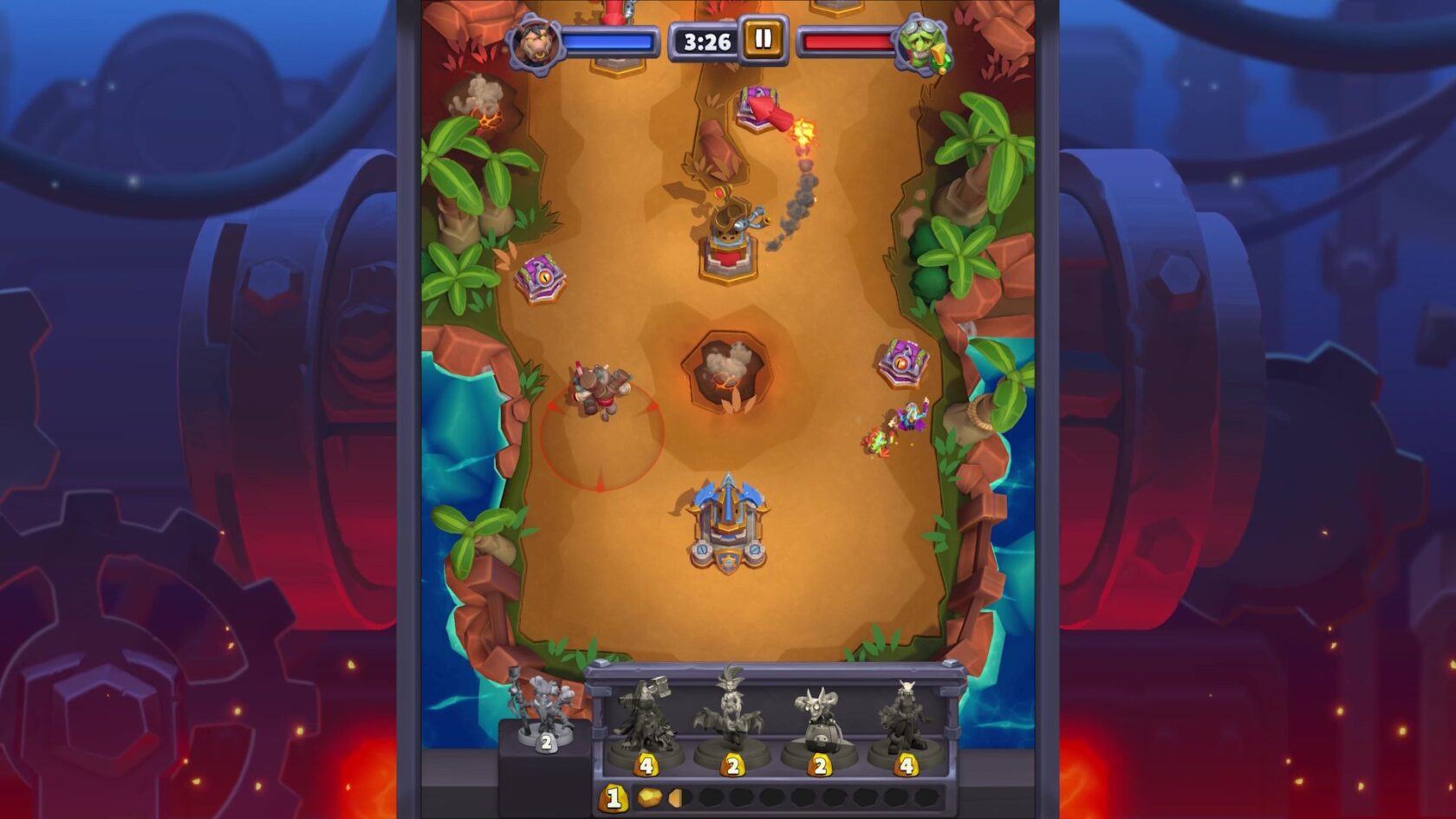
      Warcraft Rumble on GeForce NOW
      The cloud is rumbling.

      In Warcraft Rumble, a mobile action-strategy game set in the Warcraft universe, players collect and deploy miniature versions of the series’ beloved characters. The game offers a blend of tower defense and RTS elements as players battle across various modes, including a single-player campaign, player vs. player matches and cooperative dungeons.

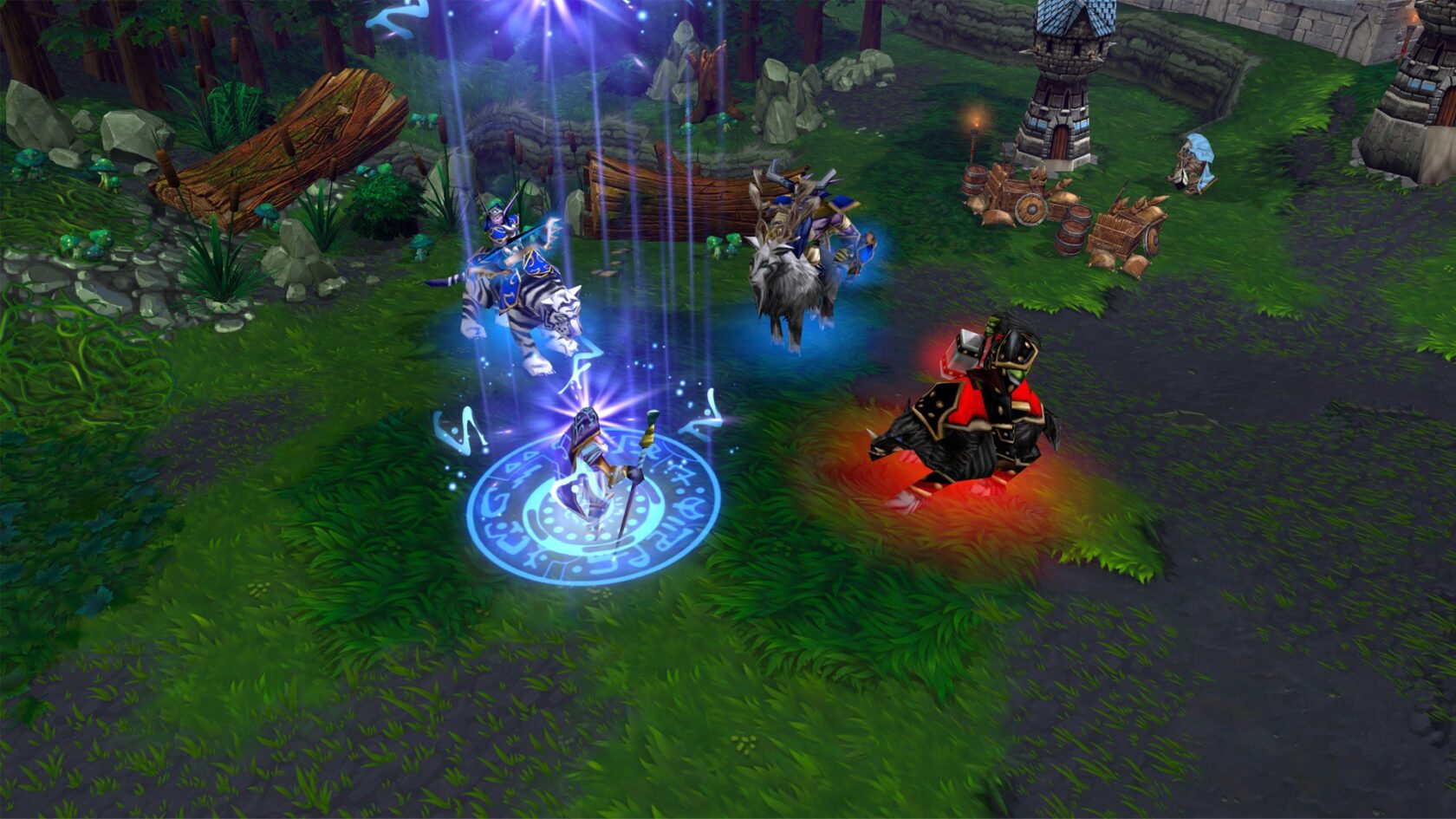
      Warcraft Remastered on GeForce NOW
      Old-school cool, new-school graphics.

      The Warcraft Remastered collection gives the classic RTS titles a modern twist with updated visuals and quality-of-life improvements. Warcraft: Remastered and Warcraft II: Remastered offer enhanced graphics while maintaining the original gameplay, allowing players to toggle between classic and updated visuals. Warcraft III: Reforged includes new graphics options and multiplayer features. Both these remasters provide nostalgia for long-time fans and an ideal opportunity for new players to experience the iconic strategy games that shaped the genre.

      New Games, No Wait

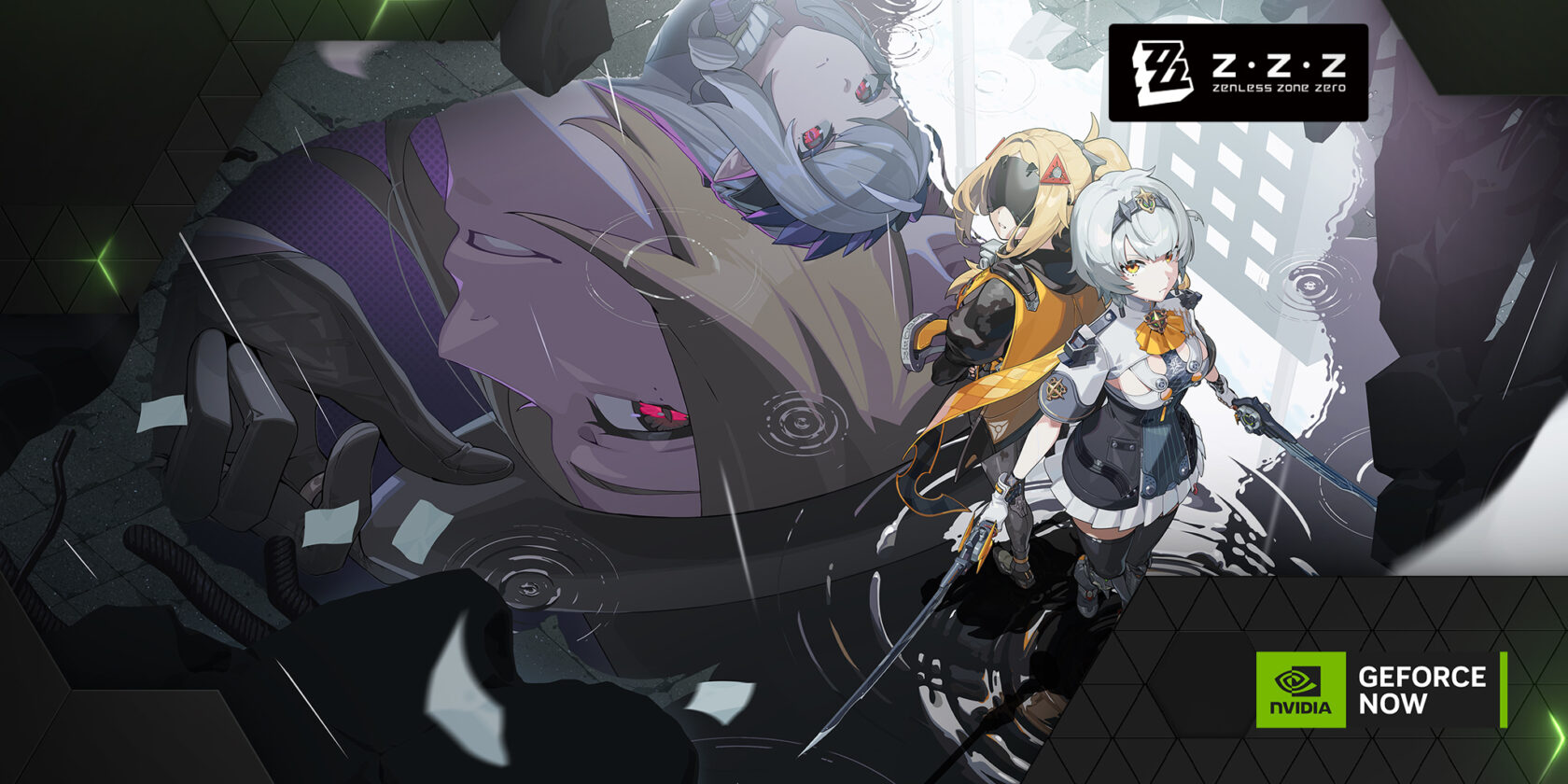
      Zenless Zone Zero update 1.6 Among the Forgotten Ruins on GeForce NOW
      New agents, new adventures.

      The popular Zenless Zone Zero gets its 1.6 update, “Among the Forgotten Ruins,” now available for members to stream without waiting around for updates or downloads. This latest update brings three new playable agents: Soldier 0-Anby, Pulchra and Trigger. Players can explore two new areas, Port Elpis and Reverb Arena, as well as try out the “Hollow Zero-Lost Void” mode. The update also introduces a revamped Decibel system for more strategic gameplay.

      Look for the following games available to stream in the cloud this week:

      Citizen Sleeper 2: Starward Vector (Xbox, available on PC Game Pass)
      City Transport Simulator: Tram (Steam)
      Dave the Diver (Steam)
      Heroes of the Storm (Battle.net) 
      Microtopia (Steam)
      Orcs Must Die Deathtrap (Xbox, available on PC Game Pass)
      Potion Craft: Alchemist Simulator (Steam)
      Warcraft I Remastered (Battle.net)
      Warcraft II Remastered (Battle.net)
      Warcraft III: Reforged  (Battle.net)
      Warcraft Rumble (Battle.net)

      What are you planning to play this weekend? Let us know on X or in the comments below.


      Source link

      Gaming Goodness: NVIDIA Reveals Latest Neural Rendering and AI Advancements Supercharging Game Development at GDC 2025

      0
      Gaming Goodness: NVIDIA Reveals Latest Neural Rendering and AI Advancements Supercharging Game Development at GDC 2025


      AI is leveling up the world’s most beloved games, as the latest advancements in neural rendering, NVIDIA RTX and digital human technologies equip game developers to take innovative leaps in their work.

      At this year’s GDC conference, running March 17-21 in San Francisco, NVIDIA is revealing new AI tools and technologies to supercharge the next era of graphics in games.

      Key announcements include new neural rendering advancements with Unreal Engine 5 and Microsoft DirectX; NVIDIA DLSS 4 now available in over 100 games and apps, making it the most rapidly adopted NVIDIA game technology of all time; and a Half-Life 2 RTX demo coming Tuesday, March 18.

      Plus, the open-source NVIDIA RTX Remix modding platform has now been released, and NVIDIA ACE technology enhancements are bringing to life next-generation digital humans and AI agents for games.

      Neural Shaders Enable Photorealistic, Living Worlds With AI

      The next era of computer graphics will be based on NVIDIA RTX Neural Shaders, which allow the training and deployment of tiny neural networks from within shaders to generate textures, materials, lighting, volumes and more. This results in dramatic improvements in game performance, image quality and interactivity, delivering new levels of immersion for players.

      At the CES trade show earlier this year, NVIDIA introduced RTX Kit, a comprehensive suite of neural rendering technologies for building AI-enhanced, ray-traced games with massive geometric complexity and photorealistic characters.

      Now, at GDC, NVIDIA is expanding its powerful lineup of neural rendering technologies, including with Microsoft DirectX support and plug-ins for Unreal Engine 5.

      NVIDIA is partnering with Microsoft to bring neural shading support to the DirectX 12 Agility software development kit preview in April, providing game developers with access to RTX Tensor Cores to accelerate the performance of applications powered by RTX Neural Shaders.

      Plus, Unreal Engine developers will be able to get started with RTX Kit features such as RTX Mega Geometry and RTX Hair through the experimental NVIDIA RTX branch of Unreal Engine 5. These enable the rendering of assets with dramatic detail and fidelity, bringing cinematic-quality visuals to real-time experiences.

      Now available, NVIDIA’s “Zorah” technology demo has been updated with new incredibly detailed scenes filled with millions of triangles, complex hair systems and cinematic lighting in real time — all by tapping into the latest technologies powering neural rendering, including:

      ReSTIR Path Tracing
      ReSTIR Direct Illumination
      RTX Mega Geometry
      RTX Hair

      And the first neural shader, Neural Radiance Cache, is now available in RTX Remix.

      Over 100 DLSS 4 Games and Apps Out Now

      DLSS 4 debuted with the release of GeForce RTX 50 Series GPUs. Over 100 games and apps now feature support for DLSS 4. This milestone has been reached two years quicker than with DLSS 3, making DLSS 4 the most rapidly adopted NVIDIA game technology of all time.

      DLSS 4 introduced Multi Frame Generation, which uses AI to generate up to three additional frames per traditionally rendered frame, working with the complete suite of DLSS technologies to multiply frame rates by up to 8x over traditional brute-force rendering.

      This massive performance improvement on GeForce RTX 50 Series graphics cards and laptops enables gamers to max out visuals at the highest resolutions and play at incredible frame rates.

      In addition, Lost Soul Aside, Mecha BREAK, Phantom Blade Zero, Stellar Blade, Tides of Annihilation and Wild Assault will launch with DLSS 4, giving GeForce RTX gamers the definitive PC experience in each title. Learn more.

      Developers can get started with DLSS 4 through the DLSS 4 Unreal Engine plug-in.

      ‘Half-Life 2 RTX’ Demo Launch, RTX Remix Official Release

      Half-Life 2 RTX is a community-made remaster of the iconic first-person shooter Half-Life 2. 

      A playable Half-Life 2 RTX demo will be available on Tuesday, March 18, for free download from Steam for Half-Life 2 owners. The demo showcases Orbifold Studios’ work in the eerily sensational maps of Ravenholm and Nova Prospekt, with significantly improved assets and textures, full ray tracing, DLSS 4 with Multi Frame Generation and RTX neural rendering technologies.

      Half-Life 2 RTX was made possible by NVIDIA RTX Remix, an open-source platform officially released today for modders to create stunning RTX remasters of classic games.

      Use the platform now to join the 30,000+ modders who’ve experimented with enhancing hundreds of classic titles since its beta release last year, enabling over 1 million gamers to experience astonishing ray-traced mods.

      NVIDIA ACE Technologies Enhance Game Characters With AI

      The NVIDIA ACE suite of RTX-accelerated digital human technologies brings game characters to life with generative AI.

      NVIDIA ACE autonomous game characters add autonomous teammates, nonplayer characters (NPCs) and self-learning enemies to games, creating new narrative possibilities and enhancing player immersion.

      ACE autonomous game characters are debuting in two titles this month:

      In inZOI, “Smart Zoi” NPCs will respond more realistically and intelligently to their environment based on their personalities. The game launches with NVIDIA ACE-based characters on Friday, March 28.

      And in NARAKA: BLADEPOINT MOBILE PC VERSION, on-device NVIDIA ACE-powered teammates will help players battle enemies, hunt for loot and fight for victory starting Thursday, March 27.

      Developers can start building with ACE today.

      Join NVIDIA at GDC.

      See notice regarding software product information.


      Source link

      H.S. Track Runner Charged With Assault for Allegedly Hitting Competitor With Baton

        0
        H.S. Track Runner Charged With Assault for Allegedly Hitting Competitor With Baton


        High School Runner
        Charged With Assault, Battery …
        For Alleged Baton Attack

        Published March 13, 2025 5:42 AM PDT

        The high school track runner who allegedly whacked her competitor in the head with a baton is now facing criminal charges despite her claims the incident was all just an accident.

        The Lynchburg Commonwealth’s Attorney Office tells TMZ … prosecutors are charging Alaila Everett with one count of assault and battery for allegedly beating Kaelen Tucker with the baton as they competed in last week’s 4x200m relay race at the VHSL Class 3 State Indoor Championship in Virginia.

        Play video content

        030925_track_attack_kal

        Video shows Tucker, a Brookville High School junior, running past Everett, a senior at I.C. Norcom High School, as they rounded the track during the second leg of the competition.

        As you can see, the athletes apparently bump arms before Everett strikes the back of Tucker’s head with her baton. Tucker falls to the ground with a concussion and a possible skull fracture.

        030925-track-attack-primary-4

        After the track meet, Everett told a local news outlet that the alleged assault was unintentional and purely an accident, offering a somewhat confusing explanation. She also said people who were angry over what happened peppered her with racial slurs and issued death threats after the incident went viral online.

        TMZ Sports interviewed Tucker’s dad, Keith, who told us the family filed a protective order against Everett as the police launched an investigation.


        Source link

        Popular Posts

        My Favorites

        Strategy Reveals $4.2 Billion Stock Sale After Missing First Weekly Bitcoin...

        In brief Strategy broke a 3-month streak of buying Bitcoin. The firm bought nearly $7 billion worth of BTC in Q2. It announced a...