Home Blog Page 1114

1mouth Analog: miirror’s Raw Leap from Digital to Handmade Chaos | NFT CULTURE | NFT News | Web3 Culture | NFTs & Crypto Art

1mouth Analog: miirror’s Raw Leap from Digital to Handmade Chaos | NFT CULTURE | NFT News | Web3 Culture | NFTs & Crypto Art


A new chapter of analog imperfection and visceral storytelling, captured through collage, mouth-first.

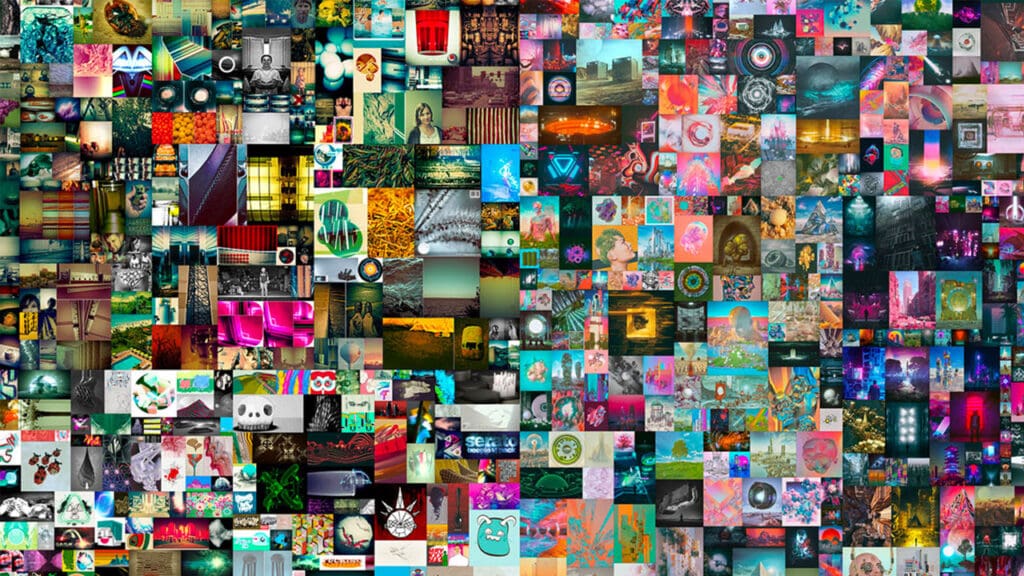
In a sea of generative drops and pixel-perfect collections, one artist dares to break the mold—literally. Our longtime friend and one of the NFT space’s most uniquely expressive visual voices, miirror, returns with 1mouth analog, a visceral, tactile, and radically human follow-up to their 2021 digital series, 1mouth.

Where the original 1mouth was a polished and digital affair—50 haunting and surreal digital collages minted in the early days of NFT culture—this new evolution leans all the way into the grit. Think paper, glue, fire, plastic, stickers, barcodes, nets, and math paper. Each of the 222 pieces in 1mouth analog was created by hand, then scanned at an ultra-high 1200dpi to immortalize every scratch, every burn, and every accidental smear.

The Mouth Returns, Louder Than Ever

The thematic anchor? Still the mouth. That primal, expressive portal remains the focal point—whether stitched, screaming, sealed, or stuck behind netting. But now, it’s joined by textures from real life: bits of avocado packaging, school supplies, and other ephemera you might find in the junk drawer of a particularly creative mind.

This collection is deeply metadata rich, with rarity not just determined by usual attributes, but by layered analog elements—scratches, overlays, burns, and forgotten fragments brought back into purpose.

“I can’t say this collection is about perfection. It’s not,” miirror shares. “It’s my first analog series and its imperfection is what makes it different from all the other collections out there. It’s a reverse-path from digital to analog—and that’s the raw beauty of it.”

It’s rare that we see an artist go backward in the medium, from digital to analog, to rediscover something deeper. That reverse trajectory feels rebellious and honest—a reminder that even in the blockchain’s immaculate permanence, there’s room for the tactile, the flawed, the utterly human.

Key Details on the Drop

Collection Name: 1mouth analog

Artist: miirror

Edition Size: 222

Blockchain: Ethereum (L1)

Mint Price: 0.02 ETH

Drop Date: May 6, 2025

Platform: Rarible

Inspiration: Based on the 2021 original 1mouth collection of digital collages

This isn’t just a mint—it’s a statement. miirror reminds us that there is no singular path to authenticity in art. Whether digital, analog, or both, what matters is the story—and this one speaks volumes.

TL;DR:

Collage artist miirror drops a raw, handmade NFT collection titled 1mouth analog on May 6 via Rarible. Featuring 222 unique pieces built with fire, glue, stickers, and more, the Ethereum-based series is a gritty evolution of their 2021 digital collection 1mouth. Each analog piece is scanned in high resolution, metadata-rich, and mouth-centric—embracing imperfection as its most powerful trait.


Source link

Apple Now Allows NFT and Crypto Payment Links in U.S.: What You Need to Know | NFT News Today

Apple Now Allows NFT and Crypto Payment Links in U.S.: What You Need to Know | NFT News Today


Apple has just shaken up the landscape for anyone building apps around NFTs and cryptocurrencies on iOS—at least in the United States. Thanks to a recent U.S. court decision from the Epic Games v. Apple lawsuit, developers can now include external payment links that bypass Apple’s longstanding 30% commission.

This shift could be a major opportunity for Web3 projects, as it gives them more breathing room for innovation and revenue. But there are still a few important details you’ll want to keep in mind.

Key Points to Know

External links are now allowed: For the first time, U.S. developers can let users buy digital assets through external payment options, sidestepping Apple’s hefty fees.

Compliance still matters: Even though Apple can’t take a cut on outside crypto transactions, apps must still comply with Apple’s review guidelines and may be subject to oversight for user experience and disclosures.

NFT marketplaces can flourish: If you’re building a platform like OpenSea or Magic Eden, you can now offer full transaction features directly within your iOS app.

Restrictions remain in place: Crypto mining on iOS devices and rewarding users with tokens for tasks are still off the table.

U.S.-only for now: This update is strictly for the U.S. App Store. Apple’s policies elsewhere in the world aren’t budging yet.

Why Did Apple Change Its Policy?

These new rules come on the heels of the Epic Games v. Apple case, which resulted in a mixed ruling that forces Apple to allow external payment links in its U.S. App Store. Before this, if you wanted to sell NFTs or offer crypto transactions inside your iOS app, you had to use Apple’s in-app purchase system which came with a steep 30% commission.

This commission structure had long drawn criticism from developers, particularly those in emerging sectors like Web3, who argued it stifled innovation and unfairly cut into revenue.

Now, iOS apps in the U.S. can include buttons or links directing users to outside platforms for their NFT and crypto transactions.

What Developers Can Do Now

If you’re working on an app that involves NFTs or crypto, here’s how you can leverage Apple’s new stance:

Embed External Payment Links: You can integrate clear buttons or links that send users to your preferred payment platform, whether for buying NFTs or transacting with cryptocurrencies.

Enable Full NFT Functionality: Developers can now allow users to mint, list, buy, sell, and transfer NFTs without relying on Apple’s in-app purchases.

Stay Compliant: Rules and regulations around crypto vary from one place to another. Keep up with local laws and remember that Apple still bans certain activities, like incentivising users with crypto rewards or mining on devices.

How This Could Play Out in Real Life

The ripple effects of this policy could be felt across the Web3 world. Think about NFT marketplaces: before, many could only let you view NFTs on an iPhone. Now, they can turn their apps into full-blown marketplaces where you can browse and buy on the go.

For example, platforms like OpenSea may now allow users to mint, buy, and sell NFTs directly within their apps using external payment processors—something that was previously blocked.

This also opens doors for play-to-earn games, DeFi apps, and crypto wallets. With fewer hurdles (and smaller fees), developers can streamline user onboarding and make it easier for people to dive into Web3.

Still, shifting users away from a familiar in-app purchase flow could raise concerns about trust and security. Some users might worry about leaving the App Store ecosystem to complete a transaction on an external site.

It’s also worth noting that these changes don’t affect developers working outside the crypto or NFT space—standard in-app purchase rules remain in place for most apps.

Frequently Asked Questions

Is this policy worldwide?

No, it’s currently limited to the U.S. App Store. Apple hasn’t changed its global guidelines, so developers can’t add external payment links in other countries yet.

Can developers give out token rewards or allow mining?

No, Apple still prohibits crypto mining on devices and any kind of reward program where users get tokens for performing tasks.

Do I need a special entitlement to add payment links?

No special permission is required now. U.S. developers can direct users to external NFT collections or payment systems without an extra blessing from Apple.

Is Apple going to appeal the court decision?

Yes, Apple has already said it plans to appeal. However, these changes are active for now because of the court order. If Apple succeeds later, some policies might change again.

Final Thoughts

By allowing external payment links for NFTs and crypto transactions, Apple is responding to legal pressure in a way that could accelerate blockchain adoption—at least in the U.S. For many developers, this is a breath of fresh air that could spark more creative uses of Web3 technology on iOS.

At the same time, this remains a fast-moving space with potential legal and security hurdles. If you’re a developer, stay up to date on any regulatory changes and keep an eye on Apple’s ongoing legal proceedings.

For now, it’s a good moment to seize the opportunity and bring truly decentralized experiences to iOS users in the United States.


Source link

Write Prompt, Short Ready!”, 7 AI Tools That Automatically Generate YouTube Shorts

Write Prompt, Short Ready!”, 7 AI Tools That Automatically Generate YouTube Shorts


In today’s fast-moving social media landscape, AI-powered video tools are a game-changer for creators who need to pump out engaging YouTube Shorts in minutes rather than hours. Below are seven top AI solutions—each with a clear breakdown of features and pricing—that will streamline your workflow and help you stay ahead of the algorithm.

InVideo AI

Write Prompt, Short Ready!”, 7 AI Tools That Automatically Generate YouTube Shorts

InVideo AI transforms your scripts into fully edited vertical videos in a few clicks. Leveraging a massive stock library, built-in text-to-speech and voice-cloning, plus automated subtitles, it’s ideal for marketers and influencers who want polished content without the steep learning curve.

Key Features: Text-to-video generation, 16M+ stock assets, AI voiceovers, auto-captioning, drag-and-drop effects

Pricing: Free plan includes watermark and limited generative credits; Plus at $28/month (billed annually) unlocks 60 sec generative credits; Max at $48/month adds more credits and premium support

Kapwing Shorts Generator

Kapwing’s AI Shorts tool turns a single line of text into a fully edited clip, complete with B-roll suggestions, realistic voice-overs and on-screen captions. Strong collaboration and branding features make it perfect for small teams.

Key Features: One-click script-to-video, auto-subtitles, premium text-to-speech, brand kit, 4K export

Pricing: Free tier (720p, watermark, 4 min exports); Pro at $16/user per month (annual) or $24/month; Business at $50/user per month; Enterprise on request

OpusClip

OpusClip excels at slicing long-form footage into viral-ready clips in seconds. Its AI ranks the most engaging moments, adds animated captions in multiple languages and lets you auto-post to every major platform.

Key Features: AI-driven clip selection, virality scoring, multi-language captions, auto-posting, simple editor

Pricing: Free forever (60 min processing/month, watermark); Starter at $15/month (150 min); Pro at $29/month ($14.50/mo if billed annually)

Runway Gen-3/4

Runway offers cutting-edge text-to-video with both Gen-4 Turbo and Gen-3 Alpha models. Import your own SFX, remove watermarks on paid tiers and upscale to 4K—all managed via a credits system.

Key Features: Gen-4 & Gen-3 video models, SFX import, 9:16 aspect support, 4K upscaling, asset storage

Pricing: Free (125 one-time credits ≈ 25 sec Gen-4 Turbo); Standard $12/user per month (625 credits/mo); Pro $28/user per month (2,250 credits/mo); Unlimited $76/user per month (unlimited generations); Enterprise custom

Pika Labs

Pika Labs is built for ultra-short loop animations—perfect for snackable Shorts. Generate eye-catching 4-sec visuals, add music or voice, and publish watermark-free.

Key Features: Instant 4 sec loops, “Chill” unlimited generations, watermark-free outputs, commercial usage

Pricing: Basic free (300 credits total); Standard $10/month (1,050 credits/mo); Pro $60/month (3,000 credits/mo); 20% off on annual plans

YouTube Create (Beta)

Built straight into the YouTube mobile app, this free editor uses AI to sync music, add captions and suggest dynamic templates—no extra downloads required.

Key Features: In-app AI editor, music synchronization, auto-captioning, one-tap styling

Pricing: Completely free; available on iOS/Android in select countries

AI Agent Stacks (Autogen + FFmpeg)

For developers and power users, AI Agent Stacks chain together Autogen’s multi-agent workflows with FFmpeg’s media engine to fully automate script → video pipelines on your own servers.

Key Features: Storyboard automation, multi-agent orchestration, end-to-end video production

Pricing: Open-source & free (hosting and compute costs on you)

Quick Comparison Table

ToolFree PlanPaid PricingKey FeaturesInVideo AIWatermarked exports, limited AI creditsPlus $28/mo; Max $48/moScript-to-video, stock library, TTS, auto subtitlesKapwing Shorts Generator720p, watermark, 4 min exports, 10 min subtitlesPro $16/u/mo (annual) or $24/mo; Biz $50/u/moScript-to-video, auto-captions, premium TTS, 4K exportOpusClip60 min clippings, watermarkStarter $15/mo; Pro $29/mo ($14.50 billed annually)AI clip selection, virality score, multi-lang captionsRunway Gen-3/4125 one-time credits (~25 s Gen-4 Turbo), 3 projectsStd $12/u/mo; Pro $28/u/mo; Unlimited $76/u/moText-to-video, SFX import, upscaling, watermark removalPika Labs300 credits totalStandard $10/mo; Pro $60/mo4 sec loops, Chill mode, watermark-free, commercial useYouTube Create (Beta)Full features, mobile onlyN/A (free)In-app AI editor, music sync, auto captions, templatesAI Agent StacksFull functionality (self-hosted)N/A (open-source)Autogen + FFmpeg pipeline, multi-agent orchestration

With these tools at your fingertips, you can supercharge your YouTube Shorts production, save countless editing hours, and keep your channel fresh with minimal effort. Pick the one that best fits your budget and workflow, and start creating scroll-stopping shorts today!dmore is a powerful tool to complement AI-generated content.

You Might Also Like;

Follow us on TWITTER (X) and be instantly informed about the latest developments…

Copy URL


Source link

Google Introduces Gemini AI to Children Under 13! – Metaverseplanet

Google Introduces Gemini AI to Children Under 13! – Metaverseplanet


Google has announced that its generative AI tool, Gemini, will soon be accessible to children under the age of 13. However, this child-friendly version of Gemini will be slightly different from the standard one.

According to a report by The New York Times, the U.S.-based tech giant Google is preparing to make Gemini available to children under 13 starting next week. A Google spokesperson explained that this special version will include specific safety layers to ensure a secure experience for younger users. Additionally, any interactions made by children will not be used to train the AI model.

To enable children to use Gemini, parents must set up Family Link. Without this parental control integration, the service will not be available to minors.

If you want your child under 13 to use Gemini, the first step is to complete the Family Link setup. This means assigning parental supervision rights to the email account you’ve created for your child. Once done, your child will be able to safely access Google Gemini. You can find the necessary Family Link setup information through this link.

Google’s move to open up Gemini to younger children has sparked a debate: While it offers an early introduction to artificial intelligence, it also raises questions about safety and digital responsibility.

What do you think about Google’s decision to introduce AI to young children? Could this step unlock creativity, or does it come with potential risks? Don’t forget to share your thoughts with us!

You Might Also Like;

Follow us on TWITTER (X) and be instantly informed about the latest developments…

Copy URL


Source link

We Asked AI: Where Will Bitcoin’s Price Go? (Year Year Forecast)

We Asked AI: Where Will Bitcoin’s Price Go? (Year Year Forecast)


Ready for a time‑travelling ride? We asked an AI model trained on historical prices, technical analysis signals and macro trends to imagine Bitcoin’s path from 2025 to 2040. Strap in 🚀—and don’t forget the ⚠️ risk warnings at the end!

🤖 How the Model Thinks

Data Fuel: 2013‑2025 spot prices, hash‑rate, ETF flows, M2 money supply, interest rates.

Engine: Multivariate LSTM blended with bull/bear regime filters.

Outputs: Three tracks—Base, Bull, Bear—merged into the ranges below.

📈 Quick‑Look Chart

(See the live chart above for a visual of Min, Mid and Max projections.)

🗓️ Year‑by‑Year Price Roadmap

YearHeadline CatalystPrice Range (USD)2025Spot‑ETF’s first full year, US election jitters$120 k – $180 k2026Clear G20 regulation, S&P 500 correlation$140 k – $220 k2027Slower corporate balance‑sheet adoption$130 k – $250 k2028Halving #5 cuts supply to 3.125 BTC$280 k – $435 k2029Lightning payments explode, “Sats economy”$300 k – $500 k2030AI‑IoT micro‑transactions, green mining$350 k – $600 k2031Mini‑recession, “digital‑gold” demand spike$330 k – $550 k2032Halving #6, ETF volumes hit records$500 k – $700 k2033Digital‑dollar pilot, OTC market boom$550 k – $800 k2034CBDC vs. BTC tug‑of‑war$500 k – $900 k2035Derivatives fully mature$600 k – $950 k2036Halving #7 drops reward below 1 BTC$800 k – $1.1 M2037Quantum‑safe wallet migration$750 k – $1.2 M2038New supply < 0.5 % — “super‑scarcity”$800 k – $1.3 M2039Cycle top meets risk‑off flows$700 k – $1.25 M204021 M limit on the horizon$900 k – $1.5 M

🚀 Story‑Mode Snapshots

Concept of Crypto-currency. Rocket flying to the moon with bitcoin icon. Crypto currency hype vector illustration.

Moonshot Bull: Post‑2028, pension funds dive in; a single Bitcoin buys a Manhattan studio.

Crypto Winter: 2031 crackdown sends prices back to $250 k before rebounding.

Quantum Scare: 2037 signature panic—patch applied, hodlers breathe again.

⚠️ Smart‑Investor Reminders

Volatility: Even inside a long‑term uptrend, 60‑80 % draw‑downs happen.

Speculation: These numbers are probability bands, not guarantees.

Risk Control: Size positions so a wipe‑out won’t wreck your life.

Regulation: Tax laws change; stay compliant where you live.

Diversify: Never bet the farm on a single asset—yes, even Bitcoin.

🎯 Bottom Line

Artificial intelligence sketches a path where BTC may flirt with seven‑figure prices by 2040, yet the road is bumpy and full of plot twists. If you join the marathon, keep your research deep, your stops tight, and your mindset zen. Good luck, and may your portfolio stay in the green

You Might Also Like;

Follow us on TWITTER (X) and be instantly informed about the latest developments…

Copy URL


Source link

April’s NFT Bloodbath: Sales Plunge Over 39% as the Market Stalls – Metaverseplanet

April’s NFT Bloodbath: Sales Plunge Over 39% as the Market Stalls – Metaverseplanet


April brought modest gains to the broader crypto economy, but data reveals a continued downturn in NFT sales, which fell 39.62% over the last 30 days. Ethereum maintained its position as the leading blockchain for NFT trading volume, yet its figures dropped 44.86% month-over-month.

NFT Sector Takes Major Hit: Ethereum, Polygon, and Bitcoin Suffer Steep Declines

Throughout April, total NFT sales reached $388.77 million, marking a 39.62% decline from March. Statistics from cryptoslam.io show both ends of the market saw sharp drops: buyers down 48.46% and sellers down 39.05%.

Activity volume also plunged; total NFT transactions decreased by 54.12% month-on-month. Ethereum, Polygon, and Bitcoin comprised the top three blockchains by NFT sales volume. Ethereum-based NFT sales totaled $108.19 million, down 44.86% versus the prior 30 days. Polygon ranked second with $73.84 million, a 42.4% drop from March.

Meanwhile, Bitcoin NFTs slid to $62.45 million, a 27.25% decrease. Flow secured eighth place with $5.94 million in volume—an increase of 14.9% over the same period.

Leading Collections and Record Sales

The month’s top-performing collection was Courtyard on Polygon, generating $66.42 million in sales (+20.9%). Polkadot’s Mythos-powered Dmarket claimed second place with $39.72 million, while Ethereum’s Cryptopunks took third at $18.22 million in April.

The priciest individual sale was Cryptopunk #3100, which fetched $6.04 million. In second place was an Uncategorized Ordinal sold eight days ago for $558,755, and third was a locked gUSDC deposit NFT traded on Arbitrum roughly three weeks ago for about $500,000.

The NFT sector is unrecognizable compared to its peak, and 2025 has yet to deliver much relief from these blows.

You Might Also Like;

Follow us on TWITTER (X) and be instantly informed about the latest developments…

Copy URL


Source link

The tap-to-earn era is over: a new phase in Web3 games – Metaverseplanet.net

The tap-to-earn era is over: a new phase in Web3 games – Metaverseplanet.net


Telegram-based Web3 games are leaving the unsustainable tap-to-earn model behind and evolving into social, fun, and interactive experiences. Notcoin, one of 2024’s most prominent Web3 gaming projects, has declared that the tap-to-earn genre has “probably died” as Web3 games shift toward more engaging formats.

During Dubai’s Token2049 event, Notcoin co-founders Sasha and Vladimir Plotvinov, alongside NotGames’ Head of Design and Product Uliana Salo, spoke with Metaverseplanet about the state of Telegram-based Web3 games. Vladimir explained that developers are exploring new genres because tap-to-earn players quickly lose interest.

“You’ll see different types of games because tap-to-earn games have probably died; they’re not sustainable,” he said.

In 2024, Notcoin became one of Telegram’s most popular tap-to-earn titles, attracting over 30 million users within three months of launch. In a previous interview, Sasha attributed this growth to the game’s ability to “solve” the challenge of onboarding Telegram users into crypto.

As Telegram games boomed in 2024, players would “farm” tokens in one project and then move on to the next. Sasha told Metaverseplanet:

“Users who come just to farm tokens are motivated only by earning. But in games, it’s more about having fun, playing with friends, and being part of a group.”

She noted that the first wave of Telegram games lacked this social element, though she believes Web3 still has a vital role in the platform’s gaming ecosystem.

Sasha added that Telegram games are now moving away from pure token farming models. In these new experiences, the Web3 economy becomes an “add-on” rather than the core value proposition. However, she cautioned that this transformation may take time—Telegram does not yet have “real games,” but she remains optimistic about the future.

How is AI improving Web3 game development?

Vladimir told Metaverseplanet that AI and Telegram are making it easier for Web3 developers to create games. He noted that AI tools help developers write code more quickly and efficiently:

“It saves time. My delivery speed has increased. I write code faster than usual because I save time on other routine tasks.”

However, he emphasized the need for caution when using AI in projects:

“You must be very careful and have the expertise and experience to understand how the API works, how components connect, and how it will scale under heavy user loads.”

Telegram Web3 games set for exponential growth

Despite the belief that tap-to-earn is dead, when asked whether Telegram’s Web3 gaming sector will continue to grow, Salo pointed to platforms like WeChat and Facebook—which already boast their own gaming ecosystems—as proof of the opportunity:

“We’re fortunate to have a platform similar to WeChat and Facebook with an existing game ecosystem, and that’s a huge market. Our user base is effectively the same size.”

Salo acknowledged that Telegram’s gaming scene currently lacks major publishers and investor funding but expects exponential growth. She added that the goal is to reach a point where players play not just to earn tokens but “because it’s fun”:

“We’re trying to capture that feeling of fun that emerges when people do something for themselves, not just for money.”

You Might Also Like;

Follow us on TWITTER (X) and be instantly informed about the latest developments…

Copy URL


Source link

Fight off a planet-wide fungal catastrophe in the upcoming co-op shooter Mycopunk

Fight off a planet-wide fungal catastrophe in the upcoming co-op shooter Mycopunk


From developer Pigeons at Play and Devolver Digital, Mycopunk is one of those games where you see a few seconds of footage in the trailer, get totally sold and instantly stick it into your wishlist. There’s also a demo available to try.

Your ragtag gang of robot rejects have been hired by the universal megacorp SAXON for one last shot at profitable glory (and avoiding the scrap heap). You are the New Atlas Hazard Crew, a ramshackle squad of exterminators sent to uncover the mysteries behind a planet-wide fungal catastrophe. You get an arsenal of crazy weapons and power tools, and you get to supercharge them with what they’re saying is a ” one-of-a-kind grid-based upgrade system to create the ridiculous sci-fi super-weapon of your dreams”. Yeah, I’m definitely 100% sold on this. I need it.

This looks like one of the absolute wildest shooters in terms of world and creature design I’ve seen for a while. Absolutely love the style of it and the action looks intense too. Check out the trailer:

I tested out the demo with the latest Proton 10 Beta, and it worked perfectly. Even if the trailer didn’t sell me on it, the gameplay definitely would have. Chaotic, good fun and some really interesting game mechanics. Shooting enemies and watching them fall apart, and have pieces remain alive and be picked up by others, it’s really something. This has quickly turned into one of my most anticipated games for 2025.

This is one to watch, could easily end up being the next big co-op shooter.

Article taken from GamingOnLinux.com.


Source link

The end of Bitcoin mining is upon us: why is it no longer as profitable?

The end of Bitcoin mining is upon us: why is it no longer as profitable?


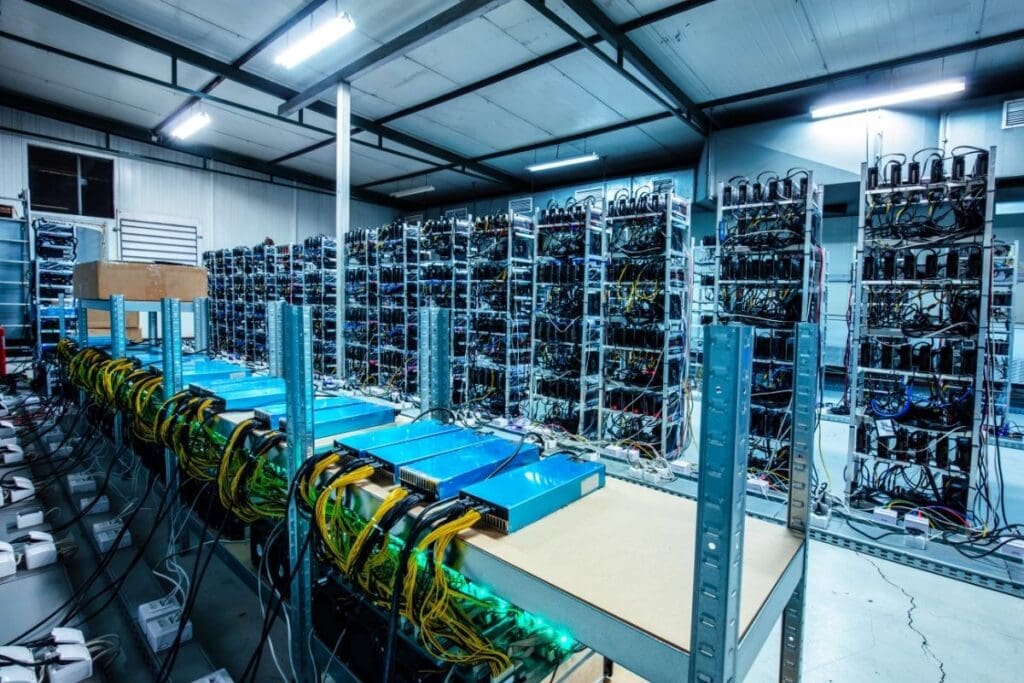
Bitcoin mining costs have reached alarming levels. Data from CoinShares and BitInfoCharts shows that even the largest operations are seeing their profit margins shrink, while smaller miners are operating at a loss. So, how might this economic landscape affect the future of Bitcoin?

In recent months, after global stock market turbulence, crypto markets have entered a significant recovery phase, with leading digital assets like Bitcoin climbing toward new record highs amid continued expectations that cryptocurrencies could serve as a safe haven against market volatility. Yet this positive price action doesn’t translate into improved returns for the ecosystem’s backbone—Bitcoin mining is becoming steadily less profitable, even for major players.

According to the latest CoinShares report, the economic outlook for Bitcoin mining has turned challenging for many. The study reveals that the high electricity costs and computational power required to produce new coins now often exceed the coins’ current market value, dramatically compressing profitability margins.

Even the largest mining companies feel the squeeze

When Bitcoin’s market price hovers around $95,000, the cost to mine a single coin has surpassed $82,000. Although technically still in the black, this thin margin underscores how tight the economics have become. Just a year ago—in Q3 2024—mining a Bitcoin cost roughly $56,000; the jump to over $82,000 represents an astonishing 47% increase in such a short span.

Boutique miners face unsustainable losses

For small-scale or “boutique” miners, the picture is far worse. Depending on location and local energy tariffs, producing a single Bitcoin in the United States can cost up to $137,000, while in countries with particularly high energy prices—like Germany—that figure can soar to around $200,000. Against a market price of $95,000, these operations are operating at substantial, unsustainable losses.

What’s driving these soaring costs?

Global energy cost increases: Electricity—the single largest expense in mining—has risen worldwide due to inflation, trade-war disruptions in energy supply chains, and booming demand from energy-intensive sectors like AI.

Equipment costs: Manufacturing and sourcing high-performance mining hardware (ASIC devices) has become more expensive.

Bitcoin halving: The most recent halving event, roughly a year ago, cut the block reward in half, directly reducing miners’ revenue and putting further pressure on profitability.

Implications for decentralization and equality

Bitcoin was designed to offer a decentralized network that promotes financial access and economic opportunity. Yet as mining becomes viable only for those with substantial capital and sophisticated infrastructure, this ideal is undermined. BitInfoCharts data indicates that over 90% of circulating Bitcoin is held by the richest 1% of addresses—mining once offered a way to distribute coins more widely, but today’s high-cost environment may deepen that inequality by concentrating rewards among the wealthiest operators.

The future of Bitcoin mining

These mounting costs raise critical questions: How will mining evolve under such narrow profitability? Will we see further consolidation as only the largest players can sustain operations? And most importantly, can Bitcoin maintain its foundational principles of decentralization and equitable distribution in the face of these economic pressures? The coming months and years will be decisive for the network’s ongoing health and the broader vision of a truly decentralized monetary system.

You Might Also Like;

Top 7 Crypto Newsletters You Should Subscribe to in May 2025
Why It Matters for Our Digital Future, Can We Move Our Lives to a Digital Universe?
Google Unveils Updated Gemini 2.5 Pro Model Ahead of I/O 2025


Source link

Join the 2025 Web3j Mentorships: Build the Future of Ethereum on the JVM

Join the 2025 Web3j Mentorships: Build the Future of Ethereum on the JVM


The Linux Foundation’s Decentralized Trust (LFDT) mentorship program is back in 2025 with two exciting opportunities for developers passionate about Ethereum, Android, and the Java Virtual Machine (JVM). Whether you’re a seasoned blockchain developer or an Android enthusiast eager to dive into Web3, these mentorships offer a unique chance to contribute to the Web3j ecosystem.​

The Web3j-Android library is pivotal for developers integrating Android applications with the Ethereum blockchain, enabling them to leverage Web3j’s robust capabilities within a mobile environment. Following the success of the previous mentorship program in 2024, the Web3j-Android library was significantly upgraded from version 4.8.8 to version 4.12.3-android, effectively resolving challenges related to coherence, functionality, and alignment with modern Android development practices.​

This project proposes to build upon the accomplishments of the prior mentorship by further enhancing and expanding the functionalities of the Web3j-Android library. Given Kotlin’s prominence as the preferred programming language for Android development, this initiative aims specifically to facilitate the generation of Kotlin-based smart contract wrappers. Achieving this objective will ensure the library fully aligns with contemporary development standards for both Android applications and Ethereum blockchain technologies.​

After this is achieved, the project will continue with improving the release process and the keep-up-to-date procedure of Web3j-Android with the main Web3j library.​

📌 Application Link: Apply Here

Recommended Skills:

Strong understanding of Android development: Knowledge of Android SDK, Android Studio, and the Android app development lifecycle.Very good understanding of Java and Kotlin: Since Android development can involve both languages, familiarity with Java and Kotlin is essential, especially considering the existing Web3j-Android library is in Java, and new developments in Android often leverage Kotlin.Experience with Ethereum and smart contracts: Understanding of Ethereum blockchain, smart contracts, and how they interact with Android applications using Web3j.Familiarity with Web3j library: A grasp of the existing Web3j library functionalities, structures, and its application in Android environments.Problem-solving skills: Ability to diagnose and troubleshoot complex issues that may arise during development or integration of blockchain technologies in Android applications.Version control with Git: Experience with Git for version control to manage code changes and collaborate with other developers.Communication and collaboration skills: Ability to work effectively in a team, articulate ideas clearly, and collaborate on complex projects.​

The Web3j library is an essential tool for Java and JVM-based developers looking to integrate with the Ethereum blockchain. It provides seamless Ethereum client communication, enabling developers to interact with smart contracts and blockchain networks. However, maintaining and improving Web3j while ensuring seamless adoption of the latest Ethereum Improvement Proposals (EIPs) remains a challenge for maintainers due to the lack of time and contributors.​

This project aims to enhance the core Web3j by improving and bringing up to date its component libraries such as Web3j-Unit, Web3j-EVM, and Web3j-OpenAPI, focusing on reducing existing issues and integrating the missing EIPs. By improving the additional Web3j libraries, we aim to streamline development workflows, enhance testability, and create a more robust framework that simplifies Ethereum development for Java and JVM-based projects. The updates will address known gaps in the libraries, ensuring compatibility with the latest Ethereum standards while improving documentation, developer experience, and maintainability.​

The initiative will introduce structural improvements, new features, and documentation for better integration and testing, making Web3j a more sustainable and adaptable Web3 development tool project.​

📌 Application Link: Apply Here

Recommended Skills:

Strong understanding of Java development: Knowledge of Java versions, IntelliJ IDEA, Gradle, GitHub.Very good understanding of Java and Kotlin.Background in computer science, computer engineering, or equivalent.Experience with Ethereum and smart contracts: Understanding of Ethereum blockchain, smart contracts, and how they interact with applications using Web3j.Familiarity with Web3j library: A grasp of the existing Web3j library functionalities and structures.Problem-solving skills: Ability to diagnose and troubleshoot complex issues that may arise during development or integration of blockchain technologies in JVM applications.Version control with Git: Experience with Git for version control to manage code changes and collaborate with other developers.Communication and collaboration skills: Ability to work effectively in a team, articulate ideas clearly, and collaborate on complex projects.​

Both mentorships will be guided by two seasoned professionals from Web3 Labs:​

George Ţebrean: A Senior Java Developer and experienced open-source contributor, George brings over 8 years of expertise in Java development and blockchain integration.Nischal Sharma: A Blockchain Developer at Web3 Labs and maintainer of Web3j, Nischal has extensive experience in Ethereum development and has previously mentored projects under the Linux Foundation’s Hyperledger program.

Their combined expertise ensures that mentees will receive comprehensive guidance throughout the program.​

These mentorships are more than just projects — they’re gateways to becoming integral parts of the Web3j and Ethereum developer communities. You’ll gain hands-on experience, mentorship from industry experts, and the opportunity to make a lasting impact on tools used by developers worldwide.

📌 Application Link: Apply Here


Source link

Popular Posts

My Favorites

Broker Complaint Alert Announces AI-Powered Solutions for Crypto Recovery | Web3Wire

0
In a significant leap forward for the cryptocurrency recovery industry, Broker Complaint Alert today announced the launch of its new AI-powered solutions, aimed...