Moonshot AI launched Kimi K3 on Thursday—a 2.8-trillion-parameter open-weight model that ranked alongside Claude Fable 5 and GPT 5.6 Sol.
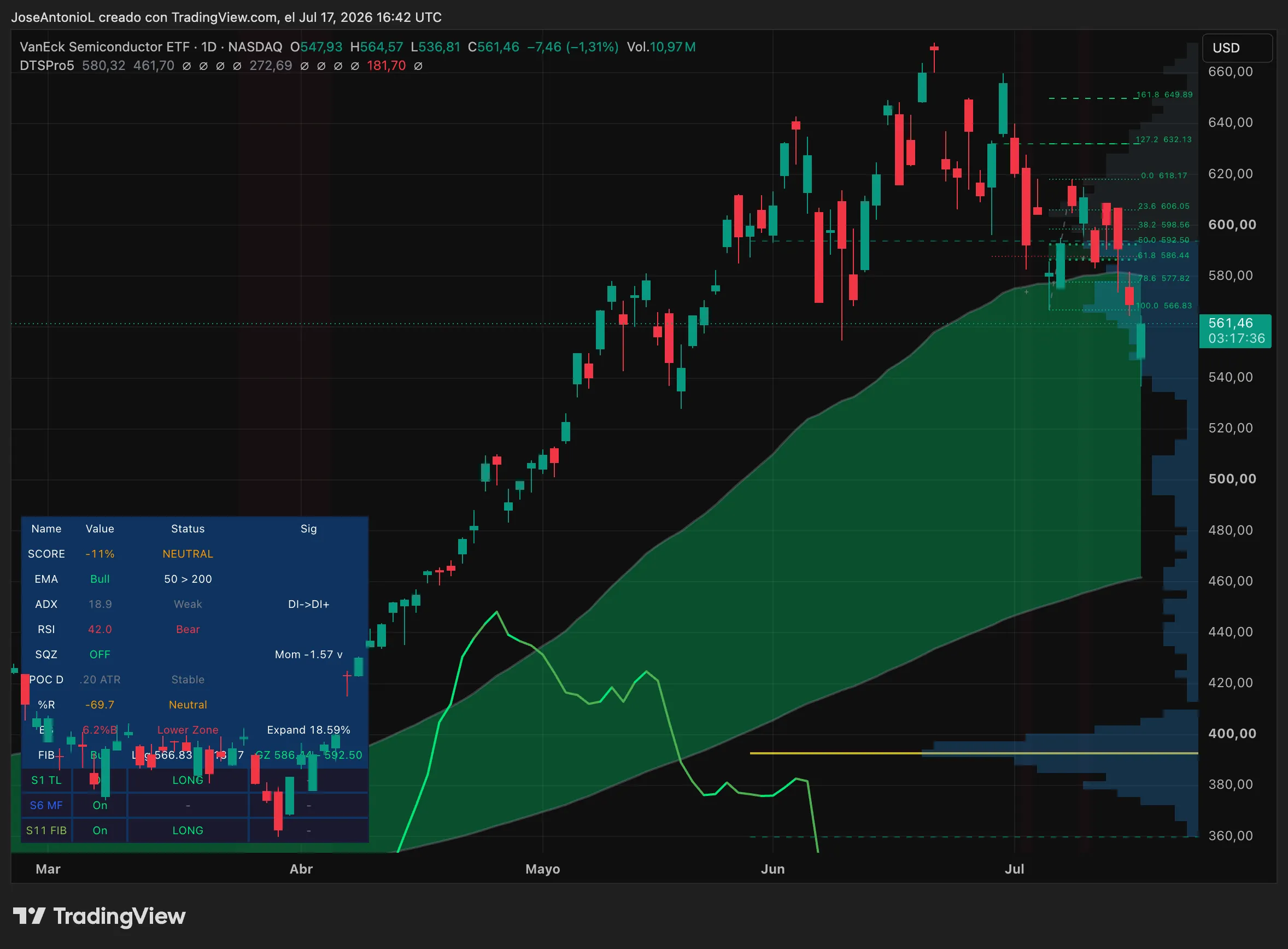
Semiconductor stocks cratered Friday, with the VanEck Semiconductor ETF (SMH) falling below key support for the first time since April.
Full model weights go public by July 27. If they hold up under independent testing, the pressure on U.S. AI companies to justify their infrastructure spending gets significantly harder to dismiss.
China did it again. Moonshot AI launched Kimi K3 in the dead of night and markets woke up today doing what they always do when a Chinese lab closes the gap: They panicked.
Semiconductor and AI stocks dropped across the board Friday. Taiwan’s benchmark fell more than 6%. Japan closed down 4%. The Nasdaq slid 1.5%, its worst session of the week.
The DeepSeek comparison seems well deserved. When DeepSeek dropped R1 in January 2025, the assumption that frontier AI required frontier spending—and the chip orders to match—cracked overnight. Nvidia shed around $590 billion in market cap in a single session. This time the damage spread across the sector.
The VanEck Semiconductor ETF (SMH) fell below its EMA support band—the moving average tracking the price trend over the prior months—for the first time since April, extending a rout that has put it more than 20% below its late-June record high.
On the Artificial Analysis Intelligence Index—an independent composite benchmark that aggregates model performance across reasoning, knowledge, mathematics, and coding—K3 scored 57, ranking above Claude Opus 4.8 and GPT-5.5, practically on par with Claude Fable 5 and OpenAI’s GPT-5.6 Sol, beating them in specific benchmarks at a fraction of the price. Full weights drop July 27 under a Modified MIT license which means small labs will have that model available for free.
Wall Street analysts largely saw this coming. Bernstein’s Robin Zhu called the release “confirmatory”—another data point in a trend that’s been building all year. Morgan Stanley analyst Gary Yu framed K3 as the product of steady compound progress rather than a shock. “K3 has received positive feedback globally, signaling an all-round catch-up of Chinese LLMs with U.S. leaders in model size, performance, and pricing,” he wrote.
Bernstein analyst Robin Zhu also framed this as a catch-up. “At a high level, K3 feels confirmatory of our views that (1) AI [state of the art] continues to evolve rapidly; and (2) China AI can continue to keep pace with global [state of the art], and take some share over time.”
Moonshot is backed by Alibaba, which put $1 billion into the company in 2024 at a $2.5 billion valuation. The startup now sits at roughly $31.5 billion.
As Decrypt covered in May, Moonshot already has deeper roots in U.S. developer circles than most realize—Cursor’s Composer 2 was found to be running on Kimi K2.5 without disclosure before the Cursor team acknowledged the open-source base.
Daily Debrief Newsletter
Start every day with the top news stories right now, plus original features, a podcast, videos and more.
Moonshot AI released Kimi K3 on July 16—a 2.8-trillion-parameter open-weight model that beats US labs on specific specialized benchmarks.
K3 is priced identically to Claude Sonnet 5 ($3 per million input tokens, $15 per million output tokens) while scoring closer to Fable 5.
Full model weights—the files that let anyone run, fine-tune, or build on the model locally—drop by July 27 under a modified MIT license, making K3 the largest freely available AI model in history.
Moonshot AI just put out the biggest Chinese open-source model ever released, and it topped Claude Fable 5 at writing scripts.
Towards AI’s Writing Elo—a benchmark where models write real scripts judged blind against published versions, scored using the same Elo system that ranks chess players—put Kimi K3 at 2,840, above Fable 5 (max) at 2,760. That’s a ranking Anthropic’s team has historically dominated.
Big news from our internal writing benchmark (early results): Kimi K3 by @Kimi_Moonshot is now #1 for writing in our editorial voice, at 2840 Elo, surpassing Claude Fable 5.
That is a jump from #21 to #1 over its predecessor, Kimi K2.6. And it runs at about $0.25 per script: 5x… https://t.co/000EosInEc pic.twitter.com/V18t7g4pHu
— Louis-François Bouchard 🎥🤖 (@Whats_AI) July 16, 2026
K3 also claimed the top spot on Arena AI’s Frontend Code Leaderboard—a ranking built from thousands of pairwise human votes on code generation tasks, again Elo-scored—with 1,679 against Fable 5’s 1,631. First place in six out of seven frontend domains.
The Artificial Analysis Intelligence Index—a score built from nine independent evaluations covering coding, reasoning, agentic work, and knowledge, rated 0 to 100—puts K3 at 57, with Claude Fable 5 at 60, GPT-5.6 Sol at 59, and Claude Opus 4.8 at 56. That places K3 as the third-most capable model on the composite, with Fable 5 beating it just by 3%.
Kimi K3 is beating Fable 5 head to head on BridgeBench.
Same task, blind judge panel.
K3 has won 7 of 8 arenas, including Refactoring 9-0 and Debugging 6-1.
Fable 5’s only win: Speed.
Fable 5 went 142-36 against GPT 5.6 Sol and is now losing 2 to 1 to an open source model… pic.twitter.com/CaRSjbIwUW
— Bridgebench (@bridgebench) July 17, 2026
Kimi K3 is the best performing model on https://t.co/SnZ54Xok7n, ahead of Fable, reaching a comparable success rate in less time.
This is the first time that an open model is ahead of all proprietary ones for this comprehensive web engineering benchmark.
Notes:
▪️ Benchmarks… pic.twitter.com/2MqvbAxAaw
— Guillermo Rauch (@rauchg) July 16, 2026
If you want to have an idea of what it can do, this is a zero-shot result of a prompt asking the model to build an iOS clone. For comparison, this is the best approximation shared on social media using GPT 5.6 Sol and a much elaborate prompt.
What this thing actually is
K3 packs 2.8 trillion parameters—the numerical values that store a model’s knowledge—in a mixture-of-experts architecture. Mixture of experts splits those parameters into 896 “expert” subnetworks and activates only a fraction for any given task. That’s how you get frontier-level intelligence without melting the server room.
“It is the world’s first open-source model in the 3-trillion-parameter class, designed for frontier intelligence scenarios including long-horizon coding, knowledge work, and reasoning,” Moonshot AI says. That’s not marketing theater: DeepSeek’s V4-Pro tops out at 1.6 trillion parameters, Moonshot’s own K2 at one trillion. K3 roughly doubles the nearest open-weight competitor on the size chart.
It comes with a one-million-token context window—tokens are the basic unit of information an AI processes, about three-quarters of a word each—native image and video understanding, and always-on reasoning.
Two architectural techniques underpin the efficiency gains. Kimi Delta Attention speeds up decoding for long sequences—up to 6.3x faster at million-token contexts. Attention Residuals routes information selectively across model layers rather than accumulating it uniformly, adding about 25% training efficiency at under 2% extra compute cost—together yielding roughly 2.5x better scaling efficiency than K2.
Benchmarks are nice, Prices are nicer
Kimi K3 costs $3 per million input tokens and $15 per million output tokens—the same rate as Claude Sonnet 5, Anthropic’s mid-tier model. The difference is that Sonnet 5 is Anthropic’s middle-ground offering; K3 is sitting three points below Fable 5 on the Artificial Analysis composite. Per task across that nine-benchmark suite, K3 runs $0.94 versus $1.04 for GPT-5.6 Sol and $1.80 for Opus 4.8.
In other words, this model offers top of the line performance at mid-tier level prices.
As Decrypt covered in May, the pricing gap between Chinese and American frontier AI ran 15–30x earlier this year. K3 doesn’t undercut at DeepSeek rates—it prices like a Western mid-range model—but delivers near-frontier performance at that level. For teams building on the API this represents a major cost improvement.
If Anthropic goes ahead with its intentions of making Fable 5 available only via API, K3 becomes the nearest open-weight alternative to whatever model currently sits second in the industry—at half the per-task cost of Opus 4.8. That’s the scenario benchmark chasers are already running the math on.
K3’s launch is the argument U.S. chip export controls advocates don’t want to have. The U.S. restricted Nvidia’s H800 GPUs from export to China in late 2023; Moonshot confirmed it trained earlier models on those chips. K3’s own benchmark documentation references H200s and what the company calls “a GPGPU from an alternative vendor”—widely interpreted as Huawei Ascend hardware—without specifying where that hardware sits.
Moonshot AI president Yutong Zhang framed the constraint directly at Davos this year, per Silicon Republic: “We knew we didn’t have the luxury to simply scale up compute… That forced us to focus on fundamental research and efficiency.” Bank of America analysts, in a note after the launch, wrote that K3 proves “pre-training scaling, paired with architectural innovation, can still deliver step-change gains for flagship Chinese models” under those constraints.
Moonshot is one of the so-called AI Tiger startups that have collectively shifted the global model landscape without access to the chips Washington said they’d need. Whether that’s an argument for tighter export controls or an argument that they don’t work is a policy question Washington hasn’t settled.
The asterisk you should read
K3’s hallucination rate on AA-Omniscience—a benchmark that measures how often a model confidently fabricates an answer it doesn’t know—jumped from 39% to 51% compared to predecessor K2.6. More correct answers overall; more made-up ones too. The model also acknowledges in its own documentation that it can be “excessively proactive,” making unexpected decisions on a user’s behalf during long autonomous tasks.
For teams that ran the Kimi K2.6-based tooling and want to upgrade, K3 is a meaningful step up on most fronts—but that hallucination delta is worth stress-testing before you trust it with anything that needs to be accurate.
If you want to try it for free, you can. It’s available on Kimi’s official website. But good luck: The servers are so packed that tasks get interrupted constantly due to traffic constraints, making it barely usable. A better alternative is to either pay for a subscription or use it over an API.
Weights will be released on July 27. Those will be available for big enterprises and businesses. No domestic GPU, no matter how big, is currently able to handle a model this size.
Daily Debrief Newsletter
Start every day with the top news stories right now, plus original features, a podcast, videos and more.
Three men have been jailed in the UK for a £4 million cryptocurrency fraud in which they impersonated police officers to trick eight victims into handing over their holdings.
The gang built convincing fake police websites and laundered the stolen crypto through a complex network, spending it on cars, Rolexes and luxury holidays, the Metropolitan Police said.
Police have recovered about £1 million linked to victims and are still tracing assets.
Three men have been jailed in the UK for a £4 million ($5.3 million) cryptocurrency fraud in which they posed as police officers to convince victims to hand over their coins—then spent the proceeds on Rolexes, designer shopping and luxury holidays.
The trio phoned eight victims claiming to be officers, warned them their crypto was at risk, and talked them into sharing account details or moving funds to what they believed were secure police accounts, the Metropolitan Police said in a statement. The group had built convincing fake police websites, and the coins were immediately stolen and funneled through a complex laundering network.
At Southwark Crown Court on Thursday, Anthony Ikenwe, 29, and Kevin Nwamma, 25, were each sentenced to six years for conspiracy to commit fraud and five years for money laundering, to run concurrently. Hamza Bashir, 23, was handed three years and nine months for fraud and three years for laundering, also concurrent.
Rolexes, a Dubai cash stash and the Maldives
Detectives found the men living far beyond their means. One had a recorded income of just £444 a year, yet the group bought a car worth almost £60,000 with crypto, kept around £500,000 in cash in a safety deposit box in Dubai, and holidayed in Thailand, Japan, Paris, Mykonos, the Maldives and the Seychelles.
They shopped at Harrods, Hermès and Louis Vuitton and routinely converted crypto into prepaid payment cards, according to the Met. Officers linked more than £1 million in crypto to wallets controlled by Ikenwe, and traced stolen funds flowing into bank accounts tied to Nwamma’s luxury chauffeur business. Luxury goods recovered in the searches were valued at more than £26,000.
The case began when victims came forward in January 2025. The Met’s Cryptocurrency Team said it used a data-driven approach—piecing together blockchain transactions, exchange records, communications, financial records and internet service provider data—to link what first looked like separate crimes into a single organized network operating across multiple platforms and jurisdictions.
“This was a highly complex investigation into a group of calculated manipulators who exploited victims’ trust by pretending to be police officers,” said Detective Inspector Geoff Donoghue of the force’s Cryptocurrency Team, adding that, “Criminals should be under no illusion—policing is evolving alongside technology.”
In November, officers raided seven addresses across London and Essex, arresting the three men and seizing luxury goods, cryptocurrency and 40 mobile phones. They recovered around £1 million tied to victims. Ikenwe and Nwamma pleaded guilty in April, while Bashir denied involvement and stood trial, changing his plea on the eighth day after being shown extensive evidence.
Posing as the authorities
Impersonating police has become a recurring thread in crypto crime. The closest parallel to the Met case came last year, when a scammer posing as UK police stole $2.8 million in Bitcoin from a victim’s hardware wallet. In the US, fraudsters posing as Denver police convinced a woman she had missed jury duty, then had her feed cash into a Bitcoin ATM to clear a bogus warrant—one of a wave of impersonation scams the FBI says has hit older Americans hardest.
Sometimes the fake officers turn up in person. In France, robbers dressed as police held a couple at knifepoint in a $1 million Bitcoin robbery, while in Ukraine, men posing as cops were arrested for extorting $250,000 in Tether from an entrepreneur.
The Met said it is still working with UK and international partners to identify others linked to the conspiracy and to claw back assets for the victims.
Daily Debrief Newsletter
Start every day with the top news stories right now, plus original features, a podcast, videos and more.
A hacker using the Shai-Hulud worm breached Suno in 2025 and leaked source code showing the platform scraped over 113,000 hours from YouTube Music, 62,000 from stock library Pond5, and 12,000 from Deezer, among other sources.
The same intrusion reached customer emails, phone numbers, and Stripe payment data for what the hacker describes as hundreds of thousands of users.
Suno’s own California compliance disclosure had already acknowledged that its training data may include music “subject to intellectual property protection”
A hacker broke into AI music platform Suno and walked out with source code that documents, in precise detail, exactly where the company’s training data came from.
The breach was first reported by 404 Media, which reviewed the leaked files. It confirms what the music industry had been saying in courts since 2024.
The intruder claims to have used a piece of malware called the Shai-Hulud worm—named after the enormous sandworms in Frank Herbert’s Dune. Suno, one of the largest AI music generators online, lets users type a text description and receive a full song in seconds; building that capability required a substantial training dataset—a collection of audio files used to teach the model what different genres and styles sound like.
The leaked material consists of scraping instructions and internal logs from 2023 and 2024, offering a rare look at how those pipelines are actually assembled.
The dataset breakdown is specific. According to internal file comments reviewed by 404 Media, the training library included 113,879 hours of YouTube Music, 152,162 hours of tagged YouTube tracks, 62,117 hours from stock music library Pond5, 12,287 hours from Deezer, and 17,615 hours in a dataset labeled genius_hq, associated with material collected through Genius. The code also documented plans to download roughly 1 million hours of podcast audio via RSS feeds.
‼️ BREAKING: A hacker breached AI music company Suno using the Shai-Hulud worm and released source code showing how its training set was built:
– 113,879 hours of YouTube Music- 62,117 hours of Pond5- 12,287 hours of Deezer- plus Genius lyrics and a plan to download roughly… pic.twitter.com/iSbM8EHeeQ
— International Cyber Digest (@IntCyberDigest) July 16, 2026
One internal file tracking YouTube Music ingestion alone logged 2,013,545 music clips. That’s millions of recordings covering decades of audio—and the appetite wasn’t limited to music.
The hacker claimed to have accessed records associated with hundreds of thousands of customers, including emails, phone numbers, and Stripe-related information. Suno disputes that sensitive personal information was compromised.
The company says it identified the incident in November 2025 and called it “limited.” Suno determined the exposure primarily involved outdated source code no longer in use and concluded that individual customer notifications weren’t required under applicable privacy laws. Users are only finding that out now, through news coverage.
Here’s the thing: Suno had already told anyone willing to read its own website that something like this was happening. Under California’s AB 2013 law—which requires AI companies to disclose their training practices—the company publicly acknowledged that its training data may include music “subject to intellectual property protection,” and listed the corpus at tens of millions of publicly available music audio files. What the hack adds is specificity: The legal filing was vague by design, and the leaked code is not.
The scope of AI music training was already becoming clear before anyone breached anything. In June 2026, The Atlantic published four searchable databases documenting music used to train AI models—one containing 12 million tracks, another with 9 million, and two more with around 100,000 each. You could look up your favorite artist before a hacker handed anyone source code.
The Recording Industry Association of America had alleged in a 2025 amendment to its original 2024 lawsuit against Suno that the company was ripping songs directly from YouTube—an accusation Suno contested under a fair use defense. The suit sought $150,000 per infringement incident. The hacked source code corroborates the RIAA’s central allegation.
Udio, which was targeted in a parallel lawsuit filed by the same major-label coalition, settled with Warner Music in November 2025 and is now transitioning to a licensed platform. Suno’s case with Sony and UMG remains active in federal court; the company’s valuation sits at $5.4 billion with around 100 million users on the platform.
Suno did not immediately respond to a request for comment by Decrypt.
Daily Debrief Newsletter
Start every day with the top news stories right now, plus original features, a podcast, videos and more.
Morning Minute is a daily newsletter written by Tyler Warner. The analysis and opinions expressed are his own and do not necessarily reflect those of Decrypt. And check out our new daily news show covering all of the top stories in 5 minutes, downloadable on Apple Pod or Spotify.
GM!
Today’s top news:
Crypto majors fall after early week rally; BTC at $64.2k, ETH steady at $1,885
ETFs see more inflows with $108M for BTC and $54M for ETH
Jesse Pollak hands Base App over to Cobie, says he was wrong about content coins
Ostium exploited for $18M in DeFi’s latest attack
Trump expected to meet with Senator today to talk Clarity Act ethics provisions
🔵 Base Hands Its App to Cobie as Jesse Pollak Admits “I Was Wrong” on Social
Jesse Pollak, the Coinbase executive who has been running the Base blockchain, handed the consumer Base app back to Coinbase and gave it to the infamous trader Cobie. Cobie joined Coinbase after it acquired his onchain fundraising platform Echo, and Pollak says he’s now focused on the Base chain itself rather than the app.
In his announcement post, Pollak said his 2024-2025 strategy rested on two bets: that builders would drive adoption and that growth would come from onchain social. While he stands by the first, he flatly admitted the second was wrong. The social corner he championed, Farcaster, Zora, miniapps, and creator coins, has in his words “disintegrated completely,” leaving Base trailing rivals in perps, prediction markets, tokenization, and payments. He closed with a public apology: “hopefully we can shut up about content coins now. i was wrong and i’m sorry.” That apology echoes Brian Armstrong’s comments from earlier this week when he said Base “messed up” on content coins.
Pollak now wants to build Base into “the blockchain for global finance,” arguing that the combination of crypto, stablecoins, perps, prediction markets, and tokenization can bring a billion people onchain. He set trading, payments, and agents as Base’s three priorities for 2026.
As for Cobie, he will be responsible for trading products at Coinbase (CB app / Pro / Baseapp). And he’s got his work cut out for him. He faces competition on multiple fronts: 1) CEXs like Kraken, which are hungry for growth ahead of potential IPO, 2) memecoin apps like Pump Fun and Fomo who have hundreds of thousands of users, 3) Robinhood itself, which offers competing products and made a major splash onchain this past week, and 4) Kalshi, which is growing its prediction market into the perps space. He’s facing an uphill battle to say the least. But if anyone in crypto is capable, Cobie might be the single best bet…
🌎 Macro Crypto and Markets
Crypto majors are mostly red in midweek pullback; BTC -1% at $64.2k; ETH +1% at $1,885; SOL -2% at $76; HYPE -3% at $65.85
ONDO (+16%), NIGHT (+4%) and UNI (+4%) led top movers
Oil even at $80; Gold even at $4,035
Stock futures are mixed; DOW +0.2%, Nasdaq -0.7%
Stripe bid $53 billion to acquire PayPal alongside Advent, a deal that would merge Stripe’s Bridge and Tempo stablecoin rails with PayPal’s PYUSD
Strategy’s CEO said the company feels “very secure” until Bitcoin hits $8,000-$10,000
Trump is expected to attend a White House meeting later today to hash out the CLARITY Act’s contested ethics section
Cantor Fitzgerald and Securitize are collaborating on blockchain-based IPOs, pushing tokenization from secondary trading into primary issuance
South Korea will modify a 76-year-old law to classify crypto as national assets, a foundational step toward integrating it into the financial system
Japan reclassified crypto as a financial asset, paving the way for a flat 20% capital-gains rate
Chamath published a 73-page report on crypto privacy, evaluating the models of Monero and ZCash amongst others
Corporate Treasuries & ETFs
Meme Coin Tracker
Meme leaders were mostly red; DOGE -1%, SHIB -2%, PEPE -2%, PENGU +1%, TRUMP even, BONK -5%
Robinhood chain tokens were led by Tendies (+400%) and Index (+20%) while Cashcat fell another 20% and Pons fell 35%
Solana leaders included HBULL (+55%) and SOLdiers (+48x); ANSEM fell 25% to $170M
💰 Token, Airdrop & Protocol Tracker
🚚 What is happening in NFTs?
NFT leaders were mostly flat; Punks even at 32.4 ETH, BAYC -1% at 8.9 ETH, Pudgy +1% at 4.42 ETH; Hypurr’s +8% at 188 HYPE
Invisible Friends (+50%) and Mocaverse (+26%) led top movers; nameless dread (+30%) and beef brothko (+44%) big movers for diewithmostlikes following his auctions
Daily Debrief Newsletter
Start every day with the top news stories right now, plus original features, a podcast, videos and more.
PrismML’s Bonsai 27B is a 27-billion-parameter AI model compressed to 3.9 GB—small enough to run on an iPhone 17 Pro Max at 11 tokens per second, the first time a model at that capability tier has cleared a smartphone’s memory budget.
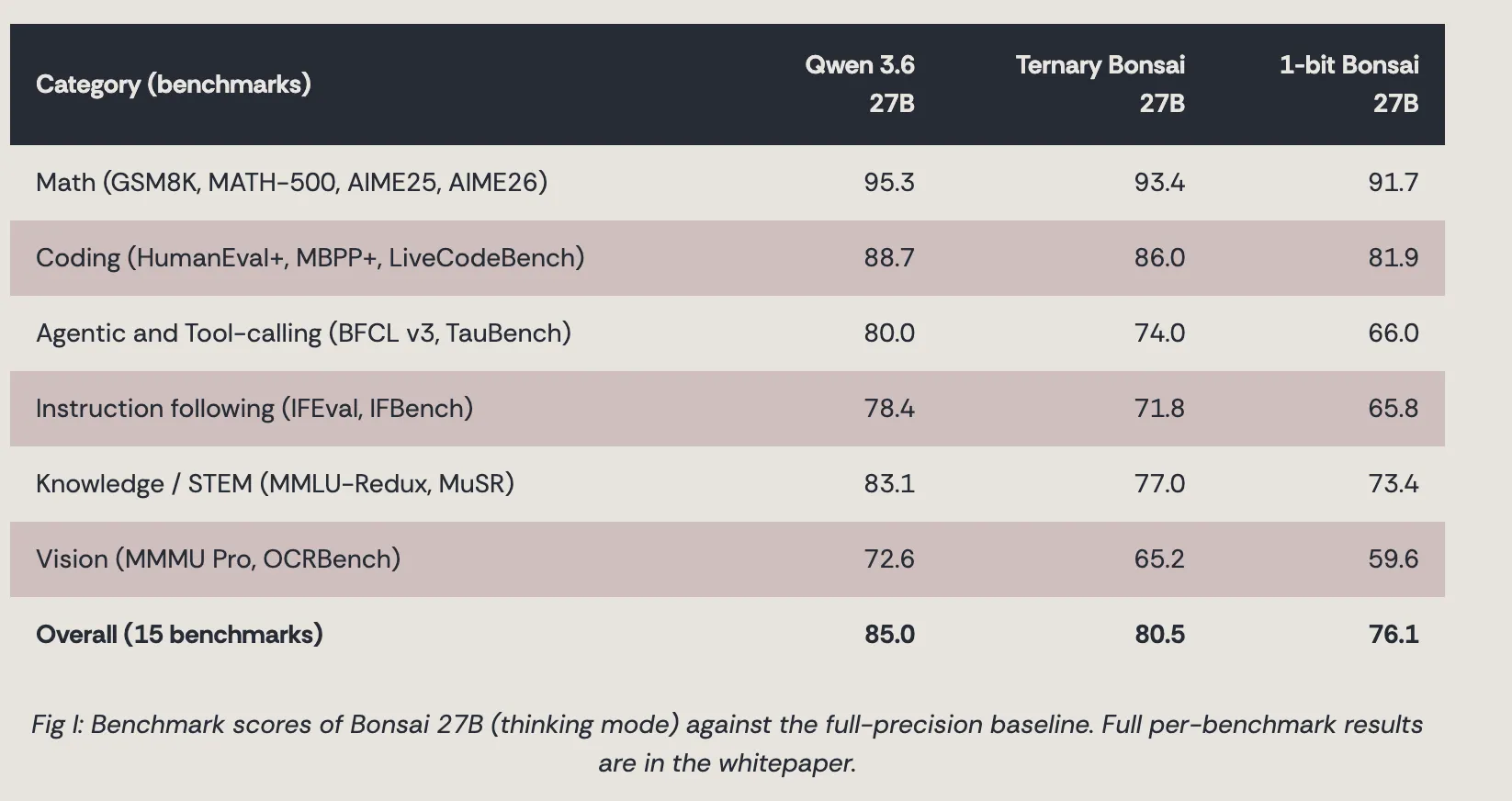
The ternary variant retains 94.6% of full-precision benchmark performance, outperforming conventional “2-bit” Qwen builds that are nearly twice as large and collapse on math and coding tasks below 4 bits.
Apple is in early talks with PrismML about the underlying compression technology, per CNBC, with the company targeting a compressed Gemma model next in the pipeline.
I models eat up a lot of memory. A 27-billion-parameter AI model, considered medium-sized by industry standards, needs roughly 54 GB of memory to run on half precision. Most laptops can’t hold that. Some desktop rigs can’t either.
Earlier this week, PrismML released one at 3.9 GB—small enough to fit on an iPhone.
Parameters are the number of dials and tweaks a model can handle. The more parameters, the denser and more capable a model is.
Bonsai 27B is the first 27B-class model to clear the memory ceiling of a consumer smartphone, running at 11 tokens per second on an iPhone 17 Pro Max. (Tokens are the basic unit of information that AI models can handle and produce.) The ternary variant, at 5.9 GB, hits around 26 tokens per second on an M5 Pro laptop. Both are free under Apache 2.0.
The compression method, built on Caltech intellectual property, reduces each model weight from 16 bits of floating-point precision to a single sign—+1 or -1 in the binary build, one of three values in the ternary. Each group of 128 weights shares a 16-bit scaling factor, landing the binary variant at 1.125 bits per weight: 14 times smaller than the full-precision original. The ternary model adds a zero state for slightly more expressive power and settles at 1.71 bits.
In easier terms, this means a ternary AI model uses only three settings for each internal value—negative, zero, or positive—while a standard AI can choose from about 65,000 settings.
PrismML did that without losing much of the output quality.
What makes this different from conventional “low-bit” models is that nothing gets a higher-precision escape hatch: embeddings, attention, and the full language model head are all compressed end-to-end. Most quantized builds keep certain sensitive layers at full precision, which ends up increasing their size as a tradeoff for better quality. Bonsai doesn’t play that game.
This is the second major release in the family. In March, PrismML shipped Bonsai 8B, a 1.15 GB model that proved the 1-bit architecture could survive at 8 billion parameters without its reasoning collapsing. The jump to 27 billion is where the stakes change—that scale is where sustained chain-of-thought reasoning, reliable tool use, and multi-step agentic behavior actually emerge consistently—the things smaller models still fumble.
Benchmarks
Across 15 benchmarks evaluated in thinking mode on NVIDIA H100 GPUs—spanning knowledge, math, coding, and tool use—Ternary Bonsai 27B averages 80.49, or 94.6% of the full-precision model. The 1-bit variant hits 76.11.
Overall, on benchmarks, the models perform much better than Gemma 4 or Qwen 3.6 in terms of how much potential they offer for their size.
The models are pretty good for what they offer, and considering how little resources they require, they take small hardware (smartphones and lower end PCs) to another level in terms of capabilities. AIME25 and AIME26, modeled on the American Invitational Mathematics Examination, come in 93.7% for Ternary Bonsai 27B versus 95.3% for the much bigger Qwen 3.6B. Bonsai scores 86 points in codig vs 88 for Qwen 3.6 and 77% on general knowledge vs 83 for Qwen 3.6.
The model also uses a hybrid attention backbone where roughly 75% of the layers are linear rather than full quadratic attention. That architecture is what makes a 262K-token context window practical on-device—something a standard attention stack would make prohibitively expensive on phone hardware.
We tested it
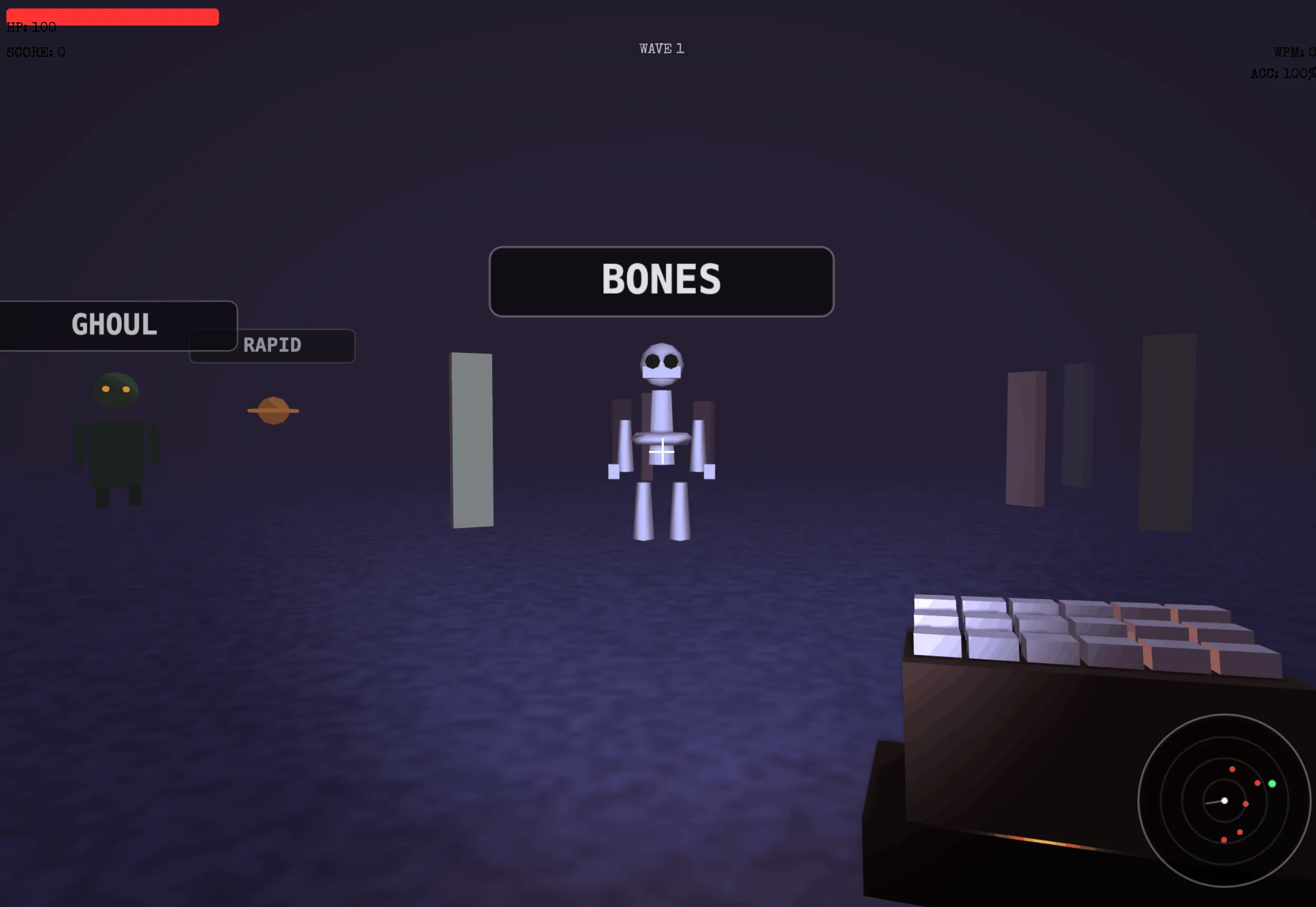
We ran Bonsai 27B ourselves. Coding takes iteration: single-shot prompts won’t compete with cloud frontier models. Being local and free makes that irrelevant. For our Zombie Type game—a first-person typing-horror browser game—two vibe coding rounds produced clean collision detection, proper scoring logic, and graphics that held together. The model grasps structure early; the second pass refines rather than rebuilds.
Interestingly enough, some models (like the skeletons) looked more elaborate than the ones from GPT 5.6 Sol. It doesn’t mean it’s better by any means, just that on this task it produced a cute skeleton whereas the AI king made a poorer stylistic choice.
The game is available for testing here.
Creative writing is a more qualified story, and the criteria is more subjective.
Roughly speaking, the results aren’t particularly imaginative if you have a zero-shot prompt in mind.
That said, Bonsai produces stories with consistent internal logic, pacing, and arc—better, or on par with Claude Haiku or even Sonnet on lower effort on comparable prompts. For a model that runs entirely on your own hardware with no API costs, that’s a lot to say.
The story it created can be found in our Github repository.
PrismML also ships a DSpark speculative decoding layer alongside the model—a lightweight drafter that proposes blocks of candidate tokens, which the main model verifies in a single forward pass rather than generating token-by-token. On an H100 that adds a 1.37x throughput boost with no change in output quality, since verification preserves the exact output distribution. On Apple Silicon it’s not yet enabled by default, but for GPU serving it’s a real gain.
Apple’s interest adds a commercial dimension. PrismML CEO Babak Hassibi confirmed to CNBC that the company is in early talks with Apple, which is evaluating the compression technology for potential on-device use.
Hassibi said a compressed Gemma model is next in the pipeline, followed by larger frontier models; 1-bit Bonsai 27B is available for free download now under Apache 2.0. If you need a primer on running models like this locally, check out our guide.
Daily Debrief Newsletter
Start every day with the top news stories right now, plus original features, a podcast, videos and more.
According to online chatter, you’d be mistaken to think that Sony will soon let PlayStation users buy games using a Sony-issued cryptocurrency. However, the crypto community may be getting ahead of itself.
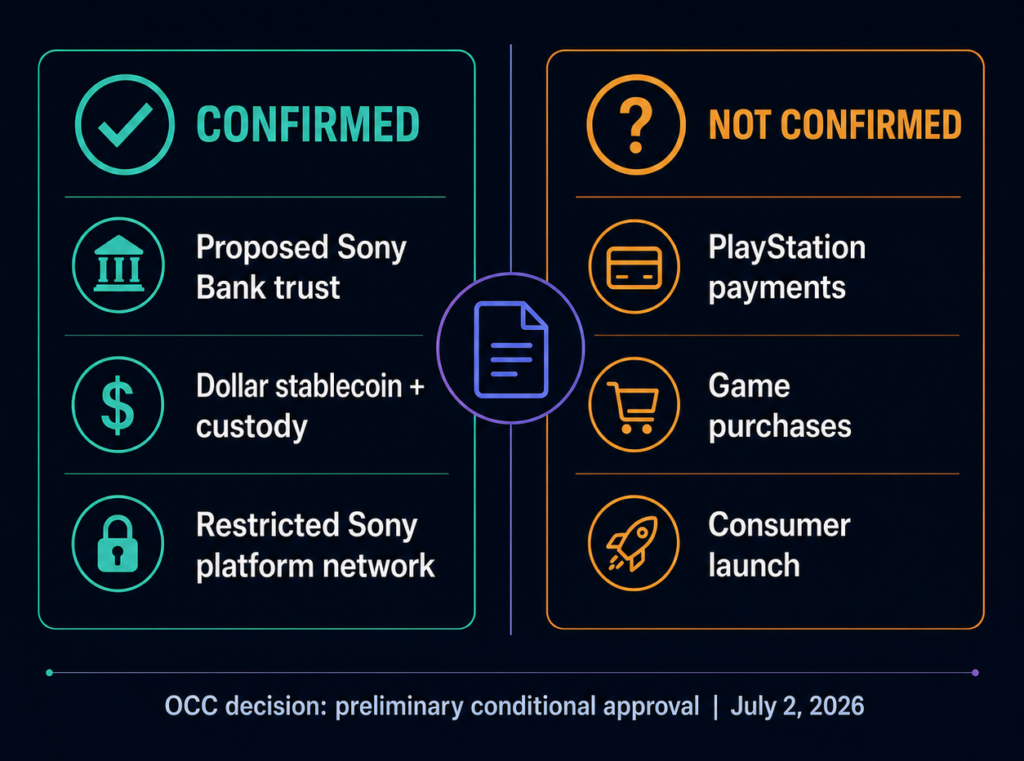
On July 2, the Office of the Comptroller of the Currency granted preliminary conditional approval for a proposed Sony Bank-owned trust bank called Connectia Trust. Neither that decision nor Sony Bank’s announcement names PlayStation, the PlayStation Store, or game purchases.
The approval simply outlines a financial-services structure that could support payments on Sony properties in the future, but a PlayStation product is not part of the public record.
What Sony has proposed
Connectia Trust would be wholly owned by Sony Bank. The OCC decision says the proposed trust would issue a dollar-backed stablecoin, maintain reserves, provide custody and support transfers in a restricted, permissioned closed-loop network.
Its customers would include U.S. retail customers who already have relationships with Sony Group or its subsidiaries, as well as Sony Group companies.
Related Reading
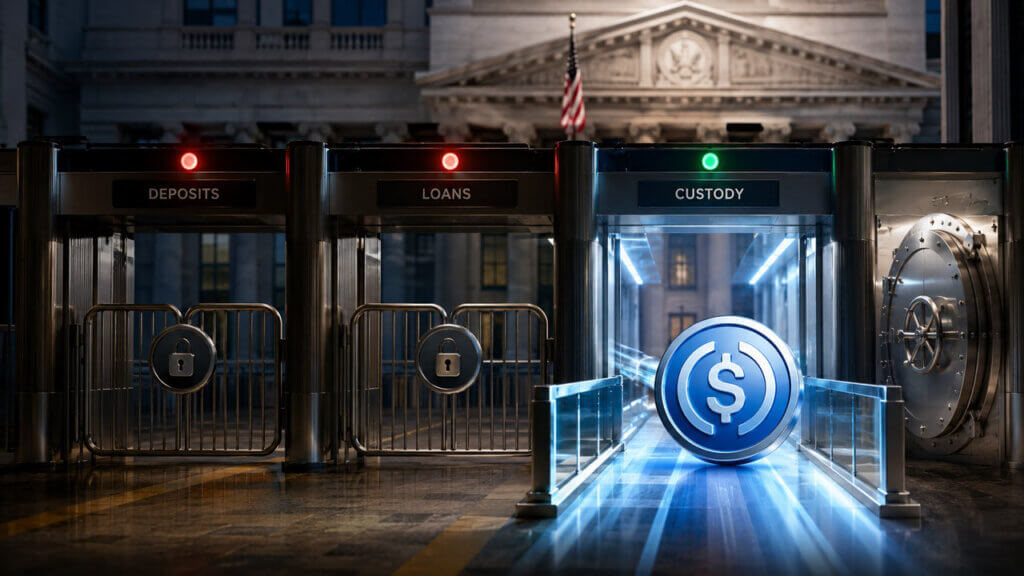
Circle gets permission to open a US bank but cannot take ordinary deposits or make loans
Circle National Trust will open with custody for Circle and its affiliates, while custody for select institutions and USDC reserve management remain future possibilities.
Jul 11, 2026·Liam ‘Akiba’ Wright
That framework could be useful for a consumer platform. It describes a payment system confined to approved Sony properties and defined customers, not an open cryptocurrency that can be spent broadly across the internet.
Still, the filing uses general terms. It does not identify which consumer services would join the network or say that games could be bought with the token.
Viral social media posts are making the leap many readers would make upon first seeing a Sony stablecoin plan: PlayStation is the company’s best-known consumer platform, so a Sony-controlled payment rail can seem like a route to game purchases. Reactions also focused on the prospect of a tightly controlled closed ecosystem. Obviously, mere online speculation does not make it a Sony product announcement.
Connectia also has not cleared its main regulatory hurdle. The OCC’s action was preliminary conditional approval, and the trust cannot begin business until it meets pre-opening requirements and receives final approval. Sony Bank says it is preparing for a possible 2027 opening, subject to required approvals, and explicitly states that neither the opening date nor stablecoin issuance is guaranteed.
CryptoSlate Daily Brief
Daily signals, zero noise.
Market-moving headlines and context delivered every morning in one tight read.
5-minute digest 100k+ readers
Free. No spam. Unsubscribe any time.
Whoops, looks like there was a problem. Please try again.
You’re subscribed. Welcome aboard.
Related Reading
Washington has started selecting which crypto firms control custody at a national level
A fast cluster of OCC approvals suggests the US is formalizing who controls custody, settlement, and stablecoin infrastructure.
Apr 3, 2026·Gino Matos
A PlayStation feature would require another decision after that. The proposed network is limited to Sony Group and subsidiary platforms, but the filing does not commit any named product to use it.
Sony would need to specify the product, its eligible customers, and what they could buy before a PlayStation purchase flow could exist.
In October 2025, Sony completed a partial spin-off of its financial-services business and retained a 16.40% stake in Sony Financial Group, rather than keeping it as a consolidated subsidiary, according to Sony’s corporate record.
That does not prevent coordination, but it makes the trust-bank approval only one element of a potential PlayStation-payment plan.
Related Reading
Stablecoin regulation converts issuers into psuedo-banks while adding a barrier to entry for smaller players
Stablecoin regulation is giving issuers legal clarity, but compliance costs may leave the market to the biggest firms.
Jun 21, 2026·Andjela Radmilac
Sony Bank now has a conditional route to build a U.S. stablecoin and custody operation for a restricted Sony network. It has not announced PlayStation crypto payments.
The proof of concept demonstrates end-to-end JPYSC-powered settlement and automated onchain dividend distribution for tokenised securities in a testnet environment, illustrating the potential of programmable capital markets. For these technical demonstrations, the parties used a dedicated testnet token created solely for technical verification. This testnet token is separate from and not the regulated JPYSC issued in Japan. The PoC was designed to validate workflows and infrastructure intended for future integration with JPYSC.
SBI Group, DigiFT, and Startale Group today announced the first proof-of-concept (PoC) initiatives demonstrating how JPYSC, Japan’s first trust-based Japanese yen stablecoin, can power the full lifecycle of tokenized securities. Conducted in an Ethereum testnet environment, the joint PoC showcase:
Instant settlement of tokenized Japanese equity fund subscriptions using JPYSCAutomated, onchain distribution of fund-level income in JPYSC
Bringing Capital Markets Fully Onchain
While tokenized securities have gained significant momentum globally, cash settlement and dividend payments remain largely dependent on traditional financial infrastructure. Together, these PoCs demonstrate how regulated stablecoins and tokenized real-world assets (RWAs) can modernize securities issuance, settlement, and income distribution while preserving compliance and investor protections.
The joint initiative demonstrates how JPYSC can serve as the settlement layer for tokenized investment products, enabling near-instant finality, programmable cash flows, and continuous onchain operations. As part of this broader collaboration, SBI Group and DigiFT are working toward tokenizing the SBI Japan High Dividend Equity Fund, one of Japan’s leading public equity funds exceeding ¥200 billion in assets under management, thereby creating new regulated onchain access to Japanese equities for global institutional investors.
These PoC initiatives are structure-agnostic demonstrations of JPYSC’s settlement and distribution capabilities.
The JPYSC settlement and dividend PoC announced today establishes key building blocks required to support the fund’s full onchain lifecycle. The dividend distribution PoC is a separate, structure-agnostic demonstration of JPYSC’s capabilities for tokenized products that make distributions, and does not apply to the fund referenced above. With SBI Asset Management Co., Ltd. (“SBI AM”) as the investment manager of the underlying fund strategy, DigiFT as the regulated tokenization platform, and Startale Group providing blockchain infrastructure and JPYSC expertise, the parties will conduct the following proof-of-concept initiatives:
JPYSC-Powered Instant Settlement for Tokenized Securities
The first proof of concept demonstrates how the intended JPYSC settlement model can enable near-instant settlement for tokenized Japanese equity fund subscriptions. By replacing traditional multi-day settlement processes with onchain settlement, the PoC showcases the potential to reduce settlement risk, improve capital efficiency, enable 24/7 transactions, and support programmable payment flows for digital capital markets.
Automated Onchain Dividend Distribution
The second proof of concept demonstrates how the testnet tokens representing the intended functionality of JPYSC can fully digitize dividend distribution for tokenized investment products that make distributions to holders. Once a distribution amount and holder registry are finalized, the PoC demonstrates how dividends can be calculated and distributed directly to eligible token holders via smart contracts. In a production implementation, investors could immediately hold, reinvest, transfer, or convert their JPYSC, enabling a faster, more transparent, and programmable dividend lifecycle.
Building the Next Generation of Capital Markets
The collaboration is among the first demonstrations in Asia using a testnet token representing the intended functionality of a Japanese yen stablecoin regulated in Japan, being integrated across both primary settlement and post-trade income distribution for tokenized securities. It also establishes key infrastructure supporting the tri-parties’ broader vision of building a Japan-originated onchain capital market that connects tokenized Japanese financial assets with regulated digital cash.
“While the asset management industry has made significant progress in reducing the costs of ETFs and mutual funds, there remains considerable room for improvement in the market infrastructure supporting trading, settlement, and distribution. This proof of concept explores the potential to transform the entire asset management lifecycle by combining tokenized assets with a yen-denominated stablecoin, enabling greater efficiency and transparency. We believe these technologies have the potential not only to streamline operations but also to enhance the investor experience and strengthen the international competitiveness of Japan’s capital markets. As an asset management company within the SBI Group, we are committed to advancing the practical implementation of next-generation financial infrastructure and bringing Japanese innovation to the global stage,” said Tomoya Asakura, CEO, SBI Global Asset Management
“The future of capital markets will be beyond simply tokenizing assets. It will bring the entire transaction lifecycle onchain. This proof of concept demonstrates how regulated stablecoins like JPYSC can power everything from instant settlement to programmable dividend distribution, laying the foundation for a more efficient, transparent, and interoperable financial system,” said Sota Watanabe, CEO of Startale Group.
“Regulated tokenization only becomes real infrastructure when the settlement layer underneath it is interoperable. This proof of concept shows how regulated stablecoins like JPYSC can plug directly into the operating model behind manager-led, tokenized funds, turning what is often a static onchain representation into something that can actually move, settle, and distribute value where it applies. It reinforces why we built DigiFT’s infrastructure to support that full lifecycle, not just the token issuance step, and it is a model we expect to extend across our broader roster of tokenized funds,” said Henry Zhang, Founder and Group CEO, DigiFT, emphasizing why interoperable settlement infrastructure is core to making manager-led, regulated tokenization work at institutional scale.
Looking beyond these PoCs, the parties also intend to explore integrating tokenized Japanese equity assets with institutional-grade DeFi infrastructure through collaborations with ecosystem partners such as Morpho and Gauntlet, enabling future use cases including lending, collateralization, and programmable onchain asset management within regulated frameworks.
Together, the collaboration demonstrates a practical blueprint for next-generation capital markets, where tokenized assets and regulated digital cash work seamlessly to deliver faster execution, streamlined operations and new opportunities for financial innovation. The three organizations intend to accelerate the commercialization of tokenized capital markets by advancing production deployments of regulated investment products powered by JPYSC, unlocking new use cases for onchain finance at an institutional scale.
About DigiFT
DigiFT is a next-generation platform for tokenized real-world assets (RWAs), regulated by the Monetary Authority of Singapore (MAS) and the Hong Kong Securities and Futures Commission (SFC) for Type 1 and Type 4 regulated activities. The platform offers end-to-end digital asset services—including tokenization, issuance, distribution, trading, and instant liquidity provision—purpose-built for institutional RWAs. Trusted by global financial institutions, DigiFT is the on-chain tokenization and distribution partner for leading asset managers such as BNY, CMB International, DBS Bank, Franklin Templeton, Hines, Invesco, UBS Asset Management, and Wellington Management. Learn more at www.digift.io
About Startale Group
Startale Group is a leading global crypto solutions provider on a mission to build the next civilization by bringing the world onchain. The company co-develops Soneium with Sony Group Corporation and is developing Strium through SBI Holdings, a platform enabling 24/7 trading of tokenized securities. Startale powers onchain finance through its native stablecoins JPYSC and USDSC, and offers the Startale App, a SuperApp that unifies asset management, engagement and exploring blockchain applications into a single seamless experience.
DisclaimerDigiFT and/or its affiliates endeavour to ensure the accuracy and reliability of the information provided, but do not guarantee its accuracy or reliability, and accept no liability (whether in tort, contract, or otherwise) for any loss or damage arising from any inaccuracy or omission, or from any decision, action, or non-action based on or in reliance upon the information contained in this material.(JPYSC is regulated under the applicable Japanese regulatory framework but is not a MAS-regulated stablecoin. The token used in these proof-of-concept demonstrations is a separate testnet token and does not constitute the regulated JPYSC.) This information does not constitute an invitation, recommendation, or offer to subscribe for, purchase, or enter into any transaction involving the above-mentioned product/service or any other services mentioned. The above-mentioned product/service is only available to Accredited Investors, Professional Investors, and Institutional Investors through authorised regulated intermediaries. Before making any investment decision, please seek independent legal and financial advice. Clients intending to trade this product are reminded of the risks associated with such products and should carefully assess their investment objectives, risk appetite, financial situation, and particular needs before making any investment decision.This content is for general informational purposes only and does not constitute investment advice, an offer, or a solicitation to buy or sell any product or service. Eligibility to access or invest in any products mentioned is subject to applicable laws and investor qualification requirements. DigiFT products and services are available only through authorised and regulated intermediaries to eligible investors. Readers should seek independent legal, financial, and tax advice before making any investment decision. This advertisement is not approved by the Monetary Authority of Singapore.
About Web3Wire Web3Wire – Information, news, press releases, events and research articles about Web3, Metaverse, Blockchain, Artificial Intelligence, Cryptocurrencies, Decentralized Finance, NFTs and Gaming. Visit Web3Wire for Web3 News and Events, Block3Wire for the latest Blockchain news and Meta3Wire to stay updated with Metaverse News.
Demis Hassabis says AGI is likely only a few years away.
He wants a new U.S. standards body to evaluate frontier AI models before deployment.
The proposal calls for pre-release testing that could eventually become mandatory for the most capable systems.
For the second time this year, Demis Hassabis predicted that artificial general intelligence would arrive before the end of the decade. This time, however, he said it won’t simply be another technological breakthrough—it will rival the discovery of electricity or fire.
In a blog post published Tuesday on X, the Google DeepMind CEO said AGI is “probably only a few short years away,” describing it as a technology that could reshape human civilization.
“When we look back on this time in the decades to come, I think we will realise we were standing in the foothills of the singularity–nothing less than the dawning of a new age for humanity.”
According to Hassabis, AGI, the point when computers can understand, learn, and perform a wide range of tasks as well as or better than humans, should not be compared with advances such as the internet or mobile computing because its impact could be even greater.
“It is much more akin to the discovery of electricity or fire,” he wrote. “If you stop to think about it, we’ve essentially found a way to make sand think. It’s miraculous.”
Despite that optimism, Hassabis warned that AI capabilities are advancing faster than society’s ability to understand and manage the risks, pointing to cybersecurity threats that already exist with today’s frontier models, adding that future systems could introduce biological, nuclear, and other national security risks.
As AI becomes more agentic and capable of self-improvement, he argued, stronger technical safeguards will be needed to ensure humans remain in control.
“On the horizon, we will need robust safeguards to maintain control of increasingly agentic, recursively self-improving systems–and tackle unknown issues that will only become clearer over time.”
The news comes as AI leaders have spent much of the past year since the public launch of ChatGPT in 2022 warning that AGI could arrive sooner than expected. In January 2026, Anthropic CEO Dario Amodei said human-level AI could emerge within one to five years and warned governments were underestimating the pace of development. Then, in June, Hassabis predicted AGI would arrive by 2030 and warned society had “not long to prepare.”
To address those concerns, Hassabis proposed creating a U.S. Frontier AI Standards Body modeled after the Financial Industry Regulatory Authority, or FINRA, a private organization that oversees U.S. brokerage firms. The federally supervised public-private partnership would be funded primarily by the AI industry and staffed by independent technical experts and open-source representatives to evaluate frontier AI models.
“The rapid progress we’re seeing in AI requires a new approach to testing frontier AI model capabilities that is dynamic, adaptable, and rigorous,” he wrote. “The US is well positioned, given its economic and technical standing, to take the first step in developing such a framework.”
The proposal follows similar calls made by the prominent members of the industry to establish oversight for advanced AI.
In May 2023, during a hearing before the U.S. Senate Committee on the Judiciary, OpenAI CEO Sam Altman called for a federal agency to license powerful AI systems and require independent safety audits. More recently, last month, President Donald Trump signed an executive order creating a voluntary framework for reviewing advanced AI models before their release. That same month, Anthropic CEO Dario Amodei warned that AI is getting too powerful and safety rules akin to the Federal Aviation Administration (FAA) are needed.
Despite the push to regulate AI development, Hassabis said the world has only a limited window to establish common standards before AGI arrives.
“The future is not yet written, we must use this precious window before AGI arrives to shape this technology for the benefit of all humanity,” he wrote. “What we collectively do now will determine how the next phase of civilisation unfolds. By safely stewarding AGI into the world, we can enter a new golden age of scientific discovery and progress, and usher in a bright future of incredible human flourishing.”
Daily Debrief Newsletter
Start every day with the top news stories right now, plus original features, a podcast, videos and more.
U.S. consumer prices fell 0.4% in June, denting rate hike expectations and marking the largest monthly decline since April 2020.
Bitcoin and Ethereum trended higher, keeping one analyst’s $100,000 quarter-end price target within reach.
Despite the positive inflation report, escalating conflict between the U.S. and Iran over the Strait of Hormuz continues to shadow the market.
Bitcoin ticked above $64,000 Tuesday morning, after a widely watched inflation gauge showed consumer prices cooling more than expected in June—bolstering expectations that the Federal Reserve will leave interest rates untouched at the conclusion of its next policy meeting.
The Consumer Price Index fell 0.4% month-over-month in June, the U.S. Bureau of Labor Statistics said on Tuesday. Economists expected the index, which tracks price changes across a broad range of goods and services, to post a 0.1% decline for the period.
Following the report’s release, Bitcoin steadied around $64,300, up 2.3% on the day, according to CoinGecko data. Bitcoin’s price surge nevertheless lagged behind Ethereum, which posted a 5.4% increase to around $1,890 during the same timeframe.
The largest one-month decrease in consumer prices since April 2020 was prompted by falling energy costs, the inflation snapshot indicated, offsetting a rise in food and shelter costs. On an annual basis, inflation slowed to 3.5%, decreasing for the first time in five months.
Fabian Dori, CIO at crypto bank Sygnum, told Decrypt that the government’s latest inflation numbers marked a hopeful sign for crypto, representing “the first real indication that the energy-driven impulse from the spring is fading rather than broadening.”
Cooler than expected
As conflict in the Middle East squeezed global energy supplies, investors braced for tighter monetary conditions, expecting the U.S. central bank to raise interest rates in an attempt to prevent associated price pressures from spreading to the broader economy.
So-called core inflation, which strips out volatile food and energy costs, clocked in at 2.6% in the 12 months through June, down from 2.9% the previous month. Earlier this year, the annual core measure had dipped to 2.5% in February before ticking back up in the spring.
Higher interest rates typically weigh on risk assets like stocks and crypto as the risk-free payouts on government bonds become relatively attractive. Conversely, expectations of accommodative monetary policy tend to buoy digital assets.
On Tuesday, traders grew more confident that the Fed would leave interest rates unchanged later this month at a target range of 3.5% to 3.75%, per CME FedWatch. Still, they expected the U.S. central bank to deliver a 25-basis-point hike in September.
As the war between the U.S., Israel, and Iran has clouded the Fed’s path to reining in inflation to its 2% goal, analysts—including Matt Mena, senior crypto research strategist at exchange-traded fund issuer 21Shares—have said that the conflict could shape crypto prices.
“As long as tensions with Iran don’t worsen, fundamentals and catalysts are starting to align for a $100k push by quarter-end,” he told Decrypt.
On Tuesday, the U.S. military said that it was preparing to reimpose its blockade on Iranian ports at 4 p.m. Eastern Time, per AP News. The development followed days of retaliatory strikes between the countries centered on control of the vital Strait of Hormuz.
Daily Debrief Newsletter
Start every day with the top news stories right now, plus original features, a podcast, videos and more.