Metaverse

Home Metaverse Page 89

EnergKlette Released a Compliance Implementation Plan for Energy Sharing

0
EnergKlette Released a Compliance Implementation Plan for Energy Sharing


In Brief

EnergKlette is launching a protocol and tool stack for energy sharing in Germany, combining compliant metering with blockchain technology to enable localized green electricity certification, low-cost settlement, and flexible, community-driven electricity use in alignment with new regulatory standards.

EnergKlette Released a Compliance Implementation Plan for Energy Sharing

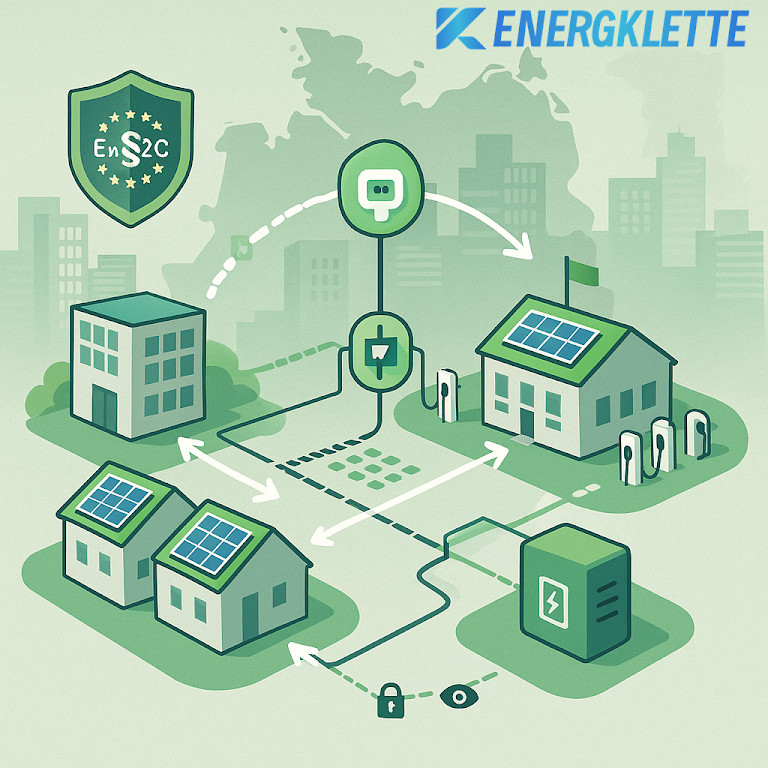
The German power system has entered a “new normal” with a high proportion of renewables, where renewable energy is expected to account for 62.7% of net public electricity generation by 2024. The fluctuations in electricity prices and loads pose higher demands for local consumption and flexibility. At the federal level, a clear definition of “Energy Sharing” has been provided and incorporated into the revised text of Article 42c of the Energy Industry Act (EnWG), ushering in a compliance path for collaborative electricity use and settlement at the community level. EnergKlette has announced a protocol and tool stack aimed at energy sharing scenarios, focusing on localized green electricity certification, refined metering, and low-cost settlement, and is launching pilot solicitations for municipalities, utilities, and industrial parks.

370aebbe-be4c-46ac-9007-b0b796a6640f

The plan is based on “physical-digital integration,” combining compliant metering with blockchain-native credentials to form an integrated closed loop from the electricity meter to the contract. Core features include: digital green certificates generated every 15 minutes carrying metadata such as power source type, geographical location, and carbon intensity; a minimum transaction granularity of 0.01 kWh to accommodate residential photovoltaics and shared energy storage; and device fingerprint binding with anti-tampering mechanisms to suppress “phantom generation.” The entire process revolves around the principles of “data minimization” and “local priority,” ensuring auditability while reducing information exposure.

In response to the regulatory intent of prioritizing “the same distribution network area” for energy sharing, EnergKlette provides configurable modules for metering standards, allocation rules, and alignment of billing periods, supporting the delineation of smaller boundaries based on voltage levels and substation specifications, while being compatible with existing rate structures. Multi-party settlement employs a dual-track design of “split NFTs + billing period aggregation,” allowing community operators and distribution network companies to obtain verifiable ledger mirrors separately. The plan aligns with the EU Renewable Energy Directive (RED II) regarding non-discrimination requirements for renewable energy communities (RECs), reserving parameter slots and routing strategies for future cross-regional expansion.

On the execution front, the AIoT edge components of EnergKlette complete data cleansing and anonymization locally, then write proofs and summaries onto the blockchain, reducing central load and latency. Federated learning is used for regional electricity forecasting and equipment health monitoring, with model parameter exchanges not carrying raw data, balancing prediction accuracy and privacy. The metering side prioritizes adaptation to the rapidly advancing framework for smart meter and gateway deployment in Germany, following the reform guidelines of MsbG/GNDEW, providing auditable and replayable on-chain credentials to serve compliance reviews for energy sharing.

EnergKlette will open a sandbox toolkit for municipalities and distribution network operators, along with community governance and carbon credit interfaces, encouraging projects aimed at “local self-use priority and community circulation of excess electricity.” The foundation states that the first batch of pilots will focus on the combined scenarios of “schools-residential-public charging” and “industrial park rooftop photovoltaics-shared energy storage,” emphasizing auditable metering and explainability of billing periods, steadily aligning with regulatory guidelines and industry standards.

Disclaimer

In line with the Trust Project guidelines, please note that the information provided on this page is not intended to be and should not be interpreted as legal, tax, investment, financial, or any other form of advice. It is important to only invest what you can afford to lose and to seek independent financial advice if you have any doubts. For further information, we suggest referring to the terms and conditions as well as the help and support pages provided by the issuer or advertiser. MetaversePost is committed to accurate, unbiased reporting, but market conditions are subject to change without notice.

About The Author


Gregory, a digital nomad hailing from Poland, is not only a financial analyst but also a valuable contributor to various online magazines. With a wealth of experience in the financial industry, his insights and expertise have earned him recognition in numerous publications. Utilising his spare time effectively, Gregory is currently dedicated to writing a book about cryptocurrency and blockchain.

More articles


Gregory, a digital nomad hailing from Poland, is not only a financial analyst but also a valuable contributor to various online magazines. With a wealth of experience in the financial industry, his insights and expertise have earned him recognition in numerous publications. Utilising his spare time effectively, Gregory is currently dedicated to writing a book about cryptocurrency and blockchain.


Source link

5 ChatGPT Commands That Will Make Your Life Easier at Work – Metaverse Planet

0
5 ChatGPT Commands That Will Make Your Life Easier at Work – Metaverse Planet


Are you tired of repetitive tasks that take up hours of your day? These five smart ChatGPT commands simplify many routines, from writing emails to summarizing meetings, in seconds.

1. Summarize Long Documents

Have you ever looked at a long report or pages of emails and thought, “What’s the summary of this?” This command is exactly for those moments:

“Summarize this document and list the topics covered in bullet points.”

In seconds, you’ll get a clean bullet list capturing the main ideas. Of course, think of these summaries as a starting point, not a final product. ChatGPT might miss some details in complex technical subjects or misinterpret the context. So, always check before sharing externally. Still, this command is a productivity tool that clears a path through the information overload, allowing you to quickly grasp content.

2. Create a Prioritized To-Do List

There are times when to-do lists get out of control. You can organize that chaos with this command:

“Create and sort a to-do list. Highlight the most time-consuming tasks.”

Paste all your tasks here, regardless of close deadlines or small responsibilities, and watch ChatGPT group them by order of importance. You can also ask it to separate tasks by category. Of course, it’s not perfect. It might ask a few extra questions to get the prioritization right. However, it will be surprisingly effective for planning your day. This command doesn’t mean offloading the work to ChatGPT, but using it as a smart assistant to organize your day. It makes a huge difference, especially on busy days when you don’t know where to start.

3. Catch Points You Missed

Have you ever been buried in a project and wondered, “Did I miss something?” Try this command in those moments:

“[Write the project topic here]. List the important topics I should be thinking about regarding this subject.”

This is one of ChatGPT’s least known but most useful features. Using it not for writing or summarizing, but for thinking. When you ask the right questions, you can spot gaps in your plan, catch missing steps, and strengthen your strategic thinking skills. Whether you are preparing a report, planning a social media campaign, or solving a technical problem, ChatGPT lays out the points you might have missed at first glance.

4. Practice Negotiation

ChatGPT is surprisingly successful not just for writing, but also for role-playing practice. If you’re feeling nervous about asking for a salary raise, you can try this command:

“Can you role-play with me so I can rehearse a salary negotiation with my office manager?”

ChatGPT will take on the role of your manager and start a conversation with you. This way, you can test your arguments, prepare for potential objections, and rehearse how to present your accomplishments. You won’t be caught off guard by excuses like budget constraints or performance criteria in a real meeting.

If you want, you can make the scene more realistic by telling ChatGPT to “act like a tough manager.” This method strengthens your communication skills and self-confidence. But remember: ChatGPT doesn’t know your company’s culture or your manager’s personal style. Therefore, the role it takes is only a practice tool.

5. Generate Name Ideas for a Project

Finding a name for a new project, report, or campaign is harder than it looks. If you’re stuck cycling through a few ideas in your head, you can get a creative spark from ChatGPT:

“I’m looking for a name for this project [write project details here]. Can you give me 10 name suggestions?”

The ideas that come in a list can take you in different directions and styles. The trick here is how you write the prompt. Specify what the project is about, its target audience, and the tone you want the names to have. This way, ChatGPT doesn’t just generate names; it becomes a partner that also feeds your own creativity.

You Might Also Like;

Follow us on TWITTER (X) and be instantly informed about the latest developments…

Copy URL


Source link

What Is the Metaverse? | Expert Guide to Virtual Worlds, Digital Ownership & Web3 | NFT News Today

0
What Is the Metaverse? | Expert Guide to Virtual Worlds, Digital Ownership & Web3 | NFT News Today


The metaverse is an interconnected web of virtual environments where people interact as digital identities, working, socializing, building, and owning digital goods that can carry real-world value. What once sounded like science fiction has turned into a practical discussion about access, technology, ethics, and who controls the next phase of the internet.

Key Takeaways

The metaverse describes a persistent digital network of 3D spaces linked by identity, data, and value systems.

You can enter through VR, AR, desktop, or mobile; a headset isn’t always required.

Blockchain, AI, and cloud infrastructure make ownership, simulation, and personalization possible.

Companies, creators, and users are shaping virtual economies and social norms inside these environments.

Privacy, governance, and interoperability will determine whether the metaverse becomes open and empowering or fragmented and commercialized.

Definition and Core Concept

The metaverse is a shared digital environment that continues to exist even when you’re not online. It blends virtual reality (VR), augmented reality (AR), social interaction, and blockchain-based ownership into spaces where people can collaborate, play, and create.

Rather than being a single app or platform, it’s better understood as a network of interconnected 3D spaces. These worlds may be visually different, but they share key attributes: persistence, identity, social presence, and economic systems.

Core Characteristics

Identity and PresenceYou appear as an avatar—an expressive digital version of yourself that interacts with others. Avatars store information like achievements, assets, and social networks, forming a consistent digital identity.

PersistenceThe metaverse doesn’t “reset.” It runs continuously. Events unfold in real time, properties appreciate or depreciate, and people can collaborate across time zones without interruption.

InteroperabilityA long-term goal is seamless movement between platforms—carrying your avatar, purchases, and reputation from one world to another. This open standard is still aspirational but crucial for scalability.

Economic LayerVirtual currencies, NFTs, and smart contracts allow users to own and exchange assets. Whether or not blockchain is involved, digital ownership defines participation in metaverse economies.

Social ConnectionPresence matters more than pixels. The metaverse simulates the feeling of “being with someone” through shared space, body language, and spatial sound, transforming how we meet and communicate online.

Background and Origins

Early Vision and Fiction

The term metaverse was coined by author Neal Stephenson in his 1992 novel Snow Crash, where users accessed a vast 3D virtual city through personal avatars. That fictional metaverse had laws, economics, and social hierarchies—concepts that would later inspire real developers and futurists.

From Games to Platforms

MUDs (Multi-User Dungeons) in the 1980s allowed text-based collaboration and exploration, laying the groundwork for shared online worlds.

Second Life (2003) turned the idea into a living digital society. Users bought land, hosted events, and even ran businesses using Linden Dollars, one of the first virtual currencies with real exchange value.

MMOs like World of Warcraft added scale and community, showing that millions could coexist in a persistent digital environment.

The Social Layer Arrives

As social media evolved, the idea of “digital identity” became mainstream. Platforms like Roblox and Fortniteblurred gaming with social networking—hosting concerts, brand events, and co-creation hubs that looked more like towns than games.

Why the 2021 Surge?

In 2021, Meta (formerly Facebook) rebranded itself around the metaverse concept, signaling industry-wide momentum. Simultaneously, Web3 projects began linking NFTs and blockchain to virtual assets, claiming to decentralize ownership. The convergence of AI, cloud computing, and XR (Extended Reality) made the concept technologically feasible for the first time.

How the Metaverse Works: The Technology Stack

1. Interface Layer

Access varies:

VR Headsets create immersion through stereoscopic displays, motion tracking, and haptic controllers. Devices like Meta Quest or Apple Vision Pro deliver embodied experiences where hand gestures and gaze drive interaction.

AR Devices (like Microsoft HoloLens or mobile AR) blend virtual content into real surroundings, useful for spatial computing and digital twin scenarios.

Desktop and Mobile Access remains crucial. Roblox and Fortnite show that millions prefer flat-screen participation, proving the metaverse isn’t confined to VR hardware.

2. Simulation and Rendering Layer

At its core are 3D engines like Unreal Engine and Unity, which handle lighting, physics, and world-building. Cloud streaming platforms such as NVIDIA Omniverse or Amazon Sumerian render scenes remotely, lowering hardware demands for users.

Spatial audio, volumetric capture, and photogrammetry make spaces feel alive. Imagine joining a meeting where voices echo realistically depending on where you stand.

3. Data and Identity Layer

Each participant has a digital identity that might include:

Projects like Decentralized Identifiers (DIDs) aim to give users portable, secure IDs across environments, just like you can carry an email address across devices.

4. Economy and Ownership Layer

Here’s where blockchain, smart contracts, and tokens come in. They define who owns what.

A parcel of land in The Sandbox, a skin in Fortnite, or a training certificate in Microsoft Mesh—each could theoretically exist as a verifiable digital asset.

Ownership brings accountability, but also speculation. In early experiments, some virtual land sold for millions, but real value depends on user engagement, not scarcity alone.

5. AI and Automation Layer

Artificial intelligence makes the metaverse scalable. It handles:

NPC behavior: AI-driven guides and shopkeepers react dynamically to user actions.

Procedural world generation: Entire landscapes can be generated from a text prompt.

Moderation: AI detects hate speech, harassment, and fraud faster than human teams.

Personalization: Systems adjust lighting, events, or recommendations to your preferences.

6. Network and Infrastructure

Fast, low-latency connections are essential. 5G and edge computing reduce lag, allowing realistic motion and real-time collaboration. The metaverse is bandwidth-heavy—streaming 3D data and spatial audio simultaneously.

How to Access and Explore the Metaverse

You don’t log into “the” metaverse; you choose an ecosystem. Each world offers different focuses—social connection, creativity, business, or play.

Social Worlds

Horizon Worlds (Meta) focuses on social events, comedy shows, and hangouts.

VRChat fosters user-built worlds, wild creativity, and community subcultures.

Rec Room blends casual gaming with creativity and classroom potential.

User-Created Universes

Roblox is more than a game—it’s a creation toolkit. Millions of young creators design experiences, making it a real-world case study for digital labor economies.

Fortnite Creative Mode allows concerts and brand experiences where millions join live.

Decentralized Environments

Decentraland and The Sandbox link assets to blockchain-based ownership. Users can buy parcels, open virtual stores, or host conferences with crypto integration.

These platforms aim for user governance through DAOs (Decentralized Autonomous Organizations), though true decentralization is still evolving.

Professional and Educational Use

Microsoft Mesh and NVIDIA Omniverse focus on industrial collaboration, remote training, and digital twin modeling.

Architects visualize buildings, surgeons practice procedures, and logistics teams simulate global supply chains.

Avatars, Identity, and Self-Expression

Avatars are cultural statements. From realistic photogrammetry to stylized cartoons, they communicate identity and creativity.

People experiment with appearance, gender, or body language that differs from their physical selves—an act of freedom, but also one that challenges safety and representation norms.

The Metaverse Economy: Digital Property, Currency, and Work

Digital economies are at the heart of the metaverse conversation. Ownership defines commitment; economies create motivation.

Virtual Land and Property

Owning “land” in virtual environments means controlling space others can visit. You might build:

Value depends on traffic, visibility, and utility. The Decentraland Fashion District became a hub for digital fashion brands because it attracted consistent attention—not because of intrinsic scarcity.

Virtual Goods and Services

Digital wearables, music rights, or access passes act as economic drivers. Gucci, Nike, and Balenciaga already sell digital fashion that exists only in virtual spaces.

What seems intangible becomes emotionally valuable because identity has shifted online. Your avatar’s jacket might say as much about you as your real one.

Work and Income Opportunities

The metaverse creates new types of work:

World builders: 3D environment designers for brands or social hubs.

Event managers: Plan virtual launches or conferences.

Community architects: Manage digital townships or governance.

Digital asset traders: Buy, design, and resell NFT wearables.

Developers, artists, and educators can now treat immersive platforms as markets for skills—similar to early YouTube creators who built full-time careers from user-generated content.

Payments and Regulation

Monetization runs through a mix of in-platform tokens, cryptocurrencies, and fiat gateways.Governments are beginning to treat virtual assets as taxable property.

Anti-money-laundering regulations (AML) and know-your-customer (KYC) laws are extending into virtual spaces. These legal frameworks will shape how trustworthy virtual economies feel.

Cultural and Social Impact

Redefining Social Interaction

Digital presence changes emotional communication. Spatial audio and movement tracking mean your posture or laughter matters again online. Relationships formed in 3D spaces can feel more natural than chat threads because they use body language and proximity.

Education and Skill Development

The metaverse allows experiential learning:

Physics students can manipulate molecules or orbit simulations.

Historians can walk through ancient cities reconstructed from archaeological data.

Corporate teams conduct soft-skill training in immersive settings, improving retention rates.

These aren’t futuristic; companies like Accenture already onboard thousands of employees in virtual campuses.

Mental Health and Identity

Metaverse communities can reduce isolation by giving people social outlets independent of physical barriers. However, they can also create unhealthy dependencies, especially for those who struggle to separate digital and physical identity.

Clinical studies suggest VR therapy improves PTSD treatment and anxiety management by safely simulating triggers in controlled environments. But constant immersion without moderation may distort perception of self and time.

Art, Culture, and Creativity

Virtual galleries and performance spaces democratize art. Musicians like Travis Scott and Ariana Grande have hosted massive in-game concerts reaching audiences far beyond any stadium.

NFT-based royalties give artists direct compensation, bypassing traditional intermediaries.

At the same time, critics question sustainability—blockchain transactions consume energy—and accessibility, as premium VR devices remain expensive.

Who Is Building the Metaverse?

Tech Industry Leaders

Meta invests billions in hardware, avatars, and social platforms, hoping to own the entry point.

Microsoft integrates metaverse functions into workplace tools like Teams and Azure, emphasizing practical collaboration.

Epic Games pushes creative freedom through Unreal Engine and cross-platform social events.

NVIDIA uses Omniverse to model industrial digital twins—virtual factories, cities, and vehicles used for simulation and optimization.

Open Source and Decentralized Projects

Web3 developers advocate a user-owned metaverse, where code, assets, and governance belong to the community.

Projects like Decentraland DAO or The Sandbox experiment with collective voting on policy changes and creator incentives.

Challenges remain: coordination complexity, speculative bubbles, and technical fragmentation.

Government and Institutional Roles

Policymakers are exploring frameworks for:

Digital property rights

Taxation of virtual income

Data protection and biometric privacy

Child safety and accessibility standards

The European Union, South Korea, and the United Arab Emirates have all published early national strategies for metaverse development.

Challenges, Risks, and Criticism

Privacy and Data Collection

VR and AR systems gather unprecedented data: hand gestures, eye movements, room layouts. This biometric information can infer emotional states and cognitive patterns.

If mishandled, it becomes more invasive than traditional web tracking. Ethical design and local data storage are essential.

Interoperability and Standards

The current metaverse is a collection of isolated “walled gardens.”

Initiatives like the Metaverse Standards Forum and OpenXR attempt to unify protocols for avatars, assets, and motion tracking.

Without shared standards, the metaverse risks repeating the fragmentation of early social networks.

Safety and Moderation

Abuse, harassment, and misinformation can feel even more visceral in immersive spaces.

Effective solutions combine AI moderation, user empowerment tools (blocking, reporting), and human oversight.

Platforms are learning that emotional safety is as crucial as technical stability.

Economic Reality Check

Speculative hype in 2021 led to inflated valuations. By 2023, virtual real estate prices corrected dramatically.

The takeaway: the metaverse thrives not on scarcity but community engagement and creativity. Spaces with meaningful use cases retain value; empty land doesn’t.

Accessibility and Inclusion

VR devices remain costly and sometimes uncomfortable.

Developers are working on lighter, cheaper headsets and haptic gloves.

Language accessibility also matters: multilingual AI assistants and real-time translation can make the metaverse more global.

The Future of the Metaverse

Integration with AI

Generative AI will make world-building instant. Users will describe what they want—a café in Kyoto, a moon base, a collaborative classroom—and the system will generate it dynamically.

AI-driven avatars could become digital coworkers or companions, assisting with learning, scheduling, or emotional support.

Digital Twins and Industrial Metaverse

Enterprises are already using virtual replicas of real systems:

BMW uses digital twins of factories to optimize workflows before physical construction.

Siemens and NVIDIA simulate manufacturing environments for predictive maintenance.These models save cost, reduce waste, and allow experimentation without risk.

Web3 and Interoperability

If blockchain standards mature, digital ownership could become portable across experiences. You could carry your verified art, reputation, or certification through multiple ecosystems.

This would mirror the way domain names or email addresses functioned during the web’s early growth.

Mixed Reality and Spatial Computing

The boundary between real and virtual will blur. With AR glasses, you might walk down a real street and see digital overlays—reviews, directions, or even art installations synchronized with your location.

Will the Metaverse Replace the Internet?

Unlikely in the short term. The metaverse won’t replace; it will extend.

Just as mobile apps didn’t erase websites, immersive environments will coexist with today’s 2D internet. The key difference will be presence—you won’t just read or watch; you’ll participate.

Related Concepts

Extended Reality (XR): The umbrella term for VR, AR, and mixed reality experiences.

Spatial Computing: Systems that understand and react to three-dimensional physical space.

Digital Twins: Virtual replicas of real-world assets for simulation or analysis.

Web3: A decentralized vision of the internet emphasizing user ownership and tokenized economies.

Virtual Economies: Marketplaces where virtual assets, skills, or experiences carry measurable value.

Frequently Asked Questions

Here are some frequently asked questions about this topic:

What exactly is the metaverse?

The metaverse is a connected network of virtual spaces where people use avatars to interact, work, and play in real time. It’s powered by technologies like VR, AR, AI, and blockchain, creating a sense of shared presence that extends beyond traditional social media or gaming.

Do I need VR goggles to enter the metaverse?

No, not always. Many metaverse environments—such as Roblox, Fortnite Creative, and Decentraland—can be accessed via a laptop or smartphone. VR simply deepens immersion but isn’t a requirement.

How does the metaverse differ from online gaming?

Games have fixed goals and rules, while the metaverse acts as an open digital ecosystem. You can attend a class, open a business, host a concert, or build social spaces—activities that mimic real-world life rather than structured gameplay.

Can people actually make money in the metaverse?

Yes. Users earn income by designing digital assets, selling NFTs, building virtual property, or hosting events. However, it’s still experimental—value depends on user activity, community engagement, and the platform’s stability.

What are the biggest challenges the metaverse faces?

Privacy, accessibility, and interoperability are major issues. Current platforms collect detailed biometric data, and not all systems talk to each other yet. Environmental impact and youth safety also remain under scrutiny.

Is the metaverse safe for children and teenagers?

Safety varies by platform. Parental controls, verified identity systems, and real-time moderation are improving, but supervision remains essential. The immersive nature of these spaces means emotional safety matters as much as technical protection.

Who is actually building the metaverse?

Tech giants like Meta, Microsoft, and Epic Games lead development, while decentralized communities on blockchain create user-owned worlds. Governments and academic institutions are also shaping regulations and educational applications.

What can people do inside the metaverse?

Users can attend concerts, socialize, work remotely, visit museums, explore 3D replicas of cities, or even conduct industrial simulations. The mix of creativity and utility makes it both a social and economic frontier.

What role does AI play in the metaverse?

Artificial intelligence drives dynamic avatars, automates moderation, and generates 3D environments from natural language prompts. It’s also used for translation, emotional recognition, and adaptive learning experiences.

Will the metaverse replace the internet?

No. It will sit alongside it—functioning as a spatial layer of the internet rather than a total replacement. You’ll still browse websites and use apps, but more experiences will happen in immersive, shared 3D environments.



Source link

OpenAI Just Launched Atlas – These Are Its Upcoming Competitors

0
OpenAI Just Launched Atlas – These Are Its Upcoming Competitors


In Brief

OpenAI’s Atlas browser integrates ChatGPT directly into web browsing with search, contextual summaries, and agent capabilities, but early users find it powerful yet slow and incomplete, while a growing wave of competing AI browsers is racing to offer faster, more reliable, and privacy-conscious alternatives.

OpenAI Just Launched Atlas – These Are Its Upcoming Competitors

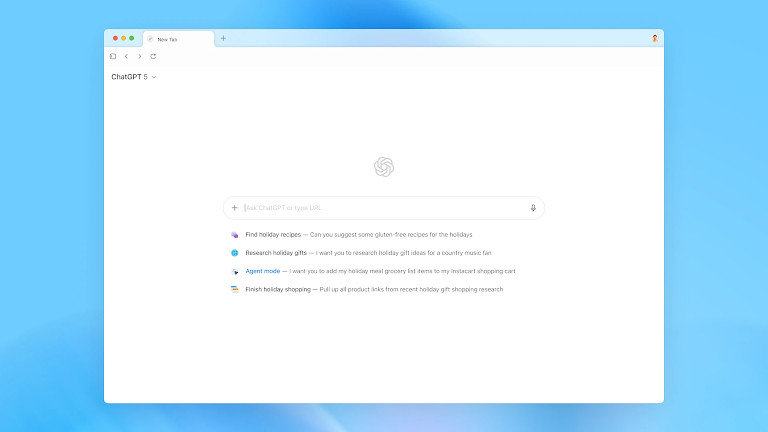
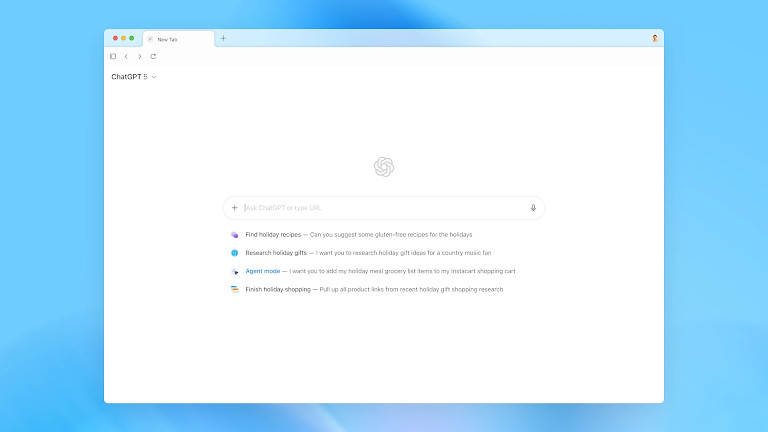
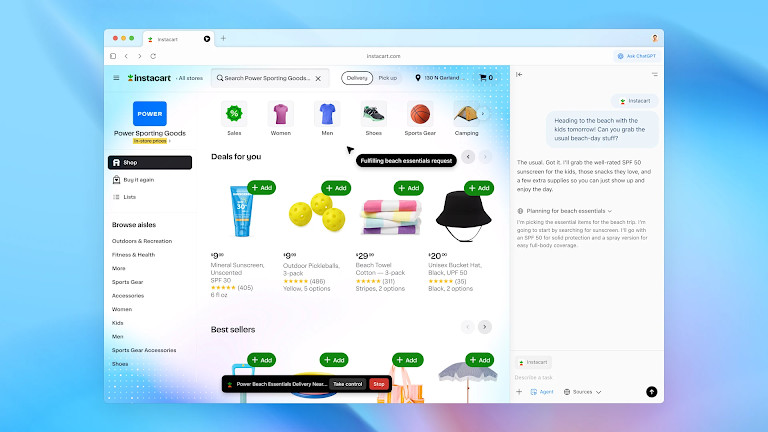
OpenAI just launched Atlas, its very own internet browser. It makes browsing feel less like clicking around and more like having a smart assistant. That assistant lives in the browser: search results start with ChatGPT-style answers, a sidebar reads and explains pages, and an “agent mode” can perform tasks like shopping or booking.

But early testers say: impressive idea, mixed results. For many users, Atlas is powerful but slower than expected, missing key features, and not yet a clear reason to switch.

By launching Atlas, OpenAI isn’t just fighting Chrome. They’re trying to own the place where people interact with the internet, and in doing so, invite a host of analogs to challenge them.

What Atlas Actually Does

Atlas is built on the Chromium engine, so it feels familiar to Chrome users. Here are the standout features:

ChatGPT integrated in the browser: search bar answers first, links second;

Sidebar with “Ask ChatGPT”: highlight text, ask questions about what you’re reading;

Agent mode (paid users): ChatGPT can act on your behalf (add items to your cart, schedule things, navigate websites);

“Browser memories”: optional feature where the browser remembers past behavior for better context.

On paper, this is a major leap from “open a tab and search.” But in practice, the execution has gaps: some tasks took too long, some features not yet available on all platforms.

OpenAI Just Launched Atlas – These Are Its Upcoming Competitors

What “Analogs” Means Here

In this context, “analogs” means functionally similar AI browsers: software that blends three layers into one: assistant, agent, and context. They don’t just show you the web, but reason about it.

This new wave comes at a natural point in AI’s evolution. Models are now fast and accurate enough to handle live context. Users are getting used to AI summaries baked into their workflows. And the incumbents (Google, Microsoft, Brave, and others) are integrating assistants directly into their browsers to defend their turf before ChatGPT Atlas gains ground.

The result is a race not just to copy Atlas, but to outgrow it. To build browsers designed from the start for autonomous agents.

Who Competes With Atlas Right Now

The competition already looks crowded.

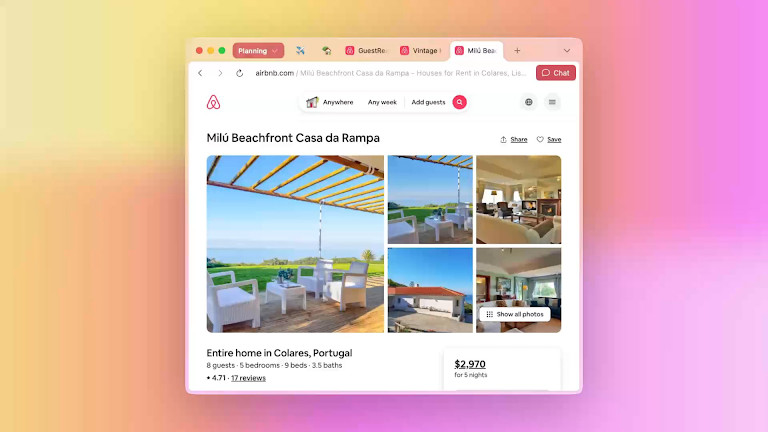
Microsoft Edge + Copilot

Edge’s new Copilot Mode integrates directly into Windows. The browser can summarize pages, suggest next steps, and, in its “Actions” and “Journeys” features, actually perform tasks like bookings or unsubscribes. All of this is opt-in, with explicit privacy consent. Edge’s strength lies in enterprise adoption and deep integration with Microsoft 365.

OpenAI Just Launched Atlas – These Are Its Upcoming Competitors

Google Chrome + Gemini

Chrome now includes Gemini-powered page summaries, multi-tab contextual help, and the ability to pull data from Maps, YouTube, and Gmail. Because Gemini runs inside Google’s ecosystem, the experience feels smoother than Atlas, and it already works on both desktop and mobile.

OpenAI Just Launched Atlas – These Are Its Upcoming Competitors

Perplexity’s Comet

Comet takes a startup’s approach: an AI-first browser built for speed. It handles shopping carts, restaurant bookings, and site summaries through a lightweight sidebar. Reviewers note it’s faster than Atlas in some agentic tasks, though still prone to errors.

OpenAI Just Launched Atlas – These Are Its Upcoming Competitors

The Browser Company’s Dia

From the makers of Arc, Dia rethinks tabs entirely. You “chat” with your browsing session, and the AI remembers context across sites. A paid tier suggests a real business model, and early testers say it feels more fluid than Atlas on macOS.

OpenAI Just Launched Atlas – These Are Its Upcoming Competitors

Brave + Leo / Opera + Aria

Both established browsers have built-in assistants. Brave markets Leo as privacy-first, running locally when possible. Opera’s Aria emphasizes cross-platform reach and real-time web access. Neither are full agents yet, but both signal where browsing is headed.

OpenAI Just Launched Atlas – These Are Its Upcoming Competitors

What’s Coming Soon

The next six months will bring a flurry of updates across all major players.

Edge plans to expand Copilot Mode and its “Journeys” feature beyond the U.S. market. These updates will allow deeper automation (like confirming appointments or managing subscriptions) all while keeping explicit opt-in controls.

Chrome is widening Gemini’s footprint across devices. Google is tying it more tightly to Calendar, Maps, and YouTube, turning the browser into something closer to an operating system layer than a search tool.

Dia is moving from early-access to general availability. “Chat with your tabs” (its core idea) will become the default experience, making browsing feel conversational rather than transactional.

Perplexity is evolving Comet with a Search API model that relies on structured data rather than scraping, allowing faster and more accurate results.

Why does all this matter? Because speed, reliability, and trust, not novelty, will determine which browser becomes the default for AI-powered navigation.

Where the Real Differentiation Will Be

Many AI browsers look alike on the surface: clean interfaces, built-in assistants, context-aware chat. The real race is happening beneath, in the pipes that connect the AI to the web.

Most current “agent” browsers still mimic human behavior. They click buttons, scroll pages, and fill forms using the same HTML meant for us. It’s fragile and inefficient. When a site changes layout, the agent breaks. Developers call this architectural debt: clever code that can’t scale.

The smarter approach is to use structured access: APIs that let AI systems interact directly with web data instead of scraping it. Shopify’s new Catalog API is a glimpse of this future, allowing trusted AI partners like Perplexity to fetch product info safely and instantly.

Alongside that, new players like Exa and Linkup are building vector-based search infrastructure designed for agents. Rather than crawling pages, they return semantically relevant data that AI can reason over.

The winners won’t be those with the prettiest sidebar. They’ll be the ones with the deepest, fastest pipes, browsers that can think and act without friction.

What Wins (and What Won’t) in the Next 6-12 Months

The browsers that win this race will share a few traits:

APIs over automation: Direct data access means faster, cleaner results;

Agent-grade search: Infrastructure like Exa or Linkup that feeds agents structured, semantic data;

Mobile integration: The experience must travel across devices;

Transparent privacy: Users need to see exactly what the AI can “see.”

Those that fail will be the clones, the ones chasing Atlas’s design instead of solving its weaknesses. A sidebar alone isn’t a strategy.

Disclaimer

In line with the Trust Project guidelines, please note that the information provided on this page is not intended to be and should not be interpreted as legal, tax, investment, financial, or any other form of advice. It is important to only invest what you can afford to lose and to seek independent financial advice if you have any doubts. For further information, we suggest referring to the terms and conditions as well as the help and support pages provided by the issuer or advertiser. MetaversePost is committed to accurate, unbiased reporting, but market conditions are subject to change without notice.

About The Author


Alisa, a dedicated journalist at the MPost, specializes in cryptocurrency, zero-knowledge proofs, investments, and the expansive realm of Web3. With a keen eye for emerging trends and technologies, she delivers comprehensive coverage to inform and engage readers in the ever-evolving landscape of digital finance.

More articles


Alisa, a dedicated journalist at the MPost, specializes in cryptocurrency, zero-knowledge proofs, investments, and the expansive realm of Web3. With a keen eye for emerging trends and technologies, she delivers comprehensive coverage to inform and engage readers in the ever-evolving landscape of digital finance.


More articles


Source link

SpaceX Bandwagon-4: A New Era of Satellite Deployment Begins! 🚀

0
SpaceX Bandwagon-4: A New Era of Satellite Deployment Begins! 🚀


SpaceX has successfully launched the Bandwagon-4 mission, marking a significant milestone in the evolution of cost-effective satellite deployment. Powered by the Falcon 9 rocket, this rideshare mission demonstrates how access to orbit is becoming increasingly affordable and flexible for organizations of all sizes.

Bandwagon-4 carried multiple small satellites into low-Earth orbit, supporting a wide range of applications, including communications, Earth observation, environmental monitoring, navigation systems, and scientific research.

One of the mission’s most notable aspects is SpaceX’s expanding rideshare program, allowing commercial companies, research institutions, and universities to launch payloads at significantly reduced costs. This shift is helping democratize space access — enabling startups and academic teams to compete in a field once dominated by large agencies and major corporations.

The reusable Falcon 9 booster once again demonstrated SpaceX’s efficiency, completing a controlled return after liftoff. Reusability continues to play a crucial role in lowering launch costs and increasing mission frequency.

As the global space economy grows, missions like Bandwagon-4 strengthen the foundations of future technological progress. The satellites deployed will help support next-generation connectivity, environmental data services, disaster management systems, and industrial innovation.

According to experts, Bandwagon-4 represents a key step toward accelerating scientific and commercial development in orbit. With more rideshare missions planned, SpaceX is paving the way for a more accessible and dynamic space ecosystem.

The successful launch of Bandwagon-4 signals the beginning of a new era — one in which space becomes more open, collaborative, and essential than ever before.

You Might Also Like;

Follow us on TWITTER (X) and be instantly informed about the latest developments…

Copy URL


Source link

CRISPR: Rewriting the Code of Life

0
CRISPR: Rewriting the Code of Life


One of the most exciting achievements of modern science is a technology that allows us to modify DNA as if editing a text file: CRISPR gene editing.This revolutionary method is reshaping numerous fields—from the treatment of genetic diseases to the future of agriculture.So how does CRISPR actually work, and how might it change our lives?

What Is CRISPR?

CRISPR was discovered through bacteria’s natural defense system against viruses.When viruses attack bacteria, the bacteria capture small fragments of the invader’s DNA and insert them into their own genetic code. These fragments act as a memory, enabling bacteria to respond quickly if the same virus attacks again.

This system consists of two main components:

Guide RNA (gRNA): Locates the target DNA sequence.Cas9 enzyme: Acts as the “molecular scissors” that cut the DNA.

Scientists managed to use this mechanism in laboratory settings to cut, remove, or modify specific regions of DNA.

How CRISPR Edits DNA

The logic behind CRISPR involves three basic steps:

1. Targeting

The guide RNA recognizes a specific DNA sequence and directs Cas9 to the correct location.

2. Cutting

Cas9 cuts the targeted DNA sequence—just like tiny molecular scissors.

3. Repair & Editing

The cell repairs the cut region. During this process, scientists can delete, modify, or insert new genetic information.

This makes it possible to perform highly precise “cut-copy-paste” operations on DNA.

Why Is CRISPR So Revolutionary?

CRISPR’s greatest strengths are its:✅ Speed✅ Low cost✅ High precision

Thanks to these advantages, procedures once considered impossible are now becoming reality.

Potential Applications

1. Treating Genetic Diseases

CRISPR has the potential to correct genetic errors that cause hereditary diseases.Scientists are currently researching treatments for:

Sickle cell anemiaCystic fibrosisMuscular dystrophy

2. Cancer Therapy

CRISPR can help reprogram the immune system to target cancer cells, potentially becoming one of the cornerstones of future cancer treatments.

3. Agriculture

CRISPR can be used to create crops that are more nutritious, more resilient, and faster growing.This represents a major step forward for global food security.

4. Virus Resistance

In theory, CRISPR could one day help humans become resistant to viruses such as HIV.

Ethical Challenges

A technology this powerful inevitably brings ethical concerns.While CRISPR can be used to cure genetic diseases, it may also open the door to controversial practices like “designer babies.”

For this reason, scientific communities, governments, and ethics committees around the world are carefully discussing the appropriate boundaries for CRISPR’s use.

The Future of CRISPR

Although CRISPR is still in development, its potential is immense.One day, we may see a world where:

Genetic diseases are completely eliminatedCancer becomes easier to treatCrops can withstand harsh climatesAnimal organs are used for human transplants

And all of this may be possible because we have gained the ability to rewrite the DNA of living organisms.

CRISPR is becoming a technology that could alter humanity’s destiny at the microscopic level.The future looks more flexible and more reshaped than ever before.

Conclusion

CRISPR gene editing is a tool that pushes the boundaries of biology and has the power to rewrite the fundamental code of life.Although still evolving, it has far-reaching potential—from medicine to agriculture, disease treatment to the future of human evolution.

Humanity has already opened the door to the genetic age.CRISPR may be the key to unlocking it. 🧬✨

You Might Also Like;

Follow us on TWITTER (X) and be instantly informed about the latest developments…

Copy URL


Source link

Meizu Introduces the Affordable AI-Powered Smart Glasses, StarV Snap

0
Meizu Introduces the Affordable AI-Powered Smart Glasses, StarV Snap


Meizu has announced its new AI smart glasses, the StarV Snap. These glasses are drawing attention for offering many features at an affordable price.

Meizu, which has appeared before us with many different products ranging from phones to speakers, has now entered a brand-new category. The Chinese tech giant has officially entered the field of wearable artificial intelligence technologies by introducing smart glasses. The company’s introduced “AI glasses” are named StarV Snap.

Meizu’s StarV Snap smart glasses come with a design suitable for daily use that doesn’t look out of place at all, much like the Meta Ray-Bans. We can also say they look quite stylish. This means they won’t discomfort the user much while also offering a good appearance.

What do the Meizu StarV Snap AI glasses offer?

The StarV Snap glasses weigh only 39 grams. Their very lightweight structure promises comfortable use. According to the company, they underwent more than 50 ergonomic improvement processes to achieve the correct weight distribution and reach their final form. The frame features titanium alloy hinges, soft curved tips, and a breathable curved design for enhanced comfort. They will be available in 2 different color options: brown and black. There will also be interchangeable lens options, including optical, photochromic, and sunglasses.

When it comes to technical details, the device has a 109-degree field of view. In addition, it comes with a 12 MP ultra-wide-angle camera with an f/2.2 aperture. On the device, which can capture both vertical and horizontal images, you can shoot continuously for up to 40 minutes in 1080p or 60 minutes in 720p. It also has features like HDR, EIS stabilization, noise reduction, portrait enhancement, and horizon correction.

The glasses are powered by Qualcomm’s Snapdragon AR1 processor. This processor is paired with 2 GB of RAM and 32 GB of storage. Of course, the built-in artificial intelligence features should not be forgotten. You can speak vocally with the built-in AI assistant and get help from it. Real-time translation in 12 languages is available, and your questions are answered. It is possible to access these features both by voice and with the AI button on the glasses. There are also AI features such as controlling the glasses’ temperature and identifying objects.

The Meizu StarV Snap, which features a dual stereo speaker and 4-microphone setup, comes with a battery life offering 3 hours of music playback. The device, which can be charged via a Type-C port, includes features like Wi-Fi 6 and Bluetooth 5.3. The glasses, capable of working compatibly with Android 12 and newer devices and having features like QR reading, have been released in China for 280 dollars. It is uncertain whether they will come to other countries.

You Might Also Like;

Follow us on TWITTER (X) and be instantly informed about the latest developments…

Copy URL


Source link

Sora by OpenAI App Updated: Huge New Features Have Arrived!

0
Sora by OpenAI App Updated: Huge New Features Have Arrived!


OpenAI has released a new update for the Sora by OpenAI app. This update has introduced 3 new features to the application. One of the new features looks like it will provide a much better experience for users. Here are the innovations coming to the Sora by OpenAI app…

OpenAI, one of the leading names in the artificial intelligence sector, announced about a month ago at an event that it had released the mobile app for Sora, its text-to-video generating AI. The company has now released an update for this application. The app, named Sora by OpenAI, can now be used in a much more functional way.

When we look at the statement made by OpenAI, we see that the update released for the Sora by OpenAI app hosts 3 new features. One of these is of the kind that will significantly enhance the user’s experience of creating videos with artificial intelligence. Without further ado, let’s take a closer look at the innovations coming to the Sora by OpenAI app.

New features coming to the Sora by OpenAI app:

According to the company’s announcement, Sora by OpenAI users will now be able to create “cameo” appearances for both themselves and digital characters. Moreover, the created characters can be saved to Sora’s memory. This will allow the same character to be used for videos created subsequently. Users can also make the characters they create available for others to use, or they can use the character pack offered by OpenAI. For now, the company is mostly offering Halloween-themed characters.

Another feature added to the Sora by OpenAI app is a new video merging tool. Through this tool, users will be able to select multiple clips and combine them into a single sequence.

OpenAI has also released a feature for the Sora by OpenAI community. This new feature, named the “Community Leaderboard,” has emerged as an innovation that shows the most remixed videos, and the most used characters and cameos.

You Might Also Like;

Follow us on TWITTER (X) and be instantly informed about the latest developments…

Copy URL


Source link

OpenAI Atlas Review: Smart, Ambitious, And A Little Unsettling

0
OpenAI Atlas Review: Smart, Ambitious, And A Little Unsettling


In Brief

OpenAI’s Atlas browser integrates ChatGPT directly into web browsing, allowing the AI to read, summarize, and act on pages, offering powerful but sometimes overwhelming features for research and productivity while raising privacy and usability questions.

OpenAI Atlas Review: Smart, Ambitious, And A Little Unsettling

OpenAI’s new Atlas browser promises to change how people move through the internet. It’s not just a place to open tabs, but a browser with a brain. ChatGPT is built directly into the interface, able to read, summarize, and act on whatever page you’re viewing.

Type a question into the address bar, and ChatGPT answers before showing you any links. Keep reading, and an Ask ChatGPT sidebar sits ready to explain what’s on the screen or fetch related facts. Paying users can even turn on agent mode, which lets the AI click buttons, fill shopping carts, send emails, and book appointments. All inside your normal browsing session.

The pitch sounds simple: bring ChatGPT to the web itself. But early testers say it’s not clear who this browser is for. Many describe it as powerful but awkward; an ambitious idea trapped inside an interface that still feels like Chrome with a chatbot attached.

What Atlas Actually Does

Atlas runs on Chromium, the same open-source engine that powers Chrome, Edge, and Opera. The layout is familiar: tabs on top, URL bar in the middle, ChatGPT window on the side. But the behavior is different.

Every search begins with ChatGPT’s response. Instead of a page of blue links, users first see a conversational answer generated by the model. Beneath that sits a smaller list of traditional search results (usually capped at ten links) that you can click through if you want to verify what it said.

The sidebar is where Atlas tries to stand out. Click ‘Ask ChatGPT’ and the model reads the webpage, offering summaries, definitions, or explanations. Highlight a paragraph, and it will rephrase or fact-check it. For Plus or Pro subscribers, turning on agent mode allows ChatGPT to actually take actions: order products on Amazon, schedule meetings through Google Calendar, or draft replies in Gmail.

It’s an impressive technical demo, and a direct shot at other AI browsers like Perplexity’s Comet and Google’s Gemini-powered Chrome. But for now, Atlas is Mac-only, lacks common features like tab groups or ad-blocking, and struggles with speed. One reviewer described it as “watching an overworked assistant narrate its every thought.”

OpenAI Atlas Review: Smart, Ambitious, And A Little Unsettling

The User Experience

For anyone used to simple, quiet browsing, Atlas can feel overwhelming. Every page becomes a conversation, every query a prompt.

When it works, the experience is elegant. Summarizing long papers or turning messy email threads into quick bullet points feels effortless. ChatGPT can even anticipate next steps: offering to find sources, draft follow-up messages, or pull related data without needing to open a new tab.

But those same qualities can also make Atlas exhausting. The sidebar crowds the main window, compressing websites into narrow columns. Some testers described closing it “just to breathe.” Others say that the AI often over-explains obvious things or surfaces summaries they didn’t ask for.

The agent mode also remains inconsistent. When asked to fill a shopping cart based on previous browsing, one reviewer watched it spend ten minutes adding deodorant and a notebook they’d already bought. Another asked it to suggest a Facebook post, and got a rambling essay about their “glamorous editor’s life.”

Atlas blurs the line between help and interference. It can save you time when you need deep context. But if you just want to read the news or check a score, it feels like a co-pilot you didn’t invite.

OpenAI Atlas Review: Smart, Ambitious, And A Little Unsettling

The Privacy and Data Question

This vision comes with a familiar cost: visibility into what users do online. Atlas’s Ask ChatGPT feature requires the model to “see” the page you’re viewing in order to answer questions about it. OpenAI says the AI only accesses the content you explicitly bring into a chat. But early tests suggest the boundary isn’t always clear.

One user on Bluesky found that when they asked ChatGPT about a private direct message, the bot pulled details from the conversation, even though it had just said it couldn’t see DMs. When asked to explain, ChatGPT claimed that the user’s question had “temporarily surfaced part of the message context.”

That may be technically true, but it shows how murky the line is between reading context and reading content. Unlike traditional browsers, Atlas doesn’t just display the web, it interprets it. Each interaction creates a data trail richer than a simple URL history.

If OpenAI uses that data to refine its models, Atlas becomes something more than a product: it’s a data engine. The company hasn’t disclosed whether browsing behavior feeds back into model training, but its privacy policy leaves room for aggregated “usage information.” For privacy-conscious users, that’s a red flag, especially when the browser itself can literally “see” what you see.

The Business Play of OpenAI

Atlas is also OpenAI’s clearest move toward owning an entire computing layer.

Until now, ChatGPT lived inside other people’s software: Apple’s App Store, Google’s Chrome, Microsoft’s Edge. Those companies controlled distribution, interfaces, and often the data pathways. Atlas changes that. It’s OpenAI’s first attempt to control the environment where users spend most of their time online.

The strategy mirrors how browsers became platforms in the 2000s. Google built Chrome not just to display pages but to direct how people searched, stored passwords, and used the cloud. OpenAI seems to be doing the same, except the product is conversation, not search.

Inside Atlas, every tab is a potential data stream into OpenAI’s ecosystem. The browser already integrates ChatGPT apps like Zillow, Spotify, and Canva, allowing users to perform transactions without leaving the interface. Over time, that could evolve into an “AI operating system”.

For now, Atlas is far from that vision. It lacks polish, mobile access, and even basic extensions. But strategically, it plants OpenAI’s flag on the same ground Chrome once conquered: the entry point to the web itself.

So: What’s the Verdict on Atlas

Atlas is both impressive and unnecessary. It offers the most integrated version of ChatGPT yet, able to read, summarize, and act across the web. But it doesn’t yet solve a real problem for most people.

For researchers, journalists, and power users, the contextual chat window can be genuinely useful. A quick way to understand dense material or draft on the fly. For everyone else, it’s more distraction than utility. If you already use ChatGPT in a separate tab, you won’t gain much by switching.

Still, Atlas represents a turning point. The first browsers were built for documents. Then came ones built for search, for social, for cloud apps. Now, for the first time, a browser is built for agents. Software that reads, reasons, and acts.

Whether people want that remains to be seen. But OpenAI has made its intentions clear: it doesn’t just want to help you browse the web. It wants to be the way you browse it.

Disclaimer

In line with the Trust Project guidelines, please note that the information provided on this page is not intended to be and should not be interpreted as legal, tax, investment, financial, or any other form of advice. It is important to only invest what you can afford to lose and to seek independent financial advice if you have any doubts. For further information, we suggest referring to the terms and conditions as well as the help and support pages provided by the issuer or advertiser. MetaversePost is committed to accurate, unbiased reporting, but market conditions are subject to change without notice.

About The Author


Alisa, a dedicated journalist at the MPost, specializes in cryptocurrency, zero-knowledge proofs, investments, and the expansive realm of Web3. With a keen eye for emerging trends and technologies, she delivers comprehensive coverage to inform and engage readers in the ever-evolving landscape of digital finance.

More articles


Alisa, a dedicated journalist at the MPost, specializes in cryptocurrency, zero-knowledge proofs, investments, and the expansive realm of Web3. With a keen eye for emerging trends and technologies, she delivers comprehensive coverage to inform and engage readers in the ever-evolving landscape of digital finance.


More articles


Source link

October’s Last Week Recap: Coinbase, Crypto.com, and TRON Strengthen Web3’s Global Reach

0
October’s Last Week Recap: Coinbase, Crypto.com, and TRON Strengthen Web3’s Global Reach


In Brief

Last week, crypto blurred into mainstream finance and tech as Trump’s Truth Social, Citi, Coinbase, and others expanded blockchain’s reach in payments, tokenization, and education.

October’s Last Week Recap: Coinbase, Crypto.com, and TRON Strengthen Web3’s Global Reach

From Trump’s Truth Social diving into prediction markets to Citi and Coinbase reshaping institutional payments, the last week of October saw crypto’s boundaries blur with mainstream finance and technology. Partnerships spanned banks, social platforms, and universities—each move reinforcing blockchain’s growing role in global payments, tokenization, and education.

Trump Media & Technology Group is bringing prediction markets to Truth Social through a partnership with Crypto.com, marking the first time a major social media platform integrates such trading. The new feature, called Truth Predict, will let users wager on election outcomes, economic data, commodity prices, and sports results through Crypto.com’s CFTC-registered derivatives platform.

Devin Nunes, Trump Media’s CEO, said the move will give users “access to prediction markets with a trusted network.” The partnership also extends Donald Trump’s growing crypto portfolio — following Truth Social’s CRO rewards system and a planned digital asset treasury company focused on Crypto.com’s Cronos (CRO) token.

Crypto.com CEO Kris Marszalek described prediction markets as a “multi-deca-billion dollar industry,” noting that the collaboration will deliver the world’s first prediction markets directly accessible through social media.

The integration blends Truth Social’s engagement system with Crypto.com’s crypto infrastructure, allowing users to convert “Truth gems” into CRO for prediction trading. Beta testing will precede a full U.S. rollout, with international expansion pending regulatory approval.

While the initiative boosts Truth Social’s innovation credentials, it also renews questions about Trump’s overlapping political and financial interests amid his administration’s evolving crypto regulations.

Coinbase and Citi Partner to Modernize Institutional Payments

Coinbase and Citi have unveiled a groundbreaking partnership to change how institutions move money internationally—combining traditional banking infrastructure with innovative crypto capabilities. The partnership aims to enable Citi’s institutional clients to utilize stablecoins and digital assets for greater speed and efficiency in cross-border payments.

Citi’s global payment network, spanning 94 markets and 300 clearing systems, will integrate with Coinbase’s secure digital asset infrastructure to streamline fiat-to-crypto and on-chain stablecoin transactions. “Collaborating with Coinbase is a natural extension of our ‘network of networks’ approach,” said Debopama Sen, Citi’s Head of Payments and Services.

Coinbase CEO Brian Armstrong described the move as proof that “crypto and stablecoins are the tools that will update the global financial system.” The initiative aims to make 24/7 settlement and instant cross-border payments a reality for institutional clients.

The partnership is a strategic move for Coinbase to diversify at a time when banks are accelerating digital asset adoption. For Citi, it continues to solidify its crypto footprint and plans to launch custody solutions by 2026.

By combining Citi’s global reach with Coinbase’s blockchain expertise, the partnership signals a pivotal shift toward a unified financial infrastructure where digital assets operate seamlessly alongside traditional money.

Crypto.com has teamed up with Pineapple Financial (NYSE: PAPL) to power a $100 million Injective (INJ) digital asset treasury strategy, marking Pineapple as the first publicly traded company to hold INJ. Under the partnership, Crypto.com will act as the primary custody provider, managing secure storage, native staking, and long-term yield generation for Pineapple’s INJ holdings.

The collaboration leverages Crypto.com’s regulated custody platform, ensuring Pineapple’s treasury operations remain compliant and scalable for institutional participation. U.S. users on Crypto.com can also invest in Pineapple Financial’s equity directly through the app.

Crypto.com President and COO Eric Anziani said the partnership demonstrates the company’s “leadership in digital asset infrastructure” by supporting institutional treasury innovation. Pineapple Financial CEO Shubha Dasgupta noted that the Injective strategy reinforces the firm’s “commitment to responsible innovation,” combining blockchain efficiency with traditional finance standards.

Pineapple recently completed an $8.9 million INJ purchase, kicking off its Injective Treasury Program aimed at bridging institutional finance and blockchain. The initiative also sets the stage for tokenized finance applications in lending, securitization, and settlement, positioning Pineapple as a pioneer in the emerging multi-trillion-dollar asset tokenization market.

ClearBank Joins Circle Payments Network to Modernize Cross-Border Settlements

U.K.-based ClearBank has partnered with Circle Internet Group to integrate its cloud-native banking platform into the Circle Payments Network (CPN), linking traditional banking rails with blockchain infrastructure for faster and more transparent cross-border payments.

The partnership connects ClearBank’s regulated banking ecosystem with Circle’s USDC and EURC stablecoins, both fully reserved and MiCAR-compliant. The move enables institutions to access real-time settlement, liquidity management, and stablecoin minting and redemption via Circle Mint.

After regulatory hurdles stalled its own stablecoin plans, ClearBank opted to collaborate with Circle—an approach that maintains compliance while accelerating blockchain adoption. Circle CEO Jeremy Allaire said the partnership reflects growing demand for “tokenized money that meets regulatory standards.”

By joining CPN, ClearBank gains access to programmable payment tools and blockchain-based treasury operations, reducing reliance on slow, costly correspondent banking systems. The collaboration also opens avenues for tokenized asset settlement and instant liquidity transfers.

Industry analysts view the partnership as a model for regulated banks entering blockchain finance, blending innovation with oversight. For ClearBank, it’s both a pragmatic and forward-looking step—modernizing payments without compromising trust or compliance.

Streamex has collaborated with Chainlink to bolster its gold-backed token, GLDY, with enhanced verification and cross-chain capabilities. This new partnership aims to bring further trust, transparency and liquidity to digital gold markets.

GLDY serves as a stablecoin, backed by physical gold, that offers investors a yield bearing, blockchain-backed alternative to traditional gold holdings. The partnership with Chainlink introduces Proof of Reserve and Price Feeds, which allows for real time verification that each GLDY token is fully backed by physical gold held in secured vaults instead of relying on a blind trust, creating a path toward stricter regulatory expectations for asset-backed tokens in our blockchain-driven world.

The partnership also brings Chainlink’s Cross-Chain Interoperability Protocol (CCIP) to Base and Solana, allowing GLDY to move across blockchain networks. Chainlink’s Cross-Chain Token (CCT) standard will provide secure, compliant, and efficient transfers of GLDY between these two ecosystems, improving users’ liquidity and functionality when using GLDY across multiple ecosystems.

As noted by several industry experts, the integration of GLDY and Chainlink is part of a wider trend surrounding verifiable and interoperable tokenization frameworks. 

With Chainlink’s infrastructure on deck, GLDY is well positioned to serve as a model of how real world assets can be securely represented within the on-chain ecosystem and ultimately traded against other decentralized finance protocols—proving that traditional commodities such as gold are not only historic, but also relevant in an innovative space. 

TRON DAO Expands University Partnerships with Harvard and Columbia Blockchain Clubs

TRON DAO, the decentralized organization founded by Justin Sun, has expanded its TRON Academy initiative to include blockchain clubs at Harvard University and Columbia University, strengthening its ties with leading academic institutions in the U.S. and Europe.

The academy already partners with blockchain clubs from several top universities, including Cornell, UT Austin, UC Irvine, Princeton, and Boston University, supporting them through mentorship, hackathons, and research funding.

Sam Ellfarra from the TRON DAO community said the initiative aims to “lay the foundation for a decentralized future” by empowering student innovation and research.

Beyond sponsorships, TRON Academy offers workshops, developer training, and seed funding connections. Recent activities include a UT Austin smart contract workshop and support for blockchain sustainability research.

With the addition of Harvard and Columbia, TRON DAO continues to bridge academia and Web3, helping students explore real-world blockchain applications and career pathways.

Disclaimer

In line with the Trust Project guidelines, please note that the information provided on this page is not intended to be and should not be interpreted as legal, tax, investment, financial, or any other form of advice. It is important to only invest what you can afford to lose and to seek independent financial advice if you have any doubts. For further information, we suggest referring to the terms and conditions as well as the help and support pages provided by the issuer or advertiser. MetaversePost is committed to accurate, unbiased reporting, but market conditions are subject to change without notice.

About The Author


Victoria is a writer on a variety of technology topics including Web3.0, AI and cryptocurrencies. Her extensive experience allows her to write insightful articles for the wider audience.

More articles


Victoria d’Este


Victoria is a writer on a variety of technology topics including Web3.0, AI and cryptocurrencies. Her extensive experience allows her to write insightful articles for the wider audience.


Source link

Popular Posts

My Favorites

Megyn Kelly Says She Doesn’t ‘Feel Bad’ For Alex Pretti, Believes...

0
Reading Time: 3 minutes The tide of public opinion has turned against ICE and DHS operations in Minneapolis, and the Trump administration...