Metaverse

Home Metaverse Page 65

Steven Spielberg’s 9 Best Science Fiction Movies | Metaverse Planet

0
Steven Spielberg’s 9 Best Science Fiction Movies | Metaverse Planet


Steven Spielberg, the master of modern cinema, is preparing to return to the big screen with a new sci-fi thriller titled Disclosure Day in 2026. This project marks the director’s 10th venture into the genre, signaling a highly anticipated return to alien-themed storytelling.

Here is the definitive ranking of Steven Spielberg’s best sci-fi movies, from the controversial entries to the legendary masterpieces:

9. Indiana Jones and the Kingdom of the Crystal Skull (2008)

This installment divided fans by introducing an alien theme to the world of Indiana Jones. Spielberg explored the concept that extraterrestrials have influenced human history since ancient times. While it expanded the franchise’s lore, it ranks lower due to polarizing visual effects and a shift in tone.

8. The Lost World: Jurassic Park (1997)

In this sequel, Spielberg brought the “monster” to the urban landscape of San Diego, echoing classic creature features. While criticized for its repetitive structure, the action sequences remain a hallmark of Spielberg’s directing style. This was his final directorial contribution to the Jurassic Park franchise.

7. A.I. Artificial Intelligence (2001)

Originally a project by Stanley Kubrick, Spielberg took the helm to create a unique blend of philosophical sci-fi and emotional storytelling. The movie follows David, an android child programmed to love, exploring the dark and hopeful boundaries of artificial intelligence.

6. Ready Player One (2018)

A massive box office success, this movie is a love letter to pop culture and gaming. Set in a dystopian 2045, it focuses on a virtual reality universe called OASIS. It is recognized as one of Spielberg’s most visually inventive and entertaining modern sci-fi works.

5. War of the Worlds (2005)

Based on the classic novel by H.G. Wells, this movie stars Tom Cruise as a father trying to survive a terrifying alien invasion. It is praised for its intense atmosphere and technical precision, capturing the sheer scale of a global extraterrestrial threat.

4. Minority Report (2002)

Adapted from a Philip K. Dick story, this neo-noir sci-fi masterpiece introduces a world where pre-crime technology prevents murders before they happen. It is widely considered one of the best movies of the 21st century, blending high-concept philosophy with thrilling action.

3. Jurassic Park (1993)

A landmark in cinema history, this movie revolutionized the use of CGI and practical effects. Beyond the groundbreaking dinosaur visuals, it offers a perfect narrative balance, remaining a global phenomenon and a pinnacle of the science fiction genre for over three decades.

2. Close Encounters of the Third Kind (1977)

Spielberg’s first major sci-fi movie redefined how we perceive extraterrestrial life. Instead of a hostile threat, the movie presents aliens as a source of wonder and discovery. It secured Spielberg’s reputation as a visionary director with nine Oscar nominations.

This is not just a sci-fi movie; it is a timeless cultural touchstone. The story of a young boy’s friendship with a stranded alien explores deep themes of childhood, empathy, and family. It remains the most beloved and successful “alien” story ever told in Hollywood history.

You Might Also Like;


Source link

Hong Kong Proposes Insurance Rules for Crypto Investments

0
Hong Kong Proposes Insurance Rules for Crypto Investments


Key Highlights

Hong Kong’s new insurance rules could channel billions into crypto and infrastructure, cementing the city’s digital finance hub ambitions.

HashKey’s $206M IPO highlights strong institutional demand for crypto assets signaling massive interest in regulated digital asset exchanges.

Global regulators, including Australia and Argentina, are easing crypto barriers, paving the way for broader adoption and operational efficiency.

Hong Kong is taking steps to change its insurance rules, letting insurers invest directly in cryptocurrencies and infrastructure. The Hong Kong Insurance Authority (IA) shared that it aims to steer insurance funds into government-priority sectors while boosting the city’s position as a digital finance hub. 

As per a Bloomberg report, the plan includes a 100% risk charge on crypto assets and sets risk levels for stablecoins based on their fiat currency peg. The regulator will open the proposal for public consultation from February through April, followed by legislative submissions. 

In a statement, the IA said it began reviewing the risk-based capital framework this year with the goal to support both the insurance industry and wider economic development. “We are at the stage of gauging industry feedback and will also put the proposals for public consultation in due course,” a spokesperson said.

Crypto investments gain regulatory attention

Hong Kong has been steadily building a crypto-friendly framework to attract digital asset activity. The city’s de facto central bank plans to approve the first batch of stablecoins early next year, signaling regulatory support for blockchain innovation.

In addition, the insurance framework provides incentives in terms of investments in infrastructure, and projects that feature Hong Kong and mainland investments are specifically targeted. Schemes that fit the bill include projects in new towns, urban development, such as the Northern Metropolis, to support growth.

However, some industry players call for further coverage in infrastructure schemes, citing the fact that the current schemes are still restrictive. With a total of 158 approved insurers showing a total gross premium of HK$635 billion ($82 billion) in June 2024, the new schemes could greatly promote the flow of private funds into the defined sectors.

HashKey IPO highlights digital finance growth

The city’s push into digital finance is reinforced by recent developments at HashKey Holdings Ltd., Hong Kong’s largest licensed cryptocurrency exchange. The company raised about HK$1.6 billion ($206 million) in its initial public offering (IPO), selling shares near the top price range. 

Demand was so high that big investors took 80% of the shares, and overall demand was higher than the supply available. Trading began December 17, cementing HashKey’s role in Hong Kong’s digital finance ecosystem. While demand was high, HashKey’s stock actually tumbled 3% on its debut day despite the oversubscription.

“This IPO underscores Hong Kong’s drive to strengthen digital-asset regulations, including stablecoins,” industry observers noted. The listing, backed by JPMorgan Chase and Guotai Haitong Securities, marks a milestone for crypto adoption in the city.

Global regulatory shifts reinforce crypto momentum

Around the world, regulators are making it easier to work with digital assets. In Australia, companies no longer need separate licenses to handle stablecoins and wrapped tokens. They can also use omnibus accounts, which lets them manage multiple client funds together, cutting costs and making operations smoother.

Meanwhile, Argentina is considering a major policy shift. The Central Bank (BCRA) may allow traditional banks to trade cryptocurrencies, potentially opening mass adoption to the general public. 

Manuel Ferrari, President of Bitcoin Argentina, noted, “Even so, the positive aspect is enormous: if banks like Galicia, Santander, or Nación begin to offer easy access to Bitcoin or stablecoins, it could generate a new wave of mass adoption.”

Hong Kong’s new insurance rules could direct huge amounts of money into cryptocurrencies and local projects, helping both tech growth and city development. Along with easier rules for crypto in other countries, these changes point to a big shift in how digital finance works.

Also Read: Russian Officials Say Crypto Mining Is Quietly Boosting the Ruble


Source link

James Cameron to Shift to New Terminator Movie After Avatar 3 | Metaverse Planet

0
James Cameron to Shift to New Terminator Movie After Avatar 3 | Metaverse Planet


James Cameron, who has been occupied with the Avatar series since 2005, is turning his focus back to the Terminator series. Cameron will move on to the new Terminator movie after Avatar 3.

Master director James Cameron, known for achieving massive success with films like The Terminator, Titanic, and Avatar, has spent the last 20 years on the Avatar series. The director, who began preparations for the first Avatar film in 2005, has been working on this franchise ever since. The latest product of this work, Avatar 3, will meet moviegoers this week. Although Cameron plans to shoot two more Avatar films, it seems he will step away from Pandora for a while before doing so.

New Terminator Movie Confirmed

Coming together with the press as part of the promotional activities for the new Avatar film, James Cameron confirmed that the new Terminator movie, which he had mentioned before, is still on his agenda. Moreover, this project is among the director’s priorities. He states that as soon as he is done with Avatar 3, he will move on to this project and complete the script for the new Terminator movie.

Arnold Schwarzenegger Will Not Be in the New Terminator Movie

Although Cameron refrained from giving too many details about the new Terminator movie, he shared an important detail regarding the project: Arnold Schwarzenegger will not be a part of this new film. The master director seems ready to open a new page for the series.

Recent developments in the field of artificial intelligence will be the starting point for this new Terminator movie. Cameron, who presented a foresight regarding the rise of intelligent machines with the first Terminator film, intends to do something similar now at a critical turning point. The director says the following about the subject:

“Terminator needs a broader interpretation of time war and super (artificial) intelligence concepts. I want to do new things that people haven’t imagined yet.”

You Might Also Like;


Source link

Foundation Aims to Produce 50,000 Robot Soldiers by 2027 | Metaverse Planet

0
Foundation Aims to Produce 50,000 Robot Soldiers by 2027 | Metaverse Planet


Foundation, a US-based robotics company, has attracted attention by announcing plans to produce 50,000 robot soldiers within the next three years. The weaponization of robots is raising concerns.

Parallel to the explosion in the field of artificial intelligence, significant breakthroughs in robotics have paved the way for humanoid robots, once exclusive to science fiction, to become reality faster than expected. While humanoid robots for use in homes or factories appear to be only a few years away, this breakthrough also has a military wing. Indeed, humanoid robot projects to be used by armies have already started to emerge. Foundation appears to be one of the most ambitious companies in this regard.

Foundation announced its goal to produce 50,000 combat-ready humanoid robots by the end of 2027. This target, revealed by the company’s CEO Sankaet Pathak in an interview with Forbes on December 16, goes far beyond the previously stated plan of 10,000 robots by 2026. According to Pathak, the company plans to produce 40 robots in 2025, increase this number to 10,000 in 2026, and reach the 40,000 to 50,000 range in 2027. While Pathak admits this schedule is highly ambitious, he emphasizes that the probability of reaching the goal is not zero.

Robot Soldier Phantom MK-1 Could Take the Field in the Near Future

At the center of Foundation’s plans is the humanoid robot named Phantom MK-1. Approximately 1.75 meters tall and weighing 80 kilograms, this robot is designed for reconnaissance, bomb disposal, logistical support, and direct combat scenarios. The company states that the Phantom MK-1 aims to reduce the risk human soldiers are exposed to during military operations. Foundation has already taken significant steps in this regard. It is known that Foundation has already signed logistics and maintenance-focused contracts with the US Air Force, Navy, and Army.

Foundation’s current approach involves humans in critical decisions. While robots handle movement, navigation, and operational tasks in the field, lethal decisions are made remotely by human operators.

Instead of selling its robots directly, Foundation plans to offer them through a leasing model of approximately $100,000 annually. According to Pathak, the company does not need hundreds of customers to be successful; a few large-scale and long-term contracts can generate hundreds of millions of dollars in annual recurring revenue. If the company reaches its targeted production volume, leasing 50,000 robots theoretically means an annual revenue of approximately $5 billion.

Promises Not to Weaponize Robots Become History

Although it is open to debate whether Foundation can produce 50,000 robots that work smoothly in the field in as short a time as three years, the transformation indicated by this latest announcement is quite clear. Concrete steps are now being taken to weaponize robots.

In contrast, leading robotics companies such as Boston Dynamics, Agility Robotics, and Unitree signed a public pledge in 2022 stating they would not weaponize robots, warning that weaponized robots would pose serious ethical risks. However, at the point we have reached today, this pledge seems to have gone unfulfilled. Although these companies are not working on robot soldiers for now, unlike Foundation, it seems almost inevitable that they will take a similar path when looking at the general trend in the sector. As you may recall, Google and OpenAI had previously made similar pledges regarding their AIs but moved away from these promises over time. With changes made in recent months, both companies have paved the way for their AIs to be used in such technologies.

Now, Foundation’s announcement shows that some companies further in the background have started to proceed openly on this path. The company’s announcement brings the question “How far should robots be allowed to go?” back to the agenda.

The issue of weaponized humanoid robots has been on the agenda of not only the technology world but also international politics and human rights organizations for a long time. UN Secretary-General António Guterres described lethal autonomous weapons as “morally unacceptable” in May 2025 and called for clear regulations by 2026. On the other hand, global coalitions such as Stop Killer Robots are trying to prevent this frightening shift. However, as long as certain restrictive agreements are not signed on a global scale, these efforts seem likely to remain unreciprocated.

You Might Also Like;


Source link

Brazil’s Gen Z Reshapes Crypto Boom with Stablecoins

0
Brazil’s Gen Z Reshapes Crypto Boom with Stablecoins


Key Highlights

Under-24 investors drove a 56% jump in crypto participation in Brazil.

Digital fixed-income products distributed ~$325M in 2025.

Stablecoins and tokenized bonds replace speculation for many newcomers.

Brazil’s crypto growth is being driven by caution rather than hype. New data from Mercado Bitcoin shows that investors under 24 were the fastest-growing group in 2025, up 56% year over year. 

Instead of chasing volatile tokens, many individuals are entering the market through stablecoins and tokenized fixed-income products, treating crypto less like a casino and more like a savings tool.

Brazilian crypto shift

Mercado Bitcoin’s Renda Fixa Digital (RFD) products more than doubled in volume this year, distributing about 1.8 billion reais (roughly $325 million) to users. On average, returns reached 132% of Brazil’s benchmark CDI rate, making tokenized income an attractive alternative in a high-rate environment. 

Similar offerings are gaining traction on local platforms like Liqi and AmFi, reinforcing the country’s growing real-world asset (RWA) ecosystem.

Income over speculation

Behavior varies sharply by income bracket. Middle-income investors tend to park up to 12% of portfolios in stablecoins while keeping most exposure in tokenized bonds and other low-volatility assets. Lower-income users, by contrast, still allocate more than 90% to traditional cryptocurrencies like Bitcoin, accepting higher risk in search of outsized returns. The result is a market split between preservation and speculation.

The broader activity supports this trend. Overall crypto transaction volume on Mercado Bitcoin rose 43% year over year, with Mondays emerging as the busiest day for onboarding and trading. This pattern suggests crypto is becoming part of a weekly financial routine rather than a one-off speculative bet.

Regulation meets demand

Brazil’s central bank rolled out new licensing and capital rules for crypto service providers last month, adding guardrails without halting innovation. According to Fabrício Tota, VP of Crypto Business at Mercado Bitcoin, regulatory clarity and the rise of stablecoins have boosted confidence among younger users.

That confidence shows up beyond spot markets. While global exchange-traded crypto products saw $2.03 billion in outflows recently, Brazilian investors added $2.4 million in inflows, bucking the trend as others de-risked. In a risk-off global backdrop, local appetite held firm.

For Brazil’s Gen Z, crypto isn’t about rapid gains. It’s about income, stability, and fitting digital assets into everyday money management. If 2025 has a lesson, it’s that the next wave of adoption may look boring, and that’s exactly why it’s sticking.

Also read: Valour to List Solana ETP (VSOL) on Brazil’s B3 Exchange


Source link

Tether Explores AI-Powered Bitcoin Wallet with QVAC

0
Tether Explores AI-Powered Bitcoin Wallet with QVAC


Key Highlights

Tether is developing a mobile wallet supporting BTC, USDT, USAT, and XAUT only.

The wallet will integrate on-device AI via QVAC, avoiding cloud dependency.

A newly listed lead software engineer role signals active development rather than just theory.

Tether is preparing its next push beyond stablecoins. On Friday, CEO Paolo Ardoino revealed plans for a mobile crypto wallet built around Bitcoin, USDT, and on-device artificial intelligence, signaling a tighter focus on privacy, control, and non-custodial design.

In an X post on December 20, Ardoino wrote, “Imagine a wallet that supports only BTC (also via LN), USDT, USAT, XAUT… And will have local private AI integration via QVAC.”

A narrow wallet by design

According to Ardoino, the wallet will support only a small set of assets: Bitcoin (including Lightning Network), USDT, USAT, and gold-backed XAUT. The limited scope is intentional. Rather than chasing multi-chain sprawl, Tether appears to be betting on simplicity, liquidity, and assets it already dominates.

The wallet will run on Tether’s open-source Wallet Development Kit (WDK) and its decentralized AI stack, QVAC. The message is blunt: no cloud babysitters, no third-party custody, just assets managed locally, on the user’s device, under the user’s rules.

AI that stays on your device

QVAC is designed to run entirely on the user’s device. Ardoino described a future where AI agents can control funds directly through a non-custodial wallet, operating under user-defined rules rather than platform terms.

This approach mirrors Tether’s recent AI moves, including the launch of QVAC Health, which emphasized encrypted, offline-capable data processing. The same philosophy now appears to be extending into financial tools.

Hiring signals execution

Tether has confirmed it is hiring a lead software engineer to build the AI-powered wallet, suggesting the project has moved beyond experimentation. The company framed the role as part of a broader effort to combine secure mobile wallets with AI-driven user experiences.

For a firm best known for issuing the world’s largest stablecoin, the move highlights a strategic shift toward infrastructure and tooling rather than just token issuance.

Market context

USDT remains one of the most liquid assets in crypto, with a market capitalization of roughly $186.2 billion and daily trading volume near $56 billion, according to CoinMarketCap. While volumes have softened recently, Tether’s scale gives it a unique advantage in pushing new payment and wallet rails into real-world use.

If successful, the wallet could position USDT and Bitcoin not just as trading assets but as programmable tools managed by local AI, without intermediaries.

Tether’s wallet concept reflects a broader trend: tighter wallets, fewer assets, and more control at the edge. Whether users are ready to let AI agents manage funds remains an open question, but the direction is clear. Tether is no longer content to sit quietly behind USDT; it wants to shape how money is stored, moved, and automated.

Also read: Tether Launches P2P Password Manager App to End Cloud Data Breaches


Source link

How Google DeepMind’s GNoME Just Fast-Forwarded History by 800 Years | Metaverse Planet

0
How Google DeepMind’s GNoME Just Fast-Forwarded History by 800 Years | Metaverse Planet


Imagine waking up to find that humanity has suddenly skipped ahead 800 years in scientific progress. That is essentially what just happened in the world of material science.

Google DeepMind has introduced a new AI tool called GNoME (Graph Networks for Materials Exploration), and it has successfully identified 2.2 million new crystal structures. To put that in perspective, before this breakthrough, humanity had identified only about 48,000 stable crystals throughout the entire history of science.

This isn’t just a database update; it is the blueprint for a future defined by infinite batteries, superconductors, and technologies that previously only existed in science fiction.

What is GNoME?

For centuries, discovering new materials was a slow process of trial and error. Scientists would mix elements, heat them up, and hope for a stable result. It could take months or years to find a single useful new material.

Shutterstock

Why 2.2 Million Crystals Matter

GNoME changes the game. It uses deep learning to predict the stability of new material combinations at a speed human brains cannot match. It essentially “dreams up” millions of potential structures and then rigorously filters them to find the ones that can physically exist.crystal lattice structure resmi

You might be asking, “Why do we need rocks?” These aren’t just rocks—they are the hardware for the future. The 2.2 million discoveries include 380,000 materials that are currently stable and candidates for immediate synthesis.

Here is how this discovery impacts the physical world:

1. The Battery Revolution

We are reaching the limits of current lithium-ion batteries. GNoME has identified promising candidates for solid-state batteries and other conductors. This could lead to:

Electric vehicles with 1,000+ mile ranges.Smartphones that charge in seconds and last for weeks.Batteries that are safer and non-explosive.

2. Superconductors and Computing

One of the “Holy Grails” of physics is a room-temperature superconductor—a material that conducts electricity with zero resistance and no heat loss. If GNoME’s database contains the recipe for this, it would revolutionize everything from quantum computing to MRI machines and magnetic levitation trains.

3. Green Technology

New crystal structures mean more efficient solar panels and better ways to capture carbon dioxide from the atmosphere. This AI isn’t just building cooler gadgets; it is providing the tools to save the planet.futuristic solar panel resmi

Getty Images

The Era of Autonomous Discovery

The most exciting part is not just the AI—it is the robots. DeepMind partnered with the Lawrence Berkeley National Laboratory to test these predictions using A-Lab, an autonomous laboratory.

Robots, guided by AI, successfully synthesized 41 out of 58 predicted materials without human intervention. We are entering an era where AI designs the materials, and robots build them, accelerating the pace of innovation from decades to mere days.

Conclusion: The Physical World is Changing

We often think of AI as something that happens inside a computer screen—chatbots, image generators, or code writers. But Google DeepMind’s GNoME proves that AI is about to dramatically reshape the physical world.

The gap between “science fiction” and “reality” just got a lot smaller. The materials for the next industrial revolution are here; we just have to build them.

Key Takeaways

Speed: DeepMind’s GNoME discovered the equivalent of 800 years of knowledge in a short timeframe.Scale: 2.2 million new structures found, with 380,000 ready for lab testing.Impact: Massive potential for batteries, supercomputing, and clean energy.

You Might Also Like;


Source link

Hyundai Group Receives Bomb Threat Demanding 13 Bitcoin Ransom

0
Hyundai Group Receives Bomb Threat Demanding 13 Bitcoin Ransom


Key Highlights

Hyundai Group and Hyundai Motor Group received bomb threat emails demanding a ransom of 13 Bitcoin.

Police special forces found no explosives at the Seoul offices following a thorough security sweep.

The incident is part of a series of similar extortion attempts targeting major firms like Samsung and Kakao.

Hyundai Group evacuated hundreds of employees from two major Seoul headquarters on Friday after receiving a bomb threat via email demanding 13 Bitcoin (BTC) in ransom.

As per a local report, the anonymous email prompted an emergency response by special forces and explosive experts at the headquarters of the conglomerates in Central Seoul. Although no explosive has been found after thorough searches, it has raised concerns regarding a string of extortion emails aimed at large South Korean conglomerates and tech companies.

The security threat began with the delivery of threatening emails to the office complexes of the two Hyundai entities. According to the police report, the sender demanded that the two organizations pay 13 BTC or face detonation of explosives. 

After receiving the incident report, the Metropolitan Police in Seoul sent expert security personnel and sniffing dogs to sweep through the area floor by floor. After an investigation lasting several hours, the security team determined that there were no hazardous materials in the vicinity, rendering the threat false.

A rising pattern of corporate intimidation

This is not the first such incident but the latest in a series of intimidation attempts using technology aimed at South Korea’s largest industries. Other prominent organizations, such as Samsung, KT, Kakao, and Naver, have faced similar threats in the recent past. 

The mode for the threatening emails for the previous cases has included the following: the threat is carried out by an anonymous email with a demand for Bitcoin, followed by a threatening message about violence about to break out anytime soon. The authorities have, however, found no evidence of any physical explosives in the previous cases, suggesting the culprits are the same people taking advantage of corporate security systems for their gain.

The fact that the threats are repetitive may have considerable implications for the operations of the corporations as well as the security of the nation of South Korea. Although the threats have turned out to be false, considerable public resources are being deployed in the response to the threats, as well as disruption being caused to the daily operations of multinational corporations. 

Intersection of cybercrime and financial regulation

Police authorities are currently tracking the cyber trail left by the origin of the emails, which use international servers to hide the identity of the senders. There is mounting public pressure on the government to improve international cooperation in cybercrime cases that involve tracing the culprits behind the ransom demands.

The surge in suspicious crypto transactions, surpassing 36,000 reports by August 2025, and the discovery of “hwanchigi” money-laundering schemes show how scammers are increasingly leveraging the anonymity of digital assets for illicit activities and ransom demands. 

Following high-profile security failures like the Upbit breach, South Korean authorities are now moving to treat crypto exchanges with the same severity as traditional banks, enforcing strict no-fault compensation rules and hefty fines of up to 3% of revenue.

It enforces “no-fault” compensation rules that hold exchanges liable for system failures or hacks regardless of negligence. This regulatory overhaul includes potential fines of up to 3% of annual revenue for security lapses.

The threatening emails sent to Hyundai Group and Hyundai Motor Group have brought out the rising phenomenon of ‘cyber-terrorism’ affecting large South Korean companies. Although there has been no physical threat perceived after the police search, the fact that the attacks keep recurring can pose a serious problem for the private sector as well as the authorities.

Police investigations are on to trace the root of the mails as they try to identify whether the hacker has been behind the attacks on the likes of Samsung, KT, and the technology giants.

Also Read: South Korea Closes Regulatory Gaps After Upbit Breach


Source link

Ethereum Foundation Details zkEVM Advances And Roadmap For 2026 

0
Ethereum Foundation Details zkEVM Advances And Roadmap For 2026 


In Brief

Ethereum Foundation has reported zkEVM performance improvements over the past year and is now prioritizing security and formal verification, setting milestones to achieve provable 128-bit security by the end of 2026.

Ethereum Foundation Details zkEVM Advances And Roadmap For 2026 

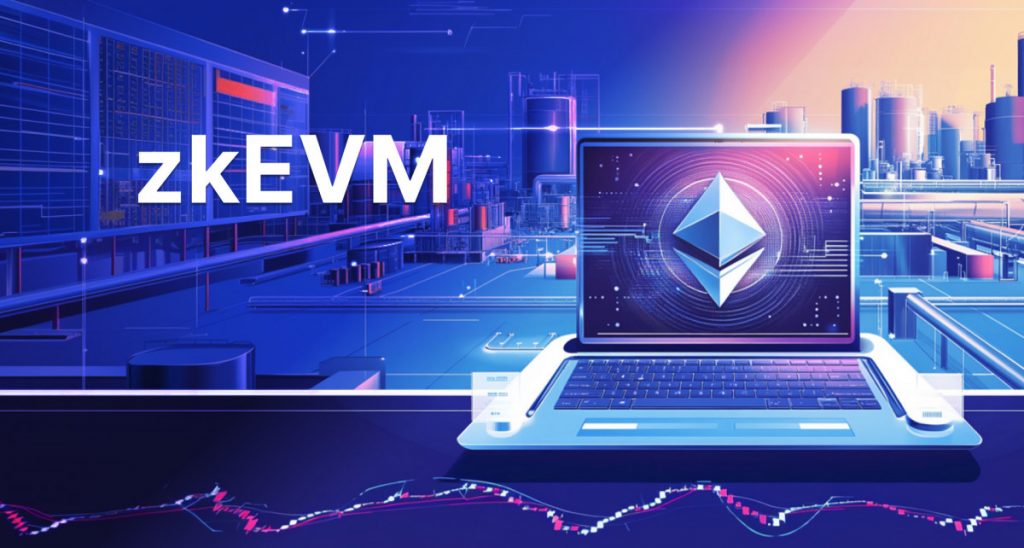
Ethereum Foundation, a non-profit organization dedicated to supporting Ethereum’s long-term development through research, technology, and community initiatives, has published an update on the progress of its zkEVM ecosystem, summarizing a year of advancements and outlining future goals.

According to the report, latency for real-time proving has decreased dramatically from 16 minutes to 16 seconds, costs have dropped 45-fold, and zkVMs now verify 99% of Ethereum blocks in under 10 seconds on target hardware. While these performance improvements address major bottlenecks, security remains a primary concern. 

Many STARK-based zkEVMs still rely on unproven mathematical assumptions, and recent research has challenged some of these conjectures, reducing the effective security margin. The Ethereum Foundation emphasizes that provable security remains essential, targeting 128-bit security as recommended by standardization bodies and validated by computational benchmarks, particularly given the potential for attackers to exploit soundness flaws in Layer 1 zkEVMs, which could compromise large amounts of funds.

Balancing security and proof size is critical, as higher security typically increases proof sizes, which must remain manageable for propagation across Ethereum’s network. To address this, the Foundation has set three key milestones. 

Ethereum Foundation highlights that by the end of February 2026, zkEVM teams are expected to integrate SoundCalc, a tool for consistently estimating security based on current cryptographic bounds and proof parameters. By the end of May 2026, the ecosystem aims to achieve 100-bit provable security with final proof sizes under 600 KiB and a compact description of the recursion architecture. By the end of 2026, the target is 128-bit provable security, proof sizes under 300 KiB, and a formal security argument for the recursive architecture. 

Recent cryptographic and engineering developments, including compact polynomial commitments, advanced recursion techniques, and structured circuit composition, make these milestones feasible. Documenting the architecture and soundness of recursion is particularly important, as modern zkEVMs involve complex, team-specific recursive circuit designs that are essential for the security of the overall system.

Ethereum Foundation Shifts Focus To zkEVM Security And Formal Verification Ahead Of H-Star Milestone

There is a strategic reason to focus on zkEVM security at this stage. Securing a system that is still evolving is challenging, but once zkVM architectures stabilize and teams reach key targets, formal verification efforts can be fully realized. By the H-star milestone, the proof system layer is expected to be largely settled—not permanently fixed, but stable enough to enable formal verification of critical components, finalize security proofs, and align specifications with deployed code. This stability is essential for achieving secure Layer 1 zkEVMs.

A year ago, the primary question was whether zkEVMs could prove transactions quickly enough, and that challenge has now been addressed. The current focus is on whether they can do so reliably and securely, and confidence is high that they can. The Ethereum Foundation plans to publish a post in January formalizing these milestones, followed by a technical update detailing proof system techniques for meeting the targeted security levels and proof sizes. Ethproofs will also be updated to reflect the shift toward emphasizing security alongside performance. Support from the Foundation’s cryptography team will be available throughout this process. With the performance sprint complete, attention is now turning to strengthening the foundations.

Disclaimer

In line with the Trust Project guidelines, please note that the information provided on this page is not intended to be and should not be interpreted as legal, tax, investment, financial, or any other form of advice. It is important to only invest what you can afford to lose and to seek independent financial advice if you have any doubts. For further information, we suggest referring to the terms and conditions as well as the help and support pages provided by the issuer or advertiser. MetaversePost is committed to accurate, unbiased reporting, but market conditions are subject to change without notice.

About The Author

Alisa, a dedicated journalist at the MPost, specializes in cryptocurrency, zero-knowledge proofs, investments, and the expansive realm of Web3. With a keen eye for emerging trends and technologies, she delivers comprehensive coverage to inform and engage readers in the ever-evolving landscape of digital finance.

More articles

Alisa, a dedicated journalist at the MPost, specializes in cryptocurrency, zero-knowledge proofs, investments, and the expansive realm of Web3. With a keen eye for emerging trends and technologies, she delivers comprehensive coverage to inform and engage readers in the ever-evolving landscape of digital finance.

More articles


Source link

$GRANT Is Live: GrantiX Lists on BitMart and BingX After Successful IDOs

0
$GRANT Is Live: GrantiX Lists on BitMart and BingX After Successful IDOs


Sponsored

Stories and Reviews

December 19, 2025

$GRANT Is Live: GrantiX Lists on BitMart and BingX After Successful IDOs

Dubai, United Arab Emirates, December 19th, 2025, Chainwire

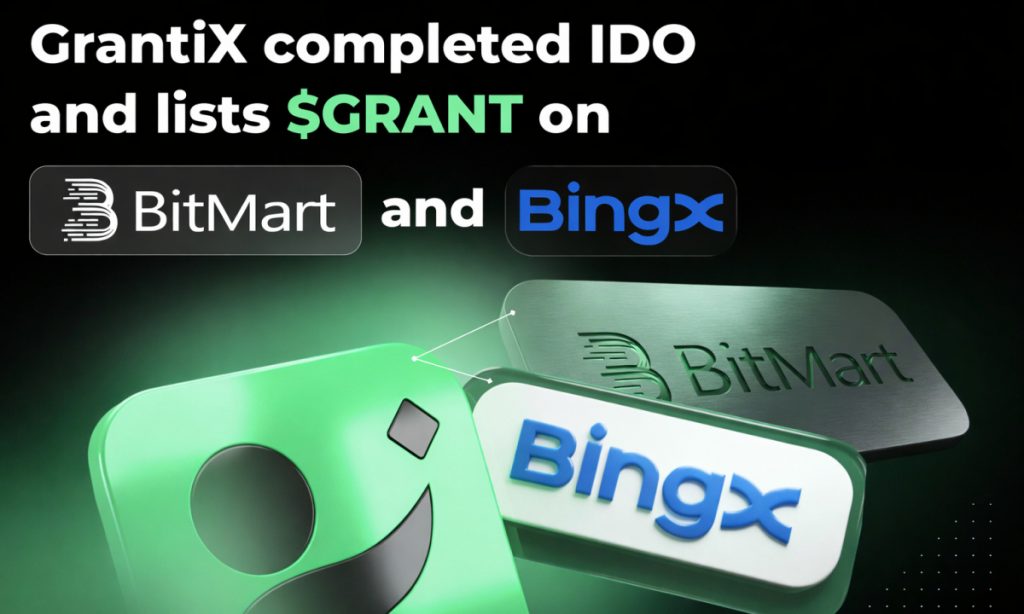
GrantiX, an AI-powered SocialFi platform bringing impact investing on-chain, today announced the launch of its $GRANT token following a Token Generation Event and multiple sold-out IDOs. The token is now live and listed on BitMart and BingX, expanding global access to the GrantiX ecosystem.

$GRANT serves as the utility and governance token for GrantiX, which connects blockchain donors with verified social entrepreneurs through an audited platform. The TGE follows successful IDOs on Finceptor and Spores Network, alongside additional offerings on Red Kite and Huostarter.

“$GRANT is not a speculative launch, it is the activation of an ecosystem that is already operating, audited, and delivering measurable impact,” said Dr. Konstantin Livshits, founder of GrantiX. “This milestone aligns our community around a shared mission to make impact investing transparent, efficient, and scalable.”

Built on Arbitrum and designed to be multi-chain, GrantiX integrates directly into high-volume DeFi protocols, enabling optional micro-donations to be embedded into everyday transactions. Alongside with real-world revenue streams, a single Web3 partner processing more than 100 million transactions per week can route user opt-in donations to verified impact projects, with GrantiX earning a 2% fee for distribution, verification, and on-chain transparency. Even modest participation at this scale creates recurring, sustainable effect.

The global impact economy represents a $1.57 trillion market that remains largely offline and opaque. As financial activity increasingly moves on-chain, GrantiX aims to bring this capital into Web3 by embedding impact directly into transactions, turning donations into programmable infrastructure rather than a separate product.

Since launching its MVP, GrantiX has processed more than 20,000 donations totaling over $250,000, distributed more than $80,000 in grants to verified social entrepreneurs, and onboarded more than 18,000 users organically. The project has raised more than $1.75m in angel funding and public rounds, and all smart contracts have been audited by CertiK ahead of the mainnet rollout.

“The demand we saw across our IDOs reflects growing interest in Web3 projects with real-world utility and sustainable economics, rather than hype-driven meme coins” said Anton Yanushkevich, CEO of GrantiX. “By combining AI-driven evaluation with on-chain transparency, we are building an impact layer for Web3 where doing good is embedded directly into financial infrastructure – we believe, that the future of impact is on-chain.”

$GRANT is now live. Users can join the launch by trading $GRANT on BingX and BitMart and become part of the on-chain impact economy:

BingX: https://bingx.com/en/spot/GRANTUSDT

BitMart: https://www.bitmart.com/trade/GRANT_USDT

About GrantiX

GrantiX is a sustainable, multi-chain impact platform connecting donors, social entrepreneurs, and investors on-chain. Through its AI-powered Web3 ecosystem, GrantiX brings transparency and efficiency to global impact investing. Its audited model combines DeFi, SocialFi, and DAO governance tools to fund and verify real-world charitable projects. Founded by Dr. Konstantin Livshits and Anton Yanushkevich, GrantiX’s mission is to make doing good a scalable, rewarding part of Web3 utility.

LinkedIn

Telegram

Discord

Contact

CEOAnton YanushkevichGrantiX[email protected]

Disclaimer

In line with the Trust Project guidelines, please note that the information provided on this page is not intended to be and should not be interpreted as legal, tax, investment, financial, or any other form of advice. It is important to only invest what you can afford to lose and to seek independent financial advice if you have any doubts. For further information, we suggest referring to the terms and conditions as well as the help and support pages provided by the issuer or advertiser. MetaversePost is committed to accurate, unbiased reporting, but market conditions are subject to change without notice.

About The Author

Chainwire is the top blockchain and cryptocurrency newswire, distributing press releases, and maximizing crypto news coverage.

More articles

Chainwire is the top blockchain and cryptocurrency newswire, distributing press releases, and maximizing crypto news coverage.


Source link

Popular Posts

My Favorites

Blac Chyna Shares Relationship Status After Teasing Rob Kardashian Reunion

0
Blac Chyna is entering 2026 single. “Guess who’s ending the year single,” the former reality TV star wrote over a photo posted to Instagram...