DOJ seizes $400M tied to Helix, a crypto mixer that laundered $300M from darknet markets between 2014–2017.Helix hid Bitcoin trails, helped major hacks and darknet sales, showing how mixers fuel crypto crime globally.DOJ, FBI, and IRS work with Belize highlights strong intl. effort against crypto laundering and illicit funds.
The U.S. Department of Justice (DOJ) has forfeited over $400 million in cryptocurrencies, real estate, and monetary assets tied to the notorious darknet mixing service, Helix. Announced last week, this operation marks one of the largest counter-efforts against money laundering using cryptocurrencies.
As per the DOJ release, Helix hid where coins came from and where they went, moving over $300 million in illegal funds between 2014 and 2017. The platform was run by Larry Dean Harmon, who pleaded guilty to a conspiracy to commit money laundering in August 2021.
In November 2024, he was sentenced to three years in prison, three years of supervised release, and his assets were seized. On January 21, a judge formally gave the government ownership of the assets, finalizing the DOJ’s claim.
Helix’s role in darknet money laundering
Helix was a key tool for cleaning money from illegal online drug sales. It mixed cryptocurrency from many users, making it very hard to trace. Court records show Helix processed transactions of about 354,468 Bitcoin (BTC)—worth around $300 million back then—much of it moving through major darknet markets. Harmon took a cut as fees, earning money from these illegal transactions.
Harmon also connected Helix to Grams, a search engine for the darknet, and made it easy for markets to automatically move Bitcoin. Investigators traced tens of millions of dollars through Helix, showing how important it was to illegal online operations.
Officials from the DOJ, Federal Bureau of Investigation (FBI), and Internal Revenue Service (IRS) emphasized the teamwork involved in taking down the platform. The government also worked with authorities in Belize, showing strong international cooperation.
Broader context of crypto mixers and sanctions
The Helix case is an example of a broader crackdown on crypto mixers. The Treasury has in the past sanctioned Tornado Cash for facilitating the movement of billions of dollars in illegal transactions. However, the sanctions on Tornado Cash were removed in 2025 due to legal and policy challenges.
Other crypto mixers, like Blender, have also been sanctioned for helping launder money from hacks. For example, the North Korean-backed Lazarus Group used Blender to move over $20.5 million stolen from the Ronin Network.
The DOJ records show Helix helped launder more than $455 million in Lazarus Group funds, $96 million from the Harmony Bridge hack, and at least $7.8 million from the Nomad hack.
Similar cases and industry impact
Not just Helix, but the team behind Samourai Wallet also went to prison for helping criminals hide $237 million in stolen funds. Its CTO William Lonergan Hill got four years, while CEO Keonne Rodriguez got five. They also had to give up millions.
As seen, these are just some of the cases where the authorities are cracking down hard on crypto mixers in order to stop money laundering and help the victims of hacks and online scams.
The seizure of the DOJ is evidence that authorities are monitoring crypto mixers more closely than ever. As people are trying to launder money using digital currencies, authorities all over the world are working together to protect the financial system.
Also Read: Midnight Takes Privacy Off the Internet With Satellite Messaging
Disclaimer: The information researched and reported by The Crypto Times is for informational purposes only and is not a substitute for professional financial advice. Investing in crypto assets involves significant risk due to market volatility. Always Do Your Own Research (DYOR) and consult with a qualified Financial Advisor before making any investment decisions.
For years, I’ve been writing about the digital transformation of our world. We talk about virtual spaces, digital identities, and the future of connectivity. But sometimes, the biggest shifts happen right here in the physical world, on the asphalt beneath our feet.
If you are a petrolhead or just someone who follows the auto industry, you probably felt this moment approaching. But honestly, it arrived faster than even I expected.
According to the latest data from December, a historic milestone has been crossed in Europe: Fully electric vehicles (EVs) have officially outsold petrol cars for the first time.
This isn’t just a statistical blip; it is the ringing of a bell. The era of the internal combustion engine (ICE) isn’t over yet, but the dominance is officially broken. Let’s dive into what the numbers say and, more importantly, what this means for our tech-driven future.
The Historic Flip: By the Numbers
I spent some time looking at the report from the European Automobile Manufacturers’ Association (ACEA), and the trend lines are fascinating. For decades, petrol was the undisputed king of the road. But December changed the narrative.
While petrol cars are still holding onto the lead if you look at the entire year (with about 26.6% market share), the momentum has completely shifted.
Petrol Decline: Demand dropped by 18.7% towards the end of the year.The Rise of EVs: Pure electric models surged past them in monthly sales.
This tells me one thing: The consumer mindset has changed. Buying a traditional gas car in 2026 feels increasingly like buying a DVD player when Netflix exists. It still works, but you know you’re investing in yesterday’s technology.
The Collapse of Diesel: From Hero to Zero
Remember the days when diesel was marketed as the “efficient” and “economical” choice for Europeans? Those days are long gone.
The data shows that diesel took the hardest hit.
Market Share: It has shrunk to a measly 8.9%.The Drop: Registrations fell by 24.2%.
I was reading rumors that some fuel stations in the UK and mainland Europe might stop selling diesel entirely by 2030. Think about that for a second. If you buy a diesel car today, you might genuinely struggle to find a place to fill it up in five years. That is a terrifying prospect for resale value, and it explains why drivers are abandoning the ship in droves.
Hybrids: The “Safe Harbor” for Transition
Here is where it gets interesting. While we love to talk about the “Electric Revolution,” the actual MVP (Most Valuable Player) of the year wasn’t the pure EV—it was the Hybrid.
Hybrids captured a massive 34.5% of the market.
Why? I think the answer is simple: Anxiety. Even though charging infrastructure is getting better, people (myself included) still worry about getting stuck in the middle of nowhere with 2% battery. Hybrids offer a psychological safety net.
The Rise of the Range Extender
I am particularly obsessed with the new wave of tech coming from companies like Xpeng. They are using a system often called a “Range Extender.”
The car drives on electric power 100% of the time.There is a small gas engine, but it never turns the wheels. It just acts as a generator to charge the battery.Result: A range of over 1,000 kilometers.
This is the bridge technology that I believe will finally kill range anxiety. It treats the combustion engine not as the heart of the car, but just as a backup battery pack.
The “China Shock” and the Price War
We cannot talk about this shift without addressing the elephant in the room: Chinese Manufacturers.
A few years ago, Chinese cars were seen as cheap alternatives. Now? They are setting the standard.
BYD’s Explosion: The Chinese giant increased its sales by a staggering 228% in just one year, reaching 129,000 units in Europe.Legacy Response: European giants are scrambling to fight back. We are finally seeing cars like the Renault 5 E-Tech—stylish, electric, and actually affordable.
This competition is fantastic for us. For a long time, EVs were “tech toys for the rich.” Now, with BYD pushing prices down and Renault/Peugeot responding, the “Apple-ification” of the car market is expanding to the mass market.
Ugu’s Take: The Car as a Gadget
So, why does a “Metaverse” content creator care about car sales?
Because the car is becoming the next great digital platform. When we move away from combustion engines, we remove thousands of moving mechanical parts. We replace them with batteries, motors, and software.
The Cockpit: Modern EVs are essentially rolling smartphones. They are integrated with our digital lives.The Experience: As autonomous driving improves (which is easier on electric platforms), the car becomes a mobile living room. It becomes a space to consume content, hold meetings, or enter the Metaverse while commuting.
The fact that Europe has tipped in favor of electrics means the infrastructure for this “connected future” is finally being laid. We aren’t just changing fuel; we are changing how we interact with mobility.
The Resistance is Fading I used to hear people say, “I’ll never give up the sound of an engine.” But looking at these numbers, I think practicality and technology are winning the argument. The silence of an electric motor is the sound of the future arriving.
What’s Next?
This year is going to be messy. We will see traditional automakers fighting for survival, Chinese brands trying to dominate, and hybrids acting as the peacemakers in the middle.
But one thing is clear: The roadmap has been redrawn. The internal combustion engine is now officially on life support.
I want to hear from you. Are you part of the 34% who feels safer with a Hybrid, or are you ready to go full electric? Or… are you clutching your petrol keys until the very end? Let’s discuss in the comments below!
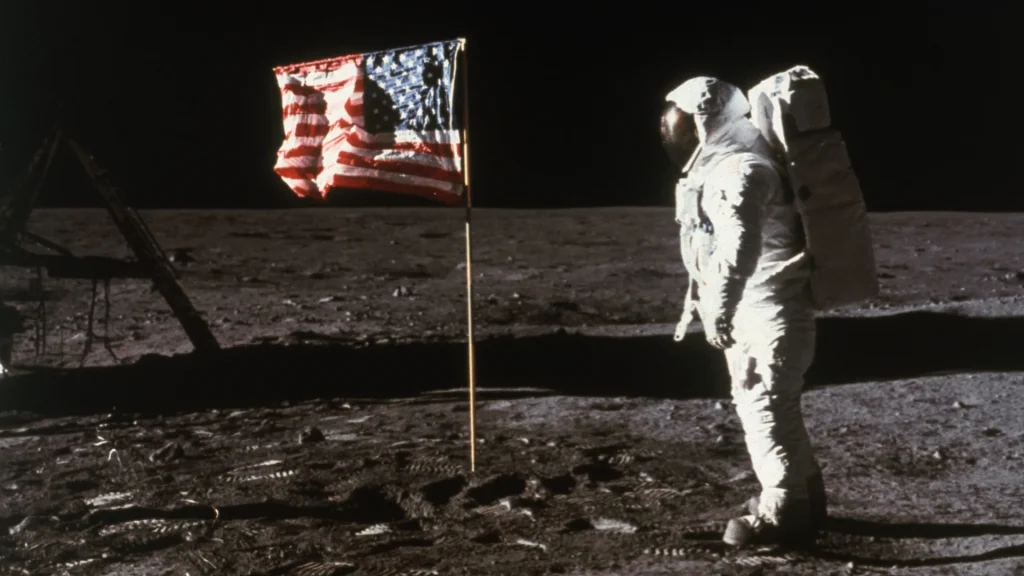
I’ve always spent my nights looking up at that glowing white orb, thinking it was Earth’s most loyal, silent guardian. We take it for granted, don’t we? It sits there, exactly where it should be, drifting away from us at a tiny $3.8$ cm every year. But lately, I’ve been obsessed with a “what-if” that’s been keeping me up: What if the Moon stopped running away and started coming back?
I spent hours diving into the orbital mechanics and tidal physics of this scenario, and let me tell you, it’s not just a disaster movie plot. It’s a terrifying transformation of our entire reality. If you think a lunar collision is just a “big crash,” grab a coffee and settle in. It’s way more poetic—and way more brutal—than that.
The First Signs: Gravity Becomes Our Enemy
In the beginning, you wouldn’t even see it moving. Space is vast, and the Moon is huge. But I realized that we wouldn’t need a telescope to know something was wrong; we’d feel it in the water.
As the Moon inches closer, its gravitational pull on our oceans begins to intensify. We aren’t talking about high tide coming up to your toes anymore. I’m talking about megatsunamis that reshape the coastlines of every continent daily. Imagine the power of the ocean being yanked toward the sky.
But it’s not just the water. The Earth’s crust itself is flexible. I was shocked to learn that the Moon’s gravity actually “stretches” the solid ground. As it gets closer, this stretching becomes violent.
Global Earthquakes: Fault lines that have been silent for millennia would snap.Volcanic Winter: The internal friction would heat the Earth’s core, triggering massive eruptions.
I’ve always loved the Moon, but at this stage, it stops being a light in the dark and starts acting like a planetary wrecking ball.
The Roche Limit: Nature’s Trash Compactor
This is the part of my research that really blew my mind. Most people think the Moon would just hit the Earth like a giant cue ball. But physics has a much more “creative” (and messy) plan.
There is a theoretical boundary called the Roche Limit. For the Earth-Moon system, this is roughly $18,470$ kilometers away. Once the Moon crosses this line, the Earth’s gravity becomes so much stronger on the “near side” of the Moon than the “far side” that the Moon literally cannot hold itself together.
The Moon would shatter in the sky. Imagine looking up and seeing your favorite celestial body disintegrate into trillions of glowing, jagged boulders. I personally find the mental image of this both haunting and strangely beautiful. For a brief moment, Earth would have a ring system, just like Saturn. But don’t get too attached to the view—those rings are made of fire and debris that are about to rain down.
The End of the Blue Marble
Once the Moon breaks apart, the debris doesn’t just stay in orbit. The atmosphere would drag those rocks down. We’d experience a “meteor shower” that doesn’t just last for a night, but for weeks, turning the sky into a furnace.
The kinetic energy released would be enough to boil the oceans. I’ve often wondered if humanity could survive in deep-sea bunkers or underground vaults, but when the very crust of the planet is melting, there’s nowhere left to hide.
Ugu’s Perspective: Why This Matters
I know this sounds like a doomsday rant, but looking into these extremes makes me appreciate the delicate balance we live in. We exist in a “Goldilocks” zone not just because of our distance from the Sun, but because our Moon is exactly where it needs to be. It stabilizes our tilt, gives us our seasons, and—thankfully—it’s currently choosing to leave us alone.
I’m curious, though. If we had a 50-year warning that the Moon was coming for us, do you think humanity would actually unite to build a “Galactic Ark,” or would we spend those 50 years arguing about who gets a seat? I’d like to think we’d make it to Mars, but part of me feels like we’d just stay and watch the most beautiful, terrifying show in the history of the universe.
What do you think? Is humanity meant to outlive its home planet, or are we tied to Earth’s fate until the very end?
The Polymarket airdrop is shaping up to be one of the most closely watched events in crypto. This hype is the result of years of product traction, real revenue, cultural relevance, and now a confirmed token plan tied to a regulated U.S. relaunch.
Prediction markets have quietly grown into a serious investment category. Polymarket didn’t just ride that wave. It defined it. With billions in volume, hundreds of thousands of active users, and capital parked onchain, the conditions are in place for a meaningful reward event that favors real participants.
Prediction Markets Are Becoming a Legitimate Investment Class
Prediction markets turn information into prices. Users put money behind outcomes they believe in, and market odds update in real time based on confidence and liquidity. This setup often produces signals that are faster and more accurate than polls or expert opinions.
Crypto made this possible on a large scale. Onchain settlement removes middlemen. Stablecoins make transactions smoother. Global access brings in many perspectives. The result is a market driven by incentives instead of opinions.
As adoption has grown, prediction markets have started to sit somewhere between derivatives trading, forecasting, and data analysis. That shift explains why serious traders, funds, and even journalists now watch these markets closely.
How Polymarket Took Prediction Markets Mainstream
Polymarket started with a simple idea: let anyone trade on real-world outcomes using USDC. The platform covers politics, major events, sports, crypto stories, and cultural moments.
Polymarket’s big moment came during the 2024 U.S. presidential election. Liquidity jumped, and media outlets started citing Polymarket odds along with traditional polls. Trading volume hit the billions, turning Polymarket from a niche DeFi app into a public source for probability signals.
Ease of use played a major role. The interface didn’t feel like a typical crypto product. Markets were clear. Odds were intuitive. That approach pulled in users who might never touch a DEX.
Under the hood, Polymarket runs on Polygon, which enabled low fees and fast settlement during periods of extreme demand.
A Short History That Explains Why the Airdrop Matters
Growth wasn’t linear. Regulatory pressure forced Polymarket to step back from the U.S. market. Many projects would have rushed a token or pivoted for quick liquidity.
Polymarket chose a different approach.
The company bought QCX, a CFTC-regulated derivatives exchange, for $112 million. This move made it possible for a legal U.S. relaunch and showed that Polymarket plans to operate for the long term.
This decision is important for the airdrop. Teams that focus on compliance, strong infrastructure, and sustainability usually take user ownership seriously. Quick reward schemes don’t make up for years of careful planning.
The Polymarket Airdrop Is Confirmed
Speculation ended when Polymarket’s leadership publicly confirmed that a native token is coming and that users will receive an airdrop. The token, expected to trade under the ticker POLY, is positioned as a utility asset rather than a hype vehicle.
The timeline is planned. The team wants the U.S. product to be live and stable first, then will focus on the token’s details, and finally on distribution.
This approach is similar to other projects that aim for long-term success. There are no rushed incentives or empty points systems, just real usage, alignment, and patience.
Past Airdrops Show How Valuable Early Participation Can Be
Crypto has had several user-focused airdrops that rewarded real activity. One example stands out.
SuperRare gave tokens to early creators and collectors who truly used the platform. Many people received allocations worth tens or even hundreds of thousands of dollars at launch. The rewards matched the time spent building liquidity and culture, not quick farming tactics.
Polymarket follows a similar path: real usage, clear product-market fit, and a long wait before any token launch. These factors often lead to valuable distributions.
Polymarket by the Numbers
Onchain data backs up the narrative.
Polymarket currently posts:
311,990 unique active wallets, up nearly 10%
572,950 transactions, up over 8%
$1.35 billion in trading volume
$379.62 million in user balances, up more than 12%
These figures matter.
High balances show user trust. More active wallets mean organic growth. Large trading volume proves the platform creates real economic activity, not just empty clicks.
For an airdrop, this has two sides. A large user base means more competition, but these strong metrics support a bigger allocation. Platforms with this much capital and engagement can reward users well without hurting future growth.
How Polymarket Airdrop Rewards Are Likely Calculated
Nothing has been finalized, but patterns are clear.
Polymarket has consistently emphasized quality participation. That points to criteria such as:
Consistent trading volume over time
Participation across different market categories
Liquidity provision through limit orders
Ongoing engagement rather than one-off bets
Profitability might also count. Traders who show conviction and good judgment add value to the market, while fake activity just adds noise.
Daily liquidity rewards already give some hints. Markets with tight spreads and real depth get incentives. Inactive markets do not.
That philosophy will almost certainly carry into the airdrop.
Increasing Profit While Staying Eligible
Trading prediction markets carries risk. Airdrop positioning shouldn’t come at the expense of discipline.
Smaller, steady positions usually work better than big bets. Finding mispriced odds can give an advantage. Short-term markets offer quick results, while longer-term markets show commitment.
Providing liquidity is important. Even small amounts of capital can earn rewards in less crowded markets. The goal is to contribute, not just to increase volume.
Losses can wipe out your progress. No airdrop will make up for reckless trading.
Advanced Positioning Without Crossing Lines
Consistency matters more than bursts of activity. Spreading trades across topics signals real use. Keeping some positions open shows long-term engagement.
Account hygiene also counts. Single accounts. Clean wallets. Linked social profiles where available.
Sybil tactics tend to get filtered out. Platforms with this level of data rarely miss obvious abuse.
When the Polymarket Airdrop Is Likely to Happen
No date has been announced yet, but the order of events seems clear.
First, the U.S. relaunch will happen under a regulated framework, which could be soon. Then the platform will stabilize, followed by the token launch and airdrop.
Most estimates suggest early or mid-2026. Market conditions, infrastructure upgrades, and election cycles could affect the timing, but the plan is clear.
Risks Worth Taking Seriously
Regulatory timelines can be delayed. High participation might reduce rewards. Prediction markets carry real financial risks. Scams often show up as hype increases.
Only trust information from official channels. Ignore everything else.
Why Polymarket Still Stands Out
Few crypto platforms combine real revenue, cultural relevance, regulatory progress, and confirmed user ownership plans. Polymarket checks all four boxes.
Prediction markets aren’t a passing trend. They fill a gap that traditional finance and media never solved well. Polymarket captured that opportunity early and held onto it through adversity.
For users who showed up, stayed active, and contributed liquidity, the Polymarket airdrop may mark the moment that patience pays off.
Published: January 29, 2026 at 10:00 am Updated: January 28, 2026 at 7:10 am
by Ana
Edited and fact-checked:
January 29, 2026 at 10:00 am
To improve your local-language experience, sometimes we employ an auto-translation plugin. Please note auto-translation may not be accurate, so read original article for precise information.
In Brief
Solv Protocol has transitioned Bitcoin execution to FROST, implementing research-backed multisignature security for institutional-scale onchain transactions.
Solv Protocol, the Bitcoin asset manager overseeing more than $1 billion in assets, has announced an upgrade to SolvBTC, shifting its Bitcoin mainnet execution layer to FROST, a threshold signature scheme originally developed by the Zcash community. The transition allows for institutional-grade multisignature security without requiring modifications to the Bitcoin network.
The update moves SolvBTC’s execution framework from Solv’s Staking Abstraction Layer (SAL), which was created to standardize Bitcoin staking and yield integrations across ecosystems, to a FROST Network–enabled custody and signing architecture designed to provide stronger operational assurances as the platform scales.
FROST, first introduced in 2020 as a research proposal on the public cryptography ePrint network, has long been recognized for its security and efficiency. Solv’s adoption of the protocol represents one of the first large-scale applications of threshold signing on Bitcoin infrastructure.
The upgraded SolvBTC system incorporates a FROST-based threshold signing network alongside Vault Pool, Indexer, Auditors, and governed smart-contract controls. This combination delivers distributed key management, scalable transaction execution, and auditable workflows to support Bitcoin issuance and redemption with higher throughput and greater oversight.
As SolvBTC continues to scale—it is the largest and most utilized Bitcoin asset on BNB Chain, currently seeing up to 90% utilization on ListaDAO—the platform’s focus has shifted from simply integrating cross-chain staking opportunities to ensuring resilient, governable, and auditable Bitcoin mainnet execution. This encompasses all stages from address generation and signing coordination to transaction authorization and change-control processes.
The FROST-based network enhances security by distributing approval across multiple independent parties, minimizing single points of failure while preserving standard Bitcoin signatures on-chain. Combined with auditable checks and scoped governance, the upgrade establishes clear accountability and approval workflows that meet the operational standards expected by institutional participants in traditional financial markets.
“Institutions evaluate operational risk and change-control risk,” said Ryan Chow, CEO and co-founder of Solv Protocol, in a written statement. “FROST improves execution privacy, but what really matters to institutions is governance that is analogous to traditional finance systems. This includes separation of duties, policy-based approvals, audit trails, and time-delayed upgrades. That’s what makes it favored by a risk committee,” he added.
Solv Protocol Upgrades FROST2 To TS-SUF-4, Establishing Institution-Grade Bitcoin Execution And Governance
“For five years, Solv has always maintained a strong focus on cryptographic innovation. Our recent research improves the FROST2 algorithm and elevates its security level to TS-SUF-4, the highest security classification,” said Will Wang, CTO and co-founder of Solv Protocol, in a written statement. “We’re expecting this advancement to significantly accelerate the adoption of FROST2 across the Bitcoin ecosystem, enabling the industry to build more efficient and more secure multisignature networks,” he added.
With the introduction of a more predictable and scalable Bitcoin execution layer, SolvBTC is positioned to integrate more seamlessly with institutional platforms and decentralized finance protocols, enabling smoother composability and more reliable minting and redemption processes as the Bitcoin finance ecosystem advances.
By deploying FROST within live Bitcoin infrastructure, SolvBTC establishes a new standard for secure and governable Bitcoin execution at scale. The upgrade underscores Solv’s focus on creating an institution-grade operational framework that emphasizes resilience, transparent accountability, and auditable processes, fostering broader participation in the digital asset market.
Disclaimer
In line with the Trust Project guidelines, please note that the information provided on this page is not intended to be and should not be interpreted as legal, tax, investment, financial, or any other form of advice. It is important to only invest what you can afford to lose and to seek independent financial advice if you have any doubts. For further information, we suggest referring to the terms and conditions as well as the help and support pages provided by the issuer or advertiser. MetaversePost is committed to accurate, unbiased reporting, but market conditions are subject to change without notice.
About The Author
Alisa, a dedicated journalist at the MPost, specializes in cryptocurrency, zero-knowledge proofs, investments, and the expansive realm of Web3. With a keen eye for emerging trends and technologies, she delivers comprehensive coverage to inform and engage readers in the ever-evolving landscape of digital finance.
More articles
Alisa, a dedicated journalist at the MPost, specializes in cryptocurrency, zero-knowledge proofs, investments, and the expansive realm of Web3. With a keen eye for emerging trends and technologies, she delivers comprehensive coverage to inform and engage readers in the ever-evolving landscape of digital finance.
The Fed paused rates at 3.5%-3.75%, signaling caution as jobs stabilize but inflation remains a concern.Cryptos reacted cautiously, with Bitcoin near $88K; traders are now watching dollar strength more than Fed moves.A weaker dollar may support crypto gains, while a strong dollar could act as a ‘wrecking ball’ for risk assets.
Defying intense political pressure and a series of verbal attacks from the White House, the Federal Reserve voted 10-2 on Wednesday to maintain the federal funds rate at 3.5%–3.75%. In its policy statement, the Federal Reserve highlighted that “job gains have remained low, and the unemployment rate has shown some signs of stabilization.” Inflation, it noted, remains “somewhat elevated.”
While the move was widely expected by institutional desks, the dissenting votes from Governors Stephen Miran and Christopher Waller highlight a growing rift within the FOMC. Both were appointed under President Donald Trump, highlighting ongoing debates about how fast the Fed should act.
Fed Chair Jerome Powell said that while the labor market is stabilizing, the Fed is in no rush to cut further until the inflationary effects of recent tariffs are fully understood.
Market response and crypto implications
Major cryptocurrencies reacted cautiously to the Fed announcement, indicating that market participants were waiting for Powell’s press conference for more insights. The current global cryptocurrency market cap is $2.98 trillion, down 1.34% in the last 24 hours, while the total trading volume is down 2.73% to $111.76 billion, as per CoinMarketCap data.
Bitcoin (BTC), the top cryptocurrency by market cap, is currently trading at $88,165.80 with a slight daily increase of 0.07%, although it has experienced a decline of 1.05% and 2.14% in the last week and month, respectively. The market capitalization of Bitcoin is above $1.76 trillion, with approximately 20 million BTC in circulation.
Ethereum (ETH) traded around $2,950, up just 0.05% for the day but down 1.8% over the week. Binance’s BNB rose slightly to $898.65, and XRP gained 0.31%, reaching $1.88. With this market performance, therefore, the Fed’s decision didn’t shake crypto markets immediately, but changes in the dollar’s strength could have a bigger impact on prices over time.
Dollar dynamics and broader market signals
The US dollar continues to weaken, with the Bloomberg Spot Dollar Index reaching new four-year lows. President Trump dismissed the decline of the dollar, stating, “The value of the dollar is great.” Some analysts say that President Trump indirectly supports lower rates by weakening the dollar.
The Kobeissi Letter called it “a clear signal that President Trump is willing to tolerate a weaker Dollar to push rates lower and boost US exports.” Similarly, Bloomberg TV APAC noted, “President Trump may effectively be cutting rates on the Fed’s behalf by letting the dollar slide.”
President Trump may effectively be cutting rates on the Fed’s behalf by letting the dollar slide.
ICYMI – Dollar saw a massive collapse overnight. Bloomberg gauge saw a 3-sigma move down. Trump said he’s not concerned about the currency’s decline.
🔉on pic.twitter.com/t5Wgcw9Ues
— David Ingles (@DavidInglesTV) January 27, 2026
Historically, cryptocurrencies have performed well under loose monetary policy. However, experts argue that dollar strength often outweighs rate changes in driving crypto sentiment. Julien Bittel, Head of Macro Research at Global Macro Investor, described a strong dollar as a “wrecking ball” for risk assets.
The Fed’s decision to pause shows it’s being careful with the economy while inflation is still a concern. Cryptocurrencies tend to react more to the dollar’s strength, so how the dollar moves will likely shape crypto prices.
Also Read: U.S. Senators Set to Vote on Crypto Market Bill on January 29
Disclaimer: The information researched and reported by The Crypto Times is for informational purposes only and is not a substitute for professional financial advice. Investing in crypto assets involves significant risk due to market volatility. Always Do Your Own Research (DYOR) and consult with a qualified Financial Advisor before making any investment decisions.
Crypto projects evolve. Sometimes they pivot. Sometimes they die. And sometimes they come full circle. This is the story of Cryptodate—an NFT project deployed to Ethereum mainnet in June 2018, making it older than 99% of the NFTs in existence.
2017: The World Discovers Digital Cats
If you were paying attention to crypto in late 2017, you remember the moment CryptoKitties launched and promptly clogged the entire Ethereum network. Gas prices spiked. Transactions backed up for hours. And suddenly this obscure concept of “non-fungible tokens” had a use case that people could wrap their heads around: unique collectibles. The ERC-721 standard was still being finalized, but it was clear that digital scarcity was a thing. Provable ownership of unique assets on a public blockchain was real. And where there are collectibles, there’s trade.
Building a Marketplace
A small team saw what was happening and realized people were going to want to trade these things, and they’d need a place to do it. So they started building an NFT marketplace. They bought the domain Etherbay—yes, Etherbay—because why not. The concept was straightforward: create a secondary marketplace where people could list, auction and buy NFTs. This was before OpenSea had any real traction, before anyone knew what the market would look like or how the tech would work. They were figuring it out as they went.
They Needed Their Own NFT
Here’s the thing about building a marketplace: you can’t develop listing flows, transfer mechanics, and auction logic without actual assets to test against. The team didn’t want to rely on CryptoKitties or someone else’s NFTs. They needed something they controlled, something simple enough that they could focus on the marketplace mechanics without getting distracted by complex game logic or breeding algorithms. So they started thinking about what kind of NFT they could create that would serve as a test case but also stand on its own as a legitimate project.
The idea they landed on was Cryptodate. The concept is simple: every calendar date is a token ID. July 4, 1776 becomes token ID 17760704. The Bitcoin genesis block on January 3, 2009 becomes 20090103. Your birthday, your anniversary, the day you met someone—each one maps to an eight-digit number, and each one can only ever have one owner. One date, one NFT, forever. That’s the whole thing.
The team liked this idea for reasons beyond just needing a test NFT. Most NFT projects rely on off-chain data—the token ID is on Ethereum, but the actual content (the image, the metadata) lives on some server somewhere. If that server goes down because someone didn’t pay the bill, the NFT points to nothing. And IPFS isn’t exactly a guarantee. Collectors can easily end up owning a receipt for something that no longer exists.
The Cryptodate team never loved that approach. If you’re going to put something on the blockchain, put it on the blockchain. Cryptodate solved this elegantly: the token ID is the date. There’s no image to host, no metadata server to maintain, no dependency on external infrastructure. The date is the NFT. Fully on-chain, completely self-contained, and permanent for as long as Ethereum exists.
The Cryptodate smart contract was deployed on June 24, 2018—block 5,841,428. This was nine days after ERC-721 was officially finalized.
Etherbay Dies, Cryptodate Lives
And then the marketplace project fell apart. It turns out eBay’s lawyers don’t have a sense of humor about domain names. A cease and desist letter arrived, and suddenly the clever branding was a liability. The team could have rebranded, but by that point the competitive landscape was shifting. OpenSea was gaining traction and had more resources. Between the legal pressure and the market dynamics, they made the call to shut Etherbay down. The timing wasn’t right, the name was legally radioactive, and they had other things going on.
But Cryptodate was already deployed. The contract sat there on mainnet, quietly existing. A simple website went up where anyone could mint for a small fee, and then the team moved on with their lives. They didn’t market it, didn’t build a community around it, didn’t do any of the things you’re supposed to do with an NFT project. It just… existed.
2022: The DeFi Detour
Fast forward four years. DeFi summer had come and gone, and the entire landscape looked different. Layer 2s were proliferating—Arbitrum, Optimism, Fantom, Moonriver and dozens of others promising cheap transactions and Ethereum security. The Cryptodate team had bandwidth to experiment again, having spent the intervening years on other projects.
Then they had what seemed like a clever idea: yield-bearing NFTs. The concept was to tie an NFT to an ERC-20 token that generated interest, combining the collectibility of NFTs with the passive income mechanics that DeFi users loved. They built an ERC20 Cryptodate token (CDT) that was directly tied to the NFT. They extended the Cryptodate ERC721 contract to support the concept of yield-bearing NFTs such that holders would earn CDT as interest. A percentage of the ETH from each NFT sale went directly into the CDT liquidity pool, which made the CDT valuable without artifice. The contracts contain some technically solid ideas and can still be viewed on Github for those curious about the approach.
The team deployed the “new” Cryptodate to multiple Layer 2s. They embraced where NFTs had gone in the intervening years—artwork, generative collections, the whole playbook. They worked with artists to create SVG collections for each date, including a “Cryptopupper” series with genetics.
The pivot gained some traction, but the project never really took off. The yield-bearing NFT concept was perhaps too complicated, or the timing was wrong, or the marketing just didn’t land. That’s life in crypto—most things don’t work, and you learn what you can from the experience.
2026: Back to Basics
Here in 2026, the landscape has shifted again. Layer 2s are consolidating as Ethereum makes progress on scalability. The NFT market has contracted hard—most projects from the 2021-2022 boom are dead, their Discord servers silent, their OpenSea pages gathering dust. The projects that survived tend to share certain characteristics: conceptual clarity, genuine scarcity, and verifiable provenance. Cryptodate, it turns out, has all three.
So the team made a decision: strip it back down. They’ve removed the yield-bearing NFT mechanics, which were never deployed to Ethereum mainnet anyway. They’ve sunset the Layer 2 deployments. They’ve dropped the CDT token. What’s left is the original value proposition from 2018: own a date. One NFT per date, fully on-chain, from one of the oldest NFT contracts on Ethereum.
With that in mind, the team has updated the frontend dapp. The rebuild is a clean break: Next.js 14, TypeScript, Tailwind CSS, and shadcn/ui for the component library. For wallet connectivity and contract interaction, they’re using wagmi and viem, which have become the de facto standard for Ethereum frontend work, replacing the aging ethers.js/web3.js patterns.
The architecture is deliberately minimal. No multi-chain support. No token swaps. No staking mechanics. Just: connect wallet, pick a date, check availability, mint. The contract itself hasn’t changed—it’s the same code sitting at the same address since block 5,841,428. Only the frontend needed modernizing.
For collectors who care about historical NFTs—the kind who own early CryptoKitties or Curio Cards or have opinions about which projects deserve to be on Leonidas’s timeline—Cryptodate may be worth a look. The project’s been on-chain for eight years, quietly waiting to be rediscovered.
I’ve seen some wild tech announcements in my time, but the recent news coming out of the headlines regarding Nicolas Maduro’s capture feels like something straight out of a Tom Clancy novel. Donald Trump recently pulled back the curtain on a “secret weapon” that allegedly facilitated the 5-minute operation to apprehend the Venezuelan leader. Its name? The Discombobulator.
While the name sounds like something out of a 1950s sci-fi comic, the implications of this technology are far from funny. I spent some time digging into what this thing actually is, and honestly, it’s both fascinating and a little bit terrifying.
What Exactly is a “Discombobulator”?
In plain English, to “discombobulate” means to confuse, frustrate, or upset the balance of someone. That is exactly what this weapon does—but on a molecular and electronic level.
From what I’ve gathered, this isn’t a “gun” in the traditional sense. It’s a next-generation electronic warfare system. During the operation, the Venezuelan military—equipped with sophisticated Russian and Chinese defense systems—couldn’t fire a single rocket. Not one. Their entire infrastructure didn’t just fail; it was “paralyzed.”
The Tech Behind the Silence: High-Power Microwaves (HPM)
While the Pentagon is keeping the blueprints under lock and key, the consensus among tech experts is that the Discombobulator utilizes High-Power Microwave (HPM) technology.
Here is how I understand its “magic” works:
Electronic Overload: It emits pulses of intense energy that surge through electronic circuits. It doesn’t necessarily blow them up with fire, but it creates a “voltage spike” that freezes the hardware instantly.Radar Blindness: It targets the specific frequencies used by anti-aircraft and communication systems, creating a localized “black hole” where no signal can get in or out.Precision: Unlike a nuclear EMP that would fry an entire city, this seems to be a surgical tool. It silences a specific target area while leaving the rest of the grid intact.
The Frey Effect: When the Weapon Hits the Brain
This is where it gets a bit “Black Mirror” for me. Reports from the guards on the ground in Venezuela describe a sensation of intense, internal noise—as if their heads were about to explode.
This isn’t just a byproduct; it’s likely a deliberate use of the Frey Effect (or the Microwave Auditory Effect). By pulsing microwaves at specific frequencies, the weapon can actually “project” sound directly into the human skull. The results?
Extreme Nausea: Your inner ear, which controls balance, is completely disrupted.Incapacitation: Intense dizziness and temporary loss of consciousness.Zero Resistance: You can’t fight back if you can’t even stand up or think straight.
It explains how a high-profile target like Maduro could be secured in just 300 seconds. The defense wasn’t defeated by bullets; it was simply turned off.
Ugu’s Perspective: The Era of “Bloodless” Warfare?
I can’t help but wonder if we are witnessing the death of traditional warfare. If you can disable an entire national guard and capture a head of state without firing a single kinetic round, why would you ever use a tank again?
However, there’s a darker side to this. If a weapon can reach inside your head and scramble your thoughts or your balance from a distance, the line between “non-lethal” and “psychological torture” gets very thin, very fast. It’s “clean” on the outside, but the psychological impact on those targeted must be immense.
I’m curious—as we move toward a world where invisible waves can win wars in five minutes, are we actually making the world safer, or just creating more terrifying ways to be vulnerable?
Do you think these “invisible” weapons are a more ethical alternative to traditional bombs and bullets, or does the idea of “brain-scrambling” tech cross a line we can’t uncross?
Published: January 28, 2026 at 8:00 pm Updated: January 28, 2026 at 4:47 am
by Ana
Edited and fact-checked:
January 28, 2026 at 8:00 pm
To improve your local-language experience, sometimes we employ an auto-translation plugin. Please note auto-translation may not be accurate, so read original article for precise information.
In Brief
OSL Pay has integrated StraitsX’s DVA/+ virtual account infrastructure to provide seamless, compliant USD access.
StraitsX, a settlement layer designed for stablecoin-based transactions in global finance, has disclosed that OSL Pay, the payments infrastructure division of OSL Group, has integrated StraitsX’s DVA/+ dedicated virtual account solution to provide streamlined access to US dollar services for its users. The move highlights a broader shift among digital asset payment providers toward standardized, infrastructure-driven fiat connectivity, as platforms place greater emphasis on scalability, reliability, and user experience to serve institutional clients.
As digital asset services continue to evolve, market participants increasingly expect the ability to access and manage fiat funds directly within digital platforms with a level of efficiency comparable to conventional financial systems. Through the integration of DVA/+, OSL Pay has incorporated US dollar functionality into its core platform, enabling more efficient account funding and liquidity management. This design positions fiat flows as an embedded component of the overall platform experience, rather than a separate operational step.
The adoption of DVA/+ by OSL Pay reflects a wider industry pattern in which digital asset payment platforms are turning to established settlement infrastructure to meet growing demands for usability and operational scale. Since its introduction slightly more than six months ago, DVA/+ has processed an estimated $1.6 billion in gross transaction value across the StraitsX partner network, underscoring the pace of institutional uptake for infrastructure-led connections between fiat and digital assets. Through this collaboration, OSL Pay is able to standardize US dollar access while concentrating on its primary areas of expertise, including transaction processing and user-facing product development. The services described are intended for international clients and are not offered to members of the public in Singapore.
“We’re seeing a clear shift in how digital asset platforms approach fiat connectivity,” said Anthony Koo, Head of Payments at StraitsX, in a written statement. “Rather than building bespoke solutions, platforms like OSL Pay are adopting mature infrastructure that allows them to deliver familiar, seamless USD experiences at scale. This is a strong signal of how the industry is evolving,” he added.
OSL Pay Integrates USD Virtual Account Infrastructure With Enhanced Controls Against Financial Crime
OSL Pay is preparing to introduce US dollar virtual account functionality across its platform, extending access to both institutional customers and individual users. The planned rollout reflects a broader competitive dynamic among regulated digital asset platforms, where service providers are increasingly differentiating themselves through usability and integrated financial experiences rather than access alone.
“Our goal is to make interactions between fiat and digital assets feel intuitive and reliable for our users,” said JingWei, CEO of OSL Pay, in a written statement. “By adopting StraitsX’s DVA/+ infrastructure, we deliver seamless USD access that mirrors the convenience of conventional finance, all while preserving the necessary speed and flexibility of a digital asset platform,” he added.
The collaboration also incorporates considerations around the evolving landscape of money laundering and terrorism financing risks, with measures designed to ensure that potential exposures arising from the integration are appropriately managed.
StraitsX’s DVA/+ solution has been developed to help platforms support expanding real-world applications by providing compliant fiat connectivity without the complexity typically associated with traditional banking arrangements. As more regulated digital asset service providers adopt infrastructure-led settlement models, the sector continues to move toward broader usability, where conversions between US dollars and digital assets are treated as a standard function rather than a point of friction.
Through this partnership, StraitsX and OSL Pay are contributing to the development of a more interconnected financial environment, where scalable infrastructure supports innovation and user experience becomes a central driver of long-term adoption.
Disclaimer
In line with the Trust Project guidelines, please note that the information provided on this page is not intended to be and should not be interpreted as legal, tax, investment, financial, or any other form of advice. It is important to only invest what you can afford to lose and to seek independent financial advice if you have any doubts. For further information, we suggest referring to the terms and conditions as well as the help and support pages provided by the issuer or advertiser. MetaversePost is committed to accurate, unbiased reporting, but market conditions are subject to change without notice.
About The Author
Alisa, a dedicated journalist at the MPost, specializes in cryptocurrency, zero-knowledge proofs, investments, and the expansive realm of Web3. With a keen eye for emerging trends and technologies, she delivers comprehensive coverage to inform and engage readers in the ever-evolving landscape of digital finance.
More articles
Alisa, a dedicated journalist at the MPost, specializes in cryptocurrency, zero-knowledge proofs, investments, and the expansive realm of Web3. With a keen eye for emerging trends and technologies, she delivers comprehensive coverage to inform and engage readers in the ever-evolving landscape of digital finance.
In the early days of the blockchain revolution, the Decentralized Autonomous Organization (DAO) was hailed as the ultimate “corporate killer.” The vision was simple yet profound: an organization with no CEO, no physical headquarters, and no middle management. By replacing human fallibility with smart contracts, DAOs promised a world where “code is law” and every member held an equal stake in a hyper-efficient, neutral entity.
However, by 2026, the honeymoon phase has officially ended. While the technology to execute decisions automatically is better than ever, the human element—governance—has become a massive bottleneck. Many DAOs today are stuck in a “governance trap,” spending more time debating how to vote than actually building products.
We saw this clearly in January 2026. While the technology works, its sociology is broken. Just look at the recent Optimism Superchain vote or the Uniswap Fee Switch debates. These weren’t town halls; they were board meetings where a handful of whales dictated the fate of millions of dollars, leaving the ‘community’ to rubber-stamp the decision.
How a DAO Actually Operates
To understand the current crisis, one must first look at the “Proposal Pipeline.” Unlike a traditional company where a board of directors meets behind closed doors, a DAO’s lifeblood is its public ledger.
Who can propose changes?
Permissionless: Some DAOs allow anyone with a wallet to submit a proposal. While democratic, this often leads to “governance spam,” where the community is flooded with low-quality or scam requests.Threshold-based: Most mature DAOs (like Uniswap or Aave) require a “minimum stake.” You might need to hold 0.1% or even 1% of the total token supply just to put a proposal on the ballot.
The Pipeline:
Ideation: Discussion on Discord or a governance forumFormal Proposal: A technical document submitted to a platform like Snapshot.Voting Period: Token holders cast their votes over a period of three to seven days.Execution: If passed, the smart contract automatically executes the code—moving funds or updating the protocol—without needing a human “signer.”
The Three Pillars of the Governance Crisis
Despite this elegant technical flow, the “autonomous” dream is hitting three major roadblocks:
1. Voter Apathy:
In 2025 and 2026, data showed that participation rates in major DAOs frequently dipped below 10%. When members are asked to vote on everything from multimillion-dollar grants to the color of a logo, “decision fatigue” sets in. This creates “ghost town” governance where a tiny, active minority makes decisions for the silent majority.
2. The “Whale” Problem:
Most DAOs use a “one-token-one-vote” system. This has inadvertently birthed a new form of digital oligarchy. Wealthy “whales” or venture capital firms can effectively veto or push through any proposal, turning the “decentralized” mission into a playground for the 1%. This can technically make a DAO centralized.
3. Analysis Paralysis:
In a fast-moving tech world, speed is life. A CEO can make a decision in minutes; a DAO often takes weeks to move a proposal through the pipeline. This lag time has caused many projects to lose their competitive edge as they remain paralyzed by internal debate.
When “Code is Law” Becomes a Weapon
The most dangerous consequence of the “Governance Trap” isn’t just slow progress—it’s the risk of Governance Capture. In a system where voting power is a tradable commodity, malicious actors can treat a DAO like a corporate raider would a traditional company, but with the speed and anonymity of blockchain.
1. The Build Finance “Coup” (Feb 2022)
If other governance issues are “heists,” Build Finance was a scorched-earth invasion. Billed as a “venture builder” for crypto projects, Build Finance was literally taken over by a single malicious actor who used the organization’s own democratic tools to dismantle it.
A user known as “Suho.eth” put forward a proposal to take full control of the project’s minting keys, treasury, and governance. After an initial attempt failed, the attacker doubled down with a “stealth” strategy.
To ensure the second attempt passed, the attacker disabled the DAO’s “proposal bot” and Gitbook (documentation site). This effectively blinded the community; because no one was “watching the gates,” the proposal passed with almost no counter-votes.
Once the keys were handed over by the smart contract, the attacker minted over 1 billion new BUILD tokens, drained the treasury of approximately $470,000, and laundered the funds. The project was effectively killed overnight. In a DAO, management isn’t a board of founders; it’s whoever holds the most tokens.
2. The Compound Finance “Golden Boys” Incident (July 2024)
One of the most famous examples of a “Whale Attack” occurred within Compound Finance, a titan of DeFi. A small group of investors, known as the “Golden Boys,” successfully passed a proposal to divert $24 million (5% of the treasury) into a yield-bearing vault they controlled.
They didn’t find a bug in the code. Instead, they quietly accumulated COMP tokens on exchanges and through delegation until they had enough power to force the vote through during a period of low community participation.
It was a “governance heist” performed in broad daylight. While an “amicable” solution was eventually reached through intense social negotiation, the event proved that a DAO without high participation is essentially an open vault for wealthy whales.
3. The Tornado Cash Takeover (May 2023)
In another high-profile attack, a malicious actor submitted a proposal that looked like a routine technical update but contained hidden code. Once the community passed the vote, the hidden code granted the attacker complete control over the DAO’s treasury.
This highlighted the “Information Gap.” Most DAO members vote based on the title of a proposal because they cannot read the underlying smart contract code. This creates a massive security hole where “Governance Theater” masks malicious intent.
4. The Beanstalk Farm Exploit (April 2022)
Beyond whales, attackers have used Loans—which is borrowing millions of dollars in tokens for just a few seconds—to manipulate votes. By borrowing a massive amount of voting power, passing a proposal to drain the treasury, and then returning the loan all in a single transaction, hackers have bypassed the need to even own the tokens they are using to “govern.”
Beanstalk Farms exploit was a purely mathematical execution. It proved that if you can “buy” a majority for just one second, you can own the entire protocol.
On April 17, 2022, an attacker used a Flash Loan to borrow nearly $1 billion in assets from Aave and Uniswap. They used this massive capital to instantly acquire a 67% “supermajority” of the protocol’s governance tokens.
Beanstalk’s code had an emergencyCommit function. It allowed a proposal to execute immediately if it reached a 2/3 majority, bypassing the standard multi-day waiting period. Within the same single blockchain transaction, the attacker borrowed the money, voted for a malicious proposal they had seeded 24 hours earlier (BIP-18). This triggered the emergencyCommit function and attacker drained $182 million from the treasury, and repaid the loan.
Vitalik Buterin’s Warning
The cracks in the system have caught the attention of Ethereum Co-Founder Vitalik Buterin. In a series of 2025 and early 2026 statements, Buterin issued a stark warning.
We Need More DAOs—But Different And Better DAOs: Vitalik
He argues that the current “token-holder voting” model is fundamentally broken because it replicates the flaws of traditional politics. His recent critiques highlight three major shifts:
Concave vs. Convex Governance:
Buterin suggests that different problems need different voting styles. “Concave” problems (like setting a budget) benefit from compromise and wide community input. “Convex” problems (like a major strategic pivot) require decisive, high-conviction leadership that current DAOs lack.
Privacy and ZK-Proofs:
He is advocating for Zero-Knowledge (ZK) voting to prevent “social signaling,” arguing that public voting makes governance a “social game” where people vote to look good rather than to do what’s right.
AI Integration:
Buterin suggests that AI can help reduce “decision fatigue” by summarizing dense forum debates and filtering votes for the community.Vitalik also argued that “walking away from DAOs would be a mistake.”
Why Ethereum Needs High-Quality DAOs To Survive
Vitalik outlined five critical areas where Ethereum needs high-quality DAOs to survive:
Optimizing Oracle Design:
Current oracles are too easily manipulated; we need DAOs to ensure “truth” enters the blockchain neutrally. If the oracle is token based, whales can manipulate the answer on a subjective issue and it becomes difficult to counteract them.
On-Chain Dispute Resolution:
For things like DeFi insurance, we need decentralized “courts” to make subjective judgments.
Keeping Lists Honest:
DAOs are needed to maintain the lists. Preventing “hidden power” by using DAOs to maintain safe-lists of verified apps and registries.
Helping Startup Projects:
Allowing fast, community-led funding for short-term projects that don’t need a full legal entity.
Long-Term Project Stewardship:
Ensuring protocols don’t die just because the original founding team moves on. DAOs are needed for long term project maintenance.
Alongside his DAO comments, Vitalik has pushed for “Protocol Simplification” in 2026. He warns that if Ethereum’s code becomes an “unwieldy mess” that only a few experts understand, then decentralization is an illusion.
He argues that for a DAO to be truly autonomous, the underlying protocol must be simple enough to pass the “Walkaway Test”: if the core developers disappeared today, could a new team understand and run the network tomorrow?
DAOs Turning Votes into Value
To escape the trap, the next generation of DAOs is moving away from simple voting and toward more nuanced models. As we move through late January 2026, the “Governance Trap” is being broken by hard economics. Two of the largest DAOs in history are currently executing “Economic Pivots” that tie their tokens directly to network revenue.
1. The Optimism Superchain Revenue Share:
On January 22, 2026, the Optimism Collective initiated a landmark vote to allocate 50% of Superchain sequencer revenue toward monthly OP token buybacks for 12 months, directly linking network growth to token value beginning in February.
This proposal strengthens the token’s role in the ecosystem. It signals a transition from pure governance utility to a model where token demand scales with network adoption across chains like Base, Uniswap, Ink and World Chain.
2. Uniswap “Unification”:
After years of “Analysis Paralysis,” Uniswap activated its long-debated ‘Fee Switch’ in late 2025. Protocol fees now programmatically burn UNI tokens, turning a “governance-only” asset into a deflationary value-accrual asset. This proposal establishes a long-term model for how Uniswap would operate.
This proposal shifts operational duties from the Foundation to Labs, putting them in charge of ecosystem support, funding, governance, and developer relations. As of January 2026, early data shows annualized burns reaching millions of dollars, proving DAOs can move from “theater” to “business.”
The “Governance Trap” isn’t a sign that DAOs have failed; it’s a sign that they are maturing. As we move through 2026, the focus is shifting from “decentralizing everything” to “decentralizing what matters.” For DAOs to reclaim their original goal, they must find a way to let the code handle the routine and let the humans focus on the vision.
Disclaimer: The information researched and reported by The Crypto Times is for informational purposes only and is not a substitute for professional financial advice. Investing in crypto assets involves significant risk due to market volatility. Always Do Your Own Research (DYOR) and consult with a qualified Financial Advisor before making any investment decisions.
Solana processed more than 100,000 transactions per second during a recent stress test, marking a new milestone in the network’s scaling efforts.The...