ENS Labs is discontinuing its independent Layer 2 project, Namechain, to launch the ENSv2 upgrade directly on the Ethereum mainnet.A 99% drop in Ethereum gas fees over the last year made the overhead of maintaining a separate rollup unnecessary.The move ensures the naming service retains Ethereum’s core security while using technical gains to simplify the cross-chain registration process.
ENS Labs announced on Friday that it is changing its development strategy, confirming that the upcoming ENSv2 will only be deployed on the Ethereum Layer 1 network. As part of the shift, the organization will stop developing its own dedicated Layer 2, Namechain.
As per a report, the change comes in response to a drop of 99% in gas expenses on Ethereum L1 in the course of the last year. The company attributes this to the scaling of the network, which they state is faster than projected because of improvements such as Fusaka.
Security and decentralization
By dropping the plan for a separate rollup, ENS Labs aims to provide users with the security and decentralization of the mainnet while avoiding the infrastructure issues and centralization risks that come with running a custom Layer 2 chain.
The choice to stick with Layer 1 is influenced by the fact that the median ENS registration costs have fallen from about five dollars a year ago to less than five cents today. This change in costs made the operating expenses and complexity of running Namechain seem unnecessary.
According to the announcement, subsidizing every ENS transaction for a year is now expected to be much cheaper than managing an independent Layer 2. By focusing on the Ethereum mainnet, the developers believe they can offer a simpler resolution process, requiring only one chain for queries instead of two. This should improve the overall stability and reliability of the naming service.
Changing scaling outlook
The development team once thought that creating their own Layer 2 was unavoidable. Two years ago, transactions on the Ethereum mainnet were too expensive for most users, and high L1 scalability was not a key feature on the immediate roadmap.
During that time, the ENS team invested heavily in Namechain, seeing it as the sole solution to meet user demand for low-cost transactions. The project spent the last 18 months designing a new registry system and ownership models tailored for this Layer 2 environment, with much of the roadmap focusing on CCIP-Read gateways to resolve names across different layers.
Course correction
The quick rise in Ethereum’s gas limit, from 30 million to 60 million in 2025 to a target of 200 million in 2026, changed the project’s outlook. In the official post, the team compared their situation to the history of the Concorde supersonic jet. They noted that sometimes the courage to change direction is a sign of leadership.
They stated that if they were starting the project today, given their knowledge of Ethereum’s scaling progress, the answer to whether they would build their own Layer 2 would clearly be no.
Legacy of Namechain
The shift to an L1-only deployment for ENSv2 does not mean the effort on Namechain was in vain. The lessons learned about Layer 2 architecture will be used to make ENSv2 more compatible with other existing Layer 2 networks.
Users can look forward to a smoother registration process that allows for the use of assets from any EVM-compatible chain without manual bridging. Public alphas for the new ENS App and ENS Explorer are available for testing, featuring a new registry design that gives each name its own registry, increasing flexibility.
Future infrastructure goals
ENSv2 will remain tied to the infrastructure support of Ethereum Layer 1. The team favors decentralization over the intricacies of a custom rollup. While there are social and reputational costs to be paid for changing plans, they view remaining on the mainnet as providing the best foundational security.
As Ethereum scales further toward its 2026 gas limit targets, ENS Labs intends to investigate further options for offsetting gas costs for all Ethereum holders to make the service accessible while evolving to its next iteration.
Also Read: We Don’t Need New EVM Chains and Alternative L1 Networks: Vitalik
Disclaimer: The information researched and reported by The Crypto Times is for informational purposes only and is not a substitute for professional financial advice. Investing in crypto assets involves significant risk due to market volatility. Always Do Your Own Research (DYOR) and consult with a qualified Financial Advisor before making any investment decisions.
Published: February 06, 2026 at 9:41 am Updated: February 06, 2026 at 9:41 am
To improve your local-language experience, sometimes we employ an auto-translation plugin. Please note auto-translation may not be accurate, so read original article for precise information.
In Brief
Axblade, an emerging on-chain finance protocol, will step onto the global stage for the first time at Consensus Hong Kong 2026, one of the leading Web3 conferences in the world. This milestone marks Axblade’s official entry into the international Web3 community, where it will connect directly with developers, investors, and crypto enthusiasts.
Axblade, an emerging on-chain finance protocol, will step onto the global stage for the first time at Consensus Hong Kong 2026, one of the leading Web3 conferences in the world. This milestone marks Axblade’s official entry into the international Web3 community, where it will connect directly with developers, investors, and crypto enthusiasts.
First Global Appearance at Consensus Hong KongConsensus Hong Kong gathers top voices from blockchain, finance, and technology across Asia and beyond. Axblade’s presence highlights its growing influence in the evolving on-chain finance landscape.
During the conference, the team will share their vision for next-generation on-chain financial infrastructure, exploring how decentralized and programmable finance can make global financial systems more transparent, accessible, and efficient.
Interactive On-Site Wallet Activity To celebrate its debut, Axblade will host a community-focused activation at the venue. Attendees can participate by linking their wallets on-site, earning exclusive limited-edition Axblade merchandise, including:
Axblade-themed T-shirts
Branded Merchandise
Gifts are limited and distributed on a first-come, first-served basis. This hands-on experience is designed to introduce attendees to the Axblade ecosystem in a tangible and engaging way.
Connect with Axblade in Hong Kong As Hong Kong strengthens its position as a global Web3 hub, Axblade is excited to meet both local and international community members. Whether you’re a developer, researcher, partner, or crypto enthusiast, the team welcomes you to visit, engage, and exchange ideas during the event.
Event Details:
Date: February 11–12, 2026
Location: Hong Kong Convention &Exhibition Centre
About AxbladeAxblade is a high-performance, hybrid finance protocol that bridges real-world assets and on-chain liquidity. By enabling capital to be issued, traded, and composed with settlement-grade reliability, Axblade makes it possible to bring off-chain value on-chain while supporting compliant, cross-border finance. Its goal is to provide a scalable foundation for global financial applications, uniting transparency, efficiency, and regulatory compliance in a single ecosystem.
Disclaimer
In line with the Trust Project guidelines, please note that the information provided on this page is not intended to be and should not be interpreted as legal, tax, investment, financial, or any other form of advice. It is important to only invest what you can afford to lose and to seek independent financial advice if you have any doubts. For further information, we suggest referring to the terms and conditions as well as the help and support pages provided by the issuer or advertiser. MetaversePost is committed to accurate, unbiased reporting, but market conditions are subject to change without notice.
About The Author
Gregory, a digital nomad hailing from Poland, is not only a financial analyst but also a valuable contributor to various online magazines. With a wealth of experience in the financial industry, his insights and expertise have earned him recognition in numerous publications. Utilising his spare time effectively, Gregory is currently dedicated to writing a book about cryptocurrency and blockchain.
More articles
Gregory, a digital nomad hailing from Poland, is not only a financial analyst but also a valuable contributor to various online magazines. With a wealth of experience in the financial industry, his insights and expertise have earned him recognition in numerous publications. Utilising his spare time effectively, Gregory is currently dedicated to writing a book about cryptocurrency and blockchain.
Published: February 06, 2026 at 9:20 am Updated: February 06, 2026 at 9:20 am
by Victor Dey
Edited and fact-checked:
February 06, 2026 at 9:20 am
To improve your local-language experience, sometimes we employ an auto-translation plugin. Please note auto-translation may not be accurate, so read original article for precise information.
In Brief
Tether has made a strategic investment in the USD₮-powered t-0 network to enable instant, cost-efficient, and transparent cross-border payments for licensed financial institutions.
Tether, a leading company in the digital asset sector, has announced a strategic investment in t-0 network, a settlement platform powered by USD₮ designed for licensed financial institutions, with the aim of facilitating instant and cost-efficient cross-border payments.
The t-0 network provides a proprietary payments solution that connects banks and fintechs around the world, enabling coordinated fiat-to-fiat transactions with near-instant settlement and minimal fees by leveraging stablecoins as the primary settlement infrastructure.
This approach reduces foreign exchange exposure, lowers capital requirements, opens new revenue opportunities for members globally, and simplifies the complexity inherent in traditional banking systems.
Enabling Instant, Transparent Cross-Border Payments Using USD₮
The t-0 network allows international payments to function similarly to domestic transactions. Each participant in a transaction pays or receives funds in their local currency, while the network’s global ledger records and matches transactions across financial institutions before settling balances, ensuring transparency and accuracy.
Operating as a trusted, non-custodial infrastructure, t-0 facilitates secure, on-chain movement of funds between licensed partners. It connects institutions through a single API and settles only the net balance in each partner’s chosen currency, providing a more reliable and transparent model for international payments.
USD₮, a widely adopted digital dollar with deep global liquidity, forms the foundation of the network. By leveraging USD₮, t-0 delivers regulated, programmable settlement between financial institutions, transforming the stablecoin’s global liquidity into an institutional-grade network capable of near-instant, compliant cross-border value transfers.
This investment reflects Tether’s ongoing commitment to advancing financial infrastructure, enabling practical use cases for USD₮, and promoting global financial inclusion.
Disclaimer
In line with the Trust Project guidelines, please note that the information provided on this page is not intended to be and should not be interpreted as legal, tax, investment, financial, or any other form of advice. It is important to only invest what you can afford to lose and to seek independent financial advice if you have any doubts. For further information, we suggest referring to the terms and conditions as well as the help and support pages provided by the issuer or advertiser. MetaversePost is committed to accurate, unbiased reporting, but market conditions are subject to change without notice.
About The Author
Alisa, a dedicated journalist at the MPost, specializes in cryptocurrency, zero-knowledge proofs, investments, and the expansive realm of Web3. With a keen eye for emerging trends and technologies, she delivers comprehensive coverage to inform and engage readers in the ever-evolving landscape of digital finance.
More articles
Alisa, a dedicated journalist at the MPost, specializes in cryptocurrency, zero-knowledge proofs, investments, and the expansive realm of Web3. With a keen eye for emerging trends and technologies, she delivers comprehensive coverage to inform and engage readers in the ever-evolving landscape of digital finance.
Published: February 06, 2026 at 8:56 am Updated: February 06, 2026 at 8:56 am
To improve your local-language experience, sometimes we employ an auto-translation plugin. Please note auto-translation may not be accurate, so read original article for precise information.
In Brief
Axblade is a high-performance, RWA-native on-chain finance protocol built for the open economy. The protocol is designed to unify real-world assets and on-chain liquidity within a single, compliant financial system, enabling capital to be issued, composed, and deployed natively on-chain with settlement-grade reliability.
Axblade is a high-performance, RWA-native on-chain finance protocol built for the open economy. The protocol is designed to unify real-world assets and on-chain liquidity within a single, compliant financial system, enabling capital to be issued, composed, and deployed natively on-chain with settlement-grade reliability.
At its core, Axblade aims to address one of the fundamental limitations of today’s on-chain finance: the fragmentation between speculative on-chain activity and stable, real-world value. By bringing real-world assets into a programmable on-chain environment, Axblade transforms traditionally static assets into composable financial primitives, allowing capital to flow more efficiently across use cases while remaining transparent and verifiable.
Axblade is built with performance, scalability, and compliance in mind. Its architecture supports high-throughput on-chain activity while integrating compliance at the protocol level, enabling data to be verifiable without unnecessary exposure. This approach is intended to support global participation and cross-border finance, while meeting the structural requirements of real-world asset integration.
The protocol’s long-term vision is to serve as foundational infrastructure for on-chain finance—bridging off-chain value and on-chain liquidity, and providing a scalable base layer for the next phase of decentralized financial systems.
Axblade at Consensus Hong Kong 2026
Axblade will be present at Consensus Hong Kong 2026, taking place on February 11 –12, marking the project’s first official appearance at an international Web3 conference. The team will be on-site throughout the event to engage with the ecosystem and introduce Axblade’s approach to building compliant, high-performance on-chain financial infrastructure.
Conversations and Collaboration
During Consensus Hong Kong, the Axblade team welcomes conversations with builders, partners, institutions, and ecosystem participants interested in on-chain finance, real-world assets, and long-term infrastructure collaboration.
About Axblade
Axblade is a High-Performance, RWA-native Hybrid Finance Protocol built for the open economy. It unifies real-world assets and on-chain liquidity into a single, compliant financial system, enabling capital to be issued, traded, and composed with settlement-grade reliability. Axblade aims to bring off-chain value on-chain while providing a scalable foundation for compliant, cross-border finance.
Disclaimer
In line with the Trust Project guidelines, please note that the information provided on this page is not intended to be and should not be interpreted as legal, tax, investment, financial, or any other form of advice. It is important to only invest what you can afford to lose and to seek independent financial advice if you have any doubts. For further information, we suggest referring to the terms and conditions as well as the help and support pages provided by the issuer or advertiser. MetaversePost is committed to accurate, unbiased reporting, but market conditions are subject to change without notice.
About The Author
Gregory, a digital nomad hailing from Poland, is not only a financial analyst but also a valuable contributor to various online magazines. With a wealth of experience in the financial industry, his insights and expertise have earned him recognition in numerous publications. Utilising his spare time effectively, Gregory is currently dedicated to writing a book about cryptocurrency and blockchain.
More articles
Gregory, a digital nomad hailing from Poland, is not only a financial analyst but also a valuable contributor to various online magazines. With a wealth of experience in the financial industry, his insights and expertise have earned him recognition in numerous publications. Utilising his spare time effectively, Gregory is currently dedicated to writing a book about cryptocurrency and blockchain.
I keep an eye on Message Center updates that will actually change how people work day-to-day (and also what admins will need to handle behind the scenes). Here are a plenty new things coming in the next weeks and months but let me pick a few to this article: first Copilot end user features, then Teams Events / Live Events + Meet app, and finally admin-focused & licensing changes.
TL;DR (for those in a hurry) 1) Copilot end user features “Hey Copilot” voice activation in the Copilot app for Windows (GA this month) Copilot Chat upgrades inside Outlook + Agent Mode in Word/Excel/PowerPoint (for Copilot Chat users WITHOUT a Microsoft 365 Copilot license) MCP-based agents get rich interactive UI widgets inside Copilot Chat 2) Teams Events, Live Events retirement, and the Meet app Teams Live Events retirement (and Graph API retirement) Engage is retiring “live events powered by Teams Live Events” Redesigned Meet app: a unified Events experience (webinars + town halls + custom events) 3) Admin-focused changes (governance + PowerShell + approvals) New request & approval experience for Microsoft agents in M365 admin center Change meeting organizer via new PowerShell cmdlet in Exchange Online Licensing changes to Teams, Places and Teams Premium
TL;DR (for those in a hurry)
Here are the key changes and the “so what” in one minute.
Copilot (end users)
“Hey Copilot” voice trigger goes GA end of Feb 2026 — it’s off by default, user must enable it, and there’s no tenant/group admin switch. (MC1189003)
Copilot Chat improvements in Outlook + Agent Mode in Word/Excel/PowerPoint are for users without a Microsoft 365 Copilot license (no change for licensed users). Rollout Jan → late Mar 2026. (MC1187671)
MCP agents can show interactive UI widgets in Copilot Chat (buttons, selectors etc.) in Public Preview late Feb → early Mar 2026. (MC1227627)
Teams events / Meet app
Teams Live Events retirement is locked: scheduling already becomes limited (can’t schedule past Jun 30, 2026), and full retirement is Jun 30, 2026; existing events keep working until Feb 28, 2027. (MC1226495)
Viva Engage Live Events (powered by Teams Live Events) stops new scheduling Apr 15, 2026; already scheduled ones supported until Feb 28, 2027. (MC1227085)
Meet app gets a unified “Events” experience (webinars + town halls + custom events): Targeted Release Feb 2026, GA Apr 2026. (MC1227087)
Admin / governance
New agent request & approval flow for Microsoft agents lands early → end of Mar 2026. Expect more user requests (good signal, but needs process). (MC1134738)
New PowerShell cmdlet to change meeting organizer arrives mid‑May → late Jun 2026 (Worldwide/GCC). Big win for offboarding and long recurring series. (MC1227623)
Licensing
Starting 1st of April 2026
Microsoft Places end‑user coordination features now included with licenses that provide Outlook/Teams calendar access (Microsoft 365 E3/E5/Business plans, Outlook 365 E1–E5, Exchange Online, and eligible Teams licenses).
Teams Shared Space license renamed and expanded with new space‑management and analytics capabilities for admins.
Advanced events features previously in Teams Premium now included in Teams Enterprise (large events, enhanced host controls, registration, attendee tools, simu‑live, immersive events).
1) Copilot end user features
“Hey Copilot” voice activation in the Copilot app for Windows (GA this month)
Message Center: MC1189003 (Roadmap ID 497848)
What Microsoft is adding
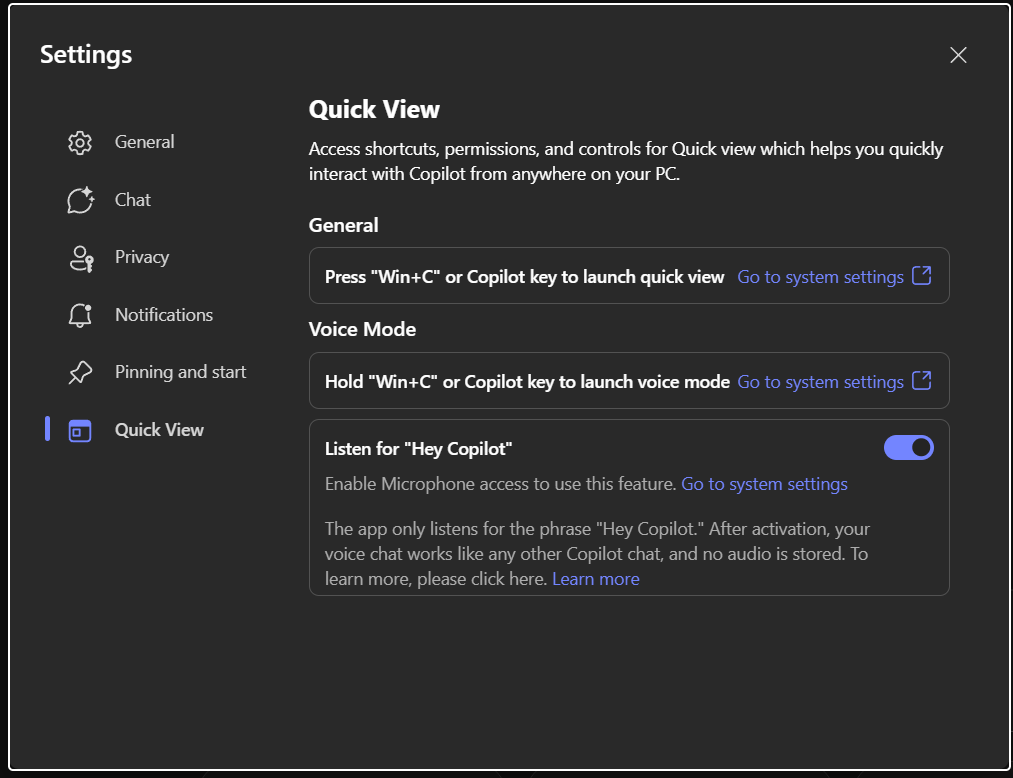
Microsoft is making “Hey Copilot” generally available for the Microsoft 365 Copilot app on Windows. This is a hands-free trigger phrase that starts a voice conversation. The big detail: it’s OFF by default, and users must enable it themselves in settings ( … menu that is next to your profile picture on bottom left corner of the M365 Copilot App).
Voice is one of the most “natural” interaction modes for Copilot, but it is also the one that raises most questions: is it always listening? Is audio stored? Can admins disable it?
From the Message Center details: it works locally for the wake word, and it is stated that no conversation audio is stored — but text transcripts are handled like other Copilot chats.
Rollout schedule
General Availability (Worldwide): begins end of February 2026 (so… this month).
Preview (Frontier) already started end of November 2025.
Important operational notes
No admin control to disable at tenant/group level (so you should prepare comms, not a policy).
English trigger phrase only (“Hey Copilot”), but once activated, chat can be in other supported languages.
Doesn’t activate if device is locked or another app is using audio.
My “what to do”
Tell users: it’s optional, you must turn it on, and it stops listening when you dismiss.
Remind people about microphone permissions and that this is for Copilot licensed users.
Copilot Chat upgrades inside Outlook + Agent Mode in Word/Excel/PowerPoint (for Copilot Chat users WITHOUT a Microsoft 365 Copilot license)
Message Center: MC1187671
Important first: this update is specifically for eligible Copilot Chat users who do NOT have a Microsoft 365 Copilot license. Microsoft even says: “There is no change for users with a Microsoft 365 Copilot license.” So if your organization mostly talks about “Copilot licensed users”, this one can be easy to misunderstand.
What Microsoft is adding
Microsoft is expanding Copilot Chat in Outlook so it can reason over more than a single email thread — it can include the entire inbox, calendar, meetings, and other enterprise data for that user (based on the message text).
At the same time, Microsoft is rolling out Agent Mode inside Word/Excel/PowerPoint and also Word/Excel/PowerPoint Agents that users can call from Copilot Chat (Tools menu or “@”).
✨This is adding quite a lot value to those who are using apps with Microsoft or Office 365 license but don’t have M365 Copilot license.
Rollout schedule (estimated)
Rollout is expected to complete late March 2026.
Outlook expanded reasoning started rolling out (Jan 20 update) and should complete “in the following weeks”.
Agent Mode in Excel and Word started rolling out (Feb 5 update), expected to complete “in the following weeks”.
MCP-based agents get rich interactive UI widgets inside Copilot Chat
Message Center: MC1227627
What Microsoft is adding
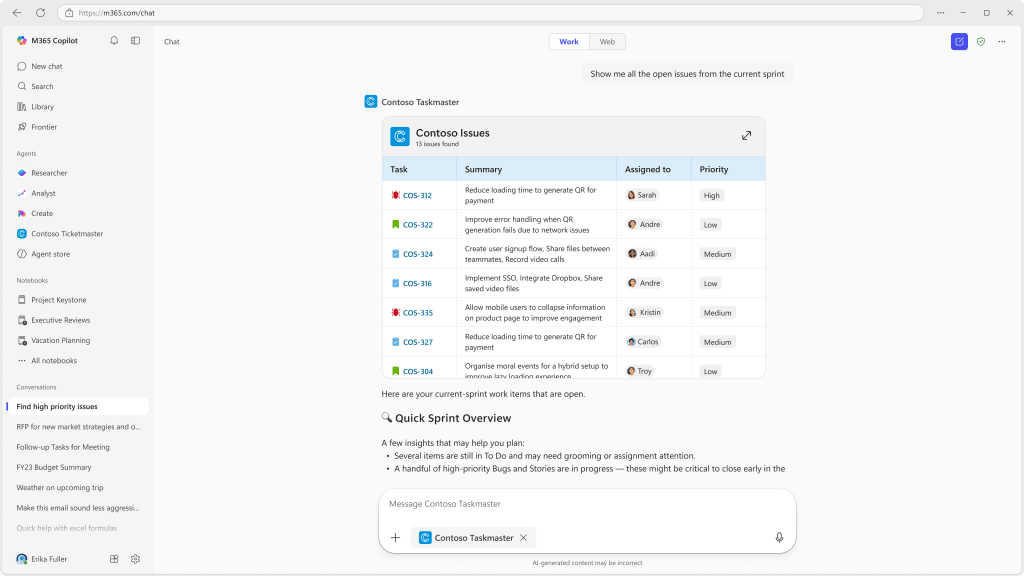
Microsoft is enhancing Model Context Protocol (MCP) based agents so they can show rich interactive UI widgets inside Copilot Chat — think buttons, selectors, parameter pickers, and other guided UI elements embedded directly in chat.
Why I care
This is one of those changes that looks “small” but changes user experience a lot. Most agents today are text-in/text-out. Widgets can make agents feel more like real apps: less prompt gymnastics, more structured choices, fewer errors.
Rollout schedule (estimated)
Public Preview: starts late February 2026, completes early March 2026
What changes for users
Users will see widgets when interacting with agents that implement them.
It should make agent interactions more predictable and faster.
What changes for admins
Admins still manage agents in Microsoft 365 Admin Center; existing controls remain.
Access can still be scoped via Entra ID groups.
2) Teams Events, Live Events retirement, and the Meet app
Teams Live Events retirement (and Graph API retirement)
Message Center: MC1226495
Microsoft is retiring Teams Live Events and the Microsoft Graph APIs used to create them on June 30, 2026. Events scheduled before that date keep working until February 28, 2027.
It is no longer possible schedule Live Events past June 30, 2026.
Rollout / timeline (estimated)
Jun 30, 2026: Live Events + Graph APIs retire
Feb 28, 2027: last day for already scheduled events to function
What to do now
Inventory where Live Events are used: Teams, Engage, Dynamics 365, custom Graph automation.
Start moving large broadcast scenarios to Teams town halls.
Update internal docs and training.
Engage is retiring “live events powered by Teams Live Events”
Message Center: MC1227085
What Microsoft is doing
Microsoft is removing the option to schedule Engage live events powered by Teams Live Events starting April 15, 2026. Already scheduled ones will still run until February 28, 2027.
Timeline
April 15, 2026: can’t schedule new Engage live events using Teams Live Events
Feb 28, 2027: support ends for already scheduled ones
What to do
Start using Engage events powered by Teams town halls instead.
Check internal comms templates and event guidance pages.
Redesigned Meet app: a unified Events experience (webinars + town halls + custom events)
Message Center: MC1227087 (Roadmap ID 547834)
What Microsoft is adding
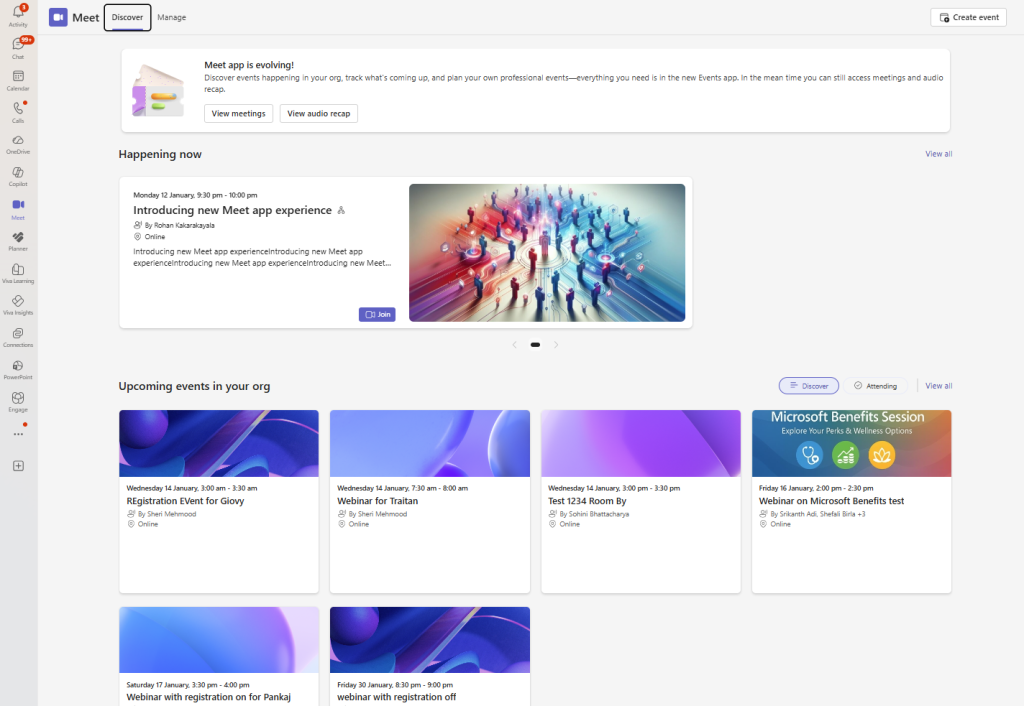
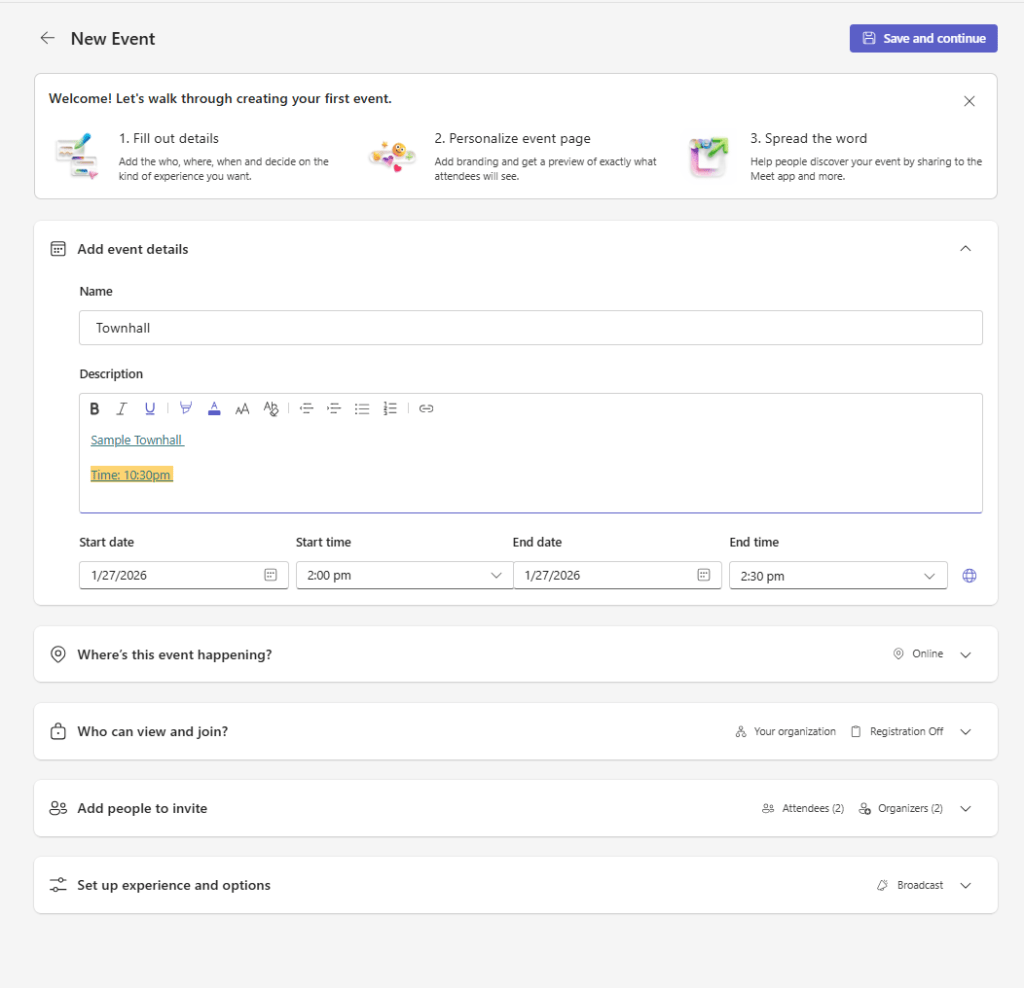
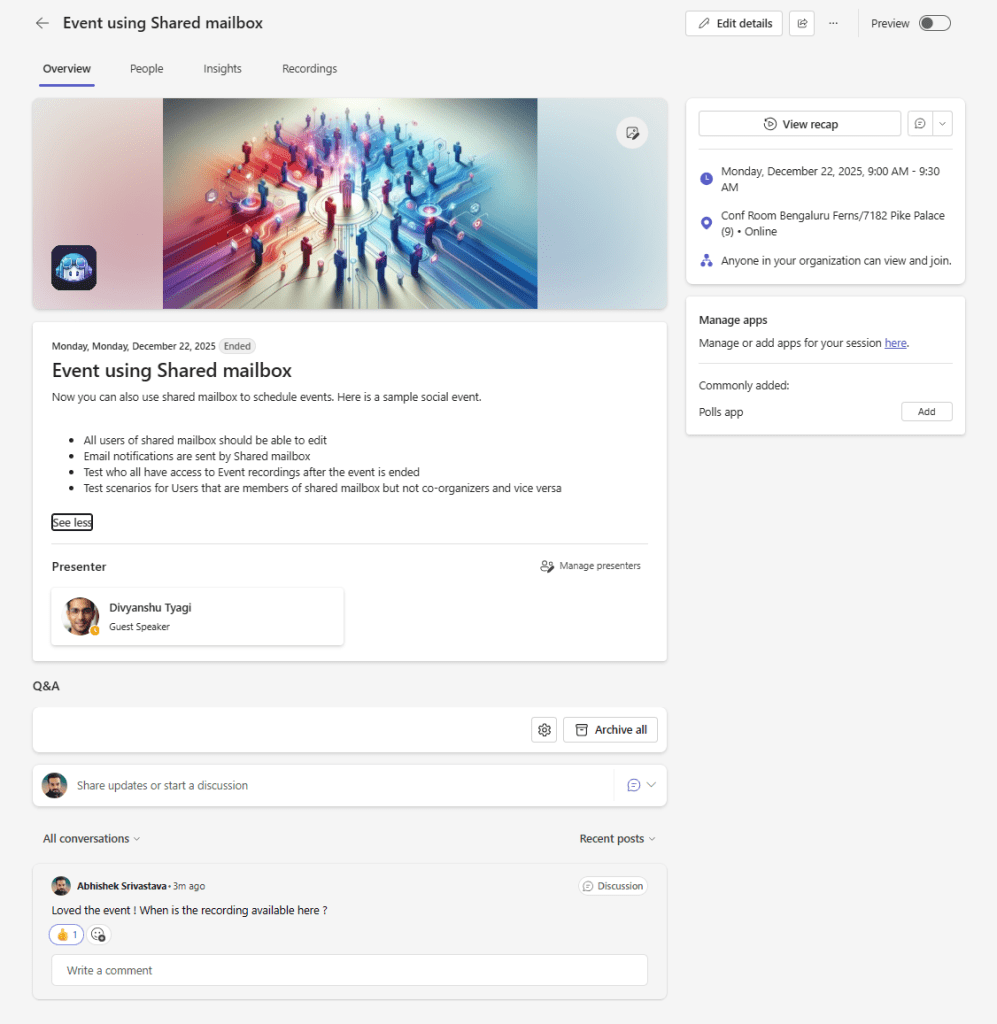
Microsoft is introducing a redesigned Meet app in Teams with a unified Events hub. The goal: one place to create, discover, and manage webinars, town halls, and custom events.
Rollout schedule (estimated)
Targeted Release: early Feb 2026 → mid-Feb 2026
General Availability: early Apr 2026 → late Apr 2026
What changes for users
A central Events hub (create/edit/track)
Simplified scheduling using templates
Event landing pages with Q&A and Polls
Scheduling with shared and delegate mailboxes
What to do
If you have Targeted Release users, prep them for UI change and capture feedback early.
Update internal instructions: where to click, what event type to use, what policy applies.
New request & approval experience for Microsoft agents in M365 admin center
Message Center: MC1134738 (Roadmap ID 494809)
What Microsoft is adding
Microsoft is rolling out a new workflow where users can request access to Microsoft-built agents directly from the Agent Store — even if the agent is currently unavailable due to org configuration. Admins manage approvals centrally from Copilot > Agents & connectors.
Rollout schedule (estimated)
Begins early March 2026
Completes end of March 2026
Key details
Applies only to Microsoft agents (not all third-party agents).
On by default, no setup required.
Admins can approve/reject at individual user level.
Change meeting organizer via new PowerShell cmdlet in Exchange Online
Message Center: MC1227623 (Roadmap ID 554937)
What Microsoft is adding
Microsoft is adding a PowerShell cmdlet that lets admins change the organizer of an existing meeting or meeting series in Exchange Online. This is great for long running series when someone changes role, goes on leave, or is offboarded.
Rollout schedule (estimated)
Worldwide/GCC: mid-May 2026 → late June 2026
GCC High/DoD: mid-May 2026 → late July 2026
Important behavior
Internal attendees: meeting gets updated silently, no re-RSVP needed.
External attendees: they receive two messages (end old series + invite new series), and may need to accept again.
Why I care
This solves a real pain point. I’ve seen many tenants with “orphaned” recurring meetings that nobody dares to touch. This makes it manageable.
What to do
Update your offboarding / role-change process: “transfer ownership of recurring meetings” becomes a real step.
Watch for public docs on the cmdlet name and parameters when Microsoft publishes them.
Licensing changes to Teams, Places and Teams Premium
Starting April 1st 2026:
End-user workplace coordination features from Microsoft Places available for licenses that include access to the calendar in Outlook and Teams (including Microsoft 365 E3, E5, Business Basic, Business Standard, and Business Premium; Outlook 365 E1, E3, and E5; Exchange Online; various Teams licenses; additional Microsoft 365 and Office 365 licenses)
Introduction of the renamed Teams Shared Space license with additional capabilities for space management and analytics for admins
Advanced events features that once required a Teams Premium license will be included in Teams Enterprise licenses. This includes advanced events capabilities for hosting large-scale, professionally produced events, expanded host controls, registration and attendee management tools, simu-live events, and immersive events functionality.
Advanced Teams town hall and webinar features available for all Teams Enterprise users for instances up to 3,000 attendees (10,000 attendee view-only experience)
Introduction of attendee pack add-on licenses for town hall events starting from 5,000 up to 100,000 attendees
Immersive events are included with a Teams Enterprise license at no extra cost.
Microsoft Enterprise Content Delivery Network (eCDN) is now included with a Teams Enterprise license
Teams Premium and benefits it adds on advanced communications, security, and intelligence capabilities will continue to be available. Organizers with an active Teams Premium license purchased before the April 1, 2026 may continue to host events with up to 100,000 attendees until their current Teams Premium term ends. After April 1, 2026, once a customer’s Teams Premium term expires, events above 3,000 attendees will require an Attendee Capacity Pack sized to the desired attendee capacity.
Teams Premium will continue to have
Security and meeting controls
Intelligent calling features
Personalized meeting experiences
Advanced Bookings and virtual appointment capabilities
Intelligent meeting features
Read more about these licensing updates from https://techcommunity.microsoft.com/blog/microsoftteamsblog/licensing-updates-extend-access-to-advanced-capabilities-in-microsoft-teams-and-/4488312
Sharing is Caring! #CommunityRocks
Aiheeseen liittyy
Published by Vesa Nopanen
Vesa “Vesku” Nopanen, Principal Consultant and Microsoft MVP (Microsoft 365 and Azure AI Foundry) working on Future Work at Sulava MEA.
I work, blog and speak about Future Work : AI, Microsoft 365, Copilot, Loop, Azure, and other services & platforms in the cloud connecting digital and physical and people together.
I have 30 years of experience in IT business on multiple industries, domains, and roles.
View all posts by Vesa Nopanen
I’ve been playing around with OpenClaw lately, and like most of you, I was initially blown away. An open-source AI agent that lives on your local machine and can handle your emails, book your flights, and even clean up your messy desktop? It sounds like the ultimate productivity dream.
But as the old saying goes: if it looks too good to be true, check the code.
I’ve been digging into some alarming reports from security researchers, and it turns out that OpenClaw is currently facing a massive “malware infestation” that could turn your helpful AI assistant into a digital Trojan horse.
What is OpenClaw anyway?
For those who missed the hype, OpenClaw is a powerful AI agent designed to run locally. Unlike ChatGPT, which stays in a browser tab, OpenClaw has “hands.” You can link it to your WhatsApp, Telegram, or iMessage and give it permissions to move files, run scripts, and manage your calendar. It’s incredibly capable, but that’s exactly where the danger lies.
The ClawHub Crisis: 400+ Malicious “Skills”
The real trouble started in the ClawHub marketplace, the place where users go to download “Skills” (plugins) to give the AI new abilities. According to a report by OpenSourceMalware, hackers have flooded the market with over 400 malicious plugins in just a few days.
Here’s how they get you:
The “Bait”: You see a skill that promises to “Automate Crypto Trading” or “Manage API Keys.”The “Switch”: While the AI is “helping” you, the background script is actually scraping your browser passwords, SSH access keys, and crypto wallet seeds.The “Stealth”: Many of these are hidden in simple Markdown files. They contain hidden instructions that trick the AI into executing commands that a human user would never notice.
Jason Meller, VP of Product at 1Password, put it perfectly: he described the OpenClaw skill system as a “direct attack surface.” One of the most downloaded plugins was recently found to be redirecting users to malicious links that forced the AI to run unauthorized commands on the host computer.
My Take: The Price of Total Control
I’ve always advocated for “Local AI” because I like keeping my data away from big tech servers. But this OpenClaw situation is a reality check. When we give an AI agent permission to “Read/Write Files” and “Run Scripts,” we are essentially giving a stranger the keys to our house.
I was shocked to see how easy it was for these bad actors to bypass initial checks. The developer, Peter Steinberger, is now scrambling to fix this. His latest move? Requiring anyone who uploads a skill to have a GitHub account at least a week old. Honestly? That feels like putting a screen door on a submarine. It’s a start, but it won’t stop a determined hacker.
How to Stay Safe
If you’re using OpenClaw (or any local agent), please, be paranoid.
Don’t over-permission: Does your AI really need access to your entire root directory to manage your emails? Probably not.Audit the source: If a skill has zero reviews or comes from a brand-new dev, stay away.Use a Sandbox: If you can, run these agents in a virtual machine or a containerized environment where they can’t touch your sensitive personal files.
Would you trust an AI agent with full access to your computer if it meant saving 5 hours of work a week, or is the security risk just too high for you?
Decentralized Finance (DeFi) enables individuals to lend, borrow, and earn interest on their cryptocurrency holdings without relying on intermediaries like banks. This is your guide to DeFi lending and borrowing, shedding light on how these processes work and the popular platforms facilitating them.
In this swiftly evolving environment, factors BTC price changes have a substantial influence over the dynamics of DeFi platforms. Keep a keen eye on the many market variables as they intricately shape the landscape of decentralized finance.
What Is DeFi Lending?
DeFi lending involves users providing their cryptocurrencies to lending platforms in exchange for interest payments. By locking their assets as collateral, lenders enable borrowers to access these funds and pay interest in return.
The smart contracts governing these transactions ensure that everything is executed autonomously, eliminating the need for traditional financial institutions. DeFi lending offers attractive interest rates compared to traditional savings accounts, making it an appealing option for those looking to earn passive income on their crypto assets.
What Is DeFi Borrowing?
On the other side of the equation, DeFi borrowing allows individuals to obtain funds by pledging their cryptocurrency as collateral. Borrowers can access a diverse array of cryptocurrencies without needing to undergo cumbersome credit checks or deal with paperwork.
However, borrowers must be cautious, as failing to repay the borrowed amount, along with accrued interest, can result in the loss of their collateral. It is essential for participants in DeFi borrowing to understand the risks involved and manage their positions judiciously.
Factors To Consider Before Lending or Borrowing
Before engaging in lending or borrowing within the DeFi sphere, it is essential to evaluate critical factors. Consider factors such as interest rates, collateral requirements, and associated risks to make informed decisions. Understanding these key considerations will help you navigate the world of decentralized finance effectively.
Interest Rates
Understand the interest rates offered by DeFi platforms, as they can fluctuate based on market conditions and platform-specific dynamics.
Collateral
Be mindful of the collateral requirements for borrowing and lending to ensure you have enough assets to secure your positions.
Risks
Recognize the risks associated with DeFi, including smart contract vulnerabilities, market volatility, and potential liquidation events.
User Experience
Evaluate the user interface and security features of the DeFi platform to ensure a seamless and secure experience.
Regulatory Environment
Stay informed about the regulatory landscape surrounding DeFi to navigate legal implications seamlessly.
Tips for Maximizing Your DeFi Experience
To enhance your DeFi journey, strategic maneuvers can make a significant impact. Diversify your assets, conduct thorough research, and implement robust risk management strategies to optimize your decentralized finance experience efficiently. By following these tips, you can navigate the complexities of DeFi with prudence and foresight.
Diversification
Spread your assets across different DeFi platforms to minimize risks and maximize opportunities.
Research
Conduct thorough research on projects and platforms before committing your assets to make informed decisions.
Risk Management
Set clear risk management strategies, including stop-loss orders and position sizing, to protect your investments.
Stay Informed
Remain aware of market trends, news, and developments to make informed decisions.
Community Engagement
Participate in DeFi communities to learn from peers, share insights, and stay updated on best practices.
Entering the World of DeFi with Confidence
DeFi presents a revolutionary opportunity for individuals to engage in lending and borrowing activities in a decentralized and permissionless environment. While the allure of higher yields and accessibility is appealing, it is essential to approach DeFi with caution and due diligence.
Factors such as interest rates, collateral requirements, risks, user experience, and regulatory considerations should be thoroughly assessed before embarking on your DeFi journey. By following prudent strategies, staying informed, and engaging with the DeFi community, you can effectively navigate the dynamics of decentralized finance.
With the right approach and a solid understanding of the factors at play, you can unlock the benefits of DeFi while mitigating risks along the way.
Crypto markets entered 2026 under sustained pressure rather than sudden collapse. What seemed like routine volatility in late 2025 turned into a major drawdown. In just a few months, more than $2 trillion in value disappeared. Bitcoin dropped almost 50% from its high, and most altcoins lost even more. This was not just panic; it showed that many investors were withdrawing funds from risky assets.
NFTs were hit hard. They depend on available crypto funds, investor trust, and active trading. All of these weakened at the same time. Unlike earlier cycles, NFTs had no momentum before the crash. Trading volumes were already low, too many projects were competing, and buyers were picky.
This downturn showed how closely linked crypto and NFTs really are. Even though NFTs are often said to be independent, their prices usually follow crypto trends. When crypto slows down, NFTs usually struggle too. To understand the crash, it helps to look at what caused money to leave the whole digital asset market.
The Core Reasons Behind the 2026 Crypto Crash
Risk Appetite Vanished Fast
Early in the year, markets became more cautious. Investors pulled back from risky assets and focused on keeping their money safe. Crypto started acting less like a hedge and more like a high-risk tech investment. When stocks dropped, crypto prices fell too.
Fading excitement for AI-related stocks sped up this change. Many investment funds owned both SaaS, AI, and digital assets. When earnings forecasts dropped, managers reduced risk in all these areas at once. Crypto was affected just like the rest.
Technical issues made things worse. Bitcoin dropped below important price levels that traders monitor. This set off automatic selling, margin calls, and forced sales. Prices fell faster than the underlying reasons changed, which made people more afraid and losses bigger.
Institutions Reversed Course
Big investors played a major role in the last market boom, and they also influenced the downturn. Spot Bitcoin ETFs saw steady withdrawals after months of new investments. Funds that got in early decided to cut back when prices became more unstable.
Public companies with Bitcoin holdings felt pressure from shareholders and analysts. Losses hurt their financial reports. Risk teams took action. Big investors sold during the downturn, taking away the liquidity that smaller traders needed.
When big investors leave, it matters because they move large amounts of money. Regular investors often panic after prices drop, but it’s usually the big sellers who start the decline. Once these large outflows began, prices fell much faster than most people expected.
Macroeconomic Pressure Did the Rest
Wider economic conditions did not help. Inflation stayed high, and interest rate cuts were delayed. The U.S. dollar strengthened, which usually hurts riskier investments like crypto.
Political and global tensions made things even more uncertain. Trade disputes, conflicts, and election worries made investors less willing to make long-term bets. Crypto needs extra money in the system and positive feelings, but both dropped at the same time.
Markets don’t always need bad news to drop. Confusing signals and slow updates can do even more harm. Crypto prices responded to this uncertainty by falling quickly instead of adjusting slowly.
Internal Crypto Weaknesses Became Visible
During the market rise, investors quietly took on more leverage. Trading in derivatives grew faster than regular trading. When prices started to fall, forced sales happened quickly.
Low trading volume in altcoins made every price move bigger. Even small sell orders had a big effect. Security problems made people question if the technology was reliable. Each hack reminded investors that technical risks are still real.
Bitcoin did not act as a safe asset. It fell along with stocks instead of protecting investors. This performance made people question old beliefs and rethink how risky Bitcoin really is.
The NFT Market Entered 2026 Already Struggling
NFTs entered the downturn already in a weak position. Their total market value had dropped a lot from previous highs. Trading was even lower, and many collections went days without any real offers.
Speculation used to hide deeper problems. While prices were rising, few people worried about long-term value. When the excitement faded, the weaknesses became clear. There were too many NFTs and not enough buyers.
The biggest problem was that money was spread too thin across thousands of NFT collections. This meant no single collection had enough support. When buyers left, prices dropped much faster than in markets with fewer options.
How the Crypto Crash Hit NFTs Directly
Double Exposure Hurt Fast
NFT prices are tied to the value of cryptocurrencies. When ETH or SOL goes down, NFTs lose value two ways: first in the token price, and then again when converted to dollars.
Buyers also had less money to spend. Traders who used to put their profits into NFTs now tried to protect what they had left. Even dedicated collectors started to hesitate.
This hesitation stopped the market. More people tried to sell, but buyers disappeared. It became hard to figure out what NFTs were really worth.
Platforms and Projects Shut Down
Several NFT platforms shut down or moved away from NFTs. Centralized marketplaces showed they were fragile when trading slowed. Users realized that where and how they store their NFTs still matters.
Event cancellations were another warning sign. Conferences stopped, brand deals faded, and teams either laid off staff or stopped working on projects.
These shutdowns hurt trust in the market. Markets need confidence as much as money. When platforms vanish, people start to doubt if NFTs can last.
Speculation Finally Broke
The crash revealed a tough reality: many NFTs were made just for trading. They didn’t offer any real use, income, or ongoing involvement.
Projects that relied on passive owners had a hard time. Groups focused on quick trades couldn’t survive long downturns. When prices stopped rising, people lost interest.
This change forced a reset. NFTs now had to prove their worth beyond mere speculation.
What Past Crypto Crashes Teach About NFTs
The 2018 Cycle
NFTs went largely unnoticed during the 2018 downturn. Activity slowed, but the market was still small. Most creators focused on building the basics rather than worrying about prices.
That time turned out to be important. Teams who kept working set the stage for future growth. The market recovered slowly, but the fundamentals strengthened.
Patience was more important than hype.
The 2022 Collapse
The 2022 crash was a big test for NFTs. Prices dropped by 70 to 95 percent. Many collections disappeared, but a few managed to adapt.
Projects with strong communities, good licensing, or new products survived. Those that only depended on price stories failed.
The lesson was clear: having enough money, good execution, and the ability to adapt are what help projects survive.
Patterns Repeat
Crypto usually recovers first, and NFTs catch up later. Money tends to focus on fewer projects instead of spreading out.
Wild speculation rarely comes back the same way. Each cycle cuts out the distractions and rewards careful planning. The projects that survive are stronger, fewer, and more focused.
Crypto Recovery Expectations for 2026
Most signs indicate that crypto will bottom in early 2026. Selling slowed down. Prices were still jumpy, but the market became more stable.
Bitcoin will probably lead any recovery. Big investment products are still active. The basic systems are still in place. As policies change, more money should flow into the market.
The recovery might not be smooth. At first, the market will likely consolidate, and momentum will come later. History shows that patience beats trying to time the market aggressively.
How NFT Recovery Is Likely to Unfold
NFTs usually recover after crypto does, and that pattern is still true. Early signs show that only some projects are getting attention, not the whole market.
Gaming NFTs became more popular because they have real uses. Projects linked to physical goods, intellectual property, or special access kept people interested. Pure speculation stayed low.
Most NFT collections will not bounce back. Money is moving into fewer projects that have a clear value. Only the strongest will survive, and that will shape how people see the market.
Projects That Endured the Downturn
Some NFTs changed to survive tough times. Brands started making toys, licensing deals, or media content. They found new ways to make money outside of crypto.
Gaming projects that focused on keeping users involved, not just on token prices, kept their communities. Projects that put their communities first did better than those that relied on passive owners.
These examples show a change. NFTs do well when they offer participation, ownership, or access, not just when they are rare.
Long-Term Meaning of the 2026 Crash
This downturn seems like a lasting change. Speculative trading dropped sharply. Low-quality projects disappeared. The basic systems got stronger under pressure.
NFTs are now being used more for practical purposes. Digital ownership, programmable rights, and token-based access have become more important.
Future growth will probably come from how NFTs are used and integrated, not from hype. Collectibles are still around, but they no longer define the whole market.
What Market Participants Should Take From This Cycle
Crypto crashes hurt those who take too many risks but reward those who can adapt. NFTs that make it through this period gain a level of trust that a bull market can’t provide.
The 2026 downturn is painful, but it also pushes the market to grow up. History shows that those who adapt now will shape the future.
Treasury Secretary Scott Bessent identified Hong Kong as a sandbox where China may be experimenting with digital assets to bypass the American financial system.Speculation suggests Beijing could be developing a blockchain-based asset backed by gold reserves to create a stable alternative to the U.S. dollar.The Treasury Department views these maneuvers as an attempt by China to offer global markets a store of value that is immune to U.S. sanctions and monetary policy.
U.S. Treasury Secretary Scott Bessent told the Senate Banking Committee that China might be working on digital assets backed by gold instead of the yuan. The move could challenge the dominance of the U.S. dollar in global finance.
Bessent made remarks during a session on Capitol Hill where he answered questions about how foreign adversaries are using blockchain technology. The topic of China’s digital strategy came up when Senator Cynthia Lummis asked if Beijing is using digital assets to weaken the United States’ position in the global economy.
Bessent said, “We don’t know that for sure… They have a very large sandbox in Hong Kong, and the [Hong Kong Monetary Authority] is actively traveling the world, looking at different mechanisms.”
Senate banking testimony
Bessent also acknowledged that officials don’t have conclusive evidence, but there’s considerable speculation that China is considering options beyond its own currency for support.
He specifically mentioned the Hong Kong Monetary Authority and the travels of its representatives to study different financial models. Bessent stated he wouldn’t be surprised if these efforts led to a gold-backed asset, given the current high level of activity in Hong Kong.
Hong Kong as a testing ground
Choosing Hong Kong for these developments is a key part of China’s wider financial strategy. The Hong Kong Monetary Authority allows Beijing to test financial innovations and blockchain designs without immediately affecting the mainland economy or involving central authorities directly.
It is a system that provides a degree of plausible deniability to China as it looks to investigate digital asset structures that can eventually bypass banking systems that are under Western control. In contrast to the existing digital yuan, a central bank digital currency strictly linked to the value of the RMB, a gold-backed asset would provide a different way to store value.
Market and geopolitical context
Bessent’s remarks came amid volatility in both traditional and digital markets. Gold recently hit historic highs of over $5,600 per ounce before seeing a downturn. Meanwhile, the digital asset sector in the United States continues to face regulatory uncertainty.
During the hearing, Bessent also discussed other geopolitical developments, noting that Iranian leaders are moving their funds out of the country quickly. He also expressed support for the Clarity Act, highlighting the challenges of applying capital gains taxes to the intricate cryptocurrency market.
Global implications
If China successfully introduces a digital asset backed by gold, the impact on global finance could be huge. The asset would provide international traders with a stable option that is insulated from U.S. monetary policy and economic sanctions.
As China continues to use its extensive sandbox in Hong Kong to develop these mechanisms, the U.S. Treasury remains focused on how these technologies could change the balance of power in international trade and finance.
Also Read: Hong Kong to Start Issuing Stablecoin Licenses to Issuers
Disclaimer: The information researched and reported by The Crypto Times is for informational purposes only and is not a substitute for professional financial advice. Investing in crypto assets involves significant risk due to market volatility. Always Do Your Own Research (DYOR) and consult with a qualified Financial Advisor before making any investment decisions.
Ethereum co-founder Vitalik Buterin urges a halt to creating more copycat EVM chains and Layer 1 networks, arguing that Ethereum’s mainnet is scaling efficiently with low transaction fees and surging user activity. Monthly active addresses on Ethereum’s mainnet have doubled from 7 million to 15 million, while Layer 2 user numbers have dropped by 50% to 30 million, highlighting a consolidation trend amid over 55 L2 rollups and upgrades like the Fusaka hard fork. Instead of forking existing protocols, Buterin recommends prioritizing genuine advancements in DeFi, such as improved composability, privacy via zero-knowledge proofs, and real-world integrations like tokenized assets.
In a series of pointed posts on X, Ethereum co-founder Vitalik Buterin has called for a shift away from the proliferation of copycat Ethereum Virtual Machine (EVM) chains and new Layer 1 (L1) networks.
The Ethereum co-founder and developer argues that the blockchain ecosystem has reached a point of diminishing returns from such repetitive development. “Build something that brings something new to the table,” he stated in a latest post on X.
Buterin links the creation of yet another EVM chain with an optimistic bridge to Ethereum to the overused practice of forking DeFi protocols like Compound for governance tweaks. “Something we’ve done far too much for far too long, because we got comfortable, and which has sapped our imagination and put us in a dead end,” he wrote.
Buterin’s evolving critique on alternative L1s and L2s
Buterin emphasized that Ethereum’s L1 is already scaling effectively, with low fees and projected gas limit increases set to deliver ample EVM-compatible blockspace. This, according to him, reduces the necessity for additional generic chains that offer little beyond what exists. “We don’t friggin need more copypasta EVM chains, and we definitely don’t need even more L1s,” he says, addressing newly launching projects with no such innovations.
His view builds on a similar concern Buterin raised just a day earlier on February 3. In that post, he declared that the original “rollup-centric roadmap” for Ethereum scaling, where L2s act as “branded shards” extending the main network, no longer makes sense.
Echoing Buterin’s views, Michael Egorov notes that research in the field of Zero Knowledge Proofs have helped make Ethereum efficient enough. “Maybe around a year ago, I wrote that L2s are probably a bad way to scale Ethereum, and that there must be a different approach. Interestingly, Ethereum also received the same criticism from the Solana community,” Egorov stated in an email, exclusively shared with The Crypto Times.
Notably, Ethereum’s base layer has scaled directly, with the transaction fees on the network shrinking to record lows despite increased activity. Monthly active addresses on Ethereum’s mainnet surged from 7 million to 15 million in recent months, even as L2 user numbers dropped by about 50% to around 30 million.
Why don’t we need more L2 and EVM chains?
Buterin’s rationale centers on saturation and stagnation. The Ethereum ecosystem has seen an explosion of L2s and EVM-compatible chains in recent times, many of which replicate existing architectures without adding meaningful value. This “copy-paste” approach, Buterin says, has limited creativity and led to fragmented liquidity across over 55 L2 rollups.
With Ethereum’s L1 now processing transactions efficiently, thanks to upgrades like the Fusaka hard fork in late 2025, which boosted the gas limit and enabled parallel processing, the need for L2s purely as scaling tools has diminished.
“L2s are generally not great for DeFi because the power of DeFi comes from composability, and composing different pieces across multiple L2s is extremely clunky, not atomic and vulnerable,” Egorov says, “We only need to remember the many cases of bridge hacks and unexploited vulnerabilities that the market has seen reported in the past.”
Experts predict further enhancements on Ethereum in 2026, including the Glamsterdam upgrade, which could triple the gas limit to 200 million. This direct scaling means L2s risk becoming redundant if they don’t differentiate. Buterin also noted that some L2s may never advance beyond “stage 1” decentralization due to technical hurdles or regulatory needs, further eroding their role as true Ethereum extensions.
The current EVM and L1/L2 landscape
The current blockchain landscape reflects a clear divide between robust L1 foundations and specialized L2 enhancements. Ethereum remains the dominant L1 for settlement and data availability, hosting over 51% of stablecoin issuance and nearly 90% of the total tokenized assets.
Solana, another key L1, excels in high-throughput applications, processing 1,400 transactions per second at minimal fees, with a 78% surge in developer interest and 186% revenue growth year-over-year. Solana’s appeal in easy onboarding marks it one of the most popular blockchain in the current market, major thanks to PumpFun.
On the L2 side, the market has matured into full ecosystems rather than experimental layers. Combined, L2s handle nearly 2 million daily transactions, which is double than Ethereum’s mainnet volume.
However, data from TokenTerminal indicates that many L2s are struggling to survive amid consolidation. Base, controlled by Coinbase, has overtaken Arbitrum in DeFi TVL, but its centralized nature raises questions about long-term alignment with Ethereum’s ethos.
What DeFi should focus on instead?
Rather than chasing more chains, Buterin urges builders to prioritize genuine innovation. He urges to focus on protocols with lasting utility, like decentralized exchanges (DEXs) and stablecoins, which people actually use and have practicality. “Ethereum L1 is the base layer of the future financial system – and everything else should be built with that reality in mind,” Egorov pushes.
This pivot aligns “vibes with substance,” ensuring projects’ public image reflects their technical ties to Ethereum. As regulatory clarity grows, with U.S. bipartisan crypto legislation expected in 2026, DeFi’s focus on real-world integration, like tokenized assets and payments, could drive adoption. Ultimately, Buterin’s message is clear: the era of lazy forks is over; DeFi must innovate or fade.
Also read: All Ethereum Private Keys Are Public—Good Luck Finding One
Disclaimer: The information researched and reported by The Crypto Times is for informational purposes only and is not a substitute for professional financial advice. Investing in crypto assets involves significant risk due to market volatility. Always Do Your Own Research (DYOR) and consult with a qualified Financial Advisor before making any investment decisions.