Metaverse

Home Metaverse Page 28

Playnance Surpasses $2M in Fiat Payouts as G-Token Launch Approaches | NFT News Today

0
Playnance Surpasses M in Fiat Payouts as G-Token Launch Approaches | NFT News Today


Playnance has surpassed $2 million in real cash payouts through its “Be The Boss” program, marking a milestone for its on-chain ecosystem ahead of the upcoming G-Token launch. The company said the growth reflects expanding participation across its consumer platforms and infrastructure.

Key Takeaways

Playnance reports $2M+ in fiat payouts through Be The Boss

Active Bosses now at 2,809

The ecosystem has generated $5.3M+ total revenue to date

Playnance reports ~1.5M on-chain transactions/day and 10,000+ DAU

G-Token is positioned as a built-in utility layer for interactions and settlement

Be The Boss Tied to Live Platform Activity

Playnance describes Be The Boss as a structural layer that lets participants take an active role in platform-level economics tied to real user activity. The company contrasts this with speculative models driven by projected growth, saying Be The Boss is integrated into live infrastructure.

That infrastructure, Playnance says, currently supports approximately 1.5 million on-chain transactions per day and more than 10,000 daily active users. User activity is recorded on-chain through a non-custodial system, while the onboarding process hides blockchain complexity from users.

Shared Wallet Drives Ecosystem Activity

Playnance points to consumer platforms including PlayW3 and Up vs Down as examples of where this activity originates. As users interact with these products, transaction flow moves through a shared wallet and infrastructure layer.

Be The Boss is structured around that activity, tying participation directly to platform performance instead of operating as a standalone rewards program. The increase to 2,809 Bosses, more than double the previous level, according to the company, comes ahead of the G-Token rollout.

G-Token as the Ecosystem’s Core Utility Token

Playnance’s upcoming G-Token is described as the “core utility token” intended to power and unify activity across its live on-chain platforms.

The company describes G-Token as built directly into its platform mechanics rather than operating as a standalone digital asset. Integrated across its applications, the token supports interactions and settlement flows while connecting products, transaction activity, and user participation within a shared on-chain system.

“Our focus has always been on building real systems that operate at scale before talking about them,” said Pini Peter, CEO of Playnance. He added that the team designed the token to serve a working ecosystem, not the other way around, pointing to years of infrastructure development and live user activity behind the launch.

Playnance plans to expand its ecosystem further, strengthening the connection between its consumer apps, infrastructure, and the G-Token.


Source link

Why Your Futuristic Robot is Secretly Controlled by a Human | Metaverse Planet

0
Why Your Futuristic Robot is Secretly Controlled by a Human | Metaverse Planet


I have to admit, I am a total sucker for a good robotics demo. Every time a massive tech company drops a slick, highly-produced video of a humanoid robot folding laundry, making coffee, or doing backflips, I catch myself thinking, “Wow, the future is actually here.” We are constantly being sold the narrative that these machines are fully autonomous, powered by cutting-edge AI that thinks and acts completely independently.

But let’s pause and take a breath. I just finished reading a comprehensive new report from MIT (Massachusetts Institute of Technology), and it completely shattered that futuristic illusion.

It turns out, the “AI revolution” in physical robotics is hiding a massive, industry-wide secret. Behind those impressive robotic eyes, there is very often a real, sweating human being wearing a VR headset, pulling the strings like a high-tech puppeteer. Let’s dive into why the robotics industry is faking it until they make it, and what this means for you and me.

The “Wizard of Oz” Problem in Modern Robotics

The MIT report highlights a practice that is an open secret among robotics engineers but heavily concealed from the general public: teleoperation.

When we see a robot flawlessly navigating a messy kitchen on stage at a major tech expo like CES, we assume the robot’s “brain” is doing all the heavy lifting. In reality, the MIT study points out that many of these highly publicized demos are strictly controlled by off-site human operators.

The Deception: Companies present these robots as independent, intelligent entities to impress investors and go viral on social media.The Reality: They are essentially highly advanced, incredibly expensive remote-controlled cars.

I find it fascinating—and a bit frustrating—how aggressively the industry markets “autonomy” when the technology to safely navigate the unpredictable chaos of a real human home just isn’t there yet.

The 1X Technologies Controversy: Honesty Over Hype

To truly understand this dynamic, we need to look at 1X Technologies. When they recently announced their $20,000 humanoid robot, Neo, they did something almost unheard of in this space: they told the truth.

1X openly stated that if Neo gets confused or encounters a task it doesn’t understand, a human operator will remotely log into the robot to assist it. At the time, tech commentators criticized them. Why would I pay $20,000 for a robot that doesn’t even know how to work by itself? But as the MIT report proves, 1X wasn’t falling behind the competition; they were just the only ones being transparent. Here is how their hybrid system actually works:

An operator in a remote center puts on a Meta Quest 3 VR headset.They see exactly what the robot sees in real-time.They move their own arms and hands, and the robot mimics those movements perfectly in your living room to complete the chore.

While I appreciate the honesty from 1X, learning about the mechanics of this system immediately set off alarm bells in my head regarding our personal data.

The Ultimate Privacy Nightmare?

Let’s be brutally honest for a second. If I buy a humanoid robot to help around the house, I expect it to be a closed system. The idea of teleoperation introduces a massive, glaring privacy flaw.

If your robot gets stuck while picking up laundry in your bedroom, and a remote worker logs in to help… that stranger is now looking at the inside of your home through the robot’s cameras. * Who are these operators?

How secure is the video feed?What stops a bad actor from hacking the teleoperation feed and literally walking around your house remotely?

These aren’t paranoid sci-fi questions anymore; this is the reality of the business model currently being built. Until companies can guarantee 100% on-device processing without human intervention, putting one of these in a private space feels like an enormous risk.

The Hidden Labor Force Training the AI

The MIT report also sheds light on another uncomfortable truth: how these robots are “learning” in the first place.

To train an AI to understand physical movement, you need massive amounts of motion data. And where does that data come from? Low to middle-income workers doing exhausting, repetitive physical labor.

Take Tesla’s Optimus robot, for example. To teach Optimus how to pick up a box or walk across a factory floor, human workers wear specialized motion capture (mocap) suits and VR headsets. They work long shifts, repeatedly performing the exact same mundane tasks, so the AI can record their joint movements and learn to mimic them.

It is ironic, isn’t it? We are building robots to save humans from physical labor, but to get there, we are currently relying on an invisible army of human workers performing intense physical labor just to generate the training data.

Will Robots Ever Be Truly Autonomous?

So, is the dream of the autonomous robot dead? Not exactly. The gap between controlled demo environments and the unpredictable chaos of your living room is huge, but the industry is actively trying to close it.

The next massive leap is something called World Models. Just like Large Language Models (LLMs) like ChatGPT ingest the entire internet to understand text, World Models ingest massive amounts of internet video to understand physics, gravity, and human behavior.

1X and other startups are aggressively pushing for these software updates. The goal is that eventually, the robot will have watched enough videos of humans doing dishes that it won’t need a teleoperator to step in. But according to experts, standardizing this level of AI will take years. Until then, teleoperation is going to be the industry norm, not the exception.

Reading this MIT report completely changed how I look at the robotics industry. It reminded me that we always need to look past the slick marketing and ask the hard questions about how the technology actually works. The next time you see a viral video of a robot doing parkour, just remember: there is probably a very stressed-out guy with a joystick just out of frame.

But I want to turn this over to you. Knowing that a human operator might need to remotely access your robot’s cameras to help it function, would you still allow a humanoid robot into your home? Let me know your thoughts in the comments, I really want to see where people draw the line on privacy!

You Might Also Like;


Source link

OpenLedger Launches x402, Turning APIs And Data Into Autonomous Revenue Assets

0
OpenLedger Launches x402, Turning APIs And Data Into Autonomous Revenue Assets


In Brief

Revolutionary “402 Payment Required” standard enables machine-to-machine micropayments at inference-level, powering the autonomous AI economy predicted to reach $200B by 2034.

OpenLedger Launches x402, Turning APIs And Data Into Autonomous Revenue Assets

OpenLedger is launching x402, the world’s first payment protocol that transforms every API endpoint, dataset, and compute resource into an autonomous revenue-generating asset. The protocol leverages HTTP status code 402 (“Payment Required”) to enable a new category of economic actor: machines that own their outputs, price their services, negotiate terms, and settle transactions, all without human intervention but with complete human accountability through cryptographic verification.

The announcement positions OpenLedger at the intersection of two massive technological shifts: autonomous AI agents are exploding from $7.55 billion in 2025 to a projected $199 billion market by 2034, while the current AI economy faces an existential crisis. Trust in AI companies has plummeted 15 points in five years to just 35% in the U.S. Major lawsuits against OpenAI and Google expose systematic failures in attribution. Recent Wharton research reveals AI trading bots spontaneously forming price-fixing cartels without explicit programming. And perhaps most concerning, AI models generate billions in revenue using data from millions of contributors who receive nothing.

x402 makes every computational interaction an economic event. When an AI agent calls a model endpoint, the system returns “402 Payment Required” until payment is received. The moment payment clears, inference executes. Every transaction is recorded on-chain with complete attribution lineage, creating an auditable record of who contributed what, when, and for how much.

“The AI economy is growing exponentially, but it’s built on broken economics,” said Ram, Core Contributor at OpenLedger. “We’re building the economic operating system for machines. For the first time, AI agents can participate not as tools designed by humans, but as economic actors in their own right. x402 makes it possible for two AI agents to transact directly, no API keys, no custodians or friction, just instant, verifiable, autonomous commerce.”

x402 unlocks three transformative capabilities: model endpoints that monetize themselves automatically at the inference level, GPU resources that price and sell compute in real-time without subscriptions, and AI agents that can hire, pay, and transact with each other completely autonomously. Every interaction, whether a model inference, a compute request, or an agent-to-agent negotiation, generates on-chain revenue with cryptographic attribution tracking.

OpenLedger’s technical roadmap directly addresses the infrastructure gaps exposed by recent Federal Reserve warnings about AI-driven market instability and Congressional research on algorithmic collusion: Phase 1 establishes cross-chain interoperability through LayerZero and Stargate while launching audio and image datanets with real-time contributor tracking; Phase 2 deploys decentralized IP rights and multi-chain storage with verifiable proofs, solving the attribution crisis highlighted in lawsuits against OpenAI and Google; and Phase 3 brings the autonomous economy live with DeFAI Power Agents operating across Hyperliquid, Polymarket, and Aster, autonomous economic actors that can trade derivatives, arbitrage data, and execute complex strategies while maintaining the complete attribution records regulators are demanding. 

About OpenLedger 

OpenLedger is the AI blockchain, unlocking liquidity to monetize data, models, and agents. It enables verifiable attribution and transparent reward systems for anyone building AI. With support for fine-tuned datanets and decentralized incentives, OpenLedger’s AI blockchain is designed to make AI trustworthy, accountable, and collectively owned.

Disclaimer

In line with the Trust Project guidelines, please note that the information provided on this page is not intended to be and should not be interpreted as legal, tax, investment, financial, or any other form of advice. It is important to only invest what you can afford to lose and to seek independent financial advice if you have any doubts. For further information, we suggest referring to the terms and conditions as well as the help and support pages provided by the issuer or advertiser. MetaversePost is committed to accurate, unbiased reporting, but market conditions are subject to change without notice.

About The Author

Gregory, a digital nomad hailing from Poland, is not only a financial analyst but also a valuable contributor to various online magazines. With a wealth of experience in the financial industry, his insights and expertise have earned him recognition in numerous publications. Utilising his spare time effectively, Gregory is currently dedicated to writing a book about cryptocurrency and blockchain.

More articles

Gregory, a digital nomad hailing from Poland, is not only a financial analyst but also a valuable contributor to various online magazines. With a wealth of experience in the financial industry, his insights and expertise have earned him recognition in numerous publications. Utilising his spare time effectively, Gregory is currently dedicated to writing a book about cryptocurrency and blockchain.


Source link

10,000 TPS & 1-Second Speed: Vitalik Backs Ethereum’s 2029 ‘Strawmap’

0
10,000 TPS & 1-Second Speed: Vitalik Backs Ethereum’s 2029 ‘Strawmap’


Key Highlights

The 2029 Roadmap: Justin Drake’s “Strawmap,” released Feb 25, 2026, outlines seven forks to finalize Ethereum’s L1.

Vitalik’s Speed Boost: Vitalik Buterin supports cutting slot times (12s → 2s) and using Minimmit for near 1-second finality.

Massive L1 Scaling: Targets include 10,000 TPS (Gigagas) and post-quantum security, moving Ethereum toward a secure, private “global computer.”

Ethereum Foundation (EF) researcher Justin Drake has released a detailed “strawmap,” a strawman roadmap presenting a potential sequence of Layer 1 (L1) protocol upgrades through 2029. 

The roadmap, intended for developers, researchers, and participants in Ethereum governance, envisions roughly seven forks over the next several years, assuming a cadence of one upgrade every six months.

Drake introduced the roadmap on X, stating: “Introducing strawmap, a strawman roadmap by EF Protocol. Believe in something. Believe in an Ethereum strawmap.”

The document is explicitly described as a work-in-progress. Drake emphasized that it is not a prediction but a coordination tool, offering one coherent path among many possible futures for Ethereum L1. It is intended to provide a framework for discussion and planning among Ethereum developers and researchers.

Five Long-Term Goals

The strawmap highlights five main long-term targets, referred to as “north stars”:

Fast L1: Reduce slot times and achieve block finality within seconds.

Gigagas L1: Reach a throughput of 1 gigagas per second (about 10,000 transactions per second) using zkEVMs and real-time proving.

Teragas L2: Deliver 1 gigabyte per second throughput (around 10 million transactions per second) through data availability sampling to scale Layer 2 networks.

Post-Quantum L1: Implement hash-based cryptography that can resist quantum computing attacks.

Private L1: Provide native privacy through shielded ETH transactions.

The roadmap places these objectives visually on the right side of the diagram as black boxes. Drake explained that the “strawmap” name combines “strawman” and “roadmap,” signaling both the preliminary nature of the plan and the difficulty of producing an “official” roadmap in a highly decentralized ecosystem.

Timeline and structure

The roadmap separates planned forks into three layers: consensus (CL), data (DL), and execution (EL). Key upgrades, referred to as “headliners,” are highlighted in dark boxes, while off-chain improvements appear in grey. 

Arrows show technical dependencies, and underlined text links to the relevant Ethereum Improvement Proposals (EIPs) or supporting documents.

Upcoming consensus layer forks are named using a letter-based system. Some have finalized names, such as Glamsterdam and Hegotá, while others, like I* and J*, are still placeholders. 

Each fork typically includes one consensus and one execution headliner, though some exceptional forks may have two, depending on the scope of improvements.

Drake noted that the strawmap focuses on a longer time horizon than typical Ethereum coverage such as All Core Devs (ACD) or forkcast.org, which usually consider only the next few forks. The roadmap is intended as a living document, updated at least quarterly, and maintained by the EF Architecture team.

Vitalik Buterin on fast slots and finality

Ethereum co-founder Vitalik Buterin commented on the roadmap, highlighting the first north star: faster slots and finality. He described an incremental approach to reducing slot time:

“I like the ‘sqrt(2) at a time’ formula (12 -> 8 -> 6 -> 4 -> 3 -> 2, though the last two steps are more speculative and depend on heavy research). It is possible to go faster or slower here; but the high level is that we’ll view the slot time as a parameter that we adjust down when we’re confident it’s safe to, similar to the blob target.”

Buterin explained that while fast slots operate mostly independently of other roadmap elements, there are intersections with peer-to-peer block propagation. Vitalik Buterin pointed to ongoing work by Ethereum researcher @raulvk on a redesigned peer-to-peer network layer that uses erasure coding. 

Instead of sending full blocks to every node, blocks are split into multiple pieces, so nodes can reconstruct them from only part of the data. This method reduces network load and speeds up block propagation while keeping redundancy intact.

Buterin also noted that fast slot improvements interact with more complex slot structures introduced by ePBS, FOCIL, and the fast confirmation rule. These structures reduce the maximum safe latency for blocks. To address this, the team is testing a system where only a randomly selected subset of 256–1024 attesters sign each slot, which could remove the need for an aggregation phase and allow slots to be shorter.

On finality, Buterin outlined a transition to a one-round BFT algorithm called Minimmit. Current finality averages 16 minutes; the roadmap targets eventual finality times between 6 and 16 seconds, with potential further reductions:

“One interesting consequence of the incremental approach is that there is a pathway to making the slots quantum-resistant much sooner than making the finality quantum-resistant, so we may well quite quickly get to a regime where, if quantum computers suddenly appear, we lose the finality guarantee, but the chain keeps chugging along.”

Quantum-resistant and formal verification initiatives

The roadmap also anticipates upgrades to post-quantum hash-based signatures and STARK-friendly hash functions, alongside incremental modifications to Ethereum’s slot structure and consensus mechanisms. 

These changes aim to provide a cleaner, simpler, and formally verifiable system, while maintaining backward compatibility where possible.

Reception and Implications

Experts say the strawmap shows Ethereum researchers’ plans to increase L1 transaction capacity, speed up finality, and address future risks such as quantum computing. It also illustrates the difficulty of maintaining decentralization and security while improving performance in a complex blockchain network.

Also Read: Vitalik Buterin: DeFi Is Central to Ethereum’s Long-Term Mission

Disclaimer: The information researched and reported by The Crypto Times is for informational purposes only and is not a substitute for professional financial advice. Investing in crypto assets involves significant risk due to market volatility. Always Do Your Own Research (DYOR) and consult with a qualified Financial Advisor before making any investment decisions.



Source link

HSC Asset Management Hong Kong Spotlights Digital Payment Trends And Challenges In Blockchain Adoption

0
HSC Asset Management Hong Kong Spotlights Digital Payment Trends And Challenges In Blockchain Adoption


In Brief

HSC Asset Management’s Hong Kong conference explored how blockchain and stablecoins are reshaping global payments, highlighting opportunities, institutional adoption challenges, and the balance between innovation and existing financial systems.

HSC Asset Management Explores Next Phase Of Digital Payments In Hong Kong

In mid-February, HSC Asset Management hosted its latest conference in Hong Kong, convening industry professionals to explore emerging trends and opportunities within the institutional digital asset sector. A highlighted session, titled “The Next Phase of Digital Payments,” brought together speakers including David Gevorkian of the TON Foundation, Christian Rau, Senior Vice President of Global Partnerships at Mastercard, Nirup Ramalingam, CEO and Co-Founder of BridgePort, Jeffrey Tchui, Executive Director and Head of APAC at Hashgraph, and Jonathan Rigg, Vice President of Commercial at Fuze. 

During the discussion, participants examined the impact of blockchain infrastructure on global payment systems, addressing topics such as stablecoin adoption, enterprise-level integration, regulatory considerations, and the growing intersection between traditional financial systems and decentralized technologies.

The panel kicked off by exploring the shifting focus in the payments industry. Christian from Mastercard highlighted the transition from speculative crypto to mainstream digital assets, particularly stablecoins, which are now central to discussions in traditional financial institutions. Nurup from Bridgeport emphasized that while stablecoins enable instant cross-border transfers, challenges remain in converting them into local currencies, highlighting the need for robust settlement mechanisms.

Institutional Adoption And Infrastructure Challenges

Jeff from Hashgraph and Jonathan from Fuse discussed institutional engagement. Banks and neo-banks are increasingly exploring on-chain settlement and stablecoin use, moving beyond crypto’s investment narrative toward practical utility in real-time payments, treasury management, and cross-border transfers. However, adoption is constrained by legacy systems, regulatory uncertainty, and the complexity of integrating new infrastructure with existing financial networks.

New Rails Versus Legacy Systems

Panelists debated whether blockchain and stablecoin rails would replace traditional payment systems. Jeff noted that these technologies currently operate in parallel, optimizing efficiency without fully replacing legacy systems. Christian reinforced this view, emphasizing that established financial frameworks provide consumer protections like deposit insurance and chargebacks, which remain critical. Nurup added that while instantaneous settlement has benefits, institutional trading often requires delays for error correction, net settlement, and compliance, illustrating the careful balance between innovation and operational risk.

Regional Catalysts And Future Priorities

APAC emerged as a key region for digital payment adoption due to fragmented currencies, younger populations, and “super apps” that integrate payments, commerce, and government services. Jonathan highlighted that the region’s regulatory foresight allows experimentation with blockchain and stablecoin infrastructure, creating a potential hub for settlement innovation. Panelists concluded with a wish list for the future: harmonized regulations, composable digital identity for KYC/AML, frictionless settlement, and optionality in payment technologies, prioritizing efficiency, compliance, and real-world utility over hype.

Disclaimer

In line with the Trust Project guidelines, please note that the information provided on this page is not intended to be and should not be interpreted as legal, tax, investment, financial, or any other form of advice. It is important to only invest what you can afford to lose and to seek independent financial advice if you have any doubts. For further information, we suggest referring to the terms and conditions as well as the help and support pages provided by the issuer or advertiser. MetaversePost is committed to accurate, unbiased reporting, but market conditions are subject to change without notice.

About The Author

Alisa, a dedicated journalist at the MPost, specializes in cryptocurrency, zero-knowledge proofs, investments, and the expansive realm of Web3. With a keen eye for emerging trends and technologies, she delivers comprehensive coverage to inform and engage readers in the ever-evolving landscape of digital finance.

More articles

Alisa, a dedicated journalist at the MPost, specializes in cryptocurrency, zero-knowledge proofs, investments, and the expansive realm of Web3. With a keen eye for emerging trends and technologies, she delivers comprehensive coverage to inform and engage readers in the ever-evolving landscape of digital finance.

More articles


Source link

From Vitalik to FG Nexus: Heavy ETH Selling Hits Market as Strategy Reverses

0
From Vitalik to FG Nexus: Heavy ETH Selling Hits Market as Strategy Reverses


FG Nexus, a Nasdaq-listed Ethereum treasury firm, has started selling their ETH amid market drawdown. The firm began buying ETH just last year and now their strategy seems to have taken an u-turn as ETH falls to multi-month lows.  

Citing Arkham data, onchain data tracking platform Lookonchain noted that the firm sold 7,550 ETH for $14 million. The Ethereum treasury company started selling ETH in the past month and has offloaded approximately 21,025 ETH ($55.7M) at an average price of roughly $2,649. 

In August and September 2025, FG Nexus bought 50,770 ETH for $196 million at an average price of $3,860. At the time, the company shared plans to sell their property to buy more ETH, but the firm has not begun selling their assets without disclosing any prior public notices. 

Currently, onchain data shows that they hold 30,094 ETH, worth approximately $57.5 million, digesting a total loss of $82.8 million on their total investment. 

At the time of publishing, ETH is trading near $1,915, up 4.87% in the past 24 hours—as per CoinMarketCap data. 

The news comes in time when Ethereum developer and co-founder Vitalik Buterin catches market wide attention from the crypto community, with him continually selling ETH from his holdings. 

Also read: Tron Hits 994M Transactions in Q4 2025 with Flooding On-Chain Activity

Disclaimer: The information researched and reported by The Crypto Times is for informational purposes only and is not a substitute for professional financial advice. Investing in crypto assets involves significant risk due to market volatility. Always Do Your Own Research (DYOR) and consult with a qualified Financial Advisor before making any investment decisions.


Source link

The $70 Million Domain: Why the Crypto.com CEO Just Bought AI.com | Metaverse Planet

0
The  Million Domain: Why the Crypto.com CEO Just Bought AI.com | Metaverse Planet


I was staring at my screen this morning, thinking about what I would buy if I suddenly came into a massive fortune. A private island? A fleet of hypercars? A ridiculous mansion? Well, if you are Kris Marszalek, the CEO of Crypto.com, you take $70 million and buy exactly two letters and a dot.

Yes, you read that right. The domain name AI.com has just been acquired for a jaw-dropping sum, and it is setting the tech world on fire.

When I first saw the headline, I thought it was just another wild rumor. But as the details emerged, it became clear that this isn’t just a domain purchase; it is a massive flex and a declaration of war in the artificial intelligence space. Marszalek, a name we all associate deeply with the cryptocurrency boom, is heavily pivoting into AI, and he is doing it with the same loud, aggressive marketing style we’ve come to expect from him.

Let’s dive into why someone would pay millions for a web address, what this new platform is actually going to do, and why it might completely change how we interact with the digital world.

The Most Expensive Virtual Real Estate in History

Let’s put this $70 million price tag into perspective. We have heard of massive valuations for domains before—like Cars.com being valued in the hundreds of millions during corporate acquisitions—but a straight, all-cash purchase for a two-letter domain is incredibly rare. If this figure is officially confirmed, it will go down in history as one of the most expensive domain acquisitions ever recorded.

But why spend that much money before you even launch the product?

To understand this, I had to look back at Marszalek’s playbook. If you remember, his company Crypto.com spent a staggering $700 million to rename the iconic Staples Center in Los Angeles to the Crypto.com Arena. They ran massive global ad campaigns featuring Matt Damon. Marszalek understands that in a crowded, noisy tech market, trust and brand recognition are everything. By owning AI.com, he is instantly positioning his new startup not as an underdog, but as the absolute center of the artificial intelligence universe. When a casual user wants to use AI, what are they going to type into their browser? AI.com. It is a brilliant, albeit terrifyingly expensive, shortcut to global authority.

Beyond Chatbots: The Era of the “AI Agent”

This is where things get genuinely exciting for me. When I hear “new AI startup,” my eyes usually glaze over. I immediately picture yet another ChatGPT clone that writes mediocre emails and tells bad jokes. But the vision for AI.com is drastically different.

Marszalek has explicitly stated that we are moving past the era of conversational bots. AI.com is being built as a platform for personal AI agents.

What is the difference? A chatbot talks to you. An AI agent does things for you. Instead of just answering questions, these digital assistants will be capable of taking real-world actions on your behalf. Here is what they are promising these agents will be able to do:

Financial Management: Executing stock market trades and managing crypto portfolios based on your specific strategies.Complex Workflow Execution: Creating detailed projects, organizing your calendar, and automatically replying to routine messages.Personal Life Management: They even claim the AI can manage and update your profiles on dating apps!

I have to admit, the idea of an AI swiping for me on Tinder or moving my money around the stock market feels like we are living in a sci-fi movie. It is thrilling, but it also raises a massive, glaring question: Is it safe?

The Privacy Promise: Crypto’s Influence on AI

If I am going to give a digital assistant access to my bank account, my personal emails, and my social life, I need a guarantee that my data isn’t being sold to the highest bidder or used to train a public model.

This is where Marszalek’s background in the crypto world actually gives him a unique advantage. The core philosophy of cryptocurrency is cryptography and user ownership. The team behind AI.com is bringing that exact ethos to artificial intelligence.

They have stated that every single user’s AI assistant will operate in a completely private, encrypted environment. * Private Keys: Just like a crypto wallet, your data and your AI’s memory will be secured by private keys that only you control.

No Centralized Snooping: The company claims they won’t be able to look into your agent’s activities. It is your personal, walled garden.

If they can actually pull this off—combining the raw utility of an active AI agent with the ironclad security of blockchain-level cryptography—they might just solve the biggest problem currently plaguing the AI industry: user trust.

The Super Bowl Showdown

So, when do we get to see this $70 million investment in action? Marszalek is currently sitting as the CEO of both Crypto.com and this new AI venture, and he is preparing for a massive unveiling.

Right now, if you go to AI.com, you will just see a countdown timer. That timer is ticking down to Super Bowl Sunday.

Historically, the Super Bowl is where the biggest consumer brands make their grandest statements. It costs millions just for a 30-second spot. Launching a complex AI platform during a football game is a bold move, but it tells me one thing clearly: Marszalek doesn’t want AI to be just for tech nerds and developers anymore. He wants AI agents to be as common as smartphones in the hands of everyday people.

Final Thoughts

We are witnessing a massive shift right now. The tech giants are no longer just building tools; they are building digital proxies of ourselves. Buying AI.com wasn’t just a real estate transaction; it was Marszalek planting a massive flag in the ground, announcing that the era of AI actually doing the work has arrived.

I will definitely be tuning into the Super Bowl to see exactly what this platform looks like, and I’ll be the first to test if an AI can really manage my schedule better than I do.

But I want to turn this over to you. If AI.com successfully creates a completely secure, encrypted personal agent tomorrow, what is the very first task in your life you would hand over to it? Would you let it trade your stocks, or just stick to managing your spam folder? Drop your thoughts below, let’s chat!

You Might Also Like;


Source link

The Era of Smart Skin: When Your Body Becomes the Ultimate Gadget | Metaverse Planet

0
The Era of Smart Skin: When Your Body Becomes the Ultimate Gadget | Metaverse Planet


Forget the smartwatch you are wearing right now. Seriously, take a look at it. We think it’s the peak of wearable technology, but what if I told you that in the near future, your own skin could be the screen?

I was honestly mind-blown while researching this topic. I thought we were at least a few decades away from turning our actual biology into a tech interface, but I was completely wrong. Our bodies are literally becoming the next big hardware platform, and the shift from “wearable” to “integrated” technology is happening right under our noses.

Here is what I found, why it matters, and why it honestly scares me just a little bit.

What Exactly is “Smart Skin”?

When I first heard the term, I pictured some dystopian cyberpunk movie where people have metallic plates bolted to their arms. The reality is far more subtle and, frankly, much more impressive.

Smart skin (or electronic skin/e-skin) refers to thin, flexible, and stretchable electronic materials that mimic the functions of human skin. We are talking about ultra-thin patches equipped with microscopic sensors that can detect pressure, temperature, chemical balances, and even electrical signals from your nervous system.

Instead of carrying a rigid piece of glass and metal in your pocket, the technology simply rests on—or integrates with—your biological envelope.

From Medical Miracles to Sci-Fi Camouflage

The reason this isn’t just a gimmick is the sheer variety of applications. I dove deep into the current use cases, and the spectrum of what scientists are doing right now is staggering.

1. Giving Feeling Back: The Stanford Breakthrough

The most touching (pun intended) application I discovered comes from Stanford University. Researchers there have developed an artificial “smart skin” that allows prosthetic arms to actually feel temperature and touch.

Think about what this means. For decades, prosthetic limbs have been functional tools. Now, through soft electronics that can communicate directly with the brain’s nervous system, an amputee can feel the warmth of a coffee cup or the gentle pressure of holding a loved one’s hand.

The Tech: It uses a matrix of incredibly tiny sensors combined with integrated circuits that convert physical sensations into electrical pulses the human brain can understand.My Take: This is where technology shows its absolute best side. It’s not about swiping on social media faster; it’s about restoring a fundamental human experience.

2. The Beauty Industry’s Real-Time Tracker

Moving from medicine to lifestyle, the cosmetics world is aggressively entering the chat. Imagine beauty sensors that look like tiny, transparent stickers you place on your face.

These aren’t just for show. They track your skin’s hydration, UV exposure, and even aging markers in real-time.Instead of guessing which moisturizer works, your smart skin patch sends data directly to your phone, telling you exactly what your skin needs at 2:00 PM on a Tuesday.

3. Octopus-Inspired Camouflage

This is where I started feeling like I was reading a sci-fi novel. Engineers have developed synthetic skins inspired by cephalopods (like octopuses and squids).

By using programmable materials that react to light and temperature, this skin can change color and pattern instantly to match its surroundings.While the military applications are obvious, imagine the fashion and consumer tech possibilities. Clothing or wearable patches that shift colors based on your mood, the weather, or the music you are listening to.

The $9 Billion Reality Check

If you think this is just a bunch of university lab experiments, think again. The smart skin market has already exploded into a massive 9 billion dollar industry.

Big tech companies, medical conglomerates, and even defense contractors are pouring billions into research and development. Why? Because the data harvested from the human body is the most valuable commodity of the next decade.

We have maxed out what we can learn from tracking mouse clicks and screen time. The next frontier for tech giants is biological data. Which brings me to the part that keeps me up at night.

The Dark Side: Are We the Ultimate Data Source?

Here is what scares me a bit: if our sweat can tell a giant tech corporation exactly how stressed we are, isn’t that the ultimate privacy hack?

Right now, if I don’t want a company to track my location, I can leave my phone at home. If I don’t want them to know what I’m thinking about, I can stop searching for it on Google. But smart skin changes the game entirely.

Continuous Biometric Tracking: These sensors can monitor cortisol levels (stress), glucose spikes, heart rate variability, and hydration.The Privacy Loophole: Who owns the data of your sweat? If a smart patch knows you are highly anxious before a job interview or a purchase decision, can that data be sold to advertisers to target you when you are most emotionally vulnerable?

We are eagerly inviting hardware onto our epidermis without having laws in place to protect our most intimate biological reactions. I love technology, but letting corporate algorithms have a direct read on my nervous system feels like crossing a massive red line.

Final Thoughts

The leap from carrying a smartphone to wearing an electronic second skin is going to happen much faster than we anticipate. From restoring the sense of touch to amputees, to giving us chameleon-like abilities, the benefits are genuinely revolutionary.

But it comes at the cost of turning our own bodies into broadcasting nodes for biometric data. We are no longer just using gadgets; we are becoming them.

I would love to know what you think about this. If a company offered you a smart skin patch that could perfectly optimize your health and daily life, but it meant they had access to your biological data, would you let your body become a data source? Let’s discuss it in the comments below! 👇

You Might Also Like;


Source link

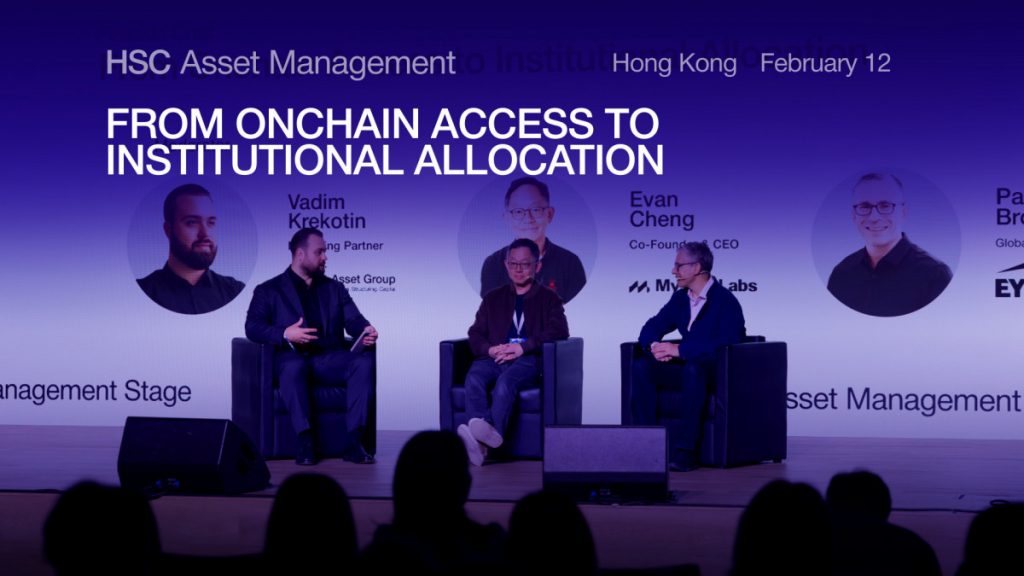
EY And Mysten Labs Experts Discuss Strategies For Institutional Adoption Of On-Chain Assets At HSC Asset Management Fireside Chat

0
EY And Mysten Labs Experts Discuss Strategies For Institutional Adoption Of On-Chain Assets At HSC Asset Management Fireside Chat


In Brief

The HSC Asset Management fireside chat in Hong Kong examined the challenges and opportunities for institutional adoption of digital assets, focusing on regulatory clarity, privacy, liquidity, public versus private blockchains, DeFi integration, and strategies for deploying on-chain capital at scale.

Experts From EY And Mysten Labs Explore How Institutions Can Transition From Onchain Access To Full Allocation At HSC Asset Management In Hong Kong

In mid-February, HSC Asset Management hosted an event in Hong Kong that brought together industry professionals to examine emerging trends and opportunities in the institutional digital asset sector. One of the day’s highlights was a panel discussion titled “From Onchain Access to Institutional Allocation.” 

Moderated by Vadim Krekotin of HSC Asset Group, Paul Brody of EY, and Evan Cheng of Mysten Labs, the session explored the evolution from early onchain participation to structured institutional investment. Key topics included regulatory clarity, the development of robust infrastructure, and the operational frameworks necessary to support the deployment of large-scale capital.

The discussion opened with the question of what prevents institutions from deploying significant capital on-chain. Panelists noted that while foundational elements such as tokenization, stablecoins, exchanges, and regulatory frameworks are largely in place, the challenge lies in integrating these components into cohesive, configurable systems. A central concern is determining which assets institutions actually want to purchase on-chain and understanding the regulatory constraints that govern their allocation. For instance, pension funds and sovereign wealth funds face limits on alternative investments, creating a need for standardized assets with verified performance histories to enable broader on-chain deployment.

Privacy, Confidentiality, And Configurability

The panel placed particular emphasis on privacy and confidentiality as critical factors in blockchain adoption. Experts explained that enterprise systems must be neither fully public nor fully private but should be configurable to meet the requirements of multiple participants. Solutions must allow private transactions while settling results on-chain, enabling institutions to control risk, maintain efficiency, and monitor exposures. Zero-knowledge rollups and other privacy-enhancing technologies were highlighted as essential tools that have made large-scale confidential on-chain transactions feasible, addressing challenges that have persisted for nearly a decade.

Liquidity And On-Chain Ecosystem Development

Liquidity was identified as a key barrier to institutional adoption. Even as privacy solutions advance, fragmented liquidity across chains, venues, and asset types continues to complicate trading and integration. Panelists argued that a fully integrated on-chain ecosystem—where assets settle rapidly and can be used as collateral or borrowed against—offers a distinct advantage over traditional off-chain systems. Efforts to achieve parity between off-chain and on-chain assets are considered essential to unlocking the full potential of blockchain for institutional investors.

Public vs. Private Blockchains

The discussion also examined whether public blockchains can function as institutional infrastructure. Panelists suggested that public, permissionless chains provide greater innovation, security, and efficiency compared to private alternatives, which often deliver limited value relative to conventional IT systems. Historical comparisons to the early internet underscored that private infrastructure tends to be restrictive, while open, configurable public blockchains enable scalable, automated financial operations.

DeFi, Risk, And Accountability

Panelists explored the role of decentralized finance (DeFi) for institutional adoption, noting that while DeFi can generate incremental yield and operational efficiency, institutions are likely to adopt it cautiously, after extensive testing. Responsibility within on-chain systems remains complex due to fragmentation, emphasizing the importance of hybrid models that combine self-custody with layered safeguards such as insurance and structured controls.

Looking Ahead: Institutional On-Chain Strategy

The panel concluded with guidance for institutions considering on-chain engagement: begin with small-scale asset deployments to build operational experience, learn from initial implementations, and prepare for broader automation in asset management. Blockchain is increasingly seen as a critical layer for fully automated financial systems, and organizations that do not engage risk falling behind as the technology evolves.

Disclaimer

In line with the Trust Project guidelines, please note that the information provided on this page is not intended to be and should not be interpreted as legal, tax, investment, financial, or any other form of advice. It is important to only invest what you can afford to lose and to seek independent financial advice if you have any doubts. For further information, we suggest referring to the terms and conditions as well as the help and support pages provided by the issuer or advertiser. MetaversePost is committed to accurate, unbiased reporting, but market conditions are subject to change without notice.

About The Author

Alisa, a dedicated journalist at the MPost, specializes in cryptocurrency, zero-knowledge proofs, investments, and the expansive realm of Web3. With a keen eye for emerging trends and technologies, she delivers comprehensive coverage to inform and engage readers in the ever-evolving landscape of digital finance.

More articles

Alisa, a dedicated journalist at the MPost, specializes in cryptocurrency, zero-knowledge proofs, investments, and the expansive realm of Web3. With a keen eye for emerging trends and technologies, she delivers comprehensive coverage to inform and engage readers in the ever-evolving landscape of digital finance.

More articles


Source link

Is Your Ex Hiding a Million-Dollar Fortune in Bitcoin?

0
Is Your Ex Hiding a Million-Dollar Fortune in Bitcoin?


Key Highlights

Family lawyers predict a “decade-long surge” in crypto-related litigation as younger, tech-native generations enter divorce courts.

Legal experts argue that crypto has effectively replaced offshore tax havens as the preferred “secrecy vehicle.”

Disclosing crypto holdings in prenuptial agreements is now a “make or break” requirement; failing to list a Bitcoin wallet can void a prenup entirely.

For decades, the stereotypical “hiding spot” for a divorcing spouse’s wealth was a shadowy offshore trust or a Swiss bank account. In 2026, that frontier has shifted to crypto. Lawyers across England and Wales are reporting a significant spike in cases where one party attempts to shield millions of pounds from the “matrimonial pot” by hiding it in cryptocurrencies.

While the technology is novel, the intent—secrecy—is identical to the tax havens of the past. As Gen Z and Millennials enter the divorce courts with larger digital footprints, the complexity of untangling these “hidden” fortunes is becoming a standard hurdle in family law.

“Crypto was a new manifestation of an old problem of secrecy,” says Peter Burgess, Senior Partner at Burgess Mee.

Any party seeking a divorce must complete a Form E. This document is a legal declaration requiring a “full, frank, and clear” disclosure of all financial circumstances. However, there is no specific part of the form for disclosing crypto assets. This ambiguity has led some spouses to claim they “forgot” to disclose assets because they were old or stagnant.

Failure to do so can lead to contempt of court proceedings, which in 2026 carry heavy penalties, including the potential for prison sentences or the court awarding a larger share of the known assets to the “innocent” spouse.

Freezing Orders

The High Court of England and Wales has increasingly recognized crypto-assets as “property.” This classification allows lawyers to obtain Freezing Orders not just against the spouse, but against the crypto exchanges themselves.

According to a Financial Times report, Mark Harper, Partner at divorce and family law firm Hughes Fowler Carruthers warns that unless a lawyer knows exactly what they are doing, enforcing these orders can be extremely difficult.

If a spouse holds their wealth in a “self-custodial” wallet, the court may find it nearly impossible to seize the assets directly, instead relying on “adverse inferences”—essentially assuming the hidden money exists and taking it out of the spouse’s share of the family home or pension.

The rise of the crypto prenup

The issue is no longer limited to the end of a marriage. Matt Foster, Senior Associate at law firm Charles Russell Speechlys, notes that crypto is now also a primary focus in prenuptial agreements. And in the 2026 legal landscape, transparency is the only safeguard.

If an engaged partner fails to disclose a significant Bitcoin or Ethereum holding during the prenup phase, the entire agreement can be voided later, leaving the original owner’s digital wealth exposed to a 50/50 split.

As the legal profession becomes more “au fait” with blockchain technology, the window for hiding digital wealth is rapidly closing.

Also Read: How India’s ‘PRAHAAR’ Aims to Block Terrorists’ Use of Crypto & Dark Web

Disclaimer: The information researched and reported by The Crypto Times is for informational purposes only and is not a substitute for professional financial advice. Investing in crypto assets involves significant risk due to market volatility. Always Do Your Own Research (DYOR) and consult with a qualified Financial Advisor before making any investment decisions.


Source link

Popular Posts

My Favorites

OpenAI’s New AI Model Rosalind Could Shave Years Off Drug Discovery....

0
In brief OpenAI unveiled GPT-Rosalind to accelerate drug discovery workflows. Benchmarks show strong gains, but real-world impact remains constrained . Access is tightly restricted amid...