Metaverse

Home Metaverse Page 224

Young Investors in France Face Unprecedented Risks as Fraudulent Schemes Multiply Online

0
Young Investors in France Face Unprecedented Risks as Fraudulent Schemes Multiply Online


Young Investors in France Face Unprecedented Risks as Fraudulent Schemes Multiply Online

With yearly losses estimated at €500 million, France’s financial fraud situation has gotten out of hand. The prevalence of these scams and the more complex methods used by scammers are highlighted by a new partnership between the Autorité des Marchés Financiers (AMF), the Paris Public Prosecutor’s Office, and other regulatory bodies. Although authorities are working harder to address this problem, the fraud’s scope and complexity make it a formidable obstacle.

Recognizing the Seriousness of Financial Fraud

In France, authorities and law enforcement are now quite concerned about financial fraud. These frauds frequently cause victims to suffer terrible financial losses. The total yearly cost of this type of fraud is estimated to be more than half a billion euros, according to reports from the Paris Public Prosecutor’s Office. Nevertheless, fewer complaints have been filed, possibly as a result of victims looking for other ways to get paid, such as filing civil lawsuits or joining forces with law firms to file collective lawsuits.

In recent years, there has been a noticeable increase in the number of financial frauds that are tied to cryptocurrencies. According to the AMF, the average loss from all fraud types was €29,000 by the end of 2024. An average of €69,000 was lost by victims of savings account fraud, another common kind, and €19,000 was lost by victims of fraudulent loan schemes. These numbers highlight the enormous monetary losses incurred by those who fall victim to these frauds.

Fraud Victims’ Demographic Information

The characteristics of French fraud victims show particular weaknesses that scammers take advantage of. A BVA Xsight study from September 2024 found that 3.2% of French people said they had been the victim of financial investment fraud, a sharp rise from 1.2% in 2021. Nearly half of the victims are young men under the age of 35, who are disproportionately impacted.

Many members of this group exhibit overconfidence in their ability to make investments and are attracted to high-risk ventures that provide rapid profits. They are especially vulnerable to frauds that are common on social media platforms because of their confidence and the promise of quick money.

Changing Deception Techniques

Fraudsters are employing increasingly complex techniques that take advantage of developments in both human psychology and technology. Scammers continue to use impersonation as a common strategy, frequently taking the identity of reputable authorities or financial consultants. With one-third of reported scams involving the unauthorized use of its name, the AMF has seen a sharp increase in identity theft cases.

Pressure methods, in which scammers approach people pretending to be preventing a security breach and force them into disclosing private information, are also commonly used. Artificial intelligence and other technologies are also being used to produce convincingly fake articles and videos that show celebrities promoting scam cryptocurrency schemes. Another concerning trend is the rise in scams that pursue former victims, in which fraudsters pose as authorities who offer to help retrieve lost money in return for more money.

Social networking sites are become a vital conduit for the spread of financial fraud. These platforms are used by scammers to reach a large audience and promote fake investment offers. Influencers contribute to the promotion of these scams, whether intentionally or inadvertently, increasing their influence. Since these operations are so widespread, it is difficult for authorities to keep an eye on and combat fake information that is spread online.

Reactions from Law Enforcement and Regulation

In recent years, France has stepped up its efforts to prevent financial fraud. The AMF and ACPR have banned about 5,000 unapproved offers or market participants since 2022. These efforts now rely heavily on public awareness campaigns, with regulators using instructional activities on social media platforms and captivating video material to reach younger audiences. The AMF started a number of programs in 2024, one of which urged people to evaluate financial offers carefully and resist the temptation to fall for promises of easy riches.

International investigations against massive frauds have also been a priority for the Paris Public Prosecutor’s Office. Significant asset seizures have been the outcome of operations like OMEGA PRO and JUICY FIELDS. Since its founding in 2020, the JUNALCO public prosecutor’s office’s J2 finance unit has seized more than €645 million in illicit assets, including €268 million in 2024 alone.

To stop fraudulent schemes, regulatory bodies are taking more action. Since 2022, the AMF has blocked access to fraudulent websites by using its legal power; as a consequence, almost 350 URLs have been deactivated. At the same time, the DGCCRF has conducted inspections of many operators and taken action against social media influencers who advertise financial products that are not authorized.

Obstacles and the Need for Attention

The battle against financial fraud in France is still ongoing in spite of these coordinated measures. Regulators and law enforcement organizations are constantly struggling due to the cunning and flexibility of fraudsters. Vigilance by the public is still an essential part of the larger plan to fight fraud. It is advised that prospective investors check official registrations and regulatory bodies’ blacklists and independently confirm the authenticity of financial offerings.

The epidemic of financial fraud emphasizes the need for an extensive plan that includes international collaboration, regulatory enforcement, and public education. Even if there has been a lot of progress in detecting and preventing scams, their persistent existence emphasizes the necessity of ongoing innovation and attention to detail in the fight against financial crime.

Disclaimer

In line with the Trust Project guidelines, please note that the information provided on this page is not intended to be and should not be interpreted as legal, tax, investment, financial, or any other form of advice. It is important to only invest what you can afford to lose and to seek independent financial advice if you have any doubts. For further information, we suggest referring to the terms and conditions as well as the help and support pages provided by the issuer or advertiser. MetaversePost is committed to accurate, unbiased reporting, but market conditions are subject to change without notice.

About The Author


Victoria is a writer on a variety of technology topics including Web3.0, AI and cryptocurrencies. Her extensive experience allows her to write insightful articles for the wider audience.

More articles


Victoria d’Este


Victoria is a writer on a variety of technology topics including Web3.0, AI and cryptocurrencies. Her extensive experience allows her to write insightful articles for the wider audience.


Source link

Web3 Security Report Highlights Shocking Rise in CeFi Breaches and Unveils DeFi Improvements

0
Web3 Security Report Highlights Shocking Rise in CeFi Breaches and Unveils DeFi Improvements


In Brief

The DeFi ecosystem’s security has improved, with a 40% decrease in hacks, but centralized finance breaches increased by $694 million, highlighting ongoing system weaknesses.

Web3 Security Report Highlights Shocking Rise in CeFi Breaches and Unveils DeFi Improvements

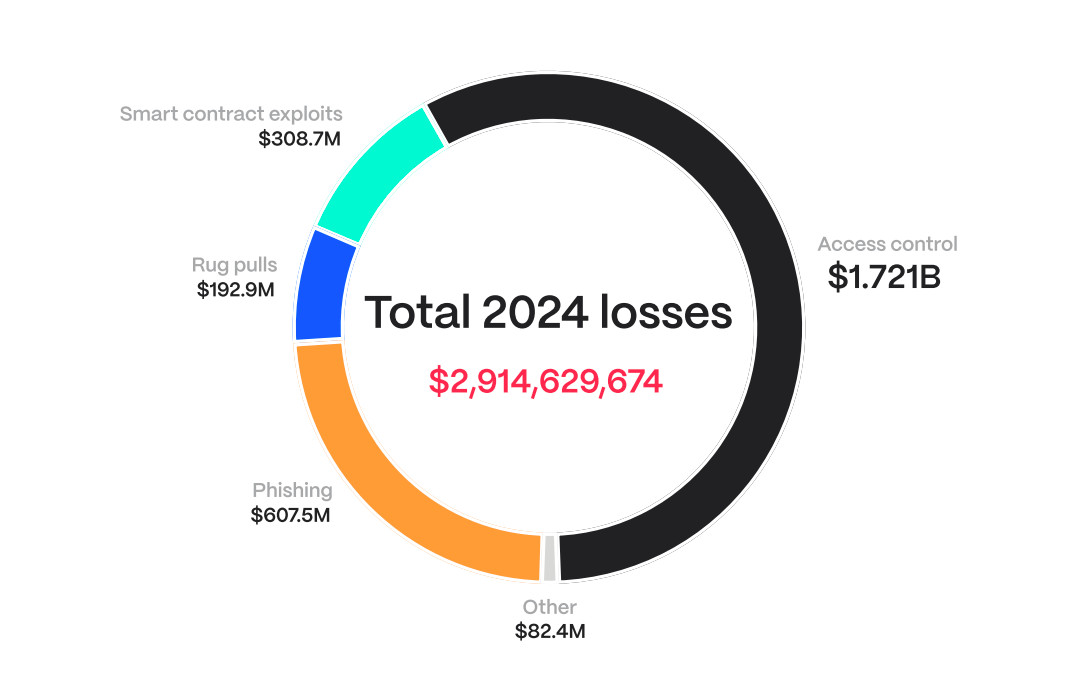
The DeFi ecosystem’s security mechanisms have improved, as seen by the significant 40% drop in DeFi hacks over the previous year. Centralized finance breaches, on the other hand, increased significantly, amounting to $694 million, a statistic that highlights ongoing weaknesses in centralized systems. A thorough analysis of these patterns is provided in the Hacken 2024 Web3 Security Report, which also includes insightful information on how the Web3 threat landscape is changing.

Reduction of DeFi Vulnerabilities: An Upward Movement

The DeFi industry saw notable improvements in its security architecture in 2024. The total losses decreased significantly from $787 million in 2023 to $474 million. The increased security of cross-chain bridge protocols was a major factor in this development. Bridges, which were formerly a popular target for hackers, showed increased resistance as a result of the use of innovative cryptographic techniques like Multi-Party Computation (MPC) and Zero-Knowledge (ZK) encryption.

Web3 Security Report Highlights Shocking Rise in CeFi Breaches and Unveils DeFi Improvements

Photo: Hacken

Bridge-related damages had a substantial drop in the severity of exploits, dropping from $338 million in 2023 to $114 million in 2024. These improvements in bridge security demonstrate how the DeFi industry has been able to apply strong countermeasures and learn from previous accidents.

CeFi Breaches’ Increase

On the other hand, CeFi platforms had a difficult year. The $339 million recorded in 2023 was more than doubled to $694 million in losses. These breaches mostly affected centralized exchanges, with access control exploits responsible for a large percentage of the losses. Critical flaws in operational security were brought to light by high-profile instances such as the $230 million WazirX breach and the $305 million DMM Exchange attack.

All CeFi platforms have widespread access control flaws, most frequently related to compromised private keys or flaws in multi-signature schemes. These events highlight how urgently better access control procedures and decentralized fund safekeeping options are needed.

The Predominance of Exploits for Access Control

Across all industries, access control exploits became the most common danger, causing a startling $1.7 billion in damages. In 2024, 75% of all cryptocurrency hack losses fell into this group, up from 50% in 2023. These attacks, which affected DeFi, CeFi, and even gaming/metaverse systems, were mostly caused by private key breaches.

Notable examples include the $55 million Radiant Capital hack, which used malware to rig transaction approvals, and the $290 million PlayDapp hack, in which hackers used an access control flaw to manufacture illegal tokens. These illustrations show how urgently improved private key security procedures are needed.

Platforms for gaming and the metaverse also saw large losses in 2024, coming to $389 million. The PlayDapp breach alone was the most serious event in this industry, costing $290 million. Access control flaws were the cause of two more noteworthy cases: the $5 million Super Sushi Samurai hack and the $62.5 million Munchables attack.

The first quarter’s concentrated losses indicate that new platforms frequently find it difficult to put strong security measures in place, making them open to sophisticated assaults.

In 2024, phishing assaults continued to be an increasing worry, resulting in losses of more than $600 million. Attackers used strategies like address poisoning to trick victims in these more sophisticated frauds. The theft of $129 million via an address poisoning attack on the Tron blockchain was a well-known event in November. Such incidents highlight the vital need for user education and strong anti-phishing procedures, even though the stolen money was recovered.

Rug Pulls and the Evolution of Crypto Scams

Rug pulls were still a problem in the crypto world, especially on the Solana blockchain. These frauds were carried out quickly thanks to the creation of over 4 million tokens utilizing platforms like pump.fun. Memecoin rug pulls, in which developers dump large amounts of their token supply to drain liquidity pools, became more common as a result of Solana’s low transaction fees and fast network.

Presale scams gained prominence in 2024, with losses from Solana meme coins surpassing $122.5 million. Celebrity-endorsed rug pulls further muddled the situation, harnessing social power to entice investors before dramatically depreciating the tokens.

Strategies for Mitigating Security Risks

The Hacken 2024 Web3 Security Report’s list of recurring vulnerabilities emphasizes the necessity of taking preventative action in every industry. Key recommendations include:

Multi-layered security measures, such as the usage of hardware wallets, cold storage, and strong encryption, must be implemented by organizations. A systematic framework for reducing access control concerns is provided by the Cryptocurrency Security Standard (CCSS).

To lessen the impact of single points of failure, CeFi platforms must to think about including multi-signature wallets and decentralized storage options.

It’s crucial to spread knowledge about phishing scams, rug pulls, and other fraudulent activities. Investors need to be knowledgeable enough to recognize and stay away of any risks.

Regular security audits should be given top priority in DeFi initiatives, and ethical hacking should be encouraged to find flaws before bad actors can take use of them.

The divergent patterns in 2024 DeFi and CeFi security show both advancements and enduring difficulties in the cryptocurrency ecosystem. The rise in CeFi breaches emphasizes the urgent need for systemic changes, even while the DeFi sector’s advancements provide a model for improving security. Adopting advanced security procedures and maintaining constant watchfulness will be crucial to protecting digital assets as the Web3 ecosystem changes.

Disclaimer

In line with the Trust Project guidelines, please note that the information provided on this page is not intended to be and should not be interpreted as legal, tax, investment, financial, or any other form of advice. It is important to only invest what you can afford to lose and to seek independent financial advice if you have any doubts. For further information, we suggest referring to the terms and conditions as well as the help and support pages provided by the issuer or advertiser. MetaversePost is committed to accurate, unbiased reporting, but market conditions are subject to change without notice.

About The Author


Victoria is a writer on a variety of technology topics including Web3.0, AI and cryptocurrencies. Her extensive experience allows her to write insightful articles for the wider audience.

More articles


Victoria d’Este


Victoria is a writer on a variety of technology topics including Web3.0, AI and cryptocurrencies. Her extensive experience allows her to write insightful articles for the wider audience.


Source link

OpenAI Unveils Plans To Adopt Public Benefit Corporation Model, Advancing Secure AGI Development

0
OpenAI Unveils Plans To Adopt Public Benefit Corporation Model, Advancing Secure AGI Development


In Brief

OpenAI announced that its Board of Directors is evaluating its corporate structure to better align with its mission of ensuring artificial general intelligence benefits all of humanity.

OpenAI Unveils Plans To Adopt Public Benefit Corporation Model, Advancing Secure AGI Development

Artificial intelligence research organization OpenAI announced that its Board of Directors is currently assessing its corporate structure to better align with its mission of ensuring that artificial general intelligence (AGI) benefits all of humanity.

OpenAI currently operates with both a non-profit and a for-profit entity. Moving forward, the plan is to maintain both structures, with the for-profit entity’s success helping to fund and sustain the non-profit, positioning it more effectively to support the broader mission. OpenAI views this mission as a critical challenge, one that requires balancing the advancement of AI’s capabilities, safety, and positive global impact. 

As OpenAI looks ahead to 2025, the organization recognizes the need to evolve beyond a research lab and startup, aiming to become a more enduring company. The Board of Directors, with guidance from external legal and financial advisors, is focused on determining the best structural approach to advance OpenAI’s mission. 

OpenAI Outlines Key Objectives Ahead Of Its Transformation

The primary goals include selecting a non-profit/for-profit model that supports long-term success. The plan is to convert the existing for-profit entity into a Delaware Public Benefit Corporation (PBC), a structure commonly used by other companies which balances shareholder interests with public benefit considerations. This move will help OpenAI raise capital while maintaining its mission-driven focus.

Another objective is to make the non-profit sustainable. The proposed structure would ensure that the non-profit becomes one of the best-resourced in history. This would involve the non-profit holding shares in the PBC, with the value of those shares determined by independent financial advisors. This approach would increase the resources available, multiplying the impact of donor contributions.

A key aim is to better equip each part of the organization to fulfill its role. OpenAI’s current structure limits the Board of Directors‘ ability to consider the interests of those funding the mission and restricts the non-profit’s ability to do more than control the for-profit entity. Under the new model, the PBC would manage OpenAI’s business operations, while the non-profit would focus on charitable initiatives in fields like healthcare, education, and science, supported by its own leadership and staff.

The organization highlights that with the world transitioning to a new economic infrastructure, including energy, land use, chips, data centers, data, AI models, and systems, it aims to evolve alongside these developments. 

OpenAI is dedicated to advancing research and development in AGI, which is a form of AI designed to understand, learn, and apply knowledge across a variety of tasks in a manner similar to human intelligence. It has gained attention for its generative models, particularly the popular chatbot technology, ChatGPT. Recently, OpenAI unveiled improvements to its O1 model and introduced ChatGPT Pro, a new subscription plan that offers users enhanced access to OpenAI’s premium models and tools.

Disclaimer

In line with the Trust Project guidelines, please note that the information provided on this page is not intended to be and should not be interpreted as legal, tax, investment, financial, or any other form of advice. It is important to only invest what you can afford to lose and to seek independent financial advice if you have any doubts. For further information, we suggest referring to the terms and conditions as well as the help and support pages provided by the issuer or advertiser. MetaversePost is committed to accurate, unbiased reporting, but market conditions are subject to change without notice.

About The Author


Alisa, a dedicated journalist at the MPost, specializes in cryptocurrency, zero-knowledge proofs, investments, and the expansive realm of Web3. With a keen eye for emerging trends and technologies, she delivers comprehensive coverage to inform and engage readers in the ever-evolving landscape of digital finance.

More articles


Alisa Davidson


Alisa, a dedicated journalist at the MPost, specializes in cryptocurrency, zero-knowledge proofs, investments, and the expansive realm of Web3. With a keen eye for emerging trends and technologies, she delivers comprehensive coverage to inform and engage readers in the ever-evolving landscape of digital finance.


More articles


Source link

The 2024 Elections Created a New Era of Wealth for Crypto’s Most Powerful Figures

0
The 2024 Elections Created a New Era of Wealth for Crypto’s Most Powerful Figures


In Brief

Сryptocurrency influencers and companies like Coinbase, Ripple Labs, and a16z made significant investments, demonstrating the financial potential of well-coordinated political campaigns.

The 2024 Elections Created a New Era of Wealth for Crypto’s Most Powerful Figures

During the 2024 U.S. elections, the relationship between politics and cryptocurrencies reached previously unheard-of levels. Leading personalities and companies in the cryptocurrency space made large investments to influence election results, which led to large financial benefits for both individuals and businesses. 

In this politically tense year, prominent figures included Brian Armstrong, the CEO of Coinbase, Brad Garlinghouse, the CEO of Ripple Labs, and the co-founders of Andreessen Horowitz (a16z). Their participation showed the financial potential of a well-coordinated political campaign in addition to having an impact on the electoral environment.

An Increase in Crypto Titans’ Wealth

The financial windfall for crypto leaders came quickly after the election results. Coinbase founder Brian Armstrong’s fortune increased dramatically. Coinbase’s market value increased by $21 billion after the election. Armstrong made $437 million in less than two months by carrying out planned stock transactions at the same time as this spike. Months before to the elections, a strategy was put in place to disassociate these transactions from claims of market manipulation.

Armstrong also profited from his maintained stakes in Coinbase, as the value of his trust rose by around $2 billion after the election. This striking financial result highlighted Coinbase’s involvement and its $74 million donation to the Fairshake PAC, a PAC that is extensively involved in supporting candidates that support cryptocurrencies.

Brad Garlinghouse, the CEO of Ripple Labs, also took advantage of the post-election surge in the market. The value of XRP, the native token of Ripple, surged, making it the third-largest cryptocurrency asset by market capitalization. The value of Garlinghouse’s substantial holdings more than tripled as the price of XRP surged from $0.50 to $2.32. Despite the fact that Ripple’s private valuation is still speculative, rumors indicate that Garlinghouse and his business stand to win greatly.

Since many of their investments were secret, the financial gains were less obvious to Marc Andreessen and Ben Horowitz, co-founders of Andreessen Horowitz. However, as the market reacted to the election results, their wide-ranging portfolio—which includes investments in Coinbase, Uniswap, and Solana—certainly increased in value. The company’s $70 million political investment was in line with its larger plan to promote laws that are favorable to cryptocurrencies.

The Function of Fairshake PAC in Political Strategy

A group led by Andreessen Horowitz, Coinbase, and Ripple, Fairshake PAC, was at the forefront of the industry’s political push. With 53 victorious congressional candidates, the PAC became a powerful influence in the 2024 elections. The market surge and financial advantages for industry executives were facilitated by the pro-crypto legislative climate that resulted from their initiatives.

Although Fairshake PAC had a major effect on legislative elections, it did not publicly support any presidential candidates. Nonetheless, there was overt backing for Donald Trump, who has referred to himself as a “crypto president.” An atmosphere that was favorable for market expansion was produced by Trump’s return to the White House and a Congress that had about 300 members who supported cryptocurrencies.

A strategic, issue-focused objective was reflected in Fairshake’s strategy. The PAC spent more than $130 million on campaign advertising, focusing on topics relating to innovation and the economy rather than directly mentioning cryptocurrencies. In order to secure bipartisan support for regulations pertaining to cryptocurrency, this messaging sought to appeal to a wide range of political viewpoints.

The large financial donations from prominent figures in the business speak for themselves, even as Armstrong and others highlighted grassroots support as a key factor in cryptocurrency’s political success. The goal of Coinbase’s Stand With Crypto campaign was to mobilize voters, but this endeavor was intricately linked to Fairshake PAC’s overarching plan. Critics contend that the industry’s transactional approach to political influence was concealed by the story of grassroots mobilization.

Using funds to gain legislative supporters, the crypto industry’s expenditure approach was distinguished by its careful targeting of important races. Public Citizen and other groups have criticized this strategy, calling the industry’s strategy “purely self-interested.” The crypto business was not an exception, according to Americans for Financial Reform, which also emphasized the return on investment usually observed in such political expenditures.

Market Response and Wider Consequences

The outcome of the election affected the cryptocurrency market immediately and profoundly. Within a month after the elections, the flagship cryptocurrency, Bitcoin, hit $100,000, indicating a spike in market confidence. This event took place during a larger rally that increased the overall value of the cryptocurrency market by more than $1 trillion.

Garlinghouse of Ripple credited this expansion to the new administration’s lifting of regulatory restrictions. Many people saw the resignation of SEC Chairman Gary Gensler, a strong opponent of the cryptocurrency sector, as a turning point. “The price of Gensler’s foot on the neck of the market being lifted” is how Garlinghouse characterized the market surge.

Now, the sector is concentrating on leveraging its political successes. There is a lot of room for development if major resources are diverted from court cases to innovation and growth. This view was summed up by Gemini’s Cameron Winklevoss, who forecasted unrestricted creativity and financial success for the cryptocurrency industry in the future.

Regulatory and Ethical Considerations

The extraordinary political involvement of the cryptocurrency business has brought up significant moral and legal issues. Critics contend that rich interests might disproportionately influence legislative results due to the significant expenditures made by crypto businesses, undermining the democratic process. Calls for more accountability and openness in campaign finance have been triggered by the transactional character of the industry’s political approach.

Concerns of insider trading and market manipulation have also been heightened by the financial gains made by business executives after the election. Armstrong’s planned stock sales were in compliance with SEC rules, but the timing of these deals has come under investigation. One of the industry’s biggest challenges will be making sure that such actions don’t damage public confidence.

Disclaimer

In line with the Trust Project guidelines, please note that the information provided on this page is not intended to be and should not be interpreted as legal, tax, investment, financial, or any other form of advice. It is important to only invest what you can afford to lose and to seek independent financial advice if you have any doubts. For further information, we suggest referring to the terms and conditions as well as the help and support pages provided by the issuer or advertiser. MetaversePost is committed to accurate, unbiased reporting, but market conditions are subject to change without notice.

About The Author


Victoria is a writer on a variety of technology topics including Web3.0, AI and cryptocurrencies. Her extensive experience allows her to write insightful articles for the wider audience.

More articles


Victoria d’Este


Victoria is a writer on a variety of technology topics including Web3.0, AI and cryptocurrencies. Her extensive experience allows her to write insightful articles for the wider audience.


Source link

How Meme Coins and AI Narratives Shaped the Cryptocurrency Landscape in 2024

0
How Meme Coins and AI Narratives Shaped the Cryptocurrency Landscape in 2024


In Brief

Meme coins dominate 2024 crypto market, accounting for 31% of attention, indicating speculative assets are increasingly appealing over technological-based initiatives, highlighting changing investor preferences.

How Meme Coins and AI Narratives Shaped the Cryptocurrency Landscape in 2024

According to a CoinGecko analysis, meme coins became a hot topic of the 2024 crypto market, accounting for 31% of narrative attention. This pattern demonstrates how speculative assets are becoming more and more appealing than initiatives that prioritize technological foundations. Gaining knowledge of the elements behind these shifts might help one better understand how cryptocurrency investors’ tastes are changing.

The Crypto Narrative Landscape Is Led by Meme Coins

With a combined 30.67% of investor interest, meme currencies dominated the narrative space. This rise is an enormous spike over prior years due to the acceleration of speculative possibilities. With 14.36% of investor interest, the primary topic topped all meme currency storylines, a notable increase from its 8.32% share in 2023. This spike emphasizes how important community-driven investment excitement and viral trends are to the industry.

A noteworthy subcategory was Solana meme coins, which ranked fourth overall in the narrative rankings and garnered 7.65% of all attention. The varied attraction of this asset class was demonstrated by the extra interest generated by other meme coin trends, such as Base meme coins, AI-themed meme coins, and cat-themed meme coins.

AI Narratives’ Ascent in the Crypto Market

Even while meme coins were at the top of the list, stories about artificial intelligence continued to gain popularity, garnering 15.67% of investor interest. With a share of 12.58%, the total AI narrative came in second, up from 11.32% in 2023. Despite this expansion, the rise in popularity of meme coins overshadowed AI storylines, demonstrating a change in investor attention toward riskier ventures.

Smaller developments within the AI industry also become more well-known. For instance, 1.17% of investor interest was in AI agents, while 1.49% was in meme coins with an AI theme. These findings point to a persistent need for stories that blend technical advancement with the possibility of speculation.

Growing Interest in DePIN and Real-World Assets

There were noticeable rises in interest in decentralized physical infrastructure networks (DePIN) and real-world assets (RWA). With an 8.64% proportion of investor interest, RWA jumped from 6.48% in 2023 to take third position. The rise of this narrative is indicative of a larger movement to combine blockchain technology with physical assets, which appeals to those looking for practical applications in the cryptocurrency industry.

DePIN, which came in at number eight, increased its share from 1.82% to 3.38%. Its increasing appeal demonstrates the growing interest in narratives that connect the digital and physical worlds, highlighting the potential of decentralized infrastructure to solve pressing issues.

The GameFi narrative had a dramatic downturn in comparison to the increasing popularity of meme currencies and RWAs. In 2024, its percentage of investor interest fell to just 3.72% from 10.49% in 2023. This change indicates a decline in interest in blockchain initiatives pertaining to gaming, while different narratives attracted investors.

Narratives of the Solana and Base Ecosystems Gain Momentum

With a combined 14.30% share of investor interest, Solana attracted a lot of attention. The robust success of Solana meme currency, which generated about half of the narrative’s overall focus, supported this category. Furthermore, the Solana ecosystem as a whole obtained a 5.78% share, highlighting the platform’s adaptability and wide range of user appeal.

Additionally, Base-related narratives gained traction and together accounted for 4.87% of investor interest. Base meme coins finished in 11th position with a 2.13% share, while the Base ecosystem came in ninth overall. These patterns demonstrate how blockchain ecosystems that can support specialized narratives are becoming more and more popular.

More General Patterns in the Storytelling Environment

In 2024, 78.72% of worldwide investor attention was captivated by the top 20 crypto narratives, while the remaining 21.28% was distributed across 180 lesser-known ones. This focus demonstrates how the market is competitive and how most attention is drawn to a small number of prominent topics.

Together, the top three narratives—meme coins, AI, and RWAs—accounted for over 40% of investor interest. While conventional categories like DeFi and Ethereum ecosystems remained somewhat relevant, Solana and Base-related narratives further cemented their roles as major actors. Interestingly, the ones on the TON ecosystem, smart contract platforms, and BRC-20 tokens garnered lower shares, indicating a more dispersed distribution of interest outside of the top narratives.

In order to assess narrative interest, the CoinGecko study examined non-botted worldwide online traffic between January 1 and December 21, 2024. The research offers a glimpse of the changing dynamics of the cryptocurrency business by concentrating on categories with quantifiable involvement.

The prevalence of meme coins reflects a larger tendency toward speculative investing, which is fueled by viral trends and social media impact. This change can be a result of investors’ shifting risk tolerances as well as the growing influence of community-driven narratives on market dynamics. On the other hand, the fall of some, like GameFi, highlights the difficulties encountered by initiatives that find it difficult to maintain interest in the face of intense competition.

The emergence of meme coins and the ongoing appeal of AI and RWA narratives characterized the 2024 cryptocurrency market. Traditional storylines like GameFi saw decreases as investors shifted their focus to high-risk alternatives, indicating a competitive and dynamic environment.

Market actors may get important insights from understanding these trends, which highlight how crucial it is to adjust to changing consumer preferences. Navigating the intricate and quickly evolving world of cryptocurrencies will require keeping an eye on these changes as the market continues to develop.

Disclaimer

In line with the Trust Project guidelines, please note that the information provided on this page is not intended to be and should not be interpreted as legal, tax, investment, financial, or any other form of advice. It is important to only invest what you can afford to lose and to seek independent financial advice if you have any doubts. For further information, we suggest referring to the terms and conditions as well as the help and support pages provided by the issuer or advertiser. MetaversePost is committed to accurate, unbiased reporting, but market conditions are subject to change without notice.

About The Author


Victoria is a writer on a variety of technology topics including Web3.0, AI and cryptocurrencies. Her extensive experience allows her to write insightful articles for the wider audience.

More articles


Victoria d’Este


Victoria is a writer on a variety of technology topics including Web3.0, AI and cryptocurrencies. Her extensive experience allows her to write insightful articles for the wider audience.



Source link

NBC Approves Regulated Crypto Assets For Operation In Cambodia

0
NBC Approves Regulated Crypto Assets For Operation In Cambodia


In Brief

The National Bank of Cambodia has allowed commercial banks and payment institutions to offer services involving secured assets and stablecoins.

NBC Approves Regulated Crypto Assets For Operation In Cambodia

The National Bank of Cambodia (NBC) has issued a new directive allowing commercial banks and payment institutions to offer services involving cryptocurrencies, including stablecoins or those backed by assets. However, unbacked cryptocurrencies, such as Bitcoin, remain prohibited.

This move aims to regulate the use of digital currencies in the country, reflecting Cambodia’s efforts to align with global financial trends. Under the new directive, any commercial bank or payment institution wishing to provide cryptocurrency-related services must first obtain approval from the NBC. 

Authorized institutions will be permitted to engage in activities such as converting cryptocurrency to fiat currencies and vice versa, transferring cryptocurrency assets between accounts, and offering custody services. However, these institutions are explicitly prohibited from using their clients’ cryptocurrency assets for their own purposes.

Cambodia Blocks Access To Major Crypto Exchanges Amid Ongoing Efforts To Regulate Digital Asset Market

Historically, Cambodia has prohibited cryptocurrency transactions and trading due to concerns about high risks, such as money laundering, fraud, and involvement in illicit activities within the black market.

Earlier this month, the Cambodian authorities blocked access to 16 cryptocurrency exchange websites, including well-known platforms like Binance, Coinbase, and OKX, as part of ongoing efforts to regulate the digital asset market. 

This action followed a directive issued by the Telecommunication Regulator of Cambodia (TRC), which restricted access to 102 websites, primarily targeting online gambling platforms. Cryptocurrency exchange websites were included in the restriction due to their lack of licensing from the Securities and Exchange Regulator of Cambodia (SERC). While access to these websites has been blocked, mobile applications for these platforms are still accessible.

Despite these measures, Cambodia continues to be a global leader in retail cryptocurrency use per capita, according to data from analytics firm Chainalysis. Centralized exchanges account for 70% of cryptocurrency transactions in the country.

Disclaimer

In line with the Trust Project guidelines, please note that the information provided on this page is not intended to be and should not be interpreted as legal, tax, investment, financial, or any other form of advice. It is important to only invest what you can afford to lose and to seek independent financial advice if you have any doubts. For further information, we suggest referring to the terms and conditions as well as the help and support pages provided by the issuer or advertiser. MetaversePost is committed to accurate, unbiased reporting, but market conditions are subject to change without notice.

About The Author


Alisa, a dedicated journalist at the MPost, specializes in cryptocurrency, zero-knowledge proofs, investments, and the expansive realm of Web3. With a keen eye for emerging trends and technologies, she delivers comprehensive coverage to inform and engage readers in the ever-evolving landscape of digital finance.

More articles


Alisa Davidson


Alisa, a dedicated journalist at the MPost, specializes in cryptocurrency, zero-knowledge proofs, investments, and the expansive realm of Web3. With a keen eye for emerging trends and technologies, she delivers comprehensive coverage to inform and engage readers in the ever-evolving landscape of digital finance.


More articles


Source link

Dogecoin (DOGE) Holders Are Eyeing This Token at $0.150 for an Extra 24,039% Profit This Cycle.

0
Dogecoin (DOGE) Holders Are Eyeing This Token at alt=


Dogecoin (DOGE) Holders Are Eyeing This Token at $0.150 for an Extra 24,039% Profit This Cycle.

The cryptocurrency boom has seen many individuals benefitting from its initial adoption stage, and here we have a few DOGE holders who profited a lot from its past cycles. These investors are now shifting their focus to Rexas Finance (RXS), a new token with tremendous growth potential. With an introductory price of $0.150 in its presale, the native token RXS plans to change the approach of the blockchain industry with the enhancement of real-world asset tokenization. With estimates suggesting a possible 24,039% return on investment for RXS, it is becoming a crucial consideration for everyone looking for high returns this cycle.

Rexas Finance (RXS): Redefining Investment Through Real-World Asset Tokenization

Rexas Finance is venturing into uncharted territories in the blockchain space by tokenizing real world assets. Most cryptocurrencies are based solely on speculation. Conversely, Rexas creates use cases and appeals to practical investors interested in using the blockchain. Tokenization of real-world assets includes the process of buying, selling, and trading real estate, an expensive piece of art, or even a patent on a blockchain. This encourages high-value assets to be further expanded because it allows partial ownership. For example, RXS tokens would allow individuals to buy and trade fractional shares and offer an affordable alternative to many valuable markets. Rexas Finance further launches platforms such as Rexas Estate, which allows users to trade tokenized Real Estate. Rexas GenAI allows the creation of high-quality NFTs through AI. These make investors liquid, allow them to earn passive income, and meet investors of all classes. With the growing use of blockchain technology worldwide, RXS’s utility and use-based nature have positioned it as a leader in asset tokenization.

Dogecoin (DOGE) Holders Are Eyeing This Token at $0.150 for an Extra 24,039% Profit This Cycle.

Presale Success and a Strong Foundation for Growth

As one can see from the Rexas Finance token presale, it has been a great success and has recorded huge investment volumes. From the beginning of the project, starting September 2024, this project has been going above the expected levels, whereby the token price inflates from $0.030 in stage 1 to $0.150 in stage 10. Out of a total of 380 million tokens, so far, 374 million tokens have been sold, raising over $32.3 million. So, investors have a great sense of trust regarding this project’s vision and potential. Only a small portion of the presale allocation is left, making it the best time to buy RXS at the current price. With the end of stage ten approaching, it had been forecasted that the price would increase to $0.175 and eventually significantly higher once listed on major exchanges. The listing price would be $0.20, but the token’s growing popularity was bound to grow faster in the market, bringing more significant gains.

RXS’s most significant selling point is its insane upside potential, especially for DOGE holders. Dogecoins have offered impressive returns, but their use case is still minimal. RXS encapsulates realistic use cases with good market potential and is thus ideal for individuals aiming to broaden their asset portfolios and make life-altering profits.

The Power of Security and Community Engagement

What undoubtedly stands out about Rexas Finance is its continual concern for security. Due to the risks arising from its deployed active smart contracts, the project was certified and verified by CertiK, a high-end blockchain security company. Such certification confirms that the undertaking operates according to the most stringent safety and transparency criteria, thus assuring potential investors of the platform’s reliability. Rexas Finance also considers active participation in community activities to be one of the key tools for achieving organizational growth. The project has initiated a $1 million giveaway and hopes that most of its users will participate actively in the competition. This initiative rewards the top 20 lucky users with 50 RXS tokens each. Thus making the investors feel a sense of commitment to the project. Such efforts reinforce the project’s community and marketing in the market, making it quite a strong player in the crowded crypto space.

Conclusion: The Next Big Opportunity Awaits

The cryptocurrency market offers countless opportunities, but few projects have the potential to deliver the kind of returns that Rexas Finance promises. With its innovative approach to real-world asset tokenization, presale success, and commitment to security, RXS is poised to become a game-changer in the blockchain industry. For Dogecoin holders and other investors seeking the next big opportunity, RXS represents a unique chance to achieve extraordinary profits. Priced at $0.150 and backed by a robust ecosystem, this token has all the ingredients for success in the upcoming market cycle. 

For more information about Rexas Finance (RXS) visit the links below:

Website: https://rexas.com

Win $1 Million Giveaway: https://bit.ly/Rexas1M

Whitepaper: https://rexas.com/rexas-whitepaper.pdf

Twitter/X: https://x.com/rexasfinance

Telegram: https://t.me/rexasfinance

Disclaimer

In line with the Trust Project guidelines, please note that the information provided on this page is not intended to be and should not be interpreted as legal, tax, investment, financial, or any other form of advice. It is important to only invest what you can afford to lose and to seek independent financial advice if you have any doubts. For further information, we suggest referring to the terms and conditions as well as the help and support pages provided by the issuer or advertiser. MetaversePost is committed to accurate, unbiased reporting, but market conditions are subject to change without notice.

About The Author


Gregory, a digital nomad hailing from Poland, is not only a financial analyst but also a valuable contributor to various online magazines. With a wealth of experience in the financial industry, his insights and expertise have earned him recognition in numerous publications. Utilising his spare time effectively, Gregory is currently dedicated to writing a book about cryptocurrency and blockchain.

More articles


Gregory, a digital nomad hailing from Poland, is not only a financial analyst but also a valuable contributor to various online magazines. With a wealth of experience in the financial industry, his insights and expertise have earned him recognition in numerous publications. Utilising his spare time effectively, Gregory is currently dedicated to writing a book about cryptocurrency and blockchain.


Source link

The Best Web3 iGaming Platforms of 2024

0
The Best Web3 iGaming Platforms of 2024


The Best Web3 iGaming Platforms of 2024

The iGaming industry has hit a transformative milestone in 2024, powered by Web3 technologies such as blockchain, cryptocurrency, and decentralized finance. These advancements are delivering unparalleled transparency, instant transactions, and secure gameplay while reimagining the traditional online gaming experience. With innovations in AI, immersive gaming, and tokenized ecosystems, the sector is poised for further exponential growth in 2025.

Here’s a look at the standout Web3 iGaming platforms leading the charge this year, showcasing how technology and user-centric design are reshaping the global iGaming landscape.

1. Bitcasino.io

A Pioneer in Crypto iGaming

For nearly a decade, Bitcasino.io has led the way in crypto igaming with a player-focused approach and rapid withdrawals averaging just 1.5 minutes. Offering over 6,000 slots and table games from renowned providers, alongside unique selections like Live88 and custom Bitcasino titles.  Its VIP program blends global events with day-to-day premium service, while a pioneering loyalty scheme grants exclusive privileges, cashback, and free spins.

With innovative promotions such as the Bitcoin Predictor and the Casino Boost, Bitcasino continues to refine the premium crypto gaming experience, offering high standards in fairness, transparency, and consistent responsible gaming.

2. TG.Casino

The Future of Telegram-Driven iGamingTG.Casino has revolutionized accessibility by offering a fully integrated gaming experience directly through Telegram. This unique approach eliminates the need for additional apps, streamlining user interaction. Boasting a robust selection of over 350 casino games and 30 sports betting markets, TG.Casino is a rising star in 2024.

The platform supports instant crypto transactions and provides substantial bonuses, including a welcome offer of up to 10 ETH. TG.Casino has also leveraged its community-driven model to foster player engagement, solidifying its position as a key innovator in the Web3 iGaming space.

3. Lucky Block

Expanding Horizons with a Rich Gaming LibraryKnown for its extensive gaming portfolio, Lucky Block is a top choice for players seeking variety and accessibility. With over 5,000 games, including slots, live dealers, and table games, the platform offers something for everyone. In 2024, Lucky Block introduced a revamped rewards program, featuring a 200% welcome bonus and free spins, making it one of the most enticing platforms for new users.

Its seamless support for multiple cryptocurrencies ensures fast and hassle-free transactions. Lucky Block’s commitment to user-friendly design and high-quality gameplay continues to make it a standout in the Web3 iGaming sector.

4. BC.Game

Community-Driven ExcellenceBC.Game has built a reputation for its vibrant community and innovative features. In 2024, the platform introduced localized games and interfaces tailored to emerging markets, further cementing its global appeal.

What truly sets BC.Game apart is its gamified ecosystem, where players earn rewards by participating in community forums, challenges, and leaderboards. Supporting over 100 cryptocurrencies, BC.Game exemplifies accessibility and inclusivity, making it a key player in the Web3 gaming revolution.

5. Metaspins

Where Web3 and Gaming ConvergeMetaspins is a prime example of how Web3 integration can elevate the iGaming experience. Featuring a diverse array of Ethereum-based games, the platform is designed for crypto enthusiasts seeking innovation and fairness.

With a robust VIP program, seamless crypto transactions, and a library of over 2,500 games, Metaspins has become a favorite among tech-savvy players. The platform’s dedication to transparency and user engagement underscores its reputation as a leader in the decentralized gaming space.

Looking Ahead to 2025

The Web3 iGaming platforms of 2024 are redefining the industry by seamlessly blending blockchain technology with user-centric design. With enhanced security, instant payouts, and innovative engagement models, these platforms are setting the stage for the future. As the industry evolves, expect to see deeper integrations of AI, decentralized finance, and immersive gaming experiences that will further revolutionize how players engage with iGaming platforms globally.

Disclaimer

In line with the Trust Project guidelines, please note that the information provided on this page is not intended to be and should not be interpreted as legal, tax, investment, financial, or any other form of advice. It is important to only invest what you can afford to lose and to seek independent financial advice if you have any doubts. For further information, we suggest referring to the terms and conditions as well as the help and support pages provided by the issuer or advertiser. MetaversePost is committed to accurate, unbiased reporting, but market conditions are subject to change without notice.

About The Author


Gregory, a digital nomad hailing from Poland, is not only a financial analyst but also a valuable contributor to various online magazines. With a wealth of experience in the financial industry, his insights and expertise have earned him recognition in numerous publications. Utilising his spare time effectively, Gregory is currently dedicated to writing a book about cryptocurrency and blockchain.

More articles


Gregory, a digital nomad hailing from Poland, is not only a financial analyst but also a valuable contributor to various online magazines. With a wealth of experience in the financial industry, his insights and expertise have earned him recognition in numerous publications. Utilising his spare time effectively, Gregory is currently dedicated to writing a book about cryptocurrency and blockchain.


Source link

What Does Santa Claus Rally Mean? – Metaverseplanet.net

0
What Does Santa Claus Rally Mean? – Metaverseplanet.net


Towards the end of every year, a popular concept emerges across the financial world, including the cryptocurrency market: the Santa Claus Rally. This phenomenon, which signifies a market rise at the end of the year and the beginning of the new year, offers investors a renewed sense of hope, perfectly suited to the festive season. While it is not guaranteed to occur every year, the anticipation surrounding it creates a buzz in the markets. But what exactly is the Santa Claus Rally? When does it start, and how did it originate? Let’s dive into these questions!

What Is the Santa Claus Rally?

The term rally might first conjure images of car races, where drivers tackle rugged terrain and steep climbs. However, in the context of stocks and cryptocurrencies, a rally refers to sudden and significant price increases over a short period. For example, in 2024, Bitcoin experienced a sharp rise from $69,335 on November 6 to over $100,000 by December 5. This rapid, continuous increase is known as a “Bitcoin rally.”

The Santa Claus Rally, specifically, refers to a period of stock market gains that occurs during the last five trading days of December and the first two trading days of January. Since the 1950s, this period has typically seen positive market movements, making it an eagerly awaited financial event. If stock prices rise noticeably during this time, it is said that the Santa Claus Rally has occurred.

When Does the Santa Claus Rally Start and End?

The Santa Claus Rally begins as the U.S. stock markets reopen after the Christmas holiday and continues through the first trading days of the new year. This time frame has historically brought optimism and upward momentum to the markets.

The Origins of the Santa Claus Rally

The term Santa Claus Rally was coined in 1973 by Yale Hirsch, the founding editor of the Stock Trader’s Almanac, a renowned annual publication on the U.S. stock market. Hirsch identified this phenomenon by studying the S&P 500‘s performance during the specified period. He observed that the index had shown consistent upward trends during the last five trading days of December and the first two days of January since the 1950s.

Over time, this concept expanded to include other stock indices and financial markets. Beyond being a seasonal trend, the Santa Claus Rally is also considered a predictive indicator. As Jeff Hirsch, Yale’s son and current editor of the Stock Trader’s Almanac, noted, “If Santa Claus doesn’t come, bears may come to Broad and Wall,” implying that the absence of a rally could signal a bear market in the following year.

Santa Claus Rally in Cryptocurrencies

Since the advent of Bitcoin in 2008, the cryptocurrency market has evolved into one of the world’s largest financial sectors. Naturally, many have wondered if the Santa Claus Rally applies to cryptocurrencies.

According to a recent CoinGecko report, between 2014 and 2023, the crypto market experienced a Santa Claus Rally in 8 out of 10 years. During these years, the total market capitalization of cryptocurrencies increased by 0.69% to 11.87% after the holiday period compared to pre-Christmas levels.

However, cryptocurrencies are far more volatile than traditional stocks. While the Santa Claus Rally can be used as a potential indicator, experts caution that traditional market analysis methods may not always apply to cryptocurrencies. As such, this phenomenon should be evaluated alongside other indicators and analyses for a more comprehensive market outlook.

The Santa Claus Rally continues to capture the attention of investors worldwide, serving as both a seasonal trend and a potential market indicator. Whether in traditional stocks or the ever-evolving world of cryptocurrencies, this phenomenon offers a unique perspective on market behavior during the festive season. However, it’s important to consider it as part of a broader analysis rather than relying on it in isolation.

What do you think about the Santa Claus Rally? Share your thoughts in the comments below!eted in any way as suggesting to investors, directing investors or promising profit/loss to investors.

Follow us on TWITTER (X) and be instantly informed about the latest developments…

Copy URL


Source link

Russia Announces Six-Year Ban on Cryptocurrency Mining to Alleviate Energy Pressure – Metaverseplanet.net

0
Russia Announces Six-Year Ban on Cryptocurrency Mining to Alleviate Energy Pressure – Metaverseplanet.net


The Russian government has introduced a cryptocurrency mining ban in 10 regions, citing the strain on energy infrastructure. The ban will take effect on January 1, 2025, and remain in place until March 15, 2031, as part of efforts to mitigate the high electricity consumption associated with crypto mining.

A Step Towards Energy Regulation

This decision aims to address the challenges posed by the energy-intensive nature of cryptocurrency mining, particularly in regions such as Dagestan, North Ossetia, and Chechnya. According to officials, these areas benefit from regional electricity subsidies, which lower energy costs but have led to disproportionate demand. A government commission will periodically assess energy demand and may recommend adjustments to the restrictions in specific regions.

The new regulations also include provisions for temporary restrictions in other regions during periods of peak energy demand, signaling a broader effort to create a sustainable energy consumption model.

Russia’s Cryptocurrency Stance

Russia has been working to establish a comprehensive cryptocurrency regulatory framework. While crypto mining was legalized in July, the use of cryptocurrencies as a legal form of payment remains prohibited within the country. However, under specific conditions, cross-border cryptocurrency payments are allowed, primarily as a means to circumvent international sanctions imposed following Russia’s invasion of Ukraine.

Balancing Energy and Industry Needs

By regulating energy-intensive activities like crypto mining, the Russian government aims to ease the load on regional power grids while maintaining a balance between industry needs and energy sustainability. This strategic move reflects Russia’s commitment to addressing energy challenges while navigating the complexities of cryptocurrency adoption.

What are your thoughts on this decision? Share your opinions in the comments section below

You May Also Like

Follow us on TWITTER (X) and be instantly informed about the latest developments…

Copy URL


Source link

Popular Posts

My Favorites

Can Humans Reproduce on Mars? The Science Behind Life Beyond Earth

0
The idea of building human colonies on Mars often focuses on food, water, oxygen, and shelter. But there’s a bigger, more personal question:...