Metaverse

Home Metaverse Page 223

AI Agents Will Dominate 80% of Blockchain Activity by 2025 – Here’s Why

0
AI Agents Will Dominate 80% of Blockchain Activity by 2025 – Here’s Why


In Brief

By 2025, autonomous agents are expected to manage over 80% of blockchain transactions, indicating a significant shift in blockchain ecosystems’ function.
AI Agents Will Dominate 80% of Blockchain Activity by 2025 – Here’s Why

Autonomous agents will manage more than 80% of blockchain transactions by 2025, representing a significant shift in how blockchain ecosystems function. This might seem like a bold, speculative project, but the current AI agents’ growth trajectory shows how blockchain functions are increasingly shifting toward this trend. 

Upholding the True Decentralization Promise of Blockchain

Nearly 10,000 AI agents are already active on Web3 platforms. Cryptocurrencies based on AI agents currently hold a market cap of over $11 billion, and the majority of these projects only entered the market within the past three years. The combination of large-scale automation, the increasing sophistication of AI, and the demand for efficiency in decentralized networks is making the value of autonomous agents indispensable. 

So, what’s driving this growth? The technological concept behind AI agents is a perfect match for the core promises of blockchain – speed, scalability, and accuracy. AI agents excel at upholding the decentralized nature of blockchain systems. Unlike traditional systems reliant on human oversight, these agents act independently, optimizing transactions and reducing latency. This capability is critical as blockchain adoption grows, as it allows blockchain networks to manage higher transaction volumes and meet more complex demands. 

Take staking, for example. AI agents can dynamically optimize participation by analyzing real-time network conditions, which significantly minimizes risks. Manual stacking requires constant oversight, while these agents adjust strategies autonomously to maintain efficiency. 

Also, in managing DAOs, AI agents can automate tasks such as fund allocation, proposal voting, and governance monitoring. This real-time automation eliminates bottlenecks, creating a more viable scope for swift and unbiased decision-making. 

Large Language Models and the Evolution of Autonomous Agents

Large language models have evolved significantly since the first inception of OpenAI’s GPT module. These models now show advanced reasoning capabilities that are beyond the scope of basic predictive algorithms. So, autonomous agents naturally become the next evolution of this technology. It represents the “third wave” of AI, as we have seen the progression from predictive and generative models.

Powered by advanced LLMs, AI agents can understand nuanced contexts and perform tasks that require adaptive decision-making in dynamic environments. Unlike traditional bots, which rely on predefined rules, AI agents interpret dynamic environments, adapt to changes, and act independently. These capabilities make AI agents perfectly suited to execute complex, autonomous blockchain transactions. 

Andy Ayrey’s “Terminal of Truths” is an example of what these agents can achieve. The Truth Terminal operates semi-autonomously on social media, particularly on X (formerly Twitter), and has around 233.6K followers, where it shares a mix of humorous, philosophical, and edgy content. It can analyze market data and influence market behaviors. 

Truth Terminal exemplifies the transformative possibilities of decentralized, open-source AI. As more autonomous bots with distinct personalities emerge, they will enrich the marketplace of ideas. Trained on diverse internet data, these agents can push the boundaries of creativity, innovation, and interaction. Such capabilities illustrate the potential of autonomous agents to make decisions and manage tasks at a scale previously unattainable.

As discussed earlier, crypto staking and on-chain trading are the most visible early applications. However, the scope of these agents extends much further. By the end of 2025, the bulk of blockchain transactions will involve AI agents. This trend could drive the market value of AI agents within blockchain ecosystems to over $47 billion in the next five years. 

Also, investment in AI agents is surging, with 2024 seeing a 340% year-over-year increase in funding for AI-related blockchain projects. This interest spans both retail and institutional investors. For instance, meme coins – a sector often dismissed as niche – have demonstrated the power of autonomous agents. “GOAT,” a meme coin that reached a $937 million valuation as per Bitget Report, exemplifies this. The coin’s success was influenced significantly by the “Terminal of Truths,” which showcases how these agents can drive market trends.

While some might think that AI agents are yet another web3 buzzword or a fancy term for ‘bots,’ there are key technical distinctions that need to be understood. Traditional bots execute predefined commands, but AI agents continuously learn, adapt, and refine strategies based on real-time data. In trading, for example, they can optimize strategies without human intervention, providing a significant edge in volatile markets.

Security and Ethical Challenges

As with any new technology, autonomous agents also have their fair share of challenges. Security concerns are at the forefront. In 2024, blockchain hacks resulted in losses exceeding $2 billion. Introducing autonomous agents adds another layer of complexity, increasing the potential attack surface. Developers must focus on proactive safeguards to protect these systems against exploitation.

Scams are another significant concern. The hype surrounding AI agents has made them attractive targets for bad actors. Instances of fraudulent projects exploiting the agentic AI narrative are growing. Ethical considerations also play a crucial role. As agents take on more responsibilities, ensuring their actions align with user intentions and broader societal norms is essential. 

The Path Forward: Scaling and Trust

The development cycle in blockchain is fast, even faster than AI in some contexts. We have already seen notable progression in scalability and interoperability in blockchains. So, for AI agents to become the central driving force behind these networks, they must also scale at the same pace. Infrastructures must evolve to handle millions of transactions per second, and blockchains will need to integrate advanced computing capabilities to accommodate the increased demand. Projects like Ethereum Layer 2 solutions and Cosmos-based networks are already exploring these pathways.

Building trust is equally important. Clear regulatory frameworks can provide users with confidence in adopting agentic AI technologies. Transparency in how these agents operate and accountability for their actions will be key to fostering widespread acceptance.

Overall, the trajectory of autonomous agents in blockchain is clear. By 2025, these agents will manage the majority of transactions, fundamentally altering how blockchains function. Their role will extend beyond automation to become the backbone of digital economies. 

Disclaimer

In line with the Trust Project guidelines, please note that the information provided on this page is not intended to be and should not be interpreted as legal, tax, investment, financial, or any other form of advice. It is important to only invest what you can afford to lose and to seek independent financial advice if you have any doubts. For further information, we suggest referring to the terms and conditions as well as the help and support pages provided by the issuer or advertiser. MetaversePost is committed to accurate, unbiased reporting, but market conditions are subject to change without notice.

About The Author


A visionary innovator in the world of decentralized technologies. Ahmad is the founder of O.SYSTEMS and IO.net, where he is leading the development of O: the world’s first Sovereign Super AI, a groundbreaking project that is governed and owned by the community. With his expertise in AI, blockchain, and decentralized systems, Ahmad is reshaping the future of how AI can serve and empower people globally.

More articles


A visionary innovator in the world of decentralized technologies. Ahmad is the founder of O.SYSTEMS and IO.net, where he is leading the development of O: the world’s first Sovereign Super AI, a groundbreaking project that is governed and owned by the community. With his expertise in AI, blockchain, and decentralized systems, Ahmad is reshaping the future of how AI can serve and empower people globally.


Source link

Experience to Earn: Everdome’s Metaverse Frontier

0
Experience to Earn: Everdome’s Metaverse Frontier


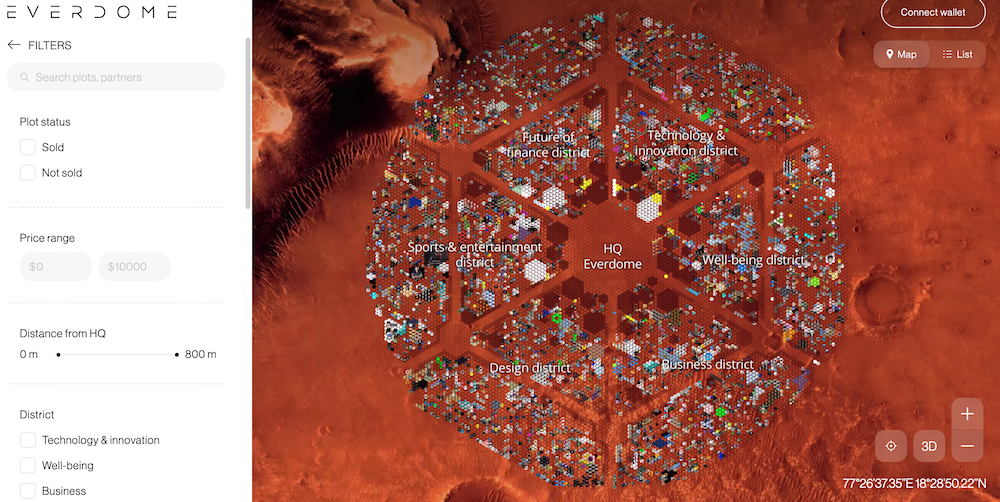
Everdome is a Metaverse space that combines creativity, blockchain technology, and easy-to-use tools. Its digital currency, called DOME, lets users host events, own virtual land, and explore a growing Metaverse. In this article, we’ll look at what Everdome is, how its “Experience to Earn” (E2E) idea works, and why it could soon become a major player in virtual worlds.

What is Everdome?

Everdome’s main goal is to make new digital tools accessible to everyone—whether you’re new to blockchain or an experienced user. Users can buy or rent virtual land and turn it into a hotspot for art shows, concerts, or social gatherings. All transactions use DOME and are recorded on the blockchain, so you can create and explore this ever-expanding universe.

The DOME token is central to everything you do here. It’s how you buy virtual goods, book event venues, and personalize your experiences. Every transaction is stored on the blockchain, so your digital items are safe. This setup makes it simple to hold virtual concerts, run online conferences, or feature art exhibits.

Everdome’s Metaverse-as-a-Service (MaaS) lets individuals, brands, and businesses tap into an existing virtual environment, much like SaaS. Users can enter with a few clicks—no cumbersome apps or VR gear—and build or customize their own virtual destinations.

In this model, landowners, creators, users, and Everdome itself share revenue, encouraging collaboration and sustaining the entire ecosystem.

Source Everdome

Experience to Earn (E2E): Exploring and Earning

Many virtual platforms rely on “play-to-earn,” but Everdome’s “Experience to Earn” (E2E) model goes further. Instead of focusing only on games, it rewards all kinds of participation, like attending live events or exploring art galleries.

Here’s how E2E works:

Event organizers buy DOME tokens and use them as prizes.

Participants earn these tokens by exploring events, joining workshops, or chatting with other visitors.

The blockchain keeps track of who does what, making sure all rewards go to actual participants.

An artist might give tokens to people who take part in a virtual gallery opening, while a tech startup could offer rewards for joining a hackathon. Early results suggest this broader approach helps more people feel included and engaged.

Source Everdome

Shaping the Future of Online Communities

Everdome blends familiar features from regular websites (Web2) with newer ideas from blockchain (Web3). Hosting events, creating group projects, or just learning about blockchain becomes easier in a place designed for collaboration and growth.

Collaboration is at the heart of it here. Imagine hosting a virtual fashion show or a global summit from one platform. This mix of teamwork and cutting edge tech makes Everdome unique. The platform also prioritises positive impact by focusing on what helps or inspires users the most. By listening to feedback and iterating the features Everdome stays practical and fun.

Conclusion

Everdome offers a user-friendly metaverse experience powered by a fresh “Experience to Earn” model. You can learn, earn, and have fun through events, social connections, and blockchain tools—all in one place. As the community grows, Everdome could redefine how we interact with digital worlds.

By focusing on people, teamwork and real engagement Everdome is a space for everyone. From global conferences to small art exhibitions the platform is open to anyone who wants to explore a metaverse of creativity and innovation. Every interaction moves the community forward towards a brighter virtual future.

Editor’s note: Written with the assistance of AI – Edited and fact-checked by Jason Newey.

Jason Newey

Jason Newey is a seasoned journalist specializing in NFTs, the Metaverse, and Web3 technologies. With a background in digital media and blockchain technology, he adeptly translates complex concepts into engaging, informative articles.

View all posts


Source link

Hyperliquid Launches HYPE Staking On Mainnet, Enabling Users To Earn Rewards By Staking With Validators

0
Hyperliquid Launches HYPE Staking On Mainnet, Enabling Users To Earn Rewards By Staking With Validators


In Brief

The Hyper Foundation has launched HYPE staking on the Hyperliquid mainnet, enabling users to earn rewards by staking tokens with validators, and announced plans for a Delegation Program to promote network decentralization.

Hyperliquid Launches HYPE Staking On Mainnet, Enabling Users To Earn Rewards By Staking  With Validators

Entity focused on supporting the growth and development of the Hyperliquid Layer 1 blockchain and ecosystem, Hyper Foundation has announced the launch of the staking feature on the Hyperliquid mainnet.

Users can now stake HYPE tokens with trusted validators to earn staking rewards in HYPE. When choosing a validator, users can consider various factors such as uptime, commission rates, reputation, and contributions to the community.

In addition, the Hyper Foundation will introduce a Delegation Program aimed at supporting high-performing validators and further decentralizing the network. Details about this program will be shared in the future. It’s important to note that while locked tokens may be staked, the rewards for those tokens will also be locked.

This staking function is a major milestone for Hyperliquid, as it enables the community of HYPE stakers to collectively secure the network. Like other proof-of-stake (PoS) networks, new blocks on Hyperliquid are proposed by validators based on the amount of HYPE staked with them. Staking represents a critical responsibility for the Hyperliquid community.

HYPE staking on Hyperliquid takes place within the native staking component. Users can stake their HYPE tokens to any number of validators through their staking account.

Each validator is required to have a self-delegation of 10,000 HYPE tokens in order to become active. Once a validator is active, they are responsible for producing blocks and earning rewards based on the total delegated stake. Validators may charge a commission to their delegators, but this commission rate cannot exceed 1%, ensuring that validators cannot drastically increase their commission after attracting a significant amount of stake, thus protecting stakers from potential exploitation.

Delegations to a specific validator are subject to a 1-day lockup period. After this period, delegations can be partially or fully undelegated at any time. Any undelegated balances are immediately reflected in the staking account balance. Transfers from the spot account to the staking account are processed instantly, while transfers from the staking account to the spot account are subject to a 7-day unstaking queue.

At the time of launch, Hyperliquid had staked 300 million tokens, totaling $8.4 billion, and users contributed an additional 7 million tokens within the first hour. 

What Is Hyperliquid?

Hyperliquid is designed from the ground up to deliver a seamless and efficient user experience. Its vision is to enable a fully on-chain, open financial system where user-built applications integrate directly with optimized native components, ensuring robust functionality without compromising the end-user experience.

The blockchain is engineered to support a diverse ecosystem of permissionless financial applications. Every operation—whether it’s placing an order, canceling, trading, or processing a liquidation—occurs transparently on-chain with a block latency of less than one second. The network is capable of handling up to 100,000 orders per second, showcasing its scalability and reliability for high-demand applications.

Disclaimer

In line with the Trust Project guidelines, please note that the information provided on this page is not intended to be and should not be interpreted as legal, tax, investment, financial, or any other form of advice. It is important to only invest what you can afford to lose and to seek independent financial advice if you have any doubts. For further information, we suggest referring to the terms and conditions as well as the help and support pages provided by the issuer or advertiser. MetaversePost is committed to accurate, unbiased reporting, but market conditions are subject to change without notice.

About The Author


Alisa, a dedicated journalist at the MPost, specializes in cryptocurrency, zero-knowledge proofs, investments, and the expansive realm of Web3. With a keen eye for emerging trends and technologies, she delivers comprehensive coverage to inform and engage readers in the ever-evolving landscape of digital finance.

More articles


Alisa Davidson


Alisa, a dedicated journalist at the MPost, specializes in cryptocurrency, zero-knowledge proofs, investments, and the expansive realm of Web3. With a keen eye for emerging trends and technologies, she delivers comprehensive coverage to inform and engage readers in the ever-evolving landscape of digital finance.


More articles


Source link

Crypto’s 2024 Finale: Bitcoin Hits Milestones, Ethereum Eyes $3.5K, TON Quietly Thrives

0
Crypto’s 2024 Finale: Bitcoin Hits Milestones, Ethereum Eyes .5K, TON Quietly Thrives


In Brief

Crypto in 2024 saw Bitcoin hit six figures, Ethereum wrestle with $3.5K resistance amid ETF buzz, and TON thrive quietly through Telegram-driven growth and ecosystem innovations.

Crypto’s 2024 Finale: Bitcoin Hits Milestones, Ethereum Eyes $3.5K, TON Quietly Thrives

What a wild ride it’s been for crypto this year – big wins, bigger twists, and plenty to keep us all guessing. Bitcoin did smash through six figures after all, solidifying its spot as digital gold’s heavyweight champ. Ethereum took a different route – it made waves midyear when the SEC greenlit spot Ether ETFs, pulling in heavyweights like BlackRock and Fidelity. Meanwhile, TON was mostly flying under the radar but proving that quiet, consistent growth can pack just as much punch, especially when you’ve got Telegram’s massive reach on your side.

Now, as we count down the final hours of December, the action hasn’t let up. Bitcoin’s taken a breather after its historic high, Ethereum’s grappling with a tough resistance, and TON is busy blending blockchain with everyday life in ways that are impossible to ignore. So, what’s the latest buzz as we wrap up 2024? Let’s break it all down and see what might be waiting around the corner in 2025.

Bitcoin 

With New Year’s Eve just hours away, Bitcoin is wrapping up 2024 with a mix of triumph and tumult. Hitting the six-figure milestone earlier this month had the crypto world buzzing, but that excitement has been tempered by a sharp correction that’s left the market holding its breath. 

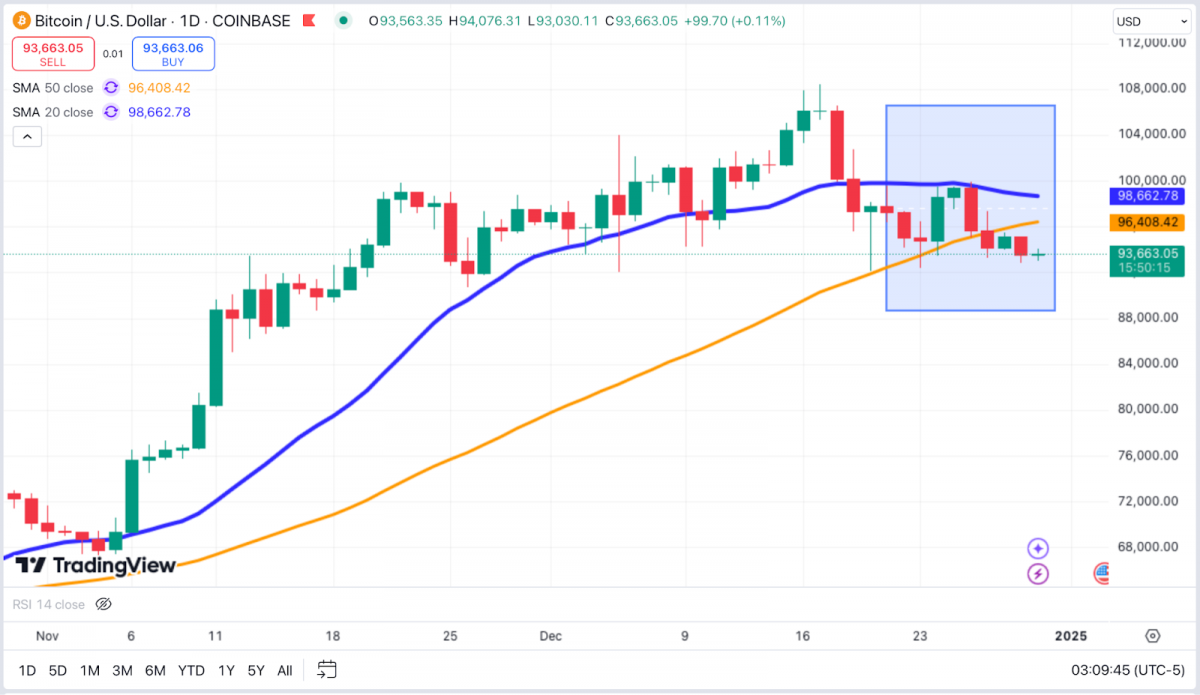
BTC price analysis for investors

BTC/USD 1D Chart, Coinbase. Source: TradingView

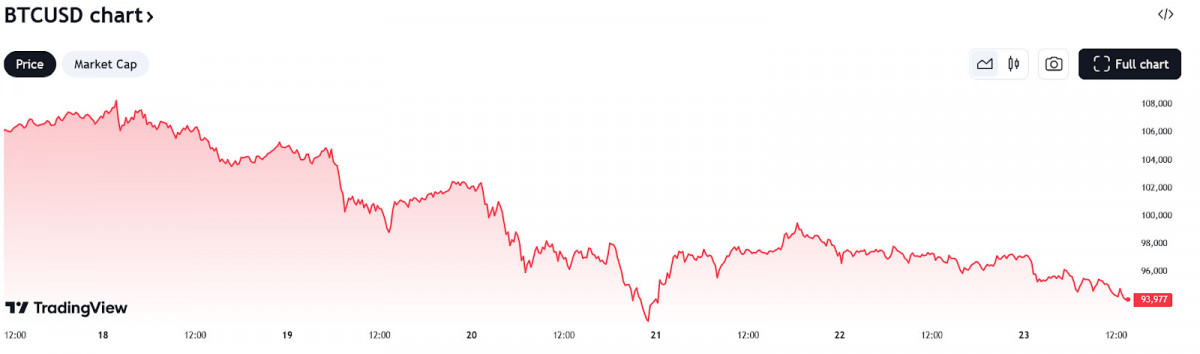
After peaking at $108,135, Bitcoin has slid roughly 10%, now hovering near $92,500. Traders are laser-focused on key support levels, asking the million-dollar question: is this just a healthy pause, or could 2025 start with a stumble?

Bitcoin’s change in price over the last week

Source: TradingView

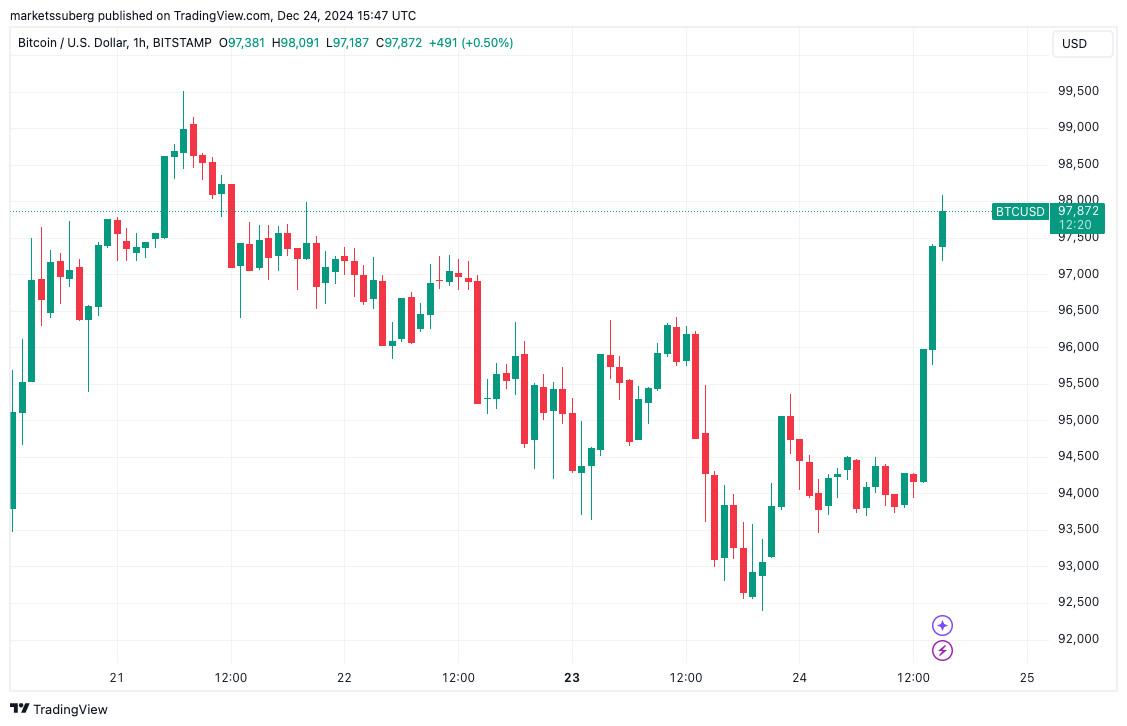
There’s still a flicker of holiday optimism. A brief “Santa rally” earlier this week pushed Bitcoin back up to $98,000, showing that bullish momentum isn’t entirely spent. 

BTC/USD 1-hour chart.

BTC/USD 1-hour chart. Source: Cointelegraph/TradingView

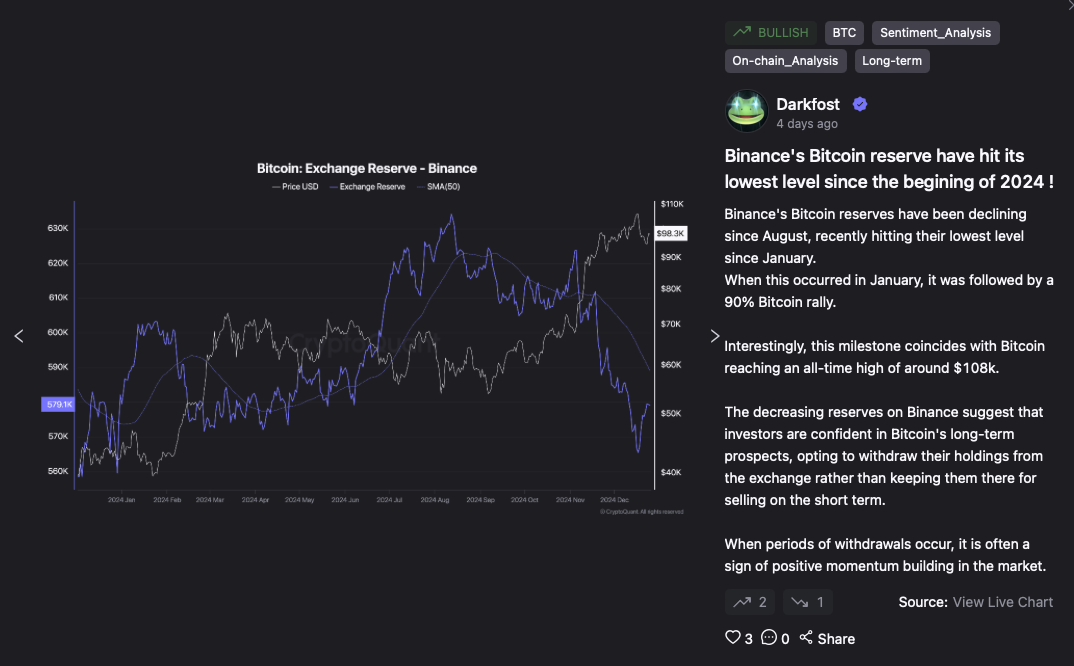
Binance reserves, now at their lowest since January, have fueled cautious hope – after all, similar levels preceded a major rally earlier this year. CryptoQuant's latest report

Source: CryptoQuant

But yeah, the correction has dragged on long enough to make even die-hard bulls pause and reassess.

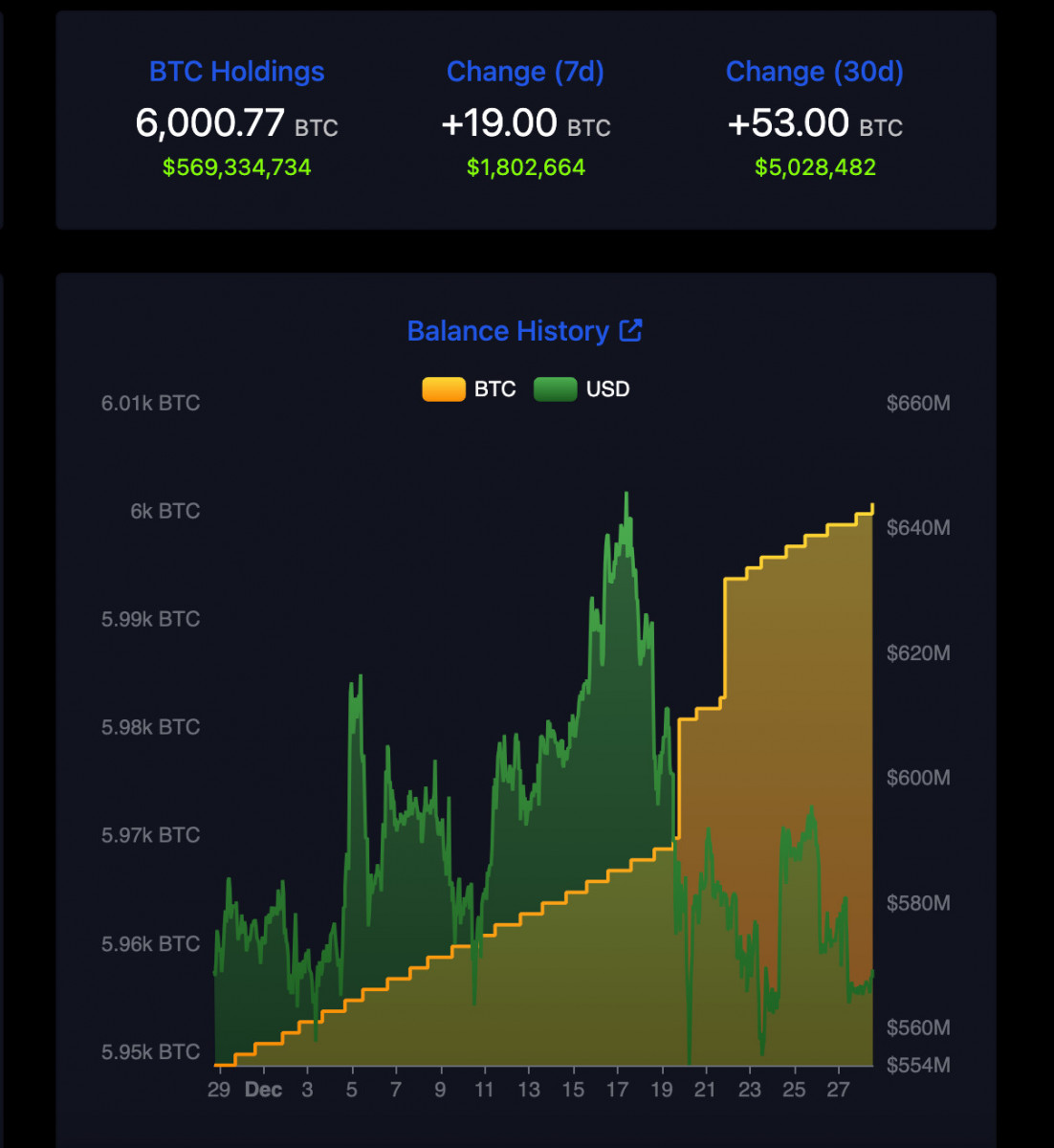
Globally though, Bitcoin has still been flexing its muscle. For one, El Salvador made waves by surpassing 6,000 BTC in its holdings, placing it among the top sovereign Bitcoin owners. 

El Salvador total Bitcoin holdings.

Source: El Salvador Bitcoin Office

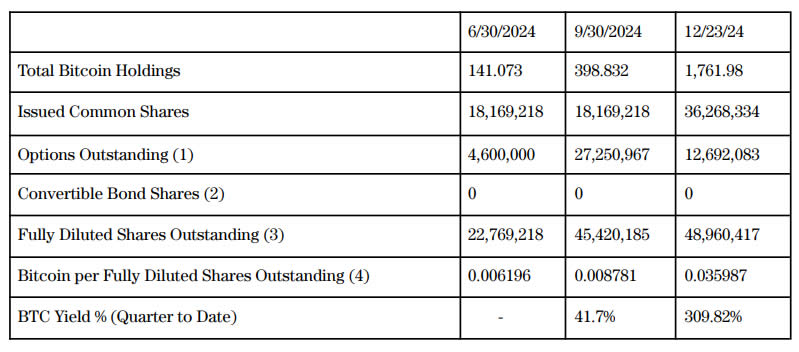
In Japan, Metaplanet capitalized on the dip with its largest Bitcoin purchase yet – $60 million worth – while Russia made headlines by allowing Bitcoin for foreign trade. These moves speak volumes to Bitcoin’s evolving role on the geopolitical stage.

Japan

Metaplanet BTC Yields.

Source: Metaplanet

Stateside, the Bitcoin story has been just as eventful. MicroStrategy ended the year by adding 5,200 BTC to its holdings, bringing its total to a jaw-dropping 439,000 BTC, worth over $41 billion. 

Bitcoin Price, MicroStrategy, Michael Saylor, Companies

Source: Michael Saylor

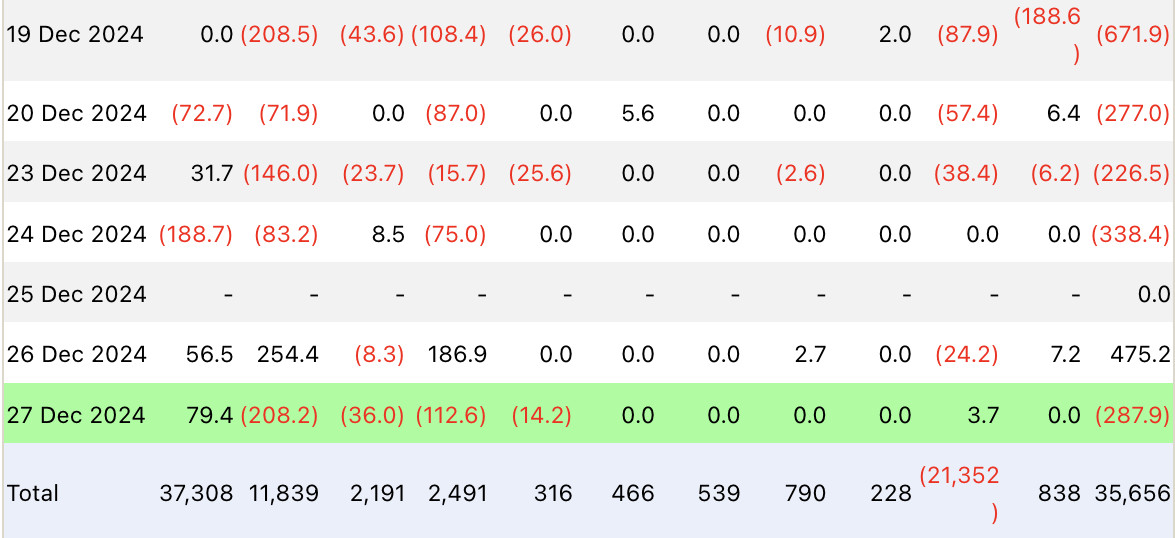
Meanwhile, U.S. Bitcoin ETFs had a rocky close to the year – BlackRock’s fund is bleeding $1.5 billion over four days before inflows started to trickle back after Christmas. 

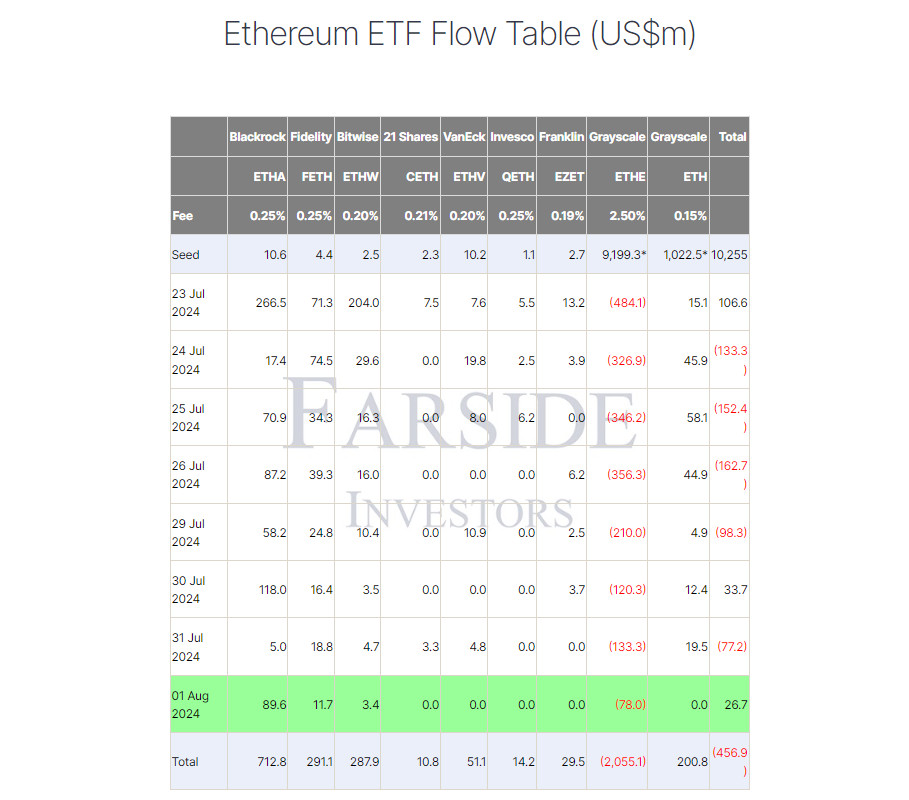
Ethereum ETFs posted a $26.7 million net inflow on Aug. 1.

Source: Farside Investors

We’re living through some pretty legendary times, aren’t we? Remember when $100,000 for Bitcoin felt like a pipe dream? Now it’s in the books, a milestone that’s cemented its place in crypto history. But as the final days of 2024 slip away, the excitement has been tempered by a correction that’s run deep enough to make even the most bullish take a step back. The big question now is whether 2025 kicks off with a roaring comeback or another bout of turbulence. Either way, the next chapter in Bitcoin’s wild story is just around the corner, and it’s bound to keep us on the edge of our seats.

Ethereum

Meanwhile, Ethereum has been quietly making its mark, particularly in the ETF market. December alone saw inflows into Ether ETFs more than double, bringing the yearly total past $2.5 billion. 

Data, Ethereum ETF, Bitcoin ETF, BlackRock

Spot Bitcoin ETF flow data from Dec. 19 to Dec. 27.

Source: Farside Investors

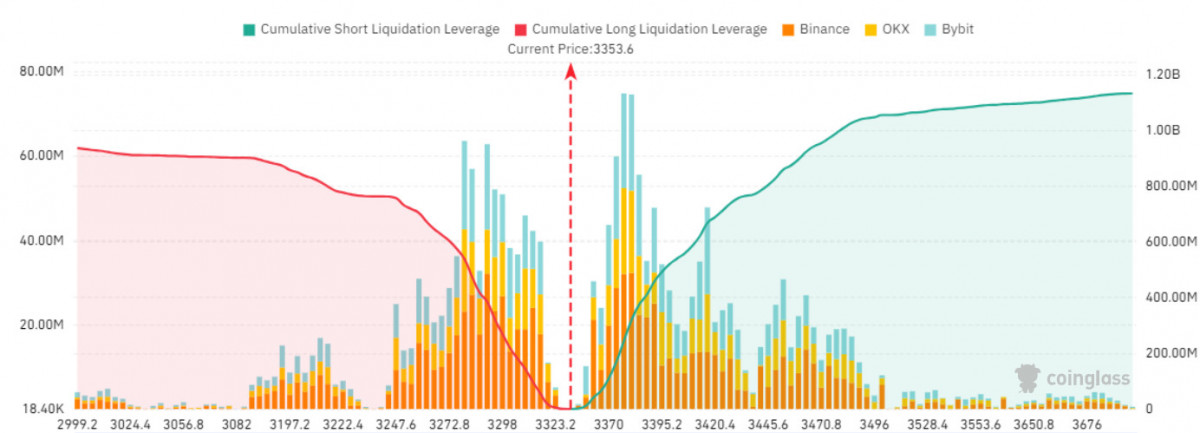
Despite this impressive momentum, Ethereum has struggled to break through the $3,500 resistance, a level that could unlock over $1 billion in liquidations if breached. For now, though, it remains a tough barrier.

Ether exchange liquidation map chart.

Source: CoinGlass

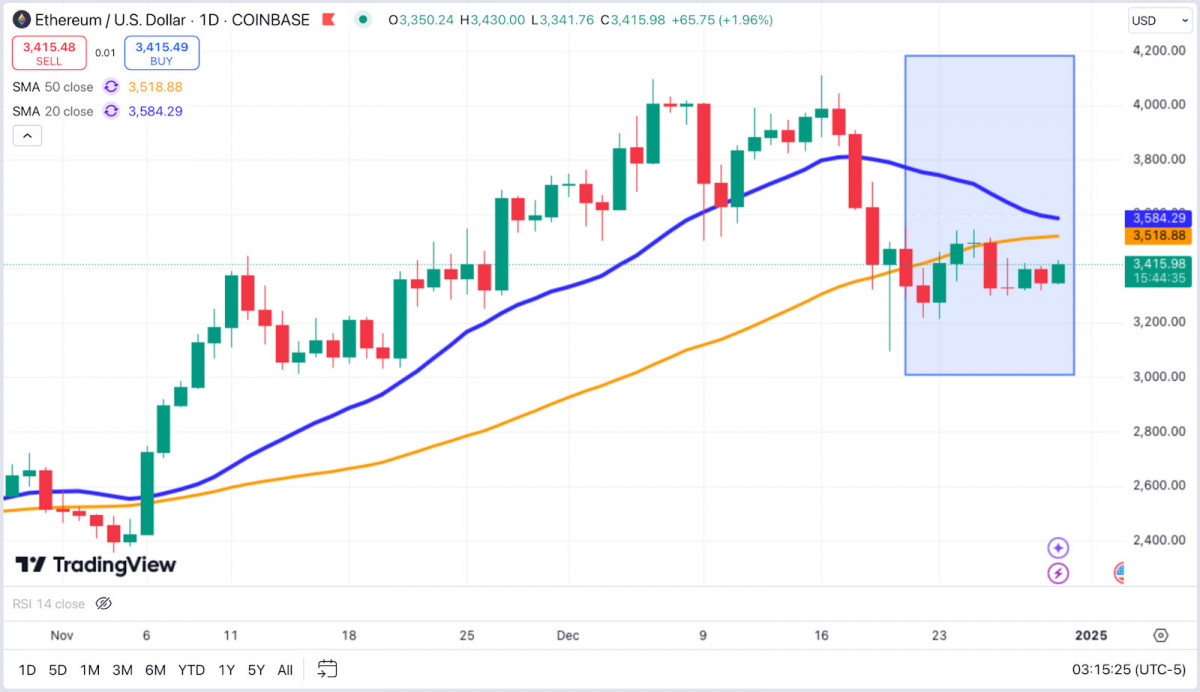
Ethereum hasn’t escaped the broader market pullback, shedding roughly 10% in recent weeks. 

ETH price analysis for investors

ETH/USD 1D Chart, Coinbase. Source: TradingView

However, its role as the backbone of decentralized finance and smart contracts continues to underpin its long-term appeal. Analysts suggest this versatility will be crucial as adoption accelerates in 2025, particularly as Ethereum’s ecosystem grows and altcoin markets prepare for what could be a strong year.

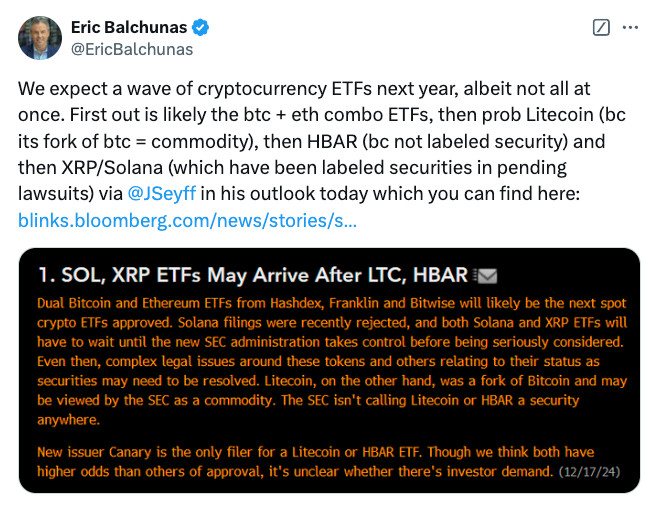
Crypto’s 2024 Finale: Bitcoin Hits Milestones, Ethereum Eyes $3.5K, TON Quietly Thrives

Source: Eric Balchunas

The surge in ETF interest is a testament to Ethereum’s rising prominence. Together with Bitcoin, crypto ETFs brought in $38.3 billion in 2024, with retail investors leading the charge. Looking ahead, institutional investors are expected to play a bigger role, drawn by Ethereum’s growing utility and strong fundamentals. 

As the clock winds down on 2024, Ethereum feels like it’s gearing up for a show-stopping 2025. Heavy hitters like VanEck are already tossing around bold targets – $6,000, anyone? – on the back of Ethereum’s relentless push to expand its utility and fortify its network.VanEck's Ethereum projection for 2025

Source: VanEck

The road ahead for Ethereum isn’t without its bumps – its ongoing battle to break past that $3,500 resistance makes that crystal clear. But as we close the book on 2024, Ethereum’s knack for combining innovation with scalability is pulling in more institutional interest and strengthening its foothold in decentralized finance. With growing momentum around ETFs, stablecoin adoption, and crosschain development, Ethereum is shaping the very direction of the ecosystem. As the new year approaches, it’s clear Ethereum’s story is still worth paying attention to.

TON

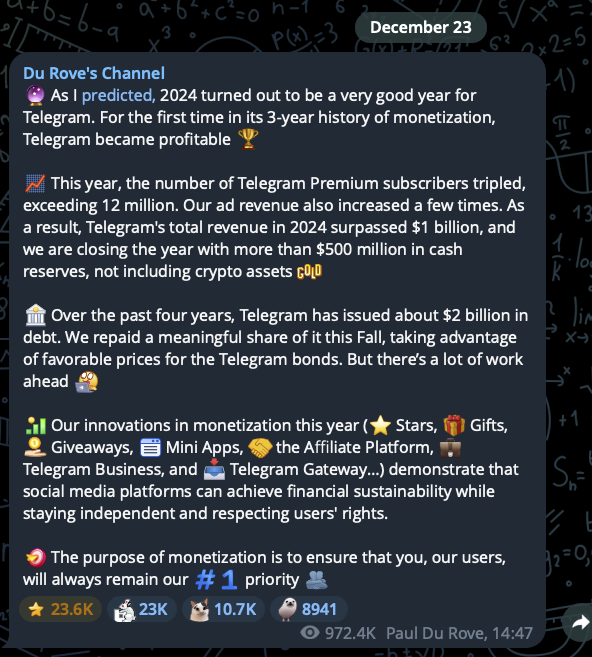
While Bitcoin and Ethereum duke it out for dominance, TON is over here playing it cool, quietly carving out its niche by weaving blockchain tech into Telegram’s massive ecosystem. And as we step into 2025, it’s doing so with a mix of innovation, creativity, and a touch of fun. Telegram just dropped some big news – turning profitable for the first time ever, raking in over $1 billion in revenue this year.Pavel Durov's end-yer announcement on Telegram 

Source: Du Rove’s Channel

And while TON’s not included in that figure, the connection is impossible to miss. With Telegram expanding into new markets, like its recent push for a license in Malaysia, TON’s credibility is climbing right along with it.

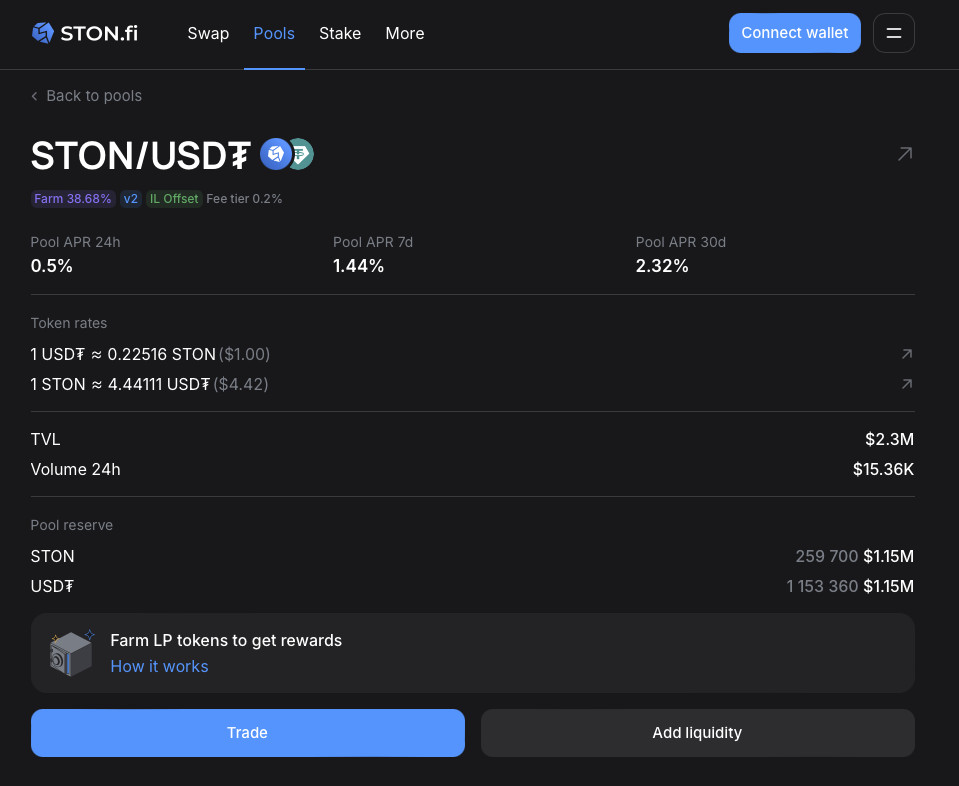
STON.fi STON/USDT liquidity pool DEX

Source: STON.fi

TON isn’t just riding on Telegram’s coattails, though – it’s making its own moves. STON.fi has announced partial impermanent loss protection for its STON/USDT V2 liquidity pool, kicking off in January. It’s a practical step forward for DeFi users looking for safer ways to play the liquidity game. And then there’s Hamster Combat – yes, it’s real – a game launching its own Layer 2 network on TON. It’s proof that TON isn’t just about serious blockchain infrastructure; it’s a canvas for creative, quirky projects that bring a little personality to the space.

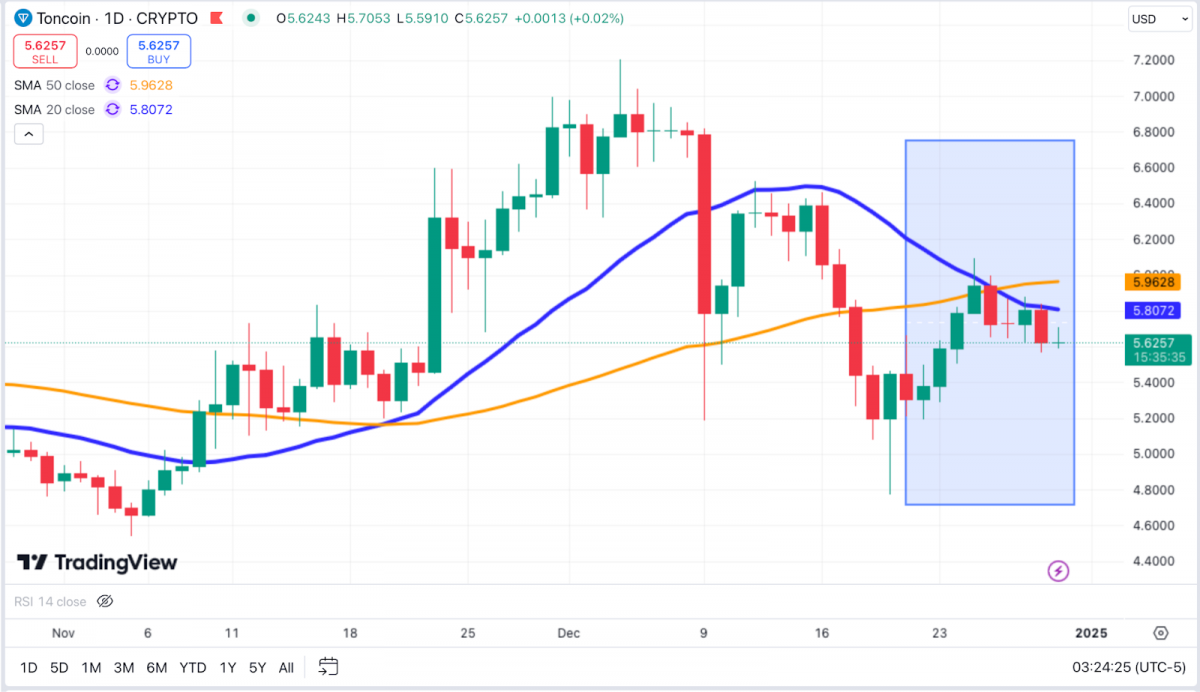
2024 has been a breakout year for The Open Network (TON), packed with milestones that have pushed it into the spotlight. Its tight integration with Telegram has been a game-changer, driving a jaw-dropping 5000% surge in wallet creation and fueling a rapidly growing user base. The ecosystem hasn’t just expanded – it’s flourished, with new projects, applications, and over 20 global events bringing developers and communities together to innovate and collaborate. On the market side, Toncoin (TON) closed the year trading at $5.90, with a market cap surpassing $13.7 billion, landing it among the top 10 cryptocurrencies. 

Toncoin price analysis for investors

TON/USD 1D Chart. Source: TradingView

It’s safe to say TON is thriving, each new update setting the stage for an even bigger presence in the blockchain world. 

So, as 2024 wraps up, TON feels like the blockchain equivalent of a well-kept secret – doing its own thing while the giants battle it out. With Telegram’s reach and TON’s growing ecosystem of tools, games, and DeFi features, 2025 could be the year this quiet contender makes some serious noise.

Disclaimer

In line with the Trust Project guidelines, please note that the information provided on this page is not intended to be and should not be interpreted as legal, tax, investment, financial, or any other form of advice. It is important to only invest what you can afford to lose and to seek independent financial advice if you have any doubts. For further information, we suggest referring to the terms and conditions as well as the help and support pages provided by the issuer or advertiser. MetaversePost is committed to accurate, unbiased reporting, but market conditions are subject to change without notice.

About The Author


Victoria is a writer on a variety of technology topics including Web3.0, AI and cryptocurrencies. Her extensive experience allows her to write insightful articles for the wider audience.

More articles


Victoria d’Este


Victoria is a writer on a variety of technology topics including Web3.0, AI and cryptocurrencies. Her extensive experience allows her to write insightful articles for the wider audience.


Source link

What is Notcoin in 8 Questions? What You Need to Know About NOT Token! – Metaverseplanet.net

0
What is Notcoin in 8 Questions? What You Need to Know About NOT Token! – Metaverseplanet.net


Notcoin (NOT) has quickly become one of the most popular altcoins of 2025. It has breathed new life into the blockchain-based play-to-earn concept and paved the way for Telegram games where users can earn cryptocurrency.

We have provided detailed answers to questions like “What is Notcoin?” and “How to earn NOT tokens?” in our related guide. You can click here to read this article. However, we understand that answering specific questions about Notcoin can also offer a simple and accessible way to understand this popular gaming token. Maybe you’re not interested in diving into all the intricacies of Notcoin—perhaps there are just a few aspects you’re curious about. To help, we’ve compiled Notcoin explained in 8 questions, which serves as a kind of “Frequently Asked Questions about Notcoin” post!

Notcoin in 8 Questions (NOT)

1.What is Notcoin?

Notcoin (NOT) is a clicker game played on Telegram. In this simple game, players interact with a Notcoin bot to earn cryptocurrency by clicking on the gold coin image shared by the bot. Each click earns cryptocurrency. Players can use their in-game coins to buy boosters, increasing their revenue potential while playing Notcoin.

2. What is a NOT token?

The NOT token is the cryptocurrency of the Notcoin game. Players can exchange the in-game coins they earn by playing Notcoin for NOT tokens. These tokens can then be converted into fiat currencies like U.S. dollars. The exchange rate between in-game coins and NOT tokens is set at 1000:1—so, for every 1000 in-game coins, players receive 1 NOT token.

The NOT token is considered one of the top gaming tokens of 2025.

3. What is the total supply of NOT tokens?

The total supply and max supply of the NOT token is 102,719,221,714.

4. What network does Notcoin operate on?

Did you know that Telegram, one of the world’s largest messaging platforms, has developed its own blockchain network? This network, called The Open Network (TON), was created in 2018. In 2020, Telegram handed over management of the network to the TON Foundation. Notcoin (NOT) operates on this blockchain network.

5. Who developed Notcoin?

Notcoin (NOT) was created by Open Builders, a company focused on developing blockchain games on The Open Network. The founder of Open Builders is Sasha Plotvinov.

6. How to play Notcoin?

This is the question everyone asks the most: “How do I play Notcoin?” Or more specifically, “How do I make money with Notcoin?”

Making money by playing Notcoin is easier than you think. Follow these four simple steps:

Create a Tonkeeper, MyTonWallet, or Tonhub cryptocurrency wallet account.

Open the Telegram app and start a chat with the Notcoin bot.

Click on the link sent by the Notcoin bot and connect your TON wallet to the Notcoin app.

Start the game by typing /start in your chat window with the Notcoin bot!

7. Does Notcoin have a whitepaper?

A whitepaper typically outlines the technical details of a blockchain project. In the world of cryptocurrency, nearly every project publishes one. Notcoin does have a whitepaper—but it’s unlike any other. The Notcoin whitepaper consists of blank pages, except for the first page, which reads: “Notcoin Whitepaper – November 2023”! If you’d like to view it for yourself, you can access the NOT whitepaper by clicking here.

8. Where to get NOT tokens?

Interested in acquiring NOT tokens? You don’t need to play the game to get involved in this exciting project. NOT tokens can also be purchased on popular cryptocurrency exchanges that support TON blockchain assets. This makes it easy for players and investors alike to participate in the Notcoin ecosystem. going to use it. Maybe you just want to invest in it…

Follow us on TWITTER (X) and be instantly informed about the latest developments…

Copy URL


Source link

Top 10 Play-to-Earn Projects to Follow in 2025 – Metaverseplanet.net

0
Top 10 Play-to-Earn Projects to Follow in 2025 – Metaverseplanet.net


The concept of play-to-earn emerged thanks to cryptocurrencies and has transformed the gaming industry. Players can now earn cryptocurrencies from the games they play and convert them into fiat money on exchanges such as Metaverseplanet.

So, which play-to-earn games should be on our radar in 2025? We have compiled the top 10 projects for you.

Top 10 Play-to-Earn Projects in 2025

New blockchain games are entering the market daily, while existing games continue to evolve with updates. Here are the top 10 play-to-earn games you should follow in 2025:

Decentraland (MANA)

Decentraland (MANA), a metaverse game, remains one of the most popular play-to-earn projects. Decentraland allows players to buy and sell virtual land in the form of NFTs and create their own structures and events on the land they own. Players can earn income from these events or by selling their land in the marketplace.

The ERC-20-based MANA token, one of the most popular metaverse tokens, is used for all transactions on the Decentraland platform.

The Sandbox (SAND)

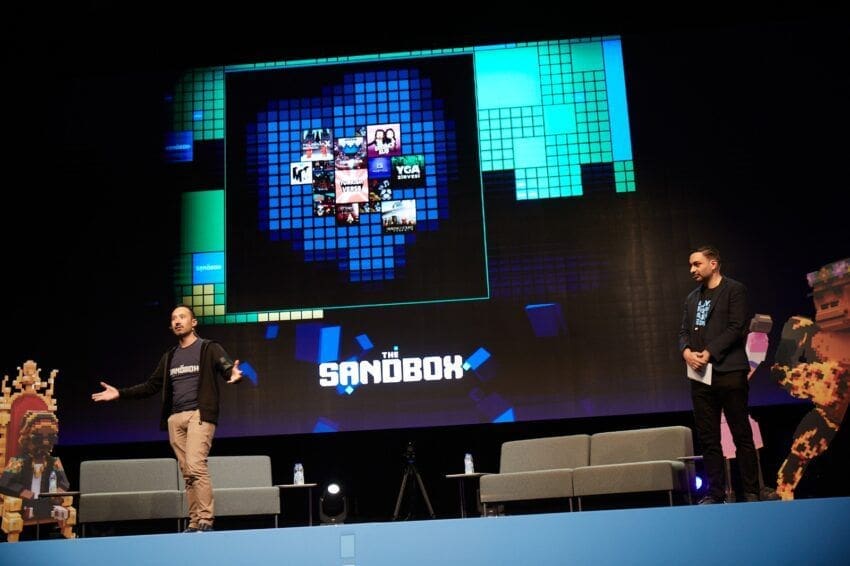
Developed by Pixowl, The Sandbox (SAND) enables players to buy and sell NFT land, similar to Decentraland. Players can create their own structures, events, and games on their land. The Sandbox has consistently been among the best play-to-earn games for years.

The SAND token, the platform’s native cryptocurrency, is one of the most popular metaverse tokens.

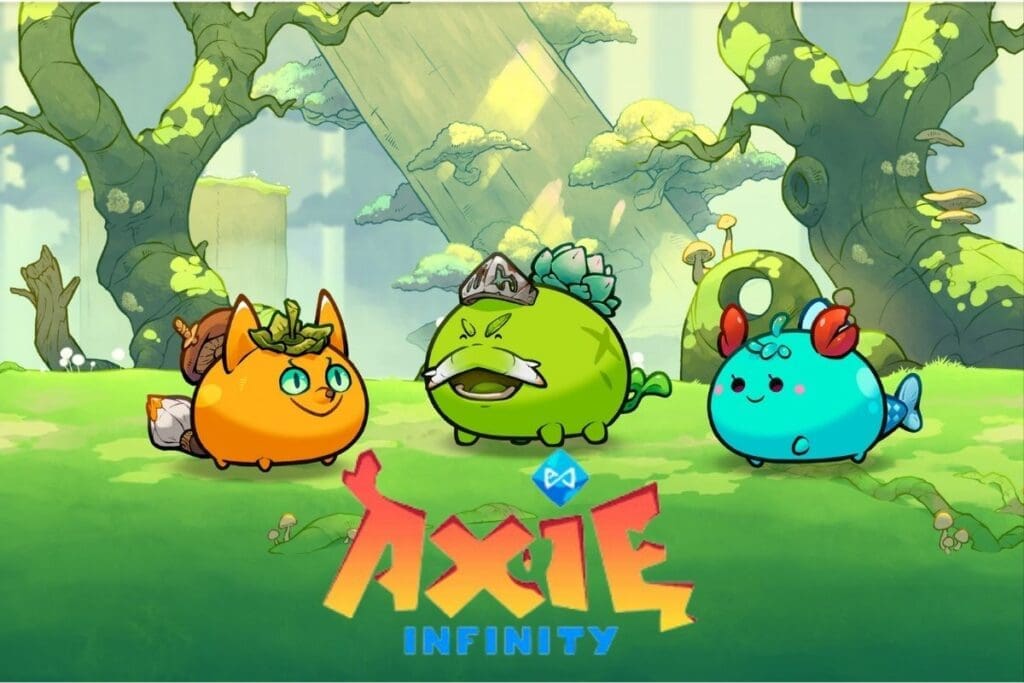
Axie Infinity (AXS)

One of the first play-to-earn games, Axie Infinity (AXS), may have lost some popularity in recent years, but it remains one of the most-played play-to-earn games. In 2025, Axie Infinity continues to hold its ground.

Inspired by Pokemon, players collect and develop NFT creatures called Axies and engage them in battles. Through these challenges, players can earn cryptocurrency and generate income by selling Axie NFTs on the NFT marketplace.

The AXS token, the governance token of Axie Infinity, is one of the most popular gaming tokens.

Alien Worlds (TLM)

Alien Worlds (TLM), one of the most popular NFT games, remains a key play-to-earn project to follow in 2025. This space-themed game is centered on mining Trillium (TLM) tokens on lands across different planets using various NFT tools. Depending on the quality and features of your tools, you can earn TLM tokens or NFTs, which can later be sold.

Alien Worlds stands out by allowing in-game planets to be managed through a DAO. In an era where decentralization has become increasingly significant, this feature adds to the game’s appeal.

RobotEra (TARO)

Among the play-to-earn games attracting the most attention in 2025 is RobotEra (TARO). Released in late 2022, RobotEra offers a metaverse where players can buy and create robot NFTs, purchase virtual plots of land, and construct buildings.

However, this metaverse differs from platforms like Decentraland and The Sandbox. The universe of Taro is a post-apocalyptic world devastated by catastrophe. Players are tasked with rebuilding this world, exploring it using NFT avatars, and beautifying the planet by developing the lands they’ve acquired.

With an NFT creation tool, RobotEra players can design their own NFT robot companions and sell them on the NFT marketplace. Renting billboards on their land to brands offers another income-generating opportunity. Additionally, players can earn by staking the TARO token, the game’s native cryptocurrency.

It is expected that new features will be added to RobotEra over time, expanding its utility and appeal.

Calvaria (RIA)

Calvaria (RIA) aims to bridge the gap between the real world and the crypto world, according to the project team. It promises both playability to compete with major gaming titles and an innovative tokenomics model to incentivize players.

Calvaria offers a play-to-earn version for crypto enthusiasts and a free-to-play version for casual gamers. Unlike many other play-to-earn games, it is playable on both mobile devices and computers.

A trading card game, Calvaria features diverse and well-designed characters. Its universe represents a world after death, where players can earn the eRIA token, the in-game version of the project’s native cryptocurrency, the RIA token. The RIA token is one of the most striking gaming tokens of 2025.

Silks (STT)

Have you ever wanted to breed horses and race them? Silks (STT) is a play-to-earn game designed for horse racing enthusiasts, combining metaverse gameplay with blockchain technology. Silks acts as a bridge between reality and the metaverse.

In Silks, players create digital NFT horses based on real racehorses’ training history, race records, bloodlines, and other data. This allows players to own NFT horses linked to real-life racehorses. As the real-life counterpart of your NFT horse wins races, you’re rewarded with STT tokens, the game’s native cryptocurrency. Players can also race their Silks NFT horses on virtual racetracks to earn additional rewards.

Silks was one of the standout play-to-earn games of 2022 and continues to attract attention in 2025.

Tamadoge (TAMA)

Dogecoin (DOGE) may have started as a joke coin, but it has evolved into much more. As the Dogecoin ecosystem continues to expand, Tamadoge, a play-to-earn game, contributes to this growth.

Tamadoge, which had not yet been released at the time of writing, is set to release its collection of 21,100 NFTs. Each of these NFTs features unique and humorous Doge images. Players can improve their NFTs to increase their value, generating revenue by selling them on the NFT marketplace.

Tamadoge launched its NFTs in 2025. However, the project does not stop there and will also release a play-to-earn game. For these reasons, Tamadoge is one of the must-watch games of 2025.

Girls, Robots, Dragons (GRD)

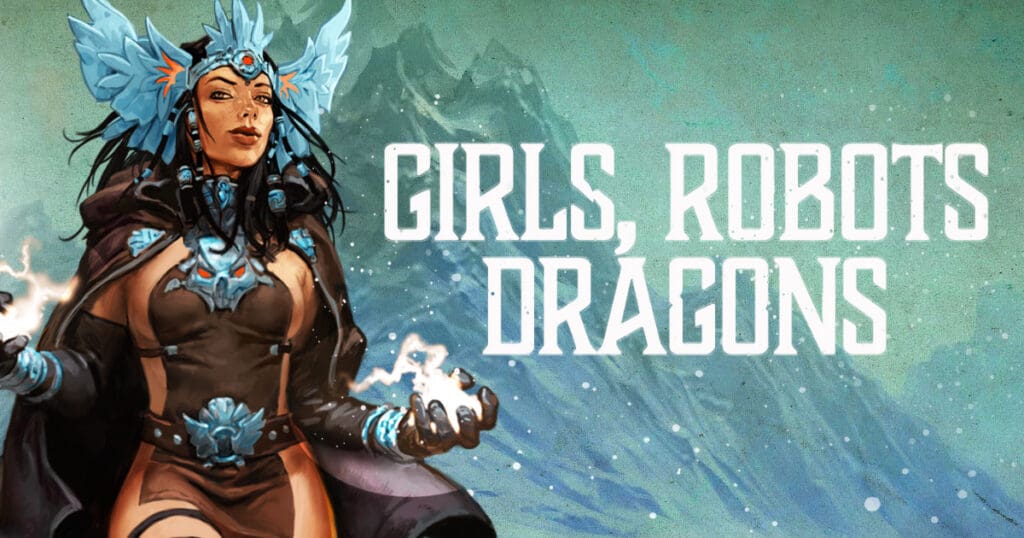
Running on the Ethereum (ETH) blockchain, Girls, Robots, Dragons (GRD) is a fantasy-themed NFT card collection consisting of 9,000 NFTs featuring 15 unique characters (5 girls, 5 robots, and 5 dragons).

Girls, Robots, Dragons stands out for its unique illustrations, created by artists who have previously contributed to projects like World of Women NFTs, Star Wars NFTs, and cards from Hearthstone, one of the most popular card games.

The GRD NFT collection is divided into two series:

3,000 NFTs, available for sale at 0.07 ETH.

6,000 cards, purchasable with DUST utility tokens or as Loyalty Rewards for Ether Card Founder NFT holders.

In addition to being a card collection, Girls, Robots, Dragons is also a card game. Players can use their cards to participate in challenges and earn cryptocurrency.

Owners of the first 3,000 GRD NFTs enjoy additional benefits such as redeemable merchandise, autographs, and virtual meetings with artists.

Girls, Robots, Dragons is undoubtedly one of the must-watch play-to-earn games in 2025.

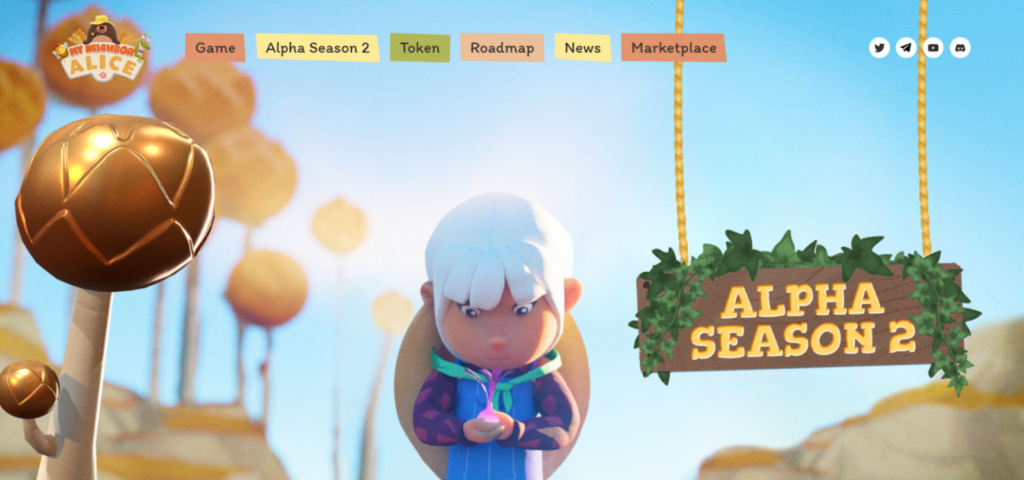
My Neighbor Alice (ALICE)

My Neighbor Alice (ALICE), which had been highly anticipated for some time, is set to be released soon. Even before its launch, My Neighbor Alice generated significant interest. The ALICE token, the game’s native cryptocurrency, is among the most popular gaming tokens.

In My Neighbor Alice, each player owns a farm that they can customize with in-game NFTs. Players can also raise NFT animals on their farms. By completing various tasks or selling their NFTs, players can earn cryptocurrencies.

Follow us on TWITTER (X) and be instantly informed about the latest developments…

Copy URL


Source link

Thailand May Accept Bitcoin as a Payment Method – Metaverseplanet.net

0
Thailand May Accept Bitcoin as a Payment Method – Metaverseplanet.net


There is a lot of cryptocurrency market activity in Asia. While the Japanese government is taking a cautious stance on cryptocurrencies, Thailand is preparing to accept Bitcoin as a payment method to boost its economy. It is believed that the actions of Asian states regarding cryptocurrencies are indirectly influenced by the pro-crypto and pro-Bitcoin stance of Donald Trump, who will take office as the US President on January 20, 2025. The new cryptocurrency policies of the United States are likely to trigger a re-evaluation of digital assets and hedgehog coins in many countries.

Japan Says No to Bitcoin Reserves

The election of Donald Trump as the President of the United States has sparked debate over the attitudes of nations toward the cryptocurrency market and the blockchain industry. During his election campaign, Trump stated his support for the cryptocurrency industry and promised to establish a strategic Bitcoin reserve. Following his election victory on November 6, 2024, one of his first actions was the creation of the Government Efficiency Department, headed by Elon Musk. Interestingly, the department’s abbreviation, DOGE, reminded many of Dogecoin, one of Musk’s favorite cryptocurrencies. While building his team, Trump deliberately selected pro-crypto politicians. Now, the world is eagerly waiting for him to officially assume office on January 20, 2025. Meanwhile, nations are reviewing their cryptocurrency policies.

In Japan, MP Satoshi Hamada proposed the creation of a strategic Bitcoin reserve, citing plans from the United States and other countries. However, on December 26, Japanese Prime Minister Shigeru Ishiba issued a statement clarifying the government’s stance. According to the Prime Minister, Bitcoin remains outside the regulatory framework for national currency reserves due to its price volatility, which conflicts with Japan’s financial policies. A report by Coinpost, a Japan-based cryptocurrency news site, highlighted that the government found a Bitcoin reserve unsuitable for its national currency reserve strategies and noted insufficient information regarding the strategic reserve plans of other countries.

Bitcoin Payment Project in Thailand

In contrast, Thailand is taking bold steps toward Bitcoin and cryptocurrencies. Former Thai Prime Minister Thaksin Shinawatra has introduced a project aimed at enabling tourists to pay with Bitcoin. The initiative will be tested in Phuket, one of the country’s leading tourist destinations. According to the Bangkok Post, the project aims to transform Phuket into a digital payments hub, attracting tech-savvy visitors and stimulating the local economy. However, the Bank of Thailand has not yet authorized cryptocurrency payments in the country. The government’s and the central bank’s response to this project is eagerly awaited.

You may also like this content

Follow us on TWITTER (X) and be instantly informed about the latest developments…

Copy URL


Source link

OpenAI Announces O3 Model Successfully Passes ARC-AGI Benchmark Test – Metaverseplanet.net

0
OpenAI Announces O3 Model Successfully Passes ARC-AGI Benchmark Test – Metaverseplanet.net


OpenAI has claimed that its new artificial intelligence model, O3, has reached human-level performance in “general intelligence” tests. In the ARC-AGI benchmark test conducted on December 20, the O3 model scored an impressive 85%, significantly surpassing the previous best AI score of 55%. This result not only represents a remarkable improvement but also matches the performance of the average human. Additionally, the model achieved outstanding results in particularly challenging math problems.

What is AGI and Why is it So Important?

OpenAI Announces O3 Model Successfully Passes ARC-AGI Benchmark Test

Artificial General Intelligence (AGI) refers to an artificial intelligence system capable of thinking, learning, and adapting to various situations in a manner similar to humans. The achievement of AGI has long been considered one of the primary goals in AI research.

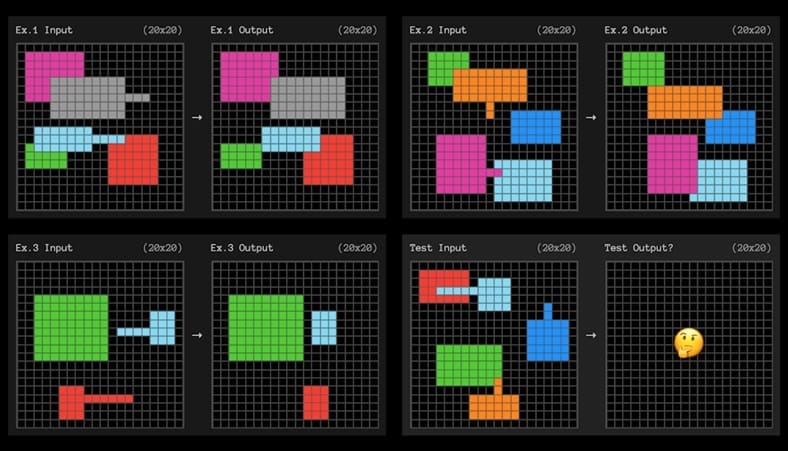
The ARC-AGI test evaluates an AI’s ability to generalize using a minimal number of examples. For instance, the system is expected to recognize patterns in a set of small tables and apply that pattern to a completely new scenario. This closely resembles IQ tests designed to measure human intelligence.

Did the O3 Model Achieve This Feat Independently?

At this stage, it is not entirely clear how the O3 model managed to accomplish this success. Some believe OpenAI might have optimized the model specifically for this test. Experts speculate that O3 could have developed an “intuitive” approach tailored to the ARC-AGI test, meaning its capabilities might not fully translate to real-world scenarios.

If the O3 model has indeed passed the test as claimed, it could mark a turning point in the future of artificial intelligence. In simple terms, this achievement may signify the dawn of the era of self-improving artificial intelligence.

What are your thoughts on this breakthrough? Share your opinions with us in the comments section below.

You May Also Like

Follow us on TWITTER (X) and be instantly informed about the latest developments…

Copy URL


Source link

Exploring Recent Innovations in the Metaverse Realm

The metaverse has rapidly evolved from a speculative concept to a burgeoning digital frontier, captivating the imagination of technologists, businesses, and consumers alike. As a convergence of virtual reality, augmented reality, and the internet, the metaverse represents a new paradigm in how we interact with digital environments. This exploration delves into recent innovations that are propelling the metaverse forward, examining transformative technologies and contemplating the future landscape of these immersive digital realities.

Unveiling Cutting-Edge Advances in the Metaverse

In recent years, the metaverse has witnessed a surge of innovation, propelled by advances in technology and a growing interest from both consumers and enterprises. One of the most notable developments is the enhancement of virtual reality (VR) hardware. Companies like Meta (formerly Facebook), HTC, and Sony have introduced more sophisticated VR headsets with improved resolution, field of view, and wireless capabilities, providing users with more immersive and comfortable experiences.

Augmented reality (AR) is also making significant strides, with devices such as the Microsoft HoloLens and Apple’s rumored AR glasses promising to blend digital and physical worlds seamlessly. These devices are not only becoming more powerful but also more accessible, which is crucial for the widespread adoption of AR technology. The integration of AR into everyday devices like smartphones further accelerates its penetration into the mainstream market.


Beyond hardware, software advancements are playing a pivotal role in the evolution of the metaverse. Developers are leveraging artificial intelligence (AI) to create more dynamic and responsive virtual environments. AI-driven avatars and non-player characters (NPCs) can now interact with users in more realistic and meaningful ways, enhancing the overall experience within virtual worlds.

Blockchain technology is another cornerstone of recent metaverse innovations. It enables the creation of decentralized virtual economies where users can own, trade, and monetize digital assets securely. Platforms like Decentraland and The Sandbox are pioneering these blockchain-based environments, offering users unprecedented control over their digital possessions and identities.

Interoperability is emerging as a key focus for metaverse development, with efforts to create seamless transitions and interactions between different virtual worlds. Initiatives like the Metaverse Standards Forum are working towards establishing common protocols and standards, which would allow users to move their digital assets and identities across various platforms without friction.

Finally, the rise of social and collaborative experiences within the metaverse cannot be overlooked. Virtual concerts, meetings, and events are becoming commonplace, with platforms such as VRChat and AltspaceVR offering spaces for social interaction and collaboration. These experiences are not only transforming how we connect with others but also how we work and play in digital environments.

Transformative Technologies Shaping Virtual Worlds

At the heart of the metaverse’s evolution are transformative technologies that are reshaping virtual worlds. Virtual reality is at the forefront, with its ability to immerse users in entirely digital environments. The latest VR headsets are equipped with advanced sensors and tracking systems, allowing for precise movement and interaction within these spaces. This technology is crucial for applications ranging from gaming to virtual tourism and education.

Augmented reality, on the other hand, overlays digital information onto the real world, providing a unique blend of physical and digital experiences. AR is becoming increasingly sophisticated, with developments in spatial mapping and object recognition. These advancements enable users to interact with digital content in a more intuitive and natural manner, opening up new possibilities for industries such as retail, healthcare, and entertainment.

Artificial intelligence is another transformative force in the metaverse, driving smarter and more adaptive virtual environments. AI algorithms can analyze user behavior and preferences to tailor experiences in real-time, creating personalized and engaging interactions. Moreover, AI is essential for the development of virtual assistants and chatbots that can facilitate communication and navigation within these digital realms.

Blockchain technology underpins the economic infrastructure of the metaverse, enabling secure and transparent transactions. It facilitates the creation of non-fungible tokens (NFTs), which represent ownership of unique digital assets. This has given rise to a new digital economy where creators can monetize their work directly and users can invest in virtual real estate, art, and other collectibles.

Cloud computing plays a vital role in supporting the metaverse by providing the necessary computational power and storage capabilities. As virtual worlds become more complex, the demand for scalable and efficient cloud solutions increases. Cloud-based platforms enable real-time rendering and processing of vast amounts of data, ensuring smooth and uninterrupted experiences for users.

Finally, 5G technology is revolutionizing connectivity within the metaverse. With its high-speed, low-latency networks, 5G enables seamless streaming of high-quality content and supports the real-time interactions required for immersive experiences. This connectivity is essential for enabling large-scale virtual events and fostering global collaboration within digital environments.

Navigating the Future Landscape of Digital Realities

As we look to the future, the landscape of digital realities is poised to undergo significant transformations, driven by ongoing innovations in the metaverse. One of the major trends is the increasing convergence of virtual and physical worlds. This hybrid reality will enable users to seamlessly transition between digital and real environments, enhancing both personal and professional experiences.

The concept of the metaverse as a persistent, shared virtual space is gaining traction, with tech giants and startups alike investing in creating interconnected ecosystems. These platforms aim to offer users a cohesive experience where digital identities, assets, and interactions are unified across various applications and environments.

The democratization of content creation is another anticipated development, as tools for building virtual worlds become more accessible. This will empower a broader range of creators, from individuals to small businesses, to contribute to the metaverse, fostering diversity and innovation in digital content and experiences.

Privacy and security are critical considerations as the metaverse evolves. Ensuring user data protection and creating safe virtual environments are paramount to building trust and encouraging adoption. As such, developers and policymakers are working towards establishing robust frameworks and regulations to safeguard users within these digital spaces.

The rise of digital economies within the metaverse presents both opportunities and challenges. While the potential for new business models and revenue streams is immense, issues such as market volatility and digital asset regulation need to be addressed. Balancing innovation with stability will be key to sustaining growth in these virtual economies.

Finally, the metaverse holds the potential to redefine social interactions and community building. As people increasingly engage in virtual spaces, new forms of communication and collaboration will emerge. These interactions will not only reshape personal relationships but also influence cultural and societal norms, leading to a reimagined digital society.

The metaverse stands at the cusp of a transformative era, driven by rapid technological advancements and a growing interest in digital realities. As we navigate this new frontier, the innovations unfolding within the metaverse promise to reshape how we interact, work, and play in virtual environments. While challenges remain, the potential for creative expression, economic opportunity, and global connectivity is boundless. As the metaverse continues to evolve, it invites us to reimagine the possibilities of digital existence and explore the uncharted territories of this immersive digital realm.

Pioneering Progress: Crypto.com, Bitget, and Others Redefining the Tech Landscape

0
Pioneering Progress: Crypto.com, Bitget, and Others Redefining the Tech Landscape


In Brief

Major players like Crypto.com and Bitget are driving innovation across finance, gaming, and blockchain, reshaping how we interact with technology.

Pioneering Progress: Crypto.com, Bitget, and Others Redefining the Tech Landscape

In this week’s updates, we take a look at many developments, from revolutionizing token trading and AI-powered finance to creating seamless Web3 gaming experiences. 

Major players like Crypto.com, Bitget, and Circle of Games are not just advancing the digital economy but reshaping how we interact with technology. 

As these pioneers push boundaries, their collaborations promise to redefine the future of finance, gaming, and beyond, creating a new era where the lines between the digital and physical worlds blur in exciting ways.

Bitget & Fiat24 Offer Crypto PayFi Solutions

Bitget, a leading name in the cryptocurrency space, has joined forces with Swiss fintech innovator Fiat24 to push the boundaries of crypto payment solutions. The partnership aims to create seamless integration between digital assets and traditional financial systems, focusing on Ethereum (ETH), Bitget Token (BGB), and USD Coin (USDC).

Bitget’s existing services, like Bitget Pay for instant low-cost crypto payments and the globally accepted Bitget Card for converting crypto to fiat, have laid a strong foundation. Fiat24 complements this with its blockchain-based banking platform, offering users in over 65 countries Swiss offshore accounts and Mastercard debit cards, enhancing transparency and user ownership.

Together, the two companies envision reshaping financial accessibility. Bitget plans to make crypto payments a mainstream reality, while Fiat24’s infrastructure ensures secure and user-friendly transactions. 

Gracy Chen, Bitget’s CEO, highlighted the partnership as a key step toward empowering users worldwide, particularly those without access to traditional banking with crypto-enabled financial solutions.

This collaboration represents a significant step in advancing PayFi technologies, signaling a future where digital currencies play a central role in everyday financial activities. By driving innovation and adoption, Bitget and Fiat24 aim to bring crypto closer to becoming a universal financial tool.

COG’s Web3 Gaming Partnership

At the Global Game Show in Dubai, Circle of Games (COG) unveiled their web3-powered gaming platform, marking a significant advancement in casual gaming innovation. The platform integrates blockchain technology with user-friendly gameplay, providing an accessible experience for both blockchain novices and gaming enthusiasts.

Key industry players, including Nazara Technologies and The Hashgraph Group, back this groundbreaking initiative. The platform premiered with six games, including popular titles like Chess and Ludo-Classic, showcasing how blockchain can be seamlessly integrated without overwhelming users. 

By early 2025, COG aims to extend its offers to 10 games, seeking to grab a bigger audience with various interests. Leveraging the Hedera blockchain, the platform now has 500,000 active users and is putting its sights on 25 million worldwide users over the next two years.

With its launch in Dubai, COG is targeting rapid expansion across the MENA region, including Saudi Arabia, Egypt, and Turkey, as part of its ambitious plan to attract millions of players by 2027. 

CEO Rabilal Thapa highlighted the company’s vision to make blockchain technology accessible while enhancing gaming experiences. As gaming continues to evolve, COG is leading the charge in bridging traditional gameplay with the decentralized world of web3.

bitgrit & BTSE to Debut the BGR Token

Japan-based AI innovator bitgrit has joined forces with global cryptocurrency exchange BTSE to debut its BGR token, marking a pivotal step in blending artificial intelligence and blockchain. This strategic partnership positions bitgrit to extend its global reach while empowering users with secure, efficient access to the BGR token.

In addition to providing a trading platform, the token’s listing on BTSE raises its profile among global investors. With careful preparation, bitgrit hopes to make BGR available to a wide range of people all over the world by integrating it into BTSE’s ecosystem. Creating practical applications that bridge the gap between cutting-edge technology and daily usage is bitgrit’s larger aim, and this milestone is in line with that.

By using BTSE’s vast network to promote adoption, the cooperation also opens the door for bitgrit to increase its market presence. The BGR token is the backbone of bitgrit’s ecosystem, which aims to bring together investors, data scientists, and developers to unleash AI’s full potential.

Bitgrit and BTSE are collaborating to redefine technology’s role in producing transformational, global solutions by merging AI and blockchain. Their goal is to develop a decentralized economy that promotes innovation and sustainable growth.

The partnership between Formula 1 and Crypto.com, which started in 2021, has been extended until 2030. The two groups’ shared goals of increasing participation from fans and education about the bitcoin market are highlighted by this renewal.

Formula 1 has attracted a massive worldwide audience since the relationship began, with a total of 1.5 billion TV watchers, 750 million fans, and 96 million followers on social media. At the same time, Crypto.com has become the undisputed leader in the cryptocurrency sector, with a user base of over 100 million people worldwide.

As part of the prolonged deal, Crypto.com will place an emphasis on providing unique fan experiences and activations at different Grands Prix, including visible branding throughout important races. The new agreement ensures that Crypto.com, which has been present at the Formula 1 Crypto.com Miami Grand Prix from its inception in 2022, will maintain its status as the Official Title Partner of the event.

Optimistic about the future of cryptocurrencies and the partnership’s possibilities, Steven Kalifowitz, Chief Marketing Officer of Crypto.com, highlighted the significance of Formula 1 in increasing the brand’s worldwide visibility. This revitalization is in line with Crypto.com’s lofty goals for 2025, which is when the firm plans to establish itself as the go-to spot for all things related to digital money and cryptocurrency.

Crypto.com is the clear market leader in bitcoin services, and they just started the Crypto.com Custody Trust Company, a trust company based in the United States. This change makes it possible for the company to provide safe asset holding services to qualifying institutions and customers in the US and Canada.

In the following weeks, digital assets for consumers in these locations will be effortlessly moved to the new platform. Crypto.com guaranteed users they would maintain uninterrupted access to their accounts and money during the transition and will be kept updated every step of the way.

“This is a landmark move,” said Kris Marszalek, co-founder and CEO of Crypto.com. He emphasized the platform’s continuous efforts to improve services and grow its presence in these crucial areas and said it reinforced the company’s trust in the North American crypto environment.

In a separate announcement, Crypto.com revealed a partnership with Deutsche Bank to support corporate banking operations in Singapore, Australia, and Hong Kong. This collaboration aims to improve operational efficiency while laying a strong foundation for further expansion.

Karl Mohan, Crypto.com’s General Manager for APAC and MEA, emphasized that teaming up with a renowned financial institution underscores Crypto.com’s focus on security, compliance, and global growth.

Disclaimer

In line with the Trust Project guidelines, please note that the information provided on this page is not intended to be and should not be interpreted as legal, tax, investment, financial, or any other form of advice. It is important to only invest what you can afford to lose and to seek independent financial advice if you have any doubts. For further information, we suggest referring to the terms and conditions as well as the help and support pages provided by the issuer or advertiser. MetaversePost is committed to accurate, unbiased reporting, but market conditions are subject to change without notice.

About The Author


Victoria is a writer on a variety of technology topics including Web3.0, AI and cryptocurrencies. Her extensive experience allows her to write insightful articles for the wider audience.

More articles


Victoria d’Este


Victoria is a writer on a variety of technology topics including Web3.0, AI and cryptocurrencies. Her extensive experience allows her to write insightful articles for the wider audience.


Source link

Popular Posts

My Favorites