Published: February 07, 2025 at 1:00 pm Updated: February 07, 2025 at 3:10 am
by Ana
Edited and fact-checked:
February 07, 2025 at 1:00 pm
To improve your local-language experience, sometimes we employ an auto-translation plugin. Please note auto-translation may not be accurate, so read original article for precise information.
In Brief
Gate.io has introduced a new “Easy Order Placement” feature, enabling new users to quickly start trading, reduce the learning curve, and capitalize on market opportunities.
Cryptocurrency exchange Gate.io introduced a new “Easy Order Placement” feature aimed at simplifying futures trading for beginners. This tool is designed to provide a more user-friendly and secure trading experience, allowing new users to quickly start trading, reduce the learning curve, and take advantage of market opportunities.
For those new to futures trading, it can initially seem overwhelming. However, Gate.io’s “Beginner Easy Order Placement” feature is specifically created to guide users through the process with ease.
Gate.io’s Easy Order Placement acts as a personal assistant, helping users choose the right direction by deciding whether to go “Long,” betting on a price increase, or “Short,” betting on a price decrease, inputting the amount wished to invest and clicking “One-Click Order.” The system will take care of the rest.
The interface is simple and intuitive, designed to be as easy to navigate as using a smartphone for the first time. All necessary information and action buttons are clearly visible, ensuring a smooth experience. To further assist new users, Gate.io offers a variety of beginner-friendly resources directly on the page, such as essential tips, tutorials, and lessons on futures trading.
When users access the Futures Trading page on the Gate.io application, if they don’t have any open positions, the system will display a “Beginner Guide” option in the position area. Users can also access this feature through the “More Settings” and “Learn” tabs.
In order to use the feature, users are encouraged to follow these steps: First, decide whether to go long or short. Next, enter the amount of USDT margin to be used for the position, which will determine the trading cost. Finally, tap “Place Order” to quickly complete the futures trade and open a position.
New Strategies And Expanded Coverage In Gate.io Futures Market
In a fast-evolving market, Gate.io’s Futures Market follows a flexible listing approach, quickly introducing high-quality futures contracts to offer users more investment opportunities. The platform consistently rolls out new contracts targeting popular sectors such as AI and MEME, featuring tokens like AIXBT, AI6Z, FARTCOIN, and PENGU.
In 2024 alone, Gate.io launched over 200 new futures products, efficiently responding to market trends and accurately identifying user demand. For instance, the token VIRTUAL, after being listed on Gate.io’s futures market, saw a peak growth of 10x, providing substantial returns for users. Many other tokens have chosen Gate.io for their initial listings.
Gate.io places a high priority on the security of user assets, utilizing both cold and hot wallet storage and regularly conducting security audits and reserve updates to ensure the protection of funds.
As of January 17th, the platform’s total reserves have reached a record high of $10.328 billion, with a reserve ratio of 128.58%. Additionally, Gate.io’s excess reserves stand at $2.296 billion, reflecting a 28.58% excess reserve ratio and showing a $450 million increase from December 2024—an impressive 24.38% growth. This reinforces the platform’s commitment to providing strong asset protection for its users.
Disclaimer
In line with the Trust Project guidelines, please note that the information provided on this page is not intended to be and should not be interpreted as legal, tax, investment, financial, or any other form of advice. It is important to only invest what you can afford to lose and to seek independent financial advice if you have any doubts. For further information, we suggest referring to the terms and conditions as well as the help and support pages provided by the issuer or advertiser. MetaversePost is committed to accurate, unbiased reporting, but market conditions are subject to change without notice.
About The Author
Alisa, a dedicated journalist at the MPost, specializes in cryptocurrency, zero-knowledge proofs, investments, and the expansive realm of Web3. With a keen eye for emerging trends and technologies, she delivers comprehensive coverage to inform and engage readers in the ever-evolving landscape of digital finance.
More articles
Alisa Davidson
Alisa, a dedicated journalist at the MPost, specializes in cryptocurrency, zero-knowledge proofs, investments, and the expansive realm of Web3. With a keen eye for emerging trends and technologies, she delivers comprehensive coverage to inform and engage readers in the ever-evolving landscape of digital finance.
Published: February 07, 2025 at 11:30 am Updated: February 07, 2025 at 11:24 am
by Ana
Edited and fact-checked:
February 07, 2025 at 11:30 am
To improve your local-language experience, sometimes we employ an auto-translation plugin. Please note auto-translation may not be accurate, so read original article for precise information.
In Brief
Polyhedra Network has launched the “Proof of Love” contest, inviting the community to create designs inspired by its ecosystem with a Valentine’s Day theme and win rewards.
Provider of zero-knowledge interoperability infrastructure, Polyhedra Network announced that it has launched the “Proof of Love” design contest, inviting participants to create designs inspired by the Polyhedra ecosystem with a Valentine’s theme. The contest offers a total prize pool of 2,000 USDT, divided into two categories: the Main Competition rewarded with 1,400 USDT and Random Participation with 600 USDT in rewards.
In order to enter, participants must create a Valentine’s Day-themed design (2D, 3D, GIF, or static image) incorporating the official Polyhedra logo. Entries should be posted on social media platform X by quote-tweeting the official contest announcement and tagging the hashtag #PolyhedraProofOfLove. Submissions must be completed via the official form to verify participation. The deadline for submissions is February 14th, at 23:59 UTC, with winners to be announced on February 19th.
In the Main Competition, 11 winners will be selected, with prizes as follows: 1st Place: 500 USDT, 2nd Place: 300 USDT, 3rd Place: 200 USDT, and 4th-11th Place: 50 USDT each, totaling 400 USDT. Submissions will be evaluated based on 70% creativity and theme alignment, which is judged by the Polyhedra team, and 30% engagement, including likes, retweets, and replies.
Additionally, 30 random participants will each win 20 USDT, with the only requirement being a valid entry. This contest is already underway, with the judging period taking place from February 15th to 18th.
‘Proof of Love’: Participation Rules And Guidelines
Important contest rules include that only original work will be accepted, and plagiarism will result in disqualification. AI-generated designs are not allowed, as the contest seeks to showcase human-powered creativity. Content must adhere to community guidelines, and submissions with NSFW content, hate speech, or inappropriate material will be disqualified. Each participant is eligible for only one prize, though multiple submissions are allowed. Only real accounts will be considered; bots or fake engagement will lead to disqualification.
Polyhedra Network is a Web3 infrastructure project that aims to improve interoperability and scalability between different blockchain ecosystems. It leverages zero-knowledge proof (ZK) technology to ensure secure, trustless, and efficient cross-chain interactions.
One of the core features of Polyhedra is zkBridge, a protocol designed to facilitate seamless transfers of assets, messaging, and data sharing across various Layer-1 and Layer-2 blockchains. By addressing the interoperability challenges faced in the blockchain space, Polyhedra seeks to create a more interconnected and effective decentralized environment.
Disclaimer
In line with the Trust Project guidelines, please note that the information provided on this page is not intended to be and should not be interpreted as legal, tax, investment, financial, or any other form of advice. It is important to only invest what you can afford to lose and to seek independent financial advice if you have any doubts. For further information, we suggest referring to the terms and conditions as well as the help and support pages provided by the issuer or advertiser. MetaversePost is committed to accurate, unbiased reporting, but market conditions are subject to change without notice.
About The Author
Alisa, a dedicated journalist at the MPost, specializes in cryptocurrency, zero-knowledge proofs, investments, and the expansive realm of Web3. With a keen eye for emerging trends and technologies, she delivers comprehensive coverage to inform and engage readers in the ever-evolving landscape of digital finance.
More articles
Alisa Davidson
Alisa, a dedicated journalist at the MPost, specializes in cryptocurrency, zero-knowledge proofs, investments, and the expansive realm of Web3. With a keen eye for emerging trends and technologies, she delivers comprehensive coverage to inform and engage readers in the ever-evolving landscape of digital finance.
Published: February 07, 2025 at 10:20 am Updated: February 07, 2025 at 10:20 am
by Ana
Edited and fact-checked:
February 07, 2025 at 10:20 am
To improve your local-language experience, sometimes we employ an auto-translation plugin. Please note auto-translation may not be accurate, so read original article for precise information.
In Brief
Cryptocurrency users face security risks as scammers exploit flaws in digital wallets, targeting Phantom with phishing techniques and fake pop-up windows, compromising finances.
Cryptocurrency users continue to face security risks as scammers refine their strategies to exploit flaws in digital wallets. Recently, attackers have targeted Phantom, a Solana-based wallet, with phishing techniques intended to trick users into handing over their private keys. These fraudulent assaults depend on fake pop-up windows that imitate official update requests, duping innocent users into compromising their finances.
Security experts at fraud Sniffer, a Web3 fraud detection software, discovered this technique and warned about its possible consequences. According to their findings, criminals link to legitimate Phantom wallets and display deceptive pop-ups urging users to authorize a fraudulent “update extension” signature request.
Scammers now connect to REAL Phantom wallets first, then trick users with a fake “update extension” signature request. After approval, a FAKE modal appears demanding seed phrases.
⚠️ REMEMBER: NEVER enter seed phrases… https://t.co/Nvq3qxySa0 pic.twitter.com/aYwJgGNsqB
— Scam Sniffer | Web3 Anti-Scam (@realScamSniffer) February 6, 2025
The assault occurs in many steps, beginning with the initial contact, which seems to be a standard update request. If a user follows with the request, they will be prompted to provide their seed phrase, which is their wallet’s important recovery key. Submitting this word gives the fraudsters complete access to the wallet, allowing them to withdraw all assets from the account.
In late January, Scam Sniffer uncovered another iteration of this phishing approach in which consumers received pop-ups on fake websites that looked identical to Phantom’s legitimate interface. These fraudulent prompts asked users to enter their seed phrase under the cover of validating their wallet connection.
1/3 🚨 PHISHING ALERT ON SOLANA!
Scammers are creating FAKE Phantom popups on malicious websites to steal seed phrases.
⚠️ NEVER enter your recovery phrase on ANY website. Phantom never asks for it during connections. pic.twitter.com/ft6YQAsTQZ
— Scam Sniffer | Web3 Anti-Scam (@realScamSniffer) January 31, 2025
How to Spot and Avoid Malicious Pop-Ups
Recognizing harmful pop-ups is difficult, but Scam Sniffer has published some tips to assist consumers in spotting fraudulent behavior. One distinctive aspect of fake websites is that they frequently disable right-clicking, preventing visitors from inspecting links or accessing further browser settings. In contrast, legal Phantom wallet pop-ups do not impose these limitations, enabling basic browser functionality to work normally.
Scam Sniffer also recommends that people examine the URL while dealing with Phantom-related pop-ups. Official Phantom wallet prompts include “chrome-extension” in the URL, which fraudulent websites cannot imitate.
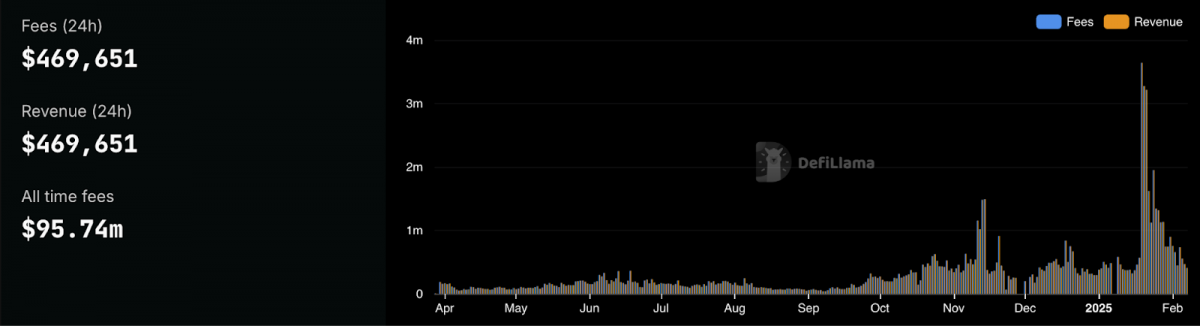
The Phantom wallet has witnessed a significant increase in usage, correlating with the rising popularity of Solana-based assets. According to DeFiLlama statistics, Phantom’s 24-hour revenue from transaction fees has surpassed Coinbase Wallet’s daily profits by around $470,000.
Photo: DeFiLlama
On January 19, the platform’s income reached an all-time high of $3.6 million, demonstrating its rising user base and significance in the crypto industry. As of 2024, Phantom has surpassed 10 million monthly active users and has processed more than 850 million transactions. This spike in use has made the wallet an appealing target for scammers looking to take advantage of the platform’s big and active user base.
Growing Cybersecurity Risks in Crypto
The growing number of scams mirrors larger security issues in the crypto business. As digital assets become more popular, attackers refine their strategies for exploiting consumers’ faith in established platforms. Phantom’s success has corresponded with an increase in phishing efforts targeting its users.
To reduce these dangers, security professionals underline the importance of checking update requests before taking any action. Users should constantly check update alerts with official Phantom announcements before reacting to unusual requests. Wallet extensions should only be updated through legitimate channels, such as the Chrome Web Store or other trusted sources, rather than depending on in-browser alerts that might be manipulated by attackers.
Another crucial part of security is the protection of seed phrases. Users should never enter their seed phrase into a pop-up window or provide it in response to an unwanted request. The seed phrase is a cryptocurrency wallet’s ultimate access key, and exposing it compromises the wallet’s security completely.
Phantom has noted the increase in phishing attempts and is continuing to adopt security measures to safeguard its users. The platform has given materials for identifying and avoiding fraud, emphasizing the need for security best practices. Scam Sniffer’s analysis has also helped educate the community by providing real-time alerts on developing concerns. Their suggestions include monitoring browser behavior, examining URLs, and avoiding interactions with questionable pop-ups.
The Next Phase of Cryptosecurity and User Privacy
In addition to addressing external security risks, Phantom has expanded its offerings to improve user experience and platform security. On February 6, the wallet added multicurrency capability, which allows transactions in 16 different currencies.
This expansion demonstrates Phantom’s continued commitment to growth while also meeting the changing demands of its customers. Earlier this year, Phantom closed a $150 million Series C fundraising round headed by Sequoia Capital and Paradigm, valuing the firm at $3 billion. These achievements highlight the platform’s resilience and ambition in the face of security problems.
The surge of phishing attempts targeting Phantom Wallet users shows that cybersecurity is still a key concern in the cryptocurrency business. Scammers are constantly evolving their strategies, exploiting new weaknesses, and using creative deception techniques to steal money. The rising frequency of these frauds emphasizes the need for constant monitoring and user education. Individuals should exercise caution when dealing with pop-up prompts, confirming their validity through several security checks before proceeding.
Disclaimer
In line with the Trust Project guidelines, please note that the information provided on this page is not intended to be and should not be interpreted as legal, tax, investment, financial, or any other form of advice. It is important to only invest what you can afford to lose and to seek independent financial advice if you have any doubts. For further information, we suggest referring to the terms and conditions as well as the help and support pages provided by the issuer or advertiser. MetaversePost is committed to accurate, unbiased reporting, but market conditions are subject to change without notice.
About The Author
Victoria is a writer on a variety of technology topics including Web3.0, AI and cryptocurrencies. Her extensive experience allows her to write insightful articles for the wider audience.
More articles
Victoria d’Este
Victoria is a writer on a variety of technology topics including Web3.0, AI and cryptocurrencies. Her extensive experience allows her to write insightful articles for the wider audience.
Published: February 07, 2025 at 9:33 am Updated: February 07, 2025 at 9:33 am
by Ana
Edited and fact-checked:
February 07, 2025 at 9:33 am
To improve your local-language experience, sometimes we employ an auto-translation plugin. Please note auto-translation may not be accurate, so read original article for precise information.
In Brief
February’s crypto market is filled with major partnerships, including Binance’s Travala-Trivago alliance, Klickl-IMKAN’s crypto real estate deals, Haven1-Worldpay’s DeFi push, Coinbase’s regulatory advocacy, Shiba Inu’s UAE collaboration, OpenAI-Worldcoin’s AI and identity talks, and Binance Pay-xMoney’s Europe-wide crypto payment expansion.
The first week of February is almost over, and it brought a cluster of headline-grabbing partnerships between major crypto players and industry leaders.
Here are the most exciting ones to check out.
Travala and Trivago Partner to Expand Crypto Payments in Travel
Binance’s Web3 travel platform Travala has joined forces with Trivago to integrate crypto payments into hotel reservation systems. This allows travelers around the globe to choose their favorite hotel from +2.2 million accommodations and book it with fiat or crypto.
In addition to Trivago’s integration with Travala, users can complete their bookings with more than 100 different cryptocurrencies and fiat currencies through Travala’s platform. The AVA Smart Program also provides incentives, such as Bitcoin and AVA tokens, for crypto-based bookings.
Travala’s CEO, Juan Otero, underlined that the agreement would “further accelerate the adoption of blockchain-based payments” in the travel sector. Travala has previously linked with platforms like Skyscanner and KAYAK, boosting its position as a crypto-friendly travel agency.
Changpeng Zhao (CZ) of Binance confirmed his faith in Travala, pointing out that its capacity to weather obstacles like the crypto winter and COVID-19 attests to its long-term promise.
Despite its growth, Travala’s AVA token remains undervalued, trading at $0.64, below expected levels given the platform’s expansion.
Klickl and IMKAN Properties Introduce Crypto Payments to UAE Real Estate
Based in the UAE, Web3 banking platform Klickl has teamed with IMKAN Properties of Abu Dhabi to include bitcoin payments into real estate deals. By providing a safe and quick substitute for conventional banking, our cooperation seeks to streamline house acquisitions for local and foreign customers.
IMKAN’s acceptance of crypto payments highlights the UAE’s dedication to innovation as the nation is becoming a worldwide center for digital money. The alliance will let consumers translate cryptocurrencies such as Bitcoin, Ethereum, and USDT into fiat for real estate purchases, thereby simplifying cross-border transactions.
CEO of Klickl Michael Zhao underlined that this project complements the company’s aim of introducing Web3 technology into regular operations. Digital currencies, he pointed out, provide “unmatched convenience, transparency, and efficiency,” which makes them the perfect fit for worldwide real estate purchases.
Engineer Suwaidan Al Dhaheri of IMKAN underlined that the UAE leads in digital finance due to its proactive legislative framework. He views this cooperation as a step toward transforming property transactions, therefore guaranteeing UAE leadership in crypto adoption in real estate.
A dedicated task force will oversee the rollout, refining the offering to enhance the customer experience.
Haven1 and Worldpay Forge Strategic Partnership to Drive DeFi Innovation
Haven1, the EVM Layer 1 blockchain known for its “REKT-resistant” security, has partnered with Worldpay, a global leader in payments technology. This collaboration brings Worldpay into Haven1’s exclusive Validator Partner Council, where it will play a critical role in securing and validating transactions on the network.
The partnership is a pivotal step in bridging traditional finance with the rapidly evolving world of Web3. By leveraging Worldpay’s payment expertise, Haven1 is strengthening its commitment to providing a secure DeFi application and service platform.
Jeff Owens, Co-Founder of Haven1, highlighted that Worldpay’s global presence and deep understanding of the payments industry will be crucial in driving mainstream DeFi adoption. “Their involvement is a testament to Haven1’s potential to reshape the financial landscape,” he said.
Using Haven1’s Proof-of- Authority (PoA) protocol guarantees scalability and network integrity. Through Worldpay’s involvement, the blockchain’s capacity to negotiate regulatory obstacles is improved and new options for customers and retailers are provided.
By working together, Haven1 and Worldpay are promoting distributed finance’s future and building a more inclusive, safe, and easily available financial environment for consumers all over.
Coinbase Pushes for Clearer Regulations to Enable Bank-Crypto Partnerships
Coinbase is pushing U.S. regulators to create clearer guidelines that make it easier for banks to partner with cryptocurrency platforms.
According to Bloomberg’s February 4 report, the exchange is urging regulators to amend existing rules to allow banks to provide crypto custody and trading services.
In a letter to the Office of the Comptroller of the Currency (OCC), the Federal Reserve, and the Federal Deposit Insurance Corp. (FDIC), Coinbase requested that the OCC retract an interpretive letter that the company argues effectively prevents banks from engaging in the digital asset space. Additionally, Coinbase is seeking confirmation from the Fed and FDIC on whether state-chartered banks under their jurisdiction can outsource crypto services.
Faryar Shirzad, Coinbase’s Chief Policy Officer, stressed that regulators must clarify that banks “can work with third-party providers in providing trading and exchange services to their customers,” ensuring a smoother path for crypto adoption within the banking sector.
This initiative comes amid a changing regulatory landscape in the U.S., with a new administration fostering more pro-crypto policies. Coinbase’s letter coincided with a Senate hearing on “debanking,” which addresses the growing issue of banks restricting services to certain industries due to regulatory concerns.
Web3 Partnership of Shiba Inu & UAE Ministry of Energy
The Ethereum-based Shiba Inu ecosystem has revealed a first-of-its-kind cooperation between a government institution in the UAE and a Web3 initiative of this scope by announcing a ground-breaking relationship with the UAE Ministry of Energy and Infrastructure (MoEI).
Emphasizing energy, infrastructure, and public service development, the agreement will see Shiba Inu’s Operational System (ShibOS) linked with MoEI’s federal operations.
Undersecretary for Energy and Petroleum Affairs at MoEI, His Excellency Eng Sharif Al Olama, expressed excitement about the cooperation and underlined that it marks a “pivotal moment” in the UAE’s endeavor to reinvent government services with innovative digital solutions.
Emphasizing the company’s enthusiasm, Shytoshi Kusama, Lead Visionary for Shiba Inu, said that the Ministry’s acknowledgment of Shiba Inu as a major participant in “next-generation infrastructure” attests to the potency of their Web3 technologies.
Driven by Shiba Inu’s token TREAT, these technologies provide incentives, governance, and security solutions, ranging from artificial intelligence to fully homomorphic encryption (FHE).
While other projects like Cardano have partnered with regional entities, this agreement with MoEI stands out due to its expansive reach across all UAE emirates, underscoring the partnership’s significant scale.
OpenAI and Worldcoin Explore Partnership for AI and Identity Solutions
OpenAI, the AI company led by Sam Altman, is in talks to collaborate with Worldcoin, a universal basic income and identity verification firm also co-founded by Altman.
The partnership would see OpenAI providing its AI expertise to Worldcoin, with the potential for further joint efforts.
Both organizations have faced regulatory scrutiny. OpenAI recently overcame an investigation by EU authorities regarding its partnership with Microsoft, avoiding any legal consequences. Worldcoin, on the other hand, has encountered setbacks in 2024, including bans in countries like Portugal, Kenya, and Spain.
Alex Blania, CEO of Tools for Humanity (which operates Worldcoin), acknowledged that attention is being paid to these companies, largely due to Altman’s involvement in both ventures. He noted that such visibility is rare for companies of their size.
Worldcoin, known for its identity verification service, serves millions of daily users. The company has also launched its own blockchain and plans to increase its WLD token supply by 36 million, worth around $196 million, within six months.
Binance Pay has partnered with xMoney, a European leader in Web3 payment solutions, to broaden the reach of crypto payments across the continent.
Announced on February 3, 2025, this collaboration connects Binance Pay users with over 20,000 merchants, offering seamless cryptocurrency transactions in the luxury, travel, and gaming industries.
By integrating Binance Pay with xMoney’s network, users can now make direct payments from their Binance accounts, simplifying the process and ensuring faster, cost-effective transactions. The move eliminates the need for traditional on-chain transactions, providing a more efficient and accessible payment experience for both consumers and businesses.
Jonathan Lim, Global Head of Binance Pay, pointed out that the partnership is critical as cryptocurrency continues to gain mainstream acceptance.
He noted that the ability to use digital currencies for luxury goods, travel, and government services highlights how crypto is becoming “a practical tool” for everyday transactions.
Greg Siourounis, CEO of xMoney, described the partnership as crucial in merging blockchain technology with traditional finance. He emphasized that integrating Binance Pay into their ecosystem would provide “more flexibility and choice” for users, further advancing payment solutions.
Disclaimer
In line with the Trust Project guidelines, please note that the information provided on this page is not intended to be and should not be interpreted as legal, tax, investment, financial, or any other form of advice. It is important to only invest what you can afford to lose and to seek independent financial advice if you have any doubts. For further information, we suggest referring to the terms and conditions as well as the help and support pages provided by the issuer or advertiser. MetaversePost is committed to accurate, unbiased reporting, but market conditions are subject to change without notice.
About The Author
Victoria is a writer on a variety of technology topics including Web3.0, AI and cryptocurrencies. Her extensive experience allows her to write insightful articles for the wider audience.
More articles
Victoria d’Este
Victoria is a writer on a variety of technology topics including Web3.0, AI and cryptocurrencies. Her extensive experience allows her to write insightful articles for the wider audience.
Decentralized blockchain ecosystem centered on the Web3 economy, BNB Chain has proposed measures to mitigate malicious Maximal Extractable Value (MEV) within its network.
The initiative emphasizes the collective responsibility of the community to discourage and penalize entities that facilitate or introduce harmful MEV practices. This includes all components of the infrastructure, such as block builders, Remote Procedure Call (RPC) nodes, validators, and decentralized applications (dApps), which should implement mechanisms to detect and prevent malicious MEV. Validators, in particular, as block proposers and beneficiaries of associated commissions, are urged to take full responsibility in safeguarding users from exploits from MEV.
In order to address these challenges, BNB Chain suggests that the community employ both technological and non-technological strategies to reduce malicious MEV. Proposed actions include disconnecting malicious block builders and voting out validators who fail to act responsibly.
Looking ahead, BNB Chain plans to introduce a new BNB Evolution Proposal (BEP) aimed at technically reducing transaction exposure and enhancing mempool efficiency. In the interim, users are encouraged to report bad actors facilitating malicious MEV, utilize MEV-protected wallets, and avoid using unsafe RPCs.
Changpeng Zhao Polls Community On MEV Mitigation For BNB Chain
MEV has recently become a prominent topic in the blockchain and decentralized finance (DeFi) space. It refers to the maximum potential value that can be extracted from a particular DeFi protocol or smart contract by users or groups of users. MEV plays a critical role in shaping the profitability of DeFi strategies, leading to the development of new tools and techniques to maximize returns.
However, malicious MEV practices are causing financial losses and disrupting the fairness of DeFi platforms. These exploitative activities harm the integrity and efficiency of networks like BNB Chain and the broader decentralized ledger ecosystem. Retail traders, particularly those involved in altcoin markets, have been targeted by techniques such as Sandwich attacks, resulting in losses amounting to hundreds of millions of dollars.
Should BNB Chain try to eliminate/aggressively reduce the MEV issues?
— CZ BNB (@cz_binance) February 7, 2025
Earlier today, Binance co-founder and former CEO Changpeng Zhao initiated a poll on the X platform to gather community opinions on whether BNB Chain should take action to eliminate or reduce the impact of MEV. The vote will remain open for the next 18 hours. While it’s impossible to fully eliminate MEV in a decentralized environment, there are measures that can be taken to minimize its negative effects.
The post BNB Chain Publishes Community Proposal, Calling For Action Against Malicious MEV appeared first on Metaverse Post.
Published: February 07, 2025 at 8:30 am Updated: February 07, 2025 at 7:27 am
by Ana
Edited and fact-checked:
February 07, 2025 at 8:30 am
To improve your local-language experience, sometimes we employ an auto-translation plugin. Please note auto-translation may not be accurate, so read original article for precise information.
In Brief
Flare has launched the Flare Fair, a gamified virtual event designed to showcase its DeFi opportunities for both newcomers and experienced cryptocurrency enthusiasts.
Blockchain focused on data, Flare announced that it is launching its Flare Fair, a gamified virtual event designed to showcase Flare’s decentralized finance (DeFi) opportunities for both newcomers and experienced cryptocurrency enthusiasts.
“Users are encouraged to participate in different pools, which they can claim monthly at portal.flare.network,” said Ami Tsang, Head of Marketing at Flare, in a written statement. “Doing DeFi on Flare should be fun and easy. Since the introduction of the rFLR emission program, Flare’s TVL has climbed 3x to approximately $60 million in just five months! With the opening of the Flare Fair, the steps for participation in Flare DeFi will be greatly simplified and are expected to boost our TVL and ecosystem growth,” he added.
The fair’s microsite operates in “phases,” with each phase introducing new tasks for users, offering themed virtual experiences, and providing access to new decentralized applications (dApps). Users can complete tasks to earn rewards, which include various Flare bounties such as rFLR emissions, FlareDrops, and high Annual Percentage Rates (APRs). The tasks involve staking, lending, or supplying liquidity to platforms on the Flare Network featured on the site. These interactions enhance the opportunity for rewards, including rFLR emissions, drawn from a 510M FLR pool.
With its low fees, fast transaction speeds, and multiple layers of rewards, the fair presents an opportunity for newcomers to engage fully with the DeFi ecosystem, while allowing experienced professionals to maximize their potential rewards.
The fair includes interactive zones where community members can visit the fair. Flare.network to explore unique zones with dApps like SparkDEX, BlazeSwap, Clearpool, Enosys, Kinetic, and Sceptre. The tasks within these DeFi zones include activities such as bridging to Flare with Stargate, lending and supplying assets like USDC, USDT, USDX, FLR, ETH, and other tasks that will be added over time.
Flare: Blockchain For Data-Intensive Applications
Flare is a blockchain designed for data-intensive applications, offering an Ethereum Virtual Machine (EVM) smart contract platform optimized to support use cases such as Machine Learning/AI, real-world asset (RWA) tokenization, gaming, and social applications. With decentralized oracles embedded in its network, Flare stands out as the only smart contract platform built for decentralized data acquisition, including price and time series data, blockchain event and state data, and Web2 API data. By providing developers with trustless access to a wide range of data and data proofs at scale and with minimal cost, Flare enhances blockchain utility and fosters the development of new use cases.
Recently, Flare announced a partnership with Google Cloud, a major public cloud vendor, to host a Verifiable AI Hackathon at UC Berkeley. This event will explore the potential of verifiable off-chain computing to improve Web3 applications, especially for data-heavy and compute-intensive tasks like AI. Participants will compete for a total prize pool of $100,000.
Disclaimer
In line with the Trust Project guidelines, please note that the information provided on this page is not intended to be and should not be interpreted as legal, tax, investment, financial, or any other form of advice. It is important to only invest what you can afford to lose and to seek independent financial advice if you have any doubts. For further information, we suggest referring to the terms and conditions as well as the help and support pages provided by the issuer or advertiser. MetaversePost is committed to accurate, unbiased reporting, but market conditions are subject to change without notice.
About The Author
Alisa, a dedicated journalist at the MPost, specializes in cryptocurrency, zero-knowledge proofs, investments, and the expansive realm of Web3. With a keen eye for emerging trends and technologies, she delivers comprehensive coverage to inform and engage readers in the ever-evolving landscape of digital finance.
More articles
Alisa Davidson
Alisa, a dedicated journalist at the MPost, specializes in cryptocurrency, zero-knowledge proofs, investments, and the expansive realm of Web3. With a keen eye for emerging trends and technologies, she delivers comprehensive coverage to inform and engage readers in the ever-evolving landscape of digital finance.
Published: February 07, 2025 at 8:01 am Updated: February 07, 2025 at 8:01 am
by Ana
Edited and fact-checked:
February 07, 2025 at 8:01 am
To improve your local-language experience, sometimes we employ an auto-translation plugin. Please note auto-translation may not be accurate, so read original article for precise information.
In Brief
Namada completes the second phase of its mainnet rollout, introducing staking rewards and public goods funding, and reveals that the upcoming phases will fully implement its core privacy-enhancing features.
Shielded asset hub Namada announced that it has completed the second phase of its mainnet rollout, introducing staking rewards and public goods funding. This milestone strengthens the network by incentivizing validators and delegators with NAM tokens for securing the protocol.
Increased participation from both individual users and ecosystem projects contributes to Namada’s broader goal of advancing on-chain data protection. The completion of this phase also enabled the approval of the first public goods funding proposal, which facilitated the world’s first “donor drop”—an airdrop of NAM tokens to individuals who support the public policy advocacy organization Coin Center.
The next phases will bring Namada’s core privacy-enhancing features into full effect. In Phase 3, users will gain the ability to transfer and shield governance-enabled assets via the Inter-Blockchain Communication (IBC) protocol using Namada’s Multi-Asset Shielded Pool (MASP). This functionality extends privacy protections to a wider range of digital assets, allowing Namada’s shielding capabilities to integrate across multiple blockchain ecosystems. Over time, the community can propose and implement expansions to include additional assets and networks beyond IBC.
Phase 4 will introduce incentives for shielding assets. Users who opt to protect their data by shielding assets within the MASP will begin earning NAM rewards. This mechanism aligns data protection with economic incentives, reinforcing privacy as a public good. By contributing to the network’s privacy guarantees, users help create a more secure and censorship-resistant multichain environment.
The final phase of the mainnet launch will activate NAM transfers, marking the completion of Namada’s core development roadmap. At this stage, the protocol will be fully operational, featuring staking, governance, privacy incentives, and multichain interoperability. However, development will not stop here—through Namada’s governance system, the community will continue to refine and expand its capabilities.
With its commitment to privacy, incentives, and cross-chain shielding, Namada is setting a new standard for multichain data protection, empowering users to transact securely while maintaining full control over their information.
Namada Initiates Mainnet Launch With CPoS And Governance Framework Introduction
Namada, a privacy-focused asset hub, rewards users for enhancing security across multiple blockchain networks. By leveraging advanced zero-knowledge (ZK) cryptography, it allows users to selectively disclose personal data when necessary while ensuring strong privacy protections for assets, decentralized applications, and blockchain ecosystems. This approach balances transparency and confidentiality, creating a secure environment for on-chain interactions.
The project began its mainnet rollout last year with the launch of its genesis block and the first phase of a planned five-phase deployment. In this initial stage, Namada activated its Cubic Proof-of-Stake (CPoS) consensus mechanism along with its on-chain governance system. At this point, users could stake NAM tokens to help secure the network and participate in governance decisions, laying the foundation for future upgrades. This phase ensured that key protocol developments would be guided by community input, reinforcing Namada’s commitment to decentralized decision-making.
Disclaimer
In line with the Trust Project guidelines, please note that the information provided on this page is not intended to be and should not be interpreted as legal, tax, investment, financial, or any other form of advice. It is important to only invest what you can afford to lose and to seek independent financial advice if you have any doubts. For further information, we suggest referring to the terms and conditions as well as the help and support pages provided by the issuer or advertiser. MetaversePost is committed to accurate, unbiased reporting, but market conditions are subject to change without notice.
About The Author
Alisa, a dedicated journalist at the MPost, specializes in cryptocurrency, zero-knowledge proofs, investments, and the expansive realm of Web3. With a keen eye for emerging trends and technologies, she delivers comprehensive coverage to inform and engage readers in the ever-evolving landscape of digital finance.
More articles
Alisa Davidson
Alisa, a dedicated journalist at the MPost, specializes in cryptocurrency, zero-knowledge proofs, investments, and the expansive realm of Web3. With a keen eye for emerging trends and technologies, she delivers comprehensive coverage to inform and engage readers in the ever-evolving landscape of digital finance.
Published: February 07, 2025 at 2:08 am Updated: February 07, 2025 at 2:08 am
by Ana
Edited and fact-checked:
February 07, 2025 at 2:08 am
To improve your local-language experience, sometimes we employ an auto-translation plugin. Please note auto-translation may not be accurate, so read original article for precise information.
In Brief
Dolomite has launched on Berachain, marking its largest deployment yet and introducing advanced DeFi tools along with a streamlined lending and borrowing experience.
Lending and borrowing platform Dolomite announced its expansion to Berachain, a Layer 1 blockchain that mirrors Ethereum Virtual Machine (EVM) functionality.
The platform serves as a central hub for asset management, allowing users to deposit, withdraw, swap, and stake their assets through an intuitive and user-friendly interface. At launch, Dolomite supports more than 25 digital assets, including ETH, USDC, USDT, weETH, eBTC, wBTC, and others.
Managing assets on Dolomite is streamlined and accessible. The borrowing section enables users to monitor and control their borrowed assets and collateral in real-time. Additionally, isolated borrowing positions allow users to separate risk across different positions.
Dolomite’s Strategies Hub simplifies advanced decentralized finance (DeFi) strategies. Whether looping assets, earning yield, or optimizing holdings, the Strategies Page enables one-click execution of sophisticated DeFi actions. Furthermore, Dolomite features ZAP, a meta-aggregator that consolidates multi-step DeFi transactions into a single streamlined action.
Dolomite has also confirmed that its Token Generation Event (TGE) will take place in the coming weeks, officially launching the DOLO token on Berachain. The total supply of DOLO is set at 1 billion tokens, with an initial circulating supply of approximately 361,694,000 tokens at TGE, including locked veDOLO. Over half of the total supply is allocated to the community, while 20 percent is designated for airdrops. 10% is reserved for platform usage and early contributors, split evenly between DOLO and veDOLO. Another 10% is assigned to the Minerals Program, issued as DOLO call options with a $0.045 strike price and a six-month exercise window. 3% of the supply is dedicated to incentivizing Boyco deposits, paid in veDOLO. Additionally, 1% of the DOLO supply will be used to establish a liquidity pool on Kodiak. This structured allocation ensures that a majority of the supply benefits the community while incentivizing platform engagement and liquidity.
Dolomite Works On Adding More Features To Enhance Its Trading Platform: PoL Integration, Smart Debt and Collateral Management Planned
Dolomite is an advanced decentralized money market protocol and decentralized exchange (DEX) designed to enhance capital efficiency through its virtual liquidity system while supporting a wide range of tokens.
Currently, the platform is actively developing new features that it plans to introduce in the future. One of these is Proof of Liquidity (PoL) Integration, which will allow users to stake PoL-eligible assets directly within Dolomite. At the same time, users will be able to borrow against their PoL assets while continuing to earn staking rewards.
Another planned feature is Smart Debt and Collateral Management, which will give users the option to allow others to swap their collateral assets or debt assets for correlated assets. Additionally, users will have the opportunity to earn trading fees while simultaneously earning lending yield, helping to increase returns and reduce the overall interest owed.
The platform is also working on implementing Automatic E-Mode, as well as Position Alerts and Notifications. Other upcoming features include Limit, Take Profit, and Stop Loss Orders, Portfolio Tracking, Dolomite Bridge and more.
Disclaimer
In line with the Trust Project guidelines, please note that the information provided on this page is not intended to be and should not be interpreted as legal, tax, investment, financial, or any other form of advice. It is important to only invest what you can afford to lose and to seek independent financial advice if you have any doubts. For further information, we suggest referring to the terms and conditions as well as the help and support pages provided by the issuer or advertiser. MetaversePost is committed to accurate, unbiased reporting, but market conditions are subject to change without notice.
About The Author
Alisa, a dedicated journalist at the MPost, specializes in cryptocurrency, zero-knowledge proofs, investments, and the expansive realm of Web3. With a keen eye for emerging trends and technologies, she delivers comprehensive coverage to inform and engage readers in the ever-evolving landscape of digital finance.
More articles
Alisa Davidson
Alisa, a dedicated journalist at the MPost, specializes in cryptocurrency, zero-knowledge proofs, investments, and the expansive realm of Web3. With a keen eye for emerging trends and technologies, she delivers comprehensive coverage to inform and engage readers in the ever-evolving landscape of digital finance.
Published: February 06, 2025 at 10:00 pm Updated: February 06, 2025 at 7:26 am
To improve your local-language experience, sometimes we employ an auto-translation plugin. Please note auto-translation may not be accurate, so read original article for precise information.
Recent developments in the crypto market have introduced a formidable Dogecoin rival, capturing the attention of industry experts. A hedge fund manager has singled out this Ethereum token, WallitIQ (WLTQ), currently valued at $0.0420, as the next breakout asset. With growing investor interest and market momentum building, this Dogecoin rival is positioned for a significant surge. As capital flows shift and investment strategies evolve, the competition intensifies between established meme coins and this ambitious Dogecoin rival that this hedge fund manager believes could transform the market’s future.
Hedge Fund Manager Predicts History Rewriting Dogecoin’s Trajectory In An Ethereum Token
Crypto history is filled with stories of missed opportunities, but few are as legendary as Dogecoin’s (DOGE) meteoric rise. When it was trading at just $0.02, many dismissed it as a joke. Those who hesitated watched in disbelief as it surged to all-time highs, turning small investments into life-changing fortunes. Now, a hedge fund manager is signaling that a new Ethereum token, currently priced at $0.0420, could be the next big break.
This Dogecoin rival is gaining traction fast, as the hedge fund manager highlights its immense growth potential. According to the hedge fund manager, the WallitIQ (WLTQ) Ethereum token presents a rare second chance for those who missed Dogecoin’s (DOGE) rise — one that history suggests shouldn’t be ignored. The market moves quickly, and hesitation has proven costly for many.
The hedge fund manager believes that Dogecoin’s (DOGE) rise is a lesson in timing and the next breakout asset is this Dogecoin rival. The crypto market rewards those who move early, and this Ethereum token could be the key to capturing the next massive surge at $0.0420.
WallitIQ (WLTQ) Set For Market Dominance With Transformative Features
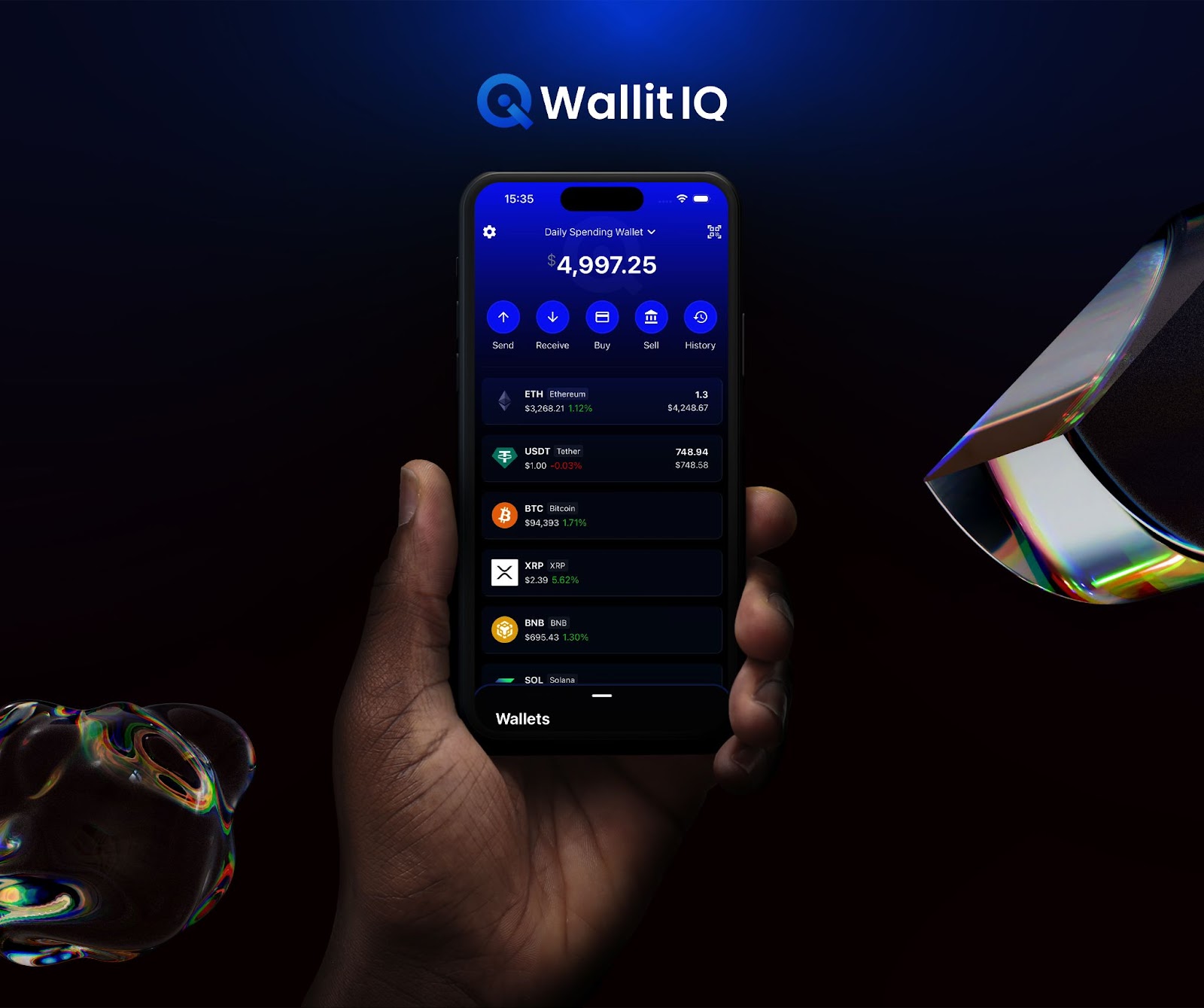
WallitIQ’s (WLTQ) crypto management app revolutionizes how digital assets are handled. Whether a seasoned trader or a newcomer trying digital finance, this app delivers a comprehensive, intuitive, and secure solution for managing assets. Wallet management is reimagined to provide users with absolute control over their assets. While managing multiple wallets can often be overwhelming, this app feature simplifies the process by enabling smooth simulated ETH and USDT handling.
Moreover, the platform’s QR code functionality makes receiving payments instant and error-free. This feature integration removes the risk of manually entering wallet addresses and brings security, speed, and ease to the payment process. Investors can complete a transaction within seconds by scanning a receiver’s QR code, eliminating common errors and reducing the chances of lost funds.
Meanwhile, the app promotes the idea that crypto transactions should be as accessible as everyday spending, and that’s exactly what its transaction features achieve. This function allows users to simulate real-world transactions, such as paying for Starbucks coffee or renewing a Spotify subscription. Demonstrating just how easy crypto payments can be, WallitIQ (WLTQ) brings crypto’s future closer with the incoming launch of its beta platform.
In the meantime, WallitIQ’s (WLTQ) completion of its smart contract audit contributes heavily to the strength of its market competition. This audit, conducted by industry experts at SolidProof, adds a layer of guarantee on investors’ confidence in the project’s viability.
Shifting market trends and competition within the meme coin sector force investors to recognize the importance of diversifying into emerging high-potential assets like the WallitIQ (WLTQ) Ethereum token. This project will play a crucial role in secure and efficient investments, offering solutions tailored to the fast-paced crypto environment.
WallitIQ’s (WLTQ) Forges A Clear Path From Oblivion To Market Dominance
The unveiling of this Dogecoin rival marks a pivotal moment in the evolving digital asset landscape. Dogecoin’s (DOGE) historical trajectory proves that early investments can yield staggering returns, so traders closely monitor WallitIQ’s (WLTQ) potential. The hedge fund manager’s endorsement has only amplified anticipation, as the asset’s $0.0420 price presents a rare early-stage opportunity.
As momentum builds, the Dogecoin rival could become the next major force in digital finance. Only investors who buy the WallitIQ (WLTQ) Ethereum token now at $0.0420 will be part of that movement.
Join the WallitIQ (WLTQ) presale and community:
Join WallitIQ (WLTQ) Presale
Join the WallitIQ (WLTQ) Community
Disclaimer
In line with the Trust Project guidelines, please note that the information provided on this page is not intended to be and should not be interpreted as legal, tax, investment, financial, or any other form of advice. It is important to only invest what you can afford to lose and to seek independent financial advice if you have any doubts. For further information, we suggest referring to the terms and conditions as well as the help and support pages provided by the issuer or advertiser. MetaversePost is committed to accurate, unbiased reporting, but market conditions are subject to change without notice.
About The Author
Gregory, a digital nomad hailing from Poland, is not only a financial analyst but also a valuable contributor to various online magazines. With a wealth of experience in the financial industry, his insights and expertise have earned him recognition in numerous publications. Utilising his spare time effectively, Gregory is currently dedicated to writing a book about cryptocurrency and blockchain.
More articles
Gregory, a digital nomad hailing from Poland, is not only a financial analyst but also a valuable contributor to various online magazines. With a wealth of experience in the financial industry, his insights and expertise have earned him recognition in numerous publications. Utilising his spare time effectively, Gregory is currently dedicated to writing a book about cryptocurrency and blockchain.
Published: February 06, 2025 at 12:17 pm Updated: February 06, 2025 at 12:17 pm
by Ana
Edited and fact-checked:
February 06, 2025 at 12:17 pm
To improve your local-language experience, sometimes we employ an auto-translation plugin. Please note auto-translation may not be accurate, so read original article for precise information.
In Brief
Cysic has launched an Android-based verifier application to streamline zero-knowledge proof verification, aiming to increase participation in the ZK ecosystem and maintain efficiency and accessibility.
Cysic has introduced an Android-based verifier application to simplify the verification of zero-knowledge proofs, which is an important development in the crypto sector. Cysic hopes that by making this procedure available on mobile devices, it will encourage more people to participate in the ZK ecosystem while also keeping verification efficient and accessible.
The Impact of Zero-Knowledge Proofs on Blockchain
Zero-knowledge proofs have become a critical component of privacy-preserving blockchain applications. This cryptographic approach enables one party to demonstrate the authenticity of a statement to another without disclosing any further information. The method keeps sensitive data hidden while yet allowing for verification, making it especially useful for financial applications, identity verification, and safe transactions.
Zero-knowledge proofs, first offered as a theoretical notion in the 1980s, have grown more practical in recent years. Many blockchain networks use them to improve transaction efficiency and anonymity. Ethereum’s Layer 2 scaling solutions, for example, use ZK proofs to validate transactions while minimizing congestion on the main blockchain. Despite these benefits, acceptance of ZK technology has been hampered by the difficulty of verification and the hardware needs associated with traditional proof validation methods.
Cysic’s Approach to Mobile-based Verification
The release of Cysic’s verifier application overcomes some of the most critical adoption hurdles by allowing users to validate ZK proofs straight from their Android devices. This mobile-based solution reduces the need for specific gadgets and technical skills, making verification available to a larger range of users.
The program has an easy-to-use interface, allowing users to swiftly verify proof. The method consists of downloading the program, inputting wallet information, and hitting a button to begin verification.
Beyond its simplicity, the software is designed for speed and efficiency. Verification times average 62.4 milliseconds, accounting for only 2% of the overall time needed to perform a verification activity. This degree of performance means that users may participate in proof validation with minimal latency. The application is also resource-efficient, using just 200 MB of memory for each verification operation.
Incentive Structure for Users
Cysic’s verifier program does more than just ease verification; it also provides an incentive participation framework. Users may earn rewards by using the software in the background and sending their verification findings to the Cysic Network.
The passive aspect of this earning approach makes it tempting. Users may join with minimum effort since the program requires no active interaction beyond the first setup. This concept is consistent with wider developments in the crypto market, as decentralized networks increasingly rely on dispersed participation to ensure security and efficiency.
The Rising Importance of Accessible ZK Technology
The emergence of a mobile verifier is crucial, especially as privacy-focused blockchain applications gain popularity. Decentralized finance (DeFi), digital identification systems, and other Web3 applications are increasingly reliant on ZK technology to safeguard user data and improve transaction efficiency. Despite these advantages, widespread adoption has been hampered by the assumption that cryptographic verification is excessively complicated or resource-intensive for average users.
Beyond individual users, an increase in active verifiers might help the whole blockchain ecosystem. Increased involvement improves the security and decentralization of ZK networks, guaranteeing that verification is resilient and scalable. Cysic’s verifier helps to build a more resilient cryptographic infrastructure by enabling a wider variety of parties to interact with ZK technology.
The Impact of Web2 and Web3 Integration
The growing popularity of blockchain applications in mainstream digital spaces emphasizes the need for solutions that bridge the gap between Web2 and Web3 users. Recent developments, like as the rise in popularity of apps like Moonshot following the debut of Trump’s memecoin, show that new audiences are becoming involved with crypto-related technology. Many of these users have little to no prior experience with blockchain systems, but they are drawn to platforms that provide concrete benefits and incentives.
To keep these new users beyond short-term trends, crypto apps must offer genuine engagement options that go beyond speculative investments. Cysic’s verifier application provides a practical use case in which users may contribute to a privacy-focused ecosystem while receiving benefits.
Cysic provides an easy entry point to ZK verification, acting as a doorway for people who may not have previously explored cryptographic validation. The ability to interact with blockchain technology without requiring substantial technical expertise or costly hardware spending facilitates Web2 users’ transition to Web3 settings.
Future of Mobile-Based Cryptographic Verification
The release of Cysic’s verifier app represents a larger move toward mobile-friendly cryptographic tools. With the growth of blockchain adoption, the demand for efficient and user-friendly verification solutions is projected to rise. Mobile-based techniques provide a scalable alternative to increase participation, especially in areas where desktop-based verification may be impractical owing to hardware restrictions or accessibility issues.
Future advancements in mobile cryptographic verification may include extended support for new ZK proof types, interaction with decentralized apps, and improved verifier incentive mechanisms. As blockchain networks evolve, the success of mobile-based solutions like Cysic’s verifier could encourage additional improvements in this market.
Disclaimer
In line with the Trust Project guidelines, please note that the information provided on this page is not intended to be and should not be interpreted as legal, tax, investment, financial, or any other form of advice. It is important to only invest what you can afford to lose and to seek independent financial advice if you have any doubts. For further information, we suggest referring to the terms and conditions as well as the help and support pages provided by the issuer or advertiser. MetaversePost is committed to accurate, unbiased reporting, but market conditions are subject to change without notice.
About The Author
Victoria is a writer on a variety of technology topics including Web3.0, AI and cryptocurrencies. Her extensive experience allows her to write insightful articles for the wider audience.
More articles
Victoria d’Este
Victoria is a writer on a variety of technology topics including Web3.0, AI and cryptocurrencies. Her extensive experience allows her to write insightful articles for the wider audience.
















 BNB (@cz_binance) February 7, 2025