Metaverse

Home Metaverse Page 130

Top 5 Gaming Blockchains Set to Explode in the Next Bull Run | NFT News Today

Top 5 Gaming Blockchains Set to Explode in the Next Bull Run | NFT News Today


The next crypto bull run won’t just be about Bitcoin or Layer 1 giants, it’ll be driven by gaming blockchains with real players, real ecosystems, and real utility. From high-speed performance to massive developer networks, these five platforms. Sui, Ronin, Polygon, Immutable, and Beam aren’t just hyped, they’re already building the future of Web3 gaming.

Key Takeaways

Sui brings ultra-fast parallel processing and the Move language to supercharge interactive, object-based game design.

Ronin is a battle-hardened chain built by Axie Infinity’s creators, now onboarding legacy gaming IPs.

Polygon leverages its AggLayer to unify chains and power cross-chain gaming on Ethereum.

Immutable X dominates NFT gaming infrastructure with over 625 games and gas-free transactions.

Beam, backed by Merit Circle DAO, is evolving into a dedicated gaming Layer 1 with deep industry integration.

Sui Network: Web3’s High-Performance Gaming Engine

Sui isn’t just another smart contract platformit’s purpose-built for gaming. Developed by Mysten Labs and launched in 2023, it uses a unique parallel execution engine combined with the Sui Move language. That means faster performance, dynamic NFTs, and complex gameplay mechanics that mimic real-world asset- onership.

Its object-centric model lets in-game assets evolve, interact, and own other objects. Think RPG characters upgrading weapons that also have their own histories. It’s tailor-made for developers who want to go beyond basic NFTs and create truly immersive games.

Sui’s ecosystem is ramping up with over 150,000 active addresses and games launching weekly, including titles from Orange Comet, Aether Games, and Worlds Beyond. Mysten Labs has formed over a dozen studio partnerships. Tools like the Sui Devnet and game SDK are simplifying onboarding.

Catalysts for 2025 include the SuiPlay 0X1 handheld console, designed to run blockchain-native games on-chain, and the introduction of dynamic NFTs, which will reshape game asset utility. Massive institutional backing from Coinbase Ventures, a16z, and Binance Labs adds legitimacy.

With an all-time high of $5.36 and more room to grow as adoption spreads, SUI offers both cutting-edge tech and high-upside potential. It’s a first-mover in object-based smart contracts and could redefine how assets function in Web3 gaming.

Ronin: The Proven Gaming Chain That Prints Revenue

Ronin has already done what many chains are trying to do: support a game that brought in millions of users. Built by Sky Mavis for Axie Infinity, it sidestepped Ethereum’s congestion by creating its own lightweight chain focused entirely on gaming.

Ronin now powers over $4.3 billion in NFT volume and has seen more than 17 million wallet downloads. Its infrastructure, including Katana DEX and Mavis Market, makes it a full-service chain for both players and developers.

In 2025, Ronin is transitioning from a niche to a mainstream platform. Recent partnerships with Act Games bring household brands like Hello Kitty, Zoids, and Bubble Bobble into the fold. These IPs have multigenerational appeal, offering a direct line to millions of traditional gamers.

Upcoming catalysts include the launch of permissionless development, which opens the Ronin ecosystem to all builders. The network is also deploying a $13 million DeFi fund, with a focus on staking, farming, and liquidity pools to drive TVL.

The RON token supports governance, validation, and staking—with rewards structured to incentivize long-term holding. It uses a DPoS model that enhances decentralization while maintaining throughput.

If you’re looking for a proven chain that has weathered the worst and is now expanding rapidly, Ronin is it. With new IPs, more games, and improved accessibility, the 2025 bull run could push RON well beyond its previous high.

Polygon: The Cross-Chain Powerhouse for Web3 Gaming

Polygon has evolved far beyond its MATIC roots. As Ethereum’s most advanced scaling solution, it powers thousands of dApps—and its focus on gaming has made it the go-to platform for developers seeking speed, interoperability, and low fees.

Polygon’s AggLayer, launched in 2025, is its masterstroke. It unites fragmented Layer 2 ecosystems, enabling seamless liquidity sharing and cross-chain gaming experiences. This means players can interact across games and platforms with minimal friction.

Its POL token introduces hyperproductive staking, allowing holders to secure multiple Polygon-powered chains and earn rewards from each. This structure encourages long-term engagement and aligns incentives between users and infrastructure.

Gaming partnerships are robust. The collaboration with Immutable zkEVM has yielded a game-optimized environment ideal for high-throughput transactions and NFT interoperability. Polygon is also home to studios and projects exploring dynamic gameplay, high-frequency trading, and esports integration.

Catalysts in 2025 include the Gigagas upgrade, which aims to achieve over 5,000 TPS by year-end. Polygon is also driving adoption with enterprise partnerships, including Stripe, BlackRock, and several legacy payment processors.

With prices still well below ATHs, POL offers upside from both gaming and broader DeFi and enterprise integrations. Its infrastructure-first approach makes it one of the most reliable plays in the space.

Immutable X: The NFT Gaming Giant

Immutable has quietly built the largest dedicated NFT gaming network in Web3. With over 625 games already integrated, including hits like Gods Unchained, Illuvium, and Guild of Guardians, it’s clear the platform has strong product-market fit.

The magic lies in its tech stack: zk-rollups from StarkWare power gas-free NFT minting and trading, all while maintaining Ethereum-level security. This allows developers to offer seamless player experiences without worrying about costs or congestion.

IMX is at the center of this ecosystem. It pays protocol fees, fuels staking rewards, enables governance, and even serves as in-game currency for many titles. Over 14 million IMX tokens are currently staked, showing high conviction from the community.

The big move in 2025 is the merger of Immutable X and zkEVM into a single unified chain: Immutable Chain. This gives developers EVM compatibility while preserving Immutable’s performance advantages. It also unlocks third-party DeFi tools, ERC-1155 liquidity, and better asset portability.

Game developers using Immutable benefit from the Immutable Passport, a frictionless identity and wallet solution, and the Global Orderbook, which ensures all NFT listings are instantly visible across marketplaces.

With new airdrops like Treeverse’s $END token rewarding stakers and institutional partnerships ramping up, IMX is primed to be the premier chain for NFT gaming. Price forecasts show potential gains of 250% to 350% in the near term.

Beam: The DAO-Powered Gaming L1 With Built-In Funding

Beam is the underdog that’s coming in hot. Created by Merit Circle DAO, Beam is focused solely on gaming and is backed by a treasury exceeding $100 million. This isn’t theory—it’s fully funded innovation.

Originally launched as an Avalanche subnet, Beam is now preparing for its Horizon upgrade that will transform it into an independent Layer 1. This means more decentralization, validator rewards, and a governance model controlled by the gaming community itself.

The Beam ecosystem includes over 60 active games, including Age of Battles, Space Nation, Goon Wars, and Megaweapon. Developers can use the Beam SDK and BeamOS to build and distribute games easily. Its Sphere Marketplace is tailor-made for NFT assets, offering a player-centric approach to asset trading.

The BEAM token isn’t just a gas token. It’s used for payments, staking, and DAO voting. More than 38% of the original supply has already been burned, adding serious deflationary momentum.

Upcoming catalysts include the launch of validator nodes, full staking functionality, and a major expansion to Immutable zkEVM, which will open the Beam ecosystem to even more users. With Avalanche Foundation support and a growing developer base, Beam is positioning itself as a real contender.

Still trading under $0.05, BEAM is the kind of asymmetric bet that can surprise everyone in the next market cycle if you catch it early enough.

Where the Next Wave Is Coming From

The next bull market won’t be driven by speculation alone. Real adoption, real users, and real games will be the key to breakout performance.

These five blockchains are already showing what’s possible when you mix smart infrastructure with visionary development. Whether it’s Sui’s dynamic NFTs, Ronin’s massive player base, Polygon’s multi-chain dominance, Immutable’s NFT expertise, or Beam’s DAO-driven growth, each has a unique edge.

They’re not betting on gaming. They are gaming. And as the market heats up, these tokens won’t stay cheap for long.

Watch them. Accumulate them. Or be left behind.

Frequently Asked Questions

Here are some frequently asked questions about this topic:

What is the best blockchain for gaming in 2025?

While each offers unique strengths, Sui and Immutable stand out for performance and NFT integration, while Ronin leads in mainstream adoption.

Which gaming blockchain has the most active users?

Ronin currently holds the edge with millions of wallet downloads and a proven track record supporting Axie Infinity’s massive user base.

What makes Sui different from other gaming blockchains?

Sui uses parallel processing and an object-based programming model with the Sui Move language, enabling dynamic, interactive game assets.

Is BEAM a good investment for gaming-focused crypto exposure?

Beam offers high upside potential with DAO backing, aggressive token burns, and over 60 games onboarded—though it’s still an emerging player.

How does Polygon support cross-chain gaming?

Polygon’s AggLayer allows seamless cross-chain asset and user transfers, making it ideal for developers building scalable and interoperable games. 


Source link

MetaEarth to Debut as Platinum Sponsor at GM Vietnam 2025, Strengthening Ecosystem and Community Growth Across Southeast Asia

MetaEarth to Debut as Platinum Sponsor at GM Vietnam 2025, Strengthening Ecosystem and Community Growth Across Southeast Asia


In Brief

MetaEarth will debut as a Platinum Sponsor at GM Vietnam 2025, Southeast Asia’s leading Web3 summit, showcasing its latest blockchain innovations and hosting exclusive events to engage the community and industry leaders.

MetaEarth to Debut as Platinum Sponsor at GM Vietnam 2025, Strengthening Ecosystem and Community Growth Across Southeast Asia

MetaEarth is proud to announce its debut as a Platinum Sponsor at GM Vietnam 2025, Vietnam’s largest and most influential Web3 summit, taking place from August 1–2, 2025, at the National Convention Center in Hanoi. We warmly invite all MetaEarth users, community leaders, and crypto KOLs to visit our dedicated booth and join us in celebrating this landmark event.

What is GM Vietnam 2025?

GM Vietnam 2025 stands as the flagship event of Vietnam Blockchain Week and ranks among Southeast Asia’s premier Web3 gatherings. This summit will unite over 20,000 participants—including top developers, investment firms, community builders, and industry leaders from across the globe—to explore the future of blockchain technology and decentralized ecosystems. Featuring more than 200 speakers and 30 interactive booths, the event will dive into critical topics like DeFi, blockchain infrastructure, AI integration, and real-world asset tokenization, making it a pivotal platform for innovation, collaboration, and thought leadership in the Web3 space.

As a Platinum Sponsor, MetaEarth is excited to contribute to GM Vietnam’s mission of advancing blockchain innovation and fostering a decentralized future—a vision that resonates deeply with our own. At MetaEarth, we’re committed to building a decentralized economic system that benefits everyone, and our latest developments reflect this ambition:  

• ME Network 2.0: Our recently launched modular blockchain architecture optimizes consensus, execution, data availability, and settlement layers, delivering high scalability and low-cost transactions—ideal for next-gen Web3 applications.  

• ME ID System: With over 1,480,000 KYC-verified users, this privacy-first decentralized identity solution leverages fully homomorphic encryption and zero-knowledge proofs to empower secure, user-controlled digital identities.  

• MEC Token & UBI: Supporting our unconditional basic income (UBI) system, the MEC token enables daily staking rewards, driving financial inclusion on a global scale.  

These advancements align seamlessly with GM Vietnam’s focus on cutting-edge blockchain infrastructure and inclusive economic models, positioning MetaEarth as a leader in shaping the Web3 landscape.

Win Big: 100% Prize Guarantee

To thank our incredible community, MetaEarth is hosting an on-site interactive raffle with a 100% win rate—every participant will receive exclusive limited-edition swag! Plus, you could win a rare Genesis NFT valued at up to USD 1,000. Supplies are limited, so stop by early!

Core Team in the Spotlight

Our leadership team will take center stage to share MetaEarth’s vision and expertise:  

• August 1: CTO Daniel will join the panel Crypto Wallet – Onboarding the Next Generation of Users to explore how MetaEarth tackles critical challenges in security, privacy, and user experience. Sharing real-world case studies and insights into future innovations, he will demonstrate how MetaEarth is contributing to onboarding the next generation of Web3 users and advancing mass adoption in the blockchain space.

• August 2: Founder Patrick will deliver a keynote address, revealing MetaEarth’s global strategy, ecosystem roadmap, and ambitious market expansion plans. He’ll highlight how our UBI system and modular blockchain technology are paving the way for a more equitable digital economy.

VIP Lounge: Networking and Strategic Opportunities

The MetaEarth Vietnam node will host an exclusive MetaEarth VIP Loungethroughout the event, located on the same floor for easy access. This intimate space offers KOLs, community leaders, and Vietnamese ME ID users a chance to:  

• Engage directly with our core team  

• Discover details about local incentive programs and airdrop benefits  

• Explore collaboration possibilities  

Beyond networking, the VIP Lounge will spotlight MetaEarth’s upcoming strategic initiatives for market expansion and community empowerment across Vietnam and Southeast Asia. We’re gearing up to launch a series of high-impact campaigns to deepen our regional footprint, and this is your chance to get an insider’s look at our market policies. Attendees can also explore opportunities to become joint marketing partners, playing a pivotal role in amplifying MetaEarth’s growth and influence in the region.

Join Us at GM Vietnam 2025

We can’t wait to connect with you in person! Join us at GM Vietnam 2025 on August 1–2 to experience MetaEarth’s next big moment and see how we’re driving the future of Web3 together.

Contact

You can stay updated on Meta Earth’s official social media and communities for the latest information:

Website|X|Telegram |Discord| Instagram| Youtube |TikTok| Linkedin

For more inquiries, contact: 

[email protected]

Disclaimer

In line with the Trust Project guidelines, please note that the information provided on this page is not intended to be and should not be interpreted as legal, tax, investment, financial, or any other form of advice. It is important to only invest what you can afford to lose and to seek independent financial advice if you have any doubts. For further information, we suggest referring to the terms and conditions as well as the help and support pages provided by the issuer or advertiser. MetaversePost is committed to accurate, unbiased reporting, but market conditions are subject to change without notice.

About The Author


Gregory, a digital nomad hailing from Poland, is not only a financial analyst but also a valuable contributor to various online magazines. With a wealth of experience in the financial industry, his insights and expertise have earned him recognition in numerous publications. Utilising his spare time effectively, Gregory is currently dedicated to writing a book about cryptocurrency and blockchain.

More articles


Gregory, a digital nomad hailing from Poland, is not only a financial analyst but also a valuable contributor to various online magazines. With a wealth of experience in the financial industry, his insights and expertise have earned him recognition in numerous publications. Utilising his spare time effectively, Gregory is currently dedicated to writing a book about cryptocurrency and blockchain.


Source link

DTU’s Researchers Develop AI Platform To Design Custom Proteins For Targeted Cancer Immunotherapy

DTU’s Researchers Develop AI Platform To Design Custom Proteins For Targeted Cancer Immunotherapy


In Brief

Researchers at the Technical University of Denmark have developed an AI-powered platform that quickly designs custom proteins to guide immune cells in targeting cancer, with clinical trials expected within five years.

DTU’s Researchers Develop AI Platform To Design Custom Proteins For Targeted Cancer Immunotherapy

Researchers at the Technical University of Denmark have introduced an AI-based platform designed to accelerate the development of custom proteins that support immune system responses against cancer. This system enables the creation of specialized proteins within weeks instead of years, facilitating immune T cells in identifying and attacking cancerous cells. 

The platform integrates three AI models to engineer “minibinder” proteins that attach to T cells and provide them with a molecular guidance mechanism for targeting cancers, such as melanoma. The approach has been applied to develop proteins tailored for both broadly occurring and patient-specific cancer markers, suggesting potential applications in personalized oncology. 

In order to construct these molecular tools, the researchers first employed a generative model known as RFdiffusion to examine the structure of a cancer-related protein called NY-ESO-1, which is commonly present on tumor cells. A second AI model generated amino acid sequences predicted to fold into precise structures capable of binding to this target. A third model refined the results, filtering tens of thousands of generated sequences down to 44 candidates for laboratory evaluation. Among these, one design demonstrated effective performance. 

Additionally, the platform includes a virtual safety screening process to anticipate and exclude protein designs that may interact with healthy tissues, enhancing safety before any physical testing occurs. The workflow incorporates AlphaFold2, the award-winning protein prediction tool developed by Google DeepMind, and compresses a traditionally multi-year development cycle into a matter of weeks.

AI-Enhanced Cell Therapy Projected To Enter Human Trials Within Five Years

Timothy Patrick Jenkins, one of the researchers in the team, anticipates that it may take approximately five years before the newly developed method progresses to the stage of initial clinical trials involving human participants. Once prepared for application, the treatment protocol is expected to align with existing cancer therapies that utilize genetically engineered T cells, commonly referred to as CAR-T cells, which are currently approved for treating conditions such as lymphoma and leukemia. 

The therapeutic process will begin with a blood draw conducted in a hospital setting, comparable to a standard blood test. Immune cells will then be isolated from the collected sample and subsequently modified in a laboratory environment to incorporate the AI-generated minibinder proteins. These altered immune cells will then be reintroduced into the patient’s body, where they are designed to operate with high precision, locating and neutralizing cancerous cells with targeted accuracy. 

The latest research is part of a broader trend of advances in computational biology. Earlier in the year, Timothy Patrick Jenkins’ team also applied AI to develop engineered proteins intended to improve the effectiveness of snakebite antivenoms.

Disclaimer

In line with the Trust Project guidelines, please note that the information provided on this page is not intended to be and should not be interpreted as legal, tax, investment, financial, or any other form of advice. It is important to only invest what you can afford to lose and to seek independent financial advice if you have any doubts. For further information, we suggest referring to the terms and conditions as well as the help and support pages provided by the issuer or advertiser. MetaversePost is committed to accurate, unbiased reporting, but market conditions are subject to change without notice.

About The Author


Alisa, a dedicated journalist at the MPost, specializes in cryptocurrency, zero-knowledge proofs, investments, and the expansive realm of Web3. With a keen eye for emerging trends and technologies, she delivers comprehensive coverage to inform and engage readers in the ever-evolving landscape of digital finance.

More articles


Alisa Davidson


Alisa, a dedicated journalist at the MPost, specializes in cryptocurrency, zero-knowledge proofs, investments, and the expansive realm of Web3. With a keen eye for emerging trends and technologies, she delivers comprehensive coverage to inform and engage readers in the ever-evolving landscape of digital finance.


More articles


Source link

Bybit And Tether Announce Strategic Partnership To Accelerate Crypto Adoption In Brazil

Bybit And Tether Announce Strategic Partnership To Accelerate Crypto Adoption In Brazil


In Brief

Bybit and Tether have partnered to accelerate cryptocurrency adoption in Brazil through event sponsorships, educational programs, tourism integration, and expanded local services under new leadership.

Bybit And Tether Partner To Accelerate Crypto Adoption In Brazil

Cryptocurrency exchange Bybit announced a strategic partnership with Tether, a leading company in the digital asset sector and issuer of USDT, the most widely used stablecoin. The collaboration aims to promote cryptocurrency adoption in Brazil through institutional collaborations, sponsorship of major events, and broad educational efforts.

A key aspect of this partnership is the co-sponsorship of Blockchain Rio, a prominent blockchain conference in Latin America, where new users registering on Bybit’s platform will receive an exclusive USDT bonus to encourage engagement with the digital asset ecosystem.

Additionally, Bybit and Tether are in advanced negotiations with Visit Rio to incorporate cryptocurrency into the city’s tourism industry by offering discounts and USDT bonuses to tourists who use digital assets for services, tours, and purchases at local businesses. This initiative seeks to establish Rio as a progressive and crypto-friendly destination.

Bybit plans to implement a nationwide educational program as part of its long-term strategy to enhance cryptocurrency literacy and promote responsible adoption. The program will feature a series of “Learn to Earn” campaigns that provide rewards to users who complete courses centered on blockchain technology. This effort will be supported by in-person activities including workshops, university gatherings, and seminars aimed at engaging students, developers, and entrepreneurs directly.

Bybit Strengthens Brazil Presence With Strategic Leadership Appointment 

Earlier in the year, Bybit named Israel Buzaym as its Country Manager for Brazil. Following this appointment, the company has notably increased its presence in the region and introduced customized services including Bybit Pay and the Bybit Card. These offerings aim to connect traditional financial systems with digital asset ecosystems.

“I’m honored to lead Bybit’s efforts in Brazil at such a transformative time,” said Israel Buzaym in a written statement. “Brazilians have a long history of embracing innovation. We’re already seeing strong momentum in the adoption of our services. This partnership with Tether brings the trust, liquidity, and strategic focus needed to make crypto a natural part of everyday life for millions,” he added.

Tether, with a market capitalization surpassing $114 billion, holds a significant position in the global digital economy. The collaboration with Bybit demonstrates a mutual dedication to advancing financial innovation, promoting education, and developing practical applications for cryptocurrency within one of the most dynamic emerging markets worldwide.

Disclaimer

In line with the Trust Project guidelines, please note that the information provided on this page is not intended to be and should not be interpreted as legal, tax, investment, financial, or any other form of advice. It is important to only invest what you can afford to lose and to seek independent financial advice if you have any doubts. For further information, we suggest referring to the terms and conditions as well as the help and support pages provided by the issuer or advertiser. MetaversePost is committed to accurate, unbiased reporting, but market conditions are subject to change without notice.

About The Author


Alisa, a dedicated journalist at the MPost, specializes in cryptocurrency, zero-knowledge proofs, investments, and the expansive realm of Web3. With a keen eye for emerging trends and technologies, she delivers comprehensive coverage to inform and engage readers in the ever-evolving landscape of digital finance.

More articles


Alisa Davidson


Alisa, a dedicated journalist at the MPost, specializes in cryptocurrency, zero-knowledge proofs, investments, and the expansive realm of Web3. With a keen eye for emerging trends and technologies, she delivers comprehensive coverage to inform and engage readers in the ever-evolving landscape of digital finance.


More articles


Source link

Late July 2025: Strategic Crypto Collaborations from Coinbase, MoonPay, Bitget, Tether

Late July 2025: Strategic Crypto Collaborations from Coinbase, MoonPay, Bitget, Tether


In Brief

July 2025 saw a shift in crypto companies’ alignment with traditional institutions, regulators, and users, highlighting the need for responsible scaling and innovation in digital finance.

Late July 2025: Strategic Crypto Collaborations from Coinbase, MoonPay, Bitget, Tether

From real estate tokenization in Dubai to wallet integrations and global safety initiatives, July 2025 marked a shift in how crypto companies align with traditional institutions, regulators, and everyday users. These partnerships reveal a shared urgency to scale responsibly—merging compliance, innovation, and community to reshape the future of digital finance.

PNC and Coinbase Forge Alliance to Bring Crypto Services to Traditional Banking

In a move that signals growing convergence between traditional finance and digital assets, PNC Bank has formed a strategic alliance with Coinbase to expand crypto services for institutional clients and modernize its own digital infrastructure. Under the strategic alliance, PNC will integrate Coinbase’s Crypto-as-a-Service (CaaS) platform to give clients a secure way to access, hold, and trade cryptocurrencies backed by a regulated banking model.

Rather than build a crypto offering from scratch, PNC is leveraging Coinbase’s battle-tested infrastructure to accelerate rollout. The integration is expected to simplify crypto access for PNC’s client base while also enhancing Coinbase’s back-end banking capabilities. As part of the deal, PNC will deliver select financial services to Coinbase—positioning itself not just as a customer, but a contributor to the platform’s resilience.

PNC’s CEO described the initiative as a step toward delivering “crypto financial solutions” aligned with evolving customer needs, while Coinbase Institutional’s head called the bank a “market leader” poised for scalable growth. At the heart of the partnership is a shared focus on institutional-grade security and compliance—critical factors as more banks cautiously approach the crypto sector.

This collaboration adds momentum to a broader trend: legacy financial players deepening ties with crypto-native firms to future-proof their offerings.

Bitget and Pushpendra Singh Join Forces to Advance Blockchain and AI in Southeast Asia

Bitget has partnered with Indian crypto educator and influencer Pushpendra Singh, as a co-organizer for a Blockchain & AI Summit in Malaysia, designed to promote the emerging technologies authority in Southeast Asia. The summit was organized with the Consortium of Indian Industries in Malaysia (CIIM) and drew entrepreneurs, technologists and investors from South Asia, Middle East, China and Singapore.

Bitget’s participation highlights its expanding role as an instigator for connecting Web3 and AI in emerging markets. The event was included structured discussions on responsible innovation, talent development, and cross-border collaborations around decentralized technologies.

According to Jyotsna Hirdyani, head of Bitget’s South Asia operations, “the presence of a prominent Indian voice such as Pushpendra at the summit demonstrates how crypto innovation knows no frontiers.” Singh also reiterated this point, emphasizing that Malaysia’s dual role as a tech hub and travel destination provides the perfect backdrop for “enabling global conversations around blockchain and AI.”

This effort is a part of Bitget’s broader goal to cultivate grassroots leadership, broaden access to crypto education and empower our regional ecosystems. Through summits like this, Bitget helps create connections between local builders and global opportunities in the accelerating market of decentralized technologies.

Ripple and Ctrl Alt Partner to Bring Tokenized Real Estate to Life in the UAE

Ripple has teamed up with UAE-based Ctrl Alt in a strategic move to expand institutional crypto custody and asset tokenization across the Middle East. The partnership, announced on July 16, aligns with the Dubai Land Department’s pioneering effort to digitize real estate ownership through blockchain technology.

This collaboration plays a vital role in Dubai’s Real Estate Tokenization Project, the first government-backed initiative in the region to mint property deeds on a public blockchain. Using the XRP Ledger, the program enables fractional real estate ownership—allowing investors to purchase stakes in property starting from AED 2,000, with valuation tied to each apartment’s market worth.

Ctrl Alt, recently granted a VASP license by Dubai’s Virtual Assets Regulatory Authority, joins Ripple as its first custody partner in the UAE. The company will manage the tokenized assets throughout their lifecycle, combining Ripple’s custody infrastructure with its own digital asset management expertise.

A Ripple spokesperson emphasized that the partnership “anchors secure, scalable custody for tokenized real estate,” while Ctrl Alt described the effort as a “compliance-forward model built to modernize asset settlement.”

Backed by regulatory milestones and collaborations with Zand Bank and Mamo, Ripple’s expanding custody network positions Dubai as a future global hub for blockchain-powered real estate.

Tether Expands Global Partnership with INHOPE to Combat Online Child Exploitation

Tether has announced an expanded partnership with INHOPE, the international network of hotlines fighting online child sexual abuse material (CSAM), to enhance safeguards within the digital asset space. The move strengthens their shared mission to prevent the misuse of blockchain-based platforms in facilitating child exploitation.

INHOPE has 57 hotlines in 52 countries (like Europe, Asia, Africa, and the Americas) to offer tips/secure access to report illegal content, specifically CSAM. Tether has partnered with INHOPE since 2023, using blockchain monitoring tools provided to flag and prevent suspicious crypto transactions related to illegal online activity.

Paolo Ardoino, CEO of Tether highlighted that blockchain could serve as a deterrent to crime, describing it as a technology that can “prevent illicit activities, like money laundering and exploitation” when used responsibly. He noted that the company is focused on building out a financial ecosystem where bad actors could not operate indiscriminately.

The partnership supports global coordination between crypto exchanges, law enforcement, and CSAM reporting bodies. INHOPE’s Samantha Woolfe noted the significance of industry involvement, saying Tether’s continued engagement reflects “an understanding of how vital the crypto sector is in dismantling abuse networks and protecting vulnerable populations worldwide.”

StealthEX and LOFI Launch Community Giveaway to Boost Crypto Engagement

StealthEX, a leading non-custodial crypto exchange, has teamed up with blockchain project LOFI to host a week-long community giveaway aimed at amplifying engagement and awareness in the decentralized finance space. Running from July 21 to 28, 2025, the event offers two participants the chance to win a combined prize of two NFTs and $100 in LOFI tokens.

To participate, users must follow both @StealthEX_io and @lofitheyeti on X (formerly Twitter), like and repost the giveaway announcement, and tag three friends. Winners will be revealed on July 28, each receiving $50 in LOFI tokens and one exclusive NFT.

StealthEX’s Chief Business Development Officer, Vadim Taszycki, highlighted the intent behind the collaboration, noting that the giveaway mirrors their mission of simplifying crypto access while nurturing a connected user base. He described the event as “inclusive, fun, and designed for ease of participation.”

StealthEX supports over 2,000 coins with fast, registration-free swaps and a strong emphasis on user privacy. Meanwhile, LOFI—themed around a playful Yeti—combines meme aesthetics with real DeFi tools and NFT utilities.

The partnership reflects a growing trend where crypto platforms join forces to create unique, community-driven experiences—blending entertainment with functionality to accelerate adoption across the ecosystem.

MoonPay Launches Integrated TRON Wallet to Simplify Multichain Crypto Access

MoonPay has taken an additional step in its partnership with TRON DAO, by launching a new in-app wallet that supports TRON-based assets, including TRX and USDT, natively. The new functionality offers users a way to buy, send, store, and manage digital assets fully within the MoonPay mobile app interface, eliminating the hassle of dealing with multiple platforms.

This update comes in response to the increasing demand for low-cost, high-speed blockchain solutions. TRON’s network infrastructure has the lowest gas fees in the market, three seconds block times, and with the ability to process over 2000 transactions per second, it is ideally suited for everyday transactions and decentralized app (dApp) use. Over half of the $155 billion USDT supplies circulate on TRON, highlighting the dominant role of TRON in all future stablecoin activity.

MoonPay’s non-custodial wallet allows for complete user control, while also supporting various blockchain ecosystems. Ivan Soto-Wright, Moonpay’s CEO, said that TRON provides users with more “ways to stay in control of their multichain assets” from one place with efficiency and low costs.

Justin Sun, founder of TRON, also said that MoonPay is instrumental in bridging global payments and digital assets. He noted how this partnership creates many opportunities for increased adoption and accessibility while supporting TRON’s continued purpose of decentralizing the web and providing blockchain technology access to everyday users worldwide.

Disclaimer

In line with the Trust Project guidelines, please note that the information provided on this page is not intended to be and should not be interpreted as legal, tax, investment, financial, or any other form of advice. It is important to only invest what you can afford to lose and to seek independent financial advice if you have any doubts. For further information, we suggest referring to the terms and conditions as well as the help and support pages provided by the issuer or advertiser. MetaversePost is committed to accurate, unbiased reporting, but market conditions are subject to change without notice.

About The Author


Victoria is a writer on a variety of technology topics including Web3.0, AI and cryptocurrencies. Her extensive experience allows her to write insightful articles for the wider audience.

More articles


Victoria d’Este


Victoria is a writer on a variety of technology topics including Web3.0, AI and cryptocurrencies. Her extensive experience allows her to write insightful articles for the wider audience.


Source link

Vikrant Sharma: Third-Party Doctrine Opens Crypto to Unchecked Financial Surveillance

Vikrant Sharma: Third-Party Doctrine Opens Crypto to Unchecked Financial Surveillance


In Brief

The Supreme Court’s refusal to review Harper v. Faulkender effectively lets governments and private firms conduct mass surveillance of all blockchain transactions, eroding financial privacy and civil liberties for ordinary users.

Vikrant Sharma: Third-Party Doctrine Opens Crypto to Unchecked Financial Surveillance

On July 7, 2025, the U.S. Supreme Court declined to review Harper v. Faulkender, by upholding the third-party doctrine’s application to public blockchain data. By treating on-chain transaction records like bank statements shared with a financial institution, the Court upheld a precedent allowing broad IRS and law enforcement scrutiny of Bitcoin transactions.

According to Vikrant Sharma, CEO of Cake Labs (Cake Wallet), this is a shift towards financial monitoring that threatens users’ personal privacy. 

Third-Party Doctrine: An Outdated Surveillance Lever

The third-party doctrine, created before the digital age, says that any information you willingly share with someone else isn’t protected by the Fourth Amendment.  Decades ago, that meant bank statements or phone numbers dialed; more recently, courts extended it to stored emails and location data.

Now, by applying it to blockchain records, the doctrine has been repurposed as a sweeping surveillance lever. Blockchains are decentralized, pseudonymous ledgers, nothing like a commercial bank’s centralized database. Yet the law forces users to forfeit privacy simply by participating in a public network.

Mass surveillance: 

Back then, investigators targeted specific accounts based on probable cause. But with blockchain analytics firms housing terabytes of on-chain data, a single IRS summons can now sweep in millions of transactions and hundreds of thousands of addresses. 

A single broad subpoena could potentially reveal a detailed map of who paid whom, when, and how much — especially when combined with external metadata. Criminals, activists, and ordinary citizens alike find their financial histories laid bare. The Supreme Court’s hands-off approach transforms what was once targeted oversight into unchecked dragnet surveillance.

Beyond U.S. courts, international regulators are tightening surveillance mandates. The Financial Action Task Force’s “Travel Rule” compels virtual-asset service providers worldwide to share sender and recipient personally identifiable information for transactions above a threshold. 

Many European, Japanese, and Canadian exchanges now exchange KYC data in real time, creating transnational surveillance networks. Even compliant users see their pseudonymous transactions rendered transparent to multiple governments, and no warrant is required. The Harper ruling further entrenches this surveillance scaffolding by legitimizing bulk data access.

Coinbase’s appeal: 

Recognizing the chilling implications, Coinbase, the largest U.S. cryptocurrency exchange, filed its own complaint this spring against the Department of Justice and IRS summons practice. Coinbase argues that mass subpoenas for on-chain data violate users’ Fourth Amendment rights and exceed statutory authority.

Under the IRS’s authority, a John Doe summons allows the agency to demand records relating to unnamed individuals. Historically, this tool was reserved for narrow, targeted investigations, say, tracing a specific set of bank accounts.

For Coinbase, broad data demands could expose information belonging to countless users who were never subjects of any investigation — a scenario that undermines the fundamental principles of due process and privacy. Coinbase is in a difficult position: defending user privacy on one hand, while contending with government demands on the other.

Coinbase asserts that compelling production of on-chain mappings information held by a third party but intrinsically tied to its customers’ private keys constitutes an unreasonable search. Unlike bank statements, which users knowingly share with a financial intermediary, on-chain analytics derive from public blockchain data and private-key ownership. By blurring these distinctions, the IRS has effectively reclassified pseudonymous, self-custodied user data as “voluntarily” shared, eroding any expectation of privacy.

Beyond constitutional concerns, Coinbase challenges the statutory basis for the summons itself. The company argues that the IRS lacks authority under the Internal Revenue Code to demand bulk data from non-custodial service providers. Under current law, summonses must target specific persons or transactions; they were never intended as tools for mass data harvesting.

When Private Firms Become Surveillance Vessels

Surveillance goes well beyond government agencies. Some analytics companies sell detailed blockchain data that links wallet addresses with IP logs and KYC details from exchanges to marketing firms, hedge funds, and private investigators

Back in September 2023, Nansen, a blockchain analytics platform, disclosed a third-party vendor breach that exposed email addresses, encrypted password hashes, and blockchain addresses for roughly 6.8% of its users. 

In June 2022, there was a breach involving OpenSea’s email provider, Customer.io, which ended up exposing the email addresses of over seven million users. About two and a half years later, those emails ended up online and pretty much gave scammers a ready-made list for targeting people with phishing attacks. 

Beyond wallet draining, some attackers posed as platform administrators, scamming high-profile users and making people even more hesitant to trust digital asset platforms.

Conclusion: 

Financial privacy underpins free speech, association, and dissent. If every donation to a cause people find controversial, every subscription to an indie newsletter, or even buying something sensitive can be linked back to you, it’s only natural that people start censoring themselves.

Journalists, activists, and ordinary citizens alike will avoid blockchain solutions, fearing exposure. The stakes extend beyond individual choice. A surveillance-chilled ecosystem undermines the very promise of decentralized finance, a promise built on autonomy, censorship resistance, and permissionless participation.

If we’re okay with letting anyone dig through on-chain records now, we’re basically setting the stage for a future where even the most ordinary financial move can be picked apart by governments or data brokers whenever they want. That kind of precedent opens the door to even more surveillance over time, slowly wearing down civil liberties until real privacy is almost gone.

Turning things around will require action on multiple fronts. Courts must recognize that decentralized-ledger data is not equivalent to bank statements and rein in dragnet summonses. Legislators should enact targeted reforms that require specificity and warrant-level oversight for blockchain data requests. 

Regulators, for their part, can tell the difference between custodial exchanges and people using self-custodial wallets, granting the latter a reasonable expectation of privacy aligned with their autonomy.

At the same time, people and companies need to start doing their part, things like switching up addresses, using privacy tools, and avoiding oversharing data with big platforms. The more we make surveillance expensive and harder to pull off, the more it sends a message that real privacy protections actually matter.

Disclaimer

In line with the Trust Project guidelines, please note that the information provided on this page is not intended to be and should not be interpreted as legal, tax, investment, financial, or any other form of advice. It is important to only invest what you can afford to lose and to seek independent financial advice if you have any doubts. For further information, we suggest referring to the terms and conditions as well as the help and support pages provided by the issuer or advertiser. MetaversePost is committed to accurate, unbiased reporting, but market conditions are subject to change without notice.

About The Author


Victoria is a writer on a variety of technology topics including Web3.0, AI and cryptocurrencies. Her extensive experience allows her to write insightful articles for the wider audience.

More articles


Victoria d’Este


Victoria is a writer on a variety of technology topics including Web3.0, AI and cryptocurrencies. Her extensive experience allows her to write insightful articles for the wider audience.


Source link

How Sui Is Making Blockchains Fast Without Breaking Decentralization

How Sui Is Making Blockchains Fast Without Breaking Decentralization


In Brief

In May 2025, Sui’s stablecoin market cap hit a record $1.1 billion—a 192% jump since January—while still delivering sub-second settlement and negligible fees.

How Sui Is Making Blockchains Fast Without Breaking Decentralization

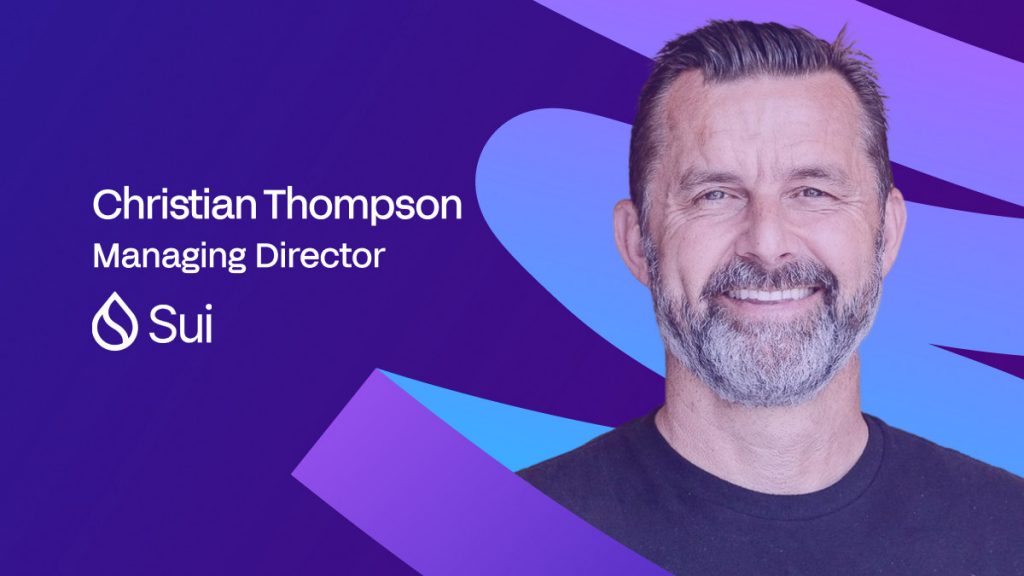
Christian Thompson, Managing Director at the Sui Foundation, explains how Sui’s “born fast” architecture, built around parallel execution and object-centric design, is proving that blockchains don’t have to sacrifice decentralization for scale. From powering global financial leaders like Franklin Templeton and Ant Financial to attracting over a million new wallet users daily, Thompson breaks down why Sui is positioned to redefine finance, consumer apps, and beyond.

Is Sui proving that scalability and decentralization don’t have to be at odds? What did the XRP model get wrong?

Sui has proven that with the right architecture—parallel execution, object-centric design, and horizontal scaling – you can achieve both decentralization and high performance.

Our validator set spans 20+ countries, yet the network consistently delivers sub-second finality and high throughput, even under heavy load.

Sui’s architecture is designed so that institutions and developers can build with full programmability and trustless coordination—without compromising decentralization.

What does it mean for a blockchain to be ‘born fast’—and why do older chains struggle to evolve into that speed?

“Born fast” means Sui was architected from the ground up for performance, with parallel execution and horizontally scalable infrastructure: speed is native to Sui.

Legacy chains rely on sequential processing and monolithic designs that inherently limit scalability and throughput, and making adjustments to retrofit for speed often ends up breaking other parts of their system.

On Sui, transactions don’t compete for blockspace. Parallelization means the network grows with demand, maintaining speed even under pressure.

Sui’s architecture eliminates traditional trade-offs between decentralization, speed, and cost, which older chains struggle to reconcile.

How does Sui’s object-centric model and parallel execution make previous architectures obsolete?

On Sui, everything is treated as an object with its own ownership, allowing for fine-grained control and direct interaction, with no need to call smart contracts for every operation. This is in contrast to previous architectures that treat state as a single global store.

Sui’s object-centric model enables parallel execution, where independent transactions can process simultaneously, vastly increasing throughput and reducing latency.

This structure isn’t just a speed advantage; it enables richer, more dynamic apps with complex logic and seamless user experiences.

Sui is seeing over 1 million new wallet addresses daily. Where is this growth coming from—and what’s driving this user stickiness?

Much of the growth is driven by consumer apps built on Sui using zkLogin, which allows users to onboard with familiar credentials like Google or Facebook—no wallets or seed phrases needed.

Ecosystem innovations like Kiosk and zkSend are turning first-time users into active participants by making crypto interactions intuitive and useful.

Developers are building apps that feel familiar but are powered by the most composable blockchain: rich assets, low fees, and instant finality keep users engaged.

Sponsored transactions mean users don’t need tokens to start interacting, which  removes another common barrier to stickiness.

Are you seeing more adoption from traditional fintechs, Web3 native devs, or consumer apps? Who’s leading the charge?

Web3-native builders are Sui’s early adopters, but we’re now seeing serious traction from fintech and institutional players launching products on Sui. These partners prioritize UX, an area where Sui excels.

Consumer apps are the biggest source of wallet growth. Major names like Franklin Templeton, VanEck, and Ant Financial have built on Sui for DeFi and real-world asset use cases.

Sui’s ecosystem is the intersection between Web3 natives and institutions, where innovation, scale, and distribution meet.

What’s one stat or signal from your internal roadmap that gives you confidence Sui is still underrated today?

Stablecoins are becoming the default medium for cross-border payments, value storage in inflationary economies, and institutional settlement–replacing slow, expensive traditional rails like SWIFT and ACH.

Sui’s stablecoin market cap reached a new all-time high in May 2025, peaking at over $1.1B during the month. Since the start of 2025, Sui’s stablecoin market cap has grown by over 192%. This indicates surging demand for fast, low-cost, and scalable digital dollar infrastructure.

Sui offers sub-second settlement and negligible fees, making it one of the only blockchains capable of handling stablecoins at mass-market volume without congestion or cost spikes.

Given this traction, Sui has tremendous potential in the broader market, as its architecture is uniquely suited to power the next phase of stablecoin-driven financial innovation, from remittances to enterprise payments to consumer fintech.

Does Sui aspire to become the chain for tokenized real-world assets, like many claim XRP aimed to be?

Sui is building the infrastructure that’s already earning trust from global financial leaders. Sui is already powering tokenized funds and real-world assets for institutions like Franklin Templeton and Ant Financial.

What makes Sui unique is that assets aren’t just tokens: they’re intelligent objects with built-in compliance, history, and access logic. That makes Sui ideal for RWAs, by enabling seamless, transparent, and programmable asset management without off-chain dependencies.

If you had to name one industry—finance, gaming, or digital identity—where Sui will leave the biggest mark in 2025, what would it be?

Finance. The combination of programmable assets, scalable infrastructure, and composability makes Sui the ideal foundation for next-gen financial systems. Sui is seeing high throughput in DeFi and stablecoin volumes. In May 2025, Sui’s stablecoin transfer volume reached $110B—the third-highest monthly total to date, trailing only $120B in December 2024 and $113B in January 2025.

Institutional activity is ramping, with ETFs, tokenized funds, and Bitcoin DeFi (BTCfi) now live on Sui. Finance needs performance, compliance, and trust–all areas where Sui leads.

Are you focused more on onboarding institutions or accelerating Web3-native innovation? Where’s the leverage right now?

Both. Sui’s architecture is flexible enough to serve highly regulated financial institutions and experimental builders alike. Web3-native innovation drives the bleeding edge of what’s possible, and Sui continues to provide the tools to build faster, safer, and more user-friendly apps.

Meanwhile, institutions bring credibility, capital, and distribution and they’re validating Sui through real-world deployments. Leverage comes from serving both ends of the spectrum and creating a bridge between them.

Disclaimer

In line with the Trust Project guidelines, please note that the information provided on this page is not intended to be and should not be interpreted as legal, tax, investment, financial, or any other form of advice. It is important to only invest what you can afford to lose and to seek independent financial advice if you have any doubts. For further information, we suggest referring to the terms and conditions as well as the help and support pages provided by the issuer or advertiser. MetaversePost is committed to accurate, unbiased reporting, but market conditions are subject to change without notice.

About The Author


Victoria is a writer on a variety of technology topics including Web3.0, AI and cryptocurrencies. Her extensive experience allows her to write insightful articles for the wider audience.

More articles


Victoria d’Este


Victoria is a writer on a variety of technology topics including Web3.0, AI and cryptocurrencies. Her extensive experience allows her to write insightful articles for the wider audience.


Source link

Top Crypto ICO for 2025 Bull Run: WeWake Enters the New Crypto Presale List While Lightchain AI Gains Momentum

Top Crypto ICO for 2025 Bull Run: WeWake Enters the New Crypto Presale List While Lightchain AI Gains Momentum


In Brief

Crypto presales are booming as the alt season shows positive signs. WeWake is gaining traction as a new presale while Lightchain AI continues to grow.

Top Crypto ICO for 2025 Bull Run: WeWake Enters the New Crypto Presale List While Lightchain AI Gains Momentum

As the 2025 crypto bull run begins to build momentum, early positioning is more critical than ever. Investors know the biggest gains often come from entering the right crypto presales before they hit major exchanges. 

That’s why identifying the top crypto ICO for 2025 now, not later, is key to maximizing upside.

Two projects are drawing serious attention: WeWake, a walletless Layer 2 focused on onboarding the following billion users, and Lightchain AI, a hybrid blockchain-AI protocol targeting data-driven infrastructure.

Both are early-stage and both are growing fast, but only one is offering real-world utility paired with deep scalability.

Lightchain AI vs. WeWake: Two Newcomers, Two Paths

Lightchain AI is carving out a strong position in the AI-integrated blockchain space. Its focus is on creating scalable AI inference systems using decentralized nodes. The project targets enterprise and machine learning applications, a technical niche with long-term relevance.

Meanwhile, WeWake is tackling a broader, high-volume challenge: bringing everyday users into Web3 with wallet-free, gasless technology. Built on ZK-Rollup architecture and ERC-4337 smart wallets, WeWake eliminates complex onboarding steps that limit adoption.

The two projects complement each other in vision but differ significantly in execution and audience. Lightchain AI aligns with the AI-driven Web3 future. WeWake, on the other hand, aims to address Web3’s current usability crisis.

It’s this UX-first approach that positions WeWake for faster network effects, viral product adoption, and broader investor interest.

If you’re looking to bet on the top crypto ICO for 2025, understanding this contrast is critical. Lightchain AI may scale well over time, but WeWake is currently built for exponential onboarding.

Why WeWake Belongs on the Top Crypto ICO List for 2025

What sets WeWake apart is its infrastructure built for scale and simplicity. Most Layer 2s optimize for performance metrics, such as TPS and cost per transaction, but overlook the human side of onboarding.

WeWake solves that with a wallet-free, gasless model. Users can sign in with Google or Telegram, receive NFTs, swap tokens, and participate in governance, all without needing to understand wallets or gas.

That’s only possible because of key features:

ZK-Rollup scalability, which compresses transaction data

ERC-4337 smart wallets, enabling abstracted, secure user accounts

Paymaster API, which sponsors gas fees for users

OAuth-based login flows, making onboarding as easy as signing into Gmail

Then there’s the developer ecosystem. WeWake provides an SDK for launching Telegram bots, mini-apps, and retail crypto checkouts, turning any brand into a crypto-enabled product with zero-code wallet integration.

Add DAO governance, DeFi collateral utility, and cashback mechanics, and WAKE becomes more than a token; it’s the fuel for a Layer 2 economy, a top crypto ICO for 2025.

Stage 2 Access: Max ROI Entry Into the WeWake Presale

Presale timing makes all the difference. WeWake is currently in its Stage 2 presale at $0.0115. With multiple stages leading to a projected listing price of $0.15, the early pricing model creates urgency. Investors entering at this stage could see returns of up to 1304% before the token even reaches exchanges.

Beyond price, early access gives buyers more than just WAKE tokens. It unlocks staking features, DAO participation, SDK privileges, and early access to smart wallet tools before public release.

Entry into Stage 2 is giving committed early adopters a head start. The presale dashboard is live, and investors are lining up for what could be one of the most user-ready blockchains ever launched.

This isn’t another speculative altcoin. It’s an infrastructure play that removes friction from Web3 adoption. If you’re looking to capture long-term value, especially during this early bull cycle phase, WeWake’s presale stage offers unmatched potential. It’s not just a token sale, it’s the ground floor of a utility-first Layer 2 ecosystem.

Conclusion: WeWake Brings Utility to the Top Crypto ICO for 2025 Race

Both Lightchain AI and WeWake stand out in the 2025 presale space. While Lightchain targets future AI-blockchain integration, WeWake is solving Web3’s biggest issue now: user onboarding. 

For those eyeing the top crypto ICO for 2025, WeWake delivers real utility, gasless transactions, robust SDKs, and live use cases. It’s more than hype. It’s infrastructure for growth. Best of all, early-stage access is still available.

Disclaimer

In line with the Trust Project guidelines, please note that the information provided on this page is not intended to be and should not be interpreted as legal, tax, investment, financial, or any other form of advice. It is important to only invest what you can afford to lose and to seek independent financial advice if you have any doubts. For further information, we suggest referring to the terms and conditions as well as the help and support pages provided by the issuer or advertiser. MetaversePost is committed to accurate, unbiased reporting, but market conditions are subject to change without notice.

About The Author


Gregory, a digital nomad hailing from Poland, is not only a financial analyst but also a valuable contributor to various online magazines. With a wealth of experience in the financial industry, his insights and expertise have earned him recognition in numerous publications. Utilising his spare time effectively, Gregory is currently dedicated to writing a book about cryptocurrency and blockchain.

More articles


Gregory, a digital nomad hailing from Poland, is not only a financial analyst but also a valuable contributor to various online magazines. With a wealth of experience in the financial industry, his insights and expertise have earned him recognition in numerous publications. Utilising his spare time effectively, Gregory is currently dedicated to writing a book about cryptocurrency and blockchain.


Source link

Best Crypto Presale to Buy in 2025: WeWake Offers a Big Upside With Recent Launch, While SpacePay Remains Stagnant

Best Crypto Presale to Buy in 2025: WeWake Offers a Big Upside With Recent Launch, While SpacePay Remains Stagnant


Best Crypto Presale to Buy in 2025: WeWake Offers a Big Upside With Recent Launch, While SpacePay Remains Stagnant

As crypto markets prepare for another bull cycle, investors are scanning the landscape for the best crypto presale to buy in 2025. 

While several projects have entered the scene, only a few stand out in terms of vision, tech, and token utility. Two contenders currently gaining attention are WeWake and SpacePay, but their momentum levels couldn’t be more different.

WeWake is gaining early traction with a walletless, gasless blockchain model. Meanwhile, SpacePay has shown little growth or innovation. 

In this article, we break down why WeWake could be the best crypto presale to buy in 2025, and why SpacePay may already be falling behind.

WeWake vs. SpacePay: Which Presale Has the Edge?

Comparing these two presales reveals a clear gap in technology and utility. WeWake is built for walletless onboarding, with social logins and zero gas fees via its Paymaster API. This approach removes barriers that prevent everyday users from adopting Web3.

In contrast, SpacePay continues to follow a traditional token payment model. Users need a wallet, must pay gas fees, and navigate complex onboarding steps, far from the simplicity that mainstream users expect.

The WAKE token offers tangible utility, sponsoring gas for other users through staking, providing cashback, and featuring DAO governance. These features add long-term value and support a thriving ecosystem.

SpacePay’s token has yet to show any unique utility beyond basic transactions. Its roadmap remains vague, with little evidence of developer or partner engagement. As investors assess the best crypto presale to buy in 2025, WeWake’s product-first model and expanding infrastructure give it a significant edge. Meanwhile, SpacePay appears to be stalling.

The Appeal of the WAKE Token: Utility, Access, and Scalability

What sets WeWake apart in the crowded presale market is the real-world utility of the WAKE token. Through ERC-4337 smart wallets, users can access NFTs, swap tokens, or receive airdrops, all without needing to download a wallet extension. Log in with Telegram or Google, and you’re in. The system is intuitive, secure, and fast.

Developers and businesses also benefit. The WAKE token unlocks access to the project’s SDK, allowing for the creation of Telegram bots, e-commerce payment apps, and more, all backed by zero-gas infrastructure.

From freelance payments to gaming wallets, DeFi collateral to mini-apps, WAKE powers a wide range of use cases. That kind of multi-industry flexibility is rare in the presale space.

More importantly, the tokenomics support long-term scalability. Token holders are rewarded not just for holding, but for staking, referring, and participating in governance. This broad functionality and robust architecture make WeWake a serious contender for the best crypto presale to buy in 2025.

Why WeWake Is the Best Crypto Presale to Buy in 2025

The WeWake Finance presale has launched with Stage 2 pricing at just $0.0115 per token. With 80 stages mapped out to a final listing price of $0.15, early investors have the opportunity to lock in returns of up to 1304% their investment before the market listing.

But this isn’t a hype-only token. WeWake offers a working product, a clear roadmap through Q3 2026, and integrations already lined up with platforms like Uniswap, Polygon, and Alchemy.

Meanwhile, SpacePay has yet to present an updated roadmap, release its utility model, or clarify exchange listings. As investor interest in top ICOs of 2025 grows, WeWake is appearing in trusted crypto media outlets like CoinMarketCap, Binance News, and U.Today—signaling strong visibility and momentum.

Most presales rely on speculation. WeWake delivers actual infrastructure with frictionless onboarding and DeFi-ready tools. For investors asking, “What’s the best crypto presale to buy in 2025?”, the answer is becoming clearer: WeWake, with its token utility, roadmap strength, and early access pricing, is pulling ahead fast.

Conclusion

WeWake has everything you want in the best crypto presale to buy in 2025: early-stage value, strong utility, and a real plan for mass adoption. With a walletless UX, sponsored gas fees, and deep functionality across Telegram, e-commerce, and DeFi, WeWake is building an ecosystem, not just a coin.

SpacePay, in contrast, lacks traction and remains concept-heavy without proof of delivery. For smart investors looking to position themselves ahead of the next bull run, WeWake’s Stage 2 presale may be the most strategic move you make in 2025.

Disclaimer

In line with the Trust Project guidelines, please note that the information provided on this page is not intended to be and should not be interpreted as legal, tax, investment, financial, or any other form of advice. It is important to only invest what you can afford to lose and to seek independent financial advice if you have any doubts. For further information, we suggest referring to the terms and conditions as well as the help and support pages provided by the issuer or advertiser. MetaversePost is committed to accurate, unbiased reporting, but market conditions are subject to change without notice.

About The Author


Gregory, a digital nomad hailing from Poland, is not only a financial analyst but also a valuable contributor to various online magazines. With a wealth of experience in the financial industry, his insights and expertise have earned him recognition in numerous publications. Utilising his spare time effectively, Gregory is currently dedicated to writing a book about cryptocurrency and blockchain.

More articles


Gregory, a digital nomad hailing from Poland, is not only a financial analyst but also a valuable contributor to various online magazines. With a wealth of experience in the financial industry, his insights and expertise have earned him recognition in numerous publications. Utilising his spare time effectively, Gregory is currently dedicated to writing a book about cryptocurrency and blockchain.


Source link

Strategic Alliance Between FLock.io And AIGEN Sciences Aims To Overcome Data Privacy Barriers In Biomedical AI 

Strategic Alliance Between FLock.io And AIGEN Sciences Aims To Overcome Data Privacy Barriers In Biomedical AI 


In Brief

FLock.io has partnered with AIGEN Sciences to deploy its decentralized, privacy-preserving AI infrastructure for drug discovery.

FLock.io And AIGEN Sciences Collaborate To Deploy Decentralized AI Infrastructure For Secure Drug Discovery Research

Decentralized platform focused on transforming AI model training through federated learning and blockchain integration, FLock.io announced a strategic partnership with AIGEN Sciences to implement its privacy-centric AI infrastructure in the field of drug discovery.

AIGEN Sciences, established by Professor Jaewoo Kang—co-creator of BioBERT and a member of FLock’s advisory board—leverages large language models and multi-omics technologies to accelerate the discovery of both small molecules and biologics. The company is developing a broad pipeline targeting improved medical outcomes across global patient populations.

A key barrier in biomedical AI remains the restricted access to healthcare data, which is often siloed, highly sensitive, and inaccessible to centralized AI systems. These privacy constraints hinder effective collaboration among hospitals, laboratories, and pharmaceutical organizations.

The federated learning framework developed by FLock provides a solution to this issue. By enabling decentralized coordination with privacy built into the system’s core, AIGEN can securely engage in data collaboration with healthcare institutions and pharmaceutical firms, facilitating deeper insights and faster therapeutic development.

The technical implementation of the partnership will be jointly led by Dr. Zehua Cheng, Chief Scientist at FLock, and Dr. Sunkyu Kim, Director of AI Research at AIGEN Sciences. Initial proof-of-concept research is scheduled to commence in the third quarter of 2025, with findings to be presented at forthcoming conferences focused on AI in healthcare.

This collaboration presents a potential model for the secure and collaborative advancement of AI-driven medical research on decentralized infrastructure. It outlines a pathway for hospitals and research institutions to develop and retain ownership of high-value AI models without compromising data privacy or research integrity.

FLock.io Expands Scientific And Security Expertise, Strengthens Its Incentivized Platform

FLock.io enables community participants to collaboratively train AI models while maintaining data privacy. The system incorporates on-chain reward mechanisms to ensure transparent compensation for contributions across all stages of model development.

At the core of the platform is its primary offering, AI Arena, which provides an incentive-driven environment where users can stake tokens, engage in training processes, validate model performance, and receive rewards. This structure is designed to encourage open collaboration among a wide range of stakeholders and datasets.

In a recent development, FLock.io has announced the appointment of two Korea University professors to the advisory board of the FLock Foundation. Professor Junghee Lee, an expert in cybersecurity, and Professor Jaewoo Kang, a specialist in AI applications for biopharmaceuticals, have formally joined the board. Their contributions are expected to enhance the foundation’s efforts in reinforcing the security architecture of the platform and expanding its research scope within scientific domains.

Disclaimer

In line with the Trust Project guidelines, please note that the information provided on this page is not intended to be and should not be interpreted as legal, tax, investment, financial, or any other form of advice. It is important to only invest what you can afford to lose and to seek independent financial advice if you have any doubts. For further information, we suggest referring to the terms and conditions as well as the help and support pages provided by the issuer or advertiser. MetaversePost is committed to accurate, unbiased reporting, but market conditions are subject to change without notice.

About The Author


Alisa, a dedicated journalist at the MPost, specializes in cryptocurrency, zero-knowledge proofs, investments, and the expansive realm of Web3. With a keen eye for emerging trends and technologies, she delivers comprehensive coverage to inform and engage readers in the ever-evolving landscape of digital finance.

More articles


Alisa Davidson


Alisa, a dedicated journalist at the MPost, specializes in cryptocurrency, zero-knowledge proofs, investments, and the expansive realm of Web3. With a keen eye for emerging trends and technologies, she delivers comprehensive coverage to inform and engage readers in the ever-evolving landscape of digital finance.


More articles


Source link

Popular Posts

My Favorites