Metaverse

Home Metaverse Page 128

Bridging The Gap Between Web2 And Web3: Paybis’ Approach To User Experience

Bridging The Gap Between Web2 And Web3: Paybis’ Approach To User Experience


In Brief

Paybis is working to simplify Web3 onboarding for mainstream users by offering instant check-in solutions and fiat-to-crypto infrastructure, aiming to bridge the gap between Web2 usability and Web3 functionality.
Bridging The Gap Between Web2 And Web3: Paybis’ Approach To User Experience

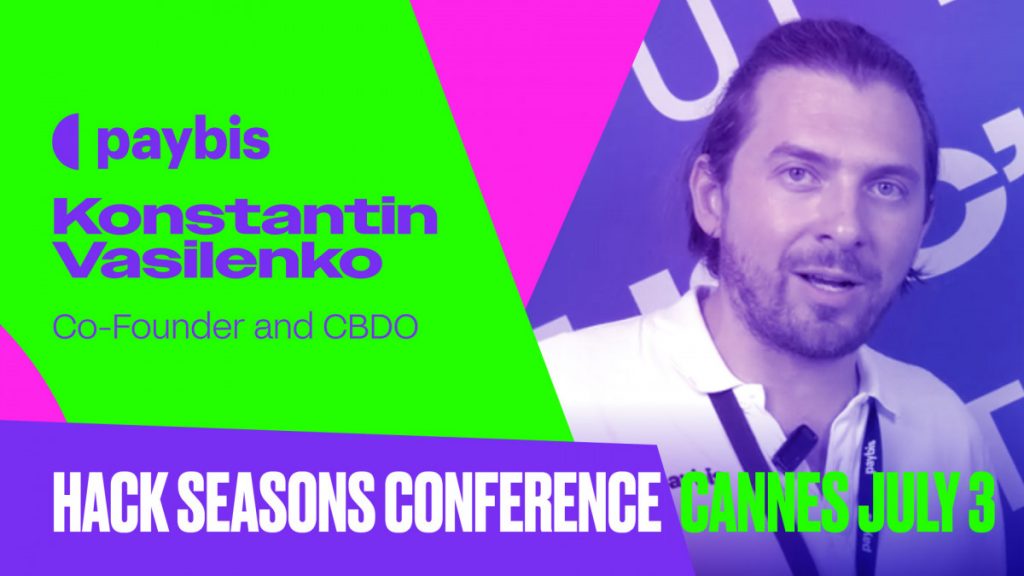
Co-founder and Chief Business Development Officer at Paybis, Konstantin Vasilenko, shared how his platform focuses on streamlining user onboarding to Web3 and supporting broader cryptocurrency adoption during the Hack Seasons Conference in Cannes. 

Paybis offers solutions designed to enhance the compatibility of Web3 projects, making it easier for them to attract and onboard a wider user base. 

While the cryptocurrency industry is still in its early stages compared to sectors like the internet or e-commerce, Web2 companies have had time to refine their user interfaces and user experiences to optimize customer conversion. In contrast, many Web3 projects are still heavily focused on technical development and may lack the same level of UI/UX maturity. As a result, developers across the Web3 space are independently attempting to create interfaces that simplify the user experience.

Within the Web3 developer community, there is often a strong focus on users who are already familiar with the space, while users from the Web2 environment—many of whom find cryptocurrency unfamiliar and complex—are frequently overlooked. For these users, taking the initial step into Web3 remains one of the most challenging aspects, highlights Konstantin Vasilenko. 

“What we are trying to do, and what we observe in the market, is to make it as easy as buying sneakers online with an Apple Pay account. As soon as we reach that level of experience, we expect to see many more Web2 users transitioning into Web3,” he explained. 

However, certain projects have already implemented methods that enable fast user onboarding into Web3 environments.

“This is what we are trying to do. We are one of the few companies bringing this solution to the market and working to make it easier for Web3 projects to onboard more Web2 users through Apple Pay and Google Pay instant check-in accounts. It’s similar to the experience of onboarding to an online platform using Apple Pay, where you don’t need to enter your email, name, card details, address, or anything else—you just click one button, double-click on your phone, and your order is placed. In our case, within two minutes, the crypto is deposited into your wallet,” said Konstantin Vasilenko.

“So, the solutions already exist. The issue, as I see it, is that many Web3 projects remain focused on existing Web3 users. The goal is to shift this paradigm by encouraging Web3 projects to use the Paybis solution and design UI/UX experiences that are more accessible and understandable for Web2 users,” he added.

Simplifying Web3 Onboarding: How Paybis Streamlines Instant Check-In Integration For Seamless Crypto Access

The implementation of instant check-in accounts within Web3 environments presents certain challenges. A common perception is that integrating an on-ramp provider or fiat gateway is inherently complex, requiring attention to fiat transactions, KYC processes, legal considerations, compliance, and licensing. However, solutions such as Paybis aim to simplify this by offering an all-in-one package. It can be embedded directly into Web3 projects as an application, with Paybis managing the full process—including fiat payments, KYC procedures, cryptocurrency liquidity sourcing, and delivery to the end user.

“We are like a 150-person company just trying to make one feature very easy. You know, to make crypto a one-click experience, it takes a 150-person team. It’s like in Formula One—two cars are on the race track, but there’s a thousand-person company behind them making sure those cars can complete a one-hour race. It’s exactly the same with us,” compared Konstantin Vasilenko.

“But in reality, it only takes about five minutes during a workshop to demonstrate how we can, for example, place a small button on an existing website or app—it’s literally five minutes,” the expert added. 

Regulatory Evolution To Fuel Institutional Trust And Accelerate Crypto Adoption

Over the past five years, one of the key drivers of broader cryptocurrency adoption has been the introduction of regulatory frameworks. Five years ago, there were limited or no clear regulations in regions such as Europe and the United States, says the speaker. As a result, many individuals—particularly from institutional backgrounds—were skeptical about Bitcoin, often perceiving it as a potential scam. However, as regulatory environments have become more structured, stable, and credible, there has been a notable increase in participation from traditional finance and institutional investors. The presence of licensed entities, regulated investment funds, and even some US states holding Bitcoin reserves has helped shift public perception. Regulatory oversight contributes to greater consumer protection and fosters trust, as users are more likely to feel secure when engaging with platforms that comply with established legal and financial standards.

Of course, regulatory frameworks are still evolving and working to catch up with the pace of innovation in the industry, which remains ahead. This ongoing development is expected to support the sector by providing clearer guidelines and fostering broader adoption.

“I think in the next three to five years, regulations will become even better for us. The job of ensuring compliance will become more difficult, but at the same time, more people will enter the crypto space because there will be greater understanding that it is safe, and the taxes paid go to authorities who ensure that companies and the people operating them do so correctly,” Konstantin Vasilenko concluded. 

Disclaimer

In line with the Trust Project guidelines, please note that the information provided on this page is not intended to be and should not be interpreted as legal, tax, investment, financial, or any other form of advice. It is important to only invest what you can afford to lose and to seek independent financial advice if you have any doubts. For further information, we suggest referring to the terms and conditions as well as the help and support pages provided by the issuer or advertiser. MetaversePost is committed to accurate, unbiased reporting, but market conditions are subject to change without notice.

About The Author


Alisa, a dedicated journalist at the MPost, specializes in cryptocurrency, zero-knowledge proofs, investments, and the expansive realm of Web3. With a keen eye for emerging trends and technologies, she delivers comprehensive coverage to inform and engage readers in the ever-evolving landscape of digital finance.

More articles


Alisa Davidson


Alisa, a dedicated journalist at the MPost, specializes in cryptocurrency, zero-knowledge proofs, investments, and the expansive realm of Web3. With a keen eye for emerging trends and technologies, she delivers comprehensive coverage to inform and engage readers in the ever-evolving landscape of digital finance.


More articles


Source link

Pavel Altukhov Outlines Vision For Seamless Web3 Adoption Via TAC

Pavel Altukhov Outlines Vision For Seamless Web3 Adoption Via TAC


Pavel Altukhov Outlines Vision For Seamless Web3 Adoption Via TAC

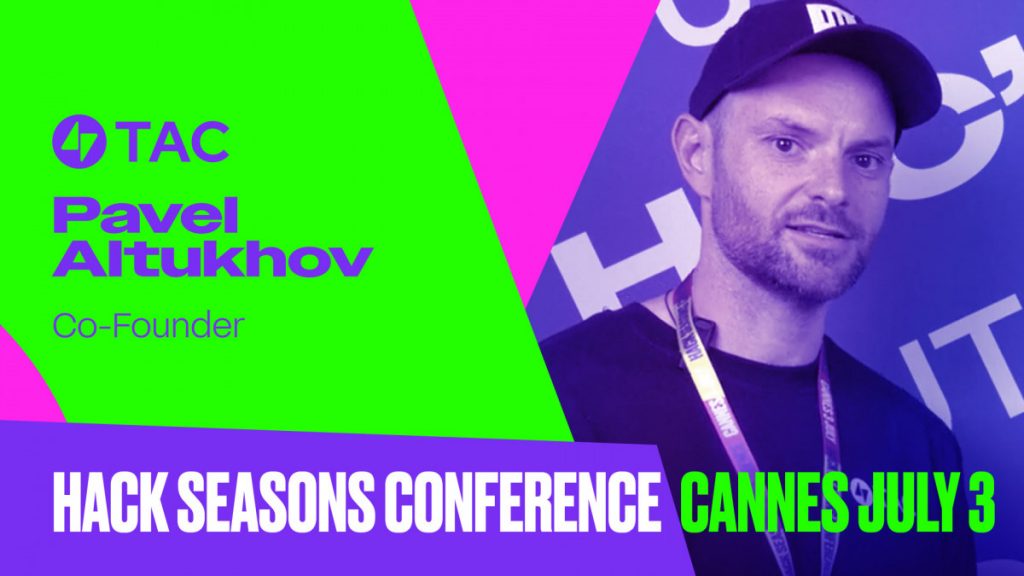
Co-founder of TAC—a purpose-built blockchain designed to enable EVM decentralized applications to access the TON and Telegram ecosystems—Pavel Altukhov shared insights into TAC and its development outlook during the Hack Seasons Conference in Cannes.

Pavel Altukhov as a builder was originally focused on the The Open Network (TON) ecosystem, initially contributing to staking infrastructure. His project TAC was among the early participants in the ecosystem to recognize the potential of decentralised finance (DeFi) and the advantages of Ethereum Virtual Machine (EVM) compatibility. This understanding led to the development of an architecture that enabled the ecosystem to benefit from the full range of functionalities and liquidity associated with EVM-based applications. The design was intended to allow TON Wallet users and TON token holders to interact with EVM decentralized applications deployed on the associated layer.

Telegram dApps Poised To Accelerate Mass Adoption As Developers Leverage Underlying Blockchain Infrastructure

At present there are multiple ways to assess why Telegram users may require access to decentralized applications (dApps). The broader vision is that the next phase of adoption—particularly global adoption of innovative technologies—is likely to occur when the benefits are made clear and accessible to non-crypto-native users.

“We believe that the average user of a super-app on Telegram will benefit significantly from the full functionality that blockchain technology enables,” said Pavel Altukhov.

“We already see a few use cases emerging, such as stablecoins and the trading aspects of DeFi. I believe these can be integrated into a well-designed user experience—something the industry urgently needs for broader adoption. As we all know, user experience has long been a bottleneck. One of the reasons we initially started building on TON was the simplicity of integrating blockchain functionality into messaging platforms and the ease of onboarding users. The seamless wallet, single-click onboarding—whether users are aware or not—makes it possible to send crypto to anyone, anywhere, and they’ll be able to receive it. That was a crucial first step in UX,” he added. 

“We’ve since addressed the second phase—not only by expanding the functionality and asset variety within the TON ecosystem but also by removing complexities related to cross-messaging and asset bridging. Users can now interact with consumer-facing applications that are supported by a good backend, while the wallet remains easy to use and onboarding stays simple. The process abstracts the technical challenges typically associated with dApp interaction,” Pavel Altukhov explained. 

The broader objective is to activate a development cycle that encourages builders—particularly those creating consumer-facing applications, whether in fintech, gaming, or other sectors—to design products that effectively leverage the value of the underlying blockchain infrastructure. This represents the larger strategic vision. 

“Right now, we can observe a counter-trend in the sense that Web3 technologies are evolving to resemble Web2 products. For example, the previously mentioned wallet is starting to look like Revolut or similar platforms—originally built as a Web3 solution, it is now shifting in terms of product design toward something that functions more like a fintech app within Telegram. Users can earn, transact, deposit, and trade—all within a seamless, sleek interface—without needing to fully grasp the underlying technology or concepts,” emphasised Pavel Altukhov. 

Telegram’s Integrated Wallet Simplifies Onboarding And Expands Blockchain Access To Unbanked Users

Regarding existing bottlenecks, one important development achieved through Telegram’s integration of blockchain is the wallet functionality. Whether or not users are familiar with blockchain concepts, they can send cryptocurrency to others simply by knowing their handle in the messenger, and recipients are able to receive it seamlessly. This represents a simplified approach to onboarding.

“These days, the release of the wallet is anticipated in the US, and it will be available to every user. So people will be able to benefit from the messenger that we are using daily, with the same crypto wallet functionalities integrated in a seamless manner. That underpins the step toward adoption in the sense that onboarding the user is now fairly easy to do. Now comes step two—you have to shape the product to persuade the user that your product makes sense,” exemplified the expert. 

“But you know, the financial functionality and value transfer aspects of blockchain—this is practically a financial black hole. Now, it’s being done in a more efficient, transparent, and permissionless manner. So those unbanked people can now access, practically, those products that were previously only available through fintech apps or banks, seamlessly in the messenger again,” he continued. 

TAC Prepares For Token Generation Event

TAC operates as a fully EVM-compatible Layer 1, enabling developers and application founders to deploy on its platform using familiar methods. TAC complements these deployments with a set of proxy smart contracts that support what is referred to as “TON adoption.” It is also a cross-messaging original layer that enables the TON wallet to interact with dApps. TAC’s value proposition centers on seamless EVM deployment, with TAC managing all the rest, thereby offering access to Telegram’s extensive user base. This approach is the reason why TAC attracts a lot of interest from developers seeking broader distribution, with the expectation that it will ultimately lead to the development of consumer-oriented products.

TAC is currently live on a dev mainnet, allowing infrastructure partners and applications to begin deployment—some of which are already operational. The team is preparing for the Token Generation Event (TGE) and the launch of the public mainnet, expected to occur within this month. Full functionality, including deployed applications and active liquidity, is anticipated shortly thereafter, effectively enabling the TON and Telegram ecosystems to support EVM-based DeFi from the early stages of the public launch.

Disclaimer

In line with the Trust Project guidelines, please note that the information provided on this page is not intended to be and should not be interpreted as legal, tax, investment, financial, or any other form of advice. It is important to only invest what you can afford to lose and to seek independent financial advice if you have any doubts. For further information, we suggest referring to the terms and conditions as well as the help and support pages provided by the issuer or advertiser. MetaversePost is committed to accurate, unbiased reporting, but market conditions are subject to change without notice.

About The Author


Alisa, a dedicated journalist at the MPost, specializes in cryptocurrency, zero-knowledge proofs, investments, and the expansive realm of Web3. With a keen eye for emerging trends and technologies, she delivers comprehensive coverage to inform and engage readers in the ever-evolving landscape of digital finance.

More articles

Alisa Davidson


Alisa, a dedicated journalist at the MPost, specializes in cryptocurrency, zero-knowledge proofs, investments, and the expansive realm of Web3. With a keen eye for emerging trends and technologies, she delivers comprehensive coverage to inform and engage readers in the ever-evolving landscape of digital finance.


More articles


Source link

Linera Breaks Blockchain Barriers with Infinite Scaling Power

Linera Breaks Blockchain Barriers with Infinite Scaling Power


In Brief

Linera, a Layer 1 blockchain project, introduces microchains based on FastPay, aiming to scale infrastructure and eliminate bottlenecks in performance and user experience.

Linera Breaks Blockchain Barriers with Infinite Scaling Power

In a market saturated with Layer 1s and an increasing number of Layer 2s, another blockchain project might seem unnecessary. However, occasionally a project emerges that isn’t just another addition to the ecosystem but represents a fundamental rethinking of blockchain operation. Linera is such a project.

Built on the technical foundations of FastPay—a system developed by Meta’s Novi research team in 2020 and co-authored by Linera founder Mathieu Baudet—this new Layer 1 chain introduces a groundbreaking concept: microchains. With microchains, Linera doesn’t just scale blockchain infrastructure; it aims to eliminate the bottlenecks that have long hindered performance and user experience.

The Breakthrough That Transformed Blockchain Scalability

FastPay was never intended to be a typical crypto product. Instead, it served as a bold theoretical plan for a global payments network powered by blockchain. Although the system never launched for public use, its underlying innovations were highly impactful.

FastPay introduced a model where transactions bypass the mempool and don’t wait their turn, a process that has long hindered the real-time efficiency of even the most advanced blockchains. Instead, users interact directly with authorities, now called validators—processing transactions in parallel and paving the way for potentially unlimited horizontal scalability.

Adding Programmability to Infinite Scale

This vision is now being realized with Linera. While FastPay focused on transactional throughput, Linera extends these principles by introducing programmability. The FastPay model of individual user accounts transforms into a system of microchains, autonomous, personal blockchains for each user, that operate simultaneously on a shared validator infrastructure. 

It’s an elegant transformation: rather than relying on batching mechanisms like rollups, or on mempool traffic management, Linera distributes load naturally and infinitely across a web of microchains, each capable of smart contract execution and asynchronous communication.

Unlike rollup-focused architectures that rely on Layer 1s for data availability and experience latency during proof generation, Linera’s system is inherently built for real-time responsiveness. While ZK rollups are cryptographically strong, they are limited by the intensive computation needed for proof creation. Linera overcomes this by allowing direct, parallel, and verifiable execution paths. This results in a blockchain that meets modern Web2 performance standards and stays true to the core decentralization principles of crypto.

A New Approach for Decentralized Networks

Linera’s approach is especially compelling because it emphasizes infrastructure enabling user-centric parallelism while maintaining security. Validators do more than process blocks; they coordinate a network of independent chains. This layered, cohesive architecture is what allows Linera to suggest the potential for infinite scaling, provided the underlying hardware can scale accordingly.

Although still in its testnet phase, Linera has begun attracting attention. Developers testing its microchain model report transaction speeds that resemble real-time messaging more than traditional block validation. The recent launch of its Babbage testnet introduces a new phase in stress-testing decentralized scalability limits.

Linera offers more than a faster blockchain—it introduces a different type of blockchain. It represents a progression from academic theory to practical application, moving from Meta’s research environment to the open Web3 landscape. In a field where scalability promises often fall short without trade-offs, Linera’s microchains might be the first significant step toward achieving a truly seamless decentralized future.

Disclaimer

In line with the Trust Project guidelines, please note that the information provided on this page is not intended to be and should not be interpreted as legal, tax, investment, financial, or any other form of advice. It is important to only invest what you can afford to lose and to seek independent financial advice if you have any doubts. For further information, we suggest referring to the terms and conditions as well as the help and support pages provided by the issuer or advertiser. MetaversePost is committed to accurate, unbiased reporting, but market conditions are subject to change without notice.

About The Author


Victoria is a writer on a variety of technology topics including Web3.0, AI and cryptocurrencies. Her extensive experience allows her to write insightful articles for the wider audience.

More articles


Victoria d’Este


Victoria is a writer on a variety of technology topics including Web3.0, AI and cryptocurrencies. Her extensive experience allows her to write insightful articles for the wider audience.


Source link

Fetch.ai And Internet Computer Kick Off NextGen Agents Hackathon To Develop AI Agents On Decentralized Cloud

Fetch.ai And Internet Computer Kick Off NextGen Agents Hackathon To Develop AI Agents On Decentralized Cloud


In Brief

Fetch.ai and Internet Computer have launched the NextGen Agents Hackathon, inviting developers to build autonomous AI agents deployed fully on-chain using Fetch.ai’s technology and ICP’s decentralized blockchain.

Fetch.ai And Internet Computer Kick Off NextGen Agents Hackathon To Develop AI Agents On Decentralized Cloud

Provider of decentralized AI infrastructure and founding member of the Artificial Superintelligence (ASI) Alliance, Fetch.ai announced the launch of the NextGen Agents Hackathon in partnership with Internet Computer (ICP), beginning on August 1st. 

This event, hosted by Fetch.ai’s Innovation Lab in collaboration with the ICP Hubs Network, marks Fetch.ai’s first hackathon in Indonesia and invites developers to create autonomous AI agents within Fetch.ai’s ecosystem, connected to the decentralized blockchain infrastructure of the Internet Computer. The hackathon is the first significant competition to combine Fetch.ai’s autonomous agent technology with fully on-chain deployment, with winners advancing to the World Computer Hacker League (WCHL) 2025 and competing for a prize pool of $300,000.

The event focuses on a key area in Web3 development: deploying Fetch.ai’s intelligent autonomous agents that function entirely on-chain without relying on traditional cloud services. Participants will utilize Fetch.ai’s uAgent framework to develop these agents and deploy them on Agentverse, an open agent marketplace, integrating them with the Internet Computer’s “canister” smart contracts to build AI-driven applications that operate independently on decentralized infrastructure.

NextGen Agents Hackathon Challenges Developers To Build Autonomous AI Agents With Fetch.ai’s Technology Stack

Developers will be tasked with building autonomous AI agents using Fetch.ai’s technology stack and connecting them to the Internet Computer ecosystem. Through deployment on Agentverse and interaction via ASI:One, Fetch.ai’s proprietary agentic large language model (LLM), participants will showcase their applications. 

Top teams from the hackathon will qualify for the Regional Round of WCHL, which features competitions across multiple categories, including AI, Bitcoin DeFi, Real-World Assets, Fully On-Chain, and an Open Track.

Throughout the hackathon, participants will receive mentorship from Fetch.ai and ICP engineers, who will provide guidance on intelligent agent development, on-chain integration, and practical Web3 deployment strategies. 

Registration for the hackathon opens on August 1st and closes on August 23rd, with submissions accepted from August 13th to August 23rd. Projects will be judged based on their innovative use of Fetch.ai’s tools, effective integration with ICP, technical proficiency, and potential real-world impact.

Disclaimer

In line with the Trust Project guidelines, please note that the information provided on this page is not intended to be and should not be interpreted as legal, tax, investment, financial, or any other form of advice. It is important to only invest what you can afford to lose and to seek independent financial advice if you have any doubts. For further information, we suggest referring to the terms and conditions as well as the help and support pages provided by the issuer or advertiser. MetaversePost is committed to accurate, unbiased reporting, but market conditions are subject to change without notice.

About The Author


Alisa, a dedicated journalist at the MPost, specializes in cryptocurrency, zero-knowledge proofs, investments, and the expansive realm of Web3. With a keen eye for emerging trends and technologies, she delivers comprehensive coverage to inform and engage readers in the ever-evolving landscape of digital finance.

More articles


Alisa Davidson


Alisa, a dedicated journalist at the MPost, specializes in cryptocurrency, zero-knowledge proofs, investments, and the expansive realm of Web3. With a keen eye for emerging trends and technologies, she delivers comprehensive coverage to inform and engage readers in the ever-evolving landscape of digital finance.


More articles


Source link

OpenAI Unveils Stargate Norway, Its First European AI Data Center With Plans To Host 100,000 Nvidia GPUs

OpenAI Unveils Stargate Norway, Its First European AI Data Center With Plans To Host 100,000 Nvidia GPUs


In Brief

OpenAI has launched Stargate Norway, its first European AI data center under the OpenAI for Countries program, aiming to deliver large-scale, renewable-powered AI compute capacity to support developers, researchers, and startups across Norway and Europe.

OpenAI Launches Stargate Norway, Its First European AI Data Center To Support Scalable, Renewable-Powered Infrastructure

AI research organisation OpenAI announced the establishment of Stargate Norway, its first AI data center initiative in Europe, launched under the OpenAI for Countries program. Stargate serves as OpenAI’s primary infrastructure platform, supporting its broader goal of making AI widely beneficial.

The initiative emphasizes the role of AI as a transformative technology capable of enhancing productivity, stimulating economic development, and supporting the emergence of new sectors. Expanding large-scale compute infrastructure within Europe is intended to facilitate access to AI resources for a broad range of users, including developers, researchers, and startups throughout Norway and the wider region.

Usage of OpenAI products has seen substantial growth across Europe, with ChatGPT and API services actively employed by millions. In Norway, weekly active ChatGPT users have increased fourfold over the past year, with a significant portion under the age of 35 and a growing community of developers.

Stargate Norway will be developed in partnership with Nscale, a provider of AI infrastructure services with operations in Europe and North America, and Aker, a company with longstanding involvement in the energy and industrial sectors. The data center is to be designed and built by Nscale and is anticipated to be jointly owned through a 50/50 venture between Nscale and Aker.

Stargate Norway Set To Host 100,000 GPUs By 2026

Stargate Norway is projected to provide 230 megawatts of capacity initially, with plans to expand by an additional 290 megawatts. The facility is expected to support deployment of approximately 100,000 NVIDIA GPUs by the end of 2026, with further scaling anticipated in the future. As part of the OpenAI for Countries initiative, OpenAI is positioned to be the initial offtaker, with an option to expand usage over time.

This project represents one of the largest AI infrastructure developments currently planned in Europe. Narvik has been selected as the site due to its access to hydropower, competitively priced energy, favorable climate, and established industrial framework, creating a suitable environment for delivering large-scale, energy-efficient AI compute.

The data center is expected to operate using 100% renewable energy and will feature closed-loop, direct-to-chip liquid cooling systems to maximize thermal efficiency. Additionally, excess heat from GPU operations will be repurposed to support low-carbon businesses in the surrounding area.

Aker and Nscale intend to ensure that local AI startups and research institutions in Norway have prioritized access to the infrastructure. Remaining capacity will be extended to both public and private sector organizations across the UK, Nordic countries, and Northern Europe to support regional needs and encourage development of the European AI ecosystem.

OpenAI also plans to engage with Norwegian government officials during its presence in the country to explore possible partnerships focused on increasing AI adoption and supporting Norway’s sovereign AI goals.

This project follows the earlier launch of Stargate UAE and forms part of OpenAI’s broader collaboration with governments and industry partners worldwide. Recent activities include a memorandum of understanding with the UK Government to support AI infrastructure and adoption, a partnership with Estonia’s government for deploying ChatGPT in secondary education, and participation in expressions of interest for AI Gigafactories under EU initiatives. While in early stages, these efforts aim to strengthen Europe’s technological capabilities and advance sovereign AI infrastructure.

Disclaimer

In line with the Trust Project guidelines, please note that the information provided on this page is not intended to be and should not be interpreted as legal, tax, investment, financial, or any other form of advice. It is important to only invest what you can afford to lose and to seek independent financial advice if you have any doubts. For further information, we suggest referring to the terms and conditions as well as the help and support pages provided by the issuer or advertiser. MetaversePost is committed to accurate, unbiased reporting, but market conditions are subject to change without notice.

About The Author


Alisa, a dedicated journalist at the MPost, specializes in cryptocurrency, zero-knowledge proofs, investments, and the expansive realm of Web3. With a keen eye for emerging trends and technologies, she delivers comprehensive coverage to inform and engage readers in the ever-evolving landscape of digital finance.

More articles


Alisa Davidson


Alisa, a dedicated journalist at the MPost, specializes in cryptocurrency, zero-knowledge proofs, investments, and the expansive realm of Web3. With a keen eye for emerging trends and technologies, she delivers comprehensive coverage to inform and engage readers in the ever-evolving landscape of digital finance.


More articles


Source link

Puffer Finance Announces UniFi AVS Upgrade With Sub-10ms Execution, Enhanced Security, And Economic Alignment

Puffer Finance Announces UniFi AVS Upgrade With Sub-10ms Execution, Enhanced Security, And Economic Alignment


In Brief

Puffer Finance has upgraded its UniFi AVS system to deliver sub-10ms execution, validator-backed security, and economic alignment for Ethereum rollups via real-time preconfirmations.

Puffer Finance Announces UniFi AVS Upgrade With Sub-10ms Execution, Enhanced Security, And Economic Alignment

Liquid restaking protocol Puffer Finance announced the upgrade of its Puffer UniFi AVS system. Developed on Eigenlayer, Puffer UniFi AVS introduces sub-second execution and economic alignment for rollups using validator-backed gateways and real-time preconfirmations. 

The system includes a registry that facilitates sub-10 millisecond transactions for any OP-based rollup and is currently backed by over $13 billion in restaked ETH, with plans to expand support to other rollup architectures in the future. 

Preconfirmations have increasingly become the standard mechanism to scale rollups by enabling real-time execution and aligning economic incentives. 

Puffer UniFi AVS features Layer 2 execution preconfirmations, millisecond-level transaction speeds to accommodate high throughput demands, and mechanisms for economic alignment between rollup operators and Ethereum proposers.

Execution preconfirmations differ from inclusion preconfirmations by offering a more reliable user experience and stronger assurances, guaranteeing that transactions are executed precisely at the user-defined state—for instance, confirming swaps at the exact price submitted.

Puffer UniFi AVS Sets New Standard For Secure, Low-Latency Transactions And Protocol-Level Economic Alignment 

Puffer UniFi AVS represents the initial implementation of the collateral-backed Gateway architecture originally developed by the Gattaca team. Through the integration of block fragments, referred to as “frags,” the system is capable of reducing transaction latency to below one millisecond, depending on the specific configuration of each rollup. 

In terms of security, Puffer UniFi AVS is positioned to function as the primary registry for preconfirmation gateways. To uphold the integrity of preconfirmations, validators restake ETH as a commitment to delegated execution. As of now, over 7% of Ethereum validators—equating to approximately $12 billion in ETH—have participated in the protocol, indicating a trend of increasing adoption. 

The system also facilitates economic alignment at the protocol level through customizable fee-sharing arrangements involving preconfirmation providers (gateways), Ethereum proposers (validators), and rollup operators. This fee distribution model is programmable and can be tailored by rollup teams while remaining grounded in Ethereum’s decentralized validator infrastructure.

Puffer Finance is a decentralized protocol operating on EigenLayer that expands Ethereum’s staking framework by incorporating liquid restaking functionality. The platform permits users to stake ETH and obtain pufETH tokens, which serve as representations of their staked holdings and can be utilized across multiple decentralized finance applications. This model allows participants to generate returns from Ethereum’s Proof-of-Stake consensus while also gaining access to supplementary rewards via restaking mechanisms, all without sacrificing the liquidity of their assets.

Disclaimer

In line with the Trust Project guidelines, please note that the information provided on this page is not intended to be and should not be interpreted as legal, tax, investment, financial, or any other form of advice. It is important to only invest what you can afford to lose and to seek independent financial advice if you have any doubts. For further information, we suggest referring to the terms and conditions as well as the help and support pages provided by the issuer or advertiser. MetaversePost is committed to accurate, unbiased reporting, but market conditions are subject to change without notice.

About The Author


Alisa, a dedicated journalist at the MPost, specializes in cryptocurrency, zero-knowledge proofs, investments, and the expansive realm of Web3. With a keen eye for emerging trends and technologies, she delivers comprehensive coverage to inform and engage readers in the ever-evolving landscape of digital finance.

More articles


Alisa Davidson


Alisa, a dedicated journalist at the MPost, specializes in cryptocurrency, zero-knowledge proofs, investments, and the expansive realm of Web3. With a keen eye for emerging trends and technologies, she delivers comprehensive coverage to inform and engage readers in the ever-evolving landscape of digital finance.


More articles


Source link

Early Off the Grid Skin Holders Are Cashing In – Will You? | NFT News Today

Early Off the Grid Skin Holders Are Cashing In – Will You? | NFT News Today


Off the Grid (OTG) is making waves in the NFT gaming market, and early skin holders are already seeing real profits. In its first 24 hours on OpenSea, OTG skins generated over $30,000 in sales, with one rare skin selling for $1,600. Limited access, scarcity, and blockchain trading are fueling a surge in excitement and the market may just be warming up.

Key Takeaways

Off the Grid skins generated $30,000 in 24 hours, including a $1,600 sale.

Scarcity from limited export access is fueling strong FOMO and high early prices.

OpenSea integration gives OTG skins global liquidity and visibility.

OTG’s growth trajectory shows potential to rival Rust and even outpace Fortnite in skin resale opportunities.

Prices may dip when supply opens, but total sales volume could surge.

Why Early Off the Grid Skins Are Skyrocketing

The sudden spike in Off the Grid skins is no accident. Early sales are powered by supply scarcity and concentrated collector demand. At the time of launch, only July 2024 OTG Pro subscribers had the ability to export skins to OpenSea. This bottleneck created a situation where supply was extremely low, but demand from collectors and speculators was high.

The result? Prices jumped quickly. A single gun skin sold for over $1,600, and total volume reached $30,000 in a single day. For a new blockchain-enabled game, this is an impressive performance, signaling strong initial market confidence.

Scarcity triggers FOMO in any collectible market. When players and collectors see rare assets moving quickly, they act fast to secure their position especially if they believe prices will rise as more players enter. This resembles the same approach that helped CS2 skins and Rust skins gain traction in their early trading days.

How NFT Gaming Skins Turn Players Into Traders

NFT technology transforms how gamers interact with in-game assets. Instead of being stuck with cosmetics that can’t be sold or transferred, Off the Grid skins are fully tradeable NFTs. This changes their role from pure vanity items into liquid digital assets.

Players now have options:

Sell high-demand skins for profit on platforms like OpenSea.

Hold rare items as collectibles that may increase in value.

Transfer ownership to other wallets or markets, giving full control over the asset.

This is the core advantage over traditional models like Fortnite, which generates over $2.7M in daily revenue but offers no way to resell skins. Off the Grid creates a player-driven economy where time spent gaming can translate into real market value.

For early adopters, these NFT skins are more than cosmetics, they’re digital investments.

Comparing Off the Grid to Fortnite and Rust

To understand the potential of Off the Grid skins, it helps to compare them to established marketplaces:

Rust skins generate roughly $100K in daily sales, supported by an active trading ecosystem.

Fortnite pulls in $2.7M in daily revenue, but it doesn’t allow skin resales.

Off the Grid already hit $30K in its first 24 hours with just a fraction of its users eligible to trade.

OTG currently ranks 8th among major skin markets, but the growth curve is promising. With 13 million users and 450,000 daily players, even a 1% conversion rate of active players trading skins could turn this into a $1M+ monthly market.

This comparison highlights OTG’s unique positioning:

More flexible than Fortnite, thanks to NFT-driven resale.

Early-stage like Rust once was, with much more upside potential.

A hybrid market, combining blockchain ownership with traditional shooter gameplay.

The Opportunity and the Risk

I see significant opportunity for those holding or buying early Off the Grid skins, but it comes with market dynamics that buyers need to understand.

Right now, prices are elevated because:

Scarcity drives bidding wars among early collectors and NFT whales.

Speculative buyers are betting on future demand once the player base gets access.

Liquidity is concentrated in a small group of early sellers.

When 400,000+ wallets gain trading access, two things could happen:

Short-term prices may dip as supply floods the market.

Overall sales volume could skyrocket, since more players are buying and selling.

Early holders have a strategic advantage. They can sell into hype spikes, flip rare items before price corrections, or hold long-term for potential appreciation.

Off the Grid Skins Are a Market to Watch

The first wave of Off the Grid skins has already proven that NFT-driven economies can reward early participants. With high-value sales, a growing player base, and integration with OpenSea, the game is establishing a foundation for a sustainable and high-volume market.

I expect price volatility as supply opens, but I also see strong potential for rising total volume and long-term collector value. If you’re considering entering the market, now might be the most impactful time to secure your spot before wider access changes the dynamics.


Source link

Stablecoin Infrastructure Surpasses Visa Performance As Alchemy’s New Blockchain Engine Powers 70% Of The Market

Stablecoin Infrastructure Surpasses Visa Performance As Alchemy’s New Blockchain Engine Powers 70% Of The Market


In Brief

Alchemy has launched Cortex, an AI-powered blockchain engine that delivers ultra-fast, scalable, and reliable infrastructure for real-time global onchain finance.

Stablecoin Infrastructure Surpasses Visa Performance As Alchemy’s New Blockchain Engine Powers 70% Of The Market

Blockchain infrastructure provider Alchemy has introduced Cortex, a high-performance blockchain engine engineered to support real-time, globally scalable onchain finance. Developed over 18 months and trained on trillions of historical onchain requests spanning the past seven years, Cortex reflects a full rebuild of Alchemy’s core infrastructure. The engine offers a 66% reduction in response times and achieves up to 500 times the throughput of a standard blockchain node. It is designed to support ultra-fast transaction responsiveness while addressing emerging demands for finality and real-time settlement in blockchain ecosystems. Cortex also incorporates a system Alchemy describes as “block-perfect consistency,” which ensures all users, wallets, and platforms access identical data simultaneously.

Alchemy currently supports more than 70% of the stablecoin transaction infrastructure, facilitating flows for issuers and platforms such as Circle (USDC), PayPal (PYUSD), Paxos, Anchorage, and new government-affiliated initiatives like World Liberty Financial. Its systems also enable stablecoin integration for companies like Stripe and Coinbase, and it serves as the exclusive infrastructure provider for Robinhood’s cryptocurrency wallet. In institutional finance, Alchemy provides infrastructure for smart wallets, rollups, and real-time transaction processing at J.P. Morgan, which recently piloted an onchain U.S. dollar deposit token built using Alchemy’s technology.

Cortex allows these applications to achieve transaction response times as low as 50 milliseconds—outpacing Visa’s global average and aligning with Mastercard’s latency benchmarks. While final settlement remains bound to blockchain-specific speeds, Cortex facilitates significantly faster confirmations, thereby introducing web-level responsiveness to blockchain-based financial services. As stablecoins, tokenized financial instruments, and smart wallets increasingly transition to onchain formats, Cortex represents a fundamental infrastructure upgrade for digital asset mobility.

The enhancements introduced by Cortex are already operational across the Alchemy platform, which processes over $150 billion in annual onchain volume. The system maintains 99.99% uptime and underlies the technical foundation for nearly all major stablecoin ecosystems.

“We’ve never had intelligence in Web3 infrastructure—Cortex is the world’s first intelligent blockchain engine,” said Nikil Viswanathan, CEO and co-founder of Alchemy, in a written statement. “Stablecoins are becoming invisible infrastructure for global finance, and this is the backend that can keep up with it.”

Cortex Leverages AI And Custom Infrastructure To Deliver Scalable, Real-Time Blockchain Performance 

Cortex employs AI-driven traffic optimization and context-sensitive routing to manage increases in global activity without experiencing downtime or reduced performance. The system dynamically adjusts to changing network conditions, redirects requests based on geographic location and latency factors, and intelligently scales infrastructure to satisfy the demands of institutional users. Unlike many blockchain platforms that depend on generalized cloud infrastructure, Alchemy has reconstructed its backend using specialized bare-metal servers, direct data center routing, and real-time monitoring across all network components.

This overhaul occurs at a critical juncture for onchain finance. With the implementation of the U.S. GENIUS Act regulating reserve-backed stablecoins, capital is shifting from yield-generating coins to tokenized assets, and institutions are accelerating efforts to adopt real-time transaction systems. A recent report from McKinsey highlights the urgency of this transition, noting that tokenized cash has the potential to revolutionize payments by providing faster, more cost-effective, and continuously available alternatives to traditional systems, while warning that institutions lacking scalable infrastructure risk falling behind.

Examples such as Polymarket, a prediction market that reduced latency by over 50 percent through Cortex, and World Chain, which serves more than 30 million users and recently onboarded nearly 600,000 new accounts in a single week, illustrate how Alchemy is quietly powering the next stage of financial innovation.

“When you’re moving billions of dollars per day, you can’t tolerate stale reads or outages,” said Guillaume Poncin, Alchemy’s CTO and former Stripe engineering leader. “Institutions need infrastructure that performs like the cloud but settles like a clearinghouse. That’s what we’ve built with Cortex,” he added.

Disclaimer

In line with the Trust Project guidelines, please note that the information provided on this page is not intended to be and should not be interpreted as legal, tax, investment, financial, or any other form of advice. It is important to only invest what you can afford to lose and to seek independent financial advice if you have any doubts. For further information, we suggest referring to the terms and conditions as well as the help and support pages provided by the issuer or advertiser. MetaversePost is committed to accurate, unbiased reporting, but market conditions are subject to change without notice.

About The Author


Alisa, a dedicated journalist at the MPost, specializes in cryptocurrency, zero-knowledge proofs, investments, and the expansive realm of Web3. With a keen eye for emerging trends and technologies, she delivers comprehensive coverage to inform and engage readers in the ever-evolving landscape of digital finance.

More articles


Alisa Davidson


Alisa, a dedicated journalist at the MPost, specializes in cryptocurrency, zero-knowledge proofs, investments, and the expansive realm of Web3. With a keen eye for emerging trends and technologies, she delivers comprehensive coverage to inform and engage readers in the ever-evolving landscape of digital finance.


More articles


Source link

NFTs at Your Fingertips: Inside Japan’s NFT Vending Machine Trend | NFT News Today

NFTs at Your Fingertips: Inside Japan’s NFT Vending Machine Trend | NFT News Today


NFT vending machines are appearing across Japan, offering instant access to digital collectibles without the need for crypto wallets or blockchain know-how. A familiar piece of Japanese life—the vending machine—is being repurposed to bring Web3 into public spaces.

Key Takeaways

NFT vending machines let users purchase digital collectibles with payment methods like credit cards and mobile wallets.

Japan’s longstanding ease with automation and vending machines makes this model a natural fit.

Projects like NBA Top Shot and Bto3 are bridging the gap between online NFTs and public retail spaces.

Government-backed Web3 policy is helping mainstream adoption with clear regulation and tax reform.

What Are NFT Vending Machines?

NFT vending machines are kiosks that allow users to purchase non-fungible tokens—digital assets often tied to art, media, or collectibles—through a simple physical interface.

Instead of the usual complicated setup—like connecting a crypto wallet or navigating blockchain tools—these machines simplify everything. You pay with a card, scan a QR code, and the system takes care of the rest, even creating a new digital wallet for you on the spot.

This model removes one of the most persistent hurdles in the NFT space: accessibility. It reframes digital ownership in a format that’s instantly recognizable to the general public—requiring no specialized apps or technical knowledge.

Why This Is Happening in Japan

In many parts of urban Japan, vending machines are a ubiquitous and trusted part of everyday life. From hot meals to umbrellas and electronics, vending culture thrives on convenience and reliability. Integrating NFTs into that landscape feels like a logical step—especially in a country where digital transformation meets daily life with minimal friction.

But it’s not just cultural readiness driving this shift. Japan’s government has taken a proactive approach to Web3, positioning blockchain and NFTs as key pillars in its national digital policy. Supportive crypto tax reforms, clear regulations, and a strong startup ecosystem have created fertile ground for innovation. In this regulatory clarity, brands and artists are finding the confidence to experiment—and consumers, the freedom to engage.

These developments have made Japan an ideal testing ground for new blockchain-based consumer technologies.

While the idea of buying NFTs from a vending machine might seem unusual, it’s made more approachable in Japan thanks to the country’s long-standing comfort with automated retail. The format is familiar—even if the product is new.

For some, it’s the novelty that draws them in; for others, it’s the ease of paying with mobile wallets or IC cards. And with machines placed in busy spots like train stations, many purchases are driven by curiosity and the chance to try something different without much effort.

Real-World Examples: Where NFTs Meet Public Space

Two standout initiatives are shaping this vending movement.

NBA Top Shot, the popular digital collectibles platform, has teamed up with Web3 firm 24karat to deploy vending machines across train stations and malls. For just ¥1,000 (around $6.70), anyone can buy an NBA highlight moment NFT—no prior blockchain experience required. The machine sets up a wallet on the Flow blockchain and delivers the asset via QR code, making the process as casual as buying a drink.

Meanwhile, Bto3—a grassroots digital art platform—has rolled out more than 1,000 vending machines across Japan. These machines dispense character-themed NFTs featuring “Bloboo” designs, and each purchase helps support local independent artists.

Buyers can use a credit card or mobile wallet, then redeem their NFT through a quick, user-friendly portal. It’s a creative twist on vending culture, giving artists a fresh way to connect with the public.

A Broader Shift in NFT Culture

The NFT space is clearly shifting. After riding waves of hype and speculation, we’re now seeing a more practical chapter unfold—one where usefulness, ownership, and experience are starting to take center stage over just price.

You can already spot signs of this shift worldwide. Fashion brands are exploring digital wearables, and in Japan, vending machines are quietly becoming gateways to NFT ownership. These aren’t just tech novelties—they’re making NFTs more accessible and usable, helping them break out of niche crypto circles and into everyday life.

This is a direction I’ve hoped to see more of: NFTs becoming part of everyday experiences without the technical overhead. Japan’s vending machines may seem like an unexpected innovation on the surface, but they hint at a much larger retail evolution—one that brings blockchain to the public without asking them to learn a new language.

Final Thoughts

NFT vending machines are a clear sign of how digital ownership is evolving. In Japan, they bring together cultural familiarity, regulatory support, and retail creativity to create something both accessible and forward-thinking. What was once a niche, technical concept is now entering daily life in a way that feels natural.

For digital artists, collectors, and curious newcomers, this model lowers the barriers to entry. No crypto wallet required—just a smartphone and a few spare yen. In a digital space built around participation and ownership, that kind of simplicity could make all the difference.

Frequently Asked Questions

Here are some frequently asked questions about this topic:

1. What is an NFT vending machine?

An NFT vending machine is a physical kiosk that lets users buy digital collectibles (NFTs) using everyday payment methods like credit cards or mobile wallets. The machine handles wallet creation and delivers the NFT via a QR code, making it easy for anyone to get started—no crypto knowledge required.

2. Why are NFT vending machines popular in Japan?

Japan has a long-standing comfort with vending machines and automated retail, making the format familiar and accessible. Government support for Web3 innovation and the country’s strong fandom and collectibles culture also contribute to growing interest.

3. Do I need a crypto wallet to use an NFT vending machine?

No. The machines automatically generate a new wallet for you during the transaction and send your NFT to it. This removes the need for any prior blockchain setup or cryptocurrency.

4. What kinds of NFTs can I buy from these machines?

It varies by machine. Some offer branded content like NBA Top Shot highlights, while others sell original artwork or character-based collectibles like Bloboo NFTs, often supporting local digital artists in the process.


Source link

Accessibility in the Metaverse Working Group Q2 Report

Accessibility in the Metaverse Working Group Q2 Report


Accessibility in the Metaverse – 2025 Q2

Quarterly Report | Apr – Jun 2025 | Metaverse Standards Forum

Accessibility in the Metaverse Working Group Chairs:Michael Cooper (Aihal Accessibility), Dylan Fox (XR Access), James Maki (Inclusive Reality)

Executive Summary

In Q2 2025, the Accessibility in the Metaverse Working Group held 6 general meetings, expanding to 60 members, and began updating its long-term vision. A significant achievement was the publication of the white paper, “Good Intentions, Real Barriers: Investigating Accessibility in XR Workflows,” along with an interactive Figma prototype, summarizing user research on accessibility barriers in XR. The group continued refining the “virtual museum tour” use case, breaking down key tasks and examining them through the lens of W3C disabled personas to inform ability-agnostic criteria. Additionally, members participated in the 2025 XR Access Symposium, discussing the need for codified accessibility and ethical policies in the metaverse. The group aims to create a working draft of XR accessibility criteria and examples in the next quarter.

Operations

Over the course of Q2, we held 6 general meetings and added another 9 new members to our roster, bringing us to a total of 60. We also began a review of our Long Term Vision to bring it up to date with our current trajectory.

Research

User Research: White Paper Published

Last quarter we began a user research project intended to understand the accessibility barriers facing XR practitioners. Mrunmai Abhyankar, a graduate student of the University of Austin, worked under co-chair Dylan Fox to conduct user interviews with approximately 20 XR creators and accessibility specialists to understand their approach to accessibility in extended reality.

This quarter, we are proud to announce the publication of the results as both a white paper and interactive Figma prototype. These can be found here: Good Intentions, Real Barriers: Investigating Accessibility in XR Workflows.

Good Intentions, Real Barriers: Investigating Accessibility in XR Workflows

Our first published white paper, exploring how accessibility figures into XR developer and accessibility tester workflows.

Use Cases: Refining the Virtual Museum

We continued our use case work from last quarter, focusing especially on the use case of students in a virtual museum tour. We broke it down into four key tasks:

Choosing an avatar to represent them in the museum
Moving around the museum space, observing and interacting with the exhibits
Attending a one-to-many presentation from the curator, including a 2D slide show
Collaborating in small groups with other students on a project related to their experience

We then examined how four of the W3C disabled personas would complete each of these tasks. This provided insight into how to frame our criteria around ability-agnostic actions, and showcased some of the ways that disabled users could interact with XR.

Outreach

MSF at the 2025 XR Access Symposium

Several members of the MSF Accessibility Working Group attended the 2025 XR Access Symposium, XR Access’ annual conference focused on extended reality accessibility. In particular, the XR/AI Policy & Standards breakout discussion touched on the need to codify and enforce accessibility and other ethical policies for the Metaverse.

The XR/AI Policy & Standards breakout discussionThe XR/AI Policy & Standards breakout discussion

The XR/AI Policy & Standards breakout discussion of the 2025 XR Access Symposium included several members of the MSF Accessibility working group.

Goals for Next Quarter

In the next quarter, we plan on moving from use cases to focusing on our next core deliverable informed by our user research: a list of XR accessibility criteria and examples. We also intend to refine and update our long-term vision.


Source link

Popular Posts

My Favorites

Amazon Unveils World’s Fastest Satellite Antenna Leo Ultra | Metaverse Planet

0
Amazon is offering speeds of up to 1 Gbps with the Leo Ultra antenna, developed specifically for businesses. Amazon Leo stands out as...