Metaverse

Home Metaverse Page 108

GoMining Surpasses 10M TH Hashrate, Showing Retail Mining Can Scale To Institutional Levels

0
GoMining Surpasses 10M TH Hashrate, Showing Retail Mining Can Scale To Institutional Levels


In Brief

GoMining surpasses 10 million TH of mining power, demonstrating that retail-driven aggregation can achieve industrial-scale Bitcoin mining.

GoMining Surpasses 10M TH Hashrate, Showing Retail Mining Can Scale To Institutional Levels

GoMining, a Bitcoin-focused ecosystem supported by over 10 million TH/s of computing power across data centers in the U.S., Africa, and Central Asia, announced that it has exceeded 10 million terahash (TH) of mining power sold. This achievement — roughly 10 exahash per second (EH/s) — places GoMining on a scale comparable to the world’s largest publicly traded miners, a level rarely attained outside the industry’s top players.

The milestone was reached on September 6th, reflecting growth from approximately 2 million TH to 10 million TH in just twenty-one months. This fivefold increase, combined with consistently high operational uptime, mirrors the expansion patterns of larger public competitors.

“This milestone shows that retail demand can organize into industrial-scale mining power,” said Mark Zalan, CEO of GoMining, in a written statement. “As the Bitcoin network enters the zettahash era, everyday users are proving to be a counterweight to consolidation. Our mission is to keep mining open to anyone who wants in,” he added.

GoMining Charts Alternative Path To Scale With NFT-Based Digital Miners And Retail-Focused Platform

Unlike leading miners that depend on substantial institutional funding, GoMining expands by offering “digital miners”—non-fungible token (NFT)-based assets that represent real computing power in verified data centers. These assets provide daily Bitcoin rewards and can be upgraded or traded through the GoMining application. By eliminating the need for users to manage hardware, energy, or maintenance, the model allows mining participation at any budget while GoMining oversees the infrastructure, combining industrial-scale operations with the convenience of an application.

GoMining’s growth has been fueled by its user-friendly design, transparent structure, and gamified experience. Prospective users can evaluate potential returns using an ROI calculator before making a purchase. Once engaged, users can participate in GoMining’s active Discord and Telegram communities, where experienced members share strategies and insights. Unique features such as “Miner Wars,” a gamified layer integrated with Bitcoin mining, along with community events and periodic digital miner releases, have maintained high engagement and encouraged repeat participation.

GoMining Reaches Industrial-Scale Hashrate, Demonstrating Retail Aggregation Can Rival Mining Giants

The milestone occurs during a record-setting year for network security. Researchers report that the Bitcoin network’s average hashrate returned to all-time highs in August, reaching approximately 949 EH/s, and briefly surpassed the 1 ZH/s mark in early September, highlighting the rapid global industrialization of mining.

At around 10 EH/s, GoMining remains smaller than major operators such as Riot (30 EH/s) and CleanSpark (45.6 EH/s), while Marathon anticipates reaching about 50 EH/s by 2025. These companies manage extensive fleets across gigawatt-scale facilities, requiring multibillion-dollar investments and years of planning.

GoMining’s expansion is distinctive. By consolidating thousands of individual purchases into a single pool of hashrate, the company has achieved a scale comparable to leading industrial miners—without reliance on Wall Street funding or corporate-scale infrastructure. This represents the first instance of retail aggregation producing capacity on par with the world’s largest mining operators, demonstrating that substantial scale is no longer limited to publicly traded companies.

“The biggest factor is the value the product provides,” said Mark Zalan, CEO of GoMining, in a written statement. “There is clearly a need that is being met, and the excellent work our team has done to identify what users are looking for and build a customer experience addressing that is a core factor in our growth,” he added.

“We’ve focused on building the best mining product in the market—ensuring full transparency of rewards, making onboarding simple and responsive, and creating a genuinely engaging user experience. Features like Miner Wars and community-driven events make mining not just accessible but exciting,” said Dan Otryvanov, CPO, in a written statement. “Looking ahead, the community is just as excited about the broader GoMining ecosystem we’re building,” he added.

GoMining’s expansion reflects not only the addition of new users but also the engagement of active participants. Over the past two years, the platform has retained 9% of users at six months and 5% at one year, while the average miner increases their capacity by approximately 9.38 times within 12 months. This blend of user retention and fast growth underscores the effectiveness of retail-driven mining and the cumulative impact of GoMining’s digital miner model.

GoMining Achieves 10M TH Milestone With 99% Uptime, Highlighting Reliability And Sustainable Mining Practices

Reliability has often posed challenges for miners operating on a large scale. GoMining reports that its operational strategy, which integrates continuous monitoring, proactive maintenance, and coordinated logistics across multiple facilities, has achieved around 99% uptime. This consistency allows retail users to receive more predictable rewards despite increasing global mining difficulty.

The company has also outlined a power strategy that emphasizes a significant proportion of hydro and other renewable energy sources to help stabilize costs and maintain performance over time.

“Ten million terahash is a milestone, but the story is really about the model,” said Mark Zalan. “We’ve shown that decentralized demand from everyday users can be organized into industrial-scale capacity without sacrificing reliability or transparency. As the Bitcoin network enters the zettahash era, we believe retail participation will remain a durable counterweight to consolidation. We intend to keep opening the doors to anyone who wants to participate,” he added.

GoMining presents the 10 million TH milestone as an initial benchmark rather than a final achievement, showing that retail involvement and decentralized participation can align with the professional standards shaping global mining. As the Bitcoin network reaches new highs, the company views its community-focused approach as well-positioned to maintain momentum and broaden access globally during this new phase of mining.

Disclaimer

In line with the Trust Project guidelines, please note that the information provided on this page is not intended to be and should not be interpreted as legal, tax, investment, financial, or any other form of advice. It is important to only invest what you can afford to lose and to seek independent financial advice if you have any doubts. For further information, we suggest referring to the terms and conditions as well as the help and support pages provided by the issuer or advertiser. MetaversePost is committed to accurate, unbiased reporting, but market conditions are subject to change without notice.

About The Author


Alisa, a dedicated journalist at the MPost, specializes in cryptocurrency, zero-knowledge proofs, investments, and the expansive realm of Web3. With a keen eye for emerging trends and technologies, she delivers comprehensive coverage to inform and engage readers in the ever-evolving landscape of digital finance.

More articles


Alisa, a dedicated journalist at the MPost, specializes in cryptocurrency, zero-knowledge proofs, investments, and the expansive realm of Web3. With a keen eye for emerging trends and technologies, she delivers comprehensive coverage to inform and engage readers in the ever-evolving landscape of digital finance.


More articles


Source link

Biohacking & Gene Editing: From Human to Superhuman?

0
Biohacking & Gene Editing: From Human to Superhuman?


In the last decade, biohacking and gene editing have moved from the realm of science fiction into real laboratories—and even into DIY communities. The idea is simple yet revolutionary: if we can rewrite our DNA, can we also rewrite what it means to be human?

What Is Gene Editing?

At its core, gene editing is the ability to modify the genetic instructions that build and operate our bodies. Tools like CRISPR-Cas9 allow scientists to “cut” and “paste” DNA with remarkable precision, almost like editing text in a document. This technology is already being tested to fight genetic diseases, enhance crops, and even slow down aging.

The Superhuman Dream

Beyond curing illness, many enthusiasts wonder if gene editing could unlock superhuman abilities. Imagine muscles that never tire, bones as strong as steel, or minds that process information like supercomputers. In theory, altering specific genes could enhance strength, speed, endurance, or intelligence—pushing humans closer to the world of superheroes.

The Risks of Playing with DNA

But power always comes with risk. Editing DNA is not as simple as flipping a switch. Small mistakes could cause unintended mutations or new diseases. There are also serious ethical concerns: who decides what counts as an “upgrade”? Would society divide into the genetically enhanced and the unedited?

The Future of Human Evolution

Some scientists believe that biohacking could mark the beginning of a new chapter in human evolution—one we control ourselves. Others warn of a genetic Pandora’s box, where the pursuit of superpowers may lead to unforeseen consequences.

One thing is clear: the conversation is no longer if we can change our DNA, but how far we are willing to go.

⚡ Final Thought:If you had the chance to upgrade your DNA today, what would you choose first—super strength, endless energy, or a longer life?

You Might Also Like;

Follow us on TWITTER (X) and be instantly informed about the latest developments…

Copy URL


Source link

Google Photos Begins Rolling Out Generative AI Editing Feature

0
Google Photos Begins Rolling Out Generative AI Editing Feature


The new Gemini-based AI tool is now available, allowing users to edit their photos with simple voice or text commands. This advanced feature, which was first announced to celebrate the tenth anniversary of the Google Photos app, is set to revolutionize how users interact with their images.

The generative AI editing tool was initially introduced on the Pixel 10 series and is now being gradually made available to other Android phones. This wider rollout signals Google’s commitment to bringing powerful, easy-to-use AI technology to a broader audience.

How to Access the Generative AI Editing Tools

The feature is currently being offered to Android device users in the U.S. Before you can start using it, there are a few requirements: your Google account language must be set to English, the Face Groups feature needs to be turned on, and location estimates must be enabled. Once these steps are completed, you will be able to access the powerful new editing features.

This new tool suite is expected to change the way people edit their photos, making complex tasks simple and intuitive. Instead of manually adjusting colors or painstakingly removing objects, users can simply tell the AI what they want to do. For example, you can use a voice or text command to say, “make the sky brighter,” or “remove the person in the background,” and the AI will handle the rest. This shift toward a more conversational and command-based editing experience highlights the future of AI in consumer applications.

You Might Also Like;

Follow us on TWITTER (X) and be instantly informed about the latest developments…

Copy URL


Source link

Hash Hedge and Walbi launch the World Series of Crypto Trading (WSCT): the first global trading series with a live human vs AI final in Dubai

0
Hash Hedge and Walbi launch the World Series of Crypto Trading (WSCT): the first global trading series with a live human vs AI final in Dubai


In Brief

Hash Hedge and Walbi launch WSCT, the first global crypto trading series with a live human vs AI final in Dubai.

Hash Hedge and Walbi launch the World Series of Crypto Trading (WSCT): the first global trading series with a live human vs AI final in Dubai

Hash Hedge, an international proprietary trading firm providing traders with capital to manage, together with AI trading platform Walbi, announced the launch of the World Series of Crypto Trading (WSCT) — the first ever global series for traders, set to culminate in a live offline final in Dubai.

A New Global Stage for Traders

The WSCT is designed as a true world-class competition:

all participants start under equal conditions,

by October 20, 8 finalists will be determined,

all finalists will receive an all-expenses-paid trip to Dubai, including flights, accommodation, and transfers.

The grand final will take place October 28–29 in Dubai, during Blockchain Life 2025, one of the largest blockchain conferences in the world, where thousands of attendees will witness trading battles live.

Human vs AI: A World First

For the first time in history, human traders will compete not only against each other but also against artificial intelligence.

Tournament technology partner Walbi will introduce three AI-driven strategies trading in real time — making WSCT the first-ever event where algorithms face off against traders in front of a live audience.

Walbi is already being called the “ChatGPT of trading”, and its debut in WSCT will showcase how AI and humans compare when put under the same market conditions.

The Prize

The champion will receive the WSCT bracelet — a symbol of greatness and legacy — along with a cash prize and a Hash Hedge funded account to manage, equal to the combined profits of all finalists.

Why It Matters

The World Series of Crypto Trading is more than a competition — it’s the birth of a new tradition.

Just as poker tournaments once created global stars and household names, WSCT is set to crown the first legends of the rapidly growing world of crypto trading.

About Hash Hedge

Hash Hedge is a global proprietary trading company that gives traders institutional-level capital to manage.  Hash Hedge helps professional and aspiring traders reach their full potential by pushing the limits of trading technology. The company focuses on innovation, transparency and performance.

About Walbi

Walbi is a next-generation AI trading platform, often described as “the ChatGPT of trading.” By developing cutting-edge strategies powered by artificial intelligence, Walbi is redefining how individuals and institutions interact with financial markets.

Learn more and register: https://wsct.com/

Disclaimer

In line with the Trust Project guidelines, please note that the information provided on this page is not intended to be and should not be interpreted as legal, tax, investment, financial, or any other form of advice. It is important to only invest what you can afford to lose and to seek independent financial advice if you have any doubts. For further information, we suggest referring to the terms and conditions as well as the help and support pages provided by the issuer or advertiser. MetaversePost is committed to accurate, unbiased reporting, but market conditions are subject to change without notice.

About The Author


Gregory, a digital nomad hailing from Poland, is not only a financial analyst but also a valuable contributor to various online magazines. With a wealth of experience in the financial industry, his insights and expertise have earned him recognition in numerous publications. Utilising his spare time effectively, Gregory is currently dedicated to writing a book about cryptocurrency and blockchain.

More articles


Gregory, a digital nomad hailing from Poland, is not only a financial analyst but also a valuable contributor to various online magazines. With a wealth of experience in the financial industry, his insights and expertise have earned him recognition in numerous publications. Utilising his spare time effectively, Gregory is currently dedicated to writing a book about cryptocurrency and blockchain.


Source link

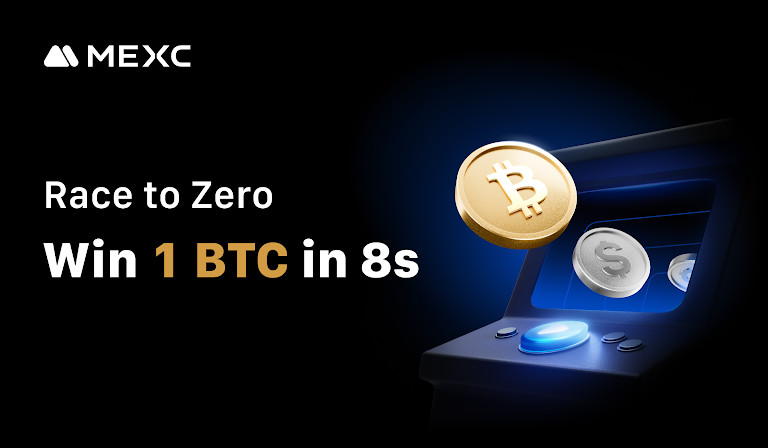
MEXC Launches “Race to Zero” Event with a Total Prize Pool of Up to 2 BTC

0
MEXC Launches “Race to Zero” Event with a Total Prize Pool of Up to 2 BTC


In Brief

MEXC has launched its “Race to Zero” event, offering up to 2 BTC in prizes and a unique trading challenge that blends gameplay with substantial rewards for participants.

MEXC Launches “Race to Zero” Event with a Total Prize Pool of Up to 2 BTC

 MEXC, a leading global cryptocurrency exchange, has launched its latest “Race to Zero” event with a total prize pool of up to 2 BTC. The event combines innovative gameplay with substantial rewards, creating a unique trading experience for both beginners and experienced traders, with the top winner earning up to 1 BTC. Participants can also enter a lucky draw for additional rewards.

Key Event Information

Event Timeline

Early-Bird Registration: Sep 22, 2025, 8:00 (UTC) – Sep 23, 2025, 15:59 (UTC)

Official Race Period: Sep 23, 2025, 16:00 (UTC) – Oct 8, 2025, 15:59 (UTC)

Rewards Announcement & Distribution: Within 7 business days after the event ends

Prize Pool

Total Prize Pool: Up to 2 BTC

Top Prize: Up to 1 BTC for the winner

Ranks 2-100: Share remaining BTC pool

Lucky Draw: A total prize pool of 80,000 USDT, with individual prizes of up to 500 USDT.

Participation Process

Registration: Visit the event page and register to claim Demo Pass for practice rounds (demo rounds do not count toward scores)

Early-Bird Benefits: Early-bird registrants earn additional free passes by completing early-bird tasks

Collect Race Passes: Earn more passes during the race period by completing daily, leaderboard, or exclusive tasks (each attempt uses one pass)

Join the Race: Click “Start” and stop the countdown as close to 0:00 as possible

Scoring System: Stops between 8-3 seconds earn no points; stops within the final 3 seconds earn points based on proximity to zero

Climb the Leaderboard: Accumulate points to rise in rankings and compete for up to 1 BTC

Lucky Draw: Every 600 points = 1 draw chance

The “Race to Zero” event reflects MEXC’s user-centric approach through innovative trading events that deliver substantial rewards and enhanced trading experiences to the trading community. For event details and to participate, visit the official event page.

About MEXC

Founded in 2018, MEXC is committed to being “Your Easiest Way to Crypto.” Serving over 40 million users across 170+ countries, MEXC is known for its broad selection of trending tokens, everyday airdrop opportunities, and low trading fees. Our user-friendly platform is designed to support both new traders and experienced investors, offering secure and efficient access to digital assets. MEXC prioritizes simplicity and innovation, making crypto trading more accessible and rewarding.

MEXC Official Website| X | Telegram |How to Sign Up on MEXC

For media inquiries, please contact MEXC PR team: [email protected]

Risk Disclaimer:

The information provided in this article regarding cryptocurrencies does not constitute investment advice. Given the highly volatile nature of the cryptocurrency market, investors are encouraged to carefully assess market fluctuations, the fundamentals of projects, and potential financial risks before making any trading decisions.

Source

Disclaimer

In line with the Trust Project guidelines, please note that the information provided on this page is not intended to be and should not be interpreted as legal, tax, investment, financial, or any other form of advice. It is important to only invest what you can afford to lose and to seek independent financial advice if you have any doubts. For further information, we suggest referring to the terms and conditions as well as the help and support pages provided by the issuer or advertiser. MetaversePost is committed to accurate, unbiased reporting, but market conditions are subject to change without notice.

About The Author


Gregory, a digital nomad hailing from Poland, is not only a financial analyst but also a valuable contributor to various online magazines. With a wealth of experience in the financial industry, his insights and expertise have earned him recognition in numerous publications. Utilising his spare time effectively, Gregory is currently dedicated to writing a book about cryptocurrency and blockchain.

More articles


Gregory, a digital nomad hailing from Poland, is not only a financial analyst but also a valuable contributor to various online magazines. With a wealth of experience in the financial industry, his insights and expertise have earned him recognition in numerous publications. Utilising his spare time effectively, Gregory is currently dedicated to writing a book about cryptocurrency and blockchain.


Source link

Exploring the different types of cryptocurrencies: From Bitcoin to altcoins and stablecoins | NFT News Today

0
Exploring the different types of cryptocurrencies: From Bitcoin to altcoins and stablecoins | NFT News Today


Cryptocurrencies have forever transformed the financial market, introducing new possibilities that weren’t previously available with fiat money. This is one reason that made digital coins stand out from the rest, increase in popularity and drove an increase in cryptocurrency prices. Additionally, this has led to a significant variety in the digital space, with numerous types of cryptocurrencies for investors to consider. Among the most important ones are Bitcoin, followed by altcoins and stablecoins. 

Bitcoin is the pioneer of the crypto space, which is why this digital asset falls into no category, but it is one of a kind. Then, there are a variety of altcoins, which are digital coins that serve as alternatives to Bitcoin. Among the most popular altcoins are Ethereum (ETH), Cardano (ADA), Solana (SOL), and Ripple (XRP). Then, there are also stablecoins, which have been created to mitigate the volatile nature of digital coins to some extent. And they manage this by having their value pegged to fiat currencies, such as the US dollar and the Euro. Tether (USDT) is the most popular stablecoin. 

Now, we can see how different asset types influence each other with the help of crypto trading pairs. You can find these asset combinations on crypto exchanges, letting you trade one digital coin against the other. There are two types of assets in this combination, represented by the base currency and the quote currency. Among all the crypto trading pairs available, one that traders use on a larger scale is the BTCUSDT trading pair. 

This trading pair is highly popular because Bitcoin is a highly volatile asset, and people can better protect themselves against this volatility by converting their BTC into USDT. Then, when the BTC shows moments of recovery, BTC owners can convert their USDT into BTC. In this way, investors worldwide are better equipped to handle the volatile nature of digital coins. 

In this article, we will discuss the various asset types that exist in the cryptocurrency landscape, with a focus on Bitcoin, altcoins, and stablecoins. Keep reading. 

Bitcoin: The crypto pioneer

Bitcoin is the first digital currency ever developed, beginning its journey to the world in 2009. Since then, it has had a remarkable trajectory, marked by numerous ups and downs. Bitcoin has gained significant popularity, earning the nickname “digital gold.” This is amazing to see, especially considering that Bitcoin had quite humble beginnings, and initially, only tech enthusiasts were interested in it. Additionally, at first, the value of BTC was negligible, but it has since skyrocketed in value. 

The primary feature of Bitcoin is that it is a decentralized asset, meaning no one, including banks or governments, has access to it. This was exactly the desire of Satoshi Nakamoto, the creator of Bitcoin, whose identity remains unknown. This makes Bitcoin respect its goal. 

Bitcoin has a capped supply of 21 million digital coins, which adds scarcity and can also help increase the price. Bitcoin can also help individuals better prepare for inflation and economic instability, a valuable feature for a digital currency. Bitcoin has experienced significant growth, and this trend is likely to continue in the future. 

Altcoins

Altcoins are the ones that have brought considerable diversity to the cryptocurrency realm. As their name suggests, these digital assets are alternative assets to Bitcoin. BTC has inspired them, but they have tried to solve its shortcomings. This is why these altcoins also represent good options. Although they don’t have the same big market capitalization as Bitcoin, they still have a vast number of supporters. Let’s take the example of Ethereum,  which is the second-largest digital currency by market capitalization. 

These altcoins possess a unique quality that attracts investors. For instance, Ethereum is an amazing blockchain platform that leverages smart contracts. XRP is also an altcoin with interesting features, particularly for those who require international transactions. 

Other group categories from altcoins include meme coins, which differ from regular altcoins in that they are not characterized by technological innovations, but rather by their fun appeal, inspired by popular internet memes. Among the most popular meme coins are Dogecoin (DOGE) and Shiba Inu (SHIB). The community of these digital coins is the one that helps these assets reach new heights and keep these meme coins alive. 

Stablecoins

Stablecoins are safer options in the cryptocurrency realm, whose value is pegged to a fiat currency, such as the US dollar. Tether is a good example of a stablecoin, whose value is pegged to the US dollar. Stablecoins are suitable for those who don’t have a high risk tolerance but want to participate in the crypto realm. Digital coins have a long list of advantages, including those that apply to the general cryptocurrencies.

So, they enable fast and borderless transactions. However, they also share characteristics with fiat money in that their value is stable. 

Last remarks

The crypto space is an innovative ecosystem, home to many asset classes. Some of them include Bitcoin, altcoins and stablecoins. Diversification is crucial in crypto real estate to better prepare yourself against the risks associated with this space. This is why it can be a good idea to allocate a small portion of your portfolio to all these asset classes. In this way, even though one asset class doesn’t behave the way you expected, the other ones might not. 

All asset classes have their own set of advantages and disadvantages, and it is essential to be aware of them to be better prepared for whatever may occur in the future. 


Source link

Top AI Tools From Big Tech In 2025: How The Big Five Compete In AI

0
Top AI Tools From Big Tech In 2025: How The Big Five Compete In AI


In Brief

A precise, source-anchored review of Big Tech’s 2025 AI stacks. Gemini, Bedrock and Q, Apple Intelligence, Llama, and Copilot are compared on models, agents, privacy, deployment, and pricing with links to the original documentation.

Top AI Tools From Big Tech In 2025: How The Big Five Compete In AI

Big Tech is a shorthand for the handful of companies that dominate the digital economy: Alphabet (Google), Amazon, Apple, Meta, and Microsoft. These 5 firms control much of the world’s infrastructure for search, cloud computing, devices, social platforms, and enterprise software. Their decisions ripple far beyond Silicon Valley, shaping how billions of people interact with technology and how enterprises deploy critical systems.

In 2025 their role in artificial intelligence has sharpened. Each company promotes a different vision of what enterprise AI should look like. Alphabet builds around Gemini, a family of multimodal models linked tightly to Google Cloud and Vertex AI. Amazon positions Bedrock as a neutral marketplace of models, while Amazon Q sits on top as an assistant for employees and developers. Apple designs Apple Intelligence to run primarily on-device, with Private Cloud Compute stepping in for complex workloads. Meta distributes Llama as an open platform, leaving control of deployment to enterprises and researchers. Microsoft pushes Copilot into everyday productivity tools and couples it with Azure AI Foundry, a full development environment for custom agents.

What follows is not marketing gloss but a close reading of these offerings, based entirely on the companies’ own documentation and product pages. It is a map of how the Big Five are trying to own the next decade of AI—and where their paths diverge.

Alphabet’s (Google) AI strategy in 2025 centers on the Gemini family, the company’s flagship line of multimodal large language models. The models are designed for text, code, images, audio, and video, and they are distributed through two main channels: the Gemini API for developers and Vertex AI for enterprise deployments. Gemini 2.5 Pro, 2.5 Flash, and 2.5 Flash-Lite differ in latency and context window, making it possible to match a lightweight use case like real-time chat against long-document analysis or complex data tasks.

Alongside the core models, Alphabet extends Gemini into Veo for high-quality video generation and Imagen for still images. Both are available inside Vertex AI, which means they can be integrated directly with Google’s cloud services and data pipelines. For enterprises, this matters: developers can build an application that queries Gemini for reasoning, calls Veo for video assets, and grounds answers on corporate data inside BigQuery—all within the same ecosystem.

The company has also embedded Gemini into Google Cloud services. Gemini for BigQuery can generate and optimize SQL, while Gemini for Databases helps design and troubleshoot schema. Engineers can use Gemini in Colab Enterprise for code assistance, and security teams can turn to Gemini in Security Command Center for risk analysis. This cross-service integration means Gemini does not live in isolation—it is synchronized with the core products that enterprises already depend on.

Pricing for generative models is published transparently on Vertex AI pricing. Different capacity units allow teams to balance performance and cost. The clarity here appeals to CTOs who need predictable run-rates when scaling pilots into production.

Alphabet’s value proposition is therefore coherence: one family of models, tuned for different performance envelopes, embedded directly into cloud infrastructure and connected with Google’s broader product stack. For companies already standardized on Google Cloud, it is the shortest path to testing and scaling advanced AI without stitching together disparate services.

Amazon approaches enterprise AI through two major products: Amazon Bedrock and Amazon Q. Bedrock acts as a foundation layer: it provides access to multiple foundation models from Amazon and partners, while layering governance, security, and deployment tooling. On top of this, Amazon Q delivers assistant capabilities for two distinct audiences—knowledge workers and developers—directly inside the AWS ecosystem.

The Bedrock service is not just a hosting environment. It includes a marketplace of supported models and a consistent API, so enterprises can shift between Amazon’s own Titan models and partner offerings such as Anthropic or Meta without rebuilding their stack. Bedrock also integrates Guardrails to set content and safety policies, and Knowledge Bases to ground answers in proprietary documents. This combination makes Bedrock useful for organizations that need both flexibility of model choice and strict governance over output.

Amazon Q Business is designed for employees: it connects to company data, answers natural language questions, drafts documents, and triggers actions in familiar apps. Amazon Q Developer focuses on engineering tasks: it explains code, suggests improvements, and automates cloud configurations inside IDEs and the AWS Console. Together they extend Bedrock into everyday workflows—one for general enterprise productivity, the other for technical teams.

The pricing structure is documented on Bedrock pricing with token-based billing and capacity options like provisioned throughput. This is critical for enterprises planning long-term deployment, since it allows predictable modeling of costs before moving workloads into production.

The logic of Amazon’s AI stack is modularity. Bedrock supplies the infrastructure and choice of models, while Amazon Q personalizes the experience for workers and developers. For organizations already committed to AWS, this creates a synchronized environment: the same platform that runs their data and cloud workloads now powers their generative AI initiatives with governance built in.

Apple entered the generative AI race later than its peers, but its approach is distinctive. The company’s platform, Apple Intelligence, is integrated directly into iPhone, iPad, and Mac rather than sold as a separate enterprise subscription. Its design revolves around two pillars: on-device processing for privacy and speed, and Private Cloud Compute for workloads too large to run locally.

The on-device layer powers Writing Tools, Image Playground, and personalized suggestions. These features rely on compact models optimized for Apple Silicon and are embedded across native apps such as Mail, Notes, and Messages. Tasks like rewriting an email, summarizing a document, or generating an illustrative image never leave the device. For sensitive environments—legal, healthcare, finance—this architecture matters: private information is handled entirely within the user’s hardware.

For more demanding computations, Apple routes requests to Private Cloud Compute, a server environment purpose-built on Apple silicon. Unlike conventional cloud AI, PCC is designed with full transparency: Apple publishes its system software, invites independent researchers to audit it via a Virtual Research Environment, and guarantees that no data is retained after processing. This design allows enterprises to benefit from high-capacity AI without surrendering privacy or compliance guarantees.

Developers can integrate with Apple Intelligence through the Apple Intelligence developer hub. APIs such as App Intents let apps expose actions to Siri and the system-wide assistant, while Visual Intelligence and the Foundation Models framework give access to on-device models for tasks like image understanding or contextual text generation. Integration updates are tracked in Apple’s documentation updates, ensuring developers can align apps with the latest OS features.

Apple’s value proposition is clear: AI that respects privacy by default, scales seamlessly from device to cloud when needed, and is deeply synchronized with the company’s hardware and operating systems. For enterprises and individuals operating in sensitive domains, it is an ecosystem where security and usability are inseparable.

Meta takes a different path from the rest of Big Tech: instead of packaging AI only as a closed product, it releases its models openly. The cornerstone is the Llama family, with the current generation being Llama 3.1. These models are available in multiple parameter sizes to balance performance and efficiency, and they are distributed with a license that allows both research and commercial use. This openness has made Llama one of the most widely adopted foundation models in the industry, powering startups, research labs, and enterprise pilots.

Access routes are straightforward. Organizations can request models directly from the Llama downloads page, or obtain them through ecosystem partners such as Hugging Face, AWS, or Azure—options that Meta documents on its official site. The Llama models page provides model cards, prompt formatting guidance, and performance notes, making it easier for engineers to deploy in production with clear expectations.

On top of the models, Meta runs Meta AI, a consumer-facing assistant integrated into WhatsApp, Messenger, Instagram, and Facebook. While it demonstrates the capabilities of Llama in action, its main function is ecosystem engagement rather than enterprise deployment. For companies, the real value remains in the openness of Llama itself: the freedom to host models on their own infrastructure, fine-tune for domain-specific tasks, or run them via a preferred cloud provider.

Meta also invests in safety and transparency. The official Llama documentation includes guidance on responsible use, license conditions, and tooling for filtering or monitoring model outputs. This gives enterprises a clearer compliance baseline compared to other open-source alternatives, where governance is often fragmented.

The appeal of Meta’s AI stack is control. By offering state-of-the-art models under open terms and synchronizing distribution with major cloud platforms, Meta enables enterprises to design systems without vendor lock-in. For research groups, it lowers barriers to experimentation. And for companies seeking to own their AI deployment path, Llama represents a flexible foundation that can scale across both public and private infrastructure.

Microsoft positions itself at the intersection of productivity and platform. Its AI strategy in 2025 spans two complementary layers: Microsoft Copilot for end users and Azure AI Foundry for developers and enterprises. Together they create a loop: Copilot embeds generative capabilities into everyday tools, while Foundry provides the infrastructure to design, deploy, and govern custom applications and agents.

Microsoft Copilot is integrated across Windows, Office apps, and Teams. It drafts documents in Word, builds presentations in PowerPoint, summarizes long email threads in Outlook, and automates repetitive tasks in Excel. Copilot also grounds its responses in organizational data when deployed in enterprise environments, ensuring that output is not generic but tied to the company’s internal knowledge base. Subscriptions and licensing are documented on Copilot pricing, with enterprise tiers that bundle Copilot Studio, a tool for building custom plugins and workflows.

On the infrastructure side, Azure AI Foundry is framed as an “agent factory.” It exposes a catalog of models, including OpenAI’s GPT series and Microsoft’s own Phi-3 small models, and provides the tooling to orchestrate them into applications. Foundry covers fine-tuning, deployment, monitoring, and integration with Azure’s broader ecosystem—identity management, data governance, and compliance. For enterprises, this reduces friction: the same controls already used for cloud workloads extend naturally to AI deployments.

The synchrony between Copilot and Foundry is what sets Microsoft apart. A company might pilot Copilot inside Microsoft 365 to boost productivity, then use Foundry to design a specialized agent that plugs into the same environment. Data governance is unified under Azure policy, so security teams can manage access and compliance without parallel systems.

Pricing for the Azure OpenAI Service is published per model and per token, with options for provisioned throughput. This transparency allows teams to forecast costs, while Copilot licensing is handled via Microsoft 365 subscriptions.

Microsoft’s AI stack is attractive for organizations already embedded in Office and Azure. It turns everyday productivity into a proving ground for generative tools, then offers a direct path to scale those experiments into enterprise-grade applications. For firms that prioritize integration and governance over open flexibility, this is a pragmatic choice.

What’s Next in 2026

The lines between productivity, privacy, and platform will continue to blur. Alphabet may push deeper multimodal fusion—AI that understands diagrams, video content, and real-time business data—across every cloud API. Amazon is likely to expand its reasoning-backed Guardrails, turning compliance into a pre-built feature of generative workflows. Apple could further surface on-device foundation models to developers, unlocking offline intelligence for custom apps, while preserving its privacy posture. Meta may pivot into providing enterprise-grade distribution of Llama with built-in governance frameworks. Microsoft looks positioned to blur the boundary between everyday Office users and bespoke AI agents—without sacrificing corporate control.

Disclaimer

In line with the Trust Project guidelines, please note that the information provided on this page is not intended to be and should not be interpreted as legal, tax, investment, financial, or any other form of advice. It is important to only invest what you can afford to lose and to seek independent financial advice if you have any doubts. For further information, we suggest referring to the terms and conditions as well as the help and support pages provided by the issuer or advertiser. MetaversePost is committed to accurate, unbiased reporting, but market conditions are subject to change without notice.

About The Author


Alisa, a dedicated journalist at the MPost, specializes in cryptocurrency, zero-knowledge proofs, investments, and the expansive realm of Web3. With a keen eye for emerging trends and technologies, she delivers comprehensive coverage to inform and engage readers in the ever-evolving landscape of digital finance.

More articles


Alisa, a dedicated journalist at the MPost, specializes in cryptocurrency, zero-knowledge proofs, investments, and the expansive realm of Web3. With a keen eye for emerging trends and technologies, she delivers comprehensive coverage to inform and engage readers in the ever-evolving landscape of digital finance.


More articles


Source link

Immutable Mobile Division Targets $121B Market for Web3 Expansion | NFT News Today

0
Immutable Mobile Division Targets 1B Market for Web3 Expansion | NFT News Today


Immutable has launched a dedicated Mobile Gaming Division to target the $121 billion mobile market. This article looks at why the company is prioritizing mobile, the strategies behind the move, and what it means for the future of Web3 gaming.

Key Takeaways

Immutable’s Mobile Gaming Division targets the mobile gaming market.

The team will invest in studios, streamline integration, and expand app store partnerships.

Three Immutable-backed games topped App Store and Google Play charts in 2025.

Court rulings and legislation are opening the door for crypto payments in mobile games.

Immutable’s ecosystem of 680+ games and major studio partnerships puts it in a strong position.

Why Mobile is Immutable’s Biggest Bet

Mobile accounts for more than half of all global gamers and generates more revenue than PC and console combined. Over three billion people now play games on their phones, making it the single largest audience in the industry.

Immutable sees this as the fastest route to mass Web3 adoption. The company wants to merge familiar free-to-play models with blockchain features like digital ownership and tradable assets, giving mobile players both accessibility and new economic opportunities.

Immutable’s momentum is driven by titles like Gods Unchained, a competitive trading card game; Guild of Guardians, a mobile RPG with play-to-earn mechanics; and Illuvium, a visually rich auto-battler gaining traction across platforms. These games showcase how Web3 experiences can deliver both quality gameplay and blockchain-powered ownership.

The Four-Part Strategy

The Mobile Gaming Division is focused on four priorities:

Push Web3 adoption with mobile-first strategies

Invest in studios building on Immutable’s Layer 2 blockchain

Release tools that simplify blockchain integration for developers

Expand partnerships with publishers and app stor

Together, these steps are designed to lower barriers for developers and give blockchain benefits for players.

Regulatory Tailwinds

Immutable is acting now because regulations are shifting in its favor. The Epic Games Store case—where a U.S. court ruled that Apple must allow external payment links in apps—allowed developers to integrate external crypto payments, cutting into the restrictive 30% fees charged by app stores.

Legislation like the proposed CLARITY Act, which aims to define clear rules around digital assets, is also expected to make it easier for major studios to adopt blockchain features.

By launching a mobile-focused division at this moment, Immutable is positioning itself to take advantage of a regulatory environment that increasingly supports crypto integration.

Building a Wider Ecosystem

Immutable already supports over 680 games and partners with major studios, including Ubisoft. Its infrastructure includes Immutable Chain for scalable transactions, Passport for wallet and identity management, and Play tools to help developers grow.

The new mobile unit will focus on strengthening app store partnerships and providing developer support. The Asia-Pacific—a region that leads the world in gaming revenue—will be a key focus for growth.

While Immutable has a strong position, it is not alone. Competing platforms like Ronin, Mythical Games, and Gala are also making moves in the Web3 mobile space, making this a fast-evolving and competitive landscape.

This announcement comes on the back of one of the strongest years in Immutable’s history:

Major CEX and stablecoin partnerships

180+ new games (including $100M+ franchise)

Over 680 games onboarded onto Immutable

Viral expansion to Web2 games

X and zkEVM chain merger

Why Web3 Mobile Gaming Matters

Web3 gaming continues to grow, with millions of active users and increasing investment from major studios. While long-term projections vary widely, most analysts agree that mobile platforms will drive much of this growth due to accessibility and global reach.

For players, this shift promises:

True ownership of in-game assets as NFTs

Open trading through decentralized marketplaces

New ways to earn and engage through in-game economies

For developers, it offers fresh revenue streams. Lower platform fees and blockchain-enabled economies create room for more sustainable business models.

Still, challenges remain—from user onboarding friction to regulatory uncertainty in some regions. These factors may slow adoption, even as the infrastructure matures.


Source link

Made on YouTube 2025: Brand-New Features for Creators Unveiled

0
Made on YouTube 2025: Brand-New Features for Creators Unveiled


YouTube unveiled a host of new AI-focused features at this year’s Made on YouTube event. At the event in New York, YouTube CEO Neal Mohan announced a series of new features designed to make YouTube Studio smarter for creators, enhance collaboration opportunities, and make it easier to reach a global audience.

Smarter YouTube Studio

YouTube Studio now features a new AI-powered chatbot called Ask Studio. Instead of getting lost in complex analytics dashboards, creators can ask the bot directly about their video performance, get summaries of viewer comments, and receive content development suggestions.

Additionally, the Inspiration Tab, which was introduced last year, has been improved. It will now provide custom topic suggestions based on viewer behavior, explain why they might generate engagement, and produce multiple responses for each AI prompt. YouTube is also allowing creators to test three different titles and thumbnails for a single video.

Collaboration and Protection

YouTube introduced a new collaboration tool to increase interaction among creators. Now, up to five different creators can be featured in the same video, and that video will reach the followers of all their channels. Although revenue will only be shared with the uploading channel, this feature is very important for future collaborations.

Furthermore, the similarity detection tool is being made available to all Partner Program members. Previously tested with a limited number of large channels, this feature allows creators to detect the unauthorized use of their faces in AI-generated fake videos and request their removal.

New AI-Powered Tools

To accelerate the content creation process, YouTube also unveiled a new AI video editor. This new tool can instantly turn raw footage into a draft video by adding transition effects, background music, and voiceovers.

Some notable innovations have also arrived for Shorts content:

A speech-to-song feature that converts spoken words into a song.Veo 3 integration to create short videos from text with enhanced visuals and audio support.The ability to automatically add voiceovers for both English and Hindi.

For live streamers, the AI highlights tool is being introduced. This new feature will automatically highlight the most engaging moments from streams in the Shorts format.

Global Reach

To make it easier to reach viewers in different languages, YouTube has also enhanced its automatic dubbing feature. Videos will now not only be translated into more than 20 languages, but lip-sync technology will also make mouth movements more naturally align with the translation.

The company highlighted that over 75% of viewers prefer dubbed content over the original, emphasizing that this feature will significantly increase the global reach of content.

You Might Also Like;

Follow us on TWITTER (X) and be instantly informed about the latest developments…

Copy URL


Source link

NeuroLink Chips Funny Cartoons Exploring Brain-Computer Interface Future

0
NeuroLink Chips Funny Cartoons Exploring Brain-Computer Interface Future


The future of brain-computer interfaces, often spearheaded by companies like NeuroLink, promises a revolutionary leap in how we interact with technology and even our own minds. While the scientific and ethical discussions are serious, there’s ample room for a lighter, more humorous perspective on what this technology might bring. What happens when our brains get an upgrade? Or a bug? Let’s take a look at five cartoons that offer a funny, yet thought-provoking, glimpse into a world where NeuroLink chips are a part of everyday life.

1. “Upgrade Available!” Imagine a world where your brain-chip doesn’t just process information but also offers upgrades for your emotional intelligence. This cartoon playfully suggests that even with advanced tech, some human challenges, like truly listening to a spouse, might still require a paid “upgrade.” It highlights the absurdity of commercializing human emotions and interactions, even in a hyper-connected future.

2. “The Ultimate Multitasker” In today’s fast-paced world, multitasking is seen as a badge of honor. With a NeuroLink chip, this concept could reach ludicrous heights. Our second cartoon exaggerates this notion, showing an individual effortlessly managing multiple digital tasks with their thoughts, leaving an “un-chipped” colleague in awe. It questions whether boundless efficiency truly equates to a better work-life balance or simply more work.

3. “Lost in Thought (Literally)” We all have those moments where our brains just… crash. What if, with a NeuroLink chip, these mental glitches become literal software errors? This cartoon humorously depicts a user experiencing a “Thought.exe stopped responding” error, with scattered mental fragments. It’s a playful jab at our reliance on technology and the potential for even our most intimate processes to be subject to technical difficulties.

4. “The Smart Home, Smarter Brain” Smart homes aim to simplify our lives, but what if our smart brains start making unsolicited decisions? This cartoon presents a serene individual controlling their smart home with their mind, only to be interrupted by an unexpected notification from their smart fridge ordering excessive ice cream. It pokes fun at the potential for technology, even when integrated directly into our minds, to create new, often amusing, dilemmas.

5. “Parental Control (literally)” Parenting in the digital age is already a challenge. Add brain-chips to the mix, and parental control could take on a whole new, albeit humorous, dimension. This cartoon illustrates parents literally imposing a “brain access revoked” timeout on their child via a NeuroLink chip. It’s a clever and comical commentary on the lengths parents might go to manage their children’s behavior, and the blurring lines between digital and biological control.

These cartoons, while lighthearted, serve as a clever commentary on the potential societal impacts of brain-computer interfaces. They invite us to ponder not just the technological advancements, but also the humorous, quirky, and sometimes absurd ways these innovations might integrate into the fabric of our everyday lives. As we move towards a future intertwined with such technology, perhaps a good laugh is the best way to prepare.

You Might Also Like;

Follow us on TWITTER (X) and be instantly informed about the latest developments…

Copy URL


Source link

Popular Posts

My Favorites