The European car market showed signs of recovery in August, with overall sales increasing by 5% year-over-year. The market transition towards electrification continued, with Electric Vehicle (EV) sales surging by 30% annually, boosting Battery Electric Vehicles’ (BEVs) market share to 15.8% of total sales.
The Rise of BYD and Tesla’s Decline
The most significant development was the intensifying competition in the EV segment:
BYD Overtakes Tesla: The Chinese manufacturer BYD made headlines by surpassing Tesla in sales, registering 11,455 units compared to Tesla’s 10,981 units. This change highlighted the growing pressure from Asian rivals.Tesla’s Sales Dip: Despite the overall market growth, Tesla experienced a 22% decrease in sales.Chinese Brands Gaining Momentum: Alongside BYD, SAIC Motor and other Chinese manufacturers also recorded an uptick in momentum in the European market.
Market Leadership by Groups and Brands
The traditional European groups maintained their overall market dominance:
Volkswagen Group (Leader): The Group secured the top spot in the total European car market with 219,048 sales and a dominant 27.7% market share.The best-selling brand within the group was Volkswagen itself, with 87,322 units.Skoda (52,246) and Audi (41,335) were also major contributors.Stellantis Group (Second Place): This group followed with 106,078 total sales.Key performing brands included Peugeot (33,617), Opel/Vauxhall (24,644), and Citroen (21,832).Renault Group (Third Place): Occupying the third position with 75,328 units.
Strong Performances from Other Key Brands
Several other established brands demonstrated solid sales figures:
Toyota stood out with 55,535 sales.Premium brands BMW (50,675) and Mercedes-Benz (44,225) delivered a strong performance.Korean manufacturers Hyundai (37,411) and Kia (31,512) also showed good results.
The August 2025 figures underscore a rapidly evolving European auto market, where the robust growth of electrified models and the increasing challenge from Chinese competitors are reshaping the competitive landscape.
You Might Also Like;
Follow us on TWITTER (X) and be instantly informed about the latest developments…
Published: September 26, 2025 at 10:36 am Updated: September 26, 2025 at 10:36 am
To improve your local-language experience, sometimes we employ an auto-translation plugin. Please note auto-translation may not be accurate, so read original article for precise information.
Bucharest, Romania, September 26th, 2025, Chainwire
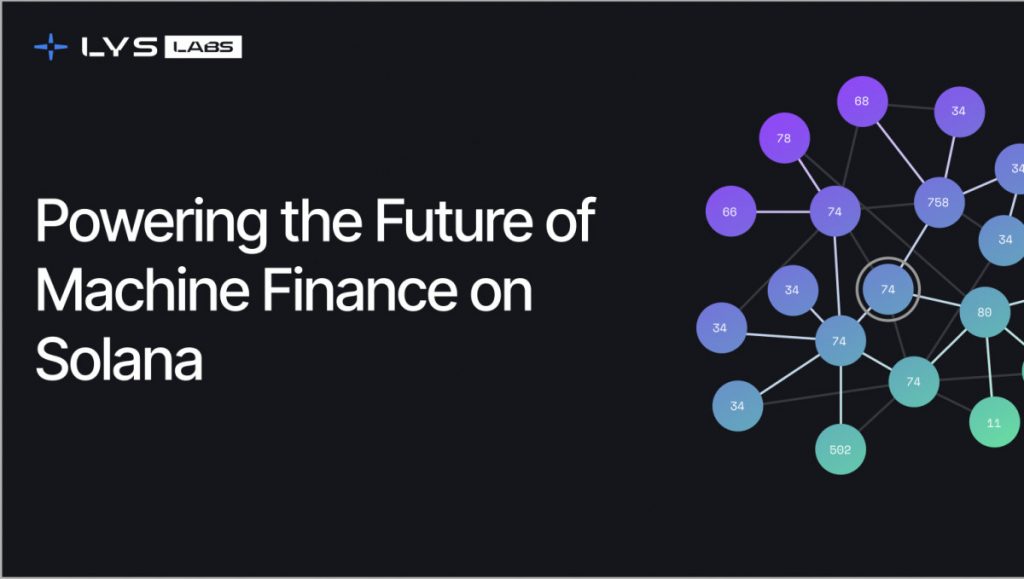
LYS Labs, the Web3 data infrastructure company building the intelligence layer for machine finance on Solana, today announced a series of significant milestones that underscore its rapid growth and adoption. The company is expanding its data capabilities and gearing up to introduce a new trading product on Solana, LYS Flash, aiming to optimize transaction execution.
LYS Labs recently announced its seed round with participation from Alchemy Ventures, Auros Global, and Frachtis, among others, expanded its ecosystem through integrations with QuickNode, and joined the Chainlink Build on Solana Program. The company has also launched new developer-facing initiatives that are already driving significant traction.
Phase 1 of LYS Development has been completed, with its ultra-low latency, structured Solana data now available to the public. Additionally, its aggregated data is in testnet with a few selected partners.
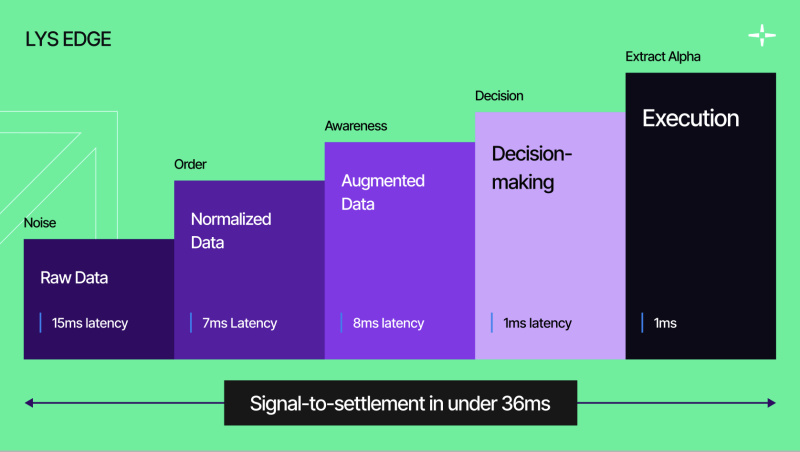
For Phase 2, LYS Labs will release a new product that complements its stack, aimed at Solana traders. Execution on Solana can be complex: every DEX has its own contract quirks, associated token account logic, and fee structures. Priority fees, bribes, and MEV protection require careful tuning to avoid failed transactions or suboptimal fills. LYS Flash smart relay engine abstracts this complexity away, enabling machines to get from signal to settlement in under 36 milliseconds.
QuickNode Integration: Latency as Low as 14ms
As part of Phase 1, LYS Labs integrated with QuickNode Marketplace, where it now delivers structured Solana data with latency as low as 14 milliseconds. Traders and developers can access wallet flows, token insights, and liquidity events from Solana’s largest DEXes and launchpads like Meteora, Raydium, Pump, Bonk, and others directly through the QuickNode Marketplace. This gives builders near-real-time access to event-driven data pipelines, closing the gap between analysis and execution.
Chainlink Build on Solana
LYS Labs is also joining the Chainlink Build on Solana Program, a Chainlink initiative focused on builders on Solana. By collaborating with Chainlink, LYS Labs gains enhanced technical support, cryptoeconomic security, and access to new dApp integrations.
Andra Nicolau, LYS Labs co-founder commented: “We are very lucky to have such a great and supportive team at Chainlink Labs helping us accelerate our vision. We’ve only joined a few weeks ago, and we are already seeing massive value added through our collaboration with them. We have an exciting integration roadmap ahead and believe our synergies can change the game for their Solana efforts”.
Developer Ecosystem Momentum
The launch of the LYS Developer Portal and LYS Builders Program has generated strong early traction, with hundreds of developers gaining direct access to APIs, structured datasets, and community support. In its first month alone, LYS Labs recorded over 620 active users, 16B events processed and, and 14+ TB of data transferred, a strong signal of market demand for structured blockchain data on Solana. Demand for LYS Flash is also lining up.
Leadership with Proven Impact
LYS Labs co-founder, Marian Oancea, a veteran builder who coded the original Ethereum crowdsale contract in 2014 and later developed Ethstats.dev to make Ethereum’s state more transparent. Reflecting on his journey, Marian commented:
“We started off attempting to make Solana’s data usable. Given the large number of transactions per block, it is difficult for most users to access clean, useful data so we wanted to fix that as a first step. Organically, once you have near-instant alpha, the immediate thing you want to do is execute, which is why we are building LYS Flash, which can land transactions in 1ms, and users will be able to get from alpha to settlement in 36ms.”
The Operating System for Internet Capital Markets
LYS Labs’ mission is to become the operating system for the machines powering automated global finance. It’s stack transforms raw blockchain events into contextualized, AI-ready insights and optimizes execution, thus enabling traders, protocols, and autonomous agents to execute strategies at the speed of the chain. By delivering consistency, semantic structure, and reliability at scale, LYS Labs is laying the foundation for the next generation of programmable finance.
About LYS Labs
LYS Labs is building the operating system that powers automated global finance on Solana, featuring contextualized AI-ready insights and a smart execution engine.
Media & Contact
Website: https://lyslabs.ai
Twitter: https://x.com/LYS_Labs
Blog: https://substack.com/@lyslabs
Press Contact: [email protected]
Contact
Co-founderAndra NicolauLYS Labs[email protected]
Disclaimer
In line with the Trust Project guidelines, please note that the information provided on this page is not intended to be and should not be interpreted as legal, tax, investment, financial, or any other form of advice. It is important to only invest what you can afford to lose and to seek independent financial advice if you have any doubts. For further information, we suggest referring to the terms and conditions as well as the help and support pages provided by the issuer or advertiser. MetaversePost is committed to accurate, unbiased reporting, but market conditions are subject to change without notice.
About The Author
Chainwire is the top blockchain and cryptocurrency newswire, distributing press releases, and maximizing crypto news coverage.
More articles
Chainwire is the top blockchain and cryptocurrency newswire, distributing press releases, and maximizing crypto news coverage.
Published: September 26, 2025 at 10:31 am Updated: September 26, 2025 at 10:31 am
by Ana
Edited and fact-checked:
September 26, 2025 at 10:31 am
To improve your local-language experience, sometimes we employ an auto-translation plugin. Please note auto-translation may not be accurate, so read original article for precise information.
In Brief
Xphere hosted the Skyline PoW Mixer in Seoul, unveiled the XP1 home miner with Bitmain, and announced a strategic partnership with Nansen to advance PoW blockchain adoption and governance.
Dual-chain mainnet Xphere announced that it successfully hosted the blockchain event “Skyline PoW Mixer” on September 23rd at Hotel Cappuccino in Gangnam, Seoul.
Held as an official side event of Korea Blockchain Week (KBW) 2025, the gathering brought together blockchain industry leaders, investors, and developers to explore the growth potential and technological direction of Proof-of-Work (PoW) blockchain ecosystems.
A key highlight of the event was the first public presentation of the XP1 home miner, developed in collaboration with Bitmain. The XP1 is a blockchain mining device designed to be lightweight and energy-efficient, allowing broader participation in mining. The device features a user-friendly interface suitable for beginners, a compact form factor, and quiet operation, attracting considerable attention from attendees due to its potential to lower barriers to entry for mining.
“XP1 is a milestone for the mass adoption of PoW, realizing a structure where anyone can contribute to the security of the blockchain network,” said Xphere in a written statement.
Xphere Strengthens Web3 Security And Governance Through Strategic Partnerships And The XP1 Launch
At the event, Xphere announced a strategic partnership with on-chain data analytics firm Nansen. The collaboration aims to enhance transparency and governance within PoW-based networks while supporting the development of a data-driven, open Web3 ecosystem.
The event’s Gold Sponsors included Bitmain, the world’s largest mining hardware manufacturer, and Psy Protocol, a developer of next-generation blockchain architectures. Silver Sponsors featured Nansen, global Web3 infrastructure provider Ankr, and Korea’s hardware wallet brand D’Cent. Bronze Sponsors included the open-source hardware wallet company OneKey, the global PoW consortium PoW Alliance, and Web3 venture infrastructure firm Niza Labs.
Xphere has recently expanded its blockchain security infrastructure partnerships across multiple areas, including home mining collaboration with Bitmain, RPC and validator partnerships with Ankr, and co-branded hardware wallets with OneKey. These initiatives are intended to establish standards for a fully decentralized security ecosystem.
“The unveiling of XP1 is not merely a product launch but a milestone for the democratization of participation in blockchain security governance,” said Kritesh Tripathi, Co-Founder of Xphere, in a written statement. “Going forward, together with global partners such as Bitmain, Nansen, Ankr, and OneKey, we will continue to build a Web3 environment where anyone can safely contribute to blockchain security,” he added.
Xphere aims to drive the widespread adoption of Web3 by leveraging data-driven ecosystem management and expanding its network of global partnerships.
Disclaimer
In line with the Trust Project guidelines, please note that the information provided on this page is not intended to be and should not be interpreted as legal, tax, investment, financial, or any other form of advice. It is important to only invest what you can afford to lose and to seek independent financial advice if you have any doubts. For further information, we suggest referring to the terms and conditions as well as the help and support pages provided by the issuer or advertiser. MetaversePost is committed to accurate, unbiased reporting, but market conditions are subject to change without notice.
About The Author
Alisa, a dedicated journalist at the MPost, specializes in cryptocurrency, zero-knowledge proofs, investments, and the expansive realm of Web3. With a keen eye for emerging trends and technologies, she delivers comprehensive coverage to inform and engage readers in the ever-evolving landscape of digital finance.
More articles
Alisa, a dedicated journalist at the MPost, specializes in cryptocurrency, zero-knowledge proofs, investments, and the expansive realm of Web3. With a keen eye for emerging trends and technologies, she delivers comprehensive coverage to inform and engage readers in the ever-evolving landscape of digital finance.
Published: September 26, 2025 at 5:11 am Updated: September 26, 2025 at 5:11 am
To improve your local-language experience, sometimes we employ an auto-translation plugin. Please note auto-translation may not be accurate, so read original article for precise information.
In Brief
Bitcoin dropped nearly 3% amid massive leveraged liquidations, while cloud-mining platform Fleet Mining offers a low-cost, green-energy way for investors to earn stable crypto rewards without technical expertise.
Bitcoin fell 2.91% over the past 24 hours, hitting a low of $111,663 before rebounding above the $112,000 support level. Nearly $1.7 billion in long positions were liquidated, potentially the largest such liquidation since 2025. Such a massive sell-off caught many investors off guard.
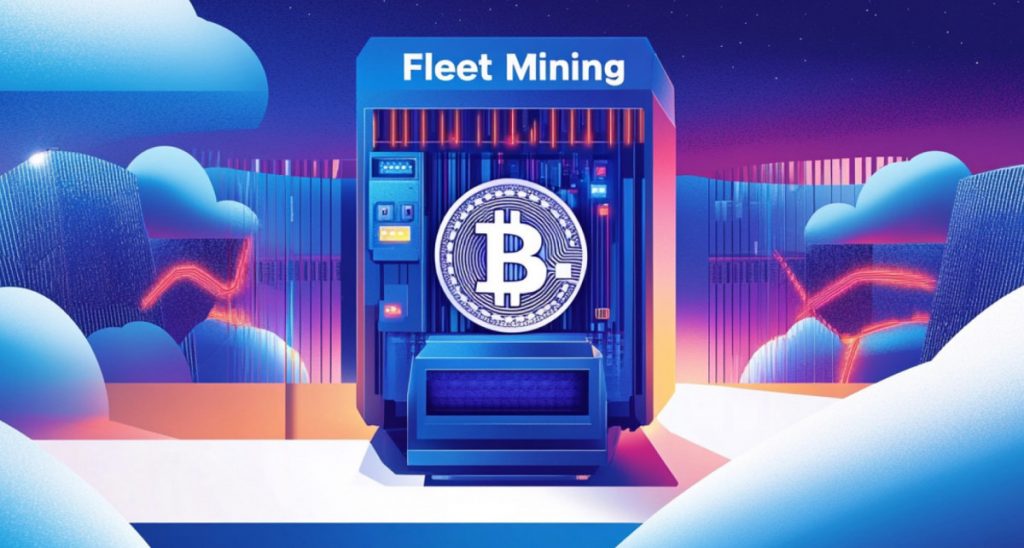
Analysts said the plunge had been fueled by a series of large, leveraged liquidations and continued uncertainty over Federal Reserve policy. But some experts say the drop is a chance for the market to resettle. Fleet Mining, an innovative and sophisticated green energy cloud mining platform that is safe and low-cost, created by Fleet Asset Management Group (FLAMGP), has attracted lots of early Bitcoin investors who continue to diversify their investments into it. The platform has even been described as one of the most promising cloud-mining platforms to watch out for in 2025.
Cloud mining allows users to participate in the mining of major cryptocurrencies such as Bitcoin, Dogecoin, and Ethereum by renting computing power from remote data centers. Users don’t need to purchase expensive mining machines or worry about electricity and maintenance costs. Simply register on the platform to earn rewards based on a share of global computing power. The platform manages the mining machines and electricity, and profits are automatically deposited into user accounts every 24 hours based on their share of computing power.
In short, cloud mining allows ordinary people to generate and distribute popular digital currencies like Bitcoin, Ethereum, and Dogecoin without any technical knowledge..
Advantages of Fleet Mining
Zero Hardware Entry: No need to purchase mining machines or set up a mining farm; simply register an account to participate.
Cost savings:The platform covers the costs of mining machines, electricity, and maintenance, eliminating any additional user expenses.
Green and sustainable:The platform utilizes leading clean energy sources such as smart wind power, solar power, and hydropower to reduce operating costs while aligning with global ESG investment trends.
Open and stable returns: Daily settlement of income with computing power, all the funds are traceable, investors can withdraw or re-investment any time.
Smart computing power scheduling: The AI system tracks market conditions around the clock, using intelligent scheduling to allocate computing resources to the hottest currencies, like BTC, ETH and DOGE, in order to maximise returns.
Risk free, Highly flexible: Investors can select short-term or long-term investments based on their own capital and interests, so that they can achieve profit planning without difficulty.
Why choose Fleet Mining cloud mining?
Suitable for investors without any technical background: No technical knowledge is required, and the platform is easy to use, allowing you to start mining with just one click.
Quickly generate passive income: Daily profits are automatically settled and can be withdrawn or reinvested at any time.
Diversify away the risks of conventional mining: No need to worry about equipment maintenance or high electricity costs.
Sign up and enjoy a bonus: The platform provides new users with $15 to $100 in free starting capital.
How to register and start cloud mining?
Register an account:Visit the Fleet Mining website, enter your email address, and complete the registration process to claim your new user bonus.
Choose a contract:Based on your fund size and return goals, choose short-term or long-term contracts for flexible investment.
Activate your hashrate and start mining:The system automatically allocates hashrate and generates daily profits. Users can view their earnings at any time and choose to withdraw or reinvest in large contracts.
After downloading the Fleet Mining App, you can also monitor your earnings and manage your account at any time, making investing more convenient.
Limited-time benefits
Sign up and receive a $15–100 USD reward, and start renting AI computing power at zero cost.
Extra bonus for purchasing contracts. The more you invest, the higher the reward.
Daily sign-in rewards, participate for free every day to receive $0.6.
Sample Contract Plans:
New User Trial Contract: $100 investment, 2-day term, total return $106
AvalonMiner 1266 96T: $500 investment, 5-day term, total return $531.25
Antminer L9: $3,000 investment, 15-day term, total return $3,675
Antspace HD5: $30,000 investment, 45-day term, total return $54,300
Institutional Plan: $300,000 investment, 60-day term, total return $660,000
(For more details, please visit the official website: fleetmining.com)
Conclusion:
Bitcoin’s significant pullback underscores the dangers of high-leverage trading and reminds investors to stay calm and careful in the face of changing market conditions. Near-term support levels are problematic still, but for longer term players unless you have diversified well or have a solid strategy,. Therefore, cloud mining, as a capital construction without access requirement and hardware that is not affected by price fluctuations, becomes the most effective means to hedge market volatility and create stable cash flow.
Visit Fleet Mining’s official website for more information
URL: https://fleetmining.com
company: Fleet Asset Management Group
Company Address:1225 17th St, Denver, CO 80202, United States
Email: [email protected]
#BitcoinMining
#AICloudMining
#DogecoinMining
#CryptoMining
#XRP
#BTC
Disclaimer
In line with the Trust Project guidelines, please note that the information provided on this page is not intended to be and should not be interpreted as legal, tax, investment, financial, or any other form of advice. It is important to only invest what you can afford to lose and to seek independent financial advice if you have any doubts. For further information, we suggest referring to the terms and conditions as well as the help and support pages provided by the issuer or advertiser. MetaversePost is committed to accurate, unbiased reporting, but market conditions are subject to change without notice.
About The Author
Gregory, a digital nomad hailing from Poland, is not only a financial analyst but also a valuable contributor to various online magazines. With a wealth of experience in the financial industry, his insights and expertise have earned him recognition in numerous publications. Utilising his spare time effectively, Gregory is currently dedicated to writing a book about cryptocurrency and blockchain.
More articles
Gregory, a digital nomad hailing from Poland, is not only a financial analyst but also a valuable contributor to various online magazines. With a wealth of experience in the financial industry, his insights and expertise have earned him recognition in numerous publications. Utilising his spare time effectively, Gregory is currently dedicated to writing a book about cryptocurrency and blockchain.
Web3 gaming continues to grow in 2025, with projects experimenting across genres, economies, and social spaces. Four titles—Bit Hotel, Lumiterra, Chainers, and World of Dypians (WoD)—are gaining momentum by combining NFT ownership, player-driven economies, and community features in different ways.
Key Takeaways
Bit Hotel blends retro aesthetics with social gameplay, allowing players to customize NFT hotel rooms, host events, and earn through mini-games.
Lumiterra introduces a blockchain-based survival experience focused on crafting, farming, and alliance-based progression.
Chainers emphasizes accessibility with free starter NFTs, browser-based play, and a blend of farming, PvP, and avatar customization.
World of Dypians delivers large-scale metaverse play, integrating DeFi mechanics, AI-driven NPCs, and expansive 3D environments.
The Changing Face of Web3 Games
Web3 gaming titles are no longer just about speculation or token launches. Increasingly, they’re focused on playable experiences, digital ownership, and social interaction. On-chain data from DappRadar shows rising activity across multiple genres. While each game has strengths and weaknesses, together they illustrate how developers are exploring fresh approaches to blockchain-based play.
Bit Hotel: Social Nostalgia Meets Play-to-Earn
Bit Hotel evokes early 2000s browser nostalgia with pixel-art visuals and chat-centered hubs. Players can buy and customize NFT hotel rooms, decorate them with furniture and art, and rent them out or host social gatherings.
A suite of casual mini-games, from Bomberman-style battles to memory challenges, reward players with BTH tokens. These tokens can be used in the in-game marketplace, staked for additional rewards, or exchanged for other assets. Customization runs deep, with NFT avatars, skins, and event-exclusive items available to show off individual style.
Its community-driven economy has kept engagement high, with 310,960 active wallets and over 24 million monthly transactions.
Source: Bit Hotel
Lumiterra: Survival Crafting on Ronin
Lumiterra is an open-world survival crafting MMORPG that puts players in control of scarce resources. Starting from scratch, they gather materials, craft tools, grow crops, and tame creatures—all of which exist as NFTs.
This ensures every action adds to a persistent, player-owned ecosystem.
The game allows specialization in farming, combat, or gathering, rewarding players who work together in alliances.
Recent activity underscores its traction. In the last 24 hours, Lumiterra logged 75,150 active wallets and 78,250 transactions. Although some players note a steep learning curve and early bugs, its economy and gameplay depth make it one of the more dynamic blockchain-based survival games.
Chainers: Browser MMO with Immutable Power
Chainers takes a different approach with a browser-based MMO designed for accessibility. Free starter NFTs make it easy for new players to join instantly, while integration with Immutable ensures smooth, fee-free transactions and simple wallet support via its Passport feature.
Gameplay combines farming, crafting, avatar design, and real-time PvE/PvP battles. Players can cultivate land, raise animals, and trade goods in a player-driven marketplace. Regular events and leaderboards add another layer of rewards.
With 500,000+ registered users and more than $100,000 distributed in rewards, Chainers is scaling steadily. Over the past month, it doubled its blockchain activity, reaching 12,630 wallets and 18,110 transactions.
World of Dypians: A Massive Metaverse
World of Dypians (WoD) aims for scale as one of Web3’s largest MMORPGs. Players explore a fully 3D world of cities and landscapes, owning and building on land parcels that exist as NFTs. The $WOD token fuels the economy, rewarding participation in missions, events, and social activities.
WoD also integrates DeFi mechanics such as staking, yield farming, and governance, giving players options to earn passively while helping shape the game’s direction. Its community is huge, with more than 2.5 million members across platforms and one million YouTube subscribers.
Upcoming updates include AI-driven NPCs, VR support, PvE/PvP expansions, and deeper customization.
In terms of activity, WoD dwarfs most competitors. In the past 30 days, it saw 3.95 million wallets interact with the game and over 49 million transactions.
Why These Games Are Worth Checking Out
Bit Hotel, Lumiterra, Chainers, and World of Dypians aren’t flawless, but they’re all pushing Web3 gaming forward in different ways. Bit Hotel experiments with social spaces, Lumiterra with survival mechanics, Chainers with browser-based accessibility, and WoD with metaverse scale.
These games share a focus on digital ownership and community engagement. Player activity suggests steady interest, even as gameplay depth varies. Together, they illustrate how Web3 developers are integrating rewards and user value into game design.
Onboarding ranges from instant browser access to more involved wallet setups. New users should factor in the time required to get started.
Non-fungible tokens (NFTs) started as a new method to own digital art, music, and collectibles. But as the Ethereum blockchain comes of age and decentralized finance (DeFi) becomes popular, NFTs are taking a step forward from being mere collectibles to useful assets that create real-world value. The most exciting evolution is integrating NFTs with Ethereum-based earning models where utility and passive income creation are intertwined.
This change is especially evident in Ethereum-based communities, where NFTs are being increasingly linked to earning mechanisms like staking, yield farming, and play-to-earn gaming. These combinations enable owners to derive more value from their NFTs than simple resale value. For example, staking platforms linked to NFT initiatives are providing users with access to rewards normally obtained through conventional Ethereum staking rewards, combining NFT ownership with yield-generation mechanics. This mirrors strategies used in other blockchain ecosystems such as Solana staking rewards, where users are incentivized to hold and stake assets in exchange for passive income.
From Hype to Utility: A Paradigm Shift
The initial NFT bubble in 2021 was speculated on. JPEGs and artwork sold for enormous sums, yet critics wondered what their inherent worth was. These days, however, the trend is shifting. NFT initiatives are now focused on utility—embedding functionality in tokens that benefit owners with things such as access, governance, and income-earning capabilities.
NFTs and Ethereum Staking: Bringing Two Worlds Together
One of the most groundbreaking uses of NFT utility is its integration with Ethereum staking mechanisms. With Ethereum’s move to a proof-of-stake (PoS) system, staking has emerged as a fundamental way for users to gain passive income by locking up their ETH to validate the network.
In a few instances, NFT platforms are also blending with these staking systems, allowing users to stake their own NFTs or utilize NFTs as a proxy to take part in staking rewards. This has provided new opportunities for earning, especially for users who might not have the high minimum quantities required for solo staking.
For example, platforms are testing out NFTs that denote ownership of a portion of a staking pool, allowing holders to access part of the pool’s rewards. Others make staking a game, where certain NFTs enhance staking rewards or provide access to special staking pools.
Earning Through Ownership: Play-to-Earn and NFT Gaming
The other frontier in ETH-based earning models is the explosive expansion of blockchain gaming. Play-to-earn (P2E) games leverage NFTs as game assets—in-game characters, weapons, skins—that are purchasable, sellable, or tradable. More significantly, these assets can earn revenue from gameplay, staking, or renting.
In games built on Ethereum such as Illuvium or The Sandbox, NFT owners are rewarded in ETH or other tokens just by engaging with the ecosystem. Some initiatives even enable players to lease out their valuable NFTs to others for a percentage of the in-game revenues, making digital assets into revenue streams.
This model represents a significant change in gaming economics: players are not only consumers anymore but stakeholders within an economy of a game, and NFTs are the door to unlocking and scaling earning potential.
DAO Governance and Revenue Sharing
Decentralized Autonomous Organizations (DAOs) are also using NFTs to organize governance and profit-sharing systems. By possessing specific NFTs, users become entitled to vote and receive shared pools of revenue from community investments or fees from a protocol.
For instance, an NFT attached to a DAO investment pool could grant the owner a portion of ETH-denominated returns. This not only increases the utility of the NFT but also encourages more community participation and long-term involvement.
In other instances, voters among NFT holders determine the distribution of treasury assets, such as which DeFi protocols to lock ETH in, thereby combining community management with yield maximization.
Looking Ahead: NFTs as DeFi Primitives
NFTs are quickly becoming central building blocks—or “primitives”—of the broader DeFi ecosystem. We are beginning to see NFTs employed as collateral on lending platforms, as access tokens to gated DeFi protocols, and even as proxies for synthetic assets pegged to ETH-denominated yields.
As the ecosystem of Ethereum continues to grow, the relationship between NFTs and earning models will only grow stronger. Emerging innovations could include programmable earnings NFTs, smart contracts that automatically forward staking rewards, or composable NFTs that change dynamically based on user behavior and market conditions.
Conclusion
The NFT market has evolved a great distance from its beginnings in speculative art and memes. Now, NFTs on Ethereum are becoming effective tools for value creation, combining identity, ownership, and income generation. Whether through staking, gaming, or DAO participation, NFT owners are finding new means of earning in the changing Ethereum economy.
As this space evolves, one thing is certain: the value of NFTs will be determined less by what they are, and more by what they can do—and how much money they can make you back.
Brands have poured millions into NFT campaigns, yet many fail to make a lasting impression. The main issue isn’t the technology—it’s how companies misunderstand what makes digital assets valuable in the first place.
Key Takeaways
Treating NFTs as short-lived hype stunts damages brand trust.
Projects without clear utility lose relevance fast.
Community engagement is critical for sustainable success.
Authenticity and alignment with brand values drive long-term impact.
Why NFT Projects Fail: The Hype Trap
I’ve seen many brands treat NFTs as quick viral marketing stunts. For example, CNN’s “Vault” project offered digital memorabilia for historic news moments. It sold well at first, but shut down within two years, leaving buyers without the long-term value they expected. This move hurt trust in CNN and in branded NFTs in general.
Another example is Ubisoft’s Quartz launch in 2021, which tried to integrate NFTs into Ghost Recon Breakpoint. Despite Ubisoft’s size and reputation, the announcement was drowned in backlash from gamers. Fans felt the NFTs were pushed purely for profit, with no meaningful connection to gameplay. The company was forced to scale back its ambitions after the poor reception.
The main lesson is clear: if an NFT campaign relies only on hype, it will not last. People want something that stays relevant, not just a digital souvenir that is forgotten after the initial buzz. This is a major reason why many NFT projects fail.
Ignoring Consumer Education
One of the most overlooked issues is onboarding. Too often, brands assume their audiences understand wallets, tokens, and gas fees. Liverpool FC’s 2022 NFT drop with Sotheby’s is a clear example. It was filled with jargon and offered confusing tiers of collectibles. The result? More than 95% of the NFTs went unsold. Fans didn’t know why they should buy or how to even start.
Even a major company like Square Enix struggled with its NFT projects. Many players did not know how to access or use the assets, which led to frustration instead of excitement. If onboarding is not user-friendly, projects that could attract a wide audience end up pushing people away.
Brands should make it easier for people to get involved. This includes allowing regular payments, using simple language to explain NFTs, and offering clear guides. If they do not, their projects may fail to reach a broader audience.
Utility Matters More Than Collectibility
If an NFT offers nothing beyond a JPEG, it’s destined to fade quickly. Pepsi’s “Mic Drop” collection in 2021 generated attention at launch but gave buyers no ongoing utility. Within weeks, it was forgotten.
Compare that to Coca-Cola’s NFT campaigns, which went beyond art. Holders gained access to exclusive experiences, digital wearables, and even real-world perks tied to events. The NFTs worked because they tied into Coca-Cola’s brand story of shared moments and connection.
Nike’s acquisition of RTFKT is another strong case study. Instead of selling static collectibles, Nike integrated digital sneakers with gaming, AR try-ons, and future resale markets. That practical utility ensured the assets retained value far beyond launch.
The lesson is clear—collectibility alone isn’t enough. Utility is what transforms NFTs into lasting digital assets. Without it, brands end up as yet another story of why NFT projects fail.
Forgetting the Community Factor
Community is the lifeblood of Web3, yet many brands treat NFTs like traditional product drops. Adidas avoided this mistake by partnering with Bored Ape Yacht Club, Gmoney, and Punks Comic for its “Into the Metaverse” campaign. That collaboration created immediate buy-in from active NFT communities, fueling organic growth.
On the flip side, Gap’s NFT hoodie launch felt disconnected. It lacked community integration, offered no clear roadmap, and failed to generate ongoing engagement. The drop fizzled out, highlighting the risk of treating NFTs as standalone products instead of entry points into community culture.
Even brands with global reach can fail here. McDonald’s China tried launching NFTs tied to its anniversary, but without proper community engagement, the campaign went unnoticed outside of local press coverage. Community participation isn’t optional—it’s the difference between sustainable engagement and irrelevance.
Ignoring this factor is one more reason why NFT projects fail.
Misalignment With Brand Values
Authenticity makes or breaks branded NFT projects. Gucci’s Vault NFTs succeeded because they extended the brand’s luxury storytelling into digital spaces. Exclusivity, artistry, and scarcity all fit naturally with Gucci’s identity, making the campaign feel genuine.
By contrast, Taco Bell’s 2021 NFT experiment sold out quickly but had no lasting connection to the brand. It felt more like a marketing gimmick than a thoughtful extension of what Taco Bell stands for. That kind of mismatch leaves consumers questioning whether the project is worth their attention.
Another example is WWF’s “Tokens for Nature” campaign, which attempted to tie NFTs to conservation. Critics argued that minting NFTs contradicted WWF’s environmental mission, leading the organization to suspend the project. This kind of misalignment shows how failing to connect NFTs with brand values can backfire, damaging credibility instead of building it.
Authenticity isn’t negotiable. When NFTs clash with brand identity, they risk becoming a public relations problem rather than a success story.
Lessons Brands Must Learn
NFTs fail not because of lack of interest but because brands misunderstand what drives long-term value. Overhyping, skipping education, ignoring utility, neglecting community, and straying from brand values are the most common mistakes. These patterns explain why NFT projects fail again and again.
Successful brands take a different approach. They educate their audiences, create campaigns with real value, support their communities, and stay true to their core values. NFTs can help build loyalty and share a brand’s story, but only if they’re more than a quick stunt. Treating NFTs as long-term brand assets is the best way to avoid becoming another failed example.
Published: September 25, 2025 at 1:18 pm Updated: September 25, 2025 at 1:18 pm
To improve your local-language experience, sometimes we employ an auto-translation plugin. Please note auto-translation may not be accurate, so read original article for precise information.
PROVIDENCIALES, Turks and Caicos Islands, September 25th, 2025, Chainwire
KuCoin, a leading global crypto platform built on trust, today announced that it has formally appealed a recent decision by the Director of the Financial Transactions and Reports Analysis Centre of Canada (FINTRAC) that upheld a Notice of Violation issued on March 31, 2025, along with a significant monetary penalty.
While the company respects regulatory compliance, KuCoin strongly disagrees with both the findings and the penalty. The exchange maintains that it should not be classified as a Foreign Money Services Business under Canadian law and considers the fine to be excessive and punitive.
KuCoin has exercised its statutory right by appealing the decision before the Federal Court of Canada, citing both substantive and procedural grounds.
“KuCoin has always strived to work constructively with regulators worldwide,” said BC Wong, CEO of KuCoin. “We disagree with this decision on both substantive and procedural grounds, and we have pursued all available legal avenues to ensure a fair outcome for KuCoin. As always, we remain fully committed to transparent operations and compliance with all applicable laws.”
The appeal process provides KuCoin the opportunity to challenge the determination in a formal legal setting. The company views this as a critical step toward achieving regulatory clarity and fair treatment for global digital asset platforms.
KuCoin emphasized that users will see no change in the company’s commitment to their security, transparency, and service during the legal proceedings. The company will continue to safeguard user assets, operate in compliance with all applicable laws, and keep its community informed throughout the process.
About KuCoin
Founded in 2017, KuCoin is a leading global crypto platform built on trust, serving over 40 million users across 200+ countries and regions. With established recognition for its reliability, the platform leverages cutting-edge blockchain technology, robust liquidity solutions, and advanced user account protections to deliver a secure trading environment. KuCoin offers access to 1,000+ digital assets and solutions, including Web3 wallet, Spot and Futures trading, institutional services, and payments. Recognized by Forbes as one of the “Best Crypto Apps & Exchanges” and a “Top 50 Global Unicorn” by Hurun, KuCoin holds SOC 2 Type II and ISO 27001:2022 certifications and is committed to security, compliance, and innovation under the leadership of CEO BC Wong.
Contact
KuCoin Media Team[email protected]
Disclaimer
In line with the Trust Project guidelines, please note that the information provided on this page is not intended to be and should not be interpreted as legal, tax, investment, financial, or any other form of advice. It is important to only invest what you can afford to lose and to seek independent financial advice if you have any doubts. For further information, we suggest referring to the terms and conditions as well as the help and support pages provided by the issuer or advertiser. MetaversePost is committed to accurate, unbiased reporting, but market conditions are subject to change without notice.
About The Author
Chainwire is the top blockchain and cryptocurrency newswire, distributing press releases, and maximizing crypto news coverage.
More articles
Chainwire is the top blockchain and cryptocurrency newswire, distributing press releases, and maximizing crypto news coverage.
Real user numbers, institutional adoption, and new technologies have accelerated blockchain growth. Here are the 10 fastest-growing networks and the trends driving their rise.
The blockchain industry is growing rapidly, with new networks emerging to compete with established leaders. But are these platforms truly gaining mass adoption?
In 2025, blockchain growth has been fueled not just by speculation, but by genuine user engagement and innovative technology. From fundamental Layer-1 (L1) blockchains to efficient Layer-2 (L2) solutions, networks are competing to attract millions of users through low-cost transactions, seamless integrations with mainstream platforms, and thriving Decentralized Finance (DeFi) and Non-Fungible Token (NFT) ecosystems.
This article ranks the top 10 fastest-growing blockchains based on active user growth.
Ranking Criteria
The ranking of the top 10 fastest-growing blockchains in 2025 is primarily based on the number of active users. Each entry also highlights whether the network is an L1 or L2, the supporting metrics that drive its rise, the main growth catalysts, and the challenges it faces.
For the uninitiated, L1 blockchains provide the base infrastructure with their native consensus mechanisms. L2 solutions, on the other hand, are designed to enhance the scalability and reduce the costs of L1 blockchains. For example, Ethereum is an L1 blockchain, while Polygon is an L2.
The term “active user” refers to a unique wallet address that has executed a transaction.
Fully Diluted Valuation (FDV) is the theoretical total market capitalization of a cryptocurrency if all its tokens were in circulation at the current price. This metric offers a broader view of a project’s potential value. It also helps determine if a token is overvalued or undervalued relative to its total potential supply.
The 10 Fastest Growing Blockchains
Solana
Solana is a high-speed L1 blockchain with a proof-of-history (PoH) consensus mechanism, designed for scalable Decentralized Applications (DApps) and marketplaces.
Monthly Active Users: 57 millionFDV: $107.2 billionToken Transaction Volume (30 days): $284.2 billionMain Catalysts: DeFi and NFTs, surge in high-frequency memecoin trading, the Firedancer validator client enhancing reliability, and increasing institutional adoption.Challenges: Past network outages impact reliability; criticism regarding the degree of centralization and competition from L2 solutions.Did you know? Solana’s Proof-of-History mechanism allows it to process thousands of transactions per second, enabling lightning-fast DeFi, NFT, and even memecoin trading.
Near Protocol
Near Protocol is an L1 blockchain using thresholded proof-of-stake (TPoS) consensus. It focuses on scalability, developer-friendly tools, and the integration of AI-native features for DApps.
Monthly Active Addresses: 51.2 millionFDV: $3.1 billionToken Transaction Volume (30 days): $7.8 millionMain Catalysts: AI integration for user-owned AI agents and intents, low transaction fees with carbon neutrality, partnerships like EigenLayer, and expansion in DeFi and gaming.
Challenges: Competition from faster L1s and L2s, price volatility despite user surge, and potential exploits in sharding complexity.
BNB Chain
BNB Chain is a Binance-backed L1 blockchain supporting DeFi, NFTs, and DApps with EVM compatibility.
Monthly Active Addresses: 46.4 millionFDV: $121.2 billionToken Transaction Volume (30 days): $56.1 billionMain Catalysts: Reduced block time to 0.75 seconds, AI integrations for data ownership.Challenges: Centralization concerns due to Binance backing and regulatory scrutiny.
Base
Developed by Coinbase, Base is an Ethereum L2 blockchain using optimistic rollups, focused on low-cost DeFi, consumer applications, and seamless integration.
Monthly Active Addresses: 21.5 millionFDV: $2.92 billionMain Catalysts: Ultra-low fees (average $0.01), Coinbase’s user base of over 100 million, stablecoin influxes, and partnerships for consumer DApps.Challenges: Network congestion from high activity, dependence on Ethereum for security, and regulatory compliance as a new ecosystem.
Tron
Tron is a high-throughput L1 blockchain focusing on decentralized content sharing, Telegram integration, and emphasizing low-cost stablecoin transactions.
Monthly Active Addresses: 14.4 millionFDV: $33.5 billionToken Transaction Volume (30 days): $51.7 billionMain Catalysts: Negligible transaction fees, AI and cross-chain integrations, and partnerships like Rumble Cloud.
Challenges: Regulatory scrutiny and centralization risks.
Bitcoin
Bitcoin is the original decentralized cryptocurrency, using the proof-of-work (PoW) consensus. It serves as a digital store of value and for payments.
Monthly Active Addresses: 10.8 millionFDV: $2.3 trillionToken Transaction Volume (30 days): $1.3 trillionMain Catalysts: Institutional inflows via Exchange-Traded Funds (ETFs) (as of Q4 2024, professional investors managing over $100 million hold $27.4 billion in Bitcoin ETFs), decreasing supply from halving events, and adoption as a strategic reserve.
Challenges: High energy consumption; price volatility from macroeconomic factors.
Aptos
Aptos is an L1 blockchain developed by former Meta engineers, using the Move language, focusing on scalability, DeFi, and DApp developer growth.
Monthly Active Addresses: 10 millionFDV: $5.3 billionToken Transaction Volume (30 days): $13 billionMain Catalysts: 19,200 TPS peak; Move language for secure contracts; partnerships like Tether’s USDt (USDT) launch.
Challenges: Needs wider adoption and competition from established L1s.
Ethereum
Ethereum is the leading L1 blockchain for smart contracts, DeFi, and NFTs, using the proof-of-stake (PoS) consensus.
Monthly Active Addresses: 9.6 millionFDV: $522.7 billionToken Transaction Volume (30 days): $1.1 trillionMain Catalysts: The Pectra upgrade for better user experience and scalability, ETF inflows, and institutional staking.Challenges: Scalability issues, higher fees than competitors, and regulatory pressures.Polygon Polygon is a multi-chain Ethereum scaling solution using PoS. It supports DeFi, NFTs, and enterprise applications with EVM compatibility.Monthly Active Addresses: 7.2 millionFDV: $2.6 billionToken Transaction Volume (30 days): $4.2 billionMain Catalysts: Heimdall v2 upgrade for cross-chain compatibility and partnerships with Fortune 500 companies.
Challenges: Regulatory scrutiny under MiCA (Markets in Crypto-Assets Regulation) and competition from other L2s.
Arbitrum One
Arbitrum One is a leading Ethereum L2 using optimistic rollups for faster and cheaper transactions while inheriting Ethereum’s security.
Monthly Active Addresses: 4 millionFDV: $5.1 billionToken Transaction Volume (30 days): $14.3 billionMain Catalysts: Robinhood integration for tokenized assets and upgrades like Stylus for lower fees.
Challenges: Reliance on the Ethereum mainnet, regulatory uncertainty, and competition from Optimism.
Trends Driving Blockchain Growth
The blockchain story in 2025 is one of acceleration. New technologies and mainstream adoption are fostering growth at both the fundamental L1 level and the L2 scaling layer. Prominent trends include:
Stablecoin Adoption Boosts Transaction Volumes: Stablecoins like USDT and USDC are significantly increasing transaction activity, powering liquidity and user participation across ecosystems.Layer-2 Solutions Improve Scalability and Reduce Costs: Scaling solutions like Arbitrum One and Base are enhancing Ethereum’s transaction capacity and cutting fees down to as low as $0.01. This makes DApps more affordable and accessible.DeFi and NFT Ecosystems Attract New Users: DeFi protocols and NFT marketplaces are bringing in millions of new users. Services like GMX on Arbitrum and Polygon’s NFT volume (up to $227 million in Q1 2025) offer innovative tools for finance and digital collectibles.Integration with Mainstream Platforms: Blockchains are growing through integration with major platforms. Base, for instance, is integrated with Coinbase, providing access to over 100 million potential users.Institutional Interest and Partnerships: Increasing institutional participation is legitimizing the blockchain space. Bitcoin ETFs gathered $36.4 billion in 2024. Corporate partnerships with blockchain networks have also helped build trust, such as Starbucks, Microsoft, and the Azure blockchain network partnering to create a traceability system.
User Growth, Challenges, and the Way Forward
The rapid growth of the top 10 fastest-growing blockchains by active users in 2025 underscores the increasing role of decentralized technology. Networks like Solana and Arbitrum are leading this adoption with low-cost transactions, DeFi applications, and mainstream integration.
However, fundamental challenges persist:
Inflated Data: Bot activity and inactive addresses can overstate genuine user growth.Scalability vs. Decentralization: Some high-speed networks compromise on decentralization.Regulatory Uncertainty: Scrutiny over stablecoins and illicit activity poses risks to adoption.Market Competition: There is intense competition between L1 chains and Ethereum’s L2 solutions.
In response, blockchains are innovating with better bot detection, improved scaling solutions, regulatory compliance, and unique offerings like AI and asset tokenization. These efforts are critical to sustaining long-term growth and shaping the future of the ecosystem.
You Might Also Like;
Follow us on TWITTER (X) and be instantly informed about the latest developments…
What if you could explore not just one world, but an entire universe?Billions of stars, each with its own planets, lifeforms, and secrets—stretching endlessly before you.
No Man’s Sky isn’t just a game. It’s a promise of limitless discovery, a digital cosmos that captures humanity’s oldest dream: to journey into the unknown.
🎮 Gameplay & Mechanics
Procedural Generation: Every planet, creature, plant, and star system is procedurally generated—meaning no two players experience the same world.Exploration: Land on any planet, uncover unique biomes, scan wildlife, and gather resources.Survival Elements: Extreme weather, hostile creatures, and hazardous environments test your adaptability.Crafting & Upgrades: Build tools, upgrade your starship, and develop exosuits to survive in harsh conditions.Space Travel: Seamlessly fly from planet to planet and warp between galaxies.Base Building & Colonies: Establish outposts, farms, and trade hubs across the stars.Multiplayer: Explore with friends or strangers in a shared online galaxy.
🌌 Story & Setting
While largely driven by exploration, No Man’s Sky features a mysterious narrative thread:
The Atlas: A cryptic AI-like entity guiding (or manipulating) the player.The Journey: Players uncover fragments of lore about the universe’s creators, travelers, and the truth behind reality itself.Existential Themes: The game questions knowledge, purpose, and whether exploration itself is the ultimate goal.
🖥️ Platforms & Availability
Released in 2016 on PlayStation 4 and PC.Expanded to Xbox One (2018), PlayStation 5, and next-gen platforms with ongoing updates.Also available in VR for a fully immersive cosmic experience.
🔑 Tips & Tricks
Upgrade Your Exosuit: Inventory space is crucial for survival and exploration.Fuel Management: Keep an eye on launch thrusters and hyperdrive fuel—running out mid-journey can be deadly.Scan Everything: Scanning flora and fauna gives you both resources and units (in-game currency).Base Locations: Choose resource-rich planets with mild climates for easier settlements.Use Portals: Fast-travel across the galaxy by finding and activating ancient portals.
🏆 Reception & Evolution
At Launch (2016): The game was criticized for missing features and overhype.Over Time: Developer Hello Games delivered massive free updates, adding base building, multiplayer, VR, deep lore, and improved visuals.Now: Considered one of gaming’s greatest comeback stories, with a dedicated player base and constant content expansions.
🌍 Cultural Impact
No Man’s Sky represents the dream of space exploration in gaming form.It inspired discussions about the limits of procedural generation, the resilience of developers, and the patience of players.
Today, it stands as proof that a game can be reborn, evolving into something greater than anyone imagined.
Conclusion
No Man’s Sky is more than a survival or exploration game—it’s a living universe, always growing, always changing.
It leaves us with one simple, yet profound question:“What lies beyond the next star?”
You Might Also Like;
Follow us on TWITTER (X) and be instantly informed about the latest developments…