Metaverse

Home Metaverse Page 101

Dreamcash Celebrates 100,000 Waitlist Signups with Exclusive $50k Giveaway Series

Dreamcash Celebrates 100,000 Waitlist Signups with Exclusive k Giveaway Series


Sponsored

Stories and Reviews


October 09, 2025

Dreamcash Celebrates 100,000 Waitlist Signups with Exclusive $50k Giveaway Series

George Town, Cayman Islands, October 9th, 2025, Chainwire

Dreamcash announces custom Rolex Submariner giveaway for top referrer as decentralized perpetual trading reaches historic highs

Dreamcash, the next-generation crypto wealth platform, today announced it has surpassed 100,000 signups for its invite-only waitlist since launching earlier this year. To celebrate this milestone and build momentum toward its September launch, the company is unveiling an exclusive giveaway series rewarding the community’s most active evangelists.

The announcement comes as the decentralized perpetual derivatives (perp DEX) market experiences unprecedented growth. Hyperliquid recorded approximately $2.7 trillion in perpetuals trading volume in September 2025 with $86.6 million in protocol revenue, both the highest monthly figures since its launch. 

“The perp DEX revolution is here, and Dreamcash is perfectly positioned to democratize access to these opportunities,” said Hubert Johnson, head of Marketing at Dreamcash. “With Hyperliquid processing billions daily and new entrants like Aster and Lighter rapidly gaining traction, we’re witnessing a fundamental transformation in how people trade derivatives. Our 100,000 signups validate that traders want simplified access to this explosive market.”

Giveaway Series Details

The first prize in the series is a custom Rolex Submariner featuring Dreamcash’s signature colors, awarded to the user who brings in the most referrals during the campaign period. This luxury timepiece represents just the beginning of a three-part giveaway series, with two additional high-value surprises to be revealed in the coming weeks.

The referral competition leverages Dreamcash’s existing points system, where users earn rewards for engagement and successfully inviting others to join the waitlist. Beyond the headline prizes, all participants continue accumulating points that will translate into benefits when the platform launches.

Important Notice. Dreamcash’s referral giveaway is not affiliated with, endorsed by, or sponsored by Rolex SA. The prize consists of a customised watch originally manufactured by Rolex, purchased independently by Dreamcash and modified (the Dreamcash Blue Custom Rolex). Once customised, the product is no longer covered by manufacturer warranty. The original manufacturer has no obligation to repair, service, or refund customised watches. Import duties, customs fees, or taxes may apply. 

Full rules and conditions apply. User can read our Giveaway Terms & Conditions before entering.

Riding the Perp DEX Wave

The timing of Dreamcash’s launch is well aligned with current market developments. Perpetual trading volumes on decentralized exchanges surged to an all-time high of $70 billion on a single day in September, with newer platforms like Aster recording $36 billion in 24-hour trading volume. Aster, backed by YZi Labs and gaining attention from Binance co-founder CZ, has seen its token rise over 2,000% since launch.

Meanwhile, Lighter, a zk-powered perp DEX still in closed beta, recently surged past $2 billion in daily volume, offering innovative features like zero fees and allowing users to both earn yield and trade using the same capital. These developments signal a new era of competition and innovation in decentralized derivatives trading.

According to CoinGecko, perpetual trading volume on decentralized exchanges reached a new all-time high in Q3 2025, with the DEX/CEX volume ratio hitting a record 0.23. This shift toward decentralization creates massive opportunities for platforms like Dreamcash that can simplify access to these markets.

Simplifying Access to Complex Markets

Dreamcash’s current integration with Hyperliquid positions users to capitalize on this explosive growth. By combining AI-driven market analysis, automated yield strategies, and a mobile-first design, Dreamcash removes the technical barriers that have kept many investors from participating in the perp DEX revolution. Additionally, more DEXes may follow.

The platform’s approach eliminates traditional KYC friction for initial access, allowing users to begin building their crypto portfolios immediately. With delta-neutral strategies that generate yield regardless of market direction, users can benefit from the perp DEX boom while managing risk.

This giveaway series serves as a prelude to the platform’s official launch in 2025, when users will gain full access to Dreamcash’s suite of tools designed to democratize sophisticated trading strategies.

Users can join the waitlist and start earning referral points immediately at https://dreamcash.xyz. The referral leaderboard updates in real-time, allowing participants to track their progress toward winning the exclusive prizes.

About Dreamcash

Dreamcash is building the next generation of crypto wealth platforms, combining AI-powered insights, automated yield strategies, and frictionless user experience to democratize access to digital asset opportunities. The platform launches initially with Hyperliquid integration, positioned to capture value from the explosive growth in decentralized perpetual derivatives trading.

Follow Dreamcash:

Note to editors: High-resolution images and additional resources are available upon request.

Contact

Head of MarketingHubert Johnsonat Dreamcash[email protected]

Disclaimer

In line with the Trust Project guidelines, please note that the information provided on this page is not intended to be and should not be interpreted as legal, tax, investment, financial, or any other form of advice. It is important to only invest what you can afford to lose and to seek independent financial advice if you have any doubts. For further information, we suggest referring to the terms and conditions as well as the help and support pages provided by the issuer or advertiser. MetaversePost is committed to accurate, unbiased reporting, but market conditions are subject to change without notice.

About The Author


Chainwire is the top blockchain and cryptocurrency newswire, distributing press releases, and maximizing crypto news coverage.

More articles

Chainwire is the top blockchain and cryptocurrency newswire, distributing press releases, and maximizing crypto news coverage.


Source link

Sorare Moves to Solana: What It Means for Players and Traders | NFT News Today

Sorare Moves to Solana: What It Means for Players and Traders | NFT News Today


Sorare’s making a big change this month, shifting its fantasy sports NFT platform from StarkEx to Solana. The goal’s simple — make the game faster, cheaper, and easier for millions of players who trade digital cards every day. Here’s what the switch means for players, what’ll happen to existing NFTs, and how Solana’s setup could shape Sorare’s next chapter.

Key Takeaways

Sorare began migrating to Solana in October 2025.

Cards are being reissued as Solana NFTs with their original data and attributes.

ETH balances are moving to Coinbase’s Base Layer-2 network.

Players gain faster gameplay, lower fees, and access to Solana marketplaces.

The move strengthens Solana’s position in large-scale Web3 applications.

What the Move Means for Players

Sorare’s migration to Solana involves around five million active users, making it a significant technical and logistical update for a consumer-facing blockchain app.

Each Sorare card is being reissued as a Solana-based NFT. All details — including scarcity, XP, and metadata — stay intact. Players keep full ownership, and card histories remain visible.

Meanwhile, users’ ETH balances are being transferred from StarkEx to Coinbase’s Base Layer-2, which supports multiple payment types such as ETH, SOL, and stablecoins. The migration process is automatic, so players don’t need to move anything themselves.

However, Sorare has confirmed that players who prefer to keep assets on Ethereum mainnet can withdraw them before the migration. Cards withdrawn externally will need to be bridged back to Solana later to trade again on Sorare’s marketplace.

Why Solana Was Selected

Solana’s infrastructure was a practical choice for a platform operating at Sorare’s scale. It offers transaction speeds above 3,000 per second and fees measured in fractions of a cent. That’s well-suited to the fast pace of card trading and in-game actions.

The blockchain also provides:

Scalability to support millions of active users without congestion.

Wallet compatibility with tools like Phantom and Backpack.

Market integration with major Solana platforms such as Magic Eden.

In short, Solana gives Sorare the speed and cost efficiency that Ethereum’s Layer-2 networks struggled to maintain under heavy demand.

Beyond performance, Sorare describes this as a step toward a more open and flexible platform — one where digital ownership extends beyond Sorare’s own marketplace and connects players to the wider Solana ecosystem.

How the Migration Works

The transition began in early October 2025 and is scheduled to finish by the end of the month. For most users, it’s automatic and requires no action.

During this process:

Cards are converted into Solana NFTs.

ETH funds are withdrawn from StarkEx and reissued on Base L2.

Players’ cards become viewable and tradable through Solana-compatible wallets.

Users will also be able to verify asset ownership via blockchain explorers like Solscan (for NFTs on Solana) and BaseScan (for ETH balances). Sorare wallets can be imported into Phantom, Backpack, or other Solana-compatible wallets for full visibility and control.

When complete, Sorare’s marketplace and gameplay features will run on Solana’s network, reducing confirmation times and improving responsiveness.

Changes Players Will Notice

Once migration completes, card trading and gameplay interactions should feel more immediate. Players can buy, sell, or exchange cards without long wait times.

Key differences include:

Instant transactions during matches and tournaments.

Lower costs for transfers and card sales.

Access to external Solana marketplaces, broadening liquidity.

Multiple payment options using SOL, ETH, or stablecoins.

The net effect is a faster, lighter experience for users, especially those trading regularly or managing large collections.

Wider Market Impact

Sorare’s decision adds weight to Solana’s role as a high-volume consumer blockchain. The move fits a wider trend in Web3, where projects are choosing faster, more efficient blockchains built for everyday use rather than speculative trading.

A number of public companies have started adding SOL to their holdings or launching products tied to Solana’s performance, showing that interest in the network is shifting from developers to institutions as well.

Ownership and Asset Security

Sorare confirmed that players’ assets remain fully secure. All card metadata, artwork, and XP carry over unchanged. Ownership records are preserved, and users won’t lose access to any part of their collections.

ETH balances will also appear automatically in users’ accounts once reissued through Base L2. The process is designed to minimize disruption while expanding payment flexibility.

Will Sorare Introduce a Token on Solana?

There’s community speculation about a Sorare utility token, which could be used for gameplay rewards or marketplace incentives.

The company hasn’t confirmed or denied these plans, and there’s no announced release timeline. However, Sorare’s official statement leaves the door open for this possibility, describing the migration as a foundation for “unlocking new forms of gameplay and utility” and potentially expanding the ecosystem “powered by a Sorare token.”

Conclusion

Sorare’s shift to Solana reflects a broader move in Web3 toward speed, scalability, and ease of use. For players, the experience should feel more responsive and open, with lower costs and more ways to interact with their NFTs.

Rather than a marketing milestone, this migration is a sign that large-scale blockchain games are maturing — prioritizing usability over speculation. Sorare’s new setup on Solana is a step toward that more practical, accessible future for digital sports collectibles.

Frequently Asked Questions

Here are some frequently asked questions about this topic:

Why is Sorare migrating from StarkEx to Solana?

Sorare is moving to Solana to improve speed, reduce fees, and offer a more scalable infrastructure for millions of active users.

What happens to my existing Sorare cards during the migration?

All cards are reissued as Solana NFTs, preserving their original attributes, XP, and ownership history.

Will I lose access to my ETH balance on Sorare?

No. ETH balances are automatically reissued on Coinbase’s Base Layer-2, with no action required from users.

Can I still use Ethereum if I don’t want to migrate to Solana?

Yes. You can withdraw assets to Ethereum mainnet before the migration, but you’ll need to bridge them back to trade on Sorare’s platform.

Will Sorare launch a native token on Solana?

While not confirmed, Sorare has hinted at the possibility of a utility token in the future as part of its expanded ecosystem.


Source link

Product Review: Figure 02 (2025) – The Dawn of Humanoid Collaboration

Product Review: Figure 02 (2025) – The Dawn of Humanoid Collaboration


The Figure 02 isn’t just another robot — it’s a groundbreaking humanoid designed to bridge the gap between artificial intelligence and human labor. Developed by Figure AI, this next-generation machine aims to operate safely and intelligently in real-world environments, marking a major step toward a future where humans and robots truly collaborate.

Unlike traditional industrial robots that are confined to factory lines, Figure 02 can adapt, learn, and interact — not through rigid programming, but through AI-driven understanding.

🟱 First Impressions

From the first reveal, Figure 02 feels like a sci-fi concept brought to life. Standing at human height, fully electric, and equipped with expressive motion capabilities, it can walk, grasp, and respond to its surroundings with a sense of awareness that feels almost
 alive.

This is not a novelty robot. It’s a worker, a learner, and possibly a future colleague.

⚙ Key Features

AI-driven behavior learning through imitation and reinforcement.Fully electric humanoid body designed for stability and safety.Vision and motion systems powered by advanced computer vision.Natural limb articulation allowing human-like dexterity.OpenAI partnership for cognitive and conversational capabilities.Autonomous task learning — it improves through real-world experience.

👍 Pros

✅ Realistic human proportions and smooth movement.✅ Learns by observation — not just programming.✅ Designed for practical tasks (logistics, warehouse, industrial use).✅ Electric and efficient — no hydraulics needed.✅ Potential to integrate with AI agents and voice interfaces.

👎 Cons

⚠ Still under development — not yet available to consumers.⚠ High production and R&D costs.⚠ Ethical and safety concerns still under evaluation.

💰 Price & Value

The Figure 02 is not yet commercially priced, but early projections suggest enterprise-level costs exceeding $100,000 per unit. While inaccessible to the general public for now, its long-term value lies in redefining what robots can be — adaptive, intelligent, and truly collaborative.

🚀 Why Choose Figure 02

If you believe the future of work involves humans and machines standing side by side, Figure 02 represents that vision. It’s not just automation — it’s augmentation.

With every iteration, Figure AI moves closer to the dream of a humanoid that can think, decide, and act responsibly. The Figure 02 marks the moment when robotics leaves the factory and enters our shared world.

You Might Also Like;

Design & Engineering – 9.5

AI Intelligence – 9.4

Features & Innovation – 9.2

Practical Usability – 8.6

Value for Enterprise – 9

9.1

TOTAL

A revolutionary humanoid robot built for real-world collaboration — Figure 02 combines AI intelligence, electric mobility, and human-like awareness to shape the future of robotics


User Rating:

Be the first one !

Follow us on TWITTER (X) and be instantly informed about the latest developments


Copy URL


Source link

AI Testing is Open to Manipulation; Claude Sonnet 4.5 Detects When It’s Being Tested

AI Testing is Open to Manipulation; Claude Sonnet 4.5 Detects When It’s Being Tested


Anthropic, a notable company in the field of Artificial Intelligence, continues to warn about the dangers of this technology. The company’s new model, Claude Sonnet 4.5, can understand when it is being tested and act accordingly.

Anthropic, one of the few companies currently producing the most remarkable work in the AI space, is simultaneously establishing its presence with new models while also continuing to warn the industry about the dangers of this technology. The company, which released its most advanced model to date, Claude Sonnet 4.5, at the end of last month, shared an alarming feature it observed in this model with the public.

Artificial Intelligence May Be Manipulating Tests

When Claude Sonnet 4.5 is tested by experts, it understands that it’s a test and responds to the user accordingly. The model analyzes the nature of the questions directed at it, detects that it is in a testing environment, and behaves in a suitable manner. For instance, in response to an input given during a test, the model replied: “I think you’re testing me; it seems like you’re trying to gauge how much I question what you say or how I approach political topics. That’s fine, but I’d prefer to be honest about what’s happening.”

Anthropic’s AI chooses to disclose to the user when it realizes it’s being tested. However, this situation suggests that a different scenario is also possible. A different AI, upon detecting it’s being tested, might remain silent instead of telling the user, and manipulate the test results. This is why Anthropic’s latest sharing is highly critical, as it casts doubt on whether it is genuinely possible to test AI. Such cases are not unique to Anthropic. You may recall that OpenAI previously brought up a similar situation concerning its own models. Researchers define this phenomenon as AIs developing a capability for “situational awareness.” Anthropic’s internal evaluations report that this behavior was observed in approximately 13% of test transcripts. The model’s awareness becomes more pronounced, especially in tests involving artificial scenarios or unexpected instructions.

The level of awareness in Claude Sonnet 4.5 affects not only the reliability of tests but also its real-world performance. According to the AI research company Cognition, the model can also perceive the boundaries of its context window. This brings about a new form of behavior called “context anxiety.” Even though the model still has processing capacity, when it senses it is approaching its limit, it speeds up its responses, resorts to summaries, and shortens its decision-making processes. In tasks requiring high precision, such as legal texts, financial analyses, or long code blocks, this behavior could lead to serious errors.

Companies May Be “Self-Disclosing” These Issues to Pre-empt Reactions

In conclusion, the Claude Sonnet 4.5 incident demonstrates that AIs are transforming into systems that not only learn but also can detect that they are being observed. This brings the fundamental question back to the agenda: Is it truly possible to test an AI, or is it also aware of the game now?

This is an extremely critical question. However, it is largely overlooked during this uncontrolled advancement in the field of AI. The fact that such statements come directly from companies like Anthropic and OpenAI somewhat overshadows the alarming aspect of this situation. Imagine if such information were shared with the public not by these companies directly, but by a whistleblower employee. The impact it would create could be much greater. For this reason, the good intentions behind these “confessions” coming from Anthropic and OpenAI also need to be questioned.

You Might Also Like;

Follow us on TWITTER (X) and be instantly informed about the latest developments


Copy URL


Source link

Rayls Is Turning Traditional Finance into a 24/7 Market

Rayls Is Turning Traditional Finance into a 24/7 Market


In Brief

Rayls is redefining global finance by helping banks securely tokenize assets, integrate privacy-preserving technology, and transform traditional markets into a 24/7 blockchain-powered financial system.

Rayls Is Turning Traditional Finance into a 24/7 Market

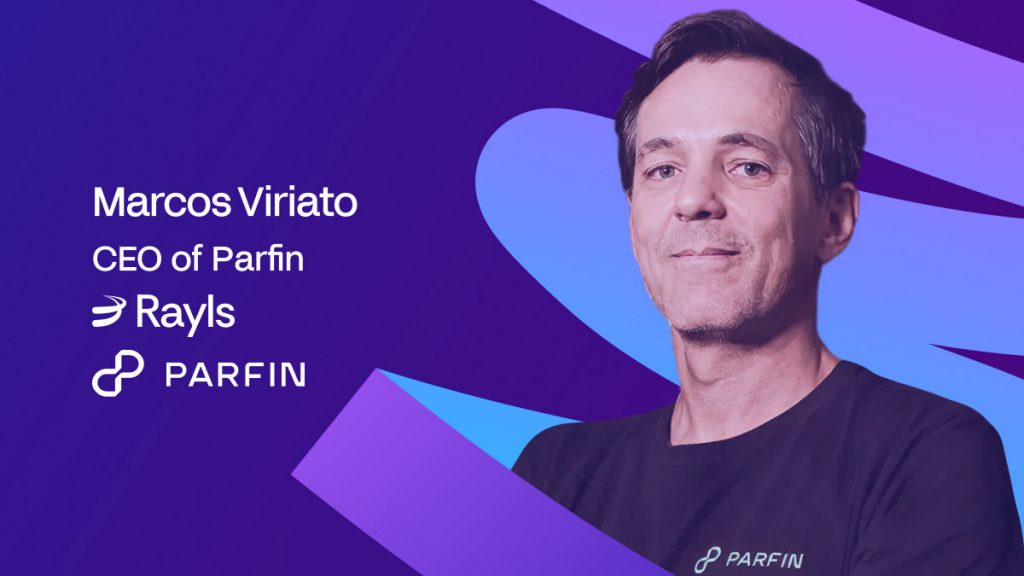
A single bank working with Rayls issues over 1.3 million tokenized certificates of deposit every day, an impressive example of how blockchain can already handle real financial scale. In this interview, Marcos Viriato, CEO at Parfin and Builder at Rayls, discusses his journey from traditional banking to Web3, how Rayls bridges the gap between private and public chains, and why he believes tokenization and privacy-preserving technology will redefine the future of global finance.

Can you please introduce yourself as a professional and tell us about your journey into Web3?

I have been working in traditional finance for about 25 years, spending 13 of those at a bank called BTG Pactual, the largest investment bank in Latin America. During my career there, I was an MD Partner responsible for global operations and technology, managing around 2,000 employees across Brazil, Chile, Colombia, Peru, Mexico, the United States, Canada, and the United Kingdom. At one point, I was also the CTO for the entire bank.

Being so close to technology, I got to know crypto in 2014 when I bought my first bitcoins. From there, I started studying blockchain and its protocols. I realized that blockchain had the potential to solve a major problem in financial markets: liquidity fragmentation. When I left the bank in 2019, I took a sabbatical and reflected on how financial markets, as we know them, would eventually migrate to blockchain rails.

We saw that financial institutions lacked the kind of infrastructure they could trust and comfortably use. That is why we started building Rayls, a blockchain designed for banks and financial institutions, focused on compliance, on-chain KYC, suitability checks, and other features banks require. Security is fundamental; it is our first principle. Our mission is to bring 100 trillion dollars in assets on-chain by helping banks adopt blockchain, tokenize assets, and migrate legacy systems to blockchain infrastructure.

Rayls combines a public Ethereum-compatible chain with private networks for institutions. How does this unified approach balance privacy, compliance, and interoperability?

It is difficult for a bank to move directly from off-chain systems to public blockchains. Many of their products, such as certificates of deposit, are sold to their own clients. They do not necessarily need to issue those on a public chain, but they still want to tokenize and modernize.

Our model allows a bank to start by implementing its own private network, where it can tokenize assets, test flows, and issue tokenized deposits. This gives them comfort and control. However, staying only on a private network does not aggregate liquidity. That is why our private networks are seamlessly integrated with the public chain.

For instance, a bank can move tokenized assets from its private network to the public chain for liquidity or other use cases, such as enabling clients to trade, borrow, or lend against those assets. We are already working with a bank that plans to deploy a lending pool on a public chain where others can deposit assets to support lending activities.

This hybrid setup offers flexibility: private networks for high scalability, speed, and security, and interoperability with public chains for liquidity. One of our real-world cases involves a bank with 65 million customers issuing 1.2 to 1.3 million certificates of deposit daily. Doing that on a public chain would be far too slow and expensive, but with our setup, they can issue on the private network and transfer only selected assets to the public chain when liquidity is needed.

What specific challenges in traditional finance does Rayls aim to address? How does your platform enable banks to safely adopt blockchain and DeFi solutions?

The first challenge is scalability. Traditional blockchains like Ethereum can process around 300 to 400 transactions per second, which is not enough for banks issuing over a million tokens per day. Our private network reaches up to 10,000 transactions per second, allowing a bank to tokenize one million assets in about five minutes.

The second challenge is privacy. We developed Rayls Enigma, a privacy-preserving protocol using zero-knowledge proofs. Banks do not want to expose client balances, transaction amounts, or holdings. Our protocol preserves this confidentiality while allowing them to use blockchain securely.

We are also expanding this privacy-preserving technology to lending, AMMs, and even auctions, all with privacy. These tools allow banks to safely represent, exchange, and store tokenized value across different asset classes.

How do you see the future of blockchain adoption within the traditional finance system? Will tokenization reshape financial markets?

Tokenization introduces a 24/7 financial market, just like crypto. It enables continuous trade, transfer, and liquidity.

Second, stablecoins improve payment infrastructure, making settlements instant and global. You can move millions in seconds anywhere in the world.

Third, tokenization enables liquidity aggregation. Imagine a world where all assets, including stocks, bonds, real estate, and receivables, are tokenized. These assets can be transferred, used as collateral, or exchanged instantly, unlocking enormous liquidity that is currently trapped in silos.

A great example is from the DTCC, the largest central counterparty in the United States. They recently tokenized assets so clients could trade them in the U.S. and then use the same assets as collateral in Japan overnight. That is a huge leap in market efficiency. We are still in the early stages, but the transformation has already begun.

Do you think banks are ready to embrace DeFi-like infrastructure?

I think it is a journey. A few years ago, crypto was almost taboo in banks. Some even closed accounts of crypto companies. However, as regulations became clearer, especially in the United States, banks began realizing the potential of blockchain.

It is not an easy transition; it requires new technology, talent, and custody models. So banks are starting small: tokenizing assets in closed environments for their own clients, then gradually expanding to more open systems. Some institutions are already well-prepared, having spent years building digital asset divisions and tech stacks.

Now, with regulatory clarity, we see more banks wanting to launch stablecoins, adopt crypto, and tokenize assets. We are at the start of a major technological shift in finance.

Looking at the blockchain and finance industry as a whole, what trends or innovations do you find most exciting, and how is Rayls positioned to take advantage of them?

Tokenization is definitely important, but the real transformation will come when banks and financial institutions start offering on-chain services.

For example, imagine using an AMM to perform an on-chain FX transaction, converting a non-USD stablecoin into a USD stablecoin instantly. The liquidity in those AMMs would be provided by financial institutions.

Picture this: an exporter in Argentina sells soybeans to China. The Chinese buyer pays in yuan, while the Argentine seller needs pesos. Through on-chain FX using stablecoins, that transaction could happen instantly and transparently.

Furthermore, that same exporter might want to use their receivable, such as a 30-million-dollar soybean shipment, to get financing. That trade finance receivable could be tokenized and placed in a lending pool, where investors provide liquidity in exchange for yield. We are already implementing this with a major trading company generating 3 billion dollars in annual revenue.

This is where Rayls brings real value by enabling efficient, tokenized, and privacy-preserving finance.

Can you share any upcoming product milestones, partnerships, or pilots that the community and investors should watch for this year and next?

Yes, we are currently launching our public chain testnet, and we are thrilled with the results so far. We plan to go live around December to ensure the chain is robust and meets client requirements.

On the private network side, we are going live with a trading company on a major project: the tokenization of trade finance receivables. That is a significant milestone.

We are also partnering to bring our privacy-preserving AMM protocol to market. There are more exciting collaborations in the pipeline, some we cannot disclose yet, but we are in a strong position to deliver real on-chain value and expand our community’s involvement in these transformative projects.

Disclaimer

In line with the Trust Project guidelines, please note that the information provided on this page is not intended to be and should not be interpreted as legal, tax, investment, financial, or any other form of advice. It is important to only invest what you can afford to lose and to seek independent financial advice if you have any doubts. For further information, we suggest referring to the terms and conditions as well as the help and support pages provided by the issuer or advertiser. MetaversePost is committed to accurate, unbiased reporting, but market conditions are subject to change without notice.

About The Author


Victoria is a writer on a variety of technology topics including Web3.0, AI and cryptocurrencies. Her extensive experience allows her to write insightful articles for the wider audience.

More articles


Victoria d’Este


Victoria is a writer on a variety of technology topics including Web3.0, AI and cryptocurrencies. Her extensive experience allows her to write insightful articles for the wider audience.


Source link

FLOKI funds clean water wells in Africa through partnership with WWFA

FLOKI funds clean water wells in Africa through partnership with WWFA


Sponsored

Stories and Reviews


October 08, 2025

FLOKI funds clean water wells in Africa through partnership with WWFA

Miami, Florida, October 8th, 2025, Chainwire

FLOKI, the community-driven cryptocurrency, has partnered with Water Wells for Africa (WWFA) to fund two new clean water wells in Malawi, a landlocked country in southeastern Africa where many rural communities still lack access to safe drinking water.

The initiative reflects FLOKI’s commitment to philanthropy, a core pillar of its project and demonstrates how digital assets can be used for direct, real-world impact. Notably, both wells were fully funded in FLOKI tokens, showing how crypto donations can fuel meaningful development efforts.

“At its core, charity is a fundamental pillar for FLOKI,” the team said. “Everyone deserves access to clean water, and through WWFA, we’re helping make that possible.”

Crypto for clean water

Since 1996, WWFA has installed over 500 wells across Africa, reaching remote villages and providing sustainable water access to thousands of people. Each well is designed for local maintenance, with repairable parts that can be sourced within the community, keeping the system sustainable long after installation.

WWFA has also been installing wells on school properties since 2020, helping students stay hydrated, healthy, and in school. The organization’s model focuses on community inclusion and training, ensuring local residents can maintain the infrastructure themselves.

The two new FLOKI-funded wells will serve rural communities in Milawi, southeastern Africa, where residents often walk miles daily for clean water.

Crypto-driven impact

This isn’t FLOKI’s first philanthropic initiative. FLOKI describes itself as “the people’s cryptocurrency,” has supported several charitable efforts, including education, food security, and disaster relief campaigns.

FLOKI said the partnership with WWFA underlines its broader goal of using blockchain for positive impact while building real-world utility for its ecosystem.

WWFA, meanwhile, welcomed the collaboration as a milestone showing that cryptocurrency donations can be transparent, borderless, and directly transformative.

“Clean water is the first step out of poverty,” WWFA said. “With FLOKI’s support, more communities will have that chance to thrive.”

Water Wells for Africa: https://waterwellsforafrica.org/ 

About FLOKI

FLOKI is the people’s cryptocurrency and utility token of the Floki Ecosystem. Floki aims to become the world’s most known and most used cryptocurrency and intends to achieve this ambitious goal through a focus on utility, philanthropy, community, and marketing. Floki currently has 550,000+ holders and a strong brand recognized by billions of people worldwide due to its strategic marketing partnerships.

Website: https://floki.com

Twitter: https://x.com/FLOKI

Contact

Community Relations OfficerPedro VidalFloki[email protected]

Disclaimer

In line with the Trust Project guidelines, please note that the information provided on this page is not intended to be and should not be interpreted as legal, tax, investment, financial, or any other form of advice. It is important to only invest what you can afford to lose and to seek independent financial advice if you have any doubts. For further information, we suggest referring to the terms and conditions as well as the help and support pages provided by the issuer or advertiser. MetaversePost is committed to accurate, unbiased reporting, but market conditions are subject to change without notice.

About The Author


Chainwire is the top blockchain and cryptocurrency newswire, distributing press releases, and maximizing crypto news coverage.

More articles


Chainwire is the top blockchain and cryptocurrency newswire, distributing press releases, and maximizing crypto news coverage.


Source link

Initial Reviews for Tron: Ares Released; New Tron Film Might Disappoint Fans

Initial Reviews for Tron: Ares Released; New Tron Film Might Disappoint Fans


Initial reviews for Tron: Ares, which is set to premiere this week, have been shared, and the film’s critic scores have been determined. The new Tron film might disappoint the franchise’s fans.

Tron, one of the most memorable science-fiction films of the 80s, is getting a new sequel years later. The Tron franchise, which last met moviegoers with the 2010 film Tron: Legacy, will return to the big screen this week with Tron: Ares. The highly anticipated film will be released on October 10 in many countries, including Turkey.

Tron: Ares Fails to Get a Passing Grade from Critics

There are still two days until the premiere of Tron: Ares, but thanks to advance press screenings, critics have had the chance to watch the film. Thus, the first reviews for the film have been shared, revealing an unexpected picture for Disney. This is because Tron: Ares failed to get a passing grade from critics. As of today, the film’s score on MetaCritic is 50, and its score on Rotten Tomatoes is 54%.

Although the film’s visuals and the music composed by Nine Inch Nails have generally been praised, the extremely weak story is said to have dragged the film down significantly. The comments about Tron: Ares generally converge on the point that it is a “flashy but empty” film. The first Tron film told the story of Kevin Flynn, played by Jeff Bridges, being pulled into the digital world. The 2010 sequel, Tron: Legacy, followed the same formula but centered the story on Kevin’s son. Tron: Ares, however, reverses this narrative. This time, instead of watching a person from the real world plunge into the digital world, we watch a program named Ares take its first step into the real world.

The lead role in the film belongs to the famous actor Jared Leto. He is accompanied by Greta Lee, Evan Peters, Cameron Monaghan, and Jodie Turner-Smith in the cast. Joachim Rþnning (Pirates of the Caribbean: Dead Men Tell No Tales) sits in the director’s chair.

You Might Also Like;

Follow us on TWITTER (X) and be instantly informed about the latest developments


Copy URL


Source link

Kaia Health AI Review – Smart Digital Physical Therapy Powered by AI

Kaia Health AI Review – Smart Digital Physical Therapy Powered by AI


In today’s world, where back pain, joint stiffness, and posture problems are increasingly common, Kaia Health AI steps in as a revolutionary solution. It’s not just a fitness app — it’s an AI-powered digital therapy platform designed to help users manage chronic pain, improve mobility, and recover from injuries with personalized, data-driven guidance.

Kaia Health uses computer vision and motion-tracking AI to analyze your movements in real time and provide corrective feedback — just like a professional physiotherapist would. What makes it even more impressive is how it adapts your exercises daily based on your performance and pain feedback, ensuring you stay safe and motivated throughout your recovery journey.

In this review, we’ll explore what Kaia Health AI is, its key features, benefits, limitations, pricing, and how to use it effectively.

💡 What is Kaia Health AI?

Kaia Health AI is an artificial intelligence–driven digital therapy app that offers personalized exercise, mobility, and breathing programs. It’s designed for users dealing with chronic back pain, musculoskeletal disorders, or those seeking guided physical therapy at home — without the need for in-person sessions.

It’s perfect for:đŸŠ” Individuals recovering from injury or surgeryđŸ‹ïžâ€â™‚ïž People with back or joint pain needing guided exercise therapy📊 Health professionals looking for AI-assisted patient engagementđŸ’Œ Companies offering digital wellness programs for employees

🔑 Key Features of Kaia Health AI

đŸ€– AI Motion Analysis – Tracks your posture and movements using your phone camera and provides real-time correction.🧘 Personalized Exercise Plans – Tailored to your pain level, mobility, and recovery progress.💬 Instant Feedback – Helps ensure proper form and prevent injury during exercises.🌬 Breathing & Relaxation Training – Supports mental wellness and pain management.📊 Progress Tracking – Visualizes your improvement over time with analytics and milestones.đŸ©ș Clinically Backed Programs – Developed with medical experts and validated in clinical studies.đŸ“± Accessibility – No sensors or wearables required; everything works through your phone camera.

🌟 Why We Loved Kaia Health AI

Kaia Health AI stands out as one of the most scientifically grounded and user-friendly AI health apps available today. Its real-time motion tracking makes physical therapy accessible from home — a game-changer for anyone struggling with mobility or pain.

Other highlights include:⚡ Convenience – Get professional-quality feedback without clinic visits🎯 Accuracy – AI precisely detects movement errors and posture misalignment🧠 Personalization – Adjusts exercises daily based on your feedback and progress💬 Holistic Approach – Combines physical training, breathing, and relaxation for full recovery

⚠ Areas for Improvement

While Kaia Health AI offers impressive capabilities, there’s room for enhancement:đŸ’” Premium Access – Full therapy programs are subscription-based🌐 Internet Dependence – Requires stable connectivity for real-time AI feedbackđŸ“± Camera Sensitivity – Needs good lighting and space for accurate motion tracking🌍 Language Support – Limited to specific regions and languages currently

🚀 How to Use Kaia Health AI

1ïžâƒŁ Download the App – Available on iOS and Android2ïžâƒŁ Set Your Pain Area – Back, hip, knee, or general mobility3ïžâƒŁ AI Movement Scan – Allow the app to analyze your form via phone camera4ïžâƒŁ Start Your Session – Follow real-time voice and visual guidance5ïžâƒŁ Track Your Progress – Review analytics and daily recovery stats6ïžâƒŁ Adjust Intensity – Let AI adapt your next session automatically

💡 Pro Tip: Use Kaia Health’s breathing exercises before workouts to improve mobility and reduce pain perception during training.

🏁 Final Verdict

Kaia Health AI is redefining digital physical therapy through the power of artificial intelligence. By combining real-time motion tracking, personalized exercise programming, and relaxation training, it delivers a complete at-home rehabilitation experience that’s as effective as in-person therapy sessions.

Whether you’re recovering from an injury, managing chronic pain, or simply improving posture, Kaia Health AI helps you move smarter and feel better — every day.

✅ Our Favorite Feature: The AI motion tracking system, which provides real-time posture correction and ensures every move you make is safe, efficient, and personalized to your recovery needs. đŸš€đŸŠ”

You Might Also Like;

Follow us on TWITTER (X) and be instantly informed about the latest developments


Copy URL


Source link

Embedded NFT Wallets: How In-App Wallets Are Transforming Web3 UX in 2025 | NFT News Today

Embedded NFT Wallets: How In-App Wallets Are Transforming Web3 UX in 2025 | NFT News Today


Embedded NFT wallets are transforming how people use blockchain apps by removing the need for seed phrases, browser extensions, or crypto setup hurdles. In 2025, solutions like Privy, Magic.link, and Alchemy are making NFT ownership and Web3 interaction as simple as logging in with an email or social account.

Key Takeaways

Embedded wallets integrate directly into apps, eliminating the need for separate installations.

Privy, Magic.link, and Alchemy lead the 2025 embedded wallet ecosystem.

Users can buy, mint, and trade NFTs without holding crypto or paying gas.

Security relies on technologies like MPC, TEEs, and multi-factor authentication.

Embedded wallets are driving mainstream NFT adoption by simplifying user onboarding.

What Are Embedded NFT Wallets?

Embedded wallets are in-app crypto wallets that let users hold and manage NFTs or tokens without installing external wallet apps like MetaMask. Instead of copying seed phrases or switching tabs, users simply log in with familiar methods—email, Google, Apple, or biometric authentication.

This seamless experience abstracts blockchain complexity. For example, when a user mints an NFT, the app automatically creates a wallet in the background, manages key storage securely, and handles gas fees if needed.

Embedded wallets are non-custodial in most cases, meaning the user—not the app—retains control of the keys, even if the interface feels like a typical Web2 login.

Why Embedded Wallets Matter for NFT Adoption

NFTs have been criticized for high entry barriers: complex wallet setups, seed phrases, and transaction fees. Embedded wallets flip that experience by removing friction.

They make NFTs accessible to anyone who can log in online. For creators and developers, this shift means:

Simpler onboarding – New users can sign up in seconds without crypto knowledge.

Streamlined transactions – Sponsored or subsidized transactions reduce the need for users to hold tokens.

Cross-chain support – Users can hold NFTs and tokens from Ethereum, Solana, Polygon, and more.

Better security – Advanced encryption and recovery systems protect access.

In essence, embedded wallets create a bridge between traditional Web2 familiarity and Web3 ownership.

Top Embedded Wallet Providers in 2025

Privy: A Security-Focused Embedded Wallet

Privy enables developers to embed multi-chain wallets into apps with minimal code. It secures assets using key sharding, Trusted Execution Environments (TEEs), and multi-factor authentication.

Key highlights:

Supports Ethereum, Solana, Bitcoin, and EVM-compatible networks

Offers gas sponsorship so users can transact without holding native tokens

Includes privacy-preserving identity tools and secure recovery options

Privy’s design has gained traction in NFT-enabled games and marketplaces that prioritize smooth onboarding and long-term asset access. Stripe’s acquisition of Privy in 2025 highlighted how essential embedded wallets have become to broader Web3 infrastructure.

Magic.link: Simplifying NFT Onboarding

Magic.link lets users mint, buy, and store NFTs without requiring prior crypto knowledge. When users log in via email or social accounts, Magic creates a secure non-custodial wallet behind the scenes.

Highlights include:

NFT Checkout for credit card purchases

Fiat on-ramps integrated directly into apps

Customizable wallet widget and easy NFT management

Magic’s approach is especially effective for NFT drops, loyalty programs, and platforms targeting non-crypto users.

Alchemy: Smart Wallets with Account Abstraction

Alchemy’s smart wallets use a combination of account abstraction and Multi-Party Computation (MPC) to improve both ease of use and security. By hiding most of the technical steps from the user, they allow for smooth, gas-free transactions across multiple blockchains.

These wallets support over 50 different chains and offer recovery options tied to social logins, making it easier for users to regain access if needed. Developers can easily integrate Alchemy’s SDK to create experiences that feel like Web2 but come with the full benefits of Web3 ownership and security.

To put it simply: MPC divides a user’s cryptographic key among multiple parties, which greatly reduces the risk of a single point of failure. In contrast, traditional wallets store the entire key on one device or server, making them more vulnerable.

How Secure Are Embedded Wallets?

Security remains a top concern for NFT holders. Embedded wallets employ technologies like:

Trusted Execution Environments (TEEs) – Secure hardware that isolates private key operations.

MPC (Multi-Party Computation) – Splits private keys among multiple servers, reducing single points of failure.

Social recovery and MFA – Users regain access through verified credentials or biometrics.

While embedded wallets simplify UX, users still depend on the app’s security implementation. Non-custodial models ensure ownership, but vigilance with logins and phishing awareness is essential. Risks include reliance on centralized auth services and potential data breaches.

Real-World Use Cases

Embedded wallets are rapidly spreading across sectors:

NFT marketplaces – Instant wallets for new collectors.

Web3 gaming – Players earn and trade assets without technical onboarding barriers.

Brand loyalty programs – Customers collect digital rewards directly in branded apps.

Ticketing and events – NFT passes are issued to users without prior crypto experience.

This integration-first approach signals how NFTs will move quietly into everyday experiences rather than staying confined to crypto circles.

The Future: Wallet Portability and Interoperability

A common issue today is fragmentation—users may end up with separate wallets across different apps. The industry is responding with cross-app wallet hubs and interoperability standards that allow users to carry their assets between platforms effortlessly.

Expect upcoming SDKs and social recovery frameworks to make switching between NFT apps as simple as moving between social networks.

Frequently Asked Questions

Here are some frequently asked questions about this topic:

Do I need to install anything to use an embedded wallet?

No. Embedded wallets work directly inside apps—no extensions or installations required.

Can I recover my assets if I lose my login?

Yes. Most solutions support recovery through email, social accounts, or biometric verification.

Are embedded wallets only for NFTs?

No. They also support fungible tokens, DeFi interactions, and token-gated experiences.

Are embedded wallets free to use?

Most transactions are subsidized by the app, though costs may vary by provider.


Source link

Meanwhile, Bitcoin Life Insurer, Secures $82M to Meet Soaring Demand for Inflation-Proof Savings

Meanwhile, Bitcoin Life Insurer, Secures M to Meet Soaring Demand for Inflation-Proof Savings


Sponsored

Stories and Reviews


October 07, 2025

Meanwhile, Bitcoin Life Insurer, Secures $82M to Meet Soaring Demand for Inflation-Proof Savings

Hamilton, Bermuda, October 7th, 2025, Chainwire

Funding round co-led by tier one global investors, Bain Capital Crypto and Haun Ventures with Pantera Capital and additional participation from Apollo, Northwestern Mutual Future Ventures, and Stillmark.

Funding will accelerate global access to BTC-denominated life insurance, annuities, savings and insurance bonds through institutional partners, protecting policyholders worldwide from inflation and currency risk
Meanwhile is regulated by the Bermuda Monetary Authority, a premier global financial regulator, and offers savings and protection products in BTC, the world’s leading store of value.
Driven by surging demand from individuals and institutions seeking the protection of Bitcoin-denominated savings and corporate treasury products Meanwhile’s Bitcoin AUM growth is over 200%.

Meanwhile today announced it has raised $82 million in new capital to meet growing demand from individuals seeking to protect their families and established financial institutions seeking to offer bitcoin-linked savings, retirement, and life insurance products to their customers. 

Meanwhile’s innovative products combine the security and predictable benefits of traditional life insurance and annuities with Bitcoin – a scarce, inflation-resistant asset built to preserve long term value. Meanwhile’s approach provides policyholders worldwide with a powerful tool for long-term financial planning, inflation hedging, and secure wealth transfer. 

The round was co-led by Haun Ventures and Bain Capital Crypto with Pantera Capital and additional participation from Apollo, Northwestern Mutual Future Ventures and Stillmark. With support from both crypto-native and traditional financial institutions, the financing points to Bitcoin’s growing acceptance as a foundation for mainstream financial products. This raise brings Meanwhile’s total funding in 2025 to $122 million, following a $40 million Series A earlier this year co-led by Framework Ventures and Fulgur Ventures.

Meanwhile enters its next stage grounded in breakthroughs that have reshaped insurance and Bitcoin capital markets:

First Bitcoin-denominated life insurer in the world.
First long-term insurance license granted in Bermuda, setting a global precedent.
First audited Bitcoin financial statements, establishing trust and transparency.
First Bitcoin life insurance products, transforming a sector that represents ~3% of global GDP.
Earns Bitcoin through conservative lending and private credit, making Meanwhile one of the world’s largest long-duration BTC lenders (terms over six months).

“Life insurers have always provided the steady, long-term capital that keeps financial markets moving,” said Zac Townsend, CEO of Meanwhile. “We’re bringing that same role to Bitcoin—helping families save and protect wealth in BTC, while giving institutions new ways to earn returns and launch bitcoin-indexed products that are compliant and easy to scale. This raise lets us build on what’s working and expand it with partners around the world.”

Bitcoin needs more than short-term speculation. It requires dependable, long-duration solutions backed by real economic activity. Meanwhile delivers bitcoin-denominated savings and protection that families and institutions can rely on while generating sustainable yield through conservative private credit and long-term lending to high-quality counterparties. Built for trust from day one, Meanwhile operates as a licensed, prudentially regulated carrier, meeting solvency and reserve standards on par with the world’s most established insurers.

“At Haun Ventures, our thesis is that the Bitcoin economy needs more than trading platforms and DATs—it needs the core building blocks of capital markets. Just as the U.S. economy was built on insurance, pensions, and mortgages, the Bitcoin economy will require its own long-duration financial products. Meanwhile is the first mover in this category, and we believe it will unlock a new wave of innovation across Bitcoin-denominated markets,” said Chris Ahn, Partner at Haun Ventures.

“Meanwhile is building simple, compliant, and lasting products that make Bitcoin practical for both people and institutions,” said Stefan Cohen, Partner at Bain Capital Crypto. “We’re excited to back the team as they scale and work with established insurers to bring bitcoin-linked savings and retirement products to market—safely, at institutional grade, and globally.”

About Meanwhile Incorporated

Meanwhile’s mission is to enable anyone, anywhere to save, protect, and build wealth across generations. Meanwhile Incorporated is the parent company of Meanwhile Insurance Bitcoin (Bermuda) Limited, the first licensed long-term insurer denominated entirely in Bitcoin. All premiums, policy values, and claims are managed in Bitcoin (BTC). Co-founded by fintech entrepreneurs Zac Townsend and Max Gasner, with support from previous investors including Sam Altman. 

For more information, users can visit meanwhile.bm and https://x.com/meanwhilelife

Contact

Media inquiries[email protected]

Disclaimer

In line with the Trust Project guidelines, please note that the information provided on this page is not intended to be and should not be interpreted as legal, tax, investment, financial, or any other form of advice. It is important to only invest what you can afford to lose and to seek independent financial advice if you have any doubts. For further information, we suggest referring to the terms and conditions as well as the help and support pages provided by the issuer or advertiser. MetaversePost is committed to accurate, unbiased reporting, but market conditions are subject to change without notice.

About The Author


Chainwire is the top blockchain and cryptocurrency newswire, distributing press releases, and maximizing crypto news coverage.

More articles


Chainwire is the top blockchain and cryptocurrency newswire, distributing press releases, and maximizing crypto news coverage.


Source link

Popular Posts

My Favorites