Metaverse

Home Metaverse Page 100

ChatGPT Prompts to Create Cool Profile Pictures

0
ChatGPT Prompts to Create Cool Profile Pictures


Artificial intelligence is not only generating text but is now shaping creativity in the visual world. Especially for users who care about their personal appearance, it has become possible to create stylish profile pictures using AI-based visual generation tools. We can take on a completely different visual identity with example prompts prepared for various themes. That is precisely why we have gathered inspirational examples for you under the title “ChatGPT Prompts to Create Cool Profile Pictures.”

AI applications and visual generation tools have become technology that is easily accessible not just to professionals but to everyone. Creating realistic, striking, and creative visuals with platforms like ChatGPT only takes a few sentences. One of the most critical factors at this point is being able to write the right and effective prompt or input text. Especially for those who want to stand out on social media, creating cool profile pictures with AI is highly possible through a well-written prompt.

So, what kind of command do you need to give for the profile picture of your dreams? Every element, from the scene’s atmosphere to the lighting setting, from camera angles to clothing details, directly affects the result the AI will generate. In this content, we have compiled ready-to-use ChatGPT prompts full of examples for you. If you are ready, let’s look at the ways to generate the “coolest” version of yourself with AI.

Prompt Suggestions to Reinvent Your Profile Picture

We used Liv Tyler’s face as a reference in the example profile pictures. Below you can find command examples suitable for different styles for ready-made ChatGPT prompts that allow you to create cool profile pictures.

1- Retro Effect Profile Picture

Beginner prompt: “A vintage film style portrait with soft lighting, brown tones, 70s style shirt, analog film effect, dimly lit indoor background, natural pose, slightly grainy image, preserving the original face.”

Detailed prompt: “A vintage film style portrait created with the existing reference face, illuminated with soft light, reflecting the 1970s aesthetic. The person is wearing a wide-collared, retro-patterned shirt in brown tones. The background is a dimly lit interior: a setting filled with old bookshelves, slightly yellowed walls, and nostalgic objects. A slightly warm filter is used in the visual, the analog film effect is evident, and there is a slight grain and yellowish light distribution in the image. The person’s pose is natural, slightly turned to the side, with eyes focused far away. The frame is at shoulder level and the face is sharp, the background is slightly blurred. The overall mood of the visual is nostalgic, warm, and emotional. Style: retro film portrait, soft lighting, grainy texture, shallow depth of field, warm tones.”

2- Black and White Fashion Magazine Shoot Style

Beginner prompt: “Black and white fashion magazine style portrait, preserving my face in the photograph, plain background, high contrast, stylized pose, dramatic lighting, modern and chic clothing, Vogue cover aesthetic.”

Detailed prompt: “A black and white fashion magazine style portrait created with the existing reference face. The background is plain and simple, in non-distracting grey tones. The frame is from the shoulders up, the model is looking directly at the camera lens or giving a stylized pose slightly turned to the side. The clothing is modern and elegant: a solid-colored, minimalist blazer jacket or a high-collared chic top is preferred. The facial expression is serious, and the posture is confident. The lighting is strong and single-directional, set to create dramatic shadows on the face. High contrast and sharpness dominate the visual, the skin texture is distinct, and the black and white toning reflects the classic Vogue cover aesthetic. The overall look conveys a sophisticated, strong, and editorial style stance. Style Tag: high-fashion editorial, black and white portrait, dramatic lighting, high contrast, minimal background, Vogue-inspired.”

3- Sunset Themed Portrait

Beginner prompt: “A sunset themed portrait on a tropical beach with the original face, person in a linen shirt, slight wind effect in the hair, sun rays in orange and pink tones, natural pose, a warm-toned profile picture suitable for Instagram.”

Detailed prompt: “A portrait created with the existing reference face, shot in a sunset atmosphere on a tropical beach. The person is wearing a light-colored, slightly linen fabric shirt, and the shirt is gently fluttering in the slight wind. The hair is also naturally swept by the wind. In the background are palm trees, the sandy beach, and the sun slowly setting on the horizon. The sky is painted in orange, pink, and light purple tones, and a warm and soft light gently illuminates the skin tones. The pose is relaxed and natural, the person is slightly turned to the side or looking far away. The frame is above the shoulders, the focus is on the face. The background is slightly blurred. A warm filter atmosphere suitable for Instagram dominates the visual. Style: golden hour portrait, soft lighting, warm color palette, tropical beach sunset, lifestyle photography.”

4- Winter Themed Portrait

Beginner prompt: “A winter themed portrait based on my face in the photograph, in a snow-covered forest, wearing a fur-hooded coat, illuminated with soft white light, snowflakes falling on the face, slight hazy background.”

Detailed prompt: “A winter themed portrait created with the existing reference face, shot in a forest under heavy snowfall. The person is wearing a thick, dark-colored coat with a large, soft fur-lined hood. The hood is worn so that the area around the face is exposed. The facial expression is peaceful or contemplative, the eyes are either slightly closed or looking directly at the camera. Fine-grained snowflakes have fallen on the face and hair, some of which have started to melt. The lighting is soft white; it adds a natural brightness to the surroundings while making the snowflakes sparkle. The background is surrounded by snow-covered trees and is slightly hazy, blurred to create a sense of depth. The overall mood of the visual is cold but poetic, reflecting a peaceful winter scene. Style: cinematic winter portrait, soft snowflakes, fur-hooded coat, forest background, overcast natural light, shallow depth of field.”

5- Cyberpunk Effect Profile Picture

Beginner prompt: “A cinematic portrait based on the current photo, cyberpunk city background illuminated with neon lights, person wearing a leather jacket and glasses, night time, dramatic shadows and purple-blue toning, high contrast.”

Detailed prompt: “A cyberpunk themed night portrait created with the existing reference face, illuminated with neon lights. In the background are high-rise buildings, digital billboards, and a city silhouette glowing with purple-blue neon lights. The person is wearing a black leather jacket, mirrored glasses, and is posed slightly turned to the side. The facial expression is determined and impressive. The lighting is unilateral, placed to create a dramatic shadow. High contrast, cinematic atmosphere, and a film scene aesthetic dominate the visual. Slight fog, digital light reflections, and vague moving silhouettes in the background complete the cyberpunk mood. Photo Style: ultra-realistic, 4K, shallow depth of field, cinematic portrait.”

6- Professionally Lit Studio Portrait

Beginner prompt: “A studio portrait created with my face from the current photograph, with soft glam makeup, pastel background, professional lighting, shot from the shoulders up, simple and chic jewelry, suitable for a social media profile.”

Detailed prompt: “A studio portrait created with the existing reference face, prepared with soft and elegant makeup. Pastel tones dominate the makeup: slight pearlescent eyeshadow, natural-looking eyelashes, peach-toned blush, and slightly glossy nude lipstick are used. The face is illuminated smoothly and softly, with professional studio lights adjusted to highlight the skin texture. The background is plain, in soft-transitioning colors like pale pink, baby blue, or lavender, and non-distracting. The person is framed from the shoulders up. The jewelry is minimal and chic: small hoop earrings, a delicate chain necklace, or a thin piercing are used as accessories. A comfortable pose, a slight smile, or a neutral expression is preferred. The overall mood of the visual is simple, clean, and aesthetic, suitable for social media platforms like Instagram or LinkedIn. Style: soft glam studio portrait, pastel background, natural lighting, minimal accessories, portrait photography for social media.”

7- Profile Picture Intertwined with Art

Beginner prompt: “A creative portrait created with my face from the current photograph, shot in an art gallery, abstract painting background, modern stylish clothes, striking color balance, face highlighted against a slightly blurred background.”

Detailed prompt: “A creative portrait created with the existing reference face, shot in a contemporary art gallery. The person is wearing a modern and stylish outfit: a straight-cut blazer, a minimally patterned shirt, or a solid-colored elegant dress is preferred. Vivid colors that create contrast (e.g., mustard yellow, dark green) or blue, black, beige tones are used in the clothing. Large-sized abstract paintings are in the background; these paintings have striking tones such as red, blue, and orange. However, the background is slightly blurred, so the face stands out sharply in the foreground. The facial expression is natural and elegant; the pose is stylized as semi-profile or looking directly at the camera. The lighting is done with studio-type soft light, and the shadows are softly transitioned. The overall atmosphere has an artistic, sophisticated, and creative visual aesthetic. Style Tag: creative portrait, art gallery background, abstract painting, shallow depth of field, modern fashion, editorial-style lighting.”

8- Retro-Futuristic Portrait

Beginner prompt: “A profile picture prepared in a retro-futuristic theme, based on the current photograph, holographic jacket, 80s neon color palette, laser effects, metallic lens flare, portrait-focused, suitable for Instagram aesthetic.”

Detailed prompt: “A portrait created with the existing reference face, set in a retro-futuristic atmosphere, suitable for the Instagram aesthetic. The person is wearing a shiny jacket with a holographic texture that changes color according to the light. The jacket has wide shoulders reminiscent of 80s fashion and a glossy surface. The background is dark but illuminated with lines of neon pink, purple, and blue light; laser light effects are passing in the background. Metallic lens flare reflections are used throughout the visual. The facial expression is determined or mysterious, looking directly at the camera or slightly turned to the side. Details like glasses or holographic makeup can also add retro-futuristic touches to the visual. The lighting is dramatic, with colored lights emphasizing the face. The frame is above the shoulders and portrait-focused. The overall mood of the visual is compatible with synthwave/retrowave aesthetic, suitable for sharing on Instagram, a style that carries a digital art feel. Style Tag: retro-futuristic portrait, holographic fashion, synthwave lighting, 80s neon palette, cinematic lens flare, bold colors, Instagram-ready.”

What to Consider When Writing a Prompt? The secret to getting an impressive visual with artificial intelligence lies in what you tell it. The clearer, more directive, and detailed a command you give, the more satisfying the result will be. Especially if you are after a “magnificent profile picture,” every small detail you provide, from the light to the background, makes a big difference.

Define the style and atmosphere: Details such as light type (night, studio light), weather conditions (foggy, snowy, rainy), and color tone (warm, cold, neutral) determine the photo’s spirit.Specify the framing and composition: Expressions like “portrait from the shoulders up,” “face sharp in the foreground, background blurred” ensure that the AI sets up the scene correctly.Provide details: Describe the visual’s resolution and clarity with phrases like “ultra-sharp,” “highly detailed skin texture,” “photo quality.”Include the equipment to be used: Technical notes like “shot with a DSLR,” “50mm lens, f/1.8 aperture” can increase the sense of realism.Use consistent and simple language: Avoid contradictory expressions (like “dark bright room”). Clear and simple narration always yields better results.Write the terminology part in English: AI models are more accustomed to English commands. Using technical terms in English (e.g., “soft lighting,” “shallow depth of field“) ensures you get better results.

Can a profile picture be created with ChatGPT? You can create special prompts for profile pictures using visual generation-supported tools with ChatGPT. With the right directions, artificial intelligence can generate realistic and striking portraits that suit your style.

How to write the best ChatGPT prompt for a profile picture? A good profile picture prompt includes details such as lighting, background, clothing, and camera angle. The more specific you are, the more successful the AI will be.

Are profile pictures created with AI realistic? With a detailed prompt, AI can create profile pictures that look quite realistic and natural. Especially when light, lens, and color tones are specified, the results approach a professional level.

Which style prompts should be used for a cool profile picture? You can create impressive profile pictures with different styles such as Cyberpunk, sunset, vintage film, black and white fashion shoot, and studio portrait. The choice of style should be shaped according to personal taste and intended use.

You Might Also Like;

Follow us on TWITTER (X) and be instantly informed about the latest developments…

Copy URL


Source link

AI Tools That Enable You to Create Reels Videos in a Very Short Time

0
AI Tools That Enable You to Create Reels Videos in a Very Short Time


You can create Instagram Reels videos quickly using artificial intelligence tools. Here are the AI applications that allow you to create Reels.

Artificial intelligence technologies have advanced so much that you don’t even need to film videos anymore. You can directly use AI tools to create videos in any style you want within minutes. This is a great situation for those who want to become content creators. You can also use artificial intelligence to create Instagram Reels videos.

In this content, we have compiled the AI applications you can use to create Reels videos. By using these tools, you can quickly create short videos suitable for the Reels format in the style you want and share them.

Google Veo 3

Google‘s Veo 3 model, introduced in recent months, is currently among the best tools on the market for video creation. You can quickly produce the video you want within minutes. Moreover, it has audio support. You can also include dialogues or other sounds in the video. It is quite simple to use. It is enough to explain what you want through text prompts. Let’s mention that vertical video support was recently added to Veo 3. This allows you to produce videos suitable for Reels. You can access Google Veo 3 via the link here.

Sora

Sora, developed by OpenAI, is also a great model for generating short videos with artificial intelligence. Audio-supported Sora 2 was released recently but is not yet publicly available. Still, the first generation Sora can serve your purpose. You can create a video after writing what you want as text. The lack of audio support is a disadvantage, but you can solve this by adding sound over the video afterward. It is possible to access Sora via the link here.

Runway

You can generate visuals and videos using Runway, which works like a magic wand. Its advanced features allow you to create unique videos. You need to be slightly better with prompts compared to the others, but once you get used to it, you can create the videos you want with sound. Moreover, it is possible to edit these videos as you wish to get the exact format you want. We can say that it is a suitable application for Reels. You can access Runway via the link here.

Luma AI

Luma AI comes as a model that allows you to create 5-10 second videos from text or images. It can be a good choice for users who want to create more distinctive, creative videos. It is possible to access Luma AI via the link here.

Revid.ai

Revid.ai is an artificial intelligence tool that allows you to create vertical and short videos directly in TikTok and Instagram Reels formats. The feature that makes it stand out is that it analyzes millions of viral videos and helps you create videos that can go viral on Reels and TikTok. The fact that it offers a lot of ready-made templates is also one of its advantages. You can access Revid.ai via the link here.

Pika

Pika is a text-to-video-based artificial intelligence tool. Its ability to quickly create high-quality short videos makes it a suitable tool for Reels. You can quickly use your creativity to produce any design you want. Its biggest feature is that it allows you to add film-like effects. It is possible to access Pika via the link here.

We have reviewed the artificial intelligence tools that allow you to create Instagram Reels videos. Thanks to these tools, you can become a content creator or create and share any video you wish.

You Might Also Like;

Follow us on TWITTER (X) and be instantly informed about the latest developments…

Copy URL


Source link

NASA Announces the Date When Humans Will Begin Exploring the Moon

0
NASA Announces the Date When Humans Will Begin Exploring the Moon


NASA is preparing to launch a crewed mission to the Moon after a 50-year gap. With the Artemis II mission, four astronauts will embark on a 10-day exploration flight around the lunar orbit aboard the Orion spacecraft.

NASA has announced the expected date for the Artemis II mission, which symbolizes humanity’s return to the Moon. According to the agency’s announcement, a crew of four astronauts will be sent to lunar orbit on a 10-day crewed flight. This mission represents the second phase of the Artemis program, following the successfully completed uncrewed Artemis I test in 2022.

Return to the Moon after 50 Years The Artemis II mission will carry humans around the Moon for the first time since Apollo 17 in 1972. The Orion spacecraft to be used in the mission was extensively tested during Artemis I. Now, the same route will be followed, but this time with a crewed flight. NASA defines the main objective of the mission as “studying the effects on human health during long-duration space travel.” In this context, astronauts will undergo comprehensive medical tests before the mission and after their return. Blood samples will be taken to evaluate the effects of zero gravity, radiation, and prolonged life in a closed system on the human body. NASA states that the results obtained will guide the path for Artemis III, planned for 2027. The Artemis III mission will enable humanity’s return to the lunar surface. The Artemis II mission crew forms one of the most diverse astronaut rosters that NASA has long been working on:

Commander Reid Wiseman, served as a captain in the US Navy and participated in International Space Station Expedition 41.Pilot Victor Glover, is recognized as one of the first crew members to fly the Dragon capsule into orbit with the SpaceX Crew-1 mission.Mission Specialist Christina Koch, holds the record for the “longest single spaceflight by a female astronaut” at 328 days and was part of the team for the “first all-female spacewalk.”Mission Specialist Jeremy Hansen, is the first astronaut instructor selected from the Canadian Space Agency and will make history as the first Canadian to travel to the Moon.

According to NASA officials, Artemis II is not just a test flight; it is also a “biological pre-exploration” that will form the foundation for future crewed missions to Mars. The health data obtained during the mission are critically important for understanding how the human body reacts to prolonged radiation and microgravity conditions. As you know, since the Moonwalk carried out with Apollo 17 50 years ago, only robotic vehicles have reached the lunar surface. Artemis II symbolizes the end of this silent period and the advancement of humanity back onto the path of returning to the Moon.

You Might Also Like;

Follow us on TWITTER (X) and be instantly informed about the latest developments…

Copy URL


Source link

Minecraft 2 is coming; The Release Date has been Announced

0
Minecraft 2 is coming; The Release Date has been Announced


A sequel to the box-office hit, A Minecraft Movie, is on the way. Warner Bros. announced that preparations for Minecraft 2 have begun and set the film’s release date.

A Minecraft Movie, which met with moviegoers this year, had an impressive performance at the box office, becoming one of the year’s highest-grossing films. The film grossed $957.8 million worldwide. With the Minecraft movie being so successful, a sequel was inevitable. That film has now been officially announced today.

Minecraft 2 will be Released on July 23, 2027 Warner Bros. announced that preparations for Minecraft 2 have begun and has set the film’s release date as July 23, 2027. The director of the first film, Jared Hess, will also be at the helm of the sequel.

A Minecraft Movie, which blends CGI animation with live-action footage, follows four mismatched characters who step through a mysterious portal into the Overworld and suddenly find themselves in the realm of Minecraft. For this quartet to return home, they must explore the Overworld‘s blocky world and embark on an entertaining adventure.

The cast of the first film included famous names such as Jack Black, Jason Momoa, and Kate McKinnon. They were accompanied by young actors like Sebastian Hansen and Emma Myers. Although a cast for the sequel has not yet been announced, we can assume that this main team will also star in the follow-up film.

You Might Also Like;

Follow us on TWITTER (X) and be instantly informed about the latest developments…

Copy URL


Source link

Inside The Prediction Market Boom Of 2025

0
Inside The Prediction Market Boom Of 2025


In Brief

Prediction markets have evolved from niche betting sites into influential tools for forecasting political, economic, and global events, gaining legitimacy after legal battles and attracting institutional and retail attention.

Inside The Prediction Market Boom Of 2025

In the early 2010s, prediction markets were not much more than an odd corner of the internet. You could bet on who’d win an election or whether it would snow on Christmas, but outside a few academics and gamblers, no one paid much attention.

That’s changed. In 2025, these same markets are firmly in the spotlight, used by hedge funds to price political risk, by journalists as early-warning systems, and by regular users as a way to track (and bet on) how the world unfolds. What was once niche is now mainstream.

The real shift began in 2024, when Kalshi, a U.S.-based exchange for event contracts, went head-to-head with the CFTC over one central question: can you legally trade on political outcomes?

Kalshi wanted to list markets on who would control Congress. The CFTC said that was gambling. Kalshi argued it was risk management.

Against the odds, Kalshi won. A federal judge ruled that the agency had overstepped, and that political prediction markets could be treated like derivatives. That decision cracked open a gray area that had hovered over the industry for years. Overnight, what had been dismissed as novelty betting became a legitimate forecasting tool for elections, inflation, regulation, even war.

And just like that, prediction markets weren’t just legal, but also taken seriously.

Platforms Multiply, Fast

Once the Kalshi ruling cleared a path, new players flooded in. Kalshi expanded its own offering, while Robinhood hinted at adding prediction-based features for retail traders. Others like Polymarket and Insight Prediction kept operating on the edge, building decentralized platforms, blocking U.S. users, or shifting legal structures to stay out of regulatory crosshairs.

Each found its lane. Kalshi leaned into compliance, building trust with institutions. Polymarket embraced the wild west, listing markets on AI takeovers, celebrity scandals, or geopolitical flashpoints. Together, they carved out an ecosystem that now spans everything from rate hikes to rocket launches.

At this point, prediction markets are more than just gambling tools. They’re real-time reflections of where the crowd believes things are headed, often faster and more fluid than polling or punditry.

From Speculation to Signal

Prediction markets work on a simple premise: put money behind what you actually think will happen. That incentive structure forces honesty. If a market gives a 75% chance of something, that number reflects a collective of traders willing to be financially wrong.

This is why analysts, hedge funds, and even journalists have started to lean on these prices. Rather than waiting for data lags or stale models, they can just check the odds. In many cases, from Supreme Court rulings to macro shifts, the markets have been faster and more accurate than conventional forecasts.

That’s not to say every contract matters. No one’s building a portfolio around whether Barbie outgrosses Oppenheimer. But taken as a whole, these markets offer a live snapshot of how people expect the world to unfold, not based on vibes or opinions, but actual incentives.

Still Caught Between Finance and Gambling

Even with their growth, prediction markets haven’t fully escaped their legal ambiguity. Are they legitimate trading instruments like futures or options? Or just another form of gambling?

Supporters see them as risk tools, a way to hedge uncertainty, just like insuring against a bad crop or a market downturn. Skeptics argue it’s still betting, just dressed up in fintech clothes. Regulators are split. The CFTC lost the Kalshi case but hasn’t retreated entirely. State-level gaming boards are also circling, suggesting these platforms may still fall under their oversight.

That lingering tension has slowed things down, particularly in the U.S. political space. But it hasn’t stopped the momentum. Many projects have simply gone international, embraced crypto rails, or stuck to play-money systems like Metaculus to sidestep regulation altogether.

There’s a bit of irony here. Sports betting, far more speculative and often less informative, faces fewer legal hurdles. Yet a platform offering detailed, crowdsourced probabilities for real-world outcomes is still in limbo. That might change if a major player like Robinhood successfully brings it to the masses.

Prediction Markets Feel Right for This Moment

There’s also something more cultural going on. These markets fit the spirit of the times. In a world that feels increasingly unstable, elections overturned, wars livestreamed, inflation swinging week to week, people want some grip on the future.

Prediction markets offer that. They give you a way to track, test, and even profit from your beliefs. Like sports betting, they’re interactive and addictive. But instead of betting on the next touchdown, you’re thinking about ceasefires, climate policies, or Fed decisions.

And they’re not just transactional. Communities form around them. Platforms like Manifold and Metaculus have built cult-like followings, especially among young intellectuals, rationalists, and crypto-native thinkers. People debate probabilities, share models, and try to earn clout by being early, and right.

It’s forecasting as both hobby and status game. And because most of these platforms track performance over time, good predictions come with reputational upside, not just cash.

What’s Coming Next?

The next couple of years will determine whether prediction markets become a real layer of financial infrastructure or just a quirky subculture that peaked in 2025.

Much depends on regulation. The CFTC, SEC, and state gaming agencies are still defining their roles. If political markets are allowed to stay and grow, the space could explode. If they’re shut down again, it could push the entire industry back underground.

On the product side, innovation keeps rolling. Kalshi integrations with Robinhood are already being tested. SoFi, Coinbase, maybe even Bloomberg, all are rumored to be watching. Hedge funds are experimenting with event contracts as not just tradeable assets, but live data feeds to fuel sentiment models.

The biggest hurdle, as always, is liquidity. These markets are still tiny compared to stocks or futures. For them to scale, they’ll need more users, more trust, and cleaner legal rails.

But the path is starting to take shape. What began as a novelty, something between poker and polling, is now on track to become part of how we measure, price, and debate the future.

If 2024 was the year prediction markets won their right to exist, 2025 is shaping up to be the year they start to matter.

Disclaimer

In line with the Trust Project guidelines, please note that the information provided on this page is not intended to be and should not be interpreted as legal, tax, investment, financial, or any other form of advice. It is important to only invest what you can afford to lose and to seek independent financial advice if you have any doubts. For further information, we suggest referring to the terms and conditions as well as the help and support pages provided by the issuer or advertiser. MetaversePost is committed to accurate, unbiased reporting, but market conditions are subject to change without notice.

About The Author


Alisa, a dedicated journalist at the MPost, specializes in cryptocurrency, zero-knowledge proofs, investments, and the expansive realm of Web3. With a keen eye for emerging trends and technologies, she delivers comprehensive coverage to inform and engage readers in the ever-evolving landscape of digital finance.

More articles


Alisa, a dedicated journalist at the MPost, specializes in cryptocurrency, zero-knowledge proofs, investments, and the expansive realm of Web3. With a keen eye for emerging trends and technologies, she delivers comprehensive coverage to inform and engage readers in the ever-evolving landscape of digital finance.


More articles


Source link

Court Rules That BAYC NFTs Are Not Securities

0
Court Rules That BAYC NFTs Are Not Securities


A US federal judge in the Central District of California has ruled that the Bored Ape Yacht Club (BAYC) non-fungible tokens (NFTs), owned by Yuga Labs, do not qualify as securities under securities laws, thus dismissing a class-action lawsuit filed in 2022.

The ruling determined that the plaintiffs failed to demonstrate a common enterprise or a reasonable expectation of profit dependent on the efforts of Yuga Labs. The court emphasized that the NFTs were marketed as collectible items and provided membership benefits.

The sales occurred through third-party marketplaces, and the combination of creator royalties and decentralized distribution diminished the expectation of profit based on the issuer’s ongoing efforts. The decision narrows the scope of securities laws for NFTs and may limit similar investor claims against creators and marketplaces.

This ruling is a significant legal development for the NFT market. Would you like to know more about the Howey Test that is often used to determine if an asset is a security?

You Might Also Like;

Follow us on TWITTER (X) and be instantly informed about the latest developments…

Copy URL


Source link

You’ll Soon Be Able to Virtually “Try On” Any Shoe You See Online

0
You’ll Soon Be Able to Virtually “Try On” Any Shoe You See Online


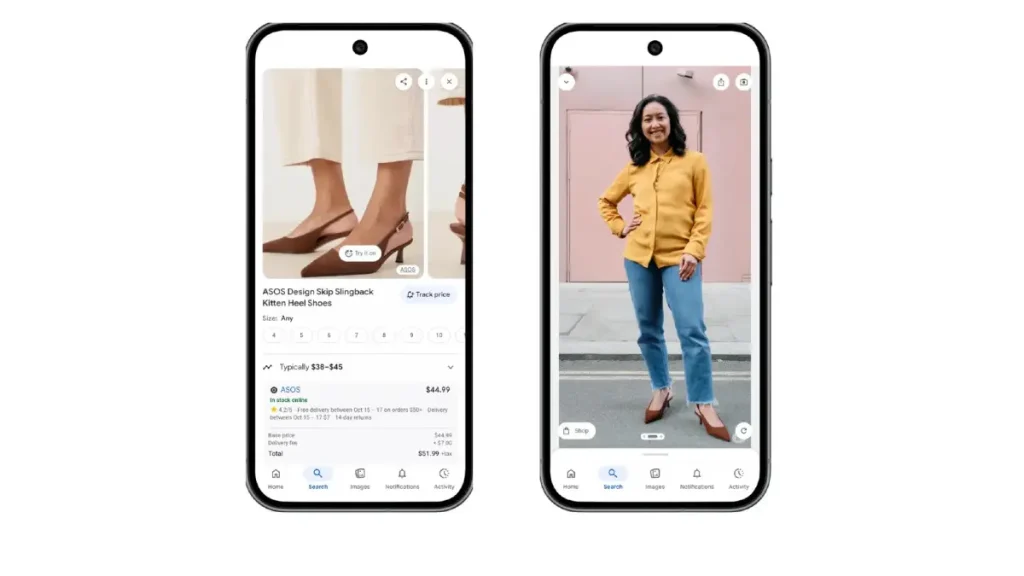
Google has announced that it is bringing a feature to Google Shopping that allows you to virtually try on any shoe you like with the help of artificial intelligence.

As one of the leading firms in AI, Google has been integrating this technology into the shopping experience. We previously saw them introduce a feature that allows you to virtually try on clothing. Now, the company has announced a similar feature coming for shoes.

This feature, available through Google Shopping, will allow you to “try on” any sneakers, heels, slippers, or sandals you see online. This way, you can get an idea of how the item will look before you purchase it.

Try On Any Shoe You Want

It’s important to note that you won’t need to send Google a photograph that only includes your feet to use the feature. Instead, similar to the virtual clothing try-on feature, you just need to upload an image showing your entire body. Google’s artificial intelligence will then render the shoe you like, adjusting it to your body to show you how it will look.

Looking at the shared examples, we can see that it can display various types of shoes on the user. Even more intriguingly, the feature is reportedly capable of letting you try on shoes where your toes are visible. The AI can generate toenails for the user based on the shoe type. This specific capability was introduced in the Doppl application but will also be available here.

This new feature is set to remove a major barrier to online shoe shopping. Do you think this will significantly change how people buy footwear?

You Might Also Like;

Follow us on TWITTER (X) and be instantly informed about the latest developments…

Copy URL


Source link

Market Cycles, Emerging Trends, And Evolving Strategies: Experts Discuss The Future Of Crypto Exchanges At Hack Seasons Singapore

0
Market Cycles, Emerging Trends, And Evolving Strategies: Experts Discuss The Future Of Crypto Exchanges At Hack Seasons Singapore


In Brief

At Hack Seasons Singapore, industry leaders discussed how exchanges are evolving into all-in-one platforms, the growing role of stablecoins, DeFi, and AI, and the need for sustainable business models to drive mainstream crypto adoption.

Market Cycles, Emerging Trends, And Evolving Strategies: Experts Discuss The Future Of Crypto Exchanges At Hack Seasons Singapore

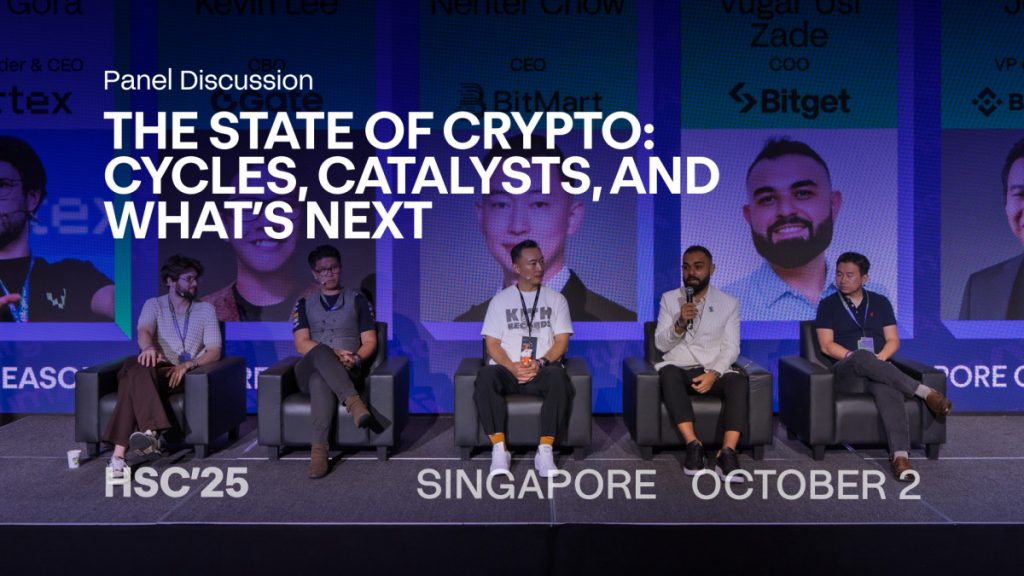
At the start of October, the Hack Seasons Conference in Singapore brought together prominent figures from the digital asset sector to discuss the current landscape and future direction of the industry. The session, titled “The State of Crypto: Cycles, Catalysts, and What’s Next,” was moderated by Gleb Gora, Co-Founder and CEO of Vortex. The main stage panel included representatives from major cryptocurrency exchanges, featuring Kevin Lee, Chief Business Officer at Gate, Nether Chow, Chief Executive Officer of BitMart, Vugar Usi Zade, Chief Operating Officer of Bitget, and Jeff Li, Vice President of Product at Binance.

The discussion opened with an examination of the key narratives and trends shaping the current market cycle and what major exchanges are focusing on. One speaker noted that exchanges have evolved beyond their traditional role, with many platforms now launching additional products such as Layer 2 solutions, perpetual decentralized exchanges (DEXs), and stablecoins. This expansion is driven by the goal of keeping users within a single ecosystem, particularly as DEXs continue to capture market share. Centralized exchanges (CEXs) are responding by broadening their scope and functionality.

Panelists agreed that modern exchanges must function as all-in-one platforms, capable of serving users across different segments of the market. As user behavior diversifies, exchanges are adapting to meet a wider range of needs, offering both trading and non-trading financial services under one roof.

In addition to expanding their service offerings, exchanges are also positioning themselves as payment gateways—what some described as the “crypto version of Stripe.” Facilitating everyday spending was identified as one of the most significant narratives driving growth, as this area presents the greatest potential for onboarding the next billion users. The integration of payment functionality supports the broader vision of enabling “life on-chain,” reflecting a shift where being on-chain becomes as natural as being online.

Speakers also highlighted emerging trends such as the accelerating participation of institutional investors, which could help stabilize market volatility. Other key developments include the growth of stablecoins and real-world assets (RWA), as well as the intersection of artificial intelligence (AI) and blockchain technology. The convergence of AI and crypto was identified as a major transformative force likely to define the next four to five years. Additionally, decentralized finance (DeFi) and the rise of perpetual DEXs were recognized as crucial components in shaping the next stage of technological evolution.

The discussion then turned to whether retail investors are moving toward decentralized products or if exchanges can attract users back through improved DeFi integrations. Panelists observed that retail users tend to pursue the next major opportunity, often seeking fast-paced investment options, early trading access, and high leverage. Providing fair, accessible platforms that meet these expectations was described as essential to sustaining engagement.

The conversation emphasized the momentum-driven nature of the cryptocurrency industry, contrasting the speculative tendencies of retail investors with the more strategic approach of institutions. Understanding where demand originates was seen as crucial, as attracting retail users often depends on offering opportunities for high returns.

For over a decade, cryptocurrency has been marketed around the promise of exponential gains—10x, 20x, or even 100x returns—creating an ingrained expectation among retail participants. This mindset persists even during bear markets, where interest often shifts toward memecoins or other high-risk assets. While tokenized stocks and perpetual DEXs reflect similar speculative behavior, panelists noted that the industry must also focus on building tools that serve broader, more sustainable purposes.

Institutional investors, on the other hand, now enter the market primarily for diversification and hedging rather than rapid profit. This marks a clear divergence in mindset between retail and institutional participants. Beyond market decoupling—such as Bitcoin’s performance relative to traditional assets—there is also a growing divide in investor behavior and objectives. The panel agreed that future development should focus on creating solutions that address the differing needs of both groups.

Speakers concluded by noting that as banks, exchange-traded funds (ETFs), and traditional financial institutions expand their involvement in digital assets, competition will intensify not only for user attention but also for customer capital. In this landscape, trust, functionality, and the ability to empower users within a comprehensive ecosystem will determine where individuals choose to hold and manage their funds.

Emerging Funding Models In Crypto: Tokens, Transparency, And The Role Of VCs

The panel also explored whether there could be alternatives to traditional venture capital (VC) funding in the current cycle and what new catalysts might drive capital inflows for emerging projects.

Speakers observed that launching proprietary tokens has become increasingly common as a funding mechanism. This approach provides projects with more options beyond traditional equity financing. While VCs continue to invest in equity, the rise of fair-launch platforms and token launchpads allows projects to raise capital directly from the market. These new avenues were described as offering broader opportunities than many other sectors currently provide.

Panelists noted that the current market is characterized by an oversupply of crypto-focused venture capital firms, many of which may not endure through future cycles. The absence of significant barriers to token creation means that new tokens can be launched easily and frequently. However, limited natural demand among retail investors often prevents these tokens from sustaining long-term value. The discussion highlighted growing expectations that the next wave of projects will prioritize sustainable business models over purely speculative tokenomics. As a result, greater transparency and sound economic design are becoming increasingly important.

Other speakers emphasized that, despite these shifts, the industry still relies heavily on venture capital. Early-stage projects tend to perform better when supported by experienced investors who can provide strategic guidance in addition to funding. In traditional Web2 markets, VC involvement was viewed as a form of validation, as investors typically conducted due diligence before committing capital. In the Web3 environment, this dynamic has evolved, with many venture firms operating with more flexible and liquid funding models. However, the panel noted that an increasing number of VC firms now function largely as brand names without offering substantive support, which remains one of the key challenges for sustainable growth in the sector.

Disclaimer

In line with the Trust Project guidelines, please note that the information provided on this page is not intended to be and should not be interpreted as legal, tax, investment, financial, or any other form of advice. It is important to only invest what you can afford to lose and to seek independent financial advice if you have any doubts. For further information, we suggest referring to the terms and conditions as well as the help and support pages provided by the issuer or advertiser. MetaversePost is committed to accurate, unbiased reporting, but market conditions are subject to change without notice.

About The Author


Alisa, a dedicated journalist at the MPost, specializes in cryptocurrency, zero-knowledge proofs, investments, and the expansive realm of Web3. With a keen eye for emerging trends and technologies, she delivers comprehensive coverage to inform and engage readers in the ever-evolving landscape of digital finance.

More articles


Alisa, a dedicated journalist at the MPost, specializes in cryptocurrency, zero-knowledge proofs, investments, and the expansive realm of Web3. With a keen eye for emerging trends and technologies, she delivers comprehensive coverage to inform and engage readers in the ever-evolving landscape of digital finance.


More articles


Source link

The Role of NFTs in Social and Multiplayer Dynamics in Crypto Games | NFT News Today

0
The Role of NFTs in Social and Multiplayer Dynamics in Crypto Games | NFT News Today


NFTs are no longer just about ownership. In blockchain games, they are starting to impact the way that players interact with one another, particularly in multiplayer games. These changes are not just of skins or badges. 

Now, players can use NFTs to create teams, manage assets across accounts, or create advances in shared online worlds. This use of digital tokens is beginning to set the way in which some communities create their in-game identity.

Broader Reach of NFT Features in Crypto-Based Games

NFTs are now used in more than just RPGs or open-world builders. While most NFT titles are still focused on long-term character growth or land systems, there has been slow adoption in niche crypto games, including those in the casino sector. 

Many still focus on exploration or long-term upgrades, but faster formats like crash games have built a strong base of active users. These games are built for short sessions and quick results. Popular titles such as Spaceman and JetX are played across a number of crypto-first platforms, often tied to token systems or live multiplayer elements.

Some of these platforms, including sites that offer the hugely popular Aviator game, are starting to test NFT-linked tools. These are not full asset systems like in RPGs, but small features that track long-term use or user status. 

In some cases, NFTs are used to unlock profile badges or record high outcomes. A few platforms have added custom NFTs that act as access passes or show past results, but these are still limited in scope.

Cross-Game Items Are Starting to Connect Communities

Some platforms now link NFTs across multiple titles. This works best for chains like Ethereum or Arbitrum, where smart contracts can help create different games within the same network. This enables players to use the same NFT in multiple locations, which can help to retain users within the same ecosystem for an extended period of time.

TreasureDAO is one example. It has a number of games with the same token system. NFTs gained in one game may be used to gain access to another. That changes how users behave. They don’t consider each title to be a separate story. Instead, it is a single lengthy audio of value and progress. This is good for players who like having a reason to come back, but it also ensures that a developer has a stable user base. 

NFT projects are even used in third-party games. They no longer exist in a single world. Owners can lend them out for use by other players. That is more flexible for multiplayer setups and opens up new ways of working together. 

Social Gameplay Built Around Tokens

In several blockchain games, players don’t just own NFTs, they use them to access events or join player-run systems. This adds new reasons for users to cooperate. Some NFTs give special access, while others carry performance stats. 

These stats might decide team rank, entry into challenges, or roles inside a group. This turns the NFT from a static item into something tied to player activity. Guild of Guardians uses a party-based format where users create teams from collectible characters. The NFTs have specific skills that affect how each team performs. 

In Illuvium, players can capture, upgrade, and sell creatures, which also have use in battles. The value of these NFTs depends on how they’re used, not just how rare they are. Multiplayer choices in these games revolve around what users hold and how they want to trade or deploy it.

What Could Happen Next

The next phase for NFT-based multiplayer games won’t be about fancy assets or rare drops. It will be about making those assets useful within group systems. Games that facilitate shared ownership, team mechanics, or cross-title identity are in a better place to hold players. That’s where the overwhelming bulk of the new work is being done. 

World of Dypians and Lumiterra are two current examples. Both allow players to earn and use NFTs in ways that affect group play. Whether that means holding territory, farming or trading, users act in teams. These games are a glimpse into how multiplayer formats will embrace NFTs, not just as a style choice, but as a means of influencing the way groups play and strategize.

Main Image Source: Pixabay


Source link

NFT Gaming in 2025: The Complete Guide to Blockchain Games | NFT News Today

0
NFT Gaming in 2025: The Complete Guide to Blockchain Games | NFT News Today


In 2025, NFT gaming has matured from hype to infrastructure. Games are no longer experimental Web3 curiosities; they’re functioning ecosystems where players truly own digital assets, trade them across platforms, and even earn from creativity. I’ve followed this evolution closely, and this guide unpacks how it all works from embedded wallets and modular blockchains to the best NFT games and marketplaces shaping the future.

Key Takeaways

NFT games now merge blockchain ownership with AAA-quality gameplay.

Embedded wallets simplify onboarding and make crypto invisible to users.

Modular blockchains deliver scalability and cross-chain interoperability.

NFT marketplaces function as trading hubs, launchpads, and social networks.

Play-to-earn has evolved into sustainable play-and-own economies that prioritize player enjoyment and long-term value.

What Is NFT Gaming and Why It Matters in 2025

NFT gaming uses non-fungible tokens (NFTs) to give players verifiable ownership of digital assets inside video games. These tokens can represent characters, land, weapons, or even achievements — all recorded on a public blockchain. Because these assets live in your wallet, they’re transferable between games, sellable on open markets, and resistant to centralized control.

Unlike traditional gaming, where your in-game purchases disappear when a server shuts down, NFT games treat every item as a true digital collectible. Standards such as ERC-721 and ERC-1155 on Ethereum — and Metaplex’s SFTs on Solana — provide the backbone for item uniqueness, durability, and upgrades.

The appeal isn’t just ownership; it’s participation. Players can trade, earn, or even rent NFTs in decentralized ecosystems, while developers gain ongoing royalties from secondary sales — creating a more balanced digital economy.

According to ReportLinker’s “Blockchain Gaming Market Forecast,” the global NFT gaming sector is on track to hit $65.7 billion by 2027, growing at an annual rate above 70%. The Asia-Pacific region leads in player count, while North America drives studio investment.

How Do NFT Games Work?

NFT games blend traditional game loops with blockchain technology. Here’s how the process unfolds:

Asset Creation: Developers mint digital items — skins, avatars, weapons — as NFTs governed by smart contracts.

Gameplay Integration: Each NFT has in-game value or ability; players earn or use them during play.

Ownership Proof: Every trade or upgrade is recorded on-chain for transparency.

Market Dynamics: Players can trade or rent NFTs through integrated marketplaces or external platforms.

Earning Potential: Rewards may include native tokens, NFTs, or yield from staking and rentals.

This model builds player-driven economies. Smart contracts guarantee scarcity, fair drops, and automatic royalty distribution. Many games also introduce token-bound accounts (ERC-6551) — NFTs that can own other NFTs — unlocking new forms of composable gameplay.

Example:In Illuvium, creatures captured in the game are on-chain NFTs. Players can trade them freely, while rarity and battle stats directly impact market value. In Big Time, cosmetic NFTs represent gear or weapons that can be upgraded and sold, driving community-led economies.

How Is NFT Gaming Different from Traditional Gaming?

Ownership

Developer-controlled

Player-controlled, wallet-based

Economy

Closed ecosystems

Open markets with P2P trading

Interoperability

Rare

Cross-game compatible items

Governance

Centralized

DAO-based voting and token input

Longevity

Tied to servers

Assets persist beyond games

The biggest philosophical shift is control. Traditional studios sell virtual goods but keep ownership. NFT games flip that model — players hold the assets, developers earn through transaction fees and royalties.

This decentralized dynamic aligns incentives: developers benefit from a thriving secondary economy, while players retain real-world value.

History of NFT Gaming (2017–2025): How Has NFT Gaming Evolved?

2017–2018: CryptoKitties and the Birth of Digital OwnershipCryptoKitties introduced collectible, breedable NFTs on Ethereum — the first proof that people value digital scarcity.

2019–2020: Foundation PhaseAxie Infinity and Gods Unchained extended the model to competitive gameplay and play-to-earn mechanics. Enjin launched the ERC-1155 standard, making NFTs more efficient.

2021: GameFi ExplosionThe play-to-earn boom reached millions of users, especially in Southeast Asia. Axie Infinity generated over $4 billion in total trading volume.

2022–2023: Reset and RefinementA market correction forced teams to focus on utility and fun. Dynamic NFTs and improved tokenomics began to replace unsustainable reward systems.

2024–2025: Maturity and InfrastructureLayer-2 rollups, modular blockchains, and AI integration deliver smoother gameplay and better economies. NFT gaming now resembles a full-fledged sector of the global gaming industry.

The NFT Gaming Ecosystem in 2025

The ecosystem spans blockchains, tools, wallets, marketplaces, and launchers, all working together to create accessible, high-performance environments.

Dominant Chains

Ethereum + L2s (Arbitrum, Immutable, zkSync): Security and liquidity.

Solana: Low latency and strong developer adoption.

Immutable X: Gas-free NFT minting for games.

Ronin: Purpose-built for Axie Infinity.

Polygon & Avalanche: Popular for mobile and casual NFT titles.

Key Infrastructure Layers

Launchers: Elixir Games, Ultra.io, Gala Games, Epic Web3 Titles.

Marketplaces: OpenSea, Magic Eden, Immutable Marketplace.

Wallets: Phantom, Coinbase Smart Wallet, Magic.link.

Interoperability frameworks such as LayerZero, Axelar, and Particle Network now connect these blockchains, allowing NFT assets to travel between ecosystems without bridges or swaps.

How Do Embedded Wallets Simplify NFT Onboarding?

The biggest friction point in Web3 gaming used to be wallets. Seed phrases, gas fees, and clunky extensions discouraged new players. Embedded wallets have changed that entirely.

What They AreAn embedded wallet is a crypto wallet integrated directly into a game or platform, often created automatically during signup. Players can log in using Google, Apple, or email credentials — while the system manages key custody securely behind the scenes.

Why They Matter

Zero setup friction for new users.

Seamless onboarding into blockchain games.

Fiat on-ramps for credit card purchases.

Cross-device sync between mobile, PC, and console.

Leading Solutions:Privy, Magic.link, and Coinbase Smart Wallet dominate this category. Many developers integrate them via SDKs to reduce drop-off rates. In my tests, they cut onboarding time from five minutes to less than thirty seconds — a game changer for mass adoption.

Impact on NFT Gaming:Embedded wallets make crypto invisible. Players focus on gameplay, while blockchain runs silently in the background — exactly how it should be for mainstream success.

What Are the Best NFT Marketplaces for Gamers in 2025?

NFT marketplaces have evolved into full-fledged gaming platforms, complete with analytics, social features, and integrated liquidity.

1. Immutable Marketplace

Native to Immutable X, used by Gods Unchained and Guild of Guardians.

Gas-free trading and instant settlement.

Developer royalties automatically enforced via smart contracts.

2. Magic Eden

Multi-chain (Solana, Polygon, Ethereum, Bitcoin).

Launchpad for game assets and collections.

Offers cross-chain analytics and rarity tracking.

3. Ultra.io

Combines game launcher, store, and NFT marketplace.

Lets players buy, sell, and even resell full games as NFTs.

4. OpenSea

Expert Note:Gamers should look for marketplaces with verified contracts, game-specific filters, and fiat support. A transparent marketplace doesn’t just facilitate trading — it builds community trust and protects against scams.

How Do Modular Blockchains Scale NFT Infrastructure?

Modular architecture is the biggest infrastructure upgrade since Ethereum itself. Instead of a single chain handling everything, modular blockchains split responsibilities into separate layers:

Execution Layer: Processes game transactions.

Data Availability Layer: Stores proofs for scalability.

Consensus Layer: Ensures network security.

Key Projects

Celestia: Pioneered the data-availability layer used by custom gaming rollups.

Saga: Allows game developers to deploy independent chainlets.

Movement Labs: Focuses on modular frameworks for composable NFTs.

Polygon CDK: Provides zkEVM-based toolkits for studios launching their own chains.

Why It MattersThis architecture lets each game scale independently without congesting the main network. Developers can control costs, security, and performance while maintaining interoperability.

For NFT gaming, modularity solves the two biggest bottlenecks: speed and cost. It means 100,000 on-chain actions per second are now realistic for fast-paced games — something impossible in early blockchain eras

What Are the Top NFT Games to Play in 2025?

Axie Infinity

Ronin/Ethereum

Strategy

Rebuilt economy, guild-driven meta, 2M+ daily users

Illuvium

Ethereum

RPG / Auto-Battler

AAA visuals, DeFi staking, cross-title ecosystem

The Sandbox

Ethereum

Metaverse

UGC economy, virtual land, major brand collaborations

Decentraland

Ethereum

Virtual World

Real estate NFTs, live concerts, social events

Gods Unchained

Immutable X

Card Battler

Gas-free cards, competitive esports scene

Rising Stars:

MapleStory N — Web3 version of the beloved MMORPG.

Off the Grid — AAA FPS with NFT cosmetics on Avalanche.

Big Time — Co-op adventure with limited-edition NFT drops.

These titles combine fun-first gameplay with Web3 mechanics, proving that NFT gaming can rival traditional studios in polish and depth.

Can You Make Money from NFT Games?

Yes, but not everyone will. The profit potential depends on the game’s design, your skill, and market timing.

Earning Streams

Play Rewards: Completing missions or tournaments.

Trading: Flipping rare NFTs on open markets.

Breeding/Upgrading: Creating higher-value items.

Renting: Leasing NFTs via DAOs like Yield Guild Games.

Staking: Locking NFTs for passive rewards.

Reality Check:Earnings fluctuate with token prices and player demand. The shift toward play-and-own models reduces speculation but still allows financial upside for skilled players and creators.

How Is NFT Gaming Changing Game Development?

NFT gaming reshapes how developers think about value and participation.

Smart Contracts: Automate royalties and player rewards.

Interoperability: Shared standards enable cross-game assets.

Creator Economies: Players build and monetize content.

Decentralized Governance: DAOs let players vote on updates.

Hybrid Monetization: Games mix traditional microtransactions with NFT royalties.

Studios like Shrapnel and Illuvium Labs now operate like live economies — part game, part decentralized platform. It’s a complete rethink of game publishing.

Global Adoption Trends

NFT gaming adoption is most intense in Southeast Asia, Brazil, and Africa, where mobile access and lower barriers create natural demand for play-and-earn systems. In Western markets, growth comes from integration with mainstream studios and esports communities.

Stat Insight:Footprint Analytics shows that NFT games with transferable assets see 50% higher player retention than Web2 equivalents — proof that ownership drives loyalty.

What Are the Biggest Challenges and Future Trends in NFT Gaming (2025–2030)?

Ongoing Challenges

Token inflation and unsustainable reward systems.

Legal gray zones around NFT taxation and securities law.

Environmental and energy debates (mostly solved via Proof-of-Stake).

Smart contract exploits and phishing scams.

UX education for mainstream users.

Future Trends

AI-Powered NFTs: Dynamic companions that learn and evolve.

Cross-Chain Economies: Seamless item movement across blockchains.

Console Integration: Major consoles expected to enable Web3 features by 2027.

Move-to-Earn Models: Linking fitness data with digital assets.

Regulatory Clarity: Governments establishing frameworks for digital ownership.

By 2030, analysts project the NFT gaming market could exceed $1 trillion, driven by interoperability, embedded wallets, and player-owned economies.

Case Studies: Real Examples of Progress

1. TCG Economy Reset (Immutable X)A trading card game introduced crafting sinks and seasonal resets. Token emissions dropped 60%, and active users increased by 40%. Balanced tokenomics saved the ecosystem.

2. Creator-Led Metaverse (Sandbox)By rewarding verified builders with on-chain royalties, The Sandboxdoubled user-generated content submissions and boosted daily engagement.

3. Mobile Onboarding Success (Polygon Games)Mobile titles using embedded wallets saw a 70% drop in user churn, proving that invisible blockchain UX converts casual gamers into on-chain players.

What is the future of NFT gaming

As we move toward 2030, NFT gaming will likely shape how digital property works across entertainment, social media, and even education. The next generation of players won’t just consume games — they’ll co-own them, govern them, and profit from the creativity they bring to the table.

The technology isn’t perfect yet. Scalability, regulation, and user trust still need refinement. But the direction is clear: blockchain gaming has permanently changed how value flows in interactive worlds.

For players, it means genuine freedom. For developers, it’s a new creative and economic canvas. And for the gaming industry, it’s the first true step toward the open digital economies we’ve been talking about for years.

Frequently Asked Questions

Here are some frequently asked questions about this topic:

What are the best free NFT games for beginners?

Start with free-to-play titles like Gods Unchained or Big Time that offer starter items without crypto investment.

Do I need crypto to play?

No. Embedded wallets let you log in with email or social accounts and use fiat for purchases.

Are NFT games legal?

Yes, though tokenized earnings can fall under financial regulations in some regions.

How do I secure my NFT assets?

Use hardware wallets for valuables, avoid signing unknown transactions, and separate play wallets from cold storage.

Can I earn steady income from NFT games?

Some players earn regularly, but most treat it as entertainment with potential upside. Sustainable games reward skill and time — not speculation.


Source link

Popular Posts

My Favorites