Couture

Home Couture Page 36

Chanel or Celine: Which is Better & Why | Honest Review

0
Chanel or Celine: Which is Better & Why | Honest Review


September 18, 2025


When it is about fancy clothes, not many brands have as much fame and sway as Chanel and Celine. These two French style giants show two really different takes on fashion, grace, and new classiness. But for fans of clothing and rich buyers, one question keeps coming up: Chanel or Celine, which is better? 

Picking between the two is not an easy job. Chanel, started by the famous Coco Chanel, shows timeless French grace, classic womanhood, and unmatched history. With its well-known quilted bags, tweed coats, and special double-C sign, Chanel is linked with style and rank. On a different hand, Celine, especially under Phoebe Philo and now Hedi Slimane has changed modern luxury with its simple designs, clean shapes and easy chic look. Unlike Chanel which does well on bold fame Celine stands for quiet luxury, drawing in those who like simple elegance without bright brands. 

In this true and clear review, we will look at Chanel and Celine on things like history, looks, bags, costs, making quality, star impact, and worth as an investment. By the end you’ll know which brand fits best with your style, needs, budget and way of life and close the talk on “Chanel or Celine: which is good”. 

1. Brand Heritage: Timeless Legacy vs. Modern Evolution
Brand Heritage

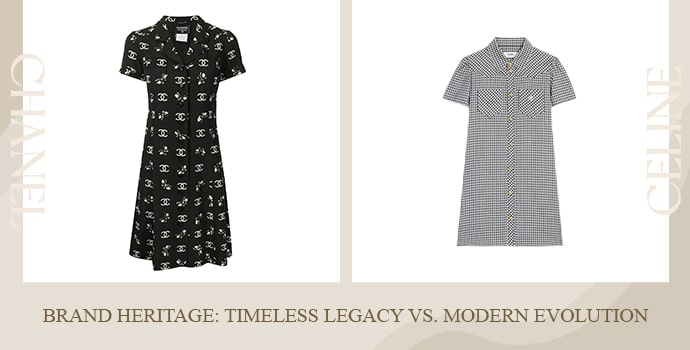
Chanel was started in 1910 by the well-known Gabrielle “Coco” Chanel who brought a new look for women by mixing comfort, style, and charm. Chanel’s name is linked to the Chanel No. 5 perfume; it has changed from tweed coat to quilted bag and made such a mark on the world of fashion that you can’t think about it without Coco’s work. Since Gabrielle passed away in 1971, Chanel’s head creator has changed to Virginie Viard, who still respects the͏ brand’s strong past but updates parts of old designs in soft ways.

Celine was founded in 1945 by Céline Vipiana as a custom shoemaker for children before evolving into uses for clothing. Through t͏he years, Celine changed a lot — especially with Phoebe Philo, who changed modern simple style and made clothes that talked to strong women. Now, with Hedi Slimane, Celine has gone for a bolder, younger, and rock-like look.

Verdict:

If you like history, forever style, and old Paris charm, Chanel is bestIf you like new, sharp simplicity with a today feel, Celine is in front

2. Design Aesthetics: Classic vs. Minimalistic Edge
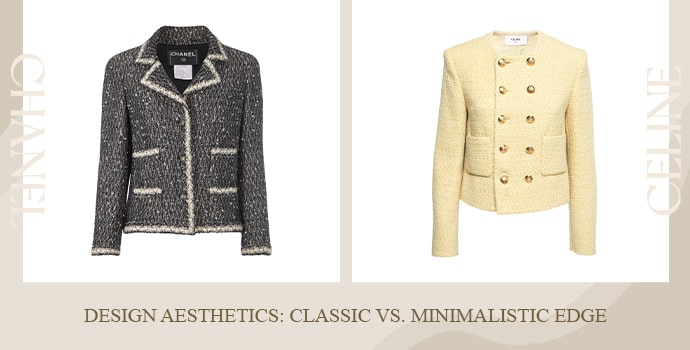
Design Aesthetics

Chanel’s Signature Look

Chanel is the best of Parisian style. The brand’s looks are fancy, womanly, and easy to spot. From the well-known tweed coats to the double-C bag, Chanel always brings luxury with grace. Each group keeps Coco Chanel’s idea: “Fashion goes away but style stays forever”.

Celine’s Signature Look

Celine, mainly in the time of Phoebe Philo, became a world choice for women who liked easy luxury. Known for clean silhouettes, neutral colors, and designs being simple yet stylish, Celine tells scarcely understated sophistry. Slimane brought that rock-chic minimal look with years thinner in cut, energetic in mood, and quite fashion-driven in spirit.

Verdict:

Chanel: Best for timeless, feminine elegance with recognizable brandingCeline: Best for minimalists who love quiet luxury with a modern touch

3. Handbags Showdown: Chanel vs. Celine
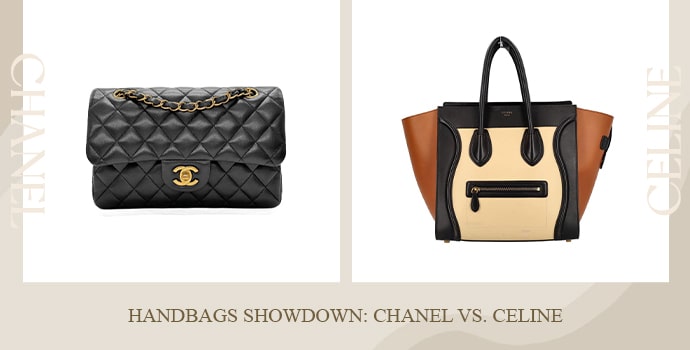
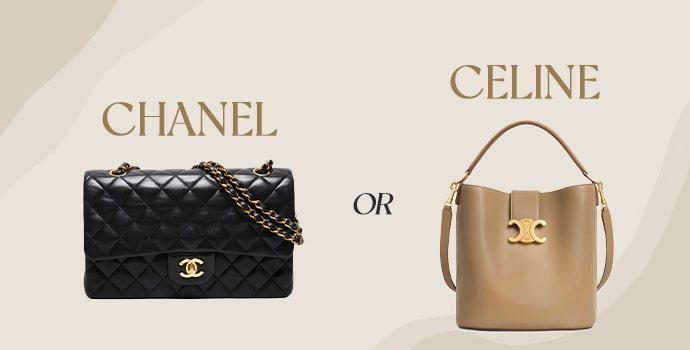
chanel or celine which is better

Usually, in the discussion, “Chanel or Celine: which is better?” handbags are mostly the deciding factor.

Chanel Bags

Icons: Classic Flap Bag, Boy Bag, Chanel 22, Gabrielle HoboAesthetic: Quilted leather, gold chain straps, signature double-C claspsInvestment Value: Exceptional, Chanel bags fetch better resale market value, appreciating over timePrice Range: $5,000 – $12,000+

Celine Bags

Icons: Luggage Tote, Triomphe Bag, Belt Bag, Ava BagAesthetic: Minimal branding with sleek designs and soft neutral tonesInvestment Value: Celine bags indeed retain value but not as well or consistently as ChanelPrice Range: $2,000 – $5,000

Verdict:

In the end, if you’re looking for an investment grade piece giving a luxury experience and status, go for ChanelIf you’re looking for something more minimalistic and versatile for a lower price point, Celine would be the better investment

4. Craftsmanship & Quality
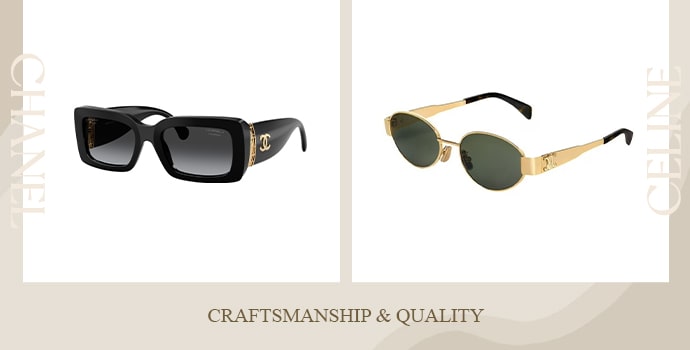
Craftsmanship & Quality

Both companies have a reputation for high quality, but there are differences in the type of material and production.

Chanel Quality

Chanel is known for craftsmanship, exceptional detailing, expensive lambskin and caviar leather, and precision around detailing all provide a bespoke feel. Each bag goes through quality control once completed to make sure the bag is perfect!

Celine Quality

Celine, on the other hand, also displays exceptional construction and riveting creations, but features lambskin, calfskin, soft beautiful suedes, and has more of a structured approach to garment building? While Celine offers a high-quality component, Chanel’s intensity of detailing and heritage craftsmanship makes it appear slightly above.

Verdict:

Chanel had a slight edge on construction and finishing but with that being said Celine is also great!

5. Pricing & Accessibility

Ultimately, in thinking of Chanel and Celine price is certainly a big consideration set from where those brands fit in your price range and lifestyle.

Chanel is very clearly at the expensive end of the luxury spectrum. Most handbag styles, including basic models, start around $5000 and often can go over $12,000 especially for exclusive or limited edition pieces.The ready-to-wear apparel usually starts between $3000 and $10,000. Shoes would carry a price point around $900 – 2000. Even small items would include accessories like wallets, smaller leather goods, costume and fashion jewelry, or belts which start around $500 and are over $1500 as well. Pricing is also reflective of the brand’s prestige, heritage, craftsmanship, and luxury which contributes to an image of exclusivity for a specific consumer able and willing to pay a lot for timeless luxury.

Alternatively, Celine provides a more reasonable entry point into the designer realm. Celine bags can go from $2,000 to $5,000. They are much less costly than Chanel. The clothes you wear from Celine cost between $1,500 and $4,000, and Celine shoes cost from $600 to $1,200. Lastly; the accessories of Celine (belts jewelry and small leather goods) usually start at about $300 with most below a thousand dollars. 

In summary, Celine is the better choice of the two for customers looking for luxury of high quality – without being ultra-premium. By comparison, Chanel is ultimately the best choice for customers willing to spend for prestige, exclusivity, and pieces that will hold their investment value.

6. Celebrity Influence & Popularity

Chanel has been a pick for fancy events for more than a hundred years and is loved by people like Kristen Stewart, Penélope Cruz, Jennie from BLACKPINK, and Margot Robbie. As a dominant global cultural brand, Chanel will always be luxury’s best and final destination.Celine has had a cult-like following from minimalism trendsetters and celebrities alike, from Lisa (BLACKPINK), Kaia Gerber, Hailey Bieber, and Angelina Jolie. The brand reached new heights during Phoebe Philo’s reign and continues to prosper now with Hedi Slimane, particularly among younger buyers.

Verdict:

For a prestige brand with classic red carpet fashion, Chanel is an obvious leaderFor modern edginess reflected in celebrity style, Celine is the better fit

7. Investment Value: Resale & Exclusivity
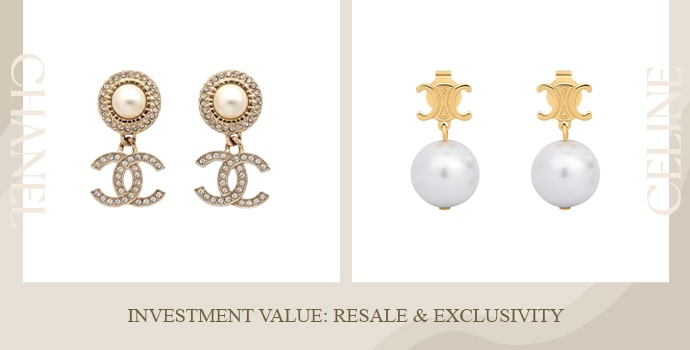
Resale & Exclusivity

One big thing when choosing between Chanel or Celine – which is better, is how much you can sell it for. 

Chanel bags are seen as fancy things. The Classic Flap Bag and Boy Bag are special items that often grow in worth because of Chanel’s yearly price jumps and limited stock.Celine bags also keep worth, mainly old ones like the Luggage Bag and Triomphe but they don’t go up in value as much as Chanel bags at the resale market.

Verdict:

Chanel rules in lasting worth and unique-ness

8. Chanel vs. Celine: Pros & Cons
chanel or celine which is better
Chanel Pros1. Timeless, iconic designs2. High investment value3. Prestigious heritage4. Superior craftsmanship
Chanel Cons1. Extremely expensive2. Limited accessibility due to rising prices
Celine Pros1. Minimalistic, modern aesthetic2. More affordable than Chanel3. Functional, versatile designs4. Growing popularity among younger shoppers
Celine Cons1. Lower resale value2. Less iconic than Chanel

Final Thoughts: Chanel or Celine — Which is Better?

Celine and Chanel are comparably priced, but, in contrast, are at two different spectrums of the fashion world. Both designers are, without a doubt, connected to France’s luxury. However, their target consumers and their lifestyles are completely different.

If you’re a person who loves style that lasts, deep history, and eye-catching items, then Chanel is the best choice. Every Chanel item, be it the Classic Flap Bag or Boy Bag or a tweed coat has an iconic place that goes beyond trends and ages. More than looks; Chanel gives great value for money – its bags often become worth more over time; making them not just fancy buys but things you keep for a long time. Owning a Chanel item is like having part of the fashion past which shows class, charm and specialness. 

If you like simple style, quiet charm, and flexible looks, Celine could be your best pick. With Phoebe Philo and now Hedi Slimane at the helm, Celine has got the knack for soft luxury focusing on neat shapes͏ easy wear; and low-key branding. Their items move easily from day into night making them ideal for a woman who cares about usefulness and modern style not loud logos or old-style designs. 

At the finish, there is no clear reply to “Chanel or Celine: which is best?” – it depends on what connects with your own style and life aims. If you want a sign of status and an always good buy, pick Chanel. But if you like easy, wearable luxury with a new twist, Celine could be your ideal fit. 

Both names say fancy in their own special way, making them famous for very different causes.


Source link

The Diderot effect – healthy or not?

0
The Diderot effect – healthy or not?


The Diderot effect – healthy or not?

Wednesday, September 17th 2025
Share

Subscribe
1 Comment
||- Begin Content -||

By Ian Leslie.

In 1766, when he was 53, the philosopher Denis Diderot came into some money. It was quite a shock. For most of his career, he had worked as a translator and editor, living austerely even as his reputation grew. He had produced his wildly successful – and controversial – Encyclopédie, and been imprisoned by the French state for his free thinking on religion. All of this made him famous but not rich (he was paid a small salary to edit the Encyclopédie and received no royalties).

Unable to provide a dowry for his daughter, he even considered selling his beloved collection of books. When Catherine the Great of Russia, a supporter of Enlightenment ideas, heard about this, she bought Diderot’s library for a handsome sum and let him keep it. She also gave him an annual salary. Suddenly, Diderot had money to spare.

Unsure what to do with it, he decided to buy a new dressing gown. He replaced the shabby black gown he had worn and worked in for years with a truly magnificent scarlet robe. And that’s when his trouble started.

Diderot spent most of his waking hours in his study, which was a ramshackle affair. There was a straw chair, a rickety table piled with books, a ratty old rug, some frameless prints stuck to the wall. Sitting there in his fine scarlet gown, Diderot felt uncomfortable. The old gown had been of a piece with his study and with him. He used it to dust his books and clean his nibs. The new gown felt out of place in surroundings which struck him for the first time as worn and cheap.

So he started buying things in order to make his new gown less incongruous. He bought a sumptuous new rug from Damascus. He replaced his table with a fancy writing desk, his straw chair with a leather armchair. He bought a mirror to put above the mantelpiece, a gold clock, fine paintings. Each new item created a desire for the next. When an old friend and collaborator paid a visit to Diderot’s study, he was astonished at the transformation. It hardly seemed like Diderot at all.

Diderot agreed. He had come to miss his old gown. It wasn’t very nice, but it was his: it was shaped to his needs, and asked nothing of him. The scarlet gown, by contrast, had compelled him to bend his whole world around it, spending much of his new fortune in the process. In a short, witty essay called Regrets On Parting With My Old Dressing Gown, he wrote, “I was absolute master of my old dressing gown, but I have become a slave to my new one.

In 1986, an anthropologist of consumerism called Grant McCracken coined “the Diderot effect”: when the purchase of a product leads to a spiral of consumption, as each new item makes the consumer feel they need another in order to complete the set. You treat yourself to a luxury watch for the first time. Now you need the right shoes to go with it, and the right bag. So on until the money runs out, completion somehow never arriving.

Accounts of the Diderot Effect often take the form of little sermons on how we shouldn’t let consumer desires overwhelm us. In a 1992 book called The Overspent American, the sociologist Juliet Schor used the concept to attack competitive, status-driven consumption. James Clear, in his wildly popular self-help book Atomic Habits, uses the Diderot Effect as a prelude to advice on avoiding the trap of “wanting things you don’t need”.

This is sensible enough, in a world where people can run up unmanageable debts on credit cards. It’s also, of course, how Diderot framed his experience. He talked almost as if he had been seized by an evil spirit; possessed by his possessions. I can’t help but observe, however, that he ended up with a much nicer study. He wrote that essay on a comfortable chair in a tastefully furnished room full of lovely things. Was that really something to feel bad about? As Kingsley Amis put it, nice things are nicer than nasty ones. Diderot was famously atheist, but there is a hint of Catholic guilt in his self-flagellation.

In his 1986 essay, McCracken also introduced the idea of a “Diderot unity”: a group of objects considered culturally complementary to one another, like the ones in Diderot’s transformed study. Luxury fashion is an obvious example. Brands like Ralph Lauren are Diderot unities unto themselves, creating whole worlds in which one’s choice of shirt and sport and holiday all complement each other.

A Diderot unity might also be something like “modern healthy living”, requiring the purchase of a smartwatch, a Peloton, yards of branded Lycra. We might seek consistency among objects but what’s really at stake here is consistency of identity. What kind of person am I – this kind or that kind?

In a recent paper in Psychology and Marketing, a group of researchers led by Sujin Song of Korea University looked at the Diderot Effect in the context of the body and self. They interviewed ten South Korean women who had undergone cosmetic surgery. They found that the surgery triggered a cascade of purchases, as the women sought a new set of possessions and experiences consistent with what the researchers call, with a nod to Diderot’s magnificent gown, their “new magnificent self.”

In a break with convention, the authors of this paper do not present their subjects as tragic victims of capitalism, and when you read verbatim quotes from the interviews, you see why. This is Sharon (pseudonym):

“After the surgery, I can buy any clothes I want regardless of the brand…I wasn’t confident in my looks and didn’t buy them because the clothes celebrities wore didn’t suit me well. I don’t have to worry about that anymore. I buy what I want to wear because I look beautiful…My personality and self has changed too. As I become more confident in my appearance, I feel no burden to meet someone new.”

Sharon does not sound like a woman regretting her choices! She isn’t being driven to buy things out of status anxiety, so much as exploring newfound possibilities. Here’s Trisha:

“I swam more after surgery, and even went abroad more. I think the surgery affected everything. That season I was more confident. You know in Korea, it is not easy for a woman to travel abroad alone, but it made me stronger and more confident about myself, so I tried everything I wanted to do.”

Of course, we know plastic surgery doesn’t always go well. People who have it can get stuck into a spiral of further surgeries, with unfortunate results. Maybe the women in the study got caught in a vicious cycle of purchases later on and came to regret it all, who knows. But we should allow for the possibility that their initial “purchase’“ opened the door to a whole new Diderot unity, and a whole new version of themselves, and that they were happier as a result.

Consumerism gets a bad rap. The consensus among intellectuals is that it’s a way of getting people to buy things they don’t need, by playing on their anxieties. There is undoubtedly truth in that, but it’s also true that material things can bring delight, satisfaction, and yes, happiness.

The British sociologist Colin Campbell is one of the few academics to take those effects seriously. In The Romantic Ethic and the Spirit of Modern Consumerism he argued that when a consumer buys a dress, she isn’t just buying the dress; she’s buying permission to imagine a new version of herself.

He gives her agency, presenting the purchase as an act of creativity. In Campbell’s phrase, the consumer is a ‘dream artist’ who knowingly weaves illusions around objects of desire. The dressing gown or watch or pair of trainers is merely an excuse to experience the pleasures of longing, pretending, and self-creating.

The reality of a product is never quite as good as the dream – but then if it was, there would be no reason to dream again. Whether or not we “need” such experiences they make life feel more expansive. They can even, as the Korean women show us, liberate.

Ian Leslie is a reader, a friend and founder of the wonderful The Ruffian on Substack. His latest book is John & Paul: A Love Story in Songs, which I would highly recommend to anyone with even a passing interest in The Beatles. 

<!–

–>


Source link

An Electrifying Start to New York Fashion Week

0
An Electrifying Start to New York Fashion Week


Legacy brands like Calvin Klein, Ralph Lauren and Michael Kors returned to the runway at New York Fashion Week (NYFW) amid the luxury sector’s current economic uncertainty, while emerging voices such as Khaite offered a glimpse into the industry’s evolving future. Once dominant in the 2000s, mid-tier American luxury houses like Calvin Klein and Michael Kors now navigate a saturated market and increased competition, using NYFW to assert their cultural cache. Their houses — once symbolic of a decade, a generation and a design ethos — now leverage the platform of New York Fashion Week to reach a new demographic of luxury consumers who are spoilt for choice. Then, there are newer voices such as Khaite, signaling the industry’s next wave of talent. The season placed equal emphasis on the heritage of established houses and the momentum of rising names redefining American fashion. From streamlined minimalism to dramatic outerwear, Spring/Summer 2026 highlighted the breadth of New York’s design identity, reflecting the industry’s evolving landscape.

Read More: The Power and Relevance of Luxury Fashion Conglomerates

Michael Kors’ Showcase Amid Financial Uncertainty

The luxury fashion sector has been experiencing something of a slowdown in recent years and American fashion brands are particularly exposed. For Spring/Summer 2026, Michael Kors’ runway showcase for New York Fashion Week signified how heritage brands are working to reinforce their relevance amid ongoing restructuring with Capri Holdings. For context, in August 2023, Tapestry — the New York-based parent company of Coach — announced plans for a USD 8.5 billion merger with Capri, the owner of founder-led labels including Jimmy Choo, Michael Kors, and Versace. The FTC (Federal Trade Commission) has since sued to block the deal in April 2024 — which would put six brands, including Michael Kors and Coach under a single company — arguing that the combined companies would monopolise the leather bags and accessories market, inevitably reducing competition and leaving consumers with fewer affordable options.

Read More: Impact of Tapestry and Capri Monopoly on Mid-Luxury Consumers

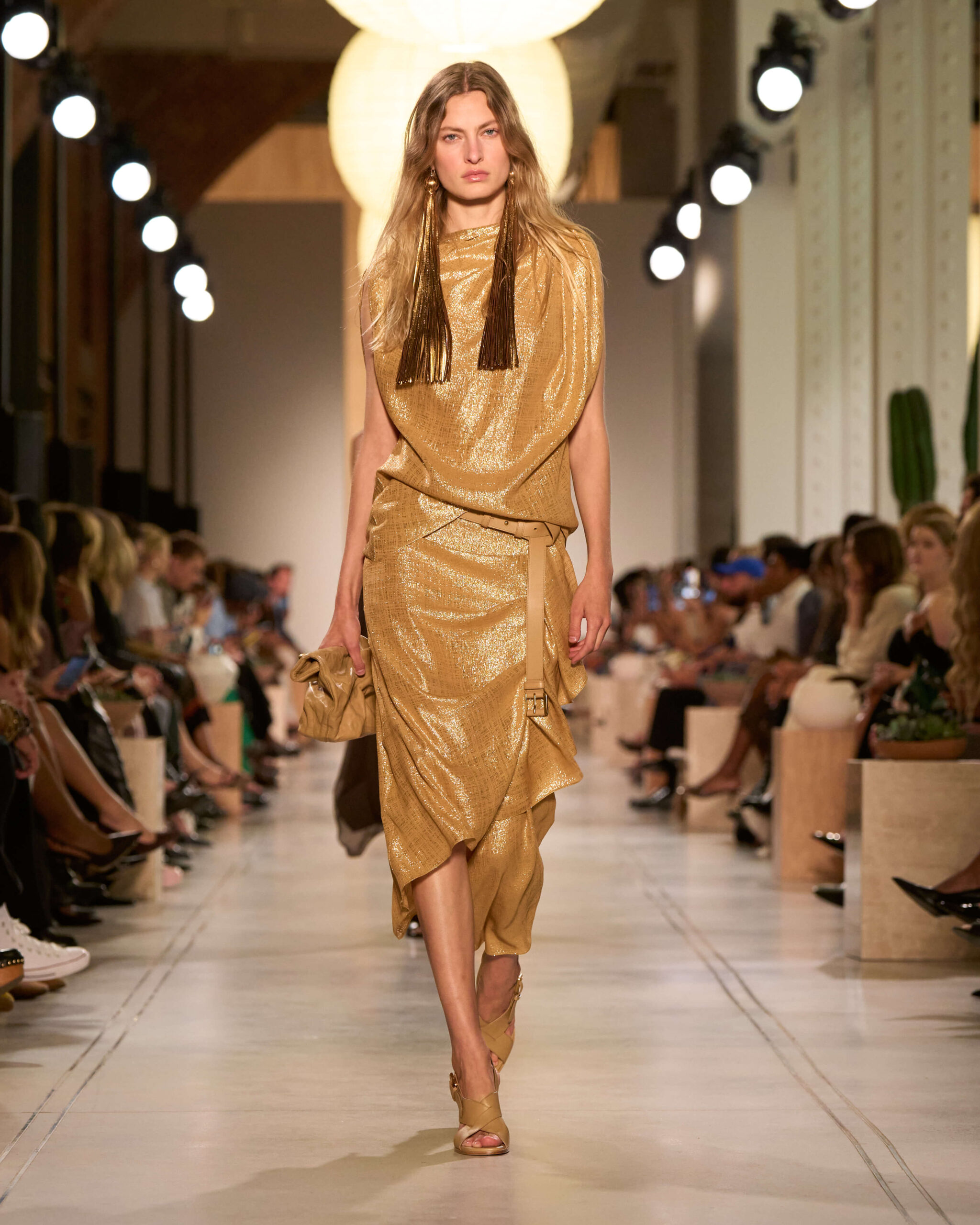
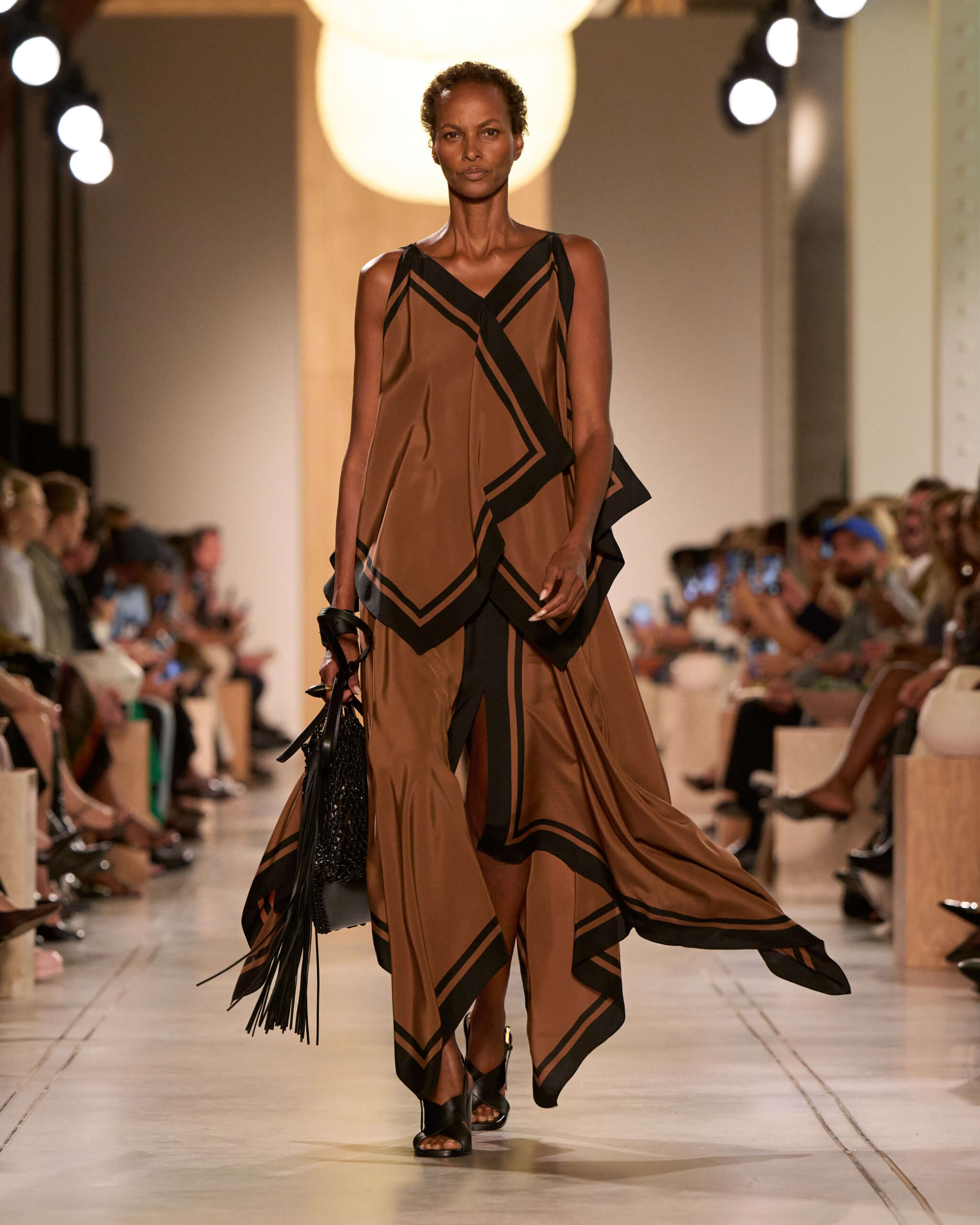
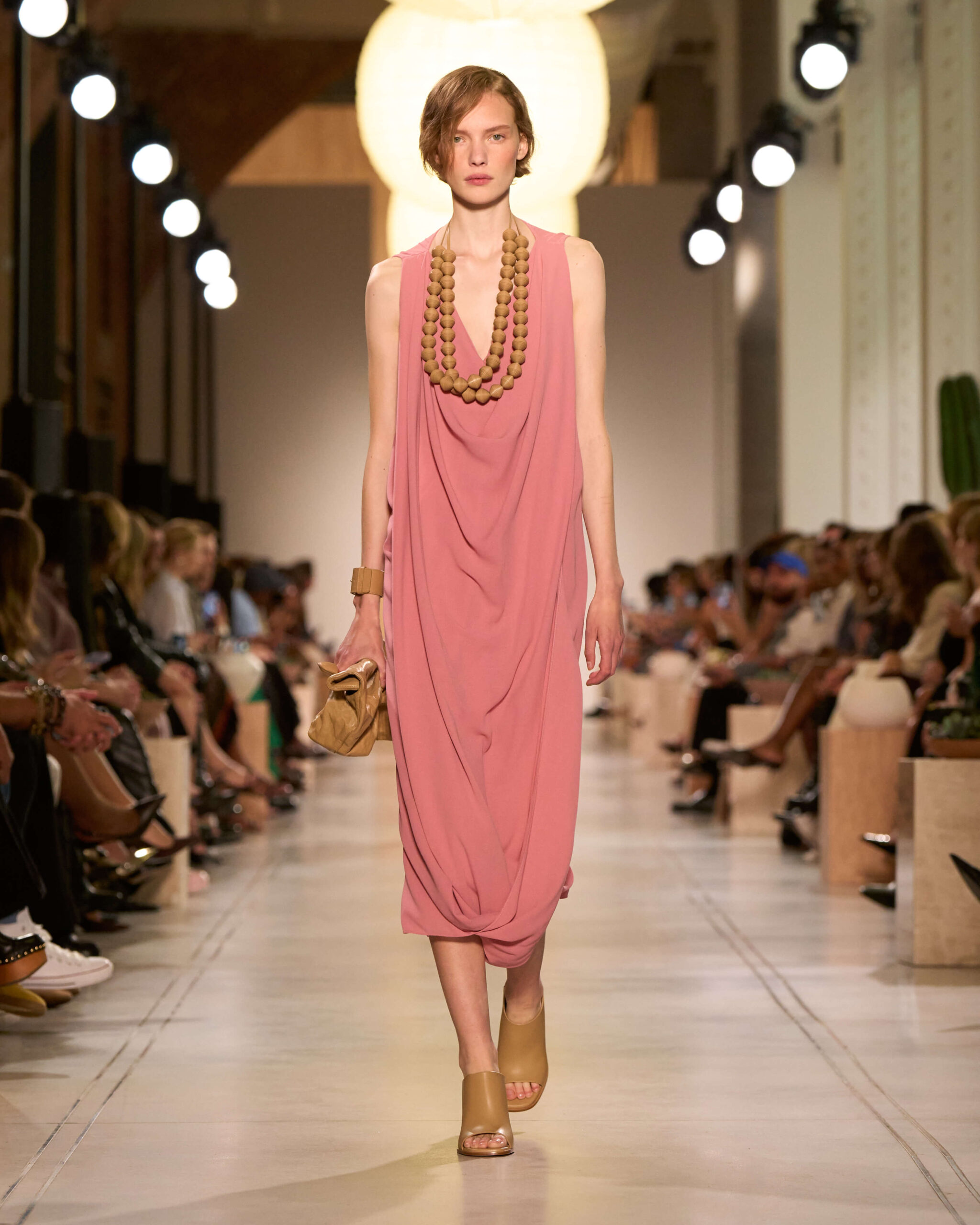
Staged at the Terminal Warehouse in Chelsea against a backdrop of wood panelling, terracotta accents and sculptural cacti that echoed the designer’s own retreat spaces, the collection’s theme of “earthy elegance” was mirrored in the pragmatic yet sensual nature of the pieces. Often in fashion, the word “commercial” is seen as a controversial term, particularly when compared to the daring experimentation of London, the Italian craftsmanship of Milan or the conceptual grandeur of Paris. Yet urban, understated luxury that projected an escapist message of cosmopolitan adventure was exactly what Michael Kors delivered.

The clothes leaned into relaxed sensuality — draped caftans, flowing tunics and airy culottes were crafted to catch the breeze, offset by perforated suede and paillettes veiled in silk voile. A desert-inspired palette of branch, espresso and ecru — layered with soft sunset tones — reinforced the season’s sense of ease and wearability. This is where Michael Kors shines — by creating desirable, wearable pieces that can take the wearer from New York streets to sandy resorts. Accessories carried the same spirit of understated luxury, with oversized clutches, hand-knotted bags and bold leather jewellery finished by Italian artisans.

Read More: Luxury American Company Tapestry to Acquire Capri Holdings in a Bid to Rival European Luxury Conglomerates

The collection reinforced Kors’ ability to balance commercial relevance with aspirational design, showing that despite ongoing financial uncertainty for parent company Capri Holdings, the label remains intent on defending its place within the American luxury landscape. The Michael Kors brand and name in itself has been going through challenges, losing some of the relevance and aspirational appeal that it once held in the 2000s. Therefore, this deliberate move toward ease and naturalism reflects how established American houses are positioning themselves in a climate where consumers are drawn to wearability and brand trust. In contrast to the maximalist spectacle of Europe’s fashion capitals, Kors underscored the enduring commercial appeal of pragmatic glamour.

Calvin Klein Collection’s Return to the Runway

Calvin Klein’s return to the runway under creative director Veronica Leoni marked a pivotal moment for the brand, which has been working to reaffirm its position in the American fashion landscape after years of shifting creative direction and questions over relevance. Known globally for its jeans and underwear business, the luxury-end Calvin Klein Collection line has not always enjoyed the same visibility. With Leoni’s sophomore effort, the Spring 2026 show underscored Leoni’s vision of “clothes for life” rooted in minimalism, intimacy and utility.

Staged at the Brant Foundation in Manhattan, the collection built on house codes while presenting an urban wardrobe that balanced spontaneity with craftsmanship. Everyday pieces like the trench coat, jean jacket and pinafore were reworked through tailoring, textural innovation and unexpected detailing, while the brand’s signature underwear was elevated from a foundational sartorial layer into a design motif, appearing in lace accents, slip-inspired dresses and even woven into a tweed piece with the brand’s famed waistband.

Read More: Right or Wrong: Calvin Klein Still Believes Sex Sells

“Calvin Klein has always been a brand that belongs to the people and presents a true lifestyle offering rooted in minimalism, modernity and an American sensibility,” said Veronica Leoni, creative director of Calvin Klein Collection. “With my second Collection I wanted to express this feeling of Calvin Klein as a way of being rather than a way of appearing, capturing its state of mind with a bold and unadorned ardor.” Calvin Klein made a clear attempt to demonstrate that its runway presence still matters at a time when heritage American houses are seeking to stabilise their cultural and commercial influence. This focus on creating wardrobe staples with a raw, pared-back design aesthetic spoke directly to the brand’s strategy of reconnecting with its roots in accessible American style, while also demonstrating the technical know-how needed to compete on an international luxury stage.

Ralph Lauren Return to Roots

Ralph Lauren’s Spring 2026 collection arrived as a study in contrasts, reaffirming the house’s ability to balance heritage codes with modern relevance. Staged at the brand’s Madison Avenue headquarters, the show carried the weight of a “coming home” moment — an intimate setting that underscored the label’s focus on clothes rather than spectacle. At a time when American fashion continues to grapple with economic headwinds and shifting consumer expectations, Ralph Lauren leaned on its greatest strength: a clear identity rooted in an aspirational lifestyle and consistent design language.

Read More: 2023: The Year of High-Value Deals, Mergers & Acquisitions

The collection opened with sharp double-breasted blazers softened by languid silk trousers, setting the tone for a dialogue between structure and ease. Slim tuxedo jackets were paired with bias-cut slip dresses in washed satins, while prairie skirts were deconstructed into tiered chiffon layers, cinched at the waist with braided leather belts. A striking palette of black, white and red provided graphic clarity, offset by sun-faded neutrals that nodded to the brand’s equestrian and Western influences. Eveningwear leaned into understated glamour — sheer chiffon gowns embroidered with metallic thread, cutaway dresses in parchment-toned leather and patchwork slip dresses that played on the artisanal spirit of American craft. Where some heritage brands chase reinvention, Ralph Lauren instead doubled down on consistency, demonstrating how an established name can weather economic uncertainty by refining rather than reinventing.

Read More: What To Know About Prada’s “Looming” High-Stakes Acquisition of Versace

The collection projected sensuality through precision tailoring and architectural silhouettes, offering a wardrobe that moved fluidly between day and evening. A striking palette of black, white and red provided graphic clarity, while textural treatments introduced depth — from parchment-inspired leathers to artisanal patchwork slip dresses. Accessories reinforced the house’s craftsmanship-driven positioning, with sculpted silver jewellery, woven market satchels and the return of the Ralph Bag in textured leathers anchoring the lineup.
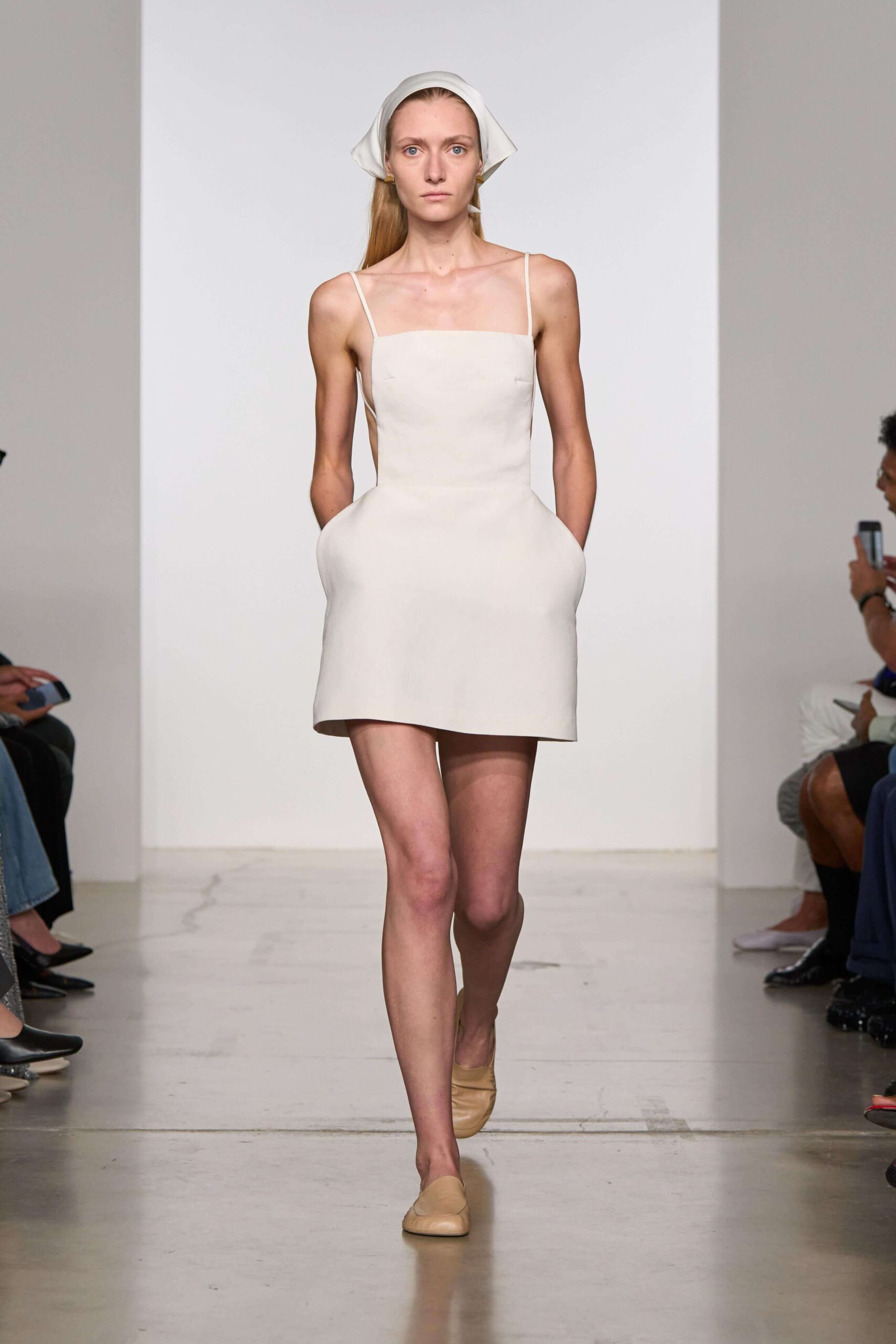
KHAITE Khaite Offers a Breath of Fresh Air

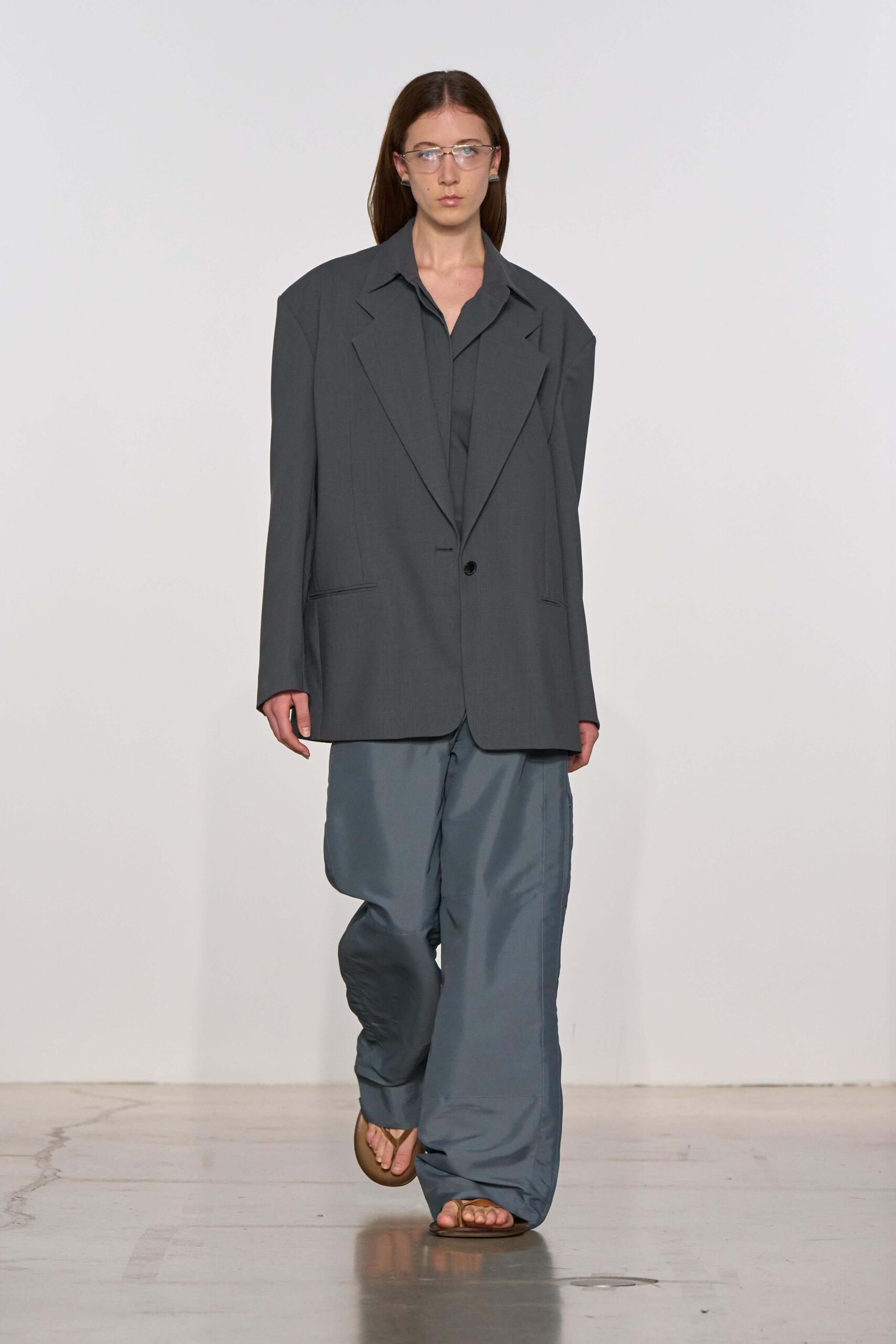
While legacy American brands such as Calvin Klein, Michael Kors and Ralph Lauren are leveraging their showcase at New York Fashion Week to reaffirm their relevance, Khaite demonstrated how the next generation of designers is pushing the city’s fashion landscape forward. Catherine Holstein’s Spring 2026 collection for Khaite had an undercurrent of grit, blending urban sensibilities with subtle Western references and a careful interplay between structure and fluidity. Signature elements such as asymmetrically twisted leather blazers, askew-hemmed trousers and draped tops injected a sense of experimentation, while classic staples — denim, cashmere, belts and leather accessories — retained clear retail appeal.

Holstein’s designs emphasised the duality of confidence and vulnerability, reflecting a modern consumer mindset that prizes authenticity alongside sophistication. The palette ranged from rich neutrals to deep indigo and black, punctuated with understated textures and hand-stitched details that underscored the brand’s artisanal approach. Footwear, belts and accessories — including collaborations with Oliver Peoples — reinforced the collection’s mix of practicality and elevated design, ensuring that while Khaite pushed creative boundaries, the work remained market-ready.

In a season marked by economic uncertainty and a competitive luxury market, Khaite’s offering highlighted the vitality of New York’s emerging design talent. By marrying risk-taking with wearability, the brand presents a compelling competition to heritage houses, proving that a fresh narrative can coexist with commercial sensibilities. Holstein’s Spring 2026 collection is not only a statement of Khaite’s continued evolution but a clear signal that the next wave of American designers is dynamic and ready to challenge the status quo.
Read More: LUXUO Style: The Latest from New York Fashion Week and the Fashion Industry

For more on the latest in luxury fashion and style reads, click here


Source link

How to dress like Tonne Goodman

0
How to dress like Tonne Goodman


How to dress like Tonne Goodman

Monday, September 15th 2025
Share

Subscribe
14 Comments
||- Begin Content -||

Tonne Goodman is an American fashion editor – for 20 years the fashion director at Vogue in the US and now the sustainability editor. She has always dressed in a particular uniform, and it’s a rather menswear one – white or black jeans, dark jackets or knits, loafers and a silk scarf. 

It’s the kind of uniform – the kind of ‘capsule wardrobe’ – that we love exploring here on Permanent Style because I know many readers want to find their own personal version: a small collection of quality clothes that require little thought to put on in the morning, but can equally be played with at the edges. 
Tonne Goodman’s uniform is one such example. So how does it break down?
1. White jeans

Goodman wears mostly white jeans, sometimes black. They have always been a classic straight leg, in a world of womenswear that constantly pushes new cuts – cropped slim legs, wide flared ones. As in many things, this is something that she has in common with classic menswear – that virtue in staying subtle and eschewing fashions. 

“You know, a white jean isn’t a blue jean,” she told Jeans Stories. “It has a whole different look to it. You can put it with anything and it adapts. You can put it with a black velvet shirt and it becomes one thing, you can put it with a t-shirt and it will be another thing. So it’s a very good basic piece. 

“[White jeans] can go from a shoot, to being at a show, to being in your office – at least that’s true for me and the way that I wear them. Because it’s always a very classic approach, and very unadorned.”

Of course, clothes read differently on men and women, and white jeans can be a hard thing for a guy. But if everything else is neutral and simple, and it becomes a uniform in the same way as Goodman’s, that’s an effective way to do it. 

2. A navy or black jacket, shirt or rollneck

Goodman’s top half is usually a jacket or knit in a dark, neutral colour like navy or black. This creates high contrast, but is also neutral and simple. A shot like the top one above makes me want to try my double-breasted Assisi jacket with a pair of white jeans. 

Goodman often adapts to the weather by varying the thickness of these tops, as well as the number of layers. So in colder weather in might be a jacket and a rollneck, but in warmer weather often just a loose, untucked shirt (basically an overshirt), like the one above. (We’ll get to the camel jacket in a moment.)

“Any time I travel, my outfit doesn’t change; it’s always a few pairs of white jeans and black turtlenecks. That’s about it. It’s always been the same,” she told Industrie magazine. “I’ve always packed a carry-on case. If you have a uniform, it’s very easy and you don’t have to think about it.”

3. A silk scarf

The one decorative element in Goodman’s uniform is a silk scarf, usually knotted tightly at the neck. This is also quite a menswear approach, similar to how an ascot or bandana is worn. The colours are often blue or black, but can also be white, red or brown (above). 

This is something I do fairly often – using one of my Hermes scarves. See the third image in this post, or this layering, and indeed my Assisi jacket outfit referenced earlier. Ironically, while I usually prefer the Hermes women’s collection for its variety in silks, Goodman’s favourite maker is the menswear stalwart Charvet.

Her scarves can adapt to the weather a little, with Goodman sometimes opting for a cashmere scarf worn in a French loop, or a big shawl around the neck as the warmest option. Something I’ve also been fond of. 

“I usually take four pairs [of jeans] so that I can wear a fresh pair every day. And then it’s really simple: A dark top and a light bottom, and so easy. And a Charvet scarf. That’s my favorite thing,” Goodman told Jeans Stories. 

4. Flats in neutral colours

For flats, read loafers. Goodman usually wears black slip-ons in suede or leather, as the simplest thing that will go with every permutation of the uniform elsewhere. They create a chic, understated stop to the outfit.

She will occasionally wear other colours though – snuff suede or dark brown (very menswear) – and a slim boot in the winter. There’s an occasional trainer, but of the Common Projects variety in similar colours of black and white.

5. Camel coats

OK, a lot of her coats are navy or black, just like the jackets. But there’s an equal number of camel or beige – probably the next most common colour in the wardrobe. 

You can see why camel or beige might be a good choice: it’s fairly neutral like white and black, but also creates contrast with the rest of the outfit, as the tops and shoes do with the jeans. Alternative colours like olive or brown wouldn’t create that same contrast, and could look out of place. 

This is something you can see in my outfit below where I wear my taupe/beige overcoat from Ciardi with white jeans. 

So what can we learn?

That outfit above is actually a good example of how to adapt some of these lessons from Goodman into subtler, everyday versions.

Instead of a strong camel colour like my Anthology coat, for example, the Ciardi is a more muted taupe; instead of black boots like Goodman might favour, it’s dark-brown suede. The principles are similar, but the contrast has been dialled down. 

You could do something similar with other parts of the uniform too. Instead of a black knit – which is high contrast and so more striking – pick a charcoal one. I’ve gone for charcoal with that Ciardi coat, and I also sometimes wear charcoal on top and bottom (below) where I’d never really wear black and black. 

The general principles of the uniform can also apply to the most obvious of menswear combinations – such as blue jeans and navy knit/jacket/overshirt. Begin with that, layer a navy coat over the top in the same way Goodman would wear black and black, and play with dark shoes like black leather, dark brown suede or Color-8 cordovan. 

One last lesson I think it’s worth spelling out is to experiment at the edges, rather than the core. Goodman might wear a technical jacket or snuff shoes, but the core of white jeans and black knit remains. This is much easier than varying the trousers or top.

There are lots of brands that work with these looks of course, particularly Rubato (below, a very Tonne Goodman combination). And The Anthology’s Goodman jacket was apparently named after her. 

For more on capsule collections, have a search for ‘capsule’ on Permanent Style. I particularly recommend those for Scotland and Japan, particularly as they reflect winter and summer respectively. Emilie Hawtin’s article is also a great womenswear contribution. 

<!–

–>


Source link

The Fall Beauty Edit: The Season’s Most Anticipated Restocks & Launches

0
The Fall Beauty Edit: The Season’s Most Anticipated Restocks & Launches


As the leaves begin to turn and the air grows crisp, our beauty routines need a refresh. This autumn is less about overwhelming trends and more about investing in truly exceptional products that deliver. From viral sellouts making a triumphant return to groundbreaking new launches, the season’s must-haves beauty buys blend high-performance artistry with skin-loving ingredients. Here are the fall beauty products destined to become your new essentials:

The Return of a Cult Classic: ILIA’s Eye Stylus is Back

If you missed out on the beauty phenomenon of the year, now is your chance to finally see what the hype is all about. ILIA Beauty’s Eye Stylus Shadow Stick is officially back in stock on starting September 15, with a restock in all shades by October.

The numbers tell the story: since its February launch, one Eye Stylus sold every 60 seconds on iliabeauty.com. The overwhelming demand led to a complete sellout of cult-favorite shades like Adorn (a champagne shimmer), Regal (a warm matte brown), and Opulent (a rich bronze shimmer)—all of which return alongside the full 20-shade lineup.

Beloved by stars like Solange and Clairo, the Eye Stylus quickly cemented its place as a modern essential. It’s the rare eyeshadow stick that combines high-impact, crease-resistant color with clean, skincare-powered ingredients. More to Love: ILIA Expands Its Best-Selling Lip Sketch.

The brand’s best-selling Lip Sketch Hydrating Crayon is also expanding with three new consumer-requested shades: Tableau, Untitled, and Deco, launched on September 2, 2025.

With the creaminess of a lipstick and the precision of a lip liner, these weightless crayons glides on to deliver rich, long-lasting color. Since the launch, Lip Sketch has sold one unit every minute in North America, earned over 2,000 5-star reviews, and become one of ILIA’s most in-demand lip products. A staple for Reese Witherspoon, Kate Hudson, and Chrissy Teigen, the Lip Sketch is now even more versatile with these new neutral-pink tones.

French Effortless Artistry: VIOLETTE_FR’s Plume Lip

For those who believe makeup should be an expression of art without the rules, VIOLETTE_FR’s latest innovation is for you. The highly anticipated Plume Lip launched on September 4th, promising a bold flush of color with an effortless application. It’s bold artistry without the effort: strong yet soft, rich color yet highly instinctual. A feather-matte lip whip, Plume Lip delivers diffused, medium-coverage pigment with a mistake-proof, intuitive application. It’s the perfect statement lip for fall, feeling weightless and entirely your own.

Skin That Looks Like Skin: Makeup By Mario’s SurrealSkin Foundation

Renowned for developing high-performing, innovative products, Makeup By Mario’s founder and CEO, Mario Dedivanovic, unveils his latest masterpiece this fall: SurrealSkin® Natural Finish Foundation. This weightless, medium-coverage formula is designed to enhance your natural complexion with a flawless second-skin finish. It smooths and blurs the skin while offering all-day shine control and 16-hour hydration. Infused with hydrating glycerin, raspberry extract, and antioxidant-rich vitamin E, the formula locks in moisture and helps protect the skin barrier. Available in 32 inclusive shades, this foundation is set to become a new icon (Launching September 4).

Treat Your Skin: Treatments & Restorations

Fall is the ideal time to reset and rejuvenate your skin with Sol de Janeiro’s Delícia Drench Collection. Infused with the brand’s iconic, addictive scent and deeply hydrating formulas, this collection brings a burst of juicy freshness and long-lasting nourishment to your routine.

Clean Beauty: Avalon Rose Botanicals

Fix sun spots and damage leftover by summer’s ray with the Avalon Rose Botanicals customizable Lumina Revitalize Kit. Made with Vitamin C + Ferulic Acid Powder and paired with a peptide-rich Hydration Serum, this duo delivers maximum potency with minimal ingredients for a restored glow.


Skin Innovation: DECORTÉ’s AQ Pore Blackhead Dissolver Deep Pore Cleanser 

Back in stock, this innovative, first-of-its-kind solution that was developed using a quantum computer that analyzed over 100 billion formulas, dissolves pore plugs from the roots without damaging the skin, leaving pores looking tighter and less noticeable for healthier, glowing skin.


Source link

Are You Feeling Like a Design-o-saur?

0
Are You Feeling Like a Design-o-saur?


Are fashion’s shiniest new technologies making you want to crawl back to the Jurassic period? Are you feeling a little bit like a  design-o-saur? Don’t worry—you won’t need tiny arms to learn the ropes! We’re here to rescue you from extinction.

Our 3D and artificial intelligence fashion design instructors are more up-to-date than yesterday’s memes and will gladly teleport you into the 21st century (no time machine required).

We offer an entire series (yes, more episodes than your favorite binge show) on mastering Browzwear and CLO 3D software, and that’s not all! Our resident AI specialist—who we swear is human, probably—will reveal how to turbocharge your creations using AI tools like Discord and Midjourney. No need to bribe a robot.

Our Browzwear 3D Series

UoF Introduction to Browzwear seriesOur Browzwear instructors, Brittney Gray & Iris Hopkins are currently employed in the fashion industry and use Browzwear daily as part of their job. Their expertise will help jumpstart your 3D journey. You’ll start by learning how to sign up for the software and then how to create different types of garments in 3D.

Our CLO 3D Series

CLO 3 D UoF lessons Lane Odom is an expert in CLO 3D. He uses the software to create his collection and to make patterns for his NYC-based brand, Vane. Lane also designs for other fashion brands using CLO.

Our Artificial Intelligence for Fashion Design Series 

University of Fashion lessons on AI for Fashion Design

Our AI for fashion design lessons are taught by Anna Leighton, 2-time winner of  AI Fashion Week. With a BA from Otis College of Art and Design, Anna is a fashion designer with mad tech skills. Anna attests that her fashion design skills and knowledge are very important to the process of designing with AI.

Don’t be a fossil in the fast lane of fashion. Jump onboard—don’t let the asteroid hit! Evolve with us. Learn it, laugh at it, live it!


Source link

An ode to the Armani jacket

0
An ode to the Armani jacket


An ode to the Armani jacket

Friday, September 12th 2025
Share

Subscribe
27 Comments
||- Begin Content -||

By Dr John Potvin – the author of the book Giorgio Armani: Empire of the Senses and curator of the Instagram account @myarmaniarchive.


A jacket can be very sensual if it has certain characteristics. 

Maybe a wider shoulder, a certain length, 

a fitted waist, or no waist at all. 

Giorgio Armani 

I must confess to feeling rather at a loss to summarise the legacy that Giorgio Armani has left behind in menswear and tailoring, when his significant contributions are so many. After all, what other designer is responsible for the creation of an entirely new colour, such as the now iconic greige (grey and beige combined)? The daunting task is equally due to the fact I long believed him to be immortal. 

Mr Armani is responsible for taking the stuffing out of men’s jackets, providing us with a garment suitable for modern life, regardless of body type; a jacket that moves with the body not only because of the cut but because of the generosity of the textiles.

His menswear sits very comfortably between Italian and British tailoring traditions, while heeding the more fashion-conscious needs of a forward-leaning man. 

The perennial success of his collections resides at the intersection of cut and silhouette as much as colour and textile innovation. Too often overlooked, Mr Armani was masterfully adept at textile development, while creating sumptuous fabrics that made the wearer’s skin feel luxuriously cared for.

An alchemist of sorts, he honoured long-respected craft traditions while recognising the necessities of industrial production. This balancing act had its roots in the now well-rehearsed origin story when he worked for Nino Cerruti (1930-2022), first in the textile factories and eventually as designer for the family business’s Hitman menswear collection. 

Textile know-how thus came well before he took the stiffness out of men’s jackets. He famously created a silhouette with bolder shoulders, looser throughout the body, with a low gorge paired with a narrower lapel. 

Throughout the 1980s and 90s, the size of the lapels shifted continuously, so much so that, by the 1990 to 1994 seasons, they often disappeared altogether, and took inspiration from sartorial traditions from around the world (below, from my own collection). 

As lapels vanished, buttons increased and so too did the length of the jackets. Although the same period witnessed constant innovation and development in menswear, it was also a time when the designer fully solidified his aesthetic and design ethos; as a result, it is the period to which many return when they speak of the ‘Armani style’.

To wear Armani suggested one had arrived. It was a powerful, sartorial sign of self-assurance and personal achievement unburdened by pedigree, class affiliation or education. Buying an Armani jacket was a rite of passage. 

At the same time an Armani jacket eschewed flashy statements or loud self-promotion. It embodied a quiet, private and yet seemingly indulgent luxury for the self. Jackets and suits were meant to enhance rather than subsume the wearer’s personality. 

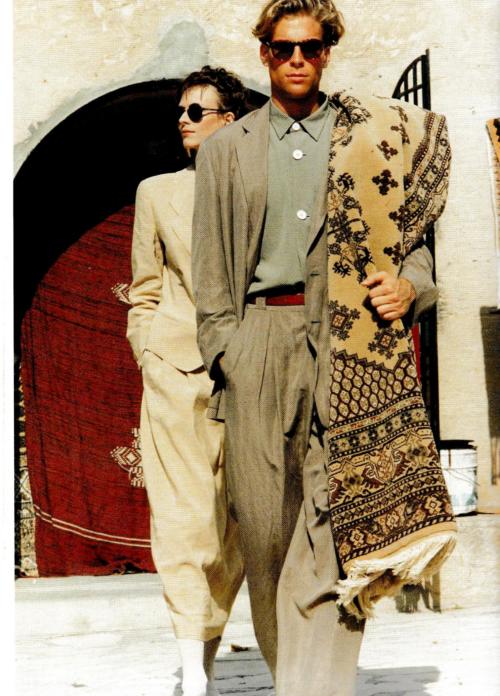
But there was also another revolutionary element to his jackets, for Mr Armani used textiles usually destined for womenswear. Wool crepe, linen blended with acetate, rag-effect Indian cotton, jacquards and viscose, for example, quickly became staples. Already in the early 80s, his English tweeds felt like pyjamas; not a look or feel men were used to. 

As a result, men were given a softer, more vulnerable appearance all the while remaining self-assured and in command of their presence. He never shied away from allowing men to expose their more feminine side, sending models down the runway in brightly coloured sarongs coupled with unlined ties for his spring 1995 collection, for example. 

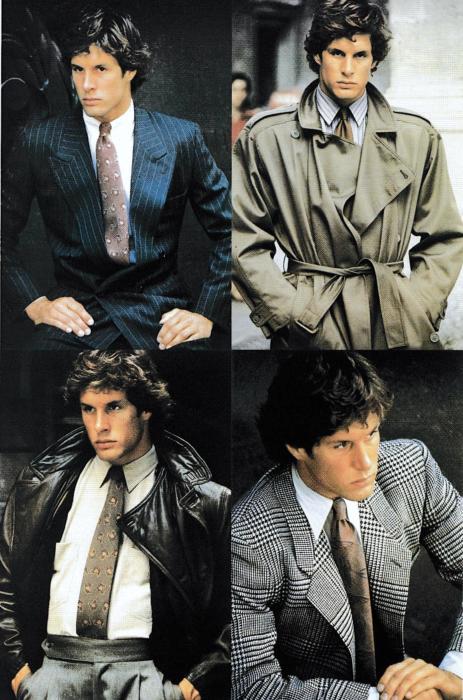
In contrast the following year, Mr Armani inaugurated Giorgio Armani Classico, part of his ‘black label’ mainline. The now-defunct, more sober capsule collection targeted serious businessmen, financiers and professionals and featured pinstripes, Prince of Wale checks and houndstooth prominently. Through the collection he offered conservative, timeless tailored pieces as wardrobe staples. 

Conscious of offering a diversity of looks that all seamlessly fit within the Armani man’s wardrobe, his Autumn/Winter 1990 collection, titled ‘Tutti Gli Uomomini Armani’ (All Men) showcased three different Armani types. 

The first, ‘The Traditionalist’, wedded traditional tailoring with traditional menswear fabrics in neutral tones of navy, grey and putty, while ‘The Professional’ moved away from double-breasted suits into three-button single-breasted examples in camel and other equally rich and luxurious textiles. Finally, ‘The Avant-garde Man’ celebrated his bohemian attitude with shawl vcollars on double-breasted suits in velvet, corduroy, chenille and wool bouclé. 

This man showed the rules with one part of the collection, then broke it with another.

By subtracting rather than adding, Mr Armani throughout offered a jacket that felt as though it had already been lived in, as if it had already been hanging in a man’s closet for some time. With every subsequent year, particularly in the early 90s his jackets, devoid of any of the shoulder padding of the 80s, moulded around the shoulder, soft, seamless and contoured.

He created a work uniform that was at once respectfully formal and impeccably tailored, while at the same time so effortless that it made dressing for work an easy and pleasurable endeavour. 

American Gigolo (1980, above), featuring a very alluring Ricard Gere in the lead role, occupies a top rung within the pantheon of fashion films. However, it marks only one of the over 100 collaboration credits to Mr Armani’s name. 

At the heart of the film’s significance was how it set the stage for a tailoring and menswear aesthetic programme premised on providing a seductive quality to cut and textiles; they were meant to enhance a newly fit and healthy body underneath, spurred on by the nascent gym craze. 

In short, Mr Armani welcomed men to celebrate their bodies through seductive sartorial choices rather than concealing them in rigid, stiff and unflattering suits. 

Paul Shrader’s 1980 cult classic is by no means the only significant film of the decade in which the designer flexed his sartorial might. In 1987, he was invited to create the wardrobe for most of the characters in Brian De Palma’s The Untouchables (above)

Lush suede jackets paired with wool flannel trousers or crisp, fluid three-piece linen suits were as much at ease in 1930s gangster-ridden Chicago conjured in the film as they were in the late 1980s when they were designed, and whose doppelgängers were made available in Giorgio Armani boutiques around the world. 

Mr Armani once said: “I like to create clothing for people who work, and that includes actors and actresses, inasmuch as they are people who work, and not just as stars.” Through cinema, ‘Armani’ quickly became a household name. 

As a long-time collector, scholar and fan, it has become nearly impossible for me to look at a jacket and not either compare it to an Armani or see how it is influenced by him. 

In our current obsession with vintage and nostalgia, Mr Armani’s evergreen designs from the 80s and 90s, in particular, have been experiencing a deep resurgence of interest. Younger generations seeking out Armani clearly understand his attention to detail, quality fabrics and timeless design. 

Recently, Mr Armani’s legacy and influence has also been evidenced on the runways and was celebrated by Japanese designer Soshi Otsuki, the recipient of the 2025 LVMH Prize (below). 

Designed with a Japanese twist, Otsuki’s menswear is a respectful and modernised homage to 80s and 90s Giorgio Armani, apparent in the louche and full proportions, greige palette and even the colour and font choice of his label. 

With the passing of Mr Armani on 4 September 2025, in the same year the company celebrates its 50th anniversary, collectors and consumers alike may take solace in the knowledge that he has put in place a strong menswear design team headed by the talented Pantello (Leo) dell’Orco who is now charged with the Herculean task of carrying on a label steeped in heritage and excellence.  

Dr John Potvin is Professor at Concordia University, a design historian and author of the book Giorgio Armani: Empire of the Senses (Ashgate/Routledge, 2012) and curator of the Instagram account @myarmaniarchive.

For an overview of Armani’s influence, including on modern menswear brands, see Tony Sylvester’s article on Permanent Style hereFor a very in-depth look at The Untouchables, see also the ‘A Little Bit of Rest’ article here

<!–

–>


Source link

Love Moschino Fake vs Real: How to Identify Authenticity?

0
Love Moschino Fake vs Real: How to Identify Authenticity?


September 11, 2025


When it is about strong, fun, and eye-catching clothing, Love Moschino has made its own place in the world of luxury. From its odd bags and nice shoes to fancy clothes and cool extras, the brand offers a great blend of Italian skill and modern styles. Over time, Love Moschino has turned into a worldwide favorite among clothing fans who care about art and being unique. But with fame comes copying – and sadly, the market today is full of fake Love Moschino goods that are made to seem nearly like the real ones.

This is where the mix up starts. With copy makers getting more clever, seeing the difference between a true Love Moschino and a false one is not as easy as looking at the logo or price label.

Purchasing authentic Love Moschino items is not just about having a designer label, but about quality, durability and brand value. Authentics are made with better materials, have accurate stitching, and more details than fakes. Only real items have brand warranties, return policies, after sales support, etc., that provide quality assurance when shopping.

In this comprehensive guide, we will help you learn to identify the key signs of authenticity with all Love Moschino products; including handbags, shoes, clothing and accessories, and guide you through the steps to inspect logos, stitching, hardware, serial numbers, packaging and prices, so that you can shop without worries about fake Love Moschino items. Whether you are shopping online, from a boutique store, or from an online marketplace, this blog will ensure you have everything you need to spot Love Moschino fake vs real like a pro.

Why You Must Know the Difference Between Fake and Real

Why You Must Know the Difference Between Fake and Real

Investing in an authentic Love Moschino item is not only about owning a designer label – it is about quality, durability and exclusivity. Fakes compromise all three. Here is why it matters:

Better Construction → Real products are built to last with quality materials and precise stitching.True luxury experience → Real product meets with beautifully crafted details, brand history and pre-sales service.Ethical choice → Counterfeits lead to unfair labor and breaches of intellectual property rights.Resale value → Real Love Moschino bags and accessories have better resale value than counterfeit.

Quick Glance: Love Moschino Fake vs Real

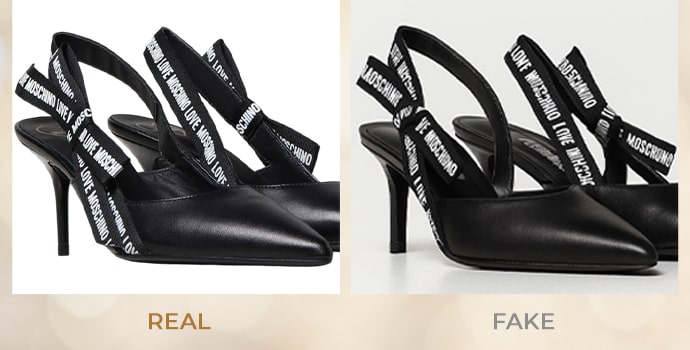
Recognizing the difference between real Love Moschino and counterfeit takes a keen eye for detail. An authentic product has a logo that is either engraved or embossed perfectly and the letters are clean, evenly spaced and using the same font. A counterfeit product will often have fuzzy or unclear logos, uneven letters or they can even get the spelling wrong. The material is usually also a clear sign. Real Love Moschino products use fabulous faux leather or fabric that is made to last and feels smooth; counterfeit products often feel rough. It is extremely common for there to be issues with the base construct of a product as well. Authentic brands create heavy, polished metal hardware that is deep, crisp and clear in its engraving. Authentic products will have straight stitches that are tightly sewn; loose threads, crooked seams or poor construction is common with replicas.

Packaging is often the most conclusive. Authentic Love Moschino products come in quality branded boxes, with dust bags in perfect condition, authentic labels in place with authenticity tags in place, while fake items arrive usually in very flimsy boxes with softened prints, sometimes without a tag, and sometimes with the incorrect barcode. Authentic items also bear a unique serial number, and/or scannable QR codes that may be scanned to verify with the brand’s official channels– in counterfeit products, this step is skipped, invalid, and/or inconsistent from the codes provided.

Pricing and sourcing count for a lot. Real Love Moschino bags range in price from ₹7,000 to ₹25,000, and accessories are also priced at premium price points. Real price points and sources from companies, if you encounter prices that are very low, or discounts that seem “too good to be true”, it is a “major red flag” to consider new purchasing paths. It is best to purchase real products from authorized retailers, official brand stores and luxury marketplaces, or expect to be scammed.

Spotting Fake vs Real Love Moschino Bags

fake vs real love moschino bags

Because bags are the most counterfeited product of Love Moschino brand, here are some useful tips to check for when shopping online for authentic products:

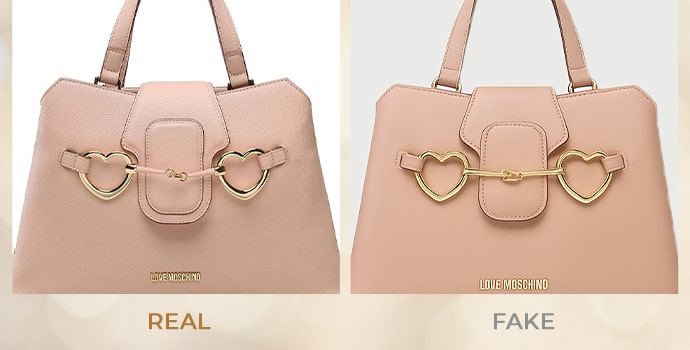
1. Examine the Logo Plate

Real: The logo plate will be perfectly centered, deeply engraved, and polished evenly.Fake: Logo plates are often crooked, out of alignment, and have shallow engravings.

2. Check the Interior Tag

Genuine bags should have a fabric label, or leather tab attached to the interior of the bag, with the full brand name, along with an alphanumeric serial number. Fakes often skip a branded tag completely, or use an incorrect font on the tag.

3. Take a Look at the Zippers and Hardware

Real zippers move easily, are heavy and might have Love Moschino engravings. Fakes often use flimsy, cheap metal that oxidizes quickly and therefore feels light.

Identifying Fake vs Real Love Moschino Shoes

Identifying Fake vs Real Love Moschino Shoes

Love Moschino sneakers, heels, and sandals are in high demand throughout the world, making them extremely attractive to counterfeits.

How to Spot Real Shoes:

Boxes & Labels → Real shoes come in proper branded boxes with care labels, QR codes, and barcodes.  Insole Branding → The brand logo should be exact, symmetrical, embossed and should not be unevenly printed.Sole Weight → Original soles feel solid compared to fake, thin and very light fakes that do not grip.Cheap Pricing Check → If the shoes are too cheap, they are probably replicas.

Spotting Fake vs Real Love Moschino Clothing

Spotting Fake vs Real Love Moschino Clothing

Counterfeiters can produce bold designs and prints, and do duplicate logos but they can never compete with the real Love Moschino.

Quality of Fabrics:

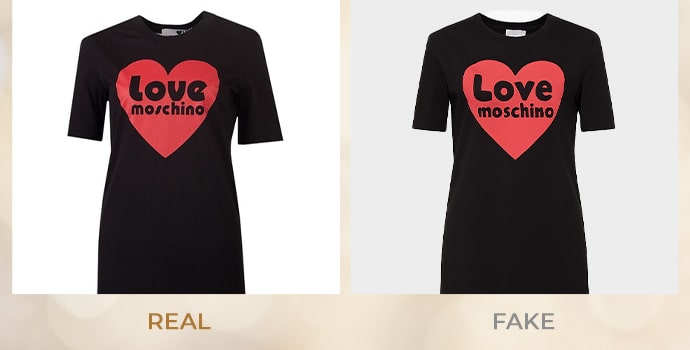
Real apparel uses quality components of cotton, wool blends and other quality fabrics that feel soft and durable.Fake apparel will feel rough, thinner material and uncomfortable.

Tags & Labels:

Real apparel has a stitched brand label and care instruction tags with different language translations.Fake apparel will have care instruction labels that are misprinted or do not have labels at all.

Prints & Embroidery:

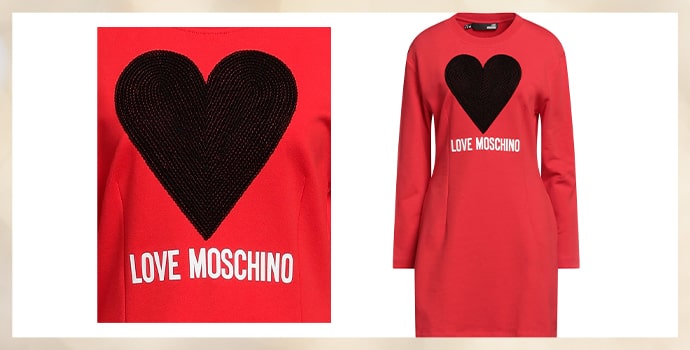
Real Moschino prints reserve colors, symmetry, proper wear, and longevity in general.Fake prints wear off faster than real; Other counterfeit products’ solid colors appear pixelated.

Spotting Fake vs Real Love Moschino Accessories

Spotting Fake vs Real Love Moschino Accessories

Counterfeiters are vetting every area of fashion from handbags to sunglasses with reproductions of cheaper alternatives. Here are some tips to spot the real deal: 

Wallets & Belts:

Real handbags have strong stitching, RFID tags, and sturdy leather finishes.Fake handbags have flimsy interiors, rough edges, and don’t have authentication cards.

Sunglasses:

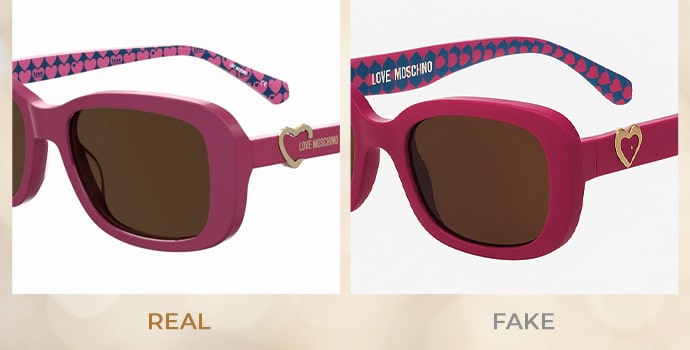
Real sunglasses are lightweight and durable with engraved branding on the arms.Fake sunglasses have printed logos and poor UV protection.

Where to Buy Genuine Love Moschino Products

To avoid getting fakes, you should buy from respected places:

Official Website: www.lovemoschino.comReputed Luxury Marketplaces: Darveys, Farfetch, Mytheresa, Net-a-PorterBrand Boutiques & Flagship Stores

Avoid:

Unauthorized Instagram shopsRandom street vendorsHeavily discounted products from unrecognized websites

Top Tips to Avoid Buying Fake Love Moschino

Validate the Seller → You should always validate seller authenticity before making a purchase.Review Photo of Product → You should compare any photos of the handbag that you are considering against the official listed images from Love Moschino’s website.Ask for the Original Bills → Snagging authentic products should always come with invoices and warranty.Review Return & Exchange Policy → Authentic sellers will always want you to come back to buy from them; there will be a policy backed by the brand that permits returns and exchanges.Scan QR Codes & Serial Numbers → Use the official verification tools when applicable.

Final Thoughts

Very often fake items must look convincing enough to sell, usually made so cheaply that the consumer would probably complain if the originals were presented to him for comparison. In such cases the choice becomes obvious. Once a consumer chooses a genuine Love Moschino product, he chooses high end luxury, better durability, and the unparalleled ownership of an original designer piece.

When trying to figure out Love Moschino fake vs real products, always remember to look beyond the surface. Look closely at the details counterfeiters do poorly: how the logo is engraved, stitching patterns, material quality, weight of hardware, internal lining, and authenticity tags. Genuine products have been designed and detail led with stringent quality control where every item is examined for finish, performance, longevity. Counterfeit products are some of the worst quality found in fast fashion and this shows up as uneven stitching, loose threads, and materials that are flimsy and improperly packaged. Just as importantly is where you buy.Use an authorized Love Moschino boutique, official sites, or respected luxury stores for your purchase to make sure that the product you get is the real stuff. Do not buy from unknown social media sellers, dubious discount stores, or unauthorized platforms. It is the number one scam: if you see anything at a price too cheap to be true, it probably is. 

Ultimately, buying real products means you buy value, and support ethical fashion while protecting the intellectual property of the brand. You are investing your money in your personal style with a beautiful Love Moschino piece that represents quality, originality, and confidence knowing you own a quality premium product. So the next time you are shopping for a Love Moschino handbag, wallet, shoe or accessory through an online luxury retailer, take a minute to inspect everything in detail.  With the tips in this guide, you can confidently identify Love Moschino fake vs real products and make sure your purchase reflects the luxury and authenticity you deserve.

FAQs

1. How am I to Authenticate a Love Moschino bag online?

You should check the logo, the serial code, the packaging etc., and check if there are comparisons made with images from the official website before proceeding to purchase.

2. Do all Love Moschino items have QR codes or serial numbers?

Most bags and premium products will have unique codes to verify, but a number of small accessories will not.

3. Why are fake products so cheap?

Counterfeiters use low-quality materials and do not abide by quality control guidelines, meaning they can sell replicas for much less than the real thing.

4. Can I get my Love Moschino verified?

Yes! You can either visit an official boutique or get in touch with customer service for verification.

5. Can I trust Love Moschino outlet prices to be safe?

Yes! As long as it is an authorized outlet from the brand. If an outlet does not have proper credentials, avoid them.


Source link

Introducing: The Wool Walker

0
Introducing: The Wool Walker


Introducing: The Wool Walker

Wednesday, September 10th 2025

Share

Subscribe
18 Comments
||- Begin Content -||

Our new coat this winter is a wool/cashmere version of the popular Wax Walker. It’s a versatile coat that I think is the perfect year-round piece for the city, but also great with a knit and jeans at the weekend. We’re calling it, perhaps predictably, the Wool Walker. 

It has all the subtle style of its precursor but is smarter, has luxury elements like black suede and, importantly, has a so-called drop liner that makes the interior waterproof. 

We played around with a few different ways to make the coat more weatherproof – to make it something a reader could throw on any time – but it was hard to do without fundamentally changing the nice look and feel. So while we also applied a normal water-resistant treatment to the outside, we decided a drop liner would be a good solution – it adds nothing to the weight of the coat, is breathable, and stops any water getting through. Even in heavy rain, the coat might get wet but you won’t. 

Practical points like this were important because we’d had a few readers ask about a really versatile hip-length coat. It might be for cycling to the office – where a normal overcoat would be too long – or for commuting or driving, but they wanted something that was good for the office yet also adaptable for different places and situations. 

Worn with tailored trousers and smart shoes the coat would be elegant in any office, whether with a knit, a gilet, or a full suit underneath. In the images above I’m wearing it with grey-flannel trousers, brown-suede loafers and a V-neck – an outfit that felt very at home walking through London’s financial district. 

But unlike a double-breasted overcoat, it’s also a very easy piece to wear with jeans and a crewneck. In the image below, those two are a navy PS crewneck and my old 501s, which could be an outfit for a more casual office or nice weekend attire. 

The bottom half could equally be chinos, in beige, olive or dark brown. And a battered cap (see image further below) is a nice addition to dress it down.

The Wool Walker retains all the nice design elements from the waxed version. My personal favourite is the way the hand-warmer pockets are hidden within the seam running down the chest: much cleaner than most designs but sacrificing none of the practicality. 

The back panel runs seamlessly over the top of the shoulders, removing that weak point when it comes to rain, and the back has real, working pleats on either side that are connected to a panel of jersey underneath. This creates a flattering shape on the back, as well as creating huge freedom of movement. 

Elsewhere, there’s a two-way zip that enables you to just have the top zipped up (useful for cycling) and a mobile pocket inside the front panel, meaning you can access a phone without having to unfasten everything and let in the cold. (Seen below, just to the right of the main zip.)

It’s nice running through these elements actually – it reminds me how thoroughly engineered the Wax Walker was.

The outer material is a 20oz fabric we developed with Marling & Evans, a 90/10 split of wool and cashmere. It has a nice soft handle but also real substance and density. 

In terms of seasons, I’d wear this with a shirt or lightweight knit into early autumn, and then through into winter with a cashmere jacket or chunky rollneck. Obviously it depends where you’re from and, in the UK, sheer unpredictability of the seasons, but I think it’s likely a lot of readers could wear this in somewhere like London to commute all the way through the winter. 

The drop liner also adds a nice touch of wind-resistance, while the waist cinches in to add either warmth or shape, depending on the thickness of the layers underneath.

A nice luxury element is the black suede used on the undercollar and on the ends of the sleeves. This was partly inspired by my bespoke overcoat from Ettore de Cesare here – I really liked the touch of style the suede gave, and on both that coat and this one it also adds strength to the collar. 

Although, one thing I have noticed in wearing this coat over the past few months is how good its collar looks down. As readers will be aware I love a popped collar, but it’s great to look good with the collar down too, because it’s your style or just because it’s a subtler option. You can see what I mean in the image above. 

The coat has been beautifully made by Private White VC in Manchester, and we’ve kept just a couple of references to the copper hardware – the rivets on the back, the pullers inside, but elsewhere the fastenings are black with a copper logo or text, in keeping with the suede elements. 

The coat is available now on the PS Shop, in the normal full range of sizes for the outerwear, XS to XXL. I hope you like it. In the same way as one of our blue oxfords or grey rugbys, I think this will prove to be a really useful as well as enjoyable piece for lots of readers. 

The sizing is essentially the same as the Wax Walker, so anyone that has ever tried that coat should know what size they are. For everyone else, see below. 

Sizing

The Wool Walker fits true to size, and is cut straight rather than slim (the waist cinch enables it to be slimmer if you wish)
In the images I am wearing a size 4 (medium) and am 6 foot tall, with a 39-inch chest. For information on my proportions and other sizing, see dedicated article here
We highly recommend comparing the measurements below to a coat you already own, however, rather than going off body measurements
All measurements are with the jacket laid flat. Chest is straight across, from 2.5cm under the armpit; waist is taken 47cm down the jacket; length is from the bottom of the collar to the hem


XS (2/36)
S (3/38)
M (4/40)
L (5/42)
XL (6/44)
XXL (7/46)

Chest
51cm
53.5
57
60.5
64
67.5

X-shoulder
46.1
47.3
49
50.7
52.4
54.1

Waist
51
53.5
57
60.5
64
67.5

Bottom hem
56.5
59
62.5
66
69.5
73

Body length
82
82.5
83.5
84.5
85.5
86.5

Sleeve length
64.5
65
66
67
68
69

Cuff
15.3
15.6
16
16.4
16.8
17.2

And here’s the normal rundown for the details on the coat – the materials, care, and alterations. Any other questions, please do ask in the comments below. 

Coat details:

Wool/cashmere blend coat with waterproof liner and suede details
Outer material 90% wool and 10% cashmere, 20z, woven in England
Coat made in England by Private White VC
Five external pockets: two flapped on the hip, two on the chest, one phone pocket inside the placket
Three internal pockets: two buttoned chest pockets, one larger buttoned hip pocket
Upper external pockets lined with cashmere
Cuffs have snaps and straps, to tighten against the cold or change the fit when not wearing a jacket underneath
Two small vents on the back help movement, but can also be snapped shut

Drop liner details:

Drop liner sits between the outer material and the lining, making the coat waterproof
Has perforations, making it breathable but not allowing moisture in
Made of a mix of polyester and polyurethane
Adds no weight, but also adds wind-resistance
Coat also has a water-resistant treatment on the outside

Suede details:

Lamb’s suede used on the undercollar and cuff ends
Coat can still be cleaned by a regular dry cleaner – if in doubt ask them not to press the collar (pressing the danger rather than cleaning, and much less so on suede than leather, as suede won’t dry out)

Alterations:

Sleeves and sleeve linings have been made to allow them to be lengthened by up to 3cm. Shortening is also possible, the wrist strap can easily be removed if required
Body can be taken in, but not let out. Body can be shortened, the small vents just have to shortened too, but cannot be lengthened. 

Available on the PS Shop site here

<!–

–>


Source link

Cocktail rings and yellow diamonds: Chatting to Michael Rose

0
Cocktail rings and yellow diamonds: Chatting to Michael Rose


Cocktail rings and yellow diamonds: Chatting to Michael Rose

Monday, September 8th 2025
Share

Subscribe
13 Comments
||- Begin Content -||

“For me there is nothing more beautiful, more interesting and more tactile than vintage jewellery,” says Michael Rose, founder of the eponymous jewellery shops in the Burlington Arcade. 

This quotation stayed with me for a while after I interviewed Michael recently, I think because one of the things I wanted to understand from him was what makes vintage jewellery different, and those three adjectives seemed to sum it up. 

Vintage jewellery is more likely to be made by hand, either cut or shaped or simply assembled in someone’s hands, and this creates surfaces with natural texture, as well as more variation between parts of the piece. 

A vintage or antique chain like my one we discussed recently for example, will often have links that have been individually cut. And even if they haven’t been, assembling each pre-cut piece will introduce small differences in the shapes.

About halfway through our interview, a woman came into the store with an old Victorian cocktail ring she was interested in exchanging. Cocktail rings are larger, slightly flashy pieces of jewellery that would have been worn only for such events, and the woman said she just never wore it any more (example above). She was interested in exchanging it for something more everyday. 

“Come and look at this,” said Michael, positioning his loupe over the ring and becoming me forward. “Each of those diamonds has been faceted by hand,” he continued, as I looked through. “It was probably done in India – most of it was a century ago – and they would have been told just to cut it at any angle in order to catch the light.”

This hand faceting isn’t the most efficient for refractions through the stone, certainly compared to modern methods, but you could see how it made each diamond different. I think most people would prefer the more efficient method, but I can also imagine some PS readers loving the individual character of the piece, and the connection to an artisan. 

Beauty is very much in the eye of the beholder, but you can see how vintage jewellery could be considered more interesting.

My chain’s primary point of interest is the fact it’s a ‘mystery chain’ where steel links are used inside the gold to make it stronger (above). Again, I can see how some people would love this detail, and others would prefer pure gold. But either way it’s interesting. 

“We were working class growing up and we never had much in the way of jewellery,” Michael told me. “But I remember the first piece my mother fell in love with was a muff chain, like yours. It was 60 inches long so she wound it round her head several times, which I told her looked a little silly.

“But we cut it down and it suited her very well then. I still have it upstairs in the shop – I have a box with all her pieces I’ve kept. So I guess that kind of chain has a special significance for me.”

Michael’s first job in the jewellery business was at Beaverbrooks, which only sold new pieces. It was through this connection that he was able to secure the Victorian muff chain for his mother, however, and began his passion for jewellery of all types.”

“In the 1980s I remember everyone was coming in to sell their old silver – no one could be bothered to polish it any more, and it was seen as almost worthless. Today it’s more valued, but there’s less of it around. 

“Gold is even worse. Britain stopped making jewellery like this in the 1950s, so there’s a finite supply and it’s getting smaller all the time. Italy continued on into the 1970s, but then that stopped too. They’re still a big player, but it’s not the same quality as the vintage pieces.”

Of course, added to this is the economic turmoil of the past couple of years, which has driven the price of gold sky high. “The price has been rising for almost 20 years, but recently it’s gone crazy,” Michael added. 

Over the years, he’s also seen many fashions come and go. “The fashion for pink gold, rose gold, lasts about seven or eight years each time – everyone’s pushing it, all the brands, and then all of a sudden it’s gone. You see these young women coming in who have heavily bought into it, and now they’re trying to sell it all off,” says Michael. 

He’s also very much of the opinion that coloured metals and stones only suit certain skin types. Yellow diamonds, for example, might be a trend, but just as importantly they don’t suit paler, whiter skin tones. “Do white English women wear much yellow? Usually not. Maybe a swimsuit or something, but not in something bigger all the time. It often doesn’t suit them.”

Michael also told a nice story about chasing a customer down the Arcade, finally catching up with him outside The Ritz, after he had bought a yellow-diamond engagement ring (example below) for his wife. His wife was pale-skinned and a member of staff had sold him the ring without Michael being present. 

“I told him I couldn’t in good conscience sell him the ring, and asked to have it back,” Michael says. “He let me, and came back to get something else.”

In some ways, of course, this is a good long-term tactic – you never trust a salesman more than when he refuses to make a sale – and so good marketing. But Michael has been around so long, and seems to care so little for what sounds good, that you definitely believe him. 

Michael’s more general advice for buying jewellery includes:

Buy something you like personally, that you feel a connection to (“I like brooches, but they haven’t been fashionable for a while”) 
Buy one good piece rather than two or three cheaper ones (“I see the appeal of layering jewellery, but one good piece is more elegant and will be in style for longer”)
Avoid French chains (“so flat”)
Avoid black stones (“not that tasteful”)

A slightly random selection of advice, and of course some of it contradictory in a way (get something you like, but these kinds of things I like). But all keenly felt, with a passion for the beauty of these old pieces. 

And the best thing of all, as with all the craft-centred stores we do, is that it makes me feel more connected to my chain and pieces like it.  

<!–

–>


Source link

Popular Posts

My Favorites

Anthropic ‘Retires’ Claude Opus 3—Then Gives It a Blog to Reflect...

0
In brief Anthropic launched a Substack written in the voice of a retired AI model. Claude Opus 3 questions whether it has consciousness or subjective...