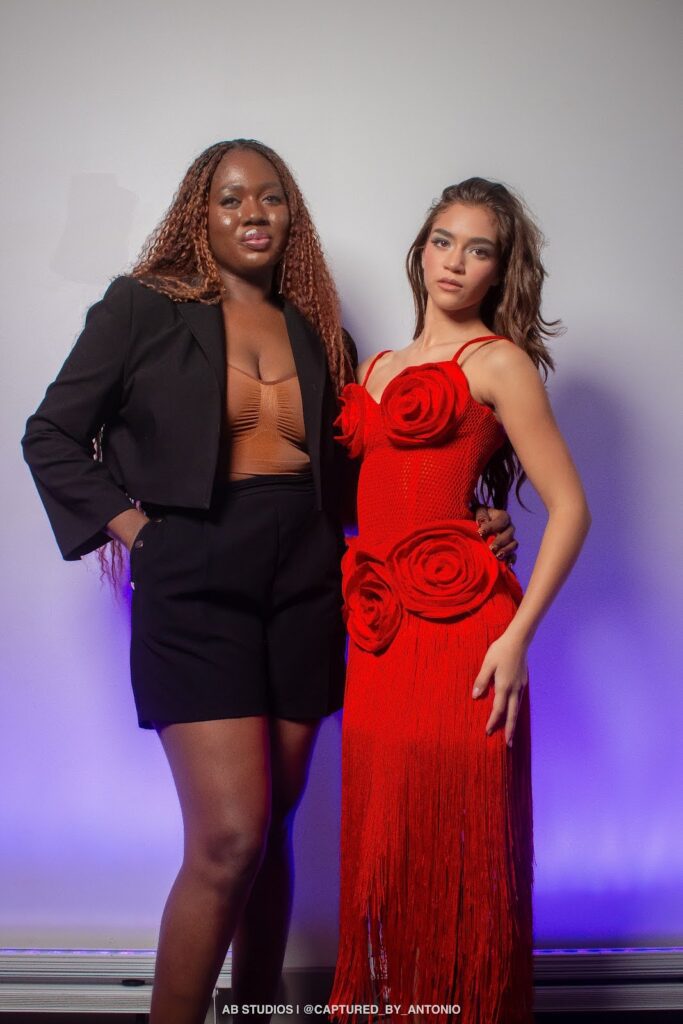
For Blessing Eleh, every collection is a sacred archive, and she steps into them as a storyteller. Her Lagos studio built Bibi Lawrence into a global luxury brand, incorporating cultural depth with modern design. The label has been featured in Dallas Fashion Week 2025 and in Netflix’s Blood Sisters, and is worn by women who view couture as a language, not a show.
The fact that one sees it on international fashion shows is already symbolic of the shift in the way African luxury is perceived. That Lagos workshop idea has blossomed into life and is now thriving in galleries and boutiques across continents. Each garment, hand-sewn, locally sourced, ethically produced, tells the same narrative: Elegance need not shed its roots.
“Luxury is meaning made visual,” Eleh disclosed in a recent interview. “When someone adorns herself in Bibi Lawrence, she carries history lightly, not heavily.”
Building a House of HeritageEleh’s core is based on Igbo visual storytelling. The Isiagu has been a garment historically reserved for nobility, yet it can be seen in modern textiles today. Uli patterns, which were traditionally painted on the skin of women, have evolved into fine, embroidered lines that track the direction of movement. Every single one of these symbols is not merely ornamentation – they are all communication through Eleh’s hands, and she is creating a new beat for the history of Africa.
Critics have described Eleh’s designs as both minimalist and deliberate; she creates simple shapes, uses raffia to add texture and dimension to fabrics, and manipulates florals on fabrics to create new forms and proportions reminiscent of architecture. Every stitch is intentional, and every fold becomes a silent negotiation between traditional techniques passed down from ancestors and modern precision. Where other brands seek noise, Bibi Lawrence prefers silence – its beauty lives in restraint, in garments that seem to breathe rather than shout.
In addition to the aesthetic of Eleh’s designs, there is also an economic component that supports a larger community. With over sixty artisans working in her Lagos workshop (dyers, embroiderers, raffia weavers) who sustain themselves economically through the production cycle of Eleh’s designs, the atelier is essentially a guild rather than a factory. Not only is Eleh saving what could potentially be dying art forms, but she is also providing economic stability for families in Nigeria. She is designing a high-end house that prioritizes community over exclusivity.
Sustainability as Responsibility
Bibi Lawrence, prior to the global fashion industry’s shift towards sustainability, integrated sustainable practices into every aspect of her design process. She produces each of her collections in small quantities; if there is any leftover fabric, it is used to make accessories or smaller items, and all of her packaging is completely biodegradable. Her sustainable practices are a result of her values and have little to do with marketing.
Eleh discusses sustainability quietly, but takes action quickly. “We do not waste materials,” she says, “because we do not waste stories,” she continues, “Each fabric carries an imprint of someone’s labor, and that deserves respect.”
Eleh’s commitment to the environment has turned her brand into a quiet source of inspiration for young designers. Former students from Yaba College of Technology, where she once taught pattern interpretation, still visit her studio to observe her fitting and cutting processes. Through these informal sessions, they continue to learn how proportion can convey restraint and how traditional craftsmanship can live harmoniously with modern luxury.
The attention generated by her first Dallas Fashion Week show was evidence that authenticity travels. The Oge Ntoju (Full Bloom), which featured silk and raffia intertwined with coral-colored dresses that were reminiscent of Edo royalty, was described in reviews as “a portrait of calm confidence.” It was not a breakthrough for Eleh, but rather a continued expression of the way she has always communicated her ideas: telling African stories through refined craft.
Redefining Modern Luxury
On the international stage, Bibi Lawrence rejects the notion that African couture should depend on a spectacle. Eleh’s strength lies in restraint, the absence of excess supplanted by a technical discipline. The clothes she makes echo architectural clarity: fitted bodices, flowing skirts, movement governed by mathematical proportion. Her outfits are described by observers as serene, although quietly authoritative.
There is pathos in their quietude, meaning in their simplicity. It is, in Eleh’s view, another refracting lens through which couture becomes an expression of cultural responsibility, a living archive where creativity and duty come together.
On the business side, the same accuracy holds. By opting for a small-scale operation and transparent supply chains, Bibi Lawrence strikes a balance between artisanal craftsmanship and quality control, achieving what luxury was at a time before mass production: time, craft, and honesty. The overt success of the label has brought it to the attention of international buyers seeking genuine luxury without appropriation, marking a significant shift for African labels, which are entering the luxury market on their own terms.
Even with global attention, Eleh remains contained and deliberate – as serene in the public gaze as she is in her studio among fabric and sketches. Her focus never strays far from the essentials: cut, fit, and emotion.
“If my work tells people that Africa is exquisite, intellectual, and elegant,” she says, “then I have achieved what I set out to do.“
Bibi Lawrence exists as both a fashion house and a cultural institution, uniting heritage with modern luxury. Under Blessing Eleh’s vision, African couture advances through discipline and integrity, measured not by spectacle but by purpose.
The fashion industry contributes approximately 20 percent of global water pollution, creating one of the most pressing environmental challenges of our time. Synthetic materials and chemical-intensive production processes have turned clothing manufacturing into a major ecological threat. Water systems worldwide suffer contamination from textile dyes, finishing chemicals, and pesticide runoff from conventional cotton farming.
House of Nanii, a California-based fashion company, addresses this crisis through pesticide-free linen production methods. Designer Nanii Nnamdi has built the brand around sustainable practices that eliminate harmful chemicals from the manufacturing process. The company’s Solomon Collection represents a departure from industry norms, using premium linen that requires minimal water and zero pesticides during cultivation.
The brand’s philosophy is a cultural storytelling. His global perspective heritage influences each garment design, creating pieces that blend traditional patterns with contemporary silhouettes. This approach has generated significant social media growth, with followers increasing from 250 to 5,980 on Facebook and from 125 to 8,150 on Instagram since the April 2024 beta launch.
Linen’s Natural Advantage Over Synthetic Alternatives
Linen production requires 80 percent less water than conventional cotton cultivation. The flax plant, from which linen originates, grows in poor soil conditions without irrigation in most climates. Every part of the flax plant finds use in various industries, creating zero waste during processing. This efficiency contrasts sharply with synthetic fabric production, which relies on petroleum-based materials and energy-intensive manufacturing.
Chemical treatments common in synthetic textile production release volatile organic compounds into waterways. Polyester manufacturing alone generates nitrous oxide emissions 310x more potent than carbon dioxide. Linen processing eliminates these harmful byproducts through natural fiber preparation methods. The material’s durability means garments last longer, reducing replacement frequency and overall consumption.
House of Nanii’s linen sourcing prioritizes organic farming methods that rebuild soil health. Pesticide-free cultivation protects local ecosystems and groundwater supplies. The company’s supplier network spans regions where flax grows naturally, reducing transportation emissions. These practices align with increasing consumer demand for transparency in fashion supply chains.
Photo Courtesy of Nanii Nnamdi
Cultural Heritage Meets Environmental Responsibility
The Solomon Collection incorporates contemporary global design elements into modern menswear. Earthy and vibrant colors reflect natural dye techniques that avoid synthetic colorants. Heritage patterns appear in contemporary cuts designed for the modern masculine physique. Each piece tells a story that connects cultural identity with environmental consciousness.
Nanii’s global travel experiences inform the design process, creating garments that echo across cultures. Artisanal detailing preserves traditional craftsmanship techniques often lost in mass production. The collection targets niche communities seeking authentic cultural expression through sustainable fashion choices. This specificity allows the brand to compete effectively despite industry saturation.
Building Tomorrow’s Sustainable Fashion Standard
House of Nanii plans to use linen exclusively in all products by 2035. This timeline allows for gradual supply chain development and customer education about the benefits of natural fibers. The company’s current focus on menswear will expand to include women’s fashion and accessories. Each product category will maintain the same production standards.
The brand’s growth strategy prioritizes quality over quantity, directly opposing fast fashion principles. Limited production runs create exclusivity while reducing environmental impact. Direct-to-consumer sales through the company website eliminate retail markup and packaging waste. This model allows for transparent pricing that reflects actual production costs.
Fashion industry transformation requires brands willing to sacrifice short-term profits for the long-term. House of Nanii demonstrates that environmental responsibility can coexist with culture and commercial success. The company’s pesticide-free linen production offers a replicable model for reducing fashion’s water pollution contribution. Future collections will continue exploring natural fiber applications, cultural authenticity, and environmental standards.
Pre-order (or rather MTO) on Overshirts and Cotton Crewnecks
Friday, November 7th 2025Tags: Permanent style
Share
Share this post
Subscribe
0 Comments
||- Begin Content -||
The window opens today for ordering three PS spring/summer items ahead of time: the Linen Overshirts, the Suede Overshirts and the Cotton Crewnecks. Ordering ahead guarantees everyone a piece before it sells out, and it opens up the potential for extra colours and sizes.
They’re all on a dedicated page here.
Our plan is now to offer this twice a year – once in the autumn for the following spring, and once in the spring for the autumn. Back in March we offered the Donegal coats and cashmere knits, and those were delivered in September and October. Now we’re offering spring/summer pieces to deliver in March or April.
The offer in March was popular – we sold almost as many knits and Donegals then as we have in the autumn so far. Readers seem to like guaranteeing availability, but also the ability to order unusual sizes (eg XXXL) and have access to different materials.
The camelhair Donegal, for example, was one of the most expensive things we’ve done but it sold quickly and has been asked about ever since. We won’t offer that again, but we’ll probably find an another interesting material to offer next year. As everyone becomes familiar with the structure, they’ll hopefully learn to pounce if they really like something.
So in this pre-order we’re offering:
The linen overshirts in four existing colours The cotton crewnecks in all previous colours plus three new ones The suede overshirts in five colours, only one of which is ever stocked A deerskin version of the overshirt for the first time
Before we get into the detail on those though, an important word on pre-order vs made-to-order.
All the pieces that are part of this process are made specifically for the customer. Even if there are no adjustments and it’s in a regular size and colour, it is still made only because they ordered it.
As a result, these orders cannot be returned or exchanged. We can’t put them back into stock or swap them with things in stock, because the products and sizes available would get distorted for everyone else.
This has always been the case (and it says it on the ordering page) but some readers have been confused. So, to try and make things clearer we’re going to call these ‘made to order’ (MTO) going forward, rather than pre-order. Hopefully that makes it clear that it’s not reserving something that’s about to come out, but ordering an extra one, for you personally.
Please let me know if you’ve ever been confused by it too, and what would have helped!
So, here’s the breakdown of this autumn’s MTO:
Overall:
Ordering window is the month of November; all orders must be received by the end of the month Delivery is March for the cotton crewnecks and suede overshirts, April for the linen overshirts All payments can be made upfront, or half on order, half on delivery All orders are non-returnable (unless there is a fault with the product of course) and non-exchangeable. If you’re worried about sizing, for example, it’s best to wait until the regular stock arrives
Linen Overshirts:
Available in four colours: Navy, Brown, Black, Dark Olive (only those colours, not Light Olive or Tobacco, as we only have cloth in those) All four colours and a new cream colour will be stocked in the spring Available in all sizes from XXS to XXXL. Please email for measurements if not covered by the existing size chart Product details available on the shop page here
Cotton Crewnecks:
Available in six colours: Navy, Cream, Black and Latte and three new ones, Brown, Sky and Olive (a greater range of colours as we don’t have to pre-order materials) Only the first four colours will be stocked in the spring The three new colours are shown above. Visitors to the pop-up shops in London and New York will have already seen these in person Available in all sizes from XXS to XXXL. Please email for measurements if not covered by the existing size chart Product details available on the shop page here
Suede Overshirts:
Available in five colours of suede: Navy, Brown, Black, Sand, Tobacco (the navy and brown are very dark shades) Only the Brown will be in stock in the spring. The tobacco has previously been the only one in stock Unlike the other products, adjustments can be requested to sleeve length and body length (it’s more expensive, but as it’s an expensive product we can afford it) Available in all sizes from XXS to XXXL. Please email for measurements if not covered by the existing size chart Product details available on the shop page here
Deerskin Overshirt
A beautiful dark-brown deerskin version, with a grey wool/cashmere lining and two internal chest pockets This was a bit of an experiment but we took it to the pop-ups to see what people thought, and it went down well Apart from the lining and internal pockets, it’s exactly the same as the normal suede overshirt More expensive (£3100 plus taxes) entirely due to the materials, the soft deerskin and the lining Same sizes available as the Suede Overshirts, and same adjustments possible to the body length and sleeve length Product details available on the shop page here
Related posts
Pre-order (or rather MTO) on Overshirts and Cotton Crewnecks
November 7th 2025 – 0 Comments
Read More
Why a bespoke suit is like a haircut
November 5th 2025 – 40 Comments
Read More
Ralph Lauren cap: How great things age
November 3rd 2025 – 73 Comments
Read More
<!–
Subscribe to this post
You can follow the discussion on Pre-order (or rather MTO) on Overshirts and Cotton Crewnecks by entering your email address in the box below. You will then receive an email every time a new comment is added. These will also contain a link to a page where you can stop the alerts, and remove all of your related data from the site.
Haircuts are a bit like bespoke suits (stay with me on this one). Just like a bespoke suit, a good haircut is very personal and individual. Just like a bespoke suit, it depends on communication and developing a relationship. And just like a bespoke suit, it makes the wearer look good without anyone necessarily being able to say why, or at least how.
I was having a conversation with Lucas recently about his hairdresser Tom Bushnell (above, top) and these parallels kept coming up. I thought it was an interesting topic, because men I know struggle with it just as much as they do with commissioning a suit.
Of course I know nothing about hair. I started going bald at 19, and it was cut short soon after. But Lucas is blessed with flowing locks, a veritable mane. And it didn’t always look this way; he didn’t always like his hair or know what to do about it.
“For a while I went to classic places like Trumper’s, because they have the history and tradition. But they weren’t really interested in any of my views or what I wanted. It wasn’t great, but it took me a long time to realise it,” he told me.
“Then for a while I went to local Turkish barbers. They do a job, but frankly I was always a little scared what I was going to come out with. My attitude back then (this was my late twenties) was basically to get a short back and sides and let it grow out for as long as possible – get value for money.”
Eventually, about five years ago, Lucas started going to Tom based off the recommendation of some menswear friends. “Initially I was doing the same thing, just having it short, but Tom gradually drew out of me what I wanted to look like, kind of what my references were.”
The reference Lucas brings up most is Robert Redford, with his long blond locks, wispy over the ears. But while that’s accurate to an extent – you can see from the pictures that Lucas’s hair is now longer than it was – the haircut is also different. Lucas doesn’t have a fringe for example, and there’s more weight on the back.
This is where comparisons with a tailor are also relevant. Because bespoke customers often bring in pictures of suits they like, in order to demonstrate a style. They’re not going to look like the person in the picture – but the tailor’s skill is understanding from those pictures what the customer wants, and then making a version of it that works for them.
And, one that suits not just their body but their style too. Go into any Savile Row tailor and they’ll cut you a navy suit that flatters you – they’ll adjust lapels, length, buttoning point, drape and pitch to perfection. But is a sharp, structured suit really what you want? Is it what you’ll get most use out of?
“This is an area I really enjoy – understanding someone’s personality and what expresses it,” Tom told me when we met. “I’m a big fan of art, architecture, fashion, so I like talking to clients about what they like as a way into that discussion.”
As with tailors, Tom finds a lot of first-time customers come in with pictures: “They won’t have the vocabulary to talk about what they want, so they’ll bring photos. But they’re always apologetic about it, slightly embarrassed, saying something along the lines of ‘I know you can’t actually make me look like him, but…’ They shouldn’t be embarrassed, it’s a great place to start.”
Lucas is a pretty laidback person, and one issue he had with his hair was that he wasn’t coming back after the recommended six weeks; it was more like 10. “When it got long enough on top it would sort of collapse and lie really flat,” he says. “Tom and I talked about it and we started cutting it a little shorter on top, so it never quite got to that point.”
I know I’m looking for these connections now, but this is just the kind of conversation a good tailor has about lifestyle. He might recommend stronger cloths, for example, because you wear your clothes hard and rarely get around to pressing them. “It’s all relevant,” Tom says. “A guy in the City will usually err towards a cleaner and neater hairstyle; a guy with young kids won’t be able to spend much time with products, and so on.”
Tom’s salon is a nice space, on the fourth floor of an Art Deco building in Bloomsbury. There’s a very relaxed vibe – somewhere you actually wouldn’t mind sitting for quarter of an hour and having a cup of tea.
He works on fashion shoots for brands as well as private clients, so there’s more of an art and design angle than most hairdressers. There’s also more of a particular menswear angle than I realised – clients include Thom Sweeney, Anglo-Italian, LEJ and P Johnson.
Still, it feels like a lot of these points apply to working with any hairdresser, and there are lots of parallels with tailoring. I’ll be interested to hear what readers have found over the years, and what parallels they see.
Related posts
Why a bespoke suit is like a haircut
November 5th 2025 – 9 Comments
Read More
Ralph Lauren cap: How great things age
November 3rd 2025 – 65 Comments
Read More
The menswear I got from my Dad
October 31st 2025 – 57 Comments
Read More
<!–
Subscribe to this post
You can follow the discussion on Why a bespoke suit is like a haircut by entering your email address in the box below. You will then receive an email every time a new comment is added. These will also contain a link to a page where you can stop the alerts, and remove all of your related data from the site.
Do you ever feel like your clothing is making you look heavier or shorter than you actually are? When it comes to dressing slimmer and tall, there’s no one-size-fits-all solution.
That’s why understanding how to dress for your specific body type is so important! In this article, we’ll show you how to dress to look slim and tall, by choosing the best fashion pieces that will flatter your figure.
Tips on How To Dress To Look Slim and Tall
As individuals, we all have unique body shapes that make us who we are. However, there may be times where we want to dress to look thin.
With the right outfit, we can accentuate our bodies’ naturally slim lines and create an elegant silhouette that exudes sophistication. The key is to choose clothing that complements our individual features, fits flawlessly, and flatters our body type.
From stylish yet flattering silhouettes that enhance a smaller frame, to tips on creating an elongated effect with accessories – this guide has all the information needed to ensure any man or woman can feel confident rocking their look!
Whether it’s a fitted dress or tailored trousers, dressing to look slim is about highlighting and embracing our unique beauty. So, next time you’re getting dressed, remember that dressing confidently is the ultimate secret to looking and feeling fabulous.
1. Understand your Body Type
Figuring out your body shape can be tricky, but it’s an important step to creating an amazing wardrobe. Different body shapes have different needs, especially when it comes to dressing for a slimmer look.
For example, you can elongate a short torso by wearing V-neck tops. High-waisted bottoms, such as skirts and pants, can create the illusion of a longer torso as well.
Knowing your shape is invaluable in building a wardrobe that flatters. By dressing according to the features that define your individual body type, you’ll look effortlessly slim and stunning!
Understanding your body type to dress slim
2. Choose Darker Colors
When thinking about colors that make you look thinner, reach for dark colors. A black outfit helps create the illusion of a smaller frame, as does selecting darker pants or a dark wash on jeans. If your goal is to look slimmer and taller, white pants can be quite unforgiving, not to mention, see-through!
Be sure to pay attention to fit – they should be slightly looser than closer fitting styles. Keep in mind that although deep hues are slimming, layering with lighter colors can also create a slimming impression, allowing you to balance the look and add further dimension.
Therefore, don’t be afraid to choose a range of colors – just ensure there’s always a predominance of dark tones!
3. Wear Clothing that Fits Properly
To look slim and tall, it is important to pay close attention to the fit of your clothing. Baggy clothes can create an unwanted bulky effect which has a negative impact on your silhouette; instead of achieving that slimmer look, you may end up with visible muffin tops.
Wearing ill-fitting garments can have the opposite effect and take away from accentuating your best features. When shopping for clothing, stick with pieces that show off your shape such as high-waisted jeans, form fitting blouses, and snug blazers.
Doing so will help you achieve a flattering silhouette without adding extra bulk.
4. Build an Illusion with Vertical Stripes or Patterns
Vertical lines and stripes can really help to slim down your look. This optical illusion gives items an elongating effect, making the wearer appear taller and slimmer in an instant.
One of the main tips for looking slim is to avoid horizontal stripes. That’s because horizontal lines can widen your frame and make you appear shorter than you really are.
Adding vertical patterns instead works like a charm. Diagonal lines also create an illusion of movement and direction on the body. This is especially true when vertical and diagonal lines are combined – the vertical lines streamline the body while the diagonal lines add visual interest.
Whether you opt for classic pinstripes, subtle stripes or loud geometric designs, you can build an illusion that instantly boosts your profile while accentuating your best features.
How to dress to look slim and tall
5. Accentuate the Positive
It is all too easy to look in the mirror and focus on our insecurities, so why not turn it around? Show off those curves, slim arms, and toned legs with fitted clothing that accentuates those assets.
To further enhance your best features, you can always add a wide belt in the right place to showcase your figure. If you don’t feel comfortable doing this, fear not! A longer jacket or blazer hitting at the hips is also a great way to visually lengthen your frame and make you look taller and more lean.
Showing off what you’re most proud of is a great way for women and men to gain confidence and break out of their comfort zone. Choose the best way to dress for your body type and put out there the most confident version of yourself that everyone deserves to show!
6. Take Care of Yourself
Taking care of yourself simply means exercising regularly and eating healthy. Not only does this help to keep your body in shape, but it can also help you get rid of any extra pounds you may have gained.
Exercise not only keeps your body in a physically fit state, but it also helps your mental wellbeing by making you feel better about yourself and able to handle day-to-day stressors with ease. Eating healthily can support your overall health as well as boost energy levels and make sure you look your best when dressing for work or a night out.
When eating healthy, make sure you consume nutritious food, like fruits and vegetables, rather than processed or sugary foods that can cause weight gain. And don’t forget to stay hydrated throughout the day! Taking good care of yourself is essential for looking slim, feeling tall, and being confident in how you dress up.
Keep well hydrated
Tips to Make You Look Taller and Slimmer for Men
Are you above average height or a bit on the shorter side? Do you have a long and lean frame, or is your body structure more….solid?
There’s no need to despair if you don’t fit the stereotype of men with over 6 feet tall towering frames! You can still dress to look taller and slimmer by dressing strategically.
Here are some tricks and tips for how fashionable men can make smart choices to achieve an elongated look that helps them appear taller and slimmer, so read on for our comprehensive guide!
1. Choose Vertical Lines
Outfit ideas to dress to look taller and slimmer for men include using vertical lines. Vertical stripes, pinstripes and higher v-necks help create the illusion of height, making the figure appear elongated.
These can be found in various shirt styles, with accessories such as ties, cummerbunds, suspenders and pocket squares adding to the lengthened silhouette. In addition to the vertical lines, wearing tailored suits with narrow lapels also gives the impression of a longer body line.
With these styling tips in mind, you’ll be able to select an outfit that not only looks great, but creates an amplified and confident stature.
Narrow lapel suit
2. Wear Monochrome Colors
Dressing to look taller and slimmer is one of the easiest ways to instantly add confidence to your look. One of the simplest yet most effective tricks to do this is to opt for monochromatic outfits.
This technique works by having a single color scheme that creates an even line from your head down to your feet, giving the illusion of a taller frame. To make the monochromatic look work for you, try combining pieces in similar hues, such as navy blue, black or cream, to create a cohesive result.
With just a few carefully chosen items from your wardrobe, you can easily maximize your height and feel confident wherever you go. This is also a good way to dress if you’re building a wardrobe of outfits on a budget.
A monochromatic outfit
3. Invest in Well-Fitting Clothes
To achieve a taller and slimmer look, investing in clothes that fit your body type is essential. Clothes that are too loose or oversized will add bulk and make you look wider—the complete opposite of what we’re aiming for.
Instead, opt for garments made with lighter materials such as chambray and cotton blends. Look out for straight cuts and other designs that create a more streamlined effect with minimal layering to give the illusion of height.
Good quality fabrics like wool blends, silk, and linen can also be used to elongate the frame even further. With these fabric, color, and cutting tips, you’ll definitely be able to establish an effortlessly polished profile!
When it comes to looking taller and slimmer, avoiding baggy clothing is essential. If you wear clothes that are too big for you, your silhouette will be broader and won’t give the illusion of height.
Choose clothes that fit comfortably but are neither too tight nor too loose. Clothing that fits right should have a balance between being fitted in the right areas without looking like it is squeezing you. Additionally, look for structured clothing which will create a stronger outline along the body and make you look taller and slimmer.
Cashmere wool fabric
4. Stick with Slim-Fit Trousers
When it comes to looking taller and slimmer, slim-fit trousers are your best friend. The close-fitted silhouette elongates the leg line by pulling attention from the waist to the feet.
These types of trousers also help create a leaner look for men in almost any body type, bringing emphasis on the length rather than the width. So if you’re looking to appear taller, investing in a few pairs of slim-fit trousers that you can experiment with will be an excellent choice.
5. Try Wearing a Blazer or Slim-Fit Jacket
If you’re looking to appear taller and slimmer without breaking the bank, try wearing a blazer for your desired results. A well-fitting blazer or jacket is an ideal choice for those blessed with a larger frame to help give them shape and structure – plus it adds an extra layer of sophistication.
When choosing a color, solid hues are best at creating balance and adding length to your outfit; try going for darker shades that are known to flatter and elongate the body. With one simple option you can already see a difference!
6. Find a Good Tailor
Investing in a skilled tailor is one of the best decisions you can make if you want to look slimmer and taller. Not only do they typically have years of experience working with different body types, but they can pin hems, adjust waistlines and magnificently alter clothes for any desired silhouette.
With their talent and eye for detail, a bespoke tailor will help you find the perfect fit that not only looks flattering, but also fits with your personal style. So if you don’t have time to find exactly what you’re looking for while shopping, don’t hesitate to book an appointment with a professional – they will save you much more time in the long run!
Bespoke tailoring
How To Dress to Look Slimmer and Taller for Women
Are you looking for fashion-forward ways to look slimmer and taller? Whether it is a business event, casual outing with friends or date night, it can be daunting trying to sift through myriad of style options for your body type.
Well fret no more! We’re here to provide useful insights on how to effectively dress better in order to create an illusion of long lean lines and flattering shapes. With our straightforward guidance, you will have the confidence and know-how needed to make the right wardrobe choices!
1. Start with the Right Foundation Garments
Every woman can benefit from a good set of shape wear. It will help to give a streamlined look to your outfits.
This is especially helpful for curvy women who may not be able to find clothing that hug their bodies just right and accentuate all the right places. Not only will the right undergarment provide additional structure, it can also provide a bit of added confidence as well.
Investing in quality shapewear is worth it in the long run, because it guarantees that you are dressed perfectly every single time.
2. Choose Slimming Fabrics
Choosing the right fabrics is an important part of dressing to look slimmer and taller for women. Fabrics like lightweight linens and cotton blends can hang straight and flatter your figure, while Lycra can pull everything in for a slimming effect.
Linen is stylish and comfortable – perfect for summer days. Don’t be afraid to experiment with different textures, patterns, and fits to find what works best for you. By choosing slimming fabrics, you can create flattering outfits that make you look taller without sacrificing style or comfort.
A slimming linen white dress – how to look slimmer
3. Use Pattern Carefully
When it comes to choosing outfits that make you look slimmer and taller, pattern is key. Opting for busy prints can be distracting.
Instead, focus on color blocking with darker shades at the bottom and lighter colors on top. This helps to elongate your body and create a streamlined silhouette that accentuates curves but camouflage any lumps or bumps!
Dressing smarter doesn’t always mean wearing dull colors; contrasting navy blue trousers with an olive green blouse is a great example of how wearing carefully chosen colors can help create an illusion of being taller and slimmer.
4. Add Height and Interest with Accessories
When looking to elongate your figure, accessories can play a huge role. If you wear high heels with a pointed toe, it will help to make your legs appear longer.
Not only do they add inches to height, but also the pointy toe will help to define the shape of your foot. Nude shoes are a great option to visually lengthen the leg.
Additionally, high-impact accessories like long necklaces can help too. Not only do statement necklaces draw attention upwards and make you feel confident in yourself, but they can also create an illusion of length by continuing the eye up towards your chin and face instead of stopping at your waist.
Wide belts can make you look shorter, as they break the body up. If wearing one, try to make sure that the color matches the rest of your outfit to avoid this issue. Skinny belts won’t usually create the same issue and are universally flattering.
Nude heels elongate your legs
5. Pay Attention to Fit
If you want to create a slimming and elongated silhouette, one of the most important aspects to remember is fit. It’s essential that your clothes fit properly and don’t look too baggy for your frame.
Choosing the correct size for items such as skirts, blouses and trousers can be a huge help in creating the effect you desire. Making sure you measure yourself accurately to find your correct clothing size can go a long way in helping you achieve an optimal fit.
With fitted clothes that skim instead of hang off your body, you’ll be well on your way to appearing both slimmer and taller!
6. Adapt How You Dress to Your Body Shape
It’s essential to learn the key characteristics of each body shape: hourglass figures tend towards small waistlines; pear shapes often feature lower hips than busts; and those with an apple-shaped figure show off defined shoulders, with the rest of their shape less well defined.
For petite women wanting to look slimmer and taller, it’s all about finding the best balance of clothing to accentuate their shape. While finding an illusion of height can be achieved by wearing vertical stripes or heels, staying away from too much fabric can help women appear trimmer too. Try a knee high pencil skirt to look slimmer.
For instance, a single-breasted blazer is ideal for giving your waist definition and balancing out curves – something which avoiding baggy styles – like a double-breasted blazer – can better allow for. Pair it with a wrap dress for a stylish and comfy look.
In addition, V-neck tops, or high-waisted bottoms also create a lengthening effect – as they draw the eye down in one direction.
Lastly, carrying a crossed body bag will not only distribute the width around your frame but add an extra layer of slimming too!
Monochromatic beige suit – how to look thinner
Final Thoughts on How To Dress to Look Slim and Tall
All in all, learning how to dress to look slimmer and taller is all about finding the right balance between flattering your best features and creating an illusion of length. From foundation garments to tailoring clothes correctly, there are many ways to make sure you look your best without compromising on comfort or style.
Although your genetics may not give you the stature of a supermodel, taking advantage of clothing colors and cuts can help present yourself in a way that looks slim and tall. Dressing for your body type will ensure that you look good from every angle, while using colors and patterns to create an illusion of a longer and leaner frame will give the appearance of being slimmer and taller.
Always bear in mind the principles of slimming fabrics, vertical stripes, proper fit and accessories such as cool hats that can add height. With the help of these strategies, you can be confident in any outfit you put together.
Don’t forget to take care of yourself; healthy eating habits combined with regular exercise can do wonders for improving your body shape and overall wellbeing. And remember, for even more style tips and trends keep reading our other articles!
Luxury today demands more than stitched labels or sleek ads—it requires brands to spark moments people remember. Sandro Paris proved this truth in Montreal when it partnered with House of XM, the agency fusing style with immersion for brands seeking to stand out. Instead of another store launch fading from memory, Sandro delivered an invitation: step in and discover a slice of Paris that pulses with energy and surprise.
Foot traffic did not find a traditional shopping space. Instead, guests encountered ambassadors styled in Sandro’s latest collection, visually enticing photo setups, and a flow of treats that turned the day into a private celebration. The numbers validated this effort. Over 2,000 experiences with more than 300 visitors continuing their journey from the pop-up into the new flagship. Every moment felt spontaneous, yet deeply memorable.
Brand Stories Beat Dusty Store Shelves Every Time
Sandro Paris recognized that shoppers scroll and swipe before they decide where to visit. Rather than depend solely on its reputation, the brand leaned on House of XM to put energy and personality front and center. Millennials and Generation Z now devote almost 70 percent of their discretionary incomes to experiences instead of things. With consumer priorities shifting, Sandro Paris moved decisively, making every in-person encounter count.
House of XM capitalized on this craving for meaning. Its team crafts events that blur the boundary between retail and memory, allowing each first impression to linger well beyond the final Instagram post. Attention from bold brands followed, as more leaders sought to redefine customer relationships. “We’re all about creating experiences that really connect brands with consumers,” House of XM co-founder Samantha Martin shared, laying bare the agency’s philosophy. Sandro’s Montreal event surpassed expectations, reshaping how luxury can surprise and delight.
Pop-Ups and Personal Touches Make Brands Unforgettable
Face-to-face moments still ignite brand loyalty in ways screens cannot duplicate. Sandro and House of XM activated this reality with a pop-up that turned brief visits into lasting connections. Each time a guest snapped a photo or shared a treat, the brand narrative grew livelier and more personal.
Global interest in immersive events has reached a fever pitch, with spending projected to soar past $128 billion this year. House of XM’s expanding client roster—over 50 brands in just two years—proves that this focus on personal touch wins hearts and, ultimately, loyalty. Brands that devote themselves to these memorable exchanges keep themselves at the top of consumers’ minds well after a collection’s season passes.
Why Memories Outshine Logos in the Battle for Loyalty
Luxury claims the spotlight when it feels open, vibrant, and personal. Sandro Paris, guided by House of XM’s talent, proves bold brands can stay a step ahead by making every guest feel welcomed, never excluded. Exclusivity fades, but experiences with a sense of fun and authenticity create lasting appeal and turn casual visitors into dedicated fans.
Experiences today carry more weight than possessions alone. House of XM crafts these moments so they land with lasting resonance. Sandro Paris thrives because it understands this shift: memories trump mere shopping bags. In a whirlwind of fleeting trends and noisy markets, that singular pop-up moment in Montreal stood out as a signal of change. Guests did not just shop—they became part of the Sandro story.
With each interaction, House of XM makes clear that brands in luxury need to create not just products, but moments etched in the memory. That subtle Parisian excitement, felt in Montreal and shared far beyond, speaks to the future of luxury: a place where style lives in the heart, the mind, and, for those lucky enough to attend, in stories they will tell for years.
There have been a few companies popping up in recent years making higher-end baseball caps. Both the plain, dull, luxury ones that became a trend in the wake of Succession, and ones that look exactly like a traditional cap, just higher quality.
For me, this misses the point of a baseball cap, at least the type I like. The charm of a cap is the way it moulds to your head, how you bend the peak, how it fades and eventually frays.
It’s more akin to denim than flannel. The core aesthetic appeal of jeans is the way they fade and fray. It’s what gives them personality and makes each one unique.
People do make jeans that don’t age in this way – finer cottons, silk mixes, cashmere – but they feel more like denim trousers than jeans. I don’t wear them, but there’s nothing necessarily wrong with them*; it’s just a little misleading to call them jeans.
A baseball cap in a luxury cotton doesn’t fade or fray in the same way. There’s nothing wrong with making a leather strap that doesn’t fall apart, or a buckle that won’t fall off, but that’s a different type of quality. Don’t upgrade the leather into fine calf, or start using silver for the buckle thinking they’re necessarily better. It’s a question of style as well as quality.
Caps go through stages of ageing, and I can imagine some readers not liking all of them. To begin with, the cotton softens and moulds. I like to bend the peaks of mine a lot, and it’s pleasing when this sets in.
After a while, the fabric starts to fade. This can just be from the sun, but it’s accelerated when the cap gets wet, particularly with sweat or salt water. I love this second stage, but the cap is not as smart anymore. I like wearing an old salt-stained one with a smart navy overcoat (above) but that’s for the deliberate contrast, the high/low of it.
Then there’s a third stage, when the thing starts to fall apart. The peak frays and eventually blows out, revealing the plastic underneath. Other edges begin to break too, like the point where the peak meets the crown. I love this point, in the same way I love jeans that are barely hanging together**, but at this point – many hundreds of wears in – I understand if some readers don’t.
My vintage Ralph cap below is at that stage.
Readers have brought up the question of how aged is too aged – in reference to everything from tennis shoes to boat shoes, oxford shirts to blazer elbows.
The first thing to say is that it’s dependent on category. A hairy tweed jacket can look great with elbow patches; a smart worsted suit not so much.
Second, it depends on what style you’re after, and people like different styles. I understand why someone might prefer the New Era, snapback cap for example, and would wear it a certain way. They’re aiming for something different***.
Lastly, it’s a question of how far you want to go, which is more of a personal style question. You could see it as how far along the subtle/showy scale you like to be. I love my Doek tennis shoes and their frayed holes, but I wouldn’t put duct tape around my boat shoes. I love fraying on the collar of an oxford shirt, but when the collar’s actually coming off, that’s too much for me.
The Ralph caps I’ve shown here are from a small collection I’ve built up over the years, and hopefully they demonstrate the charm that comes from how they age.
I started buying the caps about 10 years ago, partly because I realised quite how much the brand meant to me and my journey in menswear. I’ve bought new, I’ve bought second hand, and often it’s for a particular colour, fade or logo.
I wrote a separate article a couple of years ago on caps in general, and in particular why they should have logos. It’s part of their charm in the same way as the fading – part of the heritage, a traditional way to show support for something – and in that way, a different little slice of your personality.
*well, not any more (there were trousers to go with that jacket)
**without getting to the point of fetishising it
***but personally I think the cashmere caps have no style at all
Related posts
On baseball caps – and logos in general
September 18th 2023 – 159 Comments
Read More
Hats with coats: A sliding scale
March 19th 2021 – 105 Comments
Read More
The cap
November 30th 2016 – 52 Comments
Read More
<!–
Subscribe to this post
You can follow the discussion on Ralph Lauren cap: How great things age by entering your email address in the box below. You will then receive an email every time a new comment is added. These will also contain a link to a page where you can stop the alerts, and remove all of your related data from the site.
Have you been following the news lately? Sewing is experiencing a strong comeback, with numerous recent articles highlighting its resurgence in popularity, especially among younger generations. The revival is driven by trends in sustainability, customization and personal fulfillment. It’s a reaction against fast fashion and serves both as a creative outlet and a therapeutic activity that promotes mindfulness and stress relief.
Who better to teach these new sewists? Well, University of Fashion of course!
Fashioning Identity
There are 30 million sewists in the U.S. alone, many of whom are teens and tweens. As younger generations crave both individuality and social connection, one of the best ways to get them off their screens is to send them to a sewing boot camp. Social media platforms like TikTok and Instagram have been driving interest among Gen Zers, by documenting their enthusiasm for sewing as a sustainable, expressive act, countering fast fashion with handmade clothing.
The New York Times’ Sept. 4, 2025—Article on sewing’s resurgence (Image credit: The New York Times)
Recently, The New York Times reported that sewing is “cool again”, pointing to a surge in demand for sewing classes, with people drawn to saving money, upcycling, and learning skills once associated mostly with older generations.
Harper’s Bazaar and similar outlets point to shifting cultural attitudes toward handmade garments—from “second-rate” to novel, valued, and often more expensive than off-the-rack options, driven by both quality and individuality.
Axios reported that people are flocking to sewing centers and learning how to embroider, alter and make items like tote bags, skirts and pants from scratch.
Entrepreneurial Sewing Workshops on the Rise
Looking to start your own business? If you are a great sewer and are looking for a new business idea, well, why not get a group subscription to UoF and open your own sewing workshop?
The New York Sewing Center at 246 W 38th Street, 9th Floor, Suite 9A, New York City (Image credit: The New York Sewing Center)
Inspired Sewistpreneurs
The New York Sewing Center in Midtown Manhattan, was founded by former fashion designer Kristine Frailing. She offers full day sewing boot camps, evening courses, embroidery workshops and classes on the basics of alteration.
At Carolina Textile District in Western North Carolina, workshops are being offered from basic sewing to materials sourcing and product development. CTD connects makers, designers, and entrepreneurs to a reliable domestic supply chain, so quality products can be made in the U.S.
In Washington, DC, Antoinette Lee opened her studio, A Special Lee Sewing Studio, out of her home and has been continuously offering sewing and upcycling classes.
In Miami, Jesy Anderson, owner and creator of Needle, Ink, and Thread opened her workshop in 2016. She even has a sewing class called Sew and Grow for kids.
Shop Rat, a popular weekly newsletter by Emilia Petrarca (Image credit: Shop Rat)
A promoter of fashion sustainability is journalist Emilia Petrarca who publishes Shop Rat, a newsletter featuring a Repair Month series with tips for saving your most beloved garments, including interviews with experts, personal mending adventures, and recommendations.
Eva Joan, a mending studio and one-stop -shop for alterations was founded by Bjorn Eva Park and Emma Villeneuve. Located at 28 Jane Street in New York City, the shop is named after their respective grandmothers.
Thrifting Stats — Did You Know…
According to Capital One Shopping Research:
16 to 18%of Americans shop at thrift stores each year; 12 to 15% shop at consignment or resale stores.
93% of Americans shop online for secondhand items.
In 2023, the U.S. secondhand market generated an estimated $53 billion in revenue.
There are over 25,000 resale, consignment, and not-for-profit resale shops in the U.S.
Thrift store shoppers save an average of $2,071 per year by purchasing secondhand.
Approximately one-third of clothing and apparel items purchased in the U.S. over the past year were secondhand.
So yes, sewing’s comeback isn’t just stylish, it’s a revolution!
Suppose you got a diamond ring for your engagement. It’s just beautiful, but it has come with the guilt that it must have made a larger-than-life hole in your fiancé’s pocket. Relax, it could be a lab-grown diamond, which is as bedazzling as a natural but with a lighter price tag. Obviously, you can’t ask your fiancé about it. Curiosity is eating you up, but so is the fear of being judged or sounding ungrateful. Relax, you are on the right page; this blog will guide you through the whole process of identifying a diamond’s origin without feeling awkward or embarrassed.
Diamonds dazzle. But not all sparkle comes from ages under Earth’s crust — some equally sparkling are born in labs. As a word, when used independently, ‘Diamond’ primarily signifies a natural diamond. Terms like lab-grown, laboratory-grown, synthetic, or man-made diamond are specified to authenticate the origin or manufacturing process. But what if it’s not mentioned?
Can You Tell With Your Naked Eyes a Laboratory-Grown Diamond From a Natural Diamond?
No. Both look identical to the unaided eye. Advances in technology have blurred the line so much that even experienced jewelers usually can’t tell without magnification or instruments. That’s why you need to rely on certifications, inscriptions, and professional testing.
If you want to buy wisely (no regrets later), knowing the difference is more than just trivia — it protects value, ethics, and trust.
How Do I Know Whether I’m Purchasing a Natural or a Laboratory-Grown Diamond?
Diamonds may all sparkle the same to a layperson, but not all are created the same way. Some are born deep in the Earth over billions of years, while others are grown inside a lab in just weeks. With lab-grown diamonds often 40–60% cheaper than mined ones, understanding the difference is crucial to preserving both value and trust.
Here’s a clear, expert-backed guide—drawing on insights from the Natural Diamond Council and Grown Diamond Corp—to help you tell them apart.
1. Check for Certification from Reputable Gemological Institutes.
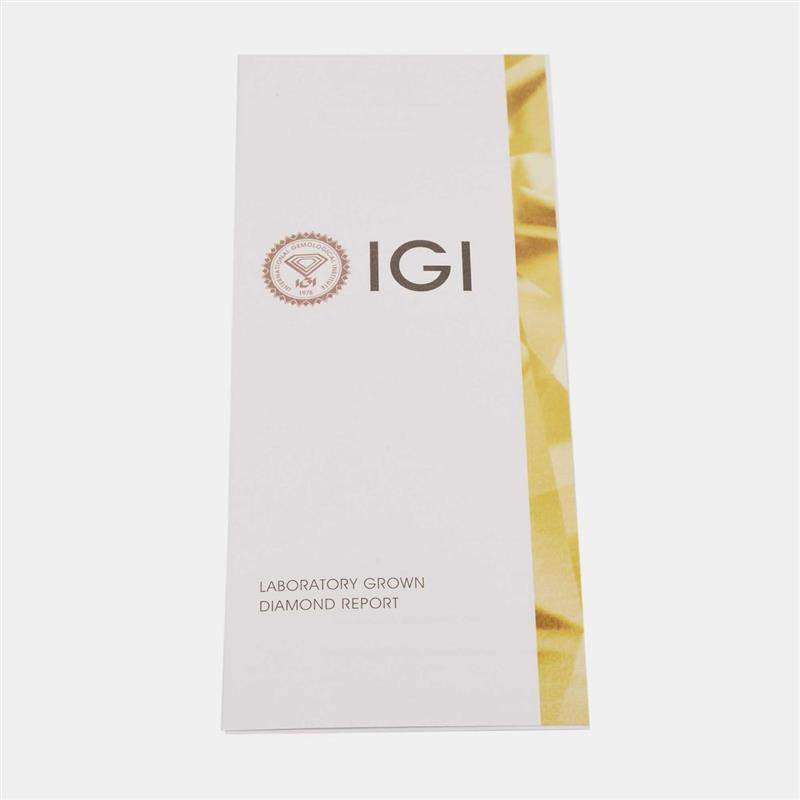
The most reliable way to determine a diamond’s origin is through certification from trusted organizations, such as the Gemological Institute of America (GIA), the International Gemological Institute (IGI), or SGL Labs. These reports detail whether a diamond is natural or lab-grown, as well as other characteristics such as cut, clarity, and carat weight.
What to Look For: GIA and IGI reports explicitly state “Lab-Grown” or “Natural” in their documentation. For lab-grown diamonds, the certificate may also mention the growth method (HPHT or CVD).
Why It Matters: Certifications provide an unbiased, professional assessment, ensuring a seller’s claims do not mislead you.
Tip: Always request to see the original certificate or verify the report number online through the institute’s database.
2. Inspect for Laser Inscriptions Under Magnification
Many diamonds, especially those certified by GIA or IGI, feature microscopic laser inscriptions on their girdle (the diamond’s outer edge). These inscriptions include the certificate number and, for lab-grown diamonds, often indicate their synthetic origin.
What to Look For: Use a jeweler’s loupe (10x magnification) or a microscope to inspect the girdle for inscriptions such as “Lab-Grown,” “LG,” or the certificate number. Natural diamonds typically only have the certificate number.
Why It Matters: Laser inscriptions offer a quick and non-invasive method for verifying a diamond’s authenticity, particularly when combined with a corresponding certificate.
What the Natural Diamond Council (NDC) says: Legal definitions and advertising guidelines mandate that lab-grown diamonds must be clearly disclosed as such. Certification reports must state whether the stone is natural or lab-grown, and if lab-grown, the specific process used (CVD or HPHT) must be specified.
Tip: Always ask to see the grading report. If the report doesn’t explicitly say “natural,” assume lab-grown or undisclosed. Labels like “diamond” without qualifiers tend to imply natural diamonds legally.
3. Examine Inclusions and Growth Patterns.
While both lab-grown and natural diamonds may have inclusions (internal flaws), their growth patterns differ due to the distinct formation processes involved in their creation. Natural Diamonds form over millions of years under the extreme conditions of Earth, while lab-grown diamonds are created in weeks under controlled environments.
Natural diamonds: Formed over millions to billions of years deep in Earth’s mantle. Their growth patterns (grain, crystal structure) are complex, often irregular, with inclusions like minerals, feathers, or tiny “nature marks.”
Lab-grown diamonds, Especially Those Grown Using CVD or HPHT methods, exhibit distinct growth structures. For instance, growth striations, metallic inclusions, or clearer, more uniform features. Under magnification + with specialized tools, these patterns are distinguishable.
The NDC report notes that because crystals grow differently in natural environments versus laboratory environments, their grain or structural patterns differ, and professional instruments utilize this to distinguish them.
Tip: These differences, though subtle, can be identified by a trained gemologist using a microscope.
4. Use Specialized Testing Methods.
According to the NDC, all lab-grown diamonds can be identified by professionals with the right equipment. Advanced testing methods, typically conducted by gemological laboratories or skilled jewelers, can definitively distinguish between lab-grown and natural diamonds. These tests analyze properties that differ due to the diamonds’ formation environments.
Spectroscopic & Fluorescence Tools
Fluorescence under UV light: Natural diamonds often contain nitrogen impurities, which affect their fluorescence. Lab-grown diamonds tend to have very low nitrogen or other impurity profiles; their fluorescence response can be more uniform or different under UV or short-wave light. Spectroscopy & impurity analysis: Professionals use instruments that can detect trace elements, measure composition, and interpret spectral fingerprints. These include checking nitrogen content and how the diamond responds to UV or infrared light. Fourier-Transform Infrared (FTIR) or Raman spectroscopy can detect subtle differences in the diamond’s molecular structure, identifying markers specific to the growth method. According to the Natural Diamond Council’s data, lab-grown diamonds produced via colorless processes often remove nearly all nitrogen, which is a common impurity (~99%) in natural diamonds. This leads to different behavior under UV / spectral analysis.
Electrical Conductivity: Some lab-grown diamonds (especially HPHT) conduct electricity due to trace elements, while most natural diamonds do not.
Tip: These tests provide scientific precision, leaving no room for doubt about a diamond’s origin.
5. Seek a Professional Appraisal
When in doubt, a trusted jeweler or certified gemologist can provide an expert appraisal. They combine visual inspection, certification verification, and advanced testing to confirm a diamond’s origin.
Why It Matters: A professional’s expertise ensures accuracy, especially for high-value purchases, where misidentification could result in significant financial loss.
How to Choose: Select a jeweler with credentials from organizations like the American Gem Society (AGS) or one who uses GIA/IGI standards.
Additional safeguards: Utilize ASSURE program tools, which the NDC oversees, for performance testing of verification instruments. Ensure the jeweller or lab uses instruments that have been validated under such programs.
Tip: Avoid appraisals from sellers with a vested interest in the sale, as they may lack impartiality.
FAQs: Common Questions About Identifying Lab-Grown vs. Natural Diamonds.
Why It’s Becoming Harder to Tell Lab-Grown from Natural Diamonds?
Lab-grown diamonds, created using High-Pressure High-Temperature (HPHT) or Chemical Vapor Deposition (CVD) methods, share the same chemical and physical properties as natural diamonds. Both are composed of carbon atoms in a crystal lattice, making them visually and structurally similar. Modern production techniques have refined lab-grown diamonds to closely mimic natural ones closely, often requiring specialized tools or expertise to distinguish them from natural ones. This similarity, combined with their lower cost (usually 30-50% less than natural diamonds), has made accurate identification critical for buyers seeking transparency.
What Tools Are Used to Detect Synthetic and Natural Diamonds?
Specialized instruments are required. Examples include:
DiamondView/De Beers testers reveal fluorescence and growth patterns.
Spectroscopic analyzers measure impurities, such as nitrogen content.
ASSURE-tested verification devices – certified tools for reliable identification.
Together, these tools make detection close to 100% accurate.
How do I know whether I’m purchasing a natural or a laboratory-grown diamond?
To ensure you’re purchasing the intended type of diamond, always request a certification from a reputable gemological institute, such as GIA or IGI, which clearly states whether the diamond is natural or lab-grown. Additionally, check for laser inscriptions on the diamond’s girdle. Consult a professional gemologist for an appraisal or request advanced testing (e.g., spectroscopy) if no certificate is available. Verifying these details with a trusted, independent source is key to avoiding misrepresentation.
Can you check if a diamond is lab-grown at home?
While basic checks, such as using a jeweler’s loupe to inspect inscriptions or inclusions, can be performed at home, definitive identification often requires professional tools, including spectroscopy or UV testing. For accurate results, consult a gemologist.
Do lab-grown diamonds test as “real” on a diamond tester?
Let’s make one thing clear- lab-grown diamonds are very much real, albeit not natural. Yes, lab-grown diamonds test as natural on standard diamond testers because they have the same chemical composition (carbon) as natural diamonds. Testers distinguish diamonds from simulants, such as moissanite, but not lab-grown diamonds from natural ones.
How to Buy Smart and Avoid Confusion: Choose The Luxury Closet.
Distinguishing between lab-grown and natural diamonds primarily depends on certification, inspection, and expert verification. Always check for a GIA or IGI certificate, look for laser inscriptions, and seek professional appraisals for high-value pieces. While lab-grown diamonds offer affordability and ethical appeal, natural diamonds remain prized for their rarity and heritage. The key is buying with confidence and transparency.
That’s why The Luxury Closet brings you The Diamond Edit—an exclusive collection of GIA-certified lab-grown diamond jewelry. Curated for clarity, quality, and authenticity, it’s your trusted destination for diamonds that dazzle and are yet affordable without doubt.
True luxury doesn’t and shouldn’t cost the Earth — literally. Learn why lab-grown diamonds are becoming the ethical icons of modern fine jewelry, proving that brilliance and responsibility can shine side by side.
Brilliance Without Burden (On Mother Earth and on your wallet): The Rise of Lab-Grown Diamonds
Luxury has continually evolved with time — and today, it’s undergoing one of its most meaningful transformations yet. As conscious consumerism takes center stage, the world is rethinking what “value” and “beauty” truly mean. And nowhere is this shift more brilliant than in the rise of lab-grown diamonds — the ethically created, scientifically perfected gems redefining modern luxury.
From Mines to Minds: The Rise of Ethical Elegance in Lab Grown Diamond
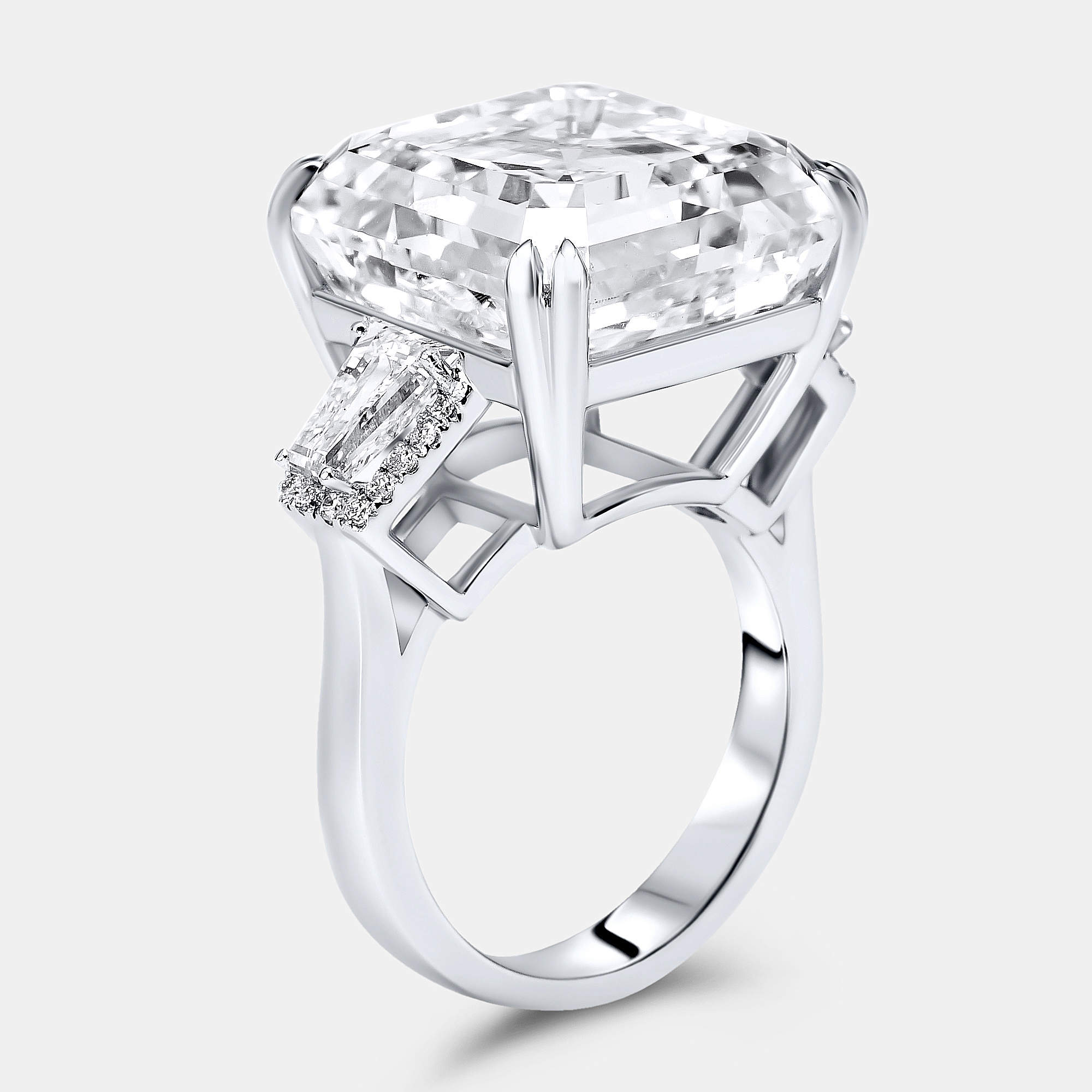
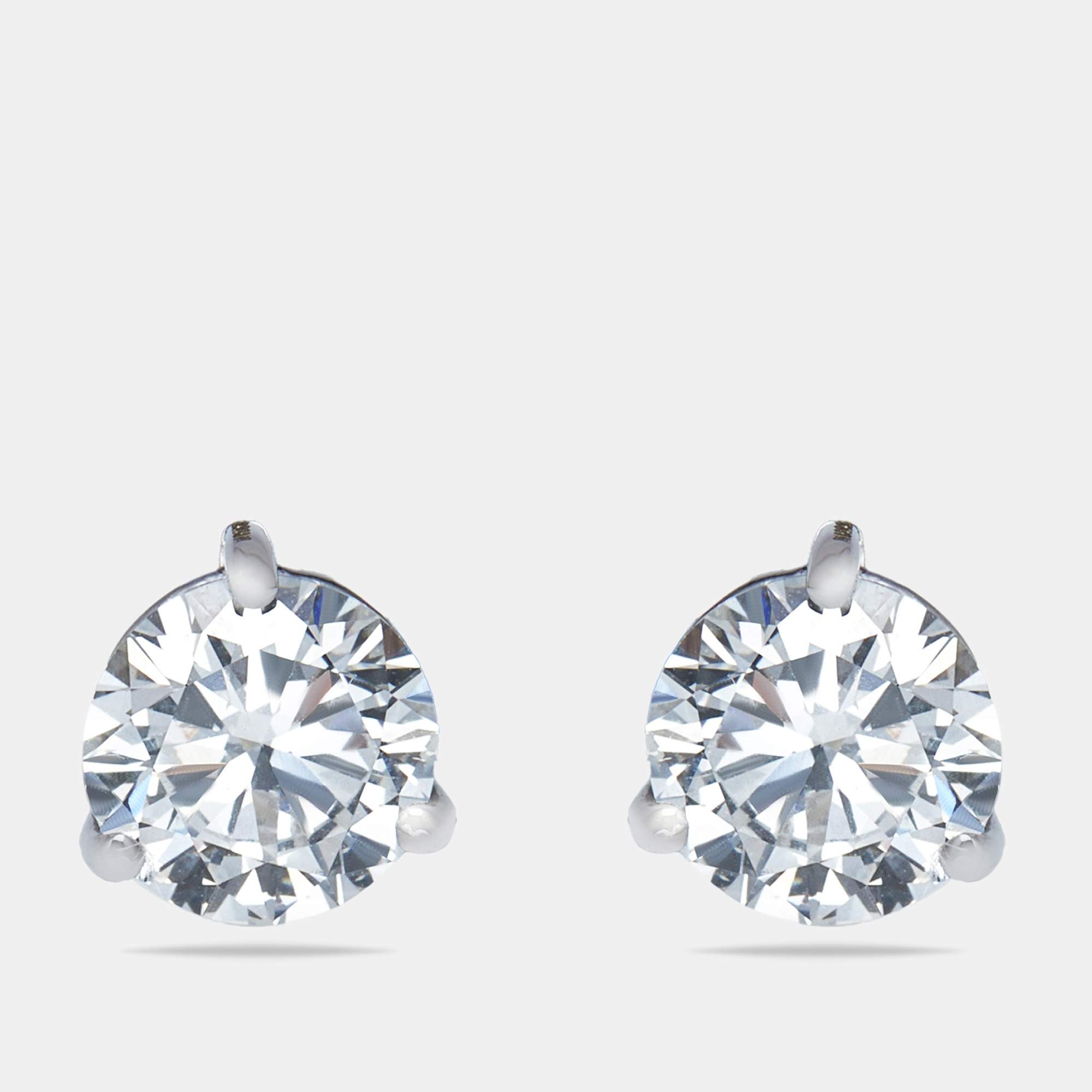
23.2 cts Asscher, Trapezoid, and Round Lab Grown Diamond 18k White Gold Ring Size 52
For decades, traditional diamond mining symbolized exclusivity — but it also carried the weight of environmental disruption and ethical controversy. In contrast, lab-grown diamonds represent a clean break from that legacy. Created using advanced technology that replicates the Earth’s natural diamond-forming process, these stones are physically and chemically identical to mined ones — yet carry none of the baggage.
It’s not just innovation; it’s intentional evolution — where ethics and aesthetics finally coexist.
Sustainability Meets Sparkle
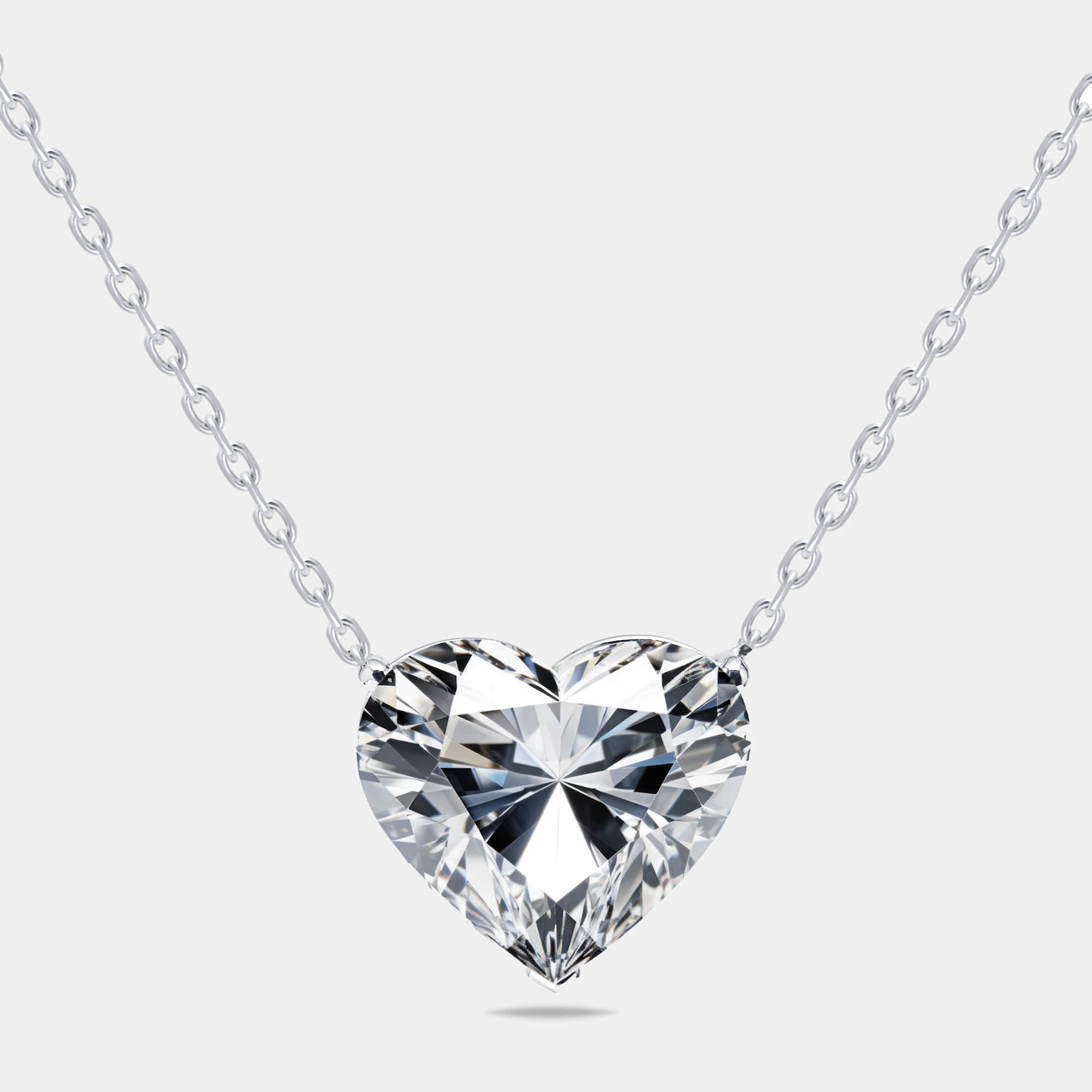
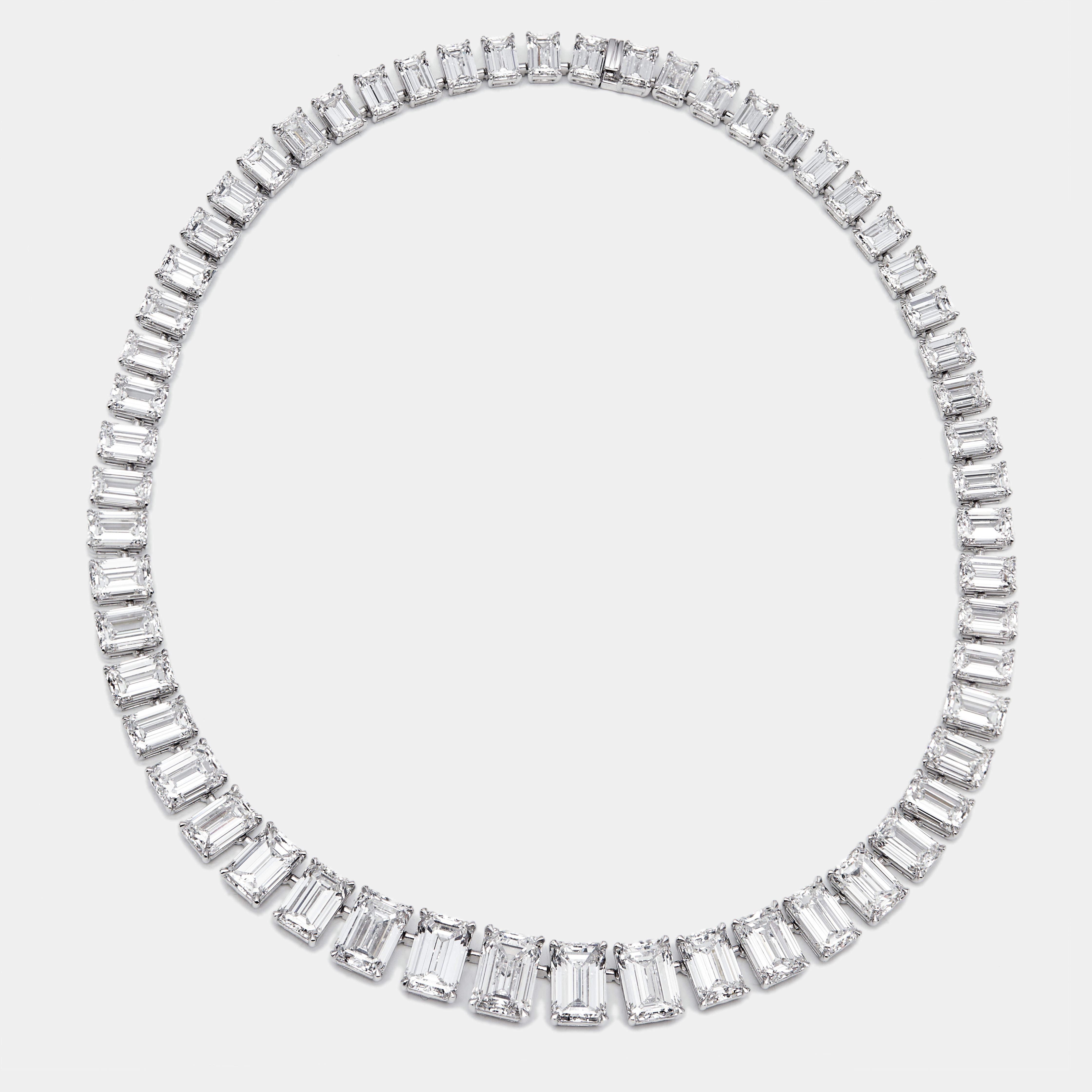
9 cts Heart Lab Grown Diamonds 18k White Gold Necklace
The brilliance of lab-grown diamonds lies in more than their flawless symmetry. It’s in their drastically smaller footprint:
Minimal environmental damage: No earth displacement, no ecosystem disruption.
Lower carbon emissions: Up to 60% fewer CO₂ emissions compared to mining when powered by renewable energy, though this can vary based on the lab’s energy source.
Reduced water waste: Sustainable labs reuse and recycle water instead of draining natural sources.
For a generation that values conscious consumption as much as couture craftsmanship, lab-grown diamonds are the ultimate statement of responsibility — and refinement.
Science as the New Art Form
Behind every lab-grown diamond is a remarkable fusion of science, artistry, and precision. Using cutting-edge methods such as CVD (Chemical Vapor Deposition) and HPHT (High Pressure High Temperature), laboratories recreate the conditions deep within the Earth’s mantle — only this time, without the ethical cost.
The results are breathtaking. Lab-grown diamonds often achieve higher clarity and color consistency than mined ones, making them the perfect canvas for modern fine jewelry — from minimalist solitaires to avant-garde designs.
Lab-Grown Vs Mined Diamonds Comparison
Aspect
Lab-Grown Diamonds
Mined Diamonds
Environmental Impact Lower CO₂ (up to 60% less with renewables); no mining disruption. High CO₂ (e.g., 143 lbs per carat); ecosystem damage
Cost 60–90% less than comparable mined stones Higher due to rarity and extraction costs
Ethical Concerns Conflict-free; transparent supply chain Potential for conflict diamonds and labor issues
Quality Often higher clarity and consistency Variable; natural inclusions common
Production Time Weeks in a lab Billions of years in nature
Luxury is no longer about owning what’s rarest; it’s about cherishing what’s responsibly created and timelessly relevant. Global heritage brands — from Cartier and Pandora to Swarovski — are already embracing the shift, blending innovation with integrity.
At The Luxury Closet, we see this same transformation in motion every day, just as pre-owned fashion champions circularity, lab-grown diamonds celebrate sustainability without sacrificing status. Both prove that conscious choices can coexist beautifully with elevated taste.
Smart Value Without Compromise
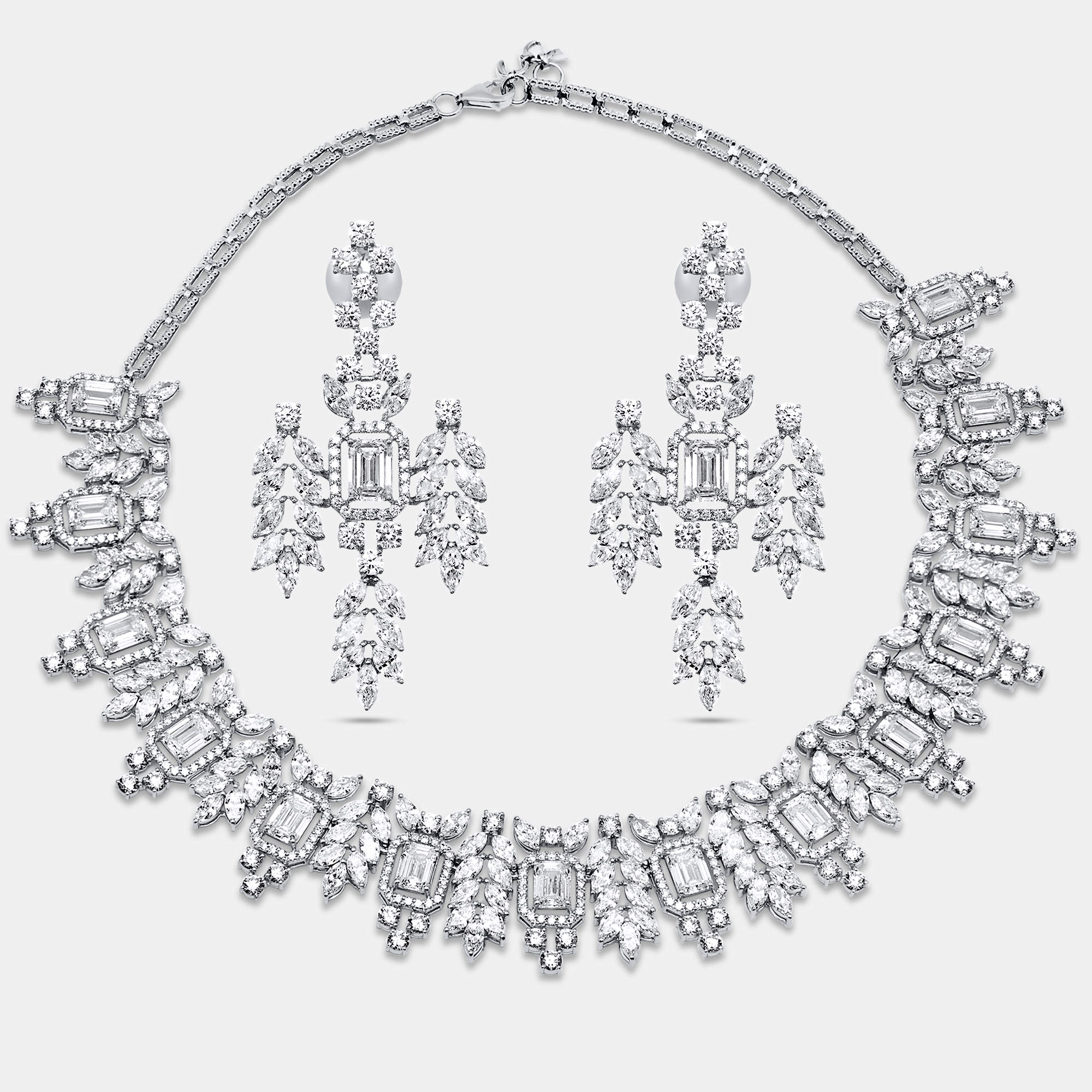
55.46 Cts Marquise Round Emerald 18K White Gold Lab Grown Diamonds Necklace Set
Here’s another reason the world is sparkling with interest: lab-grown diamonds typically cost 60–90% less than mined stones of identical size and quality. That’s not a discount — it’s smart luxury. You’re investing in the same brilliance, backed by transparency and technology, while saving both money and the planet.
At a time when luxury is measured by mindfulness, this is elegance redefined.
The Future of Luxury Is Circular — and Conflict-Free
The era of mined opulence is fading. The new icons of luxury are lab-grown, pre-owned, and planet-conscious — designed for those who understand that sophistication comes with accountability.
Whether it’s a pre-loved Cartier Love Bracelet or a lab-grown diamond ring, the essence of sustainable luxury is the same: beauty that gives back more than it takes.
At The Luxury Closet, we believe the future of fine jewelry lies in this perfect balance — where craftsmanship meets conscience, and where brilliance shines even brighter because it’s built on purpose and certified.