Couture

Home Couture Page 2

Strap Drop and Handle Drop: Why Designer Bag Fit Matters

Strap Drop and Handle Drop: Why Designer Bag Fit Matters


Strap drop and handle drop determine whether a beautiful bag is comfortable on your body, over layers, and during real use. When comparing authenticated pre-owned pieces on Couture USA, the practical question is not just whether a bag is beautiful, but whether it fits your routine, care tolerance, and budget. Start with a clear checklist so the photos, dimensions, return window, and condition notes have a job before a tempting listing takes over.

Louis Vuitton LV x YK Capucines MM Bag from Couture USA. Product photos can help you check shape, scale, material, and visible wear before comparing current listings.

Quick buyer takeaway

Strap drop and handle drop determine whether a beautiful bag is comfortable on your body, over layers, and during real use. The right shortlist should make the piece easier to use, not just easier to admire.

Couture USA offers authenticated pre-owned luxury, free shipping, and a 14-day return policy. Those details matter because a pre-owned bag decision depends on trust, condition clarity, and whether the item can be evaluated calmly once it arrives.

What to check before you shortlist

Before comparing prices, make sure the listing answers the practical questions a careful buyer would ask in person. Strong listings make condition visible rather than asking you to infer it from a polished first photo.

Listed strap drop and handle drop.
Adjustable or removable strap hardware.
Where the bag sits at the hip or underarm.
Handle clearance over coats or blazers.

How to compare the options

Use the same comparison frame for every candidate. That keeps a rare color, famous logo, or tempting markdown from overpowering the details that determine whether you will actually carry the piece.

Shopping situation
What usually matters most
How to confirm it

Hand carry
prioritize handle feel, structure, and whether the bag bumps the wrist
Compare photos, dimensions, condition notes, and policy details before checkout.

Shoulder carry
confirm underarm clearance and strap width
Compare photos, dimensions, condition notes, and policy details before checkout.

Crossbody carry
check full strap length, bag depth, and how the piece sits while walking
Compare photos, dimensions, condition notes, and policy details before checkout.

Photo and condition details that deserve extra attention

Zoom in on contact points: corners, strap edges, handles, bases, closures, zipper pulls, and interiors. These areas show how a piece was used and whether the written condition notes match the visual evidence.

For general designer bag browsing, compare the whole category first, then narrow by designer once the daily job is clear. Couture USA’s collection pages make it easier to move between Louis Vuitton, Chanel, Hermes, and the broader designer bag collection.

Before checkout: score the piece like a buyer

Give the listing a simple pass-fail review before you let scarcity or a markdown decide for you. A strong candidate should satisfy the practical job, show the wear clearly, and leave you with no major unanswered questions about authenticity, returns, fit, or care.

Use case: the piece solves the main reason you started shopping, whether that is daily carry, work, travel, gifting, or a polished evening option.

Condition: the visible wear matches the written notes and falls within what you will still enjoy using.

Fit: dimensions, strap drop, closure, and capacity work with your body, wardrobe, and essentials.

Confidence: authentication language, return policy, and seller detail are clear enough for the price level.

Common mistakes to avoid

Assuming a chain strap is automatically crossbody length.
Forgetting winter layers.
Buying a work bag that becomes uncomfortable when full.

A pre-owned piece can still be an excellent buy with visible wear, but the wear should be understood before checkout. The goal is not perfection; it is alignment between price, condition, use case, and expectations.

Where to browse next on Couture USA

Use these checks before moving into the live inventory pages that match your intent. Start broad if you are comparing designers; go directly to the brand collection if you already know the house you want.

FAQs

What is strap drop?

Strap drop is the distance from the top of the strap to the top of the bag when the strap is held up. It helps estimate where the bag will sit on your body.

Can photos replace measurements?

Photos help, but measurements are safer. Model height, camera angle, and styling can make the same bag look very different.


Source link

Nathan Turk and the influence of Western tailoring

Nathan Turk and the influence of Western tailoring


Nathan Turk and the influence of Western tailoring

Monday, July 20th 2026
Share

Subscribe
6 Comments
Add to favourites
||- Begin Content -||
An archive Nathan Turk shirt owned by the author

A column by Ethan Newton.

I had a revelation a few years ago, one so elementary that I don’t know why it never occurred to me before. Every year and every season we create the history of clothing – this is our responsibility as product designers, and a great opportunity.

There are eras of garment design that hold my imagination in trance, about which I will consume all the information I can possibly find – the lore and the legend, the catalogues, the advertisements, all the instances of history that paint layer upon layer to create a movement.

That these movements were borne out of industries much like the one we find ourselves in today, makes me realise how instrumental we can be in the history of design.

Ethan

My father once told me I was named after a character in the Western film ‘The Searchers’ – John Wayne’s civil war general Ethan Edwards – and I remember it compounded with many other early memories.

My father reciting the opening salvo of Frankie Laine’s ‘Wanted Man’ with a theatricality I still mimic today. Western movies on a Sunday afternoon where boots and holsters and saddles mixed with the sound of my mother’s sewing machine whirring away in the background. Roy Rogers and Gene Autry rubbing shoulders with Sgt Pepper-era Beatles in my own personal zeitgeist. Western utilitarianism and 1960s homemaking florals. 

You realise over time how much these things make up the fabric of your own design philosophy, whether you realise it or not. These influences were so deeply ingrained in me that I didn’t really become cognisant of it until years after the garments it inspired were already broken down and faded.

Nathan Turk
Maddox Bros and Rose, outfitted by Turk

Nathan Turk

You could start that story by talking about Nathan Turk (above). Turk was a Hungarian-Jewish immigrant who, from his shop in North Hollywood in the 1930s, brought the influences of his Eastern European Jewish heritage, Norwegian Rosemaling design and Swedish Kurbitz to the American West. 

With a Cornely Chainstitch machine, he gave the austerity of early western wear a distinctly Eastern European flavour, one which came to represent Hollywood’s image of the American cowboy. When the Sons of the Pioneers sung ‘Cool Water’, or the original singing cowboy Gene Autry strode on stage, their Americanness was profoundly influenced by Nathan Turk’s Eastern European roots.

Nathan Turk walked so that Nudie Cohn could run – just as Tex Williams strode so that Elvis Presley could strut.

Nudie Cohn with Gram Parsons
An early Nudie label

Nudie Cohn (above, left) pushed the singing-cowboy aesthetic a step or three further. European chain stitch was interpreted into rhinestones and sequins, the florals seen on Tex Williams a few decades earlier becoming sequinned cannabis leaves and naked ladies on Gram Parsons’s iconic white Nudie suit (above, right).

Elvis’s sequined jump suits were equally influenced by the outfits of the singer Spade Cooley, in much the same way Elton John’s ostentatious stage presence was influenced by Elvis. 

Manuel Cuevas measuring Johnny Cash
Manuel Cuevas and Marty Stuart

Manuel Cuevas and on

Manuel Cuevas continued the chain. As a Mexican master tailor working under Nudie, he took these Eastern European folk influences and gave them an authentic Mexican perspective.

Traditional hand embroidery of Charro suits and mariachi uniforms influenced the next generation of stage performers – folk florals combined with religious iconography, roses and crosses realised in metallic thread. 

The boxiness of 40s cowboy suits evolved through the influence of the ultra-tailored charro suits and Campesino garments into something more elegant and architectural, with Bob Dylan, Marty Stuart (above, right) and Dwight Yoakam incorporating his work into their style. 

When the musician Orville Peck uses fringe and mask to create his own particular Western personality, or designer Alessandro Michele brings sleek glamour to Gucci, they have Nathan Turk to thank, whether they know it or not (and I suspect they do).

Bob Dylan in a Manuel Cuevas suit

From Eastern Europe to North Hollywood to the back streets of Harajuku (where our Bryceland’s store is today) these influences and cultures mixed and mated, and at the tail end of that is me – an Australian with a father who dreamed of the cowboy life, and a mother who can still quilt and embroider with far more finesse than I can.

As designers we have a hand in creating the design zeitgeist of each era we inhabit. For every iconic moment in clothing, there was a designer or an artisan realising their own perspective, shaping the world around them for the next generation. While none of us have the wheel to ourselves, we all get to steer the course slightly in our own direction.

Lazy design, driven by heavy branding and novelty, tries to pull us off course. It’s our responsibility to be diligent in design, and make this era one worthy of referencing in the years and generations to come.

Dwight Yoakam wearing Manuel Cuevas
<!–

–>


Source link

What I Learned After 25+ Years as a Fashion College Professor — Part One – University of Fashion Blog

What I Learned After 25+ Years as a Fashion College Professor — Part One – University of Fashion Blog


After decades in fashion education, I often find myself reflecting on what truly matters for aspiring designers. When considering new topics to share with our community of subscribers and followers, one idea stood out: why not pass along the most valuable lessons I’ve learned over the past 25+ years?

During my time at the Fashion Institute of Technology—17 years teaching in the classroom and 3 years serving as Chair of the Fashion Design department and then 6 years teaching graduate level fashion design at the Academy of Art —I had a front-row seat to students’ journeys into the fashion industry. I saw firsthand how they navigated everything from the application process to making the most of their education once accepted.

In this two-part series, Part One focuses on guiding prospective students through selecting and applying to fashion colleges. Part Two will shift to supporting educators, offering insights on how to help students thrive and create a meaningful, positive experience once they begin their fashion school journey.

How to Pick a Fashion College

list of two-year fashion collegesUoF’s free list of global fashion schools — 2-year and 4-year fashion school options. (Image credit: University of Fashion.com)

Choosing the right fashion college is one of the most important decisions in your journey. As you explore your options, take time to ask yourself a few key questions:

How far from home am I willing to go for school?
Should I pursue a two-year program or commit to a four-year degree?
Which schools offer the strongest programs for my specific interests? For instance, if you’re passionate about costume design, which colleges specialize in that field?
What famous fashion designers graduated from this college?
What are the admission requirements, and can I realistically meet them? Consider factors like minimum GPA, standardized test scores, and, most importantly, portfolio expectations.
What is the tuition and do they offer scholarships and/or financing options?

Once you’ve researched and narrowed down the schools that you’re excited about, the next step is applying. Be sure to schedule visits to your top choices whenever possible. Walking the campus and experiencing the environment firsthand can help you picture your life there. For example, some students accepted to FIT later realized that living in a fast-paced city like New York wasn’t the right fit for them.

The Fashion College Application Process

Image of UoF's lesson, Portfolio Tips for Fashion College AdmissionsUniversity of Fashion’s lesson, Portfolio Tips for Fashion College Admissions (Image credit: University of Fashion)

In a recent conversation with Tina, a Chicago-based high school senior applying to fashion schools, she described the process as anxiety-producing and overwhelming. Her high school did not offer sewing classes, and its art program lacked guidance on building a fashion portfolio, leaving her to navigate the requirements on her own. Many of the schools she applied to expected both sewn garments and a strong fashion illustration portfolio. A surprise since wasn’t that the whole reason she should go to a fashion school in the first place?

Fortunately, Tina had an early advantage. During her sophomore year, her aunt gifted her a subscription to University of Fashion. Through its lessons she learned how to sew, draw fashion figures, and develop a cohesive portfolio. The platform also provided valuable resources, including a global directory of fashion schools, guidance on crafting a compelling admissions essay, and insight into what makes a portfolio stand out. The lesson, Portfolio Tips for Fashion College Admissions is an amazing guide that takes you through the whole process and is taught by a current FIT professor.

Tina also discovered that expectations vary by school. Some programs require original fashion design work, while others accept fine art pieces as part of the portfolio.

As applicants prepare their materials, it is important to ask:

Does my personal statement clearly express my passion for fashion?
Am I knowledgeable about the fashion history, current industry trends, and key sectors such as couture, luxury, and sustainable fashion?

Fashion college admissions teams want to see that applicants are fully committed and genuinely invested in pursuing fashion.

The Dos & Don’t of the Fashion College Essay

Your portfolio matters, but your essay should reveal who you are as an artist. Some schools require an artist statement—use it to explain your work, philosophy, aesthetic, and point of view. Colleges are looking for fresh, exciting, and innovative work. Show what makes your voice meaningful in fashion. Read the essay requirements carefully, since they want you to answer the question, not just talk about what you want to talk about.

Essay Dos

Image of UoF's lesson, 100 Years of Fashion Rebels & RevolutionariesFrom UoF’s costume history lesson series, 100 Years of Fashion Rebels & Revolutionaries – Part 1. (Image credit) University of Fashion).

Immerse yourself in fashion—costume history, magazines, blogs, fashion shows and exhibitions—and stay aware of broader culture, from museums to pop and emerging artists. Know key designers, both established and new, and understand enough fashion history to reference it thoughtfully (e.g., Chanel’s legacy, the New Look, punk and grunge).

Write from a clear sense of the impact you want to make in the industry. You can also explore how the internet and digital culture are reshaping fashion, from early adopters to the contrast with traditional, big-budget fashion houses.

Essay Don’ts

Avoid clichéd essays, such as claiming you want to be a designer because you dress well or because you expect to inherit a family fashion business. Be cautious with questions about negative work experiences or strengths and weaknesses; always balance any weakness with a corresponding strength. For example, missing deadlines can be framed as a result of your commitment to producing high-quality work.

Take your essay seriously. Write concisely, avoid repetition, and remember that longer is not always better. Have a teacher or mentor review your work and allow time for revision—strong writing is a process. An A.I. essay is always discoverable.

The 5 Essential Principles for a Great Portfolio


image of a designer's fashion college admissions portfolio

Example of a fashion college admissions portfolio — including an inspiration/mood image, fashion sketches, flat sketches, neat fabric swatches and clean & clear signage. (Image credit: Nancy Kwan for University of Fashion)

When preparing your portfolio, regardless of the school you’re applying to, there are five essential principles to keep in mind.

First, ensure your portfolio feels cohesive, with a clear and consistent visual direction, starting with your inspiration.

Second, presentation matters—avoid anything that appears sloppy or smudged. If you include fabric swatches, they should be cleanly cut, properly labeled, and thoughtfully aligned with your designs.

image of designer Fashion College Admissions Portfolio

Example of a fashion college admissions portfolio — including an inspiration/mood image, stylized fashion sketches, neatly cut fabric swatches and clean & clear signage. (Image credit: Ziyon Gong for University of Fashion)

Third, avoid relying on croquis templates from books or the internet. Develop your own sketching style so it reflects your unique design voice and aligns with your aesthetic.

Fourth, focus on technical accuracy in your sketches. Demonstrate your understanding of construction by clearly indicating details such as darts and garment openings.

How to Feature Your Garment Designs

images of how to feature your sewn garments in your portfolioExamples of how to creatively feature your garment designs. (Image credit: University of Fashion)

If you are including sewn examples of your work, create the best possible format for doing so. For example, shoot the garments on a model, then artfully place them on a background listing the design description and fabric choice. Or exhibit them artfully on a dress form. You can kill your portfolio with images that you haven’t spent time on. Professionalism matters.

In conclusion, invest the time to curate a visually compelling portfolio that is innovative, forward-thinking, and an authentic reflection of your passion for fashion. A thoughtfully crafted presentation will resonate with any admissions team. Aim for a portfolio that clearly communicates creativity, dedication, and the promise that you will represent their institution with distinction.


Source link

Alessandro Gasparini: Refined low-vamp loafers

Alessandro Gasparini: Refined low-vamp loafers


Alessandro Gasparini: Refined low-vamp loafers

Friday, July 17th 2026
Share

Subscribe
4 Comments
Add to favourites
||- Begin Content -||

Alessandro Gasparini makes high-end loafers that are slim and light: Blake stitched, but with materials on a par with the likes of an Edward Green or John Lobb. 

That’s probably the most important thing to say first, as the prices can seem high compared to some Blake-stitched loafers or Belgians: leather models are £545 and suede £525. That price is largely because of the quality of the materials and make, rather than being a big designer brand. 

Interestingly though, Gasparini’s background is in brands, having been a shoe designer at various ones over the years, including Dunhill. Like a few new outfits we’ve covered recently – August Special, Museum Garments – he’s coming to this with experience, and that’s why the product feels so complete, rather than work in progress.

The Moccaso in black leather

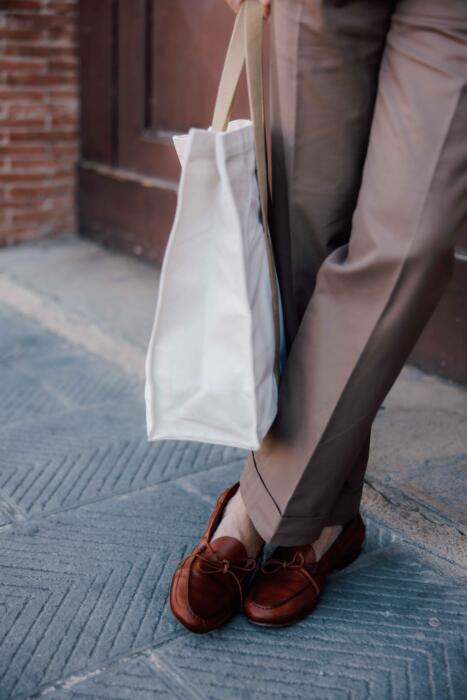
The other thing to establish early is that I have a pair (the black smooth leather above) and have been wearing them frequently over the past three months. The fit is probably the best I’ve had in a low-vamp loafer like this, and they were comfortable straight away. 

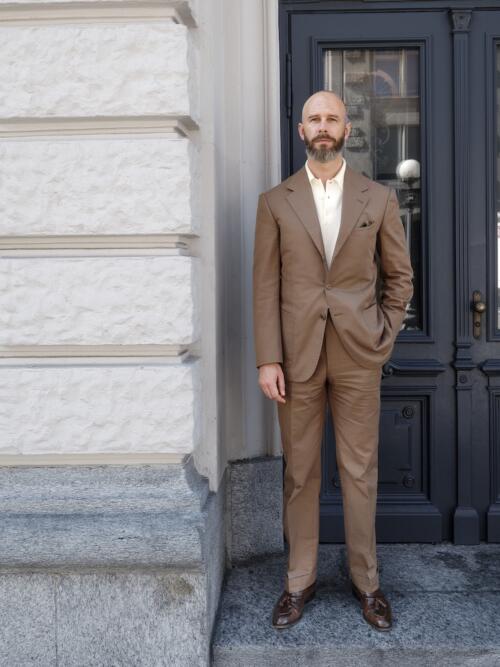
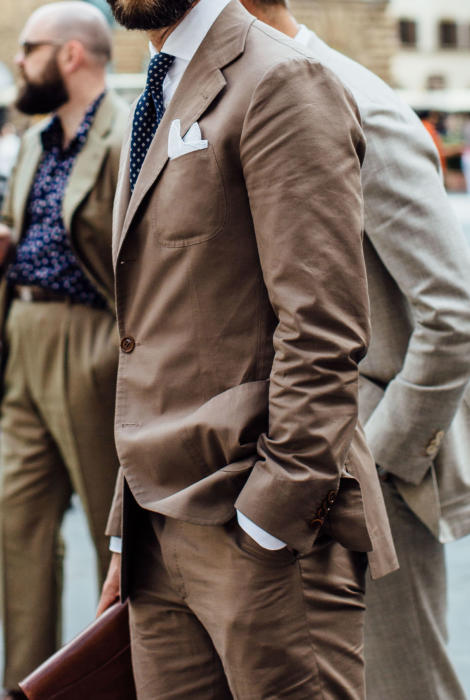
I took my regular shoe size – 9 UK, 43 EU – and apart from a little biting on the joint of my big toe, which always happens with me, they fit very well. I wore them consistently during Pitti (where they are pictured here – with a cotton suit at top and my Whitcomb cotton jacket below) and they did very well.

My slim heel means I often get a lot of heel slippage, particularly in something like Alden, but here it was minimal. Of course, this is personal and depends on your foot, but hopefully the experience is helpful to get a sense of what the shape is like. 

The loafers in a semi-smart outfit

Gasparini worked designing women’s shoe lines as well as men’s, but as often happens with these start-ups, struggled to find shoes he wanted. 

“Partly that was because of the size of my feet,” he says. “I’m a size 6 and few people go down that far. But also, I liked 1980s styles in particular, Ralph Lauren ones from back then with a low throat line.”

A throat line, I learned, is what bespoke shoemakers also call the top line – the top of the shoe around the ankle and the sides of the feet. This is indeed lower on Gasparini’s shoes, though I’d say it’s barely noticeable. The low vamp – how far the front of the shoe extends up your foot – is more noticeable. 

“It felt fresh to me, showing more of the instep,” he says. “I didn’t want to make them look vintage or old, from a particular era, just fresh and elegant. So I started making them myself in the factories I was working with, and people started asking me where they could buy them.”

Vintage 1980s alligator loafers with a low vamp

I’ve been wearing an old pair of 1980s Ralph Lauren loafers quite a lot since I found them on eBay a couple of years ago, which is a coincidence – that’s them pictured above, and they were also in this article on wearing black shoes with jeans.  

The style is slightly unusual and more feminine, although that’s also subjective – a lot of those 80s suits that were seen as so masculine were worn with slim, low-vamped Italian shoes.

And I’ve found both my old Ralph ones and these Gasparinis very wearable. In fact, probably more wearable than the Belgian loafers from Baudoin & Lange and others that have been so popular for the last 15 years or so. They feel simpler and more classic. 

The Gasparini loafer doesn’t have some of the innovations of the B&L Sagan, but I don’t find it any less comfortable. This is partly due to the quality of the materials – the full leather sock and lining is really nice even against bare skin – but there is also a thin layer of padding on the insole.

The suede loafer with its turned top edge (so no stitching)
“Initially I made the shoes in Milan, because it was easy – I was flying home to Como from London all the time, so I could stop in and see them,” says Gasparini. “But they mostly made women’s shoes there, and you could feel they were too perfect and too delicate.

He moved the production to a small workshop in the Marche, which makes more men’s shoes, and preferred that: “The attitude with womenswear is just always to keep things clean and perfect, but the men’s is about craft that makes things look better with age, which I love.” 

He did keep some of the elements from those first designs. For example, the suede loafers have a turned finish on the top line, so there’s no visible seam. I like that as a detail, particularly because it’s so subtle.

Gasparini used a Blake-stitched sole to get the slimness he wanted, but he likes a Goodyear welt as well, and there will be future styles in that style. He also insisted on a hidden channel on the sole, so the stitching isn’t visible, which makes it rather more refined.

Cléa Carlier of @classic_nonchalance in a pair of the loafers

I got the smooth-leather model in black because I know how much I wore those Ralph ones and my EG Piccadilly loafers in that colour.

Compared to Edward Green (or another English Goodyear-welted style) the Gasparini loafers are slightly more casual and easier to wear with warm weather pieces, like a linen trouser – but I’d say the difference is really more a style choice. 

It used to be that loafers like this were referred to generically as Italian loafers, because so many came from Italian makers or brands – whereas English and American shoes were welted and chunkier. The division is less stark these days, but that’s still a good way to think of the style. It’s a question of which you prefer, and you probably don’t need both. Though of course there’s nothing stopping you.

Alessandro Gasparini shoes are only currently available on his website; the only wholesale is in Japan. The shoes fit true to size and Simon wears his regular size of 9 UK. 

The cotton suit shown at top is from Luca Museo and will be reviewed separately. The white cotton jacket is from Whitcomb & Shaftesbury and was covered in detail recently on two articles, here and here

<!–

–>


Source link

Vagabond Shoes Review: Tried & Tested Customer Review

Vagabond Shoes Review: Tried & Tested Customer Review


July 16, 2026


When it is about stylish shoes for everyday use with a good feel, Vagabond shoes have become popular among buyers who like fashion. Known for its styles taken from Scandinavian culture, plain forms, and new looks, the brand has turned into a top pick for people wanting shoes that blend style and comfort.  In this review of Vagabond shoes we will look closer at quality comfort, durability and the general worth of the brand based on real customer reviews.

If you are thinking about shoes like loafers, boots, sneakers or sandals from Vagabond this review will help you to see if the brand is really worth spending money on.

About Vagabond Shoes

white vagabond bally with black toe on different angles view

Vagabond is a Swedish shoe mark that cares about simple yet classy styles. The brand is much liked for its soft leather boots, large loafers and nice sneakers who mix well in both casual and fancy outfits.  Vagabond’s shoes are made for folks who enjoy quiet luxury with no huge logos or shiny extras. 

The label mixes old Scandinavian style with handy use, making it nice for both guys and gals who need flexible shoes for everyday use.

First Impressions and Design

vagabond bally black in color and with net finish on different view angles

A big point talked about in most Vagabond shoes reviews is the design quality. Buyers often like the neat lines, nice leather looks, and shiny look of the shoes. Vagabond shoes have a fresh European style that fast looks nicer than many other shoe brands.

The shoes, especially, pop for their nice shape and smart look. Their chunky loafers and flat shoes also follow the latest styles but hold a timeless feel that does not come off as too fashionable. 

Lots of people say Vagabond shoes seem costlier than they really are which adds to the brand appeal.

Comfort and Fit

vagabond shoes review silver vagabond bally with black toe finish with top view angle

Ease is one of the key things when getting shoes, and Vagabond does great in this part for many buyers. The shoes are often liked for t͏heir soft insoles and strong build. Many folks say that the shoes feel more comfy after some wearing time. Shoes like kicks and slippers often feel ok right away but leather boots can need some time to get soft.  People with thin or normal-width feet often think the fit is great, but folks with wider feet say that some types can seem a bit tight at first. 

In general, this Vagabond shoe review finds that the brand gives good ease for everyday use – mainly for city life and long walking times.

Quality and Durability

vagabond shoes review formal black bally for office use with side view angle

One big plus of Vagabond shoes is the nice stuff used. The leather feels soft and tough, and the sewing is often tidy and firm. Folks often say that their Vagabond shoes and loafers stay nice for a couple seasons if they are kept good.

The bottoms are tough and built to handle daily use, but like a lot of leather shoes, good care is important for keep them lasting long. Using leather creams and putting the shoes in right way can really help their strength. 

When you look at quick-style shoe brands, Vagabond shows better skill and a fancier touch.

Are Vagabond Shoes Worth the Price?

vagabond shoes review red bally with narrow toe and side view angle

Vagabond shoes rest in the best middle range group. Even if they are more costly than regular street shoe brands, lots of shoppers feel the cost is right because of their good quality comfort and nice look.

Shoppers who want strong clothes that stick around often think Vagabond is a nice pick. The brand’s simple styles also make the shoes easy to match with different outfits, raising their worth over time. 

For folks who like good stuff more than a lot, Vagabond shoes can be worth every cent.

Pros and Cons of Vagabond Shoes

a cream background where on top it is written pros and cons of vagabond shoes vagabond shoes review

Pros

Stylish Scandinavian-inspired designsPremium leather qualityComfortable for daily wearDurable constructionVersatile styles suitable for multiple outfits

Cons

Some styles require a break-in periodSlightly expensive compared to fast-fashion brandsCertain designs may feel narrow for wide feet

Final Verdict

This Vagabond shoe review shows why a brand keeps getting loyal customers all over the world. With its mix of new style, good making, and steady comfort, Vagabond gives shoes that feel both trendy and useful. 

The name is really good for folks who like simple luxury and need shoes that switch easily from relaxed outings to neat daily styles. While the cost might seem high to some shoppers, the strength and nice look make Vagabond a smart buy for lasting use. 

If you are looking for nice shoes that give both ease and style Vagabond shoes are surely worth a look.

FAQs

Are Vagabond shoes comfortable?

Yep, lots of shoppers feel they are soft for daily use after a bit of time to get used too them.

Do Vagabond shoes run true to size?

Most yes but some types can look little at first.

Are Vagabond shoes made of real leather?

Many traveler styles are made from real hide.

Are Vagabond shoes worth it?

Yes, they give nice quality; style and strength for a cost.

How long do Vagabond shoes last?

With proper care, they can last for several years.


Source link

Bally Loafers Review: Is Bally a Good Brand for Shoes?

Bally Loafers Review: Is Bally a Good Brand for Shoes?


July 16, 2026


When talking about old European shoe brands that quietly lead the fancy shoe market, Bally is a name that keeps coming up. Famed for its Swiss beginnings, expert crafting and plain elegance, Bally has built a strong name for itself over the last 170 plus years as one of the world’s most reliable fancy shoe makers. In 2026 the brand still brings in loyal buyers who value quality comfort and old style instead of flashy logos and fast trends. 

This in-depth look at Bally loafers checks if Bally really earns its fancy name and if the brand is worth putting money in today. While lots of high-end brands spend a lot on ads and famous faces, Bally has often taken a more low-key route. The brand focuses on skillful making leather quality, comfort to wear and classic looks instead of short-lived trends. This method has made Bally quite liked by workers, luxury travelers and buyers who value “quiet fancy” style.

Bally slip-ons, in particular, have turned into some of the brand’s most wanted shoes. Their slip-ons mix classy European design with great comfort, making them good for both dressy and casual wear. Whether you are wanting neat work shoes, flexible travel footwear or top everyday slip-ons; Bally has a big variety of styles made from nice leather and old shoemaking methods. 

Another reason Bally stays important in 2026 is the rise of simple fancy clothes. Many shoppers now like brands that care about skill and lasting quality more than bright logos. Bally fits just right into this group offering nice shoes that seem polished, classy and never out of style.

In this full Bally loafers look, we will talk about the brand’s past, the leather type, making skill, ease of use, costs, looks, realness tips, famous people’s effect and if Bally is really a nice high-end shoe brand. If you are thinking of buying your first pair of B͏ally loafers or just want to know more about the brand this guide can help you make good choices.

The History of Bally

bally loafers review black loafers in view lace up from bally

Bally was set up in Switzerland in 1851 by Carl Franz Bally. What began as a ribbon shop turned into one of the oldest fancy shoe makers in the world. Over the years, Bally got known all over the world for its leather work, high-quality shoes and smart European style design. 

The name quickly got famous due to its promise of new ideas and good quality. Bally was one of the first firms to make shoe-making like a factory while still keeping high skill levels. This mix of careful making and fancy touch helped the name grow all over Europe, Asia and North America. 

Today, Bally still looks closely at fancy shoes, skin items and clothes that are ready to wear. The brand’s past is strongly linked to making shoes well, especially dress shoes and slip-ons. One of Bally’s best selling points is its past. In a field full of new fancy brands, Bally shines due to its long history and name for classic style. 

Bally Loafers Review: First Impressions

bally loafers review brown loafers side angle view and top angle

The main thing many shoppers see about Bally loafers is their simple and quiet look. Unlike a few fancy loafers that depend a lot on logos or stylish touches, Bally loafers pay more attention to shape, leather goodiness and soft classyness. 

The shoes feel good right off when you touch them. The leather is soft but strong, the stitching is tidy and the finish shows care to detail. Many Bally loafers have smooth calfskin leather, suede or pebble-grain textures that look smart without being too showy. 

One more great thing is comfort. Bally shoes are made for long use, so they are very liked by workers and people who travel a lot. Lots of buyers like the soft insides and light build that keep the shoes nice to wear even after many hours of walking. 

When it comes to style, Bally shoes usually go for classic European grace instead of bold fashion styles. This makes them simple and easy to mix with various clothes.

Bally loafers make a fancy first look that feels more classy than lots of big brand shoes.

Are Bally Shoes Good Quality?

bally loafers review black loafers quality discussion and side view of the loafers

One of the more usual queries in any Bally loafers review is if the shoes are really good quality. The answer is yes Bally is well thought of for making fine shoes with strong work standards.

The comp͏any uses good leather gotten from well-known European places that make leather, like calfskin, soft leather and full-grain leather. Bally also focuses on strength and ease which helps say why lots of long-time buyers keep getting the brand for years.  

Many Bally shoes, mostly high-end lines like the Scribe group, need a lot of handwork and old-style making methods. Bally says that some famous types take many craft steps to finish.

Fancy shoe buyers usually look at Bally loafers next to names like Ferragamo, Tod’s, Santoni and Berluti. Even if Bally does not always get the same amount of ads, lots of shoppers think the worth is very close. 

Talks in online groups help Bally’s name for coziness and skill. A few folks say Bally shoes are gentler and comfier than lots of other fancy brands. 

But, the kind can change based on the group and build type. Handmade welted Bally shoes usually give better lasting than lighter style-focused models. 

Bally Loafers Design and Styling

design statement style of bally where a cream color loafers are showcased with different angles

Bally shoes are known for their classic and smart look. Instead of following quick trends, the brand pays attention to fine shapes that stay in style year by year.

Famous Bally slip-ons styles have coin loafers, car shoes, horse bit slip-ons, soft slip-ons and dress leather slip-ons. Many designs show small marks and high-quality endings.

One good thing about Bally loafers is they go well with many things. They can match easily with,

Tailored suitsSmart casual trousersDenimLinen outfitsLuxury travel wear

The simple look also makes Bally shoes good for both young and old buyers. In 2026, soft style will keep leading fashion around the world. This makes Bally shoes very important.

Conclusion

This bally loafers review shows that Bally is still one of the most known fancy shoe brands in the world in 2026. With a past going back to 1851, Bally keeps making high-quality leather work, lasting style and great comfort with its loafers and nice shoes.

One of Bally’s best points is its mix of style and usefulness. The loafers feel nice without being too showy, making them great for workers, travelers and buyers who like simple, nice fashion. Their good leather, neat finish and comfy build make them good for daily use over a long time. 

Bally also shines because of its past and realness. In a fashion world often led by quick trends and big logos, Bally keeps to classic style and skill. This simple way has helped the brand stay well-loved among fans of fancy shoes. 

Even if Bally loafers have high prices, lots of sh͏oppers think the ease, leather goodness and skill in making them make it worth the cost. If you are wanting for handy work shoes, fancy casual loafers or classy travel shoes, Bally gives a good mix of style and function. 

In the end, Bally is a nice brand for fancy shoes – mostly for people who care about good work, style and lasting European skill more than quick trends. So this was all About the bally loafers review.

FAQs

Is Bally a good brand for shoes?

Yes, Bally is very liked for its top leather quality comfort and skill.

Is Bally a good luxury brand?

Yes, Bally is seen as a real fancy brand with its roots in Switzerland going back to 1851.

Are Bally shoes real leather?

Yes, many Bally shoes use nice cow skin, soft fabric and strong leather.

Is Bally a quiet luxury brand?

Yes, Bally is often linked to a simple and lasting soft luxury style.

What is Bally famous for?

Bally is very well known for fancy leather shoes, slip-ons and nice skill.

What celebrities wear Bally?

Bally is known for its stars, who like simple luxury and old-style clothing.

Where can I buy Bally products online?

You can get Bally items from the real Bally site and trusted retailers.

What are some other brands like Bally?

Ferragamo, Tod’s, Santoni, Berluti and Church’s offer similar fancy shoe styles.

What is the starting price of Bally?

Basic Bally shoes usually begin at about $400 to $600.

How do I check Bally product authenticity?

Look at the skin type, sewing, boxes, signs and buy only from honest sellers.


Source link

How to Clean and Maintain a Luxury Watch

How to Clean and Maintain a Luxury Watch


A fine watch can cross an ocean on the wrist and still meet its greatest danger at the bathroom sink. An unsecured crown, a blast of hot water or an enthusiastic scrub can breach a case that once left the manufacture sealed to specification. Quiet damage is more common: salt dries between bracelet links, perspiration works into leather, lubricants age and an exhausted quartz battery remains forgotten inside the case.

The best watch care is measured and specific. A steel dive watch, a hand-wound dress watch, a vintage chronograph and a gem-set quartz piece do not share the same tolerances. Their movements, seals, finishes and straps ask for different routines. The owner’s manual and reference number therefore belong at the center of any maintenance plan.

This Pursuitist guide explains what can safely be done at home, when water should stay far from the case, how winding differs by movement and when a watchmaker should take over. The objective is larger than a spotless bracelet. Good care protects precision, originality and the possibility that a timepiece will pass to another wrist decades from now.

Before Cleaning a Watch, Identify What You Have

Start with the reference, movement type, water-resistance rating and strap material. Find the manufacturer’s instructions for that exact model. A generic depth rating or a familiar-looking crown cannot substitute for the manual.

Ask four questions before water touches the watch:

Is the case rated for water resistance, and has that resistance been tested recently?
Is the crown fully pushed in or screwed down?
Are the crystal, crown, pushers and case visibly sound?
Can the strap tolerate water?

If any answer is uncertain, keep the watch dry. This rule matters especially for vintage pieces, watches with unknown service history and any case showing a chipped crystal, damaged pusher or loose crown. A watchmaker can clean the bracelet separately and pressure-test the case before recommending a more ambitious routine.

How to Clean a Luxury Watch at Home

1. Begin with a Dry Inspection

Remove the watch and examine the case, crystal, crown, pushers, clasp and bracelet under good light. Look for gaps, lifted crystals, loose stones, protruding bracelet pins and cracks in rubber or leather. A compromised component is a reason to stop and arrange service.

Use a clean microfiber cloth to lift fingerprints, dust and perspiration from the case and crystal. Work gently around the crown, bezel and case back. Avoid polishing cloths impregnated with abrasives. They remove a minute layer of metal and can soften crisp edges or alter contrasting brushed and polished finishes.

2. Wash Only a Sound, Water-Resistant Watch

For a modern watch with suitable water resistance and a secure crown, use lukewarm water, a small amount of mild soap and a very soft, clean brush. Brush lightly between bracelet links and around the case back, where salt and skin oils collect. Keep deliberate pressure away from crown and pusher openings.

Rinse gently with fresh lukewarm water and dry the watch completely with a soft, lint-free cloth. Do not use very hot water, a high-pressure faucet, an ultrasonic cleaner, steam, compressed air, household detergents or solvents. Professional ultrasonic protocols call for disassembly and separate treatment of the movement, case and bracelet, which puts the process beyond home cleaning.

What to avoid:

Ultrasonic cleaning with the watch head attached
Steam, very hot water and high-pressure faucet jets
Harsh dish soap, household detergent and solvents
Abrasive polishing cloths and metal polish
Compressed air around crowns, pushers and seals

If the watch has been in the sea or a chlorinated pool, rinse it promptly in fresh water, provided its water resistance is appropriate and current. Salt crystals can abrade finishes and accumulate inside a clasp. Chlorinated water can also be hard on seals and strap materials.

3. Treat the Bracelet as Its Own Component

A metal bracelet holds more residue than its surface suggests. When it can be safely detached, cleaning it separately allows better access while keeping the watch head dry. Owners without the correct tools and experience should leave removal to a watchmaker. A slipped spring-bar tool can scar a lug in an instant.

Collector’s pro tip: Experienced owners who change straps at home can cover the underside and edges of the lugs with clean strips of low-residue polyimide tape, commonly sold as Kapton tape, or low-tack transparent tape before touching the spring bars. Remove the tape promptly after the work. This barrier can reduce incidental scuffs, especially on 18-karat gold and platinum, but it cannot stop a badly slipped tool. Precious-metal cases and close-fitting bracelets remain sensible jobs for a watchmaker.

Clean steel, titanium, gold and mixed-metal bracelets conservatively with mild soapy water and a soft brush, subject to the manufacturer’s directions. Rinse and dry between the links. Inspect pins, screws and the clasp as you work. Any looseness, advanced stretch or projecting pin deserves professional attention.

Gem-set bracelets and cases require more caution. Settings can loosen, and residue may hide movement in a stone. Ask the manufacturer or an authorized service center for the approved method before brushing or immersing the piece.

4. Keep Most Leather Straps Dry

Leather records its environment quickly. Water, perspiration, perfume, cosmetics and direct sun can darken it, stiffen it and weaken the areas around the buckle and spring bars. After wear, blot moisture with a soft, dry cloth and let the strap air-dry away from heat and sunlight. Never accelerate the process with a hair dryer or radiator.

Avoid conditioners, saddle soap and leather cleaners unless the strap maker specifically approves them. A product suited to shoes or furniture may change the color or finish of alligator, calfskin or another specialty leather. Rotation is often the most effective form of care. A second strap gives the first time to dry fully between wears.

Replace a leather strap when cracks, delamination, a loose keeper or enlarged spring-bar holes threaten security. The sentimental value of an original strap is best preserved in the archive once it can no longer carry the watch safely.

5. Follow Material-Specific Guidance for Rubber, Fabric and Ceramic

Rubber straps generally tolerate fresh water, yet oils, sunscreen and prolonged ultraviolet exposure can shorten their life. Rinse after swimming and inspect regularly for cracks near the buckle and lugs. Fabric straps vary widely, particularly when they contain leather linings, adhesives or special dyes. Follow the maker’s cleaning directions.

Ceramic cases and bracelets resist scratches well, though a sharp impact can chip or fracture them. Sapphire crystals share a similar vulnerability. Scratch resistance does not equal immunity from impact.

How to Care for a Manual Mechanical Watch

A hand-wound movement turns a small daily act into part of ownership. Wind the watch at roughly the same time each day, preferably before putting it on. Holding the watch in the other hand reduces sideways pressure on the winding stem.

Turn the crown slowly and evenly in the direction specified by the manual. On many traditional hand-wound movements, a firm rise in resistance signals a fully tensioned mainspring. Stop there. Forcing the crown can damage the spring or winding train. Some contemporary calibers use different protective systems, which is another reason to follow the instructions for the reference.

The daily schedule is a useful convention, not a law for every caliber. A movement with a 72-hour or longer power reserve may run for several days. Regular winding at a consistent point in the reserve can still support stable timekeeping. A power-reserve display, when present, provides better information than a guessed number of crown turns.

How to Care for an Automatic Watch

An automatic movement uses wrist motion to tension its mainspring. A watch worn actively and often generally requires no scheduled hand-winding. The old advice to wind every automatic watch once every two weeks has no sound universal basis.

When an automatic watch has stopped, wind it gently through the crown before setting the time and putting it on. The required number of turns varies substantially by caliber. Manufacturer instructions range from a few turns to several dozen. Shaking a stopped watch is a crude approach that supplies little controlled energy and can create an unnecessary impact.

Most automatic movements use a slipping bridle that protects the fully wound mainspring during normal operation. That design does not make endless crown winding desirable. Set the watch, secure the crown and let the rotor do its work.

A watch winder is optional. It can be convenient for a perpetual calendar or another complicated watch that is laborious to reset. A simple time-only automatic can rest until its next wear. If using a winder, match the caliber’s Turns Per Day, or TPD, and its required direction: clockwise, counterclockwise or bidirectional. Start with the watch manufacturer’s instructions. Established winder databases, including Orbita’s, can help when the manual is silent, though any conflict should be resolved in favor of the movement maker or an authorized service center. Continuous, excessive rotation adds wear without adding useful reserve.

How to Care for a Quartz Watch

Quartz movements reduce daily attention, though they still need seals, lubrication and professional inspection. Battery life varies by caliber and by the energy required for functions such as a chronograph, alarm or illuminated display. Some makers cite roughly two to three years for conventional batteries; longer-life systems can run well beyond that range.

Arrange replacement as soon as the battery is exhausted or the watch displays its end-of-life signal, often a seconds hand that advances in larger intervals. Leaving a depleted cell inside the case increases the risk of leakage and movement damage. A battery change should include inspection of the gasket and, where appropriate, a water-resistance test. Opening the case can compromise the seal if the work is poorly performed.

Solar and rechargeable quartz watches follow a different regime. Give them the light exposure specified by the manufacturer and do not treat their rechargeable cell as a conventional disposable battery.

Water Resistance Is a Condition, Not a Permanent Trait

The depth printed on a dial or case back describes a tested pressure rating under defined conditions. It does not promise that an aging watch will remain sealed forever. Gaskets dry and compress. Crowns receive knocks. A battery change or case opening can disturb the system.

Activity guidance also varies by manufacturer. One brand may approve swimming at a rating another brand treats more conservatively. Read the instructions for the model and consider how recently the case was pressure-tested. For regular swimming or water sports, many manufacturers advise an annual water-resistance check. Testing before a beach or dive holiday is sensible. A watch used mainly on land may follow a longer interval set by its maker.

Before entering water, push or screw the crown completely into its operating position. Do not wind the watch, set the time or operate chronograph pushers underwater unless the reference was expressly designed for those controls to function while submerged. Rinse a suitable watch in fresh water after salt or chlorine exposure.

Showers, saunas, steam rooms and hot tubs are poor environments for a fine watch. Heat and rapid temperature change stress seals, while soap and cosmetics can attack gaskets and straps. The shower also directs moving water at the case. Remove the watch first.

Condensation beneath the crystal demands immediate attention. Pulling out the crown or leaving the watch in rice is not a repair. Stop using its functions, keep it out of further moisture and take it promptly to a qualified service center. Corrosion can begin long before a fogged crystal clears.

Protect the Movement From Magnetism, Shock and Heat

Magnetism can cause a mechanical watch to run dramatically fast, slow or erratically. Keep it from resting directly on speakers, magnetic clasps, induction equipment, tablet covers and other concentrated magnetic sources. Brief proximity to ordinary electronics is rarely cause for alarm. Direct, sustained contact with a strong magnet is the more useful risk to control.

If a previously accurate mechanical watch changes rate suddenly, a watchmaker can test it for magnetism and often demagnetize it quickly. Modern watches advertised with high antimagnetic resistance should still be used within the maker’s stated limits.

Avoid hard impacts, severe vibration and abrupt temperature extremes. The appropriate boundary depends on the watch. A contemporary sports watch may be engineered for tennis, sailing or climbing, while a vintage minute repeater belongs in a more sheltered setting. Repetitive arm motion is not inherently damaging to every automatic watch. The construction and condition of the particular reference decide the risk.

Apply fragrance, sunscreen and moisturizer before putting on the watch, then let the products dry. Solvents, cleaning chemicals and insect repellent can discolor straps or damage seals and surface treatments.

Set the Calendar With Care

Date mechanisms may already be engaged during certain nighttime hours. Forcing a quick-set date while the gears are meshed can cause damage. As a common rule of thumb, avoid the quick-set date function when the watch’s hands display any time from 9 p.m. to 3 a.m. The displayed time matters, regardless of the actual hour where the owner is standing.

The exact danger window and correction sequence vary by caliber. Some manufacturers begin the restricted period at 8 p.m.; certain movements extend it to 4 a.m. Annual calendars, perpetual calendars, moon phases and travel-time watches can require their own sequence. Consult the manual before correcting any calendar display. For a simple date watch whose instructions cannot be found, advance the main hands forward to a clearly safe daytime position such as 6 a.m. before using the quick-set function. Ask a qualified watchmaker or authorized retailer before attempting the same with a complicated calendar. After winding or setting, return the crown and every pusher to the correct operating position.

How Often Should a Luxury Watch Be Serviced?

There is no credible universal service interval. Current manufacturer guidance illustrates the range: TAG Heuer recommends complete service around every five years; Omega gives a general interval of five to eight years; Cartier recommends a functional check every six years; Patek Philippe advises service every eight to ten years; and Rolex recommends approximately ten years, depending on the model and real-world use. Breitling recommends more frequent maintenance checks and a complete service every four to six years.

Those figures are reference points. Climate, water exposure, shock, complications, frequency of wear and the age of the movement all matter. A watch should go in sooner if it begins gaining or losing time abruptly, its power reserve falls, winding becomes rough, a function fails, the rotor makes an unfamiliar sound or moisture appears beneath the crystal.

During the warranty period, use the service route specified by the manufacturer. Complicated modern watches also benefit from the dedicated tools, parts and training of an authorized center. For an out-of-warranty or vintage watch, an independent watchmaker with documented expertise in the caliber can sometimes offer a more preservation-minded approach. Credentials, parts access, pressure-testing equipment and a written scope of work matter more than convenience.

Discuss refinishing before authorizing service. Polishing removes metal. On a vintage watch, it can soften lugs, erase bevels, weaken hallmarks and reduce collector appeal. Photograph the watch before it leaves, state in writing whether polishing is permitted and ask how original crowns, hands, dials and bezel inserts will be handled. Request the return of replaced components when the service provider’s policy allows it, and retain every invoice. A coherent service history becomes part of the watch’s provenance.

A Practical Watch-Care Schedule

When
What to do

After regular wear
Wipe the case and strap with a clean, soft cloth; blot perspiration from leather.

After salt or chlorinated water
Rinse an appropriately water-resistant watch in fresh water and dry it fully.

When dirt becomes visible
Clean a sound, recently tested water-resistant case and bracelet with mild soapy water and a soft brush. Keep vintage or uncertain cases dry.

Before regular swimming or a water holiday
Arrange a pressure test if the maker recommends it or the service history is uncertain.

When a quartz end-of-life signal appears or the watch stops
Replace the battery promptly through a qualified service provider.

At the maker’s interval, or earlier if performance changes
Book inspection or complete service appropriate to the reference and use.

How to Store a Watch

Store a clean, dry watch in a fitted box, pouch or watch roll, protected from direct sun, strong magnetic sources and large temperature swings. Keep watches from touching one another; a diamond bezel can make quick work of a neighboring polished case. Do not leave a crown pulled out as a storage strategy unless the manufacturer explicitly instructs it. The open position can invite dust or moisture and may not meaningfully preserve the movement.

For long storage, check leather and rubber periodically for drying or cracking. Mechanical watches can be wound according to manufacturer guidance.

Preserve the complete set as carefully as the watch. Keep the inner and outer boxes, warranty card or certificate, sales receipt, manuals, booklets, hangtags, spare bracelet links, original strap and service documents in a dry, temperature-stable and secure place, such as a climate-controlled safe or secure cabinet with monitored humidity. Boxes and paper can mildew, fade or deteriorate, so avoid attics, basements and direct sunlight. Digitize the documents and maintain a separate inventory with reference and serial numbers, photographs, service records and current insurance information.

Collectors call this package “box and papers,” or a “full set.” It strengthens provenance, buyer confidence and marketability. Marketplace studies have sometimes placed the premium for a complete set in the 10 to 30 percent range, with substantial variation by reference, age, condition and demand. Treat that range as market shorthand, not an appraisal. A matching warranty card generally carries more evidentiary weight than a box that can be sourced separately.

Frequently Asked Questions

Can I clean a luxury watch myself?

Yes, with conditions. The watch should be a modern, sound and appropriately water-resistant model with a secure crown and a water-safe bracelet or strap. Use lukewarm water, mild soap, a very soft brush and a lint-free cloth. Keep vintage watches, leather straps and cases with uncertain water resistance dry until a watchmaker assesses them.

Can I wear a water-resistant watch in the shower?

It is safer to remove it. Heat, steam, soap, cosmetics and directed water can stress seals and damage straps. A depth rating alone does not account for the watch’s age, gasket condition or the manufacturer’s activity guidance.

How often should an automatic watch be serviced?

Follow the manufacturer’s interval for the reference. Current recommendations across major luxury brands range from roughly four to ten years, with earlier service warranted by water exposure, declining power reserve, irregular timekeeping or malfunction.

What should I do if there is condensation inside my watch?

Treat it as urgent water ingress. Keep the watch dry, avoid operating the crown or pushers and take it immediately to an authorized service center or qualified watchmaker. Home drying methods cannot remove internal moisture safely or address damage already underway.

The Pursuitist Final Word

The finest care is restrained. Wipe away what the day leaves behind, wind according to the movement, test water resistance before trusting it and let a skilled watchmaker open the case. Resist cosmetic restoration performed on autopilot. The marks of honest use can belong to a watch’s history, while softened lugs and a refinished dial cannot be recovered.

A timepiece survives through a chain of small, correct decisions. Make those decisions with the reference in hand and the next owner in mind.


Source link

Wide-legged trousers are mainstream: Should you alter yours?

Wide-legged trousers are mainstream: Should you alter yours?


Wide-legged trousers are mainstream: Should you alter yours?

Wednesday, July 15th 2026
Share

Subscribe
27 Comments
Add to favourites
||- Begin Content -||
My old Sexton Hollywood-top trousers, which felt wide at 22cm in 2017 but are now the norm

An old school friend of mine recently told me he now only wears wide-legged trousers, moving on from the skinny ones he’s probably worn for 20 years. This, for me, means we’ve reached the top of the bell curve. 

Fashions always have early adopters and late adopters, and the media often get their predictions wrong. All it takes is for two fashion designers to put Oxford bags down the runway, and they scream that wide legs are back. 

In fact, it takes years from menswear designers pushing something to general adoption by the public. Most men don’t care, or only change when enough of their mates change. Hence why you need to get to the top of that bell-curve distribution. 

Wider legged trousers are now probably tipping into the late majority

There are plenty of other signs that the pendulum has swung. 

Suit Supply, which made its name offering skinny tailoring, introduced its first wide-leg fit, the Duca, in 2022. Uniqlo, which makes its money from offering universal basics – so sticking as close to the middle of the road as possible – introduced its first wide-leg fits in 2023

Good visual data comes from a magazine like L’Etiquette, which publishes a fashion shoot or two every issue. Over the almost 10 years they’ve been running, you can see from issue to issue how trousers got wider. 

This was something we discussed in particular in the cover story of the latest Permanent Style magazine. 

Shoots from L’Etiquette – the top two from issue 1, the bottom two from issue 15

So should you follow suit and switch to wider trousers? My philosophy has always been that you should follow these trends, but slowly and conservatively. 

After all, menswear trends move very slowly – perhaps a cycle of 15-20 years – and it’s foolish to pretend that styles last forever. It’s over 25 years since Hedi Slimane first made skinny suits a thing, and that’s a long time ago – the same as 1960 to 1985. 

I’ve been letting out my trousers consistently in recent years, partly because I’ve gained a little weight, but also because a fuller cut felt better. I’ve been a good couple of years behind others I know in that respect, but I think that reflects my natural conservatism (and perhaps, that of PS readers). 

Cifonelli at 19.5cm (left) and Assisi at 22cm (right)

My suit trousers historically were around 19-20cm at the cuff. Go back to my first suit from Cifonelli 13 years ago, and you can see in our breakdown that the cuff measurement was about 19.5cm. Something more English, like my Richard Anderson tuxedo, was around 21cm.

It’s weird to think that the trousers of that tux felt wide to me at the time. It’s almost like cognitive dissonance: in my head I am certain of two contradictory things, both that the trousers were wide, and that they’re narrower than what I’m wearing right now (some Whitcomb trousers measuring 22.5cm).

Today, 22 or 22.5 is usually what I have with tailored trousers – it’s what the Assisi ones above are, for example. As always happens with good brands and tailors, I’ve been influenced by some of them too, such as Assisi and Bryceland’s. (The difference between jeans styles is often around this 2cm mark – Bryceland’s 133 and 133S are 2cm different on the hem.)

Bryceland’s 133s at 21cm (left) and 133 at 24cm (right). All references are to 34-inch waist models

The nice thing about bespoke trousers is that this level of alteration is roughly the amount of inlay a tailor leaves inside them. My Whitcomb ones could be expanded by a maximum of 2.5cm in width, for example, with that amount on the back of the leg on both sides. And if any trousers are taken in, I ask for that kind of amount to be left.

Contrast this with someone more fashion-led, like Japanese designer Yasuto Kamoshita. In his interview with us, he mentioned that most of his trousers are slim – 18cm – and he now wants to let them out to 22cm. That’s a bigger swing. 

(Remember that these widths are relative to things like height, width and shoe size, rather than being absolute. So 22cm is wider proportionally on him than it is on me.)

A current favourite pair of 501s – 21.5cm but fuller in the thigh

The bigger problem with altering tailored trousers like this is that the desired rise often gets higher along with the width. There’s nothing we can do about this unfortunately – while there is usually some inlay in there, raising the front at all requires several new things, including a longer zip.

It’s also much harder on casual, ready-made trousers and jeans. Here there’s little you can do except stay as conservative as possible, and accept that a pair of jeans might last you 10-15 years rather than a lifetime. But 15 years really isn’t that bad for a pair of trousers.

(Personally I’ve always felt this is one of the biggest fallacies of bespoke – saying it lasts a lifetime, even generations. If it does, at the very least the fit won’t be the same one you obsessed over at the start. And that longevity will largely be due to the ability to have it altered.)

A pair of recent black-tie trousers from Mogg with a 23cm hem

If you’re in doubt, I’d recommend letting out a pair of your tailored trousers and seeing how they feel. Maybe something casual that could suit it, like some flowy linen ones. It might even bring a fresh sense of enjoyment to wearing them, of the type you get when you polish a pair of old shoes, for example. They get a new lease of life, and are exciting again. 

Some have predicted these trends won’t happen any more. The fragmentation of media and general atomisation of society would mean there was no dominant narrative, no society-wide trend. 

The trends certainly are less universal than in the past. But in menswear at least, they survive. Men like to wear what other men are wearing, and right now most men I see are in wide-legged trousers – internationally online, or locally in the playground. The Dads wear elasticated trousers from Gramicci or Service Works; the teenagers wear 90s Levi’s or Carhartt. 

Dior 2009, 2023 and this year

And as if a final sign were needed, some designers have already started rebelling against the mainstream, including Dior, Prada and Thom Browne, who both showed skinny trousers this year. But don’t worry, it’ll take another 10 years at least before that comes anywhere near us. Plenty of time to let those flannels out.

What do you see where you live, and have you altered your trousers in the past few years? Let us know below – everyone loves it when we share. 

Here are some other examples of wide-legged models from brands we cover:

Rubato’s new Lot 2 jeans have a 23cm hem; Lot 1 were 21.6cm
The Mogador model from Casatlantic I reviewed five years ago had a 23cm hem, whereas the El Jadida is 21.5cm
Buck Mason Full Saddle trousers from Buck Mason now count as a really wide trouser for me – 25cm hem. I like the style but wouldn’t wear them with tailoring
<!–

–>


Source link

Ghost Watching: The Rise of Invisible Luxury Watches

Ghost Watching: The Rise of Invisible Luxury Watches


The most revealing luxury watch in the room may be the one nobody notices. Its dial carries no logo. Its pale case passes for steel. Its proportions slip beneath a shirt cuff before the architecture of the movement can attract a second glance. Recognition belongs to the informed few.

Pursuitist calls this emerging collector instinct Ghost Watching: the pursuit of mechanically exceptional, materially precious watches whose value remains largely anonymous in public. It is horological camouflage, expressed through blank dials, cool-toned metals, restrained dimensions and complications concealed from ordinary view.

The shift reflects a more private understanding of luxury. Waiting-list sports watches and gem-set statement pieces still command formidable markets, yet their cultural purpose depends heavily on visibility. A ghost watch works through intimacy. The owner feels the density of platinum, understands the labor behind a black-polished bridge and recognizes a case silhouette from across a table. Everyone else sees a simple watch.

The ghost watch turns recognition into a private language. Its audience may consist of the owner and one observant collector across the room.

The Psychology of Anonymity

Conspicuous watches convert wealth into public information. Their bezels, bracelets and familiar profiles perform at a distance. Ghost watches restrict that information to people capable of reading much finer signals.

For affluent collectors, the appeal begins with discretion. A watch that resembles stainless steel and lacks an immediately identifiable dial attracts less attention in hotels, airports and city streets. No mechanical watch should be treated as invisible to a determined thief, but reduced public recognition can make daily wear feel less exposed.

The stronger motivation is psychological. Established collectors often grow less interested in broad validation as their knowledge deepens. Rarity alone loses its authority. The relevant questions become more exacting: How was the dial produced? Who developed the escapement? Are the internal angles finished by hand? Does the architecture solve a genuine engineering problem? Is the object satisfying when nobody else knows its reference number?

Ghost Watching replaces instant legibility with connoisseurship. A familiar logo communicates status efficiently. A logo-free fumé dial asks the observer to identify a manufacture through color, proportion, hand shape and case construction. That delayed recognition is part of the pleasure.

Privacy also changes the owner’s relationship with the object. The watch becomes less useful as social theater and more rewarding as a tactile possession. Its weight, winding action, finishing and movement geometry remain available throughout the day, independent of anyone else’s reaction.

Public status requires an audience. Connoisseurship survives in an empty room.

The Invisible Luxury of the Logo-Less Dial: H. Moser & Cie.

<!-- IMAGE PLACEHOLDER: H. Moser & Cie. Endeavour Perpetual Calendar Concept (Dial Detail) -->

Few contemporary manufactures have pursued anonymity as deliberately as H. Moser & Cie. Its Concept series began in 2015 with a radical act of subtraction: Moser removed the logo and hour indices, leaving its signature fumé dial almost completely undisturbed.

The result exposes how much identity can reside in execution. A Moser fumé dial typically moves from a more luminous center toward a darker perimeter, creating depth without applied ornament. Leaf-shaped hands cross this field of graduated color. The Endeavour case supplies the remaining visual clues through its balanced proportions and sculpted profile.

There is nowhere for mediocre work to hide. On a conventional watch, typography, numerals, complications and branding divide the viewer’s attention. A blank dial places extraordinary pressure on color, surface and proportion. Minor weaknesses become structural flaws.

Moser’s Concept language also makes a sharp argument about brand equity. The company trusts collectors to recognize its aesthetic before reading its name. According to the manufacture, the first Concept model presented a dial “free from indices or logo,” an approach that subsequently became part of the permanent H. Moser & Cie. collection. The principle now extends across watches ranging from restrained three-hand models to tourbillons and perpetual calendars.

The Endeavour Perpetual Calendar Concept demonstrates how intellectually dense this apparent simplicity can become. On certain versions, a small central arrow indicates the month by pointing toward one of the 12 hour positions, while a large date aperture handles the calendar’s most practical information. The dial remains exceptionally spare even though the H. Moser & Cie. perpetual-calendar movement beneath it contains more than 320 components.

This is the blank dial as insider code. A passerby may see a blue watch with very little on its face. A collector sees a perpetual calendar, an integrated manufacture caliber and one of the most recognizable acts of anti-branding in modern Swiss watchmaking.

Material Deception: How Ghost Watching Masks Precious Metals

Yellow and rose gold declare themselves immediately. White gold, platinum and tantalum are more ambiguous. Their cool tones allow considerable material value to hide within the visual vocabulary of an everyday steel watch.

White Gold: Warmth in Disguise

White gold uses gold alloyed with pale metals to produce a silvery appearance. Its exact color and surface treatment vary by manufacture, yet the effect is often quieter than yellow or red gold. On the wrist, a polished white-gold case can be mistaken for steel by anyone unfamiliar with its softer luster and greater heft.

That ambiguity is central to Ghost Watching. White gold preserves the craftsmanship and intrinsic value associated with a precious-metal case while lowering its visual volume. The owner experiences the difference through touch, balance and the way a finely finished surface responds to changing light.

Platinum: The Weight Only the Wearer Feels

Platinum offers a more emphatic version of the same private pleasure. It has a cool grey-white appearance and substantially greater density than stainless steel. A visually restrained platinum watch can feel unexpectedly substantial when lifted.

This creates one of the purest Ghost Watching sensations. The street sees steel. The wrist feels precious metal.

Platinum also presents demanding manufacturing considerations. Its toughness and behavior during machining and polishing require expertise. When a manufacture gives a platinum case the same calm proportions as a simple dress watch, much of the expense resides in qualities that resist casual photography: mass, finish and the precision of the case maker’s work.

Tantalum: Blue-Grey Rarity

Tantalum pushes material camouflage into more esoteric territory. The rare metal has a deep grey color with blue undertones, exceptional corrosion resistance and a density that gives it striking wrist presence. Its hardness and extremely high melting point make it difficult to machine, helping explain its limited use in watchmaking.

F.P. Journe made tantalum famous among modern collectors through the Chronomètre Bleu. Its 39 mm case surrounds a vivid blue dial and an 18-karat rose-gold movement, an arrangement that separates the watch’s public surface from its hidden material richness. In its technical literature, F.P. Journe records tantalum’s density at 16.65 and its melting point at 3,016 degrees Celsius.

H. Moser & Cie. has since taken the idea further with an Endeavour Perpetual Calendar Concept in tantalum. The limited edition uses the material for both the case and a dial machined from solid tantalum, with the surface brushed directly into the metal. No logo or indices interrupt it. The value of the H. Moser & Cie. Concept Tantalum is encoded in metallurgy, machining difficulty and mechanical complexity.

Stealth Geometry: Engineering a Watch Out of Sight

Traditional prestige watches often create presence through diameter, thickness and weight. Ultra-thin watchmaking pursues the opposite sensation. It reduces mechanical architecture until a complicated object can vanish beneath a cuff.

This form of discretion demands severe engineering discipline. A conventional movement stacks bridges, wheels, dial and case components vertically. An ultra-thin caliber must compress those layers, combine structural roles or rearrange the entire mechanism. Tolerances narrow. Components become more vulnerable to flex. The case itself may need to serve as part of the movement’s supporting architecture.

Bulgari Octo Finissimo Ultra COSC

The Bulgari Octo Finissimo Ultra COSC measures 1.70 millimeters thick, including its 40 mm titanium case. Its bracelet is only 1.50 millimeters thick. Inside, the manually wound BVL 180 operates at 4 Hz, provides a 50-hour power reserve and carries COSC chronometer certification. Bulgari produced the reference as a limited edition of 20 pieces.

The dimensions are almost difficult to process. A common credit card is roughly half as thick as the entire watch. Bulgari achieved this by treating the movement, case and display as an integrated mechanical plane. A tungsten-carbide main plate supplies rigidity, while the winding and setting systems become visible parts of the composition.

Its faceted Octo geometry remains identifiable to enthusiasts, although the sandblasted titanium and monochromatic treatment suppress the usual signals of jewelry. From a distance, it appears closer to an industrial design object than a traditional prestige watch. Its engineering achievement becomes apparent only at close range.

Piaget Altiplano Ultimate Concept

Piaget’s Altiplano Ultimate Concept approaches stealth through an even more classical lineage. Piaget introduced the 2 mm-thick caliber 9P in 1957, establishing ultra-thin construction as one of the house’s defining disciplines.

The Altiplano Ultimate Concept compresses the complete watch, including its case and sapphire crystal, into a thickness of 2 millimeters. Its wheels can be as thin as 0.12 millimeters, while the sapphire crystal measures 0.2 millimeters. The project required four years of development and generated five patents. The Piaget Altiplano Ultimate Concept received the Aiguille d’Or at the Grand Prix d’Horlogerie de Genève in 2020.

At this scale, slenderness ceases to be a styling decision. It becomes the substance of the watch. The wearer feels the absence of bulk, while the collector understands the immense effort required to remove each fraction of a millimeter.

Piaget later placed a flying tourbillon within the same 2 mm overall thickness for its 150th anniversary in 2024. The complication demanded 25 percent more power and required the manufacture to redesign 90 percent of the original watch’s components, according to Piaget. The achievement captures the central paradox of Ghost Watching: the physical object nearly disappears while the engineering becomes more extreme.

In ultra-thin watchmaking, absence has to be manufactured. Every missing millimeter represents a solved mechanical problem.

The Hidden Party: Complications Reserved for the Caseback

Horological camouflage reaches its most satisfying expression when the dial remains composed and the movement reveals its full character only after the watch leaves the wrist.

Independent watchmaking has long understood the dramatic value of the caseback. A calm three-hand display can conceal a tourbillon, micro-rotor or exquisitely finished manual movement. Turning the watch over reveals polished screw heads, sharp internal angles, Geneva stripes, circular graining and black-polished steel components. These details may demand days of skilled work while contributing little to public recognition.

Laurent Ferrier’s tourbillon watches illustrate the philosophy particularly well. Their dials preserve the house’s smooth, restrained visual language, while the sapphire back exposes the tourbillon caliber and its double balance spring. The complication becomes a private performance, available when the owner chooses to remove the watch.

This arrangement restores ceremony to mechanical discovery. An exposed tourbillon on the dial performs continuously for the room. A tourbillon on the reverse waits for an invitation.

The caseback also allows finishing to retain its integrity as craft. Hand-beveled edges and polished countersinks can be appreciated slowly, under a loupe, without turning the dial into a showroom. The most expensive work may occupy the least visible surface.

Pursuitist Final Word

Ghost Watching marks a collector’s progression from being seen to seeing.

The strongest examples offer more than generic minimalism. A Moser Concept dial turns omission into identity. White gold and platinum convert preciousness into private weight. Tantalum hides rarity inside an industrial blue-grey surface. Bulgari and Piaget reduce mechanical watchmaking to dimensions that approach the improbable. A discreet caseback reserves the final revelation for the owner.

The ultimate ghost watch should look inevitable from across the room and astonishing under magnification. Its value travels through material, architecture and finishing, protected from immediate public comprehension. The owner carries the secret. That is the flex.


Source link

5 Skin Care Rules Dermatologists Actually Follow

5 Skin Care Rules Dermatologists Actually Follow


Great skin does not require a ten step routine or an hour in the bathroom. It requires a handful of habits, done consistently, backed by what dermatologists actually recommend rather than what trends online.

These five rules cover the fundamentals: sun protection, hydration, stress, diet, and how you cleanse. Skip the gimmicks. This is what actually moves the needle.

The 5 Rules for Healthier Skin

Wear broad spectrum SPF 30 or higher, every day

Sun exposure is the single biggest driver of visible skin aging, ahead of genetics or diet. It also raises skin cancer risk with every unprotected hour outdoors.

The American Academy of Dermatology recommends a broad spectrum sunscreen of SPF 30 or higher, applied daily regardless of weather or season. Most people apply far less than the labeled amount, which is why dermatologists suggest starting at 30 rather than the bare minimum. Reapply every two hours outdoors, and add sunglasses and a wide brimmed hat during peak UV hours, generally 10 a.m. to 4 p.m.

Why It Matters: Daily SPF use is the closest thing dermatology has to an anti-aging guarantee, and it costs less than most serums on the market.

Hydrate, and cut back on what dehydrates you

Water intake shows up directly in skin texture and tone. Dehydrated skin looks duller, and fine lines become more visible.

Caffeine and alcohol both pull water from the body. Alcohol in particular depletes vitamin A, an antioxidant the skin relies on, and can worsen conditions like rosacea over time. Replacing one caffeinated or alcoholic drink a day with water is a simple swap that supports the skin’s natural detox process.

Why It Matters: Hydration is free, unglamorous, and consistently underrated compared to what is in the medicine cabinet.

Manage stress before it manages your skin

Stress triggers hormonal shifts that increase oil production, which clogs pores and leads to breakouts. That is why a flare up so often shows up right before a big event.

Exercise offers a two part benefit here. It lowers stress hormones while increasing circulation, which delivers oxygen and nutrients to skin cells and helps sweat clear out pores naturally.

Why It Matters: Skin is one of the first places the body shows stress, and movement is one of the fastest ways to counter it.

Eat for your skin, not just your waistline

Skin health starts inside the body, and no topical product fully replaces what a good diet provides.

Omega-3 fatty acids, found in fatty fish, support collagen and elastin production, which keep skin firm and supple. Vitamin C from citrus fights free radical damage. Vitamin A from carrots and leafy greens converts into retinol, the same compound found in most anti-aging creams, and helps fade fine lines and age spots. Vitamin E from almonds and walnuts protects cell membranes from UV damage and helps manage dryness linked to conditions like eczema and psoriasis.

Why It Matters: A plate built around these nutrients does more for long term skin health than most serums layered on top.

Cleanse gently, and stop overdoing it

More cleansing is not better cleansing. Hot water and harsh products strip natural oils, which forces skin to overproduce oil in response, often leading to more breakouts, not fewer.

Stick to lukewarm water and a gentle, fragrance-free cleanser suited to your skin type, twice daily. Look for oil free, non-comedogenic formulas that clean without clogging pores, and pat skin dry instead of rubbing. Follow every cleanse with a moisturizer, since stripped skin needs replenishing, not more stripping.

Why It Matters: Most breakouts blamed on skin type are actually caused by over-cleansing, and the fix is doing less, not more.

The Pursuitist Final Word

None of these rules require a shopping spree. They require five minutes a day, applied consistently, and a diet and mindset that support the skin rather than work against it. Master these fundamentals first. Everything else in a skin care routine is optimization, not a substitute.

Frequently Asked Questions

What SPF should I wear every day?

Dermatologists recommend a broad spectrum sunscreen of SPF 30 or higher for daily wear, reapplied every two hours when outdoors. Higher SPF offers a small additional margin of protection, especially since most people under-apply.

Does stress actually cause breakouts?

Yes. Stress raises hormone levels that increase oil production, which can clog pores and trigger acne. Regular exercise and sleep are two of the most effective ways to manage stress-related skin issues.

Can diet really improve skin?

Diet plays a significant role in skin health. Foods rich in omega-3s, vitamin C, vitamin A, and vitamin E support collagen production, fight free radical damage, and help protect skin cell membranes from UV damage.

How often should I wash my face?

Twice a day, morning and night, with a gentle, fragrance-free cleanser is generally sufficient. Over-washing strips natural oils and can trigger the skin to overproduce oil in response.

Avatar photo

Christopher Parr

Christopher Parr, is the Editor and Chief Content Creator for Pursuitist, and a contributing writer to USA Today, Business Insider — and the on-air host of Travel Tuesday on Live at 4 CBS. He is an award-winning luxury marketing veteran, writer, a frequent speaker at luxury and interactive marketing conferences and a pioneer in web publishing. Named a “Top 10 Luxury Travel Blogger” by USA Today, Parr has also been selected as the official winner in Luxury Lifestyle Awards’ list of the “Top 50 Best Luxury Influencers and Bloggers in the World.”


Source link

Popular Posts

My Favorites