Arts

Home Arts Page 72

Beyond Brushstrokes: How AI is Redefining the Art World

0


The fusion of technology and creativity has heralded a transformative era in the art world, with artificial intelligence (AI) emerging as a powerful force. From generating innovative artworks to revolutionizing how art is created and consumed, AI is redefining traditional paradigms, challenging artistic boundaries, and reshaping the future of artistic expression.

The Rise of AI in Art

AI’s entry into the art realm can be traced back to the development of algorithms capable of analyzing vast datasets. Artists and technologists began experimenting with these algorithms to create unique pieces that blend human creativity with machine efficiency. Tools like OpenAI’s DALL-E, Google’s DeepDream, and Runway ML enable users to produce stunning visuals that were once limited to the realm of human imagination.

Generative Art

One of the most prominent applications of AI in art is generative art. Using algorithms to create visuals based on specific parameters, generative artists can produce endless variations of a single piece. This approach not only pushes the boundaries of what constitutes art but also invites viewers to engage with the creative process in unprecedented ways. Artists such as Refik Anadol and Mario Klingemann have gained recognition for their AI-generated works, enchanting audiences with the mesmerizing interplay of technology and creativity.

Collaboration Between Artist and Machine

Rather than replacing human creativity, AI serves as a collaborator. The relationship between artist and machine is one of symbiosis, where AI aids in enhancing creative output. Artists can harness the power of machine learning to analyze trends, explore new styles, and generate ideas, allowing for a more dynamic creative process. The outcome is often hybrid works that encapsulate the essence of both human artistry and artificial intelligence.

Case Studies: AI and Artistic Collaboration

  1. Anna Ridler: Known for her pioneering work in AI art, Ridler creates pieces that blend traditional processes with machine learning. Her project, "Mosaic Virus," utilized AI to generate artworks based on a dataset of flower photographs, showcasing the beauty and unpredictability of nature through computational means.

  2. Obvious: This Paris-based art collective gained fame for their AI-generated portrait "Edmond de Belamy," which was sold at auction for over $432,000. This marked a significant moment in the art world, combining the intricacies of AI with the appeal of traditional portraiture.

Redefining Ownership and Authenticity

The rise of AI-generated art also raises pressing questions about authorship, ownership, and authenticity. Who owns a piece created by an algorithm? Is it the programmer, the artist who used the tool, or the AI itself? These questions challenge traditional notions of art ownership and pave the way for new models of distribution, potentially reshaping the art market.

NFTs and AI

The intersection of AI and non-fungible tokens (NFTs) has further blurred the lines of authorship and ownership. Artists now use AI to create unique digital artworks that can be minted as NFTs, empowering creators by allowing them to directly sell their work to collectors and enthusiasts. The NFT marketplace has opened doors to democratize art ownership, enabling a broader audience to access and invest in high-quality digital art.

Challenges and Critiques

Despite the excitement surrounding AI in art, there are challenges and critiques to consider. Concerns about creativity and originality are prominent, with some critics arguing that AI-generated art lacks the depth and emotional resonance of human-created works. Additionally, the potential for AI to perpetuate biases encoded in training data raises ethical concerns, emphasizing the need for responsible AI development.

The Future of Art

As AI continues to advance, its integration into the art world will only deepen. Artists will likely experiment with new AI tools, leading to an explosion of creativity that blends technology with traditional art forms. The art world may increasingly embrace hybrid exhibitions that include digital, interactive, and AI-enhanced experiences.

Conclusion

The intersection of AI and art is a rich tapestry of innovation and inquiry, challenging our perceptions of creativity and the role of technology in artistic expression. As we venture into this uncharted territory, the potential for collaboration between humans and machines is endless—offering a glimpse into a future where art transcends its boundaries and evolves in ways we can hardly imagine.

Reimagining Canvas: How AR and VR are Transforming the Art Experience

0


In the age of digital innovation, the art world is undergoing a dramatic transformation. Traditional canvas paintings that once dominated galleries are now sharing space with immersive experiences driven by augmented reality (AR) and virtual reality (VR). These technologies are not just augmenting artistic expression; they are entirely reinventing how we perceive, interact with, and experience art.

The Intersection of Technology and Art

At the core of this evolution is the desire to transcend the physical limitations of traditional art forms. Artists are increasingly leveraging AR and VR to create interactive experiences that engage viewers in unprecedented ways. Rather than merely observing a piece of art, audiences can become part of the narrative, exploring three-dimensional landscapes, or even stepping inside a painting.

Augmented Reality: Bridging the Gap Between Real and Digital

AR enriches the viewer’s experience without isolating them from the physical world. By using smartphones or tablets, users can point their device at a painting, and the artwork springs to life. This interaction can include animations, supplementary information, or even immersive narratives that provide context and enhance understanding.

For example, Artivive is a platform that enables artists to superimpose digital layers onto traditional art. When viewed through an app, static paintings can animate, helping to communicate the artist’s message more profoundly. Museums have begun integrating these technologies to create guided tours that blend historical context with virtual reconstructions.

Virtual Reality: A Journey into New Realms

If AR offers an embellishment to the real world, VR plunges users into entirely new ones. With VR headsets, users can wander through fantastical landscapes crafted by artists or explore historical settings that may no longer exist. This level of immersion allows for a deep emotional connection to the artwork, as viewers are not just spectators but active participants.

Artists like Jon Rafman have utilized VR to create experiences that challenge perceptions of reality. His work, "Kool-Aid Man in Second Life," offers a narrative that investigates themes of existence through a digital lens. Such projects enable discussions around modern life, identity, and the implications of technology itself.

Rethinking Engagement and Accessibility

One of the most significant impacts of AR and VR in the art world is the democratization of art experiences. These technologies offer a platform for voices that may have been marginalized in traditional settings. Artists from diverse backgrounds can showcase their work globally, reaching audiences who might never set foot in a conventional gallery.

Moreover, AR and VR can make art more accessible to people with disabilities. Virtual exhibitions can be designed with inclusivity in mind, ensuring that everyone has the opportunity to engage with art in meaningful ways.

Case Studies of Transformation

Several institutions and artists are at the forefront of implementing AR and VR to redefine the art experience:

  1. The Vatican Museums: By integrating AR, these historical treasures can be accessed from anywhere in the world. Visitors can explore the architecture virtually and learn about their significance through immersive storytelling.

  2. The Museum of Other Realities: This VR platform allows users to engage with digital artwork in a shared virtual space, simulating the experience of a physical gallery while connecting global audiences.

  3. Refik Anadol’s "Unsupervised": This project employs AI to analyze and create art based on vast datasets. Viewers can step into a VR environment where these digital artworks continuously evolve, reflecting the interplay of technology and human creativity.

The Future of Artistic Expression

As AR and VR technologies continue to advance, the possibilities for artistic expression and engagement will expand exponentially. Artists are no longer confined by the traditional parameters of their mediums; they can blend disciplines and challenge conventional narratives.

While some purists may worry about the implications of technology on art’s authenticity, many others argue that these innovations enhance the creative dialogue. By pushing boundaries, new forms of art force us to rethink our understanding of what art can be.

Conclusion

As AR and VR reshape the art landscape, we find ourselves living in an exciting time for both creators and consumers. These technologies not only redefine interaction and engagement but also invite us to imagine the future of art in a digital age. The canvas may be evolving, but the essence of artistic expression remains vital and transformative, constantly inspiring new generations to dream and create. Whether standing in front of a traditional canvas or navigating a virtual landscape, the spirit of art continues to thrive, enriched by the cutting-edge possibilities that lie ahead.

2025’s Most Profitable Free BTC Cloud Mining for Beginners – Earn $1,000+ Daily

0
2025’s Most Profitable Free BTC Cloud Mining for Beginners – Earn ,000+ Daily


In 2025, the cryptocurrency industry continues to heat up, with Bitcoin prices repeatedly hitting new highs. Rising alongside this trend is cloud mining — a new form of crypto investment that requires no mining rigs or technical knowledge, making it especially popular among beginners and mobile users. By using AI-powered cloud mining tools, users can earn up to $6,000 per day.

Among many trusted platforms, MiningCoop stands out with its advantages of free trials, stable returns, and easy operation, quickly becoming one of the most popular cloud mining platforms in 2025. For beginners with limited budgets and no technical background, MiningCoop not only offers a low-barrier entry into the Bitcoin world but also creates a consistent stream of daily passive income.

Why More Beginners Are Choosing Cloud Mining Over Trading

Compared to the high risk and volatility of crypto trading, cloud mining is more like renting hash power to earn stable returns. Here’s why cloud mining is ideal for crypto newcomers:

1、 No need to buy expensive hardware: No electricity bills, no wiring, no hardware depreciation2、 $100 trial bonus upon registration: Start mining BTC/DOGE with zero investment3、 Daily automatic earnings: Stable returns, no manual operation required4、 Withdraw earnings in BTC, DOGE, USDT, and more: Flexible and convenient

By purchasing a hash power contract, users allow the platform to mine on their behalf via global high-performing mining pools. Earnings are calculated and distributed daily — fully automated and transparent.

How MiningCoop Makes Passive Crypto Income a Reality

In the past, Bitcoin mining was a game for wealthy investors and tech experts. But MiningCoop is changing the game. By combining AI-driven hash rate scheduling with a global cloud mining network, MiningCoop enables every user — regardless of background or budget — to easily mine Bitcoin, Dogecoin, and other mainstream cryptocurrencies.

Achieving a balance between free access and high returns is no easy task, but MiningCoop has succeeded through innovative mechanisms and global resource integration.

Genuine “Free Trial” Opportunity

New users receive a $100 cloud mining bonus upon registration — no credit card or KYC required. During the trial, users can see real daily profits, making it an ideal hands-on experience for first-timers.

Daily Earnings Up to $1,000+, Flexible Contracts

Unlike platforms with fluctuating earnings, MiningCoop uses AI to distribute mining power across the most profitable pools worldwide. Some contracts offer up to 8% daily ROI, and 100% of the principal is returned at the end of the term.

Fully Automated Mining, Zero Maintenance

The backend handles everything: hash rate allocation, earnings calculation, and crypto distribution. No apps to install, no settings to tweak — just log in daily and view your earnings like checking your balance.

MiningCoop’s Latest 2025 Cloud Mining Investment Plans

ModelPrice (USD)Daily ROIDaily EarningsDurationTotal ReturniPollo V1 Ultra$2004.00%$8.001 day$8.00Goldshell Mini-DOGE III$5003.20%$16.002 days$32.00Antminer L7$3,8004.15%$157.705 days$788.50Bitmain Antminer S21$8,0004.65%$372.006 days$2,232.00Bitdeer SealMiner A2 Pro Hyd 500 TH/s$30,8006.00%$1,848.005 days$9,240.00Antminer S21e XP Hyd 3U$55,0008.00%$4,400.002 days$8,800.00

Contracts offer stable daily returns with full principal refund upon completion. Supported cryptocurrencies include BTC, DOGE, ETH, LTC, and more.

Visit MiningCoop official website now to claim your free $100 bonus and explore full details!

Real User Testimonial: From “Skeptic” to Earning $1,000 Daily

John, a freelancer from California, started exploring crypto investments in late 2024.

“At first, I was skeptical about Bitcoin mining. I thought it meant buying hardware and dealing with wiring. But after signing up with MiningCoop and receiving the $100 trial bonus, I actually mined BTC and saw my earnings the very next day.”

After his trial, John upgraded to a $1,300 contract, earning a steady $35–$50 per day, and has since accumulated over $2,000 in profits.

“I didn’t have to leave home or change my work routine — and I make dozens of dollars per day. I’ve already recommended MiningCoop to my friends and family.”

How to Start Your Free Cloud Mining Journey Today

No experience? No equipment? No problem! You can begin earning crypto in just 3 simple steps:

Step 1: Visit miningcoop.com to register and receive your $100 free bonusStep 2: Choose a BTC or DOGE contract that fits your budgetStep 3: Activate your cloud miner. View daily earnings the next day and withdraw anytime — no fees

Final Thoughts: Now Is the Ideal Time to Start Bitcoin Cloud Mining

Bitcoin undergoes halving every four years. 2025 marks a critical phase of price surges and rising mining difficulty. For everyday investors, this is the moment to act.

Instead of passively watching from the sidelines, seize the opportunity to build your passive income stream through cloud mining.

With a unique combination of free trials and high-yield contracts, MiningCoop is helping more and more everyday users gain access to BTC and DOGE profits. No tech skills required. No big investments needed. No charts or trading stress.

Crypto passive income starts right now.Visit MiningCoop.com to claim your $100 cloud mining bonus and start your journey today!


Source link

What is Spark (SPK)? A DeFi Lending Platform for Stablecoins

0
What is Spark (SPK)? A DeFi Lending Platform for Stablecoins


If earning passive income is your way of maintaining control over your assets, Spark Fi is a perfect option for you. Spark Protocol is quickly becoming the driving force in stablecoin and liquidity management within the Decentralized Finance ecosystem.

This guide will explain “what is Spark protocol” and how it can enhance users’ yields and efficiency within the DeFi market through its innovative products and services.

What is Spark?

Spark is a decentralized finance (DeFi) lending and borrowing platform created on the Ethereum blockchain within the MakerDAO ecosystem. The Spark protocol enables users to lend and borrow digital assets, such as DAI, ETH, USDC, and stETH, with a specific focus on DAI and its related products, including sDAI and USDS, via SparkLend.

Spark protocol was developed by Phoenix Labs for the Maker ecosystem and is modeled after Aave V3 to support collateral in the form of ETH and stETH. Additionally, the platform leverages key blockchain features, including complete transparency and decentralized governance, through the Spark token (SPK), as well as on-chain liquidity allocation across decentralized finance (DeFi), Centralized Finance (CeFi), and real-world assets. The Spark platform aims to optimize DeFi lending through capital allocation, offering transparent rates while also enhancing liquidity for DeFi users.

What is Spark Protocol?

The following are the key features of the Spark protocol that you need to keep in mind:

SparkLend: Spark Lending is the core component of the platform’s lending and borrowing system, enabling users to supply digital assets like ETH, DAI, or stETH and earn interest on them. Alternatively, users can borrow assets like USDS by using collateral.sDAI (Savings DAI): The protocol’s yield-bearing stablecoin represents a user’s deposit that automatically gains interest, and users can withdraw it in the form of USDC, DAI, or USDS.Spark Conduits: They are designed to facilitate liquidity flow from Sky to other DeFi platforms and can be tracked via the Spark Data Hub.

How Does Spark Fi Work?

The Spark Fi protocol enables users to deposit their assets, such as ETH or DAI, into SparkLend, offering the opportunity to earn interest. The platform pools the deposited assets and makes them available for borrowers. Users are allowed to borrow assets, such as USDS, as long as they provide collateral in the form of ETH or other acceptable assets. The applicable interest rates are designed to be dynamic, allowing lending and borrowing rates to fluctuate in response to supply and demand, thereby maximizing returns for investors.

Users who deposit DAI into SparkLend can earn interest in the form of sDAI, an asset that represents the user’s share of the protocol’s returns and interest-bearing DAI. Spark Protocol uses a specialized health factor to assess the collateralization ratio of borrowers. Collateral can be liquidated to cover debt if its health factor drops below a certain pre-determined threshold.

The Spark Protocol aims to act as a DeFi platform that connects borrowers and lenders of DAI and other supported digital assets by leveraging the MakerDAO ecosystem, creating an efficient and secure way for users to participate in decentralized finance.  

Key Products of Spark

The Sky Team engineered Spark to become the fuel that runs the USDS ecosystem by promoting capital efficiency and composability using a specially designed DeFi infrastructure. The protocol has been designed to create a multi-layered value application scenario for the stablecoin USDS, utilizing three main components: the Yield-bearing Savings Protocol (Savings), SparkLend, and a Spark liquidity layer.                             

Saving

Spark SavingsSpark Savings

The platform’s users have access to a savings account where they can deposit stablecoins and receive USDS (sUSDS) tokens in exchange. The sUSDS is a token representing the user’s share of USDS in the internal Sky Savings Rate. The value of a holder’s sUSDS increases in tandem with a user’s savings growth. The Sky Savings Rate provides a yield that is higher than the regular DAI Savings Rate.

SparkLend

SparkLendSparkLend

This is the Spark Protocol’s decentralized, non-custodial market protocol designed to provide liquidity for the Spark Borrow product. Interested users can join SparkLend either as borrowers or lenders. Lenders earn passive income by providing liquidity, while borrowers can access over-collateralized and perpetual crypto loans through DeFi.

Spark Liquidity Layer

Spark Liquidity Layer (SLL)Spark Liquidity Layer (SLL)

The Spark Liquidity Layer (SLL) is an exceptional functionality designed to provide liquidity from Sky in the form of USDS, sUSDS, and USDC to other blockchain networks and DeFi protocols. Users who participate in this segment earn a Sky Savings Rate via sUSDS on their preferred network. Moreover, the function enables Spark to provide liquidity to the broader DeFi market for additional yield. The SLL is a cross-protocol and multi-chain function that facilitates the allocation of Spark-directed liquidity to all major lending markets. The SLL currently supports SparkLend, AAVE, and Morpho, among others.                                 

What is SparkLend?

SparkLend is a non-custodial decentralized borrowing and lending segment working as a money market within the Spark Protocol – an integral part of the former MakerDAO ecosystem, now called the SKY ecosystem. The protocol enables users to borrow or lend assets, such as DAI, ETH, wstETH, and cbBTC, to earn yield or borrow digital assets with predictable, governance-defined interest rates. SparkLend is a renowned player within the stablecoin lending market, where it focuses explicitly on DAI and USDS. It also leverages Spark’s Liquidity Layer (SLL) to provide consistent liquidity to the broader DeFi market. 

When it comes to managing attendant risks, SparkLend employs a combination of proactive monitoring, transparent processes, and easy-to-use tools. The core elements of the methods employed are straightforward asset monitoring, effortless rebalancing, and the use of sophisticated algorithms to detect errors as early as possible in order to mitigate risk. SparkLend has also implemented a risk management framework that integrates risk management into the platform’s policies, processes, and procedures.  

Lending and Borrowing         

By fueling Spark Lending, SparkLend enables users to participate in the borrowing and lending market without intermediaries, utilizing smart contracts to manage collateralization and transactions. The project is designed to focus on the stablecoin money market, with a strong emphasis on DAI and the token’s processor, USDS. Unlike other lending platforms where rates are unpredictable, SparkLend’s rates are determined by governance and remain relatively stable.

Efficiency Mode (E-Mode) 

Capital efficiency is one of the key factors that distinguishes the DeFi lending space from the traditional lending market. To foster this, Spark created a unique eMode efficiency mode that promotes the platform’s utilization rate, bringing correlated asset portfolios to their theoretical limits. The Efficiency Mode streamlines the capital efficiency of correlated cryptocurrency pairs using an inbuilt risk parameter engine that automatically activates the “overlock module” whenever there is a substantial price correlation between a user’s collateral and borrowing assets, for example, ETH/wstETH.

Isolation Mode

SparkLend operates a risk management feature called Isolation Mode that’s designed to limit the impact of volatility related to crypto assets used as collateral for loans. The function restricts users from using different assets as collateral when a designated asset has been isolated. As a result, borrowing is limited to the isolated asset, which enables the protocol to mitigate potential losses associated with price fluctuation surrounding the isolated asset.

Siloed Borrowing

Anyone who is accustomed to traditional borrowing knows that a sharp drop in the value of a collateralized asset could trigger a global liquidation “domino effect.” Spark Protocol addresses this nagging issue by creating a risk-control module known as an asset isolation vault that creatively deals with this challenge. The strategy involves an Independent Risk Pool Architecture, where all collaterals are assigned dedicated lending pools, similar to traditional finance’s Special Purpose Vehicle. Additionally, a Cross-Pool Immunity Design is implemented, ensuring that when the ETH pool triggers large-scale liquidations, the USDC pool continues to operate optimally, thereby improving system stability by 300%.

USDS and Savings USDS (sUSDS)

USDS is a USD-pegged stablecoin native to Spark Fi, engineered to maintain a 1:1 value to the USD, giving USDS a distinctive connection to the Sky Saving Rate. When a user deposits USDS into the Sky savings account, it gets automatically converted to sUSDS (Savings USDS). 

The user’s sUSDS automatically begins to earn yield via the Sky Savings Rate, which is derived from interest paid by borrowers across the Spark Protocol. Users have the option to reconvert their sUSDS back to USD at any time. With the Sky Savings Rate, users have access to a program that allows them to earn passive income without actively participating in the lending process. This can be especially appealing to users who enjoy earning rewards without getting involved in complex yield-generating strategies.  

Benefits of Using Spark for DeFi Lending  

Spark Protocol integrates different DeFi platforms to maximize the utility of DAI and offers features like Spark Lending, reward-bearing stablecoins as well as additional liquidity for DeFi platforms. By utilizing Spark Fi, the protocol aims to address global coordination issues and expand financial opportunities through an open-source financial system.

Through Spark Lending, the platform offers a high-yield, transparent lending and savings platform, focusing on stablecoins such as USDC, USDS, and DAI. Moreover, users can earn passive income by converting their USDS to sUSDS, which currently offers an APY of between 8 and 9% on Ethereum, Base, Gnosis, and other assets. The platform’s audits and over $ 6B in TVL make Spark stand out in both security and scalability. Main benefits of using Spark for DeFi lending include:

Enhanced Security: Spark Fi is engineered with robust security measures, including state-of-the-art protocols that have been thoroughly tested through multiple audits to protect user funds.Capital Efficiency: Spark Fi has a state-of-the-art design that enhances users’ capital efficiency by utilizing their deposited assets as collateral for borrowing.Liquidity Layer Innovation: Spark Fi features a dedicated liquidity layer that integrates various components of the DeFi ecosystem, enabling seamless asset flow across multiple DeFi platforms.Governance: Users have a say in the trajectory the protocol will take, whether it involves collateral requirements or risk parameters, using the Sky Governance protocol.

About the SPK Token

SPK is the native token of the Spark Protocol designed to allow SPK staking. The token has been engineered with a long-term vision to make it sustainable within the decentralized ecosystem, where it can be used for various functionalities, including governance, platform security, and stability through staking, as well as serving as the platform’s reward asset for participants.

Cryptocurrency exchange Binance launched its 23rd HODLer Airdrop, featuring the Spark token, as part of an initiative that began on June 10, 2025, and concluded on June 14, 2025. The plan is to list the token designed to enhance user rewards in addition to increasing the utility of Binance Coin (BNB) through a Spark airdrop. Currently, the Spark protocol is engaged in pre-mining activities that will enable users to get a Spark airdrop depending on the frequency of their usage.

What is Spark token (SPK)What is Spark token (SPK)

SPK Tokenomics

The total supply of SPK tokens 10 billion, which is distributed as following:

Category                                 Percentage              Total amount of SPK (in millions)

Sky Farming (Users)                65%                             6,500,000,000

Ecosystem                               23%                             2,300,000,000

Team                                       12%                             1,200,000,000                             

How to Buy Spark (SPK) 

Buy SPK on a Centralized Exchange

Buying a Spark token (SPK) from centralized exchanges (CEXs) remains the easiest and most popular way. The following is a step-by-step process:

Step 1: Select a Trusted Exchange

Select a trustworthy exchange that supports SPK such as Binance, MEXC, Gate.io. To decide which CEX to use, consider factors like payment methods, fees, security, and user experience, among others.

Step 2: Register and Secure Your Account

You will be required to enter some personal details to open and register an account on the exchange. If applicable, enable two-factor authentication (2FA).

Step 3: Complete KYC Verification

If you choose a regulated exchange, you may be required to complete the Know Your Customer (KYC) verification. The benefit of completing KYC verification is that you get access to additional features and higher transaction limits.

Step 4: Link a Payment Method

Depending on the applicable payment method, you may need to connect your Credit/Debit Card or bank transfer. Moreover, the exact details will depend on your bank’s or the exchange’s policies.

Step 5: Purchase Spark (SPK)

Review the details you have put on, such as the number of SPK tokens you want to buy, and once you confirm them to be correct, go ahead and click “Buy Now.” Alternatively, you can choose to swap the SPK tokens with any applicable trading pair via SPK spot trading.  

binance-logo-2binance-logo-2

Buy SPK on a Decentralized Exchange

Find a Decentralized Exchange (DEX): Choose a reputable exchange that has already listed SPK. You only need to ensure that the platform is permitted to operate in your geographical area.  Set Up Your DeFi Wallet: Connect a compatible Web3 wallet, such as MetaMask, or any other wallet that offers robust security.Fund Your Wallet: Deposit supported crypto assets, such as ETH, DAI, USDC, and others, into your wallet.Connect your DeFi Wallet to the DEX: Once your wallet has been funded, you can straightforwardly buy Spark (SPK), which will be automatically sent to your wallet.

Conclusion

Spark Finance represents a dynamic evolution of DeFi, introducing an innovative approach to managing lending and borrowing that marks a total disruption of the current DeFi paradigm. The transition towards a design that incorporates new parameters signals the potential ability of the Spark Protocol to create a new way of finance that addresses existing challenges and pushes the decentralized finance story closer to broad adoption. Whether you’re looking for a stablecoin to invest in yield farming or you want to leverage on a new token like SPK, Spark provides you with a modern approach to crypto investment.


Source link

Unlocking the Digital Canvas: How NFTs are Redefining Art Ownership

0


The rise of Non-Fungible Tokens (NFTs) has sparked a transformative conversation about art ownership, enabling digital creators to assert their rights and monetize their work like never before. As a revolutionary frontier in the art world, NFTs are not merely trendy collectibles; they signify a paradigm shift in how we perceive, purchase, and authenticate art.

Understanding NFTs: The Basics

At their core, NFTs are unique digital assets stored on a blockchain, a decentralized digital ledger. Unlike cryptocurrencies such as Bitcoin or Ethereum, which are interchangeable and fungible, each NFT holds a distinct value and identity. This uniqueness allows collectors—whether individuals or institutions—to own a specific piece of digital art, music, or any other media, verifiable through blockchain technology.

NFTs solve longstanding issues of digital art ownership, such as piracy and lack of provenance, by providing a transparent and tamper-proof record. Artists can embed metadata, including purchase history and associated royalties, ensuring they reap financial benefits from future sales.

The Artist’s Perspective

For artists, NFTs offer new avenues for creativity and financial sustainability. Traditional art models often relied on galleries or intermediaries, limiting artists’ earnings and control over their work. With NFTs, artists can sell directly to consumers, reclaiming agency over their art while cultivating a community of supporters.

Moreover, the ability to program smart contracts means artists can earn royalties indefinitely on secondary sales. This capability not only incentivizes artists to create but also fosters a sustainable ecosystem where value can be shared over time.

The Collector’s Landscape

The introduction of NFTs has redefined the role of collectors in the art market. Collectors no longer just seek ownership; they also become part of a digital community. Platforms such as OpenSea, Rarible, and Foundation allow users to engage with artists and other collectors, promoting a sense of belonging and collaboration.

Additionally, NFTs enable fractional ownership, where multiple individuals can buy shares of a high-value piece, making art ownership more accessible. This democratization marks a significant departure from the elitist art world of the past, broadening participation and investment in the arts.

Authenticating Digital Art

One of the most significant impacts of NFTs is their revolutionary approach to authentication. In the digital age, where copying and sharing content is ubiquitous, verifying the originality and ownership of digital art has been challenging. NFTs provide a solution by allowing artists to mint their work, creating a public record of ownership that cannot be altered.

This authentication mechanism has empowered emerging artists who previously struggled to gain visibility. By minting their work as NFTs, they can showcase their art on global platforms, reaching wider audiences and attracting potential buyers.

Challenges and Controversies

Despite their potential, NFTs are not without challenges. The environmental impact of blockchain technology, particularly the energy-intensive processes used in minting and trading NFTs, raises concerns about sustainability. Many artists and collectors are advocating for more eco-friendly alternatives, such as layer-two solutions or blockchains with lower carbon footprints.

Additionally, questions around copyright and digital rights persist. As the market grows, instances of unauthorized reproductions of artists’ works as NFTs have prompted legal discussions about intellectual property rights.

The Future of Art Ownership

As we move forward, the intersection of technology and art will continue to evolve. NFTs are not merely a trend but a promising development that could redefine the future of art ownership and consumption. Artists, collectors, and institutions must engage in dialogue and adapt to new technologies to ensure a vibrant and equitable art world.

As we unlock this digital canvas, the potential is limitless. The rise of NFTs signifies a new era where art can be owned, traded, and celebrated in novel and inclusive ways, fostering creativity and innovation across the globe. The digital revolution in art is just beginning, and its impact will resonate for generations to come.

20+ Best Ways to Earn Free Cryptocurrency in June 2025

0
20+ Best Ways to Earn Free Cryptocurrency in June 2025


 Earning cryptocurrency doesn’t always require buying coins with cash. From sign-up bonuses on major exchanges to zero-cost play-to-earn games, there are dozens of legitimate methods to pad your digital wallet without opening your bank account. Whether you’re new to crypto or a seasoned hodler, these opportunities let you accumulate tokens while learning, gaming, or even shopping online.

Of course, each method carries its own eligibility rules, reward tiers, and security considerations, so it pays to know which platforms are reputable, which require minimal effort, and how to safeguard your earnings. This comprehensive guide walks you through over twenty proven strategies for how to get free cryptocurrency today, plus tips on choosing the right platform, understanding tax implications, and staying safe as you stack sats.

How to Get Free Cryptocurrency

Before we get into specific tactics for earning crypto, it’s going to be helpful to get a clear understanding of the main reward categories. Most free-crypto programs will fall into one of four main buckets:

1. Onboarding Bonuses

Many centralized exchanges and wallets incentivize new user sign-ups with small crypto grants once you complete identity verification or make an initial trade. These bonuses can often be as much as $10 to $50 in BTC, ETH, or specific stablecoins, and serve to onboard novices and encourage first trades.

2. Educational Incentives

“Learn and Earn” platforms partner with blockchains and projects to reward users for completing tutorials, quizzes, or demos. You gain both foundational knowledge and token rewards, typically ranging from a few dollars up to $100, depending on course length and project budget.

3. Engagement Rewards

Airdrops, referral programs, and faucets distribute tokens to users who hold certain assets, invite friends, or perform basic on-chain tasks like claiming a faucet drop. These engagement rewards vary widely in value and frequency but can accumulate meaningfully over time.

4. Participation Income

DeFi primitives like staking, yield farming, and play-to-earn games let you put existing crypto to work in return for additional tokens. Staking a few hundred dollars of a popular coin can yield 5–15% APY, while blockchain games offer NFTs and tokens for daily log-ins and in-game achievements.

To maximize your intake of free crypto, it’s important to combine categories based on your personal comfort level and overall technical ability. For instance, start with easy signup bonus programs, and move on to learning programs and faucets.

Once you’ve amassed a small balance, start exploring available staking or DeFi protocols with a solid track record for security. Also, track each reward’s vesting schedule, minimum withdrawal threshold, and tax treatment so you can claim and cash out your tokens efficiently.

20+ Best Ways to Earn Free Crypto

1. Claim a crypto Sign-up Bonus

One of the easiest ways to get free crypto is simply by creating an account on a reputable exchange. Many centralized exchanges like Coinbase often award small amounts of major cryptos like BTC and ETH, as well as their own native tokens, once you complete the registration and ID verification steps.

Beyond simple registration, some platforms reward new users with bonus tokens when they make an initial trade or deposit. Binance regularly grants up to $50 in BNB when you deposit $100 or more and complete a small spot trade. Meanwhile, MEXC grant a 50% discount on spot and futures trading fees and up to $8,000 USDT sign-up bonus.

Crypto.com’s “Welcome Pack” includes a percentage of CRO tokens back on your first card transaction. Both of these bonuses incentivize first-time activity and can often be stacked with sign-up grants.

Claim a crypto sign-up bonus

To claim these, you’ll need to follow your platform’s onboarding instructions very closely. Reach the deposit goal, complete a qualifying trade, then wait just a few minutes for the bonus to appear in your account. Read the fine print, though, because a lot of bonuses carry vesting periods or minimum holding requirements.

MEXC_square_logo-removebg-previewMEXC_square_logo-removebg-preview

2. Learn and Earn programs

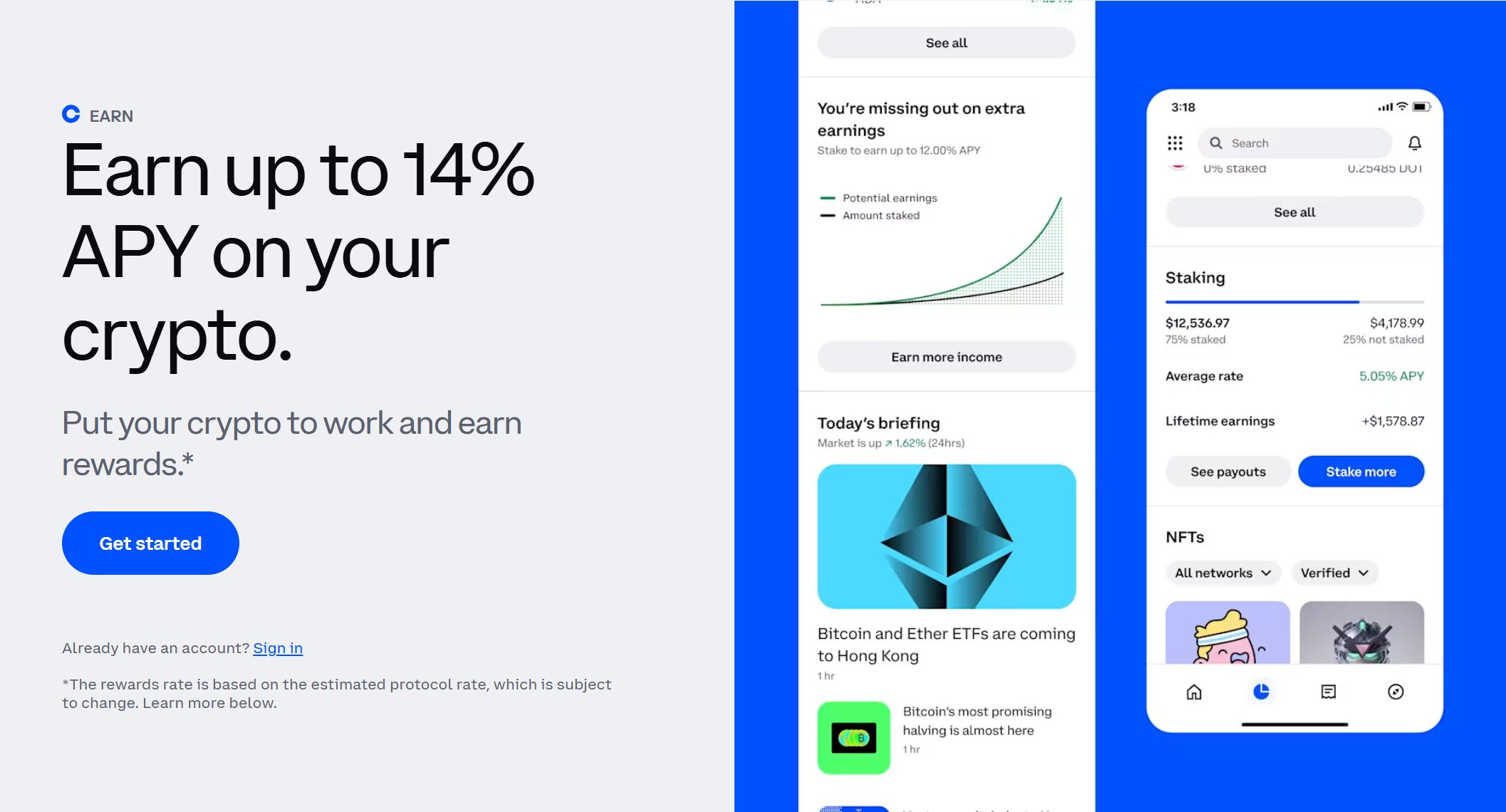
Lean and earn programs give you free crypto in exchange for completing educational modules, quizzes, or video tutorials. Coinbase Earn, for example, pays you up to $100 in newly listed tokens after you watch a short explainer video and answer a few multiple-choice questions right.
Learn and earn programsLearn and earn programs

Binance Academy and Crypto.com’s Learn & Earn offer similar programs for a range of projects like Polygon (MATIC), Stellar (XLM), and Algorand (ALGO). This is a great method for filling your wallet while also building a broader understanding of blockchain fundamentals and specific project roadmaps.

crypto.comcrypto.com

3. Crypto faucets

Faucets dispense tiny amounts of cryptocurrency in exchange for simple actions like watching ads, solving captchas, or clicking links. When Bitcoin was still relatively new, sites like freebitco.in would dispense a few hundred or even a few thousand satoshis once every day.

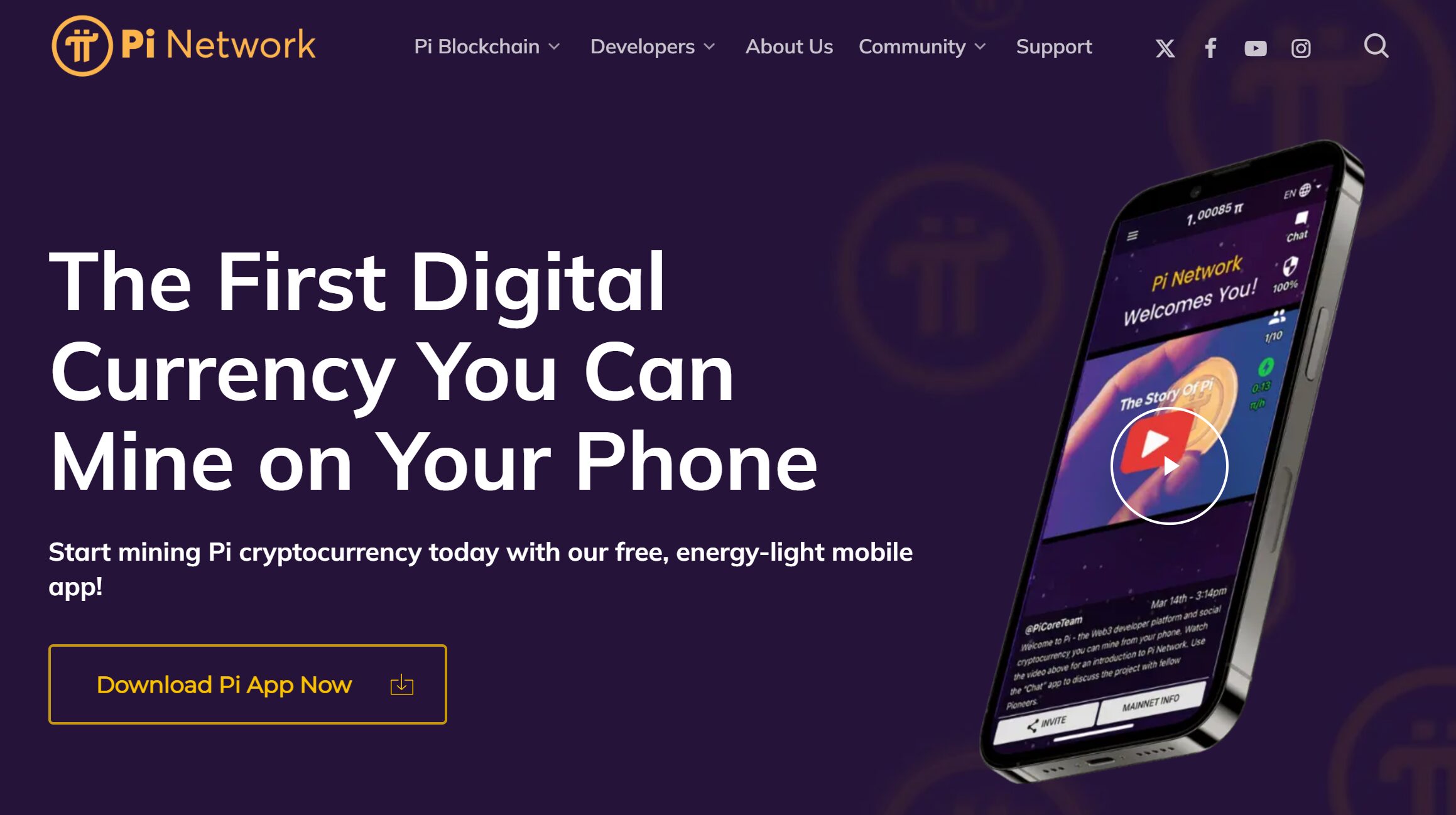
Modern crypto faucets are typically paid for by the dev team for a new crypto, with the goal of getting more people involved in that particular blockchain. When the Pi network was still in its testnet stage earlier this year, you could go to a special faucet the Pi Core Team had set up on their testnet, which would dispense 1 Pi to a test wallet created on that network.
Crypto faucetsCrypto faucets

Some faucets also include loyalty multipliers, increasing rewards the longer you stay active. To use a faucet safely, connect only via a throwaway email address or a separate wallet so you avoid phishing risks. Always double-check the URL, and withdraw your accumulated balance to a secure wallet once you hit the minimum payout threshold.

4. Competitions and giveaways

Crypto projects, influencers, and exchanges often run social-media competitions or giveaway events to boost engagement and community growth. To participate, you might need to follow a Twitter or Telegram account, retweet a post, tag friends, or share your wallet address.

Crypto rewards from giveaways and competitions can range from just a dollar or two to potentially hundreds of dollars worth of a high-value digital asset like BTC or NFTs. Many DeFi protocols create community rewards for members who complete tasks during product launches, while YouTube influencers host monthly raffle draws for subscribers or give out affiliate program links that boost sign-up bonuses.

To maximize your chances, follow official project channels, set Google alerts for “airdrop” or “crypto giveaway,” and join Telegram groups that aggregate current campaigns.
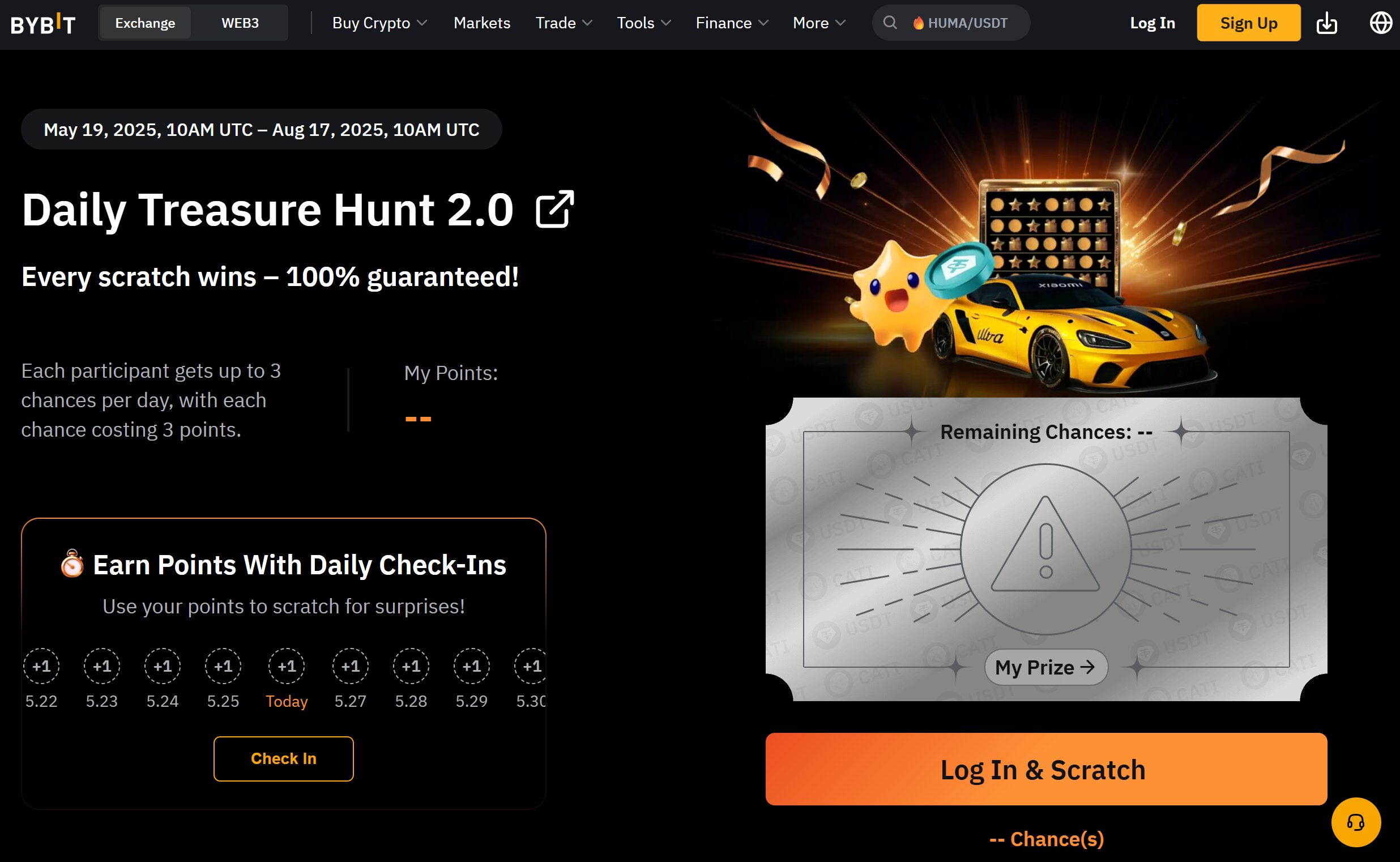
Competitions and giveawaysCompetitions and giveaways

For example, Bybit offers a Daily Treasure Hunt where users check in to earn points and scratch cards for guaranteed crypto rewards. It’s a fun way to engage users with daily prizes and gamified participation.

5. Play-to-earn games

Blockchain games like Axie Infinity, Splinterlands, and Illuvium reward players with tokens or NFTs for in-game achievements and time spent. By investing a small amount of capital or participating in free trial programs, you can earn digital assets that hold real market value.

One of the most popular P2E games, Axie Infinity, incorporates a Smooth Love Potion (SLP) token that is granted for winning battles and completing daily quests, while land plots and items trade on secondary marketplaces. Play-to-earn often requires learning gameplay mechanics and building a team, but yields can be several dollars per day in popular titles.
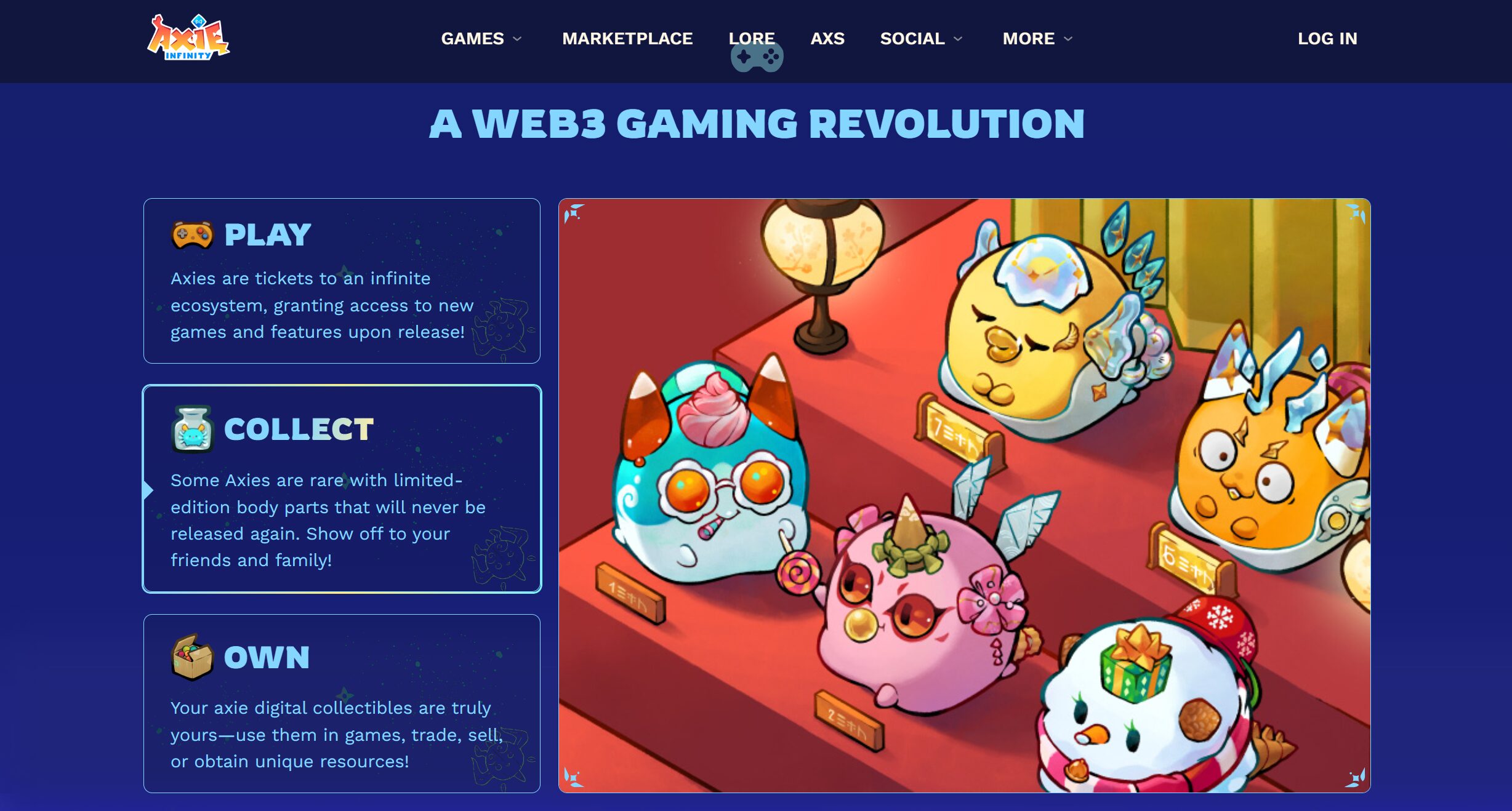
Play-to-earn gamesPlay-to-earn games

To minimize risk, focus on games with active user bases, transparent token economics, and clear play-to-earn roadmaps. Always withdraw earnings promptly and monitor gas fees when trading in-game assets.

6. Crypto airdrops

Airdrops distribute free tokens to holders of existing cryptocurrencies or to participants who complete simple tasks. Leading protocols like Bitdegree, Uniswap, and dYdX have awarded tokens retroactively to users who provided liquidity or traded on their platforms before specific dates. New projects may reward early mailing-list subscribers or testnet participants.
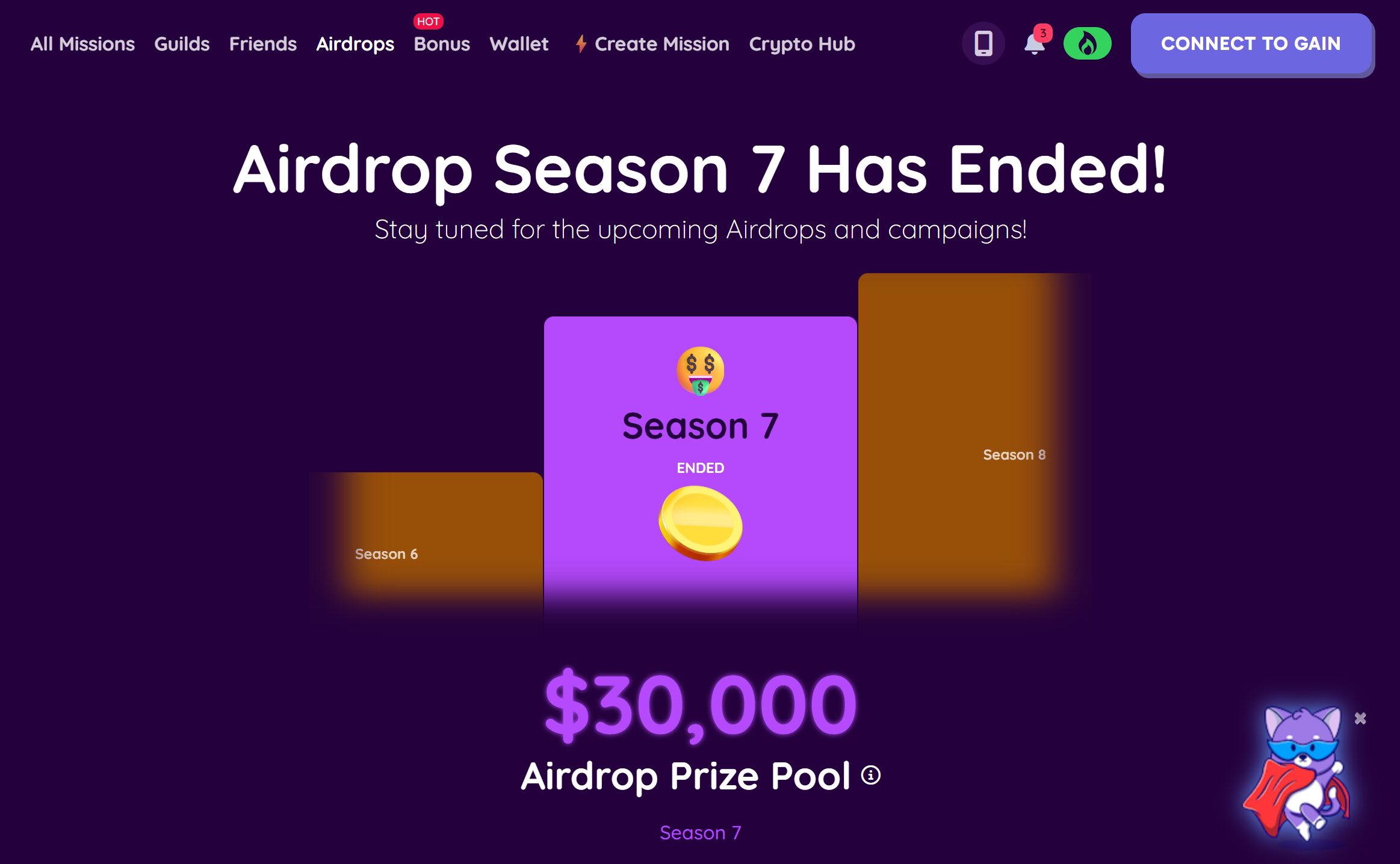
Crypto airdropsCrypto airdrops

To qualify, you often need to hold a snapshot-eligible token in a supported wallet at a given block height, or register with an email address and social-media handle. Airdrops can range from $10 to thousands of dollars in value, particularly for governance tokens.

7. Freelance and get paid in crypto

Freelancers in design, writing, programming, and marketing can find crypto-paying gigs on platforms like CryptoJobs, LaborX, and Gitcoin. These marketplaces connect you with blockchain startups willing to pay in Bitcoin, Ethereum, or stablecoins.

Gitcoin’s bounty program, for example, offers token rewards for open-source development tasks, from smart-contract audits to UI design. Crypto freelance rates often exceed fiat currency hourly rates, depending on the skill level and the complexity of the project.
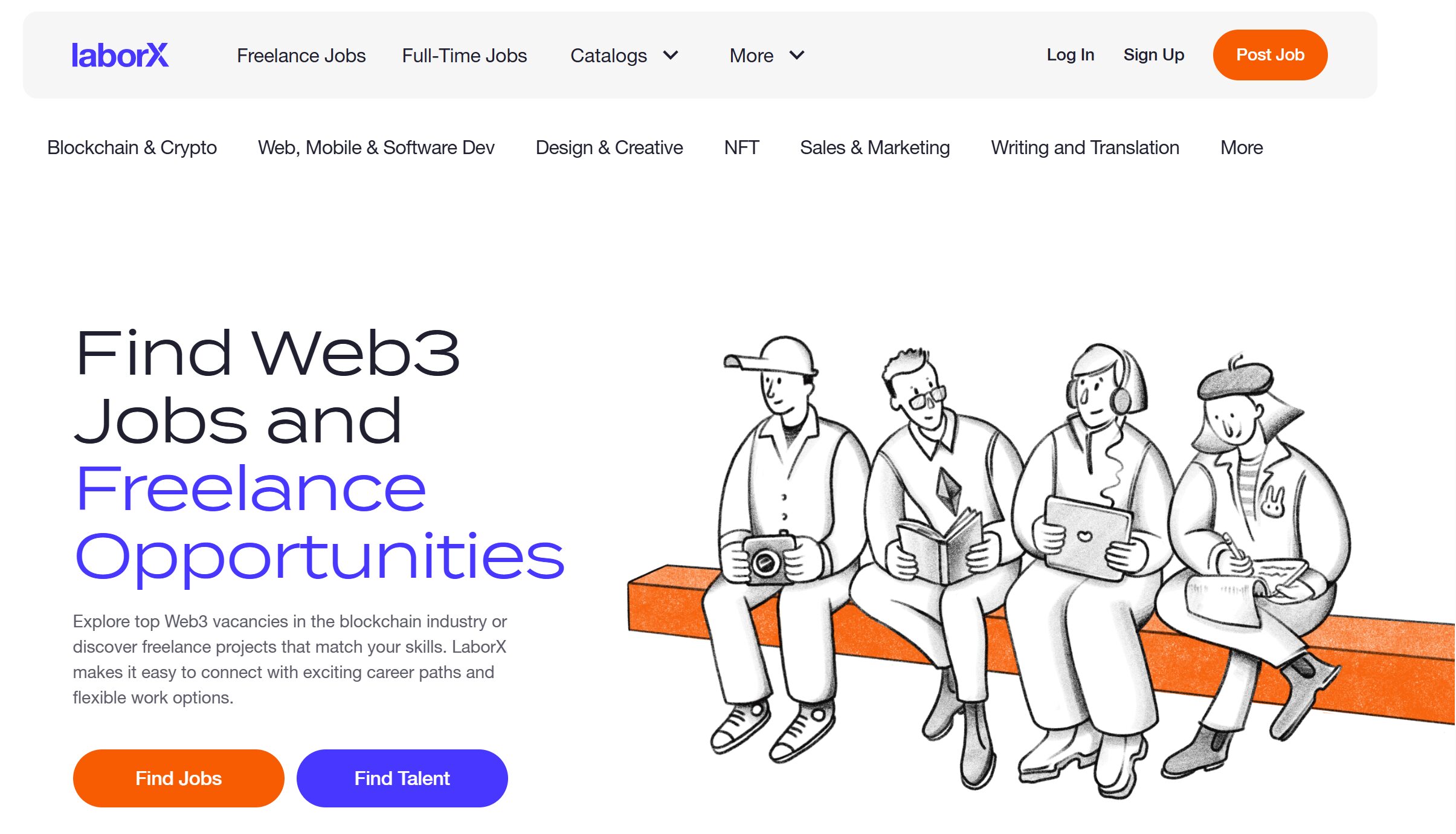
Freelance and get paid in cryptoFreelance and get paid in crypto

8. Staking rewards

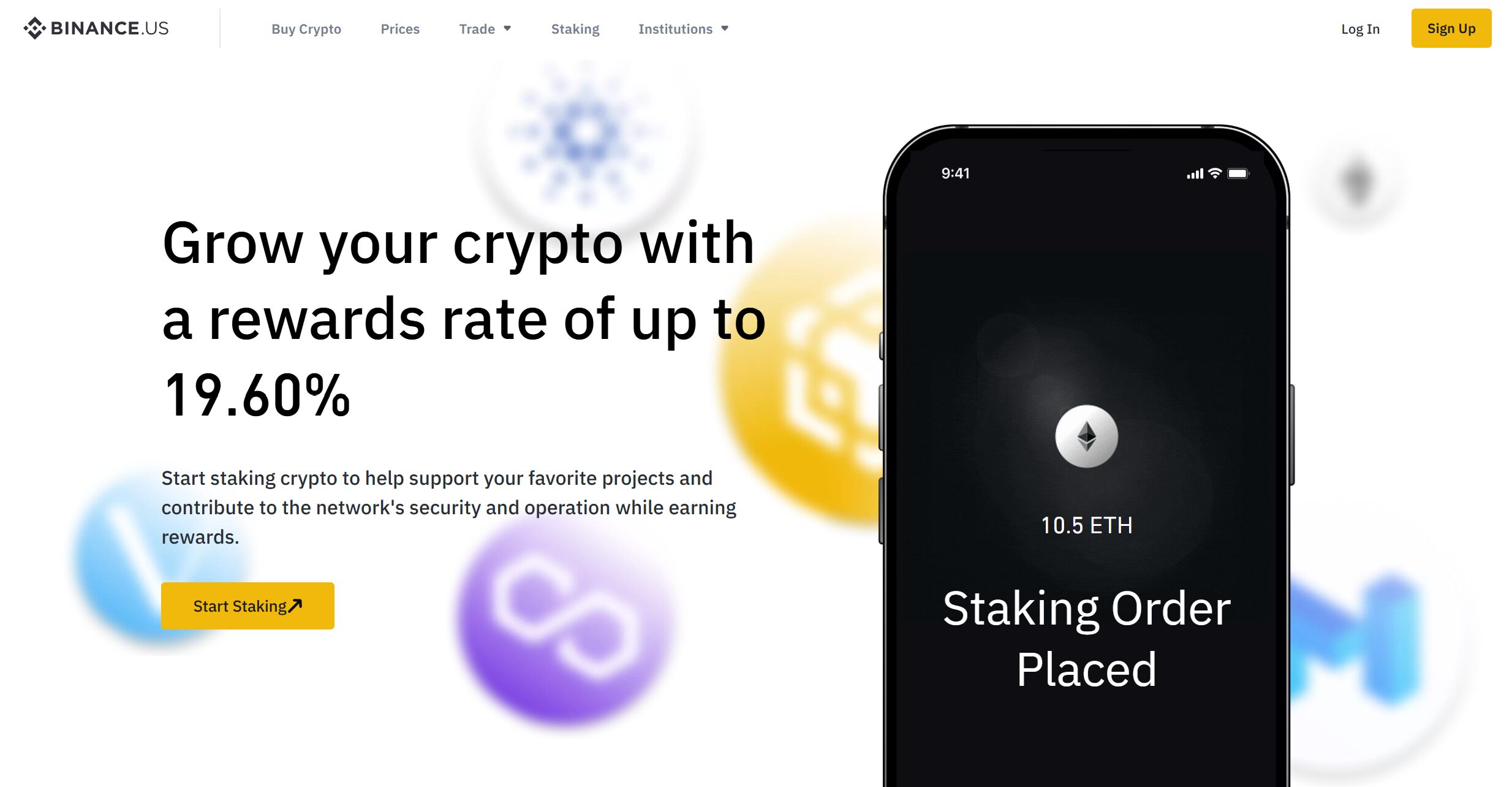
Many proof-of-stake blockchains reward token holders for securing the network. By delegating coins like Ether, Cardano, Solana, and more to validators, you can earn free crypto through annual yields that can grow beyond 10%.

Some platforms, such as Binance or Kraken, simplify staking with one-click interfaces, though they may charge fees on rewards. On-chain staking requires setting up a wallet like MetaMask, Yoroi, or Phantom and choosing a validator with a strong uptime record. Rewards are distributed periodically and typically compounded directly into your staked balance.
Staking rewardsStaking rewards

9. Yield farming

Yield farming involves supplying liquidity to decentralized exchanges or lending protocols in return for rewards in the form of trading fees, platform tokens, or additional LP tokens. Popular pools on Uniswap, SushiSwap, and PancakeSwap offer yields ranging from 5% to over 100% APY, depending on risk and volatility.

Yield farmingYield farming

To get in on the action, first, you’ll need to deposit token pairs, like ETH/UDSC or ETH/USDT, into a liquidity pool. Then you’ll get LP tokens that represent your share. These LP tokens can even be staked in farm contracts to earn governance or incentive tokens.

Yield farming requires active monitoring of impermanent loss, smart-contract risks, and reward schedules. By rotating between pools with favorable reward rates and practicing risk management, you can maximize returns while minimizing exposure to token price swings.

10. Affiliate and referral programs

Many exchanges and services reward you for bringing in new users. By sharing a unique referral link or code, you earn a percentage of your friends’ trading fees or a fixed token bonus once they sign up and meet activity thresholds.

Binance offers up to 50% of trading fees, while Coinbase pays a floating BTC referral bonus for each referral who ends up buying $100 or more in crypto. Crypto.com cardholders can get free CRO tokens for referred customers who open a card.

Binance Affiliate ProgramBinance Affiliate Program

To make the most of your affiliate program link and referral programs, leverage the social sphere by posting your link on blogs, social media, and community forums. Also, be sure to choose platforms that have generous, evergreen referral structures and disclose your referral relationships to comply with regulations and maintain transparency.

11. Bug bounties

Blockchain projects and security firms run bug-bounty programs to incentivize ethical hackers to find vulnerabilities in smart contracts, wallets, or infrastructure. Platforms like Immunefi and HackerOne list bounties ranging from $500 for low-impact bugs to $100,000+ for critical exploits.

Bug bountiesBug bounties

To participate, register on the bounty platform, review a project’s scope and disclosure policy, then audit code or testnets. Successful reports earn you bounties in USD or project tokens. Bug bounties require advanced technical skills, including knowledge of Solidity, DeFi protocols, and common attack vectors. However, even junior developers can earn smaller rewards by auditing documentation, UI logic, or off-chain components.

12. Shop and earn cashback in crypto

Several platforms turn everyday shopping into token rewards. Apps like Lolli, Pei, and StormX partner with major retailers like Sephora, Starbucks, and Amazon to offer rewards of 1%–30% cashback in Bitcoin or other tokens.

These programs typically require a browser extension installation or the use of a mobile app in order to participate. Once the extension is installed, make eligible purchases, and rewards will accumulate in your account. You’ll usually need to reach a minimum threshold to withdraw, but once you do, you can pull your funds to the wallet of your choice.

Since cashback deals closely rival, or beat outright, many traditional rewards cards, this method helps you stack free crypto on top of points or miles.

Shop and earn cashback in cryptoShop and earn cashback in crypto

13. Use Brave browser

Brave is a privacy-focused browser that exchanges ad views for Basic Attention Token (BAT). By enabling Brave Rewards and viewing opt-in privacy-respecting ads, users can potentially earn hundreds of BAT each month. The BAT tokens accumulate in your browser wallet and can be withdrawn to Uphold or Gemini accounts.

You also have the option to easily tip your favorite YouTube or X accounts, and Brave’s integrated wallet supports storage of BAT and other tokens, letting you stake or swap easily.

Use Brave browserUse Brave browser

14. Read, write, and earn free crypto

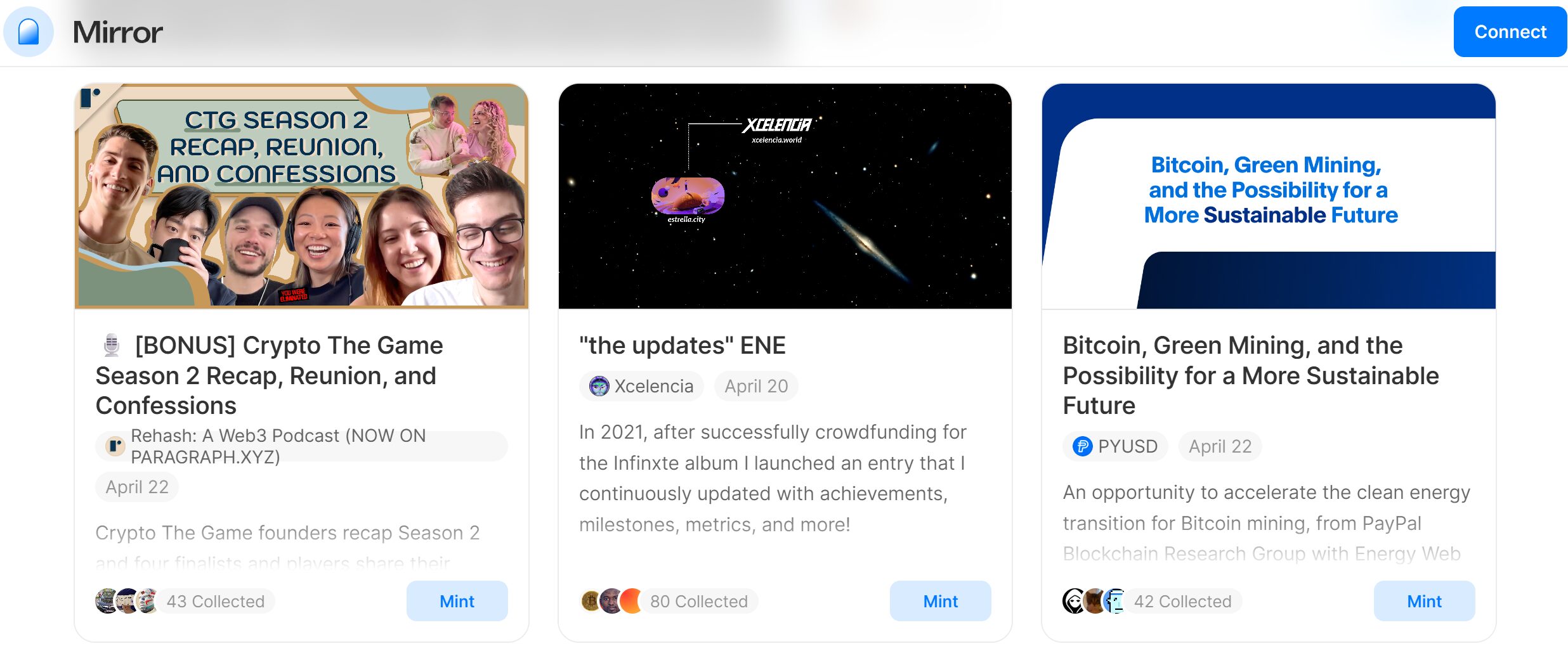
Content platforms like Steemit, Publish0x, and Mirror.xyz reward users with crypto or native tokens for posting, commenting, and curating articles.

Steemit lets users earn STEEM or SBD based on community upvotes, while Publish0x splits tips between authors and readers in tokens like ETH or BAT, and Mirror’s governance token, WRITE, distributes rewards to contributors of high-engagement pieces.
Read, write, and earn free cryptoRead, write, and earn free crypto

15. Crypto lending

Platforms like Aave, Compound, and BlockFi let you lend your crypto holdings to borrowers in return for interest. By depositing assets such as USDC or DAI into lending pools, you earn annual yields.

Some platforms allow over-collateralized loans in volatile assets like ETH, offering higher rates but greater risk. Payouts accrue continuously and can be withdrawn or reinvested. Lending pools use smart contracts to manage collateral and liquidate positions if collateral falls below maintenance thresholds.

Before jumping into peer-to-peer lending, or DeFi in general, be sure you review platform audits, insurance coverage options, and gas fees on chains like Ethereum or Polygon.

Crypto lendingCrypto lending

16. Complete surveys and micro tasks

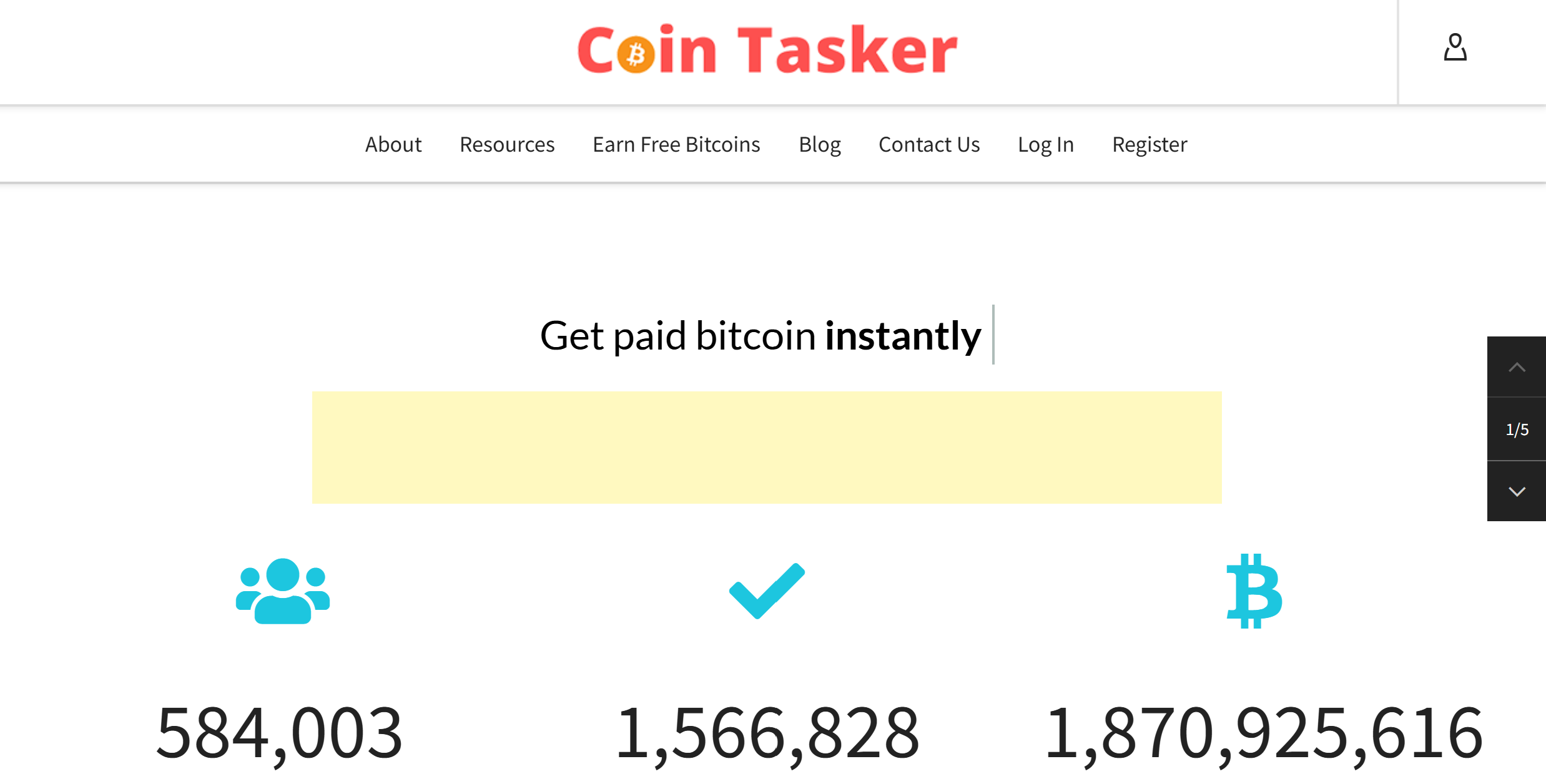
Sites such as TimeBucks, CoinTasker, and Bituro reward users in crypto for completing surveys, watching videos, or testing apps. Payments range from $0.10 to $5 per task, credited in BTC, ETH, or platform-specific tokens. While payouts are small, consistent participation can add up, particularly during high-reward campaigns.
Complete surveys and micro tasksComplete surveys and micro tasks

17. Create content on crypto platforms

YouTube’s Partner Program and crypto sponsorships offer ad revenue and token bonuses for high-view videos, while Cent’s “creators’ economy” pays in ETH for valuable posts.

Consistent, high-quality tutorials, market analyses, and interviews attract more engagement and tips. Monetization terms vary, and some platforms have minimum monthly view cutoffs or follower counts that qualify or disqualify monetization.

Create content on crypto platformsCreate content on crypto platforms

18. Claim free NFTs

Early supporters of NFT projects often receive free minting opportunities or airdropped collectibles. Platforms like OpenSea and Rarible host “lazy minting” events where creators offer limited free mints to wallet holders who interact with smart contracts.

Some projects may airdrop NFTs to participants in community events or governance votes. These NFTs can be incredibly valuable on the secondary market since they do not have any initial sale and are wildly rare.

For the best chance of rare or first-edition pieces, join project Discords, complete community tasks, and connect eligible wallets before snapshots. Just like with any smart contracts, however, be sure you verify the smart contract addresses and double-check the contract permissions to avoid phishing scams or fake airdrops.

Claim free NFTsClaim free NFTs

19. Crypto credit card rewards

Crypto debit and credit cards from providers like Crypto.com, BlockCard, and Binance Visa pay up to 5% back in crypto on everyday spending. Rewards typically accrue in tokens native to the platform, like CRO or BNB, and grow with card tier and staking thresholds.

Crypto credit card rewardsCrypto credit card rewards

Instead of points, like rewards cards most people are familiar with, you earn crypto rewards for buying groceries, paying utility bills, rent, or making travel purchases. These cards may also offer a bonus APR on qualifying deposits in a linked crypto wallet and reimbursed ATM fees.

To apply, create an account on your chosen crypto exchange and complete any verification or KYC requirements. Then stake the required amount of tokens to reach the rewards level you want, and use the card like any other credit or debit card. Keep an eye on annual fees and staking lock-up conditions to make sure you’re still coming out on top.

20. Crypto Mining

While traditional CPU mining of major coins like Bitcoin is mostly obsolete, you can still mine altcoins like Monero with a home CPU or GPU setup. Joining mining pools like Braiins (formerly Slush Pool), Hive OS, or NanoPool combines your hash rate with others, stabilizing small payouts in XMR, ETH, or other mineable assets. Cloud-mining services lease out GPU power, paying in BTC for your contributed computing time. Be aware of electricity costs, hardware depreciation, and pool fees.

Crypto MiningCrypto Mining

21. Brokerage or trading platform promotions

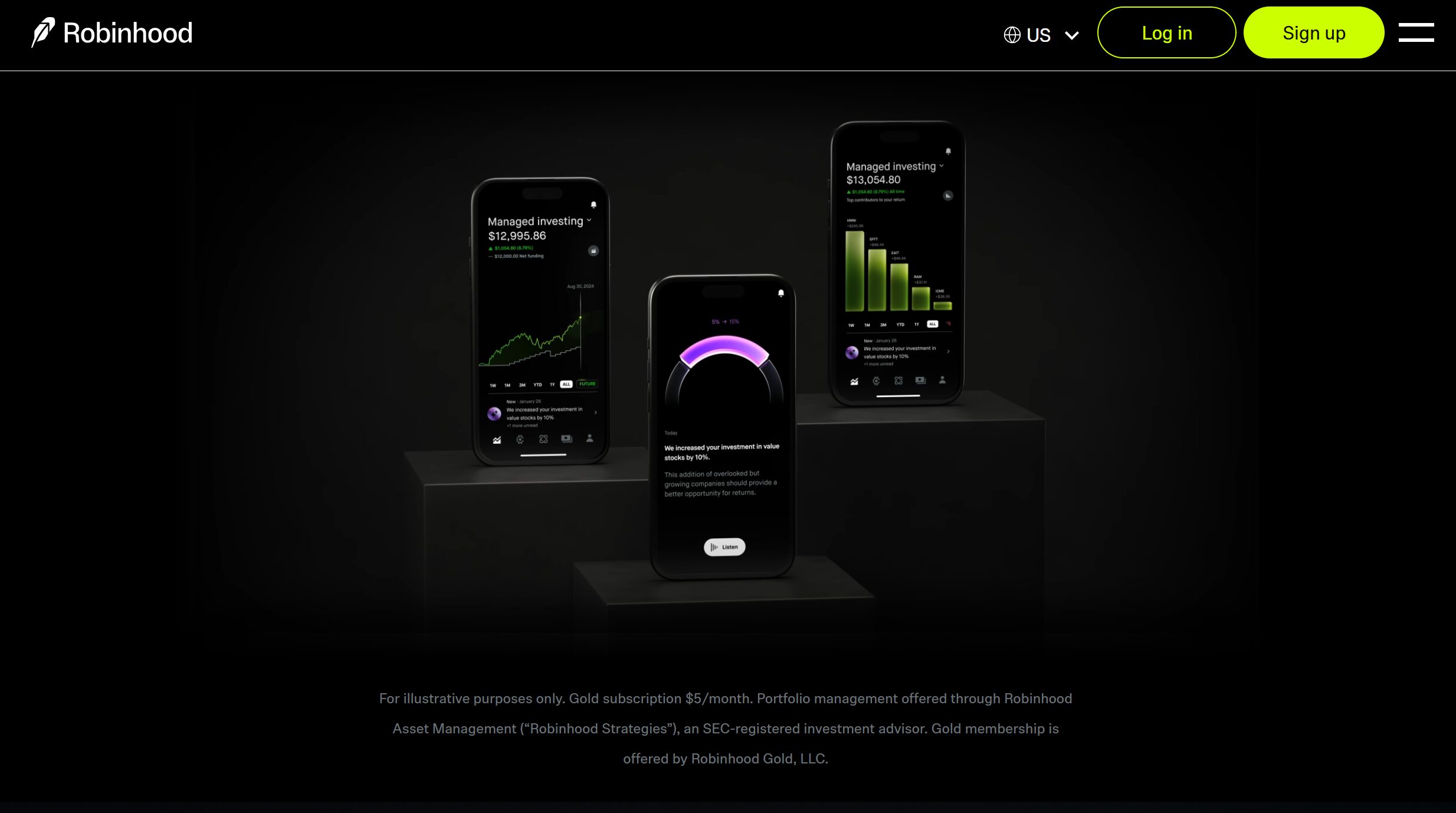
Exchanges like eToro, Robinhood, and SoFi periodically run promotions where new users receive free stocks or crypto after making qualifying trades or deposits, or through referral bonus programs.

Crypto brokers might also offer risk-free trades by reimbursing losses up to a certain limit, or rebate programs that return a portion of trading fees in tokens. These promotions typically require a minimum funding amount, one or more trades within a set period, and adherence to platform terms.
Brokerage or trading platform promotionsBrokerage or trading platform promotions

How to Choose the Best Platform to Earn Free Cryptocurrency

1. Security

Opt for platforms with industry-standard security: cold-storage custody, multi-signature wallets, and regular third-party audits. Reputable exchanges like Coinbase and Binance undergo SOC 2 or ISO 27001 audits, while DeFi protocols with audited smart contracts, such as Aave or Compound, provide greater assurance. Always enable two-factor authentication and use unique passwords.

2. Available cryptocurrencies

Ensure the platform supports the tokens you want to earn and hold. Some “learn and earn” programs focus on niche project tokens, while cashback apps pay in mainstream assets like BTC or ETH. If you have a preferred coin, verify it’s included in the reward menu before signing up to avoid redundant onboarding.

3. User-Friendly Interface

A clean dashboard and intuitive navigation save time and reduce errors. Platforms with clear reward-tracking pages, progress bars for educational modules, and one-click claim buttons found on Coinbase Earn or Crypto.com Learn make the process incredibly easy and transparent for those new to crypto.

4. Clear instructions

Look for detailed, step-by-step guides that specify eligibility windows, snapshot dates, and vesting periods. Whether it’s claiming an airdrop or completing a learning module, clear instructions help you perform tasks correctly and claim rewards on schedule. Community tutorials and official FAQs add extra clarity.

5. Withdrawal options

Keep minimum payout thresholds in mind, and evaluate the supported withdrawal networks and fees. Some faucets require hundreds of claims before you can withdraw, while staking platforms may lock funds for days. Choose services with low minimums and flexible withdrawal methods like direct transfers to your preferred exchange or personal wallet so you can access your earnings quickly.

Tax Implications of Earning Free Crypto

Free crypto rewards are typically treated as taxable income at the time you receive them, in the US, though some jurisdictions are more lenient, so be sure you research local tax regulations. They are taxed as income valued at their market value at the time you receive them.

In practical terms, this means if you earn $20 worth of BAT from a learning program, you must report that $20 as ordinary income on your income tax. Later, when you sell or trade those tokens, you incur capital gains or losses calculated from that $20 cost basis.

If you sell those BAT tokens two or three months later, the capital gains tax rates that would apply are the short-term rates. If you hold those tokens for a year or more before selling, the gains would qualify for long-term rates. The difference is that short-term capital gains tax rates are often much higher than long-term capital gains rates. This means you’ll need to keep incredibly detailed records of dates, quantities, and values in USD for each reward and subsequent trade of those assets.

Most countries and tax jurisdictions, including the US, UK, and Canada, have mandatory crypto reporting, and failing to meet those reporting requirements, or failure to declare related income or gains, can lead to substantial penalties. If you get free crypto regularly, you may want to consider consulting with a crypto-savvy accountant or using tax software that supports detailed crypto reporting.

Tips to Safely Earn Crypto Rewards

Use Reputable Platforms: Stick to well-known exchanges, audited DeFi protocols, and established learning portals to avoid scams.Secure Your Wallets: Store earned crypto in hardware or non-custodial wallets. Enable two-factor authentication and avoid sharing private keys.Always Beware of Phishing: Access faucets, airdrops, and reward sites only via official URLs. Never click unsolicited or random links, and never download unknown extensions.Monitor Reward Thresholds: Track minimum payout requirements to avoid losing small balances. Consolidate earnings for timely withdrawals.Diversify Methods: Combine high-value opportunities (sign-up bonuses, airdrops) with steady income streams (staking, cashback) to lower the overall risk you’re exposed to.Stay Informed: Follow official project channels and community forums for deadline alerts, snapshot dates, and security advisories.

Conclusion

Earning free crypto is not only possible, but it’s a lot easier than even just a few years ago. There are untold sums to be found through sign-up bonuses and educational incentives, as well as DeFi and play-to-earn games, so there’s an approach for every skill and motivation level.

Always remember to prioritize more popular and reputable platforms that have a demonstrable record of strong security, transparent terms, and clear payout processes. Then, track your rewards meticulously to avoid potential tax issues.

With dedication, proactive vigilance, and some common sense, you can reliably accumulate digital assets and deepen your on-chain understanding, setting the stage for informed, confident participation in the evolving crypto economy.

FAQs

Is there a way to get free crypto?

Absolutely. You can earn free crypto by completing exchange sign-ups, participating in “learn and earn” programs, claiming faucets and airdrops, playing blockchain games, staking assets, and more.

Which crypto exchange gives free money?

Exchanges like Coinbase, Binance, and Crypto.com offer sign-up bonuses, referral rewards, and educational incentives in Bitcoin, native tokens, or stablecoins.

How do you get free $200 on Coinbase?

Occasionally, Coinbase runs promotional campaigns rewarding $200 in Bitcoin for new users who verify identity, meet a minimum deposit requirement, and complete a qualifying trade.

coinbasecoinbase

Can I mine crypto for free?

Browser-based or mobile “mining” apps exist, but returns are minimal. True mining, like Monero with CPU/GPU or Bitcoin with ASICs, requires electricity and hardware investment, so it’s not typically “free”.

How much free crypto can I earn per day?

Depending on the method, there is the potential to earn anywhere from a few dollars per day, up to $20-$50 per day with play-to-earn, staking, and learn-and-earn. Since some are only usable once, like a learn-and-earn lesson, it’s best to combine and repeat methods when possible.

Are there any risks with using faucets and airdrops?

Yes. Scammers commonly create fake sites to steal private keys or personal data. Always verify URLs, never share seed phrases, and use separate wallets for high-risk claims.



Source link

Code Meets Canvas: The Rise of Creative Coding Art

0


In an era where technology and creativity intertwine more than ever, a new art form has emerged—creative coding. This innovative movement combines programming with artistic expression, allowing creators to use code as a medium to produce stunning visual art. This article explores the rise of creative coding, its tools, applications, and impact on the art world.

The Intersection of Technology and Art

Creative coding is characterized by the use of programming languages and software to create visual art. Unlike traditional programming, where the ultimate goal is often to create functional applications or software, creative coding prioritizes aesthetics and expression. Artists can manipulate algorithms, data, and computational processes to produce artworks that are dynamic, interactive, and sometimes even responsive to audience input.

Historical Context

The roots of creative coding can be traced back to the early days of computer graphics in the 1960s and 70s. Pioneers like Frieder Nake and Harold Cohen explored the potential of machines to create art. However, it wasn’t until the advent of more user-friendly programming environments and tools that creative coding began to flourish as a distinct art form.

Tools of the Trade

The growth of creative coding has been supported by a range of tools and platforms that make it accessible to artists and hobbyists alike. Some of the most popular tools include:

  • Processing: Developed by Ben Fry and Casey Reas, Processing is an open-source graphical library and integrated development environment (IDE) that simplifies coding for artists. It’s designed for visual designers and artists, making it easier to create graphics and animations.

  • p5.js: A JavaScript library based on Processing, p5.js allows artists to create web-based interactive art. It fosters a community-centric approach, encouraging collaboration and sharing of work.

  • OpenFrameworks: An open-source C++ toolkit designed for creative coding, OpenFrameworks provides more advanced capabilities for artists interested in performance and graphics.

  • TouchDesigner: Used extensively in live performances and installations, this node-based visual programming language allows users to create interactive visuals in real-time.

These tools lower the barrier to entry, enabling artists with diverse backgrounds to experiment and explore the realm of creative coding.

Artistic Applications

Creative coding is being applied across various mediums, from digital installations to interactive exhibitions, and even fashion. Here are a few notable applications:

Interactive Installations

Artists like Rafael Lozano-Hemmer have used creative coding to create immersive installations that engage viewers. His works often incorporate real-time data, allowing audiences to influence the art through their interactions.

Data Visualization

Artists are increasingly using creative coding to transform complex data into aesthetically pleasing visual representations. Projects like "The Internet Map" illustrate how data can be visualized creatively, making abstract concepts more accessible.

Generative Art

Generative art thrives on algorithms and processes rather than a predefined outcome. Artists such as Casey Reas, one of the co-founders of Processing, explore this concept by creating art that evolves and changes, often in real-time.

Fashion and Wearables

The intersection of fashion and technology can also be seen in creative coding. Designers are using code to create interactive clothing and accessories, where garments respond to environmental cues or user inputs.

The Impact of Creative Coding

The rise of creative coding has democratized the art world, challenging traditional notions of what art is and who can create it. With the tools available today, anyone with a passion for coding and creativity can express themselves through digital art. Additionally, this movement has sparked a dialogue about the nature of art in the digital age, questioning authenticity, authorship, and the role of technology in creative expression.

Education and Community

With the growing interest in creative coding, educational institutions and communities have begun to offer workshops, online courses, and meetups to foster collaboration and skill development. The open-source nature of many creative coding tools encourages sharing knowledge and resources, allowing artists to learn from one another and foster a sense of camaraderie.

Conclusion

The rise of creative coding art represents a fascinating confluence of technology and creativity, empowering a new generation of artists to explore and redefine artistic expression. As tools continue to evolve and communities grow, the possibilities for innovation and creativity in the world of art are virtually limitless. As we move forward, the dialogue between code and canvas will only deepen, reshaping the landscape of contemporary art.

In an age where creativity is often enhanced by technology, it seems the canvas has expanded far beyond physical limits, welcoming code as its new companion.

XRP Deep Dive: A Comprehensive Analysis of Ripple Effect

0
XRP Deep Dive: A Comprehensive Analysis of Ripple Effect


This report examines Ripple Labs, the XRP Ledger (XRPL), and XRP token, detailing their historical development, technical underpinnings, economic model, and primary use cases. It further analyzes the complex regulatory landscape, particularly the long-running SEC lawsuit, and explores Ripple’s ambitious future roadmap aimed at cementing its role as a foundational layer for institutional decentralized finance (DeFi). 

The analysis reveals Ripple’s deliberate approach to regulatory compliance and its strategic positioning to integrate seamlessly with existing financial systems, distinguishing its path from many purely decentralized blockchain projects.

What is XRP & Ripple: Company, XRP Ledger, and RLUSD Stablecoin

The XRP & Ripple Ecosystem Defined

The Ripple ecosystem is built upon three core components: Ripple Labs, the XRP Ledger (XRPL), and the digital asset XRP. 

Ripple Labs, established in 2012 and headquartered in San Francisco, is a technology company focused on developing enterprise blockchain solutions. The XRP Ledger, an open-source platform initiated in 2011, is designed to facilitate rapid and low-cost transactions. XRP, the native cryptocurrency of the XRPL, serves as a crucial bridge currency for instant exchanges between different fiat currencies and is used to cover network transaction fees.

Ripple’s journey has been marked by significant growth, supported by substantial funding rounds from prominent investors such as Google Ventures and Andreessen Horowitz. 

The company has forged key partnerships with global financial institutions like Santander and SBI, integrating its payment technology into existing systems. Strategic acquisitions, such as that of Metaco, and active political engagement further underscore Ripple’s ambition to become a regulated and influential player within the global financial infrastructure.

The Ripple Ecosystem Defined

Source: Ripple

XRP Ledger’s Technology and Compliance Focus

The XRP Ledger operates on the Ripple Protocol Consensus Algorithm (RPCA), a unique consensus mechanism that enables impressive transaction finality of 3-5 seconds and a throughput of 1,500 transactions per second (TPS). This system, which relies on a Unique Node List (UNL) of independent validators, offers superior speed and energy efficiency compared to Proof-of-Work or Proof-of-Stake systems, while maintaining robust fault tolerance. 

While this “trust-based validation” model has led to discussions about centralization, Ripple intentionally prioritizes regulatory compliance, aiming to provide a “permissioned decentralized finance” solution that resonates with traditional financial institutions seeking predictability and adherence to regulations.

The Introduction of RLUSD Stablecoin

In a significant strategic move, Ripple launched its own institutional-grade stablecoin, RLUSD, on December 17, 2024. RLUSD is a US dollar-pegged stablecoin, fully backed 1:1 by cash and equivalent reserves. Its approval by the New York Department of Financial Services (NYDFS) highlights Ripple’s commitment to regulatory adherence. 

RLUSD is available on both the XRP Ledger and Ethereum networks, demonstrating Ripple’s focus on compliance and interoperability. This stablecoin is poised to enhance the utility of the XRP Ledger by providing a stable medium for transactions and expanding possibilities for institutional DeFi and the tokenization of real-world assets.

For more: Fixed Yield DeFi vs. Traditional Fixed Income in Yield Farming Rewards

The Introduction of RLUSD StablecoinThe Introduction of RLUSD Stablecoin

Ripple Press Release

Ripple Fundraising Rounds

Ripple has secured substantial funding through several rounds, underscoring investor confidence in its vision and technology. 

A summary of its funding rounds is provided below:

DateFunding TypeInvestorAmount (million $)April 2013AngelAndreessen Horowitz, FF Angel LLC, Lightspeed Venture Partners, Pantera Capital, Vast Ventures, Bitcoin Opportunity Fund2.5  May 2013AngelGoogle Ventures, IDG Capital Partners3.0  November 2013SeedCore Innovation Capital, Venture51, Camp One Ventures, IDG Capital Partners3.5  May 2015Series AIDG Capital Partners, China Growth Capital, Seagate Technology, Vast Ventures, AME Cloud Ventures, Bitcoin Opportunity Corp, ChinaRock Capital Management, Core Innovation Capital, Wicklow Capital, Route 66 Ventures, RRE Ventures, Venture 5128  October 2015Series ASantander InnoVentures4  September 2016Series BStandard Chartered, Accenture, SCB Digital Ventures, SBI Holdings, Santander InnoVentures, CME Group, Seagate Technology55  December 2019Series CTetragon, SBI Holdings, Route 66 Ventures200  

XRP Tokenomics

XRP Tokenomics and Supply Management

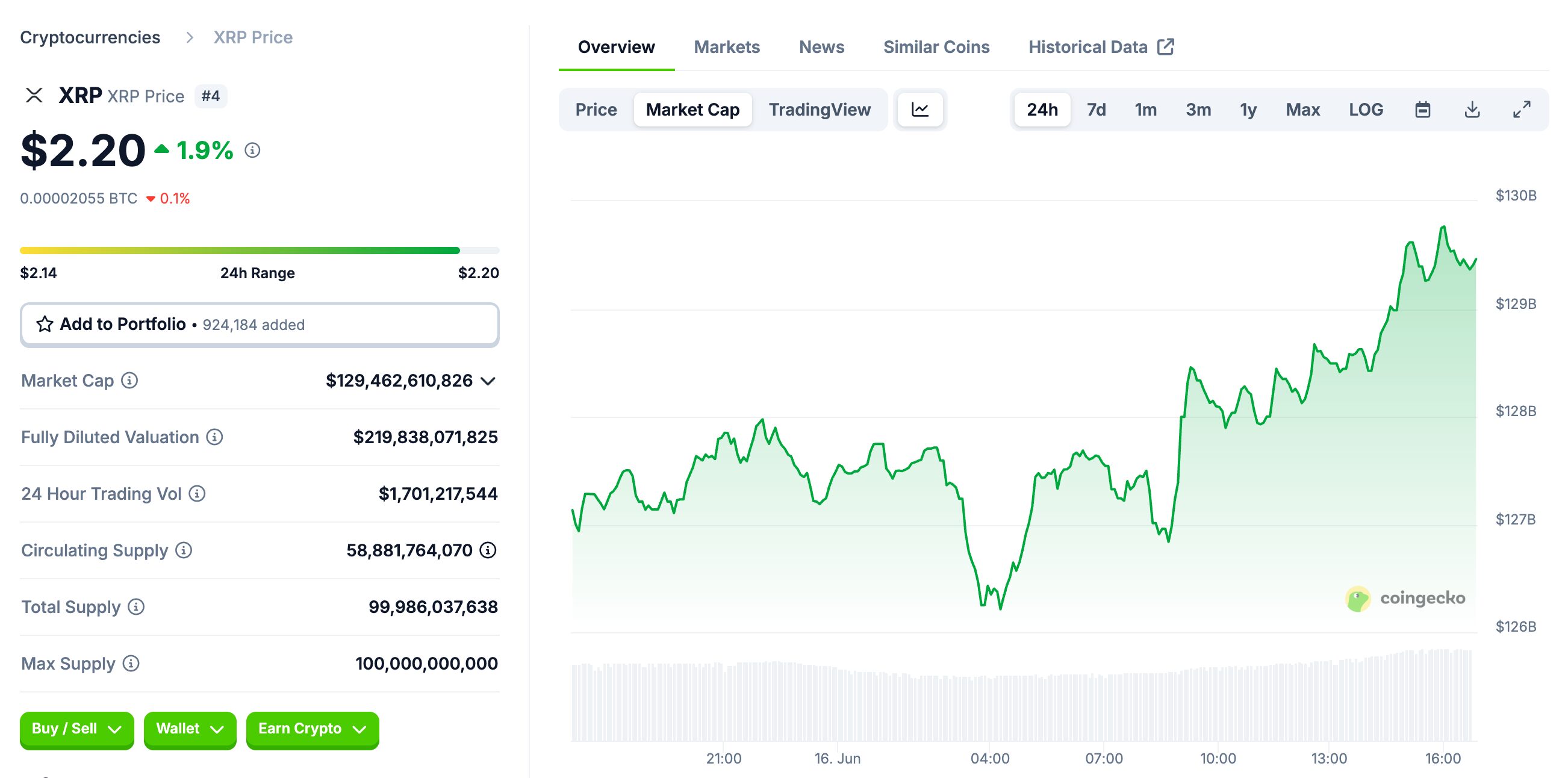
XRP’s economic model is characterized by its pre-mined nature, with all 100 billion tokens created at inception to prevent inflation. Ripple Labs initially received 80 billion XRP from the founders. As of June 15, 2025, the circulating supply stands at approximately 58.88 billion tokens.

A substantial 55 billion XRP is held in secure escrow contracts, programmed to release up to 1 billion XRP monthly over 55 months. Crucially, any unused XRP from the monthly release is returned to escrow, ensuring a tightly controlled supply aligned with demand.

This mechanism addresses centralization criticisms by providing transparency and predictability to market participants, acting as responsible stewardship rather than monopolistic control. As of Q3 2024, Ripple directly held 4.4 billion XRP, with 38.9 billion remaining in escrow.

XRP Tokenomics and Supply ManagementXRP Tokenomics and Supply Management

Source: Coingecko

Transaction Fees and Network Incentives

Transaction fees on the XRP Ledger are remarkably low, starting at 0.000001 XRP. A unique deflationary aspect is that a portion of each transaction fee is permanently “burned,” reducing the total supply over time. Additionally, the required account reserve on the XRPL was recently reduced from 10 XRP to 1 XRP in December 2024, significantly lowering onboarding costs and potentially increasing network activity. 

These economic incentives—minimal fees and burning—are strategically aligned with Ripple’s enterprise focus, encouraging efficient, large-scale network usage and supporting its objective of high-volume, low-cost cross-border payments.

Market Dynamics and Utility

As of June 15, 2025, XRP’s market capitalization reached approximately $127.82 billion, positioning it as a top-tier cryptocurrency with a trading price around $2.17. Its primary utility lies in facilitating cross-border payments and currency exchange within the Ripple network, serving as an intermediary bridge. The market dynamics are heavily influenced by the controlled supply release, regulatory developments, and Ripple’s strategic business partnerships. 

The protracted SEC lawsuit, for instance, has demonstrated how regulatory uncertainty can introduce volatility, while positive legal outcomes can restore market confidence. Ripple’s “institutional-first” market positioning aims to cultivate demand driven by real-world utility and enterprise adoption, fostering more stable and sustainable growth linked to transactional volume rather than purely speculative trading.  

Primary Use Cases and Solutions

Cross-Border Payments and On-Demand Liquidity (ODL)

Ripple’s core mission centers on revolutionizing global payments and liquidity using the XRP Ledger and XRP. Traditional cross-border transactions are burdened by high fees, delays, and outdated infrastructure. Ripple’s solutions aim for immediate, low-cost, and secure global settlements, bypassing intermediaries and completing transfers in seconds. 

XRP acts as a vital bridge currency, facilitating instant fiat exchanges and significantly reducing the need for banks to pre-fund foreign accounts, potentially cutting costs by up to 80%. CEO Brad Garlinghouse projects XRP could handle 14% of SWIFT’s cross-border volume within five years, a transformative vision for global finance.

Cross-Border Payments and On-Demand Liquidity (ODL)Cross-Border Payments and On-Demand Liquidity (ODL)

Source: Ripple

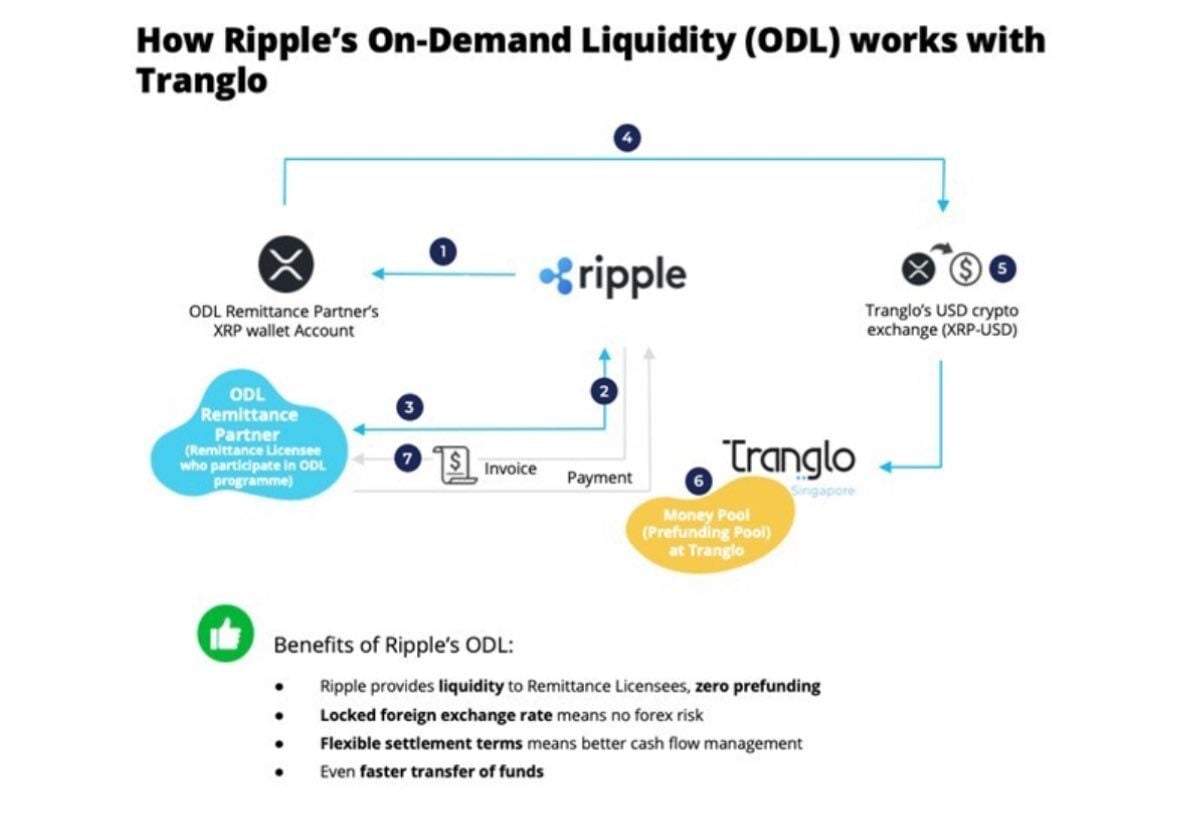
Ripple’s flagship On-Demand Liquidity (ODL), now known as Ripple Payments, eliminates the need for financial institutions to pre-fund nostro accounts, freeing up substantial capital. ODL leverages XRP as a real-time bridge asset for swift, low-fee fund transfers. 

Ripple Payments operates in over 55 countries, with notable partners including Santander, Bank of America, and Standard Chartered. Tranglo, a key partner, saw its ODL usage skyrocket from $53 million in 2021 to $2 billion in the first half of 2023. By 2024, Ripple Payments achieved near-global reach, processing over $50 billion in transaction volume, prioritizing capital-efficient liquidity over mere messaging.

Expanding Enterprise Solutions

Beyond its foundational payment solutions, Ripple is actively expanding its enterprise offerings. Its digital asset custody solutions, bolstered by the 2023 acquisition of Metaco, provide bank-grade security and flexible deployment for institutions. 

The XRP Ledger is also emerging as a robust hub for fiat-backed stablecoins like USDC, XSGD, EURØP, and Ripple’s own RLUSD, leveraging its “compliance-first architecture.” XRP supports these stablecoin use cases by enabling efficient liquidity and powering fast settlement on the XRPL’s built-in decentralized exchange (DEX). 

Furthermore, Ripple is actively exploring the tokenization of real-world assets (RWAs) and broader digital asset management, with its 2025 roadmap including Multi-Purpose Tokens (MPTs) for bonds, RWAs, and structured financial products. Partnerships with firms like Archax and Meld Gold are enabling tokenized assets such as gold and Treasury bills on the XRPL, accelerating institutional DeFi and aiming to position the XRP Ledger as a comprehensive platform for digital finance.

Regulatory Landscape and Criticisms

SEC Lawsuit and Regulatory Implications

Ripple’s journey has been significantly shaped by the SEC lawsuit, filed in December 2020, which alleged unregistered securities offerings through institutional XRP sales. A pivotal July 2023 ruling by Judge Analisa Torres provided significant clarity, distinguishing programmatic XRP sales to retail buyers as non-securities, while institutional sales were deemed securities. This partial victory offered a crucial legal framework for digital asset classification. 

On June 12, 2025, Ripple and the SEC jointly moved to settle the lawsuit, proposing a split civil penalty ($50M to SEC, $75M returned to Ripple) and dissolution of the injunction. This outcome is expected to establish a de facto regulatory precedent, enhancing clarity for financial institutions considering crypto integration.

SEC Lawsuit and Regulatory ImplicationsSEC Lawsuit and Regulatory Implications

Source: XRP Governor

Centralization Concerns

Despite its claims of decentralization, Ripple faces persistent criticisms regarding the perceived centralization of the XRP Ledger. These concerns primarily stem from Ripple Labs’ substantial XRP holdings and the curated nature of the XRPL’s Unique Node List (UNL). 

Critics argue that Ripple’s significant influence over XRP’s supply and the UNL constitutes centralization, with some even labeling XRP a “centralized controlled security.” However, Ripple maintains its network is neutral and decentralized, viewing this “permissioned decentralization” as an advantage for attracting regulated financial institutions that prioritize predictability and accountability.

Environmental Impact

The XRP Ledger boasts significant environmental advantages. This is especially true compared to many Proof-of-Work blockchain networks. The XRPL consumes substantially less electricity than Bitcoin, with its energy footprint comparable to that of an email server. This efficiency stems from its unique consensus mechanism, which does not involve energy-intensive mining.

Furthermore, Ripple actively advocates for greener energy practices within the broader cryptocurrency space. Its chairman, Chris Larsen, personally funds initiatives. For example, “Change the Code, Not the Climate” is one such initiative. This proactive stance aligns Ripple with growing Environmental, Social, and Governance (ESG) concerns, appealing to institutions prioritizing sustainability.

Adoption, Future Roadmap, and Competitive Landscape

Ripple is deeply embedded in institutional adoption. Its RippleNet connects banks and payment providers globally, facilitating real-time, low-cost cross-border payments. Prominent partners include Santander, Bank of America, Standard Chartered, and CIBC. Consequently, this signals increasing institutional interest in XRP’s utility. Furthermore, beyond banks, enterprises like Trident Digital Tech Holdings and Weebus plan significant XRP reserves. Thus, this positions XRP as a top choice for corporate treasuries.

Adoption, Future Roadmap, and Competitive LandscapeAdoption, Future Roadmap, and Competitive Landscape

Ripple Partner

Ripple’s 2025 roadmap focuses on building an institutional decentralized finance ecosystem on the XRP Ledger. Key initiatives involve integrating compliance checks via decentralized identifiers. Institutional lending with undercollateralized options will be offered by Q3 2025. Furthermore, an Ethereum Virtual Machine (EVM) Sidechain arrives by Q2 2025. This enhances programmability significantly.

Moreover, tokenization of Real-World Assets (RWAs) using Multi-Purpose Tokens (MPTs) is planned. Integrated liquidity pools are also a feature. A “clawback” option for asset recovery is likewise included. These efforts aim to position XRPL as a regulatory-friendly platform, driving institutional adoption and long-term XRP demand.

However, the competitive landscape is diverse. It includes incumbent innovations like SWIFT GPI and real-time payment rails. Moreover, emerging Central Bank Digital Currencies (CBDCs) like mBridge also pose competition. Rival cryptocurrencies such as Stellar (XLM), Solana (SOL), and Tether (USDT) also compete in fast, low-cost international transactions. Crucially, Ripple’s differentiator is its “compliance-first architecture.” Also, it strategically focuses on integrating with existing financial infrastructure. This makes it an attractive, regulated solution for traditional financial institutions.

For more: Pendle Deep Dive: Tokenized Yield and Fixed Yield in DeFi


Source link

Beyond Canvas: Exploring the Future of Tech-Driven Art Installations

0


The intersection of technology and art has long been a fertile ground for innovation, pushing the boundaries of what is possible in both fields. As we move deeper into the 21st century, tech-driven art installations are rapidly transforming the art landscape, creating immersive experiences that engage audiences in ways traditional methods have not. This article delves into the evolving world of tech-driven installations, spotlighting key trends, emerging technologies, and the implications for artists and audiences alike.

The New Canvas: Digital and Interactive Media

Virtual and Augmented Reality (VR/AR)

Virtual and augmented reality have revolutionized how artists create and audiences experience art. Artists can now construct entire worlds that immerse viewers in multi-sensory environments.

  • Case Study: The Obliteration Room by Yayoi Kusama takes the viewer from a blank white space to an explosion of color as participants stick dotted stickers throughout the room. This participatory aspect underscores how technology enables the merging of individual contribution with collective experience.

Projection Mapping

Projection mapping transforms surfaces into dynamic displays, allowing for a unique storytelling medium. This technology has given rise to temporary installations that can be experienced in a variety of spaces, from urban architecture to grand museum exhibits.

  • Example: The "Van Gogh Alive" installation immerses viewers in the artist’s work through animated projections, allowing for an experience that transcends simple viewing.

The Role of Artificial Intelligence

Generative Art

AI has become a co-creator in the art world, capable of generating artworks based on pre-defined algorithms and existing datasets. This raises questions about authorship and creativity in art.

  • Noteworthy Mention: Refik Anadol’s works utilize AI to create stunning visual displays, exemplifying a seamless blend of data and artistic expression.

Interactive Art

AI-driven installations can adapt in real-time to audience interactions. This creates a platform for conversations and engagement that were unthinkable in traditional art forms.

  • Example: "AI Art Gallery" features artworks that change based on the emotional responses of viewers, making each visit a unique experience.

Sustainability in Tech-Driven Art

As awareness of environmental issues increases, sustainable practices have begun to influence tech-driven art. Artists are being challenged to consider the lifecycle of the technology they use, choosing eco-friendly materials and methods of production.

  • Initiative: "The Ocean Cleanup Project" uses art to raise awareness of ocean pollution while employing eco-conscious technologies for its installations.

Audience Engagement and Participation

Crowd-Sourced Art

Technology has opened new avenues for audience participation. Projects that invite viewers to contribute can create a collective artwork that represents a shared experience or sentiment.

  • Examples: "The 7th Wave," an ocean-inspired installation, allows participants to submit digital art that is then displayed alongside the creator’s original works, fostering a communal atmosphere.

Immersive Experiences

Immersive experiences are changing the notion of an audience. No longer passive observers, viewers are actively partaking in the artwork, influencing its narrative or physical characteristics.

  • Installation: Meow Wolf’s "House of Eternal Return" encourages visitors to explore a whimsical universe filled with interactive elements, creating a narrative that evolves with each visitor’s exploration.

The Future Landscape of Tech-Driven Art

As technology progresses, we can expect continued experimentation within the art world. Looking ahead, several trends may shape the future of tech-driven installations:

Blockchain and NFTs

The rise of blockchain technology and non-fungible tokens (NFTs) has already begun to transform how art is bought, sold, and exhibited. This shift may revolutionize ownership, provenance, and exhibition practices.

Cross-Disciplinary Collaborations

Collaboration between artists, engineers, and technologists will likely produce innovative works that challenge conventions and push the boundaries of art. This interdisciplinary approach encourages diverse perspectives and solutions.

Personalized Art Experiences

As data analytics become increasingly sophisticated, installations could cater to individual tastes and preferences, creating bespoke art experiences that resonate on a personal level.

Conclusion

The realm of tech-driven art installations is a dynamic landscape where creativity knows no bounds. By merging technology with traditional artistic practices, we are witnessing the evolution of art into a participatory dialogue between the artist and the audience. As artists continue to innovate using these new tools, we find ourselves not just viewing art, but living it—immersive, participatory, and ever-evolving. The future of art is bright, and it lies beyond the canvas.

Unleashing Creativity: Exploring the Best Generative Art Tools of 2023

0


In recent years, generative art has emerged as a powerful medium that blends technology and creativity, enabling artists to create dynamic artwork through algorithms and systems. As we delve into 2023, a range of innovative tools has made it easier than ever to explore this captivating genre. Whether you’re an aspiring artist or a seasoned creator, these generative art tools can help you unleash your creativity and redefine your artistic expression.

The Rise of Generative Art

Generative art refers to artwork created with the assistance of autonomous systems, allowing artists to establish parameters while the computer executes the creative process. This approach fosters a unique collaboration between human intuition and machine learning, leading to unpredictable and often stunning results. As more artists embrace these technologies, an array of tools has emerged, catering to various skill levels and creative preferences.

Top Generative Art Tools in 2023

1. Processing

Processing remains a foundational tool for generative artists. As an open-source programming language and environment, it offers a gentle introduction to coding while providing a robust platform for creating visuals. Its strong community support and extensive libraries make it ideal for both beginners and experienced developers. In 2023, new updates have enhanced its capabilities, making it even more powerful for visual experimentation.

2. p5.js

Built on Processing’s philosophy, p5.js is a JavaScript library designed for creative coding in the browser. It encourages accessibility, allowing artists to share their works online easily. With a straightforward syntax and numerous tutorials available, p5.js has become a favorite. In 2023, users can expect improved documentation and additional features that enhance interactivity within projects.

3. DALL-E 2

OpenAI’s DALL-E 2 has taken the world by storm, providing users with the ability to generate images from textual descriptions. Artists can leverage this tool to experiment with visual storytelling, combining words with AI-generated images. In 2023, DALL-E 2’s capabilities of producing high-resolution, diverse imagery have expanded, making it a valuable resource for artists looking to push the boundaries of creativity.

4. Runway ML

Runway ML is an AI-powered platform that equips artists with a suite of tools for generating art, videos, and designs. Its intuitive interface allows users to explore various machine learning models, making it an excellent choice for those looking to experiment without diving deeply into code. In 2023, Runway ML has introduced new features, such as enhanced video editing tools and collaborations with renowned artists, enhancing the creative possibilities.

5. Artbreeder

Artbreeder is a collaborative platform that allows users to blend images using generative adversarial networks (GANs). By modifying "genes" of images, artists can create stunning visuals that evolve over time. This tool encourages exploration and experimentation, making it perfect for generating unique character designs, landscapes, or abstract art. In 2023, improvements in user interface and new community features have made Artbreeder even more engaging.

6. DeepArt.io

Utilizing neural style transfer, DeepArt.io transforms ordinary photos into stunning works of art by replicating the styles of famous artists. This tool is perfect for those looking to digitize their work or experiment with different artistic styles. The 2023 updates include faster processing times and an expanded library of artistic styles, providing even more options for creative explorations.

7. Dream by Wombo

Dream by Wombo has gained popularity for its user-friendly approach to creating AI-generated art from simple prompts. By inputting a few words, users can receive a vividly imaginative artwork. In 2023, the app has introduced advanced styles and customization options, making it more appealing for casual users and seasoned creators alike.

Embracing the Future of Generative Art

As generative art tools continue to evolve, artists can explore limitless creative avenues that challenge traditional notions of authorship and art-making. These platforms not only democratize art creation but also inspire new forms of collaboration between humanity and technology.

In 2023, the generative art landscape is brimming with exciting opportunities. As artists experiment with these tools, they are bound to create innovative works that reflect our increasingly digital and interconnected world. Whether you’re interested in code, AI, or simply looking to play with visual concepts, the best generative art tools of 2023 are here to help you unleash your creativity.

Popular Posts

My Favorites