Arts

Home Arts Page 63

Cetus Deep Dive: Into Its Architecture and CETUS Tokenomics

0
Cetus Deep Dive: Into Its Architecture and CETUS Tokenomics


As Sui’s DeFi ecosystem expands, Cetus is poised to remain at its center, continually evolving via community governance. With ongoing innovations (intent-based trading, automated vaults, multichain swaps) and a “liquidity as a service” ethos, Cetus is helping shape Sui into a vibrant, interconnected DeFi landscape. 

About Cetus Protocol

Cetus Protocol is a pioneering decentralized exchange (DEX) and concentrated liquidity AMM built on the Sui network (and also deployed on Aptos). Launched as one of the first DEXs in Sui’s DeFi landscape, Cetus serves as a crucial liquidity hub and infrastructure component for the network. Its mission is to provide a powerful, flexible liquidity network that makes on-chain trading efficient for all users and assets. 

In practice, Cetus offers a hub of DeFi tools – from high-capacity swap pools with concentrated liquidity to a built-in aggregator and launchpad – all designed to maximize liquidity utilization and enhance user experience.

About Cetus Protocol

Source: DefiLlama

As the leading DEX on Sui, Cetus plays a pivotal role in the ecosystem. It enables deep liquidity for native tokens on the Sui ecosystem, allowing traders to swap with low slippage and enabling new projects to bootstrap liquidity via its pools and Asset Launch launchpad. In essence, Cetus has become a background DeFi protocol on Sui, simplifying on-chain trading and attracting a growing user base with its innovative features.

Notably, Cetus is more than a single DEX – it’s a suite of interoperable modules within Sui’s DeFi. For example, its “Super Aggregator” feature sources liquidity from all major Sui venues to ensure users get the best prices. 

Its Intent Trading module enables advanced order types such as on-chain limit orders and automated dollar-cost averaging (DCA) directly through smart contracts. This extensible, “Liquidity as a Service” approach means other developers and dApps can easily integrate Cetus’s liquidity and even build on top of it via SDKs. 

Overall, Cetus’s comprehensive toolkit and deep liquidity have made it an indispensable component of Sui’s emerging DeFi ecosystem.

Adoption and Growth Metrics

Since launch, Cetus Protocol has gained significant traction on Sui, underpinning its importance in the network’s growth. As of mid-2025, Cetus has amassed over $236 million in total value locked (TVL) (mostly on Sui network), making it the largest DeFi protocol on the chain. 

Daily trading volumes often reach hundreds of millions of dollars (e.g. ~$295M in 24h volume), reflecting high usage and liquidity depth. Cumulatively, Cetus has facilitated more than $57 billion in trading volume across 144 million trades – an impressive scale for a relatively new blockchain. The platform has also engaged a broad user base, with over 15 million on-chain accounts interacting with Cetus’s pools or swaps.

These data underscore Cetus’s dominance on Sui. Even after a challenging security incident in May 2025, Cetus demonstrated resilience by quickly relaunching and restoring liquidity with community and Sui Foundation support. 

Within weeks, over 50% of the lost TVL was restored (~$120M) and Cetus regained its position as the top DEX on Sui. The Sui community even approved an on-chain upgrade to freeze and recover the stolen funds, highlighting the ecosystem’s commitment to Cetus’s stability. 

Adoption and Growth MetricsAdoption and Growth Metrics

Source: Sui

By mid-2025, TVL of Cetus climbed back above pre-exploit levels, reflecting strong user trust and sustained growth. In summary, Cetus Protocol has become the de facto liquidity base for Sui’s DeFi, with robust usage statistics and a roadmap aimed at further expanding the Sui-Aptos Move-based DeFi universe.

Technical Analysis of Cetus Protocol

Smart Contract Architecture on Sui (Move-Based Design)

Cetus Protocol is built on a set of autonomous smart contracts deployed on the Sui network (also on Aptos), implementing an Automated Market Maker (AMM) optimized for Sui’s object-centric model. Unlike Ethereum’s account-based system, Sui treats assets and contract states as objects, enabling parallel execution and granular control. 

Cetus leverages this by minting each liquidity position as a unique NFT (called Position NFT), recording details like token pair, tick range, and liquidity amount. These NFTs act as proof of ownership and can be transferred or staked in other contracts, enhancing composability.

Inspired by Uniswap v3 architecture, this design is made safer on Sui thanks to Move’s strict resource control, which prevents duplication or loss. Cetus also uses a factory-contract architecture where a central Factory deploys Pool contracts for each token pair and fee tier. Each Pool operates independently, allowing multiple trades and liquidity actions to be processed simultaneously—boosting throughput and lowering latency.

Move’s safety features help with reliable accounting of tokens and predictable behavior, even under complex interactions. By fully embracing Sui’s unique architecture, Cetus delivers a secure, high-performance AMM framework that supports scalable, efficient DeFi infrastructure on-chain.

Concentrated Liquidity AMM Design (CLMM Mechanics)

Cetus Protocol uses a Concentrated Liquidity Market Maker (CLMM) model to maximize capital efficiency. Unlike traditional AMMs that spread liquidity across an infinite price range, Cetus allows LPs to focus liquidity within a specific range, making their capital more effective and earning higher fees. For example, in a USDC/USDT pool, an LP can target a tight range like 0.995–1.005, ensuring most trades use their liquidity.

As the market price moves outside this range, the position becomes inactive but remains intact until re-entered. LPs can open multiple positions across a variety of ranges to implement custom strategies. Cetus uses a tick-based system for price granularity, with pools offering six fee tiers (0.01% to 2%). Each tier corresponds to a separate pool, letting the market self-select between low-slippage swaps or higher rewards for volatile assets.

A key feature is range orders, which function as on-chain limit orders. LPs can provide liquidity on one side of the price (e.g., only token A) and effectively “sell high” or “buy low” while earning swap fees. This combines automated trading with capital efficiency. Overall, Cetus offers a CEX-like experience in a fully decentralized setup, enabling deep liquidity, efficient swaps, and advanced strategies.

Concentrated Liquidity AMM Design (CLMM Mechanics)Concentrated Liquidity AMM Design (CLMM Mechanics)

Source: Cetus

Cetus Fee Structure and Optimization Mechanisms

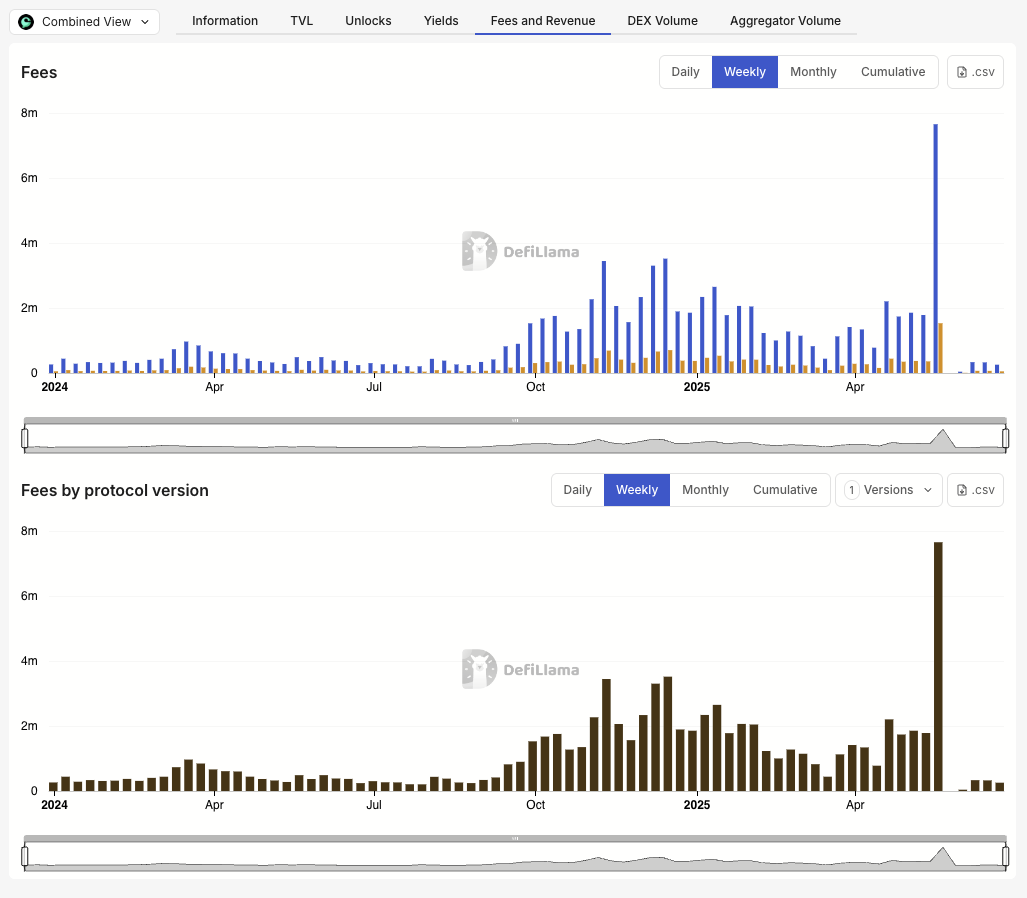
Every swap on Cetus incurs a fee based on the pool’s tier (e.g., 0.05%), with 80% going to active LPs and 20% to the protocol treasury. Fees are distributed only to LPs whose ranges include the current price, rewarding those providing real liquidity. LPs can choose from six fee tiers ranging from 0.01% to 2%, allowing pools to self-regulate: low-fee tiers attract volume for stable pairs, while higher tiers compensate for riskier assets.

Unlike typical DEXs that reward liquidity size, Cetus uses a fee-based liquidity mining model. The CETUS tokens are fairly distributed based on the actual fees a position generates. This discourages idle capital and ensures incentives go to productive LPs, improving capital efficiency and reducing unnecessary emissions.
Fee Structure and Optimization MechanismsFee Structure and Optimization Mechanisms

Source: DefiLlama

To simplify liquidity management, Cetus provides Vaults that automate rebalancing and fee compounding. Its Intent Trading module enables automated strategies like DCA or limit orders, executed fully on-chain. Sui’s low-cost, high-speed infrastructure makes these advanced features feasible.

Lastly, Cetus includes a Swap Aggregator, sourcing liquidity from all Sui DEXs to ensure best execution. This allows users to trade seamlessly across the Sui ecosystem with minimal slippage, reinforcing Cetus’s position as the leading trading venue on Sui.

Oracle Functionality and Cross-Chain Integration

Cetus Protocol extends beyond being a DEX by offering built-in oracle and cross-chain features. Its concentrated liquidity pools serve as on-chain price oracles, recording swap-based price data and enabling time-weighted average price (TWAP) queries.

Developers can access this data source directly from pool contracts to derive reliable, manipulation-resistant price feeds—ideal for use in lending protocols or automated strategies on Sui. This removes reliance on external oracles, lowering integration costs and risks.

Oracle Functionality and Cross-Chain IntegrationOracle Functionality and Cross-Chain Integration

Source: Cetus

Cetus is also inherently multi-chain, supporting asset transfers between Sui, Aptos, and 20+ networks via the Wormhole bridge. Though Cetus doesn’t custody bridged assets, it provides an interface for users to move tokens such as USDC and CETUS across chains. While bridge-related risks exist, integrations with Wormhole and Axelar highlight Cetus’s commitment to multichain liquidity.

Its architecture also aligns closely with Sui’s parallel execution and object-centric model. Projects can reference Cetus pool objects or integrate directly via SDKs, making Cetus a foundational liquidity layer. Developers can offer token incentives/rewards to customized pools, creating composable DeFi use cases. Altogether, Cetus combines high-performance AMM design with oracle tools, multichain access, and developer-friendly integrations—positioning it as a core infrastructure protocol on Sui.

CETUS Tokenomics and Incentives

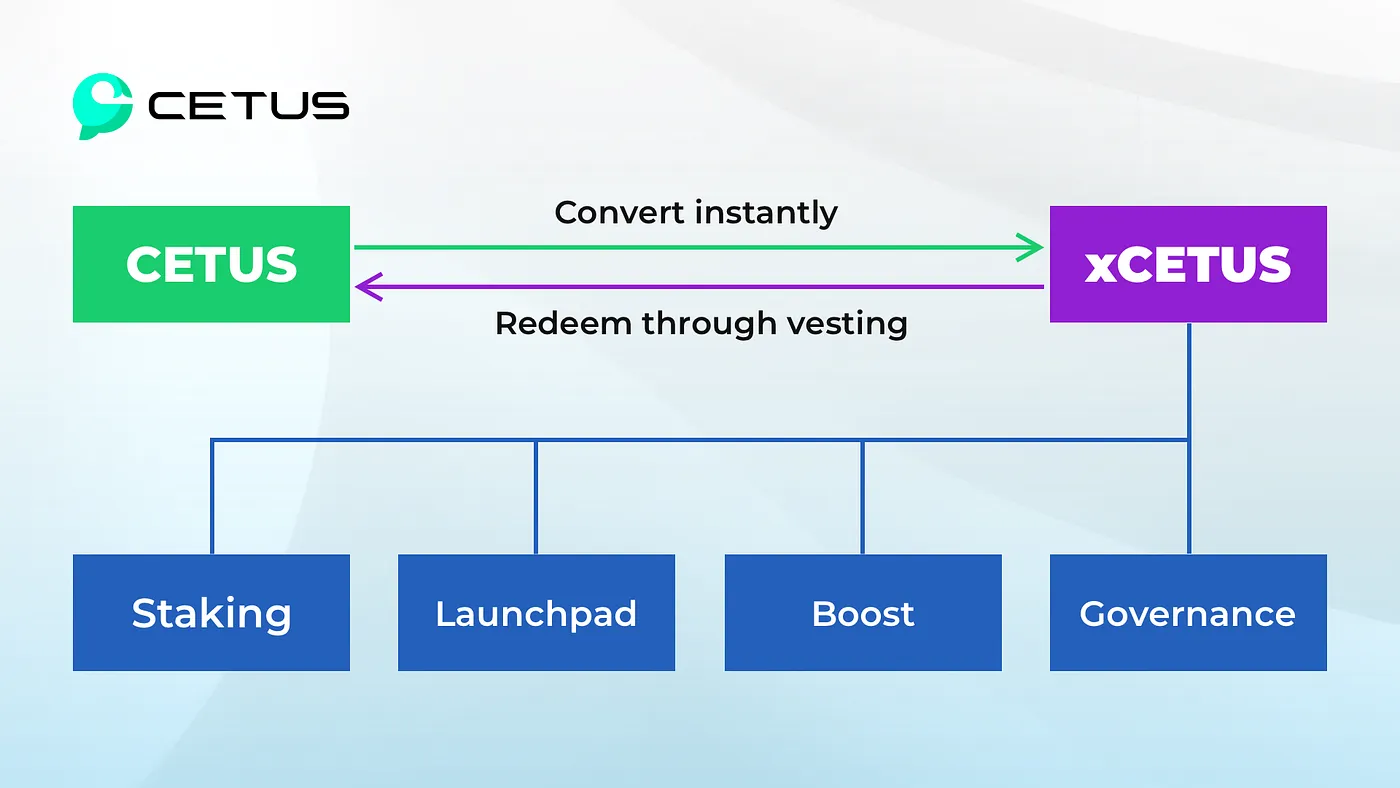
A deep dive into the Cetus Protocol would be incomplete without examining its tokenomics. The project provides a dual-token model: 

These tokens are central to the protocol’s incentive structure, governance mechanism, and long-term sustainability strategy.
CETUS Tokenomics and IncentivesCETUS Tokenomics and Incentives

Source: Cetus

CETUS Token Utility and Governance Role

CETUS token is designed to facilitate and incentivize participation in the Cetus DeFi ecosystem, rather than act as a general-purpose currency. Holding CETUS does not confer ownership or revenue rights in a legal sense, but it does entitle holders to partake in protocol governance and benefit from the protocol’s growth through utility features.

binance-logo-2binance-logo-2

It’s worth emphasizing that CETUS is not a revenue share token in a direct sense – protocol fees collected do not automatically flow to CETUS holders. However, the protocol’s model uses those fees for sustaining rewards (e.g. buyback or funding incentives) and insurance, which indirectly benefits the community and can support the token’s value. 

The economic logic is that CETUS incentivizes user participation (liquidity, volume, etc.), which grows the platform, generates fees, then used to further reward users and enhance the platform, creating a positive feedback loop. 

CETUS Token Utility and Governance RoleCETUS Token Utility and Governance Role

Source: Coingecko

xCETUS: Staked Escrowed Token and Governance

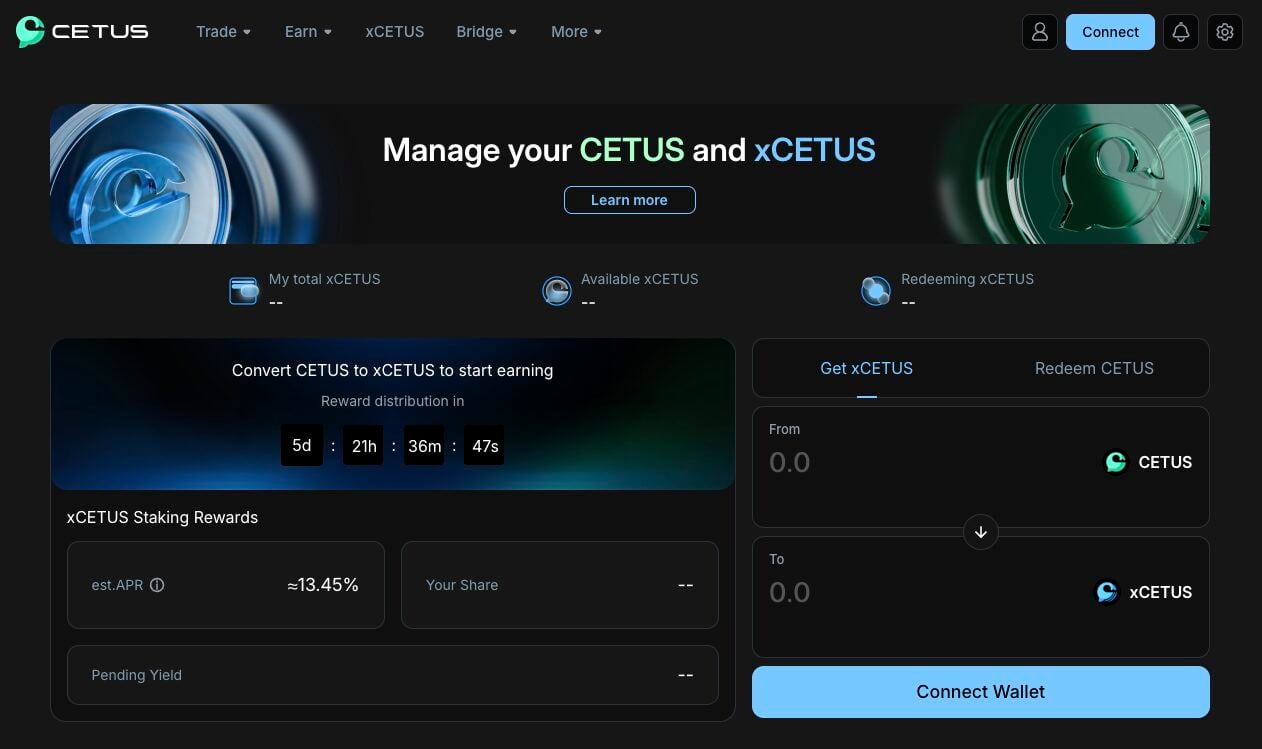
To promote long-term alignment and decentralized governance, Cetus uses an escrowed token model: xCETUS. When users stake (lock) their CETUS, they receive a non-transferable xCETUS token at a 1:1 rate initially. 

xCETUS represents voting power and loyalty status within the protocol. The design is similar to vote-escrow models (like Curve’s veToken concept) but with a flexible twist: users can choose how long to vest if they want to convert back to CETUS.

Key aspects of xCETUS:

Instant Conversion: Users stake CETUS anytime to receive xCETUS at a 1:1 rate with no lock-in. While staked, users retain full governance rights and access to loyalty benefits.Governance Power: Only actively held xCETUS counts for voting. If xCETUS is in redemption, it loses voting power—preventing governance manipulation by existing users.Redemption Mechanics: Users choose a vesting period (15 to 180 days).Cancel Anytime: Pending redemptions can be canceled before completion to regain xCETUS.Loyalty Utility: xCETUS levels up user tiers, unlocking perks like better Launchpad allocations or fee benefits.Ecosystem Role: xCETUS governs mining rewards, fee settings, and treasury use. Holding it may also boost access to exclusive token sales.
xCETUS: Staked Escrowed Token and GovernancexCETUS: Staked Escrowed Token and Governance

Source: Cetus

The xCETUS model is powerful. It aligns with long-term participation, allowing immediate governance participation but delaying full value until exit. This model is more flexible than a fixed multi-year lock. Users choose their lock time when exiting, trading time for value. Those who remain staked support the protocol’s stability and avoid token loss. Any collected penalties strengthen Cetus’s financial situation.

From a governance perspective, xCETUS holders will vote on proposals once Cetus DAO is fully on-chain. Additionally, xCETUS links to Launchpad participation. When new projects launch tokens via Cetus’s Asset Launch, xCETUS amounts determine users’ whitelist eligibility or allocation size. This adds a direct economic benefit to holding xCETUS, potentially providing access to lucrative token sales for emerging Sui projects.

xCETUS: Staked Escrowed Token and GovernancexCETUS: Staked Escrowed Token and Governance

Source: Cetus

Overall, the CETUS/xCETUS tokenomics are geared towards sustainable, long-term growth: CETUS incentivizes user activity and liquidity provision; xCETUS encourages holding and aligned governance; the dual model rewards genuine contributors and disincentivizes mercenary capital. 

For more: Sui Deep Dive: A Comprehensive Analysis

Cetus in the Sui Ecosystem

Cetus Protocol plays a pivotal role in the Sui ecosystem as its primary liquidity engine and DeFi infrastructure layer. As the first and most dominant DEX on Sui, Cetus enables deep, efficient, and flexible trading through its concentrated liquidity AMM model, which drastically improves capital efficiency and reduces slippage for users. 

This design makes Cetus the default venue for token swaps, liquidity provisioning, and price discovery across the network. More than just a DEX, Cetus acts as a modular building block for Sui-based applications. In short, Cetus is the liquidity backbone, oracle layer, and governance gateway of the Sui blockchain.



Source link

Digital Dreams: The Future of Art in the Age of Virtual Reality

0


As we stand on the precipice of a new digital era, the intersection of art and technology is evolving in ways we once deemed unimaginable. Virtual Reality (VR), a medium traditionally associated with gaming and simulations, is now emerging as a revolutionary platform for artists. This article explores how VR is reshaping the art world, providing fresh avenues for creativity, interaction, and experience.

The Evolution of Artistic Expression

Historically, art has always mirrored the technology of its time. From the cave paintings of our ancestors to the advent of photography and digital art, each new medium has expanded the possibilities of creative expression. VR represents a seismic shift in this continuum, allowing artists to create immersive, interactive experiences that transcend traditional boundaries.

Immersive Experiences

VR’s ability to immerse viewers in three-dimensional worlds transforms the way we experience art. Instead of merely observing a painting or sculpture from a distance, audiences can step inside a digital canvas, exploring art in a multisensory environment. This level of engagement encourages a deeper emotional connection, as viewers become active participants rather than passive spectators.

Artists like Quill and Tilt Brush pioneers are utilizing VR platforms to create artwork that can only exist in a virtual realm. This new frontier allows for the exploration of dimensions, perspectives, and experiences that traditional media simply cannot offer.

Democratizing Art Creation

The rise of VR technology democratizes the art-making process. No longer are artists confined by the limitations of physical materials or studio space. With a VR headset and a computer, anyone can become an artist, giving rise to a new generation of creators from diverse backgrounds.

Moreover, platforms like Oculus Medium and Artivive empower creators to share their work with a global audience. This accessibility is not just beneficial for artists; it also allows consumers to engage with art in innovative ways. Audiences can explore virtual galleries or participate in collaborative art projects, breaking down barriers and fostering a sense of community.

New Realities and Narratives

Virtual Reality enables storytellers to construct narratives that unfold in engaging and interactive ways. VR art installations can alter our perceptions of reality, inviting audiences to explore complex themes and social issues. Artists can make powerful statements on topics like climate change, identity, and technology, offering immersive experiences that provoke thought and dialogue.

For instance, works like "Tree" by the artist Marco Tempest create a thought-provoking visual journey that encourages environmental awareness, while projects focused on social justice allow users to experience realities beyond their own. By stepping into different perspectives, audiences can foster empathy and understanding in ways that traditional art forms may struggle to convey.

Challenges and Opportunities

While the potential of VR in the art world is vast, it is not without challenges. Issues such as accessibility, hardware costs, and the need for technical skills can limit participation. However, as technology continues to develop and become more user-friendly, these barriers are likely to diminish.

Additionally, the art market itself is undergoing transformation. New forms of monetization are emerging, from virtual galleries that host exhibitions to NFTs (Non-Fungible Tokens) that provide verifiable ownership of digital art. Artists are exploring these possibilities, redefining how art is valued and collected.

Conclusion: Shaping the Future

As we look towards the future, it is clear that Virtual Reality is more than just a passing trend; it is a catalyst for change in the artistic landscape. With its ability to immerse, democratize, and challenge perceptions, VR is shaping how we create, share, and experience art.

As artists continue to push the boundaries of this medium, we can expect a vibrant and dynamic evolution of the art world—one where digital dreams become an intrinsic part of our cultural narrative. As we embrace this new reality, we are reminded that art will always be a reflection of humanity, transcending time and space, and connecting us in ways we are just beginning to understand.

Creating and Selling NFT Art: A Step-by-Step Guide for Artists

0


The digital art landscape has transformed dramatically with the advent of Non-Fungible Tokens (NFTs). NFTs have enabled artists to monetize their digital creations in new and exciting ways. If you’re an artist looking to explore this vibrant market, this step-by-step guide will help you navigate the world of NFT art creation and sales.

Step 1: Understand NFTs

Before diving in, it’s crucial to comprehend what NFTs are. NFTs are unique digital tokens that represent ownership of a specific item on the blockchain. Unlike cryptocurrencies, which are fungible and can be exchanged for one another, NFTs are one-of-a-kind and can represent various digital goods, including artwork, music, and collectibles.

Key Features:

  • Ownership: Provenance is easily tracked, giving buyers assurance of authenticity.
  • Scarcity: Artists can limit their creations, enhancing their value.
  • Programmable: Smart contracts allow for royalties on future sales.

Step 2: Choose Your Blockchain

Most NFTs exist on Ethereum, but other blockchains like Binance Smart Chain, Flow, and Tezos have emerged as alternatives. Each has its pros and cons, such as transaction fees, environmental impact, and community support.

  • Ethereum: The most popular but often has high gas fees.
  • Tezos: Lower fees and eco-friendly.
  • Flow: Designed for games and digital collectibles.

Step 3: Set Up a Digital Wallet

A digital wallet is necessary for storing cryptocurrencies and your NFTs. Wallets such as MetaMask, Trust Wallet, and Coinbase Wallet allow you to manage your assets. Here’s how to set one up:

  1. Download the Wallet: Choose a wallet compatible with your selected blockchain.
  2. Secure Your Wallet: Follow security protocols, including backup phrases and two-factor authentication.
  3. Fund Your Wallet: Purchase cryptocurrency (like ETH for Ethereum) to cover transaction fees.

Step 4: Create Your Art

Creating NFT art isn’t fundamentally different from regular art creation, but here are some tips tailored for the NFT environment:

  1. Choose Your Medium: This could range from digital paintings and illustrations to 3D models and animations.
  2. Use Design Software: Adobe Photoshop, Illustrator, Blender, or Procreate are great tools to create digital art.
  3. Consider Interactivity: Some NFTs allow for engaging features, like animations or augmented reality, to enhance the viewer’s experience.

Step 5: Mint Your NFT

“Minting” refers to the process of creating an NFT on the blockchain. The steps may vary slightly depending on the platform you choose, but here’s a general guide:

  1. Select a Marketplace: Popular marketplaces include OpenSea, Rarible, and Foundation.
  2. Connect Your Wallet: Link your digital wallet to the NFT marketplace.
  3. Create a New NFT:

    • Upload your artwork.
    • Add a title and description.
    • Set properties like editions (single or multiple copies).
  4. Set the Price: Decide whether you want to auction your NFT or sell it at a fixed price.

Step 6: Promote Your Artwork

Once your NFT is minted, promoting your work is crucial to attract buyers. Here are some effective strategies:

  1. Social Media: Use platforms like Twitter, Instagram, and TikTok to showcase your art and engage with potential buyers.
  2. Join NFT Communities: Engage with communities on platforms like Discord, Reddit, and Clubhouse to network with other artists and collectors.
  3. Collaborations: Collaborate with other artists or brands to reach a wider audience.

Step 7: Selling and Managing Your NFTs

After all the promotion, it’s time to sell. Keep a few things in mind:

  1. Follow Up with Buyers: After a sale, maintain communication with buyers; it can lead to future opportunities.
  2. Track Sales and Royalties: Use your blockchain wallet to monitor sales and ensure any programmed royalties are enforced for future resales.
  3. Stay Informed: The NFT landscape evolves rapidly. Keep up with trends, market shifts, and new platforms.

Bonus Tips for Success

  • Quality Over Quantity: Focus on producing high-quality art rather than flooding the market.
  • Stay True to Your Brand: Maintain a consistent aesthetic or theme that reflects your artistic identity.
  • Utilize Analytics: Some platforms provide analytics to help you track engagement and sales, guiding your future efforts.

Conclusion

Creating and selling NFT art can be a rewarding venture for artists willing to explore this new medium. By following this guide and staying adaptable, you can carve out a unique space in the exciting world of NFTs. Happy creating!

Breaking Boundaries: The Innovative Intersection of Art and Code

0


In a world increasingly driven by technology, the seamless integration of art and code is not just a trend but a transformative movement reshaping our understanding of creativity. The intersection of these two seemingly disparate realms fosters innovation, challenges traditional artistic paradigms, and invites us to reconsider the very nature of what art can be. This article explores how artists and technologists are breaking boundaries, fostering new forms of expression, and redefining their respective fields.

The Genesis of Code as Art

Historically, the relationship between art and technology has been complex. From the invention of the printing press to the advent of photography, each technological advancement has pushed the boundaries of artistic expression. The emergence of coding as a form of art began to gain traction in the late 20th century. Artists started to use programming languages not just as tools but as mediums for creative expression.

Pioneering figures like Frieder Nake and Harold Cohen demonstrated that algorithms could create intricate and compelling visual art. Cohen’s AARON, a program that autonomously generated drawings, marked a significant milestone in the journey of code as an artistic medium. Such innovations laid the groundwork for future artists to explore the digital canvas.

Contemporary Practices at the Intersection

Today, artists leverage a myriad of technologies to blur the lines between digital and physical realms. Generative art, for instance, relies on algorithms to create unique pieces that evolve over time or respond to user interaction. Artists like Casey Reas, one of the co-founders of Processing, emphasize the power of code to generate infinitely varied artwork with minimal input.

Moreover, platforms like GitHub have become collaborative spaces where artists and coders exchange ideas, share resources, and co-create. This democratization of art production not only expands access but also fosters a community-driven approach that celebrates diversity in artistic expression.

The Role of Data and Algorithms

Data is a powerful element in the fusion of art and code. Artists use data visualization to transform vast amounts of information into aesthetically engaging representations. The work of artists like Jer Thorp and Rafael Lozano-Hemmer showcases how data can unlock stories, reveal patterns, and foster emotional connections.

Algorithms also play a critical role in shaping experiences. For example, immersive installations employing machine learning adapt to viewer engagement, creating personalized experiences that evolve in real-time. This interactive element challenges the traditional notions of static art, inviting audiences to become active participants rather than passive observers.

The Ethical Dimension

As art and technology converge, ethical questions surface. Concerns about surveillance, privacy, and data representation pose challenges for artists navigating this new landscape. Artists like Trevor Paglen interrogate these issues through their work, using art as a commentary on the implications of technology in society.

Moreover, the question of authorship emerges in the age of AI-generated art. When algorithms create art based on datasets, who rightfully owns the work? These discussions are crucial in shaping the future of creativity, as they compel us to rethink ownership and originality in an increasingly collaborative digital landscape.

The Future of Art and Code

The innovative intersection of art and code is still in its infancy, with vast potential for exploration. As technology continues to evolve, we can expect new forms of artistic expression to emerge. Virtual reality, augmented reality, and artificial intelligence promise to further expand the boundaries of creativity, enabling artists to create experiences that engage multiple senses and challenge our perceptions of reality.

Art and code will continue to intersect, not just as a means of production but as a vehicle for social change. By leveraging technology, artists can reach wider audiences and address pressing issues, from climate change to social justice, in compelling ways that transcend traditional media.

Conclusion

Breaking boundaries at the intersection of art and code heralds a new era of creativity. As artists harness the power of technology, they are redefining the landscape of art, challenging us to broaden our understanding of creativity and expression. This dynamic fusion invites a dialogue between disciplines, sparking innovation and encouraging collaboration that promises to enrich our cultural landscape for years to come. The future of art, intertwined with code, is not merely an evolution but a revolution—one that celebrates the limitless possibilities of human ingenuity.

Digital Dreams: How Tech is Redefining the Art Landscape

0


The art world has long been a realm of creativity, expression, and cultural dialogue. However, in recent years, technology has emerged as a powerful catalyst, reshaping what art means and how it is created, experienced, and consumed. From digital installations to virtual reality exhibitions, the intersection of art and technology is resulting in a revolution that is opening new doors and fostering unprecedented possibilities.

The Rise of Digital Art

Digital art has gained significant traction, moving away from the niche it once inhabited. With tools like graphic tablets, software applications, and generative algorithms, artists can create works that were previously unimaginable. Programs such as Adobe Creative Suite, Procreate, and Blender enable creators to experiment with styles and techniques that transcend traditional boundaries.

Moreover, platforms like Behance and DeviantArt offer artists a space to showcase their work, reaching global audiences without the gatekeeping often found in traditional galleries. The accessibility of digital tools has democratized the creation process, encouraging a new generation of artists who are unafraid to blend mediums and push limits.

Interactive Art Experiences

Interactivity has become a hallmark of contemporary art, thanks in part to technology. Artists are increasingly incorporating elements that allow viewers to participate actively. Installations that respond to audience input, like sound, movement, or even thought patterns, create immersive experiences that challenge the passive nature of traditional viewing.

Exhibitions like the "TeamLab Borderless" in Tokyo exemplify this shift, featuring interactive rooms where participants dissolve barriers between art and reality. Such experiences invite audiences to become a part of the artistic process, fostering a deeper connection with the work and its message.

Virtual and Augmented Reality

Virtual reality (VR) and augmented reality (AR) have pushed art into entirely new dimensions. VR allows for fully immersive environments where viewers can explore 3D worlds crafted by artists, while AR blends digital imagery with the physical world, giving new life to galleries and public spaces.

Museums are beginning to embrace these technologies. The Louvre, for example, has developed VR experiences that allow users to ‘walk’ through pieces of art, dissecting their layers and context in ways that traditional viewing cannot replicate. This has proved particularly valuable during recent global events, offering alternatives for art engagement when physical access is limited.

Blockchain and the Art Market

The introduction of blockchain technology has brought about the phenomenon of non-fungible tokens (NFTs), which have changed the way art is bought and sold. NFTs offer digital provenance—verifiable ownership of digital assets—creating opportunities for both artists and collectors. High-profile sales have made headlines, with works by artists selling for millions of dollars, emphasizing the growing acceptance of digital artworks as valuable assets.

However, while NFTs open new revenue streams, they also spark debates about accessibility and sustainability. The environmental impact of blockchain technology has raised concerns, pushing artists and platforms to explore more eco-friendly alternatives.

Social Media and Art Distribution

Social media has transformed the way art reaches audiences. Platforms like Instagram, Pinterest, and TikTok accelerate visibility, allowing artists to share their work instantly with millions of users. Hashtags and trends help in democratizing exposure, enabling emerging and established artists alike to thrive without relying solely on traditional gallery representation.

For many artists, social media isn’t just a platform for sharing art; it’s a space for community, collaboration, and conversation. It transcends geographical boundaries, allowing artists to connect and engage with global audiences, influencing styles and trends across cultures.

Challenges and Future Prospects

Despite the many advantages offered by technology, challenges persist. Issues such as digital copyright, privacy concerns, and the digital divide threaten to undermine the inclusivity that technology promises. As digital art continues to grow, it’s essential for creators and platforms to navigate these concerns carefully, ensuring equity and access for all.

Moreover, as technology evolves, so too will the tools and techniques available to artists. Future advancements, potentially like AI-driven art generators, promise to spark fresh debates about authorship and creativity, compelling us to reconsider what it means to be an artist in a tech-driven world.

Conclusion

The interplay between technology and art is a dynamic and evolving narrative that is redefining the creative landscape. Digital art, interactive experiences, and innovative market structures are just the beginning of a broader transformation. As artists harness these tools, they not only expand their creative horizons but also invite audiences to re-imagine their relationship with art. In this digital age, the canvas is limitless, and the dreams are more vivid than ever. As we look ahead, it’s clear that the future of art will be as much about technology as it is about human expression.

What Is Litecoin (LTC)? How It Works, Use Cases

0
What Is Litecoin (LTC)? How It Works, Use Cases


Often described as Bitcoin’s younger sibling, Litecoin is a source code fork that shares similarities with Bitcoin but offers some unique features. While it lacks smart contract support and has less visibility, LTC remains in the top 20 cryptocurrencies by market cap. But what is Litecoin, and how does it manage to remain resilient among thousands of competing digital assets?

How is it different from Bitcoin, and how exactly does it work? This comprehensive guide explores the Litecoin ecosystem, its history, utility, and relationship with Bitcoin to help you make an informed Litecoin investment decision.

What Is Litecoin (LTC)?      

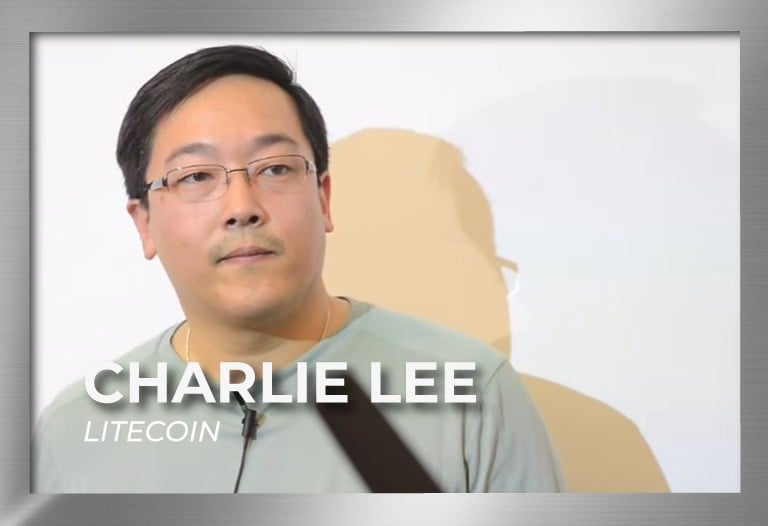
Litecoin (LTC) is a decentralized digital asset that utilizes the proof-of-work consensus mechanism and was designed to serve as a lighter version of Bitcoin (BTC). Litecoin’s creator, Charles Lee, a former engineer at Google, aimed to address existing issues like scalability with the flagship cryptocurrency, primarily focusing on facilitating lower transaction fees and faster transaction confirmation.

What Makes Litecoin Unique?       

Unlike Bitcoin, which uses the SHA-256 algorithm for mining, Litecoin uses the lighter Scrypt algorithm. This becomes one of the main differences between Bitcoin and Litecoin, ensuring that Litecoin mining can be performed using standard hardware, thus making it more accessible to a broader audience. Several other factors make Litecoin a unique digital asset, including the following: 

Faster Transaction Speeds: Among the main differences between Litecoin and Bitcoin is the former’s speedier block generation time, which is 2.5 minutes compared to Bitcoin’s 10 minutes. As a result, Litecoin can confirm transactions at least four times faster than Bitcoin, making it an ideal choice for making real-time payments as a result of using Scrypt, an alternative proof-of-work algorithm.Lower Transaction Fees: Litecoin’s transaction fees are lower than Bitcoin’s, meaning users don’t have to worry about fees eating into their balance when making smaller transactions.Build Differences: While they’re often called siblings, they are not twins. Where Bitcoin uses the SHA-256 algorithm, Litecoin uses the lighter Scrypt algorithm, which makes Litecoin mining easier than BTC mining.Supply: Bitcoin capped its maximum supply at 21 million coins compared to Litecoin’s 84 million coins.

What Is Litecoin (LTC)?  

History of Litecoin (LTC)    

Since its launch in 2021, Litecoin has had an eventful journey full of turns and twists that have made it one of the most popular and widely used digital assets in the cryptocurrency market. The crypto asset boasts strong community support and dedicated developers who continue to introduce new features to enhance the network’s functionality. Some of the most notable milestones in Litecoin’s history include:

October 2011: Litecoin is launched as an open-source project, becoming a Bitcoin alternative that offers a faster and lighter option rather than a replacement. 2017: Segregated Witness (SegWit) gets the nod: In 2017, Litecoin became the first major crypto network to adopt the Segregated Witness (SegWit) upgrade, which frees up more space and helps blockchains faster by separating signatures from data. 2017: Lightning Network Activation: Soon after SegWit, Litecoin joined the Lightning Network movement, a Layer 2 (L2) solution that enables transactions to occur off-chain, resulting in faster, almost fee-free transactions, making it ideal for micro-payments.2019: Litecoin Halving Events: Litecoin has halving events similar to Bitcoin’s, but for LTC, it occurs every 840,000 blocks. During halving events, the rewards miners get for confirming transactions are reduced by half, thereby reducing the rate at which new coins are created and adding more scarcity into the mix.Latest development: MimbleWimble Upgrade – Litecoin’s updates are progressive, with the latest one being the MimbleWimble Development Blocks, a privacy-focused upgrade that further improves scalability while keeping transactions more private. 

Who Created Litecoin?

Litecoin founder Charlie LeeLitecoin founder Charlie Lee

Source: Happycoin

Litecoin is the brainchild of Charles Lee, formally an engineer at Google, who already had some experience in cryptocurrency issues by the time of creating LTC. Besides seeing the potential that Bitcoin had, Lee also discovered there were nagging issues, such as slow transaction speeds and high transaction fees, which could have been improved.

Instead of competing directly with Bitcoin, Lee sought to create an alternative that would address Bitcoin’s perceived shortcomings and introduce a digital asset that would be less prone to centralization and more accessible to the average user. Beginning with Bitcoin’s open-source code, Lee made several tweaks and adjustments to the original code, ultimately creating a faster and more efficient cryptocurrency. 

How Does Litecoin Work?  

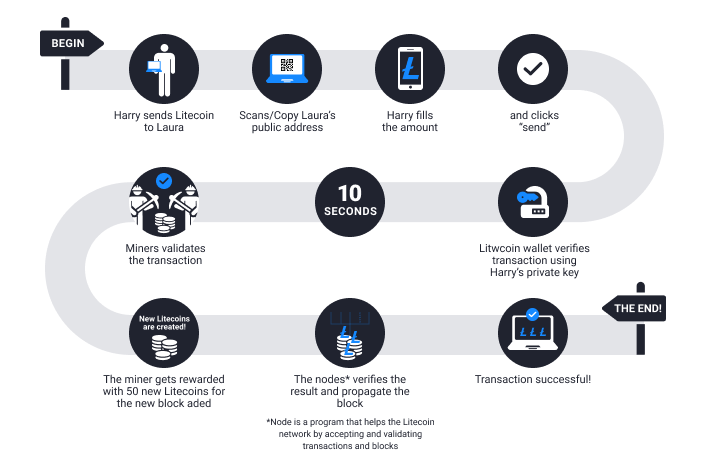
Primarily, Litecoin uses a distributed ledger, also known as a blockchain, to track all transactions. The blockchain is permanent and transparent, meaning that all transactions recorded cannot be erased. The network groups transactions into blocks and links them together before creating a chain of blocks. Since the system is decentralized, no single entity can control it, which makes it resistant to fraud. 

Blockchain Fundamentals

The Decentralized Ledger: The LTC Blockchain is maintained by a network of computers (nodes) running the software worldwide, which checks and stores transaction data, ensuring everything remains intact across the network.Proof-of-Work (PoW) Consensus Mechanism: Just like Bitcoin, Litecoin uses the PoW consensus mechanism to secure the blockchain. Miners compete to solve a challenging mathematical problem where the first person to crack the code adds a new block to the chain and is rewarded with newly minted Litecoin tokens.The Scrypt Algorithm: Litecoin separates its operation from Bitcoin by using the Scrypt algorithm instead of Bitcoin’s SHA-256. The memory-intensive algorithm ensures anyone with standard equipment can mine Litecoin, unlike Bitcoin mining, which requires fancy and expensive ASIC miners. This makes Litecoin mining more of a DIY operation.

How Does Litecoin Work?  How Does Litecoin Work?  

Source: Exmo

Litecoin MimbleWimble Upgrade

MimbleWimble is a protocol upgrade that introduces strong security, privacy, and scalability features, creating a distinctive way of storing and structuring blockchain-based transactions. The upgrade presents an interesting development in the blockchain space, as it’s a robust standalone protocol that can seamlessly integrate with other protocols.

Litecoin integrated MimbleWimble into its operations via the MimbleWimble Extension Block (MWEB) following a research period into its functionality until a Litecoin Improvement Proposal (LIP) authorized it in 2019. The LIP proposed that implementing the MWEB would enhance the performance of the Litecoin blockchain. 

As a result of the MimbleWimble Upgrade, Litecoin users can opt-in whenever they want to make privacy-focused or anonymous transactions, as long as they have a wallet or use an exchange that supports MimbleWimble. Apart from anonymity and privacy, the MimbleWimble upgrade also promotes scalability and fungibility within the Litecoin blockchain.

The MimbleWimble Upgrade positions Litecoin as a privacy-focused option among other cryptocurrencies, with the potential to attract more users who prefer privacy and could enhance its adoption for both individual and commercial use. The increased scalability could also make LTC more efficient for day-to-day use, thereby strengthening the token’s utility while also offering faster speeds and lower transaction fees. 

How Is the Litecoin Network Secured?

One of the primary advantages of Litecoin’s network is the use of encryption to protect transactions and user data. By using cryptography to secure its network, the blockchain makes it impervious to fraud or hacking attempts. Moreover, the blockchain’s core technology facilitates immutability and transparency, enabling users to verify transactions independently of any central authority. 

In addition to blockchain technology and encryption, Litecoin also benefits from a dedicated community of cybersecurity experts and developers who continually work to monitor and enhance the network’s security features. The experts are available 24/7 to identify and resolve any vulnerability in real time, thereby strengthening the blockchain against cyber threats and attacks.

Since the blockchain utilizes the proof-of-work consensus mechanism, the Litecoin network is also secured by miners who actively participate in the block validation process, making it more resistant to attacks such as 51% attacks or any form of fraud.  Due to its vast team of a decentralized network of participants playing different roles, LTC seems unlikely to become a victim of any malicious network attacks.

What Is the Litecoin Halving?

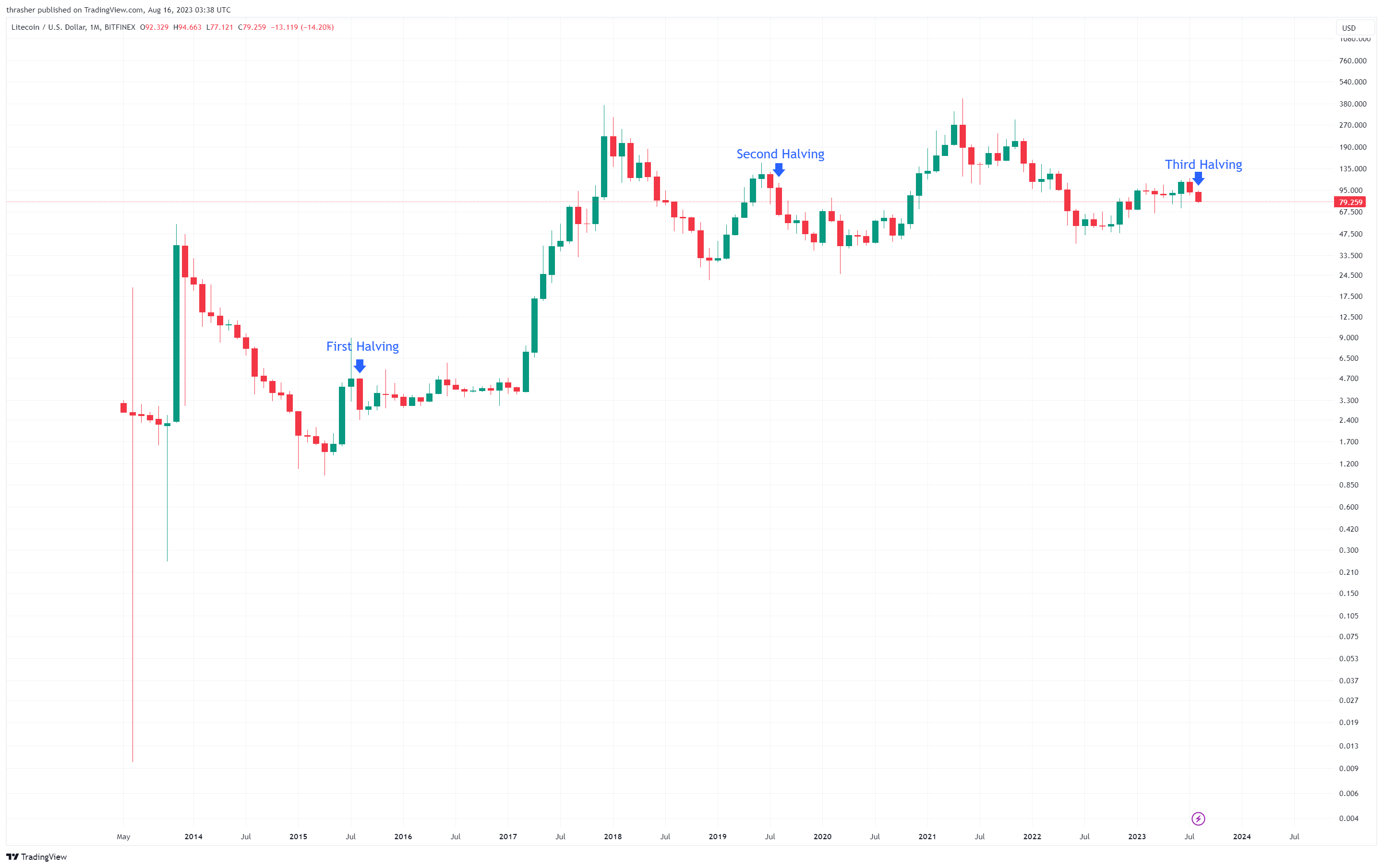
What Is the Litecoin Halving?What Is the Litecoin Halving?

Past halving price performance

Working like clockwork, Litecoin halving is designed to occur after every 840,000 blocks, which is roughly every four years, based on the blockchain’s 2.5-minute block time. Whenever the halving occurs, the rewards offered to miners are cut in half, which can be compared to slowing down the drip of new coins. 

The primary purpose of Litecoin halving is to reduce the process of creating coins over time, thereby mimicking the scarcity of precious assets. The idea behind halving is that the fewer coins there are in circulation, the scarcer they become and potentially the more valuable they become. The effects of Litecoin halving include:

1. Reduce Block Rewards

At the launch of Litecoin, miners received 50 LTC for every block they added to the chain. However, after each halving, the reward is cut in half, and the cycle is intended to continue until all 84 million coins are mined. To see how it has played out in the past halvings: in 2015, It reduced to 25 LT; in 2019, It reduced to 12.5 LTC; and in 2023, It reduced to 6.25 LTC.

2. Reduce mining profitability

Miners get fewer rewards with each mining, meaning that mining could get less profitable if LTC’s price doesn’t increase or mining costs don’t reduce.

3. Reduce the supply of Litecoin

Halving controls the supply of LTC, leading to scarcity, which can help support its value over time.

4. Bullish price trend

Historically, halving events have consistently led to price surges, as the reduction in the supply of coins excites investors who believe that the limited supply could drive up prices.

Since the total supply of Litecoin is capped at 84 million coins, halving events guarantees that the token’s supply grows slowly and predictably without ever exceeding the limit. The controlled deflationary process lends LTC a gold-like appeal, which ultimately makes it a potential store of value.

How Is Litecoin Mined?     

Litecoin mining works by organizing blockchain transaction data into blocks, which system participants known as miners can access at any time. Miners in the ecosystem run mining software to verify each block by solving complex mathematical puzzles. When a miner successfully confirms a block, they add it to the blockchain and earn a reward in the form of newly generated LTC coins.

How to Set Up Mining Equipment

Users interested in mining can do so using ASIC mining devices that come with pre-installed mining software. Alternatively, you can use the standard CUP or GPU, but you need to install your mining software. However, be careful not to install mining software containing malware or other malicious software.

Choice of Mining

After setting up mining equipment, you must choose whether you will work solo or join an existing group of miners. While mining alone could be potentially more lucrative, you risk taking a long time without ever finding a block due to competition from miners with stronger mining rigs. While it was possible to mine using a standard CPU or GPU at the beginning, there’s almost no chance currently that you can make any money. Most miners today join mining pools where they end up dividing the mining rewards based on the hash power everyone contributed.

Does Litecoin Have Staking?  

For users interested in earning passive income through staking, the good news is that Litecoin staking is possible, but this happens indirectly since LTC uses the proof-of-work mechanism instead of the proof-of-stake mechanism associated with staking. Users can still earn staking rewards on their Litecoin tokens by using third-party or Decentralized Finance (DeFi) platforms like Nexo, where you can lend LTC and earn interest on your Litecoin investment.

How to Stake Litecoin?

The following is a step-by-step process for staking Litecoin:

1. Step 1: Set up a Litecoin Wallet

Start by setting up a wallet, such as Exodus, Ledger Live, or Atomic Wallet, that supports LTC and transfers some coins into it.

2. Step 2: Start Staking

As long as you have at least 1 LTC in your wallet, you can start staking by navigating to the staking section and following these steps:

Click “Stake” and specify the amount of LTC you want to stakeSet the staking period and click “Confirm.”Wait for staking rewards to begin rolling in.

3. Step 3: Monitor Your Staking Rewards

As the period progresses, you will begin earning additional LTC coins, which you can confirm by checking your transaction history and wallet balance.

What Is Litecoin Used For?

1. Everyday Payments: Thanks to its low fees and fast transaction speeds, Litecoin has become the go-to alternative for making crypto-based payments, among other uses, as the number of merchants accepting it grows gradually. Whether you’re paying for an online service or some items you bought at a store, LTC offers a fast and affordable way to complete your transaction. Since the number of merchants and stores accepting LTC is on the increase, it’s now easier to use it to complete transactions.

2. Investment Opportunities: Investing in Litecoin is now a valuable alternative for those seeking to diversify their portfolio in the cryptocurrency market. Thanks to its strong community and advanced technological foundation, they increasingly add LTC to their holdings in hopes of boosting returns.

3. Cross-Border Transactions: Litecoin has become a cost-effective and efficient alternative for cross-border money transfers, particularly for individuals seeking to avoid the lengthy waiting times and high fees associated with traditional methods of sending money abroad. With LTC, users only need a Litecoin wallet to send and receive funds worldwide within minutes without worrying about expensive foreign exchange conversions. The lower fees make it an appealing choice for cross-border transfers. 

How to Use a Litecoin Wallet        

After knowing Litecoin meaning and its use cases, it is now time to understand how to use Litecoin. Before you can acquire LTC coins from a reputable cryptocurrency exchange, you need a compatible Litecoin wallet where you can store your coins. From there, you can easily send and receive LTC payments, participate in staking and DeFi activities, or store long-term for its value. 

There are different types of LTC wallets available on the market, each serving a different purpose. These include hardware, software, and mobile wallets. Always choose a wallet based on its security, functionality, and whether it aligns with your goals and intentions for holding cryptocurrency.  

Hardware Wallets: Hardware wallets, such as Ledger Nano X and Trezor, are considered the safest Litecoin wallets since they store your private keys offline, meaning they are not susceptible to hackers. Software Wallets: Software wallets, such as Exodus, Electrum-LTC, and others, can be installed on your laptop or PC and offer greater convenience than hardware wallets. Nonetheless, they are less secure due to their internet connection. If you choose to use software wallets, take extra precautions, such as using a strong password or enabling two-factor authentication (2FA).Mobile Wallets: Mobile wallets, such as Coinomi and Trust Wallet, are apps designed to store private keys on mobile phones. While you can use them on the go, they carry a relatively higher risk since mobile phones can be stolen or lost. You can secure your mobile Litecoin wallet with a strong password and avoid downloading it from questionable sources.

How to Buy and Sell Litecoin  

After learning how to use Litecoin, our guide now shows you the process of buying and selling LTC, so you become equipped to navigate the crypto landscape, especially if you’re new to this space. The avenues for buying and selling Litecoin may differ from apps like PayPal to centralized and decentralized cryptocurrency exchanges.

Buying Litecoin

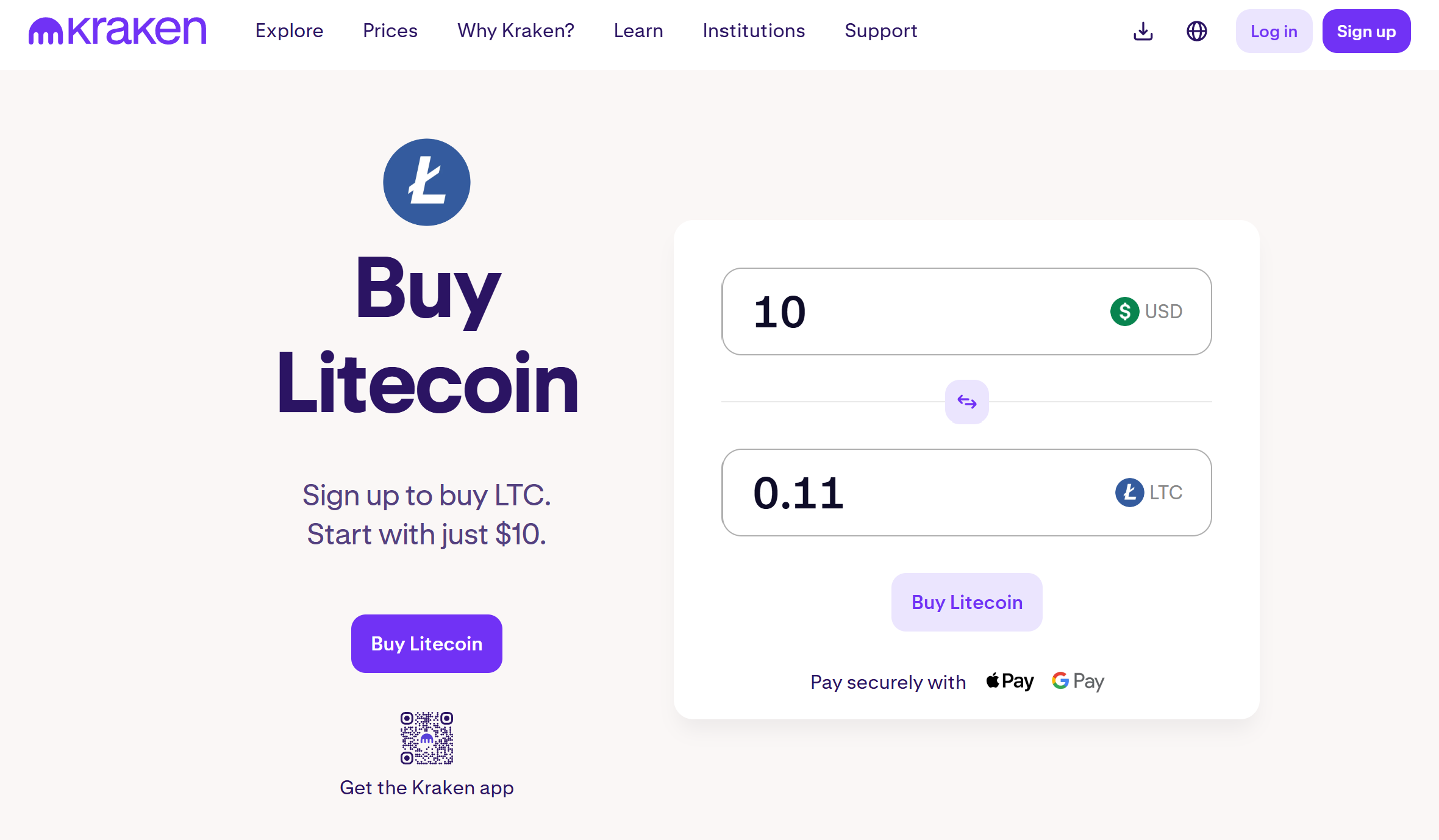
Buying Litecoin from a centralized exchange is a straightforward process, as most exchanges offer intuitive and user-friendly interfaces. While every exchange could have a few nuances, the process remains mostly consistent.

Step 1: Create an Account: Start by signing up for the exchange – you’ll be asked to provide some necessary personal details.Step 2: Complete KYC: Next, you need to complete a Know Your Customer (KYC) process to verify your identity. Step 3: Deposit Funds: Transfer money from cryptocurrency to the exchange wallet you just created.Step 4: Search for Litecoin: Navigate through the site and locate the appropriate Litecoin trading pair (for example, LTC/USDT) on the platform.Step 5: Place your Order: Choose between buying immediately at the current price (Market Order) and setting a preferred price (Limit Order).Step 6: Execute the Transaction: Review your details, and if everything is correct, proceed with executing your order to buy Litecoin.Step 7: Secure Your Litecoin: Once you receive your LTC, consider transferring your coins to a personal Litecoin wallet for added security.

Buying LitecoinBuying Litecoin

KrakenKraken

Selling Litecoin       

Step 1: Choosing Your Selling Method: Decide whether you want to sell Litecoin on a P2P platform, centralized exchange, or direct sales.Step 2: Set Up an Account: For a centralized exchange, create a verified account by completing the Know Your Customer (KYC) process and setting up two-factor authentication (2FA) for an added layer of security.Step 3: Transferring LTC to the Exchange: Transfer the LTC you want to sell from your wallet to the exchange. Double-check the receiving address to ensure there’s no mistake.Step 4: Create a Sell Order: Choose between a Marker Order (best available price) and a Limit Order (set your preferred price.)Step 5: Manage the Transaction: Wait for the order to be executed and wait for your cash based on the preferred payment method you entered.

What to consider before buying Litecoin?

Before you buy Litecoin or any other cryptocurrency, you must remember that crypto assets are a new form of money and can be highly volatile or become illiquid at any moment, making them a high-risk investment. However, they are also considered the future of money and have the potential to yield a good return on investment.

Educate yourself about Litecoin and the broader cryptocurrency industry so you can effectively explain blockchain technology and decentralization to family and friends. You should be familiar with the basics of cryptography so you can understand what’s happening in the industry at any given time. Once you have understood the cryptocurrency industry and how its economics work, ask yourself if you genuinely believe in the value of digital assets and choose whether it is the right thing for you.

Since there’s still some level of uncertainty surrounding crypto trading, consider diversifying your portfolio to include other cryptocurrencies apart from Litecoin and, as much as possible, limit your Litecoin investment to an amount you can afford to lose. Lastly, remember that crypto trading is subject to capital gains tax in many jurisdictions.

How to Store Litecoin 

If you’re new to crypto investing, knowing how to store your Litecoin safely is one of the most important steps to consider. You need to have a clear understanding before pressing the “Buy” button to avoid your investment journey ending in a setback. Always choose a secure and accessible method to keep your assets safe—one simple mistake can result in the loss of your crypto holdings. There are important factors to always keep in mind to secure your Litecoin.

Be Skeptical of Unsolicited Messages: Never respond to any messages asking about your wallet information. Always verify the source and never click on any suspicious links, as they could be phishing attempts to steal your funds. No cryptocurrency exchange will ever ask you about you’re the secret phase of your wallet or private keys.Please back up your Wallet: Create multiple backups of your Litecoin wallet and store them in a safe, secure location. Consider encrypting your purse for an added layer of protection.Never Share Your Private Key: Your seed phrase is the master key to your crypto wallet. Sharing it with anyone is akin to handing over control of your crypto assets to other people. Keep your secret phrase confidential and never disclose it via text or online to safeguard your cryptocurrency.Keep Your Device and Wallet Software Updated: Install regular updates for both your device and wallet, as outdated software is susceptible to hackers and other cybercriminals.

Litecoin vs. Bitcoin: Key differences

Key difference between Litecoin vs. BitcoinKey difference between Litecoin vs. Bitcoin

Source: Bitpanda

1. Speed of Transaction: Transaction speed remains one of the key differences between Litecoin (LTC) and Bitcoin (BTC). Where an average Bitcoin transaction takes 10 minutes, Litecoin will take 2.5 minutes.

2. Mining Algorithms: Bitcoin employs the secure and intensive SHA-256 hashing algorithm, while Litecoin uses the Scrypt algorithm, which is lighter and faster, meaning it is possible to mine Litecoin using standard CPUs or GPUs.  

3. Supply Limits: The total supply of Bitcoin is capped at 21 million, while Litecoin is capped at 84 million.

4. Performance and Adoption: In terms of performance, BTC leads in market capitalization and adoption, while Litecoin still struggles with adoption, although its low fees make it ideal for day-to-day use.

Benefits of Using Litecoin

Faster transaction times: Compared to BTC, Litecoin generates blocks more quickly, allowing users to confirm transactions faster and complete payments with ease.Scalability: Litecoin’s larger maximum supply processes more transactions efficiently. Its scalable design makes it a strong candidate for mainstream adoption.Active development team: The Litecoin Foundation has a team of developers constantly working to detect and fix any issues as they appear, in addition to continually enhancing the network’s performance by implementing new features.Widespread acceptance: Many new merchants are accepting LTC as a form of payment for goods and services, which make it an ideal choice for those who intend to spend cryptocurrency.

Risks of Investing in Litecoin  

Less secure: The downside of the faster block time is that it makes the Litecoin network susceptible to double spending and poses a security risk to users. 

Market volatility: Litecoin, like all other cryptocurrencies, is subject to market fluctuations, which often lead to significant price swings, making it a relatively risky investment.Competition: Other altcoins, such as XRP and Ethereum, are giving Litecoin stiff competition, which could have a negative impact on its growth potential.Limited use cases: Litecoin has limited use cases compared to other cryptocurrencies, which could hinder its widespread adoption in the future.Regulatory Uncertainty: While positive changes are emerging in the crypto regulatory landscape, the existing regulatory environment can impact the LTC’s use and adoption.

Does Litecoin Have a Future?

Litecoin has presented itself as a faster and more accessible cryptocurrency, competing with Bitcoin. Despite the challenges, such as the lack of smart contracts and reduced relevance, that LTC currently faces, it has remained resilient as a fast and cost-effective alternative to more established cryptocurrencies. Litecoin strikes a balance between efficiency and decentralization while promoting interoperability, positioning itself as a strong contender in the competitive crypto market.

Luckily, the Litecoin community and development team remain steadfast in pushing the project’s agenda of making cryptocurrency use practical and accessible to everyone, in addition to its potential as a viable store of value. Unfortunately, the coin’s limited presence on decentralized finance (DeFi) and decentralized exchanges (DEXs) has limited its utility and made it unavailable to emerging applications.

However, given the strong development team behind the project, it is likely to continue innovating, potentially leading to widespread adoption of Litecoin soon.

FAQs                                       

Is Litecoin a good investment?

Litecoin offers lower transaction fees, faster speeds, and a proven track record. Nonetheless, it scores low on adoption and unique features despite being one of the oldest altcoins. However, many experts believe LTC has a strong future in the cryptocurrency market even though it may not be able to compete with Bitcoin.

How Many Litecoin (LTC) Coins Are There in Circulation?

According to CoinMarketCap, as of June 28, 2025, Litecoin currently ranks 20th and has a live market capitalization of $6.5 billion. The token’s current circulating supply is 76.01M LTC and a maximum supply of 84 million LTC coins.

How much is $1 LTC to USD? 

According to CoinGecko, the current price of 1 LTC is LTC in June 28, 2025.

Where Can You Buy Litecoin (LTC)?  

There are several cryptocurrency exchanges where you can buy, sell and trade Litecoin. However, you need to conduct some research to find a platform that suits your goals and trading preferences so you can enjoy a smooth trading experience. Consider factors such as fees, robust security, and user-friendly features when looking for a place to buy LTC.

Will Litecoin reach $100?  

LTC has recently closed near the $100 resistance level, and it appears to have rejected that price for the last two years, preferring to stay near the $91 to $95 area that previously pushed the price much lower. Analysts believe the push toward the $100 remains low unless the price moves above the current order block. 

Is Litecoin a Fork of Bitcoin?  

Litecoin is an altcoin and a fork of Bitcoin. It is builds on the same underlying blockchain and verification method as Bitcoin, but introduces a few minor differences.

What Will Litecoin Be Worth in 5 Years?

According to several analysts and the consensus ratings from Binance Exchange users, experts predict Litecoin could climb to at least $123.29 within the next 5 years.


Source link

What Is Hash Rate? How It Works, and How to Calculate It

0
What Is Hash Rate? How It Works, and How to Calculate It


Are you starting to dive deeper into cryptocurrencies and Bitcoin mining and hearing terms like Bitcoin hash rate that sound confusing? Well, it should not, because hash rate is a significant component that helps keep Bitcoin safe.

As Bitcoin mining develops from a niche industry into a powerful economy poised to grow even further, understanding the metrics like mining hash rate used in monitoring crypto mining is essential. This comprehensive guide will answer the question “What is hashrate”, why it matters, and its impact on miners’ profitability.

What Is Hash Rate in Crypto?

Before appreciating a reasonable hash rate for mining crypto, you must familiarize yourself with essential terms. A Bitcoin hash rate, or hashing power, measures the target hash used in mining and processing transactions in proof-of-work (PoW) blockchain networks.

As the world’s biggest proof-of-work blockchain, Bitcoin has millions of crypto miners distributed in almost every corner of the world. The network’s mining hashrate represents the total number of hash computations the miners can execute in one second or the size of the computational power of the whole blockchain.

Miners compete to crack cryptographic puzzles in the mining process, and the first to solve one earns a block reward and gets to add the next block to the blockchain. Hashing power, therefore, represents the speed at which a miner can guess the answer to the puzzle. The higher the miner’s machine’s hashing power, the greater the chance that the miner will guess the hashing and the more likely they could receive Bitcoin rewards.

What Is Hash Rate in Crypto?

Source: Blockchain

How Do Hash Rates Work?                

Hashrate is the primary measurement in the entire mining process for Bitcoin’s proof-of-work system and other cryptocurrency networks. The measurement system evaluates the number of guesses a mining computer can make per second when solving the “hash” on the blockchain network.

Hash refers to a fixed-length alphanumeric code representing a message, word, or data, and in crypto, it can be called a summary of digital data. Cryptocurrencies use unique hashing algorithms to generate hash codes with random alphanumerics denominated in hexadecimal notation. Every hash is generated by data from a block alongside a randomly adjusted number called a nonce via hashing algorithms such as Bitcoin’s SHA-256.

Cryptocurrency mining involves guessing different values for the nonce by generating a new hash every time. The speed at which a miner’s machine can make these guesses is called mining hashrate. For instance, if a Bitcoin mining rig can generate 1 trillion hashes per second, the machine’s hashrate will be denominated as 1 terahash per second (TH/S). It goes without saying that the higher the hash rate, the greater the chance that a miner will find the valid hash and win the block reward.

How Do Hash Rates Work?  How Do Hash Rates Work?  

Source: Nicehash

How Hashrate Affects Difficulty and Security

The network automatically adjusts the difficulty level based on the total hashrate so that blocks are mined at a fixed rate, such as every 10 minutes for the Bitcoin blockchain. Moreover, a higher hashrate escalates the difficulty level, while a lower one reduces it. The crypto miner who finds the correct hash that solves the network’s difficulty puzzle earns the right to add a block to the blockchain. The miner is given the newly minted cryptocurrency and the transaction fees associated with the block they validated to reward their effort.  The mining process is significant as it guarantees the blockchain network’s security and transaction integrity.

Since the relationship between hashing algorithms and mining difficulty plays a crucial role in success, miners invest in more powerful mining gear to boost their performance. They often turn to all the mining hardware available, especially specialized units like Application-Specific Integrated Circuits (ASICs), which manufacturers specifically design for mining cryptocurrencies like Bitcoin. These machines perform hash computations with much greater speed and efficiency, giving miners a significant advantage.

How is Hash Rate Calculated?           

Bitcoin’s rate is measured by the number of hashes, also called “guesses” per second on the blockchain network. This processing capacity is typically expressed using units that increase in scale, starting from kilohashes (KH/s), followed by megahashes (MH/s), gigahashes (GH/s), terahashes (TH/s), petahashes (PH/s), and exahashes (EH/s).

However, since thousands of computers will try to make millions of guesses every single moment, huge networks like Bitcoin mostly measure hashing power in terahashes per second. So, based on the scale, hashing power can be expressed as:

Kilo Hares per second (KH/s) – Thousands of guesses per second.Mega Hares per second (MH/s) – Millions of guesses per second.Giga Hares per second (GH/s) – Billions of guesses per second.Tera Hares per second (TH/s) – Trillions of guesses per second.Peta Hares per second (PH/s) – Quadrillions of guesses per second.

How is Hash Rate Calculated?How is Hash Rate Calculated?

Source: Cryptominerbros

Why is Hashrate Important?  

So after answering the question “What is hashrate,” why should you be concerned about hashing power and even invest time to calculate hashrate? The answer to this question can be found when you look at the potential advantages of a reasonable Bitcoin hash rate. The following factors explain why the hash rate matters to anyone interested in Bitcoin mining.  

1. Blockchain Network’s Security

A higher Bitcoin hash rate translates to better network security, making it extremely expensive and challenging for an individual entity to execute a 51% attack. For example, overpowering Bitcoin’s current hashing power at over 870.87M in May 2025 would cost individuals billions of dollars, meaning that the current level of decentralization makes BTC remain trustworthy and resilient.

2. Mining rewards

The other benefit of higher hashing power is increasing a miner’s chance to mine a block and receive the block reward successfully. Considering there is cutthroat competition between miners to solve complex mathematical problems, those with more computing power have the technical advantage. Mining hardware like high-end GPUs and ASIC miners help process calculations faster and boost a miner’s chances of earning block rewards. 

3. Energy consumption  

There’s a close link between mining hashrate and energy consumption as far as cryptocurrency mining is concerned. Mining rigs and ASIC miners consume a lot of energy, directly impacting the miners’ operational costs and potential profitability. As a miner, you want to carefully calculate hashrate so you can carefully balance your energy expenses and the possible rewards you could end up receiving. Making such determinations has caused miners to explore renewable energy sources or relocate to destinations with lower energy costs to maximize profitability.  

4. Mining difficulty        

Mining difficulty refers to how hard it is to mine a new block on a blockchain network based on existing circumstances. The network automatically adjusts the difficulty level to keep block times consistent. It increases the difficulty when the hashrate rises, ensuring blocks aren’t mined too quickly. On the other hand, mining difficulty decreases as the hashrate drops, ensuring that the network maintains stability and security. In the case of the Bitcoin blockchain, the difficulty adjustment occurs recurrently, mainly after every 2,016 blocks for Bitcoin, helping to balance the network’s performance as miners join or leave.

Mining difficulty     Mining difficulty     

Bitcoin’s Hash Rate    

The hashing power has grown so much that by 2024, the global computational power averaged above 911 EH/s, which would become a new record. The increases in mining hashrate highlight an integration of technological advancements, enhanced adoption, and growing profitability for BTC miners. Notably, renowned crypto mining hubs like Texas and Kazakhstan have played a significant role in boosting global mining capacity.

On the other hand, serious geopolitical and electrical consumption policies are also impacting hashing power dynamics. A perfect example is China’s 2021 mining ban that led to a temporary global hashrate dip before miners packed their bags and moved to more favorable regions. Such factors highlight the delicate balance between mining activities, energy access, and cryptocurrency regulation.  

Current Bitcoin Hashrate       

At the time of writing in May 2025, the Bitcoin hashrate, 870.87MH/s, is the global network hashrate, and an average mining difficulty of 121.66 T at the block height of 897,752.

History of Bitcoin Hashrate 

History of Bitcoin HashrateHistory of Bitcoin Hashrate

Source: BitInfoCharts

Since its inception, the Bitcoin hash rate has grown tremendously. That’s because, at the beginning, miners could use an ordinary CPU to produce enough computational power. However, as Bitcoin’s popularity grew, more efficient GPUs were needed, and currently, only ASICs are the standard mining equipment. 

From the modest hashrates of 2009, when using a standard CPU for Bitcoin mining was the norm, to 2010, when GPU mining emerged, the increase in the BTC network’s computational power has been on an upward trajectory. There was a significant leap in 2013 when ASIC miners came into the picture as the specialized devices advanced mining efficiency, and the result was a dramatic surge in the Bitcoin hash rate.

Additionally, Bitcoin halvings that occur every four years have also influenced hash rate trends. Despite the reduced block reward size, the hash rate has continually increased, pushed by more miners participating and technological advancements. The continuous improvement of ASIC miners has consistently delivered higher hash rates amid less energy consumption, enabling miners to maintain the delicate balance between increasing mining difficulty and profitability.

If you consider the history of the Bitcoin hash rate, you’ll notice that within a few months in 2021, the hash rate increased in line with BTC’s value surge. By the time the price of BTC hit $61,000 in August 2024, the hash rate was a little over 150 million TH/s. On Friday, January 3, 2025, the Bitcoin hashing power hit a record all-time high of over 1,000 EH/s, highlighting the network’s strength and growing mining activity despite uncertain economic times and tightening crypto regulations.                       

How Can Miners Optimize Their Hashrate?

As more and more miners join the backbone of securing and validating transactions on the blockchain, competition between them increases and the success rate of every participant remains their hashrate. Miners are always looking for ways to improve their profitability, and enhancing the hashrate is one of those strategies.

Below are some strategies you can employ as a miner to improve your odds at profitability:      

1. Understand Hash Rate

We’ve learned that a higher hashrate translates to greater computational capacity, thus increasing your odds of hitting the jackpot. You must, therefore, keep learning to discover new methods to increase this rate and improve your efficiency and profitability.

2. Optimize Your Hardware Configuration

Optimizing your mining hardware setup could include investing in the latest ASIC or GPU rig tailored for your mining cryptocurrency.  In addition to acquiring specialized devices designed to execute tailor-made mining algorithms, stay informed and make regular hardware upgrades to keep pace with technological advancements.

3. Implement Advanced Cooling Solutions

You could potentially increase the speed of your mining hardware by using overlocking techniques and cooling solutions. Mining hardware generates excess heat, necessitating advanced cooling solutions to prevent overheating and maintain stable operations at higher speeds. Learn about emerging technologies like liquid cooling or custom cooling setups and implement them as needed.

4. Participate in Mining Pools

Many competing miners are now joining mining pools to enhance their collective hashrate. Miners can increase their hashrate dramatically when they combine their computational power. When they successfully mine a block, they split the block rewards in line with the computational power they distributed.

5. Algorithmic Optimization

Different cryptocurrencies employ distinct consensus algorithms, each requiring unique mining configurations. Miners strategically switch from one digital asset to another based on mining difficulty and profitability. You can easily increase your hashrate by choosing crypto with favorable mining algorithms or seeking to optimize your mining software for selected algorithms.  

6. Energy Efficiency and Sustainability

Consider switching to eco-friendly energy sources due to increasing global environmental concerns. Miners now use sustainable mining practices by using renewable energy sources like wind and solar power to reduce their carbon footprint. Consider using energy-efficient mining hardware that guarantees a higher hashrate per unit of energy consumed.

7. Continuous Learning and Adaptation

New technologies and algorithms emerge constantly in the dynamic cryptocurrency space. It is in a miner’s best interest to stay updated on new ways of optimizing their Bitcoin hash rate in line with emerging software updates, technological advancements, and algorithm changes that could enable them to fine-tune their setups for optimal performance. Endeavor to actively participate in mining communities and online forums so you can stay abreast with the latest techniques on effectively enhancing your hash rates.      

Conclusion

Whether you’re a cryptocurrency miner, an investor, or a blockchain enthusiast, you need to understand how hashing power works because applying that knowledge directly affects your ability to earn block rewards.

As the crypto mining landscape anticipates fresh interest due to growing governmental and institutional interest in Bitcoin and other cryptocurrencies, your knowledge of mining hashrate will determine whether you will get a share of the pie or just be watching from the sidelines. Since understanding hashrate comes as a multifaceted role depending on whether you are an individual miner or an investor, it pays to continue learning about hash rates and how you can use the knowledge you acquire to your advantage as a mining expert now.

FAQs                                                                                                   

What is a good hash rate for mining?           

As far as hash rate is concerned, the term “good” as far as hash rate is relative as it depends on factors like the particular asset you’re mining, the hardware you’re using, and the difficulty level of the network. To use Bitcoin mining as an example, individual mining rigs with a 100 TH/s hashrate coming from an efficient ASIC miner can qualify to be competitive. On the other hand, if you’re mining on a smaller blockchain with lower difficulty, you’ll still do well with a lower hashrate. The bottom line is the profitability of a hashrate depends on how well you balance electricity costs and mining rewards.

What is Bitcoin hashrate?

Bitcoin hashrate refers to the amount of computational required to accomplish mining and secure the Bitcoin network and reflects how much computing power all the miners collectively contribute to the blockchain network.                                             

Is a higher hashrate better?  

Most experts agree that a higher hashrate improves the efficiency of a proof-of-work cryptocurrency network by making it more resistant to attacks. Since many miners are competing to mine blocks by solving the special mathematical function, there is less chance of malicious attackers successfully invading the network.

How much is 1 hash rate?     

A hash rate of 1 is 1 hash per second (H/s), representing the computational power a blockchain network needs to validate transactions and solve cryptographic or mathematical puzzles. Depending on the level, the unit is called up using the prefixes kilo, mega, giga, or tera to quantify larger hash rates.

How much hashrate is needed to mine 1 BTC?

Several factors influence how much hashrate is needed to mine 1 Bitcoin. Typically, if you mine alone with a hashrate of 100 TH/s, it would take around 30 days to mine 1 BTC. However, in real-world scenarios where mining is highly competitive, the actual requirement can vary greatly. Therefore, it depends on factors such as network difficulty, mining pool efficiency, and hardware performance.

Where can I see current hashrates? 

Different websites and platforms display real-time hashrate data for countless blockchain systems, especially those built on PoW networks. You could check out the current hashrates among these platforms:

Blockchain.com: Charts and data for different cryptocurrencies.Minerstat: Network hashrate and hashrate distribution for Bitcoin.BitInfoCharts: Bitcoin hashrate data tracking and graphsYCharts: Bitcoin network hashrate historical dataNiceHash: Insights into hashrates and CPU miningHashrate.no: Hashrates data and potential earnings calculatorsHashrateIndex: Bitcoin hashrate data and potential ASIC miner profitabilityKoinly: For a list of websites that track hashratesSwan Bitcoin: Interactive Bitcoin hashrate graphs


Source link

The Rise of Generative Art: Tools and Techniques for Modern Artists

0

The Rise of Generative Art: Tools and Techniques for Modern Artists

In recent years, the art world has witnessed a profound transformation with the advent of generative art. This innovative approach marries technology and creativity, enabling artists to create captivating works through algorithms, code, and computational processes. As digital tools become more accessible, generative art is rapidly gaining traction among both seasoned professionals and emerging talents. This article explores the rise of generative art, the tools that empower artists, and the techniques that define this fascinating movement.

Understanding Generative Art

Generative art refers to artworks that have been created in part or full through automated systems. These systems often involve algorithms and mathematical equations that dictate how the artwork evolves. Unlike traditional art forms, where the artist maintains complete control, generative art introduces an element of randomness and unpredictability, leading to unique outcomes even when the same code is used multiple times.

Historical Context

The roots of generative art can be traced back to the mid-20th century, when pioneers like Frieder Nake and Harold Cohen began experimenting with computers as creative tools. These early explorations laid the groundwork for the incorporation of technology in art. However, it wasn’t until the rise of processing power and user-friendly software in the 21st century that generative art began to flourish, culminating in a thriving community of artists and enthusiasts.

Key Tools for Generative Artists

1. Programming Languages

  • Processing: A flexible software sketchbook and a language for learning how to code within the context of the visual arts. It’s widely used for creating 2D graphics, animations, and interactive installations.

  • p5.js: A JavaScript library that makes coding accessible for artists to create web-based visual works. Its syntax is simplified, allowing artists to focus on creativity rather than programming complexities.

  • OpenFrameworks: An open-source C++ toolkit designed for creative coding. It’s suitable for more complex applications, including installations and interactive experiences.

2. Generative Software

  • TouchDesigner: A node-based visual programming language primarily used for creating interactive multimedia projects. Artists can manipulate real-time data, making it ideal for immersive installations.

  • Resolve: A platform that combines machine learning with generative art tools, allowing artists to explore new dimensions of creativity by leveraging AI.

  • Artbreeder: A web-based platform that combines images using GANs (Generative Adversarial Networks). Users can mix and morph images to create new visual artworks collaboratively.

Techniques in Generative Art

1. Algorithmic Design

At the core of generative art is algorithmic design, where artists create rules or sets of instructions that define how elements—such as shapes, colors, and textures—interact with one another. This technique can lead to stunning visuals that might not have been possible through traditional methods.

2. Data Visualization

Many generative artists use data as a source for their creations. By converting data sets into visual forms, artists can create pieces that not only look beautiful but also convey information in engaging ways. For instance, artists can visualize climate data to comment on environmental issues.

3. Machine Learning

Machine learning techniques allow generative artists to train algorithms on existing artwork, enabling them to generate new pieces that mimic styles or innovate new forms. This fusion of art and AI raises interesting questions about authorship and creativity.

4. Interactive Installations

Generative art often invites viewer participation, transforming static installations into dynamic experiences. By integrating sensors and responsive technologies, artists can create environments that evolve based on audience interaction, making the viewer an integral part of the artwork.

The Future of Generative Art

As technology continues to evolve, the possibilities for generative art are seemingly endless. With advancements in AI and machine learning, artists can push the boundaries of creativity, exploring new techniques and mediums. Furthermore, the accessibility of digital tools means that anyone with a passion for art and technology can participate in this exciting movement.

Conclusion

The rise of generative art marks a significant shift in how we perceive and create art. With its unique blend of technology, algorithm, and creativity, generative art continues to inspire artists and audiences alike. As the community grows and technology advances, generative art is set to redefine the artistic landscape of the future, challenging notions of creativity, authorship, and expression. In this new era, artists are not just creators but also curators of code and concepts, inviting us to see the world through a refreshing, algorithmic lens.

Interactive Art: Bridging Emotion and Technology in Modern Installations

0


In an era dominated by rapid technological advancement, art is evolving in remarkable ways, integrating digital mediums and interactive elements that engage audiences on unprecedented levels. Interactive art, characterized by its ability to involve viewers as active participants, transcends traditional boundaries and forges a deeper connection between the artwork and the observer. This dynamic form of expression invites emotional engagement while simultaneously highlighting the transformative power of technology in contemporary art.

The Essence of Interactive Art

At its core, interactive art encourages active participation; it transforms passive viewers into collaborators, allowing them to influence the work’s outcome. This interactivity can manifest through various mediums, including installations, virtual reality, and algorithm-driven pieces. Artists employ sensors, projections, and other technologies to create immersive environments where the audience’s decisions, movements, or even emotions shape the work.

One of the defining characteristics of interactive art is its ability to evoke emotional responses. By fostering a sense of agency, these installations invite viewers to explore their feelings, thoughts, and experiences in a way that traditional art forms often cannot. The medium becomes a dialogue, blurring the lines between artist, artwork, and audience, and allowing each participant to walk away with a unique emotional imprint.

Emotional Engagement Through Technology

Technology serves as both a tool and a collaborator in interactive art. Artists harness sophisticated algorithms, artificial intelligence, and responsive environments to craft experiences that resonate on a personal level. For instance, works like “The Obliteration Room” by Yayoi Kusama transform spaces through viewer participation, where visitors are encouraged to cover a stark white room with colorful dot stickers, turning it into a vibrant explosion of color. This process of transformation elicits joy, playfulness, and a sense of community.

In contrast, projects such as “After the Flood” by Heather Dewey-Hagborg employ technology to raise awareness about pressing social issues. This installation uses facial recognition algorithms to explore themes of identity and surveillance, urging viewers to confront their relationships with technology and societal norms. By engaging with these emotional and ethical themes, Dewey-Hagborg’s work challenges participants to reflect on their realities and the implications of technology on their lives.

The Role of Audience Interaction

Interactive art often incorporates real-time feedback mechanisms, allowing artworks to evolve in response to the audience’s input. This adaptability creates a unique experience for each participant, further enhancing emotional engagement. For example, in installations like “The Interacting With The Self” by Rafael Lozano-Hemmer, viewers’ own heartbeat can trigger visual and auditory responses, creating a tangible connection between their bodily presence and the surrounding art.

Such interactions can elicit a spectrum of emotions—from wonder and curiosity to introspection and discomfort. The unpredictability inherent in interactive art means that the emotional journey is as significant as the final artistic statement, allowing participants to take ownership of their experiences.

Challenges and Considerations

While interactive art offers exciting new avenues for exploration, it also poses unique challenges. The reliance on technology can lead to issues of accessibility; not all audiences may be familiar with the technological components involved. Additionally, there may be a risk of the artwork overshadowing the emotional experience through its technological spectacle. Thus, artists must strike a balance to ensure that technology enhances rather than detracts from the emotional narrative.

Furthermore, as interactions become increasingly mediated by algorithms and artificial intelligence, questions arise regarding agency and authorship. Who owns the experience? What happens when art is co-created with artificial intelligence? These considerations prompt vital discussions surrounding the role of technology in our lives and its implications for human creativity.

Conclusion: A New Frontier in Art

Interactive art represents a compelling intersection of emotion and technology, inviting viewers into immersive experiences that challenge their perceptions and expand their emotional horizons. As today’s artists continue to push boundaries, the potential of interactive art to convey complex narratives and foster genuine connections with audiences becomes ever more profound.

In a world increasingly influenced by technological connectivity, interactive art not only reflects society’s changing landscape but also shapes it, encouraging a deeper understanding of ourselves and our shared experiences. Ultimately, this dynamic form is not just about technology; it’s about the human experience—raw, emotional, and beautifully complex.

AI in Art: A New Era of Collaboration Between Humans and Machines

0


The intersection of artificial intelligence (AI) and art is not just a fleeting trend, but a profound evolution that signals a new era of creative collaboration between humans and machines. As artists and technologists explore this synergy, a remarkable journey unfolds—one that redefines creativity, challenges traditional norms, and opens up exciting avenues for innovation.

The Rise of AI in Artistic Expression

Over the past decade, significant advancements in machine learning, particularly in neural networks, have enabled AI to analyze and generate artworks. Algorithms can now mimic the styles of renowned artists, produce original compositions, and even generate poetry or music. This capability transforms the way art is created, making it more dynamic and accessible.

Generative Adversarial Networks (GANs) are a notable technological advancement, allowing AI to generate images based on combinations of existing styles and themes. This technique has led to the emergence of art that can resonate with emotional depth and complexity, compelling audiences to appreciate AI as a legitimate creative partner.

Collaboration Over Replacement

The notion that AI could replace artists is an oversimplification. Instead, AI is proving to be a tool that enhances human creativity. Artists utilize AI to push their boundaries, experiment with new styles, and explore uncharted territories in their work. This collaboration fosters an environment where human intuition meets machine precision, resulting in unexpected and innovative outcomes.

For instance, renowned contemporary artists like Mario Klingemann and Refik Anadol incorporate AI in their creative processes, creating pieces that reflect both technological ingenuity and human emotion. Through such collaborative efforts, artists can explore new modalities that were previously unattainable.

Democratizing Art Creation

One of the most exciting implications of AI’s integration into the art world is the democratization of art creation. Platforms powered by AI, such as DeepArt or Artbreeder, allow individuals—regardless of technical skill—to create compelling artworks. This accessibility encourages a wider audience to engage with art, fostering a more inclusive environment.

Moreover, AI tools can assist in fine-tuning techniques, providing feedback, and automating repetitive tasks, which can be particularly advantageous for emerging artists looking to hone their crafts without the constraints of traditional methods.

Ethical Considerations

As with any transformative technology, the integration of AI into art raises ethical questions. Issues surrounding authorship, copyright, and the potential loss of traditional artistic skills are increasingly relevant. Who owns an artwork generated by an AI? Can an algorithm be credited as an artist? These questions challenge us to rethink our definitions of creativity and originality.

Some artists advocate for transparency in AI-generated works, emphasizing the importance of acknowledging both human and machine contributions. This perspective nurtures a dialogue about the nuanced relationship between technology and traditional art forms.

The Future of Art and AI

Looking ahead, the potential for AI in the art world appears limitless. As algorithms evolve, their ability to emulate complex human emotions and abstract ideas may enhance, driving the creation of even more profound works. Moreover, interdisciplinary collaborations among artists, scientists, and technologists could usher in innovative forms of expression not yet imagined.

Art institutions and galleries are increasingly showcasing AI-generated art, reflecting a growing acceptance of this new medium. As AI continues to redefine the landscape of creativity, it may also inspire new genres and movements, reminiscent of the shifts seen with Impressionism or Abstract Expressionism.

Conclusion

The advent of AI in the art world represents a new chapter in the ongoing narrative of creative expression. By fostering collaboration between humans and machines, we unlock the potential for unprecedented innovation and accessibility. As this relationship evolves, it promises to engage audiences in fresh and profound ways, inviting us to reconsider what art means in the modern age. Embracing AI as a creative collaborator rather than a competitor may just be the key to a vibrant, enriched future in the arts.

Popular Posts

My Favorites

Megan Fox and Machine Gun Kelly Shouldn’t Get Back Together

0
It seems that Megan Fox and Machine Gun Kelly are on better terms following the birth of their first child, but that doesn't...