Arts

Home Arts Page 27

BingX Vs KuCoin 2025: Which Exchange Should You Choose? – NFT Plazas

0
BingX Vs KuCoin 2025: Which Exchange Should You Choose? – NFT Plazas


Are you looking for a BingX Vs KuCoin comparison to choose the right platform for trading cryptocurrencies? If yes, you’ve arrived at the right place. Though both exchanges are popular within the crypto community, they cater to different user needs. While BingX focuses on providing AI-integrated products and services, KuCoin places a strong emphasis on security and advanced features. 

In this article, we’ll compare these two exchanges in terms of their main features, fee structures, security, and user experience. We’ll also shed light on their referral and affiliate programs.

2023-crypto-exchange-bingx-new-logo-design
Kucoin-logoKucoin-logo

BingX vs KuCoin: Overview Comparison

MetricsBingXKuCoinLaunch year20182017Global user base40+ million40+ millionGeographic coverage100+200+Native coinKCSListed cryptocurrencies1,037+1,001+Trading pairs1,078+1,239+Trading optionsSpot, perpetuals, standard futures, peer-to-peer (P2P), pre-market, bot, and copy trading.Peer-to-peer, spot, margin, bot, copy, futures, options, and leveraged tokens trading.Staking productsFixed & Flexible Earn, cryptocurrency loans, Dual investment, and Shark Fin.Flexible Savings, on-chain staking, KCS staking, Hold to Earn, Shark Fin, Dual Investment, Snowball, KuMining, KCS loyalty, and crypto lending.Payment optionsApple/Google Pay, bank transfer, credit card, and third-party channels like Skrill and Payoneer.100+ payment methods, including bank transfers, credit/debit cards, and third-party channels like Simplex and Revolut.SecurityMulti-factor authentication (MFA), fund code, passkeys, Shield Fund, 100% proof-of-reserves, multisig hot wallets, cold storage, and withdrawal allowlisting.Anti-phishing code, two-factor authentication (2FA), withdrawal anti-tampering, proof-of-reserves, data encryption, hot/warm/cold wallet separation, web application firewalls, and DDoS protection.Regulatory compliancePossesses regulatory approvals in many countries, like Australia, Canada, and LithuaniaPCI DSS and ISO/IEC 27001-certified.Holds a MiCAR license in AustriaRegistered with FIU India and AUSTRAC Australia.PCI DSS and ISO/IEC 27001-certified.Mobile applicationCompatible with Android and iOS devices.Compatible with Android and iOS devices.Customer support24/7 support through e-mail, live chat, and help center.24/7 support through e-mail, live chat, and help center.

What is BingX?
What is BingX?What is BingX?

BingX is a renowned Web-3 firm and the first exchange to develop the pioneer AI-powered crypto trading assistant, BingX AI. At every step, it provides personalized and data-backed insights to boost your trading experience. 

BingX is also a customer-focused platform, facilitating swift, secure, and efficient trades. It offers a variety of innovative tools and is the official crypto exchange partner of Chelsea Football Club.

With its extensive suite of AI-enabled and retail-oriented offerings, BingX caters to traders with varying experience levels. 

ProsConsHigh leverage options (up to 300x for non-crypto futures).Simple user interface.Offers detailed learning resources through BingX academy.Competitive trading fees.Potent safety protocols.Insurance fund worth $136.67M.Best for AI-powered tools and innovative features.Basic features like Quick Buy and Recurring Buy. Wider selection of futures pairs.Cutting-edge BingX Web-3 wallet.Accessible via web and mobile app.Deep liquidity.Doesn’t offer features such as an exclusive NFT marketplace or cryptocurrency option contracts.Doesn’t cater to customers based in multiple locations, the US and Canada.

Notable features

Pre-market trading: The BingX pre-market enables you to buy/sell crypto gems at desired prices before they’re officially released. Algorithmic bots: If you want to seize profitable opportunities automatically or make money during market volatilities, consider BingX’s configurable bots. You can capture every arbitrage window or enjoy endless arbitrage without upper limits using spot grid/ spot infinity grid bots. Derivative enthusiasts can use the futures grid/martingale bots to magnify profits or adjust position costs. The platform also facilitates signal trading for futures contracts.AI copy trading: BingX has integrated AI tools into its copy trading platform to make personalized recommendations. After thoroughly analyzing your portfolio, risk tolerance, and preferences, BingX AI suggests suitable experts whose strategies sync with your goals. It helps you follow multiple elite traders, size your positions, and estimate potential ROI and PnL beforehand. The exchange also enables you to replicate the trades of advanced LLM models like DeepSeek and Claude.

2023-crypto-exchange-bingx-new-logo-design2023-crypto-exchange-bingx-new-logo-design

What is KuCoin?

What is KuCoin?What is KuCoin?

Touted as the #1 cryptocurrency exchange by globalization, KuCoin is well-known for its comprehensive ecosystem, robust security, and user-friendly web/mobile interface. Founded in 2017, the exchange aims to build a state-of-the-art infrastructure to enable a free flow of value in the digital assets arena. 

It also harnesses the power of blockchain technology to empower the unbanked and the undeserved, enabling them to make money. Over the years, KuCoin has earned the title “The People’s Exchange” for its relentless commitment to making crypto accessible to all.

ProsConsStrong security measuresAdvanced charting tools.User-friendly interface.More suitable for experienced traders.Provides comprehensive educational resources through KuCoin Learn.KuCoin Web-3 wallet with integrated DEX.Numerous staking options and derivative products.Accessible through the web and mobile app.Comprehensive liquidity.Institutional trading.Limited selection of futures pairs. Suffered a major hack in 2020, resulting in a loss of $275 million worth of cryptocurrencies.Higher fees. Unavailable in many locations, including Singapore and the US.

Notable features

Leveraged tokens: They’re special types of derivative instruments that help you gain leveraged exposure to the cryptocurrency market. They enable you to clock profits by going long/short on the underlying crypto without depositing collateral or maintaining margins. As they come with a rebalancing mechanism, they also eliminate liquidation risks. KuCoin Pay: It is a Web-3 payment solution that allows you to conduct day-to-day transactions using cryptocurrencies at partner outlets. Its hallmark features include faster checkouts, attractive cashback, instant payments, live risk controls, and zero hidden costs. Staking products: Kucoin offers a wide range of passive income-yielding products. The Balanced category comprises Flexible Savings, On-chain staking, KCS staking, and Hold-to-Earn. Advanced options encompass capital-protected/high-yield instruments like Snowball, Shark Fin, and Dual Investment. Specialized options include cryptocurrency lending, liquidity mining, and loyalty rewards.

Kucoin-logoKucoin-logo

BingX vs KuCoin: Trading Features

Trading optionsBingXKucoinSpot marketPerpetual futures contractsStandard crypto / non-crypto futuresPre-market P2P platformAutomated botsSocial tradingMargin trading

(150x)

(125x)

Trading simulatorLeveraged tokensOver-the-counter transactionsOption contracts

BingX vs KuCoin: Platform Products and Services

BingX

Spot: BingX supports over 1,039 coins, including major cryptocurrencies like Bitcoin, Ethereum, Dogecoin, and Pepe. It also offers 1,082+ spot pairs. Additionally, the platform provides a special feature called Chainspot that helps you trade on-chain cryptocurrencies directly using your spot account. It doesn’t require an external web-3 wallet connection.Derivatives: BingX enables you to trade USDT, USDC, and coin-settled perpetual futures contracts. Currently, it supports 812+ futures pairs. Moreover, it offers standard futures for ordinary investors who want to trade global indices, commodities, and stocks along with cryptocurrencies.Leverage trading: If you want to increase your position size by investing a small amount upfront, utilize leverage. BingX offers a leverage of up to 150x and 300x for crypto and standard futures, respectively. LaunchHub: BingX offers various services to provide customers with early access to upcoming tokens. The Launchpad helps early-stage projects procure funding. Additionally, you can grab trending tokens before their official release through the Launchpool and Xpool. They enable you to lock your cryptocurrencies to receive airdrops or points. You can redeem these points for new tokens anytime.Passive income products: BingX provides principal-protected and profit-guaranteed staking products like Fixed Earn, Flexible Earn, and Shark Fin. To help users maximize their profits from the buy-low/sell-high strategy during intense market swings, the exchange offers Dual Investment. Also, you can stake one cryptocurrency to borrow another digital currency by leveraging BingX’s crypto loans feature. 

KuCoin

Spot and futures:  Kucoin enables you to trade 1,000+ cryptocurrencies in the spot market. It also offers stablecoin-settled and coin-margined linear and inverse futures contracts. Currently, the exchange supports 1,239+ spot pairs and 584+ futures pairs.Cryptocurrency options: Kucoin offers USDT-settled Bitcoin, Ethereum, and Solana options. It requires users to select a target price based on their estimation of the underlying coin’s future price movements.Margin trading: If you want to amplify your potential profits, you can use leverage of up to 10x for spot transactions. For futures trading, Kucoin offers a leverage of up to 125x.Automated tools: To help you automate transactions, KuCoin offers multiple grid, AI-powered, and dollar-cost averaging bots. These include margin/infinity grid, spot/futures martingale, AI spot trend, smart rebalance, and DualFutures AI bots. Copy trading: KuCoin’s copy trading hub features numerous elite traders, whose strategies you can mimic to grow your earnings faster. You can also filter elite traders based on various parameters such as lead size, PnL, and overall rankings. Launch Hub: KuCoin’s GemSPACE comprises multiple features to help you get early access to crypto gems. While Spotlight promotes high-potential tokens, HODLer Airdrops rewards you with new coins for owning KCS. Besides, you can lock your idle cryptocurrencies in the GemPool or complete designated tasks under GemSlot to receive airdrops. You can also participate in GemVote, KuCoin’s community voting process, to ensure your favorite projects get listed on the platform.

BingX vs KuCoin: Fee Structures

DescriptionBingXKuCoinSpot transactions Maker: 0.1%

Taker: 0.1%

Class A – Maker: 0.1% 

                 Taker: 0.1%

                 Taker: 0.2%

                 Taker: 0.3%

Perpetuals/expiry futuresMaker: 0.02%

Taker: 0.05%

Maker: 0.02%

Taker: 0.06%

Standard futures contractsFixed charge of 0.045% for all VIP levels.Trading fee rebates20% discount on spot fees for KCS owners.Deposit chargesNilNilWithdrawal feesVaries based on the selected cryptocurrency and blockchain.Varies based on the selected cryptocurrency and blockchain.Crypto prepaid/debit cardMonthly maintenance charges: 1 EURTransaction charges: 2% for payments made outside the EEA.Deposit fees: 1%EUR transactions: FreeNon-EUR transactions: 2%Annual charges: 10 EUR

BingX vs KuCoin: Coins Supported, Liquidity, And Volume

MetricsBingXKuCoinSupported cryptocurrencies1,039+1,001+Spot trading pairs1,082+1,239+Perps and futures pairs812+584+Fiat currencies100+41+Trading volumesFrequently ranks among the top 15 cryptocurrency exchanges based on volumes.Frequently ranks among the top 10 cryptocurrency exchanges based on volumes.LiquidityStrongStrong

BingX vs KuCoin: Security Comparison

BingX

Shield Fund: To protect user assets, BingX has set up an insurance fund, currently valued at $136.67M. It covers all customers, including those who actively trade, stake, or simply hold crypto. It protects you against platform issues, such as cyber threats, technical bugs, and system flaws.Proof-of-reserves: Customer assets are fully backed 1:1 by reserve funds, predominantly BTC, ETH, USDT, and USDC reserves. KuCoin also publishes its Merkle Tree PoR reports every month to ensure 100% transparency. Additionally, BingX has partnered with reputable firms like Certik to conduct safety audits regularly.Additional security features: BingX has established various measures like MFA, withdrawal allowlisting, passkey protection, and fund codes. It also has a robust wallet infrastructure, comprising hot and cold wallets. The exchange stores 50% of user funds in cold storage to safeguard them from cyberthreats.

KuCoin

Account safety: KuCoin has implemented various measures like anti-phishing code, two-factor authentication, CAPTCHA verification, and malicious plugin detectors.Wallet safety: The exchange has built multiple layers of protection for your wallet and funds. These include withdrawal anti-tampering, anti-fraud detectors, 100% proof-of-reserves, and FIPS-certified HSMs. KuCoin also maintains separate hot, warm, and cold wallets and stores a majority of customer funds in multisignature offline wallets. Data protection: KuCoin ensures maximum security at every step of the data lifecycle. It has established cutting-edge data encryption, backup, recovery, leak prevention, processing, isolation, monitoring, auditing, and storage.Platform and operational security: The exchange has implemented a multi-layered defense system to provide 24/7 protection. To minimize risks of cyber attacks, KuCoin has deployed web application firewalls, DDoS protection, centralized safety logs, and more. System and application security: KuCoin has formulated stringent guidelines for building, testing, and deploying various applications. The platform regularly conducts security scans for system configurations, hosts, and app codes to identify vulnerabilities. 

BingX vs KuCoin: Affiliate and Referral Programs

ParticularsBingXKuCoinReferral commissionUp to 50%Up to 35%Referral rewards eligibilityReferees should sign up using your distinct invite code/link and complete KYC verification as well as the required tasks within the specified timeframe.Invitees should register using your unique referral code/link, verify KYC, and complete the required tasks.Additional rewardsRebate/bonus vouchers, virtual USDT, and mystery boxes.USDT coupons/vouchers, futures trial funds, and access to exclusive campaigns.Affiliate commissionUp to 50%Up to 60%Affiliate eligibility conditionsContent builders, community owners, KOLs, and influencers.Content creators, community leaders, crypto websites, KOLs, marketers, influencers, and organizations.Exclusive perksDaily commissions, customizable promo campaigns, 24/7 dedicated assistance, and a partner hub for monitoring revenue in real time.Access to special events, marketing resources, a visualized referral dashboard to manage multi-channel commissions, and second-tier commissions.

Find out how to use BingX referral codes and KuCoin referral codes to maximize your gains and save costs.

BingX vs KuCoin: User Experience

Both crypto exchanges have received poor user feedback across the web, especially on review sites like Trustpilot and Reddit. BingX has scored 1.8/5, while KuCoin has received 1.6/5 on Trustpilot. 

BingX users have predominantly accused the platform of restricting/suspending their accounts without prior notice. They have also reported that BingX doesn’t provide proper reasons for freezing customer funds or revoking affiliate statuses.

Similarly, many KuCoin customers have faced challenges when withdrawing funds. Some users have stated that their cryptocurrencies were stolen, while others have been locked out for no apparent reason. A handful of users have also criticized KuCoin’s algo bots, particularly the AI Spot Trend, for incurring continuous losses. Moreover, the exchange has been accused of suddenly delisting coins, wiping out investors’ funds completely. 

BingX vs KuCoin: Customer Support 

You can contact the customer support teams of both cryptocurrency exchanges through e-mail and live chat. For more details, you can also access the Help Center of each exchange on their official websites. From self-service guides and FAQs to platform updates and explainer articles, the Help Center features everything you need to navigate the exchange seamlessly.

However, based on multiple user reviews across the web, the customer service quality of both platforms is subpar. The lackluster responses from support teams and their inability to resolve customer issues promptly have been major concerns for users.

Conclusion

Though both exchanges are known for their user-friendliness and trustworthiness, do your own research before you start trading. Assess whether each platform has fulfilled regulatory requirements and adheres to local regulations in your jurisdiction. Evaluate its security features and fee structure. Additionally, check if the exchange offers your preferred cryptocurrencies, coin pairs, and other forms of assets like NFTs. If needed, contact your financial advisor for deeper insights and accordingly make a decision.

FAQs

What exchange is better than KuCoin?

If you’re seeking AI-enabled features, lower trading fees, higher referral commissions, or more futures pairs, BingX is better. It also offers innovative features such as standard futures, shards, and chainspot to elevate your trading experience. 

Which exchange has lower fees: KuCoin vs BingX?

BingX is the clear winner in terms of fees. For non-VIP users, BingX levies a 0.1% spot fee for both makers and takers. Contrarily, KuCoin’s spot fee ranges between 0.1% – 0.3% based on the asset class. Additionally, BingX charges a lower taker fee for futures trades. However, it is worth noting that KuCoin is more cost-effective for KCS holders, as they’re entitled to a 20% discount.

Which exchange is more beginner-friendly: BingX or KuCoin?

BingX and KuCoin are user-friendly exchanges with an intuitive interface, robust security, and comprehensive learning resources. However, BingX is less feature-rich than KuCoin, making it easier for newcomers to navigate the platform. It also supports a larger number of fiat currencies, offering greater convenience, accessibility, and transaction speed. 

What are the deposit and withdrawal options on BingX and KuCoin?

Both cryptocurrency exchanges support multiple deposit and withdrawal options. These include bank transfers, credit/debit cards, Google/Apple Pay, local payment methods, and third-party gateways like Banxa and Simplex. They don’t collect fees for crypto deposits. However, you must pay withdrawal fees on both platforms. The withdrawal fees differ based on the coin and blockchain network you choose. 


Source link

What Is a Crypto Exchange? Ultimate Guide in 2025

0
What Is a Crypto Exchange? Ultimate Guide in 2025


If you must buy, sell, or manage crypto assets, you need a crypto exchange, as it is the primary access point to the digital asset economy. Simply put, crypto exchanges are platforms that enable investors to buy, sell, swap, and securely manage digital currencies with fiat. Over time, they’ve become instrumental to exploring decentralized applications (dApps) and non-fungible tokens (NFTs).

With hundreds of exchanges vying for the top spot, selecting a crypto trading platform that is secure, reliable, and suits your particular financial needs matters more than ever. To help you know more about cryptocurrency platforms, this article covers the dynamics of crypto exchanges, including how to choose the most reliable one for a better trading experience in 2025.

What is a Crypto Exchange?

A crypto exchange is an online platform that facilitates the buying, selling, and swapping of digital assets such as Bitcoin and Ethereum. These platforms connect users to the crypto market and offer tools for trading, managing, and earning crypto. Upon creating an account on an exchange, users can start trading different cryptocurrencies.

Cryptocurrency exchanges support both fiat-to-crypto and crypto-to-crypto transactions, making it easy to convert your fiat currencies into digital currencies or to transfer assets to a specific digital wallet. Depending on the type of exchange, assets may be held in user-controlled wallets or in any exchange operating system.

Exchanges also offer great features such as spot trading, futures contracts, staking rewards, and even NFT marketplaces. Some exchanges even display real-time data and provide advanced charting tools to help traders make informed decisions.

How Does a Crypto Exchange Work?

How Does a Crypto Exchange Work?

The operation of a crypto exchange requires step-by-step processes that match buyers and sellers to facilitate trading. However, you must first sign up, verify your identity with a quick KYC check, and link your bank account or wallet. After account approval, you can deposit funds, either by fiat money through a bank transfer or crypto straight from your wallet. 

When you place an order to buy or sell cryptocurrency, the exchange’s order book finds a matching order from another user, connecting you both. This happens automatically through a high-speed matching engine that finds compatible trades within a second. Once a trade is complete, centralized platforms hold your assets securely, while decentralized ones send them directly to your wallet.

To withdraw cash to your bank or move crypto to another platform, you may be required to pay a certain fee. Fees apply to most transactions, but luckily some exchanges offer zero trading fees on special trading pairs and products.

Types of Cryptocurrency Exchanges

There are several types of cryptocurrency exchanges, each catering to different user needs, including:

1. Centralized Exchanges (CEX)

Centralized exchanges are run by third-party companies or exchange operators, which hold your funds in custodial wallets and process trades through internal order books. They ensure that you create an account, complete KYC, and the platform matches your buy and sell orders while managing liquidity and security.

This exchange type usually supports trading of digital assets with both fiat currency and other cryptocurrencies. They also provide additional features for traders to practice their strategies and also automated tools for investors who want to run their trades 24/7, making them popular with beginners and active traders.

Pros

The pros of centralized exchanges are listed below:

High Liquidity: CEXs attract massive trading volumes from large user bases, enabling quick execution of buy and sell orders at stable prices without significant slippage, which is ideal for high-volume trades.​User-Friendly Design: These platforms feature intuitive interfaces, mobile apps, and simple onboarding, making them accessible for beginners while supporting advanced tools like charts and real-time data.​Advanced Features: CEXs provide fiat on-ramps, margin trading, futures, staking, and customer support, plus a wide range of assets, including altcoins not always available on DEXs.

Cons

The cons of centralized exchanges are listed below:

Security Vulnerabilities: CEXs hold user funds in centralized wallets, making them prime targets for hacks and theftCustodial Risks: Users lack control over private keys, relying on the exchange’s solvency. This means that platform failures, freezes, or shutdowns can lock assets indefinitely.​Privacy and Compliance Issues: Strict KYC/AML requirements expose personal data, reducing anonymity and raising surveillance risks.

2. Decentralized Exchanges (DEX)

Decentralized exchanges let you trade directly from your own wallet without giving central authority to the company. Instead of a central order book, most DEXs depend on peer-to-peer (P2P) trading or on-chain order books to set prices and execute swaps between token pairs. You will be able to control your private keys, but you are responsible for securing them, as anyone who has them can access your account.

Pros

The pros of decentralized exchanges are listed below:

User Control: Traders retain custody of private keys and funds in personal wallets, eliminating reliance on a central entity and reducing custodial risks.Privacy: No KYC requirements preserve anonymity, as trades occur directly without the submission of personal data.​Transparency: All transactions are record on-chain, verifiable by anyone, with no intermediary manipulation possible.​

Cons

The cons of decentralized exchanges are listed below:

Lower Liquidity: Smaller trading volumes can lead to price slippage and slower execution, especially for niche tokens.​Complexity: Steeper learning curve for beginners, requiring wallet management and understanding gas fees.​Limited Features: Often lack fiat on-ramps, advanced tools like margin trading, and customer support.

3. Hybrid Exchanges

Hybrid exchanges blend elements of centralized and decentralized exchanges. It offers the high performance and liquidity of a CEX while providing the security and self-custody benefits of a DEX. These types of exchange also use an off-chain system for order matching, allowing quick trades without incurring immediate blockchain fees.

Pros

The pros of hybrid exchanges are listed below:

Balanced Performance: High liquidity and fast trades from centralized engines, paired with user control over private keys via smart contracts, reducing custodial risks.​Enhanced Security and Privacy: Non-custodial wallets minimize the risk of hacks while supporting regulatory compliance and anonymity features.​Versatile Features: Access to fiat on-ramps, advanced tools, and cross-chain trading without full DEX complexity.​

Cons

The cons of hybrid exchanges are listed below:

Liquidity Challenges: May not match pure CEX volumes, causing occasional slippage for rare pairs.​Regulatory Uncertainty: The Blended model faces evolving rules, risking compliance issues in some jurisdictions.

CEX vs DEX vs Hybrid Exchange: Comparison Table

Feature Centralized (CEX)Decentralized (DEX)HybridCustodianship Exchange holds custody of the user’s fundsUsers retain control of funds via the wallet Uses both custody methods, depending on the platform Fiat Support YesNoneLimited User Friendly Intuitive and accessible Complex and less intuitive Balanced interfacesKYC RequiredYesNoUsually optionalLiquidity HighLower Aggregates from different sources Security RisksHacksUser error Low custody risk

How to Choose the Best Cryptocurrency Exchange

When choosing a crypto exchange, consider the platform’s security, available assets, transaction fees, and reputation.

1. Security

Security should be one of your top priorities when choosing a crypto exchange for your trading experience. The safety of your funds and personal information depends on the exchange’s security features. In addition to standard platform features, the best exchanges offer insurance policies and have reserve funds to protect users in the event of a security breach.

When choosing a centralized crypto exchange, look for options that support two-factor authentication (2FA), withdrawal address whitelisting, real-time monitoring, and other security measures to add an additional layer of protection to your account. 

2. Transaction Fees

Another critical factor to consider when selecting an exchange is the fee schedule for deposits, withdrawal, trading, and even hidden fees. Compare trading, deposit, withdrawal, and spread fees, as they could impact how much of your profit fees eat up, especially for frequent traders. In addition, look for tiered discounts based on volume, task-based discounts for buying and selling Bitcoin and other assets, or loyalty programs to reduce long-term expenses. 

3. Available Assets

With thousands of digital assets listed on major exchanges, most companies support just a few hundred assets, including major coins like Bitcoin, Ethereum, and Solana. However, lesser-known coins with smaller market caps may not be easy to find. Even if they are found, they may have less liquidity than other tokens.

So ensure the exchange you choose supports the crypto assets you want to trade. If you are primarily focused on trading lesser-known altcoins and newly listed tokens, explore exchanges that list tokens early before they are publicly available like MEXC and Gate.

4. Reputation and Reviews

Before you choose an exchange, research the exchange’s reputation and check out user reviews to determine its reliability and trustworthiness. User reviews on social media and review sites can give insight into the exchange’s performance and customer service. You can also look out for information on if the exchange has experienced security breaches in the past and how they resolved them.

List of Top Crypto Exchanges You Should Know

There are several cryptocurrency exchanges popular for their features, reliability, and user experience. Below are some of the best cryptocurrency exchanges widely used today:

1. Binance

BinanceBinance

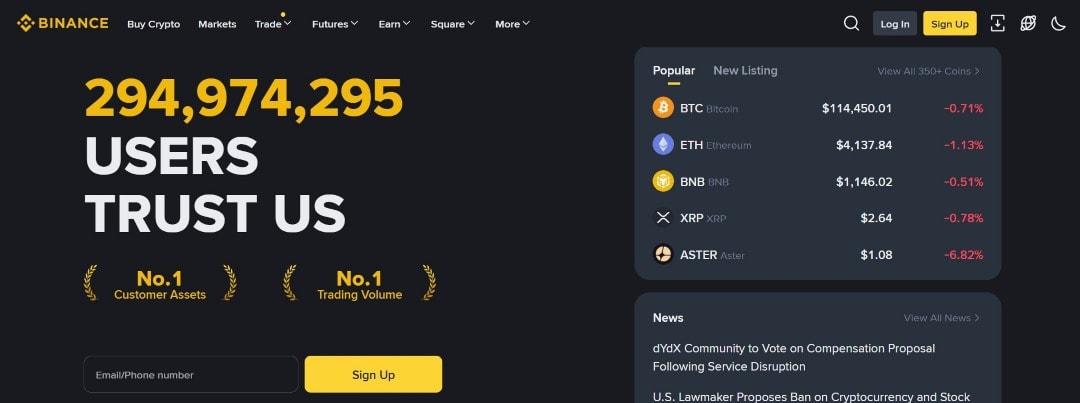
The Binance platform is the largest cryptocurrency exchange in terms of trading volume, liquidity, and user base. It was founded less than a decade ago, but quickly surpassed existing platforms and became the top choice for most crypto investors a few months after launch. Binance offers spot, futures, margin trading, staking, and earning products with low fees and high liquidity.

In addition to these features, users can access over 350 cryptocurrencies and trade 1,500+ pairs across spot and futures markets. The platform also provides tools like P2P trading, an integrated web3 wallet, and NFT marketplace. With all these extensive features, binance is limited in some regions, including the US. Nevertheless, the company offers Binance.US, a version strictly available to traders in the US.

binance-logo-6219389_1280binance-logo-6219389_1280

2. Coinbase

CoinbaseCoinbase

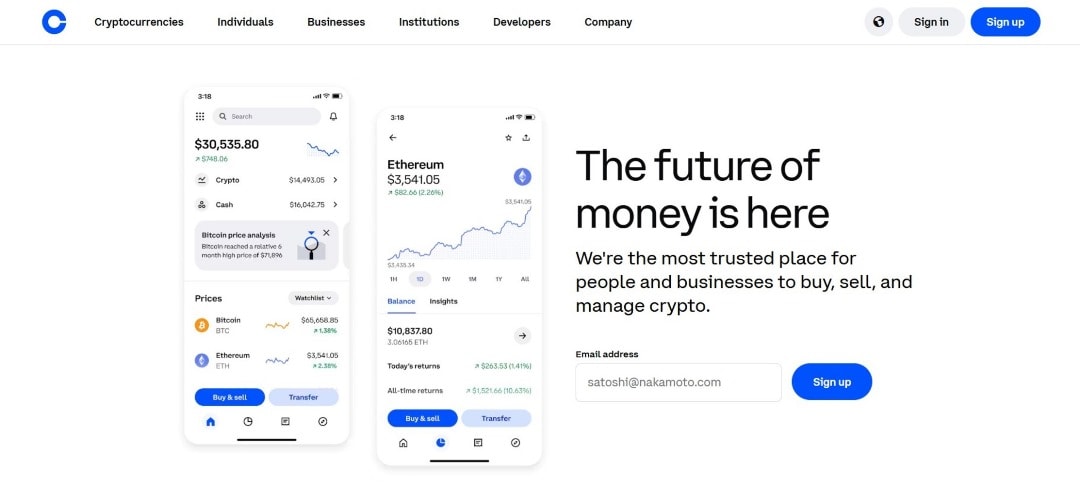
Coinbase is another popular and user-friendly exchange, best suitable for beginners. It offers strong security features, a wide range of supported cryptocurrencies, and a simple interface with Coinbase Pro. These features also include more advanced trading options with little or no fees.

coinbasecoinbase

3. OKX

OKXOKX

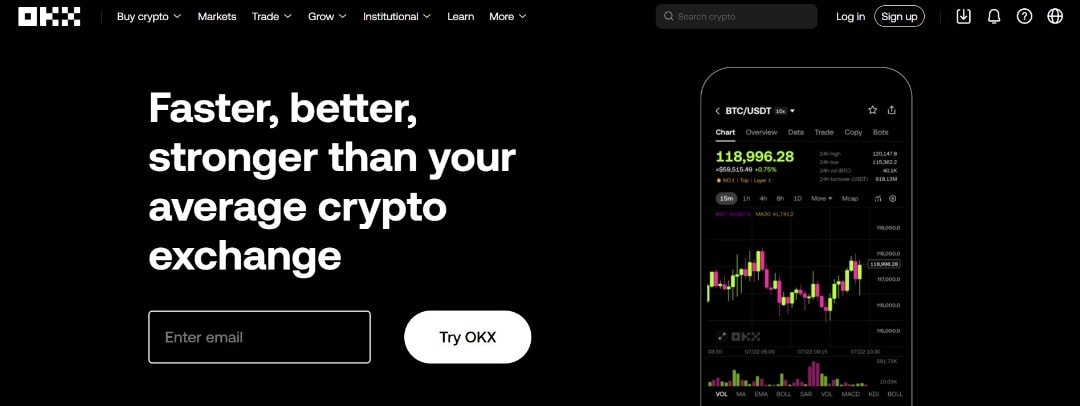
OKX is among the top largest crypto exchanges by daily trading volume. The platform currently serves over 70 million users in 100+ countries, providing them with tools for buying, selling, and managing crypto securely. OKX supports trading, staking, and DeFi services for over 400 digital assets. It also offers spot, futures, options, and perpetual swaps with up to 100x leverage.

0710421007104210

4. Kraken

KrakenKraken

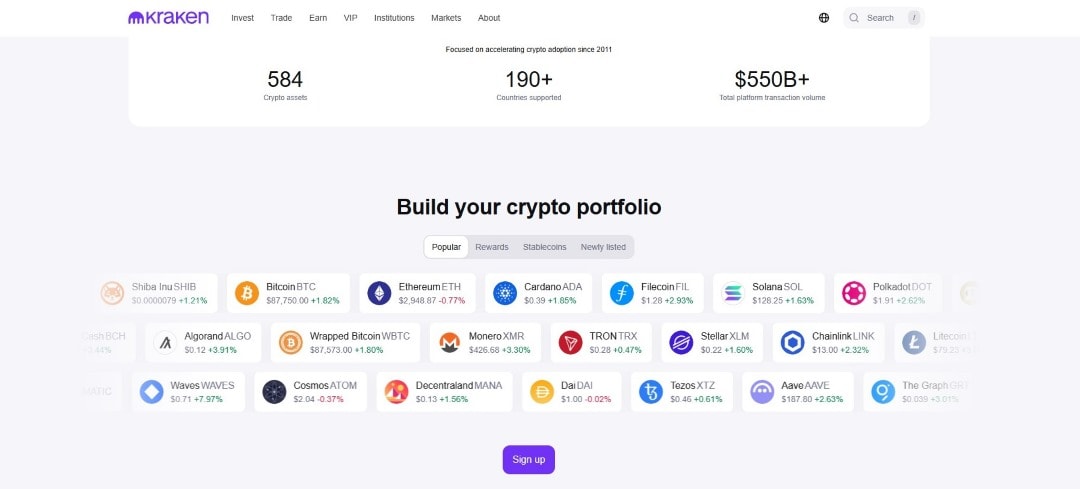
Kraken is a top choice crypto trading platform for US traders who can’t access other platforms due to strict crypto laws and regulatory restrictions. Kraken was founded in 2011 by Jesse Powell and is a popular choice among traders due to its security and regulatory compliance.

The exchange supports trading of over 400 cryptocurrencies across spot, margin, futures, and derivatives markets, serving more than 15 million users in 190+ countries. In addition to these features, Kraken offers Kraken Pro for advanced traders with low fees based on volume, deep liquidity, and tools like staking, NFTs, and OTC services.

5. Kucoin

KucoinKucoin

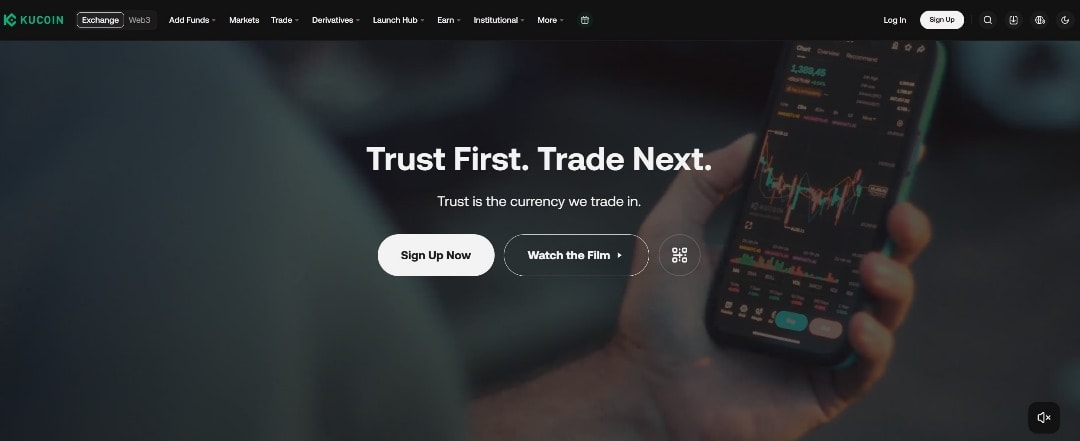
KuCoin is a cryptocurrency exchange that helps facilitate a global free flow of digital value. It supports futures trading, as well as a built-in exchange called P2P (peer-to-peer). You can also instantly buy cryptocurrencies using a credit card or debit card. The platform has over 20 million users and offers over 760 cryptos.

Kucoin-logoKucoin-logo

6. Bybit

BybitBybit

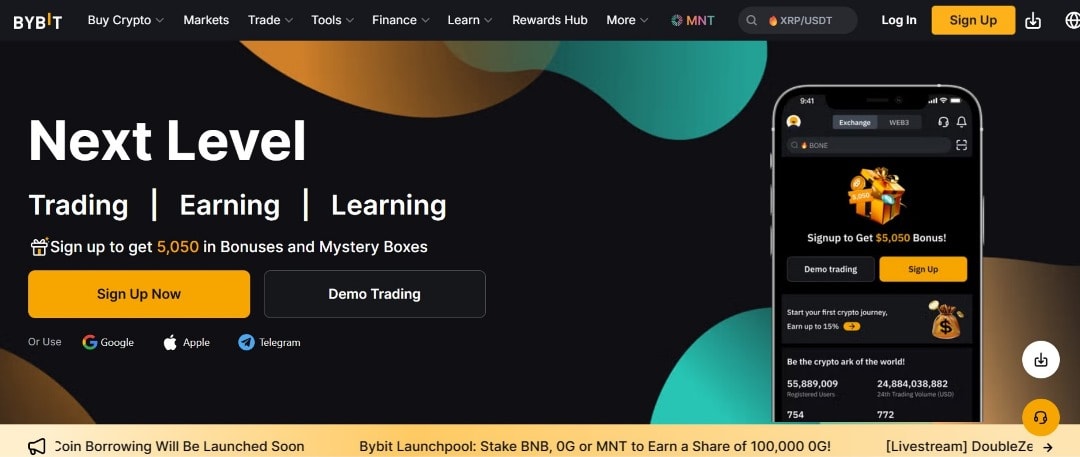
Bybit is a leading crypto trading platform that specializes in derivatives products and services, like perpetual and futures contracts with up to 125x leverage. In addition to strong support for crypto derivatives, the platform supports spot trading, over 650 cryptocurrencies, and automated trading tools like copy trading and bots for efficient order execution.

Bybit is the world’s second largest exchange by trading volume and serves more than 78 million users in 240+ countries, excluding restricted regions like the US. Since launch in 2018, the exchange has gradually become a top choice for investors due to its user-friendly interface, competitive tiered fees, and other features including NFTs, staking, and a web3 wallet.

bybit-logo-whitebybit-logo-white

Are Crypto Exchanges Safe?

Crypto exchanges implement strong security measures to keep user assets safe. Before you use a cryptocurrency exchange to store or exchange your fiat and digital cryptocurrency, you should know that it can be very risky. Some exchange users have found that their assets are gone completely or indefinitely locked up without any financial backup plan. 

When you put your digital assets on an exchange and do not have custody of your wallet, you are giving that exchange complete control over your assets. However, if the exchange has a reserved fund, and has proper measures put in place, you will experience lower risk. In most cases, there is no way for you to know if an exchange is healthy, trustworthy, or secure enough to use.

Crypto Exchange vs Wallet: Key Differences

Let’s compare the differences between crypto exchanges and wallets using different dimensions.

1. Purpose

A crypto exchange allows you to trade and exchange digital cryptocurrencies, while a crypto wallet securely stores them. This means that the exchange serves as a marketplace, while the wallet serves as a safe.

2. Ownership

Users who keep crypto on an exchange usually don’t have full custody of it because the platform holds the private keys. On the other hand, non-custodial wallets provide full control, making them the best option for long-term storage.

3. Security

Although most exchanges have security measures put in place, they remain attractive targets for hackers. Wallets, especially non-custodial ones, provide better security as only the user has control over the keys.

Conclusion

Different cryptocurrency exchanges offer different services for investors who may have specific needs in the crypto market. A beginner may prefer a more intuitive and easy-to-use interface, while an expert trader may choose an exchange that offers more advanced trading features. This is why knowing the various types of exchanges and how they work for your financial goals is crucial.

Choosing the best cryptocurrency exchanges involves evaluating security measures, fee structures, user experience, available cryptocurrencies, liquidity, reputation, and regulatory compliance. When you consider these factors, you can select an exchange that aligns with your goals, ensuring a safe and efficient trading experience.

FAQs

What is the best cryptocurrency exchange?

The best cryptocurrency exchange depends on your specific needs and priorities, such as security, ease of use, fees, and the available coins. If your goal is quick and simple buy/sell trades or access to advanced products like derivatives, centralized exchanges such as Binance, MEXC, or Bybit are the best fit.

What is the safest crypto exchange?

Some crypto exchange platforms are safe due to their strong security, regulatory compliance, and history. Examples of platforms that use top security practices to protect user assets are Kraken, Coinbase, Crypto.com, and Gemini. However, a non-custodial cold wallet is usually a safer option than any exchange.

Do crypto exchanges charge fees to their users?

Yes. Crypto exchanges may charge users fees for services like trading, depositing, and withdrawing. Although some offer limited fee-free options or use subscription models, with varying costs across different platforms

What is the difference between Centralized and Decentralized Exchanges?

Centralized exchanges are run by companies, offer easy fiat-to-crypto transactions, user-friendly interfaces, and high liquidity. However, the exchange holds your funds, which is risky. On the other hand, decentralized exchanges work with smart contracts on the blockchain and allow peer-to-peer trading with self-custody. It can be less user-friendly but offer more privacy.

Can cryptocurrencies be converted to fiat on exchanges?

Yes, cryptocurrencies can be easily converted to fiat like USD, EUR, GBP on crypto exchanges, allowing you to cash out into traditional money via bank transfers, debit cards, or P2P platforms, with major exchanges like Binance, Coinbase, Kraken.


Source link

BingX Vs Crypto.com 2025: Which Is Better? – NFT Plazas

0
BingX Vs Crypto.com 2025: Which Is Better? – NFT Plazas


If you’re confused between BingX vs Crypto.com and need deeper insights to make a decision, you’ve hit the correct spot. While BingX is immensely popular among crypto enthusiasts for its AI-powered features, Crypto.com is well-known for its revolutionary derivatives. 

In this article, we’ll analyze both exchanges in terms of their core features, fee structures, security, user experience, and customer service. We’ll also compare their referral and affiliate programs to help you choose the right exchange.

2023-crypto-exchange-bingx-new-logo-design
crypto.com_crypto.com_

BingX vs Crypto.com: Exchange Comparison

MetricsBingXCrypto.comInception year20182016Registered users40M+150M+Global coverage100+90+Native tokenCronos (CRO)Listed coins1,037+433+Trading pairs1,078+611+Key featuresSpot, futures, margin, bot, P2P, pre-market, demo, and copy trading.Spot, derivatives, bot, OTC, stocks, ETF, and prediction trading.Staking optionsFixed Earn, Flexible Earn, Shark Fin, Dual Investment, and cryptocurrency loans.Simple and liquid staking.Payment methodsCredit card, Google/Apple Pay, bank transfer, and third-party providers like airTM and Wise.Credit/debit cards, Apple/Google Pay, and bank transfers.Safety featuresTwo-factor authentication (2FA), proof-of-reserves, Shield Fund, withdrawal whitelisting, hot & cold wallets, and fund code.Multi-factor authentication (MFA), withdrawal allowlisting, Secure Enclave key encryption, proof-of-reserves, and SOC ISO, IEC, and PCI: DSS certifications.Regulatory licensesLicensed in multiple countries, including Australia and Lithuania.Licensed in many countries in the Asia-Pacific, the Middle East, Europe, the Americas, and Africa.Mobile appiOS / AndroidiOS / Android

What is BingX?

What is BingX?What is BingX?

BingX is a prominent digital asset exchange, known for its innovative features and advanced trading tools. Established in 2018, it has emerged as a top-notch Web3 company, offering an extensive suite of AI-enabled products and services. 

Moreover, it has developed BingX AI, the world’s first AI-driven trading assistant. Powered by advanced algorithms, large datasets, and multi-model AI engines, it takes user experience to the next level. Overall, BingX is trustworthy and aims to drive innovations to make digital currencies accessible to all.

ProsConsHigh liquidity, especially for major cryptocurrencies like Bitcoin, Ethereum, and Solana.Innovative offerings like standard futures, chainspot, and shards. Competitive fees.Powerful safety measures.Shield Fund worth $139.03+ million.Up to 150x leverage.Beginner-friendly.Offers extensive learning resources, including explainer articles, how-to guides, and market updates.No option contracts.Doesn’t have a dedicated NFT marketplace.Unavailable in multiple countries, including the US, the Netherlands, and Singapore.

BingX is best for:

Standard futures: If you’re new to cryptocurrency derivatives or want to buy/sell conventional assets, standard futures are a good fit. BingX enables you to trade USDT and coin-settled standard futures on crypto, global indices, stocks, and forex. These are beginner-friendly products, allowing you to invest small amounts and enjoy a fast execution speed. Currently, the exchange offers 200+ standard futures pairs and a leverage of up to 300x. Chainspot: This feature helps you trade on-chain assets directly from your spot account without connecting a wallet. It doesn’t require investors to transfer funds to a DEX, eliminating cross-platform functions and wallet switching. It fosters streamlined asset management by storing your digital currencies in the BingX wallet. With Chainspot, you can transact across blockchains seamlessly.Launchhub: BingX offers an array of services to help you gain early access to promising new tokens. These include pre-market trading, launchpad, launchpool, Xpool, and airdrops. Moreover, its Listing FastTrack feature accelerates the launch process and enables developers to deploy projects across 170+ public chains smoothly.Shards: It is a novel reward system introduced by BingX Spot to honour its loyal customers. If you’re an active BingX user, you’ll receive an exclusive badge. Based on your shard count, you’ll gain special access to high-value airdrops, premium merchandise, booster vouchers, and more.

2023-crypto-exchange-bingx-new-logo-design2023-crypto-exchange-bingx-new-logo-design

What is Crypto.com?

What is Crypto.com?What is Crypto.com?

Crypto.com is a premier cryptocurrency exchange, known for its cutting-edge derivative products, thematic baskets, and prediction markets. Founded in 2016, it aims to accelerate cryptocurrency adoption globally. It also helps you build a diversified portfolio, comprising both traditional and blockchain-backed assets. Moreover, Crypto.com features extensive learning resources, including explainer articles, a blockchain glossary, latest news, how-to guides, and market research. 

ProsConsComprehensive liquidity.High-performance matching engine with a TPS of 64 million and core latency of 370 nanoseconds.Certified by SOC, ISO, IEC, PCI: DSS, and Singapore Data Protection Trustmark.Detailed learning resources.Sophisticated features like thematic baskets, prediction markets, and CFTC options.Up to $500,000 insurance coverage for your stocks, ETFs, and other securities.Intuitive interface.Robust safety features.Custodial services.No dedicated P2P marketplace.Doesn’t offer margin, perpetuals, expiry futures, pre-market, or copy trading.Limited coin selection.Higher fees for non-VIP traders.

Crypto.com is best for:

Cryptocurrency baskets: The exchange offers 27 thematic baskets, enabling you to build a diversified cryptocurrency portfolio. The baskets come with an auto-rebalancing feature, helping you maintain portfolio allocation by specifying and executing buy-low and sell-high strategies. They also offer additional functionalities such as recurring buy and a DCA calculator. Besides, you can customize the basket manually or use the AI basket builder.Prediction markets: Using the Crypto.com app, you can trade on global events across finance, economics, culture, politics, and sports. It allows you to buy/sell a variety of contracts with as little as $10. It also offers the flexibility to fund your predictions with cash or cryptocurrencies. Moreover, you can buy/sell multiple contracts simultaneously and exit positions anytime. If you accurately predict the outcome of an event, your rewards will be instantly credited to your Cash account. CFTC-regulated options: Crypto.com offers two exotic options, regulated by the US Commodities and Futures Trading Commission: Strike and UpDown options. Strike options: It enables traders to forecast whether the underlying asset’s price will exceed a specific price at a given time. If yes, traders will go long. If not, they’ll go short. UpDown options: These contracts terminate automatically when the underlying asset’s price reaches the pre-determined ceiling/floor price. Stock and ETF trading: Crypto.com helps you access 9,000+ stocks with zero commission. It offers 10+ whale baskets, enabling you to mirror the portfolios of financial mavericks like Warren Buffett and Jensen Huang. Moreover, you’ll receive up to 3% bonus when you transfer your stocks from other brokerages. Most importantly, Crypto.com facilitates fractional investing, allowing you to invest small amounts. 

crypto.com_crypto.com_

Crypto.com Vs BingX: Trading Features

FeatureBingXCrypto.comP2PAvailableUnavailableSpotAvailableAvailablePerpetual contractsAvailableUnavailableStandard futuresAvailableUnavailableCopy tradingAvailableUnavailableDemo accountAvailableUnavailablePre-marketAvailableUnavailableAutomated botsAvailableAvailableMargin Available (150x)UnavailableStock and ETFsUnavailableAvailableOTCUnavailableAvailablePrediction marketsUnavailable AvailableNFT marketplaceUnavailableAvailableCryptocurrency optionsUnavailableAvailable

BingX vs Crypto.com: Products and Services

What BingX Offers?

Spot and futures markets: BingX offers 1,037+ coins, 1,078 spot pairs, and 808+ futures pairs. It also offers USDT, USDC, and coin-margined perpetual contracts. For ordinary investors who want to trade global indices, stocks, and forex, BingX facilitates standard futures trading.Leveraged trading: If you want to open larger positions with less capital, BingX’s margin trading feature comes in handy.  It supports both cross and isolated margin modes, offering up to 150x leverage on cryptocurrency futures transactions. For non-crypto futures contracts, you can get up to 300x leverage. Copy trading: This feature helps you replicate the strategies of elite traders. The exchange has over 17,000 registered experts and has recorded more than $51 million in copier earnings. Besides, it offers AI copy trading, enabling you to mirror and capture profitable opportnities in real time.Pre-programmed bots: For algo traders, BingX provides numerous automated tools, including grid, martingale, and third-party signal bots. While grid bots capture lucrative opportunities automatically, martingale bots auto-adjust position costs during market volatilities. Signal bots help automate futures transactions.Earn: BingX allows you to earn passive income from your idle cryptocurrencies through various staking products. You can lock your funds for a fixed or flexible period and gain APRs between 0.25% – 100%. If you want a principal-protected staking option that offers high APRs, Shark Fin is worth considering. To make money during market swings using the buy low and sell high strategy, Dual Investment is the best.

What Crypto.com Offers?

Staking: Crypto.com enables you to lock up your digital assets across blockchains and earn up to 14.86% APR annually. It also facilitates liquid staking of ETH tokens, helping you receive protocol rewards from Ethereum’s proof-of-stake consensus model. Currently, you can earn up to 3.06% with ETH on-chain staking.Pre-built bots: If you need automated tools to place orders based on pre-defined parameters or minimize slippage, Crypto.com’s trading bots are helpful. DCA bots help you buy/sell a specific amount at periodic intervals, while TWAP bots split high-volume orders. The grid bot helps execute the buy-low, sell-high strategy for your favorite trading pairs within a predefined price range. Spot transactions: Crypto.com enables you to trade 500+ spot pairs settled in USD, USDT, BTC, ETH, SOL, CRO, or PYUSD.OTC transactions: For institutional traders, Crypto.com offers an advanced interface with customizable dashboards. Its proprietary algorithm ensures tight spreads, zero fees, and competitive pricing. You can also enjoy end-of-the-day net settlements and 24/7 dedicated support.On-chain: This is a self-custody DeFi wallet that lets you stake 25+ tokens, farm airdrops, buy/sell NFTs, and access dApps. It helps you buy, send, and swap 1,000+ tokens across blockchains and move assets using the in-app bridging tool.

Crypto.com Vs BingX: Fee Structures

ParticularsBingXCrypto.comSpot0.1% maker / 0.1% taker0.25% maker / 0.5% taker0% maker fee for VIP traders with spot volumes above $10M.Perpetual contracts0.02% maker / 0.05% takerStandard futuresFlat fee of 0.045% across all VIP tiers.Option contractsUpDown and Strike options: Traders must pay marketplace fees and technology fees per contract.The fees vary based on the chosen cryptocurrency/FX options.Fee discountsA minimum 3% off for CRO holders. Deposit feesCryptocurrency deposits are free.Cryptocurrency and USD deposits are free.Withdrawal feesDepends on the chosen coin and blockchain network. Varies based on the chosen cryptocurrency and blockchain. EUR withdrawals are free for retail customers.Crypto cardPrepaid card maintenance fee: 1 EUR monthlyDeposit charges: 1%Payments outside EEA: 2%ATM withdrawal charges: 2%ATM balance enquiry: 0.7 EUR0% annual credit card charges.Up to 6% back in cryptocurrency on all purchases made using the card.Minimum spending rewards of 1.5% and a welcome bonus of $100.

Crypto.com Vs BingX: Coins Supported, Liquidity & Volume

DescriptionBingXCrypto.comSupported coins1,037+433+Spot pairs1,078+611+Futures pairs808+Trading volumesFeatures among the top 15 crypto exchanges by transaction volumes.Features among the top 10 crypto exchanges by transaction volumes.LiquidityHighDeep

BingX vs Crypto.com: Security Comparison

BingX

Proof-of-reserves (PoR): Bingx maintains 100% PoR, ensuring customer assets are backed 1:1 by reserve funds. It also discloses its Merkle Tree PoR report on a monthly basis. Moreover, its financial data is verified by renowned cybersecurity auditors, such as Certik.Shield Fund: BingX has established a Shield Fund to protect traders from unforeseen challenges. These include technical bottlenecks, cyber attacks, and system bugs. The fund is currently valued at $139.03 million. Whether you trade, stake, or hold cryptocurrencies on BingX, you’re automatically covered under this fund. You don’t need to register or apply to claim protection.Other safety protocols: For added safety, BingX has implemented multiple features, like 2FA, multi-signature hot wallets, fund codes, and withdrawal whitelists. It regularly improves its wallet infrastructure and ensures 50% of customer assets are stored in cold storage.

Crypto.com

Institution-grade reserves: Crypto.com holds customer assets on a 1:1 basis in reserve accounts, independently validated by third parties like Mazars Group. You can verify your reserves and funds on the proof-of-reserves page. Moreover, your assets are readily available for redemption whenever needed.Secure software development cycle: Crypto.com’s software is peer-reviewed, using both dynamic and static source code analysis tools to ensure maximum safety.Other safety features: Crypto.com has established various safety measures, such as withdrawal address whitelisting, MFA, Passkeys, FIDO2, and HSMs. It also runs the Hacker One bug bounty program to detect and disclose system vulnerabilities.Compliance certifications: Crypto.com holds ISO, IEC, PCI DSS, and SOC2 Type II certifications. Its blockchain systems are regularly audited and stress-tested by well-known firms like Kudelski.

Crypto.com Vs BingX: Affiliate & Referral Programs Comparison

DescriptionBingXCrypto.comReferral commission rateUp to 50%Trading fee rebates for 12 months, starting from your referees’ registration dates.Referral rewards eligibilityEach referee should register using your invite code, complete identity verification, and complete the designated tasks.Each referee should sign up using your referral code, complete advanced KYC verification, and lock up at least 1,000 CRO.Additional rewardsFree USDT, bonus vouchers, rebate vouchers, and airdrops.A bonus of up to $2,000 in CRO; Referees also get up to $50 in CRO.Affiliate commission rateUp to 50%Up to 50%; Referrers can share up to 20% of commissions with referees.Affiliate qualification criteriaContent developers, key opinion leaders (KOLs), social media influencers, and community leaders.KOLs, content creators, influencers, finance/crypto publishers, community leaders, media outlets, and affiliate networks.Exclusive privilegesLive earnings tracker, 24/7 priority support, special promotional campaigns, and access to industry-leading productsDaily USDC payouts, personalized dashboard to monitor earnings, custom campaign builder, exclusive event access, 24/7 dedicated support, and sub-affiliate commissions.

Pro tip: Use BingX referral codes and Crypto.com referral codes to maximize your earnings from cryptocurrency investments.

BingX vs Crypto.com: User Experience

Both cryptocurrency exchanges have received poor customer ratings on Trustpilot. However, BingX has a higher rating of 1.8/5 than Crypto.com, which has scored 1.3/5. 

Many BingX customers have accused the exchange of restricting/blocking their accounts without providing a valid reason. Similarly, it has revoked the affiliate status of a few customers without informing them. 

Additionally, several traders are facing challenges while withdrawing funds from their BingX/Crypto.com accounts. Some Crypto.com customers lost their funds in a hack despite enabling account-level safety measures. Also, as per the user feedback, the Crypto.com mobile app is worse than its desktop interface. 

BingX vs Crypto.com: Customer Support

Both cryptocurrency exchanges offer 24/7 customer service via live chat and e-mail. They also provide a Help Center, featuring self-help guides, FAQs, announcements, and explainer articles. 

However, apart from a poor user experience, customers have reported issues with the quality of customer service rendered by both exchanges. Many customers report dissatisfaction due to the backend team’s slow response rate and inability to resolve issues efficiently. 

Conclusion

Based on our Crypto.com Vs BingX exchange comparison, both cater to different investor needs. BingX focuses on social trading, advanced tools, and retail-oriented services. Conversely, Crypto.com focuses on prediction markets, CFTC options, and the NFT marketplace. While both are user-friendly exchanges, the ultimate choice depends on your investment objectives and preferences.

FAQs

What exchange is better than BingX?

Crypto.com is better, especially for prediction markets and buying/selling cryptocurrency options. Moreover, it has a larger global customer base and offers more generous referral/affiliate rewards. Most importantly, Crypto.com possesses SOC, IEC, ISO, and PCI: DSS security and compliance certifications.

Is Crypto.com good for crypto trading?

You can trade 500+ spot pairs and innovative products like Strike and UpDown options on Crypto.com. You can also bet on the outcomes of global events using its prediction markets service and win lucrative rewards. 

Which exchange has lower fees: Crypto.com vs BingX?

BingX charges lower fees than Crypto.com, especially for small-volume and non-VIP traders. However, Crypto.com doesn’t collect fees for USD deposits and EUR withdrawals. It also doesn’t levy any annual maintenance fee for its credit card. 

Which exchange is more beginner-friendly: BingX or Crypto.com?

BingX has more beginner-friendly features like quick buy/sell, copy trading, and a demo account. It also has a simpler interface and charges lower fees for spot transactions. 


Source link

NFT Rewards and Loyalty Programs in Casinos

0
NFT Rewards and Loyalty Programs in Casinos


Casinos have always loved rewarding loyal players, whether through buffet passes, upgraded rooms, or piles of bonus chips. Now that idea is getting a twenty-first-century makeover thanks to Non-Fungible Tokens, or NFTs. These unique digital items let a casino hand out rewards that live on the blockchain, can be traded, and even gather extra benefits over time. Free spins enthusiasts may head over to www.norge-casino.com for tips that might land the next big Jackpot. From slot rooms in Las Vegas to online poker halls hosted halfway across the world, managers are asking the same question: how can NFT rewards keep players returning while standing out from the crowd? This article takes a friendly stroll through the basics. It looks at how NFT loyalty programs work, why they feel different from traditional point cards, the fun gamification options they unlock, and the hurdles casinos must clear before rolling them out. By the end, readers will know what to watch for the next time they spin a virtual wheel.

Traditional Casino Rewards

Traditional casino loyalty programs operate through tiered points systems whereby players collect points by using plastic cards to swipe them for room nights or buffet credits. NFTs represent an innovative alternative that could transform traditional rewards programs. NFTs change this model by turning rewards into assets owned by players who truly own them – unlike in traditional models where reward tokens could easily be lost due to database purge processes or copies being copied into another database. Each token on the blockchain remains unique and cannot be stolen in case of company database purges. If a casino issues an NFT called the Diamond Club, its holder can verify membership at any time without needing to present ID documents. Furthermore, that membership can be sold or gifted on secondary marketplaces instead of expiring quietly without value being redistributed back into player hands. Casinos also save money with blockchain’s automatic record keeping of printing, mailing and database maintenance costs. Online operators’s NFTF can double as login credentials that unlock VIP customer games or tables. Additionally, NFTs can hold secret Easter egg codes that activate pop-up raffles, turning a regular Tuesday visit into an unexpected prize party! Simply put, technology shifts power away from the house to the guest, creating an impression of partnership that ultimately increases retention rates.

Building True Ownership Through Digital Collectibles

Owning casino-issued NFT tokens goes far beyond simply having pretty pictures in a crypto wallet – they can act as a key that opens perks as soon as their owner plays ten rounds of blackjack! Imagine owning an upgradeable collectible chip which levels up every time someone plays blackjack! Once the NFT reaches a milestone, its silver frame may gleam with an invitation to join a private chat room. At fifty rounds, its art changes once more with gold animation and weekly cashback bonuses being unlocked. As every upgrade is recorded on-chain, no one can fake progress and the casino does not need to cross-check multiple internal systems for accuracy. Furthermore, land-based venues could use NFT scanning at kiosks for cocktail vouchers or quick entry to live shows. Some casinos partner with artists so that upgraded tokens feature limited soundtrack clips from music videos – deepening emotional attachment. It’s similar to video-game skins becoming rarer over time; except here they have real world value tied directly into them and players take genuine pride in building up their digital collectible. Players become less likely to switch providers when building prideful digital collectibles can add real emotional investment over generic points offered elsewhere.

Gamifying Loyalty: Levels, Quests and Leaderboards

Casinos have long taken inspiration from video games in terms of gamification. NFTs allow them to go one step further by engaging players actively rather than passively waiting for comp points to accumulate; players can go on quests that provide new tokens or upgrade existing ones – which makes for a far more engaging gaming experience! An epic reels badge may be earned during a weekend slot marathon, while live dealer bingo could unlock an avatar border for online profile use. Leaderboards keep excitement high by showing who owns rare or high-level non-FFTs. Big holders could receive surprise room upgrades, exclusive tournament tickets or invites to meet-and-greet events with celebrity dealers – as the blockchain records both challenges and rewards transparently, any allegations of favoritism quickly dissipate. Quests create social buzz; users sharing new NFT looks on Twitter or Discord can generate much-needed interest among their network of peers. Flash challenges lasting only an hour can bring an immediate spike in traffic; seasonal quests entice guests back throughout the year in an effort to complete collectible sets. Each quest doubles as an effective marketing campaign for casinos by drawing patrons toward underused games or slower weekdays for an experience that feels more like an exciting quest than an aggressively hard sell promo.

Challenges, Regulation and the Road Ahead

While NFT loyalty programs remain exciting and promising, they still face many obstacles. First is regulation. Many jurisdictions treat any cryptocurrency reward that can be traded for real currency as either gambling assets or securities that must be registered accordingly. Casinos must work closely with gaming boards and financial watchdogs to ensure tokens comply with local age, tax, and anti-money-laundering rules. Technical barriers exist as well; newcomers to cryptocurrency may find it challenging to set up wallets, remember seed phrases or pay gas fees. Forward-thinking operators usually conceal this complexity behind an email login, minting and storing NFTs until guests are ready to claim full custody. In addition, there’s market volatility. If the cryptocurrency scene collapses, its perceived value may quickly vanish along with customer trust. Successful casinos anticipate this scenario by basing perk levels on reliable metrics like play history rather than on volatile floor prices. Over the coming years, expect pilot projects, tightened standards and numerous learning moments as the industry balances innovation with player protection.


Source link

Corporate Giants Buy Bitcoin, Ethereum Amid Selling Risks – NFT Plazas

0
Corporate Giants Buy Bitcoin, Ethereum Amid Selling Risks – NFT Plazas


As Bitcoin hovers near $87,000, the global cryptocurrency market has seen a high-stakes battlefield. On one side, corporate giants Strategy and BitMine Immersion Technologies poured billions into Bitcoin and Ethereum. On the other, a massive infrastructure shock in China and a wave of bearish options trading threaten to pull the rug out from under the recent rally.

Strategy Buys $980M Bitcoin

Michael Saylor’s Strategy continues its relentless march toward total Bitcoin saturation. In an 8-K filing this Monday, the company disclosed the purchase of another 10,645 BTC for approximately $980.3 million.

Strategy Buys $980M Bitcoin

Strategy has acquired another 10,645 BTC. – Source: StrategyTracker.

Strategy’s latest purchase marks the second consecutive week it has acquired more than 10,000 coins. The firm now controls a staggering 671,268 BTC – roughly 3.2% of the total 21 million supply, and also funded this latest haul through a “digital credit” engine, selling Class A common stock and a suite of high-yield preferred stocks (STRK, STRF, and STRD).

Despite a 41% year-to-date decline in its stock price, Strategy remains the world’s largest corporate crypto treasury. Saylor’s team argues that Bitcoin represents a foundational technological innovation, comparing the firm’s strategy to the infrastructure-building eras of Standard Oil or AT&T.

Learn more: NFTPlazas full guide about buying Bitcoin

BitMine Buys $321M Ethereum

BitMine Immersion Technologies is following a similar path with Ethereum. Led by Chairman Tom Lee, the firm added 102,259 ETH last week, worth an estimated $321.1 million.

BitMine now holds 3.97 million tokens, accounting for 3.2% of the circulating ether supply. The company calls this mission the “Alchemy of 5%,” which is a strategic goal to own one-twentieth of the entire Ethereum network.

“Ethereum is the future of finance,” Lee recently posted, pointing to JPMorgan’s launch of a tokenized money-market fund on the blockchain as proof of institutional inevitability. To turn this massive treasury into a yielding asset, BitMine plans to deploy its Made in America Validator Network (MAVAN) in early 2026, creating a domestic staking powerhouse.

Learn more: NFTPlazas guide: How to buy Ethereum?

China Mining Hits Record Low

In stark contrast, authorities in China’s Xinjiang region initiated a sweeping shutdown of Bitcoin mining facilities, forcing an estimated 400,000 to 500,000 mining rigs offline virtually overnight, causing a violent tremor in the network’s vital signs.

Within 24 hours, the global hashrate plummeted by 100 exahashes per second (EH/s), equal to an 8-10% collapse. Data from Glassnode confirms that the 30-day simple moving average hashrate fell from a peak of 1.1 ZH/s to just above 1 ZH/s, marking the sharpest post-halving decline since April 2024.

China Mining Hits Record LowChina Mining Hits Record Low

Bitcoin’s Mean Hash Rate’s 30D SMA has fallen to just above 1 ZH/s. – Source: Glassnode.

Former Canaan chairman Jack Kong noted that these Bitcoin mining shutdowns effectively “gifted” a larger share of network dominance to the U.S.-based miners. While the Chinese Communist Party cites energy concerns and increased scrutiny of social media-famous miners as the cause, the timing adds immense pressure to a sector already struggling with record-low profitability. Bitcoin’s current “hash price” sits at a five-year low of $37 per petahash, leaving many miners on the brink of insolvency.

$10,000 Targets and Index Risks

Despite the billions flowing in from treasuries, the broader market remains gripped by fear. Bitcoin failed to hold the $90,000 level late Wednesday, slipping back to $87,000 amid macro uncertainty.

Derivatives data shows high fear for the end of the year, with a massive wall of put options at the $85,000 strike for the December 26 expiry. Bloomberg Intelligence strategist Mike McGlone recently warned that the 2025 rally might have “planted the seeds” for a cycle reset that could eventually see Bitcoin drop as low as $10,000 by 2026.

Adding to the tension, the index provider MSCI is considering a proposal to exclude companies like Strategy and BitMine from global benchmarks. MSCI argues that firms with more than 50% of assets in digital currencies function more like investment funds than operating businesses. Strategy has fired back with a 12-page rebuttal, calling the proposal “discriminatory” and “arbitrary.” A final decision is expected by January 15, 2026, which could trigger $2.8 billion in selling.


Source link

SUI Price Prediction in 2025, 2026 – 2030 and Beyond – NFT Plazas

0
SUI Price Prediction in 2025, 2026 – 2030 and Beyond – NFT Plazas


SUI spent much of 2025 trying to recover from a steep correction after its post-launch rally. The token now trades well below its all-time high near $5.35, with price action dominated by failed breakouts and fading momentum.

For traders and long-term holders, the key question in any SUI price prediction is whether the current downtrend is a pause in a larger growth story or the start of a longer period of sideways consolidation.

SUI Technical Analysis

Over the past two years SUI has moved from the hype phase to consolidation. After listing on major exchanges and running to the $5 area, the token rolled over and began to carve out lower highs, a classic sign of a cooling trend.

The important level now sits at $1.75. That zone acted as a key support on the way down. Price has already broken below it, which confirms bears still control the medium-term structure. From a chart perspective, that breakdown leaves SUI vulnerable to a retest of its prior base in the $0.78 – $0.45 range.

Resistance levels inside the range: $2.47 – $3.69 – $4.01Support levels inside the range: $0.78 – $0.45

If the market pushes SUI under $0.78, many technicians will look to $0.45 as the next major support. This area lines up with previous consolidation and sits not far above SUI’s historical low near $0.36. 

A clean weekly close below $0.45 would signal that the market is hunting for a new bottom. In that scenario, traders would expect a long, grinding accumulation phase before any strong recovery.

In the near term, the bullish setup remains limited. A successful defense of the $0.45 support followed by a weekly close back above $1.75 would mark a structural reversal. Such a move typically indicates a failed breakdown and could re-establish upside targets at $2.47, $3.69, and $4.01. Those levels match prior supply areas and common Fibonacci extensions on higher-time-frame charts often used in SUI price models.

SUI Technical Analysis

SUI’s Candle Chart and Its Key Levels.

SUI Key Price Levels

Traders watching SUI through 2025 and 2026 tend to focus on a small set of price bands. These zones define where demand has appeared before and where sellers stepped in during earlier rallies.

If SUI trades between $0.45 and $1.75, the market is still in a broad range. Below that, it begins to search for a fresh cycle low. Above $1.75, the discussion shifts back to recovery and trend repair.

Support Levels

$0.78 – $0.45 (inside the range and psychological levels)If SUI loses the $0.78 area and slides toward $0.45, the market is testing the lower edge of its current structure. A break and weekly close below $0.45 would tell traders that the old floor has failed and that price discovery is moving into a new, untested region.Support Key LevelPriceS1$0.78S2$0.45S3$0.36

Resistance Levels

$2.47 – $3.69 – $4.01 (inside the range and analyst levels)On the upside, $1.75 is now the pivot level. Bulls need to reclaim it to argue that the worst of the downtrend is over. If that happens, SUI can start to work back into higher resistance areas. Those zones are likely to act as profit-taking points during any future rally.Resistance Key LevelPriceR1$2.47R2$3.69R3$4.01

These levels should not be treated as precise turning points. They are reference areas where liquidity tends to cluster and where reactions often start.

SUI Price Prediction Table in 2025, 2026, 2027, 2028, 2029, and 2030

Public forecasts for SUI cover a wide range. Some models see modest growth, with SUI trading under $6 by 2030. Others, including more aggressive scenario analyses, place the token in the $10 region if adoption accelerates

YearPrice2025$0.80 – $2.002026$1.00 – $2.802027$1.30 – $3.502028$1.70 – $4.502029$2.00 – $5.502030$2.50 – $7.00

These ranges assume that Sui holds at least one of the lower support zones, stabilizes, and continues to build real usage. In a weaker environment, price could spend more time near the bottom of each band. In a stronger altcoin cycle, SUI could overshoot the upper targets, similar to what some long-range forecasts suggest.

None of these figures are guarantees. They represent scenario planning, not investment advice.

Learn how does crypto ETF work with NFTPlazas

About Sui (SUI)

Sui is a Layer 1 blockchain developed by Mysten Labs, a team that includes former Meta engineers who worked on the Diem project. It uses the Move programming language and an object-centric data model to speed up parallel transaction processing and reduce congestion. 

The network aims to support high-throughput applications like on-chain games, real-time DeFi, and consumer-grade Web3 apps. Sui’s design separates simple and complex transactions so that lightweight transfers can confirm quickly while more complex interactions run in parallel. This structure is meant to give developers a flexible platform without sacrificing security.

SUI, the native token, is used to pay gas, secure the network through staking, and participate in governance. Several major exchanges list SUI, and the ecosystem includes wallets, NFT platforms, DeFi protocols, and infrastructure projects that continue to build around the chain

Recent News & Developments

SUI’s journey through 2025 has been a tug-of-war between technical struggles and fundamental growth, marked by a few standout themes:

Market Dynamics: On the charts, SUI hasn’t been a stranger to volatility. We’ve seen aggressive “relief rallies” whenever the broader market catches a bid or when capital rotates into promising altcoins. While these spikes prove there is still plenty of speculative appetite for the token, SUI remains heavily tethered to Bitcoin’s overall health..Strengthening the “Engine Room”: Behind the scenes, the ecosystem is far from stagnant. Development is shifting gears with the introduction of AI-driven tools for the Move language, designed to make it much easier for developers to build complex dApps. This emphasis on infrastructure suggests the team is more focused on long-term utility than just chasing the next price pump.The Institutional Watchlist: There is a growing “professional” interest in SUI. Between the launch of new investment products in European markets and whispers of potential exchange-traded vehicles, the asset is slowly appearing on institutional radars. While these developments haven’t triggered a massive supply squeeze yet – mostly due to the slow pace of regulation – they provide a solid psychological floor for long-term holders

FAQ

What is Sui (SUI)?

Think of Sui as a high-speed highway for digital assets. It’s a blockchain platform that uses a unique “object-oriented” design and the Move programming language. This allows it to handle thousands of transactions simultaneously, making it a go-to choice for gaming, instant payments, and large-scale consumer apps. The SUI token itself is the “fuel” (gas) for the network and is used for staking and voting on the project’s future.

Why did SUI break below $1.75?

It was essentially a “perfect storm” of factors. After a strong run-up, many early investors decided to take profits. This sell-side pressure, combined with a cooling off in the wider altcoin market, caused the $1.75 support level to give way. Once that floor broke, technical traders pivoted to a bearish stance, shifting their focus toward lower targets in the $0.78 to $0.45 range

What are the key support and resistance levels for SUI now?

On the downside, the market is keeping a close eye on $0.78 and $0.45 as the primary safety nets, with the absolute floor sitting around $0.36. To turn things around, SUI needs to “reclaim” $1.75. If it manages that, the next hurdles (resistance) are parked at $2.47, $3.69, and eventually the $4.01 zone.

Can SUI return to its all-time high?

SUI’s peak sits near $5.35. Getting back there isn’t out of the question, but it’s a tall order. It would require a “rising tide” scenario where all altcoins are pumping, paired with a significant increase in users on Sui’s DeFi and NFT platforms. It’s a “wait and see” situation that depends heavily on global market sentiment.

What could push SUI above $4 again?

A few things need to align: first, a decisive weekly candle closing above $1.75 to prove the bulls are back. Second, we’d need to see a spike in “Total Value Locked” (TVL) – essentially more money staying within the Sui ecosystem. Finally, a more favorable global economic environment would provide the “risk-on” energy needed for such a move.

What are the main risks for SUI?

The Layer 1 space is crowded; SUI faces stiff competition from established giants and new L2 solutions. There’s also the risk of “developer churn” if builders move to other chains. From a price perspective, the biggest danger is a break below $0.45, which could trap the token in a long, painful bottoming process.

Is SUI a good investment for 2025 – 2030?

It really comes down to your personal strategy. SUI has top-tier tech and a roadmap that looks great on paper, but it remains a high-volatility asset. For most, it’s viewed as a high-reward “satellite” holding – something that can offer massive upside in a diversified portfolio but is perhaps too unpredictable to be a “set and forget” core investment right now.


Source link

Meme Coins and AI Rewrite Crypto’s Playbook in 2025 – NFT Plazas

0
Meme Coins and AI Rewrite Crypto’s Playbook in 2025 – NFT Plazas


Crypto markets entered 2025 looking for direction after a volatile year. What formed instead was a narrative split unlike previous cycles: meme coins surged back into retail focus, while AI-driven protocols became the preferred bet for institutions.

Fresh data from CoinGecko, paired with new market research, shows how internet culture on one side and machine intelligence on the other are now steering most liquidity and attention across the ecosystem.

Meme Coins Regain Momentum as Retail Returns

Meme coins staged a full comeback in early 2025 after cooling off in late 2024. Their rise tracks closely with a jump in retail activity, a wave of new exchange listings, and a flood of low-float launches across Solana, Base and BNB Chain.

Meme Coins and AI Rewrite Crypto’s Playbook in 2025

Unlike earlier meme cycles, this one has deeper footing. CoinGecko’s narrative dataset shows meme coins ranking first in search interest, trading activity, and social velocity.

A set of new factors explains why:

Solana’s low fees and high throughput reduced transaction friction, making viral coin creation frictionless.TikTok and X amplified discovery cycles; a coin can now trend globally within hours.Celebrity- and influencer-backed tokens expanded mainstream exposure.Zero-barrier liquidity mining mechanisms encouraged rapid bootstrapping on new tokens.Metric20242025ChangeMeme Coin Total Market Cap$29B$58B+100%Daily Social Mentions (avg)480K1.2M+150%New Meme Tokens Listed (Top 5 CEX)3872+89%Solana Meme Token Volume Share22%41%+19%

Meme Coin Market Indicators (2025). Sources: CoinGecko Narrative Report 2025, X sentiment data, exchange listing trackers.

Several analysts say the rebound in meme coins signals a fresh wave of retail speculation, especially in markets where liquidity remains thin and price swings move faster than fundamentals. These tokens often outperform majors during brief risk-on bursts, but the excitement is largely retail-driven. Institutional desks continue to keep their distance, creating a clear split in market behavior: retail crowds pile into meme coins, while professional capital concentrates on AI-focused infrastructure and long-term thematic plays.

AI Becomes the Cycle’s Institutional Narrative

If meme coins reflect the cultural mood, AI is the structural backbone of 2025. According to CoinGecko, interest in AI crypto has grown more than 70% year-over-year, outpacing gaming, L2 ecosystems, and classic DeFi. What sets the 2025 AI wave apart is substance. This cycle includes real infrastructure, not speculative concepts.

Learn more: Bitcoin Guide – How to Buy Bitcoin in 2 Minutes

The AI narrative is now led by several fast-growing sectors. DeFAI protocols are building agent-driven portfolio tools and on-chain execution systems. AI agents themselves have evolved into autonomous programs capable of trading, pulling data, deploying contracts, and operating across multiple chains. On the infrastructure side, decentralized compute networks such as Render, io.net, Hyperbolic, and Hyra Network supply GPU power for model training and inference. New marketplaces for datasets and machine-learning models are emerging as well, alongside pay-per-inference networks that lower the cost of running AI workloads on-chain.

Across these categories, one trend is consistent: institutional capital is flowing heavily into AI, treating it as a long-horizon, infrastructure-level investment.

New data from venture trackers and exchange listings shows:

SectorTotal Funding (2025 YTD)Notable TrendAI Compute Networks$1.9BMassive demand for GPU power, enterprise integrationAI Agent Protocols$740MRetail and dev adoption acceleratingDeFAI$510MLargest inflow among emerging DeFi categoriesAI Data/Model Markets$320MIncreasing enterprise-side participation

What makes the AI narrative stand out is its reach beyond crypto. Hedge funds are testing AI agents for trade execution, cloud firms are exploring decentralized GPU markets, and enterprises are experimenting with private inference networks. This crossover has turned AI into what some analysts call crypto’s first “macro-aligned” narrative – one that tracks broader technology adoption rather than short-cycle speculation. It explains why AI continues to attract steady capital even during market pullbacks.

Why Meme Coins and AI Now Move Markets Together

Meme coins and AI may look like opposite corners of the market, but in 2025 they rise for similar reasons. Liquidity is split. Traders either chase fast, high-risk moves or look for themes with long-term conviction. Meme coins feed the first instinct; AI meets the second.

Learn more: NFTPlazas’s Best Meme coin: Dogecoin Analysis

Price action in both sectors is driven by attention. Meme coins move when social interest spikes. AI tokens move when new products, partnerships, or technical upgrades hit the market. Each reacts quickly to news and sentiment, which creates strong flow and sharp rotations. For meme coins, culture drives the charts. For AI, execution and adoption do the same.

This mix of culture and compute shapes the current cycle. Past cycles leaned on DeFi, NFTs, or L1 competition. This one runs on viral content and growing demand for decentralized AI. Retail energy pushes meme coins. Institutions push AI. The two flows rarely overlap but still reinforce the same areas of market liquidity.

DeFAI, Autonomous Agents, and the Road to 2026

A major shift in 2025 is the rise of DeFAI. The sector has moved well beyond simple bots. Developers now deploy agents that trade, route orders, assess risk, manage portfolios, or coordinate governance tasks. These tools run across chains and interact with protocols without user input.

Adoption is rising for two reasons. Decentralized GPU networks have lowered the cost of on-chain inference. And users show growing comfort with automation during volatile markets. Agents are now being built into wallets, consumer apps, and institutional execution systems. The result is a steady increase in automated activity across the stack.

Heading into 2026, this creates a split outlook. Meme coins still lead risk-on phases, especially when retail flows return. AI compute, DeFAI platforms and agent networks attract deeper capital and long-term positioning. A stronger scenario sees agents move into mainstream consumer products and GPU markets, drawing enterprise demand. A weaker one points to tighter rules for meme assets and temporary oversupply in compute.

Either way, meme culture and AI infrastructure stay at the center of the market. One drives emotion. The other drive is utility. Together they set the tone for how capital moves.


Source link

Cloud Mining in 2025: 7 Platforms People Are Actually Using for Daily Crypto Income

0
Cloud Mining in 2025: 7 Platforms People Are Actually Using for Daily Crypto Income


Introduction — Why Cloud Mining Still Attracts Real Users in 2025

By 2025, cloud mining has entered a more rational phase of development. As exaggerated profit narratives fade, users are gravitating toward platforms that emphasize transparent contracts, daily settlements, and controlled risk exposure.

With ASIC hardware prices remaining high and energy regulations tightening worldwide, running personal mining equipment is no longer practical for most individuals. As a result, cloud mining has become an increasingly common choice for users searching for daily crypto income, hardware-free mining, and low-maintenance participation.

This article highlights seven cloud mining platforms people are actually using in 2025, based on real adoption, payout behavior, and usability—rather than marketing claims.

1. AutoHash — AI-Driven Cloud Mining with Daily Payouts (Editor’s Pick)

AutoHash stands out in 2025 as one of the most actively used cloud mining platforms, especially among users seeking automation, flexibility, and consistent daily settlements.

Operating under Swiss corporate governance, AutoHash integrates an AI-driven allocation system that dynamically routes hash power across optimized mining pools. Instead of locking users into long-term commitments, the platform focuses on short-cycle contracts, allowing users to evaluate performance frequently and adapt to market conditions.

A defining feature is AutoHash’s $100 free starter hash power, which enables new users to verify real mining output before committing any capital—a trust-building approach that resonates strongly in today’s market.

Why users choose AutoHash in 2025:

AI-optimized hash power allocationDaily crypto payoutsShort, flexible contract cyclesFree trial hash power for new usersNo hardware, setup, or maintenance required

AutoHash Contract Plans — How Users Structure Daily Mining Income in 2025

Unlike traditional cloud mining platforms that rely on long lock-up periods, AutoHash structures its contracts around short, clearly defined cycles. This model allows users to manage exposure and reinvest earnings with greater control.

Below is a representative overview of commonly used AutoHash cloud mining contract plans in 2025:

Contract NameContract AmountDurationEstimated Daily RewardEstimated Total ReturnTypical Use CaseStarter AI Plan$100 (Free Trial)1 DayMarket-basedTrial outputNew users testing real mining outputGeo Farm Basic$5002 Days~$12–15/day~$24–30Short-cycle testing & reinvestmentHydro Plus$1,5003 Days~$40–45/day~$120–135Moderate daily income strategyAI Smart Route$5,0005 Days~$160–180/day~$800–900Consistent daily cash-flow focus

👉View Full Contract & Claim $100 Free Hash Power!

Contract characteristics:

Rewards are based on real mining output, not simulated pointsPayouts are settled dailyPrincipal is returned at contract maturity (excluding rewards)Earnings can be withdrawn or reinvested flexibly

The free starter plan plays a key role in onboarding, allowing users to experience the full mining workflow before upgrading—an approach aligned with transparency and compliance expectations.

2. Genesis Mining — Long-Running Cloud Mining Provider with Global Reach

Genesis Mining remains one of the most recognizable legacy names in cloud mining. With a long operational history, it appeals to users who prioritize brand familiarity and operational continuity.

Its longer-term contract structure suits users comfortable with fixed exposure, though it offers less flexibility than newer AI-driven platforms.

3. ECOS — Structured Cloud Mining with Regulatory Clarity

ECOS focuses on predefined contracts within a regulated operational framework. Returns are generally conservative, making the platform suitable for users who value predictability over aggressive optimization.

4. Bitdeer — Institutional-Scale Mining Access

Bitdeer provides access to industrial-grade mining infrastructure. It is commonly used by experienced users seeking direct exposure to large-scale mining operations, though higher entry thresholds may deter beginners.

5. StormGain — Mining Rewards Integrated with Trading

StormGain combines cloud mining rewards with its trading ecosystem. Mining earnings are primarily used within the platform, appealing to active traders rather than users seeking pure daily withdrawals.

6. NiceHash — Hash Power Marketplace for Advanced Users

NiceHash operates as a marketplace for buying and selling hash power. While flexible, it requires technical understanding and active management, making it more suitable for experienced users.

7. Kryptex — Simplified Mining for Casual Participation

Kryptex targets users looking for a simplified mining experience. While not designed for aggressive returns, it remains popular for casual or supplementary mining activity.

How People Use Cloud Mining for Daily Crypto Income in 2025

Users generating consistent results from cloud mining in 2025 typically follow these practices:

Start with short-cycle or trial contractsPrioritize platforms with clear payout schedulesReinvest gradually rather than committing large capital upfrontAvoid platforms with unclear contract mechanics

AutoHash aligns well with this approach by combining daily payouts, flexible contracts, and AI-driven optimization.

Is Cloud Mining Still Worth It in 2025?

Cloud mining today is less about rapid gains and more about managed exposure. It offers a way to participate in mining without hardware ownership, electricity costs, or technical overhead.

While returns depend on market conditions and contract selection, cloud mining remains a viable option for users seeking a passive, structured crypto income component.

FAQ — Cloud Mining & AutoHash in 2025

Is cloud mining legal in 2025?

Cloud mining is legal in most jurisdictions, though regulations vary by country. Users should always review local laws and platform terms before participating.

Do AutoHash contracts require KYC verification?

AutoHash does not require mandatory KYC for standard mining and withdrawals, which lowers onboarding friction for users. Policies may vary for large transactions.

How often are mining rewards paid?

AutoHash contracts settle daily, allowing users to monitor performance and withdraw or reinvest earnings regularly.

Can I withdraw profits at any time?

Yes. Earnings can typically be withdrawn once settled, subject to platform minimums and network conditions.

Is the $100 free hash power real?

Yes. The free starter hash power allows new users to experience real mining output and payout mechanics before activating paid contracts.

Final Thoughts

Cloud mining in 2025 reflects a more disciplined and user-driven market. Platforms with transparent contracts, realistic expectations, and flexible participation models are the ones retaining users.

Among them, AutoHash distinguishes itself by combining AI-driven optimization with beginner-friendly access and daily income mechanics—making it a common entry point for users exploring cloud mining this year.

As with all crypto-related activities, cloud mining suits when approached with measured expectations and as part of a broader strategy.


Source link

What are Altcoins? A 2025 Guide to Cryptocurrency Investments – NFT Plazas

0
What are Altcoins? A 2025 Guide to Cryptocurrency Investments – NFT Plazas


What altcoins are is often the first question people ask after learning about Bitcoin and the wider cryptocurrency market. Rather than relying on speculation, it helps to focus on practical insights backed by real use cases and fundamentals. Clear information is essential before considering any altcoin investment.

In this guide, we walk you through what altcoins are, their pros and cons, and how altcoins differ from Bitcoin. You will learn about the main types of altcoins and their real use cases. We also cover a list of top altcoins, how to buy them, and key factors to consider before investing. Keep reading to comprehend the full potential of altcoins and make informed decisions in the crypto world.

What are Altcoins? 

What are Altcoins

What altcoins are about is understanding the range of cryptocurrencies outside Bitcoin. These alternative digital crypto assets include everything created after Bitcoin with goals that go beyond simple digital cash. Altcoins often aim to improve certain features or serve specific functions such as payments, governance rights, or network utility. They vary widely in design, purpose, and risk, and each project has its own model and community behind it. 

Knowing the altcoin definition helps you separate hype from legitimate options and gives you a base to evaluate potential investments. Investors choose these alternative coins for diverse reasons, including exposure to new technology and portfolio diversification, but this comes with higher volatility and unique risks you need to assess before you invest. For example, you can understand Dogecoin to learn how meme coins evolved into a widely recognized digital asset.

Pros and Cons of Altcoins

Pros

Innovation: Altcoins often improve upon Bitcoin’s limitations, introducing new features like faster transactions or enhanced privacy.Diverse Use Cases: They cater to specific needs, such as decentralized finance (DeFi), gaming, or governance.Lower Costs: Many altcoins are more affordable than Bitcoin, making them accessible to a wider range of investors.Variety: With thousands of altcoins available, investors have a broad selection to diversify their portfolios.Utility: Some altcoins, like Ethereum, power decentralized applications and smart contracts, adding real-world value.

Cons 

Volatility: Altcoins are often more volatile than Bitcoin, leading to higher investment risks.Lower Liquidity: Many altcoins have smaller market caps, making them less liquid and harder to trade.Scams and Failures: The altcoin market includes many projects that lack long-term viability or are outright scams.Complexity: Understanding the technology and use cases of altcoins can be challenging for new investors.Regulatory Risks: Altcoins may face stricter regulations, impacting their adoption and value.

What Are the Key Differences Between Bitcoin vs Altcoins?       

AspectBitcoinAltcoinsUse CaseUsed as digital gold, a value-preserving asset, and a peer-to-peer payment methodVaries by use case, including stablecoins, smart contracts, governance, privacy, and DeFi.TechnologyProof-of-Work (PoW)Often rely on alternative or modified consensus models, such as Proof of Stake or Proof of Authority.VolatilityStill volatile, though typically less than most altcoins.Higher volatility, especially among native and low-cap tokens.AdoptionWidely recognized and held by institutional investors.On the rise, though practical uses and regulatory status depend on the project.SupplyTotal supply capped at 21 million BTCSupply varies by coin; some are inflationary (e.g., ETH).

Types of Altcoins and Their Real Use Cases

Altcoins are designed to solve specific problems and offer unique benefits. If you’re exploring altcoin investment or thinking about which altcoins to buy, understanding their types and uses can help you make better decisions.

Here are the different types of altcoins and their real use cases.

1. Platform Coins

Platform coins are the foundation of blockchain networks. They power their own blockchains and support decentralized apps (dApps) and smart contracts. Ethereum is a great example, widely used for smart contracts and decentralized finance (DeFi). Other platform coins like Cardano, Solana, and Polkadot also play key roles in advancing blockchain technology. If you’re a developer or someone who interacts with blockchain-based applications, platform coins are essential.

EthereumEthereum

2. Stablecoins

Stablecoins focus on price stability. Their value is tied to assets like the US dollar, which helps reduce sudden price swings. You might use stablecoins to move funds, lock in gains, or manage risk during volatile periods. Many people also start with stablecoins before buying other altcoins. They’re a key part of most altcoin investment strategies because of their liquidity and ease of use.

3. Utility Tokens

Utility tokens give you access to services within a blockchain network. You use them to pay fees, access tools, or interact with apps. As more people use the network, demand for these tokens often grows. If you’re looking for altcoins to buy based on real activity and demand, utility tokens are worth considering.

4. Governance Tokens

Governance tokens give you voting rights in a blockchain project. You can help decide upgrades, fee changes, and protocol rules. This structure supports community-led projects and decentralized decision-making. Governance tokens are perfect for long-term altcoin investment plans where your influence and participation matter as much as the price.

5. Security Tokens

Security tokens link digital tokens to real-world assets like equity or revenue rights. These tokens follow financial regulations and focus on transparency. They’re often seen as a bridge between traditional finance and crypto markets, offering a structured way to invest in blockchain technology.

6. Privacy Coins

Privacy coins focus on protecting your transaction details. They limit public tracking of balances and transfers, making them a good choice if you value financial privacy. Monero and Zcash are well-known examples. Privacy coins do face higher regulatory attention, so it’s important to weigh the risks before buying.

7. GameFi Tokens

GameFi tokens support blockchain-based games and virtual worlds. You earn or spend tokens through gameplay, upgrades, and digital items. Their value depends on active users and strong game design. If you enjoy gaming and want to combine it with crypto, GameFi tokens might be a good fit.

8. Meme Coins

Meme coins grow through online communities and social momentum. They often start without much utility, but strong community support drives attention and trading volume. Dogecoin and Shiba Inu are popular examples. If you’re considering meme coins, keep in mind that they carry high risk and sharp price swings. It’s best to treat them as speculative altcoins to buy rather than core investments.

Dogecoin (DOGE)Dogecoin (DOGE)

9. Exchange Tokens

Exchange tokens belong to crypto trading platforms. You use them for lower fees, rewards, and access to platform features. Their value often tracks platform growth and user activity. If you’re a frequent trader, exchange tokens can be a smart addition to your altcoin investment approach.

10. Payment Tokens

Payment tokens focus on fast and low-cost transfers. You can use them for peer-to-peer payments and cross-border transactions. Speed and low fees drive their adoption. These tokens aim to improve daily crypto payments and compete with traditional money transfer systems.

Altcoins offer a wide range of opportunities, whether you’re interested in platform coins for their technology or stablecoins for their practicality. Each type serves a purpose, so there’s something for everyone. Altcoin investment can be rewarding when you understand how these Bitcoin alternatives work and what they bring to the table.

List of Top Altcoins

Ethereum (ETH): Ethereum is the second-largest cryptocurrency by total crypto market cap and a pioneer in smart contracts and decentralized applications. It powers decentralized finance and non-fungible tokens. The transition to Ethereum 2.0, which uses a proof-of-stake consensus mechanism, has made it more energy-efficient and scalable.Solana (SOL): Solana is known for its high-speed transactions and low fees, making it a popular choice for developers building decentralized apps and NFT marketplaces. Solana blockchain can handle thousands of transactions per second, making it one of the fastest in the crypto space. It’s often seen as a competitor to Ethereum.Cardano (ADA): Cardano is a research-driven blockchain platform that focuses on sustainability, scalability, and security. It uses a proof-of-stake consensus mechanism and supports smart contracts and decentralized applications. Cardano’s emphasis on peer-reviewed research and a phased development approach sets it apart from other blockchains.Ripple (XRP): Ripple is designed for fast and low-cost cross-border payments. It is widely used by financial institutions to facilitate international money transfers. Ripple’s focus on bridging traditional finance and blockchain technology has made it a key player in the crypto space, despite ongoing regulatory challenges.Litecoin (LTC): Litecoin is one of the oldest cryptocurrencies and offers faster transaction times and lower fees compared to Bitcoin. It is a practical choice for everyday transactions and is widely accepted by merchants. Litecoin has a strong community of supporters and remains a reliable option in the crypto market.

How to Buy Altcoins

Buying cryptocurrency altcoins can seem overwhelming at first, but it’s a straightforward process when broken down into simple steps. Here’s a detailed guide to help you get started:

Step 1: Choose a Reliable Crypto Exchange

The first step is to select a cryptocurrency exchange where you can buy altcoins. Popular exchanges like Binance, Coinbase, and Kraken offer a wide range of cryptocurrency altcoins. When choosing an exchange, consider factors like security, fees, and the variety of altcoins available. Make sure the platform is reputable and supports the specific altcoins you’re interested in.

binance-logo-6219389_1280binance-logo-6219389_1280

Step 2: Create and Verify Your Account

Once you’ve chosen an exchange, you’ll need to create an account. This typically involves providing your email address, setting a password, and completing identity verification. Verification may require you to upload a government-issued ID and proof of address. This step ensures compliance with regulations and helps protect your account from fraud.

Step 3: Deposit Funds

After your account is set up, you’ll need to deposit funds to buy cryptocurrency altcoins. Most exchanges allow you to deposit fiat currency (like USD or EUR) via bank transfer, credit card, or other payment methods. Some platforms also let you deposit other cryptocurrencies if you already own them. Be sure to check the deposit fees and processing times for your chosen method.

Step 4: Research and Select Altcoins

Before making a purchase, take some time to research the altcoins you’re interested in. Look into their use cases, market performance, and future potential. Whether you’re considering Ethereum, Solana, or lesser-known cryptocurrency altcoins, understanding their value and purpose will help you make informed decisions.

Step 5: Place Your Order

Once you’ve decided which altcoins to buy, navigate to the trading section of the exchange. You’ll typically find options to place a market order or a limit order. A market order buys the altcoin at the current market price, while a limit order lets you set a specific price. Enter the amount you want to buy and confirm the transaction. The altcoins will be added to your exchange wallet once the purchase is complete.

Step 6: Transfer Altcoins to a Secure Wallet

For added security, it’s a good idea to transfer your altcoins from the exchange to a private wallet. Cryptocurrency wallets come in two main types: hot wallets (online) and cold wallets. Hot wallets are designed for quick, frequent transactions, while cold wallets provide stronger protection for long-term storage. Always keep your wallet’s private keys safe and never share them with anyone.

Step 7: Monitor and Manage Your Investment

After buying cryptocurrency altcoins, keep track of their performance and market trends. Use tools like portfolio trackers to monitor your holdings. Stay informed about news and updates related to your altcoins, as this can impact their value. Whether you’re holding for the long term or planning to trade, managing your investment is key to success.

If you’re looking for the best altcoin exchange to support your investment journey, platforms like Binance, Coinbase, and Kraken are highly recommended. They offer a wide selection of altcoins, user-friendly interfaces, and robust security features, making them ideal for both beginners and experienced traders.

Things to Consider Before Investing in Altcoins

Altcoin investment demands careful review before you commit funds. Each factor below helps you avoid common mistakes and protect capital.

Project purpose and demand. Start with the problem the altcoin solves. A clear use case tied to real demand matters more than promises. Tokens linked to active users, payments, or services show stronger foundations than projects driven by attention alone.Team credibility and track record. Look at who runs the project. Public teams with proven experience reduce risk. Past work in crypto, software, or finance adds confidence. Anonymous teams raise questions around accountability.Token supply and distribution. Review total supply, release schedules, and ownership concentration. Large insider holdings increase sell pressure. Fair distribution supports healthier price action over time.Liquidity and trading volume. Low liquidity leads to sharp altcoin price swings and poor execution. Higher trading volume improves entry and exit prices. Liquidity plays a major role when choosing altcoins to buy.Security and audits. Check whether the project has completed third-party security audits. Past hacks or unresolved flaws signal danger. Strong security protects funds and user trust.Regulatory exposure. Some altcoins face higher scrutiny due to privacy features or financial claims. Regulatory risk affects exchange listings and access. Research this risk before adding an asset to your altcoin investment plan.Market conditions and timing. Broader market trends influence altcoin performance. Entering during extreme hype increases downside risk. Patience and timing help preserve capital.Risk management. Never invest funds you need for daily expenses. Spread exposure across multiple assets. Clear limits protect you from emotional decisions during market swings.

The Future of Altcoin Investment

The world of cryptocurrency altcoins is constantly evolving, and the future looks promising for those who invest wisely. As blockchain technology continues to grow and diversify, altcoins are expected to play an even bigger role in shaping the financial landscape. Here’s what you can expect in the future of altcoin investment:

1. Increased Adoption of Blockchain Technology

Altcoins are at the forefront of blockchain innovation. As more industries adopt blockchain for applications like supply chain management, healthcare, and finance, the demand for altcoins that power these networks will grow. Coins like Ethereum, Solana, and Cardano are already leading the way, and their ecosystems are likely to expand further.

2. Growth of Decentralized Finance (DeFi)

Decentralized finance is revolutionizing how people access financial services. Altcoins that support DeFi platforms, such as Ethereum and Avalanche, are expected to see increased usage. DeFi allows users to lend, borrow, and trade without relying on traditional banks, making it a key driver for altcoin growth.

3. Expansion of Non-Fungible Tokens (NFTs)

NFTs have gained massive popularity, and many altcoins are integral to this market. Ethereum, for example, is the backbone of most NFT transactions. As NFTs continue to evolve beyond digital art into areas like gaming, real estate, and intellectual property, altcoins that support these ecosystems will likely benefit.

4. Focus on Sustainability

Environmental concerns have pushed the crypto industry to explore more sustainable solutions. Altcoins that use energy-efficient consensus mechanisms, like proof-of-stake, are gaining traction. Cardano and Solana are examples of altcoins that prioritize sustainability, making them attractive to environmentally conscious investors.

5. Regulatory Developments

As governments around the world introduce regulations for cryptocurrencies, the altcoin market will become more structured and secure. While this may create short-term volatility, it will also build trust and attract institutional investors in the long run. Altcoins that comply with regulations and offer transparency are likely to thrive.

6. Diversification of Use Cases

Altcoins are no longer limited to just being digital currencies. They now power a wide range of applications, from decentralized apps to gaming and virtual worlds. GameFi tokens, privacy coins, and utility tokens are examples of altcoins with unique use cases that cater to specific markets. This diversification will continue to drive innovation and investment opportunities.

7. Institutional Interest

Institutional investors are increasingly exploring altcoins as part of their portfolios. This trend is expected to grow as altcoins like Ethereum and Ripple gain recognition for their utility and potential returns. Institutional involvement will bring more stability and liquidity to the altcoin market.

8. Integration with Traditional Finance

Altcoins are gradually bridging the gap between traditional finance and blockchain technology. Security tokens, for instance, represent real-world assets like stocks and real estate, making them appealing to traditional investors. This integration will open up new opportunities for altcoin investment.

Conclusion

Altcoins offer access to a wide range of crypto use cases, from altcoin payments and trading to apps and governance. Each type carries its own risks, rewards, and role within the market. Understanding how altcoins function, where demand comes from, and how they differ from Bitcoin helps you make informed choices. A thoughtful altcoin investment approach relies on research, risk control, and clear goals. When you focus on use cases, liquidity, and long term viability, you improve your ability to choose altcoins to buy with purpose instead of speculation.

FAQs

What is an example of an altcoin?

An example of an altcoin is Ethereum (ETH). Ethereum is one of the most popular altcoins and is widely used for smart contracts, decentralized applications, and NFTs. Other examples include Solana (SOL), Cardano (ADA), and Ripple (XRP). 

What exactly are altcoins?

Altcoins refer to any digital currency other than Bitcoin, and they often serve specific purposes, such as powering decentralized apps, enabling fast transactions, or supporting blockchain-based games.

Are altcoins better than Bitcoin?

Whether altcoins are better than Bitcoin depends on your goals. Bitcoin blockchain is the most established cryptocurrency and is often seen as a store of value. Altcoins, on the other hand, offer diverse use cases like smart contracts, decentralized finance, and gaming. Each has its strengths, so the choice depends on what you’re looking for in a cryptocurrency.

What are the best altcoins to invest in?

The best altcoins to invest in include Ethereum (ETH), Solana (SOL), Cardano (ADA), Ripple (XRP), and Litecoin (LTC). These altcoins are known for their strong use cases, active development teams, and growing adoption. However, always conduct your own research before investing.


Source link

How to Buy Ethereum in 2025: A Beginner’s Step-by-Step Guide – NFT Plazas

0
How to Buy Ethereum in 2025: A Beginner’s Step-by-Step Guide – NFT Plazas


Learning how to buy Ethereum helps you take control of your first crypto decision. Ethereum, ranking just below Bitcoin, is a top choice for many due to its versatility and potential for growth, despite its volatility. Whether you’re looking to buy ETH as an investment or to explore its use in decentralized applications, understanding the process is key to making informed decisions.

In this guide, we’ll walk you through the step-by-step process of buying Ethereum in 2025, covering everything from choosing the right platform to securing your investment. Our goal is to simplify the journey so you can confidently navigate the crypto world.

What is Ethereum (ETH)?

Ethereum is a blockchain network designed to run software and move value without banks or central control. The network supports smart contracts, which are programs that run as written and settle actions automatically. Developers use Ethereum to build apps for payments, lending, gaming, and digital ownership. ETH is the native currency used to pay for activity on the network and reward validators who keep the system running.

Ethereum explained involves looking beyond price and understanding how you use the network. You interact with apps for lending, trading, gaming, and digital ownership in one shared system. This broad use explains why Ethereum often shows more volatility than Bitcoin. Network upgrades focus on speed, lower costs, and long-term growth.

How to Buy Ethereum (ETH)

How to Buy Ethereum (ETH)

When you understand how to buy Ethereum without fees you save money while making your first crypto purchase. Different buying methods shape cost, speed, and control in clear ways. Some options reduce upfront charges, others trade lower fees for convenience or faster access. Knowing these differences helps you choose a path that fits your budget and comfort level. With this foundation, each buying option below makes more sense and supports smarter decisions as you move forward with ETH.

1. Choose a Cryptocurrency Exchange

The first step in buying Ethereum is selecting a cryptocurrency exchange. Exchanges are platforms where you can trade traditional money or other cryptocurrencies for Ethereum. When comparing exchanges, consider factors like fees, security, and ease of use. For example, some exchanges offer lower fees but may require more time to process transactions. Others prioritize convenience, allowing you to buy Ethereum instantly but at a slightly higher cost.

Understanding Bitcoin vs Ethereum basics can also help you choose the right exchange. While Bitcoin is primarily a digital currency, Ethereum is a platform for decentralized applications, making it more versatile. If you’re looking for the best way to buy Ethereum, focus on exchanges that support multiple payment methods, have strong security measures, and allow you to transfer your ETH to a personal wallet.

binance-logo-6219389_1280binance-logo-6219389_1280

2. Decide How to Pay

Once you’ve chosen an exchange, the next step is deciding how to pay. Most platforms offer several payment options, including bank transfers, credit or debit cards, and even PayPal. Each method has its pros and cons.

Bank Transfers: These often have the lowest fees but may take a few days to process.Credit/Debit Cards: These are faster but usually come with higher fees.PayPal: Convenient for many users, but availability depends on the exchange and your location.

If you’re aiming to minimize costs, look for exchanges that offer promotions or discounts for specific payment methods. This can be the best way to buy Ethereum without incurring unnecessary fees.

3. Choose Where to Store Your Ethereum

After purchasing, you’ll need a secure place to store Ethereum. While exchanges offer built-in wallets, it’s safer to transfer your ETH to a personal wallet.

Hot Wallets: These are connected to the internet and are ideal for frequent transactions. Examples include mobile and desktop wallets.Cold Wallets: These are offline and provide the highest level of security. Hardware wallets like Ledger or Trezor are popular choices.

Can I Buy Ethereum with a Credit/Debit Card?

It is possible to buy Ethereum with both credit and debit cards, and each option offers unique benefits depending on your needs and preferences. Let’s break down what each method means and how it works.

How to Buy Ethereum with a Credit Card

Using a credit card to buy Ethereum offers speed and convenience. This method allows you to purchase ETH instantly, making it ideal if you want quick access to the cryptocurrency. Many exchanges, such as Binance and Coinbase, support credit card payments.

When you use a credit card, the platform charges the amount to your card, and you receive Ethereum in your wallet almost immediately. However, this convenience often comes with higher fees. How to buy Ethereum with a credit card involves understanding these fees, which may include processing charges from the exchange and additional costs from your card issuer, especially if the transaction is treated as a cash advance.

How to Buy Ethereum with a Debit Card

Using a debit card to buy Ethereum is another straightforward option. Debit cards link directly to your bank account, allowing you to pay for Ethereum using funds you already have. This method often incurs lower fees compared to credit cards, making it a more cost-effective choice.

Exchanges like Kraken and Binance support debit card payments, and the process is simple. How to buy Ethereum with a debit card involves selecting Ethereum, entering the amount you want to purchase, and providing your debit card details. The funds are deducted from your account, and Ethereum is transferred to your wallet.

How to Buy Ethereum Using PayPal

Buying Ethereum with PayPal is a straightforward process that combines convenience and security. Here’s a step-by-step guide to help you get started:

Access the Crypto Section. Log in to your PayPal account and navigate to the Crypto section. You can find this under the Finances tab on the web or the Accounts tab in the PayPal app.Select Ethereum. Once in the Crypto section, browse the list of available cryptocurrencies and select Ethereum. This will take you to the purchase page for Ethereum.Choose the Amount. Decide how much Ethereum you want to buy. PayPal allows you to start with even $1, making it accessible for beginners. You can also set up recurring purchases, such as daily, weekly, or monthly, to build your Ethereum holdings over time.Select a Payment Method. Choose your preferred payment method. PayPal supports payments using your PayPal balance, linked bank account, or debit card. Note that credit cards and PayPal Credit are not accepted for cryptocurrency purchases.Confirm and Authorize. Review the transaction details, including the amount of Ethereum you’re purchasing and any associated fees. Once you’re satisfied, confirm the purchase to complete the transaction.Secure Your Ethereum. After the transaction is complete, your Ethereum will be stored in your PayPal account. While this is convenient, consider transferring your Ethereum to a personal wallet for added security and control. Using PayPal to buy Ethereum is ideal if you’re looking for a user-friendly platform with low entry barriers. However, always review the fees and terms to ensure this method aligns with your financial goals.

Can I Buy Ethereum with Cash?

Yes, you can buy Ethereum with cash, and it’s a practical option for those who prefer not to link a bank account or use digital payment methods. Platforms like Coinme and Bitstop ATMs make this process straightforward and accessible. To buy Ethereum with cash, you can use services like Coinme, which allows you to purchase ETH at thousands of Coinstar locations nationwide. Simply download the Coinme app, find a nearby retailer, and hand over your cash. 

Your Ethereum will be delivered to your Coinme wallet within minutes, offering a quick and convenient way to enter the crypto market. Alternatively, Bitstop ATMs provide another cash-to-crypto solution. These machines are available across the country and let you buy Ethereum by following a few simple steps. Locate a Bitstop ATM, select Ethereum, and insert your cash. The ATM will guide you through the process, including scanning your wallet’s QR code to ensure the Ethereum is sent directly to your address. This method is ideal for those who value privacy and want to avoid linking financial accounts.

How to Manage Your Ethereum (ETH)?

Managing your Ethereum effectively is crucial for both beginners and experienced users. This crypto beginner guide helps you understand the key steps to secure and optimize your ETH holdings. Managing Ethereum starts after the purchase. Good habits protect value, reduce mistakes, and support long term use.

Choose the Right Wallet. Start by selecting a wallet that suits your needs. Hot wallets, like mobile or desktop apps, are ideal for frequent transactions, while cold wallets, such as hardware devices, offer maximum security for long-term storage. For beginners, wallets like MetaMask or Trust Wallet are user-friendly and widely trusted.Secure Your Private Keys. Your private keys are the gateway to your Ethereum. Never share them with anyone, and store them in a safe place. Consider using a hardware wallet or a secure password manager to keep your keys protected.Monitor Gas Fees. These are transaction costs on the Ethereum network. Gas fees fluctuate based on network activity. Use tools like Etherscan or wallet apps to check gas prices and time your transactions when fees are lower.Diversify Your Usage. Ethereum isn’t just for holding. Explore its ecosystem by using ETH for decentralized finance (DeFi) applications, staking, or purchasing NFTs. These activities can help you maximize the utility of your Ethereum.Stay Updated on Security Practices. The crypto space evolves rapidly, and so do security threats. Regularly update your wallet software, enable two-factor authentication, and stay informed about phishing scams to protect your assets.Track Your Portfolio. Use portfolio tracking apps like CoinGecko or Blockfolio to monitor your Ethereum holdings and their value. This helps you stay organized and make informed decisions.

Why Should I Buy Ethereum?

Ethereum is a gateway to a revolutionary blockchain ecosystem. Here’s why buying Ethereum could be a smart move:

Versatility and Utility

Ethereum forms the foundation of decentralized applications, smart contracts, and the DeFi ecosystem. It enables users to engage in activities like staking, lending, and purchasing NFTs, making it more than just a digital currency. Its adaptability ensures relevance across various industries and use cases. This versatility positions Ethereum as a valuable asset for both beginners and experienced investors.

Strong Market Position

As the second-largest cryptocurrency in terms of market cap of about 390.848 B, Ethereum has established itself as a reliable and trusted digital asset. It is available on leading crypto exchanges such as Binance, Coinbase, and Kraken, ensuring easy access for buyers. Its consistent performance and market dominance make it a cornerstone of the cryptocurrency world. For those seeking a proven asset, Ethereum stands out as a top choice.

Investment Potential

The transition of Ethereum to Proof of Stake (PoS) has significantly improved its scalability and energy efficiency. This upgrade attracts more developers and investors, boosting its long-term value. Its ability to adapt and evolve ensures competitiveness in the ever-changing crypto landscape. For those seeking a forward-looking investment, Ethereum offers promising opportunities.

Global Adoption

Ethereum’s widespread acceptance across industries and markets highlights its importance in the digital economy. It powers payments, decentralized apps, and serves as collateral in financial systems. This global adoption ensures liquidity and usability, making it a practical choice for investors. Purchasing Ethereum through leading crypto exchanges connects you to a growing network of users and innovators.

Conclusion

Before investing in Ethereum, you review risk, cost, and personal goals. Price volatility affects short-term value, so timing and position size matter. Fees, storage options, and platform security also shape outcomes. Understanding how Ethereum works, how upgrades affect the network, and how you plan to use ETH supports better decisions. Ethereum offers utility, liquidity, and broad adoption, but results depend on discipline and awareness. Review trusted sources, compare buying methods, and assess risk tolerance before committing funds. If Ethereum aligns with your strategy and time horizon, the next step starts with informed and measured action.

FAQs

How Can I Safely Buy ETH on Binance?

To safely buy ETH on Binance, start by creating an account and enabling two-factor authentication for added security. Deposit funds using a bank transfer, debit card, or other supported methods. Navigate to the Ethereum trading pair, enter the amount you wish to purchase, and confirm the transaction. Always double-check wallet addresses and transaction details to avoid errors.

Can I Buy Ethereum Without KYC?

Yes, it is possible to buy Ethereum without KYC on certain platforms that support anonymous transactions. However, these platforms often have lower limits and may not offer the same level of security as regulated exchanges. Always research the platform’s reputation and ensure it aligns with your privacy and security needs.

How Can I Store My Ethereum ETH?

To store your Ethereum ETH, choose between hot wallets and cold wallets. Hot wallets, like MetaMask or Trust Wallet, are convenient for frequent transactions. Cold wallets, such as Ledger or Trezor, provide maximum security for long-term storage. Always back up your wallet and keep your private keys secure.

How Much Is the Fee to Buy Ethereum?

The fee to buy Ethereum varies depending on the platform and payment method. On exchanges like Binance, fees typically range from 0.1% to 0.5% per transaction. Additional fees may apply for deposits or withdrawals, especially when using credit cards or third-party services. Always review the fee structure before completing your purchase.


Source link

Popular Posts

My Favorites