Arts

Home Arts Page 25

What Is An ICO: Decoding The Fundamentals

0
What Is An ICO: Decoding The Fundamentals


Are you planning to invest in an initial coin offering (ICO)? If so, you’ve arrived at the right spot. ICOs have emerged as a popular fundraising model for early-stage blockchain projects to raise capital from public investors. It also helps investors acquire new cryptocurrencies at low prices, and potentially profit from a project’s future growth.

In this article, we’ll explain what ICOs mean, including their pros, cons, prospects, and how they function. We’ll also walk you through the key differences between ICOs and IPOs.

What Is An Initial Coin Offering (ICO)? 

Initial coin offerings (ICOs) in the crypto industry are akin to IPOs offering stocks in the traditional securities market. Any company seeking to raise funds for launching a new blockchain project, application, product, or service can organize an ICO. You can also consider ICOs as a new type of cryptocurrency that businesses create and utilize to raise money.

When you buy into an ICO by making a financial contribution, you’ll receive new tokens issued by the company. These newly minted coins may have some utility related to the product/service in development. Or, they may represent a stake in the company. New cryptocurrencies may even grant governance rights, enabling you to vote on protocol upgrades/initiatives in the future.

Advantages of ICOs

For cryptocurrency startup firms, an ICO is the fastest and most efficient way to raise money.From an investor’s standpoint, ICO investments can generate high returns in the future. Early investors also get the virtual tokens at lower rates compared to those who purchase later. Anybody can participate in an ICO, as there are no restrictions or specific eligibility conditions that investors need to fulfil.

Disadvantages of ICOs

The lack of regulation makes it more challenging to identify high-quality and legitimate ICOs. Many ICOs tend to be scams or mediocre projects, which fail to deliver on their promises, leaving investors with worthless coins.Since ICOs require in-depth knowledge of crypto wallets, digital asset trading, and blockchain mechanics, they’re more suitable for seasoned investors. New cryptocurrencies are usually intensely volatile, resulting in significant losses for investors.

How Does an ICO Work?

The ICO issuer sells new tokens to investors in exchange for other cryptocurrencies such as Bitcoin and Ethereum. The tokens are minted on a blockchain, which is an immutable distributed ledger. 

If a company manages to raise the minimum amount of funds required to develop the project, it’ll continue with its plan. If not, the project will be shelved, and the company will refund the money to investors.

Before issuing tokens, the issuer curates a white paper, explaining the A-Z of the project in detail. Ideally, it should contain the necessary information to help potential investors make a well-thought-out decision. 

In the US, ICOs also need to comply with Securities and Exchange Commission (SEC) regulations if they’re issuing security tokens. These tokens derive their value from external reference assets that are tradeable or grow in value based on others’ efforts. Usually, tokenized real-world assets fall in this category. 

Conversely, ICOs offering utility tokens need not adhere to SEC-issued securities laws. However, this exemption is applicable only if the tokens are structured properly and aren’t designed to grant ownership stake to investors. 

In general, utility tokens have specific use cases. Investors can utilize them in the future to access an upcoming project’s product/service in development. Businesses can also sell them as promotional coupons for their offerings, which are likely to be released a few months later. 

TZero and RealToken are examples of security tokens, while BAT and LINK are examples of utility tokens.

Initial Coin Offering (ICO) Vs. Initial Public Offering (IPO)

ICOIPOAn acronym for Initial Coin Offering.An acronym for Initial Public Offering.It refers to the process where a startup mints and distributes new tokens in exchange for the capital that investors provide. It refers to the process by which a private company sells its shares to the public for the first time.Unregulated or less regulated.Fully regulated. For example, companies must register and seek approval from the Securities and Exchange Commission before conducting an IPO.ICO campaigns are cheaper as they need to pay less in legal and associated costs.Companies going public must incur various costs, including registration, underwriting, accounting, and legal fees.No ownership dilution.Owners’ positions get diluted when a company hosts an IPO or sells ownership stake to a venture capital firm.Owners have control over business operations. When VCs invest in a startup, they gain the right to influence business operations.Extremely risky.Less risky.

Examples of Successful ICOs

1. Ethereum (2014)
Ethereum

The Ethereum ICO took place between July 22 and September 4, 2014, enabling the founding team to raise money for developing the Ethereum blockchain. Vitalik Buterin and his co-founders successfully raised $18.66 million against a pre-valuation of $22.39 million. 

By the time the ICO ended, the founders had sold 60 million ETH, approximately 80% of the token supply. Of the remaining 20%, 10% was allocated to the non-profit Ethereum Foundation, and 10% was set aside for the founders. 

As the first blockchain network to support smart contracts for deploying decentralized applications and non-fungible tokens, Ethereum registered phenomenal growth. Since its official launch in 2015, Ethereum has reached a market capitalization of over $355B, as of December 2025. 

2. Binance Coin (2017)
Binance Coin Binance Coin

The Binance Coin ICO was a three-week auction that culminated on July 3, 2017. It was deemed a “huge success” by Chengpeng Zhao, the founder and then CEO of Binance. Within 16 days, the platform had sold 100M BNB tokens, each costing 15 cents, and raised $15M. It also amassed 20,000 registered seed users. The money raised was predominantly used for building and marketing the Binance brand. 

However, according to Forbes, the company had sold only 10.78M BNB tokens. It had raised less than $5M. Despite the ICO’s failure, BNB’s overall price has crossed $850 as of December 30, 2025. 

3. Filecoin (2017)
FilecoinFilecoin


Filecoin’s ICO started on August 10, 2017, and ended in the second week of September, garnering an investment of $205.8 million. The ICO was preceded by a pre-sales event, where Filecoin managed to collect approximately $52 million. With a combined raise of $257 million, the Filecoin ICO ranks among the top 10 cryptocurrency funding events to date. During the ICO period, the decentralized data storage project recorded large-scale purchases of Simple Agreements for Future Tokens (SAFTs). 

4. EOS (2017-2018)

EOSEOS

Touted as the largest ICO event, Block One’s EOS raised a jawdropping $4.1 billion by selling one billion EOS tokens. The campaign ran for a year, enabling EOS to collect colossal capital for enhancing the EOSIO tech stack. The company also promised to use the funds to establish a $1B developer fund.

However, despite the ICO’s resounding success, the EOS project failed to deliver the promise made to the developer community. Of the $4.1B raised, only $675M was used for expanding the EOS ecosystem. Consequently, EOS witnessed an exodus of developers and was recently acquired by World Liberty Fi and rebranded to Vaulta.

5. Tezos (2017)
TezosTezos

Tezos is a proof-of-stake blockchain network that hosted its ICO in 2017. It successfully raised $232M in Bitcoin and Ethereum by selling over 607M XTZ, priced at $0.38 per token. Using the money raised through the ICO, the Tezos Foundation co-invested in a $50M fund along with other VCs to minimize risks. Moreover, the fundraising structure was distinct, comprising non-refundable donations rather than token sales. 

6. Cardano (2017)

Cardano (2017)Cardano (2017)

Cardano had a modest 16-month initial coin offering campaign. Between September 2015 and January 2017, the Cardano team raised nearly $62M worth of Bitcoin in exchange for ADA tokens. Nearly 57% of the total ADA supply was reserved for the ICO. Since launch, ADA has scaled quickly, rewarding early adopters with more than 14,000% gains as of December 2025. 

How to Identify a Legitimate ICO?

Check the Whitepaper

A white paper serves as a charter for cryptocurrency projects, covering details of a project’s vision, mission, founders, products, services, and roadmap. It is prepared by the founding team and uploaded to the project’s official website. Based on the white paper draft, prospective investors decide whether to invest in an ICO. Usually, you’ll find the following information in a white paper:

Project’s goal.An estimate of the initial investment required to undertake the venture.Percentage of new cryptocurrencies the founders/promoters will retain.The ICO campaign’s duration.Details of the founders.The types of virtual currencies that would be accepted as payment.ICO terms and conditions.Storage of ICO funds.Purposes for which the funds will be utilized.

Review the Team and Advisors

If you find the white paper convincing, the next step is to review the team behind it. Research the founders’ and advisors’ education and professional backgrounds on platforms like LinkedIn. Check their track record, including relevant experience, testimonials, and past companies they’ve worked for. For developers, assess their GitHub activity to understand what kinds of applications they’ve built. Watch out for red flags like anonymous identities, a history of failed startups, or exaggerated claims.

Examine Tokenomics and Use Case

Tokenomics, a portmanteau of tokens and economics, refers to the fundamental attributes and economic framework of a crypto token. It addresses the following aspects of a token:

Total and circulating supply.Token burning frequency and mechanism to manage inflation/deflation.Distribution system (Fair launch, pre-mining, or pre-sales).Lock-up and release schedules.Consensus mechanism (e.g., proof-of-work, proof-of-stake, proof-of-history) and reward structure.Token utility

While analyzing a new token’s utility, it is imperative to understand every use case. You must comprehend the different roles a token will play inside the project’s ecosystem. For example, a platform’s native token is predominantly used for paying network/gas/trading fees, staking, yield farming, or voting. However, certain platforms like the Sky Protocol have two distinct tokens, a utility token DAI and a governance token SKY. 

Analyze Community and Social Proof

High-potential projects typically have burgeoning communities backing them. Evaluate their official social media handles and community pages, including Twitter, Instagram, Discord, Telegram, and Discord. Active and organic community discussions are a positive sign. Moreover, assess the promptness and quality of responses posted by the founding team to resolve community queries. 

Inflated follower counts, bot-like conversations, low engagement rates, and pages filled with promotional content are major red flags. Lastly, check whether renowned publications, platforms, or crypto mavericks have mentioned/reviewed the project. 

How to Launch Your Own ICO?

Generate an idea: The first step toward launching an ICO is to come up with an idea that solves a problem using blockchain technology. Do the groundwork: Once you’ve a clear idea, define your project’s use cases, target audience, and tokenomics. Build a dedicated team, draft a white paper, mint a token, create an official website, and define ICO rules. Additionally, research ICOs of similar blockchain projects, develop a marketing campaign, and ramp up your social media presence. Create a structure: Choose a suitable ICO structure based on your goals and preferences. Some ways to structure your ICO are as follows:Fixed supply and price: The token’s total supply is static. Also, each coin has a preset price. Static supply and variable price: You can price your token based on the total funds raised through the ICO, while keeping the total token supply fixed.Static price and dynamic token supply: Some projects specify a fixed price per token but alter the supply based on the ICO funding received. Market the ICO: Promote the ICO on your project’s official website and social media. You can also advertise the campaign through print media, chat apps, strategic partners, or affiliate sites. 

The Future of ICOs in Web3

Despite the emergence of other forms of fundraising like IEOs and IDOs, ICOs are here to stay. They’ll continue to serve as a viable, cost-effective, and decentralized method for Web3 startups to raise funds directly from the public. They eliminate the need for intermediaries, such as traditional banks and VCs.

Additionally, ICOs are gradually evolving into automated on-chain campaigns powered by smart contracts. From payment collection to token distribution, smart contracts automate every step of the ICO process. Thus, ICOs are likely to become more secure, decentralized, and transparent in the future. 

As blockchain infrastructure continues to scale, ICOs will become more inclusive and accessible. They’ll democratize investment opportunities by enabling investors to participate in ICO campaigns with just a crypto wallet and an internet connection. 

Many cryptocurrency exchanges list new tokens even before the project is fully developed. Therefore, you can easily buy, sell, trade, or swap these tokens for other cryptocurrencies. 

Since ICOs have made it easier for businesses to raise capital, they foster creativity in the Web3 space. From decentralized storage spaces to music streaming platforms, ICOs have brought many innovative ideas to life. 

Conclusion: Are ICOs Still Worth It in 2026?

While ICOs enable startups to secure finances for their ventures easily, they are being increasingly scrutinized by regulators. For investors, ICOs can be highly rewarding. However, fewer than half of ICOs survive and grow phenomenally. They also carry high risks and have been used as vehicles for fraud and scams. Hence, you should do thorough research before investing your hard-earned money. 

FAQs

What is the meaning of Initial Coin Offering (ICO)?

An initial coin offering is akin to a crowdfunding event. It enables startups to raise money for their blockchain projects. It also helps investors gain early access to new tokens before they’re officially released. As an investor, you may make windfall gains, provided the project scales rapidly and enjoys widespread adoption.

Is an ICO legal?

The crypto space has been marred by fraud and scams, where malicious actors hype fake projects and disappear with investors’ money. These include phishing, bogus whitepapers, Ponzi schemes, unauthorized celebrity endorsements, and unrealistic promises. Many ICOs like Centra Tech have turned out to be rug pulls or pump-and-dump schemes. Moreover, ICOs are largely unregulated. Thus, ICOs aren’t 100% safe and legal. 

How can I protect myself from ICO scams?

To protect yourself from crypto fraud, thoroughly research an ICO. Review and evaluate the issuer’s official website, social media handles, community strength, team, and white paper. Check registered exchanges for newly listed tokens, as these platforms showcase only vetted projects. Visit websites like TopICOList to compare different initial coin offerings. Steer clear of projects with shady websites requesting confidential information like private keys, anonymous teams, and ambiguous white papers. 


Source link

How to Buy XRP: The Best Way to Buy XRP in 2026 – NFT Plazas

0
How to Buy XRP: The Best Way to Buy XRP in 2026 – NFT Plazas


XRP is the native token of the Ripple network. Built on the XRP Ledger (XRPL), the token powers fast, low-cost cross-border payments, making it a popular choice for crypto investors worldwide. Like other digital assets, buying XRP is straightforward, as long as you follow the right steps and use reputable platforms.

This guide helps you select a trusted exchange, verify your account, fund it with fiat or crypto, and safely buy XRP. As a rule of thumb, we encourage traders, especially beginners, to start investing small, prioritize security, and stay informed on regulations to have a smooth trading experience.

How to Buy XRP: Step-by-Step Guide

Follow this straightforward guide to buy XRP:

Step 1: Select a Suitable Platform

Research the top crypto exchanges that list XRP. Choose platforms that are not restricted in your region and have robust security records, user-friendly interfaces, and support for local currencies. Also, extend your research to user reviews, compare withdrawal limits, and customer support ratings before deciding.

07104210

Step 2: Sign-up and Complete KYC Verification

Once you’ve selected a platform to buy XRP from, sign up with a valid email or phone number. Depending on the type of crypto exchange you choose, you will be required to create a strong password and complete identity verification (KYC).

Know-Your-Customer (KYC) Verification requires you to submit a government-issued ID and, in some cases, a selfie or proof of address, and is often completed within hours. Verification also aims to ensure compliance and access to full features, such as higher deposit limits.

Pro Tip: Some crypto trading platforms offer welcome bonuses to new users, often including monetary rewards for completing simple tasks, trading fee discounts, and more. Check out our compilation of the best crypto sign-up bonuses to learn more about these rewards and how to activate them.

Step 3: Choose Your Payment Method

Choose Your Payment MethodChoose Your Payment Method

Now that your account is up and running, explore payment methods tailored to your preferences. Available payment options usually include bank transfers for cost savings, cards for speed, or P2P trades via centralized exchanges for users looking to avoid high fees.

Buy XRP with a Debit Card

Debit cards enable quick XRP purchases on platforms supporting Visa or Mastercard. They are also ideal for users who need immediate access without credit checks. Navigate to the “Buy” or “Deposit” section of the crypto exchange you choose, input the card details, choose the XRP amount, and confirm after reviewing fees.

Buy XRP with a Credit Card

Credit card purchases offer a similar speed to debit options for XRP purchases, though higher fees and interest may apply if payments are not made on time. Navigate to the fiat deposit area on your exchange, enter card details securely, select the XRP trading pair (e.g., XRP/USD), and complete your transaction.

Buy XRP with PayPal or Google Pay

This method is available on select exchanges, such as those integrated with Paxful or eToro. Digital wallets such as PayPal and Google Pay streamline XRP acquisition by linking to a bank account or card. Choose the payment method in the deposit menu, authenticate with your PayPal/Google account, enter the XRP quantity, and complete the transaction.

Buy XRP with Bank Transfer

Bank transfers offer the lowest fees for larger XRP buys and can take 1-3 days via SEPA, ACH, or local wires on some exchanges. Link your bank account in the funding section, initiate a transfer using the provided details, wait for the funds to be credited, then trade for XRP.

Buy XRP with Other Cryptocurrencies

If you are using a crypto wallet, you can swap BTC, USDT, ETH, or other crypto coins for XRP instantly. On crypto exchanges, you can also swap or buy instantly on spot markets, which is perfect for existing crypto holders. To do this, go to the search bar and search for the XRP trading pair (e.g., XRP/USDT), make sure you have stablecoins or any other crypto asset in your trading account, place a market or limit order, and receive XRP in your spot wallet.
binance-walletbinance-wallet

Step 4: Store Your XRP

Store Your XRPStore Your XRP

After buying XRP, you will need to manage and store it securely, especially if you plan to hold it long-term. Safely storing your XRP concludes the buying process. If you’re a beginner, weigh the ease of exchange against the personal control you have over your wallet.

Exchange Wallet

Leaving XRP in your exchange account is best for short-term trading and built-in security features such as 2FA and insurance funds. However, exchanges remain custodial, meaning you don’t fully control private keys. This is ideal for active traders but risky for long holds due to past breaches.

External Wallet

This method is recommended for larger amounts or HODLing. Here, you need to buy XRP on a software wallet or exchange, then transfer it to a personal external wallet, preferably a cold wallet or hardware wallet such as Ledger or Tangem, for offline storage.

Where to Buy XRP Safely

You can buy XRP from cryptocurrency exchanges, peer-to-peer (P2P) services, decentralized finance (DeFi) platforms, crypto ATMs, payment processors, and mobile crypto wallets. Here are some popular exchanges that you can purchase XRP on:

MEXC: Excellent for beginners and advanced users with P2P trading, low fees, and high liquidity.Gemini: US-regulated, with insurance for hot wallets, a user-friendly interface, and XRP pairs. It is great for secure and beginner-focused purchases.Binance: The world’s largest exchange by trading volume that provides multiple payment options (credit/debit cards, bank transfers, Apple/Google Pay) and advanced security features.
Buying XRP on Centralized Exchanges (CEX)

Centralized platforms like MEXC, Kraken, and Gemini facilitate XRP trading through user-friendly interfaces and high-performance trading engines. Many XRP exchanges also offer additional services, such as staking options, interest-earning accounts, and debit cards that let you spend your XRP directly or convert it to fiat for purchases.

Buying XRP on Decentralized Exchanges (DEX)

Decentralized exchanges (DEXs) like Uniswap or XRPL DEX enable peer-to-peer XRP swaps without KYC. Buying XRP on DEXs has significantly different mechanics from centralized platforms. It requires prior crypto holdings to cover gas fees for your transactions.

Conclusion

Buying XRP is a straightforward process once you understand where to buy it, how to manage and store it securely, and the fees involved. By choosing a reputable exchange, completing the required verification, and using a secure wallet, you can purchase XRP with confidence. As with any coin, it’s important to stay informed about market conditions and only invest what you can afford to lose.

FAQs

Can I buy XRP in the US or UK?

Yes, you can buy XRP in both the US and the UK on various cryptocurrency exchanges and platforms, like Coinbase, Gemini, and most decentralized exchanges. Ensure the platform you choose is not restricted in the US or UK and supports purchases using popular payment methods.

What is the cheapest way to buy XRP?

Some of the cheapest ways to buy XRP include using top exchanges like Binance or Kraken, funding your account with direct bank transfers (ACH/Wire) instead of cards (which incur high fees), and using P2P services.

Can I buy XRP without KYC?

Yes, you can buy XRP without Know Your Customer (KYC) verification through specific methods, such as decentralized platforms and No-KYC crypto exchanges. However, some of these methods may come with withdrawal limits and other limitations.


Source link

How to Set Up a Crypto Wallet: A Step-by-Step Guide – NFT Plazas

0
How to Set Up a Crypto Wallet: A Step-by-Step Guide – NFT Plazas


When you understand how to set up a crypto wallet, managing digital assets becomes far less intimidating and much more practical. You don’t need to be technical or experienced to open a crypto account, but you do need to know the right steps and choices to make from the beginning. A crypto wallet allows you to store cryptocurrency, send and receive funds, and keep control of your digital assets instead of relying on third parties.

In this article, we aim to explain the different types of crypto wallets, walk you through the setup process step by step, and show you how to choose and secure the right wallet for your needs. You’ll also learn the basics of wallet safety and long term storage so you can use crypto with confidence. Keep reading to get started the right way.

Types of Crypto Wallets

Before choosing the best cryptocurrency wallet, you need to understand the main options available and what each one is designed to do. Knowing the differences makes how to set up a crypto wallet much clearer because each type balances access, control, and security in its own way. The right choice depends on how you plan to use crypto and how much responsibility you want to take on. Here are the different types of crypto wallets.

Hot Wallet

A hot wallet is a wallet that stays connected to the internet and gives you quick access to your crypto. If you are figuring out how to get a crypto wallet for the first time, this is usually where you start. Hot wallets come as mobile apps, desktop apps, or browser extensions that let you send and get crypto in seconds.

This type of wallet works well for daily use. You can pay for services, move funds between platforms, or interact with crypto apps without friction. Because it stays online, you need to protect it with strong passwords and extra security steps. Convenience is the main advantage, while security depends heavily on how careful you are.

Examples include mobile wallets used for payments or browser wallets connected to crypto platforms.

Easy to download and set upBest for frequent transactionsNeeds strong personal security habits

Hardware Wallets

Hardware wallets store your crypto offline using a physical device that you control. You only connect the device when you need to approve a transaction.

This setup reduces exposure to threats online. Even if your computer is compromised, the wallet keeps your funds protected. Hardware wallets suit people who plan to hold crypto long term rather than move it daily. Common examples include small USB style devices designed specifically for crypto storage.

Strong offline securityIdeal for long duration storageRequires buying a physical device

Custodial Wallet

A custodial wallet is managed by a third party, such as a crypto exchange or service provider. This model plays a big role in cryptocurrency wallet development focused on simplicity and user experience. Instead of managing private keys yourself, the platform handles that for you.

Using a custodial wallet feels similar to online banking. You log in, see your balance, and make transactions without dealing with technical details. This approach works well if you value ease of use, but it comes with less control. Access to your funds depends on the provider staying online and secure.

These wallets are useful for beginners and active traders due to:

Very simple to useNo private key managementRelies on a third party for access and security

How to Set Up a Crypto Wallet (Step-by-Step)

How to Set Up a Crypto Wallet (Step-by-Step)

Setting up a crypto wallet is an essential step for anyone looking to manage crypto assets securely. Whether you want to create a wallet address for transactions, open a crypto account, or explore options like a Binance wallet, understanding the setup process is key. Each type of wallet,  hot, hardware, and custodial, has its own setup process tailored to different needs. Let’s break it down step by step to get you started.

Setting Up a Hot Wallet

Hot wallets are software-based and connected to the internet, making them ideal for frequent transactions. Here’s how to set one up:

Choose a trusted platform: Look for a wallet app with strong security features and positive reviews. Examples include Coinbase Wallet or MetaMask.Download the app: Install the wallet app on your smartphone or computer from a verified source.Create your wallet: Follow the prompts to generate a wallet address. This will often include setting up a password and enabling two-factor authentication for added security.Secure your seed phrase: Write down the 12- or 24-word recovery phrase provided during setup. Store it in a safe, offline location.Add funds: Transfer cryptocurrency from an exchange or another wallet to your new hot wallet.

binance-walletbinance-wallet

Setting Up a Hardware Wallet

Many people consider hardware among the best crypto wallets for holding larger amounts because private keys never touch the internet. Below are ways to set up a hardware wallet :

Purchase a hardware wallet: Buy from reputable brands like Ledger or Trezor to ensure authenticity.Install the companion software: Download the official software from the manufacturer’s website to manage your wallet.Initialize the device: Connect the wallet to your computer or smartphone and follow the setup instructions. This includes creating a PIN and generating a recovery phrase.Transfer cryptocurrency: Use the companion software to transfer funds from an exchange or another wallet to your hardware wallet.

Setting Up a Custodial Wallet

Custodial wallets are managed by third-party providers, such as cryptocurrency exchanges, and are user-friendly for beginners. Follow these steps to create up a custodial wallet:

Sign up with a trusted exchange: Create an account on platforms like Binance or Bitget.Complete verification: Provide the required identification documents to comply with KYC (Know Your Customer) regulations.Access your wallet: Once your account is verified, the platform will automatically create a wallet for you.Deposit funds: Add cryptocurrency to your wallet by purchasing directly on the platform or transferring from another wallet.

How to Choose the Right Crypto Wallet

The best crypto wallet for you depends on your individual requirements and how you intend to use it. If you frequently make transactions or need quick access to your funds, a hot wallet, which is connected to the internet, may be the best option due to its convenience. However, for those prioritizing security, a hardware wallet offers offline storage, protecting your private keys from online threats. Custodial wallets, managed by third-party providers like exchanges, are ideal for beginners who want a simple setup and are comfortable with the provider holding their private keys. 

Non-custodial wallets, on the other hand, give you full control over your keys, making them suitable for users who value independence and are confident in managing their own security. Multi-chain wallets are a good choice if you plan to manage assets across different blockchains, while specialized wallets cater to specific needs like NFT storage or DeFi activities.

When picking a crypto wallet, take into account factors like ease of use, security features, compatibility with the crypto you own, and whether the wallet supports additional features like staking or integration with decentralized applications. Researching reputable providers and reading user reviews can help ensure you select a wallet that aligns with your goals and offers reliable performance.

How to Secure Your Crypto Wallet

Securing your crypto wallet is crucial to protect your digital assets. Here are key factors to consider for ensuring the safety of your cryptocurrency:

Enable Two-Factor Authentication (2FA): For hot wallets, activating 2FA adds an extra layer of security, requiring a second verification step beyond your password.Create Strong Passwords: Use unique, complex passwords for your wallet and avoid reusing them across different platforms.Safeguard Your Recovery Phrase: Write your seed phrase on paper and store it securely offline, rather than saving it on any digital device.Update Wallet Software Regularly: Ensure your wallet software is up to date with the latest security patches to protect against vulnerabilities.Choose Reputable Custodial Wallet Providers: If using a custodial wallet, select a provider with strong security measures, such as encryption and insurance against breaches.Diversify Storage Methods: Keep a small amount of cryptocurrency in a hot wallet for daily use and store the majority in a hardware wallet for long-term security.

Conclusion

Setting up and securing a crypto wallet is critical for managing digital assets effectively. Understanding the types of wallets, such as hot, hardware, and custodial, helps in selecting the most suitable option. Implementing security measures like two-factor authentication, protecting recovery phrases, and choosing reliable providers, ensures the safety of your cryptocurrency. Use a hardware wallet for long-term storage and a hot wallet for transactions.

FAQs

What crypto wallet is best for beginners?

The best crypto wallet for beginners is a custodial wallet, such as those provided by platforms like Binance or Coinbase. These wallets are user-friendly and require minimal setup since the provider manages the private keys. Beginners benefit from features like password recovery and integrated buying and selling options. However, it’s important to choose a reputable provider with strong security measures.

How much does it cost to set up a crypto wallet?

Setting up a crypto wallet is often free for software and custodial wallets. Apps like MetaMask or Trust Wallet do not charge for creating a wallet. However, hardware wallets, which offer enhanced security, typically cost between $50 and $200, depending on the brand and features.

How long does it take to set up a crypto wallet?

Setting up a crypto wallet usually takes 5 to 10 minutes. For software wallets, the process involves downloading the app, creating a wallet, and securing your recovery phrase. Hardware wallets may take slightly longer due to the additional step of initializing the device and installing companion software.

Do I need ID verification to create a crypto wallet?

ID verification is required for custodial wallets provided by exchanges like Binance or Coinbase, as they comply with KYC (Know Your Customer) regulations. Non-custodial wallets, such as MetaMask or Trust Wallet, do not require ID verification since they do not involve third-party custody of your funds.

What happens if I lose my wallet or seed phrase?

Losing your wallet or seed phrase can result in permanent loss of access to your cryptocurrency. The seed phrase is the only way to recover a non-custodial wallet. If you lose it, no one, including the wallet provider, can help you regain access. For custodial wallets, you can recover your account through the provider’s password recovery process.

Is a hardware wallet safer than a software wallet?

A hardware wallet is generally safer than a software wallet because it stores private keys offline, making it immune to online hacking attempts. Hardware wallets are ideal for long-term storage of significant cryptocurrency holding.


Source link

What is Lighter? Ending the Era of the “Black Box” Centralized Exchange – NFT Plazas

0
What is Lighter? Ending the Era of the “Black Box” Centralized Exchange – NFT Plazas


For over a decade, the crypto market has been dominated by a paradox: We trade decentralized assets on centralized platforms (CEXs) that operate as “Black Boxes.” Users deposit funds, place orders, and blindly trust that the exchange will match them fairly. However, history from Mt. Gox to FTX has repeatedly proven that “Don’t trust, Verify” is the only true standard.

First generation DEXs (like Uniswap) solved the custody problem but failed on performance and slippage. Enter Lighter (Lighter.xyz). Backed by industry giants like a16z and Paradigm, Lighter promises to end the “Black Box” era by bringing Nasdaq level speed to Ethereum grade security. 

What is Lighter?

Lighter is a Decentralized Perpetual Futures Exchange (PerpDEX) that utilizes a Central Limit Order Book (CLOB) model. Unlike typical DEXs running on general purpose Layer 2s (such as Arbitrum or Optimism) where financial transactions must compete for bandwidth with gaming or NFTs, Lighter is built on a distinct ZK Architecture. It functions as a Layer 2 “tailor made” for finance, capable of processing tens of thousands of transactions per second with near zero costs. 

To grasp the essence of Lighter, one must look at the limitations of current infrastructure. General purpose Layer 2s like Arbitrum or Optimism operate like public highways where financial transactions must share bandwidth with everything from NFT minting to gaming. This creates latency and costs that are prohibitive for Market Makers who need to update quotes thousands of times per second.

However, to fully grasp Lighter’s significance, we must view it not merely as an exchange, but as an infrastructure evolution: an App specific Rollup. 

Lighter opts for a Custom ZK Architecture, stripping away the overhead of a general purpose blockchain to dedicate 100% of its computational resources solely to order matching. Technically, it operates as a high performance Compute Engine atop Ethereum. It delivers the deep liquidity AMMs lack, backed by the mathematical certainty of ZK proofs. 

What is Lighter?

What is Lighter? – Source: Lighter

In essence, Lighter bridges Web2 performance (off chain matching) with Web3 guarantees (on chain settlement), transforming transparency from an optional feature into an enforced technical primitive. 

Read more: A Full Research of the Rise of Chainlink – NFTPlzas

Lighter Core Architecture

To realize the vision of a high performance yet decentralized order book, the Lighter team engineered Lighter Core based on four immutable principles:

Self custody: Users always maintain control of their assets.Verifiability: Operations must strictly adhere to a public set of rules.Scalability: The system must scale seamlessly in both latency and throughput.Secure Exit: Users must always maintain the ability to exit independently.

The Engineering Trade off: Why ZK Proofs?

In computer science, building a Verifiable Compute Engine always involves trade offs. Lighter Core rejected two common approaches in favor of the most challenging, yet optimal, path:

Vs. Blockchain Consensus (e.g., dYdX v4, Hyperliquid): These systems achieve verifiability through redundant execution across network nodes. While secure, consensus mechanisms create bottlenecks in latency and throughput. Furthermore, data must remain public for nodes to cross check, limiting privacy flexibility.Vs. TEEs (Trusted Execution Environments – e.g., SGX): Some projects leverage secure hardware (TEEs) for speed. However, TEEs still require trusting the hardware vendor (e.g., Intel) and remain vulnerable to side channel attacks. 

Lighter’s Choice: Succinct Proofs (ZK Proofs). Although historically costly and complex to develop, ZK allows for both vertical and horizontal scaling without compromising security. It decouples “execution” (fast, off chain) from “verification” (secure, on-chain).

Workflow

Lighter Core is not just a smart contract; it is an orchestrated assembly of components:

Sequencer & Soft Finality: The heart of the system is the Sequencer, responsible for ordering transactions on a “First in, First out” (FIFO) basis. It provides immediate “Soft Finality” to users via APIs, delivering a seamless, CEX like experience.Witness Generators & Prover: This is where the magic happens. Data from the Sequencer is fed to Witness Generators, which transform it into circuit friendly inputs. Subsequently, the Lighter Prover built from scratch specifically for exchange workloads generates hundreds of thousands of execution proofs in parallel.Multi layer Aggregation: To minimize gas costs on Ethereum, Lighter utilizes a Multi layer Aggregation Engine. This compresses thousands of individual proofs into a single Batch Proof for final verification on Ethereum.

Lighter Core ArchitectureLighter Core Architecture

Lighter Core Architecture – Source: Lighter

Escape Hatch

This feature defines true ownership. In a worst case scenario, such as the Sequencer being compromised or attempting to censor your withdrawal, Lighter Core triggers the Escape Hatch mode.

The protocol allows users to submit a Priority Request directly on Ethereum. If the Sequencer fails to process this request within a predefined timeframe, the Smart Contract freezes the entire exchange. In this state, users can leverage the compressed Data Blobs previously published on Ethereum to reconstruct their account state and withdraw full asset value directly on chain, independent of the Lighter team or off chain coordination.

Order Book Tree & Verifiable Matching Logic

If Lighter Core is the “engine,” then the Order Book Tree is its most sophisticated “transmission.” To understand how Lighter operates smoothly while other ZK DEXs struggle with latency, we must dissect its data structure.

The Bottleneck

In traditional computer science, to match orders based on “Price Time Priority,” Matching Engines (like Binance’s) typically use Linked Lists. But in the Zero Knowledge world, Linked Lists are a disaster. Why?

To prove an order is in the correct position within a linked list, the ZK Circuit must compute the Hash of the entire list. The complexity is linear: O(N).

The Consequence, the deeper the order book, the higher the computational cost and the slower the speed. This is why early DEXs defaulted to AMMs instead of Order Books.

Lighter’s Innovation

The Lighter team didn’t force a square peg into a round hole. They engineered the Order Book Tree, a hybrid structure combining a Merkle Tree and a Prefix Tree.

The genius lies in how they Encode Priority. Instead of using Timestamps which are susceptible to manipulation or desynchronization in decentralized networks, Lighter uses a Nonce. The Index of an order in the tree is hard coded.

An order with a better price and a lower Nonce (arrived earlier) automatically falls into the priority position within the tree without requiring any expensive sorting algorithms.

Thanks to this structure, every operation, insert, Cancel, or Match reduces complexity to O(Log N). Whether the order book has 10 orders or 10 million, the processing speed and ZK proof generation cost remain virtually constant. This is the key to unlocking High Frequency Trading (HFT) on chain.

Sample Order Book Tree internal node constructionSample Order Book Tree internal node construction

Sample Order Book Tree internal node construction – Source: Lighter

Sample Order Book Tree internal node construction

Smart Nodes & Stateless Prover

Another fascinating detail found is the use of “Smart Internal Nodes.Standard Merkle Trees only store Hashes.  And lighter Trees store Aggregate Data like AskSizeSum or BidQuoteSum directly within the branch nodes.

By operating in a Stateless mode, the Prover bypasses the need to store massive amounts of order data, relying instead on ‘Path Witnesses’ to verify execution against the State Root.

This is where the architecture shines. It transforms market integrity from a CEO’s promise into a hard mathematical constraint. If a Sequencer tries to jump the queue or extract MEV, the underlying hash calculation fails, causing Ethereum to reject the proof immediately. In essence, the code enforces what regulators cannot.

Custom Circuits & Multi Layer Aggregation

If the Order Book Tree serves as the structural skeleton, the ZK Engine is the operational core enabling the system to achieve optimal cost efficiency. An analysis of Lighter’s architecture reveals a divergent approach from the industry trend: instead of utilizing general purpose zkEVMs, the project has opted to build an App specific ZK infrastructure.

Custom Arithmetic Circuits

A significant challenge for current Layer 2 scaling solutions is the “technical debt” incurred from attempting to simulate the entire Ethereum Virtual Machine (EVM). This often necessitates redundant opcodes that are unnecessary for specific financial tasks.

Lighter addresses this by engineering Custom Arithmetic Circuits from scratch.

These circuits are exclusively designed for exchange logic: order matching, balance updates, and liquidations.Technical data indicates that by eliminating the EVM overhead, the Lighter Prover operates at significantly higher speeds and consumes considerably fewer resources than zkEVM competitors when processing the same volume of transactions. This is a prerequisite for achieving the Low Latency required for High Frequency Trading (HFT).

Multi Layer Aggregation

Lighter’s ability to offer zero trading fees for Retail Users does not stem from short-term subsidy strategies, but from the structural advantage of Multi Layer Aggregation.

Custom Circuits & Multi Layer AggregationCustom Circuits & Multi Layer Aggregation

Custom Circuits & Multi Layer Aggregation – Source: Lighter

The verification process operates as a data compression assembly line:

Batching: The Prover generates parallel execution proofs for thousands of small transactions.Aggregation: The system collects hundreds of thousands of sub-proofs and compresses them into a single Batch Proof.Final Verification: The Smart Contract on Ethereum only needs to verify this single final proof.

The economic consequence is that the Marginal Cost to verify an additional transaction on the network approaches zero. This creates a sustainable competitive advantage regarding operational costs.

Cryptographic Alignment

Regarding security, Lighter’s architecture establishes a rigid link between Off chain and On-chain data via Public Inputs (Commitments).

When the Prover generates a proof, the system mandates a commitment to a public input containing: the new State Root Hash, a summary of the Data Blob.

By enforcing a strict check between the Proof and the Commitment, the system cryptographically binds the public Blob data to the execution logic. This guarantees that the information users rely on for the Escape Hatch is identical to the verified input, effectively neutralizing any risk of Data Availability attacks.

The Ecosystem Play

Complex infrastructure projects like Lighter require substantial R&D resources. Therefore, analyzing the partner roster and cash flow model is a critical metric for assessing the project’s long term viability.

Strategic Backing

Lighter’s capital structure features participation from Tier 1 venture capital firms, including a16z (Andreessen Horowitz), Paradigm, Founders Fund, alongside angel investors from Robinhood and Coinbase.

Strategic BackingStrategic Backing

Strategic Backing – Source: Lighter

The “Robin Hood” Business Model

Lighter implements a clear fee segmentation strategy:

Retail Traders: Benefit from a Zero Fees policy aimed at attracting liquidity and expanding the user base.Institutions & HFTs: Serve as the primary revenue source. This group is willing to pay fees in exchange for ultra low latency, deep liquidity, and crucially, fairness, ensuring their orders are not front run by the exchange.

The "Robin Hood" Business ModelThe "Robin Hood" Business Model

The “Robin Hood” Business Model – Source: Lighter

Tokenomics 

According to the official allocation data, the total supply of Lighter is capped at 1,000,000,000 LIT (1 Billion tokens). The distribution architecture establishes a precise 50/50 equilibrium between internal stakeholders and the external community. 

TokenomicTokenomic

Tokenomic – Source: Lighter

Token Allocation 

Airdrop – 25%Ecosystem – 25%Team – 26%Investor – 24%

binance-logo-6219389_1280binance-logo-6219389_1280

How to Buy LIT

Following the TGE event, LIT is now listed and liquid on major centralized exchanges. Below is the standard procedure to acquire LIT:

Select Exchange

LIT is currently tradable on platforms including: BingX, MEXC, Gate.io, and BitMart. Note: Check the 24h Volume on CoinGecko or CoinMarketCap to select the exchange with the deepest liquidity to minimize slippage.

Deposit Funds

Log in to your exchange account.Navigate to Wallet -> Deposit.Deposit USDT (Tether) or USDC via supported networks (such as TRC20, BEP20, or ERC20).

Execute Trade

Go to Spot Trading.Search for the trading pair: LIT/USDT.Place Order: Use a Limit Order if you wish to buy at a specific price target, use a Market Order for immediate execution at the current market price.

Custody 

Once the purchase is complete, you have two options:

Trading: Keep LIT on the exchange wallet for short-term trading activities.Holding/Governance: Withdraw LIT to a self custody wallet (like MetaMask or Rabby) to ensure asset security and participate in future DAO governance.

FAQ 

What is Lighter? 

Lighter is a decentralized perpetual futures exchange (DEX) operating on a specialized App specific ZK Rollup. Unlike traditional DEXs, Lighter offers the low latency matching and seamless experience of a CEX, while guaranteeing absolute transparency via mathematical proofs (ZK proofs) and offering strictly zero trading fees for retail users.

Is Lighter truly safer than CEXs like Binance or Bybit?  

Structurally, yes. On a CEX, you surrender asset control to the exchange (Custodial). On Lighter, you maintain Self custody. Assets reside in Ethereum Smart Contracts, not in Lighter’s corporate wallets. Notably, the Escape Hatch mechanism allows you to withdraw funds even if the Lighter website goes down or the team disappears, as long as Ethereum remains operational.

Are there hidden terms behind the “Zero Fees” for retail? 

According to current documentation, there are no hidden trading fees. However, users must still pay a nominal Gas fee (typically a few cents) to Deposit or Withdraw assets between Layer 1 and Layer 2. Trading fees are cross subsidized by revenue generated from institutional clients (HFTs).

Does Lighter have a Token? What about Airdrop potential? 

Yes, Lighter officially launched its governance token, LIT (Lighter Infrastructure Token), in late December 2025. 25% of the total supply was distributed directly to the wallets of early participants (specifically those in Season 1 and Season 2 of the Points program). Notably, there is no “Claim” process required; tokens were airdropped directly to eligible addresses to mitigate phishing risks. A total of 50% of the supply is reserved for the community and ecosystem. Following the initial airdrop, the remaining allocation will fund future liquidity incentives and subsequent trading “Seasons.”

What do I need to start trading on Lighter? 

You need a standard Web3 wallet (such as MetaMask, Rabby, or WalletConnect) and collateral (typically USDC) on the Ethereum Mainnet. Since Lighter is a Layer 2, you will need to perform a “Deposit” action to bridge USDC into Lighter’s smart contract before placing orders.


Source link

How Layer‑3 Networks Reshaped Web3 Utility In 2025

0
How Layer‑3 Networks Reshaped Web3 Utility In 2025


The rapid maturation of blockchain infrastructure has pushed developers to explore architectures capable of delivering speed, flexibility, and customisation far beyond what Layer‑1 and Layer‑2 stacks were originally built to handle. This surge of innovation has coincided with increasing interest in speculative, high‑growth crypto opportunities, which often emerge from new technological shifts. 

For investors trying to understand how infrastructure advances connect to market behaviour, information on ‘’What crypto is most likely to explode?’’ reflects the curiosity surrounding tokens linked to high‑velocity ecosystems. As Layer‑3 networks gain prominence, this appetite for identifying potential breakout assets reinforces why infrastructure trends matter to traders and builders alike.

Throughout 2025, the narrative surrounding modular blockchain design has increasingly centred on how Layer‑3 networks unlock new forms of utility, not just greater transaction capacity. Their ability to specialise in niche applications has positioned them as a natural evolution of Web3’s scaling roadmap. The result is a growing ecosystem that links performance gains with new user experiences across NFTs, gaming, enterprise tools, and DeFi.

Why Layer‑3 Infrastructure Is Emerging As Web3’s Next Competitive Frontier

Layer‑3 networks sit atop Layer‑2 rollups, offering an additional execution environment that can be customised for specific use cases. This architectural flexibility has become crucial as the industry moves beyond simple throughput improvements toward application-level optimisation. According to CoinLaw, recent real‑world tests show L3 systems hitting up to 12,000 TPS, with controlled environments surpassing 100,000 TPS, demonstrating performance gains that meaningfully exceed L2 capabilities.

These advances have correlated with a noticeable rise in developer adoption, which means tailored execution layers for gaming economies, NFT minting platforms, and social protocols, each designed to reduce both congestion and fees.

Institutional players are also recognising the value of these modular designs. For large organisations experimenting with tokenisation, internal settlement systems, or digital service rails, the layered approach offers the balance of speed and control they have been seeking.

How Layer‑3 Networks Are Powering New NFT, Gaming, And DeFi Use Cases

After several years of volatility, the NFT and gaming markets are beginning to stabilise around utility‑driven experiences. Part of this shift is enabled by scalability breakthroughs. Performance metrics report highlights how L3 architectures deliver throughput levels that make real‑time game logic, dynamic NFTs, and interactive social assets more feasible at scale.

This infrastructure has also intersected with broader Web3 adoption. Findings from the Web3 adoption and usage insights report show that more than 560 million people—approximately 6.8% of the global population—now own cryptocurrency and engage with Web3 applications. As this user base expands, demand for faster dApp performance, smoother onboarding, and lower transaction fees increases proportionally, pushing developers toward L3 ecosystems that can meet these expectations.

For DeFi, Layer‑3 frameworks are enabling specialised execution environments capable of handling high‑frequency trading and complex automated strategies. Enhanced programmability and improved privacy options allow protocols to experiment with new financial primitives without congesting public networks. This aligns closely with institutional interest in tokenised markets and the broader “blockchain reset” discussed in recent Financial Times coverage.

Market Signals Investors Are Watching, Including Guides On Identifying High‑Potential Tokens

As Layer‑3 ecosystems mature, investors are monitoring several indicators to evaluate long‑term viability. One of the strongest signals is developer activity on leading L2s, which provide the foundation for L3 deployment. Token design is also evolving alongside the technology. Many L3s are experimenting with gas‑abstracted models, user‑friendly wallets, and value‑capture mechanisms tied directly to application activity. These innovations support the broader shift toward utility‑backed assets rather than purely speculative tokens, even as speculative interest remains an enduring part of the market.

What Layer‑3 Adoption Trends Suggest About Web3’s Next Phase Of Growth

The acceleration of Layer‑3 adoption suggests that Web3’s next phase will prioritise seamless user experiences over raw network capacity. Enterprises exploring blockchain‑powered workflows and consumer platforms, aiming for a mainstream audience, both benefit from application‑specific chains that reduce friction and enhance performance. As highlighted in the L3’s impact on DeFi infrastructure analysis, frameworks like zkStack, Cartesi, and Orbs are already demonstrating how tailored L3 environments can become the default infrastructure for decentralised finance.

Looking ahead to 2026, the continued convergence of modular blockchain design, enterprise experimentation, and user‑centric applications positions Layer‑3 networks as one of the most consequential forces shaping Web3’s evolution. By enabling faster, cheaper, and more personalised blockchain interactions, L3 ecosystems are redefining what mainstream-ready decentralised services can look like.


Source link

What Are Stablecoins? A Beginner’s Guide – NFT Plazas

0
What Are Stablecoins? A Beginner’s Guide – NFT Plazas


Stablecoins are digital assets designed to minimize the price volatility associated with cryptocurrencies. By pegging their values to stable assets like fiat currencies, stablecoins aim to redefine global finance. In this article, we’ll dive deeper into what stablecoins mean and how they work. We’ll also highlight their types, benefits, drawbacks, and future outlook. 

What Are Stablecoins?

Stablecoins are a special class of cryptocurrencies whose market values are pegged to an external reference, often a real asset. Most stablecoin issuers peg their tokens to reference assets such as fiat currencies, precious metals, commodities, or financial instruments. Examples of stablecoins include Tether (USDT) and USD Coin (USDC).

Stablecoins Vs Central Bank Digital Currencies (CBDCs)

StablecoinsCBDCsIssued by private companies.Issued by central banks/governments.The value of stablecoins is tied to major circulating currencies such as the U.S Dollar.Digital version of a country’s legal tender.A type of programmable money that can be seamlessly integrated with emerging technologies. A form of government-backed digital money.

How Do Stablecoins Work?

Stablecoins are crypto assets issued by private companies on a blockchain network. Most stablecoins are pegged to fiat currencies. In fact, U.S Dollar-denominated stablecoins constitute 99% of the stablecoin market. They’re backed 1:1 by cash reserves, government treasury bills, financial instruments, and liquid assets. These reserves ensure that investors can redeem stablecoins for the reference assets anytime. 

While the composition of reserves varies across stablecoins, these digital assets are primarily designed to maintain a stable store of value. They don’t experience significant price fluctuations, which is a contributing factor to their widespread adoption as a medium of exchange. 

The core mechanism that helps stablecoins maintain their peg is collateralization.

Under-collateralized stablecoins are more susceptible to depegging. Investors lose confidence in such stablecoins, triggering mass redemptions that further widen the gap between a stablecoin’s value and its peg. Thus, stablecoins should either be fully reserved or over-collateralized.

Types of Stablecoins Explained

1. Fiat-backed Stablecoins

Fiat-backed stablecoins are backed 1:1 by fiat currencies such as the U.S Dollar. They may also hold reserves of cash equivalent assets, like short-term treasury bills, to secure their value. Usually, independent custodians maintain and audit the reserves for these stablecoins. Examples of fiat-collateralized stablecoins include USDT, USDC, and EURC.

2. Commodity-backed Stablecoins

Commodity-backed stablecoins are blockchain-based currencies tied to commodities like oil or gold. Tether Gold (XAUt) is the most popular digital token backed by physical gold reserves. It is pegged 1:1 to one fine troy ounce of gold. These tokens are also divisible, enabling you to buy as little as 0.000001 troy fine ounce. 

Another token that is redeemable into LBMA-certified Good Delivery gold bullion bars is Pax Gold (PAXG). You can purchase small fractions of the token, starting from 0.01 PAXG.

3. Crypto-backed Stablecoins

A crypto-backed stablecoin is a digital currency whose value is linked to the market price of another cryptocurrency. As the reserve cryptocurrency may be prone to intense market volatility, these stablecoins are usually overcollateralized.  

For instance, Sky Protocol’s DAI is soft-pegged 1:1 to the U.S Dollar. 100.5% of the DAI in circulation is backed by Ethereum and other cryptocurrencies. The minimum collateralization ratio varies based on the deposited crypto asset. 

4. Algorithmic Stablecoins

Algorithmic stablecoins are cryptocurrencies that maintain a stable value by adjusting their demand and supply through pre-programmed algorithms or smart contracts. They mint/burn tokens to correct demand/supply imbalances. If the market value of an algorithmic stablecoin exceeds its peg, the protocol mints new coins to reduce its price. Conversely, if the stablecoin’s value falls below the peg, the protocol burns existing coins to increase its price. 

A unique feature of algorithmic stablecoins is that they may or may not hold reserves. However, these stablecoins carry high risks. 

In 2022, massive sell-offs depegged TerraUSD (UST) from its $1 value. As UST prices continued to plummet, the algorithm kept on minting LUNA tokens to maintain the peg. The oversupply of LUNA caused its price to drop by over 80%, triggering a massive 60% fall in the UST price. Eventually, both coins collapsed, resulting in a crypto crash of over $40 billion.

Popular Stablecoins

1. Tether (USDT)

Popular Stablecoins: Tether (USDT)

As of December 2025, Tether (USDT) is the third-largest cryptocurrency and the largest stablecoin by trading volumes and market capitalization. Touted as a trailblazer in the digital usage of conventional currencies, USDT tokens dominate the stablecoin market. Pegged 1:1 to the U.S Dollar, USDT is designed to maintain a steady value of $1. It is backed 100% by Tether reserves, offering comprehensive liquidity on reputable exchanges and democratising cross-border payments across blockchains.

2. United States Dollar Coin (USDC)

Popular Stablecoins: United States Dollar Coin (USDC)Popular Stablecoins: United States Dollar Coin (USDC)

USDC is a digital dollar stablecoin backed 100% by cash and cash-equivalent assets. Most USDC reserve assets are held in the Circle Reserve Fund, an SEC-approved money market fund. Issued by Circle, USDC is the world’s largest regulated stablecoin redeemable 1:1 for USD. It is also the second-largest stablecoin by trade volumes and market cap. Currently, USDC is natively supported on 28+ blockchains, fostering cross-chain interoperability and global accessibility.

3. EURC

Popular Stablecoins: EURCPopular Stablecoins: EURC

EURC is another fully-reserved fiat-collateralized stablecoin issued by Circle, and the largest Euro-backed cryptocurrency by market capitalization. It is MiCA-compliant and is widely used for forex borrowing, lending, and trading. Reputable financial systems within the EEA hold the Euro reserves. Using Circle Mint, businesses can swap EURC for Euros and vice versa, and transfer EURC tokens across multiple blockchains seamlessly. It also helps customers access on-chain dollar liquidity by facilitating instant EURC to USDC conversions. 

Why Are Stablecoins Important? 

Stablecoins facilitate speedy cross-border transactions via decentralized blockchains. Therefore, they’re particularly valuable for organizations with a global workforce or clientele. They’re also highly beneficial for migrant workers who need to remit money to their homelands. 

Most importantly, stablecoins help manage the price volatility associated with traditional cryptocurrencies like Bitcoin and Ethereum. Their value is pegged to real-world assets, like fiat currencies or precious metals, which tend to have relatively steady prices. Hence, stablecoins act as a reliable store of value and medium of exchange for merchant payments.

Moreover, stablecoins serve as digital money or tokenized cash, enabling instant, on-chain settlements. Businesses can hold stablecoin reserves on blockchains to prevent operational bottlenecks and optimize liquidity management.

Furthermore, stablecoins are expected to play a crucial role in moulding a global financial system where public and private money co-exists. They can complement central bank digital currencies (CBDCs), strengthening the digital payments ecosystem.

Many financial institutions are also participating in the stablecoin ecosystem by introducing their own stablecoins or deposit tokens. For example, JP Morgan’s JPM Coin facilitates 24/7 cross-border transfers and intra-day settlements. It seamlessly integrates with traditional banking infrastructure, helping streamline operations and boost liquidity.

Overall, both individuals and institutions can leverage stablecoins for everyday payments, faster accounting reconciliations, treasury management, and DeFi operations. 

Benefits and Risks of Stablecoins

Benefits

Instant settlements and 24/7 operations: Conventional payment systems take 2-4 days to process a transaction. They also function from Monday to Friday for a fixed number of hours each day. Contrarily, stablecoins are available 24/7 and process cross-border payments instantly. Enhanced transparency: As international transfers involve multiple time zones, intermediaries, and different regulatory frameworks across countries, it is harder to track their status. Conversely, transactions involving stablecoins are recorded on immutable blockchain ledgers and can be monitored in real-time. Additionally, most centralized exchanges evaluate each transaction for AML/KYC issues, ensuring regulatory compliance.Cost-efficiency: Legacy financial systems often route transactions, especially global remittances, through multiple correspondent banks and intermediaries. Consequently, transaction costs and settlement times can be higher. In contrast, stablecoins operate on decentralized blockchain networks, eliminating the need for middlemen and fostering low-cost transfers.Global accessibility and inclusion: Stablecoins are accessible even in regions with less developed financial infrastructure. Moreover, crypto exchanges, especially DEXs, don’t require users to complete elaborate identity verification processes to trade stablecoins. Thus, anybody with a compatible device and an internet connection can transact stablecoins regardless of their location.Broader stablecoin use cases: Apart from swifter cross-border payments, lower fees, and faster checkouts, stablecoins support multiple use cases. You can trade them for other currencies, including fiat and cryptocurrencies, in the spot market. You can also buy/sell stablecoin-settled derivative contracts. Additionally, you can use stablecoins as collateral to borrow cryptocurrency loans. Users can even deposit them in staking or liquidity mining pools to earn rewards.

Risks

Threat to traditional banking systems: If individuals and businesses choose to hold stablecoins instead of keeping funds in bank accounts, banks can face major challenges. Banks depend on customer deposits to sanction loans. A decrease in deposits would reduce their ability to lend loans, reducing their interest income. As the reserves backing stablecoins are held by issuers, widespread stablecoin adoption can disrupt conventional banking systems.Operational hurdles: Financial institutions need to embrace new technologies, conduct staff training, deploy blockchain infrastructure, and ensure crypto wallet integrations to use stablecoins. They also need to monitor transactions in real time, while complying with anti-money laundering and cryptocurrency laws. Without the necessary resources and capabilities, banks may face increased risks of regulatory non-compliance and security breaches.Issuer risks: The companies that issue stablecoins can cease operations or go bankrupt due to various factors. These include business failures, regulatory pressures, loss of customer confidence, inadequate reserves, and depegging. False claims: Issuers may often make untrue statements about the reserves backing their stablecoins. In 2021, the Commodity Futures Trading Commission (CFTC) slapped a $41 million fine on Tether. The company had allegedly made misleading statements and concealed crucial facts regarding the reserve funds backing USDT.

Stablecoin Regulations

Genius Act: In July 2025, the US government passed the Genius Act (Guiding and Establishing National Innovation for US Stablecoins). It is a comprehensive legislation for regulating stablecoins.

The Act requires stablecoin issuers to adhere to the Bank Secrecy Act and AML/CFT norms. It has mandated issuers to hold 1:1 reserves for issued stablecoins. These can be in the form of repurchase agreements, cash reserves, U.S. Treasury bills, or any other high-quality asset. Moreover, issuers must regularly report and audit the reserve composition.

To prohibit stablecoin issuers from functioning like unregulated banks, the Genius Act has imposed a key restriction. They can’t pay interest/yield, making stablecoins a less attractive investment avenue compared to money market funds and bank deposits.

MiCA: In the European Union, MiCA has banned the issuance of algorithmic stablecoins. The regulation mandates that MiCA-recognized fiat-collateralized stablecoins be backed 1:1 by liquid reserves. Overall, MiCA has laid down stringent rules for stablecoin issuers to safeguard the EU’s financial stability and monetary sovereignty.

Stablecoins vs Other Cryptocurrencies

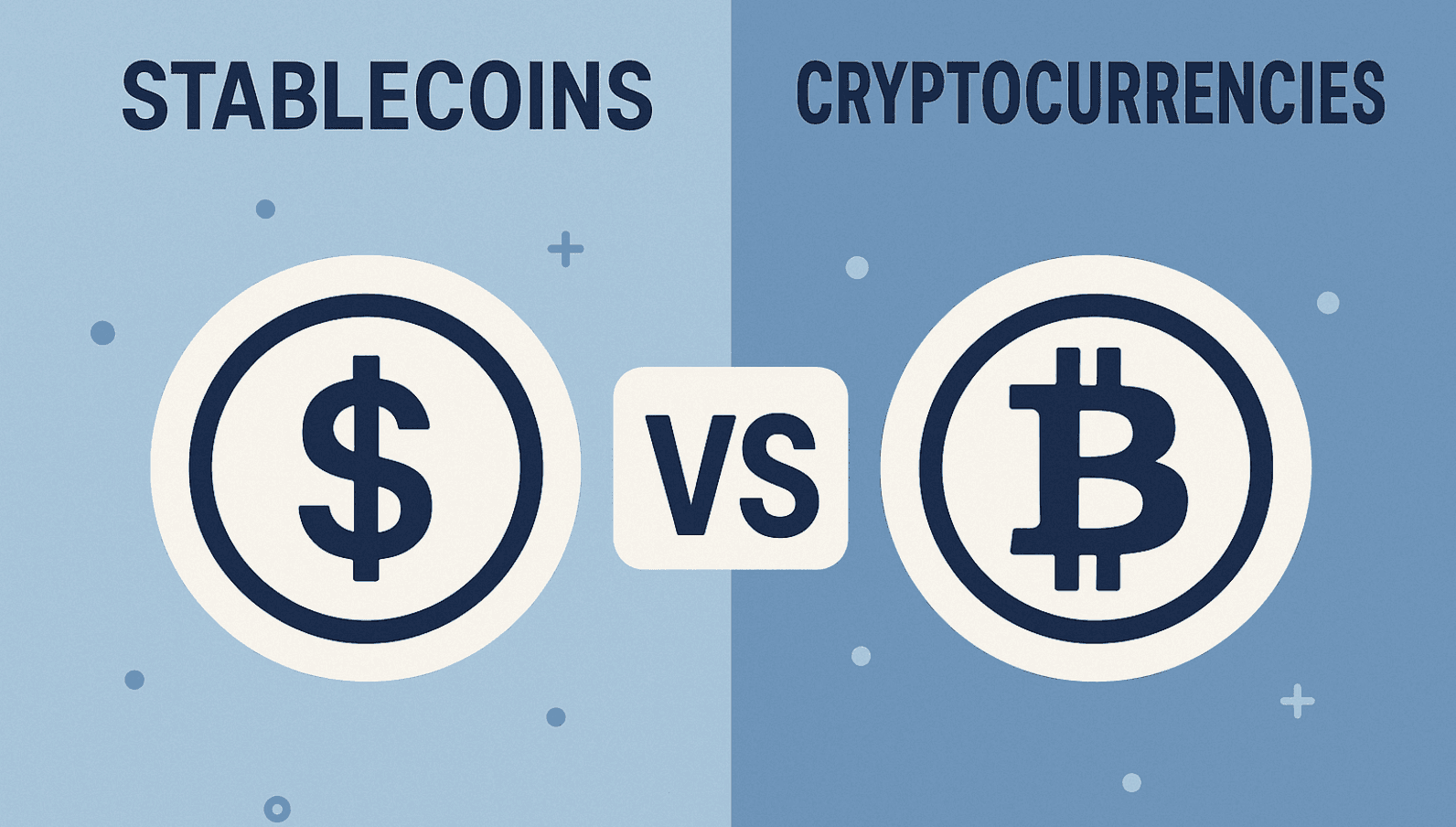
Stablecoins vs Other CryptocurrenciesStablecoins vs Other Cryptocurrencies

Stablecoins vs Bitcoin

Bitcoin is the world’s pioneer digital currency powered by blockchain technology. Though it is the largest crypto asset by market cap, it is highly volatile. Its price tends to rise or fall rapidly, making it a risky investment. However, due to Bitcoin’s deep liquidity, scarcity, and widespread adoption, it is being increasingly accepted as a digital payment method. Also, it is created through a process of mining on a decentralized, permissionless blockchain network.

Conversely, the market value of a stablecoin is tied to a stable asset with a relatively steady price. Additionally, stablecoins are issued by companies and predominantly used for cross-border payments.

Stablecoins vs Altcoins

All cryptocurrencies, apart from Bitcoin, are collectively known as alternative coins or altcoins. They address the limitations of Bitcoin, solve certain problems, or introduce specific use cases. For example, Ethereum is the first digital currency to support intelligent contracts and decentralized finance (DeFi) protocols. Solana is a high-performance blockchain that is more scalable, affordable, and energy-efficient than Ethereum. 

Many altcoins tend to be more volatile and riskier than Bitcoin due to smaller market capitalization, lower liquidity, or speculative demand. Their prices are primarily influenced by demand-supply dynamics, alongside other factors like real-world utility, global adoption, and market sentiment.

Conversely, stablecoins ensure price stability as they’re designed to maintain a stable value relative to the reference asset. While they exhibit lower price volatility, they’re not 100% risk-free. They’re subject to depegging, issuer, and regulatory risks.

The Role of Stablecoins in the Cryptocurrency Ecosystem

Stablecoins are crypto assets that bridge the gap between traditional and digital money. Since they’re pegged to external references like fiat currencies with a relatively stable value, they minimize price volatility.

Additionally, stablecoins are minted and recorded on immutable blockchains. Hence, nobody can alter stablecoin transaction data or balances, making them a transparent and reliable medium of exchange.

Fiat-collateralized stablecoins play a pivotal role in asset tokenization by providing a stable pricing reference for real-world asset (RWA) tokens. This enables a fair valuation for tokenized assets. Moreover, tokenization facilitates fractional ownership of RWAs. For example, a property worth $100,000 can be tokenized into 10,000 blockchain-based coins, each worth $100. 

Stablecoins also power secondary markets for tokenized assets by enabling price discovery and 24/7 trading. Without stablecoins, investors often need to convert fiat into crypto to conduct trades. This process entails higher costs and may involve third-party payment processors. By denominating tokenized assets in stablecoins, trades can be executed entirely on-chain at lower costs.

With advancements in blockchain technology, crypto wallet security, and on-chain analytics, more high-speed networks with faster consensus mechanisms are evolving. Additionally, stablecoins can automate cash flows from tokenized assets using intelligent contracts, while fostering greater blockchain interoperability. 

Conclusion

Stablecoins can boost crypto trading by acting as a bridge between traditional currencies and cryptocurrencies. They also maintain a stable price relative to the reference asset, protecting investors from extreme market volatilities. Stablecoins are also a boon for users based in locations with no or limited access to foreign currencies like the US Dollar. By offering greater stability, transparency, and accessibility, stablecoins can revolutionize the digital asset market and the broader financial system.

FAQs

Is stablecoin a Bitcoin?

Stablecoins are blockchain-based cryptocurrencies like Bitcoin. However, Bitcoin is created through a mining process, which involves solving complex mathematical puzzles. It is also highly volatile. Contrarily,  stablecoins are designed to maintain price stability and are pegged to external assets like fiat currencies or commodities. They minimize the inherent volatility associated with cryptocurrencies like Bitcoin and enable borderless payments.

Are stablecoins safe to use?

Though stablecoins are less volatile than other cryptocurrencies, they carry inherent risks. If a stablecoin’s value is eroded due to depegging or an issuing company shuts down, investors can incur heavy losses. Depegging can also have a domino effect, erasing billions of dollars from the broader crypto market. Moreover, issuers may exert centralized control or make misleading claims without maintaining sufficient reserves to back their stablecoins. Therefore, stablecoins aren’t completely safe. 

What are stablecoins used for?

Stablecoins enable instant cross-border payments by leveraging the efficiency and security of blockchain technology. They’re designed to maintain a peg, with their value tied to an external reference, most commonly fiat currencies. As stablecoins are less volatile than other crypto assets, they’re widely used as a merchant payment mechanism. Besides, they support asset tokenization, DeFi integration, and the overall growth of the Web3 ecosystem.


Source link

15 Best Crypto Staking Platforms for Maximum Rewards in 2025 – NFT Plazas

0
15 Best Crypto Staking Platforms for Maximum Rewards in 2025 – NFT Plazas


As a trader, knowing the best crypto staking platforms saves you from wasting time, locking funds in low yield pools, or trusting platforms that don’t deliver on rewards or security. With so many options promising high returns, it’s easy to feel overwhelmed or make a costly mistake. The right choice can help you grow passive income steadily, while the wrong one can eat into your profits or limit flexibility when the market shifts.

In this review, we will explain the best staking platforms to use in 2025, how they compare on rewards, ease of use, and safety, and which ones make sense depending on your goals, experience level, and preferred assets. We’ll break everything down clearly so you can stake with confidence and maximize returns without guesswork. Keep reading

Best Crypto Platforms for Staking Rewards in 2025

PlatformCryptocurrencies SupportedMaximum Reward RateFeesExchange TypeBinanceBTC, ETH, BNB, ADA, etc.Up to 10%0%-3.75%CentralizedCrypto.comBTC, ETH, CRO, DOT, etc.Up to 19%0%-4%CentralizedByBitBTC, ETH, USDT, XRP, etc.Up to 10%0%-2%CentralizedCoinbaseBTC, ETH, SOL, ADA, etc.Up to 13%0% – 3.99%CentralizedKuCoinBTC, ETH, KCS, DOT, etc.Up to 13%0.1%CentralizedKrakenBTC, ETH, DOT, ADA, etc.Up to 21%0-0.1%CentralizedLidoETHUp to 8%10% of staking rewardsDecentralizedRocket PoolETHUp to 3.27%15% of staking rewardsDecentralizedNexoBTC, ETH, USDT, etc.Up to 15%No fees for stakingCentralizedStakelyETH, ADA, DOT, etc.Up to 34%Validator fees vary (low)DecentralizedGeminiBTC, ETH, GUSD, etc.Up to 8%No fees for stakingCentralizedMargexBTC, ETH, USDT, etc.Up to 11%No infomCentralizedAaveETH, USDT, DAI, etc.Up to 9%0.09%DecentralizedBakeBTC, ETH, DFI, etc.Up to 20%0.1% – 0.2%CentralizedBabylon LabsETH, BTC, etc.Up to 10%No infoDecentralized

15 Best Crypto Staking Platforms Reviewed By Our Experts

When it comes to earning passive income through cryptocurrency, choosing the right platform is crucial. With numerous options available, finding the best crypto platforms for staking rewards can be overwhelming. To make your decision easier, we’ve reviewed the top 15 platforms, highlighting their staking options, key features, and what sets them apart.

1. Binance

Binance Staking Platform

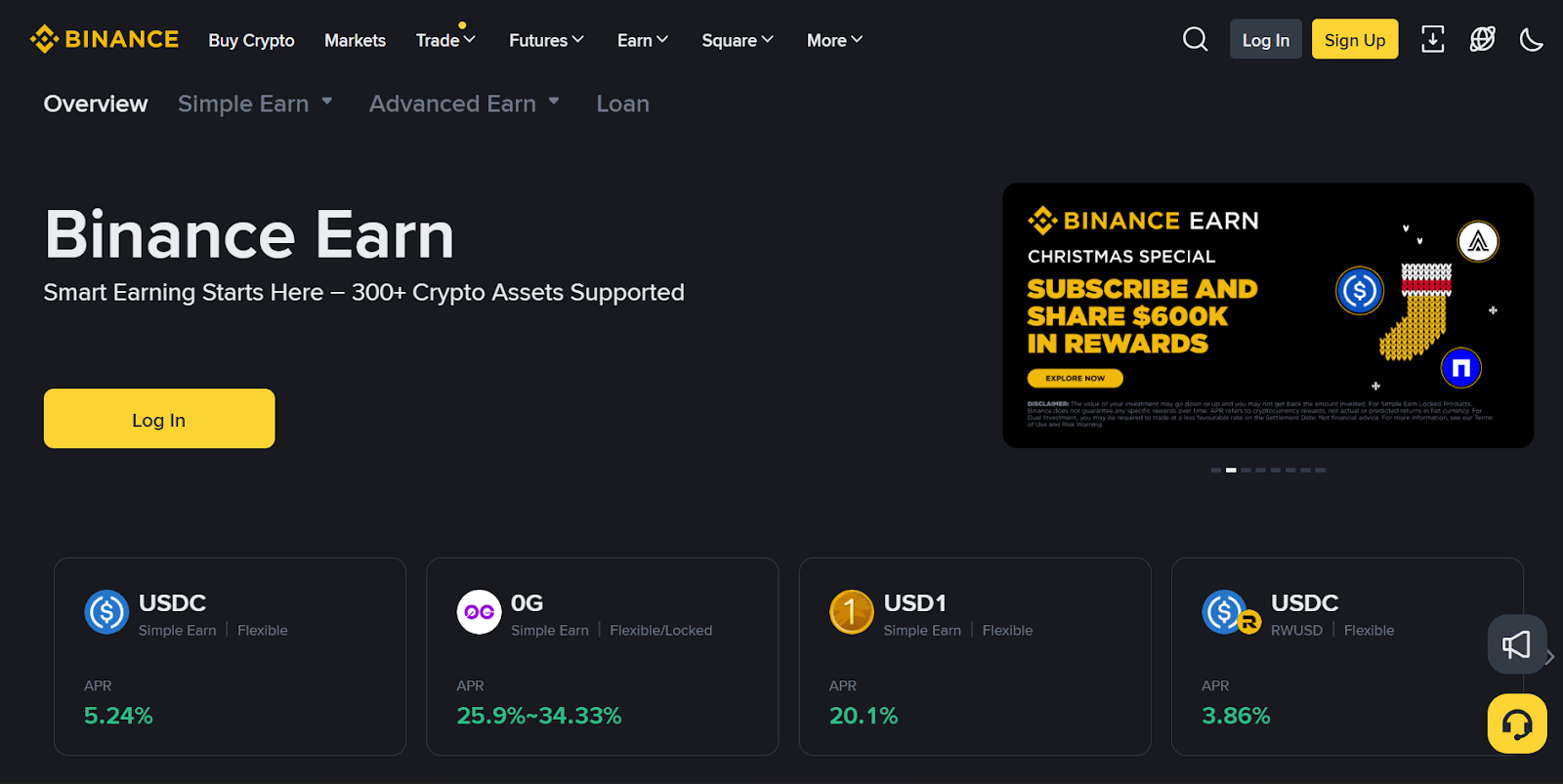
Binance remains one of the most widely used options for staking come 2025, especially if you want everything in one place. You can trade, stake, and manage your portfolio without transferring funds between platforms, saving time and reducing complexity. Supporting over 60 proof-of-stake coins, Binance provides both flexibility and control, making it a top choice for maximizing rewards. Its competitive APY rates and robust security measures ensure a reliable and rewarding staking experience. Whether you’re new to staking or a seasoned investor, Binance’s user-friendly interface makes it easy to get started.

binance-logo-6219389_1280binance-logo-6219389_1280

Staking Options

Binance offers both flexible and locked staking options. Flexible staking allows you to withdraw your funds anytime, while locked staking provides higher rewards for committing your assets for a set period. Popular coins like Ethereum (ETH), Binance Coin (BNB), and Solana (SOL) are available for staking.

Key Features

Transparent reward rates and lockup periods.Auto-invest plans for compounding returns.Industry-leading security with multiple protection layers.A user-friendly interface for easy navigation.

2. Crypto.com

Crypto.com Staking PlatformCrypto.com Staking Platform

Crypto.com simplifies staking by integrating it into its broader ecosystem, making it easy to manage alongside trading and spending. With support for over 250 cryptocurrencies, it’s a versatile platform for earning passive income. The platform’s focus on predictability and clear terms makes it ideal if you prefer stability over chasing high-risk returns. Its intuitive app design ensures that managing rewards, spending, and trading feels effortless, even for beginners.

crypto.com_crypto.com_

Staking Options

Crypto.com offers flexible and fixed-term staking options. Fixed-term staking provides higher APY rates, while flexible staking allows you to maintain liquidity. CRO token holders enjoy additional benefits, including boosted rewards and exclusive perks.

Key Features

APY rates up to 19% for select assets.Enhanced rewards for CRO token holders.Strong security measures to protect your assets.Transparent terms and a beginner-friendly interface.

3. ByBit

ByBit Staking PlatformByBit Staking Platform

ByBit is tailored for active traders who want to earn staking rewards without interrupting their trading activities. Supporting over 650 cryptocurrencies, ByBit combines flexibility with high-yield opportunities. Its frequent limited-time promotions with boosted returns make it a dynamic choice for maximizing rewards. ByBit’s focus on speed and flexibility ensures that you can move funds easily and track rewards in real time.

bybit-logo-whitebybit-logo-white

Staking Options

ByBit provides flexible staking products, allowing you to withdraw funds anytime. It also offers promotional staking events with higher APY rates for a limited period. Popular assets like Bitcoin (BTC), Ethereum (ETH), and Solana (SOL) are available for staking.

Key Features

Real-time tracking of staking rewards.Seamless integration with trading activities.Competitive APY rates on a wide range of assets.A focus on speed and flexibility for active investors.

4. Coinbase

Coinbase Staking PlatformCoinbase Staking Platform

Coinbase is a trusted name in the crypto space, known for its transparent and regulated approach to staking. It’s an excellent choice if you value simplicity and security over maximizing yields. With support for six major cryptocurrencies, Coinbase ensures a straightforward staking experience. Its reputation as a secure and regulated exchange adds an extra layer of trust, making it a favorite among long-term holders.

coinbasecoinbase

Staking Options

Coinbase offers staking for Ethereum (ETH), Solana (SOL), and other popular assets. Most staking options come with no lockup periods, providing flexibility for long-term holders. Rewards are calculated transparently, and payouts are consistent.

Key Features

Clear explanations of reward calculations and payout schedules.No hidden terms or complex lockups.A secure and regulated environment for peace of mind.User-friendly interface for beginners and experienced investors alike.

5. KuCoin

KuCoin Staking PlatformKuCoin Staking Platform

KuCoin is a go-to platform for those who enjoy exploring lesser-known coins. With support for over 50 cryptocurrencies, it offers a variety of staking options to suit different investment strategies. KuCoin’s promotional events and high APY rates on emerging assets make it a standout choice. Its strong security measures and global reach ensure a safe and rewarding staking experience.

Kucoin-logoKucoin-logo

Staking Options

KuCoin provides both flexible and locked staking options. Locked staking offers higher rewards, while flexible staking ensures liquidity. The platform also supports staking for newer and less common coins, giving you access to unique opportunities.

Key Features

Access to a wide range of staking assets.High APY rates on emerging cryptocurrencies.KuCoin Earn for additional earning opportunities.Strong security measures to protect your investments.

6. Kraken

Kraken Staking PlatformKraken Staking Platform

Kraken focuses on stability and consistency, offering staking for over 200 cryptocurrencies with APY rates of up to 21%. The platform’s clear reward schedules and carefully selected assets make it a reliable choice if you value predictability. Kraken’s low fees and transparent reward schedules add to its appeal, making it a trusted name in the crypto space.

Staking Options

Kraken provides both flexible and bonded staking options. Bonded staking offers higher rewards but requires a longer commitment period. Supported assets include Ethereum (ETH), Polkadot (DOT), and Cardano (ADA).

Key Features

APY rates of up to 21% on select assets.Low fees ranging from 0% to 0.1%.A focus on security and transparency.Detailed analytics to optimize your staking strategy.

7. Lido

Lido Staking PlatformLido Staking Platform

Lido is a decentralized platform specializing in liquid staking, particularly for Ethereum. It allows you to stake ETH while keeping your assets usable across decentralized applications. This unique approach makes Lido a favorite among DeFi enthusiasts. Its non-custodial nature ensures that you retain control of your assets, while its focus on security and transparency has earned it a strong reputation.

Staking Options

Lido supports liquid staking for Ethereum, where you receive stETH tokens representing your staked ETH. These tokens can be used in DeFi protocols for additional earning opportunities.

Key Features

Non-custodial staking for enhanced security.APY rates of up to 8% for Ethereum staking.Flexibility to use staked assets in DeFi applications.A strong reputation for transparency and innovation.

8. Rocket Pool

Rocket Pool Staking PlatformRocket Pool Staking Platform

Rocket Pool is a community-driven platform that emphasizes decentralization and network health. It’s an excellent choice if you want to participate in Ethereum staking without running your own infrastructure. Rocket Pool’s focus on decentralization and security makes it a standout choice among the best DeFi staking platforms.

Staking Options

Rocket Pool offers liquid staking and node operation options. You can stake ETH and receive rETH tokens, which can be used across DeFi platforms. Node operators earn additional incentives, adding value to the staking process.

Key Features

Decentralized staking with community involvement.Additional incentives for node operators.APY rates of up to 3.27% for Ethereum staking.A focus on security and decentralization.

9. Nexo

Nexo Staking PlatformNexo Staking Platform

Nexo combines staking with broader earning features, making it a convenient option for passive income. With frequent payouts and clearly defined reward tiers, Nexo simplifies the staking process. Its user-friendly interface and strong security measures ensure a seamless staking experience.

Staking Options

Nexo supports staking for over 20 cryptocurrencies, including Ethereum (ETH) and Bitcoin (BTC). Rewards are based on loyalty levels, with higher tiers offering better returns.

Key Features

APY rates of up to 15% on select assets.Daily payouts for consistent earnings.A user-friendly interface for effortless management.Strong security measures to protect your funds.

10. Stakely

Stakely Staking PlatformStakely Staking Platform

Stakely is a validator service that stands out among the best crypto exchange platforms for its focus on reliability and transparency. It’s an excellent choice if you want to participate directly in network validation without the hassle of technical setup. Supporting over 30 blockchains, Stakely provides a secure and user-friendly staking experience. Its emphasis on infrastructure-focused participation makes it a trusted name in the staking community.

Staking Options

Stakely supports staking for a wide range of blockchains, including Ethereum (ETH), Polkadot (DOT), and Cosmos (ATOM). Rewards vary by chain, with some offering the highest APY crypto staking rates, reaching up to 34%.

Key Features

Non-custodial staking for enhanced control.Staking insurance to protect against slashing events.A focus on reliability and transparency.Support for over 30 blockchains, making it one of the best platforms for crypto staking.

11. Gemini

Gemini Staking PlatformGemini Staking Platform

Gemini is a regulated platform that prioritizes security and compliance, making it a top choice for conservative investors. While its staking options are limited, Gemini’s focus on user protection and transparency ensures a straightforward and secure experience. If you’re looking for a platform that balances simplicity with trust, Gemini earns its place among the best staking providers.

Staking Options

Gemini supports staking for Ethereum (ETH), Solana (SOL), and a few other cryptocurrencies. With APY rates of up to 8%, it’s a reliable option for long-term strategies.

Key Features

A secure and regulated environment.Transparent reward calculations and payout schedules.User-friendly interface for a straightforward experience.A strong focus on compliance, making it one of the best crypto platforms for staking rewards.

12. Margex

Margex Staking PlatformMargex Staking Platform

Margex is a versatile platform that integrates staking-style earning tools alongside trading features. It’s a great option if you want to earn passive rewards without leaving an active trading environment. Margex’s simplicity and focus on convenience make it a relevant choice among the best crypto staking platforms.

Staking Options

Margex supports staking for over 55 cryptocurrencies, including Bitcoin (BTC) and Ethereum (ETH). With APY rates of up to 11%, it offers competitive rewards for traders who value flexibility.

Key Features

Seamless integration with trading activities.Competitive APY rates on select assets.A straightforward and user-friendly interface.A focus on convenience for active traders, making it one of the best platforms for crypto staking.

13. Aave

Aave Staking PlatformAave Staking Platform

Aave is a decentralized finance (DeFi) protocol that offers staking and lending services, making it one of the best DeFi staking platforms. It’s a strong choice if you’re comfortable with DeFi mechanics and want more control over your investments. Aave’s focus on transparency and innovation ensures a rewarding experience for advanced investors.

Staking Options

Aave supports staking for over 30 cryptocurrencies, including stablecoins and Ethereum (ETH). Rewards depend on market demand and liquidity usage, with APY rates reaching up to 12.22%.

Key Features

Transparent reward structures and payout schedules.A focus on innovation and user empowerment.Advanced features for experienced DeFi investors.Recognized as one of the best Ethereum staking platforms for its flexibility and control.

14. Bake

Bake Staking PlatformBake Staking Platform

Bake simplifies decentralized earning with a beginner-friendly design and clear explanations. It’s an excellent platform if you’re transitioning from centralized platforms into DeFi. The platform emphasizes transparency by displaying reward calculations and allowing users to verify activity on-chain.

Staking Options

Bake supports staking for several Proof-of-Stake assets, including ETH, MATIC, DFI, and others. Depending on the asset, users may have access to flexible staking options that allow unstaking without long lock-up periods.

Key Features

Transparent reward calculations and payout schedules.Beginner-friendly interface for easy navigation.A focus on user education and community engagement.Competitive APY rates, making it one of the best staking platforms for new DeFi users.

15. Babylon Labs

Babylon Labs Staking PlatformBabylon Labs Staking Platform

Babylon Labs is an emerging platform that focuses on security and innovation in staking infrastructure. While still developing, it shows strong potential for growth and is gaining recognition as one of the best crypto staking platforms to watch in 2025.

Staking Options

Babylon Labs supports staking for over 10 cryptocurrencies, with a focus on emerging networks. Specific APY rates and fees are yet to be disclosed, but the platform emphasizes decentralization and network health.

Key Features

A focus on decentralization and network health.Innovative staking solutions for emerging networks.Strong emphasis on security and transparency.A promising platform for forward-thinking investors, making it one of the best platforms for crypto staking rewards.

What is a Crypto Staking Platform?

A crypto staking platform is a service or application that allows you to earn rewards by participating in the validation of blockchain transactions. In simpler terms, it’s a way to put your cryptocurrency to work and generate passive income. These platforms support proof-of-stake (PoS) blockchains, where you can lock up your assets, a process known as staking to help secure the network and validate transactions. In return, you earn rewards, often in the form of additional cryptocurrency.

If you’re wondering what is staking crypto, it’s the process of committing your digital assets to a blockchain network for a set period. This helps maintain the network’s operations and security. Staking platforms simplify this process by providing user-friendly interfaces, clear reward structures, and additional features like flexible or locked staking options. Whether you’re a beginner or an experienced investor, these platforms make it easy to participate in staking and earn rewards without needing technical expertise.

How to Choose the Best Staking Platform

Selecting the right staking platform is crucial to maximizing your rewards and ensuring the safety of your assets. With so many options available, it’s important to evaluate platforms based on specific criteria. Here are six key factors to consider when choosing the best staking platform for your needs:

1. Look for the Highest APY Crypto Staking Options

One of the first things to check is the APY or Annual Percentage Yield offered by the platform. The highest APY crypto staking options can significantly boost your earnings, especially if you are staking for the long term. However, be cautious of platforms offering unrealistically high returns, as they may come with hidden risks. Always balance high rewards with platform reliability.

2. Evaluate Security and Reputation

Security should be a top priority when choosing a staking platform. Look for platforms with a strong reputation, robust security measures, and a history of protecting user funds. Features like two-factor authentication, cold storage, and insurance against slashing events can provide an added layer of security.

3. Check for Ethereum Staking Support

If you are interested in staking Ethereum, ensure the platform supports it. Ethereum is one of the most popular assets for staking, and platforms like Lido and Rocket Pool are often recognized as the best Ethereum staking platforms. Additionally, understanding what is Ethereum and its role in decentralized finance can help you make informed decisions about staking this asset.

4. Consider Flexibility and Lockup Periods

Different platforms offer varying levels of flexibility. Some allow you to withdraw your funds anytime through flexible staking, while others require you to lock up your assets for a set period through locked staking. If you need liquidity, opt for platforms with flexible staking options. For higher rewards, locked staking may be a better choice.

5. Assess User Experience and Interface

A user-friendly interface can make a big difference, especially if you are new to staking. Platforms like Crypto.com and Binance are known for their intuitive designs, making it easy to track rewards, manage assets, and navigate the staking process. Choose a platform that simplifies the experience without compromising on features.

6. Compare Fees and Additional Features

Fees can eat into your staking rewards, so it is important to compare the costs across platforms. Some platforms charge minimal fees, while others may have higher costs for certain services. Additionally, look for extra features like auto-compounding, staking insurance, or integration with decentralized finance protocols, which can enhance your staking experience.

Are Crypto Staking Platforms Safe?

Cryptocurrency staking platforms are generally considered safe, especially when you choose well-established and reputable options. These platforms operate on blockchain technology, which ensures transparency and security through decentralized networks. The safety of staking depends on several factors, including the platform’s reputation, the security measures in place, and the specific cryptocurrency being staked. Platforms like Binance and Kraken are often regarded as some of the best platforms for crypto staking due to their robust security protocols and long-standing trust in the crypto community.

When exploring the best DeFi staking platforms, understand the risks associated with decentralized finance. Unlike centralized platforms, DeFi staking involves interacting with smart contracts, which can be vulnerable to bugs or exploits. Staking rewards are typically expressed in APY, your earnings are tied to the token’s value. If the token’s price drops significantly, your rewards may not offset the loss. Comprehending what is a blockchain and how it underpins staking platforms can help you minimize risks.

Benefits of Staking on Crypto Platforms

Passive income without active trading. Staking allows rewards to build over time without constant buying and selling. Once assets are staked, rewards accumulate automatically, which makes it appealing for long term strategies.Helps keep blockchain networks running. By staking, crypto assets are used to validate transactions and support network operations. This helps maintain security and stability while rewards are earned for participation.Lower entry barrier compared to mining. Staking does not require expensive equipment or high energy use. Most platforms allow participation with relatively small amounts, making it more accessible.Compounding can boost long term returns. Some platforms allow earned rewards to be restaked. Over time, this can increase total holdings faster through compounding.Energy efficient participation.Proof of stake networks consume significantly less energy than traditional mining systems, making staking a more sustainable way to earn rewards.

Risks of Staking on Crypto Platforms

Market price fluctuations. Even when rewards are earned, the fair market value of the staked asset can drop. A price decline may outweigh staking gains, especially during volatile market conditions.Funds may be temporarily inaccessible.Many staking programs require lockup or bonding periods. During this time, crypto assets cannot be sold or moved, which limits flexibility.Reward inflation impact Some networks issue new tokens as staking rewards. If supply grows faster than demand,overall token value may decrease.Platform or validator exposure.Using third party platforms introduces risk related to security, technical issues, or poor management. Fees and service quality can also affect final returns. Unstaking delays.Even after staking ends, many networks enforce a waiting period before funds are released. This delay can make it difficult to react quickly to market changes.

Conclusion

Choosing the right staking platform involves evaluating factors like security, flexibility, and reward potential. Each platform caters to different needs, offering features for both beginners and experienced investors. When you assess g your options and understand the associated risks, you can select a platform that aligns with your investment goals. Staking continues to be a valuable method for growing cryptocurrency holdings while supporting 

FAQs

What is the best platform to stake crypto?

The best platform to stake crypto depends on your priorities, such as high rewards, security, or ease of use. Platforms like Binance, Kraken, and Lido are popular choices for their reliability and features.

How long do you need to lock up your funds for staking?

The duration for locking up funds for staking varies by platform and cryptocurrency. Some platforms offer flexible staking with no lock-up, while others require periods ranging from a few days to several months.

Can you stake crypto in the US?

Yes, you can stake crypto in the US. Many platforms, including Coinbase and Kraken, allow US-based users to stake cryptocurrencies, though availability may vary by state and regulation.

What is liquid staking?

Liquid staking allows you to stake your crypto while still maintaining liquidity. You receive tokens representing your staked assets, which can be used in other transactions or DeFi activities.

Are staking rewards taxed?

Yes, staking rewards are typically taxed as income in most jurisdictions, including the US. The specific tax treatment depends on local regulations and how the rewards are classified.

What’s the difference between PoS staking and DeFi staking?

The difference between PoS staking and DeFi staking lies in their purpose and mechanism. PoS staking secures blockchain networks, while DeFi staking involves locking assets in decentralized protocols to earn rewards.

What’s the difference between centralized and non-custodial staking?

The difference between centralized and non-custodial staking is control. Centralized staking involves platforms managing your assets, while non-custodial staking lets you retain full control of your private keys and funds.


Source link

How to Buy Shiba Inu (SHIB) Safely in 2025 – NFT Plazas

0
How to Buy Shiba Inu (SHIB) Safely in 2025 – NFT Plazas


When you start looking into how to buy Shiba Inu, it’s easy to feel overwhelmed by exchanges, payment options, and safety concerns. Many people want to buy Shiba Inu but aren’t sure where to begin, which platforms to trust, or how to protect their money once they make a purchase. Add price swings and online hype into the mix, and the process can feel confusing fast.

In this piece, we explain where to buy Shiba Inu safely, how to buy Shiba Inu coin step by step, the payment methods you can use, the risks you should consider, and whether SHIB is a good investment. Keep reading for a safe and practical way to get started with SHIB in 2025.

Where to Buy Shiba Inu Safely

Where to Buy Shiba Inu Safely

Choosing the right place to buy SHIB matters more than most people realize. The platform you use affects how easy the process feels, how much control you keep, and how confident you are when watching Shiba Inu price prediction trends or deciding is shiba a good investment for you. From our experience, safety comes down to using trusted platforms and understanding how each option works before you commit your money.

Centralized Exchanges (CEX)

Centralized exchanges, often called CEXs, act as middlemen that help you buy crypto in a simple and familiar way.

Well known platforms let you buy SHIB using debit cards, credit cards, or bank transfersBuilt in security tools help protect your account and fundsPrice charts update quickly, which helps when tracking Inu price prediction changesBeginner friendly layouts make it easier to decide if SHIB is a good investment for your goals

Decentralized Exchanges (DEX)

Decentralized exchanges, or DEXs, work without a central company and give you more direct control.

You connect a personal wallet and trade without creating an accountFull ownership of your SHIB stays with you at all timesAccess remains open even when centralized platforms limit tradingLong term holders often prefer this route when they believe in the future Inu price prediction potential

How to Buy Shiba Inu Coin: Step-by-Step Guide 

Understanding how to buy Shiba Inu starts with slowing down and learning how each part of the process fits together. Price movement often gets attention, but knowing what to do before clicking buy matters just as much. Here are the steps to follow: 

Step 1: Choose a Crypto Exchange

Picking the right platform shapes your entire experience. Some exchanges focus on simplicity, while others offer more features that may feel overwhelming at first. Looking at security history, user reviews, and ease of navigation helps you decide where to buy Shiba Inu with confidence.

Different exchanges also support different payment options and regions. Taking time here saves frustration later and makes the rest of the process smoother. A solid platform gives you peace of mind before you move any money.

binance-logo-6219389_1280binance-logo-6219389_1280

Step 2: Create & Verify Your Account (KYC)

After choosing a platform, you’ll set up an account and confirm your identity through KYC (Know Your Customer). This step usually involves uploading an ID and verifying basic details to protect users from fraud. While it may feel personal, it plays a big role in keeping your account secure.

Approval times vary, so patience helps. Once verified, you unlock full access to features and can move forward knowing how to buy Shiba Inu coin the right way. This foundation makes every later step easier.

Step 3: Choose a Payment Method

With your account ready, attention shifts to how you want to fund your purchase. Each payment option comes with different speeds, fees, and convenience levels. Understanding these differences helps you avoid surprises.

The choice depends on urgency, comfort, and cost. Some methods suit quick access, while others work better for planning ahead. Knowing your options keeps you in control.

Buy Shiba Inu with Debit / Credit Card

Cards offer one of the fastest ways to enter the market. Many people prefer this option when they want to buy SHIB with credit card and see results almost instantly. Convenience comes at a slightly higher fee, which is worth considering.

Security tools like two-step verification add protection. This method works well if speed matters more than saving on costs.

Buy SHIB with Apple Pay or Google Pay

Mobile wallets make the process feel familiar. If you already use these services daily, buying crypto feels like a natural extension of normal payments. The setup is simple and reduces manual entry.

Speed remains a major advantage here. It’s a good choice for users who value ease and already trust their phone for payments.

Buy Shiba Inu with Bank Transfer

Bank transfers appeal to users who plan ahead. Fees are often lower, making them attractive for larger amounts. The tradeoff comes in slower processing times.

Waiting a bit longer can save money. This option fits those who prefer patience over instant access.

Buy Shiba Inu with Other Cryptocurrencies

Crypto to crypto swaps give flexibility if you already hold digital assets. You can trade directly and buy Shiba Inu without using traditional money. This approach avoids banks altogether.

Many investors use this route when comparing SHIB with other assets, including the best meme coins. It’s a practical choice for building or adjusting a portfolio efficiently.

Step 4: Buy Shiba Inu Coin

Once your funds are available, go to the buy or trade section of the exchange and search for SHIB. Enter the exact amount you want to buy, either in dollars or in SHIB units, then review the order details shown on the screen. Check the fees, total cost, and final amount carefully before confirming. After you approve the transaction, the exchange will process it and add SHIB to your account balance.

Step 5: Secure Your SHIB in a Wallet

After your purchase, the safest move is transferring SHIB to a personal wallet you control. Keeping tokens on an exchange leaves them exposed to outages, account restrictions, or security incidents. A personal wallet gives you full ownership of your assets and removes third party risk.

Choose a wallet that supports SHIB and write down the recovery phrase exactly as provided. Store that phrase offline and never share it with anyone. This step protects your investment long term and ensures you don’t lose access to your funds.

Risks to Consider Before Buying SHIB

Risks to Consider Before Buying SHIBRisks to Consider Before Buying SHIB

Before putting money into SHIB, it’s important to slow down and look at the risks with a clear head. While the token has a strong community and wide recognition, every crypto comes with tradeoffs you should understand before committing.

1. Price Volatility Can Work Both Ways

SHIB is known for sharp price swings that can happen in a short time. Rapid moves may look exciting, but they can also lead to quick losses if the market turns. Many buyers jump in during hype without a plan, then panic when prices drop. Asking yourself is Shiba a good investment for your goals helps you stay grounded instead of reacting emotionally.

2. Market Hype Often Drives Decisions

Social media campaign plays a big role in SHIB’s movement. Online trends can push prices up fast, but they don’t always reflect long term value. When excitement fades, momentum can slow just as quickly. Making decisions based only on headlines or influencers often leads to regret rather than results.

3. Platform Choice Affects Your Safety

Where you buy matters as much as what you buy. Using the best crypto exchange helps reduce risks like hacks, hidden fees, or failed transactions. Less reputable platforms may offer tempting deals but lack strong security or customer support. A trusted exchange gives you clearer pricing, better protection, and peace of mind.

4. Security Mistakes Can Cost You

Holding SHIB comes with personal responsibility. Weak passwords, fake websites, and phishing messages remain common threats. Even a small mistake can lead to lost funds with no recovery option. Learning basic security habits protects you more than chasing quick gains.

5. Long Term Uncertainty Still Exists

SHIB continues to evolve, but its future depends on adoption, development, and market conditions. No one can guarantee outcomes, so it’s smart to invest only what you’re comfortable losing. Understanding risks upfront puts you in control instead of relying on hope.

Is Shiba Inu a Good Investment?

Is SHIB a good investment? That depends on what you want from your money and how comfortable you are with risk. SHIB has evolved from a simple meme token into a widely traded asset backed by a massive global community, and choosing the best crypto wallet early on plays an important role in protecting your investment. This combination of popularity and accessibility keeps SHIB relevant, but it also makes price movement unpredictable.

Community strength continues to drive awareness and trading activity, helping SHIB stay visible in a crowded market.Price volatility creates chances for short term gains, but it also increases the risk of sharp pullbacks without warning.Speculative value means market sentiment often plays a bigger role than fundamentals, especially during hype cycles.Portfolio fit matters, since SHIB usually works better as a small part of a diversified strategy.Risk tolerance should guide decisions, as long term outcomes remain uncertain.

Conclusion

Buying SHIB can be straightforward once you understand the steps, platforms, and risks involved. It offers accessibility, strong community interest, and flexible payment options, but it also comes with volatility and uncertainty. Whether SHIB fits your goals depends on how much risk you’re comfortable taking and how you plan to use it within a broader strategy. Making informed choices and setting realistic expectations helps you approach SHIB with balance rather than hype.

FAQs

Is buying Shiba Inu worth it in 2025?

Buying Shiba Inu in 2025 can be worth it if you understand the risks and set realistic expectations. SHIB remains popular, but its value still depends on market sentiment and your personal strategy.

Where is the best place to buy Shiba Inu (SHIB)?

The best place to buy Shiba Inu (SHIB) is usually a well known and regulated crypto exchange that offers strong security, clear fees, and easy payment options you trust.

What is the best way to buy Shiba Inu (SHIB)?

The best way to buy Shiba Inu depends on your needs, but most people prefer using a trusted exchange with simple payment methods like cards or bank transfers for a smooth experience.


Source link

XMR Price Prediction in 2026, 2027 – 2030 and Beyond – NFT Plazas

0
XMR Price Prediction in 2026, 2027 – 2030 and Beyond – NFT Plazas


Monero (XMR) is currently trading at $446.96, positioned just beneath a major multi-year resistance zone. Monero’s critical threshold represents a decisive turning point for the privacy asset sector.

As a result, market action in the upcoming days will determine whether XMR initiates a significant rally toward the Monero price target of $549 or faces a sharp correction toward the foundational support levels established during the 2025 “crypto winter.”

XMR Technical Analysis

Monero price is entering its most critical hours on the 3-day (3D) chart. Specifically, XMR’s current price action is narrating a fierce tug-of-war right at the “Range Ceiling” of $476.34, a level that has historically served as a formidable barrier to bullish expansion.

XMR Technical Analysis

XMR Technical Analysis: Monero Price Prediction.

Scenario 1 – The Bullish Breakout: If this 3D candle closes decisively above $476.34, it officially confirms the Bulls have reclaimed the fortress. Once the shield shatters, technical buying pressure will be unleashed, and the first stop is $513.72. Surpassing this obstacle is crucial to trigger widespread investor anxiety over missing out, blasting the doors open to a new Monero price peak at $549.29. 

Scenario 2 – The “Dump and Pump” Correction: Alternatively, if XMR executes a breakdown below the $402.28 support, the market enters a temporary “liquidity hunt.” In this case, the Monero price would likely sweep the lows down to the deep accumulation zones at $361.84 or $339.33. However, if long-term smart money steps in here, this level transforms into a solid launchpad for a spectacular reclaim of the $476 resistance.

Scenario 3 – The Trend Failure: Conversely, if this 3D candle closes decisively below $339.33, it officially confirms the bulls have lost the macro trend. Once this final line in the sand breaks, the Monero price prediction shifts bearish, potentially pushing the asset down to the absolute floor at $290.00.

Learn more: How to Claim Crypto Bonuses? – NFTPlazas

Support Levels

$402.28 – $361.84 – $339.33

If the price breaks firmly below the $402.28 pivot, the bears will likely target $361.84 first. Most importantly, a failure there opens the floodgates to $339.33, where the fate of the 2026 trend will be more bearish.

Support Key LevelsPriceS1$402.28S2$361.84S3$339.33

Resistance Levels

$476.34 – $513.72 – $549.29

Meanwhile, bulls will encounter near-term resistance levels at $476.34. However, the most significant technical milestone for a major trend shift remains $513.72. Should the Monero price successfully breach this major long-term resistance ceiling, it triggers price discovery mode, targeting $549.29 for a massive new high.

Resistance Key LevelsPriceR1$476.34R2$513.72R3$549.29

Monero Price Prediction Table For Years 2025, 2026, 2027, 2028, 2029, and 2030

The projections below rely on the critical assumption that XMR successfully defends the “Bullish Line in the Sand” at $339.33. Furthermore, the long-term Monero price prediction presupposes that global demand for financial sovereignty and decentralized atomic swaps will continue to serve as fundamental catalysts.

YearAverage Monero Price Prediction2025Avg ~ $4612026Avg ~ $5132027Avg ~ $7202028Avg ~ $5802029Avg ~ $6402030Avg ~ $1,120

History Of Monero (XMR)

In contrast to projects that rely on venture capital or marketing hype, Monero (XMR) has spent the last decade evolving as a grassroots reaction to the erosion of financial privacy. XMR history is a testament to technical resilience against both institutional and regulatory pressures.

2014 Genesis: Launched as BitMonero in April 2014, forking from Bytecoin to fix a massive 80% premine scam. Subsequently, Monero’s community quickly dropped the “Bit” and took control.Privacy-By-Default: Unlike Bitcoin, XMR implemented Ring Signatures and Stealth Addresses from day one, ensuring every transaction is untraceable and every coin remains fungible.ASIC Resistance: Introduced the RandomX algorithm in 2019 to prevent industrial mining farms from dominating the network. By doing so, it keeps mining accessible on consumer CPUs.Efficiency Upgrades: Deployed Bulletproofs (2018) and CLSAG (2020), which slashed transaction sizes by 80% and fees by 25% while strengthening anonymity.Exchange Resilience: Navigated major delistings in 2024–2025 by maturing Atomic Swaps (BTC/ETH/EVM). Thus, centralized exchanges became unnecessary for liquidity.Cuprate Milestone (2025): Finally, the community deployed a new Rust-based node implementation to enhance security and sync speeds, further decentralizing the network architecture.

XMR Recent News & Developments

The year 2025 has officially been the “Year of Liberation” for XMR, driven by three massive catalysts:

The Victory Of Decentralized Swaps: Notably, as centralized exchanges phased out privacy assets, the Monero community launched fully functional EVM-XMR atomic swap dApps. This strategic move ensured that liquidity remained high by enabling trustless trading between Monero and Ethereum-based assets. Through this action, the network effectively made exchange bans irrelevant for the Monero price, as users no longer depend on custodial platforms to enter or exit positions.Privacy Narratives Return: In late 2025, institutional research began highlighting privacy coins as a top-performing narrative for the upcoming cycle. Indeed, this renewed interest pushed XMR through a staggering 143% YTD rally. As traders anticipate tighter digital surveillance, the asset has successfully tested multi-year resistance levels, signaling a shift from speculative hype to utility-driven demand.The Cuprate Upgrade & Network Hardening: Monero successfully deployed the Cuprate node implementation, a Rust-based overhaul that has revolutionized the network’s efficiency. Cuprate has reduced initial sync times by nearly 7.5x, allowing full verification on consumer hardware in under 16 hours. Moreover, the introduction of “Spy Node Defenses” in late 2025 has significantly hardened the network against deanonymization attempts by clustering malicious IPs.

Learn more: What Is a Crypto Exchange? Ultimate Guide in 2025

FAQ

What Is XMR?

XMR is the native utility token of the Monero network, purpose-built to bridge the gap between financial freedom and the future of blockchain. Unlike other cryptocurrencies, XMR functions as a “Private Bridge Currency,” enabling users to settle payments without revealing sensitive transaction metadata.

How To Buy Monero (XMR)?

binance-logo-6219389_1280binance-logo-6219389_1280

Binance delisted Monero on February 20, 2024, due to its privacy features and evolving regulatory standards. However, XMR remains accessible for spot trading on platforms like KuCoin, MEXC, and HTX, and for perpetual trading on Bybit or Gate.io, and even on Binance. Still, users often face withdrawal restrictions and mandatory identity verification on these centralized platforms.

Can The Monero Price Reaalistically Hit a New All-Time High (ATH) in 2026?

Overall, Monero price prediction chart structure supports this. If the Monero price clears the heavy resistance at $476.34, technical extensions target a cycle peak of $549.29. Surpassing the historical 2021 highs is entirely within range for the 2026 growth cycle.

What Is The “Worst Case Scenario” I Should Prepare For?

To be clear, if the broader market turns bearish, losing the $339.33 support would be catastrophic for the short-term trend. In this case, the Monero price could revisit “Deep Value” zones near below $339. These are historical accumulation levels where smart money typically steps in to defend the asset.

Why Is The Monero Price Prediction For 2027-2030 Higher Than Previous Years?

To clarify, current projections suggest that 2027 will serve as a potential top of the cycle. In contrast to earlier market periods, the current run is backed by the maturity of atomic swaps and actual privacy utility. The Monero price prediction suggests that true price discovery (reaching $1,000+) will mature by 2030 as financial surveillance drives users toward decentralized alternatives.

What Factors Cause Monero Price To Move Differently From BTC?

There is a distinct relationship between Monero price and “Privacy Advocacy” news. Whereas Bitcoin’s valuation typically reacts to reports on inflation, XMR often reacts violently to regulatory crackdowns, exchange delistings, or breakthroughs in cryptography.

How Does RandomX Help?

RandomX utilizes a CPU-friendly proof-of-work system that renders expensive ASIC hardware obsolete. By allowing standard computers to mine, it prevents corporate monopolies and secures the network against centralized price manipulation.

What Is the Impact of Seraphis?

The Seraphis upgrade introduces “Full-Chain Membership Proofs,” expanding anonymity sets to millions. Consequently, this makes chain analysis nearly impossible, cementing XMR as the ultimate “Monero 2.0” ecosystem.


Source link

Ultimate Guide to Choosing a Gambling Site

0
Ultimate Guide to Choosing a Gambling Site


Introduction: Why Choosing the Right Gambling Site Matters

Stepping into the world of online gambling can be both exciting and overwhelming. With countless options available, finding the right سایت شرط بندی can feel like searching for a needle in a haystack. The stakes are high not just in terms of money, but also your safety, convenience, and overall experience. Picking the wrong platform can lead to frustrating losses, poor customer support, or worse, security risks.In this guide, we’ll walk you through everything you need to know to choose a gambling site confidently. By the end, you’ll have the tools to make an informed choice that fits your preferences, skill level, and safety standards.

Understanding What Makes a Great Gambling Site

Before you even look at bonuses or game variety, it’s important to understand the core qualities of a trustworthy Gambling site.

Licensing and Regulation

A licensed gambling site operates under strict regulations, ensuring your money and personal information are protected. Always check if the site displays its licensing information prominently. Some common licenses include authorities in Malta, the UK, and Curacao.

Security Features

Online security is non-negotiable. Look for platforms that use SSL encryption, two-factor authentication, and secure payment gateways. These features protect you from fraud and ensure your funds are safe.

User-Friendly Interface

A well-designed website improves your gaming experience. Navigation should be simple, with games and account settings easy to find. Slow, cluttered sites can ruin the fun.

Key Features to Consider

Not all gambling sites are created equal. Here are the main features to evaluate before signing up.

Game Variety

A great Gambling site offers a wide range of games:

Slots: Classic, video, and progressive jackpot optionsTable Games: Blackjack, roulette, baccarat, pokerLive Casino: Real dealers streaming in real-timeSports Betting: Popular sports and e-sports markets

Variety keeps the experience exciting and allows you to try different strategies.

Bonuses and Promotions

While bonuses are enticing, always read the fine print. Look for:

Welcome Bonuses: Often, the largest initial offersNo-Deposit Bonuses: Free plays without upfront moneyLoyalty Programs: Reward regular players with points or cash

Remember, a bonus is valuable only if the wagering requirements are fair and achievable.

Payment Methods

A reliable Gambling site should support multiple payment options:

Payment MethodSpeedFeesNotesCredit/Debit CardsInstantLowWidely usedE-WalletsInstantMinimalSecure and convenientBank Transfers1–3 DaysMediumGood for large depositsCryptocurrenciesInstantVariesAnonymity and speed

Multiple payment options make deposits and withdrawals smooth and flexible.

Customer Support

Responsive customer service is critical. Check if the site offers:

24/7 live chatEmail supportDetailed FAQ sectionMultilingual support

Good support ensures your questions are answered quickly and problems are resolved efficiently.

Safety Tips for Online Gambling

Even the leading Gambling site can’t protect you if you gamble recklessly. Keep these tips in mind:

Set a Budget

Decide how much you are willing to spend before you start playing. Stick to this budget to avoid overspending.

Play for Entertainment, Not Income

Gambling should be fun, not a way to make money. Treat any winnings as a bonus, not a guarantee.

Know the Game Rules

Understanding the rules reduces the risk of mistakes and increases your chances of enjoying the games.

Check Reviews

Read user reviews and expert opinions to spot red flags. Consistent complaints about delayed payouts or poor service are a warning.

Mobile Compatibility

The popular gambling sites offer smooth mobile experiences. Whether on iOS or Android, mobile-friendly platforms allow you to play anywhere. Look for:

Responsive designDedicated mobile appsEasy navigation on small screens

Mobile gambling adds convenience without compromising security or game quality.

Understanding Wagering Requirements

Wagering requirements are often misunderstood. They determine how many times you must play through bonus money before withdrawal.

Low wagering requirements are betterAvoid sites with hidden or complicated rulesAlways read terms and conditions

Being informed prevents frustration and ensures fair use of bonuses.

Evaluating Reputation and Trustworthiness

A reputable Gambling site builds trust over time. Here’s what to look for:

Positive feedback from playersTransparent terms and conditionsConsistent payoutsLong-standing presence in the industry

Avoid platforms with frequent legal issues or negative press.

Responsible Gambling Features

Popular gambling sites encourage responsible play. Look for:

Deposit limitsLoss limitsTime remindersSelf-exclusion options

These features help you maintain control and enjoy gambling safely.

Final Thoughts

Choosing the right Gambling site is more than just chasing big bonuses or flashy graphics. Safety, reputation, game variety, and responsible gambling features matter most. Take your time, evaluate multiple options, and don’t rush into signing up.

By considering licensing, security, user experience, and payment options, you can ensure a safer and more enjoyable gambling experience. Remember, gambling is for entertainment first. Enjoy the thrill, stay responsible, and choose a platform that respects your time and money.

Take action today: check reviews, compare features, and select the site that fits your style. Your perfect gambling adventure is just a few clicks away. Share your experiences, ask questions, and help others make smarter choices too.

Connect with Us

Stay updated and join the conversation with our community on social media. Follow us for the latest tips, promotions, and news from the leading Gambling site:

Telegram: https://t.me/dancebetsInstagram: https://www.instagram.com/dancebetsYouTube: https://youtube.com/@dance_betsFacebook: https://www.facebook.com/share/1A6gBuQJ3g/?mibextid=wwXIfr


Source link

Popular Posts

My Favorites

A Year of Crisis, Growth, and Loss – Hypergrid Business

0
We haven’t done one of these in a while! But since I presented on OpenSim statistics at the OSCC conference in December, it...