Arts

Home Arts Page 130

Exploring the Intersection of Technology and Art
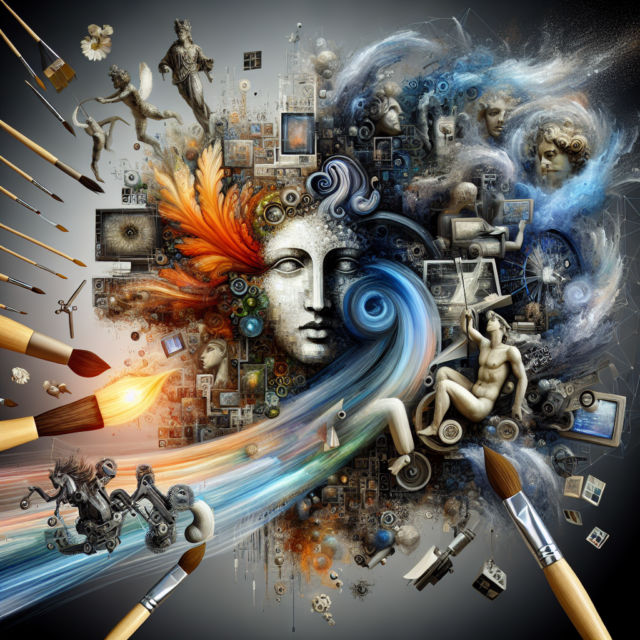
The intersection of technology and art represents a fascinating confluence where creativity meets innovation. As technology continues to advance at a rapid pace, it increasingly permeates various facets of life, including the realm of artistic expression. This dynamic relationship between technology and art not only reshapes traditional forms but also gives rise to new mediums and methods of creation. In this exploration, we delve into the evolution of artistic expression through technology, examine how creativity and innovation are being bridged in modern art, and consider the digital tools that are shaping the future of artistry.

The Evolution of Artistic Expression Through Tech

Throughout history, art has been a reflection of the times, evolving alongside societal changes and technological advancements. The invention of the camera in the 19th century, for example, revolutionized the art world by introducing photography as a new medium. This technological advancement allowed artists to capture reality in ways previously unimaginable, leading to new forms of expression and influencing movements such as Impressionism, which sought to capture the essence of a moment rather than its precise details.

The 20th century saw further integration of technology in art with the advent of film and video. These mediums allowed for dynamic storytelling and brought a new dimension to visual art. Artists like Andy Warhol embraced these technologies, using them to challenge traditional notions of art and blur the lines between commercial and fine art. The use of video art became a powerful tool for political and social commentary, expanding the scope of artistic expression.

In the digital age, the internet has become a canvas for artists worldwide. Online platforms provide artists with unprecedented access to global audiences, enabling the sharing of digital artworks, animations, and interactive media. The rise of digital art forms such as net art and digital installations reflects the growing influence of technology on contemporary artistic practice. This digital revolution has democratized art-making, allowing creators from diverse backgrounds to contribute to the global cultural dialogue.

The emergence of virtual reality (VR) and augmented reality (AR) has further transformed artistic expression, offering immersive experiences that engage audiences in novel ways. These technologies enable artists to construct entirely new worlds, inviting viewers to step inside their creations and interact with them. This shift from passive observation to active participation represents a significant evolution in how art is experienced and appreciated.

Moreover, artificial intelligence (AI) is playing an increasingly prominent role in the creation of art. AI algorithms can analyze vast datasets to generate original compositions, challenging traditional notions of authorship and creativity. Artists are collaborating with AI to produce works that push the boundaries of imagination, raising intriguing questions about the relationship between human and machine creativity.

As technology continues to advance, it is clear that the evolution of artistic expression will remain inextricably linked with technological innovation. The possibilities for future artistic exploration are vast, promising exciting developments that will continue to redefine the boundaries of art.

Bridging Creativity and Innovation in Modern Art

In the modern art landscape, the integration of technology has become a catalyst for bridging creativity and innovation. Artists today are not only creators but also innovators, leveraging technology to explore new concepts and challenge conventional artistic paradigms. This fusion of creativity and innovation is evident in various contemporary art forms and practices.

One of the most striking examples of this intersection is the rise of digital art. Artists are using software and digital tools to create works that are not only visually stunning but also conceptually rich. Digital painting, 3D modeling, and generative art are just a few examples of how technology is enabling artists to push the boundaries of traditional media, offering new ways to explore color, form, and composition.

The concept of interactivity is another area where creativity meets innovation. Interactive art invites audience participation, transforming viewers into co-creators. This dynamic interaction is made possible through sensors, computer programming, and other technological tools. Installations that respond to movement, sound, or touch engage audiences on a sensory level, creating immersive experiences that challenge traditional notions of the artist-viewer relationship.

Moreover, technology is facilitating collaboration across disciplines, bringing together artists, scientists, and technologists to work on innovative projects. These collaborations often lead to groundbreaking works that explore the intersection of art, science, and technology. For instance, bio-artists use biotechnology to create living sculptures, while data artists visualize complex datasets in aesthetically compelling ways, highlighting the intrinsic beauty of information.

The use of blockchain technology and non-fungible tokens (NFTs) represents another significant development in modern art. NFTs provide a new way for artists to monetize their digital creations, offering proof of ownership and authenticity in the digital realm. This innovation has opened up new revenue streams for artists and has sparked debates about the nature of digital ownership and the value of art in the digital age.

Furthermore, the accessibility of technology has empowered a new generation of artists who are using social media and online platforms to reach global audiences. This democratization of art-making and distribution has led to a more diverse and inclusive art world, where voices from different cultures and backgrounds can be heard and celebrated.

The ongoing dialogue between creativity and innovation in modern art continues to inspire new possibilities. As artists embrace technology, they not only redefine what art can be but also explore profound questions about the human experience in an increasingly digital world.

Digital Tools Shaping the Future of Artistry

As we look to the future, digital tools are poised to play a pivotal role in shaping the landscape of artistry. These tools are not only enhancing traditional artistic practices but also giving rise to entirely new forms of expression. The accessibility and versatility of digital tools are empowering artists to experiment and innovate in ways that were previously unimaginable.

Software applications for digital painting and drawing, such as Adobe Photoshop and Procreate, have become essential tools for artists. These programs offer a vast array of brushes, textures, and effects that mimic traditional media while providing the flexibility of digital editing. Artists can experiment with color palettes, layer compositions, and refine their work with precision, opening up new avenues for creative exploration.

3D modeling software, like Blender and Autodesk Maya, is transforming the way artists create sculptures and installations. These tools allow artists to design intricate 3D models that can be rendered in virtual spaces or brought to life through 3D printing. This fusion of digital and physical realms is expanding the possibilities for sculpture and installation art, enabling artists to explore complex forms and structures.

Virtual reality (VR) and augmented reality (AR) technologies are also reshaping the future of artistry. VR tools, such as Tilt Brush and Oculus Medium, allow artists to paint and sculpt in three-dimensional virtual spaces, offering a new dimension of creative freedom. AR applications enable artists to overlay digital content onto the physical world, creating interactive experiences that blend reality with imagination.

Artificial intelligence (AI) is another frontier in digital artistry. AI-powered tools can assist artists in generating ideas, creating compositions, and even producing entire artworks. Programs like DeepArt and RunwayML use machine learning algorithms to analyze artistic styles and generate new works, challenging traditional notions of creativity and authorship.

Additionally, the rise of online platforms and digital marketplaces is transforming how art is bought, sold, and exhibited. Artists can showcase their work to a global audience, connect with collectors, and participate in virtual exhibitions. This shift is democratizing the art world, providing opportunities for artists to gain recognition and financial support outside traditional gallery systems.

As digital tools continue to evolve, they will undoubtedly shape the future of artistry in profound ways. Artists will have the means to explore uncharted territories, challenge existing conventions, and redefine what it means to create art. The fusion of technology and creativity promises a vibrant and dynamic future for the world of art.

The intersection of technology and art is a dynamic and ever-evolving space that promises to reshape the future of creativity. As artists continue to embrace technological advancements, new forms of expression will emerge, challenging traditional boundaries and redefining the very essence of art. Whether through digital tools, immersive technologies, or innovative collaborations, the fusion of technology and art offers exciting possibilities for artists and audiences alike. In this rapidly changing landscape, the dialogue between creativity and innovation will continue to inspire and drive the evolution of artistry in the years to come.

Emerging Voices: Today’s Innovators in Digital Art

Emerging Voices: Today’s Innovators in Digital Art

In an era where technology intertwines seamlessly with creativity, digital art stands at the forefront of cultural evolution. This vibrant field not only redefines traditional conceptions of art but also introduces a new wave of innovators who are pushing boundaries and exploring uncharted territories. This article delves into the world of digital art, highlighting the emerging voices and the profound impact of technology on artistic expression.

Exploring the New Frontiers of Digital Art

Digital art is a dynamic realm where the possibilities seem boundless. Artists today are venturing beyond conventional media, harnessing technology to create immersive experiences that challenge and inspire. Virtual reality (VR) and augmented reality (AR) have become instrumental in this exploration, allowing artists to craft environments that transcend the physical limitations of traditional art forms. These technologies provide a new dimension for storytelling, enabling audiences to engage with art in ways previously unimaginable.

The integration of artificial intelligence (AI) in digital art has opened new avenues for creativity. Artists are now collaborating with algorithms to produce works that are both unpredictable and innovative. This synergy between human intuition and machine logic is redefining authorship, as AI-generated art raises intriguing questions about originality and the role of the artist. As AI continues to evolve, it will undoubtedly play a pivotal role in shaping the future of digital art.

Blockchain technology, particularly in the form of non-fungible tokens (NFTs), has revolutionized the way digital art is bought, sold, and authenticated. NFTs provide artists with a secure platform to monetize their work while ensuring the provenance and ownership of digital creations. This has democratized the art market, allowing artists from diverse backgrounds to gain recognition and financial independence. The NFT boom has also sparked debates about value, accessibility, and environmental impact, prompting a reevaluation of the digital art ecosystem.

The rise of interactive art has redefined the relationship between the artist and the audience. Through digital platforms, artists can create participatory experiences that invite viewers to become co-creators. This shift from passive observation to active engagement transforms the audience’s role, making art a collaborative process. Interactive installations, online exhibitions, and social media platforms have become vital spaces for artists to connect with global audiences, fostering a sense of community and shared creativity.

Digital art is not confined to the digital realm alone; it increasingly intersects with the physical world. Artists are experimenting with projection mapping, 3D printing, and digital installations that blend seamlessly into urban landscapes. These innovative approaches challenge the boundaries between the virtual and the tangible, creating hybrid art forms that captivate and provoke thought. By merging digital and physical elements, artists are redefining public spaces and transforming how we experience art in our daily lives.

As digital art continues to evolve, it raises important questions about preservation and longevity. The ephemeral nature of digital media poses challenges for archiving and maintaining art for future generations. Artists and institutions are now exploring new strategies to ensure the sustainability of digital art, from open-source platforms to collaborative preservation initiatives. These efforts are crucial in safeguarding the legacy of digital art and ensuring its continued relevance in an ever-changing technological landscape.

Pioneering Minds Shaping the Digital Canvas

In the ever-expanding universe of digital art, a new generation of artists is emerging, each with a unique vision and approach. These pioneering minds are reshaping the digital canvas, challenging conventions and introducing fresh perspectives. Their work is characterized by a willingness to experiment, pushing the boundaries of what digital art can be and how it is perceived.

One such innovator is Refik Anadol, whose mesmerizing data-driven installations explore the intersection of architecture, media arts, and machine intelligence. Anadol’s work transforms data into dynamic visual experiences, blurring the lines between the real and the virtual. Through his projects, he invites audiences to question their perception of reality and the impact of technology on human consciousness.

Another notable figure in digital art is Sougwen Chung, who combines traditional drawing techniques with robotic systems to create collaborative artworks. Chung’s exploration of human-machine collaboration challenges the notion of authorship and highlights the potential of technology to enhance artistic expression. Her work raises important questions about the future of creativity in an increasingly automated world.

Beeple, also known as Mike Winkelmann, has become a household name in the digital art world, particularly with the rise of NFTs. His digital artworks, characterized by vibrant visuals and satirical themes, have captivated audiences worldwide. Beeple’s success has highlighted the potential of digital art to reach mainstream audiences and has sparked discussions about the commercialization of art in the digital age.

The work of digital artist Pak is another testament to the evolving nature of digital art. Pak’s minimalist and conceptual approach challenges traditional notions of art, focusing on the essence of form and the power of simplicity. Through projects like "The Fungible," Pak explores the concept of value and ownership in the digital realm, inviting audiences to reconsider their relationship with art and technology.

Digital artist Krista Kim is known for her exploration of digital zen and the role of technology in promoting mental well-being. Her work, characterized by soothing gradients and meditative compositions, offers a counter-narrative to the fast-paced digital world. Kim’s art encourages viewers to find tranquility and connection in the digital space, highlighting the potential of art to foster mindfulness and introspection.

These pioneering minds, among many others, are redefining the digital art landscape. Their innovative approaches and diverse perspectives are driving the evolution of digital art, challenging existing paradigms and paving the way for future generations of artists. As they continue to push the boundaries of creativity, they inspire us to envision new possibilities for art in the digital age.

The Impact of Technology on Artistic Expression

The advent of digital technology has profoundly transformed artistic expression, offering new tools and mediums for artists to explore. This technological revolution has democratized the creation and dissemination of art, allowing artists from all walks of life to share their work with global audiences. The internet and social media platforms have become powerful vehicles for artistic expression, enabling artists to connect, collaborate, and reach audiences far beyond their geographic boundaries.

Digital technology has also expanded the palette of creative possibilities, introducing new techniques and forms that were previously unimaginable. From digital painting and 3D modeling to generative art and virtual reality, artists now have a vast array of tools at their disposal. This has led to the emergence of hybrid art forms that blend traditional and digital techniques, challenging the conventional boundaries of artistic practice.

The impact of technology on artistic expression is evident in the rise of participatory and interactive art. Digital platforms enable artists to create immersive experiences that actively engage audiences, transforming them from passive observers to active participants. This shift in the artist-audience relationship has opened new avenues for storytelling and communication, fostering a deeper connection between art and its viewers.

Moreover, technology has facilitated the exploration of new themes and narratives in art. Issues such as identity, privacy, and the impact of technology on society are increasingly being addressed through digital art. Artists are using technology as a lens to examine contemporary issues, offering critical reflections on the world we live in. This has positioned digital art as a powerful medium for social commentary and cultural critique.

The accessibility of digital tools has also led to the emergence of a more inclusive art world. Artists from diverse backgrounds and marginalized communities are finding their voices through digital platforms, challenging traditional power structures within the art world. This democratization of art has created a more vibrant and diverse cultural landscape, enriching the dialogue around art and its role in society.

As technology continues to evolve, it will undoubtedly shape the future of artistic expression. The ongoing dialogue between art and technology presents both opportunities and challenges, prompting artists to continually adapt and innovate. As we navigate this ever-changing landscape, the impact of technology on art will remain a central theme, influencing how we create, experience, and understand art in the digital age.

As we stand on the precipice of a new era in art, the voices of today’s digital innovators are more crucial than ever. Their work not only enriches our understanding of art but also challenges us to consider the broader implications of technology on society. By exploring new frontiers, shaping the digital canvas, and embracing technological advancements, these artists are redefining the boundaries of creativity. As we look to the future, the symbiotic relationship between art and technology promises to continue shaping the cultural landscape, offering endless possibilities for artistic expression and innovation.

Cayman Islands Registration: Is OpenSea About to Reward Its Users?

0
Cayman Islands Registration: Is OpenSea About to Reward Its Users?


A lot of attention is focused on OpenSea, one of the largest NFT marketplaces in the world, now that it has registered in the Cayman Islands. Many users and industry folks think the move to the Cayman Islands—a jurisdiction known for being crypto-friendly—means a token is coming. In fact, some are already whispering about a token airdrop and hoping early supporters will get rewarded. It’s no secret this will increase trading volume on the platform and bring interest back to the NFT space.

OpenSea’s Strategic Move

By choosing the Cayman Islands, OpenSea is entering a space that allows token issuance and is friendly to crypto projects. This could be good timing as the platform is exploring a token launch, possibly a token airdrop, to strengthen the community. This will also attract more users if it rewards early supporters who have been with OpenSea through thick and thin. With the Cayman Islands being accommodating towards cryptocurrency, this new base will allow OpenSea to implement new incentives and attract attention in a competitive NFT space.

With OpenSea registered in the Cayman Islands industry folks expect the platform to experiment with new ways to engage with the audience. If a new OpenSea token comes out it will inspire more participation and more trading volume and loyalty. The presence of the OpenSea Foundation and a foundation in the cayman shows a long term plan which aligns with the region’s crypto friendly policies.

Implications for the NFT Space

If OpenSea uses the Cayman Islands setup to drop a token we could see a domino effect across the entire NFT space. One reason is that a well structured token drop will bring new energy to the community and attract users who want to get rewarded. Higher trading volume follows and that will encourage more participation. Other virtual asset platforms will also enter the market and enhance competition as others consider similar strategies to attract users.

OpenSea’s Plans for NFT Trading

As OpenSea moves into the next chapter the so called “OpenSea 2.0” update will bring a new platform experience. Among the features are support for Bitcoin Ordinals and new user features like leaderboards—tools that will make the marketplace more attractive. This will also set the stage for a user airdrop that will reward long-time supporters with tokens and increase trading volume. OpenSea might even create their own Ethereum layer-2 chain to reduce costs, speed up transactions, make the platform more user friendly and encourage deeper NFT market participation.

In the community there’s a lot of anticipation. Some users are pointing to comments from the matter labs community manager Golem who hopes OpenSea will finally acknowledge the community. Many users are wondering if a future token airdrop will take into account historical trading volume so that those who supported OpenSea throughout the years will be rewarded. This will not only reward the old timers but also attract new users who want to get in on the value and recognition.

OpenSea’s Comeback Strategy

There’s a lot of chatter that OpenSea is gearing up for a big comeback. By taking a step back and rebuilding the platform is signaling it wants to come back stronger than ever. A well-planned token launch and user-focused features will bring in old and new users. If this leads to huge trading volume OpenSea will solidify its spot at the top of the NFT space.

For example, look at Magic Eden, a well-known NFT marketplace on the Solana network. Magic Eden boosted community engagement by giving out “Magic Tickets” to their loyal users. OpenSea could do the same by airdropping a token to reignite the excitement and strengthen the user base. If done right this will turn casual users into committed users and increase trading volume and OpenSea’s influence.

Final thoughts

OpenSea’s Cayman Islands registration might be the first domino to fall in a much bigger plan. By going to the Cayman Islands OpenSea is setting the stage for a token launch that will reward its users and the NFT space. Whether it’s a token airdrop or another incentive the next few months will be interesting for everyone watching OpenSea. If this pays off we’ll look back at this moment as a pivot point that brought new life to a quiet corner of the digital collectibles world.

Editor’s note: This article was written with the assistance of AI. Edited and fact-checked by Owen Skelton.

Owen Skelton

Owen Skelton is an experienced journalist and editor with a passion for delivering insightful and engaging content. As Editor-in-Chief, he leads a talented team of writers and editors to create compelling stories that inform and inspire.

View all posts


Source link

Meta Unveils “Meta Motivo” AI Model to Advance Metaverse Experiences – Cryptoflies News

0
Meta Unveils “Meta Motivo” AI Model to Advance Metaverse Experiences – Cryptoflies News


10

Meta has announced the release of a new artificial intelligence (AI) model, “Meta Motivo,” which promises to enhance the metaverse experience. 

According to a blog post from the Meta Newsroom, the model is designed to control the movements of human-like digital agents, offering a more realistic experience compared to current digital avatars. 

“Meta Motivo” uses an unlabeled dataset of motions to train its system through “unsupervised reinforcement learning.” 

This approach enables the model to mimic human-like behaviors while maintaining zero-shot inference capabilities, meaning it can generalize to new tasks without additional training.

The model supports several advanced capabilities, including motion tracking, goal pose reaching, and reward optimization. These features could lead to more lifelike non-playable characters (NPCs), easier character animation, and the creation of new immersive experiences. 

You Might Be Interested In

This release reflects Meta’s ongoing commitment to developing the metaverse, even as the company continues to face challenges in realizing the full potential of its investments. Despite significant spending, Meta has yet to achieve the expected outcomes from its metaverse ventures.

In December 2023, the company reported a sharp decline in VR headset sales, with a nearly 40% drop compared to the previous year. While Reality Labs, Meta’s division focused on virtual and augmented reality, reported over $1 billion in sales for Q4, it also disclosed an operating loss of $4.65 billion. 

As part of the company’s efforts to cut costs and fully focus on metaverse and AI-related projects, Meta will shut down its Spark AR platform on January 14, 2025, ending support for third-party augmented reality (AR) effects. 

In September, during the Meta Connect conference, the company unveiled several new products, including the AR glasses “Orion,” updates to Ray-Ban Meta glasses, and the budget-friendly Meta Quest 3S mixed reality headset. 


Source link

Treasure Launches New Ethereum L2 Network Powered by ZKsync

0
Treasure Launches New Ethereum L2 Network Powered by ZKsync


Web3 gaming platform Treasure has launched its own Ethereum layer-2 scaling network via ZKsync, shifting away from its earlier use of Arbitrum.

The platform seeks to address gaming-specific requirements and enhance the ecosystem with tailored features for both developers and players alike.

To mark its launch, Treasure has introduced the “Decentralized Entertainment System: Cartridges” campaign, featuring daily NFT mints based on games within its ecosystem.

Why is Treasure switching to ZKsync from Arbitrum? Source: Treasure

Why is Treasure switching to ZKsync?

Treasure decided to transition to ZKsync after evaluating its technical requirements.

Whilst the company initially planned to continue with Arbitrum, advancements in ZKsync’s capabilities, including account abstraction and Elastic Network interoperability, prompted the change.

“After extensive evaluation ahead of our layer-2 launch, we found ZKsync’s technology aligns perfectly with our vision to fundamentally transform the gaming industry,” said Kavel Vuong, Co-Founder of Treasure. “This shift isn’t about what was wrong before, but rather about what’s right for Treasure’s future as we scale.”

What can we expect from this new blockchain?
What can we expect from this new blockchain? Source: Treasure

What can we expect from this new blockchain?

Treasure’s new network is part of ZKsync’s Elastic Chain, a collection of interoperable zero-knowledge rollup chains. The platform’s $MAGIC token will serve as the native currency and over 15 games, NFTs, and tokens will migrate from Arbitrum using the Hyperlane bridge.

The network includes features such as gasless transactions, social account creation, and infrastructure designed for game economies. These updates aim to enhance Treasure’s Game Exchange system, which facilitates asset trading, liquidity provision, and rewards within games.

In addition, the Treasure Development Kit will also simplify blockchain integration for game developers by reducing the need for extensive smart contract knowledge, opening up new possibilities for game design and functionality. Players can also log in using email, social accounts, or crypto wallets, enabled by ZKsync’s account abstraction features.

Future Developments

Treasure’s mainnet is already live, with several games expected to launch on the network by the end of the year, and more planned for Q1 2025.

Confirmed titles include Wanderers, which will launch exclusively on Treasure, Bitmates, a monkey-themed MMO integrating on-chain mechanics, and Zeeverse, which is already utilizing the Game Exchange system.

The platform is also in discussions with developers of other games, including the action RPG Calamity, which is transitioning from Ethereum’s Base layer-2 network.


Source link

Solana vs Ethereum NFTs: Which Blockchain Is Better for NFTs?

0
Solana vs Ethereum NFTs: Which Blockchain Is Better for NFTs?


The world of blockchain technology has evolved at a breathtaking pace over the past few years. What began as an experimental technology enabling the creation of digital currencies has now blossomed into a thriving ecosystem of decentralized applications, smart contracts, and especially non-fungible tokens (NFTs). Among the many networks competing in this blockchain space, two platforms often come up in conversation: Solana and Ethereum.

While Ethereum’s NFTs have long been the standard-bearer for this digital collectibles revolution, the Solana network has begun to garner attention. Its claim to fame lies in offering low fees, faster transaction speeds, and a unique blend of technologies that could disrupt the NFT landscape. So, when we talk about “solana vs ethereum nfts,” we are essentially comparing two very different platforms—one older and more established, and the other younger and more performance-oriented—each vying to become the go-to ecosystem for digital artists, collectors, and investors.

In this comprehensive article, we will dive deep into Solana vs Ethereum NFTs, discussing their origins, key features, technical capabilities, network security, and future roadmaps. We will examine how both platforms handle transaction speed, gas fees, and the challenges of scalability. We will also explore their growing ecosystems, the support they offer to nft creators, and how both chains are positioning themselves for the future.

Overview of Solana and Ethereum

What is Solana?

Solana is a next-generation blockchain platform launched in 2017 by Anatoly Yakovenko, a former Qualcomm engineer who sought to create a high-performance network capable of supporting large-scale decentralized applications. The defining feature of the Solana network is its unique consensus mechanism—a combination of Proof of History (PoH) and Proof of Stake (PoS).

Proof of History introduces a cryptographically verifiable timeline of events, ensuring that transactions are processed in a strict, linear order. By integrating PoH with PoS, Solana can process transactions at incredibly high speeds and low latency. This approach drastically reduces network congestion and allows for high throughput, enabling the chain to handle tens of thousands of transactions per second.

From its inception, Solana has aimed to solve the scalability issues that plague many first-generation blockchains. Today, Solana’s SOL token has become one of the most valuable cryptocurrencies by market capitalization, and its ecosystem is thriving. The network’s rapid growth in terms of applications and user adoption is partly due to its exceptionally low fees, making it a cost effective alternative to other more expensive blockchains.

What is Ethereum?

Ethereum, introduced by Vitalik Buterin in 2015, was the first blockchain platform to generalize the idea of smart contracts, enabling developers to create complex and programmable decentralized applications. Over time, Ethereum has grown into a mature ecosystem, boasting the largest developer community, a massive selection of decentralized applications, and a strong network of institutional and individual supporters. With a market capitalization second only to Bitcoin, Ethereum has consistently demonstrated resilience and adaptability.

However, Ethereum’s original consensus mechanism, Proof of Work (PoW), limited its transaction capacity and caused high gas fees and slow throughput, especially during times of network congestion. The good news is that Ethereum has been undergoing a series of upgrades aimed at improving its ability to process transactions efficiently and reduce gas fees. The move to Proof of Stake (PoS), completed in late 2022, is a critical step. Combined with layer-2 scaling solutions like Arbitrum and Optimism, Ethereum aims to tackle its scalability issues head-on, reducing transaction costs and increasing faster transaction speeds over the long term.

Key Features and Differences

A Handy Comparison Chart

To help you see some of the core differences at a glance, here’s a quick chart comparing key aspects of Ethereum and Solana. (Keep in mind that these are approximate figures and can evolve over time.)

FeatureEthereumSolanaConsensus MechanismProof of StakeProof of History + PoSTransactions/Second~15-30 (base layer)Thousands (theoretically up to 65,000)Average FeesCan be $1 or moreFractions of a pennyNFT Ecosystem SizeLargest, well-known projectsGrowing fast, more cost-friendlyMaturityEstablished since 2015, huge communityNewer (2017), rapidly developingInteroperability EffortsActively developing cross-chain bridgesWormhole & other bridges for cross-chain communication

Consensus Mechanisms: PoS vs. PoH

Both Solana and Ethereum now employ proof of stake pos as a core part of their consensus. Ethereum’s approach, however, focuses purely on PoS. By contrast, Solana’s unique consensus mechanism includes a novel twist: Proof of History.

Solana’s Proof of History (PoH): PoH acts like a cryptographic clock, providing a verifiable sequence of events, thereby eliminating the need for validators to coordinate timestamps. Coupled with PoS, this allows Solana to maintain network stability and order transactions efficiently, delivering unparalleled transaction speed.

Ethereum’s Proof of Stake (PoS): Ethereum’s adoption of PoS replaces energy-intensive mining with validator staking, improving energy efficiency and security. However, Ethereum still relies heavily on layer-2 solutions for scaling. Although Ethereum no longer uses PoW, it continues to refine its PoS protocol through upcoming upgrades, aiming for seamless finality and better scalability.

Throughput and Transaction Speed

When it comes to processing transactions quickly, Solana focuses strongly on performance:

Solana’s Throughput: Solana can theoretically handle up to 65,000 transactions per second (TPS). While real-world TPS often varies, the fact that it can scale to such heights shows its potential. With high throughput and minimal latency, Solana is well-positioned to serve applications that require faster transaction speeds, such as decentralized finance (DeFi) protocols and NFT marketplaces with rapid trading activity.

Ethereum’s Throughput: Ethereum currently processes around 15-30 TPS on the base layer. This relatively low number results in gas fees that can spike during periods of network congestion. To address this, Ethereum relies on layer-2 networks, like Polygon, Arbitrum, and Optimism, to handle transactions off-chain before settling them on the Ethereum mainnet. Over time, Ethereum’s roadmap of upgrades, including Pectra and Single-Slot Finality, aim to increase its capacity, making it more competitive with Solana’s speed.

Gas Fees and Transaction Costs

One of the biggest pain points for Ethereum users has been high gas fees, which can exceed a few dollars (or sometimes even tens or hundreds of dollars) during peak usage. By contrast, Solana’s low fees—often just a fraction of a cent—make it an attractive platform for those looking to mint or trade NFTs at scale without breaking the bank.

Ethereum’s Gas Fees: While Ethereum’s gas fees vary depending on demand, it’s not uncommon for costs to remain above $1. This factor can deter newcomers and small-scale NFT creators who find the entry cost prohibitive.

Solana’s Transaction Fees: With transaction costs hovering around $0.02 or less, Solana provides a cost-effective alternative to Ethereum, especially for NFT marketplaces that thrive on high-frequency trading. Cheaper fees also lower the barrier to entry for collectors and creators, fueling the promising future of Solana-based NFT platforms.

Ecosystem and Development

Solana’s Ecosystem

Though younger than Ethereum, the Solana ecosystem has experienced rapid growth due to its high performance and low fees. The ecosystem hosts over 350 DApps and more than 1.28 million unique active wallets. NFT marketplaces like Magic Eden have popped up, becoming hubs for nft creators and collectors. With a thriving developer community, Solana has made significant strides in attracting artists, game developers, and DeFi builders.

For NFT enthusiasts, Solana’s cheaper minting costs and faster transaction speeds make it a compelling platform. Many creators who might have been deterred by Ethereum’s high gas fees are turning to Solana to launch their collections, experiment with new models, and engage with their audiences more directly. This dynamic growth has been supported by the community engagement fostered by the Solana Foundation and educational initiatives that introduce newcomers to the network’s capabilities.

Ethereum’s Ecosystem

Ethereum has a first mover advantage in the smart contract era, which has given it a massive head start. Today, it remains the largest and most diverse ecosystem of decentralized applications, NFT marketplaces like OpenSea, and DeFi projects like Uniswap and Aave. Ethereum’s battle-tested infrastructure, robust tooling, and rich developer resources—including educational resources, grants, and hackathons—make it an attractive hub for innovation.

Ethereum’s longevity and mature ecosystem also mean network security is well-understood and continuously monitored. Over the years, Ethereum’s network reliability has improved, and while it has faced challenges, these have led to stronger protocols and best practices. The Ethereum community’s dedication to open-source development ensures ongoing improvements and a steady stream of upgrades.

Network Security

Network Security Comparison

Security is paramount for any blockchain, especially one hosting billions of dollars in value through NFTs, DeFi protocols, and digital assets. Both Solana and Ethereum understand the importance of network security, but their approaches differ, as does their track record.

Solana’s Security Considerations: As a relatively newer chain, Solana has experienced network outages and other stability issues, raising questions about the resilience of its infrastructure. While the Solana team and community are working hard to improve network stability, some critics worry that the high computational requirements to run validators could lead to centralization, which in turn can affect network security. The team’s current focus on improving tooling, validator distribution, and security audits aims to reassure users and investors that the network will continue to mature safely.

Ethereum’s Security Considerations: Ethereum has been operational since 2015, giving it a long track record to test and reinforce network security. Although Ethereum has had its share of high-profile hacks and smart contract exploits, the ecosystem has learned from these events, deploying better auditing tools, best practices, and heightened security standards. Over time, Ethereum has become a more secure, stable environment. Its vast developer and research community adds layers of scrutiny that help maintain and continually improve upon the network’s resilience.

NFTs and Interoperability

NFT Ecosystem Comparison

When we discuss “solana vs ethereum nfts,” one crucial metric is NFT sales volume. Ethereum NFTs still dominate the market, boasting over $44.57 billion in total sales, thanks to early adoption, major marketplaces like OpenSea, and marquee NFT projects like CryptoPunks and Bored Ape Yacht Club. Ethereum’s established brand and wider recognition have created a powerful moat that new contenders find challenging to cross.

Solana, on the other hand, is making inroads by offering lower fees and a user experience optimized for high-frequency trades. While Solana’s NFT market share is just a fraction of Ethereum’s, it is growing. The presence of cost-effective minting, faster settlement times, and community-centric marketplaces is attracting new nft creators who wish to experiment with new forms of digital art and utility. As Solana’s NFT ecosystem develops further, it may begin to close the gap and even pose a serious challenge to Ethereum’s dominance.

Interoperability and Cross-Chain Solutions

As the blockchain industry matures, interoperability—the ability to move assets and data across different networks—has emerged as a top priority. Both Ethereum and Solana are working on solutions that allow tokens, NFTs, and liquidity to flow freely between ecosystems.

Solana’s Interoperability Efforts: The Solana network boasts tools like the Wormhole Bridge and Cross-Chain Messaging Protocol (CCMP). These solutions create pathways for assets to move from Ethereum and other chains into Solana’s ecosystem, enabling high transaction volumes of NFTs and tokens to migrate across ecosystems seamlessly.

Ethereum’s Interoperability Efforts: Ethereum is also making progress in this arena. Its upcoming Pectra upgrade and other interoperability tools aim to facilitate the seamless exchange of tokens and digital assets between blockchains. Cross-chain bridges and protocols are proliferating, blurring the lines between various blockchain networks and expanding the opportunities for developers and users.

Investment Perspective

Market Performance: ETH vs. SOL

From an investment standpoint, both ETH (Ethereum’s native token) and SOL (Solana’s native token) are considered strong contenders in the market:

Ethereum’s Performance: Ethereum’s ETH remains the second-largest crypto asset by market capitalization, reflecting its entrenched position in the industry. Its robust ecosystem, stable developer base, and “blue-chip” status among cryptocurrencies have made it a mainstay in diversified crypto portfolios. Ethereum remains a market leader in terms of liquidity, brand recognition, and institutional adoption.

Solana’s Performance: Solana’s SOL token, while newer, has grown rapidly, experiencing triple-digit percentage increases in value during bull markets. The network’s high transaction volumes, low-latency performance, and thriving NFT scene have helped SOL gain traction. The combination of technical innovation, strong community support, and the perception of being an “ethereum killer” (though this term is often debated) has attracted significant investor interest.

Investment Considerations

Deciding between Ethereum and Solana from an investment perspective involves balancing risk and reward:

Ethereum: Ethereum’s established position as a foundational layer in the decentralized finance and NFT segments provides a certain level of stability. Its mature ecosystem and long history of upgrades and improvements suggest it will remain a key player for years to come. For conservative investors seeking long-term exposure to the world of smart contracts and NFTs, Ethereum is a proven bet.

Solana: Solana’s value proposition lies in its ability to handle faster transaction speeds, low fees, and high throughput out of the box. While it may lack Ethereum’s established reputation, its technology and growth potential are attractive to investors who believe in the long-term viability of high-performance blockchains. However, Solana still has to prove its resilience over time, improve network security, and ensure that network stability is not compromised by centralization.

Future Development Plans

Ethereum’s Roadmap

Ethereum’s roadmap aims to address the blockchain trilemma—finding the right balance among decentralization, scalability, and security. Upcoming enhancements target improving user experience, reducing costs, and increasing throughput.

Upgrades and Scalability Solutions: Ethereum’s development team focuses on solutions like Pectra, Single-Slot Finality, and Verkle Trees to streamline the network, enhance security, and lower transaction costs. These upgrades, coupled with the continued growth of layer-2 networks, aim to ensure Ethereum’s position as a leading platform for smart contracts and NFTs.

Layer-2 Expansion: Ethereum’s path to improved scalability also hinges on layer-2 solutions, which bundle transactions off-chain and submit only proofs to the mainnet. By offloading transactions, layer-2s significantly reduce gas fees, boost throughput, and make the network more accessible to a broader audience. This approach fosters more complex DeFi products, diverse NFT marketplaces, and more user-friendly dApps.

Solana’s Roadmap

Solana’s future is all about continuous innovation, network efficiency, and further expanding its ecosystem:

Improving Network Stability and Decentralization: The Solana team is aware of the challenges it has faced and plans to reinforce validator requirements, governance protocols, and security audits. Building a more robust validator ecosystem will help improve network security and mitigate the risk of centralization.

Ecosystem Growth and Developer Support: Community engagement and supportive educational resources remain central to Solana’s plan. The network aims to attract more developers, incentivizing them to build on the platform through hackathons, grants, and partnerships. Over time, this strategy will likely yield a richer array of decentralized applications, NFTs, and DeFi solutions.

Focus on Scalability and Performance: By doubling down on its unique consensus mechanism, Solana can maintain its lead in transaction speed. Further optimization of the PoH+PoS approach

Editor’s note: This article was written with the assistance of AI. Edited and fact-checked by Owen Skelton.

Featured Image: Webopedia

Owen Skelton

Owen Skelton is an experienced journalist and editor with a passion for delivering insightful and engaging content. As Editor-in-Chief, he leads a talented team of writers and editors to create compelling stories that inform and inspire.

View all posts


Source link

How NFTs and Web3 Are Growing Globally: Insights from ConsenSys Survey

0
How NFTs and Web3 Are Growing Globally: Insights from ConsenSys Survey


The ConsenSys Web3 Survey gives us a closer look at how people around the world are getting involved with NFTs, blockchain, and other web3 technologies. This is the second global opinion survey by ConsenSys and YouGov, gathering extensive responses from more than 18,000 people across 18 countries, including nations in Africa, Asia, Europe, and the Americas.

The survey highlights that while more people are exploring Web3 activities like collecting NFTs, using crypto wallets, and playing blockchain-based games, many still don’t fully understand these technologies. It also shows that issues like data privacy and security remain big concerns.

ConsenSys Web3 Survey: More People Are Joining Web3 Activities

The survey found that 42% of people globally have bought or currently own cryptocurrencies, with some countries seeing a big jump compared to last year. Crypto ownership increased in the Philippines, Mexico, Germany, South Africa, and Japan.

NFTs are becoming more popular, too. People in Nigeria, South Africa, India, and Vietnam are the most familiar with NFTs. On the other hand, 76% of people in the UK said they’ve never owned an NFT. Still, interest in NFTs is growing, especially in Nigeria, where 94% of respondents plan to invest in them in the next year.

Participation in other Web3 activities has also gone up this year:

Collecting NFTs: Up 3%.

Using decentralized finance (DeFi): Up 4%.

Playing blockchain-based games: Up 3%.

Owning web3 wallets: Up 6%.

Using staking services: Up 3%.

These trends show that more people are finding ways to use web3 in their daily lives. Web3 wallets, in particular, are becoming a key tool for activities like sending transactions and storing digital assets.

Source ConsenSys

Learning About Decentralization and Blockchain

The survey also looked at how well people understand decentralization and blockchain. Over half of the respondents in places like the United States, Nigeria, South Africa, and India are familiar with the idea of decentralization.

When it comes to blockchain, awareness is improving. In Nigeria, 77% of people could correctly identify what blockchain is, and 52% in South Africa did as well. However, Web3 itself is still confusing for many people. Nigerian (61%) and South African (48%) respondents were the most familiar with Web3, while people in Japan, South Korea, and Europe were the least familiar, according to the survey.

NFT Awareness and Ownership

Compared to Web3, NFTs are slightly better understood. In Asia, about 36% of people know about NFTs, and in the US, awareness is around 45%. However, the UK showed a decline in NFT ownership compared to last year, which is an interesting exception to the trend.

Globally, more awareness usually means more ownership, but regional differences suggest local factors also play a role.

However, a global majority of people aware of NFTs (65%) say they plan to invest in or collect them over the next 12 months. This trend is particularly strong in 14 out of the 18 countries surveyed, where most respondents familiar with NFTs view crypto as part of their near future.

Challenges That Hold Web3 Back

Even though Web3 is growing, it still faces challenges:

Security is the top concern for 77% of respondents, especially when choosing crypto wallets.

Ease of use is also important, with 74% of people saying Web3 tools need to be simpler.

People in Africa strongly prefer wallets they control themselves, with 93% favouring self-custody wallets.

Another major issue is data privacy. Most people (83%) believe privacy is important, but less than half trust their internet service providers to handle their personal data securely. Blockchain and decentralization could offer solutions by giving people more control and transparency over their data.

What’s Next for Web3 and NFTs?

The survey shows that Web3 and NFTs are becoming more popular, but there’s still a long way to go. Many people need more education about these technologies, and governments need to provide clearer regulations to address concerns.

As more people discover the benefits of Web3 wallets, NFTs, and blockchain, the findings from this ConsenSys survey help us understand how to build a better future for these technologies. Web3 could change how we use the internet, but for that to happen, it must become safer, easier to use, and better understood.

Editor’s note: Written with the assistance of AI – Edited and fact-checked by Jason Newey.

Jason Newey

Jason Newey is a seasoned journalist specializing in NFTs, the Metaverse, and Web3 technologies. With a background in digital media and blockchain technology, he adeptly translates complex concepts into engaging, informative articles.

View all posts


Source link

Pudgy Penguins Climbs to Second-Largest NFT Collection; “$PENGU” Coin Launching Soon – Cryptoflies News

0
Pudgy Penguins Climbs to Second-Largest NFT Collection; “$PENGU” Coin Launching Soon – Cryptoflies News


19

Pudgy Penguins has become the second-largest non-fungible token (NFT) collection by market cap. It has also announced plans to launch an official cryptocurrency, “$PENGU,” by the end of the year.

According to data from CoinGecko, Pudgy Penguins now holds a market cap of 219,267 ETH, equivalent to over $804 million, making it second only to CryptoPunks. It has surpassed notable collections like Bored Ape Yacht Club (BAYC), which has a market cap of $667 million. 

The current floor price for Pudgy Penguins stands at $90,548, reflecting a 10.9% increase in the past 24 hours, with a recorded sales volume of 2,428 ETH. Over the last seven days, the floor price has risen by 70.8%, and in the past 30 days, it has increased by 168.7%. 

The launch of the “$PENGU” coin will mark another significant milestone for the project. The coin, which will debut on the Solana blockchain, will have a total supply of 88,888,888,888 tokens. 

This news comes after Pudgy Penguins received a strategic investment from Animoca Brands last month. The investment announcement had a noticeable impact, driving a 1,459% increase in sales volume within 24 hours, according to CryptoSlam data.

You Might Be Interested In

Launched in 2021, Pudgy Penguins consists of 8,888 cartoon-style penguin NFTs on the Ethereum blockchain. Over time, the project has expanded its presence in the Web3 and physical markets. 

In 2023, it launched Pudgy Toys, NFT-inspired character toys, which became available in 2,000 Walmart stores across the United States. By February, the toys were added to 1,100 more Walmart locations and later reached retailers like Target, GameStop, Lotte, and Australia’s Big W stores.

Each Pudgy Toy includes a QR code that grants buyers access to the Pudgy World metaverse. In this virtual space, buyers can claim unique traits for their digital Forever Pudgy characters. 


Source link

Nissan Unveils “Passport” NFT Membership Program – Cryptoflies News

0
Nissan Unveils “Passport” NFT Membership Program – Cryptoflies News


35

Nissan has announced a new venture into Web3 with the launch of “Passport,” a platform combining non-fungible tokens (NFTs), rewards, and interactive digital experiences. 

Participants can join the program by getting a membership NFT based on the Polygon blockchain. These NFTs, or IDs, come in four designs — Futuristic, Performance, Classic, and Smart Life. Each ID serves as a digital identity within the experience and evolves based on user activity.

Users start with the “Pioneers” role but can unlock new roles through participation. These roles grant access to various rewards and digital experiences. 

The NFTs themselves depict a car and a ring and change in appearance as users engage, such as by commenting or interacting in Nissan’s planned Discord community, set to launch on January 21, 2025. Increased activity levels allow participants to unlock further rewards and experiences.

Nissan will also introduce the Passport Beta, a digital wallet designed for the program. This wallet will support token storage earned through user activities. Access to the beta is limited to 5,523 participants, selected via lottery from existing Nissan ID members starting January 2025.

You Might Be Interested In

This move is part of Nissan’s broader efforts in the Web3 space. The company has widely explored the metaverse and NFTs in recent years. 

In 2022, Nissan launched the “ARIYA Metaverse” campaign, showcasing artistic interpretations of its ARIYA model in the metaverse. That same year, it collaborated with Grease Monkey Games to release its first NFT for the Polygon-based game Torque Drift 2 Motorsport.

Last year, Nissan introduced the Hyper Punk concept car at the Japan Mobility Show 2023. It was also featured in Fortnite’s metaverse within a branded space called “Electrify the World.” In March 2024, Nissan used the metaverse for traffic safety education, incorporating heritage car models in an immersive learning environment.


Source link

Bitcoin Shatters $100,000 Ceiling – Cryptoflies News

0
Bitcoin Shatters 0,000 Ceiling – Cryptoflies News


18

Bitcoin, the world’s most prominent cryptocurrency, has reached a new all-time high, crossing the $100,000 mark for the first time. 

According to CoinMarketCap data, the milestone was achieved on Wednesday night when Bitcoin climbed to $101,103. It later peaked at $103,587 before stabilizing around $101,000.

This record comes after nearly two weeks of trading just below $98,000, a period that suggested a potential plateau following the bullish momentum seen post-U.S. elections. 

Since election day, when Bitcoin was valued at approximately $75,600, its price has risen by more than 36%.

On a broader scale, Bitcoin’s growth continues to outpace traditional asset classes. Over the past month, its price has surged by 58.9%, while over the last year, it has gained more than 74%. From its inception in 2009, Bitcoin’s cumulative growth stands at an extraordinary 136,027%.

You Might Be Interested In

Market analysts suggest that Bitcoin’s psychological barrier of $100,000 may serve as a catalyst for further price exploration, though some caution against potential volatility in the coming weeks.

The rise in Bitcoin’s price has also influenced other cryptocurrencies. Ether, the second-largest digital asset by market capitalization, reached $3,904 during the same period, reflecting a 5% gain in the past 24 hours.


Source link

Popular Posts

My Favorites