Arts

Home Arts Page 117

Exploring Sustainability Practices in Digital Art

In recent years, the intersection of art and sustainability has become a focal point of discussion among artists, technologists, and environmentalists alike. With the rise of digital art, questions about its ecological impact have surfaced, prompting a deeper exploration into sustainable practices within this creative domain. This article delves into the relationship between digital art and ecology, examines the environmental footprint of digital tools, and highlights innovations that are driving greener art practices.

Understanding the Intersection of Art and Ecology

Digital art, a medium that flourished alongside technological advancements, has significantly reshaped the traditional art landscape. Unlike its physical counterparts, digital art exists in a virtual space, offering a seemingly limitless canvas for creativity. However, this shift from tangible to digital has sparked debates about its ecological implications. As artists increasingly rely on digital platforms, understanding how these tools impact the environment becomes crucial.

The relationship between art and ecology isn’t new. Historically, artists have drawn inspiration from nature, often using their work to comment on environmental issues. Today, digital artists are continuing this tradition by creating works that not only reflect ecological themes but also consider their medium’s environmental impact. This dual focus is encouraging artists to adopt sustainable practices, ensuring that their contributions to the art world don’t come at the expense of the planet.

Digital art’s virtual nature might suggest a reduced environmental impact compared to traditional art forms, which often require physical materials. However, the reality is more complex. The energy consumption of digital devices, data storage, and online platforms can contribute to significant carbon emissions. As the digital art community grows, so does its potential ecological footprint, necessitating a closer examination of how digital creativity intersects with sustainability.

The concept of eco-art has emerged as a critical component of this dialogue. Eco-artists aim to create art that not only addresses environmental issues but also minimizes harm to the planet. In the digital realm, this involves exploring methods to reduce energy consumption and carbon emissions associated with art creation and distribution. By integrating ecological considerations into their work, digital artists are redefining what it means to produce sustainable art.

Education and awareness are pivotal in bridging the gap between digital art and ecology. Many artists are now engaging in discussions and workshops focused on sustainable practices, sharing knowledge on how to minimize the environmental impact of their digital creations. This growing awareness is fostering a community that values both artistic innovation and ecological responsibility.

In summary, the intersection of art and ecology in the digital age is a multifaceted issue that requires a nuanced approach. While digital art offers new possibilities for expression, it also presents challenges that must be addressed to ensure its sustainability. By embracing eco-friendly practices, digital artists can contribute to a more sustainable future while continuing to push the boundaries of creativity.

Digital Tools and Their Environmental Footprint

The creation of digital art relies heavily on various technological tools, from powerful computers and tablets to advanced software and online platforms. While these tools have revolutionized the art world, they also come with an environmental cost. Understanding the ecological footprint of these digital tools is essential for artists seeking to make environmentally conscious choices in their creative processes.

One of the primary concerns is the energy consumption associated with digital art creation. High-performance computers and graphics tablets require significant amounts of electricity, contributing to carbon emissions. Additionally, the production and disposal of electronic devices pose environmental challenges, as they often involve resource-intensive manufacturing processes and generate electronic waste.

Data storage is another significant factor in the environmental footprint of digital art. As artists create and store high-resolution digital files, the demand for data storage increases. This, in turn, requires substantial energy to maintain servers and data centers, which are often powered by non-renewable energy sources. The growing need for cloud storage and online platforms further exacerbates this issue, highlighting the importance of sustainable data management practices.

Software development also plays a role in the environmental impact of digital art. The continuous updates and iterations of digital art software demand computational resources, contributing to energy consumption. Furthermore, the development and maintenance of online platforms for digital art sharing and sales involve significant server usage, which can result in a considerable carbon footprint.

To address these challenges, artists and technologists are exploring ways to reduce the environmental impact of digital tools. This includes optimizing software for energy efficiency, promoting the use of renewable energy sources in data centers, and encouraging the recycling and responsible disposal of electronic devices. By adopting these measures, the digital art community can work towards minimizing its ecological footprint.

Ultimately, the environmental impact of digital tools is a complex issue that requires collaboration between artists, technologists, and policymakers. By raising awareness and advocating for sustainable practices, the digital art community can contribute to a more environmentally responsible future, ensuring that creativity does not come at the expense of the planet.

Innovations Paving the Way for Green Art Practices

In response to the environmental challenges posed by digital art, a wave of innovations is emerging, aimed at promoting sustainability within the art world. These innovations are transforming how artists create, share, and sell their work, paving the way for more eco-friendly practices that align with the principles of sustainability.

One promising innovation is the development of energy-efficient software and hardware. By optimizing digital tools to consume less power, artists can reduce their energy usage without compromising on performance. Companies are increasingly focusing on designing devices and software that prioritize energy efficiency, providing artists with the tools they need to create sustainably.

Blockchain technology, often associated with cryptocurrencies, is finding new applications in the art world, offering potential solutions for reducing the carbon footprint of digital art transactions. By developing more energy-efficient blockchain platforms, artists can engage in secure, transparent transactions that minimize environmental impact. This is particularly relevant for the growing market of digital art and NFTs (non-fungible tokens), which have faced criticism for their energy-intensive processes.

Virtual and augmented reality technologies are also contributing to greener art practices. These technologies enable artists to create immersive experiences without the need for physical materials, reducing waste and resource consumption. Additionally, virtual exhibitions and galleries offer an environmentally friendly alternative to traditional art shows, eliminating the need for travel and physical space.

Collaboration between artists and technologists is fostering innovation in sustainable art practices. By working together, these communities are developing new tools and methods for creating digital art in an eco-conscious manner. This collaborative approach is driving the creation of platforms and networks that support sustainable art practices, encouraging artists to adopt green technologies and share best practices.

Education and advocacy play a crucial role in promoting sustainable innovations in digital art. By raising awareness of the environmental impact of digital tools and highlighting sustainable alternatives, artists can inspire change within the community. Workshops, conferences, and online resources provide valuable opportunities for artists to learn about and adopt eco-friendly practices.

As the digital art landscape continues to evolve, these innovations offer a pathway towards a more sustainable future. By embracing energy-efficient technologies, exploring new mediums, and fostering collaboration, the digital art community can lead the way in promoting environmentally responsible creativity. This commitment to sustainability not only benefits the planet but also enriches the artistic process, opening up new possibilities for expression and innovation.

The journey towards sustainable digital art practices is both challenging and rewarding. By understanding the intersection of art and ecology, examining the environmental footprint of digital tools, and embracing innovative solutions, artists can contribute to a more sustainable future. As the digital art community continues to grow and evolve, its commitment to sustainability will play a crucial role in shaping the future of creativity, ensuring that art remains a powerful force for positive change in the world.

Exploring the Intersection of Technology and Art

The intersection of technology and art represents one of the most fascinating and dynamic areas of contemporary exploration. As digital tools and technological innovations continue to advance, they not only enhance traditional art forms but also pave the way for entirely new genres. This synergy between creativity and technology is reshaping the artistic landscape, challenging artists to redefine their roles and pushing the boundaries of what art can achieve. This article delves into how technology bridges creativity and innovation, the digital tools reshaping artistic landscapes, and the evolving role of artists in a tech-driven world.

Bridging Creativity and Innovation Through Tech

The fusion of technology and art showcases a unique synergy where creativity meets innovation, fostering a new wave of artistic expression. This intersection allows artists to transcend traditional boundaries, enabling them to experiment with new mediums and techniques. With the help of technology, artists can now create immersive experiences that engage audiences in unprecedented ways. Virtual reality (VR) and augmented reality (AR) are prime examples, offering viewers an opportunity to interact with art in a multidimensional space, thus transforming passive observation into active participation.

Moreover, technology serves as a bridge, connecting disparate artistic disciplines and fostering collaboration. Musicians, visual artists, and digital creators are finding common ground through tech-driven platforms, allowing for cross-disciplinary projects that blend sound, visuals, and interactive elements. This collaboration not only enriches the art itself but also expands its reach, drawing in diverse audiences who may not have engaged with traditional art forms.

In addition, technology facilitates the democratization of art, making it more accessible to both creators and audiences. Online platforms and social media have become vital tools for artists to share their work, reach global audiences, and gain recognition without the constraints of conventional gallery spaces. This accessibility has also led to the emergence of new voices in the art world, as individuals from varied backgrounds can now participate in and contribute to the artistic conversation.

The integration of artificial intelligence (AI) in art further exemplifies the bridge between creativity and innovation. AI algorithms can analyze vast amounts of data to assist artists in generating new ideas, patterns, and forms. While some debate the authenticity of AI-generated art, others see it as a collaborative tool that enhances human creativity, offering fresh perspectives and possibilities.

Technology also plays a role in preserving and revitalizing traditional art forms. Digital archiving and restoration techniques allow for the conservation of cultural heritage, ensuring that classic works of art endure for future generations. This preservation is not limited to static images but extends to performances, music, and other ephemeral art forms, providing a digital footprint that withstands the test of time.

Ultimately, technology acts as a catalyst for innovation in the arts, pushing the boundaries of what is possible. By bridging the gap between creativity and technological advancement, it encourages artists to explore new frontiers and reimagine the role of art in society. This ever-evolving relationship continues to inspire and challenge the artistic community, prompting ongoing dialogue and exploration.

Digital Tools Reshaping Artistic Landscapes

The advent of digital tools has significantly transformed the artistic landscape, offering artists a plethora of new opportunities to create, share, and experience art. One of the most prominent changes is the rise of digital art, which encompasses a wide range of forms including digital painting, 3D modeling, and interactive installations. These tools allow artists to push the limits of their imagination, creating works that are not only visually striking but also conceptually innovative.

Digital painting software, such as Adobe Photoshop and Corel Painter, has revolutionized traditional painting techniques. Artists can now experiment with an infinite palette of colors, brushes, and textures, all within a virtual environment. This flexibility enables them to iterate quickly, make adjustments with ease, and explore styles that would be challenging to achieve with physical media.

3D modeling and animation software have opened up new dimensions for artists, allowing them to construct intricate virtual worlds and bring them to life. Programs like Blender and Autodesk Maya provide artists with the tools to sculpt, animate, and render detailed models, expanding the possibilities for storytelling and visualization. These digital creations can be used in a variety of contexts, from video games and films to virtual reality experiences.

Interactive installations and digital sculptures are also reshaping the way audiences engage with art. Using sensors, projectors, and other digital technologies, artists can create immersive environments that respond to the presence and actions of viewers. This interactivity transforms the audience from passive observers to active participants, encouraging a deeper connection with the artwork.

The proliferation of digital tools has also led to the emergence of new art forms, such as generative art and data visualization. Generative art involves using algorithms to produce complex patterns and forms, often resulting in unpredictable and mesmerizing outcomes. Data visualization, on the other hand, transforms raw data into visually compelling narratives, offering new ways to interpret and understand information.

As digital tools continue to evolve, they challenge artists to rethink traditional methodologies and embrace new ways of creating and presenting art. While some purists may view digital art as a departure from traditional forms, others see it as a natural evolution that expands the boundaries of artistic expression. Regardless of perspective, it is clear that digital tools are reshaping the artistic landscape, offering endless possibilities for innovation and creativity.

The Evolving Role of Artists in a Tech-Driven World

In today’s tech-driven world, the role of artists is undergoing a profound transformation. As technology permeates every aspect of life, artists are not only adapting to new tools and mediums but also redefining their purpose and influence in society. This evolution challenges traditional notions of authorship, creativity, and the very definition of art itself.

Artists are increasingly becoming facilitators of dialogue between technology and society. By integrating technology into their work, they explore themes such as digital identity, privacy, and the impact of technology on human relationships. Their art becomes a platform for critical reflection, prompting audiences to consider the ethical and societal implications of technological advancement.

The rise of digital platforms has also shifted the power dynamics within the art world. Artists are no longer reliant on galleries and institutions to validate their work; instead, they can reach global audiences directly through social media and online marketplaces. This democratization of art distribution empowers artists to take control of their careers, connect with fans, and monetize their creations on their own terms.

As technology continues to evolve, artists are embracing new roles as innovators and collaborators. They often work alongside scientists, engineers, and technologists to explore the potential of emerging technologies, such as artificial intelligence, virtual reality, and blockchain. These collaborations lead to groundbreaking projects that push the boundaries of both art and technology, fostering a spirit of interdisciplinary innovation.

The integration of technology into art has also sparked debates about the nature of creativity and authorship. With the advent of AI-generated art, questions arise about the role of the artist and the authenticity of machine-created works. While some view AI as a threat to human creativity, others see it as a tool that enhances artistic expression, allowing artists to explore new frontiers and redefine their creative processes.

In this evolving landscape, artists are not only creators but also educators and advocates. They play a crucial role in shaping public understanding of technology and its implications, using their art to raise awareness and inspire action. By engaging with pressing issues such as climate change, social justice, and digital ethics, artists contribute to the broader conversation about the future of society in a tech-driven world.

The intersection of technology and art presents a dynamic and ever-evolving landscape that continually challenges and inspires artists and audiences alike. As digital tools reshape traditional artistic practices and redefine the role of artists, the boundaries of creativity and innovation expand. This ongoing dialogue between art and technology invites us to reconsider our understanding of both fields, highlighting their potential to transform not only the world of art but also the society in which we live. As we move forward, the collaboration between technology and art promises to offer new possibilities and provoke thoughtful reflection on our shared future.

The Grail NFT Project That’s All About Fun, Love, and Community – NFT CULTURE

0
The Grail NFT Project That’s All About Fun, Love, and Community – NFT CULTURE


In a Web3 world often dominated by roadmaps, utility promises, and high-stakes speculation, Based Minis by Peekcell stands out as a refreshing reminder of what NFTs can truly represent: creativity, joy, and a sense of community. This solo art NFT project has captivated the attention of collectors and art lovers alike, becoming a strong contender for “base grail” status in the digital art space. But what exactly makes Based Minis so special, and why are so many people excited about their potential?

Let’s dive into the journey of Based Minis, the creative mind behind the project, and why this collection may be on its way to becoming a cornerstone in the NFT world.

Stay Mini, Stay Cool: The Origins of Based Minis

Every great NFT project starts with a spark of inspiration, and for Peekcell, the creator of Based Minis, that inspiration was rooted in a love for pixel art and character design. Initially conceptualized as part of a video game idea, the Minis were born out of Peekcell’s passion for creating quirky, playful characters.

The original Minis first surfaced in 2020 as scary movie character designs shared on Pinterest. To Peekcell’s surprise, the Minis quietly built a life of their own online, amassing a fanbase without their creator even realizing it. Years later, when Peekcell entered the Web3 space, they discovered that their Minis had already made an impression. This serendipitous rediscovery led to the Minis’ Web3 makeover, with Peekcell creating custom Mini versions of profile pictures (PFPs) for friends and NFT community members.

Peekcell’s Web3 Journey: From Mini Apes to Based Minis

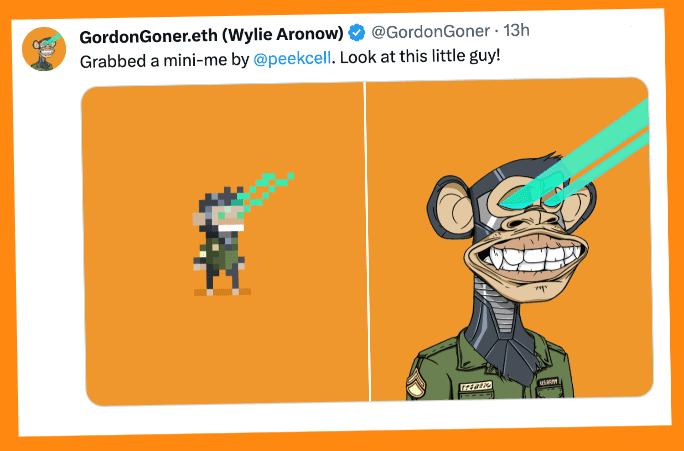
The project truly took off when Gordon Goner, co-founder of Bored Ape Yacht Club (BAYC), reached out to Peekcell, asking for a Mini version of his iconic Bored Ape. Once Gordon shared his Mini PFP, the floodgates opened, and demand for custom Minis skyrocketed within the BAYC community.

This led to the creation of Peekcell Mini Apes, a MadeByApes-licensed platform that allowed BAYC holders to order secure, wallet-protected Mini versions of their Apes. The success of this platform inspired Peekcell to take the next step and turn the Minis into something even bigger: a full-fledged collection called Based Minis.

What Are Based Minis?

Based Minis is a pixel art PFP project consisting of 6,005 unique Minis, each bursting with personality and charm. At the heart of the collection are 30 exclusive 1/1s, inspired by characters from Peekcell’s childhood and personal life. These unique pieces weave a deeply personal narrative into the collection, adding a layer of meaning that resonates with collectors.

What sets Based Minis apart is its celebration of creativity and community. The collection includes playful nods to other well-known NFT projects, embedding Easter eggs into the traits of the Minis as a tribute to the Web3 ecosystem. These references foster a sense of shared history and camaraderie among NFT collectors, making Based Minis not just a collection, but a cultural touchstone for the NFT community.

Why Based Minis Could Be a “Base Grail”

1. A Pure Art-First Approach

Based Minis doesn’t rely on elaborate roadmaps, staking mechanisms, or tokenomics to generate hype. Instead, the project focuses on pure art and good vibes, reminding us of the early days of NFTs when creativity and fun were the driving forces behind success. This approach has earned Based Minis comparisons to CryptoPunks and other iconic NFT collections that prioritize art over utility.

Peekcell’s pixel art style is instantly recognizable, blending nostalgia with modern Web3 culture. This timeless aesthetic positions Based Minis as a potential grail project that could remain relevant for years to come.

2. Deep Roots in Web3 Culture

From its connection to BAYC to its inclusion of Easter egg traits from other NFT collections, Based Minis embodies the spirit of Web3: collaboration and celebration of community. Peekcell’s thoughtful integration of NFT lore into the collection’s design creates a sense of belonging for holders, making it more than just an art project—it’s a love letter to the NFT community.

3. A Project That Unites Communities

In a fragmented NFT space, Based Minis serves as a unifying force. By referencing other projects and collaborating with artists across different styles, Based Minis fosters connections between diverse NFT communities. It invites collectors, artists, and enthusiasts to participate in a shared story, making it more than just a collection—it’s a movement.

4. The Power of Nostalgia and Charm

There’s something inherently joyful about Based Minis. The project taps into a universal love for pixel art, evoking feelings of nostalgia for retro games and simpler times. At the same time, the quirky, playful personalities of the Minis give them a modern edge, making them perfect for the digital-first world of NFTs.

The Lore: A Universe That’s Still Unfolding

Peekcell didn’t stop with Based Minis. Their creative journey also includes Peekcell Odyssey, a narrative-rich art project set in a futuristic city called Neo Tokyo. Within this world, the Minis reside on the outskirts, blending the whimsical charm of Based Minis with the sci-fi adventure of Peekcell Odyssey.

This interconnected storytelling adds depth to the Minis’ universe, inviting collectors to explore how these worlds collide and evolve. The result is a dynamic, ever-expanding project that rewards curiosity and engagement.

What Based Minis Represents for Web3

At its core, Based Minis is a celebration of art, fun, and connection. It represents a shift away from the heavy-handed focus on utility and speculation, reminding us that NFTs are, first and foremost, a medium for creativity.

In an increasingly utility-driven space, Based Minis stands as a beacon for those who value art for art’s sake. It encourages collectors to embrace the joy of digital art, while its playful spirit creates a safe, welcoming environment for artists and enthusiasts alike.

Final Thoughts: Why Based Minis Is More Than Just an NFT Collection

Based Minis by Peekcell is more than just pixel art—it’s a testament to the power of creativity, nostalgia, and community. By focusing on good vibes and artistic expression, this project has positioned itself as a potential grail collection for NFT enthusiasts.

As the journey of Based Minis unfolds, it’s clear that this isn’t just a fleeting moment in Web3—it’s the beginning of a cultural phenomenon that could redefine how we think about NFTs. Whether you’re an OG collector or new to the space, Based Minis offers something for everyone: art that makes you smile, a community that makes you feel welcome, and a story that invites you to play a part.

So stay Mini, stay cool, and never walk alone—this is just the beginning of something truly special.

TL;DR

Based Minis by Peekcell is a pixel art NFT collection of 6,005 quirky, charming characters that prioritize creativity, fun, and community over roadmaps and utility. Inspired by Web3 culture and personal storytelling, Based Minis could become a “base grail” in the NFT space. The collection unites communities, celebrates nostalgia, and fosters connections, making it more than just an art project—it’s a movement.


Source link

DavosWeb3 Roundtable To Shape The Future of Web3 Technology

0
DavosWeb3 Roundtable To Shape The Future of Web3 Technology


The much-anticipated DavosWeb3 Roundtable is set to be held on January 22, bringing together 100 of the brightest minds in Web3 to help shape the future of the industry.

Taking place in the heart of Davos, Switzerland, this premier gathering is a cauldron for visionary discussions, thought-provoking insights and stellar networking opportunities in the decentralised technology community.

At the event, leading blockchain figures will sign the Davos Declaration – a pledge and charter that sets the vision and direction for the future of the Web3 industry. This historic moment will highlight the shared vision of the Web3 community to foster innovation, inclusion, and sustainability.

Registration to attend the event is now open, with prospective attendees invited to get in touch with the DavosWeb3 team by completing the form on their website.

DavosWeb3 Roundtable - Davos Switzerland Source: Wikipedia

What is the DavosWeb3 Roundtable?

The DavosWeb3 Roundtable is a one-day Web3 industry meet-up, held on January 22, 2025 in Davos, Switzerland.

The event brings together the biggest names in the industry – alongside thought leaders, innovators and investors – to discuss the potential of decentralised technologies, and debate pressing topics such as scalability, interoperability, and the role of Web3 in reshaping economies across the globe.

“The Web3 revolution is here, and the DavosWeb3 Roundtable is where influential voices collaborate to chart its course,” said Ajeet Khurana, founding member of DavosWeb3. “This is not an event; it’s a movement.”

The DavosWeb3 Roundtable is powered by a laundry list of leading organisations in the blockchain industry. This includes blockchains such as Aptos, Internet Computer Protocol (ICP) and Quranium, infrastructure products such as Unstoppable Domains, OmniFlix and Paycio, platforms such as DroomDroom, Xade and Xai Games, and service providers such as Reflexical, Antier and the Kandola Network.

DavosWeb3 Roundtable - Founding Members
DavosWeb3 Roundtable - Founding Members Source: DavosWeb3

What will happen at the DavosWeb3 Roundtable?

The DavosWeb3 Roundtable will serve as a launchpad for initiatives that redefine the digital and economic landscapes.

This includes the signing of the Davos Declaration, establishing a shared vision for the future of Web3, and the reveal of a visionary whitepaper titled “Ushering a New Billion into the Global System: The Next Frontier”. This whitepaper – co-authored by founding members of DavosWeb3 – outlines actionable strategies to drive global adoption of Web3 technologies, and will be distributed to media outlets, universities, trade bodies and industry associations worldwide.

The event also presents rare opportunities to share the room with global investors, innovators, and decision-makers in the industry. DavosWeb3 Roundtable offers hallowed ground for informal meet-and-greets, structured networking sessions and more to forge meaningful connections and take Web3 forward.

Davos has long been synonymous with leadership and global collaboration – and the DavosWeb3 Roundtable will harness this spirit to unite, inspire and transform the future of Web3.


Source link

Best Crypto Exchanges in the USA for January 2025

0
Best Crypto Exchanges in the USA for January 2025


Choosing the best crypto exchange in the USA can be challenging, especially with so many platforms competing for users. In 2025, the crypto world faces evolving regulations and growing institutional involvement, making finding an exchange that balances security, compliance, and user experience increasingly crucial. Whether you are new to crypto trading or an experienced trader looking for advanced features, understanding each platform’s strengths will help you zero in on the perfect match.

In this important exploration, we’ll guide you through the details of each of the top crypto exchanges. We’re going to cover their fees and features, as well as look at how American crypto regulations shape the trading environment. By the end, you will have the insights needed to navigate the vast crypto marketplace confidently.

List of Best Cryptocurrency Exchanges in USA 

Binance – Best Crypto Exchange for High Trading Volumes
Gemini – Best for Strong Regulatory Compliance
Crypto.com – Best Exchange for Comprehensive Ecosystem
Kraken –Best Platform for Advanced Trading Tools
Coinbase – Best Crypto Exchange for Beginners
eToro – Best Platform for Social Trading Features
Robinhood – Best Exchange for Zero-Commission Trades

Comparison of Best US Crypto Trading Platforms

Platform
Trading Fees
Coin Range
Key Features

Binance
Maker/taker starts at ~0.10% for spot trades, dropping with higher volumes; additional discounts if paying fees in BNB.
Extensive for global users, somewhat reduced for Binance.US
Known for large daily volume and advanced order types, though U.S.-specific regulations limit certain features compared to the international version

Gemini
Basic trades can be ~1.49%. ActiveTrader tiers up to ~0.35% maker/taker
Moderate; includes mainstream and mid-cap coins
Emphasizes robust regulatory compliance and insurance. Offers both a simple interface and an advanced trading panel for experienced users

Crypto.com
Begins near 0.40% maker/taker for smaller traders, discounted with CRO staking
Wide selection including popular altcoins and DeFi tokens
Multi-service ecosystem covering trading, staking, a Visa card, and various DeFi functions, all accessible via a convenient mobile app

Kraken
Tiered maker-taker model from ~0.26% at lowest volumes, dropping with higher trading levels
Large, including margin and futures markets
Long-standing U.S.-based exchange with strong security credentials and optional advanced features such as margin trading and futures

Coinbase
Simple purchases often reach ~1.49%. Advanced Trade uses a maker-taker model up to ~0.60%
Medium range but well-researched tokens
Publicly traded company known for ease of use, insured custody, and thorough regulatory compliance. Often chosen by first-time crypto buyers

eToro
Zero “commission” marketing, though typically ~1% spreads baked into the buy/sell price
Decent offering of major cryptos, fewer low-cap assets
Social trading focus: users can replicate trades from top investors. Includes non-crypto assets like stocks and ETFs for a broader investing experience

Robinhood
No direct trading commissions, but trades include a spread that can be less transparent
Limited to a handful of major coins
Aimed at casual users seeking quick, small purchases. Simple mobile interface, though advanced order types and altcoin selection are quite restricted

7 Best US Crypto Exchanges in 2025 – Detailed Review

1. Binance – Best Crypto Exchange for High Trading Volumes

Binance is a global leader among cryptocurrency exchanges, boasting high trading volumes and a vast selection of crypto assets. The U.S. variant, Binance.US, operates under separate regulations but still offers numerous trading pairs for American users.

One of Binance’s main attractions is its tiered fee structure, which rewards traders with reduced fees as they achieve higher trading volumes. This system appeals to experienced or high-frequency traders seeking a cost-efficient environment. The exchange integrates advanced charting tools, spot trading, and limited access to margin and futures for qualifying users. Binance’s platform supports a wide range of order types, including stop-limit and OCO, or, “one cancels the other”.

When it comes to security measures, Binance enforces two-factor authentication and stores a significant portion of user funds in offline cold storage. Though Binance has faced challenges around licensing in certain jurisdictions, it remains a popular choice for crypto traders who value low fees, a large coin selection, and active markets. By focusing on liquidity and competitive maker-taker fees, Binance offers a balanced platform for both casual users and seasoned investors interested in robust market depth.

binance-logo-2

2. Gemini – Best for Strong Regulatory Compliance

Gemini

Founded by Cameron and Tyler Winklevoss, Gemini is recognized for stringent compliance with U.S. regulations and a commitment to robust security. It positions itself as a go-to choice for users who prioritize a trustworthy environment where user assets benefit from a blend of offline storage and insurance coverage. Gemini also implements strict identity verification steps, ensuring compliance with anti money laundering laws.

The exchange provides a straightforward interface suitable for new traders. However, it also caters to advanced needs through its ActiveTrader platform, which includes detailed charting, multiple order types, and competitive trading fees if you meet certain volume thresholds.

Gemini supports various payment methods, including wire transfers and linked bank accounts, making fiat onboarding simpler. The coin selection is not as expansive as some competitors but covers many mainstream and mid-cap tokens. Gemini Earn, a feature within the ecosystem, allows users to lend digital assets in exchange for interest payments, adding an extra incentive for those who wish to hold rather than trade frequently.

Fees may be on the higher side for low-volume trades, so frequent traders should evaluate how these costs compare to other platforms. Overall, Gemini appeals to those valuing regulation, security, and an institutional-grade experience over the widest array of altcoins.

3. Crypto.com – Best Exchange for Comprehensive Ecosystem

Crypto.com

Crypto.com aims to be an all-in-one portal for crypto enthusiasts by offering trading, earning, and spending services under a single umbrella. Its user-friendly mobile app provides straightforward fiat on-ramps for U.S. consumers and allows quick purchases of popular coins.

In addition to spot trading, the platform features credit and debit card integration, making it easy to deposit and withdraw funds. Users seeking more advanced features can access Crypto.com Exchange, which offers various order types and competitive fees tied to the platform’s native CRO token and Cronos network.

One notable advantage is the Crypto.com Visa Card, a prepaid card that rewards spending in digital assets, effectively bridging everyday purchases with crypto holdings. The exchange also includes a DeFi wallet for users interested in decentralized finance, letting them stake or farm tokens directly from the app.

Crypto.com’s fee structure can vary depending on trading volume and CRO token staked. High-volume traders or those with substantial CRO staked enjoy lower maker-taker fees. The brand’s substantial marketing campaigns, including sports sponsorships, highlight its desire to serve mainstream audiences, balancing ease of use with diverse crypto features.

crypto.com

4. Kraken – Best Platform for Advanced Trading Tools

Kraken

Kraken, founded in 2011, is one of the oldest U.S.-based cryptocurrency exchanges. Over the years, it has built a reputation for strong security measures, such as offline cold storage and regular proof-of-reserve audits that demonstrate its ability to cover user deposits.

Thanks to a versatile interface, Kraken appeals to both novice and advanced traders. Beginners can use the simplified Kraken dashboard, while experienced traders can shift to Kraken Pro for advanced charting, margin trading, and futures contracts. It also supports a wide range of digital assets, from major coins to more niche tokens, giving users broad exposure to different segments of the crypto ecosystem.

Kraken enforces two-factor authentication to safeguard accounts and also encourages the use of a unique Master Key and Global Settings Lock to protect user configurations. This multi-layered security approach provides added confidence in safeguarding funds.

Kraken’s trading fees follow a tiered maker-taker model, where high-volume participants enjoy lower rates. The platform also distinguishes itself by offering spot trading pairs in several fiat currencies beyond USD.

Kraken

5. Coinbase – Best Crypto Exchange for Beginners

Coinbase

Coinbase is one of the most recognized names in the crypto space, famed for guiding millions of newcomers through their first Bitcoin purchase. Its flagship interface offers effortless usability, featuring clear prompts and a streamlined layout designed to minimize confusion. Users can link a bank account or credit card for quick and simple transactions.

On the other hand, traders seeking more dynamic order types can switch to Coinbase Advanced Trade, which unlocks limit, stop, and margin features in a separate interface.

Because Coinbase is a publicly traded company, it maintains a high level of transparency. The platform deploys offline storage for the bulk of user funds and insures some portion against cybersecurity breaches. Coinbase also takes pride in keeping a smaller set of approved tokens, each undergoing thorough legal and security vetting. This approach helps mitigate user confusion but may limit options for those interested in emerging altcoins.

Fees can be a drawback, particularly for smaller trades or credit card purchases. Nevertheless, the brand’s reputation for strong compliance and dependable functionality stands out in an environment where regulatory oversight intensifies yearly. Coinbase is well-suited for newcomers who value simplicity, an insured custody model, and the peace of mind that comes from working with a large, publicly accountable entity.

coinbase

6. eToro – Best Platform for Social Trading Features

eToro

eToro combines crypto trading with social features that let users mimic the moves of seasoned traders. This “copy trading” approach has proven popular among newcomers, who can observe top-ranked investor portfolios and replicate their strategies in real-time. eToro also offers a user-friendly dashboard for direct crypto purchases, employing a quick-swipe interface that feels familiar to those with prior experience in online stock trading.

The platform’s main focus historically revolved around conventional asset classes like stocks and ETFs, but it has broadened its offerings to include a decent selection of digital assets. While not as extensive as Binance’s roster, eToro’s crypto list covers well-known coins such as Bitcoin, Ethereum, and Cardano. Users can fund their accounts with USD via wire, ACH transfer, or credit card, although transaction fees vary by method.

eToro adheres to U.S. regulatory requirements by providing identity verification and ensuring compliance with relevant guidelines. The social trading element sets it apart, fostering community-driven insights that can shorten a beginner’s learning curve.

That said, the copy trading feature is not risk-free; novices can still face losses if the “expert” they follow encounters sudden market downturns. In sum, eToro excels in bridging standard trading methods with a collaborative crypto environment.

eToro

7. Robinhood – Best Exchange for Zero-Commission Trades

Robinhood

Robinhood initially gained fame by offering zero-commission stock trades, a feature that extended to cryptocurrencies. This pricing model appeals to hobbyists who aim to make small, straightforward buys in major assets like Bitcoin or Ethereum without piling up fees.

The Robinhood mobile app focuses on simplicity, presenting a clean interface that conceals much of the complexity of crypto trading. Users can link a bank account for quick deposits and withdrawals, eliminating the need to manage separate wallets or complicated deposit addresses. Robinhood’s wallet functionality, once absent, has gradually improved, though it may still lag behind specialized exchanges in terms of advanced security measures or in-depth custodial options.

Robinhood does comply with U.S. regulations, requiring full know-your-customer verification before users can trade. While its user base appreciates the zero-commission structure, the spread on trades can be less transparent than a standard maker-taker fee schedule. When it comes down to it, Robinhood is convenient for casual buyers stepping into crypto for the first time, though power users often gravitate to more feature-rich platforms for serious trading endeavors.

How to Choose a Crypto Exchange for Americans

Finding the best crypto exchange in USA can feel overwhelming, but focusing on a few core factors will narrow down your options.

Payment Methods

Check whether a platform supports the payment method you prefer, such as bank transfers, debit or credit cards, and third-party services like PayPal. Some exchanges only accept wire transfers, while others provide instant ACH transactions. A convenient on-ramp should also include quick settlement times and minimal transaction fees, letting you move from USD to crypto and back again, without unnecessary friction.

Security

Look for robust security features like two-factor authentication (2FA), cold storage for user assets, and auditing or proof of reserves. Avoid platforms with a history of major security breaches.

Also, pay attention to whether the exchange provides insurance coverage for custodial wallets. Since you trust the exchange with your funds, strong security protocols are vital for protecting both accounts and crypto holdings.

Supported Cryptocurrencies

If you plan to trade a particular altcoin, ensure it is available on the platform. Some exchanges focus on mainstream options such as Bitcoin, Ethereum, and stablecoins, whereas others cater to a broader market including DeFi tokens or smaller-cap projects. Choose based on your crypto interests and trading goals.

Trading Fees

Fees vary widely across platforms. Maker-taker schedules often reward higher-volume traders with lower rates, while flat-fee structures may benefit casual users. Some exchanges offer discounts if you pay fees in their native token.

Always review deposit, withdrawal, and trading charges. Even if an exchange advertises zero commission, hidden spreads might still affect the final purchase price. Balancing low fees with reliable service is key to retaining more of your profits.

Regulatory Compliance

U.S.-based platforms must comply with federal and state regulations, including anti-money laundering and know-your-customer guidelines. This means you will undergo identity verification before starting to trade.

Check if the exchange holds relevant licenses, such as BitLicense in New York, to ensure it can operate in your jurisdiction. Choosing a compliant exchange helps protect you from potential legal issues and fosters a safer trading environment.

Ease of Use

An intuitive interface can be a deciding factor, especially for newcomers. See whether the platform offers a simple dashboard or advanced charting tools for more experienced traders. Review how quickly you can navigate order placements and track your balance. Exchanges with user-friendly apps often streamline notifications, price alerts, and deposit tracking, minimizing guesswork.

As your skills grow, you may want an exchange that also supports more sophisticated features, so aim for one that can accommodate your evolving needs.

Different Types of Crypto Exchanges in the USA

Centralized Exchanges (CEX)

Centralized exchanges are run by a company acting as a middleman between buyers and sellers. These platforms typically require users to create an account, complete identity verification, and keep funds in the exchange’s custody. CEXs often offer robust liquidity, quick execution, and user-friendly dashboards, making them popular among both beginners and experienced traders.

However, user funds are exposed to risks if the platform experiences security breaches or mismanages assets. Still, many major centralized exchanges hold licenses or registrations that adhere to U.S. regulations, providing reassurance that they operate legally and follow established compliance protocols.

Decentralized Exchanges (DEX)

Decentralized exchanges remove the need for a central authority to match orders or hold user funds. Instead, they rely on smart contracts that facilitate peer-to-peer trading. This structure gives you control over your private keys and reduces the likelihood of large-scale hacks, although transaction times and fees may depend on network congestion.

DEXs often enable trading in tokens that might not appear on centralized platforms, appealing to niche markets. DEX liquidity can also be less consistent, which can result in bigger spreads for certain low-volume tokens.

Futures Exchanges

Futures exchanges let users trade contracts that speculate on an asset’s future price rather than buying the asset outright. By using leverage, traders can amplify potential gains or losses, increasing both opportunity and risk. Popular futures platforms sometimes offer features like partial liquidation and cross-margin to manage sudden price movements. These exchanges typically require users to lock in a margin of stablecoins or other crypto for collateral.

Margin Trading Exchanges

Margin trading involves borrowing funds from the exchange to increase your buying power, allowing you to open larger positions than your original balance would permit. Many top centralized exchanges in the U.S. offer margin trading for select coins, subject to regulatory constraints and user eligibility. Interest rates apply to borrowed funds, so weigh potential profits against these costs.

Derivatives Exchanges

Derivatives exchanges expand beyond futures, offering products like options and perpetual swaps. With options, traders can buy or sell the right (but not the obligation) to trade specific amounts of cryptocurrency at set prices. Perpetual swaps function similarly to futures without an expiration date, relying on a funding rate mechanism. Yet high leverage and complex contract terms mean even small market fluctuations can result in significant losses.

How to Sign up for a Cryptocurrency Exchange Account  in the U.S.

Research and choose: Pick an exchange based on fees, security, available coins, and compliance with your state’s regulations.
Register: Visit the platform’s website or mobile app, then select the option to create an account.
Undergo identity verification: Provide personal details, upload documents, and wait for approval to meet KYC guidelines.
Secure your account: Enable two-factor authentication and use a strong password.
Connect a payment method: Link your bank account or card for deposits and withdrawals.Deposit funds: Transfer USD into your account.
Start trading: Explore the interface, place orders, and track your portfolio.

American Crypto Regulations

Regulations in the United States play a major role in shaping how crypto exchanges operate and how users buy, sell, and hold digital assets. Authorities like the Securities and Exchange Commission (SEC) and the Commodity Futures Trading Commission (CFTC) oversee different segments of the market, each focusing on its own regulatory scope.

State-by-state rules also matter. For instance, New York’s BitLicense is a well-known example of strict oversight, requiring detailed disclosures and compliance measures for any company offering cryptocurrency services within the state’s borders. As a result, certain exchanges restrict or modify features for New York residents if they choose not to fulfill BitLicense prerequisites.

This year, lawmakers and regulators will be working toward clearer frameworks that differentiate between tokens considered securities and those viewed as commodities. The classification can dictate whether a project must register with the SEC or whether the CFTC oversees it as a commodity market.

Beyond licensing, there is also an emphasis on stablecoin regulation, given that many U.S.-based traders use stablecoins as a substitute for traditional fiat deposits. Proposed guidelines aim to require stablecoin issuers to hold reserves in high-quality, liquid assets, providing more confidence for consumers using stablecoins for trading or transfers.

Conclusion

Finding the best US crypto exchange comes down to matching personal needs with each platform’s strengths. Some prioritize minimal fees or advanced trading options, while others highlight top-notch security and regulatory compliance.

Always weigh the pros and cons, from fee structures to the range of supported assets and deposit options. By keeping an eye on evolving regulations and comparing the prominent players, you can pick a reputable exchange that supports your goals in the crypto market.

FAQs

What are the safest crypto exchanges for beginners?

An exchange with robust security protocol, simple interfaces, and strong compliance is often best for newcomers. Many recommend Coinbase or Gemini for their user-friendly platforms, offline cold storage, and solid regulatory backgrounds that help ensure safer, more reliable trading conditions.

Which Bitcoin wallet is the best in the USA?

There are a ton of Bitcoin wallets out there, so it depends on what you’re looking for. For reliability, hardware wallets like Ledger or Trezor offer offline storage and better defense against cyber threats. However, many American users also use Coinbase Wallet or MetaMask for everyday convenience, balancing accessibility with decent built-in security features.

Which crypto exchange has no fees?

Robinhood famously charges zero direct trading commissions, though it incorporates a spread into buy and sell prices. eToro advertises commission-free crypto trades but similarly, structures spread into transaction costs. Always look at spreads or hidden fees, as true zero-fee trading is rare.

Can You Buy Bitcoin and Other Altcoins With USD Directly?

Yes, most U.S.-based exchanges let you deposit dollars through ACH transfers, debit cards, or wire transfers and then buy Bitcoin, Ethereum, and other altcoins instantly. Check which payment methods the exchange supports and any extra fees that might apply.

Which crypto exchanges support USD?

Almost every major U.S. platform supports USD deposits, including Binance.US, Coinbase, Gemini, Kraken, and others. Each one offers various payment channels like bank transfers, credit cards, or debit cards, although availability may vary by state or local regulations.

Do US crypto exchanges offer staking or earning opportunities?

Yes, many have staking or yield programs. Coinbase and Binance.US let users lock coins to earn rewards, while Crypto.com provides interest-bearing solutions. Availability depends on local rules, so some states may have limited access to these features.

Are there any crypto exchanges in the USA that support tax reporting?

Several, including Coinbase, Gemini, and Kraken, give downloadable transaction histories or direct integrations with tax software. These tools simplify generating capital gains or losses reports, easing the filing of accurate tax returns in line with U.S. regulations.

Can I use a crypto exchange in the USA without completing KYC verification?

U.S. law generally requires identity verification to comply with anti-money laundering standards. Some decentralized exchanges do not demand full KYC, but mainstream centralized platforms ask for personal details. Operating anonymously on big U.S. exchanges is usually not permitted.



Source link

Ronin Opens $10M in Grants: A Chance to Build the Next Big Blockchain App

0
Ronin Opens M in Grants: A Chance to Build the Next Big Blockchain App


Whether you’ve been coding smart contracts for ages or you’re just poking around the blockchain world for the first time, Ronin’s new $10 million Ecosystem Grants program offers opportunities. With grants ranging from $20,000 to $300,000 in RON tokens, Ronin is backing teams of all shapes and sizes, giving them the resources they need to bring their most creative ideas to life on the platform.

The Power of Ronin Ecosystem Grants

Ronin is a blockchain created by Sky Mavis, the team behind Axie Infinity, which is one of the most popular Web3 games.

Ronin’s new grants initiative is part of a broader effort called Operation Leviosa. The mission is to boost the Ronin network by inviting developers to collaborate and create innovative solutions. In simple terms, the grants provide money and resources so new projects can get off the ground faster.

That could mean funding to cover development costs, technical audits, or deployment expenses—all essential for building strong, user-friendly applications (sometimes called “dApps,” short for decentralized applications).

In addition to the funding itself, recipients gain access to millions of potential users and viewers through official Ronin channels. These channels can put your project in front of players from games like Pixels and Axie Infinity, as well as a broader audience curious about the latest developments in blockchain gaming and decentralized finance (often shortened to DeFi).

Source Ronin

Eligibility, Funding, and Key Details

The Ronin Ecosystem Grants program accommodates a wide range of projects, from early prototypes to established products looking to expand. If you solve real problems—such as making user onboarding smoother or introducing a cool new way to use digital assets—there’s a good chance you’ll fit the bill.

Grants and Milestone Unlocks

One standout feature is the milestone-based unlocking system. Rather than handing out a lump sum, Ronin provides funding in stages. This keeps the project moving in the right direction and ensures everyone’s goals stay aligned over the long haul. Successful applicants could receive anywhere up to $300,000, depending on the project’s complexity and scope.

Waypoint Gas Grant

If the main focus is on improving the user experience (or UX for short) and streamlining on-chain activity, you might consider the Waypoint Gas Grant, which offers $20,000 in RON. This “gas” simply refers to blockchain transaction fees. The Waypoint grant helps cover these fees, making your app feel as smooth as any traditional website and lowering barriers for newcomers.

Builder Benefits and Application Steps

Beyond financial support, each grantee enjoys a suite of perks:

A spotlight in the official Ronin Builders Discord, where you can trade insights with fellow developers, venture capitalists, and advisors.

Promotion on Ronin’s website, wallet, and social channels to maximize your visibility.

Possibility of integrating with other big-name titles and protocols on the platform.

Applying is straightforward: review the grants, fill out a short form, and then wait three to four weeks for a decision. There are no strict deadlines, so applicants can submit whenever they’re ready.

How Grants Like This Benefit Web3

Web3 is a term that describes the next version of the internet—one where users have more control over their data and digital transactions. By supporting pioneering ideas, grants like Ronin’s Ecosystem Grants drive this vision forward. Here’s how:

Encouraging Innovation: Funding relieves some of the financial pressure on developers, allowing them to focus on big-picture thinking. More creativity typically leads to better tools, apps, and games.

Growing the Community: Every time a new project goes live on Ronin, it naturally draws in curious users, talented developers, and dedicated supporters.

Spreading Blockchain Adoption: By offering grants that help refine user experience and reduce costs, Ronin is making blockchain technology more accessible. The simpler it is to jump on board, the more likely mainstream users will join Web3 platforms.

Ultimately, the Ronin Ecosystem Grants represent an opportunity for both emerging and established teams. Whether keen on building a new consumer dApp, a DeFi platform, or the next big Web3 game, this program could be a springboard. So, if you’re ready to put your idea into action, explore Ronin’s grants and start your application today—you just might shape the future of blockchain as we know it.

Editor’s note: Written with the assistance of AI – Edited and fact-checked by Jason Newey.

Jason Newey

Jason Newey is a seasoned journalist specializing in NFTs, the Metaverse, and Web3 technologies. With a background in digital media and blockchain technology, he adeptly translates complex concepts into engaging, informative articles.

View all posts


Source link

Italy’s Largest Bank Intesa Sanpaolo Buys $1M in Bitcoin to Test Crypto Market – Cryptoflies News

0
Italy’s Largest Bank Intesa Sanpaolo Buys M in Bitcoin to Test Crypto Market – Cryptoflies News


2

Intesa Sanpaolo, Italy’s largest bank by total assets, has made its first move into the cryptocurrency market by purchasing $1 million worth of Bitcoin. 

According to Reuters, the transaction for 11 BTC was completed on Monday, January 13.  

CEO Carlo Messina described the purchase as “a test.” He explained that while the bank does not aim to become “a Bitcoin player,” it recognizes the need to understand the market. 

Messina noted, “The bank has very sophisticated clients that may ask for this kind of investment, and you can’t serve them unless you have a presence in the market.”  

This move follows the bank’s steps in 2023 to establish a proprietary trading desk for digital assets. By 2024, Intesa Sanpaolo had begun handling spot cryptocurrency trades.

You Might Be Interested In

Bitcoin’s price has been drawing significant attention from investors in recent weeks. Last month, it reached a new all-time high, surpassing $100,000 for the first time. 

This milestone followed nearly two weeks of trading just below $98,000, hinting at a potential plateau before the market gained further momentum.  

Since the U.S. elections, Bitcoin’s value has climbed by more than 36%, rising from around $75,600. 

Analysts predict the cryptocurrency will continue to break records. Deepwater Asset Management’s managing partner Gene Munster recently stated that favorable market and regulatory conditions could drive Bitcoin to even greater heights in 2025, despite possible pullbacks.  


Source link

6 Challenges Facing NFT Adoption and How to Overcome Them

0
6 Challenges Facing NFT Adoption and How to Overcome Them


NFT trading volumes have dropped by 19% in 2024, highlighting significant challenges faced by the NFT market. Despite the initial buzz, many people, creators, and businesses are still struggling to embrace NFTs fully. Why? Because a mix of regulatory questions, complicated user experiences, high fees, and environmental concerns are making even the most enthusiastic supporters step back.

This article covers the biggest obstacles to NFT adoption and how to overcome them. Whether you’re brand new to NFTs or already in the community, you’ll find something useful.

Understanding NFTs and Their Potential

NFTs are digital assets—sometimes images, sometimes videos, sometimes items in a game—that are stored on a blockchain. Think of a blockchain like a giant digital ledger, similar to a spreadsheet that anyone can view but nobody can secretly tamper with. Because each token is unique (or “non-fungible”), you can prove you own it in a transparent way. This ownership feature has attracted artists, gamers, and big brands, all seeking new ways to engage people online.

A Brief History

NFTs became popular around 2017 with projects like CryptoPunks, which offered small pixelated characters. Soon after, digital art marketplaces such as OpenSea started popping up, and NFTs grabbed headlines as pieces of virtual art sold for millions of dollars.

Why NFTs Matter

Digital Collectibles: Many NFTs are collectible items that allow fans to “own” a unique piece of digital content.

Tokenization: Beyond art, NFTs can represent ownership of real-world items—like a fraction of a painting or even property.

Integration with Decentralized Finance (DeFi): NFTs can be used as collateral in loans, earn staking rewards, or unlock specialized financial products in the crypto adoption ecosystem.

Key Challenges Facing NFT Adoption

1. Regulatory Uncertainty

Different countries have different approaches to crypto, so it’s confusing for businesses and individuals who want to launch or trade NFTs. Some governments treat NFTs as securities, others haven’t made any official rules at all. This lack of clarity is a compliance risk for artists, platforms and collectors in the NFT space.

Simple Explanation:

Regulation is like traffic rules for the crypto world, but they’re not the same everywhere. People worry about accidentally breaking laws because they don’t know what’s allowed or not.

2. Scalability and High Transaction Fees

For NFTs, most activity still happens on the Ethereum blockchain. When lots of people use Ethereum at the same time, the network becomes congested, causing gas fees (transaction costs) to skyrocket. High fees deter newcomers who just want to experiment.

Simple Explanation:

Imagine buying a cup of coffee for $5, but having to pay a $20 service fee. That’s how NFT fees can feel on busy blockchains.

3. Environmental Concerns

Many NFT critics point out that Proof-of-Work blockchains—where computers race to solve puzzles to add new transactions—use large amounts of electricity. This process has raised questions about sustainability and the overall carbon footprint of digital assets.

Simple Explanation:

Think of a city with all the lights on 24/7, even when nobody’s home. That’s the image some people have of older blockchain systems, which can be very energy-intensive.

4. Complex User Experience

Setting up a crypto wallet, managing private keys (long passwords that prove you own your crypto), and figuring out how to bid or list an NFT on a marketplace can be confusing. For those not familiar with blockchain technology, there’s a steep learning curve.

Simple Explanation:

It’s like logging into your email, except you have to do it with secret codes, you can’t lose, or you’ll lose access forever—and no one can reset it for you.

5. Market Volatility and Speculation

One day a digital collectible might be worth $100 and a week later it’s $10,000—or $10. These wild swings scare off people who want stable investments. And there’s always the news of “NFT bubbles” where speculation overshadows actual use, creating a boom-and-bust cycle.

Simple Explanation:

Prices can go up and down fast. It’s like a roller coaster with no seatbelts, which can be really scary for first-time buyers.

6. Limited Interoperability

Right now, it’s hard to move NFTs from one blockchain to another. Different blockchains are like separate islands; it’s hard to exchange and use NFTs across multiple platforms. Lack of standardization means you’re often stuck on one network or marketplace.

Simple Explanation:

Think of it like having a smartphone that can’t send messages to users on other phone networks. Everybody ends up isolated.

How to Overcome NFT Adoption Challenges

1. Clearer Regulatory Frameworks

Government-Industry Collaboration: Policymakers should work with blockchain devs and crypto adoption people to make fair rules.

Best Practices: Platforms can give creators guidelines on taxes, royalties, and intellectual property so they can comply with local laws.

that will copy more people.

Simple Explanation:

If regulators and companies communicate, they can write clear rules. That way, everyone can play by the same rulebook with fewer surprises.

2. Scalability Solutions and Lower Fees

Layer 2 Solutions: Technologies like Polygon and Arbitrum process transactions “off-chain,” which eases congestion on Ethereum and lowers costs.

Alternative Blockchains: Newer networks like Solana or Tezos use different designs that handle more transactions at a fraction of Ethereum’s fees.

Simple Explanation:

Imagine building a faster side road so traffic doesn’t pile up on the main highway. Layer 2 solutions help clear the jam, making it cheaper to use NFTs.

3. Eco-Friendly Blockchain Innovations

Proof-of-Stake (PoS): Newer or updated blockchains validate transactions based on how many coins people hold, cutting down on electricity use.

Carbon Offsets: NFT creators and platforms can fund environmental projects—like planting trees—to balance out emissions.

Simple Explanation:

PoS blockchains work like a less energy-hungry machine. And if they still use some energy, funding green projects can help repay Mother Nature.

4. User-Centric Platforms and Education

Simplified Onboarding: Wallets and marketplaces should have clear, friendly instructions—like a tutorial for a video game.

Community Resources: Publishers can create articles, step-by-step videos, and Q&A forums to teach beginners the basics.

Simple Explanation:

When you buy something online, you expect a smooth process. NFT sites that copy this simplicity will attract more people.

5. Promoting Long-Term Value Over Speculation

Use Cases Beyond Art: NFTs can represent real-world items—like concert tickets or membership to a club—to make them more than just digital collectibles.

Responsible Trading: Projects should focus on real benefits (like exclusive content or real utility) rather than price-pump with hype.

Simple Explanation:

Instead of chasing quick money, NFTs should solve real problems or offer lasting perks, so people stay interested even when there’s no viral buzz.

6. Driving Interoperability Through Standards

Cross-Chain Bridges: These allow you to transfer NFTs between different blockchains, more access.

Collaboration Initiatives: Groups of devs can agree on technical standards (like ERC-721 or ERC-1155) so NFTs work everywhere.

Simple Explanation:

Building bridges between islands lets everyone travel freely, more trade and talk. The same for NFTs between different blockchains.

Case Studies and Success Stories

NBA Top Shot: This popular platform overcame early technical issues by creating a more user-friendly purchase process. Fans could buy digital basketball highlights almost as easily as shopping on a traditional website.

Tezos-based Art Platforms: Several artists moved to Tezos to avoid high Ethereum fees and highlight the chain’s eco-friendliness, proving that cheaper, greener networks can succeed.

These examples show that adapting to user needs—be it lower fees, simpler interfaces, or focusing on specific communities—can spark real growth, even when the market dips.

Future Outlook on NFT Adoption

Despite a 19% drop in 2024 NFT trading volumes, innovation hasn’t slowed. New features, smarter contracts (programs that run automatically when certain conditions are met), and deeper DeFi integration are all being tested. We’re also likely to see more big-name brands experimenting with digital collectibles, driving further interest in the NFT ecosystem.

But there are still roadblocks. Government policies can change fast and market fluctuations can spook new users. But NFTs with real utility—like in gaming, event ticketing and loyalty programs—will still attract new people.

Key Takeaways

NFTs may have dropped in 2024 but they’re not done. The problems—regulatory uncertainty to environmental impact—are big but can be solved with collaboration, tech and user experience. Regulations will become clearer over time, as governments and industry leaders continue to communicate.

Scalability will improve with advanced solutions like Layer 2 protocols, making fees more affordable.

Environmentally friendly blockchains and carbon offset projects can address sustainability concerns.

User education is vital for ushering in a new wave of collectors and creators.

Long-term value over hype can ensure NFTs remain relevant—even during slowdowns.

Interoperability will allow NFTs to function across multiple networks, increasing their utility.

By focusing on practical use cases and genuine innovation, the NFT space will likely overcome its growing pains. For anyone considering NFTs—be it a curious beginner, a dedicated creator, or a seasoned investor—there has never been a better time to learn, adapt, and help shape the future of digital assets.

Editor’s note: This article was written with the assistance of AI. Edited and fact-checked by Owen Skelton.

Owen Skelton

Owen Skelton is an experienced journalist and editor with a passion for delivering insightful and engaging content. As Editor-in-Chief, he leads a talented team of writers and editors to create compelling stories that inform and inspire.

View all posts


Source link

NFT Infrastructure: The Tech That Makes Them Tick

0
NFT Infrastructure: The Tech That Makes Them Tick


Have you ever wondered how digital collectibles can hold real value—or why a sports NFT might suddenly change based on live scores? That’s all thanks to the technology powering NFTs behind the scenes. While headlines often focus on the front-end excitement of high-priced sales, the real magic happens under the hood. In this article, we’ll explore the hidden layers of NFT infrastructure—oracles, wallets, and middleware—that keep NFTs secure, functional, and innovative.

NFTs and the Revolution of Digital Ownership

NFTs are unique digital assets that can represent ownership of just about anything—art, music, virtual real estate, real-life real estate, and even in-game assets. Unlike cryptocurrencies, each NFT has its own distinct value and cannot be swapped on a one-to-one basis with another token. This uniqueness is fueling a digital ownership revolution, letting creators and collectors buy, sell, and verify digital and physical items as never before.

Importance of NFT Infrastructure

Without strong infrastructure, NFTs would struggle to maintain their uniqueness and value. Think of NFT infrastructure as the plumbing system in a house. It might not be glamorous, but if something goes wrong, everything else falls apart. Whether you’re minting a new piece of art or transferring a collectible to another blockchain, reliable underpinnings keep your digital assets safe and accessible.

What Is NFT Infrastructure?

NFT infrastructure is the set of technological tools and services that allow NFTs to run across various blockchains. It includes:

Oracles: For feeding accurate, real-world data (like market prices or sports results) into the blockchain. They act like bridges, pulling in data from outside sources (such as live sports results or crypto price feeds) and bringing it on-chain.

Wallets: For storing and managing NFTs. They are digital or physical vaults where you keep your NFTs, similar to the way you might store cash in a physical wallet—except these are designed for digital assets.

Middleware: For connecting different parts of the blockchain ecosystem so that everything works together. Middleware makes sure everything—from smart contracts to user interfaces—communicates without friction, so you don’t need to worry about the backend complexities.

Oracles: Real-Time Data Feeds for NFTs

Why Oracles Matter in the NFT Landscape

Data Integrity

NFTs can’t exist in a vacuum. Many of them, especially dynamic NFTs, rely on changing data to remain relevant and valuable. For example, a digital trading card of a basketball player might update its image or stats based on real-world game performance. Oracles confirm that the data fed into the NFT is authentic and tamper-proof, so no one can manipulate stats or pricing behind the scenes.

Use Cases

Dynamic Art NFTs: Artists can link their work to real-world events, such as the weather or stock market fluctuations. When the data changes, the NFT’s visual or audio elements update in real time.

DeFi-Based NFTs: Financial NFTs might need to tap into current crypto prices or interest rates, both of which come from external sources. Oracles ensure this data is correct and delivered right away.

Leading Oracle Solutions

Chainlink

Overview: A decentralized oracle network designed to provide secure, tamper-proof data for complex smart contracts on various blockchains like Ethereum, BNB Chain, and Polygon.

Notable Features:

Highly reliable, thanks to a large network of node operators.

Chainlink VRF (Verifiable Random Function) brings random, yet provably fair, elements to NFTs (for example, deciding who gets rare items in a mint).

NFT Relevance: Many projects use Chainlink to ensure randomness in NFT drops or to update NFTs with real-world data.

Band Protocol

Overview: A cross-chain data oracle platform that connects real-world data sources and APIs to smart contracts.

Notable Features:

Flexible options for projects that need custom data.

Integrations across multiple blockchains, broadening its utility.

NFT Relevance: Great for dynamic NFT updates—for instance, if you have an NFT that changes its appearance based on daily temperature readings.

DIA (Decentralized Information Asset)

Overview: DIA is an open-source data and oracle platform designed for the DeFi ecosystem.

Notable Features:

Transparent, verifiable data feeds that can be audited by anyone.

Straightforward integration for teams needing up-to-date info.

NFT Relevance: Perfect for real-time data integration, enabling NFTs to reflect something happening right now—like your favorite gamer’s tournament progress.

NFT Wallets: The Gateway to Secure Ownership

Security and Custody

When you own an NFT, you typically control it through a private key—like a secret code that proves you’re the owner. Some wallets hold this private key for you (custodial wallets), while others let you keep complete control (non-custodial wallets). Choosing the right wallet depends on your comfort with managing security yourself or trusting a third-party service.

User Experience and Accessibility

NFT Wallets are like your personal hubs for all your digital collectibles. They let you buy, sell, and keep tabs on each token you own—almost like flipping through a photo album, but for NFTs. Many wallets also connect straight to NFT marketplaces, making it a breeze to browse for new treasures without ever leaving the app.

Ledger Nano X

A hardware wallet that stores your NFTs offline, boosting security.

Supports over 5,500 crypto assets and connects to mobile devices via Bluetooth.

Ideal for users who want the highest level of protection against hacks.

MetaMask

A software wallet available as a browser extension or mobile app.

Primarily used for Ethereum-based NFTs, though it can also connect to networks like Binance Smart Chain and Polygon.

Offers a friendly interface—newcomers often find it intuitive.

ZenGo Wallet

A keyless, non-custodial wallet that uses Multi-Party Computation (MPC). In plain English, it splits up your secret key so you don’t have to memorize or store a complicated seed phrase yourself.

Compatible with multiple blockchains, and even integrates with MetaMask for decentralized app (dApp) access.

Designed to reduce the anxiety of losing your private key.

Plus Wallet

A multi-currency wallet that lets you securely buy, store, and exchange crypto and NFTs.

Features cross-chain functionality, so you can manage assets from different networks in one place.

Plus Wallet includes a rewards program where users earn USDT for swaps and referrals.

Phantom Wallet

A user-friendly, non-custodial wallet that started off supporting Solana but has since added Ethereum, Bitcoin, and Polygon.

Phantom is known for its intuitive interface, making it easier to get started with NFTs across multiple networks.

NFT Middleware: The Invisible Glue

Middleware is the invisible facilitator that makes sure different apps, blockchains, and platforms can talk to each other without any hiccups. Think of it like a friendly translator working behind the curtain—you don’t see it, but it’s constantly bridging the gaps so your NFT experience stays seamless and hassle-free.

NFT-Specific Middleware Functionalities

Cross-Chain Bridging: Moving NFTs from one blockchain to another without hassle.

Smart Contract Orchestration: Managing the interactions between different smart contracts—like handling royalty payments across multiple markets.

Large-Scale NFT Drops: Simplifying the technical process of launching thousands of NFTs to a big audience all at once.

Benefits of Robust Middleware

A well-built middleware solution:

Improves User Experience: You get faster, more reliable transactions without worrying about chain compatibility.

Enhances Scalability: As NFT projects grow, middleware helps handle bigger workloads.

Boosts Interoperability: Ensures all the pieces—from your wallet to an oracle feed—connect smoothly, no matter the network.

Building a Future-Proof NFT Ecosystem

Scalability and Interoperability

As NFT adoption rises, so do transaction fees and network congestion. To tackle this, projects use layer-2 solutions (like Polygon or Arbitrum), sidechains, and cross-chain protocols. These help keep costs down and speeds up, ensuring NFTs remain accessible to everyone, not just big spenders.

Security Best Practices

Secure Coding: Smart contract bugs can lead to stolen assets or other exploits, so thorough auditing is a must.

Reputable Oracles and Wallets: Using trusted providers prevents data inaccuracies and theft.

Personal Vigilance: Users should never share their private keys or seed phrases, and should always double-check URLs before connecting a wallet.

Innovation in Dynamic NFTs

Looking ahead, we’ll see more dynamic NFTs that integrate real-world data from oracles and complex interactions via middleware. Imagine an NFT ticket to a concert that updates automatically with weather info, showtimes, and seating charts. The possibilities for immersive experiences are nearly endless.

Final Thoughts

With NFT Infrastructure, think of oracles as your reliable friend who keeps your NFTs updated with real-world events, making them feel more interactive and alive. Wallets are like personal vaults, blending convenient access with strong security to protect your digital treasures. Meanwhile, middleware is the silent connector, ensuring everything works smoothly across different blockchains and apps.

By grasping how these three pieces fit together, you’ll have a simpler, safer journey in the NFT space. The future looks even more exciting: as technology advances, NFTs will tap into more real-world data, bridge multiple chains, and create immersive experiences that reshape everything from art to gaming.

Editor’s note: Written with the assistance of AI – Edited and fact-checked by Jason Newey.

Jason Newey

Jason Newey is a seasoned journalist specializing in NFTs, the Metaverse, and Web3 technologies. With a background in digital media and blockchain technology, he adeptly translates complex concepts into engaging, informative articles.

View all posts


Source link

CryptoPunks IP: Is Yuga Labs Selling It to Preserve Its Legacy? | NFT CULTURE | NFT News | Web3 Culture | NFTs & Crypto Art

0
CryptoPunks IP: Is Yuga Labs Selling It to Preserve Its Legacy? | NFT CULTURE | NFT News | Web3 Culture | NFTs & Crypto Art


Rumors are swirling in the NFT community about the possibility of Yuga Labs selling the CryptoPunks IP, sparking a wave of speculation about the future of one of the most iconic NFT collections. While nothing has been officially confirmed, whispers from insiders suggest that this might be more than just idle gossip. So, what could be driving this potential move? And if true, what does it mean for Yuga Labs, CryptoPunks, and the broader NFT landscape?

A Look Back: Yuga Labs and the CryptoPunks Acquisition

Yuga Labs, the creators of the immensely popular Bored Ape Yacht Club (BAYC) collection, made waves in the NFT world back in March 2022 when they acquired the intellectual property (IP) for CryptoPunks and Meebits from Larva Labs. This acquisition not only gave Yuga ownership of the CryptoPunks brand but also over 400 CryptoPunk NFTs, further solidifying their position as a dominant player in the NFT market.

At the time, the deal was celebrated as a unification of two major forces in the NFT space. Yuga Labs immediately released full IP rights to CryptoPunk holders, marking a shift in the collection’s direction. However, less than two years later, rumors suggest that Yuga might be ready to part ways with the CryptoPunks IP.

Why Sell CryptoPunks?

The reasons behind this potential sale are still unclear, but there are several compelling theories to consider:

1. Cementing CryptoPunks’ Legacy as Fine Art

CryptoPunks were never just another NFT project—they were pioneers, widely recognized as digital art history in the making. Larva Labs released the 10,000 unique 8-bit characters in 2017, making CryptoPunks one of the earliest NFT collections. Their minimalist design, combined with their cultural significance, has cemented their place as a cornerstone of the NFT movement.

One theory behind the rumored sale is that the potential buyer aims to preserve CryptoPunks’ legacy by distancing it from the mainstream NFT market and focusing on its status as high art. This move could insulate CryptoPunks from the commercialization and gamification often associated with NFTs today, allowing them to be viewed more like fine art collectibles in the vein of Picasso or Warhol.

If this is the plan, it aligns with the whispers that the new owner doesn’t plan to alter the IP. Instead, they might position CryptoPunks as timeless pieces of digital art rather than assets tied to the volatile NFT market. This shift could elevate CryptoPunks’ reputation and ensure its enduring value as an artistic and cultural milestone.

2. Yuga Labs Returning to Its Roots

Another possible reason for this rumored sale could be Yuga Labs’ desire to refocus on its core vision and projects. Over the past two years, Yuga has evolved into one of the largest entities in Web3, overseeing BAYC, Otherside, and a range of other initiatives. Managing CryptoPunks and Meebits on top of this extensive ecosystem may have spread the company thin.

Selling the CryptoPunks IP could provide Yuga with a significant cash infusion while allowing them to concentrate on their flagship projects, including Otherside, their metaverse platform, and BAYC, which remains their most recognizable brand. It could also signal a strategic shift away from being the “everything for everyone” NFT company and back toward building a more focused narrative for their own original creations.

Additionally, this move might signal cash flow concerns within Yuga Labs. Despite their dominance, Yuga’s ambitious ventures like Otherside require extensive development budgets. Selling CryptoPunks could free up resources to sustain and expand their ecosystem during a challenging NFT market climate.

3. Implications for Meebits

While CryptoPunks might benefit from being treated as high art, this rumored sale could be bad news for Meebits, the 3D voxel-style NFTs that were also acquired by Yuga Labs from Larva Labs. Meebits have long been seen as CryptoPunks’ “younger sibling,” but they’ve struggled to gain the same cultural traction or artistic respect.

If CryptoPunks is sold to a buyer intent on preserving its legacy, Meebits may be left behind with Yuga Labs, leaving them in an even more precarious position. Without CryptoPunks’ cachet, Meebits could face challenges in maintaining relevance, particularly if Yuga Labs doesn’t prioritize their development.

Who Could the Buyer Be?

Speculation about the buyer is rife, but one thing appears clear from insider reports: it’s neither a major Web2 brand nor another large NFT player like Azuki, Pudgy Penguins, or Doodles. This rules out the likes of Meta, Disney, or Adidas, who have all dabbled in Web3 initiatives. It also suggests that the buyer might be a lesser-known but well-capitalized group, possibly with a focus on art, culture, or even traditional fine art markets.

One possibility is a private art foundation or a blockchain-focused organization dedicated to the preservation of digital art. These kinds of buyers would likely have an interest in maintaining the artistic integrity of CryptoPunks rather than commercializing the brand further.

What This Means for the NFT Market

If Yuga Labs does sell CryptoPunks, it could mark a significant turning point in the NFT space. CryptoPunks leaving Yuga’s ecosystem might symbolize a growing distinction between NFTs as art and NFTs as utility-based assets. For collectors, this division could influence how NFTs are valued and categorized in the future.

On the flip side, the sale could also be seen as a sign that Yuga Labs is feeling the pressures of the bear market, raising questions about their financial health and long-term strategy.

For Meebits holders, the outlook appears bearish. Without the prestige of being linked to CryptoPunks, Meebits might face an uphill battle to prove their worth in the crowded NFT landscape. This could lead to a decline in floor prices and interest unless Yuga Labs actively invests in revamping the collection’s identity and utility.

Final Thoughts: A Legacy in Transition

Whether or not the rumors are true, the idea of Yuga Labs selling CryptoPunks sparks a fascinating conversation about the evolving role of NFTs in art, culture, and commerce. CryptoPunks have always been more than just an NFT collection—they’re a symbol of the digital art movement. If this sale does happen, it could signal an intentional effort to enshrine their legacy as cultural artifacts, untethered from the NFT hype cycle.

However, it also raises questions about Yuga Labs’ direction and the broader market’s health. Are we witnessing the beginning of a more refined, art-focused era for NFTs? Or is this a sign of consolidation as the space matures and companies adapt to new realities?

Only time will tell, but one thing is certain: if the CryptoPunks IP changes hands, the ripple effects will be felt far and wide across the NFT world.

TL;DR

Rumors suggest Yuga Labs might sell the CryptoPunks IP to an unknown buyer (not a major Web2 or NFT brand). Speculation points to preserving CryptoPunks’ legacy as fine art, distancing it from the mainstream NFT narrative. This could indicate Yuga’s desire to refocus on core projects or potential cash flow issues. The sale may leave Meebits in a precarious position, with bearish implications for their future. If true, the move would cement CryptoPunks’ status as a cultural icon while shaking up the NFT space.


Source link

Popular Posts

My Favorites

CFTC to Review Prediction Markets in Public Roundtable – Decrypt

0
The U.S. Commodity Futures Trading Commission will hold a public roundtable in the coming weeks to review its regulatory approach to prediction markets,...