Arts

Home Arts Page 110

Investors Are Buzzing About the Next Crypto to Explode – Here’s Why This Crypto will Explode

0
Investors Are Buzzing About the Next Crypto to Explode – Here’s Why This Crypto will Explode


The next crypto to explode isn’t just about hype, it’s about real value, strong technology, and community-driven growth. 

Dawgz AI ($DAGZ) is leading the charge, offering crypto investors a rare opportunity to get in early on an AI-powered meme coin that goes beyond speculation. 

With a limited presale and growing interest from crypto enthusiasts, now is the time for early investors to secure their spot before it takes off in the crypto market.

Why Dawgz AI Is the Next Crypto to Explode

Finding the next crypto to explode isn’t just about hype, it’s about real technology, strong tokenomics, and a dedicated community. 

Dawgz AI ($DAGZ) checks all these boxes, combining artificial intelligence with blockchain technology to create a high potential crypto project with real-world utility.

Why $DAGZ Stands Out in the Crypto Market

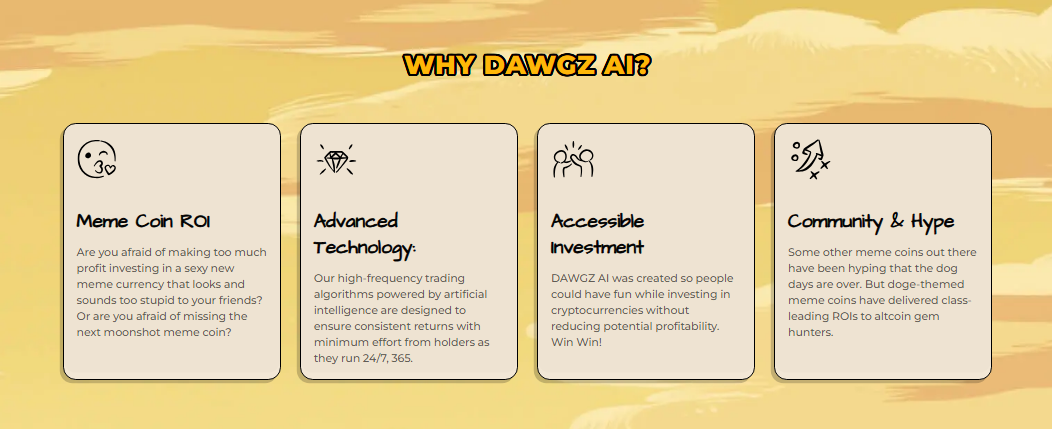
AI-Powered Trading – Unlike most meme coins, Dawgz AI integrates AI-driven trading algorithms designed by seasoned financial experts.
Limited Token Supply – With only 8,888,888,888 tokens, scarcity plays a key role in driving value.
Strong Community Growth – A dedicated community fuels its expansion, making it a true major contender.
Early Investment Advantage – The presale phase allows investors to buy at a discounted price before demand surges.

The Power of AI in Meme Coins

The meme coin market has evolved beyond simple internet jokes. 

Today, AI-powered meme coins like $DAGZ offer something more than just hype. 

They provide crypto investors with advanced tools that can optimize trading strategies and increase returns.

How Dawgz AI Uses AI to Create Value

AI-Driven Trading Strategies – Unlike other meme coins, $DAGZ isn’t just a speculative digital asset, its AI algorithms execute trades based on market data and trends.
Risk Management – AI reduces human error, making trading smoother, even in volatile conditions.
Future-Proofing – With AI integration, $DAGZ positions itself as a long-term player in the crypto world, rather than a short-term fad.

How Dawgz AI Rewards Early Investors

Getting into a next crypto to explode during its presale phase can offer significant gains, and Dawgz AI is built to reward early investors in multiple ways.

Key Benefits for Early Investors

Low Entry Price – Buying before major exchange listings means massive gains potential as demand grows.
Staking Rewards – Holders can stake tokens to earn passive income while benefiting from price appreciation.
Liquidity Pools & Ecosystem Growth – Early backers help strengthen liquidity pools, ensuring smoother trading.

Dawgz AI vs. Wall Street Pepe: Which Meme Coin Wins?

The rise of meme coins has brought attention to projects like Pepe, but not all coins are created equal. 

Dawgz AI ($DAGZ) is positioned to outshine its competitors with real blockchain technology and AI-powered utility.

Key Differences Between $DAGZ and Wall Street Pepe

Feature
Dawgz AI ($DAGZ)
Wall Street Pepe

AI-Powered Trading
✅ Yes
❌ No

Staking Rewards
✅ Yes
❌ No

Strong Community Growth
✅ Yes
✅ Yes

Advanced Trading Tools
✅ Yes
❌ No

Liquidity Pools
✅ Yes
❌ No

Why Dawgz AI’s Presale Offers Huge Gains

The best time to invest in a next crypto to explode is before it hits the mainstream. Dawgz AI’s presale is designed to offer massive gains for those who act early.

Why Buying $DAGZ in Presale Makes Sense

Lower Token Price – Before reaching major decentralized finance exchanges, early adopters get in at a discounted rate.
Community Growth Boost – Early buyers contribute to building a stronger vibrant community.
Institutional Investors & Future Listings – Once Dawgz AI gains traction, institutional investors could push demand higher.

Why Buying $DAGZ in Presale Makes Sense

How Token Allocation Benefits Investors

Presale Advantage (30%)Early investors get access to lower prices before the token hits public financial markets.
Staking Rewards (20%) – Encourages long-term holding and provides passive income.
Liquidity Pool (10%) – Supports seamless transactions, reducing high speed transaction slippage.
Marketing Fund (24%) – Drives community growth, adoption, and exposure to a wider audience.
Community Engagement (15%) – Strengthens the ecosystem with incentives and active participation.

How to Buy $DAGZ Before It Blows Up

If you want to be part of the next crypto to explode, securing $DAGZ during the presale is the best move. 

Here’s how to do it:

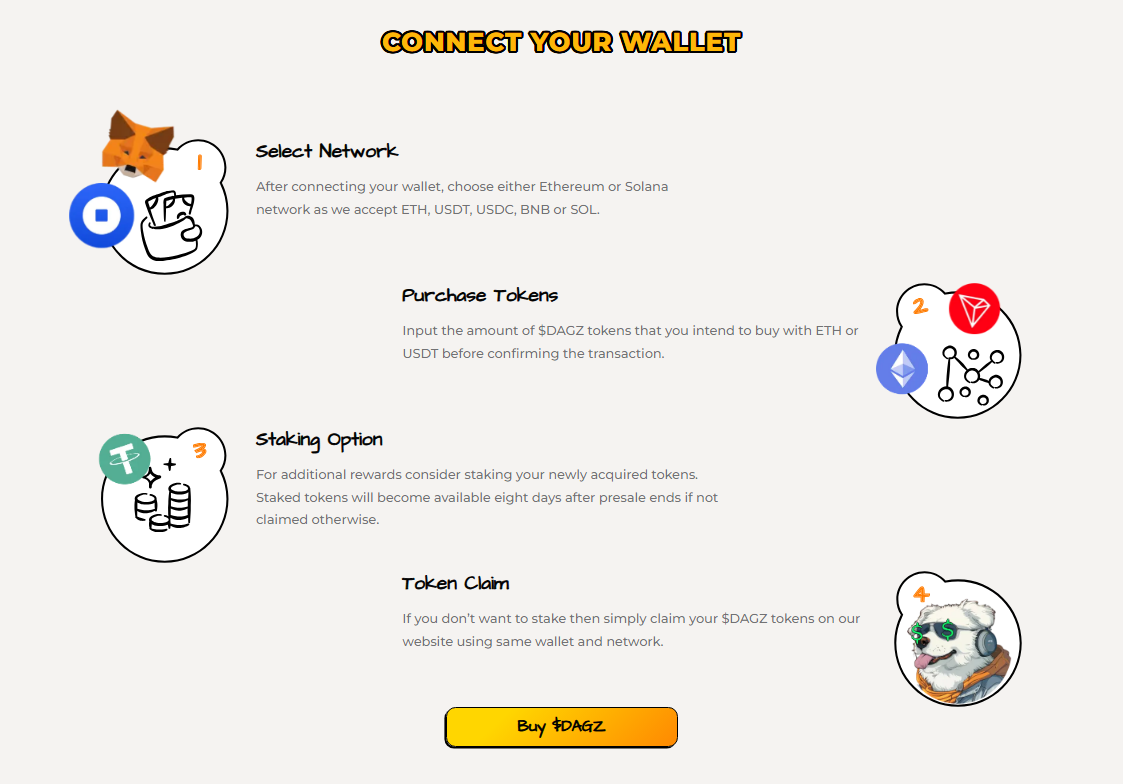
Step 1: Visit the Dawgz AI Website

Go to the official Dawgz AI website where the presale is hosted.

Step 2: Connect a Crypto Wallet

Use MetaMask or any other ERC-20-compatible wallet to buy tokens securely.

Step 3: Select Your Payment Method

Dawgz AI accepts Ethereum (ETH) and USDT for presale purchases.

Step 4: Confirm Your Purchase

Enter the amount of $DAGZ you want to buy and complete the transaction.

Step 5: Stake Your Tokens

After purchase, you can stake your tokens for additional rewards.

Step 5: Stake Your Tokens

Conclusion

The next crypto to explode isn’t just about hype, it’s about real technology, a strong community, and early investment opportunities. 

With a limited supply, staking rewards, and an engaged community, $DAGZ has everything needed to deliver huge gains

If you missed out on past meme coins, this could be your second chance to invest in a project before it takes off. 

Get in now and secure your position before the next crypto boom happens.

Frequently Asked Question

Which crypto has 1000X potential?

A crypto coin with 1000X potential must have a low market cap, strong utility, and high demand. 

Dawgz AI ($DAGZ) fits these criteria, as it’s still in its presale phase with AI-driven trading, staking rewards, and a growing community

Early investors have a rare opportunity to buy in before it hits major decentralized exchanges.

What is the next big crypto to boom?

The next big crypto to boom will likely be a project that combines innovation with strong market positioning. 

Dawgz AI ($DAGZ) is a next crypto to explode due to its AI-powered trading system, meme coin appeal, and viral growth potential. 

With its presale still open, it has the key elements needed to surge when it launches.

Which crypto will give 1000X in 2025?

Predicting a crypto coin that will do 1000X isn’t easy, but projects with low supply, strong community backing, and real-world use cases have the best shot. 

Dawgz AI, with its AI-driven trading model, liquidity pools, and staking system, stands out as a high potential crypto that could deliver massive returns in the coming years.

What crypto is expected to skyrocket?

Meme-based projects with strong community growth and real utility tend to take off fast. 

Dawgz AI ($DAGZ) has a unique position in the meme coin market, offering more than just hype. 

Its AI-powered advanced tools and staking rewards make it one of the next top crypto coins expected to skyrocket once it hits major exchanges.


The post Investors Are Buzzing About the Next Crypto to Explode – Here’s Why This Crypto will Explode appeared first on NFT Evening.


Source link

10 Best Meme Coin Trading Platforms in 2025

0
10 Best Meme Coin Trading Platforms in 2025


Meme coins have become super popular these days. Everyone is talking about them, from your friends online to big influencers like Elon Musk. But before you jump into trading them, picking where to trade meme coins is very important. Not all platforms are safe or good for trading meme coins, so you need to know what to look for.

In this guide, we will review the 10 best meme coin trading platforms. We will also explain how to choose a meme coin trading exchange and how to do proper research before investing in new meme coins.

What is Meme Coin Trading?

Meme coin trading is when people buy and sell crypto meme coins, which are a type of cryptocurrency made mostly for fun or based on internet trends. These coins usually don’t have a real purpose or use like Bitcoin or Ethereum. They are often created because of jokes or viral trends, like Dogecoin or Shiba Inu. Meme coins can go up in value really fast, but they can also drop just as quickly.

People trade meme coins on cryptocurrency platforms, where they can buy them at a low price and hope to sell them later for a higher price. The trading happens in a similar way to how you would buy and sell stocks, but with meme coins, the prices can change a lot more because of social media hype or tweets from famous influencers like Elon Musk.

How Meme Coin Trading Works?

Meme coin trading works by buying and selling crypto coins that are made for fun or memes, not for serious use. When you trade meme coins, you can buy them on platforms like decentralized exchanges (DEXs). These platforms let you trade coins directly from your wallet without needing a middleman. 

Some of the most used crypto platforms for checking meme coins are Dexscreener, DexTools, and GeckoTerminal by CoinGecko. These tools help you see the price, volume, and other important info about the coin you want to trade.

To start trading, you need to find a meme coin that you like or think will go up in value. Then, you can buy it on a platform like Uniswap or Raydium. After buying, you wait to see if the price goes up, and then you can sell it for a profit. 

A lot of meme coins don’t have a real use or project behind them, so they can go up or down in price really quickly based on social media or news. The market for meme coins is mostly driven by hype, not by real value.

Top Meme Coin Trading Platforms Reviewed

1. Binance

Binance is a popular platform for trading meme coins. It supports a wide range of meme coins, including Dogecoin, Shiba Inu, and Pepe, and It regularly adds new meme coins. The platform offers high liquidity and trading volume, ensuring you can easily buy or sell meme coins without any price slippage, which is often the case in DEXes.

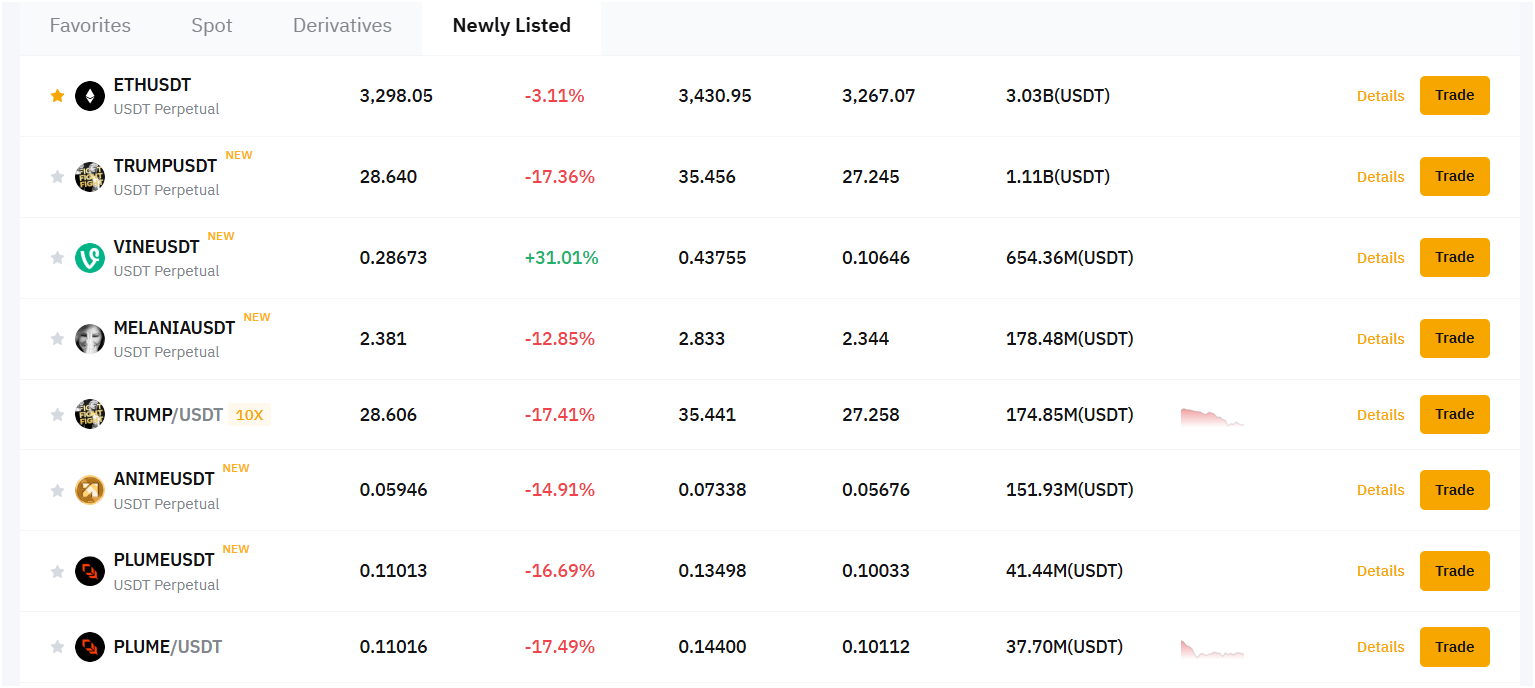
The trading fees on Binance are low compared to many other platforms. Spot trading fees start at just 0.1%, and you can reduce this fee by using Binance Coin (BNB) for payment. For futures trading, fees are also competitive, with maker fees starting at 0.02% and taker fees at 0.05%.

Binance has advanced trading features that are suitable for meme coin trading. You can use market, limit, and stop-limit orders to manage trades. The platform also provides access to futures and margin trading with up to 125x leverage. And, many advanced tools like technical analysis charts and live market data can help you track meme coin price trends.

Binance’s mobile app is user-friendly, which makes trading meme coins convenient. It also has a secure DeFi wallet for storing your crypto. If you prefer, you can transfer your meme coins to other wallets easily. The platform’s security features include two-factor authentication and $1B in insurance funds.

Pros

Wide range of supported meme coins like DOGE, SHIB
Low trading fees start at 0.1%
High liquidity for easy buying and selling
Advanced trading tools for market analysis and strategies
Secure platform with two-factor authentication and SAFU insurance fund

Cons

Some meme coins may face delisting risks
Binance often lists meme coins on futures before the spot market

binance-logo-2

2. MEXC

MEXC

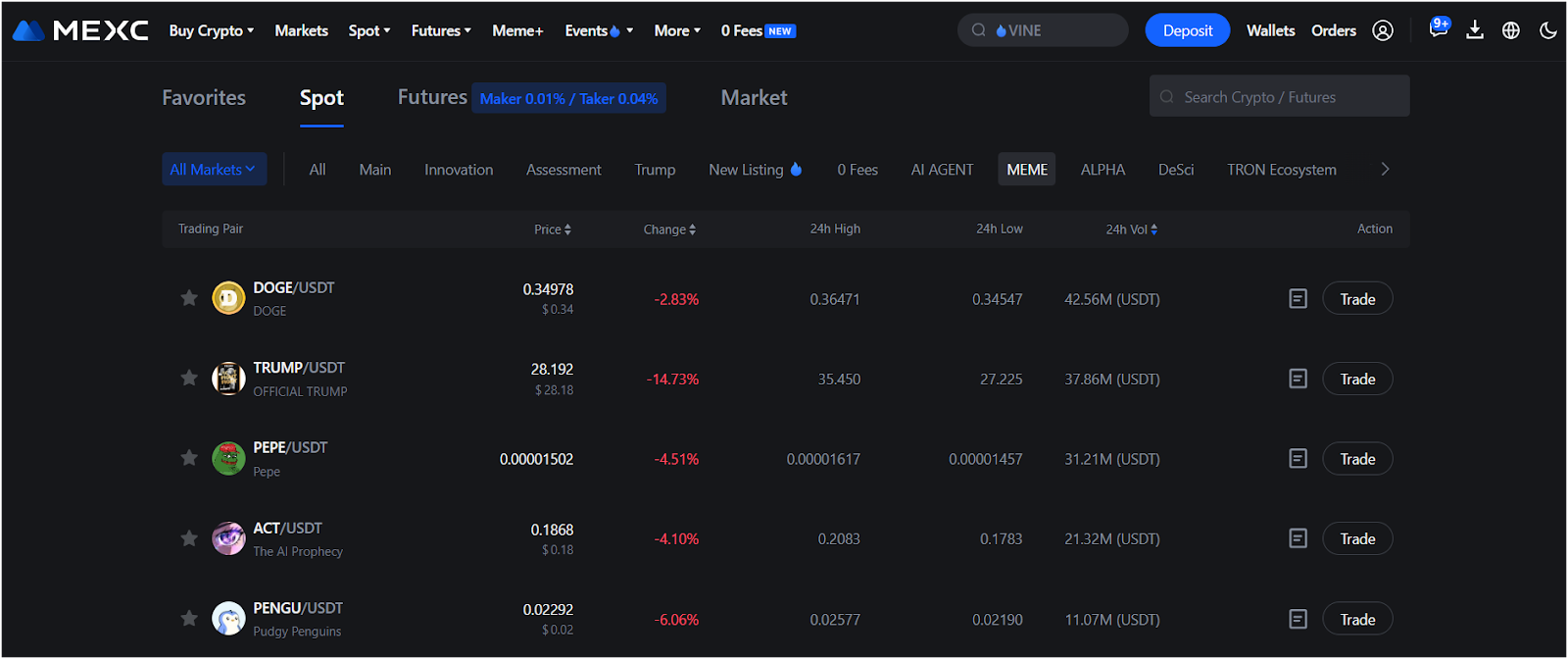
MEXC is among the top meme coin crypto exchanges, especially popular for buying and selling new meme coins. Their meme coin varieties range from widely known names – such as Dogecoin (DOGE) and Shiba Inu (SHIB), as well as lesser-known names such as NEIRO, MELANIA, ACT, and TRUMP. The addition of new meme coins is usually regular, often being among the first to list them.

Fee levels on MEXC are particularly competitive. For spot trading, the maker and taker fees are just 0.05%. For futures trading, the fees are even more attractive, with 0.01% for makers and 0.04% for takers. MEXC also offers advanced trading options. It allows up to 200x leverage in perpetual futures contracts, allowing traders to open much larger positions with much less capital.

The platform has a very user-friendly interface, making it easy to look up and trade meme coins. A dedicated section of meme coins ensures that traders can get to the tokens they are interested in quickly. MEXC also offers different educational resources, which can guide traders in a better understanding of the market.

Pros

Wide selection of popular and new meme coins
Competitive spot trading fees, 0.05% maker/taker
High leverage options, up to 200x
Early listing of new meme coins
User-friendly interface with a dedicated meme coin section

Cons

Limited support for fiat deposits
Some newly listed meme coins have low liquidity

MEXC_square_logo-removebg-preview

3. Bybit

Bybit

Bybit is another best meme coin trading platforms. It offers a decent selection of meme coins. You can find popular ones like DOGE and SHIB, and other new tokens like PEPE, FLOKI, and BONK. They keep adding new ones too, so the list is always changing. Bybit has a tiered fee structure, meaning the more you trade, the lower your fees get. They usually have trading fees of around 0.1% for spot trading, which is pretty standard.

Bybit has many advanced features to help trade meme coins. They have “spot trading”, which is just buying and selling the coins directly. They also offer “derivatives trading”, where you can trade contracts representing the value of the coins. This allows you to trade with 100x leverage.

The platform itself, by design, is friendly and approachable. You have a clean interface, advanced charts to track prices, and different types of orders to buy and sell at the prices you want. They also have a mobile app for trading on the go. Bybit sometimes runs promotions and events, which can be a good thing for meme coin traders. They have trading competitions or giveaways related to specific meme coins, so that’s how one can earn extra rewards.

Pros

A wide selection of meme coins is available, including popular and new ones
Competitive trading fees, especially with higher trading volumes
User-friendly platform with both web and mobile app interfaces
Offers spot and derivatives trading
Regular promotions and events for meme coin traders

Cons

It is not available in the United States
Some newly launched meme coins are not available for trading

bybit-logo-white

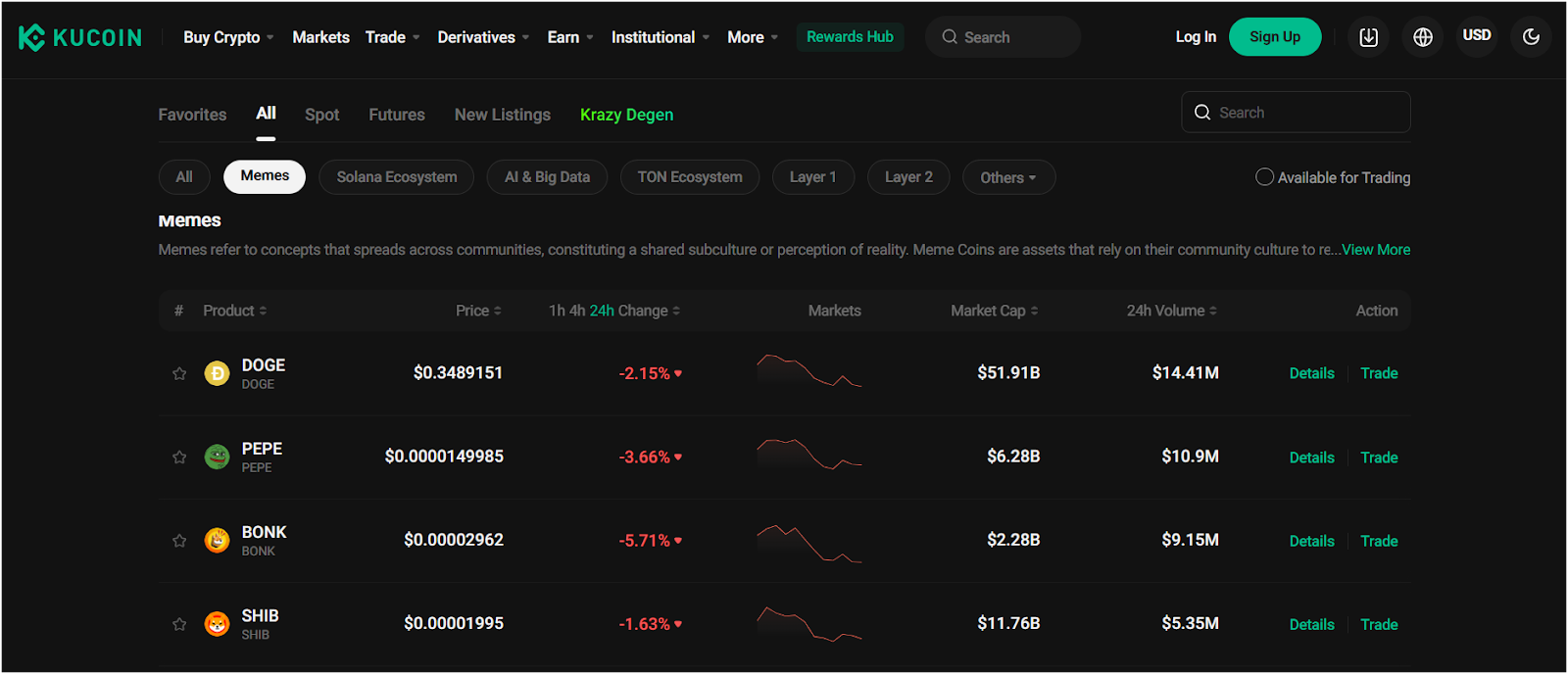
4. KuCoin

KuCoin

KuCoin is a cryptocurrency exchange that has a large number of meme coins. More than 700 cryptocurrencies are found on KuCoin, and many new meme coins are added very often. The trading fee on KuCoin is low. It charges 0.1% per trade, and if you use KuCoin’s token, called KCS, you pay only 0.08%, that’s a 20% discount. There are no hidden charges, and the fees are clear.

KuCoin also has a lot of advanced features for meme coin trading. You can trade meme coins directly through spot trading, here you purchase and sell coins instantly. Or, through futures trading with up to 125x leverage, here you borrow the money to swap bigger sizes. Trading bots are also available on KuCoin, and they help you automate your meme coin trading with strategies like DCA or Grid trading. They will automatically buy/sell for you according to your settings.

It’s easy to use the platform. There are advanced tools like technical indicators, charting tools, and so on, available to study the price of meme coins. Also, KuCoin has a significant user base, with more than 30 million users. That helps in huge liquidity and trading volume, which in turn is beneficial in avoiding price slippage.

Pros

Low trading fees, starting at 0.1% per trade
Wide variety of meme coins, including DOGE, SHIB, PEPE
Futures trading for leveraged positions on meme coins
Trading bots for automated meme coin strategies
An active user base ensures high liquidity for meme coins

Cons

Limited customer support options for quick problem resolution
Regional restrictions prevent access in certain countries like the U.S.

Kucoin logo

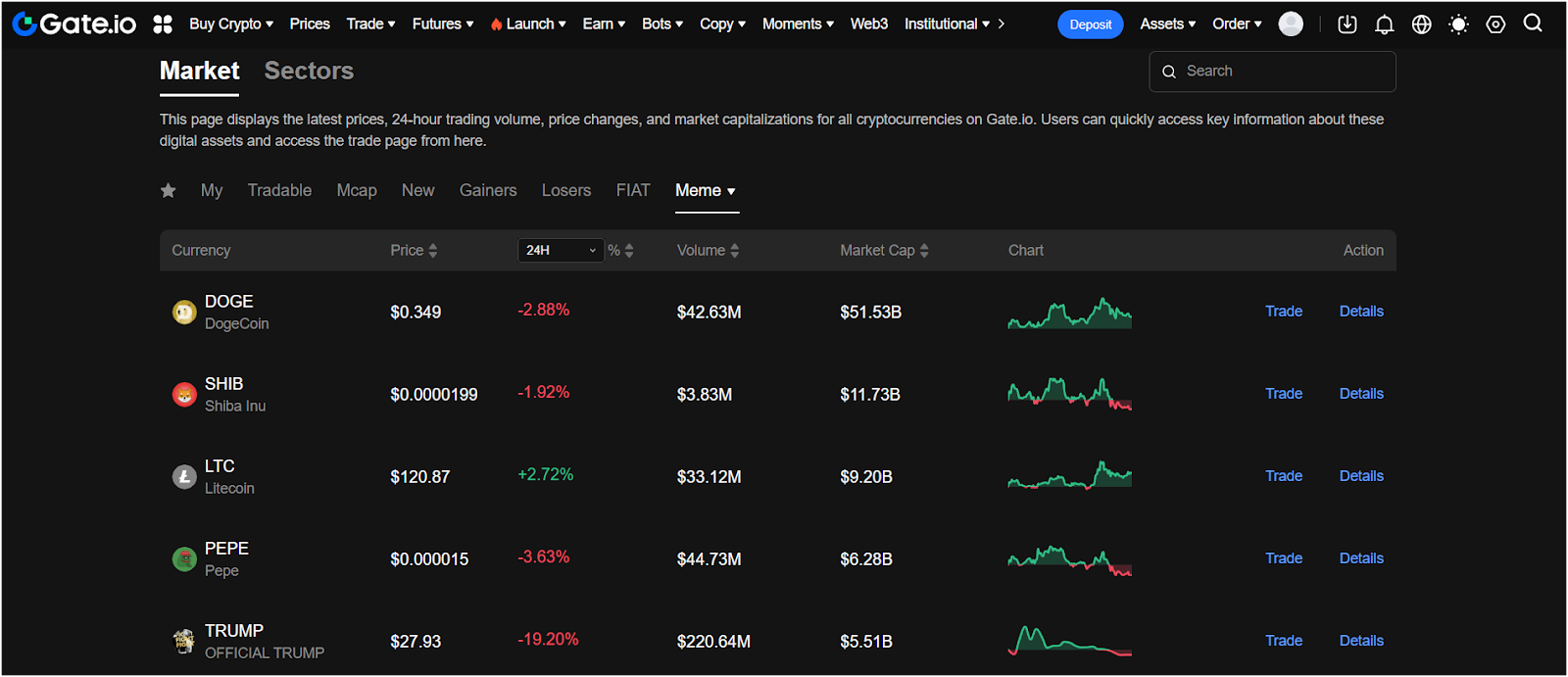
5. Gate.io

Gate.io

Gate.io is another crypto exchange that supports over 3,500 cryptocurrencies, including many new meme coins like TRUMP and MELANIA. Also, In 2024, Gate.io launched the MEME Gateway Grant, a $50 million initiative to support meme creators and community development. This program offers marketing and liquidity support to innovative meme projects.

For spot trading, it charges a 0.10% fee for beginners. The platform has a VIP tier system where fees decrease with higher trading volumes and more GateToken (GT) holdings. These fees can also be further reduced by enabling GT debit. Gate.io also offers features like strategy bot trading, allowing users to copy trading strategies of other traders, and an NFT marketplace called Gate NFT for buying and selling NFTs.

Gate.io also offers many advanced trading features like futures, margin, and options trading. Futures trading supports both USDT-margined and coin-margined contracts, and margin trading allows users to trade with up to 10x leverage.

Pros

Wide selection of meme coins like DOGE, TRUMP
Low trading fees, reduced further with GateToken (GT)
Advanced trading features: margin, futures, and strategy bots
Strong liquidity for popular meme coins
$50M grant to support meme projects and ecosystem

Cons

High withdrawal fees for some tokens
Not beginner-friendly due to advanced features and interface

Gate.io

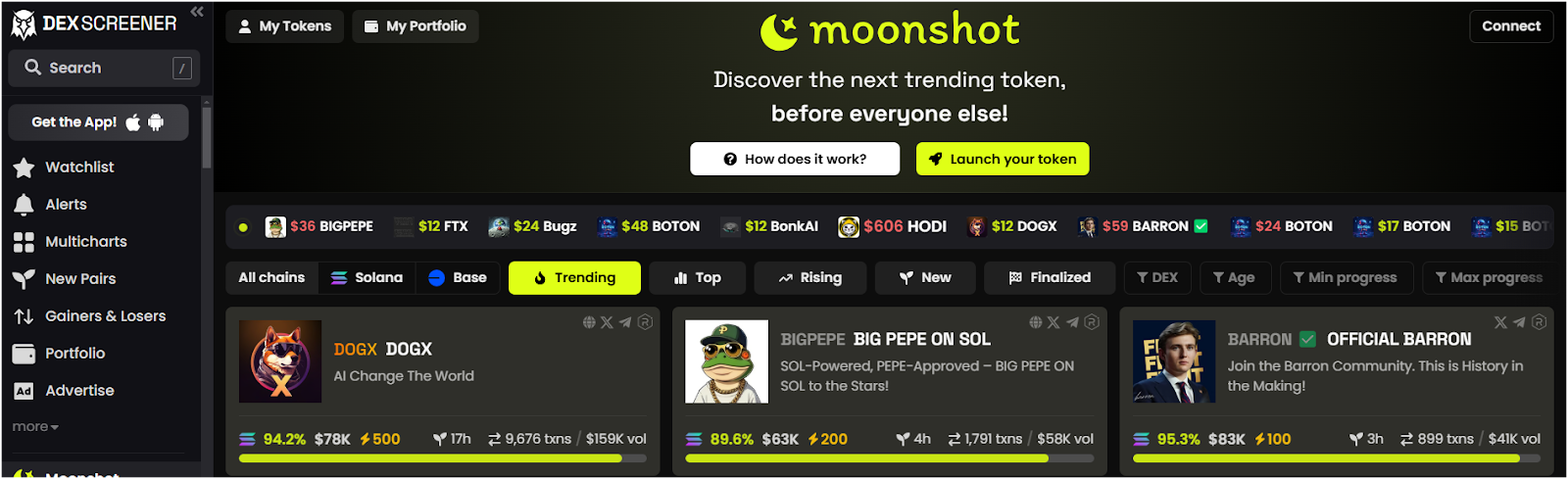
6. Moonshot by Dexscreener

Moonshot by Dexscreener

Moonshot is a platform by Dexscreener that lets users create and trade meme coins on the Solana blockchain. Launched in 2024, it offers an easy way to launch tokens with a fixed supply of 1 billion tokens. Creating a token costs about 0.02 SOL.

Once a token’s market cap reaches 500 SOL, it automatically moves to the Raydium decentralized exchange. At this point, 150 to 200 million tokens are burned, reducing the supply and potentially increasing the token’s value. Moonshot ensures fairness by having no pre-sales or insider allocations. All tokens are audited to prevent manipulation, and ownership is renounced to make them “unruggable”.

For trading, Moonshot charges a 1% fee, with 25% of that distributed to users. When liquidity is added at the 100% bonding curve, there’s a 5% fee plus 0.8 SOL to cover various costs, and 0.19% of the token supply is reserved for platform fees and user rewards.

Pros

Low token creation cost (0.02 SOL)
Automatic listing on Raydium at 500 SOL market cap
Fair launch with no pre-sales or insider allocations.
Tokens are audited and unruggable
Burns tokens to reduce supply and increase value

Cons

Only supports meme tokens on the Solana blockchain
A 1% trading fee may deter frequent traders

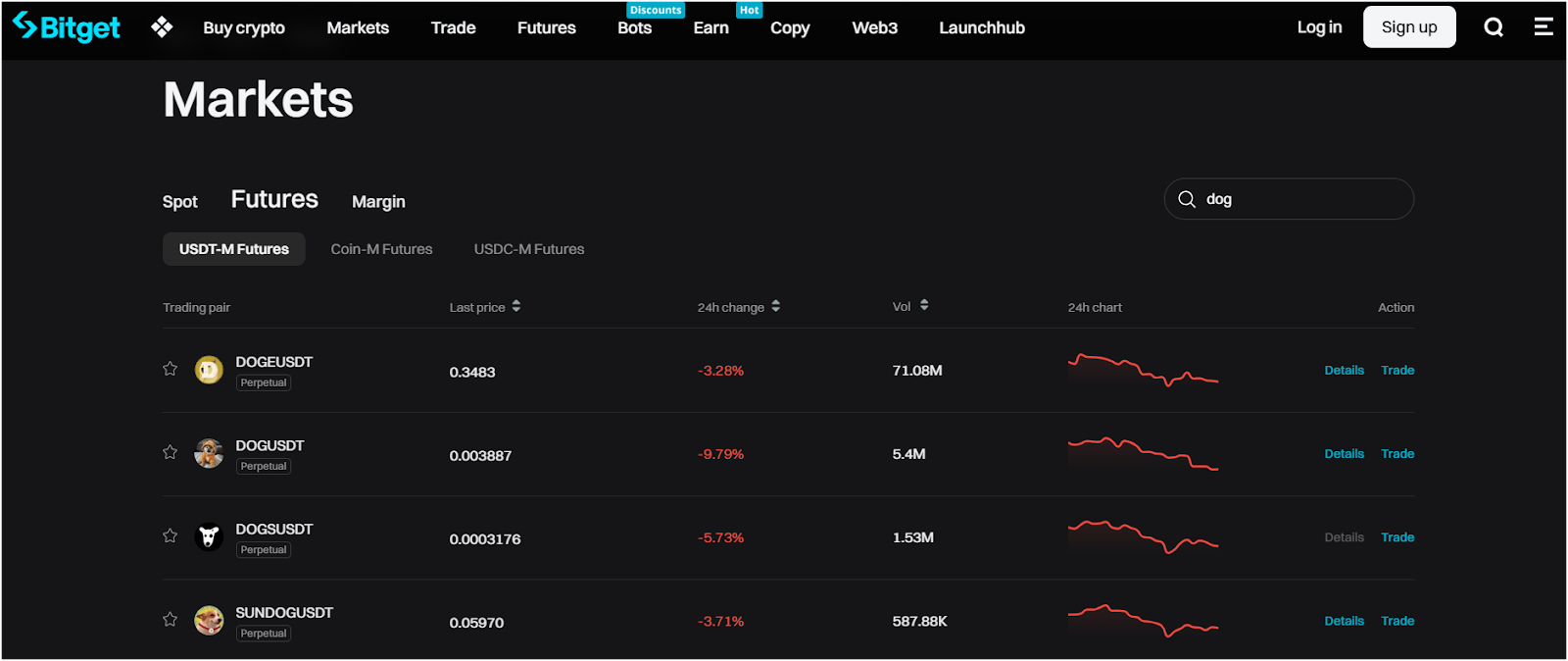
7. Bitget

Bitget

Bitget is another meme coin trading crypto exchange where you can trade meme coins easily. It supports all popular coins like Dogecoin Pepe, and other meme coins. There are also many new meme coins available, so traders have lots of options to explore. The platform charges low fees. For spot trading, it takes 0.1% per trade. If you trade futures, the fees are 0.02% for makers and 0.06% for takers.

You can also use Bitget Wallet, it’s a DeFi wallet. It has a special tool called MemeX, made just for meme coin crypto trading. MemeX makes it simple to find new meme coins with the potential for high returns. It supports coins on Solana and BNB Smart Chain. MemeX shows trending coins, new listings, and live prices. You can even trade directly from it with one click. It is very beginner-friendly but still useful for experienced traders.

Bitget also hosts events to make trading fun. For example, they run campaigns where users trade meme coins to win rewards. One event had a prize pool of 200,000 USDT in meme coins. These kinds of events attract many traders and keep the meme coin space active.

Pros

Supports many popular and new meme coins
Low spot trading fee of 0.1%
MemeX tool simplifies meme coin discovery and trading
Beginner-friendly interface with one-click trading
Regular events with big rewards for meme coin traders

Cons

No fiat trading pairs for meme coins directly
Not available in the United States

bitget-token-new-bgb-logo

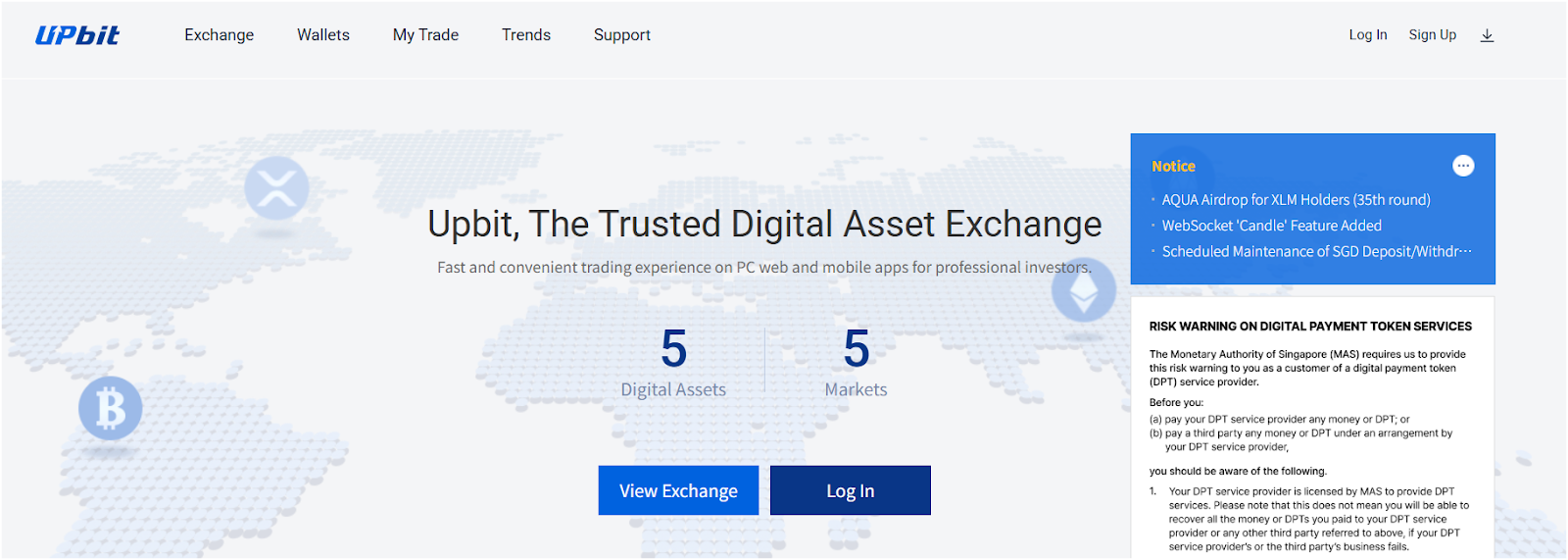
8. Upbit

Upbit

Upbit is a leading cryptocurrency exchange based in South Korea. It offers a wide range of digital assets for trading. As of now, Upbit supports over 180 cryptocurrencies and more than 300 trading pairs. 

The platform employs a straightforward fee structure. For Korean Won (KRW) trading pairs, the trading fee is 0.05%. For Bitcoin (BTC) and Tether (USDT) trading pairs, both maker and taker fees are set at 0.25%. Withdrawal fees vary depending on the specific cryptocurrency.

In terms of meme coin offerings, Upbit has been selective. The exchange has listed meme coins like PEPE and BRETT. Additionally, Upbit has reduced withdrawal fees for certain cryptocurrencies, including the meme coin Shiba Inu (SHIB). The withdrawal fee for SHIB was decreased from 560,000 SHIB to 101,331 SHIB

Upbit’s cautious approach to listing meme tokens aligns with South Korea’s Virtual Asset Protection Act. This regulation requires projects without a known team or roadmap to trade for two years before being listed on domestic crypto markets. Consequently, Upbit prioritizes meme tokens with a proven track record and sufficient trading history.

Pros

Low fees for fiat-to-crypto pairs
Supports over 180 cryptocurrencies, including meme coins
Strong regulatory compliance under South Korean laws
User-friendly interface with mobile and desktop access
High liquidity, especially for Korean Won trading pairs

Cons

Limited global availability, primarily focused on South Korea
No fiat withdrawals for non-Korean users
Restricted meme coin listings due to strict regulations

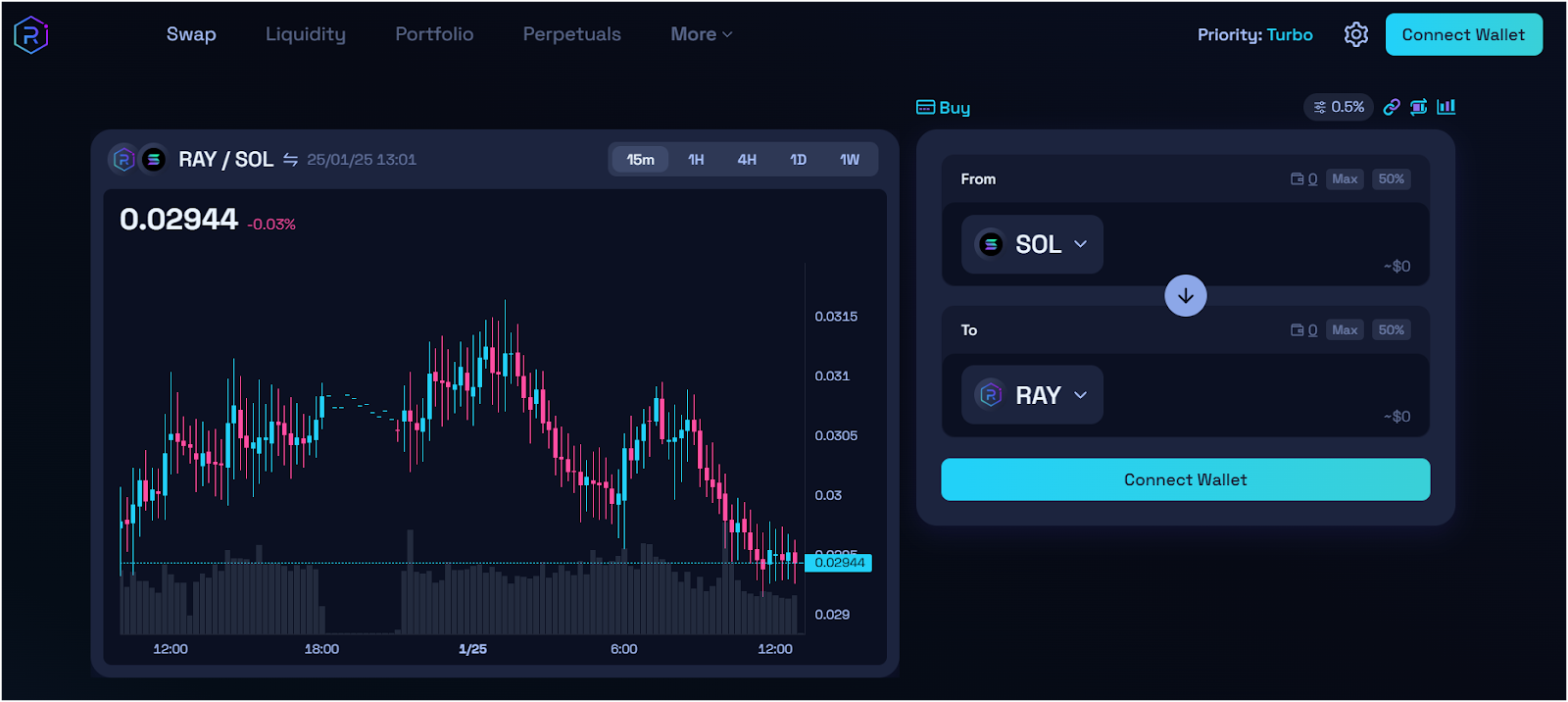
9. Raydium

Raydium

Raydium is a decentralized exchange (DEX) built on the Solana blockchain. It offers fast and low-cost meme coin trading because Solana is one of the fastest blockchains. Raydium is different because it connects directly to Serum, another exchange, to provide better liquidity and faster trades. Raydium supports SPL meme tokens, which are tokens on Solana. 

Trading fees on Raydium are 0.25%. Out of this, 0.22% goes back to liquidity pools as rewards for liquidity providers. The remaining 0.03% is given to people who stake RAY tokens. You also pay network fees in SOL, which are very low, often less than 0.001 SOL per transaction.

Raydium allows the trading of meme coins available on Solana. As Solana supports many meme coins, launched through Pump.fun, you can trade them easily here. Because of the connection with Serum, Raydium provides deep liquidity, which means you can buy and sell meme coins at better prices. Raydium also offers yield farming. This means you can earn rewards by providing liquidity to its pools. You can also stake RAY tokens to earn more RAY.

Pros

Fast and low-cost transactions on the Solana blockchain
Supports a wide range of SPL and wrapped tokens
Integration with Serum for deep liquidity and better pricing
Competitive trading fees at 0.25% per trade
Additional features like yield farming and staking rewards

Cons

Limited to Solana ecosystem and SPL tokens
Requires SOL for network transaction fees

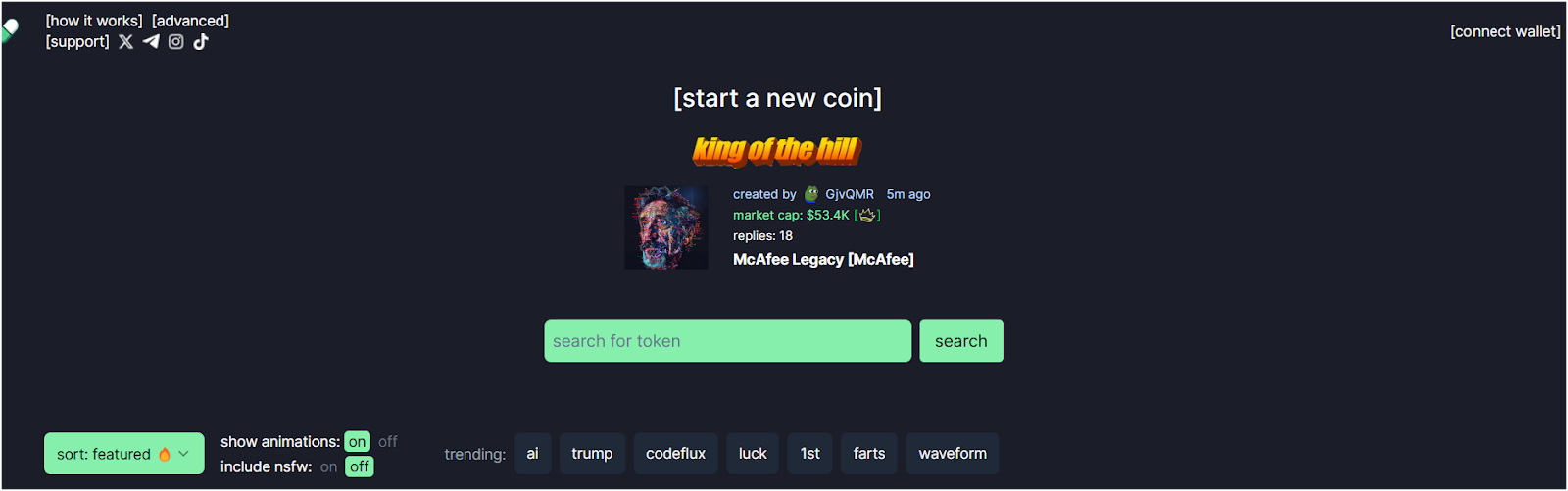
10. Pump.fun

Pump.fun

Pump.fun is a Solana meme coin trading platform that started in January 2024 on the Solana blockchain. It allows people to create and trade meme coins. Today, users have made over 5 million meme tokens on the platform.

Pump.fun supports many meme coins. Users can make their own meme coins by giving details like the coin name, symbol, and image. To do this, they pay a small fee of about 0.02 SOL. After making the token, it is available for trading on the platform.

The platform has a low transaction fee. It charges only 1% per trade. This makes it cheaper compared to other platforms and attracts more users. People can experiment with tokens without spending too much. Pump.fun has special features for meme coin trading. It uses bonding curve pricing to set token prices. This means that as more people buy a coin, its price goes up. This system keeps the prices fair and matches the meme coin market demand.

Pump.fun has safety measures to protect its users. All tokens have a fair launch process. There are no presales or team allocations, which stops big players from taking advantage. The platform also burns some liquidity when certain market cap levels are reached. This helps make the token ecosystem safer.

Pros

Easy token creation and launch
Simple interface for beginners and experienced traders
Bonding curve pricing ensures fair and market-driven prices
Low-fee token launch

Cons

Blocked in the UK due to regulatory warnings
The live-streaming feature was suspended for safety issues
High potential for rug pulls and scams

How to Choose the Best Meme Coin Trading Platform?

Meme coins are everywhere now. People talk about them on social media, in group chats, and even in random internet comments. If you are looking to trade meme coins, you must choose a good trading platform. This is important because not all platforms are the same. Some are safe, some are not. Some are easy to use, and some feel super confusing. 

Here’s how to pick the right one for you:

Platforms Safety

A good platform must be secure because you don’t want your money or data stolen. Look for meme coin trading platforms that are licensed or registered. If the platform uses security features like SSL certificates and two-factor authentication (2FA), it’s a good sign that they care about your safety.

If you see bad reviews about hacks or scams related to the platform, it’s best to avoid it. Your money and information are too important to risk on an unsafe platform.

Trading Volume

Trading volume is a big deal when choosing a platform. Platforms with high trading volumes usually mean a lot of people use them. This is good because it makes buying or selling meme coins faster and easier. 

The meme coin platforms with low volume might take longer for your trades to go through, or you might not even find a buyer or seller. High volume also shows that the platform is trusted by many people. It’s usually a safer and more reliable choice.

Creator’s History

Before trusting a platform, look into the people or company behind it. Have they worked on other successful projects? Are they known in the crypto space? If the creators have a good track record, it shows they know what they are doing and are less likely to run a scam.

Avoid platforms where the creators are anonymous or have a bad history in the crypto world. It’s too risky to trust people with a shady past.

Relationship to Influential Factors

Meme coins often get a lot of attention because of influential people or events. For example, Elon Musk tweeting about Dogecoin can make prices skyrocket. Platforms that are quick to list these trending coins are usually a better choice.

Look at how the platform reacts to temporary influential factors. Do they quickly add trending coins, or do they take too long? Platforms that stay updated with news about Elon Musk, Trump, China, or other key opinion leaders (KOLs) are better for trading meme coins.

Fees

Trading platforms charge fees for deposits, withdrawals, and trades. Some platforms have higher fees, while others are more affordable. Always compare the fees and make sure they match what the platform offers. Sometimes, low fees come with fewer features, so check if the platform still meets your needs

Coin Offerings

Not all platforms have the meme coins you want to trade. Popular ones like Dogecoin or Shiba Inu are usually available everywhere, but newer or less-known coins might not be. Make sure the best place to buy meme coins supports the meme coins you’re interested in. If it doesn’t, there’s no point in signing up.

User Experience

A platform should be easy to use, even if you’re not an expert. Look for platforms with simple designs and clear instructions. If it’s too confusing, you might make mistakes like buying the wrong coin or entering the wrong amount.

Reviews and Ratings

Before choosing a platform, check online reviews. What are people saying about it? Is it reliable and safe? Platforms with lots of bad reviews or complaints are a red flag. Positive reviews and high ratings mean people trust the platform. It’s a safer bet to go with one that has a good reputation.

Risks of Trading Meme Coin

The risks of trading meme coins are:

Creator’s Intentions: One of the biggest risks with meme coins is the creator’s intentions. Some creators start meme coins just to make quick cash. They might get a lot of hype, but in the end, they don’t care about the coin’s future. Once they’ve made enough money, they could sell all their coins, making the price crash to zero.
Rug Pulls: A rug pull happens when the developers or owners of a meme coin take all the money and disappear. This is a really common problem in the world of meme coins. There are hundreds, if not thousands, of rug pulls happening every day. 
High Volatility: Meme coins can go up and down really fast. One day you might make money, and the next, the price could drop massively. This happens because meme coins are often affected by rumors or social media posts.
Fake Promises: Some meme coins are marketed like they’ll change the world or bring huge profits, but most of the time, this is just hype. You can easily get tricked by promises of huge returns. But in reality, most meme coins don’t have any real use.
Lack of Regulation: Meme coins aren’t as regulated as bigger coins like Bitcoin or Ethereum. This means anyone can make a meme coin and list it. There’s no one watching over them to make sure everything is legit. Because of this, you might end up trading on a platform or with a coin that isn’t safe.

How to Research Before Trading Meme Coins?

Here’s how you can research meme coins before jumping in.

Step 1. Check the Creator’s History

One of the first things you need to do is find out who made the coin. Look at the creator’s past projects. Are they known for making good coins, or have they been involved in scams before? You don’t want to invest in something made by someone who only cares about making quick money. If the creator has no track record or is anonymous, that’s a big red flag.

Step 2. Look at the Community

A strong community can make a meme coin more trustworthy. Join social media groups, Discord servers, or Reddit to see what people are saying about the coin. 

If there are a lot of people talking about it and helping each other out, it could be a good sign. But if the community looks fake or is full of bots, stay away. Real, active discussions mean the coin is getting real attention.

Step 3. Check the Supply and Demand

A coin’s supply is super important. If there’s too much circulating supply, the price could drop quickly. You need to know how many coins are in circulation and how many are left to be released. If the supply is really high, the value might never go up. Look for coins that have a reasonable supply and a plan to manage it.

Step 4. Look at the Coin’s Purpose

Why was the meme coin made? Does it have any real use, or is it just for fun? Some meme coins are made to be used in real-world applications, but most don’t have any real value. If the coin doesn’t offer anything new or useful, it’s probably just another pump-and-dump coin. Avoid these, as they usually crash hard.

Step 5. Check for Red Flags

Look out for red flags like promises of “guaranteed” profits or coins that are only hyped up by influencers. If something sounds too good to be true, it probably is. Scammers use these tactics to get people to invest before they pull out. Always be skeptical when you see extreme hype.

Step 6. Follow the News and Trends

Meme coins can go up because of a tweet or news about a famous person. Keep an eye on the news and social media to see if the coin gets attention from big influencers or events like Elon Musk tweeting about it. But remember, this can also be a risk, as coins can crash just as fast as they rise because of hype.

Conclusion

To sum up, picking the best meme coin trading platform is important for anyone who wants to trade meme coins safely and effectively. The best meme coins buying sites like Binance, MEXC, and Bybit are popular because of their high trading volumes, strong reputations, and large user bases.

Other platforms like KuCoin, Gate.io, and Bitget also offer a wide range of meme coins with competitive fees. Before choosing a platform, it’s essential to do your own research. You should consider factors such as the platform’s security, coins offering, and trading volume.


Source link

Top NFT Collections – February 9, 2025

0
Top NFT Collections – February 9, 2025


Top NFT Collections (Last 24h)

Here are the hottest NFT Collections of the day.

Rank

Name
Volume
Transactions
Chains
URL

1

Azuki
409.25 ETH
119
ethereum
View

2
Top NFT Collections – February 8, 2025
Pudgy Penguins
320.66 ETH
32
ethereum
View

3
CryptoPunks
CryptoPunks
222.50 ETH
6
ethereum
View

4
Milady Maker
Milady Maker
177.31 ETH
43
ethereum
View

5
Jirasan
Jirasan
156.22 ETH
292
ethereum
View

6
Bored Ape Yacht Club
123.39 ETH
9
ethereum
View

7
Mutant Ape Yacht Club
99.16 ETH
43
ethereum
View

8
Lil Pudgys
Lil Pudgys
97.38 ETH
95
ethereum
View

9
Azuki Elementals
Azuki Elementals
87.41 ETH
251
ethereum
View

10
CHuBBiT Official Collection_V2
62.99 ETH
21
ethereum
View


Source link

Top NFT Collections – February 8, 2025

0
Top NFT Collections – February 8, 2025


Top NFT Collections (Last 24h)

Here are the hottest NFT Collections of the day.

Rank

Name
Volume
Transactions
Chains
URL

1

Pudgy Penguins
552.48 ETH
55
ethereum
View

2
Milady Maker
Milady Maker
396.90 ETH
95
ethereum
View

3
Bored Ape Yacht Club
322.11 ETH
25
ethereum
View

4
CryptoPunks
CryptoPunks
262.33 ETH
7
ethereum
View

5
Top NFT Collections – February 9, 2025
Azuki
235.68 ETH
51
ethereum
View

6
Uniswap v4 Positions NFT
233.18 ETH
13
ethereum
View

7
Kaito Genesis
Kaito Genesis
129.03 ETH
18
ethereum
View

8
Doodles
Doodles
128.46 ETH
34
ethereum
View

9
Lil Pudgys
Lil Pudgys
124.93 ETH
121
ethereum
View

10
Chromie Squiggle by Snowfro
89.85 ETH
8
ethereum
View


Source link

Best Crypto Indicators for Profitable Trading Strategies

0
Best Crypto Indicators for Profitable Trading Strategies


Picking the best crypto indicators can significantly improve your trading success by revealing hidden market trends, crucial support and resistance zones, and possible shifts in momentum. Whether you’re a beginner testing your first strategy or a seasoned trader refining advanced techniques, knowing the fundamentals of technical analysis is an essential step. Unlike fundamental analysis, which digs into a crypto’s underlying project or tokenomics, technical analysis focuses on historical price data, trading volume, and chart patterns.

This approach is especially useful in the crypto market, known for dramatic price fluctuations and unprecedented volatility. The following guide showcases several high-impact indicators—both simple and complex—and offers a foundation on how to integrate them into a profitable, adaptable trading strategy. By monitoring indicators tailored to price movements you can create more informed trading decisions regarding the best times to enter or exit a position. Let’s get into it.

What is Technical Analysis?

Technical analysis focuses on assessing specific historical data, like trading volume or price movements, to better predict upcoming price movements. By interpreting recurring patterns in candlestick charts, trend lines, and various oscillators, traders gain a clearer view of market momentum or potential reversals.

Unlike fundamental analysis, which examines a crypto project’s core technology or partnerships, technical analysis primarily hones in on chart patterns and statistical metrics. Traders will frequently combine multiple indicators to refine their strategies, mitigate false signals, and adapt to market volatility.

For instance, a moving average might highlight a trend’s direction, while an oscillator like the relative strength index (RSI) can help highlight overbought or oversold conditions. But when combined, these tools are capable of cutting through the market noise so you can make more objective, timely decisions. That said, no chart or formula can completely eliminate risk, and every single trade will still require thoughtful risk management and personal discipline.

Types of Indicators for Crypto Trading

Now we’re going to take a look at a wide range of technical indicators and chart concepts crucial for spotting price movements, gauging market momentum, and planning a well-rounded trading strategy. Each tool helps you interpret historical price data differently, so combining several indicators can reduce false signals and refine entries or exits.

1. Line Charts

A line chart displays a crypto’s closing price over time, forming a continuous line that helps visualize the overall trend. Because it only tracks one data point (typically the close price), it offers a clear, uncluttered view of market direction. Traders often start with line charts to identify broad trends before diving deeper.

Source: CoinMarketCap

2. Bar Charts

BTC Bar Chart

Source: TradingView

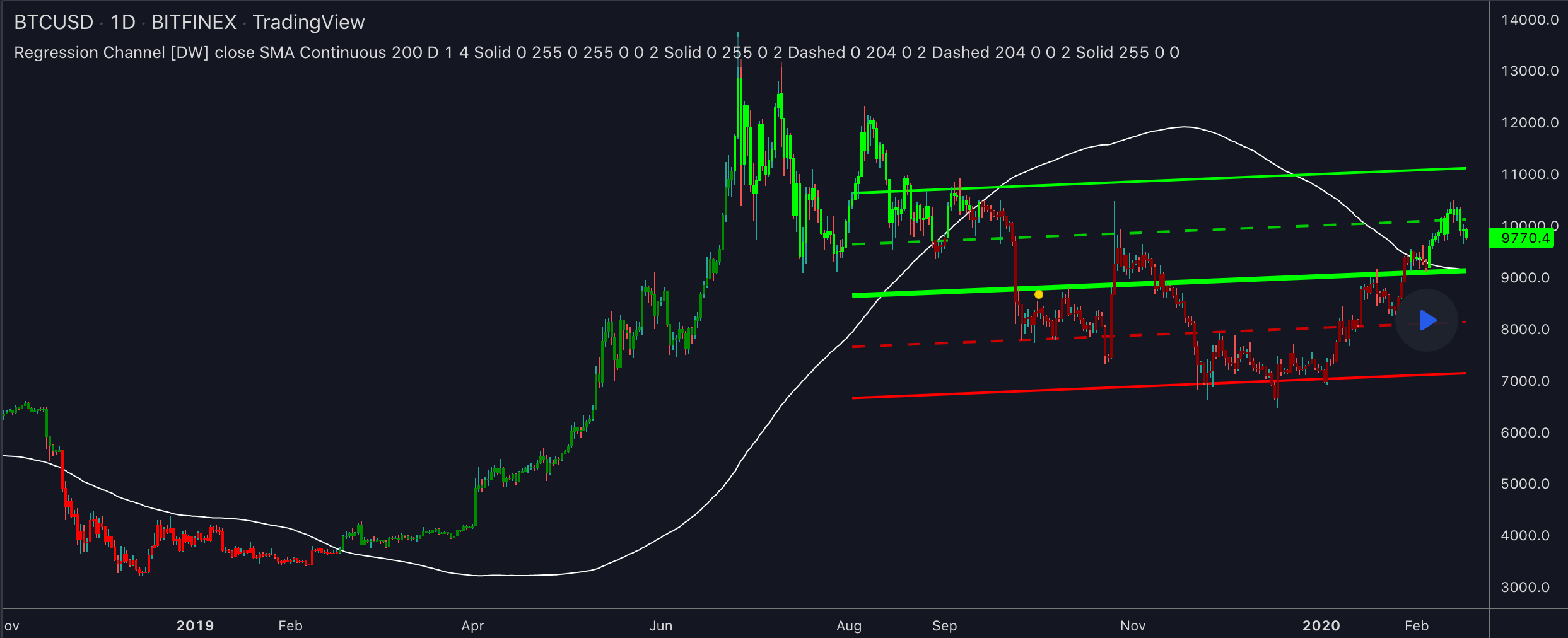
Bar charts expand on line charts by showing each period’s open, high, low, and close (OHLC). Each bar represents a time interval, displaying intraday fluctuations more precisely. The left tick marks the open price, while the right tick shows the close. By seeing highs and lows, you can gauge buying and selling pressure more accurately.

3. Candlestick Charts

Candlestick charts provide a visual snapshot of open, high, low, and closing prices, but with color-coded “candles” reflecting bullish or bearish movement. Green or white candles indicate a higher close vs. open, while red or black show a drop. Candlesticks spotlight patterns that can reveal potential trend reversals or market sentiment shifts.

Candlestick Charts

Source: CoinMarketCap

4. Support levels

Support levels are price points where downward trends often pause or bounce upward. They form when buying interest overpowers selling pressure at specific price zones. Traders watch support for potential low-risk entry points, placing stop-loss orders just below in case the asset breaks lower. Failing to hold support may suggest a further decline.

Support and Resistance Levels

Source: TradingView

5. Resistance levels

Resistance is the opposite of support. Frequently prices will stall or reverse downward when they reach a major resistance line. Sellers tend to dominate at these levels, hindering the asset from moving higher. Once the price breaches strong resistance and holds above it, that zone can become a new support area, indicating potential bullish momentum.

6. Upward Trends

Upward Trends

Source: Swyftx Learn

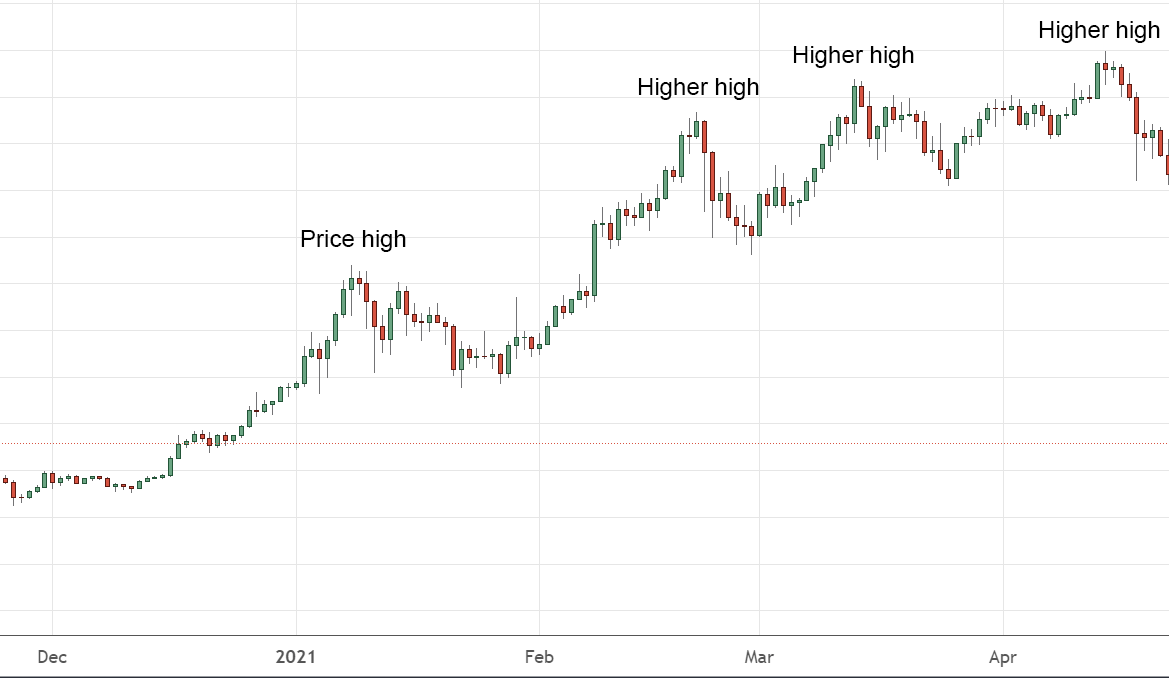
An upward trend is characterized by higher highs and higher lows, indicating strong buying activity. Traders may follow this trend until it visibly breaks support or forms a reversal pattern. In a sustained bullish market, you can use additional indicators, like moving averages, to validate momentum and attempt to ride the trend profitably.

7. Downward Trends

Downward Trends

Source: Swyftx Learn

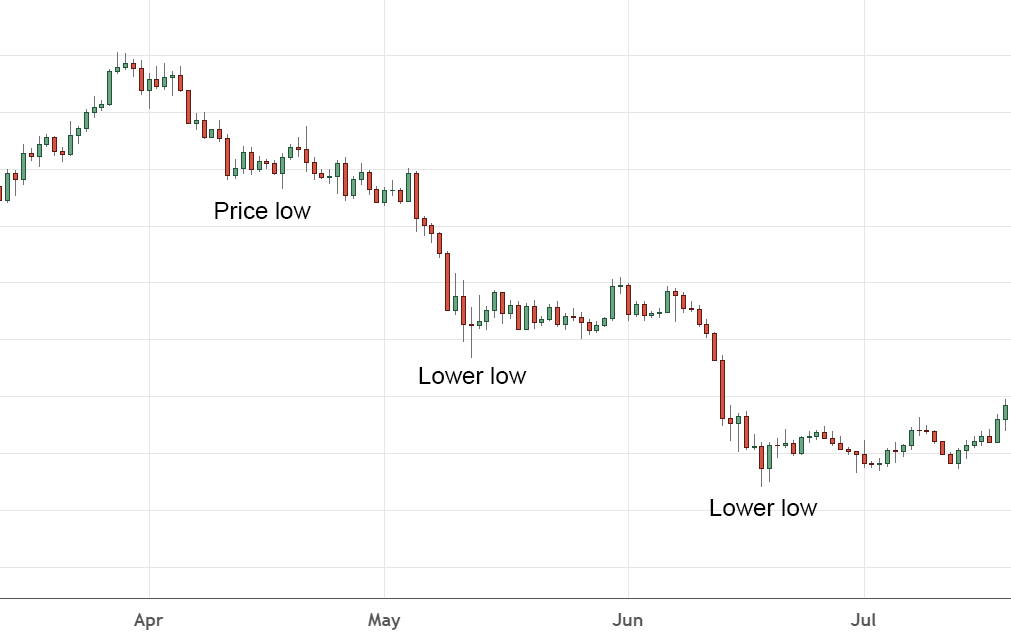
A downward trend shows lower highs and lower lows, signifying consistent selling pressure. As prices continually fall, watch for breakouts above key resistance levels to confirm a potential reversal. Many traders short-sell or avoid buying in a downtrend, waiting for a significant break of the descending line or a confirmed bottom formation.

8. Consolidation Trends

Consolidation Trends

Source: Cryptohopper

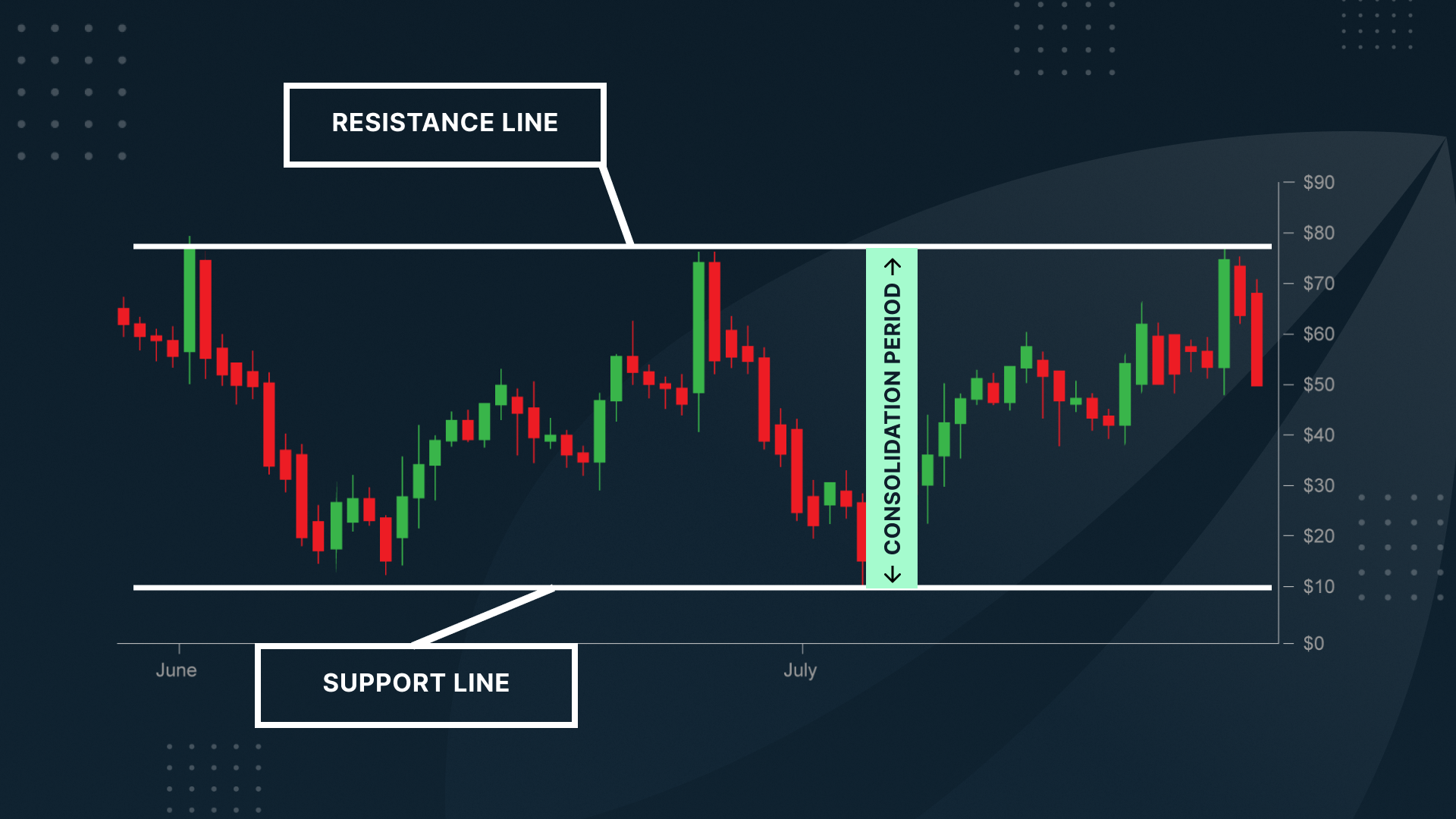
Consolidation, or sideways movement, happens when the market has low volatility and the price moves within a tight range. This phase often precedes more dramatic moves, with the breakout direction setting the stage for future price action. During consolidation, some traders scale back, while others anticipate entry points near key support/resistance.

9. Moving Average Convergence Divergence (MACD)

Moving Average Convergence Divergence (MACD)

Source: TradingView

MACD uses two exponential moving averages, the signal line and the MACD line, in conjunction with a histogram that shows the gap between them. When the MACD crosses above the signal line, it signals potential bullish momentum; a drop below might imply a bearish turn. MACD helps identify changes in trend strength and direction.

10. Moving Averages (MAs)

SMA - simple moving average

Moving averages smooth out price data, revealing the underlying trend. Simple moving averages (SMAs) weigh all data equally, while exponential moving averages (EMAs) give recent prices more emphasis. MA crossovers, like a shorter MA crossing above a longer one, will often precede changes in market momentum and can be a powerful market momentum indicator.

11. Average Directional Index

Average Directional Index (ADX)

Source: TradingView

The average directional index (ADX), measures the intensity of a trend from 1 to 100. Values below 20 signal a weak or sideways market, while readings over 40 often mean a solid trend, either bullish or bearish. Traders sometimes pair ADX with other indicators to confirm that the market is truly trending, not whipsawing.

12. Relative Strength Index (RSI)

Relative Strength Index (RSI)

Source: TradingView

The RSI ranges between 0 and 100, highlighting overbought and oversold conditions. A reading above 70 may indicate overbought territory, which means a dip could be on the way, while an RSI under 30 suggests oversold levels, hinting at a possible bounce. This momentum oscillator can help traders decide when to enter or exit positions to avoid chasing extremes.

13. Bollinger Bands

Bollinger Bands

Source: TradingView

Bollinger Bands envelop a moving average with two standard deviation lines above and below it. When the bands widen, market volatility is high; when they contract, volatility drops. Prices that break above or below the bands occasionally signal overextended conditions or emerging trends, aiding in spotting potential reversal zones.

14. On-Balance-Volume (OBV)

On-Balance-Volume (OBV)

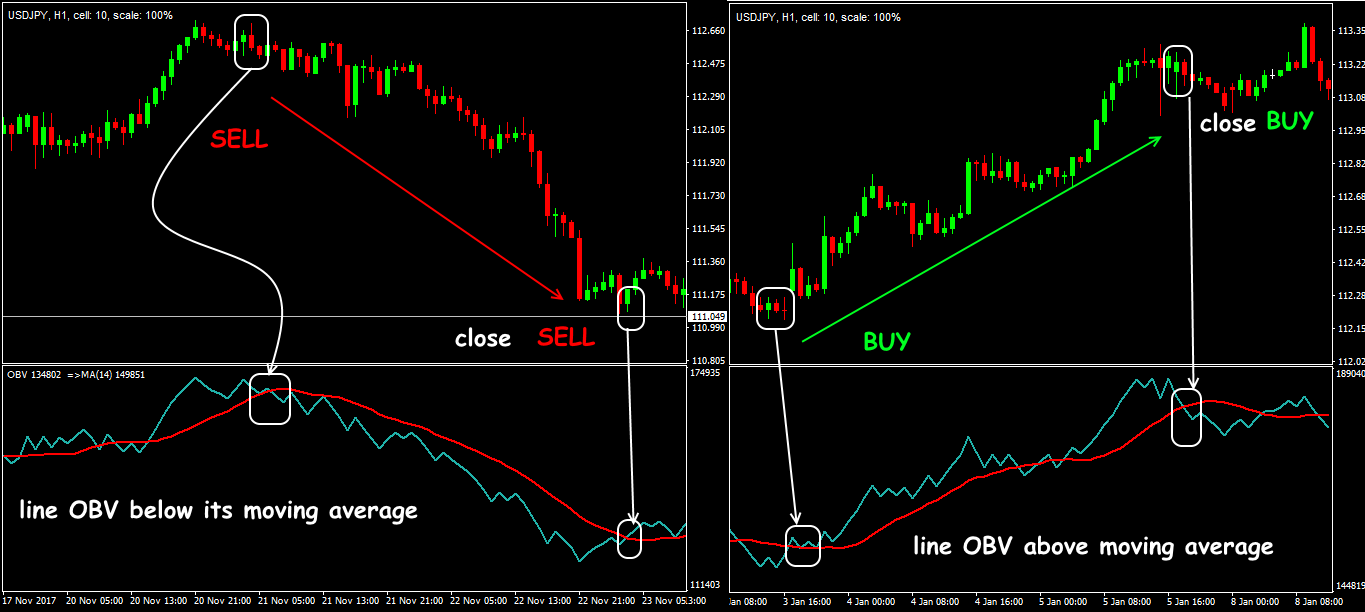
OBV connects trading volume with price direction to assess whether buying or selling pressure dominates. If the price forms higher highs while OBV moves lower, it might indicate weakening momentum, which can be a huge red flag for some traders. On the other hand, surging OBV can confirm an ongoing rally, signaling that volume backs the current trend.

15. Awesome Oscillator

Awesome Oscillator

Source: TradingView

Developed by Bill Williams, the Awesome Oscillator contrasts short-term and long-term price momentum. Plotted as a histogram around a zero line, positive bars imply bullish momentum, whereas negative ones suggest selling strength. Traders watch for the “twin peaks” or “zero line crossover” signals to anticipate possible trend reversals or continuations.

16. Fibonacci Pivot Points

Fibonacci Pivot Points

Source: TradingView

These pivot points apply Fibonacci retracement levels to typical pivot-level calculations, providing potential support and resistance levels. Some traders prefer them to standard pivots, believing Fibonacci ratios can map out more precise reversal zones. In crypto, where market sentiment can shift abruptly, these levels serve as objective reference points for entries/exits.

17. Parabolic SAR

Parabolic SAR

Source: TradingView

Short for “stop and reverse,” Parabolic SAR spots a trailing indicator that hovers below bullish price action and above bearish movement. When the indicator flips position, it may signal a potential trend reversal. Traders often combine Parabolic SAR with other momentum-based tools to distinguish genuine signals from routine pullbacks or rallies.

Where to Find Crypto Charts?

TradingView

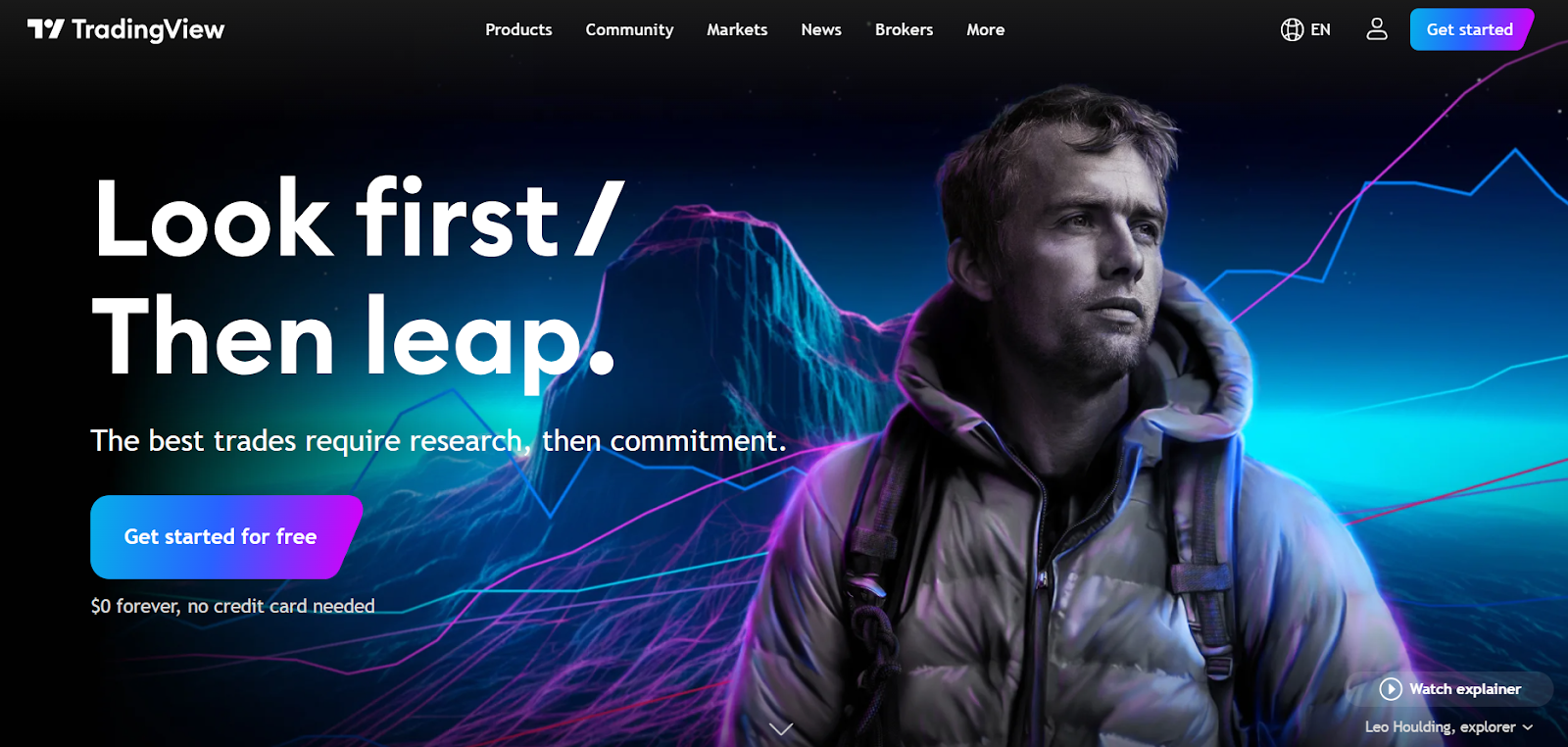
TradingView stands out as a comprehensive charting solution, offering a vast range of technical indicators from basic moving averages to custom-coded oscillators built by its thriving community. It’s commonly used by crypto traders, but the same interface applies seamlessly to stocks, commodities, or forex.

TradingView

Source: TradingView

The highly interactive nature of the platform fosters collective learning and improvement by letting you share the charts, scripts, and strategies of others. For those dealing with multiple crypto pairs, TradingView’s multi-chart setup can save time and improve research depth, enabling you to track global market trends in one streamlined dashboard.

CoinMarketCap

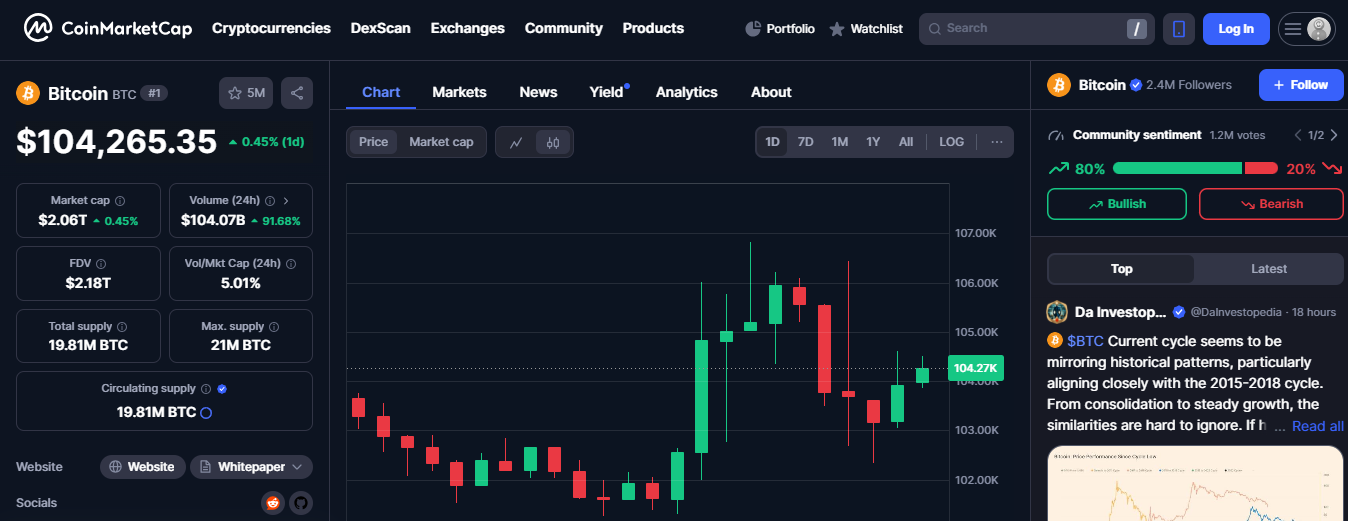
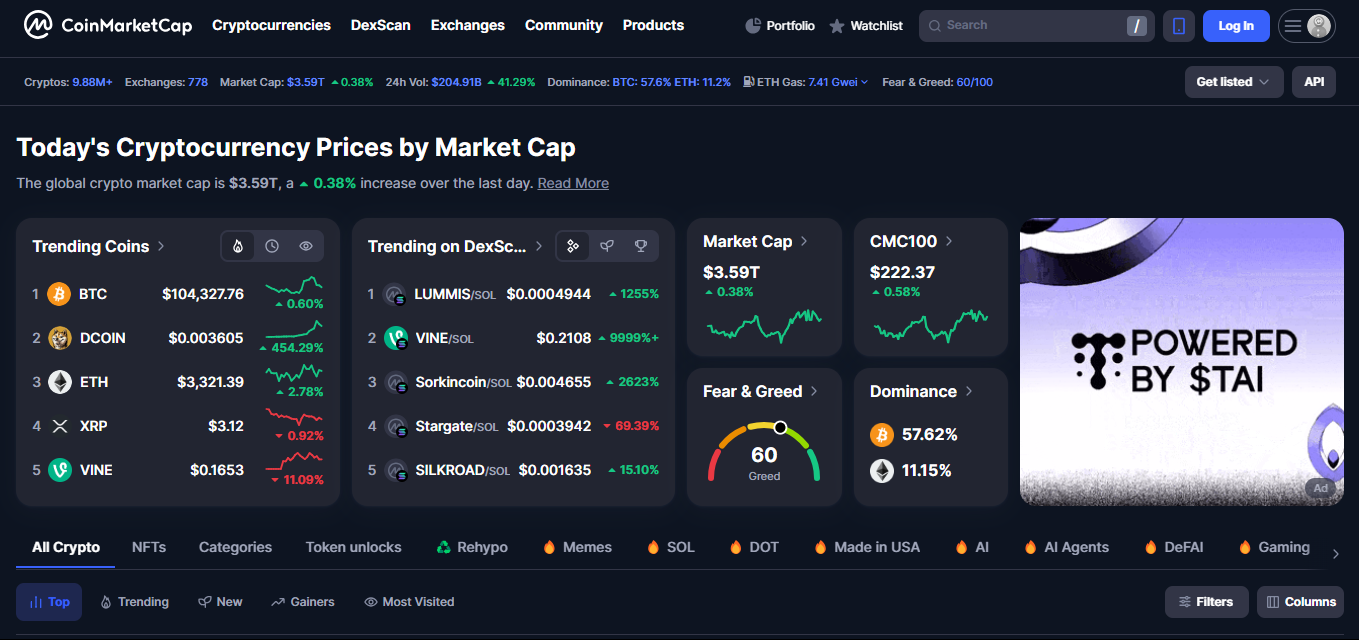
While not as sophisticated as TradingView, CoinMarketCap remains a go-to site for quick data on market capitalization, price fluctuations, trading volume, and overall market ranking. Its charting function is basic yet sufficient for top-level analysis, letting you spot multi-day or multi-month trends at a glance. Users can easily compare different tokens, manage a watchlist, and explore relevant links.

CoinMarketCap

Source: CoinMarketCap

Though advanced traders may look elsewhere for deeper chart overlays, CoinMarketCap’s streamlined interface suits those who need immediate reference points or want to check broader crypto performance.

How to trade crypto with a technical indicator

Trading with indicators involves more than simply spotting a crossover or an overbought reading. You should combine at least one trend indicator with a momentum or volume-based tool to validate signals.

For instance, if your MACD line crosses above its signal line in a market that is making higher highs, this combination offers added confidence in a bullish move. Always take into account your risk tolerance when sizing positions, and be ready for false signals in a highly volatile environment.

Setting protective stop-loss orders is another vital step. You might place a stop just below a confirmed support level in case price action reverses.

Monitoring fundamental developments and market sentiment helps you avoid solely relying on charts. A sudden regulatory announcement or surprise listing can quickly nullify an indicator-based entry.

Adjust your strategies according to the crypto’s liquidity, as smaller tokens may be prone to whipsaw price shifts. Finally, review each trade after it closes. Keep notes on why you entered and how the indicator performed.

Over time, you can refine your approach to adapt to changing market conditions and avoid repeating mistakes.

Conclusion

Each of these indicators can offer valuable insights into ongoing price action, but no single tool guarantees consistent gains. The crypto market remains a fast-moving space with significant swings. Combining multiple indicators and verifying them with fundamental observations often yields more balanced decisions.

You should also stay up to date on macro developments and be mindful of your own trading psychology. By approaching crypto with the right mix of technical research, strategy, and discipline, you can better prepare yourself for both opportunities and potential pitfalls.

FAQs

What is the best indicator for cryptocurrency?

No single indicator excels for all scenarios. Many traders favor combinations like moving averages for spotting trends and RSI for momentum. This layered approach often lowers the chance of misleading signals.

What is the most accurate crypto predictor?

Accuracy depends on market conditions, volatility, and trader skill. Some rely on MACD or Bollinger Bands for dynamic feedback. Others mix multiple indicators with broader research to increase reliability.

Do crypto indicators work?

Indicators can help make structured decisions, but they are not foolproof. Market sentiment and external factors can override technical patterns. Combining several tools and adjusting for new events is generally the best approach.


Source link

The Evolution of Online Communities in the Web3 Era | NFT News Today

0
The Evolution of Online Communities in the Web3 Era | NFT News Today


The ability to meet new people in online communities is something that’s always drawn people to the internet – something that makes people all over the world feel closer together and connected by the things that they love. However, the internet is not a consistent place, it’s not the same place that it was ten years ago, and it won’t be the same in ten years’ time. That can make examining what it’s like now, in this current era of flux, so interesting – as well as valuable for those who are looking to jump into some online communities.

Means of Communication

In some ways, the modes of communication might seem to you no different than they have been for several years. You have multiple ways of calling people, either through audio alone or with video, and you have a myriad of messaging services. The furthered integration of short-form video content after its success on platforms like TikTok has showcased a type of simultaneous, back-and-forth development between platforms (even when platforms are owned by the same companies). 

However, it’s also the presence of influencers that have changed up how people communicate. Now, it’s not only the ability to take to a forum or social media space that enables people to discuss their opinions. Prominent influencers, through platforms like Twitch, can directly engage with their audience and share in a conversation, which can add a whole layer on top of things like video game releases. 

Advanced Accessibility

One of the most distinguishing aspects of the Web3 era comes down to the presence and availability of cryptocurrency. This has gone from being something niche, only known to those within the tightest of online communities, to something more widely accessible. A large part of this wider accessibility has to do with how it’s treated on platforms such as online casinos, including jackpotcity.ca. Here, it’s included as one of the many ways that customers can pay, something that increases the dynamism of the platform and the comfort of the audiences – all while ensuring a safe, encrypted platform. This is hardly the only example either, and there are many digital outlets that are expanding to cover such bases, which only furthers how accepted crypto becomes.

Offline Communities

In the grand scheme of things, the internet as defined by the term Web3 might not mean anything to the vast majority of people in the world. The internet is just a part of their lives, inescapable and increasingly integrated into various areas.

To that end, what might be most notable about the modern era could be how many communities are forming around the idea of leaving the online world behind. Taking a step back into the physical world and the direct interaction with other people face-to-face. This is something that people might do for mental health reasons, as well as a way to look at their phones less, arguably forming an element of counter-culture in much the same way that anything popular has created such communities.


Source link

BBC Brings Award-Winning Series ‘Boarders’ to the Metaverse – Cryptoflies News

0
BBC Brings Award-Winning Series ‘Boarders’ to the Metaverse – Cryptoflies News


1

The BBC has teamed up with renowned game development studio The Gang to bring the award-winning series Boarders to life within the popular Roblox metaverse platform. 

The collaboration celebrates the launch of the show’s second season on BBC iPlayer with a limited-time activation in Roblox’s Paradise RP.

Players can now explore a virtual recreation of St. Gilbert’s boarding school and immerse themselves in the world of Boarders. Digital screens within the virtual school also feature a trailer for Boarders Series Two.

The experience offers quests from interactive non-player character (NPC) versions of characters from the series like Jaheim, Leah, and the headmistress Carol Watlington-Geese. 

Completing these missions rewards players with exclusive in-game items, including the coveted St. Gilbert’s blazer and a sleek convertible inspired by the series.

You Might Be Interested In

The initiative was launched in conjunction with the series’ February 3rd premiere, providing fans with a more immersive way to celebrate the return of Boarders.

“The integration of Boarders into Paradise RP reflects our commitment to engaging with young audiences where they are,” said Milly Chu, Digital Commissioning Executive for BBC Drama.

Studio Lambert’s Creative Director Madeleine Sinclair echoed the excitement, calling the partnership a fun way to extend the storytelling universe.

This isn’t the first time the metaverse has been used to offer fans a new way to engage with their favorite TV shows. In 2023, The Sandbox partnered with Banijay to bring Black Mirror and Peaky Blinders into the metaverse. That same year, the popular Turkish series Magnificent Century made its debut in the metaverse. 

Additionally, The Voice ventured into the virtual space with “The Voice Coach Battle,” a gamified experience where players could step into the role of celebrity coaches, influence outcomes, and earn exclusive rewards.


Source link

Top NFT Collections – February 7, 2025

0
Top NFT Collections – February 7, 2025


Top NFT Collections (Last 24h)

Here are the hottest NFT Collections of the day.

Rank

Name
Volume
Transactions
Chains
URL

1

Bit Bears by Berachain
994.97 ETH
138
ethereum
View

2
The Band Bears
The Band Bears
626.17 ETH
47
ethereum
View

3
Top NFT Collections – February 8, 2025
Pudgy Penguins
624.96 ETH
61
ethereum
View

4
Top NFT Collections – February 9, 2025
Azuki
443.43 ETH
113
ethereum
View

5
CryptoPunks
CryptoPunks
331.23 ETH
4
ethereum
View

6
Bond Bears
Bond Bears
249.00 ETH
2
ethereum
View

7
Uniswap v4 Positions NFT
248.24 ETH
23
ethereum
View

8
Lil Pudgys
Lil Pudgys
199.13 ETH
186
ethereum
View

9
The Baby Bears
The Baby Bears
165.09 ETH
6
ethereum
View

10
Honey Comb
Honey Comb
166.55 ETH
623
ethereum
View


Source link

NFT Gaming Market Forecast 2025–2030: Worldwide Trends | NFT News Today

0
NFT Gaming Market Forecast 2025–2030: Worldwide Trends | NFT News Today


NFT gaming has emerged from a niche experiment into a significant segment of the gaming industry. Early successe stories like Axie Infinity demonstrated the potential of play-to-earn (P2E) models, but also revealed challenges that the sector must overcome to achieve mainstream status.

As we look ahead from 2025 to 2030, this forecast examines key worldwide trends shaping the NFT gaming market – from investment inflows and adoption hurdles to evolving game quality and economic models. We also highlight major players driving innovation and provide data-driven predictions for the industry’s growth.

The coming years will be critical in determining whether NFT gaming transitions from a speculative craze into a sustainable, integrated part of the global gaming ecosystem.

Investment and Funding Trends (2025–2030)

Venture Capital Influx and Cooling

The NFT gaming sector saw frenzied venture capital investment during the early 2020s. Funding spiked dramatically in 2021–2022, with blockchain game startups raising over $5.3 billion in 2022 alone​. Major deals during this boom included Sorare’s $680 million round in 2021 (valuing the NFT fantasy sports platform at $4.3 billion)​, and Yuga Labs (of Bored Ape Yacht Club fame) raising $450 million in 2022 to build its metaverse game world.

However, the crypto bear market of 2022–2023 brought a sharp pullback in funding. Total announced investments in blockchain gaming fell to about $1.7 billion in 2023, down 70% from the prior year’s peak​. This reset in investor exuberance left many projects scrambling as no late-stage rounds above $100M occurred for most of 2023​. Only two large deals were recorded that year – Nexon’s $100M raise for its MapleStory Universe NFT platform and Line’s $150M investment in its Dosi NFT marketplace​ – both led by established Asian tech firms rather than traditional VCs.

Investor Sentiment and Outlook

Despite the downturn, investor interest in NFT gaming has not disappeared; it has shifted to a more cautious, long-term approach. Venture funding showed signs of stabilization in late 2024, totaling roughly $1.8 billion for the year (the lowest since 2020)​.

Many VCs remain believers in the sector’s future but have become more selective, favoring projects with strong teams, proven engagement, or unique technology. The presence of deep-pocketed backers like Animoca Brands – which has over 380 Web3 investments including numerous NFT game studios​ – indicates that strategic capital is still committed to Web3 gaming.

Similarly, mainstream gaming companies and crypto exchanges are joining funding rounds or acquisitions, blending traditional and crypto gaming. As the market matures, analysts anticipate a return of investment growth. By the second half of the decade, if successful GameFi titles gain traction, we could see renewed venture capital influx and even IPOs of top NFT game companies.

Financial projections for the NFT gaming market underscore its enormous potential: one analysis estimates the sector will grow from ~$0.54 trillion in 2025 to $1.08 trillion by 2030​, roughly doubling in size over five years. Even more conservative forecasts predict robust expansion – for example, Nansen’s research expects blockchain gaming to reach $301.5 billion by 2030, implying a remarkable 68% CAGR.

In short, while the investment climate cooled after the initial hype, confidence is building that NFT gaming will deliver substantial returns by 2030, drawing increasing venture and even retail investment back into the space.

Onboarding and Adoption Barriers

Technical Friction

A major challenge for mass adoption of NFT gaming is the technical barrier to entry for average consumers. Unlike traditional games, which one can simply download and play, blockchain games often require setting up crypto wallets, managing private keys, and navigating blockchain transactions.

This complexity leads to a clunky user experience that can deter newcomers. For instance, most NFT games necessitate an external wallet login or token purchase before you can start playing – a far cry from the “click and play” convenience gamers are used to.

As one market report noted, providing an **instant, seamless in-game wallet and trading interface is crucial, and the lack thereof “might hamper…market growth” by frustrating users​.

Slow transaction speeds or high gas fees on popular blockchains have also been pain points, though many games are migrating to faster, low-cost networks (e.g. Solana, Polygon, or Layer-2 solutions) to improve onboarding.

Between now and 2030, the industry is focusing heavily on abstracting away blockchain complexity – using email or social logins, gasless transactions, and custodial wallets – so players may not even realize they’re interacting with a blockchain. These technical improvements are essential to convert the next wave of players.

Regulatory Hurdles

The evolving regulatory landscape is another barrier that could slow NFT gaming’s growth. Around the world, governments are scrutinizing crypto assets and in some cases directly restricting play-to-earn activities.

South Korea, for example, has effectively banned P2E games by blocking apps that reward cashable items, viewing them as unlicensed prize money gambling​. This forced South Korean blockchain game developers to launch overseas instead of in their huge home market​.

In the West, regulators like the U.S. SEC have begun treating certain NFT sales as potential securities offerings. In 2023 the SEC brought its first enforcement actions against NFT projects for allegedly selling unregistered investment products​. While those cases didn’t specifically target games, they signaled that tokenized game assets could face legal challenges if marketed as profit-seeking investments.

Uncertainty around how to tax NFT transactions and whether in-game tokens fall under gambling or securities laws remains high. Until clearer regulations are in place (or new laws explicitly exempt gaming NFTs), larger traditional game companies may hesitate to integrate NFTs, and some regions may keep prohibitions that exclude millions of potential players. The lack of global regulatory clarity hangs as a cloud over the industry, and navigating compliance will be a key task for NFT game operators through 2030.

Consumer Skepticism

Perhaps the most formidable barrier is gamer perception and adoption. Core gaming communities have so far been wary – if not outright hostile – toward NFTs in games. Many gamers associate NFTs with scams, excessive monetization, or environmental harm, partly due to early missteps by developers.

High-profile attempts to introduce NFTs have met backlash: when Ubisoft unveiled its Quartz NFT initiative for in-game items in 2021, the announcement was “overwhelmingly disliked” and mocked by players​. Valve’s Steam platform went as far as banning all blockchain games in 2021, reflecting this sentiment​.

Similarly, Minecraft’s developer Mojang banned NFT integration in its game, and companies like Blizzard and Sony have publicly clarified they’re not embracing NFTs after fan outcry​. This strong pushback means NFT gaming has an image problem to overcome: the average player is not yet convinced that NFTs offer value rather than just being a cash-grab.

To change minds, upcoming NFT games must prove their fun factor and fairness. Surveys indicate that gamers could accept NFTs if they clearly enhance gameplay (for example, enabling true item ownership or cross-game utility) without turning the game into a pay-to-win or speculative marketplace.

By 2025–2030, as more high-quality NFT games (discussed below) launch, we expect consumer attitudes to gradually soften. Education and positive word-of-mouth will be critical. Still, converting even a fraction of the 3 billion mainstream gamers to NFT gaming will be an uphill battle.

Current blockchain games reach about 7.4 million daily active users (2024 data)​ – a record high, yet still a tiny drop in the global gaming ocean. This gap illustrates the challenge ahead: simplifying onboarding and demonstrating genuine player value are paramount to break out of the crypto-savvy niche and approach mass adoption.

Evolving Quality of NFT Games

From Simple to Sophisticated

The early generation of NFT games (2018–2022) often prioritized blockchain features and earnings over gameplay, resulting in simplistic products. Many “top” P2E titles were essentially DeFi applications with game-like elements, or idle clickers with token rewards. As a result, they “lack any real playability” and depth, created by teams with more crypto experience than game design expertise​.

Graphics and mechanics tended to be rudimentary – a far cry from modern AAA video games. However, this is rapidly changing as the sector matures. Starting in 2023 and accelerating into 2025, we see a wave of NFT games that emphasize gameplay first. Developers with backgrounds at major studios are entering Web3, bringing professional game design, high-fidelity graphics, and rich storytelling to NFT projects.

For example, upcoming titles like Illuvium, Guild of Guardians, Sidus Heroes, and Big Time are built in Unreal Engine and promise “AAA-quality” blockchain gaming experiences on par with traditional PC/console games​. These games feature immersive 3D worlds, complex mechanics (e.g. RPG combat, strategy elements), and polished visuals – with NFTs integrated as just one aspect of the game rather than the sole focus.

Improved Game Mechanics and UX

The new breed of NFT games is exploring innovative mechanics that leverage blockchain without compromising fun. For instance, some games use NFTs to enable player-driven economies or modding. Others implement dynamic NFTs that evolve as the character levels up, adding a new gameplay dimension.

Critically, developers are learning to avoid making the game economy a zero-sum Ponzi. Instead of unlimited minting of reward tokens, more games now cap token supply, introduce sinks (like crafting or breeding costs), or focus on NFT item trading for monetization.

The user experience (UX) is also vastly improving. Leading studios like Mythical Games deliberately hide the blockchain back-end to make their titles feel familiar. In Mythical’s games, players don’t need to understand crypto – there are no MetaMask pop-ups or cryptographic keys to manage.

The company quietly creates wallets for users behind the scenes (having generated hundreds of thousands of wallets this way) and “doesn’t talk about blockchain…or wallets,” focusing on the game features enabled by it​. This approach has paid off: Mythical’s Blankos Block Party attracted over 1 million players, and its 2023 mobile release NFL Rivals reached 4 million downloads by appealing to sports fans with an NFL license​.

Players in these games own their items as NFTs, but the process is so seamless that retention and monetization metrics resemble conventional games​. Such success stories are pushing the whole industry toward frictionless integration of NFTs.

By 2030, we expect NFT games to be virtually indistinguishable from traditional games in terms of graphics and gameplay quality – the blockchain component will be an invisible layer that provides ownership and interoperability benefits without hurting the user experience.

High-quality content will also span genres: beyond the current focus on RPGs and collectibles, look for NFT-based shooters, sports games, strategy titles, and even MMORPGs with production values rivaling top-tier titles.

This overall rise in quality is essential for mainstream adoption, as experts note that only “high-quality games…attracting more players” will drive the NFT gaming market’s growth​.

The Play-to-Earn Model: Sustainability and Shifts

Unsustainable Boom and Bust

The play-to-earn (P2E) model – where players earn crypto tokens or NFTs by playing – was the driving force behind NFT gaming’s early rise. It demonstrated a novel idea: games could financially reward players, especially those in developing regions, for their time and skill.

During the 2021 boom, this model produced astonishing stories: at one point Axie Infinity players in the Philippines were earning more than the local minimum wage just by gaming​. However, the P2E model in its initial form revealed fatal flaws. Most P2E economies were highly dependent on a constant influx of new players buying in; revenue from new NFT sales or fresh money was needed to pay existing players’ rewards.

This effectively turned them into pyramid-like schemes. Once Axie’s user growth stalled and a crushing $625M hack hit its Ronin network in 2022​, the economy unraveled – Axie’s daily user count plummeted by over 80% from its peak within a year​. Across the sector, token prices collapsed as too many rewards were minted.

Generous early incentives led to hyperinflation of in-game currencies, “watering down the value” of tokens and leading players to cash out en masse​. The result was a vicious cycle: falling token prices > players quitting > even lower demand, which killed many P2E games as quickly as they rose.

Furthermore, the focus on extracting earnings had a side effect of compromising gameplay quality, as noted earlier – many P2E titles felt more like a chore or a job than entertainment, which is not sustainable for keeping players long-term​.

Emergence of Play-and-Earn (P&E)

In response to these issues, the industry is pivoting to new economic models often dubbed “play-and-earn” or “play-to-own.” The core idea is to put gameplay first and earning second​.

In Play-and-Earn (P&E) games, players can still earn rewards or own valuable assets, but the game is designed such that the fun and engagement stand on their own. Any monetary rewards are a bonus – not the main reason to play​.

This approach encourages a more balanced economy: if players enjoy the game for its content, they are less likely to abandon it solely because token prices fluctuate. We’re seeing practical adjustments accompany this philosophy.

Many upcoming games are avoiding single-token economies with uncontrolled emission; instead they use dual-token systems (one governance token, one in-game currency with sinks) or even no reward token at all, focusing on NFT item ownership and trading for player profits.

For example, some games allow players to earn NFTs through gameplay achievements which can then be sold to other players – earning through item flipping rather than receiving tokens from the game itself.

Others implement NFT rental and scholarship systems (pioneered by Axie guilds) so new players can join without large upfront costs, mitigating the high entry barrier that early P2E had​. The tokenomics discipline has tightened, with developers consulting economists to model long-term sustainable in-game economies.

Looking ahead, the sustainability of P2E/P&E models will remain a hot topic. There is consensus that future NFT games must avoid the trap of over-rewarding and instead build value loops where players reinvest in the game (through NFT purchases, breeding fees, tournament entries, etc.).

Some see the “play-to-earn” term itself fading, as successful games won’t feel like a grindy job. Instead, we’ll simply have great games that offer true ownership. The earning component will likely be more subtle – perhaps akin to “play-to-own” (you own your gear and can resell it) rather than an expectation of profit.

We might also see hybrid models: limited earning seasons or events within a primarily gameplay-driven experience, or community reward pools distributed based on competitive rankings (esports-style rewards). In any case, by 2025 and beyond, NFT gaming will be experimenting with more robust, longevity-focused tokenomic designs​.

The shift to P&E is already evident: developers like QORPO (as quoted in 2023) remain optimistic that “the best is yet to come” for play-and-earn and that higher adoption lies ahead once these models mature​.

The big question for 2025–2030 is which games will crack the code of a sustainable economy that rewards players while also being fun and financially viable. Those that do could redefine gaming by proving that playing and earning can coexist in a healthy, long-term way.

Market Challenges and Threats

Despite the optimistic growth trajectory, the NFT gaming market faces several key challenges that could impede its progress. Addressing these threats will be crucial for the sector’s continued expansion through 2030.

Regulatory Scrutiny and Legal Risks:

Regulatory uncertainty remains one of the top concerns cited by industry analysts​ Mordor Intelligence. As discussed, different jurisdictions have taken varying stances – from South Korea’s ban on P2E games to Western regulators probing whether NFTs constitute securities.

The lack of a clear, unified regulatory framework means NFT gaming companies must tread carefully. New regulations could introduce compliance costs, such as requirements for player KYC/AML (know your customer/anti-money laundering) when trading NFTs, or restrictions on token utility (if classified as securities or gambling instruments).

In a worst-case scenario, harsh regulations or bans in major markets could stifle innovation or push NFT gaming underground. On the other hand, positive regulatory developments (like Japan’s more open approach to NFTs in games, or Hong Kong’s pro-crypto stance) could bolster growth.

Until global standards emerge, legal risk will continue to shadow NFT projects, and companies will need legal expertise to ensure their game economies and token sales don’t run afoul of laws.

Security Vulnerabilities:

NFT games inherit all the security challenges of the crypto world. Hacks, scams, and exploits are a significant threat to both companies and players. The Ronin hack of March 2022 was a wake-up call – over $615 million was stolen from Axie Infinity’s sidechain by hackers exploiting validator vulnerabilities​.

Such a massive heist not only devastated the game’s economy but also eroded trust. Beyond hacks of the blockchain infrastructure, there are risks of smart contract bugs in game NFTs or marketplace contracts that could be exploited.

Phishing attacks target players, who might unwittingly sign malicious transactions and lose their valuable in-game assets. Every high-profile security failure makes headlines and could scare away prospective players (especially if they are not experienced with self-custody of digital assets).

To mitigate this, NFT game companies are investing in audits, hiring security firms, and in some cases opting for centralized custody of assets (trading off some decentralization for improved security, at least until the tech hardens).

Over the next few years, we expect to see continued improvements in blockchain security and perhaps insurance products to protect gamers’ assets. However, security will remain a cat-and-mouse game; a single major exploit can tank a game’s reputation overnight, making it an ever-present risk in the market.

Scalability and Infrastructure:

While blockchain networks are improving, scalability is still a concern for NFT gaming at a truly global scale. Popular games could see millions of daily transactions (item trades, battles recorded on-chain, etc.), which many blockchains today would struggle with without significant fees or delays. Ethereum’s network congestion and high gas fees in 2021, for instance, would have been prohibitive for any real-time game usage.

The industry has responded with various solutions: Layer-2 networks and sidechains (Immutable X, Polygon, BSC, Avalanche subnets, Ronin, and others) that handle game transactions more efficiently, often settling back to Ethereum for security. New blockchains optimized for games (Aptos, Sui, Flow) have also entered the fray.

By 2030, Ethereum 2.0 sharding and widespread L2 adoption, as well as cross-chain interoperability protocols, should alleviate many scalability issues. Still, integrating these solutions poses development challenges, and competing technical standards (different wallets, token standards on each chain) can fragment the user base.

Another aspect of scalability is platform support: Apple and Google’s mobile app store policies around NFTs are still evolving, and their restrictions (e.g. requiring in-app purchases go through them, or forbidding external NFT purchases) could limit how games scale on mobile.

Similarly, PC platforms like Steam currently block NFT games, forcing projects to seek distribution on alternative stores (Epic Games Store, or standalone launchers). Until these major platforms fully embrace blockchain, NFT games may not scale to the entire addressable market.

Over the latter half of the decade, watch for shifts in platform stances – a policy change by Apple or Steam to allow NFT integrations (perhaps under certain conditions or their own marketplace frameworks) would be a breakthrough for scalability and reach.

Public Perception and Market Trust:

The exuberance of the NFT boom was accompanied by scams and speculative excess, which have somewhat tainted the sector. Rug pulls, where developers disappeared after selling NFTs, and oversaturated collections of low-quality projects have made many consumers skeptical.

The broader NFT market saw a downturn in 2022–2023, with trading volumes dropping and many NFTs losing value. This broader market cooling can spill into gaming – players might ask, “Will my in-game NFTs retain value or become worthless fads?” Building trust will be essential.

Established brands entering the space can help (e.g. if a beloved franchise launches an NFT game carefully, it may reassure fans that it’s not a scam).

Transparent development, open-roadmaps, and community governance (via DAOs) in NFT games are strategies to build player trust. Nonetheless, the volatility of crypto markets remains a challenge: in-game economies can be buffeted by outside speculation or macro crypto downturns.

If Bitcoin/ETH crash, it often drags NFT values down, which could disrupt in-game markets and player sentiment. Thus, NFT gaming exists within a larger crypto context and isn’t entirely insulated from it.

Environmental and Ethical Concerns:

Though technological advances (like Ethereum’s switch to Proof-of-Stake) have greatly reduced the environmental impact of NFTs, the early narrative of “NFTs are bad for the planet” left a mark.

Some environmentally conscious consumers still object to blockchain games on principle, even if many newer chains are low-energy or carbon-neutral. NFT games will have to continue counteracting this perception, perhaps by highlighting energy-efficient networks or purchasing carbon offsets.

There are also emerging ethical questions: for instance, if a game’s NFTs become very valuable, does it encourage a gambling or speculative mindset in young players? Will regulation be needed to protect players from excessive financial risk in games?

These soft challenges require careful self-regulation by the industry to ensure NFT gaming remains a fun entertainment medium and doesn’t devolve into unregulated casinos or exploitative economies.

In summary, while NFT gaming’s future is bright, it is not guaranteed. Regulatory crackdowns, security failures, scalability bottlenecks, or simply failure to win over gamers could derail the current momentum.

The period from 2025 to 2030 will likely see the industry actively addressing these challenges. Projects that can navigate the gauntlet – by being compliant, secure, scalable, and player-friendly – will define the success stories of the NFT gaming revolution.

Major Companies and Projects Shaping NFT Gaming

The NFT gaming landscape is populated by a mix of crypto-native startups and forward-thinking traditional gaming companies. Here are some of the leading companies and projects driving innovation and their impact on the industry:

Sky Mavis (Axie Infinity):

Vietnam-based Sky Mavis is the studio behind Axie Infinity, the pioneering NFT game that put play-to-earn on the map. At its height, Axie boasted millions of daily players and a thriving economy. Sky Mavis demonstrated the revenue potential of NFT games – reportedly earning over $1.3 billion in 2021 from marketplace fees and NFT sales.

However, Axie’s subsequent crash also taught the industry hard lessons about economic design and security (as seen with the Ronin hack). Sky Mavis has since been iterating on the game (with Axie Infinity: Origin and Homeland updates) and is focused on making its economy more sustainable.

The company also launched the Ronin Network, an Ethereum sidechain tailored for gaming, which now hosts other projects. Sky Mavis’s experience – from meteoric rise to reset – has been invaluable for newer entrants. It remains a key player, and if it successfully reboots Axie’s economy, it could herald a “second act” for play-to-earn done right.

Animoca Brands:

Hong Kong-based Animoca Brands has become a powerhouse investor, publisher, and innovator in Web3 gaming. Animoca has a “growing portfolio of more than 380 Web3 investments” spanning NFT games, marketplaces, and metaverse projects​. It owns or holds major stakes in projects like The Sandbox (a popular voxel-based metaverse game platform), Phantom Galaxies (a space MMO), Revv Racing, and many more.

Animoca champions the vision of an open metaverse where virtual property rights are paramount – its CEO Yat Siu often speaks about empowering players to own their game assets as NFTs. Through its investments and acquisitions, Animoca is effectively building an ecosystem of interconnected games and services.

The company’s influence can be seen in how it rallies major brands to enter NFT gaming; for example, it has facilitated partnerships for The Sandbox with Adidas, Atari, Snoop Dogg, and dozens of others, bringing mainstream IP into the space. Animoca’s war chest and strategic guidance are accelerating the entire sector’s growth.

As one of the best-funded entities (valued at $6 billion+ in 2022), Animoca is expected to continue making big moves – from funding indie studios to possibly pursuing a public listing, all of which add credibility and resources to NFT gaming.

Yuga Labs (Bored Ape Yacht Club & Otherside):

Yuga Labs is the company behind the iconic Bored Ape Yacht Club (BAYC) NFT collection, and it has expanded aggressively into gaming and the metaverse. In 2022, Yuga raised $450 million to build Otherside, an ambitious metaverse gaming platform that will integrate its Bored Ape characters and other NFTs into a virtual world.

Yuga’s approach is to leverage strong IP (BAYC is a globally recognized NFT brand) to create a social gaming experience. They have already run interactive demos of Otherside, attracting thousands of players in live events.

Additionally, Yuga has released mini-games like Dookey Dash (an endless runner game for BAYC holders to compete for prizes), blending token/NFT utility with actual gameplay. As a relatively new entrant in game development, Yuga Labs is partnering with experienced game studios (like Improbable) to realize its vision.

If Otherside succeeds by late-decade, it could serve as a blueprint for how to turn an NFT collection into a full-fledged gaming universe. Yuga’s efforts are closely watched as a test of whether community-owned IP (the BAYC NFTs are owned by users) can become the foundation of a popular game world.

Mythical Games:

Ranked the #1 blockchain game company in 2024​ Mythical Games is known for focusing on high-quality gameplay with seamless blockchain integration. Their flagship title Blankos Block Party was one of the first NFT-powered games to launch on the Epic Games Store, featuring a colorful world of collectible toy characters (Blankos) that players can own and trade.

Mythical’s big innovation is ensuring players don’t need any crypto knowledge – the tech is under the hood, and they emphasize fun, creative gameplay.

In 2023, Mythical launched NFL Rivals (an officially licensed NFL arcade game) on mobile, marking one of the first times a major sports league got involved in NFT gaming. With 4 million downloads of NFL Rivals in its first months​, Mythical proved that real-world brands and NFTs can draw mainstream gamer interest.

The company also provides a platform (Mythos ecosystem) for other developers, indicating a pivot to become an enabler of Web3 gaming at large.

Mythical’s ethos – “mass-market adoption [is] driven by the experiences, not the underlying blockchain”​ – is influencing other studios to adopt a user-first design. As it expands to more titles and possibly other sports, Mythical is positioned as a leader in bringing NFTs to everyday gamers.

Immutable (Immutable X & Gods Unchained):

Immutable is an Australian company known both for its games and its technology platform. It created Immutable X, a Layer-2 scaling solution on Ethereum designed for NFT trading with zero gas fees, which has become popular for gaming NFTs. In fact, in 2024 Immutable’s network even surpassed Ethereum in NFT trading volume for games (with $330M volume)​, underscoring its growing influence.

Immutable’s flagship game is Gods Unchained, one of the earliest NFT trading card games (often likened to a blockchain-based Hearthstone) that allows players to truly own and trade their cards. They also released Guild of Guardians, a mobile action RPG with NFT characters. Immutable’s dual role as a game developer and infrastructure provider gives it a unique perspective – they build tech based on firsthand needs encountered in their games.

The company has secured large partnerships, including previously working with GameStop on an NFT marketplace and partnering with studios to onboard their games onto Immutable X.

By 2030, Immutable aims to be the “Shopify of Web3 games,” offering easy-to-use APIs and solutions so that any game studio can plug in NFT functionality. Their success will contribute to wider adoption by lowering the technical barrier for game developers to enter the NFT space.

Dapper Labs (Flow, NBA Top Shot):

Dapper Labs kickstarted the NFT craze back in 2017 with CryptoKitties, and later created Flow blockchain to support higher throughput for consumer dApps. Dapper’s big hit was NBA Top Shot (launched 2020), a platform for collecting officially licensed NBA highlight clips as NFTs, which went viral and introduced NFTs to mainstream sports fans.

While Top Shot is more of a collectibles experience, Dapper has been expanding into gaming by encouraging developers to build on Flow and through projects like NFL All Day and UFC Strike.

Flow’s ease of use (users can pay by credit card, no crypto needed) and Dapper’s custody solution made it one of the most accessible ways for non-crypto users to engage with digital collectibles – a playbook NFT games are following.

Dapper Labs also has a partnership with LaLiga (Spanish soccer league) for a forthcoming NFT game. As a pioneer, Dapper’s focus on user-friendly experiences and major brand partnerships (NBA, NFL, etc.) has significantly raised awareness of NFT gaming/collectibles. If they launch a true game around these sports NFTs, it could activate millions of sports fans into the NFT gaming world.

The Sandbox and Decentraland:

These two are often mentioned in the same breath as metaverse-driven gaming platforms where users can own land and create content. The Sandbox, majority-owned by Animoca, offers a Minecraft-like voxel environment with NFTs representing land, items, and avatars.

It gained traction by selling land to individuals and brands; by 2022 it had onboarded the likes of Snoop Dogg, The Walking Dead, and HSBC Bank into its world.

Decentraland is a similar virtual world project that gained fame hosting virtual events (like metaverse fashion week) on user-owned land parcels. Both have faced challenges with user retention and technical limitations, but they remain important experiments in user-generated content (UGC) and community ownership in gaming.

They illustrate how NFTs can enable a creator economy – players can build games or experiences on their land and monetize them. By 2030, refined versions of these metaverse platforms (or newer competitors) may play a significant role in NFT gaming, blurring the line between game and social platform. Their impact lies in pushing the concept of interoperability and open-world creativity forward, even if current active user numbers are modest.

Traditional Gaming Giants (Exploring NFTs):

In addition to crypto-native companies, several established gaming firms are cautiously testing NFT waters. Ubisoft was one of the first big publishers to launch in-game NFTs (the Quartz platform for Ghost Recon Breakpoint items in 2021), and while that initial attempt didn’t take off, Ubisoft has invested in Animoca and is quietly researching how to incorporate blockchain in future titles.

Square Enix (maker of Final Fantasy) has been outspoken about the promise of Web3 gaming; it released NFT collectibles and is developing Symbiogenesis, an NFT-based game project. Nexon (Korean gaming giant) as mentioned raised $100M to develop a blockchain version of its hit MapleStory​. Even Epic Games (creator of Fortnite) has allowed NFT games in its store, signaling openness where its rival Steam remains closed.

While no AAA publisher has fully integrated NFTs into a blockbuster game yet, these early initiatives suggest that by 2025–2030, we may see one of the big players launch a major title with NFT elements, especially if they can be sure of market demand and regulatory safety. The involvement of such companies lends credibility and could quickly scale NFT gaming to tens of millions of players given their existing user bases.

These companies and projects, among others, are collectively pushing the NFT gaming industry forward. Their innovations – whether in game design, technology, or business models – are shaping the standards and expectations for what NFT-based games can achieve. As competition heats up, we are likely to see even more groundbreaking projects enter the fray, making this an exciting space to watch through the rest of the decade.

Predictions for the NFT Gaming Market (2025–2030)

What will the NFT gaming landscape look like by 2030? Based on current trends, expert insights, and market data, here are several key predictions and projections for the coming years:

Market Growth and Size:

The NFT gaming market is poised for explosive growth through 2030. As noted, forecasts for market size vary, but all agree on a massive increase. Mordor Intelligence projects the market to reach roughly $1.08 trillion by 2030​, up from $0.54T in 2025 – a strong ~15% annual growth rate. On the other hand, blockchain analytics firm Nansen predicts a more moderate outcome of about $301.5 billion by 2030, albeit with a higher CAGR of 68% (implying a smaller base measurement today).

The discrepancy stems from different methodologies (revenue vs. token market cap vs. transaction value), but the take-away is clear: hundreds of billions of dollars of value will be created in this sector.

By 2030, NFT gaming could comprise a significant chunk of the overall $600+ billion global gaming industry. We will likely see several NFT game companies valued in the multi-billions, and possibly even the first NFT gaming unicorns going public.

Regions such as Asia-Pacific will lead this growth (it’s already the fastest-growing market for NFT gaming adoption​ driven by crypto-friendly and gaming-centric countries like South Korea, Japan, and parts of Southeast Asia. Expect to see more regional investment and localized games catering to these markets as they bloom.

User Adoption and Mainstream Penetration:

By 2030, NFT gaming should move beyond early adopters and into the mainstream consciousness. We predict that tens of millions of gamers will be regularly playing blockchain-powered games, and a significant percentage of new game releases (particularly in the free-to-play category) will incorporate some form of NFT or digital asset ownership.

Some optimists, like certain industry execs, even foresee “mass adoption…by the end of 2025”​, though a more realistic scenario is a gradual climb through the decade as the technology and trust improve. The stigma around NFTs will diminish as successful games demonstrate clear benefits (for example, a hit MMORPG where players truly own and trade rare gear might make headlines and shift perceptions).

Onboarding will be much smoother – many players might be interacting with NFTs without even realizing it, as wallets get embedded in game accounts. We also anticipate growth in cross-platform integration: console and mobile games will slowly open up to NFTs.

Perhaps by 2027–2028, one of the console makers (Sony, Microsoft, Nintendo) will experiment with allowing NFT items or have a partnership to support blockchain games on their hardware, which would be a tipping point for adoption.

Additionally, player demographics for NFT games will broaden. Early NFT gamers skewed towards crypto enthusiasts, but the next wave could include more diverse groups – from sports fans drawn by fantasy sports NFT games, to strategy gamers enticed by owning their units/lands in-game, to even younger gamers if education and parental controls around NFTs improve.

If current daily active wallet counts are in the single-digit millions​, by 2030 we could reasonably see 100+ million daily active players across all NFT games, given a few breakout successes and wider platform support.

Game Quality and Content:

The latter half of the decade will see AAA-quality NFT games becoming the norm. Many studios are currently in development with big-budget blockchain games (some backed by the funds raised in 2021–22). By around 2025–2026, we expect a wave of these releases. By 2030, the distinction between a “blockchain game” and a “normal game” will fade – most players will judge a game by its genre and quality, not by whether it uses NFTs internally.

Graphically intensive, immersive games using Unreal Engine 5+ or equivalent will be common in the NFT space. We’ll likely see the first blockbuster MMO or open-world RPG with NFTs around 2026, and if one of those takes off, it could anchor the perception of NFT games as high-quality entertainment.

Interoperability might also start to materialize: a long-held dream is that NFTs from one game could be used in another (like using your character skin or sword in multiple virtual worlds). While true interoperability faces design and balance challenges, by 2030 there could be metaverse ecosystems where multiple games or experiences allow certain NFTs (avatar wearables, for instance) to crossover.

We may also see standardization efforts – perhaps an “NFT Item Standard” that multiple RPGs adopt so that an item earned in one dungeon crawler could at least be recognized or rewarded in another. The concept of the metaverse will likely evolve alongside NFT gaming, with games becoming entry points into broader virtual worlds where players socilize, play, and even work, all facilitated by owned assets.

Evolution of Monetization Models:

Traditional gaming monetization (like season passes, loot boxes, and microtransactions) will be reimagined in light of player ownership. Play-and-earn models will mature and prove whether they can retain players without constant monetary incentives. By 2030, successful games will have robust virtual economies that might even tie into real-world economies.

of game currencies could allow exchange rates between game gold and fiat currency, essentially turning skilled gameplay or creation into a form of livelihood (hopefully in a healthy, opt-in way). The boundary between gamers and content creators will blur: more games will reward players for creating content, mods, or levels as NFTs, which they can sell – empowering user-generated content as a revenue stream.

We anticipate games implementing DAO governance to involve communities in decision-making (some games are already experimenting with DAO treasuries). In terms of play-to-earn, we expect a few models to prove sustainable: perhaps games that share a portion of revenue with players who stake tokens or who hold governance NFTs, effectively making loyal players shareholders of the game’s success.

Tokenomics will become a core competency for game companies, much like level design or art – economists will be part of game dev teams to ensure stable long-term economies. We might also see integration with DeFi (decentralized finance) – for instance, players lending their NFTs or game currency on external platforms for yield during downtime, merging gaming and finance in new ways.

Integration of Emerging Tech:

NFT gaming won’t exist in a vacuum; it will likely intersect with other tech trends by 2030. Virtual Reality (VR) and Augmented Reality (AR) could play a role – imagine AR mobile games where NFT creatures or items appear in the real world (a successor to Pokémon Go where your caught creatures are NFTs you own and can trade).

VR-based metaverse games might leverage NFTs for property and items, making those experiences more persistent and economy-driven. AI (Artificial Intelligence) is another wildcard: AI-driven NPCs or AI-generated content could be tokenized as NFTs.

For example, AI might generate unique weapons or quests that are minted as one-of-a-kind NFTs for a player, personalizing gaming experiences. AI could also help moderate and balance complex game economies in real-time, ensuring sustainability.

On the infrastructure side, blockchain scalability by 2030 (with advancements like sharding, new consensus mechanisms, etc.) may allow most game actions to be on-chain if desired, enabling unprecedented transparency (players could verify the drop rates of loot are fair on-chain, for instance).

Additionally, cross-chain interoperability might allow NFTs to move between different blockchain networks easily, meaning games can choose their preferred tech stack without isolating players – your inventory could travel with you across the metaverse, regardless of the underlying chain.

Potential Disruptions:

Several potential wildcards could disrupt the trajectory of NFT gaming. One is the chance of regulatory overreach – if a major jurisdiction like the EU or US imposed very restrictive laws on digital assets in games (for example, treating all game tokens as securities or banning secondary sales), it could significantly slow adoption and push developers to more permissive regions.

Conversely, a positive disruption could be a major platform embracing NFTs – if, say, Steam reverses its ban or a new decentralized game distribution platform becomes popular, it could open the floodgates for NFT games to reach vast audiences.

Another disruption could come from outside the gaming industry: for instance, if social media platforms or content platforms integrate NFTs (as profile items or creator economy tools), they might merge with gaming experiences (Twitter or Meta integrating NFT avatars that also serve as game characters, for example).

Lastly, the arrival of a killer app game – something with the cultural impact of a Fortnite or Minecraft but built on NFT principles – would be a game-changer (pun intended). If such a title hits before 2030, it could accelerate every trend in this forecast, driving more investment, adoption, and innovation overnight.

Final Thoughts

By 2025–2030, NFT gaming is expected to graduate from its experimental phase into a more mature, mainstream industry segment. Investment is flowing more judiciously, technology is improving at a rapid clip, and developers are learning from early mistakes to create games that are both enjoyable and economically sound.

We anticipate a future where a sizable portion of gamers hold blockchain assets, whether they realize it or not, and where virtual economies and real economies intertwine in exciting new ways. The journey will not be without hurdles – regulatory, technical, and social challenges must be navigated – but the momentum suggests that digital ownership in gaming is here to stay.

As one report succinctly put it, the promise of “true ownership of assets” is a key driver that will continue to propel the GameFi sector forward​. If the industry can deliver on that promise while keeping games fun, the stage is set for NFT gaming to revolutionize how we play, earn, and interact in virtual worlds by 2030.



Source link

Can Cardano Ever Be A Top 3 Crypto? Why Do So Many Solana Holders Love Panshibi?

0
Can Cardano Ever Be A Top 3 Crypto? Why Do So Many Solana Holders Love Panshibi?


As the crypto market faces a wave of volatility, both Cardano and Solana have plummeted, posting major losses in the last 7 days and beyond. Meanwhile, Panshibi ($SHIBI) is quickly emerging as a standout among investors looking to diversify their portfolios. This powerful meme coin brings together real utility with meme coin principles to create a unique and engaging ecosystem. Analysts are expecting big gains for the asset in 2025, as the presale continues to gather momentum. So how will Cardano, Solana and Panshibi stack up against each other in Q1? 

What’s Up With The Solana Price Today? 

For the Solana price, it has been rough lately, with the asset posting a 12% loss in the last 7 days. This has brought Solana’s value right down to $203.89, now teasing the $200 mark. After its massive 2024 rally, traders are wondering if it can hold key support levels or if another dip is coming. Tech-wise, however, Solana’s still pushing ahead—the recent release of Firedancer, a next-gen validator client, has made the network even faster and more resilient. There is also Bitcoin integration underway, pulling BTC holders into Solana’s booming DeFi scene. 

Cardano (ADA) Unveils Ambitious Roadmap For 2025 

Cardano’s got big plans for 2025, but the price action isn’t looking great right now. Cardano (ADA) is sitting at $0.7491, down 19% this week, with traders eyeing $0.70 as key support. Despite the dip, the dev team is pushing ahead with a move towards full decentralized governance, where the community calls the shots. They’re also rolling out partner chains for better scalability and even bridging with Bitcoin to bring BTC users into Cardano’s DeFi scene. If adoption picks up, Cardano could make a comeback—but with the market as shaky as ever, it’s still a risky bet, 

Panshibi Reinvents the Wheel for Meme Coins 

While many meme coins rely exclusively on hype, Panshibi is delivering long-term value through a fully interactive and rewarding ecosystem.

Holders don’t just passively wait for price movement; they can participate in AI-driven challenges, complete quests and earn additional tokens in an innovative play-to-earn structure that rewards engagement. This approach ensures continued investor interest and strengthens the community.

Security remains one of the biggest concerns in the meme coin space, with many projects facing issues related to poor liquidity management and lack of developer accountability. Panshibi is setting a new benchmark for trust and transparency. A full security audit and liquidity locks for the team mitigate risks of early sell-offs. 

These security measures distinguish Panshibi from typical meme coin projects, providing a level of confidence rarely seen in this space.

Beyond its financial incentives, Panshibi is aligning itself with a meaningful cause—panda conservation. A portion of project funds is dedicated to wildlife rescue efforts, habitat restoration and conservation education initiatives.

This mission is attracting a growing number of investors who want their crypto holdings to support global causes. As environmental responsibility becomes an important consideration in the blockchain industry, Panshibi is proving that meme coins can have an impact beyond the digital world.

Panshibi Presale Closes In On $590,000 Raised

The Panshibi ($SHIBI) presale continues to gain traction, with almost $590,000 raised in just under two weeks.  The project’s unique approach, pairing meme coin culture with real utility, has prompted analysts to predict a 1,200% price surge before exchange listings. For those who want to be a part of the next big meme coin, Panshibi is impossible to ignore.

You can participate in the Panshibi presale here: 

Telegram: https://t.me/panshibi

Twitter: https://x.com/panshibi

Website: https://panshibi.com


Source link

Popular Posts

My Favorites