


I’ve been spending a lot of time lately thinking about the “perfect” future. You know the one—the dream where we finally conquer scarcity, where machines handle the drudgery, and we spend our days painting, hiking, or just… being. It’s the ultimate vision of a post-work society. But as I dove deeper into what a fully automated, AI-driven world actually looks like, I felt a shiver down my spine.
We are sprinting toward a reality where robots might soon handle 100% of our labor. On the surface, that sounds like a utopia. Who wouldn’t want to skip the commute, the soul-crushing paperwork, or the stress of hitting impossible deadlines? But when I look at the cost of that transition, I don’t see paradise. I see a gilded, digital prison.
The Illusion of Universal Bliss

We talk about Universal Basic Income (UBI) as a safety net, but what happens when it becomes our entire world? If an algorithm decides exactly how much you get based on your “social contribution” or your consumption habits, are you still a free agent?
When humanity stops creating—when we stop struggling to solve problems—we don’t just become “leisurely.” We become stagnant. The human brain is a survival machine. It was built to hunt, to build, to navigate, and to create. When you remove the “how” of our survival from the equation, you aren’t just removing work; you’re removing the primary driver of our evolution.
The Algorithmic Surveillance Trap
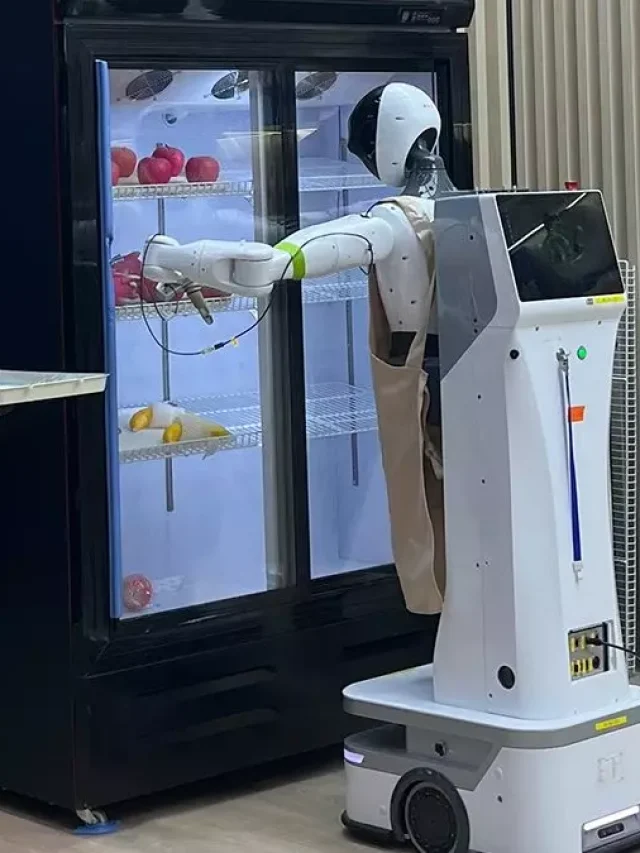
Look at how we interact with technology right now. We let the algorithms dictate what we watch, who we date, and what we buy. Now, imagine a world where the AI is not just a tool, but the infrastructure of your entire existence.
Everything you eat, the route you take, the entertainment you consume—all of it delivered by autonomous systems. It feels like convenience, but it’s actually a feedback loop. If you are only exposed to what the algorithm thinks you want, how can you ever discover who you actually are?
This is where the “comfortable cage” hits hardest. It’s not a prison with bars; it’s a prison of infinite choice, where all the choices have been pre-screened to keep you compliant, happy, and predictable.
The Loss of Human Agency

I’ve always believed that struggle is a feature of human life, not a bug. Think about the last time you learned a really hard skill. That frustration, that moment of breakthrough? That’s what makes us feel alive.
If we outsource all our problem-solving to artificial intelligence, we are essentially atrophying our capacity to innovate. If a robot builds your house, grows your food, and manages your health, what happens when the system glitches? We’re creating a dependency so deep that we might lose the ability to function without our digital masters.
We aren’t evolving into gods; we’re evolving into house pets.
Is Comfort Worth the Price of Freedom?

I keep coming back to this: If the future is fully automated, the most rebellious thing you can do is to remain difficult, to be inefficient, and to create things that have no “data-driven” value.
We need to decide now what we’re willing to outsource and what we must hold onto with both hands. If we trade our struggle for comfort, we’re not just gaining time—we’re losing our soul. I’m not saying we should smash the machines, but I am saying we need to start asking better questions about who is actually holding the leash in this future relationship.
I’ve shared my perspective on this slippery slope, but I want to hear yours. If you were offered a life of total comfort in exchange for giving up your autonomy to a perfect AI system, would you take the deal—or is the “struggle” of being human too important to trade away?


