


Whenever I dive into the latest developments in artificial intelligence, almost everyone is obsessing over the software side of things. We argue about whether ChatGPT is smarter than Gemini, or if Claude writes better code. But behind the scenes of these flashy chatbots, there is a brutal, high-stakes war going on. And it’s not about software at all—it is about the physical silicon that makes it all possible.
I have been tracking the AI hardware market closely, and it is impossible to ignore the elephant in the room: Nvidia. They have an absolute stranglehold on the industry. If you want to train a massive AI model today, Nvidia’s GPUs are the default, undisputed standard. But nobody likes a monopoly, especially tech giants with deep pockets.
Recently, I came across some fascinating internal moves from Alphabet (Google’s parent company) that show they are finally tired of playing second fiddle in the hardware space. Google is opening its wallet and spending billions to break Nvidia’s dominance. Let me break down exactly how they plan to do it, and why I think this is a massive turning point for the tech industry.
The Hardware Bottleneck: The World Runs on Nvidia

Before we look at Google’s counter-attack, we have to understand the battlefield. Why is everyone so dependent on Nvidia?
For years, Nvidia’s Graphics Processing Units (GPUs) were primarily used by gamers. But it turns out, the same mathematical calculations needed to render complex video game graphics are exactly what neural networks need to learn. Nvidia realized this early on and pivoted hard, creating an ecosystem that is now virtually inescapable.
The Problem: Buying thousands of Nvidia GPUs costs astronomical amounts of money.The Waitlist: Even if you have the cash, demand is so high that wait times for these chips can stretch for months.The Margin: Tech giants are tired of handing over massive profit margins to Nvidia just to keep their AI ambitions alive.
This is exactly why Google is accelerating the development and deployment of its own custom silicon: the Tensor Processing Unit (TPU). But having a good chip isn’t enough anymore. You need a place to plug it in.
Google’s $3.2 Billion Masterstroke: Funding the Infrastructure

This is where the story gets really interesting. According to recent reports from the Wall Street Journal, Google isn’t just designing TPUs and hoping people buy them. They are aggressively forcing their chips into the market by financing the infrastructure itself.
Google is reportedly providing a massive $3.2 billion financial guarantee for a new data center campus located in Lake Mariner, western New York.
Here is how the puzzle pieces fit together:
The facility will be operated by an AI cloud platform called Fluidstack.It will be packed with thousands of Google TPUs.These chips will be primarily used to train and run Anthropic’s Claude models.
When I first read this, I thought it was a brilliant strategic move. Google isn’t just selling shovels in a gold rush; they are buying the land, building the mine, and hiring the miners to make sure their shovels are the only ones being used.
Stealing the King’s Playbook
What I find most ironic about this entire strategy is that Google is essentially copying Nvidia’s homework.
Nvidia didn’t become a trillion-dollar company just by shipping processors in cardboard boxes. They actively invested in up-and-coming AI startups, provided cloud financing, and helped build massive AI clusters for their clients. By locking startups into their ecosystem early, Nvidia guaranteed long-term customers. Google is now applying that exact same pressure, turning from a mere chip designer into a heavy-hitting financial backer for the entire AI ecosystem.
The Numbers Speak: An Exploding Market for Custom AI Chips
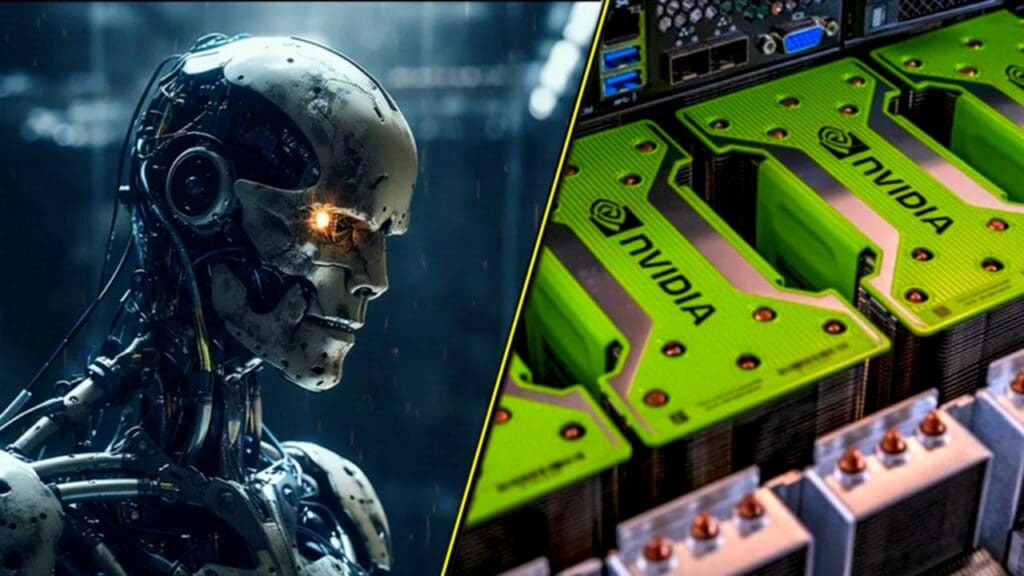
Nvidia might be sitting on the throne today, but the data shows that the foundation is starting to shift. I was looking through some recent market forecasts, and the appetite for alternative AI chips is growing much faster than I anticipated.
Massive Revenue: According to Broadcom CEO Hock Tan, Google’s TPU division is already generating tens of billions of dollars in revenue.Scaling Up: Industry estimates suggest TPU shipments could hit 4.3 million units soon, and absolutely skyrocket to 35 million units by 2028.Market Growth: TrendForce, a major market research firm, expects the custom AI chip market to grow by 45%. To put that into perspective, that is nearly three times the expected growth rate of the traditional GPU market.
The writing is on the wall: companies want alternatives, and Google is perfectly positioned to provide them.
Beyond Hardware: The Software Battlefield and TorchTPU
If you ask any deep learning engineer why they stick with Nvidia, they will all give you the exact same answer: CUDA.
CUDA is Nvidia’s proprietary software layer that allows developers to easily communicate with the GPU. Nvidia has been building and perfecting this software ecosystem for over a decade. It is their ultimate moat. You can build a chip that is twice as fast as Nvidia’s, but if developers have to rewrite all their code from scratch to use it, nobody will buy your chip.
Google knows this. That is why they aren’t just fighting a hardware war; they are fighting a software war.
To break the CUDA addiction, Google has developed a new software layer called TorchTPU. This tool is designed to make it incredibly simple for developers who are used to standard frameworks (like PyTorch) to seamlessly run their models on Google’s hardware. If Google can make the software transition frictionless, Nvidia’s biggest advantage vanishes overnight.
Building the Future Supply Chain
Finally, Google is making sure they have the manufacturing muscle to actually deliver on these massive promises. Designing a chip is one thing; printing millions of them at scale is another.
I noticed they are aggressively diversifying their supply chain:
Intel Partnership: Google has reportedly placed orders for millions of TPUs with Intel for future production runs.Marvell Technology: They are in active discussions with Marvell to co-develop the next generation of custom silicon.
By spreading out their manufacturing and development partnerships, Google is insulating itself against global supply chain shocks—something Nvidia has occasionally struggled with.
I genuinely believe we are watching the biggest tech power struggle of our generation. Nvidia has a massive head start and an incredibly loyal developer base, but Google has infinite resources and a desperate need to control its own destiny in the AI era. If Google’s $3.2 billion gamble pays off, we might see a completely fractured hardware market where TPUs and custom silicon rule the cloud, pushing traditional GPUs back into the hands of gamers.
I am really curious about how you view this rivalry. Do you think Google’s deep pockets and custom TPUs are enough to finally break Nvidia’s monopoly, or is Nvidia’s CUDA software ecosystem simply too deeply rooted in the industry to ever be replaced? Let me know your thoughts down below!


