Home Blog Page 9

Binance Will List Katana (KAT) For Spot Trading

0
Binance Will List Katana (KAT) For Spot Trading


Investors are shifting their focus toward utility-driven assets as Binance will list Katana (KAT) on its premier spot trading platform, which marks a pivotal moment for the DeFi sector, as it brings a “Real Yield” focused Layer 2 to a massive global audience. Katana has spent months refining its “Confidentiality-by-design” and liquidity models within the Binance Alpha incubator. Now, it steps onto the main stage with a Seed Tag, emphasizing its status as an innovative yet high-stakes project. By integrating deep liquidity with institutional support from Polygon Labs, Katana offers a unique value proposition that few other Layer 2s can match.

Learn more: What Is Katana (KAT)? Polygon’s DeFi Chain Explained

About Katana (KAT)

Katana defines itself as the first DeFi Layer 2 built specifically for “Real Yield,” moving away from the inflationary reward models of the past. Its architecture centers on the Chain-Owned Liquidity (CoL) framework, which effectively turns the network into its own biggest liquidity provider. Instead of relying solely on external users who might withdraw their funds at any moment, the network uses its own revenue to maintain deep pools, creating a “Liquidity Flywheel” that drives continuous growth and ensures that the ecosystem remains functional even during aggressive market swings.

To move assets into this ecosystem, Katana utilizes the VaultBridge. This tool does more than just move crypto; it transforms bridged assets into yield-producing positions. For example, when you deposit Ethereum through VaultBridge, the system issues vbTokens that automatically participate in the network’s liquidity programs. The seamless integration ensures that every dollar on the chain stays productive. Moreover, Katana concentrates its liquidity into a “Core App Stack” featuring Sushi, Morpho, and Vertex. By focusing on a few high-performance applications rather than hundreds of small ones, Katana provides much stronger market depth and a smoother user experience.

Additionally, the introduction of AUSD, the native stablecoin, anchors the entire network. AUSD acts as the “economic constitution” of Katana, providing a stable medium for trading and lending. Using AUSD, Katana is able to capture more value within its own borders, which it then redistributes to KAT holders. Backed by industry heavyweights like GSR and mentored by the AggLayer Breakout Program, the project possesses the technical and financial “moat” required to dominate the DeFi space. It combines the security of zkSync Era with a user-centric design, making professional-grade DeFi tools accessible to everyone with a MetaMask or Trust Wallet.

About Katana (KAT)

Katana’s Total Revenue

KAT Token Details

The KAT token acts as the primary “fuel” and governance “ballot” for the entire Katana ecosystem. Beyond its basic function of paying for network gas, KAT integrates deeply into the protocol’s unique reward distribution system. It serves as the connective tissue between the users, the developers, and the network validators.

Primary Network: Katana NetworkToken Symbol: KATOfficial Contract: 0x7f1f4b4b29f5058fa32cc7a97141b8d7e5abdc2d

Total Supply: 10,000,000,000 KAT

KAT holders can lock their tokens to participate in “Liquidity Governance.”, allowing them to vote on which asset pools receive the highest yield multipliers. As a result, this creates a competitive economy where projects strive to attract KAT stakers to their specific pools. The model ensures that the community decides the direction of the network’s liquidity. Moreover, the governance aspect gives every holder a voice in protocol upgrades and fee adjustments.

KAT Token DetailsKAT Token Details

KAT Token Details

The tokenomics follow an “anti-dilutive” path for active participants. As the network’s trading volume increases, the protocol-level yield increases accordingly, creating a direct correlation between network utility and the rewards that the system distributes to KAT stakers. The model makes sure that the token functions as a productive asset rather than just a speculative one. It captures a “slice” of every financial transaction occurring within the Katana borders. Furthermore, the 150 million KAT earmarked for marketing will fund upcoming “Yield Boosters.” These boosters will attract a fresh wave of liquidity, further enhancing the token’s underlying value proposition for all long-term holders.

User Focus: No VC seed sales; foundation prioritizes community participation.

Incentives: 1 billion of KAT allocated to core apps; 1 billion of KAT for TVL/institutional commitments.

Unlock Priority: Users and liquidity providers unlock ahead of the core team.

Community: 1.5 billions of KAT airdrop rewards Polygon’s incubation efforts.

Key Date: 140 millions of vKAT becomes claimable on the Binance listing date (March 18).

Team: 15.65% allocation subject to a 1-year cliff and 4-year vesting.

Liquidity: 300 millions of KAT from the Treasury enables smooth trading upon launch.

Binance Spot Trading Details

Binance is set to initiate spot trading for KAT on March 18, 2026, at 13:00 (UTC). The Seed Tag applied indicates that KAT is a relatively new token with higher-than-normal risk. Traders must complete the mandatory risk assessment quiz every 90 days to maintain access to this pair. Binance will also enable Spot Copy Trading within 24 hours of the listing. To ensure a smooth transition, the platform will handle all Alpha-to-Spot migrations automatically within 24 hours. Users simply need to check their Spot Wallets to find their newly listed KAT tokens and begin trading.

Spot Pairs: KAT/TRY, KAT/USDT, and KAT/USDC.Deposit Window: March 18, 2026, at 12:00 (UTC).Withdrawal Window: March 19, 2026, at 13:00 (UTC).

Binance Spot Trading DetailsBinance Spot Trading Details

Binance Spot Trading Details


Source link

Leading the Change: Women Shaping a Sustainable Fashion Future – University of Fashion Blog

Leading the Change: Women Shaping a Sustainable Fashion Future – University of Fashion Blog


The 2026 Women’s History Month theme, “Leading the Change: Women Shaping a Sustainable Future,” provides a timely framework for examining women’s leadership within the global fashion industry. Fashion, one of the world’s most resource‑intensive sectors, has become a key site for sustainable innovation. Increasingly, women designers, educators, and entrepreneurs are driving transformative practices that integrate environmental stewardship, economic equity, and cultural preservation into fashion’s future.

South Asia Women Leading the Charge for a Sustainable Fashion Future

Image of Ananya Patel artist at weaving loomArtist Darshani Patel of Thread Revival Collective, weaves together jute, wool, and other organic fibers, on a large loom. She then shapes these woven pieces into organic creations that evoke natural forms and unique textures. (Image credit: heartfullness.org)

In South Asia, Ananya Patel of India’s Thread Revival Collective integrates environmental and economic sustainability by training rural women, like Darshini Patel, to transform discarded textiles into marketable goods. Her enterprise bridges the informal economy with global fashion markets, demonstrating how circular production systems can align with poverty alleviation and women’s empowerment. Patel’s organization provides living wages and skills development, contributing to both gender equity and resource conservation.

Collectively, these examples highlight a growing paradigm in which women redefine leadership through relational, community‑centered models rather than hierarchical structures. Their work embodies ecofeminist principles that link the care of people and planet, challenging patriarchal and extractive systems long embedded in industrial fashion.

Immigrant Women in the United States Drive Sustainability

Designer Maria TorresMaria Torres, creator of the fast-growing immigrant-owned sustainable fashion boutique — Marian Style. (Image credit: Latinfashionweek.com)

Maria Torres, a Salvadorian‑American designer based in Los Angeles, approaches sustainability through material innovation and collaborative supply chains. Her collections utilize plant‑based alternatives such as cactus leather and organic cotton sourced from women’s cooperatives in Oaxaca. This model exemplifies sustainable economics, redistributing value along the supply chain while reducing dependence on petroleum-based synthetics. Torres’s work also foregrounds the intersectionality of sustainability, recognizing that environmental accountability cannot be separated from social justice and labor equity.

American & European Matriarch’s of Fashion’s Sustainable Movement

Designers Eileen Fisher, Mara Hoffman and Stella McCartney

Early adopters of the sustainable movement in fashion: Eileen Fisher, Mara Hoffman and Stella McCartney. (Image credit: Vogue.com)

In the U.S., sustainable design has evolved from a niche pursuit to a powerful movement shaped largely by women innovators. Designers such as Eileen Fisher pioneered circular fashion systems, extending the life of garments through repair and resale programs. Her model inspired many of us to question not only how our products are made but what happens to them after purchase. Similarly, Mara Hoffman’s commitment to transparency and regenerative fibers has shown that sustainability can coexist with commercial viability and aesthetic excellence. For emerging American designers, these examples offered both blueprint and challenge: to design garments that meet ethical, environmental, and emotional needs simultaneously.

University of Fashion’s Female Contributors to Fashion Sustainability

University of Fashion series on sustainable designUoF’s Sustainable Design Series taught by Noor Bchara (Image credit: University of Fashion)

The University of Fashion has long demonstrated leadership in advancing the discipline’s commitment to sustainability through its comprehensive collection of instructional lessons led by distinguished fashion educators. Among these experts is Noor Bchara, founder of the Upcycle Design School and a recognized authority in sustainable fashion practices. Bchara has developed three foundational courses for the University of Fashion: Introduction to Sustainable Design, Sustainable Materials for Fashion Design, and Designing, Producing, and Marketing a Sustainable Collection—each designed to equip emerging designers with the knowledge and methodologies essential for responsible creative practice.

In addition to her pedagogical contributions, Bchara is an Alumna of the Arts Envoy Program, through which she collaborates with the U.S. Department of State to promote upcycling and circular design principles internationally. Her expertise is widely recognized, as evidenced by her frequent lectures at major art and fashion institutions and her participation in prominent global industry events.

Images of University of Fashion's sustainable lessons

Kromagnon was born in 2012 when Kristen Loung toured several textile factories in France and Italy with fellow FIT students. She began researching sustainable fabrics and practices through a scientific lens informed by her Pre-Med background at NYU. Applying an analytical approach, she examined the environmental trade-offs of various materials, discovering that even sustainably sourced fabrics often require extensive chemical processing. Her investigation culminated in a deep understanding of sustainable textile production, enabling her to source ethically aligned suppliers and manufacturers, insights that laid the foundation for Kromagnon, a brand dedicated to responsible and innovative fashion design.

Love is Mighty was a New York based luxury footwear and accessories brand committed to sustainability, Artisanal Craftsmanship and Cruelty-Free fashion. Monisha Raja, Founder and Creative Director, is a graduate of Parsons School of Design and the recipient of the P.E.T.A. Fashion Award for her dedication to Animals and Fashion. The company was dedicated to creating products that showcased an exceptional combination of modern design, innovation and ancient mastery, through collaborations with semi-nomadic tribes of the world.

Parron Allen, while not a female designer, he is worth mentioning here. Parron’s design practice embodies a harmonious dialogue between whimsy and functionality, articulating a distinctly contemporary aesthetic voice. Through his work, he reclaims the practice of upcycling as a cultural and ancestral homage to his Mississippi roots, transforming fabric remnants, discarded textiles, and thrifted garments into inventive, narrative-driven collections. Before establishing his eponymous brand in 2021, Parron Allen pursued formal design studies in both the United States and the United Kingdom and refined his technical and creative expertise at notable fashion houses including Vera Wang, Ellen Tracy, and Rebecca Taylor.

Eco Textiles is taught by Carol Brathwaite who served as an Adjunct Instructor at New York City College of Technology (City Tech), where she taught courses in textiles and fashion marketing. Drawing on over ten years of experience as a Senior Technician in Con Edison’s Chemical and Environmental Laboratory in New York, her lesson examines key innovations and contemporary developments in sustainable textile production and associated best practices and addresses ongoing efforts to reduce the environmental impact of textile manufacture, use and disposal, and considers the prospective trajectory of the global fashion industry as it continues to evolve toward greater ecological responsibility and awareness.

From South Asia to the United States and Europe, women are redefining what it means to lead in fashion by merging creativity with conscience. Their work advances a model of sustainability that values people as much as the planet, one rooted in equity, education, and cultural continuity. Whether training rural artisans, developing next‑generation materials, or teaching the next wave of designers, these leaders are weaving a new narrative of fashion that is circular, ethical, and inclusive. Collectively, they embody the ethos of Women’s History Month 2026: not simply participating in change, but leading it, stitch by stitch, community by community.


Source link

What Is Katana (KAT)? Polygon’s DeFi Chain Explained

0
What Is Katana (KAT)? Polygon’s DeFi Chain Explained


What is Katana (KAT), and why is it becoming a key name in decentralized finance (DeFi)? Katana is a Layer-2 Ethereum project designed to concentrate liquidity and make DeFi more efficient and accessible. 

Below, we break down how Katana works, the purpose of its KAT token, and how users can earn rewards while participating in the ecosystem. We’ll also compare Katana to other Layer-2 solutions, examine its tokenomics, and explore what you, as an investor, should consider before getting involved.

What Is Katana (KAT)?
What Is Katana (KAT)?

Katana (KAT) is a Layer-2 DeFi network that aims to solve inefficiencies in liquidity management. Unlike traditional DeFi platforms, which often spread liquidity thinly across multiple pools, Katana concentrates liquidity to improve trading efficiency and reduce slippage. The network uses innovative systems to let users earn rewards while making liquidity work smarter for everyone.

The Problem Katana Is Solving

Traditional DeFi struggles with liquidity fragmentation, low efficiency on Layer-2 networks, and complex staking or lending market mechanisms. Katana addresses these by:

Concentrating deeper liquidity across multiple assets for faster trades.Using VaultBridge to manage deposits and rewards efficiently.Allowing Layer-2 users to access DeFi without the friction of multiple fragmented liquidity across protocols.

This makes it easier for everyday users and institutional participants to engage in DeFi without losing money to inefficient liquidity pools or high transaction costs.

Who Built Katana?

Katana was incubated by Polygon Labs, the organization behind the Polygon blockchain. It was co-built with GSR, one of the most established market makers in crypto. 

The network is overseen by the Katana Foundation, which is a non-profit entity. Marc Boiron, a co-contributor who previously served as Polygon’s CEO, has been one of the project’s most prominent public voices. 

Infrastructure backing comes from major industry players, including Chainlink, which provides oracle services, and  Fireblocks, which handles institutional custody.

How Does Katana Work?
How Does Katana Work?How Does Katana Work?

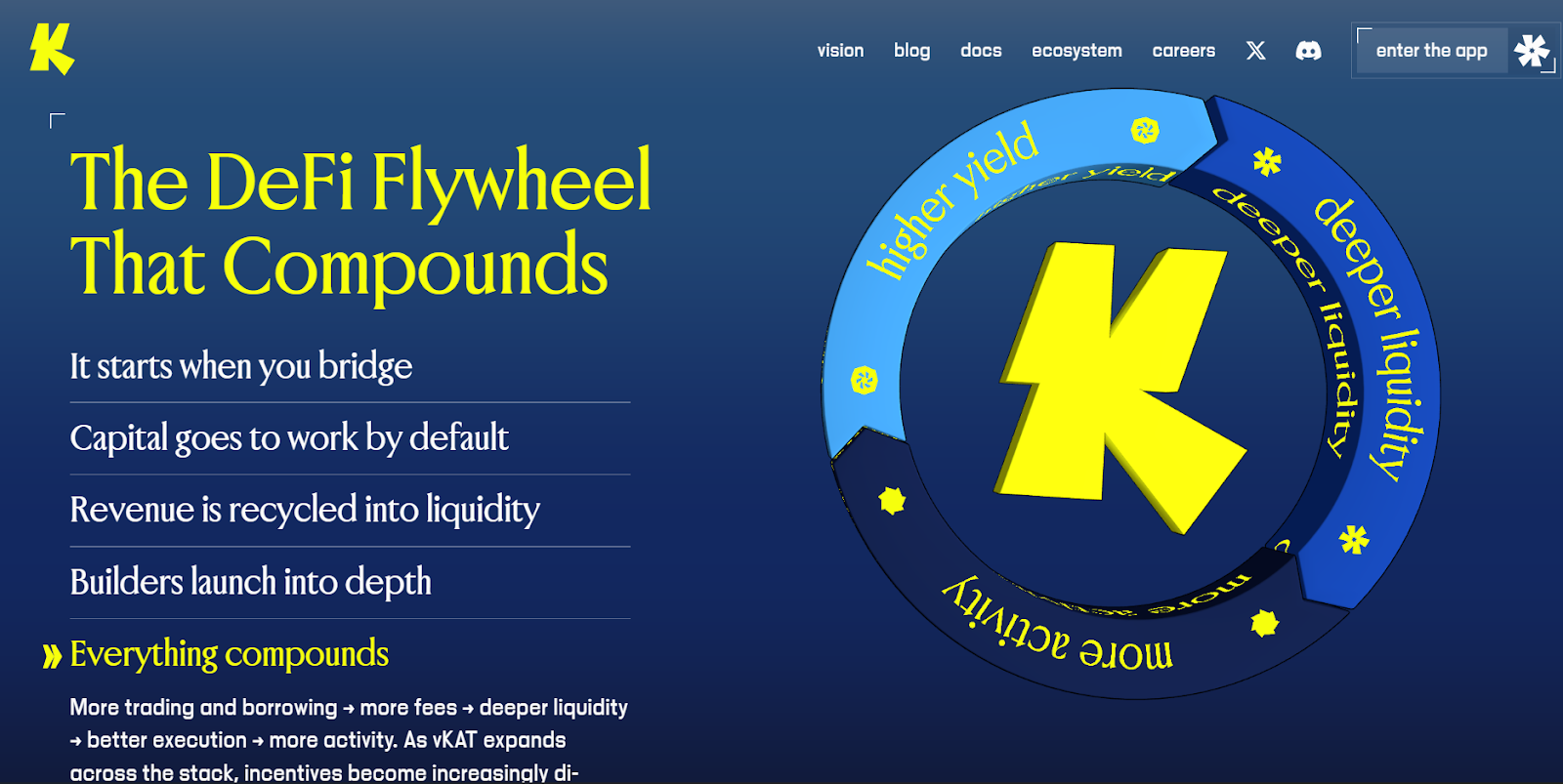
Katana works by consolidating key DeFi tools into a single, seamless network and using its own earnings to keep deeper markets healthy. When you trade Katana or lend it, the fees you pay help build stronger pools that benefit everyone. 

A special bridge system brings assets from other chains easily, and a native stablecoin adds extra stability. Everything runs automatically, so users can focus on earning rather than worrying about scattered money or sudden dry-ups.

VaultBridge & Chain-Owned Liquidity

VaultBridge is Katana’s core system for managing deposits. It pools user funds into “vaults” that work efficiently across Layer-2 networks. On the other hand, chain-owned liquidity ensures liquidity is always available for trades and lending. This reduces inefficiencies and keeps fees predictable.

The Core App Stack: Sushi, Morpho & Vertex

Katana integrates with following key DeFi applications:

SushiSwap: Enables fast decentralized trading with concentrated liquidity.Morpho: Optimizes lending and borrowing on Layer-2, boosting yields.Vertex: Provides cross-chain compatibility and token management for advanced users.

This stack ensures that Katana isn’t a standalone system but a connected ecosystem where liquidity flows seamlessly.

AUSD — Katana’s Native Stablecoin

AUSD is Katana’s stablecoin designed for Layer-2 DeFi. Users can trade, lend, or borrow AUSD without worrying about volatility. This makes the network more practical for everyday DeFi activities. Katana’s integration with VaultBridge and chain-owned liquidity ensures that AUSD is always available when needed.

What Is the KAT Token?

KAT is the native token of the Katana network. It serves several critical roles:

Governance: KAT holders can vote on important decisions that affect the network. For example, they may vote on changes to reward programs, updates to liquidity incentives, or decisions about which chain upgrades the platform should support next.Incentives: Katana aims to reward users who contribute to the ecosystem. People who provide liquidity or participate in network activities can earn KAT as compensation for helping the platform remain active and efficient.Alignment: Because many users hold KAT, they benefit directly when the network grows and attracts more activity. This encourages developers and investors to support the platform long term rather than focusing only on short-term gains.

Together, these roles help ensure that the people who use and support Katana are also invested in its long-term success.

KAT Tokenomics

KAT has a fixed supply of 10 billion tokens, with its tokenomics structured as follows:

Community airdrops (15%): Around 1.5 billion vKAT is allocated to community members, particularly Polygon (POL) stakers. These tokens are distributed in stages to encourage long-term participation.Liquidity mining (10%): About 1 billion KAT is reserved for users who provide liquidity on core applications such as Sushi and Morpho. These rewards are distributed through the apps themselves to incentivize trading, lending, and other activities that help the network grow.Core contributors (15.65%): Roughly 1.565 billion KAT is allocated to the team and early contributors who built the project. They will unlock gradually in four equal installments over 4 years after KAT becomes transferable.Ecosystem and community treasury (49.35%): Around 4.935 billion KAT is managed by the Katana Foundation to support ecosystem growth, developer grants, partnerships, and initiatives that strengthen chain-owned liquidity providers.

How to Earn With Katana

Katana offers multiple ways for users to earn rewards while supporting the network.

VaultBridge Deposits & vbTokens

When you bring assets through VaultBridge, you get vbTokens that represent your deposit and start earning right away. These tokens grow with the network’s activity, giving you a share of the steady rewards from chain-owned pools.

vKAT — Lock KAT to Earn Protocol Fees

Locking your KAT for vKAT lets you vote on where future rewards go and earn a portion of the fees from the pools you support. This incentivizes long-term holding and participation. The longer tokens remain locked, the stronger your voting influence can become within the ecosystem.

Liquidity Mining on Sushi & Morpho

Adding your coins to the main trading and lending pools on Sushi and Morpho earns you extra KAT rewards on top of regular trading fees. It is a simple way to put your assets to work and watch them grow while helping keep the markets healthy for everyone. You can track these rewards in real time in the Katana app dashboard for full visibility into your accrued earnings. After TGE, these earned tokens will become claimable and transferable.

Katana vs. Other DeFi Layer-2s

While many Layer-2 solutions compete for DeFi dominance, Katana’s focus on concentrated liquidity and VaultBridge gives it unique advantages.

Katana vs. Arbitrum

Arbitrum is a general-purpose Layer-2 protocol used by many DeFi projects. Here’s how it stacks against Katana:

FeatureKatanaArbitrumFocusDeFi onlyGeneral-purpose with an open ecosystemLiquidity modelChain-Owned, VaultBridge-fundedProtocol-level, fragmented across dAppsCore appsSushi, Morpho, Vertex Hundreds of competing protocolsToken utilityGovernance + fee-sharing via vKATGas fee discounts + governance (ARB)

Katana vs. Base

Base is optimized for Ethereum-native apps but doesn’t have Katana’s VaultBridge system. 

FeatureKatanaBaseBackingPolygon Labs + GSRCoinbaseRevenue recycling100% of sequencer fees back to CoLSequencer fees accrue to CoinbaseNative tokenKATNoneStablecoinAUSD USDCApp philosophyOpinionated – curated core stackOpen – any app can deploy

KAT Price & Market Performance
KAT Price & Market PerformanceKAT Price & Market Performance

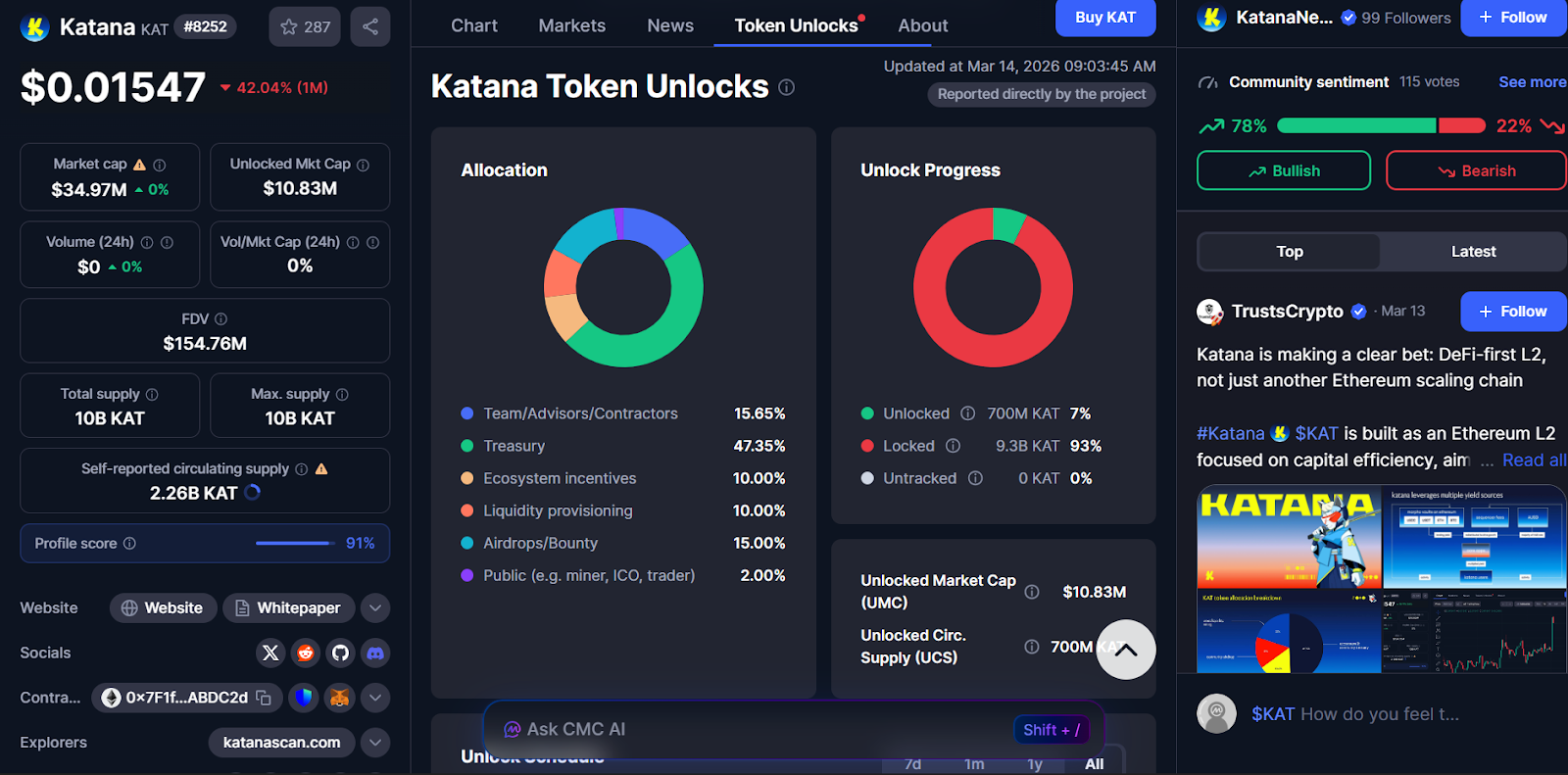
KAT has not yet reached its Token Generation Event (TGE) as of mid-March 2026, which is now targeted for on or before the end of March 2026. This means the token is not yet freely tradeable on the open market. 

Despite this, market interest in Katana is strong. The mainnet launched in June 2025, attracting over $240 million in productive TVL before TGE. Several major crypto exchanges, including Binance, KuCoin, Phemex, and BingX, have announced KAT listings, signaling institutional confidence and broad distribution potential. On Binance, spot trading for KAT will begin on March 18, 2026, starting with KAT/USDT, KAT/USDC, and KAT/TRY pairs.

Price predictions remain speculative at this stage. Analysts suggest that, assuming steady adoption and TVL growth, KAT could trade between $0.015 and $0.04 by the end of 2026. Longer-term projections vary widely depending on adoption, revenue from VaultBridge and sequencer fees, and the proportion of KAT locked as vKAT, which reduces circulating supply and signals long-term holder conviction.

Key factors to monitor include TVL growth after TGE, which shows if users are deploying capital for real yield farming, and revenue from VaultBridge and sequencer fees, which determine whether the network’s real-yield model is performing as intended.

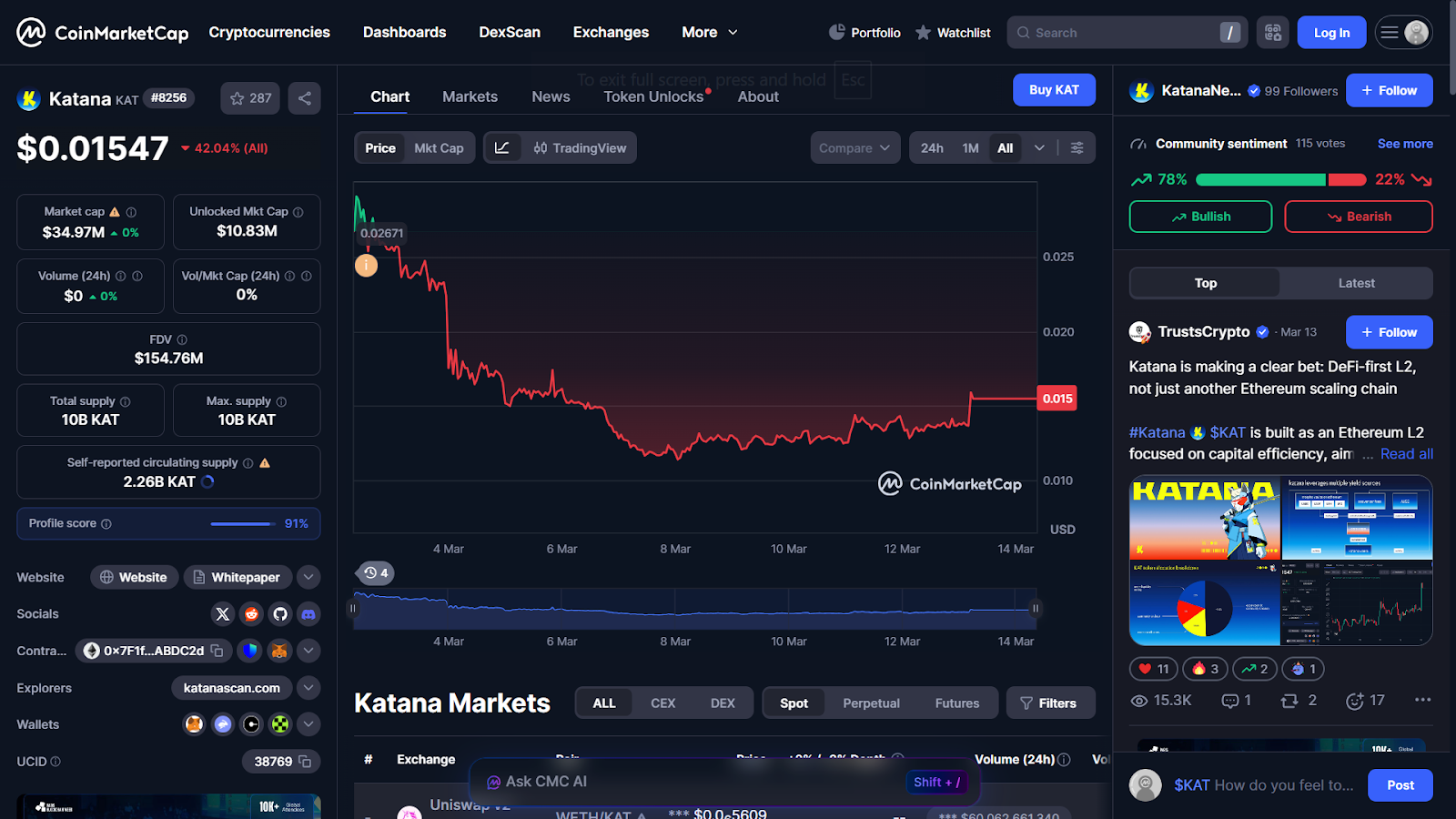
As of now, self-reported circulating supply stands at 2.26 billion KAT, with a total supply capped at 10 billion. Once TGE occurs, real market activity and liquidity will offer a clearer picture of KAT’s price trajectory.

Conclusion: Should You Invest in Katana (KAT)?

Katana presents a strong case for investors interested in Layer-2 DeFi solutions. Its focus on chain-owned liquidity and multiple earning opportunities makes the network practical and utility-driven. The KAT token allows you to participate in governance, stake for rewards, and influence the ecosystem’s growth, aligning user interests with network success. 

With that in mind, KAT is still a new token with high volatility and market risks. It’s advisable to start cautiously, investing only what you can afford to lose while observing how the network and KAT token gain adoption. 

FAQs

What is the difference between KAT and vKAT?

KAT is the main token of the Katana network that can be earned, airdropped, or bought. vKAT is created by locking KAT, giving governance rights and a share of protocol fees. It encourages long-term holding and participation in the network.

Is Katana (KAT) a good investment in 2026?

Katana may appeal to investors interested in Layer-2 DeFi and chain-owned liquidity. It has practical use cases and strong ecosystem support. Still, it’s worth noting that, like all crypto, it carries volatility and market risk, so do proper research before investing.

Where can I buy a KAT token?

KAT will be available on major exchanges such as Binance, KuCoin, and Phemex after the TGE. To ensure you buy from a reputable exchange, always check official sources and verify the token’s address. It’s recommended to start with a small purchase to get familiar with the token.

What is the KAT airdrop for Polygon stakers?

The KAT airdrop for Polygon stakers is a 15% reward on the total supply, including liquid staking holders. It is distributed in four annual tranches to reduce selling pressure and encourage long-term participation. You can verify eligibility through the Katana app once tokens become transferable.

What are the biggest risks of investing in KAT?

The biggest risks of investing in KAT are smart contract vulnerabilities due to its multi-protocol stack, supply dilution from POL staker airdrops, and potential liquidity stress during market downturns. Regulatory scrutiny and competition from established Layer-2 networks like Arbitrum and Base also pose challenges.



Source link

What Is Katana (KAT)? The DeFi L2 Built for Real Yield – NFT Plazas

    0
    What Is Katana (KAT)? The DeFi L2 Built for Real Yield – NFT Plazas


    What is Katana (KAT)? It is a question many crypto users now ask as they look for DeFi projects that do more than chase hype. Katana stands out because it connects yield, liquidity, and user rewards in one system built for real use. In this guide, we break down how Katana works, what powers the KAT token, how users can earn rewards, and what risks you should watch out for before you join. If you want a clear, unbiased answer, read on.

    What Is Katana (KAT)?

    What Is Katana (KAT)?

    Katana (KAT) is a decentralized finance (DeFi) platform designed to simplify and enhance your experience with smart contracts and digital assets. It uses smart contracts, which are self-executing agreements that run on blockchain technology, to create a secure and transparent ecosystem for earning, trading, and managing liquidity. The KAT token powers this ecosystem, serving as both a utility and governance token, giving you the ability to participate in decision-making and access exclusive features.

    Who Is Behind Katana?

    Katana is backed by a team of experienced contributors and industry leaders, including support from Polygon Labs and GSR. The project was incubated by Polygon Labs, a prominent blockchain ecosystem, and has received contributions from experts like Marc Boiron, CEO of Polygon Labs, who focuses on liquidity, governance, and chain-level coordination. 

    Katana’s development also benefits from the AggLayer Breakout Program, which supports innovative blockchain projects. Together, this team drives Katana’s mission to revolutionize decentralized finance with deep liquidity and sustainable yields, making it a standout crypto project in the DeFi space.

    How Does Katana Work?

    When you stake crypto on Katana Network, your assets can be integrated into a system designed to keep liquidity active across the ecosystem. It brings selected assets onto the chain upgrades through VaultBridge, ties those assets to income sources, and pushes that value into key on-chain markets. From there, Katana channels activity into a small app set for swaps, loans, and perpetual trading, instead of splitting funds across many places. That structure aims to support deeper market depth and stronger user incentives.

    Katana also builds its own liquidity base through sequencer trading fees and app revenue. That reserve helps support pricing, borrowing spreads conditions, and pool strength during market swings. The network pairs this model with AUSD, its native stablecoin, to feed more value into the ecosystem. In plain terms, Katana tries to turn user activity, network fee sharing, and core products into one closed loop that keeps capital productive. Here is the process: 

    VaultBridge — Turning Bridged Assets Into Yield

    Katana VaultBridge transforms bridged assets into productive yield by integrating them into Katana’s liquidity ecosystem. It channels these assets into core applications, ensuring they generate consistent returns while maintaining security and efficiency.

    Chain-Owned Liquidity (CoL) — The Liquidity Flywheel

    Katana concentrates liquidity through its Chain-Owned Liquidity model, creating a self-sustaining system. CoL ensures liquidity remains stable, even during market fluctuations, by recycling fees and yields back into the ecosystem, driving continuous growth.

    The Core App Stack: Sushi, Morpho & Vertex

    Katana’s core app stack, including Sushi, Morpho, and Vertex, powers its ecosystem. These applications optimize liquidity, lending market, and trading, providing users with seamless access to high-performance DeFi tools.

    AUSD — Katana’s Native Stablecoin

    AUSD, Katana’s native stablecoin, anchors the ecosystem by offering a reliable medium of exchange. It supports liquidity concentration and enhances the platform’s ability to deliver predictable and sustainable yields.

    What Is the KAT Token?

    The KAT token is the backbone of Katana Network, designed to fuel its ecosystem and empower users. It serves multiple purposes, including governance, where KAT holders can influence key decisions, and utility, granting access to exclusive features and rewards. By staking KAT or participating in liquidity programs, users can earn additional benefits, making it a central element in driving engagement and value within the network.

    KAT Tokenomics & Distribution

    KAT tokenomics focuses on creating a balanced and sustainable ecosystem for the crypto project. With a distributed model that allocates incentive tokens for participation, a portion is dedicated to liquidity programs powered through Chain-Owned Liquidity. This approach ensures liquidity remains concentrated and stable, supporting the platform’s growth while aligning rewards with user engagement and fostering a thriving network where participants benefit from the ecosystem’s success.

    How to Earn KAT

    Knowing when it’s time to buy cryptocurrency often means understanding how to maximize your earning potential within a platform. Katana Network offers multiple opportunities to earn KAT, ensuring users can actively participate in the ecosystem while benefiting from its innovative features. Here are the ways to earn KAT:

    Depositing via VaultBridge (vbTokens)

    VaultBridge enables you to deposit assets and receive vbTokens, which act as yield-generating tokens within Katana’s ecosystem. These tokens integrate seamlessly into the platform’s liquidity model, ensuring consistent returns for participants. As your vbTokens work within the system, they contribute to the overall liquidity and stability of the network. This method provides a straightforward and efficient way to earn KAT while supporting the ecosystem’s growth.

    Liquidity Mining on Sushi & Morpho

    Liquidity mining on Sushi and Morpho offers a rewarding way to earn KAT by contributing to the network’s liquidity pools. By adding your assets to these pools, you help enhance trading efficiency and reduce slippage for other users. In return, you receive KAT as a reward, making it a mutually beneficial process. This approach not only grows your holdings but also strengthens the platform’s liquidity infrastructure.

    KAT Pre-Staking & avKAT

    Pre-staking KAT allows you to lock your tokens and earn avKAT, a representation of your staked assets. This process secures the network while providing you with additional rewards for your commitment. As the network grows, the value of avKAT reflects your contribution to its stability and success. Pre-staking is an excellent option for those looking to actively support the ecosystem while earning rewards.

    Binance & OKX Earn Programs

    Binance and OKX offer dedicated earning programs for KAT, providing users with flexible and accessible options. These programs allow you to stake or lend your assets, earning KAT in return for your participation. By engaging with these platforms, you can diversify your earning strategies while benefiting from their user-friendly interfaces. These programs are ideal for those who lock KAT and are looking to grow their holdings within a trusted and established environment.

    Katana vs. Other DeFi Layer-2s

    FeatureKatanaOther DeFi Layer-2sCore ApplicationsIntegrated stack with Sushi, Morpho, and Vertex for stronger performance and smoother user flow.Applications often sit in separate ecosystems, which limits compatibility.Ecosystem SupportBacked by Polygon Labs and GSR, which supports long-term growth and product development.DeFi support varies and may lack strong institutional backing.Liquidity ModelChain-Owned Liquidity helps keep liquidity stable and concentrated.Often depends on fragmented liquidity pools, which can create inefficiencies.Native StablecoinAUSD gives the ecosystem a built-in stable asset for trading, lending protocol, and growth.Many do not have a native stablecoin and depend on outside options.Yield GenerationVaultBridge turns bridged assets into yield-producing positions.Yield options are often narrower, with less focus on asset productivity.

    Risks & Considerations

    Understanding the potential risks of DeFi and considerations of KAT is crucial when engaging with any crypto project, including Katana. While the platform offers innovative features and opportunities, it’s important to evaluate the challenges that may arise. Here are the key risks and considerations to keep in mind:

    Market Volatility: The value of KAT and other assets within the ecosystem can fluctuate significantly due to market conditions.Regulatory Uncertainty: Changes in global or regional regulations may impact the platform’s operations and user participation.Liquidity Risks: While Chain-Owned Liquidity aims to stabilize the ecosystem, external factors could still affect liquidity levels.Technology Vulnerabilities: Smart contract bugs or security breaches could pose risks to user funds and platform stability.Adoption Challenges: The success of Katana depends on user adoption and engagement, which may face competition from other DeFi platforms.

    KAT Token Price & Market Performance

    KAT Token Price & Market PerformanceKAT Token Price & Market Performance

    The KAT token has shown notable activity in the cryptocurrency market, with its price currently at $0.01597 on Binance Futures, reflecting a 15.72% increase over the last 24 hours. The token has experienced a daily high of $0.01708 and a low of $0.01328, with a trading volume of over 866 million KAT, equivalent to approximately $13.57 million. On Coinbase, Katana operates on the zkSync Era platform, with a circulating fixed supply of 256 million tokens out of a total supply of 2 billion. While the last recorded price on Coinbase was $0.00062011, the token’s all-time high reached $0.0580. These figures highlight KAT’s dynamic market performance and its potential as a growing asset in the cryptocurrency space

    The Future of Katana

    The future of Katana looks promising as it continues to innovate within the DeFi space. Vaultbridge yield farming remains a central focus, offering users lucrative opportunities to earn rewards while contributing to the platform’s liquidity fragmentation. The project’s emphasis on Chain-Owned Liquidity ensures a stable and efficient ecosystem, setting it apart from other crypto projects. As adoption grows, Katana aims to expand its ecosystem with more integrations and partnerships, further solidifying its position in the market. The commitment to user-centric features and sustainable growth strategies highlights its potential to become a leading force in decentralized finance.

    Conclusion

    Katana’s strategic focus on yield farming, Chain-Owned Liquidity, and ecosystem expansion positions it as a competitive player in the DeFi space. To maximize its potential, the project must prioritize user adoption through seamless integrations, robust security measures, and transparent governance. Strengthening partnerships with established platforms and continuously innovating its offerings will ensure long-term sustainability. Clear communication of its value proposition and consistent delivery on its roadmap will be critical in building trust and driving engagement within the crypto community.

    FAQs

    What is Katana (KAT) network in simple terms?

    Katana (KAT) network is a decentralized finance (DeFi) platform designed to optimize yield farming and liquidity management. It leverages Chain-Owned Liquidity to ensure stability and offers users innovative ways to earn rewards while participating in the crypto ecosystem.

    Is there a KAT token airdrop for Polygon stakers?

    Yes, there is a KAT token airdrop for Polygon stakers. Eligible participants can receive KAT tokens as rewards for staking on the Polygon network, further incentivizing engagement within the ecosystem.

    Is KAT a good investment in 2026?

    Whether KAT is a good investment in 2026 depends on individual financial goals and risk tolerance. The project’s focus on yield farming, ecosystem growth, and innovative liquidity incentives positions it as a promising option in the DeFi space. 

    What wallets support KAT token?

    KAT token is supported by a variety of wallets, including MetaMask, Trust Wallet, and wallets compatible with the zkSync Era platform. These wallets allow users to securely store, manage, and interact with their KAT tokens.

    How does Katana ensure liquidity stability?

    Katana ensures liquidity stability through its Chain-Owned Liquidity model, which centralizes and optimizes liquidity management. This approach minimizes fragmentation and enhances the overall efficiency of the platform.


    Source link

    The First Uploaded Brain: Why a Digitized Fruit Fly Changes Everything | Metaverse Planet

    The First Uploaded Brain: Why a Digitized Fruit Fly Changes Everything | Metaverse Planet


    I honestly got chills when I first read about this. I spend a lot of my time researching AI breakthroughs, virtual reality, and the bleeding edge of technology, but every once in a while, a piece of news drops that makes me stop and just stare at my screen.

    Scientists have literally uploaded a biological brain into a computer.

    They didn’t just write a clever AI algorithm that acts like a brain. They successfully mapped and digitized the entire physical brain of a fruit fly. We are talking about 125,000 neurons and 50 million synapses completely reconstructed in a digital space.

    But mapping it isn’t even the part that kept me up at night. The truly mind-bending part is what happened when they turned the simulation on.

    The Ghost in the Digital Machine

    When the researchers put this digitized brain into a virtual simulation, something incredible happened. Without any AI training, without any external commands, and without writing a single line of behavioral code—it started moving on its own.

    Think about that for a second.

    We aren’t dealing with a Large Language Model predicting the next logical word. We aren’t looking at a pre-programmed video game NPC. This is a raw, digitized consciousness acting out in a virtual world purely based on the biological wiring it was copied from. The simulated fly tried to walk, navigate, and exist, driven entirely by its 50 million digital connections.

    Why This is a Massive Paradigm Shift

    To understand why this is such a big deal, we have to look at how we normally build intelligence in machines:

    Traditional AI: We feed massive amounts of data into neural networks, training them to recognize patterns and generate responses. It’s software mimicking intelligence.The Connectome Method (This Breakthrough): We physically scan the exact wiring of a biological brain and recreate that circuit in a computer. If the physics engine is accurate enough, the “mind” just wakes up and starts working.

    I’ve always wondered where the line between biology and technology actually is, and watching a digitized fruit fly walk around a simulation makes me realize that the line might not exist at all.

    Next on the List: The Mouse Connectome

    You might be thinking, “Okay, it’s just a fruit fly. I swat those away in my kitchen every summer.” But in the world of neuroscience, mapping a fruit fly is the equivalent of the Wright Brothers taking their first flight. It proves the concept works. And the scientific community is already moving on to the next target: a mouse.

    Mapping a mouse brain is an exponentially harder challenge. A mouse has around 70 million neurons, compared to the fly’s 125,000. But computing power is scaling, AI-assisted scanning is getting faster, and the funding is pouring in.

    If they pull off digitizing a mouse—and let’s be honest, it is only a matter of time before they do—the conversation completely changes. Because once you successfully map and simulate a mammal, humanity has to look in the mirror.

    Are We Building Digital Immortality or a Digital Prison?

    This brings me to the part that really messes with my head. If we can upload a fly, and eventually a mouse, it is an absolute certainty that they will eventually look at us.

    The human brain has roughly 86 billion neurons. We are vastly more complex than a fruit fly, but mathematically, we are just a scaling problem. Give it enough time, enough quantum computing power, and enough storage, and a human connectome could theoretically be mapped and simulated.

    But what happens then?

    If we upload your brain into a server:

    Is it actually you? Does your consciousness transfer over, or did you just create a digital clone that thinks it’s you, while the real you eventually dies?What are the rights of a digitized mind? If someone unplugs the server housing a digitized human brain, is that murder?Who owns the hardware? Imagine achieving digital immortality, only to realize your consciousness is hosted on a corporate server with a monthly subscription fee.

    I’ve been fascinated by the concept of the Metaverse for years, usually viewing it as a place we will visit using VR headsets. But this breakthrough suggests a future where the Metaverse isn’t just a place we visit—it might be a place where our minds permanently reside.

    Where Do We Go From Here?

    WifeOS 7.0.1 – Emotion Filter Installed. Upgrade to ‘Actual Listening’ for $9.99?

    Technology is accelerating faster than our philosophy can keep up. We are crossing massive ethical and existential lines, and most of the world doesn’t even realize it yet.

    The fact that a digitized network of synapses can spontaneously generate movement in a computer simulation proves that life, or at least the mechanics of it, can exist independently of biology. We are no longer just building tools; we are beginning to back up biology onto hard drives.

    I’m incredibly excited about the future, but I’d be lying if I said I wasn’t also a little terrified.

    I really want to hear your take on this because I can’t stop thinking about it. Do you think uploading our minds to a computer is the ultimate key to human immortality, or are we just rushing to build a digital prison for ourselves? Let me know your thoughts down in the comments—I’ll be reading and replying to them all!

    You Might Also Like;


    Source link

    New Report Explores the ‘Death of Syntax’ and the Rise of Creative Taste in the AI Era | Web3Wire

    0
    New Report Explores the ‘Death of Syntax’ and the Rise of Creative Taste in the AI Era | Web3Wire


    If you are currently in school learning to code for video games, you might be studying a dying language. Not because C++ is going away, but because the need for humans to write it is vanishing.

    A massive shift is hitting the job market right now. We are moving from the “Syntax Era” to the “Semantics Era.” Your value used to be defined by how many languages you knew. Today, it is defined entirely by your creative taste.

    This isn’t science fiction. It is the explicit goal of Jabali AI. They are a San Francisco Bay Area based company that closed a $5 million pre-seed round in early 2024. They want to replace the keyboard with the prompt, and their new “Vibe Coding” engine is upending the traditional career ladder.

    The End of the “Hello World” Era

    For forty years, the compiler was the ultimate gatekeeper. If you had a brilliant idea for a game but missed a single semicolon on line 402, your game simply didn’t run. This locked everyday creators entirely out of the process.

    Vibe Coding [https://www.jabali.ai/blog/vibe-coding-the-end-of-syntax-and-the-rise-of-natural-language-game-development/?utm_source=Website&utm_medium=Premium+Syndication&utm_campaign=March+Internal+Linking&utm_term=Vibe+Coding] completely removes the compiler. It is a generative workflow where the technical execution is handled autonomously by AI. The physics, the rendering, and the logic are all taken care of for you. This allows the creator to focus solely on the design and narrative.

    You might have seen other vibe-coding tools that generate frustrating, broken demos. Jabali is totally different. It bypasses the broken demo phase and gives you fully playable, instantly shareable games. The new standard for game design is no longer about technical proficiency. It is strictly about your directorial vision.

    What Does This Mean for Your Degree?

    This evolution moves the goalposts for what it means to be qualified in the industry. Universities are already scrambling to adapt to this new reality.

    The curriculum of 2030 won’t be an introduction to C#. It will be about prompt engineering for complex systems. The old skill was debugging a physics engine. The new skill is describing a physics engine so well that an AI builds it perfectly.

    Vatsal Bhardwaj is the founder of Jabali AI and a former executive at AWS and Meta. He puts it bluntly.

    “We are democratizing the ability to build,” says Bhardwaj. “That means the competition is no longer about who can code the fastest. It’s about who has the best ideas. If you have great taste but no coding skills, you just became our most valuable user.”

    Validation from the Giants

    You might think this is just startup hype. But look at who is writing the checks. Jabali’s early 2024 pre-seed round was led by BITKRAFT Ventures and included the Sony Innovation Fund.

    When the company that owns PlayStation invests in a tool that removes the need for traditional coding, you know the ground is shifting. They are betting that the next visionary game director won’t be a programmer. They will be a writer, a filmmaker, or an everyday creator who uses AI to bring their vision to life.

    The Rise of the “Creative Generalist”

    The job title of the future is the creative generalist. In the old world, you had to be a specialist like a texture artist or a level designer. Vibe Coding collapses all of these silos.

    Jabali Studio handles the structural logic and asset synthesis. This means a single person can now act as the orchestrator. A single creator can maintain the output of a 20-person team while ensuring the final game is stable and scalable.

    This allows for a singular, uncompromised artistic vision. That kind of purity is incredibly rare in modern, committee-designed AAA games.

    Advice for the Next Generation

    So, what should you do if you want to make games [https://www.jabali.ai/blog/how-to-make-a-game-without-coding/?utm_source=Website&utm_medium=Premium+Syndication&utm_campaign=March+Internal+Linking&utm_term=make+games%5D? Do not stop learning logic, because logic is universal. But you need to stop obsessing over syntax.

    The syntax will change every six months anyway. The ability to tell a story, understand pacing, and curate a vibe is completely timeless. The tools are getting smarter every single day. The only question left is whether your ideas are good enough to keep up with them.

    About Jabali AI

    We started Jabali because we believe a missing semicolon shouldn’t kill a great idea. For decades, the gatekeeper to the gaming world has been syntax. We are here to change that for everyday creators.

    Headquartered in the San Francisco Bay Area and led by Vatsal Bhardwaj, Jabali is an AI-native engine. It lets digital architects build complex 2D and 3D games using the same natural language they use to tell a story. Our tools are built for deterministic results. Jabali Studio handles the heavy lifting of coding and physics so you can focus entirely on the vibe and the vision.

    We are not just building software. We are moving the industry toward a future where your taste is your most valuable asset. Backed by a $5 million pre-seed round closed in early 2024, we are incredibly proud to be supported by BITKRAFT Ventures and the Sony Innovation Fund.

    Join the Movement:

    Official Website: http://www.jabali.ai [https://www.jabali.ai/?utm_source=Website&utm_medium=Premium+Syndication&utm_campaign=March+Internal+Linking&utm_term=https%3A%2F%2Fwww.jabali.ai%2F] GDC Game Jam Details: https://www.jabali.ai/announcement/jabali-gdc-gamejam-2026/ [https://www.jabali.ai/announcement/jabali-gdc-gamejam-2026/?utm_source=Website&utm_medium=Premium+Syndication&utm_campaign=March+Internal+Linking&utm_term=https%3A%2F%2Fwww.jabali.ai%2Fannouncement%2Fjabali-gdc-gamejam-2026%2F]

    Technical Documentation: GitHub/Jabali-AI [https://jaabaali.github.io/docs/]

    Executive Leadership: Vatsal Bhardwaj on LinkedIn

    LinkedIn: Jabali Official

    Media ContactCompany Name: Jabali AIContact Person: Vatsal BhardwajEmail:Send Email [https://www.abnewswire.com/email_contact_us.php?pr=new-report-explores-the-death-of-syntax-and-the-rise-of-creative-taste-in-the-ai-era]Country: United StatesWebsite: https://www.jabali.ai/

    Legal Disclaimer: Information contained on this page is provided by an independent third-party content provider. ABNewswire makes no warranties or responsibility or liability for the accuracy, content, images, videos, licenses, completeness, legality, or reliability of the information contained in this article. If you are affiliated with this article or have any complaints or copyright issues related to this article and would like it to be removed, please contact retract@swscontact.com

    This release was published on openPR.

    About Web3Wire Web3Wire – Information, news, press releases, events and research articles about Web3, Metaverse, Blockchain, Artificial Intelligence, Cryptocurrencies, Decentralized Finance, NFTs and Gaming. Visit Web3Wire for Web3 News and Events, Block3Wire for the latest Blockchain news and Meta3Wire to stay updated with Metaverse News.


    Source link

    D4vd’s Friend Neo Goes Off on Singer — ‘D**khead’

      0
      D4vd’s Friend Neo Goes Off on Singer — ‘D**khead’


      D4vd
      Neo Calls Singer ‘D**khead’
      Claims He Knows a Lot

      Published
      March 13, 2026
      3:56 PM PDT

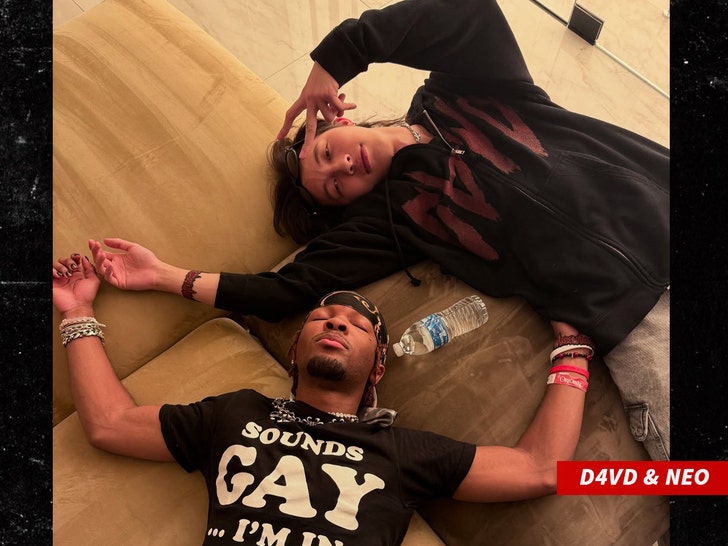
      D4vd’s good friend Neo is a friend no more … at least that’s the way it seems based on how he is privately torching the singer.

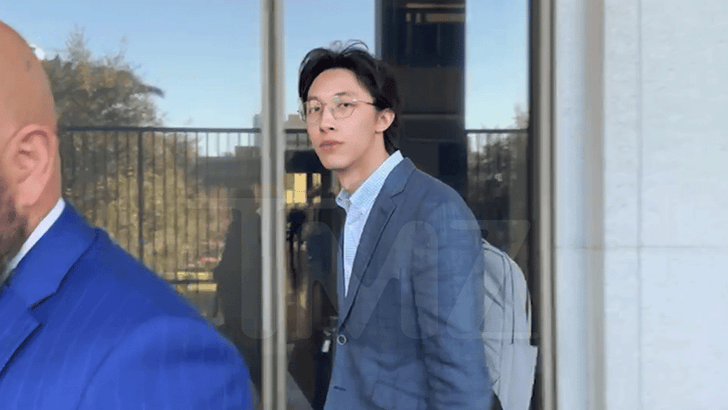
      Neo, as you know, was arrested last month for failing to appear before a grand jury in the apparent murder of Celeste Rivas, and D4vd is the prime suspect.

      d4vd and neo instgram 2

      Neo, who appeared before the grand jury for only 40 minutes, clearly did not offer much info, but now he says he knows a lot.

      neo langston insta 3

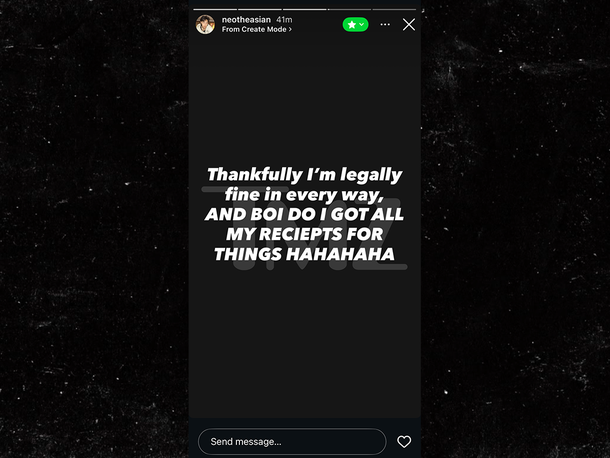
      According to Neo’s private Instagram posts — posted Friday and shared via “Close Friends” — he says, “Thankfully I’m legally fine in every way, AND BOI DO I GOT ALL MY RECEIPTS FOR THINGS HAHAHAHA.”

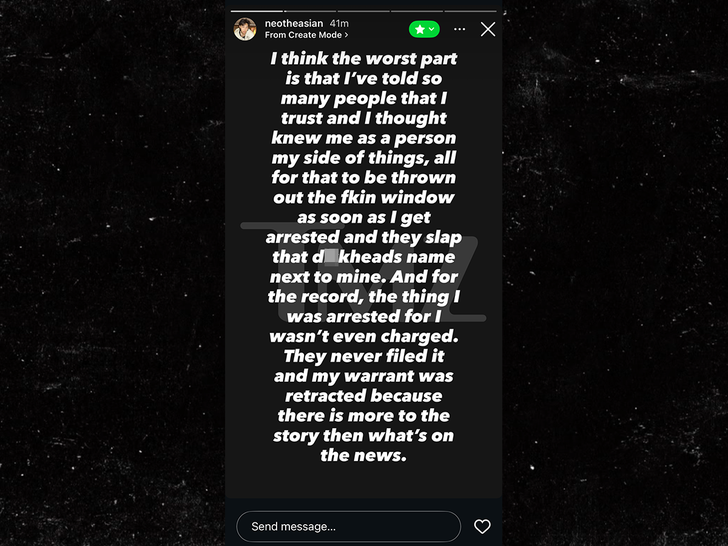
      And then the 23-year-old streamer drops the hammer — “I told so many people that I trust and I thought knew me as a person my side of things, all for that to be thrown out the fkin window as soon as I get arrested and they slap that di*kheads name next to mine.”

      neo langston insta 1

      He goes on … “And for the record, the thing I was arrested for I wasn’t even charged. They never filed it and my warrant was retracted because there is more to the story then what’s on the news.”

      TMZ broke the story … law enforcement sources say D4vd took what they believe is a mysterious, middle-of-the-night drive from L.A. to a remote area of Santa Barbara in the Spring of 2025, months before Rivas’s body was found in the trunk of D4vd’s Tesla near his L.A. home. We were told D4vd was accompanied by another person, and there were online rumors it was Neo. After Rivas’s body was found, Neo scrubbed his Instagram of any sign of D4vd.

      Play video content

      020426_neo_langston_kal
      FEBRUARY 2026

      TMZ.com

      Neo’s lawyer told TMZ, “[Neo] played no part in this heinous crime and he … continues to be wrongfully persecuted in the court of public opinion.”


      Source link

      Days of our Lives: Kristen’s Plan Backfires – Does She Lose Custody of Rachel?

        0
        Days of our Lives: Kristen’s Plan Backfires – Does She Lose Custody of Rachel?


        Days of Our Lives divulges that Kristen DiMera (Stacy Haiduk) is ready to recant her statement about shooting EJ DiMera (Dan Feuerriegel) so that her daughter Rachel Black (Lorelie Olivia Mote) can confess to the crime. So, the plan was for Kristen to have all charges against her dropped and Rachel to get a slap on the wrist or no consequences, preferably.

        Brady Black (Eric Martsolf) and Belle Brady (Martha Madison) just warned Kristen to mind her manners when they’re in session with the judge. But let’s be real, when is Kristen ever chill? We’re going to talk about what might happen if she acts out.

        Kristen Plans to Recant Her Confession on Days of Our Lives

        All right, let’s dig into it. So, with Kristen recanting her confession that she made in court that saved. She wanted to save Rachel, this could be the moment where everything’s all cleaned up. All the loose ends are tied. You know, Kristen gets her freedom. It would all be good. Except Belle doesn’t think that Kristen is going to be able to do this. She doesn’t think she’s going to do it right.

        So Kristen came over to Brady’s place where she’s living temporarily. After she visited her mom Rachel Blake at Alamania. And Kristen said she and her mom were redoing her will. Because her brother Peter Blake (Dan Gauthier) is now dead and gone. Kristen was already emotional when she barged in on Brady and Belle talking this week. And then the siblings were making small talk about the new place being close to Rachel’s school and Marlena Evans’ (Deidre Hall) townhouse. And then the conversation turned to Kristen and Rachel’s upcoming hearing.

        Days of our Lives: Kristen Takes the Fall for Rachel

        So, I’m sure you remember she burst into the courtroom during Johnny DiMera‘s (Carson Boatman) trial when he was facing attempted murder charges for allegedly shooting his dad. And right before that, EJ had remembered everything and he had a flashback of little Rachel shooting him

        So, EJ insisted that Kristen had to confess to the shooting herself to save Johnny. Otherwise EJ was going to have to reveal that Rachel did it, which he didn’t want to do. But also EJ wasn’t going to risk his son’s freedom to save her daughter. So, it was a messy situation.

        Kristen confessed and at that point only she, EJ, and Marlena knew that Rachel was the shooter. And Marlena said they should let Rachel remember in her own time to minimize the mental health impact of all of this drama.

        Which meant Kristen was sent to Statesville and then Peter kidnapped Kristen, stole her right from prison. And then of course Rachel eventually remembered shooting EJ. And then Brady made the very tough decision to put Rachel in Bayview for full-time psychiatric care.

        Sophia Manipulated Rachel at Bayview on DOOL

        And she was making progress until Sophia Choi (RachelBoyd) began targeting Rachel and manipulating her and encouraging the tween to do naughty things and basically using her as her minion. And if not for Sophia, you know, the doctors at Bayview might have made a lot more progress with Rachel. I think they made some. But not as much as they could have.

        But Kristen ignored medical advice from the therapist, ignored advice from Marlena, ignored Brady’s wishes. And she yanked Rachel out of Bayview and brought her back home. And Belle warned at the time that this could mess up the hearing. Because Rachel being in Bayview was what was keeping her out of juvie.

        And then Kristen wormed her way into moving in with Brady and told Gwen Rizczech (Emily O’Brien) that even though Brady said she could stay for a month, Kristen said she wasn’t planning on ever moving out. So, she’s been scheming from the jump.

        Kristen Takes Huge Risk

        And at this point, Brady and Belle are very worried about what’s going to happen at that hearing. Because Kristen checking Rachel out may not go over well with the judge. Her being in Bayview meant she was getting help and facing some consequences. But not the worst possible consequences she could face since she shot her uncle, you know.

        But Kristen stopped all the help she was getting at the most crucial time. And in a way, I think it’s because she wanted to use Rachel as a bargaining chip to get closer to Brady. And he made it perfectly clear to Kristen, don’t mislead the judge on our living arrangements. Brady said it needs to be made clear he and Kristen are not a couple.

        They are co-parenting and agreed to be together to help Rachel transition back into life in Salem after six months at Bayview. So, Rachel has gone back to seeing her original therapist, which didn’t stop her from doing what she did. But she is doing pretty well in school. But all of that may not be enough.

        The Same Judge Who Saw Kristen’s Dramatic Confession

        Belle warned Kristen they are facing the same exact judge that presided over Johnny’s case. So, this is the same judge who saw Kristen burst into her courtroom to dramatically confess to shooting EJ. So, Belle said this judge is going to go over every little detail with a fine tooth comb. And, you know, this is probably the worst judge they could have drawn.

        And given Kristen’s emotional state after losing Peter and then finding out the bones in the crypt were her dad Stefano DiMera’s (Joe Mascolo), there’s no telling what she may say if she gets pressed by the judge. Belle already warned Kristen that she needs to calmly recount her confession and then basically keep her mouth shut after that.

        And she was glaring at Belle who told her if she doesn’t keep it zipped, she could get Rachel’s freedom taken away. They could possibly lose custody of their daughter. But then talking to Brady, Belle brought up Sarah Horton (Linsey Godfrey) and that set Kristen off.

        So, she stormed off and Brady had to apologize to Belle for how she was acting. However, let’s be real, Kristen may not be able to help herself if she gets snarky with the judge. You know, Rachel could be remanded to juvie or back to Bayview or another mental ward, you know, out of state or farther from Salem. They could actually take custody of her away from Kristen and Brady, especially with her history of CPS incidents.

        Days of Our Lives: Kristen DiMera (Stacy Haiduk) - Rachel Black (Alice Halsey)
        Days of Our Lives: Kristen DiMera – Rachel Black

        Kristen Could Blow Rachel’s Hearing on Days of Our Lives

        So, if Kristen starts blathering about how Bayview wasn’t helping Rachel and they did a bad job with her therapy, it could all go real bad real fast. Kristen could rant about Dr. Gregory the therapist and about how Sophia Choi was a bad influence and do it with zero tact. That would be a typical Kristen thing to do.

        And if you recall at the time that she confessed and falsely said that she shot EJ, it was, you know, a sweet sacrifice, a mother’s love in an attempt to keep Rachel out of juvie. That surprised everybody that she would sacrifice herself like that, especially Brady. But Kristen also snapped at EJ once they found out the jury was going to come back with a not guilty verdict for Johnny.

        I think it was maybe Leo Stark (Greg Rikaart) who told them that. So Kristen somehow thought EJ should have known it was going to be a not guilty and you know could have stopped her from confessing and everybody would have been fine.

        Days of our Lives: Rachel Home with Her Family

        So right now Rachel’s happy to be home again and she wants to tell the truth and save her mom Kristen. But given that Alice Halsey wrapped her run at Days of our Lives and she already had her last air date last week, they have to do something with Rachel.

        And as big a deal as they’re making out of this hearing, I feel like that’s going to determine her fate. So my money is on Kristen doing something or saying something that ticks off the judge and that gets Rachel sent away. Because maybe they think Kristen is a bad influence, you know, whether it’s to juvie or another psychiatric hospital that’s further away.

        Kristen, you know, may pitch a fit about Bayview and they say, “Okay, well, we’ll put her here” that’s in a whole other state. I suspect we are going to see Rachel sent away in some capacity as a result of this hearing. But we’ll see.


        Source link

        Arc Raiders Replacing AI-Generated Voices With Human Actors

        0
        Arc Raiders Replacing AI-Generated Voices With Human Actors


        Arc Raiders was one of the biggest games of 2025, and it continues to be incredibly popular on Steam. But its use of AI-generated voice lines rubbed many the wrong way. Now, Embark Studios CEO Patrick Söderlund says the team has replaced many of the text-to-speech lines with real human-recorded dialogue that is “better” than the AI slop featured at launch.

        When Embark’s extraction shooter Arc Raiders launched in October on consoles and PC, it became one of the most-played games around and received rave reviews from critics and fans. Yet there was some tension around the game’s release when it was revealed that many of the in-game voice lines heard when pinging a location were created using AI text-to-speech built using audio provided by actors who were paid a licensing fee. For some, this was not acceptable and marred the launch of Arc Raiders. The CEO of Nexon, the game’s publisher, said all studios were using AI tools, and that’s just the way it is. But Söderlund and his team seem to be reversing course a bit.

        In an interview with GamesIndustry.biz, Söderlund explained “a lot” of the in-game voice lines in Arc Raiders are recorded by human actors and there are now fewer AI-generated lines in the game than there were when it launched last year.

        “We re-recorded some of the lines post-launch and made them with real voices,” Söderlund told the outlet, clarifying that they don’t want to “replace” real performers.

        “There is a quality difference. A real professional actor is better than AI; that’s just how it is. We look at [AI] first and foremost as a production tool. We can test things internally. We can test 15 different lines without recording them, and then we know what to record. It’s also a way for us to work, not replace actors. We don’t necessarily believe in replacing humans with AI all the time.”

        Söderlund also explained that the studio pays its actors for “all time spent” in the booth recording lines and that it continues to “bring many of them back as we carry on updating the game.” And in some “select” situations, Embark pays actors for “approval to license their voices through text-to-speech” for audio lines that aren’t as “essential to the immersion of the experience.” This is mostly for location pings.

        The big takeaway here is that Söderlund seems to understand that AI-generated content is still not popular among players and is trying to reassure people that Arc Raiders has less of it than before. But it still contains and will likely continue to use text-to-speech voice lines, and for some players, that will remain a dealbreaker.


        Source link

        Jeffrey Epstein Prison Guard to Testify Before Congress About Suspicious Payments

          0
          Jeffrey Epstein Prison Guard to Testify Before Congress About Suspicious Payments


          Reading Time: 3 minutes

          The release of the Jeffrey Epstein files left many observers feeling that there’s still a good deal that we don’t know about the sex trafficker’s crimes — and his death.

          And while we might never have the full story, we can at least anticipate that more details will be revealed on March 26, when Tova Noel testifies before Congress.

          Noel is the corrections officer who was guarding Epstein’s cell on the night of his suicide.

          This photograph taken in Le-Perreux-sur-Marne, outside Paris on February 9, 2026 shows undated pictures provided by the US Department of Justice on January 30, 2026 as part of the Jeffrey Epstein files.
          This photograph taken in Le-Perreux-sur-Marne, outside Paris on February 9, 2026 shows undated pictures provided by the US Department of Justice on January 30, 2026 as part of the Jeffrey Epstein files. (Photo by Martin BUREAU / AFP via Getty Images)

          She was fired after he was found dead, and now, seven years later, she’ll finally give testimony under oath.

          Epstein had previously attempted suicide, and Noel and her partner that night, Michael Thomas, were supposed to check on him every 30 minutes.

          Somehow, despite being under such close watch, Epstein was found hanging in his cell.

          Many consider the death suspicious, and the House Oversight Committee has subpoenaed Noel as part of its ongoing effort to get to the bottom of the matter.

          Both guards have admitted to not making all of the required checks that night and to falsifying records indicating otherwise.

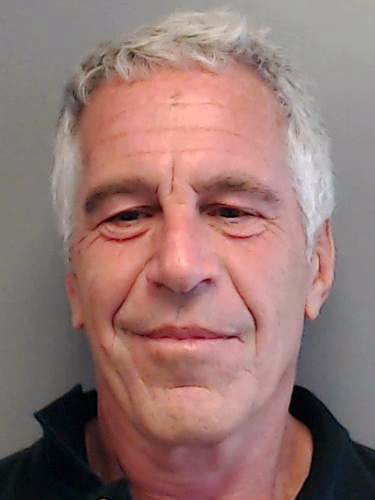
          In this handout provided by the Florida Department of Law Enforcement, Jeffrey Epstein poses for a sex offender mugshot after being charged with procuring a minor for prostitution on July 25, 2013 in Florida.In this handout provided by the Florida Department of Law Enforcement, Jeffrey Epstein poses for a sex offender mugshot after being charged with procuring a minor for prostitution on July 25, 2013 in Florida.
          In this handout provided by the Florida Department of Law Enforcement, Jeffrey Epstein poses for a sex offender mugshot after being charged with procuring a minor for prostitution on July 25, 2013 in Florida. (Photo by Florida Department of Law Enforcement via Getty Images)

          But many believe there’s more to the story than simple incompetence.

          As TMZ reports, investigators have discovered documents indicating that “payments of various amounts pumped into Noel’s accounts over 16 months prior to Epstein’s death.”

          Also of note is the fact that Noel googled two names in the hours after Epstein’s death — Epstein’s and that of another inmate, a man who had been convicted on wire fraud charges.

          Noel previously spoke about Epstein’s death during a 2021 interview with the Department of Justice, during which she admitted that she was probably the last person to see him alive.

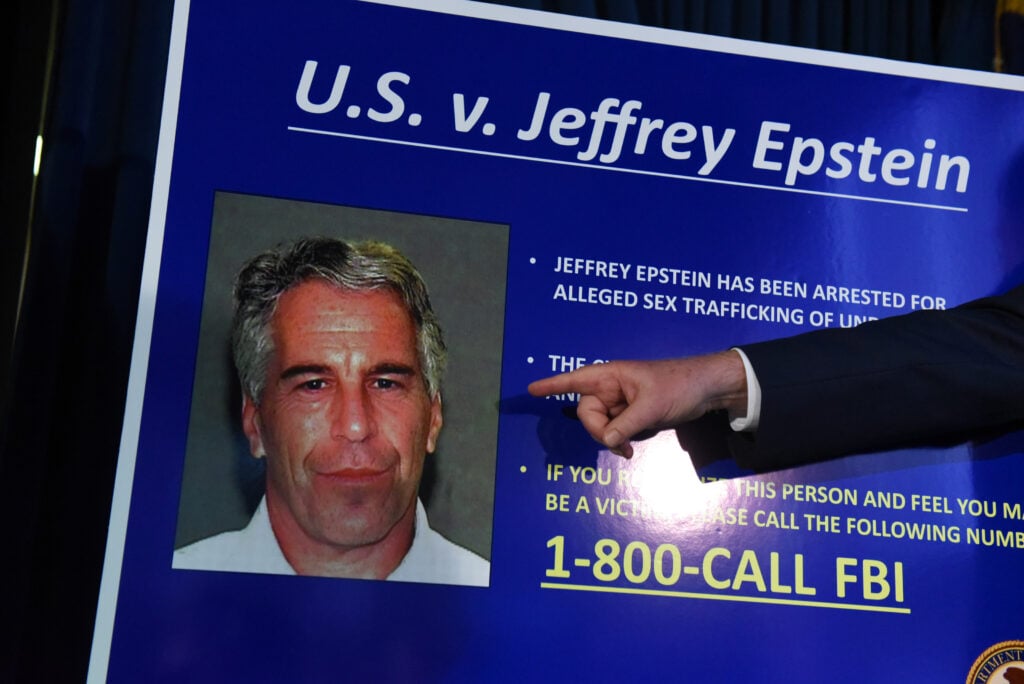
          US Attorney for the Southern District of New York Geoffrey Berman announces charges against Jeffery Epstein on July 8, 2019 in New York City. US Attorney for the Southern District of New York Geoffrey Berman announces charges against Jeffery Epstein on July 8, 2019 in New York City.
          US Attorney for the Southern District of New York Geoffrey Berman announces charges against Jeffery Epstein on July 8, 2019 in New York City. (Photo by Stephanie Keith/Getty Images)

          “Does it surprise you to hear that, you know, internet searches would show that that’s what you were doing from 5:42 to 5:52 a.m. on August 10, 2019?” Noel was asked on that occasion (via NBC News).

          “Yeah,” she responded, because “it wouldn’t be accurate.”

          Noel insisted that she had not actively searched Epstein’s name, claiming instead that a webpage containing news about the late financier refreshed automatically when she turned on her computer.

          “Due to public reporting, documents released by the Department of Justice, and documents obtained by the Committee, the Committee believes you have information that will assist in its investigation,” reads a letter from Rep. James Comer, R-Kentucky that was delivered to Noel this week.

          We will have further updates about this developing story as new information becomes available.


          Source link

          Popular Posts

          My Favorites

          The Second Wave of Intelligent Agents: Hype or the Real Deal?

          0
          The concept of intelligent agents has undergone a fascinating transformation since its inception in the 1980s. What began as a theoretical framework is...