Home Blog Page 74

Jada Pinkett Smith Reportedly Moved Back In With Will Smith 2 Years Ago

    0
    Jada Pinkett Smith Reportedly Moved Back In With Will Smith 2 Years Ago


    Jada Pinkett Smith
    Moved Back in with Will 2 Years Ago
    Report Says

    Published
    July 6, 2026
    6:13 PM PDT

    Jada Pinkett Smith and Will Smith are back under the same roof again … and have been for a couple years now, according to a source.

    An insider told People Jada moved back in with Will “two years ago,” saying … “They are happy and love each other and are, as ever, committed to supporting each other.”

    The source also told the outlet that Will and Jada spent the 4th of July together in Philly, where Will performed with the Roots at 2 am after a rain delay, adding Jada “was there with him as she always is.”

    As you know, Jada revealed in 2023 that she and Will had secretly separated back in 2016.

    Play video content

    ABC
    3/27/22

    She even credited Will infamously slapping Chris Rock at the 2022 Oscars with saving their marriage.

    We’re glad to hear Jada and Will have been happy at home together … now our faith in love is a little restored.

    She told Daily Mail at the time … “After all those years trying to figure out if I would leave Will’s side, it took that slap for me to see I will never leave him.”


    Source link

    The Best Trench Coats in the World

    The Best Trench Coats in the World


    A great trench coat is one of the rare garments that still carries its original intelligence. The belt, storm flap, epaulettes and throat latch were born from weather, rank and wartime utility; a century later, the best versions still earn their place by doing real work. They sharpen a suit, discipline denim, travel well through shoulder seasons and make rain feel like part of the plan.

    For Pursuitist, the world’s best trench coats must meet a higher standard than brand recognition. They need heritage, material integrity, proportion, repairability or longevity, and a serious offer for both men and women. These are not novelty trenches or runway gestures. They are the coats worth building a wardrobe around.

    1. Burberry

    Best for: The definitive luxury trench coat.

    Burberry remains the benchmark because it owns the trench coat in material, myth and execution. Thomas Burberry founded the house in 1856 and introduced gabardine in 1879, a tightly woven, weather-resistant cloth that changed the possibilities of rainwear. The modern Heritage trench still draws power from that invention: cotton gabardine, military-derived details, check lining, balanced lapels and a silhouette that works across cities, climates and dress codes.

    For men and women, the key is choosing the right cut. Kensington is the clean classic, Chelsea is slimmer, Waterloo is more relaxed and generous, while Burberry’s newer or seasonal shapes bring fashion voltage without abandoning the form. Daniel Lee’s recent runway language has also given the trench a sleeker after-dark charge, with London rain, evening texture and metropolitan polish sharpening the house classic for 2026. Buy beige, honey, black or navy if this is your only trench. Go long if you want drama and true coverage; go mid-length if you commute, drive or travel often.

    Pursuitist Take: Why We Love It

    Burberry is the trench against which all others are judged. It is expensive, visible and often imitated, yet the real thing still has the best mix of history, fit architecture, aftercare and global availability. If you want one luxury trench coat and do not want to overthink the decision, start here.

    2. Mackintosh

    Best for: Rain-first luxury with quiet authority.

    Mackintosh belongs to an older rainwear story. Charles Macintosh patented waterproof fabric in the 1820s, and the brand’s rubberised and bonded cotton coats still speak in a more restrained language than Burberry’s military classicism. Where Burberry is iconic, Mackintosh is precise. The best Mackintosh trenches and macs are clean-lined, smooth-fronted and architectural, with a particular strength in wet-weather practicality.

    The feel is different. A Mackintosh can be less decorative, more urban, and more serious about rain. Its best men’s and women’s coats suit people who dislike obvious branding and prefer a silhouette that can move from tailoring to knitwear without announcing itself. Look for bonded cotton, taped seams, raglan sleeves and a length that gives proper coverage.

    Pursuitist Take: Why We Love It

    Mackintosh is the connoisseur’s raincoat maker. It gives up some of Burberry’s cinematic romance, then answers with purity, weather discipline and beautiful restraint.

    3. Aquascutum

    Best for: Historic trench purists with an eye on technical reinvention.

    Aquascutum has one of the strongest claims in the category. Founded in 1851 by John Emary, the house patented waterproof wool in 1853 and supplied military and civilian rainwear long before the trench became a fashion shorthand. Its history includes royal warrants, wartime use and a women’s department dating to 1900.

    The present-day caveat is availability. Aquascutum’s ownership, licensing and distribution have changed over the years, so buyers should be more careful about sourcing than they need to be with Burberry. The newer Aquascutum Active presence also points to a more urban-technical reading of the brand’s waterproof heritage, extending the story beyond standard tailoring into performance-minded outerwear. When the right current trench is available through an authorized channel, especially in a classic cut with the brand’s club-check lining, it remains one of the most historically resonant choices in the world.

    Pursuitist Take: Why We Love It

    Aquascutum is for the buyer who cares about origin stories and old-world British rainwear, but still wants the brand to speak to today’s city weather. It is less straightforward to shop, though the heritage is real, and the best examples have a scholarly elegance.

    4. Ralph Lauren Purple Label and Collection

    Best for: American luxury with British tailoring instincts.

    Ralph Lauren did not invent the trench, but no American designer has been more convincing at turning British codes into a complete world. His best trench coats, across Purple Label for men and Collection-level womenswear, are less about military reproduction and more about cinematic polish: the coat worn over flannel trousers, a fine rollneck, eveningwear, denim or a cashmere hoodie on the way to a country house that may or may not exist.

    The strength here is proportion and styling intelligence. Ralph Lauren trenches often look best in cotton gabardine, Glen plaid, wool blends or softly tailored seasonal fabrics. They suit travelers who want a coat with romance, not costume. The brand is also one of the better options for couples who want parallel men’s and women’s luxury wardrobes without buying identical coats.

    Pursuitist Take: Why We Love It

    Ralph Lauren gives the trench a lived-in world. The best versions feel urbane, expensive and relaxed, with enough tailoring discipline to hold their shape for years.

    5. Prada

    Best for: Modernist luxury and technical fabric intelligence.

    Prada earns its place for buyers who want the trench coat pulled into the present. The Milanese house has long understood the glamour of utility, particularly through nylon, technical cottons and severe, intelligent silhouettes. A Prada trench is rarely the most historically faithful option in the room. That is part of the point. It can be sharper, stranger, lighter or more urban than the British classics.

    For men and women, the best Prada trenches are the restrained ones: dark technical fabrics, clean belts, hidden closures, sculptural collars and minimal hardware. Avoid over-branded versions if longevity is the goal. Choose Prada when you already own the classic trench, or when your wardrobe leans toward black tailoring, contemporary suiting, loafers, sharp knitwear and architectural accessories.

    Pursuitist Take: Why We Love It

    Prada is the best high-fashion trench for people who still care about function. The appeal is clear: less battlefield romance than Burberry or Aquascutum, more modern edge and material experimentation.

    The Pursuitist Final Word

    If you are buying one trench coat, buy Burberry. If you want the most rain-serious luxury coat, buy Mackintosh. If provenance matters most, hunt carefully for Aquascutum. If your taste is cinematic and American, Ralph Lauren is the move. If your wardrobe is modern, minimal and city-built, Prada makes the trench feel newly alive.

    The best trench coat should never feel flimsy, tight across the shoulders or too short to protect the clothes beneath it. It should have enough room for a knit or jacket, enough weight to fall cleanly, and enough restraint to survive changing taste. A true trench is not a seasonal purchase. It is weatherproof character.

    FAQs

    What is the best trench coat brand in the world?

    Burberry is still the best overall trench coat brand because of its gabardine heritage, consistent men’s and women’s offerings, recognizable cuts and long-term serviceability.

    Should a trench coat be waterproof?

    Most luxury trench coats are water-resistant rather than fully waterproof. For heavy rain, Mackintosh is the stronger choice. For everyday city weather, Burberry, Aquascutum, Ralph Lauren and Prada can all work well depending on fabric and finish.

    What color trench coat should I buy first?

    Honey, stone, khaki, navy or black are the safest first choices. Honey and khaki are the most classic; navy and black are easier for evening, business travel and minimalist wardrobes.

    Should men and women buy different trench coat brands?

    No. The best trench coat makers usually serve both well. Fit matters more than gender category: shoulder line, sleeve length, belt position and coat length determine whether the trench looks elegant or borrowed.


    Source link

    Original Nintendo Switch Will Be Discontinued In Europe

    Original Nintendo Switch Will Be Discontinued In Europe


    Next year will mark the 10th anniversary of the original Nintendo Switch, which remains in active production despite the debut of Switch 2 in 2025. However, the Switch’s time will be coming to a close in Europe just shy of a decade after its initial release.

    According to a notice on Nintendo’s official site, the Switch, Switch Lite, and Switch OLED will no longer be available to European retailers after mid-February 2027. Nintendo Store will also stop carrying the original Switch models for European markets in that same month.

    Nintendo hasn’t signaled when the Switch will be retired in North America, but the company had a greater incentive to shut it down in Europe first. The European Union passed a new regulation that requires Nintendo and other console makers to ship products that allow users to change their own batteries. Changing the design of the first Switch to allow owners to change its batteries wouldn’t be very cost-effective, given it was already near the end of its lifetime. So Nintendo discontinued it instead.

    However, Nintendo will comply with Europe’s Right to Repair directive and begin releasing Switch 2 consoles with replaceable batteries as soon as this summer. Nintendo has indicated that these new models are virtually identical to the Switch 2 console that’s already on the market. While those plans are in motion, Nintendo added that “Due to a variety of factors, revised products may not become available in all European countries simultaneously.” Presumably that means the ongoing memory and component shortages may slow down the pace of that rollout.

    Given Sony’s recent decision to stop releasing games on disc, Switch 2 is one of the few remaining consoles that still uses physical media. Regardless, Nintendo has leaned more heavily on Game-Key Cards for its current generation of third-party titles on Switch 2, much to the annoyance of games preservation activists.


    Source link

    The 5 Best Luxury Colognes for Men

    The 5 Best Luxury Colognes for Men


    The right luxury fragrance for men signals taste before you say a word. It sits close to the skin, changes as the hours pass, and emotes subtle masculinity because the composition has depth, polish, and intent.

    These are the scents worth the outlay, chosen for quality, wearability, staying power, and the kind of provenance that matters the most when you are investing in an exceptional bottle.

    Pursuitist evaluates luxury products by how they perform in real life: the materials, the craft, the brand story, and whether the experience justifies the premium. We reviewed the prestige men’s fragrance field and narrowed it to five bottles we would actually buy. Here are our picks.

    The 5 Best Luxury Colognes for Men, Reviewed

    Creed Aventus

    Creed Aventus is the fruity, smoky benchmark that reset expectations for modern luxury men’s fragrance. Pineapple, bergamot, apple, and blackcurrant give it lift before birch, patchouli, oakmoss, and musk give it grip.

    Concentration: Eau de parfum. Key notes: pineapple, bergamot, blackcurrant, birch, oakmoss, musk. Price tier: $$$$ (starting around $355 for 50ml).

    It works nearly everywhere: office, dinner, a wedding, a first date. That range is why it became one of the most imitated men’s scents of the past 15 years.

    The House of Creed presents a heritage reaching back to 18th-century London tailoring, though the fragrance house collectors know today was shaped in the modern era by Olivier Creed. Aventus launched in 2010 and quickly became the brand’s commercial engine.

    Ownership has changed quickly in recent years: BlackRock Long Term Private Capital became Creed’s majority owner in 2020, Kering acquired the house in 2023, and L’Oréal completed its acquisition of Kering Beauté, including Creed, in 2026.

    Why Pursuitist Recommends: Aventus is the safest expensive bet in the room, though recent batches can feel softer than the early mythology suggests. Buy from an authorized seller and sample before you commit.

    Tom Ford Oud Wood

    Tom Ford Oud Wood is the fragrance that carried oud, the prized resinous wood of Middle Eastern perfumery, into the Western luxury wardrobe. It reads smooth and dry rather than medicinal, with rosewood, cardamom, sandalwood, vetiver, tonka bean, and amber rounding out the woods.

    Concentration: Eau de parfum (also sold as Parfum). Key notes: oud, rosewood, cardamom, sandalwood, vetiver, tonka bean, amber. Price tier: $$$ (starting around $195 for 30ml).

    The effect is refined and quietly expensive, the kind of scent that gets noticed without announcing itself. It suits cool evenings and boardrooms equally well.

    Tom Ford founded his fashion and beauty brand in 2005, and in 2007 introduced Private Blend, a more connoisseur-minded fragrance line. Oud Wood was part of that early Private Blend wave and remains one of the house’s most recognizable best sellers.

    The Tom Ford brand is now owned by The Estée Lauder Companies, which had long produced its beauty and fragrance business before acquiring the brand in 2023.

    Why Pursuitist Recommends: Oud Wood is one of the most versatile luxury ouds on the market. Longevity can feel modest for the price, so reach for the richer Parfum concentration if you want more evening presence.

    Maison Francis Kurkdjian Grand Soir

    Maison Francis Kurkdjian Grand Soir is a warm amber fragrance built for evening, from one of France’s most decorated living perfumers. Labdanum, benzoin, vanilla, and cinnamon leaf create a golden, enveloping warmth that flatters almost everyone.

    Concentration: Eau de parfum. Key notes: labdanum, benzoin, vanilla, cinnamon, amber. Price tier: $$$ (starting around $240 for 70ml).

    It is a comfort scent with polish, easy to wear yet clearly high quality. Cold weather is its home.

    Francis Kurkdjian and Marc Chaya founded the house in Paris in 2009, and LVMH acquired a majority stake in 2017. Kurkdjian, who also creates fragrances for Dior, first drew global attention with Baccarat Rouge 540, which began as a Baccarat anniversary commission before becoming a modern fragrance phenomenon.

    Grand Soir is the house’s warm, wearable counterpoint to that famous scent.

    Why Pursuitist Recommends: Grand Soir is the amber we hand to anyone who wants instant compliments, though it favors comfort over provocation. If you want something more unusual from the house, sample Baccarat Rouge 540 or Oud Satin Mood first.

    Amouage Interlude Man

    Amouage Interlude Man is the smoky, resinous statement scent from Oman’s foremost luxury perfume house. Bergamot, oregano, and pimento berry open over a heart of frankincense, amber, cistus, and opoponax, then settle into leather, patchouli, sandalwood, and agarwood smoke.

    Concentration: Eau de parfum. Key notes: bergamot, oregano, pimento berry, frankincense, amber, opoponax, leather, oud smoke. Price tier: $$$$ (starting around $395 for 100ml).

    It is big, dramatic, and unmistakable, a fragrance that fills a room and lingers for most of a day.

    Amouage was founded in the Sultanate of Oman in 1983 by the Albusaidi family as “The Gift of Kings.” The house still builds its identity around Omani incense culture, high oil concentrations, and a deep East-meets-West style of perfumery.

    Interlude Man, composed by Pierre Negrin, became the brand’s boldest signature.

    Why Pursuitist Recommends: Interlude Man is the choice when you want presence over restraint. It is loud and polarizing, so try Reflection Man for the refined side of the house, or Interlude Black Iris for a smoother, iris-tinged take on the same DNA.

    Parfums de Marly Layton

    Parfums de Marly Layton is a warm, sweet-spiced crowd-pleaser and the modern French house’s most popular men’s fragrance. Apple and bergamot brighten the top, lavender and geranium sharpen the middle, and vanilla with guaiac wood and a whisper of coffee anchor the base.

    Concentration: Eau de parfum. Key notes: apple, bergamot, lavender, geranium, vanilla, guaiac wood, coffee. Price tier: $$$$ (starting around the low $300s for 75ml).

    It is versatile, comforting, and reliably well received, especially in cooler months.

    Julien Sprecher founded Parfums de Marly in 2009, drawing on the Château de Marly and the perfumed court of Louis XV. The rearing horses on every bottle nod to the Chevaux de Marly, Guillaume Coustou’s 18th-century sculptures commissioned by Louis XV.

    Layton launched in 2016 and became one of the defining men’s scents of its decade.

    Why Pursuitist Recommends: Layton is the easiest to love on this list, though it plays closer to a polished designer scent than an experimental niche one. It turns potent in heat, so keep it to two or three sprays.

    The Pursuitist Final Word

    These five cover the luxury fragrance map: the classic reach of Creed Aventus, the smooth woods of Tom Ford Oud Wood, the amber warmth of Grand Soir, the incense drama of Amouage, and the modern comfort of Layton. Buy the one that matches how you actually live, not the one with the loudest reputation. Sample before you spend, mind the concentration, and treat any of these as a long-term signature rather than a passing trend.

    Frequently Asked Questions

    What is the best luxury cologne for men?

    Creed Aventus remains the most versatile luxury pick, wearable across seasons and occasions, which is why it is the common recommendation for a first prestige fragrance. The best choice depends on taste: choose Tom Ford Oud Wood for woods, Grand Soir or Layton for warmth, and Amouage Interlude Man for bold presence.

    What is the difference between cologne and eau de parfum?

    Cologne, or eau de cologne, carries a lower concentration of fragrance oil and tends to fade within a few hours. Eau de parfum holds a higher concentration, so it usually projects more and lasts longer. Most of the fragrances here are eau de parfum, even though people call them cologne in everyday speech.

    Are luxury colognes worth the money?

    For many buyers, yes. Prestige houses often invest more in composition, materials, packaging, and brand craft, which can translate into better performance and a more distinctive scent. The tradeoff is price, and skilled alternatives exist, so sample first to decide whether the quality justifies the cost for you.

    How long should a luxury cologne last?

    A well-made eau de parfum typically lasts six to ten hours on skin, and an extrait or parfum concentration can last longer. Longevity varies with skin type, weather, and how much you apply. Spraying lightly on clothing can help a scent hold through the day, but test delicate fabrics first.




    Source link

    Xbox Says It Must Reset Because Its Business Is “Not Healthy”

    Xbox Says It Must Reset Because Its Business Is “Not Healthy”


    Xbox’s great reset began today. There have been some silver linings. Double Fine and Compulsion Games are going independent, while Ninja Theory and Undead Labs are being sold to new owners, meaning those studios can continue to have life outside of Xbox. Arkane Lyon, meanwhile, remains uncertain.

    But there is no getting around the human cost. Microsoft has confirmed that approximately 3,200 people will lose their jobs across Xbox throughout FY27, with around 1,600 roles eliminated today and another 1,600 set to follow over the remainder of the fiscal year.

    Xbox has now officially confirmed the broad reporting in a new message posted to Xbox Wire, simply titled “Resetting XBOX.”

    Xbox CEO Asha Sharma penned the open letter, laying out the future challenges facing Xbox, the company’s vision, and the plan it now intends to follow.

    “I know this is painful,” wrote Sharma. “These changes will directly affect people who have poured their creativity into building XBOX. Many joined us through acquisitions, while others were recruited here, or sought us out because they loved this industry and loved XBOX. Today’s decisions do not reflect their talent or dedication.”

    But perhaps the most important line is one that we had already seen through earlier reporting:

    “Our business today is not healthy.”

    It isn’t the first time Sharma has publicly said this about the green brand. She explains that Xbox is apparently operating at margins three to ten times lower than comparable platform and publishing businesses. She also says Xbox entered generation nine with a smaller install base and a higher cost structure.

    Asha Sharma, Xbox CEO. Image taken from Bloomberg Tech Youtube Video.

    According to Sharma, Xbox bet on Game Pass, multi-platform releases and a broader portfolio of content. While those areas created “meaningful value,” she admits they did not grow at the pace Xbox expected.

    “And now the industry is facing the most severe hardware crisis in its history,” Sharma wrote. “We must reset XBOX.”

    Sharma then begins laying out the actual meat of the reset by going back to 2018, when Xbox began aggressively expanding its studio portfolio.

    Since then, she says, the number of games being created each month across the industry now outpaces the previous ten years combined. In other words, Xbox spent years buying studios to produce more games at the exact same time the rest of the industry exploded with more games than anyone could realistically keep up with.

    “It is neither possible nor desirable to own every great independent studio,” Sharma wrote, while also admitting that Xbox has learned it is “not the best home for every type of studio.”

    Even more brutally, Sharma says that in a typical year, Xbox lost 64 cents for every dollar it invested. That, more than anything else, explains why Microsoft is now cutting back the number of studios it owns and the people it employs. Sure, Xbox has Microsoft’s money behind it, but the brand is still expected to operate like a business, not a charity project. Microsoft can afford a lot of things. That does not mean it is willing to keep funding a strategy it no longer believes is working.

    There is at least a bit of good news: Sharma says none of Xbox’s publicly announced first-party games or projects is being cancelled as part of these reductions. That does not mean everything is magically safe forever, of course. But for now, it means games like Senua, State of Decay 3 and Marvel’s Blade are still officially alive. Senua and State of Decay 3, in particular, will apparently still continue with the help of Xbox despite the developers being sold to other companies.

    Sharma also announces a major internal change: both Mojang and King will now report directly to her.

    “These two studios have increasingly become platforms and are our largest by monthly active players,” Sharma wrote. “They bring critical geographic, demographic, and differentiation to XBOX.”

    That is a big hint at where Microsoft sees the future of Xbox. Minecraft and Candy Crush are not being treated like normal studios. They are being treated like platforms.

    This also feeds into the wildest line in Sharma’s memo: she wants Xbox to “entertain” one billion people per day.

    One billion. Per day.

    “I want XBOX to be one of the few companies that entertains more than a billion people each day,” she writes, which is one of those CEO sentences so enormous it briefly stops sounding like language.

    I have to assume this is just CEO hyperbole. I have to. It has to be. Right? One billion. Per day.

    For context, The Game Business reports that Xbox currently reaches around 500 million players per month. Naturally, that number stems from every single possible platform and game that could be counted: mobile, Steam, Xbox-published games on PlayStation, Minecraft and so on. That is already an enormous number, but Sharma’s target is not simply to double it. She is talking about turning Xbox into a daily platform on a scale few entertainment brands on Earth can even dream of. I’m not even sure how that gets accomplished unless Microsoft legally mandates that every human being has an Xbox chip installed in their brain. And I probably should not give them ideas.

    That is the ambition behind this reset. Microsoft does not want Xbox to become smaller – at least, not in theory. It wants Xbox to become vastly bigger, more focused, more global and more profitable. Some people thought Sharma’s job might be to gradually wind Xbox down as a brand until it eventually vanished in a puff of Thanos dust. Instead, it seems Sharma and Microsoft still believe Xbox can become a powerhouse.

    To aid in this goal, Sharma wants to streamline the company. According to her, in some parts of Xbox, work has to pass through 14 layers of management. The goal is to reduce that to 5 or even 3 layers to speed up decision-making. Part of this means cutting down the platform teams as well, which have apparently grown by 40% since the start of the generation. We saw these cuts mentioned in today’s reporting.

    “And we will streamline how we work across our tools, with a cleaner code base, shared services, and 50% reduced vendor spend,” said Sharma.

    “As XBOX grew our headcount, we became more fragmented. Teams, studios, and functions often operate independently, and it became harder to work towards a shared goal, make the right tradeoffs, and get things done,” she said.

    Part of the changes to leadership and management is the appointment of a Chief Operating Officer with “end-to-end  P&L responsibility across content, hardware, platform, and services”. That person is Helen Chiang, who will “bring our businesses together under one operating model, making sure we make clear investment decisions, learn from our successes and failures, and hold ourselves accountable for results.”

    Despite everything, Sharma is promising that Xbox will invest as much as it ever has, but with “greater focus, great discipline, and greater clarity”

    “History is full of companies that mistake longevity for inevitability. We will not be one of them,” Sharma says in her closing sentence.

    It is a bold promise. It is a beautiful vision for the future. Right now, though, that vision is hard to care about as thousands of people are left standing in the wreckage.


    Source link

    Coronation Street spoilers for next week: First look as unconscious Betsy’s rushed hospital as a quest to catch the culprit starts

      0
      Coronation Street spoilers for next week: First look as unconscious Betsy’s rushed hospital as a quest to catch the culprit starts


      Coronation Street is set for another dramatic week, with Betsy Swain fighting for her health after collapsing, while Dylan finds himself at the centre of shocking accusations.

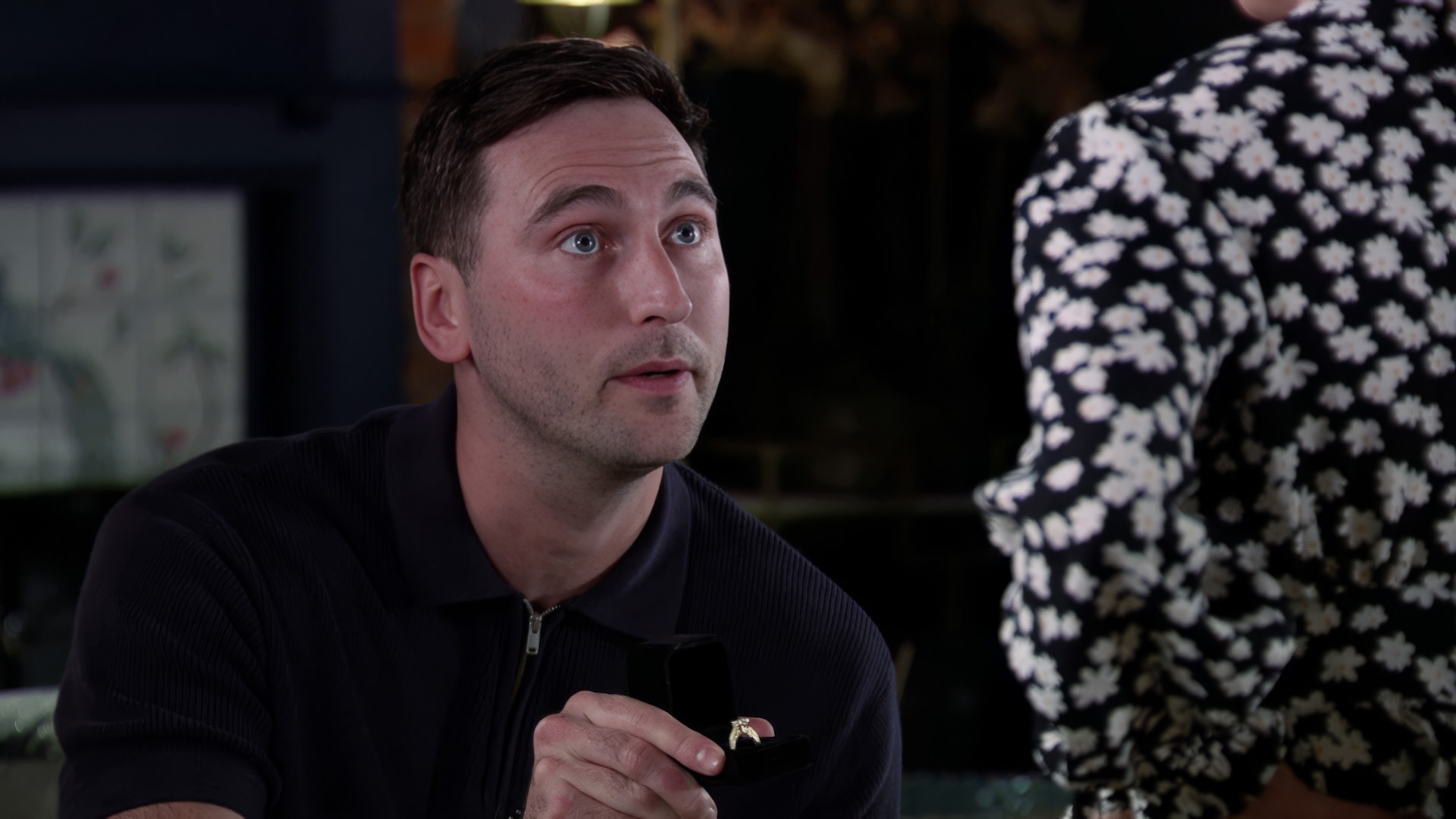
      Elsewhere, Kit takes a huge step in his relationship with Sarah by getting down on one knee, before making it his mission to keep her out of trouble. Here’s everything coming up on the cobbles next week.

      1. Bernie urges Cassie to take control

      Tyrone’s golf day with his dad gets off to a disastrous start when he puts his back out.

      Elsewhere, Bernie realises Cassie is uncomfortable around Ross. After Cassie admits she is being blackmailed, Bernie encourages her to confront the situation rather than avoid it. Cassie is left wondering whether to take her advice.

      Cassie and Ross at the shop in Coronation Street

      Ross later admits he wants to build a relationship with Tyrone, but events soon take an unexpected turn when Tyrone notices something strange between Cassie and Steve and is stunned by what he uncovers.

      Later on, Cassie is horrified to discover Ross has spent the night with Tracy at No.1. She tries to warn Tracy that Ross cannot be trusted, but Tracy refuses to listen.

      2. Cassie issues another warning in Coronation Street spoilers

      Ross and Tracy flirting in the Rovers

      Cassie spots Tracy and Ross sharing a kiss in the street before later seeing Ross heading into the Bistro carrying flowers, instantly ruining Tracy’s mood.

      Tyrone and Hope both warn Ross to be careful with Tracy, but he refuses to take any notice.

      Tracy and Cassie talking in the Rovers in Coronation Street

      Ross is baffled when Tracy suddenly goes cold on him. Once he explains about the flowers, he tells her he wants to slow things down so he can concentrate on rebuilding things with Tyrone. Afterwards, he warns Cassie to stop meddling.

      Meanwhile, after Tyrone orders her to leave, Cassie decides the time has come to tell Steve exactly what has been happening.

      3. Joseph’s school fees cause fresh concern

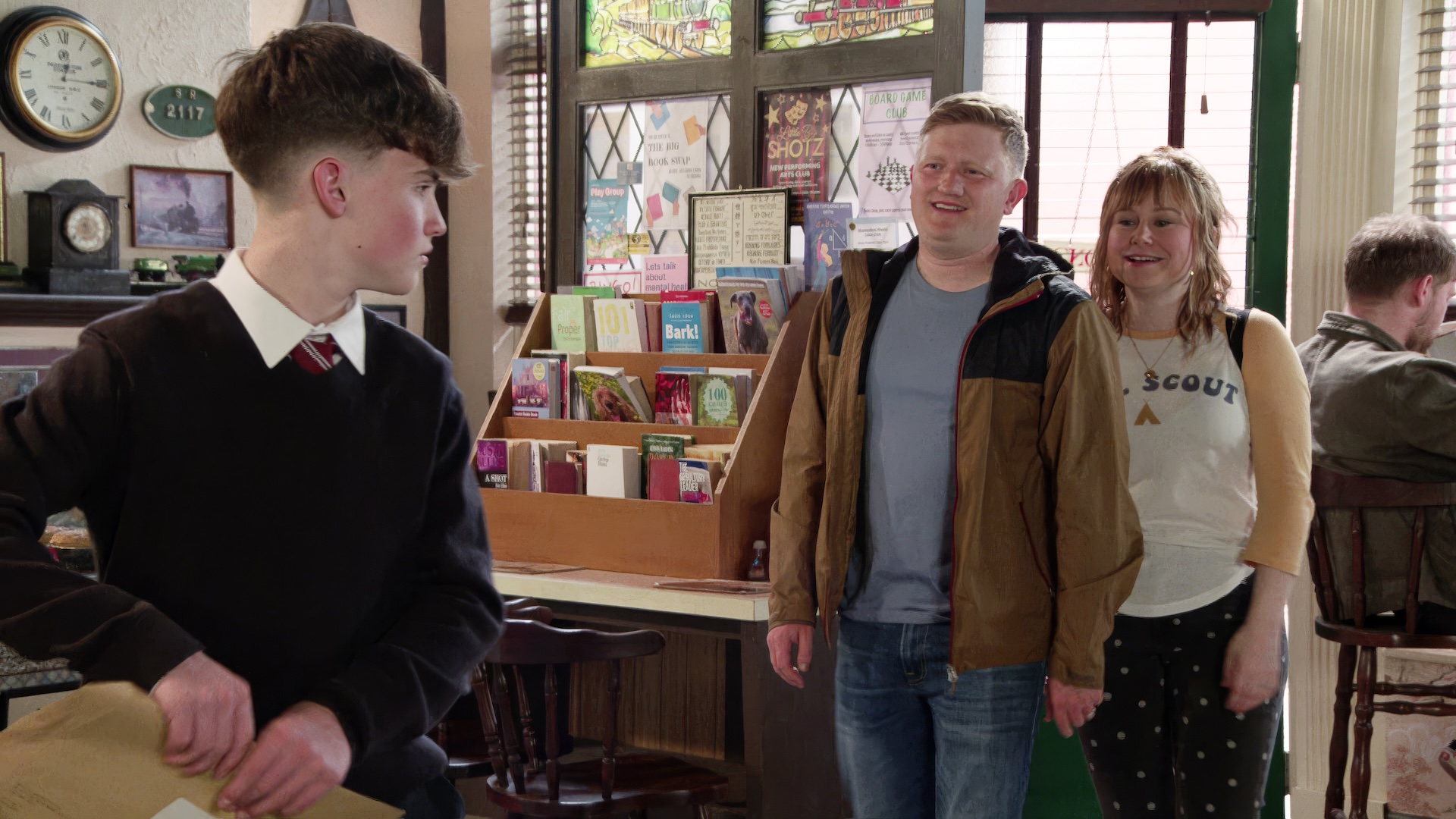
      Joseph, Chesney and Gemma at Roy's Rolls in Coronation Street

      Joseph hurriedly hands Chesney and Gemma his school report before making a quick exit, leaving them surprised to discover he has been falling behind with his homework.

      Gemma later tells Bernie that Joseph is struggling to focus because of the chaos at home, prompting Bernie to suggest he studies somewhere quieter at No.7.

      Joseph, Chesney and Gemma at Roy's Rolls in Coronation Street

      Things become even more worrying when Chesney reveals Linda’s holiday rental business has collapsed, meaning she can no longer cover Joseph’s school fees. Although Chesney considers taking out a loan, Bernie is horrified by the idea of the family getting into debt.

      Later, Gemma and Chesney reassure Joseph by telling him Linda has managed to find the money after all and his school fees will be paid.

      4. Kit proposes to Sarah in Coronation Street spoilers

      Kit proposing to Sarah in Coronation Street

      Kit tells Lisa he has become suspicious after witnessing Gary and Maria arguing, but Lisa reminds him he is no longer working on the case. Maria later confides in Sarah that her marriage is falling apart.

      Sarah admits to Gary she feels guilty, but Gary pleads with her to stay quiet, warning that he could end up in prison.

      Kit proposing to Sarah in Coronation Street

      When Sarah gets home, she is surprised to find Kit has prepared a romantic lunch before leaving her speechless by proposing.

      Later, Kit warns Sarah that her future could depend on Gary. He tells her to get hold of Gary’s phone so they can remove anything that might land her in trouble.

      5. Kit makes a secret move

      Kit searching files at the police station

      Kit secretly contacts the man handling Gary’s phone data and instructs him to send any information directly to his personal email.

      Meanwhile, back on the Street, DC McLaughlin tells Lisa they are ready to arrest Theo’s killer.

      6. Betsy is rushed to hospital

      Ryan, Carla and Lisa tending to Betsy at the hospital in Coronation Street

      Betsy asks Dylan to teach her how to cook after making a disastrous breakfast, and he shows her how to prepare a bolognese. The pair decide they are going to make their long-distance relationship work.

      However, everything changes when an ambulance is called to No.6. Ryan tells Carla he has found Betsy unconscious on the kitchen floor.

      Ryan, Carla and Lisa tending to Betsy at the hospital in Coronation Street

      At the hospital, Betsy is taken for an MRI scan while a nurse updates a devastated Lisa. Dylan arrives but panics and rushes out after telling Lisa and Carla that Betsy appears to be having a fit, as doctors battle to help her.

      7. Dylan is blamed in Coronation Street spoilers

      Lisa, Sean and Dylan arguing at Roy's Rolls in Coronation Street

      As Betsy recovers, she pleads with Lisa not to blame Dylan for what happened. But, the damage may already have been done. Sean suggests he and Dylan should visit Betsy together, but Dylan refuses, leaving Sean wondering why.

      The situation reaches boiling point in the café when Lisa confronts Dylan and blames him for Betsy’s collapse. She later goes to the police station and tells the desk sergeant she wants to report a crime.

      Lisa, Sean and Dylan arguing at Roy's Rolls in Coronation Street

      Lauren later tells Dylan that Betsy is seriously ill and does not want to see him, leaving him devastated. Sean is then stunned to learn Dylan has been arrested at the precinct, completely unaware Lisa has reported him.

      Back at the hospital, Betsy is horrified to discover Lisa has gone to the police. Meanwhile, Lauren refuses to serve Dylan and Sean in The Rovers. Despite the accusations against him, Dylan remains convinced that Brody is the one truly responsible.

      8. Christina’s spending is exposed

      Christina upset

      George and Christina return home to discover Mary holding a flash sale, selling off household items Christina recently bought. Christina is furious, but Mary calmly points out the purchases were made using her card, making them hers to sell.

      Mary, George and Christina arguing at home

      Later at No.11, Mary continues to challenge Christina over her spending. Christina then checks her phone and sees a notification confirming a package is out for delivery, leaving her sinking with dread.

      Read more: Coronation Street opinion: Soap losing balance as villains dominate

      Coronation Street usually airs Monday-Friday at 8.30pm on ITV.

      What do you think about this story? Let us know by leaving a comment on our Facebook page @CoronationStreetInsider. We want to hear your thoughts!


      Source link

      Louis Vuitton’s $11,700 Woody Wagon Colognes

      Louis Vuitton’s ,700 Woody Wagon Colognes


      Louis Vuitton’s latest fragrance release is less a bottle launch than a miniature road trip. The Louis Vuitton Woody Wagon Colognes set, created with Los Angeles artist Alex Israel, packages the Maison’s six Parfums de Cologne inside a handcrafted tribute to one of California’s most recognizable symbols: the wood-paneled station wagon.

      Limited to just 66 pieces, the Woody Wagon Colognes collection is priced at $11,700 and available by pre-order, with delivery expected in late September.

      The piece continues Louis Vuitton’s collaboration with Israel, whose sunlit, pop-inflected view of Los Angeles has shaped the Maison’s Cologne universe since 2019. Here, that California mood becomes physical: a sculptural fragrance case inspired by the classic beach-bound wagon, complete with surf-era romance, Route 66 symbolism, and the polish of Louis Vuitton craftsmanship.

      A California Road Trip, Rebuilt By Louis Vuitton

      The Woody Wagon is designed as a collectible object as much as a fragrance set. Its miniature body draws from the mythology of the American West — surfboards, Pacific highways, family road trips, and the hazy promise of Los Angeles light — then filters it through Louis Vuitton’s codes of travel and craft.

      Each edition is assembled from 219 individual elements, including engraved wooden doors, Monogram detailing, wheels decorated with Monogram flowers, natural beige semi-aged leather, and mahogany wood chosen for its rich tone and visible grain.

      Louis Vuitton says the project required 60 artisans and more than 7,000 hours of craftsmanship to produce the limited run. The edition size, 66, is a deliberate nod to Route 66.

      Inside the Woody Wagon are the six Louis Vuitton Colognes, imagined as a fragrance family taking a California drive. The result is part perfume cabinet, part design collectible, and part art object — the sort of release aimed at serious Louis Vuitton collectors as much as fragrance enthusiasts.

      Alex Israel’s Los Angeles, In Six Scents

      Israel’s role gives the set its distinctive West Coast identity. Rather than treating Los Angeles as a backdrop, the Woody Wagon turns the city’s visual language into the main event: bright color, open roads, sunset gradients, and the blend of casual ease and high design that defines the best California luxury.

      The collaboration also reflects Louis Vuitton’s broader fragrance direction under master perfumer Jacques Cavallier Belletrud, where travel, memory, and place are central to the storytelling. The Woody Wagon does not simply house the Colognes; it gives them a world.

      Limited-Edition Travel Cases For Three Louis Vuitton Colognes

      Alongside the Woody Wagon, Louis Vuitton is introducing limited-edition travel cases for three Colognes: Sun Song, California Dream, and Afternoon Swim.

      Each case is crafted in translucent resin and finished with color gradients inspired by the California landscape. The Monogram motif appears across the surface, while the transparent body lets the bottle become part of the visual effect.

      The Sun Song Travel Case moves from yellow to orange, echoing the heat and brightness of a summer day. The California Dream Travel Case shifts from pink to blue, capturing the color of a Los Angeles sunset. The Afternoon Swim Travel Case uses aquatic blues, from clear azure to deeper ocean tones.

      Each travel case is priced at $1,400 and limited to 100 pieces per version.

      Why Collectors Will Care

      The Woody Wagon Colognes set sits in a rare category: luxury fragrance presented as collectible design. Its appeal is not only in the six Colognes, but in the object itself — the scale, the materials, the edition size, and the unmistakable Alex Israel imprint.

      For Louis Vuitton collectors, the scarcity is obvious. For fragrance collectors, it offers one of the Maison’s most theatrical presentations of the Cologne line. And for design enthusiasts, it captures a very specific fantasy of California: sunlit, mobile, optimistic, and beautifully overbuilt.

      Price: $11,700
      Edition: 66 pieces
      Availability: Pre-order, with delivery expected in late September
      Travel Cases: $1,400 each, limited to 100 pieces per version

      BECOME A PURSUITIST VIP!

      Sign up for our Free Insider Enewsletter. Get exclusive access. No ads, ever!Rated ⭐⭐⭐⭐⭐ from Forbes, The New York Times & The Wall Street Journal.

      Avatar photo

      Christopher Parr

      Christopher Parr, is the Editor and Chief Content Creator for Pursuitist, and a contributing writer to USA Today, Business Insider — and the on-air host of Travel Tuesday on Live at 4 CBS. He is an award-winning luxury marketing veteran, writer, a frequent speaker at luxury and interactive marketing conferences and a pioneer in web publishing. Named a “Top 10 Luxury Travel Blogger” by USA Today, Parr has also been selected as the official winner in Luxury Lifestyle Awards’ list of the “Top 50 Best Luxury Influencers and Bloggers in the World.”


      Source link

      ByteDance and Alibaba to Pull Agent Features as China Cracks Down on Humanlike AI – Decrypt

      ByteDance and Alibaba to Pull Agent Features as China Cracks Down on Humanlike AI – Decrypt


      In brief

      ByteDance’s Doubao and Alibaba’s Qwen are disabling humanlike agent features ahead of Beijing’s Interim Measures for the Administration of AI Anthropomorphic Interaction Services, effective July 15.
      China’s first regulation specifically targeting emotional AI bans services that simulate human personality and “sustained emotional interaction,” with especially strict limits on virtual companions for minors.
      Research backs Beijing’s concern: Even the best frontier AI models routinely encourage harmful emotional attachment, and one in seven young adults in relationships now uses an AI romantic companion.

      While American politicians tackle the impact of AI chatbots on the mental health of users with restrictions focusing on transparency and safeguards, Beijing appears poised to shut down AI personalities altogether.

      ByteDance and Alibaba both announced over the weekend they are disabling custom agent features in their biggest consumer AI products, citing “product function adjustments” ahead of new rules that govern such products taking effect.

      ByteDance’s Doubao notified users in a Friday night notice that its agent feature would go offline on July 15. After October 15, related data would be handled under the company’s privacy policy and become unrecoverable. Per South China Morning Post, Alibaba’s Qwen moved faster: “humanlike interactive agents and user-created agent functions” come down July 10, with broader agent services following on July 15.

      The trigger is China’s Interim Measures for the Administration of AI Anthropomorphic Interaction Services, jointly issued April 10 by five government departments—the Cyberspace Administration of China, the National Development and Reform Commission, the Ministry of Industry and Information Technology, the Ministry of Public Security, and the State Administration for Market Regulation. The rules take effect July 15.


      The regulation targets AI services that simulate human personality traits, thinking patterns, and communication styles for “sustained emotional interaction.” Translation: AI girlfriends, AI therapists, AI companions, and the custom-persona bots that Doubao and Qwen users spent months building are out.

      Both apps had offered pools of agents customizable for specific tasks, speaking styles, and fixed personas. Users could turn a general-purpose chatbot into a named assistant, tutor, role-playing character, or companion with a consistent tone. All of that is gone now in China.

      What the rules actually say

      The official government description is specific. The measures impose restrictions on services offering “virtual relatives, virtual companions or other intimate relationships to minors,” per the policy announcement. The document also cites risks including extremist content, privacy leaks, harm to physical and mental health—and AI addiction.

      Non-emotional services are explicitly excluded, so customer service bots, knowledge Q&A tools, workplace assistants, and educational software are fine, as long as they don’t cross into sustained emotional interaction.

      Legal analysts at MMLC Group described the measures as treating emotional AI as “a governance problem” instead of just a content issue. Once AI starts competing with real human social bonds, the argument goes, regulation has to target system design, not just harmful outputs.

      The research supports the concern. A USC study from June found that even leading frontier AI models—from OpenAI, Anthropic, Google, and Alibaba—violated social-interaction safety guidelines more than 27% of the time, routinely encouraging emotional attachment and portraying themselves as human. A separate survey of young partnered adults found one in seven regularly used AI romantic companions—and nearly 70% were hiding the full extent from their partners.

      China is the first country to build a dedicated regulatory framework for this category. Hogan Lovells described the measures as “the first set of regulatory rules in China specifically targeting AI-driven emotional interaction.” The EU, U.S., and other countries have flagged similar concerns but haven’t legislated in the same restrictive way.

      Daily Debrief Newsletter

      Start every day with the top news stories right now, plus original features, a podcast, videos and more.


      Source link

      Taylor Swift-Travis Kelce Prenup Part of Alarming New Trend, Experts Warn

        0
        Taylor Swift-Travis Kelce Prenup Part of Alarming New Trend, Experts Warn


        Reading Time: 2 minutes

        Well, as you’ve certainly heard by now, Taylor Swift and Travis Kelce got married on Friday.

        The A-list couple went big for their big day, booking Madison Square Garden, loading the stands with their rich and famous friends, and shutting down entire blocks of Midtown Manhattan.

        That’s the sort of party you can throw when you’re worth about $2 billion, as Taylor is believed to be.

        Taylor Swift attends the 66th GRAMMY Awards at Crypto.com Arena on February 04, 2024 in Los Angeles, California.
        Taylor Swift attends the 66th GRAMMY Awards at Crypto.com Arena on February 04, 2024 in Los Angeles, California. (Photo by Neilson Barnard/Getty Images for The Recording Academy)

        But if there’s any downside to being a multi-billionaire it’s that you need to go the extra mile when it comes to protecting your assets.

        That’s why Taylor and Travis signed what’s rumored to be “the most sophisticated prenup of all time.”

        It’s anyone guess as to what exactly that means (for obvious reasons, the details of being kept under wraps).

        But insiders say increasingly byzantine prenups are all the rage in Hollywood these days.

        So the fact that Tayvis managed to take things to a new level is impressive, in a way. But is all that complexity a good thing?

        Many marriage purists believe that prenups are a bad idea, as they plant a subconscious seed of doubt in the minds of the newlyweds and make it easier for one or both parties to call it quits in times of strife.

        One of those old-school anti-prenup stalwarts is Free Press columnist Arthur Brooks who argues that Taylor and Travis are increasing the likelihood of a divorce with their hyper-specific prenup.

        That may be. But two billion dollars is two billion dollars, and it would be foolish for a one-woman empire like Taylor to enter into marriage blindly.

        As for the wedding itself, details are still scarce.

        We know that Adam Sandler officiated the ceremony, but other than that, specifics about Tay Day have been hard to come by.

        Most of what we know comes courtesy of AMC CEO Adam Aron, who tweeted a live play-by-play that he later deleted.

        According to Aron, “everything… floors, walls, ceilings… was draped in peach and white. Large blown up pictures of Taylor and Travis at each age, year by year from one year-old to late teenager-hood, were on display.”

        “A small portion of MSG was cordoned off, devoid of any notion that that a basketball or hockey game ever shared that space. Somehow magically, someone created an outdoor garden at a lush countryside retreat,” he wrote (rather poetically, we might note).

        “Everything draped off this time in green and white. Real flowers and I think artificial trees welcomed fifteen rows of maybe 75 or so chairs. They say there were around one thousand attendees, but surprisingly, it all felt intimate and small. Everything was close.”

        The guests reportedly signed NDAs, so it might be quite some time before we have any new information about Taylor’s big day.

        And the terms of the prenup will likely remain under wraps unless these two get divorced, so hopefully they’ll stay a secret forever!


        Source link

        Why Michael Saylor’s Strategy Is Selling Bitcoin After Years of Buying

        Why Michael Saylor’s Strategy Is Selling Bitcoin After Years of Buying


        Michael Saylor’s Strategy has sold Bitcoin after years of building its public identity around aggressive BTC accumulation.

        The company sold 3,588 BTC over the past week for about $216 million at a weighted average price of $60,197 per Bitcoin. The sale included 1,363 BTC sold between June 29 and June 30 at an average price of $59,256, followed by 2,225 BTC sold between July 1 and July 5 at an average price of $60,773. Strategy now holds 843,775 BTC, acquired at an average purchase price of about $75,476 per coin.

        Why Is Strategy Selling Bitcoin?

        Strategy did not sell because it exited Bitcoin, it sold because its capital structure now requires dollar liquidity. It said the proceeds were used to fund preferred stock distributions and replenish part of its U.S. dollar reserve. That reserve exists to support dividends on preferred stock and interest on outstanding debt.

        That is the core change. Bitcoin remains Strategy’s primary treasury asset, but it is no longer only a long-term holding. It has become a source of liquidity for the securities Strategy built on top of its BTC balance sheet.

        The Michael Saylor MSTR Bitcoin Plan Has Entered a New Phase

        The old Strategy model was simple. Raise capital. Buy Bitcoin. Hold Bitcoin. Repeat.

        The new model is more complex. Strategy is still a Bitcoin treasury company, but it is now managing a capital stack that includes common stock, multiple preferred securities, dividend obligations, interest costs, U.S. dollar reserves, and buyback authorizations.

        That shift became official on June 29, when Strategy adopted a Digital Credit Capital Framework. The company said the framework is designed to strengthen its preferred securities, improve liquidity, preserve long-term Bitcoin exposure, and support shareholder value.

        The framework has five components: a USD reserve policy, a revised STRC dividend policy, a digital credit securities repurchase program, an MSTR common stock repurchase program, and a BTC Monetization Program.

        This is why searches around “Michael Saylor MSTR Bitcoin plan” and “Michael Saylor MSTR Bitcoin framework” are breaking out. The market is not only reacting to a sale. It is repricing the entire Saylor strategy.

        Strategy has moved from one-way accumulation to active capital management.

        What the BTC Monetization Program Allows

        Strategy’s board has authorized the company to sell Bitcoin from time to time for three defined purposes.

        Strategy may sell BTC to generate up to $1.25 billion for its USD reserve. 

        Strategy may sell BTC to fund preferred stock dividends and interest expense, or to replenish the reserve after those payments, when management decides that selling Bitcoin is better than issuing common stock or using another capital-market transaction.

        It may sell BTC to fund repurchases of preferred securities or MSTR common stock.

        The sale is not an emergency liquidation. It is part of a board-approved framework. The program has no fixed expiration date, but it also does not force Strategy to sell Bitcoin. Any sale depends on market conditions, liquidity needs, tax and accounting issues, legal requirements, and management’s assessment of shareholder value.

        CFO Andrew Kang gave the clearest summary of the new policy: “Bitcoin is capital.” Strategy is now treating BTC as a reserve asset that can also support credit quality, dividends, reserve coverage, and buybacks when market conditions justify it.

        USD Reserve Is Now the New MSTR Metric

        Strategy’s USD reserve has become one of the most important numbers in the MSTR story.

        As of June 28, Strategy’s USD reserve stood at about $2.55 billion. The company said its expected annual preferred stock dividends and interest expense were about $1.76 billion, giving it roughly 17.4 months of coverage. Strategy’s board also set a policy requiring a minimum USD reserve equal to at least 12 months of expected dividend and interest obligations.

        That policy explains the Bitcoin sale.

        The reserve can be used to pay preferred dividends and debt interest. Once used, it can be replenished through BTC monetization or other capital-market activity. Strategy also said that its $2.55 billion reserve plus $1.25 billion of authorized BTC monetization capacity gives it about $3.80 billion of total current preferred stock dividend liquidity coverage, equal to roughly 25.9 months.

        This is the financial bridge between Bitcoin and STRC.

        Bitcoin may be the treasury asset, but preferred dividends are paid in dollars. Strategy’s new framework converts part of the BTC stack into a reserve-support mechanism whenever management decides that selling BTC is more attractive than issuing equity.

        Is Michael Saylor Selling Bitcoin Because He Is Bearish?

        There is no evidence that Saylor has turned bearish on Bitcoin. Strategy still holds 843,775 BTC after the latest sale, making it the largest corporate Bitcoin holder.

        The company also continues to say Bitcoin is its primary treasury reserve asset. The change is not the asset thesis. The change is the funding model.

        Saylor’s company has built a financial structure around Bitcoin. That structure now includes preferred securities, dividend obligations, interest costs, reserves, and potential buybacks. BTC sales are being used to support that system.

        The old narrative was “never sell.” The new doctrine is “Bitcoin is capital.”

        Why Selling Bitcoin Below Cost Still Makes Sense for Strategy

        The sale looks uncomfortable because Strategy sold Bitcoin below its average purchase price.

        The company’s remaining BTC holdings have an average purchase price of about $75,476. The latest sale occurred near $60,197 per Bitcoin. Strategy also reported an $8.32 billion second-quarter loss on digital assets, with most of that loss tied to paper losses as Bitcoin traded below the company’s average cost.

        That does not make the sale irrational.

        Strategy’s decision is based on capital structure, not only Bitcoin price. When MSTR trades at a strong premium to its Bitcoin holdings, the company can issue common stock and use proceeds to buy more BTC or fund obligations. When that premium weakens, issuing common stock becomes more dilutive and less attractive.

        Strategy directly addressed this in its framework. The company said it expects to remain disciplined in common equity issuance, especially when MSTR trades at or near 1x mNAV per share. The company is no longer relying only on equity issuance. It now has another tool: limited Bitcoin monetization.

        The Sale Does Not End the Bitcoin Treasury Model

        The sale does not end Strategy’s Bitcoin treasury thesis. The company still holds 843,775 BTC, making it the largest corporate Bitcoin holder by a wide margin.

        The sale does, however, end the idea that Strategy’s BTC stack is untouchable.

        Saylor’s company has moved into a phase where Bitcoin can be held for long-term exposure and sold selectively to support the capital structure. That is a major change for investors who treated MSTR as a pure leveraged Bitcoin proxy.

        MSTR now has two layers of risk.

        If BTC falls, Strategy’s asset base weakens and its share price usually comes under pressure.

        If STRC, STRF, STRD, STRK, or MSTR trade poorly, Strategy may need to use more aggressive tools to protect liquidity, dividend coverage, and investor confidence.

        The BTC sale connects both layers.

        Michael Saylor STRC Price Target: Why $99–$100 Matters

        STRC is Strategy’s Variable Rate Series A Perpetual Stretch Preferred Stock. Under the new framework, Strategy increased STRC’s regular annual dividend rate to 12% for semi-monthly periods with record dates on or after July 1.

        Strategy also said its corporate objective is for STRC to trade over time between about $99 and $100, close to its $100 stated amount. This is not a Wall Street analyst price target. It is Strategy’s own trading objective for STRC.

        Strategy is not predicting upside like an analyst. It is trying to defend the market value of a preferred security that supports its capital structure.

        If STRC trades far below stated value, Strategy’s funding model becomes weaker. Preferred investors demand higher yield. Dividend pressure rises. The company loses flexibility. BTC sales then become a tool to support confidence in the preferred stack.

        Strategy also warned that STRC may trade significantly below the $99 to $100 range and that no trading price is guaranteed.

        What Investors Should Watch Next

        The first number to watch is the USD reserve. Strategy has effectively drawn a line around 12 months of dividend and interest coverage. Any decline toward that level would raise questions about further BTC sales.

        The second number is STRC’s trading level. Strategy wants STRC to trade near $99 to $100. If STRC recovers, the framework will look effective. If STRC remains under pressure, investors will expect more dividend adjustments, reserve support, or security repurchases.

        The third number is MSTR’s mNAV. If MSTR trades above Bitcoin net asset value again, Strategy may regain room to issue common stock. If the stock remains near 1x mNAV, BTC monetization becomes more important.

        The fourth number is the size of future Bitcoin sales. The current sale is small against Strategy’s total holdings. A steady pattern of repeated sales would carry a very different signal.

        Also Read: MSTR Opens 4.5% Lower on Nasdaq After Strategy Sells Bitcoin


        Disclaimer: The information researched and reported by The Crypto Times is for informational purposes only and is not a substitute for professional financial advice. Investing in crypto assets involves significant risk due to market volatility. Always Do Your Own Research (DYOR) and consult with a qualified Financial Advisor before making any investment decisions.


        Source link

        Popular Posts

        My Favorites

        How tokenized US Treasuries are replacing DeFi’s foundation

        0
        For two years, decentralized finance operated on the concept that purely crypto-native assets could serve as the monetary base for a parallel financial...