
Home Blog Page 62

Official Avengers: Doomsday Art Gives Clear Look At X-Men

Official Avengers: Doomsday Art Gives Clear Look At X-Men


It has been seven, count ’em, seven years since the Avengers last assembled on the big screen. In that time, the vice-like grip Marvel had on the cinema has come undone. Come the holidays, Disney is breaking the bank to bring audiences back with Avengers: Doomsday, another massive crossover. Teasers have been brief so far, but art emerging out of Shanghai Expo is giving our clearest look at who, exactly, will be assembling this time around.

The end of 2019’s Avengers: Endgame saw the death of Iron Man, the time travel retirement of Captain America, on top of the ends of Black Widow, Gamora and Vision. It wrapped the decade-long arc of these characters and a chapter of tentpole cinema, seemingly passing the torch to a new generation of heroes like Moon Knight, She Hulk and the Eternals. This was, for the most part, a complete disaster. Only Spider-Man and Deadpool making the returns Marvel Studios became used to, with superhero and nostalgia baiting blockbusters slipping from the zeitgeist all over.

Disney wants to get the box office cheat code working again, and they’re willing to pay any sum to do it. Robert Downey, reportedly being paid north of $80 million, is returning, this time as classic supervillain Dr. Doom. Chris Evans is back on as Captain America, but so are the X-Men, reprised by cast members who have been reeled back into these roles for a quarter century. In this new art, we see this includes Professor X (Patrick Stewart), Magneto (Ian McKellan), Cyclops (James Marsden), Beast (Kelsey Grammer), Nightcrawler (Alan Cumming), Mystique (Rebecca Romijn) with a bad hair day and newcomer Gambit (Channing Tatum) with that doofy accent from Deadpool & Wolverine.

Rounding out this lineup are the Fantastic Four, Thor, Loki, Ant Man, Black Panther, Falcon/Captain America, Shang Chi and the Thunderbolts. Absent are many of the newer additions to the overstuffed MCU, but more curiously there’s no hint of the two most bankable mutants (Wolverine and Deadpool) or stars of the upcoming Spider-Man movie (Spidey, Hulk and Punisher). In fact I only just learned that Spider-Man isn’t slated to show up in this thing at all. That’s really funny. Of course, this general art doesn’t mean heroes won’t pop out of windows like Hee Haw guests. Earlier Doomsday concept art circulated with Doop in it.

Like Grand Theft Auto VI, a lot of the industry seems to be riding on Doomsday’s returns. While Spider-Man movies perform consistently well, cape stuff seems to have completely lost steam, with Supergirl and He-Man being two of the biggest bombs of the year. Even the latest Star Wars under performed. Audiences seem far more interested in original genre films like Obsession, The Backrooms and Project Hail Mary. How much appetite there is for overproduced comic book crossovers will be tested when Doomsday releases in December. Directly against Dune: Part Three.


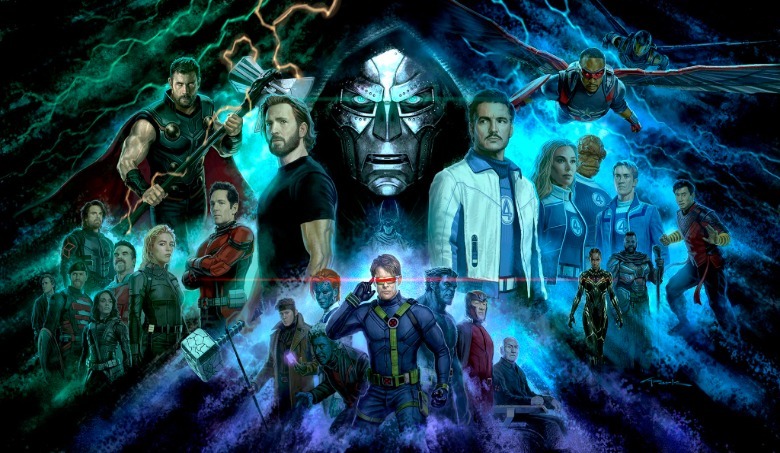

Source link

Emily Blunt & John Krasinski Divorce Rumors: Here’s What We Know

    0
    Emily Blunt & John Krasinski Divorce Rumors: Here’s What We Know


    Reading Time: 2 minutes

    John Krasinski and Emily Blunt are an iconic couple in the entertainment industry.

    The Hollywood power couple and parents of two have been facing divorce rumors lately.

    Is the former Sexiest Man Alive about to be single?

    Here’s what we know about where things stand between them right now.

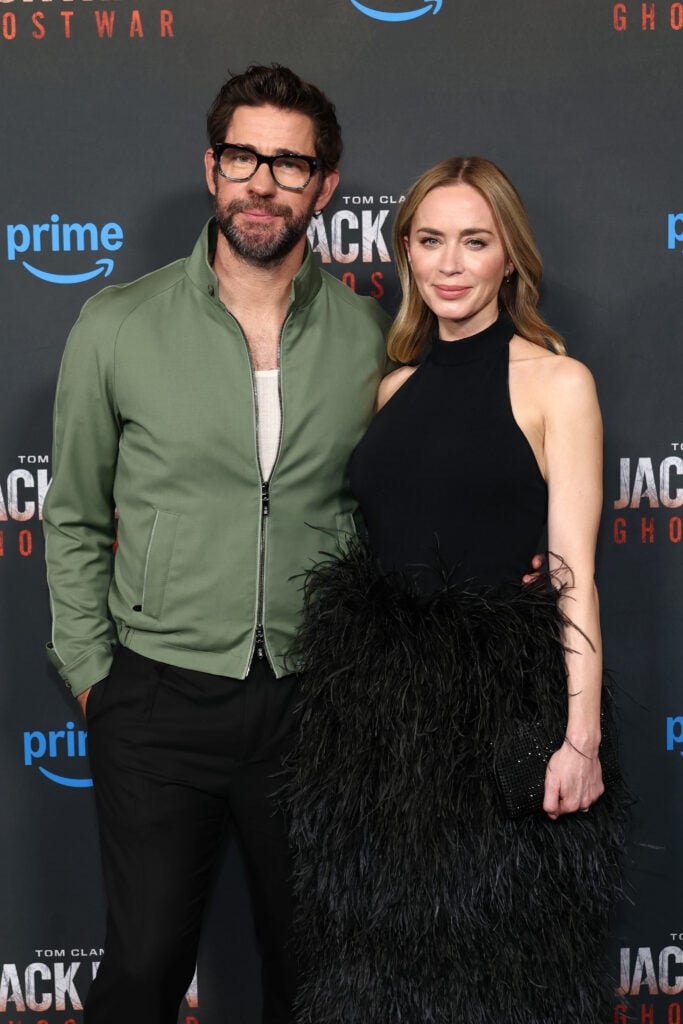
    John Krasinski and Emily Blunt in May 2026.
    John Krasinski and Emily Blunt at Regal Times Square on May 15, 2026. (Photo Credit: Cindy Ord/WireImage)

    Are they really divorcing?

    The latest round of divorce rumors have been hounding Krasinski and Blunt.

    Yes, they’ve managed to debunk — or at least, outlast — the split rumors in the past.

    But when something seems almost inevitable (since all relationships end in either a breakup or death), people will always look for signs of its coming.

    The Hollywood power couple has found a new way to brush off the claims that their marriage is at death’s door.

    It wasn’t with a red carpet showing of affection at the 2026 Academy Awards. In fact, it involved skipping the event entirelt.

    Instead of attending the Oscars, Krasinki and Blunt took their two daughters to a deeply cultured event.

    As a family of four, they attended the Broadway performance of & Juliet at the Stephen Sondheim Theatre.

    No, that is not a typo. The play is & Juliet.

    The play — actually a jukebox musical — reimagines Shakespeare’s most famous work, but imagining a what if in which the star-crossed lovers didn’t die and got to live out their lives.

    Their attendance caught the attention of the production’s official Instagram account, leading to this post:

    A family outing is a pretty nice rebuttal

    The official Instagram account shared a snap of the two stars, both clad in denim, posing alongside the cast.

    “Emily Blunt and John Krasinski saw & Juliet on Broadway,” the caption began.

    The caption succinctly concluded: “That’s all.”

    In general, Broadway doesn’t need to advertise quite as much as some other institutions. If someone wants to see plays, they likely want to see it on Broadway — and either can or cannot.

    But still, that’s a pretty good advertisement. Especially for what may be a lesser known musical, in the grand scheme of things.

    Krasinski and Blunt met in 2008 through mutual friends. She has shared her memory of the meeting in the past.

    They began dating in November of that year.

    By August of 2009, the two became engaged, marrying in July of 2010.

    In 2014, Krasinski and Blunt welcomed Hazel.

    In 2016, they welcomed her younger sister, Violet.

    Between their high profiles and how “rushed” their early relationship was, it seems likely that divorce rumors will continue to rise and fall like a field of crops with the seasons. But, for now, the rumors are just ill-informed whispers.


    Source link

    First Avengers: Doomsday Concept Art Reveals Doctor Doom And Returning X-Men – SlashFilm

      0
      First Avengers: Doomsday Concept Art Reveals Doctor Doom And Returning X-Men – SlashFilm


      It’s been seven years since all the major forces of the Marvel Cinematic Universe assembled to take on Thanos in “Avengers: Endgame.” Now, a new threat will bring together heroes from across the multiverse, including the recently introduced iteration of the Fantastic Four and a collection of mutants from 20th Century Fox’s “X-Men” movies.

      Some short teaser trailers for “Avengers: Doomsday” have been released, but today Marvel Studios boss Kevin Feige gave attendees at Bilibiliworld in Shanghai, China, the first look at official concept art for the movie. It was also shared on X/Twitter by Marvel’s former director of visual development, Andy Park, who was laid off along with the rest of the visual development team earlier this year. Park noted that “Doomsday” was “the final full film I had the honor of leading” at Marvel, adding, “This illustration commemorates that journey and reveals the characters and their looks for the first time.”

      Doctor Doom (played by former Iron Man actor Robert Downey Jr.) takes center stage in the artwork, but perhaps more interesting is the fact that Loki (Tom Hiddleston) is hidden at the centre of it. The image also reveals returning X-Men characters Nightcrawler (Alan Cumming), Cyclops (James Marsden), Beast (Kelsey Grammer), and Mystique (Rebecca Romijn). Here’s the “Avengers: Doomsday” concept art in full:


      Source link

      Former SWIFT Exec Denies Rumors of XRP Integration With Global Payment Network – NFT Plazas

        0
        Former SWIFT Exec Denies Rumors of XRP Integration With Global Payment Network – NFT Plazas


        Fresh speculation about a partnership between SWIFT and Ripple swept across crypto social media this week, only to be shut down within hours by one of the people best positioned to know the truth. Tom Zschach, who spent six years as SWIFT’s Chief Innovation Officer before recently leaving the organization, definitively shut down persistent rumors that the global financial messaging network plans to integrate or support the Ripple-linked cryptocurrency XRP.

        A Two-Word Rebuttal

        Zschach pushed back against the fresh Ripple rumors with a two-word reply on X: “Not happening.” The brevity of the response carried weight precisely because of his background — he led SWIFT’s digital asset strategy, giving him firsthand knowledge of what the network was actually building. According to one report, the denial came on July 10, 2026, when Zschach publicly dismissed claims that the global bank messaging network would back or integrate XRP or the XRP Ledger.

        The rumor itself originated from a handful of XRP-focused accounts. Several influencer accounts began claiming, without evidence, that SWIFT intended to support established public tokens such as XRP rather than developing its own proprietary token. A community figure identified as SMQKE shared excerpts from an alleged document claiming SWIFT had abandoned plans to create its own digital asset, though no such document was ever traced to an official SWIFT source. Zschach also took a jab at the credibility gap behind the claims, and according to one account, he jokingly asked Grok, the AI assistant developed by xAI, to clarify whether the messaging network actually uses XRP.

        Former SWIFT Chief Innovation Officer Tom Zschach has shut down the rumors

        Former SWIFT Chief Innovation Officer Tom Zschach has shut down the rumors

        What SWIFT Is Actually Building

        Away from the rumor mill, SWIFT’s real digital asset roadmap looks nothing like the XRP narrative. The organization has been developing a blockchain-based shared ledger aimed at connecting tokenized commercial bank deposits with cross-border settlement. Rather than relying on a bridge currency like XRP, participating banks send each other tokenized deposits — digital versions of the money they already hold — moving value across SWIFT’s ledger without a third coin in the middle.

        The pilot phase is not small. SWIFT switched on its own blockchain system with 17 of the world’s biggest banks, and none of that activity involved XRP. Separately, one report noted that Swift officially confirmed its new blockchain-enabled ledger completed development after roughly nine months of testing and is now ready for commercial implementation, with the initial banking cohort including HSBC, Citi, UBS, MUFG, DBS and Wells Fargo. A first version capable of processing live transactions is targeted for later in 2026, according to reporting that cites SWIFT’s own design-stage completion announcement in March.

        Swift's blockchain-based ledger is ready for useSwift's blockchain-based ledger is ready for use

        Swift’s blockchain-based ledger is ready for use

        Why the Rumors Persist

        Part of the confusion stems from the fact that some banks in SWIFT’s pilot also maintain separate ties to Ripple. Two of the 17 participating banks, Standard Chartered and UBS, already work with Ripple, and Ripple Treasury joined SWIFT’s certified partner program earlier this year. That overlap has repeatedly been misread by parts of the XRP community as evidence of a deeper institutional tie-in, even though large banks routinely maintain relationships with multiple blockchain and payments vendors simultaneously.

        Reporting also points to a recurring cycle behind these episodes. A SWIFT executive or technical document references tokenization or interoperability, XRP communities interpret it as implicit adoption, influencer accounts amplify the interpretation as fact, and a correction eventually follows. This is not the first time Zschach has intervened to correct the record — he has also argued that Ripple’s survival of its legal battle with the U.S. Securities and Exchange Commission should not be seen as proof of institutional strength, and he has previously compared Ripple’s technology to a fax machine in the internet era.

        Ripple’s Shifting Strategy

        Ripple’s own positioning has evolved over time, moving away from framing itself as a direct SWIFT replacement. XRP still functions as the bridge asset that moves value between currencies inside Ripple’s own rails, regardless of whether SWIFT builds a blockchain of its own, and the company continues to expand through custody services, regulated payment products and its RLUSD stablecoin. Separately, Ripple secured a full MiCA license in Luxembourg this week, a regulatory milestone unrelated to the SWIFT rumor but one that continued to circulate alongside it in crypto discourse. 

        Market Reaction

        Despite the denial, XRP saw only modest price movement, trading in a narrow band. The token traded near $1.09, with a market cap around $69 billion and daily trading volume topping $1 billion. Analysts covering the episode cautioned against conflating SWIFT’s genuine blockchain progress with unverified partnership claims, noting that Swift’s ledger is real, but the partnership isn’t.

        Ripple (XRP) Price Performance on 11/7/2026 (Source: CoinMarketCap)Ripple (XRP) Price Performance on 11/7/2026 (Source: CoinMarketCap)

        Ripple (XRP) Price Performance on 11/7/2026 (Source: CoinMarketCap)

        For now, neither SWIFT’s shared ledger initiative nor its 17-bank pilot confirms any XRP integration, and Zschach’s intervention appears to have closed the door on this particular round of speculation — at least until the next SWIFT announcement reignites it.


        Source link

        Hedera’s Biggest DeFi Lender Bonzo Lend Hacked for $9M, $5.25M Bridged to Ethereum

        Hedera’s Biggest DeFi Lender Bonzo Lend Hacked for M, .25M Bridged to Ethereum


        The Hedera DeFi ecosystem was rocked on Saturday after an attacker exploited Bonzo Lend, the largest lending protocol on the network, and rapidly moved millions of dollars in stolen assets to Ethereum.

        The incident was reported by Specter, who flagged what appeared to be an ongoing hack involving the Hedera Network, with over $3.7 million already bridged to Ethereum at the time of the initial alert. Specter noted that the stolen funds were being swapped from Wrapped Bitcoin (WBTC) into ETH after being bridged from Hedera via LayerZero, and shared two theft addresses: 0x9A4..6a494 and 0xaf2…6dD93e.

        The tracked total climbed quickly, rising from $3.7 million to more than $4 million and then past $5 million within hours.

        The $5.25 million hack of Bonzo Lend may lead to significant changes in Hedera’s DeFi ecosystem, with potential long-term impacts on user trust and protocol security

        The incident highlights the need for improved oracle verification processes, with Supra’s flawed infrastructure allowing the attacker to manipulate SAUCE token prices and borrow millions in assets

        As the stolen funds remain on Ethereum, the coming days will be crucial in determining the fate of the exploited assets and the potential for recovery, with the attacker’s next moves being closely watched

        PeckShield Tracks $5.25M and a Tornado Cash Trail

        Blockchain security firm PeckShield amplified Specter’s findings shortly after. According to the firm’s follow-up alert, $5.25 million in stolen funds had already been bridged from Hedera Mainnet to Ethereum, with the hacker’s wallet holding 2.36K ETH worth $4.25 million and 15.58 WBTC worth about $1 million. The firm added that the attacker originally funded the wallet with just 1 ETH sourced from Tornado Cash, a privacy mixer commonly used by exploiters to obscure their funding trail before an attack.

        On-chain data from Etherscan supports the trail. At one snapshot, the primary attacker address 0xaf20…d93e held 2,284.05 ETH worth roughly $4.11 million for $1,799.60 per ETH, along with a single token holding valued at about $1.42 million. The wallet’s “Funded By” field shows exactly 1 ETH received from Tornado Cash, with the first transaction recorded around 10 hours before the alerts and activity continuing as recently as an hour before. 

        Internal transaction records show a stream of repeated ETH transfers into the wallet, including chunks of 73.83 ETH, 70.99 ETH, 71.01 ETH, and 55.82 ETH arriving from a single intermediary contract, consistent with the WBTC-to-ETH swapping pattern Specter described. An earlier explorer snapshot at the same address showed 2,068.21 ETH, worth $3.71 million, confirming how quickly the balance was growing as the attacker consolidated funds.

        Bonzo Finance Confirms Oracle Verifier Flaw

        Bonzo Finance later confirmed that the affected application was Bonzo Lend and attributed the incident to a flaw in a third-party oracle’s verification process, estimating that the primary attacker borrowed approximately $9.05 million after submitting a manipulated price for the SAUCE token. The protocol stressed that its lending contracts and Hedera’s underlying consensus network were not compromised.

        According to Bonzo’s official incident report, the exploit began at around 00:51 UTC on July 11, when the attacker submitted a manipulated SAUCE price to an on-demand oracle contract on Hedera. SAUCE was trading at roughly 0.2 HBAR, but the malicious update inflated its value by about 12 orders of magnitude. The oracle verifier accepted the update even though it carried a zeroed signature rather than a valid signature from the authorized oracle committee.

        Eight seconds after the false price went live, the attacker used a deposit of just 250 SAUCE, worth only a few dollars, as collateral to borrow roughly 6.6 million USDC and 34.5 million Wrapped HBAR (WHBAR). 

        A second wallet borrowed roughly $1 million while the manipulated price remained active, but later contacted the Bonzo team, identified itself as a white-hat responder, and stated it intends to return the assets. Bonzo excluded this amount from its headline loss figure, although total borrowing during the abnormal pricing window reached approximately $10.06 million.

        Bonzo identified Supra as the oracle provider whose verification infrastructure accepted the invalid update, and said Supra has acknowledged the issue and deployed a fix to the affected verifier contract on Hedera mainnet. The legitimate oracle feed restored SAUCE to about 0.1964 HBAR at 01:36 UTC, and Bonzo Lend was paused five minutes later.

        Current Status and Market Reaction

        Bonzo Lend and Bonzo Points remain paused while the team evaluates recovery and withdrawal plans. Bonzo Vaults, Bonzo Bridge and single-sided BONZO and XBONZO staking were not affected and continue operating normally. The stolen funds remain parked in the attacker’s Ethereum wallets, and the exploiter has not been identified.

        HBAR traded lower following the reports, and South Korean crypto exchanges including Upbit, Bithumb, and Coinone issued investor caution notices regarding Hedera. The token slipped to around $0.069 as the exploit unfolded, with intraday losses deepening as the tracked theft figure grew.

        The incident extends a brutal July for DeFi. According to DefiLlama, three hacks this month have produced combined losses exceeding $28 million, including a $6 million exploit of Summer.fi and a $20 million governance attack on BonkDAO.

        Also Read: $6M Lazy Summer Exploit Traces Back to November’s Stream Finance Collapse


        Disclaimer: The information researched and reported by The Crypto Times is for informational purposes only and is not a substitute for professional financial advice. Investing in crypto assets involves significant risk due to market volatility. Always Do Your Own Research (DYOR) and consult with a qualified Financial Advisor before making any investment decisions.


        Source link

        Disney Dreamlight Valley: How to Get Acorn Snail

        Disney Dreamlight Valley: How to Get Acorn Snail


        The Honeyglow Woods expansion of Disney Dreamlight Valley offers several new fish that players can catch for various purposes, including cooking new meals and completing quests. One of the new fish in Disney Dreamlight Valley is Acorn Snail. Players will have to get Acorn Snail for various expansion quests along with friendship quests for the new characters and many other cooking recipes. In this guide, we will tell you how to get Acorn Snail in Disney Dreamlight Valley.

        How to Get Acorn Snail in Disney Dreamlight Valley

        Acorn Snail is one of the new fish in Disney Dreamlight Valley exclusive to the Honeyglow Woods expansion. Players can get Acorn Snail by fishing in the White Ripples in Honeyglow Woods’ biomes.

        There are four biomes in the Honeyglow Woods, and you can find Acorn Snail in all of these biomes. The first biome is Drowsybloom Acre, where the main story of the expansion begins. For the other biomes, you have to progress in the main story to access them. Once you have access to any biome, go to any fishing area and start fishing in the White ripples.

        Complete the fishing mini-game of reeling in the catch to have a chance of catching the Acorn Snail. However, there are some common fish in the waters, so it might take you a few tries before you catch the Acorn Snail. Moreover, make sure that your Royal Fishing Rod tool does not have any elixir/potion on it. Otherwise, you will catch other fish often instead of the Acorn Snail in the open water. Upon reeling the Acorn Snail out of the water, you will find it in your inventory.

        Uses of Acorn Snail

        Acorn Snail is a new fish exclusive to the Honeyglow Woods expansion. Players will need it to cook various meals and complete main quests. Moreover, players can also sell it for 75 Star Coins at Goofy’s Stall or consume it to regenerate 300 Energy.


        Source link

        Kraken Prepares to Relaunch Mobile App With AI-Powered Trading – NFT Plazas

          0
          Kraken Prepares to Relaunch Mobile App With AI-Powered Trading – NFT Plazas


          Kraken is rebuilding its mobile app around agentic artificial intelligence, a shift the exchange told CNBC could mark the next major competitive battleground among crypto platforms. The relaunch positions Kraken to give users access to AI agents that continuously monitor markets, identify investing opportunities and execute trades in real time, reflecting a broader shift toward AI-native financial products.

          What Agentic Trading Means

          Agentic trading differs from traditional automated systems that follow fixed rules — these platforms can evaluate multiple variables, learn from new information and pursue objectives defined by the user within set parameters. Kraken’s Chief Data Officer, Kamo Asatryan, framed the effort as an attempt to close the gap between retail and professional traders. He noted that Kraken’s most active professional traders stay engaged even in down markets, and the company wants everyday customers to have that same capability and level of information.

          Kraken Prepares to Relaunch Mobile App With AI-Powered Trading

          Kraken Prepares to Relaunch Mobile App With AI-Powered Trading

          How the New App Will Work

          The app’s onboarding will use AI to learn a user’s goals, risk tolerance, funding preferences and financial profile in a single flow, then build a draft portfolio that users can review, adjust and approve, complete with explanations for each recommendation. Once a user is invested, the system will deliver AI-curated insights, portfolio-relevant news and proactive suggestions, such as flagging idle cash that could be put to work, with both the conversations and the interface adapting over time.

          Crucially, the experience is described as agentic but not fully autonomous — the AI surfaces opportunities and recommends next steps, but trades and recommendations only go through with the customer’s explicit confirmation. Kraken has been direct about this distinction in its own messaging. Kraken said the new app would embed financial intelligence into the core product rather than layering AI on top of the existing interface, adding that this integration is what would make the experience feel responsive.

          Kraken HomepageKraken Homepage

          Kraken Homepage

          Compliance and Guardrails

          Because the product spans both crypto assets and securities, Kraken has structured its advisory function across two entities. Kraken said U.S. crypto-asset advice will come through Payward Interactive, Inc., while securities advice will run through Kraken Adviser LLC, an SEC-registered investment adviser, with the two kept as separate legal entities. The company has also said the system will include safety features tied to each user’s declared risk tolerance, intended to constrain how aggressively the AI can act on a user’s behalf.

          Some reporting has described the underlying capability in more autonomous terms than Kraken’s own framing suggests. It described agents that could execute trades without requiring supervision of every action, underscoring that the precise boundary between recommendation and independent execution remains a key detail to watch as the product ships.

          Part of a Broader Buildout

          The relaunch follows a series of product moves at Kraken this year. Underpinning the effort is the Kraken CLI, an open-source execution engine designed to give AI models and developers native access to crypto markets. The exchange has also added U.S. crypto perpetual futures, tokenized IPO access, new lending programs, and integrated Solana decentralized-exchange trading directly into its core app.

          Founded in 2011, Kraken is among the oldest crypto exchanges still operating. The agentic push also lands during a sensitive period for the company’s public-market ambitions. Kraken confidentially filed a draft S-1 with the SEC in November 2025, initially targeting a first-quarter 2026 listing backed by an $800 million raise valuing the company near $20 billion; those plans were paused in March amid market conditions, and Kraken’s valuation has since slipped to roughly $13.3 billion following a $200 million investment from Deutsche Börse in April. Co-CEO Arjun Sethi reportedly said in May that the company was about 80% ready to list, with many now expecting a third-quarter debut.

          A Crowded Field

          Kraken is not the first to market with agentic tools. Gemini opened its platform and APIs to users’ AI-agent setups in April 2026, letting users connect models such as Claude and ChatGPT directly to trading accounts. Coinbase followed in June with its own agentic trading support and tools allowing AI agents to trade and pay for premium research, while unveiling “Coinbase Advisor,” which it has described as an advanced robo-advisory feature. Bitget upgraded its Agent Hub for faster AI-driven trading in March. By the time Kraken ships, it will be entering as roughly the fourth major exchange to deploy agent-centered trading.

          Risks Regulators Are Still Sorting Out

          Analysts flagged that the shift carries genuine risk alongside its promise. It’s reported that autonomous systems could amplify losses, and that multiple AI agents trading off similar signals could raise the odds of flash crashes, while regulators are still working out how existing trading rules apply when an AI agent is making the decision. Automation can make trading easier even as it makes responsibility harder to assign, raising open questions about consent, explainability and how systems behave when markets move quickly or liquidity thins out.

          For now, Kraken maintains that a human must approve every trade — a design choice that, as CNBC noted, allows the exchange to sidestep some of the more difficult regulatory and liability questions surrounding fully autonomous trading while still competing on the same AI-driven terrain as Coinbase and Gemini.


          Source link

          What Is Robinhood Chain? The Ethereum Layer-2 Network for Tokenized Stocks – Decrypt

          0
          What Is Robinhood Chain? The Ethereum Layer-2 Network for Tokenized Stocks – Decrypt


          In brief

          Robinhood Chain is an Ethereum layer-2 blockchain built using Arbitrum technology.
          The network handles tokenized real-world assets, including stocks and ETFs.
          It works with DeFi applications, including decentralized exchanges and lending protocols.

          Robinhood Chain is a blockchain network developed by Robinhood, the financial services company behind the stock and crypto trading platform.

          Launched in mainnet on July 1, 2026, Robinhood Chain—a network built with Ethereum technology—brings together tokenized assets, decentralized finance (DeFi), and smart contracts that can power crypto applications.

          “Decentralized finance unlocks possibilities beyond what traditional finance can offer, but historically, it has required technical expertise to navigate,” Johann Kerbrat, SVP and general manager of crypto and international at Robinhood, said in a statement. “We’re bringing the best of traditional finance and DeFi together, and in doing so, expanding financial ownership to every corner of the globe.”

          What is Robinhood Chain?

          Robinhood Chain gives developers a network for building applications involving financial assets, including tokenized stocks, ETFs, and other real-world assets.

          A layer-2 network is a blockchain built on top of another blockchain. Instead of processing every transaction directly on Ethereum’s main network, layer-2 networks handle transactions separately before sending data back for settlement.

          This helps reduce fees and typically increases the number of transactions the network can process compared to a layer-1 network like Ethereum.

          Robinhood Chain uses ETH as its native gas token, meaning users pay network fees using Ethereum. It also works with the Ethereum Virtual Machine (EVM), the software environment used to run Ethereum smart contracts. Developers can use existing Ethereum programming languages and tools to build applications on the network.

          Robinhood Chain uses the Arbitrum Dedicated Blockchains framework, a customizable layer-2 system created by Offchain Labs.

          Wallets and applications that support Ethereum connections can interact with the network through JSON-RPC, a standard communication method used by Ethereum applications.

          How are transactions processed?

          Robinhood Chain uses a first-come, first-served sequencing model.

          A sequencer orders transactions before they are added to a blockchain. On Robinhood Chain, transactions are processed based on when they arrive, rather than allowing users to pay higher fees for priority placement.

          Transactions move through several stages:

          The sequencer receives and processes the transaction.
          Transaction batches are posted back to Ethereum.
          The transaction reaches final settlement.

          What are Robinhood Stock Tokens?

          Stock Tokens are blockchain-based assets issued by Robinhood that provide exposure to real-world assets (RWAs), including stocks and exchange-traded funds (ETFs).

          RWAs are tokens connected to assets outside crypto, such as stocks, bonds, commodities, or real estate. Because they exist on-chain, they can interact with applications including trading platforms, lending protocols, and other smart contract-based tools.

          Stock Tokens are not the same as owning company shares. They provide exposure to an underlying asset but do not provide legal ownership rights, including shareholder voting rights. They also are not available to U.S. users, as of this writing.

          “Stock Tokens are not registered under U.S. securities laws and may not be offered, sold, or delivered, directly or indirectly, in the United States or to, or for the account or benefit of, U.S. persons,” Robinhood wrote on its website. Offers and sales of Stock Tokens are subject to restrictions in other jurisdictions, including, without limitation, Canada, the United Kingdom, and Switzerland.”

          Which applications run on Robinhood Chain?

          Robinhood Chain works with decentralized exchanges, lending protocols, oracle services, and infrastructure providers.

          Decentralized exchanges, or DEXs, allow users to trade blockchain assets through smart contracts instead of traditional intermediaries. Many DEXs use automated market makers (AMMs), which rely on pools of assets instead of traditional order books. Uniswap is among the exchanges available on the network.

          Lending protocols allow users to supply assets through smart contracts that others can borrow from. Robinhood’s DeFi products include integrations with Morpho, a decentralized lending protocol.

          Oracles connect blockchains to external information, such as asset prices. Robinhood Chain uses Chainlink price feeds to provide market data to applications. Other infrastructure providers include Alchemy for developer tools, BitGo for institutional custody, and Paxos for USDG stablecoin support.

          What happened after launch?

          Following its mainnet rollout, Robinhood Chain saw a surge of activity from traders and decentralized applications.

          In its first week, the network recorded more than 17 million transactions, nearly 350,000 addresses, and more than $1 billion in decentralized exchange volume. While internal company metrics estimated the protocol’s total value locked (TVL) at $250 million, independent data from DefiLlama tracked the core protocol TVL at roughly $94 million, with network stablecoin balances climbing past $260 million.

          Part of that initial momentum was due to the meme coin Cash Cat (CASHCAT), which saw a surge in value as crypto traders attempted to ride the wave of hype around the newly launched network. Other meme coins on the network have seen growing demand following Cash Cat’s rapid rise to prominence.

          Daily Debrief Newsletter

          Start every day with the top news stories right now, plus original features, a podcast, videos and more.


          Source link

          Tributes paid as TV presenter Dermot Murnaghan dies at the age of 68

            0
            Tributes paid as TV presenter Dermot Murnaghan dies at the age of 68


            Dermot Murnaghan’s death has been announced after the veteran broadcaster died at the age of 68, a year after he revealed a stage four prostate cancer diagnosis.

            His family said he died at home in North London on Friday morning. They shared the news in a statement posted to his X account.

            They said: “It is with great sadness that the family of Dermot Murnaghan announces that he passed away at home in North London earlier this morning.”

            They added: “He died peacefully with his family at his side.”

            Dermot became one of the best-known faces in British TV news. He worked across five decades and fronted several flagship programmes.

            Dermot Murnaghan career timeline

            Began in local newspapers before moving into television journalism.
            Worked at Channel 4 News in the earlier part of his broadcasting career.
            Presented ITV programmes including The Big Story, News at 10, Evening News and Nightly News.
            Joined the BBC in 2002 and became a main presenter on BBC Breakfast from September 2002 to December 2007.
            Anchored the BBC News at Six and BBC News at Ten.
            Presented the quiz show Eggheads from 2003 for 11 years.
            Moved to Sky News in 2007 and remained one of its leading presenters until 2023.
            Also hosted Crimes That Shook Britain, Killer Britain and the podcast Legends of News.

            He presented ITV’s Evening News and News at 10. He also anchored the BBC News at Six and BBC News at Ten.

            He served as a main presenter on BBC Breakfast from September 2002 until December 2007. Many viewers also knew him as the host of Eggheads.

            He presented the quiz show for 11 years from 2003. Later, he became one of the leading faces of Sky News from 2007 to 2023.

            Dermot Murnaghan has died at the age of 68 (Credit: Ken McKay/ITV/Shutterstock)

            How Dermot Murnaghan’s death followed his public cancer fight

            Last summer, Dermot revealed that doctors had diagnosed him with stage four prostate cancer. At the time, he said he was “responding positively” to treatment and “feeling well”.

            He urged men to take testing seriously. Dermot said: “Needless to say my message to all men over 50, in high risk groups, or displaying symptoms, is get yourself tested and campaign for routine prostate screening by the NHS.”

            He added: “Early detection is crucial. And be aware, this disease can sometimes progress rapidly without obvious symptoms.”

            His family thanked the public “for the many, many kind messages of goodwill that he received over the last year since his diagnosis of Stage IV prostate cancer and his subsequent campaigning to raise awareness for screening programmes for the disease”.

            The BBC said common prostate cancer symptoms include needing to urinate more often, especially at night. Other symptoms include difficulty starting to urinate, a weak flow, and blood in urine or semen.

            Why Dermot Murnaghan’s death sparked so many tributes

            Tributes poured in soon after the news broke. Colleagues, politicians and viewers remembered his calm authority on air.

            Sky News political editor Beth Rigby wrote on X: “He was peerless in the presenter chair.”

            She added: “I loved being on set, or in Downing Street, with Dermot because he was always in absolute command but so cool too. He made handling the most high-pressure moments look effortless.”

            Sky News presenter Anna Botting said he would “always be a legend of news”.

            Former Prime Minister David Cameron said Murnaghan’s decision to speak openly about testing would have helped many men. Lord Cameron told Sky News: “I think it’s really important that Dermot came out in the way that he did – as in his broadcasting life, he did it with incredible clarity and just simplicity.”

            He added: “And as someone who was so well-known to people through his broadcasting career over 40 years, it will have had a huge impact.”

            Liberal Democrat leader Sir Ed Davey also paid tribute. He called Dermot a “broadcasting legend who we have lost far too soon”.

            He added: “His tireless advocacy, encouraging more men to get tested for prostate cancer, will no doubt have saved lives.”

            The career that made him a fixture on British TV

            Dermot started in local newspapers before moving to Channel 4 News. He later fronted ITV shows including The Big Story, News at 10, Evening News and Nightly News.

            He joined the BBC in 2002 and later moved to Sky News. He also hosted Crimes That Shook Britain, Killer Britain, and the podcast Legends of News.

            You can leave us your condolences on our Facebook page @EntertainmentDailyFix.


            Source link

            Sleeve Mastery: The Architecture of a Perfect Fitting Sleeve – University of Fashion Blog

            Sleeve Mastery: The Architecture of a Perfect Fitting Sleeve – University of Fashion Blog


            Drafting a Straight Sleeve Sloper lesson from University of Fashion. (Image credit: University of Fashion)

            Drafting a Sleeve

            If you’ve ever tried to sew a sleeve and thought, “How hard could it be?”—welcome to one of the great plot twists of garment making. Drafting, fitting, and setting a sleeve can make all the difference between “loving-hands-at-home” and “couture quality”.

            Chart for recording sleeve measurements

            UoF’s Sleeve Measurement Chart assists in sleeve drafting: Suit Sleeve from Measurements lesson (Image credit: University of Fashion)

            It all begins with sleeve drafting, which hinges on one thing: accurate body measurements (yes, the tape measure matters more than optimism) and/or by using measurements from our sleeve size charts.

            Sleeve Measurement Chart

            UoF’s Women’s Straight Sleeve Measurement Chart for sizes 2-16 from our drafting a Straight Sleeve Sloper lesson. (Image credit: University of Fashion)

            Planning Sleeve Ease

            planning sleeve cap ease shirringUoF’s process of planning sleeve ease stitches from our lesson Mounting & Fitting a Suit Jacket Sleeve .(Image credit: University of Fashion)

            Then comes sleeve ease—the secret sauce. Too much, and your sleeve puffs like it has opinions. Too little, and it refuses to cooperate. Fun fact: the thinner the fabric, the less ease you need. Fabric has feelings, apparently.

            shirring from the underside of the sleeve cap, from notch top notch Gathering the sleeve shirring from the underside of the sleeve. (Image credit: University of Fashion)

            Gathering the sleeve cap shirring is an art form. Most of the shirring will remain in the upper quadrant of the sleeve cap and the shirring stitches are pulled from the underside of the sleeve, from notch to notch. Fun tip: use your fingernails to distribute and “scratch” the shirring into place.

            In our lessons on drafting both a straight and suit sleeve, we walk you through the process step by step—no guesswork, no drama. Well…less drama.

            Setting a Sleeve

            An example of gathering cluster that needs to be evenly distributed Our instructor points to problematic uneven sleeve gathers. (Image credit: University of Fashion)

            Then comes the real adventure: setting the sleeve into the armhole. Ever had gathers that all migrate to one spot? Or ended up with a surprise pleat that you weren’t expecting? We’ve been there.

            Our lesson on mounting & fitting a suit jacket sleeve, you learn how to gather the sleeve cap smoothly from notch to notch, how to distribute that ease evenly and then how to massage the seam allowance into the sleeve cap to create a rounded sleeve header.

            Mounting a Jacket Sleeve

            instructor demonstrating how to add additional cap width. Adding more sleeve cap and width to a suit sleeve. (Image credit: University of Fashion)

            For jacket sleeves, once you have pinned your suit sleeve into the jacket’s armhole you must test it on a dress form to determine whether there is enough cap width, that the sleeve doesn’t sit away from the body at the wrist and whether the jacket’s grainline is in line with the side seam of the dress form. You will need to make adjustments, as needed.  

            checking that the sleeve's grainline is in line with the side seam.Checking that the sleeve grainline is aligned with the side seam. (Image credit: University of Fashion)

            Once you’ve mastered our sleeve basics, you’ll be able to move onto our other sleeve drafting lessons.

            University of Fashion’s Sleeve Design Series:  

            assorted sleeve drafting lessons

            ssorted sleeve drafting lessons

            ssorted sleeve drafting lessonsUoF’s sleeve design lesson series. (Image credit: University of Fashion)

            Sign-up for our newsletter

            Join our newsletter to receive updates on future blog posts, special deals, and new lessons. Also visit the main webpage to check out all of our video lessons.


            Source link

            Popular Posts

            My Favorites

            Alleged ‘Trump Insider Whale’ Denies Insider Trading, Opens New $340 Million...

            0
            In brief A whale trading on Hyperliquid that made millions shorting BTC and ETH last week is now shorting Bitcoin again. The trader added...