This week, the Video Game History Foundation announced a very peculiar, very particular victory. Cookie’s Bustle, an extremely rare and surreal ‘90s Japanese PC game, has been liberated. If you have never heard of Cookie’s Bustle, there’s a good reason. For years someone has committed themselves to erasing every shred of Bustle’s presence online through copyright claims, despite having no ownership over the game.
Since 2022, an individual known as Brandon White, under the company Graceware, has unleashed swarms of copyright claims at any online material relating to the game Cookie’s Bustle. Many first took notice when these claims resulted in the disappearance of several posts from the cult ephemerist YouTuber ClassicsOfGame, leaving pockmarks in their elegant, numbered catalogue. The strikes extended well beyond YouTube, it turned out, with DMCA claims circulating against Twitch streams, fan art, ROM sites and even Discord posts. Whoever Brandon White is, they seemed less like someone protecting intellectual property and more like someone trying to erase it from existence.
This strange behavior came to the Video Game History Foundation’s own door. Though rare, a physical copy of the game was donated to the Foundation. The page they made to display this treasured acquisition? That got hit with a copyright strike too, piercing the web host for their archive’s web portal.
“Although Graceware’s actions against us were incredibly disruptive, we saw this as an opportunity to get to the bottom of what was happening,” writes Phil Salvador, the VGHF’s library director.
The lengthy post goes on to explain how the VGHF went on the offensive, uncovering the network of non-scrupulous firms and copyright services that White was using to launch this campaign. White had put up a smokescreen of sorts to use resources from the Association for UK Interactive Entertainment (Ukie), despite having no evidence of ownership of Cookie’s Bustle and even misspelling his own company as Gracewear in the Ukie membership.
Even if White was using automated copyright services like Web Capio to attack Bustle, the VGHF knew a confrontation with Ukie would cut him off at the pass. When the archive and entry for Cookie’s Bustle reemerged, Ukie was unable to prompt the VGHF’s host from dropping them a second time, so Ukie’s Mumith Ali reached out to the Foundation directly. It was an opportunity to call White’s bluff, with the Foundation telling Ali to reach out to Graceware to provide proof they had any claim to the original game’s creation. They could not.
The VGHF’s closing of this chapter has solved a lot of “how”s but not a lot of “why”s. The creator of Cookie’s Bustle is still unknown, making it orphaned (though not public domain). We know enough about Brandon White to say they are not the creator of Cookie’s Bustle, but we’re still left baffled as to why anyone would devote so much energy into its erasure.
For now, Cookie is free. YouTube account ClassicsOfGame triumphantly reposted the missing videos. Cookie can be shown, streamed, and appreciated. Cookie is free to dance. Dance and be happy, Cookie.
As digital commerce continues reshaping Pakistan’s economy, a handful of optimization specialists stand out – not for hollow promises, but for genuinely moving businesses forward. Across e-commerce, B2B SaaS, fintech, and local service sectors, these ten professionals have built reputations on something rare: real, attributable results. Businesses searching for affordable, results-driven SEO packages Pakistan https://cloudexmarketing.com/seo-packages-pakistan/ has to offer will find that the best practitioners don’t sell cookie-cutter plans – they build strategies around actual market conditions and business goals. Their work is evaluated against hard evidence – historical ranking performance, direct revenue contribution, and the precision of their technical audits.
Most Pakistani agencies operate on a simple model: collect monthly retainers, deliver reports, repeat. Mujtaba Yousuf built Cloudex Marketing to be the opposite of that. His entire philosophy centers on commercial outcomes – rankings that bring buyers, not just browsers.
How He Works
Mujtaba’s methodology is grounded in three principles: commercial intent comes first, technical quality is non-negotiable, and white-hat practices protect long-term gains. His strategies revolve around building topical authority, aligning content with how AI-driven search results surface information, and making sure clients always know exactly what’s happening and why.
What He’s Delivered
Within 180 days, clients typically see organic traffic triple. The engine behind that growth rests on four technical pillars: semantic content structure, AI-compatible optimization, schema markup, and keywords tied to purchase intent. Initial movement appears within two to three months, with compounding gains following as domain authority builds.
How Clients Describe Him
On Sortlist, he holds a 4.75 rating. On TechBehemoths, 4.9. Reviews consistently mention that he skips the jargon, sets honest timelines, and focuses conversations on business impact rather than vanity metrics.
What Makes Him Different
He turns away clients when he genuinely believes SEO won’t generate a positive return for them. He refuses to charge for work not done. When he takes a project, there are no excuses – just delivery. Clients regularly report outcomes as specific as five to ten qualified inquiries per day and top-three rankings on competitive commercial terms.
#2: Mehbob Shar – CEO & Founder, Icreativez Technologies
Mehbob Shar is the author of SEO without Off-Page, a title that captures his philosophy well. While most agencies in Pakistan treat link building as the centerpiece of every campaign, Mehbob builds rankings from the inside out – through technical rigor and content that earns authority on its own merit.
His E-Commerce Edge
Online retailers face distinct challenges: bloated product catalogs, faceted navigation that confuses crawlers, category pages that compete with each other, and product listings that never appear as rich snippets. Mehbob addresses each of these directly – optimizing page structure, implementing schema for visual search results, and fixing the technical gaps that cause shoppers to bounce before converting.
Depth Over Volume
He caps his active client list at ten businesses at any given time. That’s a deliberate choice. Fewer clients means more strategic bandwidth per account – the opposite of the spray-and-pray approach common among larger agencies managing dozens of accounts with cookie-cutter strategies.
Contributing to the Industry
Mehbob speaks at international events and publishes accessible material that helps Pakistani businesses understand optimization at a strategic level – not just the surface tactics that agencies repeat without explaining the logic behind them.
#3: Nazar Ali Rajper – International SEO Consultant
Nazar Ali Rajper operates at the intersection of deep technical knowledge and data-driven decision-making. His track record on Clutch reflects what his clients consistently say: he builds rankings that hold.
Technical Foundation
Core Web Vitals, mobile-first indexing, crawl budget management, structured data, site architecture – Nazar works through the full technical stack. Content and link-building efforts only perform when the underlying infrastructure is sound. His technical work creates the conditions for everything else to succeed.
Decisions Backed by Data
Nazar doesn’t operate on assumptions. Conversion tracking, behavioral analysis, ranking correlation studies, and competitive intelligence inform every strategic call. This approach removes guesswork and ensures that resources flow toward the highest-impact opportunities.
#4: M. Tanveer Nandla – Strategic SEO Consultant
Tanveer brings a panoramic view to SEO – one that accounts for technical health, content depth, and authority development simultaneously. His experience spans multiple industries, which has sharpened his ability to recognize when a generic approach will fall flat and a custom strategy is needed.
Full-Spectrum Consulting
A Tanveer engagement typically covers everything: technical audits that uncover ranking obstacles, keyword research targeting commercial searches, content planning that builds subject-matter authority, link acquisition from relevant sources, and ongoing performance monitoring. Nothing gets sacrificed in favor of overemphasizing a single tactic.
Clients Who Understand Their Investment
Tanveer explains his reasoning clearly. Clients leave conversations knowing not just what he’s doing, but why – and what it would mean to take a different path. That transparency produces better partnerships and better outcomes.
#5: Usman Latif – SEO & Digital Marketing Specialist
Usman approaches optimization as one lever within a larger marketing system. When channels are coordinated – SEO, paid search, social, content, and conversion – the whole performs better than the sum of its parts.
Connected Thinking
Organic visibility lifts paid performance by improving Quality Scores and reducing cost-per-click. Content optimized for search also circulates through social channels. Conversion improvements benefit every traffic source simultaneously. Usman keeps these connections front of mind when building strategy.
Outcomes as the Benchmark
His metrics aren’t traffic graphs – they’re qualified leads, acquisition costs, customer lifetime value, and revenue. Optimization is only as valuable as its measurable contribution to business growth.
#6: Salman Baig – Head of SEO, South Asia at Alibaba Group
Managing SEO across more than a million indexed pages, in multiple languages, across multiple jurisdictions – that’s Salman Baig’s current scope. His role heading Alibaba Group’s South Asia search operations puts him in a category few Pakistani SEO professionals can claim.
Enterprise-Grade Expertise
Salman works on challenges most practitioners never encounter: coordinating technical changes across large development teams, navigating multilingual and international SEO complexity, managing cross-department priorities, and optimizing site architectures at a scale where small inefficiencies become expensive problems.
Raising the Industry’s Floor
His speaking engagements and thought leadership bring enterprise-level thinking to a community that doesn’t always have access to it. By sharing what he’s learned at scale, he helps raise the quality ceiling for Pakistani SEO broadly.
Understanding the different types of SEO https://cloudexmarketing.com/types-of-seo/ technical, on-page, off-page, local, and international – is essential when evaluating which specialist fits your needs, since each expert below tends to excel in one or more of these distinct disciplines.
#7: Noushad Ranani – Creative SEO Strategist, Founder & CEO of Zera Creative
Not every SEO problem has a textbook answer. Noushad Ranani is the consultant to call when standard approaches run out of road. His work has been recognized across industry publications for strategies that find a way through when conventional tactics stall.
Creative Problem Solving as a Core Skill
Competitive markets demand differentiation. Technical constraints require inventive workarounds. Tight budgets force smart prioritization. Unusual business models need custom frameworks. Noushad builds solutions that fit the actual situation rather than forcing situations to fit the solutions he already has.
Staying Ahead of the Curve
He tests approaches before they’re mainstream, adapts global tactics for Pakistani market dynamics, and identifies gaps that competitors haven’t noticed yet. That kind of forward thinking creates durable advantages.
#8: Zohaib Manzoor – Technical SEO Specialist
Some ranking problems aren’t content problems or link problems – they’re engineering problems. JavaScript rendering failures, misconfigured hreflang tags, crawl budget waste, botched site migrations – these require a different kind of expertise. Zohaib Manzoor specializes in exactly these scenarios.
Technical Mastery at Depth
His toolkit includes progressive web app optimization, large-scale migration planning, advanced structured data implementation, and international SEO configuration. He understands not just what’s wrong, but why search engines are responding the way they are – and how to fix it correctly.
Execution Without Errors
Identifying a problem is only half the work. Zohaib’s value lies in implementing fixes cleanly, confirming they’ve resolved the issue, and avoiding the new problems that sloppy technical work introduces.
#9: Nazar Ali – Co-Founder, ZNWebPro
As an entrepreneur himself, Nazar Ali brings a business owner’s perspective to optimization strategy. He understands what it means to weigh resource constraints, evaluate opportunity costs, and make decisions with incomplete information under pressure.
Strategy That Fits Reality
Small and growth-stage businesses can’t execute a Fortune 500 SEO roadmap. Nazar builds plans that are ambitious but executable – calibrated to actual team capacity, realistic budgets, and the competitive position a business actually occupies rather than where it hopes to be.
Compounding Returns Over Time
His focus on sustainable optimization means avoiding shortcuts that require constant maintenance or collapse under algorithm updates. Well-built SEO compounds – authority and rankings built correctly continue paying dividends as a business scales.
#10: Muhammad Rameez Ul Haq – International SEO Trainer
Pakistan’s formal education system has no meaningful pathway into professional SEO. Muhammad Rameez Ul Haq has spent his career filling that gap. With over 500 professionals trained and international workshop experience behind him, he’s building the next generation of Pakistani SEO talent.
Structured Learning Where It Doesn’t Exist
His courses provide a disciplined path into the field – one that reflects current global standards rather than outdated practices or locally-specific techniques that don’t transfer to international markets.
Skills That Work on Day One
Rameez designs training around real projects and applied exercises. Graduates leave able to contribute immediately rather than spending months unlearning theoretical frameworks that don’t connect to actual client work.
Choosing the Right SEO Expert: A Practical Framework
Step 1: Get Clear on What You’re Actually Trying to Achieve
Are you after qualified leads? More online sales? Visibility in specific cities? Brand credibility? Clarity here makes it possible to evaluate whether an expert’s specialization actually matches your needs.
Step 2: Know Your Competitive Landscape
Look up who ranks for your target terms. Check their domain authority, content depth, and technical quality. Highly competitive markets demand specialists with a documented track record in difficult niches. Less competitive ones may not require the most expensive option.
Step 3: Ask for Evidence, Not Pitches
Any serious expert can show you case studies with specific numbers – traffic changes, revenue attributed to organic, ranking improvements over time. They can provide references. They have verified reviews on Clutch, Sortlist, or TechBehemoths. If a consultant hesitates to provide concrete proof, that tells you what you need to know.
Step 4: Listen to How They Explain Things
Do they ask detailed questions about your business before proposing anything?Or do they jump straight to package pitches? Good consultants customize. Watch for red flags: ranking guarantees, suspiciously low pricing, jargon-heavy explanations that obscure rather than clarify, and traffic metrics decoupled from business outcomes.
Step 5: Match Expertise to Your Specific Situation
An e-commerce platform needs someone fluent in product page optimization and faceted navigation. A local service business needs Google Business Profile depth. A B2B company needs content that builds thought leadership. An enterprise organization needs someone who has managed large-scale technical implementation. Hiring outside your actual need produces suboptimal results regardless of how talented the practitioner is in their own lane.
Step 6: Evaluate Transparency Before You Sign Anything
How someone communicates during a sales conversation predicts how they’ll communicate once you’re a client. Are timelines realistic? Are limitations acknowledged honestly? Are deliverables clearly defined? If the answer to any of these is no, walk away.
Step 7: Calculate Expected Return, Not Just Cost
Cheap SEO produces cheap results. The relevant question isn’t what something costs – it’s what return it generates. If a single new client acquired through organic search is worth Rs. 50,000 in profit, a Rs. 100,000 monthly investment makes sense. If it doesn’t, it doesn’t. Model the math before committing.
Closing Thought
Strategic SEO, executed by someone who genuinely understands both the technical requirements and the business context, creates advantages that accumulate over time and are difficult for competitors to replicate quickly. The ten specialists profiled here represent different dimensions of that expertise – from enterprise-scale technical management to creative problem-solving, from educational contribution to revenue-first execution. The right choice depends on where you are, what you’re competing against, and what outcomes you actually need.
United State
At Link Panda, we help brands grow authority and visibility through high-quality guest posts on real websites and high-quality press release sites. Every placement comes with strong DA, DR, real organic traffic, and natural link profiles-all delivered at fair and competitive pricing.
This release was published on openPR.
About Web3Wire Web3Wire – Information, news, press releases, events and research articles about Web3, Metaverse, Blockchain, Artificial Intelligence, Cryptocurrencies, Decentralized Finance, NFTs and Gaming. Visit Web3Wire for Web3 News and Events, Block3Wire for the latest Blockchain news and Meta3Wire to stay updated with Metaverse News.
CFTC Chairman Michael Selig posted on X that the agency “stands ready to implement purpose-fit digital asset regulations to help ensure the U.S. remains the crypto capital of the world.”The post was a direct response to Rep. Bryan Steil, Chairman of the House Financial Services Subcommittee on Digital Assets, who appeared on Fox Business stating that making the U.S. the crypto capital “will unleash innovation and lower costs.”Selig is currently the sole commissioner on the CFTC’s five-member panel, giving him unilateral authority to issue guidance, though permanent rulemaking requires a fuller commission.
The head of the U.S. Commodity Futures Trading Commission signaled on Saturday that the agency is prepared to move forward on crypto market structure regulations, in a public exchange with one of the key lawmakers behind the CLARITY Act.
CFTC Chairman Michael Selig posted on X on March 7, 2026, thanking Rep. Bryan Steil for his “leadership on digital asset market structure.” He added that the CFTC “stands ready to implement purpose-fit digital asset regulations to help ensure the U.S. remains the crypto capital of the world.”
The post was a direct reply to Steil’s own X post, in which the Wisconsin congressman said that making the U.S. the crypto capital “will unleash innovation and lower costs.” Steil tagged both Selig and SEC Chairman Paul Atkins in the post, which accompanied a clip from his appearance on Fox Business earlier that morning.
Trump Pressures Banks Over Crypto Bill
The Fox Business segment that prompted the exchange carried a notable chyron: “TRUMP TAKES AIM AT BANKS OVER CRYPTO BILL TALKS.”
The reference points to growing White House frustration with the banking industry’s role in stalling the CLARITY Act’s Senate passage. The Digital Asset Market Clarity Act passed the House with bipartisan support in July 2025 and would grant the CFTC exclusive jurisdiction over digital commodity spot markets while maintaining SEC authority over securities-like tokens. The bill has been stuck in the Senate since late 2025, primarily over a dispute about whether stablecoin issuers should be allowed to pay yield to holders — a provision that traditional banks have lobbied against.
Trump has publicly criticized banking groups for opposing provisions of the bill that would compete with traditional deposit products. The stablecoin yield debate has pitted crypto firms, who argue that yield is a natural feature of programmable money, against banking lobbyists, who argue it would draw deposits away from regulated institutions.
Rep. Steil, who chairs the House Financial Services Subcommittee on Digital Assets and is one of the original cosponsors of the CLARITY Act, has been one of the bill’s most visible advocates. He previously told CNBC that he believed the legislation could still be signed into law in 2026, though the window narrows as midterm elections approach in November.
CFTC Positioning for Expanded Role
Selig’s post is the latest in a series of signals that the CFTC is actively preparing for the expanded regulatory responsibilities the CLARITY Act would deliver.
Earlier this month, Selig said at the Milken Institute’s Future of Finance conference that the agency would release guidance on crypto perpetual futures “within weeks” and was also preparing rules for prediction markets. He noted that the U.S. needed to recapture liquidity that has migrated to offshore platforms.
The CFTC has already taken several steps under Selig’s leadership. In January 2026, the agency joined the SEC in launching Project Crypto, a joint initiative to harmonize digital asset oversight. The agency has also named a new Director of Enforcement, former federal prosecutor David I. Miller, and launched its “Future-Proof” initiative to modernize regulations originally designed for agricultural futures markets.
However, Selig currently operates as the sole commissioner on the CFTC’s five-member panel. While this gives him the authority to issue guidance and take procedural actions unilaterally, permanent rulemaking and major policy changes typically require a fuller commission. The White House has been considering bipartisan nominees for the four open seats, but no appointments have been confirmed.
What It Means for the Crypto Industry
The coordinated public messaging between a CFTC chairman and a key House lawmaker — on the same day that the president is reportedly pressuring banks over the same bill — signals that the administration is escalating its push to move the CLARITY Act through the Senate before the midterm window closes.
For the crypto industry, the CFTC’s stated readiness to implement regulations is significant. The agency would become the primary crypto regulator under the CLARITY Act, overseeing spot markets for digital commodities including Bitcoin and most major tokens. Its willingness to move quickly — through guidance if not through formal rulemaking — suggests that regulatory infrastructure could begin taking shape even before the bill is signed.
Polymarket data currently shows approximately 70% odds that the CLARITY Act passes in 2026, though that figure has fluctuated with Senate negotiations.
Also Read:SEC and CFTC to Consider Sharing Same Office Space
Disclaimer: The information researched and reported by The Crypto Times is for informational purposes only and is not a substitute for professional financial advice. Investing in crypto assets involves significant risk due to market volatility. Always Do Your Own Research (DYOR) and consult with a qualified Financial Advisor before making any investment decisions.
Preorder at Amazon Preorder at Barnes & Noble Preorder at Bookshop.org
A Court of Thorns and Roses Book Seven
$27 | Releases January 12, 2027
Preorder at Amazon Preorder at Barnes & Noble Preorder at Bookshop.org
A Court of Thorns and Roses Five-Book Boxed Set (Books 1-5)
$50
See at Amazon
Author Sara J. Maas’ wildly popular fantasy romance saga, A Court of Thorns and Roses, is getting two new entries this upcoming fall and winter–and you can already pre-order them. The as-yet-untitled Book Six launches October 27 and is available to preorder for $22, while Book Seven (which is also awaiting its final title reveal) drops January 12, 2027, and you can preorder it for $27. Note that final cover arts for both books have not yet been revealed either. Alongside the two new entries, you can also score the full A Court of Thorns and Roses Books 1-5 boxed set at a reduced price from Amazon, perfect for getting caught up on the steamy story so far.
A Court of Thorns and Roses Book Six
$22 | Releases October 27
The next installment in the ACOTAR series, Book 5, is still a bit of a mystery. We don’t actually have an official title just yet, and for plot details, you’ll have to dig into fan wikis and Reddit threads for hints (which could be completely wrong!) that fans have teased out or put together since the release of Book 5: A Court of Silver Flames.
Preorder at Amazon
Preorder at Barnes & Noble
Preorder at Bookshop.org
A Court of Thorns and Roses Book Seven
$27 | Releases January 12, 2027
We know even less about Book Seven than we do about Book Six, but we can confidently say it’ll continue the sprawling and delightfully steamy romantasy saga that started with Feyre Acheron’s journey into the fae world of Prythian. Things you can definitely expect to see: politics, court intrigue, and at least a little bit of bodice-ripping romance.
Preorder at Amazon
Preorder at Barnes & Noble
Preorder at Bookshop.org
A Court of Thorns and Roses Five-Book Boxed Set (Books 1-5)
$50
With two more entries in the series on the horizon, now is the time to get yourself (and your friends) caught up on the A Court of Thorns and Roses series. This boxed set includes books one through five – A Court of Thorns and Roses, all the way through A Court of Silver Flame.
See at Amazon
The series began with A Court of Thorns and Roses, which hit store shelves in 2015 but gained massive popularity on TikTok during the first wave of the COVID-19 Pandemic in 2020. The series blends romance with high fantasy and court drama, weaving together a story of ancient magic, rival fae courts, ever-shifting alliances, and soulmates bound together by powerful magic. It also gets pretty hot and heavy.
AI crypto trading bots are rapidly transforming the way people trade cryptocurrencies. Powered by quantitative finance, these automated systems allow investors to execute data-driven strategies without manually analyzing charts or placing trades. Instead of relying on intuition, traders can use algorithmic models to process large volumes of market data and identify potential opportunities in real time.
Modern quantitative trading systems apply mathematical models and advanced algorithms to analyze price movements, manage risk, and execute trades automatically across multiple exchanges. This approach is especially effective in cryptocurrency markets, which operate 24/7 and are known for high volatility.
As a result, automated trading tools have become increasingly valuable for traders who want faster execution, consistent strategies, and better market analysis.
In this guide, we explain what quantitative finance is, how it powers AI crypto trading bots, and review the leading 7 AI crypto trading bot platforms in 2026.
Leading AI Crypto Trading Bots in 2026 – Quick Overview
Before diving into the detailed reviews, here is a quick comparison of some of the most popular crypto trading bot platforms available today.
Each platform provides different levels of automation—from beginner-friendly tools to advanced algorithmic trading systems used by professional traders.
What Is Quantitative Finance and Why It Matters in Crypto Trading
Quantitative finance is the use of mathematics, statistics, and computer algorithms to analyze financial markets and develop data-driven trading strategies.
Instead of relying on intuition or manual technical analysis, quantitative traders build models that analyze historical price data and real-time market conditions to identify trading opportunities.
In cryptocurrency markets, quantitative finance is commonly applied through:
These strategies are usually executed through AI crypto trading bots, automated programs that continuously monitor markets and execute trades based on predefined rules.
This approach works particularly well in crypto markets because they operate 24/7 and generate enormous amounts of data. AI systems can analyze this information in real time and react faster than manual traders.
Another major advantage is risk management. Quantitative models can automatically adjust position sizes, update stop-loss levels, and rebalance portfolios based on market conditions.
Because of these advantages, AI-powered quantitative trading tools are increasingly used by both retail traders and institutional investors.
Leading 7 AI Crypto Trading Bot Platforms in 2026
Below are seven popular AI crypto trading bot platforms that help traders automate strategies and manage cryptocurrency portfolios more efficiently.
1. BitsStrategy: The Leading AI Crypto Trading Bot in 2026
BitsStrategy is an AI-powered quantitative trading platform headquartered in New Zealand, designed for automated cryptocurrency investing.
The platform combines artificial intelligence, quantitative finance models, and algorithmic trading technology to help users analyze market data and execute trading strategies automatically.
Unlike simple rule-based bots, BitsStrategy focuses on data-driven quantitative strategies that analyze market trends and price movements to identify opportunities across crypto markets.
New users who register on the platform receive a $10 real trading bonus, allowing them to explore the system and test strategies without an initial deposit.
👉 Click to visit and receive $10 in real funds.
BitsStrategy Investment Plans
The platform provides several AI-based quantitative investment strategies designed for different investment levels.
StrategyInvestmentDurationDaily ProfitTotal Net ProfitReferral RewardPrincipal RefundCrypto Factor-Based Strategy$1002 Days$3.50$7.00$3.00YesQuant Digital Opportunities Strategy$5006 Days$7.50$45.00$15.00YesCrypto Market Neutral Strategy$1,1008 Days$17.05$136.40$33.00YesDigital Asset Trend Following Strategy$3,20015 Days$51.20$768.00$96.00YesQuantitative Digital Asset Alpha Strategy$6,60020 Days$112.20$2,244.00$198.00YesDeveloped Markets Equity Factor Strategy$16,00025 Days$296.00$7,400.00$480.00YesRelative Value Digital Asset Strategy$33,00030 Days$660.00$19,800.00$990.00YesVolatility-Targeted Crypto Strategy$60,00020 Days$1,320.00$26,400.00$1,800.00Yes
All strategies feature 24-hour profit payouts, with returns calculated daily during the strategy period.
Key Features
AI-powered quantitative trading strategiesAutomated crypto portfolio managementStrategy-based investment plansMulti-exchange trading infrastructure$10 real trading bonus for new users
2. Pionex
Pionex is widely known as one of the most beginner-friendly crypto trading platforms because it integrates automated trading bots directly into its exchange.
3Commas is a popular crypto trading automation platform that helps traders manage strategies across multiple exchanges.
Key Features
SmartTrade terminalGrid trading botsDCA automation toolsPortfolio management features
How AI Is Transforming Crypto Trading
Artificial intelligence is playing an increasingly important role in cryptocurrency trading. Modern AI crypto trading bots go beyond simple automation by using data analysis and algorithms to identify trading opportunities and respond to market changes in real time.
Machine Learning
Machine learning models analyze historical and real-time market data to detect patterns and potential price trends.
Market Sentiment Analysis
Some AI systems analyze news articles and social media discussions to detect shifts in market sentiment.
Strategy Optimization
Advanced trading bots can adjust trading parameters automatically based on past performance.
Cross-Exchange Arbitrage
AI trading systems can monitor multiple exchanges simultaneously and exploit price differences across markets.
These technologies are pushing crypto trading toward more data-driven and quantitative investment strategies.
How to Choose the Leading Crypto Trading Bot
When selecting a crypto trading bot platform, traders should evaluate several key factors.
Security
Look for platforms that support encrypted API connections and two-factor authentication (2FA).
Exchange Compatibility
The popular bots integrate with major exchanges such as Binance, Coinbase, or Kraken.
Strategy Flexibility
Platforms that support custom strategies, backtesting, and paper trading allow traders to test ideas before risking real capital.
Automation Features
Advanced bots should offer portfolio automation, strategy optimization, and risk management tools.
Final Thoughts
AI crypto trading bots powered by quantitative finance are becoming an essential tool in modern cryptocurrency trading. By combining artificial intelligence, algorithmic models, and automated execution, these systems allow traders to analyze market data more efficiently and respond quickly to changing market conditions.
As crypto markets continue to grow and evolve, automated trading solutions are helping both individual investors and professional traders implement more consistent and data-driven strategies.
In 2026, some of the leading AI crypto trading bot platforms include:
With the rapid development of AI and quantitative trading technology, AI-powered crypto trading bots are likely to play an even greater role in the future of digital asset markets, offering traders smarter tools for automation, strategy optimization, and risk management.
Colossus is attempting to bypass Visa and Mastercard by building its own sovereign credit card rail using an Ethereum layer-2 network.
The company is leveraging its interpretation of the GENIUS Act to operate without the traditional KYC or AML requirements.
The startup’s launch follows the total collapse of UnCash, which was shut down by a “corporate guillotine.”
Joseph Delong’s desk looks less like a developer’s workstation these days and more like an electronics repair shop, littered with technology that crypto was pioneered to replace.
That’s because the veteran Ethereum developer and former SushiSwap CTO has accumulated what he describes as a “box of goodies” while building a stablecoin credit card network called Colossus—from point-of-sale test terminals to card readers and manufacturer sample books.
“Trying to get my hands on the hardware, it’s like this arcane knowledge that nobody could get access to,” Delong told Decrypt from his home office in San Antonio, Texas.
]]>
Consisting of four employees, the company expects its Ethereum layer-2 scaling network to debut in March, and it’s designed in a way that replaces traditional bank settlement with a sovereign credit card rail that treats users’ account addresses as their sole identity.
Colossus has raised $500,000 in pre-seed funding, according to documents shared with Decrypt. Those investments valued the startup at $10 million, Delong said.
In theory, Colossus will enable users to “burn their cards from their home,” but Delong acknowledged that building a service enabling anyone to pay for things with crypto while circumventing incumbents like Mastercard and Visa has been no easy task. And those efforts may present unforeseen hurdles.
Part of that has to do with disrupting longstanding relationships between businesses involved in the settlement process behind incumbent credit card networks, which weren’t built on the cypherpunk principles that Delong is committed to imbuing Colossus with.
“Many of these entities don’t see this as a problem because they’ve established this relatively high-quality trust relationship over time,” he said. “They’re able to settle in between all these different banks on either promises or a little bit of collateral.”
In a traditional swipe, what’s known as an issuing bank serves as the primary gatekeeper, approving transactions after verifying balances and identities in line with know-your-customer (KYC) and anti-money laundering (AML) requirements.
Issuers fit into a chain of middlemen, which includes member associations like Mastercard and Visa that set their networks’ rules, processors that handle the technical messaging, and acquirers that manage relationships with merchants, such as Worldpay and Fiserv.
Colossus is designed to collapse this entire stack by vertically integrating the issuer, processor, and settlement network. Instead of needing a bank to approve the movement of deposits, the firm’s layer-2 network uses cryptographic signatures to instantly trigger stablecoin transfers. In theory, that means a reduction in overall fees.
The arrangement preserves the role that acquirers fulfill for merchants, serving as the critical distribution mechanism for point-of-sale terminals already sitting in millions of stores. They effectively act as a bridge for Colossus, liquidating on-chain stablecoin transfers into the traditional wire transfers that businesses rely on to pay expenses.
“I don’t know who convinced all these crypto people that merchants want stablecoins,” Delong said. “They generally want something that they can pay their suppliers with.”
Not your keys, not your card
Although merchants may not find much use in holding stablecoins now, the firm is using them in a relatively novel way—collecting as little information about its customers as possible.
When it comes to the company’s interpretation of a regulatory framework for stablecoins signed in federal law last year, Colossus has determined that the GENIUS Act does not require it to adhere to compliance protocols designed to prevent financial crimes by obtaining personal information like issuers do, nor attain money transmitter licenses across states.
Delong said its network’s sequencer, which orders and batches transactions before sending them to the Ethereum network, may have certain design features to comply with sanctions issued by the U.S. Treasury Department’s Office of Foreign Assets Control (OFAC).
That would essentially filter transactions through a centralized door, without baking banking rules into the underlying code of Colossus’ network.
Several startups have tried to establish KYC-less, crypto-linked cards before. But those relying on networks from payment incumbents have historically struggled to gain long-term traction, including UnCash, which announced its shutdown abruptly last month.
In a since-deleted announcement, UnCash pointed the finger at Mastercard. An abrupt termination by its card issuers amounted to a “clean, corporate guillotine,” the firm said.
UnCash noted that 90% of its cards ran on Mastercard’s network. The firm was reportedly among those leveraging a common “loophole,” issuing thousands of cards for purported employees under a single business identity, per Fintech Business Weekly.
Most crypto-linked cards are established through partnerships with Mastercard or Visa. While Delong is trying to cut that duopoly out of the loop alongside issuers, he still respects firms like Coinbase and Gemini are taking “a relatively easy road” to build momentum quickly.
“What we’re doing is a little bit more quixotic initially, but it has long-term benefits,” he said. “The idea that you have to KYC or AML for a credit card is a little silly, I think.”
Even so, such products are becoming increasingly popular. Crypto-linked cards facilitated $1.5 billion in stablecoin volume last August, doubling from a year prior, according to a report published by crypto analytics firm Artemis earlier this year.
The report found that firms in Latin America, EMEA, and Southeast Asia were pronounced in using crypto-linked cards as a way to “target populations facing acute financial frictions,” including inflationary local currencies and capital controls.
In the U.S., some lawmakers vocalized concerns that the GENIUS Act did not sufficiently address illicit finance concerns before its passage. Delong described Colossus as a company that could make crypto feel a bit more like cash, while also enabling people to fully live on-chain.
Delong’s motivation for building Colossus is also somewhat personal. He cast off bank accounts as a place to store value years ago, but still liquidates stablecoins regularly to cover bills.
“I really want to make an impact,” he said. “I think this is the last rail that will give us full liberty.”
Daily Debrief Newsletter
Start every day with the top news stories right now, plus original features, a podcast, videos and more.
The James Bond franchise, renowned for its gripping spy narratives and unforgettable characters, also stands out for another significant reason: its visually stunning and artistically crafted movie posters. These posters have not only been pivotal in promoting the films but have also become cultural artifacts that reflect the evolving trends in cinema, art, and society. Long before franchises like Star Wars and the Marvel Cinematic Universe began to dominate the box office, Bond films were drawing audiences with brilliant marketing campaigns, in which the posters played a crucial role. These iconic James Bond movie posters have helped etch 007 into the annals of film history, making him one of the most recognizable characters of all time.
In this article, we’ll explore some of the most iconic James Bond movie posters, delving into the artistic choices that made them memorable and examining how they contributed to the franchise’s lasting legacy.
The Evolution of Bond Movie Posters: A Glimpse into Film History
How Bond Posters Mirror Cinematic Trends
Examining iconic James Bond movie posters offers more than just a nostalgic trip down memory lane—it provides a fascinating glimpse into the history of cinema itself. From the bold, stylized designs of the 1960s to the sleek, modern aesthetics of the 21st century, these posters reflect the changing tides of film as an art form. The way in which these posters were designed and marketed has evolved in tandem with the film industry, often mirroring broader trends in graphic design, pop culture, and audience expectations.
As we look back at the different iconic James Bond movie posters, it’s clear that the evolution of these artworks tells a parallel story to that of the Bond films themselves. Each era of Bond posters offers a snapshot of the cultural and cinematic landscape of its time, showcasing how 007 has remained relevant over the decades.
The Role of Posters in Bond’s Enduring Popularity
It’s no secret that the James Bond franchise owes much of its enduring popularity to its savvy marketing strategies. From the beginning, iconic James Bond movie posters were a central part of this effort, helping to generate buzz and anticipation for each new installment. While the films themselves were often groundbreaking in terms of action and storytelling, the posters played an equally important role in shaping the public’s perception of Bond. These posters were more than just advertisements; they were works of art that captured the essence of the films and the character of James Bond in a single image.
Let’s take a closer look at some of the most iconic James Bond movie posters that have become synonymous with the franchise.
Top 10 Most Iconic James Bond Movie Posters, Ranked
10. Dr. No (1962)
Designed by Mitchell Hooks
The poster for Dr. No, the film that introduced the world to James Bond, was anything but conventional. Designed by Mitchell Hooks, this iconic James Bond movie poster broke away from the typical action-hero imagery that dominated the era. Instead of showcasing Bond as a traditional, stoic hero, the Dr. No poster highlighted his more rebellious side. It featured bold, stark colors that were emblematic of the 1960s counterculture, suggesting that Bond was a different kind of protagonist—one who enjoyed fast cars, fine liquor, and beautiful women.
Hooks’ design emphasized Sean Connery’s confident, smirking grin, which quickly became a trademark of the character. The poster’s minimalist approach, combined with its daring portrayal of Bond, made it a standout piece that helped set the tone for the entire franchise.
9. The Living Daylights (1987)
Designed by Brian Bysouth
As the Bond franchise transitioned into a new era with Timothy Dalton taking over the role, the poster for The Living Daylights signaled a return to a more serious tone. Brian Bysouth’s design is a prime example of how iconic James Bond movie posters have always managed to capture the essence of the film they represent. The poster’s blue hues and shadowy imagery harkened back to the classic noir films of the 1940s, suggesting a more intense and darker version of Bond.
The femme fatale featured prominently in the design, and the poster’s overall aesthetic reflected a move away from the campy humor that had characterized Roger Moore’s final outings as 007. This shift in visual style was mirrored in the film itself, as Dalton’s portrayal of Bond was closer in spirit to Ian Fleming’s original novels—gritty, intense, and with a focus on espionage over gadgetry.
8. Live and Let Die (1973)
Designed by Robert McGinnis
When Roger Moore took on the mantle of James Bond in Live and Let Die, the poster needed to convey that his interpretation of the character would be different from Connery’s. Robert McGinnis, the designer behind this iconic James Bond movie poster, succeeded in doing just that. The poster embraced the film’s blaxploitation influences, with vivid imagery that included playing cards, New Orleans motifs, and dynamic action scenes.
The declaration that “Roger Moore is James Bond” was a bold statement, underlining the studio’s confidence in their new star. The poster’s vibrant colors and eclectic mix of elements perfectly captured the film’s adventurous spirit, helping to reassure fans that Bond’s new direction would be just as thrilling as before.
7. Goldfinger (1964)
Designed by Robert Brownjohn
Goldfinger is often cited as the quintessential Bond film, and its poster is just as iconic. Designed by Robert Brownjohn, the poster features one of the most memorable images in the franchise’s history: a woman’s body painted entirely in gold. This striking visual became synonymous with the film and with Bond’s glamorous, yet dangerous world.
The Goldfinger poster not only captivated audiences with its bold imagery but also played a significant role in establishing the visual language of the series. The golden woman became a symbol of the opulence and high stakes that characterize Bond’s adventures, and the poster itself has been endlessly parodied and referenced in popular culture, from Austin Powers to The Simpsons.
6. Casino Royale (2006)
2006 Theatrical Release Poster
The 2006 Casino Royale poster marked a significant shift in the Bond series, as it introduced audiences to Daniel Craig’s grittier, more introspective version of 007. The poster, featuring Craig’s Bond standing alone against a dark, foreboding background, hinted at a deeper exploration of the character’s psyche. This was not just another action-packed Bond film—it was a reboot that would delve into the origins of the legendary spy.
The muted color palette and minimalist design of the Casino Royale poster set it apart from its predecessors, reflecting the film’s modern, edgy take on the Bond mythos. By focusing on Bond’s inner turmoil rather than just the glamour and action, this iconic James Bond movie poster effectively communicated that the franchise was evolving to stay relevant in a new era of cinema.
5. The Spy Who Loved Me (1977)
Designed by Bob Peak
Bob Peak’s design for The Spy Who Loved Me is a masterclass in how to create an iconic James Bond movie poster that captures the essence of the film. The poster prominently features both Roger Moore and Barbara Bach, signaling that this film would be one of the more romantic entries in the series.
The underwater action scene, which Peak highlighted in his design, was a key part of the film’s appeal, and the poster’s vibrant colors and dynamic composition perfectly conveyed the excitement and adventure that awaited audiences. The tagline, “Nobody does it better,” became synonymous with the film and with Bond himself, reinforcing the idea that 007 was still the ultimate spy, even in a rapidly changing world.
4. On Her Majesty’s Secret Service (1969)
Designed by Robert McGinnis and Frank McCarthy
On Her Majesty’s Secret Service stands out as one of the most unique entries in the Bond series, and its poster reflects the film’s distinctive tone. Designed by Robert McGinnis and Frank McCarthy, this iconic James Bond movie poster is a striking blend of action, romance, and suspense, all set against a snowy mountain backdrop. The poster’s wintery theme is a nod to the film’s thrilling ski sequences, which remain some of the most exciting in the franchise.
The poster also cleverly introduces George Lazenby as the new Bond, with the tagline “James Bond is back” serving as both a reassurance to fans and a subtle acknowledgment of the casting change. The artwork’s combination of vibrant colors and bold composition makes it one of the most visually striking posters in the series, capturing the multifaceted nature of the film.
3. Skyfall (2012)
2012 Theatrical Release Poster
The Skyfall poster, with its simple yet powerful imagery, is a perfect example of how iconic James Bond movie posters have evolved to reflect the changing nature of the franchise. The poster features Daniel Craig’s Bond front and center, with a look of determination on his face as he walks toward the viewer. The dark, moody background suggests that this film will explore the darker aspects of Bond’s character, and the minimalist design draws the eye directly to 007.
The inclusion of classic Bond elements, such as the Aston Martin and the iconic gun barrel motif, signals that Skyfall will honor the series’ legacy even as it forges a new path. This poster played a key role in the film’s marketing, helping to build anticipation for what would become one of the highest-grossing Bond films of all time.
2. You Only Live Twice (1967)
Designed by Robert McGinnis and Frank McCarthy
You Only Live Twice is one of the more fantastical entries in the Bond series, and its poster perfectly captures the film’s larger-than-life appeal. Designed by Robert McGinnis and Frank McCarthy, this iconic James Bond movie poster is a visual feast, featuring a dramatic aerial view of the film’s famous volcano lair. The poster’s composition is both dynamic and detailed, with a focus on the action and adventure that define the film.
The inclusion of Japanese elements, such as the ninja warriors and traditional architecture, reflects the film’s setting and adds an exotic flair to the design. The You Only Live Twice poster is a testament to the creativity and imagination that has always been a hallmark of the Bond series, and it remains one of the most memorable posters in the franchise’s history.
1. From Russia with Love (1963)
Designed by Renato Fratini
Topping our list is the From Russia with Love poster, a true masterpiece of design that has become one of the most iconic James Bond movie posters ever created. Designed by Renato Fratini, this poster perfectly captures the intrigue, romance, and danger that are at the heart of the Bond series. The central image of Sean Connery as Bond, with a gun in one hand and a woman in the other, has become the definitive representation of the character.
The poster’s use of bold, contrasting colors and dramatic composition make it instantly recognizable, and the inclusion of key elements from the film, such as the Russian setting and the film’s villains, adds depth to the design. The From Russia with Love poster is not just a piece of promotional material—it’s a work of art that has helped define the Bond series and solidify its place in popular culture.
The Art of Bond: Why These Posters Are More Than Just Marketing Tools
The James Bond franchise is unique in that its posters have consistently been more than just marketing tools—they are works of art that capture the spirit of the films and the character of Bond himself. The iconic James Bond movie posters we’ve explored here are a testament to the creativity and artistry that have gone into making the 007 series a cultural phenomenon.
These posters have played a crucial role in shaping the public’s perception of James Bond, and they continue to be celebrated for their artistic merit as well as their contribution to the franchise’s success. Whether you’re a lifelong Bond fan or a newcomer to the series, there’s no denying the impact and importance of these iconic James Bond movie posters.
Conclusion: Bond’s Enduring Legacy in the World of Film and Art
As we’ve seen, the iconic James Bond movie posters are more than just promotional materials—they are an integral part of the franchise’s legacy. Each poster tells its own story, reflecting the unique character of the film it represents and contributing to the overall mystique of James Bond.
From the bold, experimental designs of the early films to the sleek, modern aesthetics of recent releases, these posters have helped shape the way we see 007 and ensured that he remains a cultural icon for generations to come. Whether you’re a fan of the classic Bond or the more recent iterations, there’s something to appreciate in the artistry and impact of these iconic James Bond movie posters.
Author Profile
Web Desk
Latest entries
EntertainmentSaturday, 7 March 2026, 17:00The Most Iconic James Bond Movie Posters TVSaturday, 7 March 2026, 12:03TV Show Characters That Disappeared: A Look at Those Unexplained Departures MusicSaturday, 7 March 2026, 12:02Katy Perry Facts: Bio, Life, Music, Net Worth and More TravelSaturday, 7 March 2026, 12:01Exploring Morocco: An Unforgettable Holiday Journey
Crypto nodes serve as connection points within a blockchain network that store, receive, validate, distribute, and broadcast data. They constitute the backbone of a blockchain’s infrastructure, as they help maintain a network’s speed, security, and decentralization. In this article, we’ll provide insights into blockchain nodes, their types, key functions, and significance. We’ll also guide you through a step-by-step process to set up a node.
What Is a Node in Crypto?
A crypto node is a single computer/device that forms part of a peer-to-peer network powered by blockchain technology. It interacts with other nodes in the network and stores a full or pruned copy of the blockchain’s digital ledger. Since every node holds an identical copy of the same ledger, it can independently validate transactions. It can also stay synchronized with other nodes.
In general, nodes record, verify, and relay new transactions across the network to help achieve consensus and secure the blockchain. Some nodes perform specialized tasks such as mining new blocks, assessing smart contracts, or processing instant payments.
However, each network incentivizes/penalizes nodes for their honest/malicious actions in different ways. Moreover, a blockchain’s design determines the number and types of nodes it contains and how they operate.
Core Functions of a Crypto Node
1. Transaction Validation
Nodes evaluate each transaction, including its signature and amount, according to network rules. If a transaction doesn’t conform to the rules, nodes reject it, ensuring only valid transactions are recorded on-chain.
2. Data Storage
Every node stores a copy of the blockchain ledger, either partially or fully. Both versions contain verified data and vital transaction history. Since the ledger is replicated across multiple nodes, it is easier to trace ownership of crypto assets in a trustless manner. Moreover, decentralized networks minimize single points of failure and link blocks cryptographically, making transaction data immutable.
3. Relaying information
Whenever a node observes any activity, including transactions and status updates, it immediately broadcasts the information to the entire network. This constant relaying of information keeps the nodes in sync. It minimizes censorship and delays, ensuring the communication between the nodes is open, trustless, resilient, and distributed. Even if one node or path fails, others continue to function, reducing network disruptions.
4. Consensus participation
Each blockchain follows a consensus mechanism to validate transactions. This automated system ensures that all nodes adhere to protocol rules and unanimously agree on the network’s current state. The higher the number of participating nodes, the stronger the network’s security. Nodes also help reduce network congestion by rejecting invalid transactions and spam data. However, high uptime is critical to fostering active participation and achieving consensus.
Types of Crypto Nodes Explained
1. Full Nodes
The nodes that store a copy of the entire blockchain ledger are known as full nodes. They save the complete blockchain history, including details of every transaction executed on-chain since the network’s launch. Therefore, they constitute the basis of every blockchain network. When a new node joins the network, it receives a copy of the blockchain ledger from full nodes. Some blockchains have pruned full nodes that store recent transactions while chronologically discarding older data.
2. Light Nodes
Light nodes store only the essential data, especially the block headers, and not the entire blockchain history. They require less storage capacity, making them ideal for blockchain networks like Bitcoin that have storage constraints. These nodes validate transactions using the simplified payment verification system, enabling users with limited resources to participate in the network.
3. Mining Nodes
They are network participants who compete to solve complex mathematical equations to validate transactions and add new blocks. Miners install specialized hardware, a high-speed internet connection, and mining software to generate adequate computing power to solve these puzzles. If successful, miners receive newly minted coins and transaction fees as rewards. You’ll find mining nodes on proof-of-work (PoW) blockchains like Bitcoin and Litecoin.
4. Archival Nodes
Archive nodes are more comprehensive than full nodes. They store the entire blockchain history, including transitional states that other nodes may discard.
5. Validator Nodes
Validator nodes propose, create, and add new blocks without solving cryptographic puzzles or consuming energy. Instead, validators are randomly selected by the system based on the amount of native tokens they stake. These nodes exist on proof-of-stake (PoS) networks like Ethereum and earn rewards for validating transactions. If found guilty of dishonest behavior, the network penalizes validators by slashing a portion of their staked funds.
6. Authority Nodes
Found in permissioned blockchains that follow the proof-of-authority consensus, authority nodes are pre-approved by the organization/community managing the network. Since PoA networks have a restricted number of validator nodes, they’re highly scalable but less censorship-resistant.
7. Master Nodes
Master nodes are potent, collateral-backed servers that perform additional services apart from hosting the entire blockchain ledger. These include transferring funds, facilitating instant transactions, participating in voting and governance, etc.
How Do Crypto Nodes Work?
When you sign a cryptocurrency transaction using your wallet’s private key, the transaction is first relayed to a single node. The node performs transaction-level checks such as evaluating the validity of the signature, sender’s balance, transaction format, etc. If the transaction fails to conform to the network rules, it is immediately rejected.
Conversely, if the transaction is deemed valid, it is added to the mempool. The mempool is a list of unconfirmed transactions awaiting inclusion into a block. The validated transaction is propagated to the mempools of other nodes. This way, blockchain networks ensure all nodes possess up-to-date information.
From the mempool, validator nodes select transactions and group them to create a block. Usually, validators prioritize transactions with higher fees to maximize their earnings. They verify the transaction based on the network rules and broadcast it to all nodes for confirmation.
Once the majority of the nodes approve the transaction, the transaction’s status changes from “queued” to “pending”. The validator who successfully creates a block includes the transaction in it and appends the block to the blockchain. After a transaction is recorded on a blockchain, it becomes immutable. Nobody can alter/delete it because any update requires the approval of all participating nodes. The higher the number of nodes, the more secure and tamper-proof the network.
In general, all nodes in a peer-to-peer network begin from the genesis block and follow the same rules. They compare blockchain data while synchronizing and accept the most valid or longest chain.
Crypto Nodes vs. Miners vs. Validators: What’s the Difference?
Miners: The term miner is often used in the context of PoW blockchains like Bitcoin. It refers to a node that solves complex puzzles to mine a block. However, mining is an energy-intensive process requiring specialized equipment and truckloads of computational power. It also entails high costs, making it extremely challenging for malicious actors to launch 51% or Sybil attacks. Validators: In consensus mechanisms such as proof-of-stake, the network’s algorithm randomly chooses validator nodes to verify transactions. Validators are network participants who stake their native cryptocurrencies to get the opportunity to authenticate transactions and earn rewards.Crypto nodes: While all miners and validators are nodes, not all nodes are miners or validators. You can easily run your own node without actually mining cryptocurrencies or locking up coins. Standard crypto nodes simply participate in the transaction confirmation process, helping the network achieve consensus.
Why Are Crypto Nodes So Important?
Decentralization: Regardless of a blockchain’s design or the consensus system it uses, nodes ensure transactions are verified in a transparent manner. They also prevent a centralized entity from gaining control, ensuring the network remains truly decentralized. Security: All nodes within a network verify transactions and hold an identical copy of the distributed ledger. This distributed verification makes it nearly impossible for bad actors to manipulate or cheat the systemTransaction validation: A crypto node validates transactions in accordance with the network rules. Once a transaction is approved by the network, a node includes it in a block, which is appended to the blockchain. Transaction broadcast: Nodes propagate verified transactions/blocks to other nodes to attain consensus. This process ensures all nodes have access to the latest updates.Consensus participation: Consensus mechanisms represent collective power as nodes unanimously agree on the state of the blockchain, including valid and invalid transactions.Data storage: Full nodes maintain complete copies of the blockchain ledger that contain the entire transaction history since the network’s launch.
How to Set Up a Crypto Node?
Step 1: Identifying the type of node
Based on your goals, budget, and resources at hand, decide the role you’d like to play. If you want to run a full node, you need more storage and bandwidth. If you have only limited resources, you can run a light node. To operate a mining setup, you can either invest in powerful hardware or join a mining pool.
Step 2: Check hardware requirements
Nodes must run consistently without frequent disruptions. Hence, a reliable internet connection and power supply backup are essential. Additionally, you need a durable computer with high processing power. It should have at least an 8GB RAM and a 1TB storage to run a full node. If you want to mine cryptocurrencies, you require specialized hardware like Application-Specific Integrated Circuits (ASIC) miners.
Step 3: Install the Node Software
Download the latest version of the node software from the blockchain project’s official website or GitHub repository. This client software enforces the blockchain protocol and enables you to function as a node.
Step 4: Synchronize the Blockchain
Once you’ve set up the necessary hardware and software, sync your node by downloading and validating historical data. While full nodes take several days to align your node with the blockchain, light nodes complete this step faster.
Step 5: Configure and Connect Your Node
Configure your node to start automatically when you turn on your computer and connect seamlessly with peers. To enable other nodes to communicate with you smoothly, open or forward specific ports like 8333. The more reachable your node, the greater its reliability.
Step 6: Maintain and Monitor
Service your node hardware regularly to prevent overheating and improve performance. Also, update the node software periodically. Continuously monitor your internet connectivity as well as your node’s uptime, memory usage, and storage consumption.
How Popular Cryptocurrencies Use Nodes?
1. Bitcoin
The Bitcoin blockchain follows the proof-of-work consensus algorithm, where miners create blocks by solving complex mathematical puzzles using computational power. However, the block will be appended to the blockchain only if all participating nodes approve it. Additionally, Bitcoin nodes enforce limits, such as block validity and total BTC supply. Full nodes use the Bitcoin Core software to validate transactions against pre-defined rules.
2. Ethereum
Ethereum is a proof-of-stake blockchain, where you need to lock up at least 32 ETH to run a validator node. As a validator, you can propose, validate, and add blocks, earning money from transaction fees. You can also verify and execute smart contracts that power dApps, NFTs, and DeFi protocols. If you want to run a resource-light, embeddable, and trustless node, you can set up a Light Client.
3. Solana
Solana follows a hybrid proof-of-history cum proof-of-stake consensus mechanism. Due to Solana’s high transaction throughput, you require powerful hardware and a stable internet connection to operate a node. By running a validator node, you can earn protocol-based rewards and transaction fees.
Can You Make Money Running a Crypto Node?
Not all crypto nodes are rewarding. Moreover, reward structures and specifications vary across blockchains and node types. In general, you can make money by running a validator, master, DePIN, or mining node. However, the higher the amount you invested in setting up a node, the lower your profits.
Validator nodes propose and verify blocks to enforce consensus in PoS blockchains. If you want to become a validator, you need to stake a minimum amount of the native coin. Depending on your timely participation and uptime, you’ll earn a portion of the transaction fees.
Similarly, master nodes that provide unique services such as privacy boosts, treasury-funded governance, or instant payments earn rewards. You need to lock up a pre-fixed amount of the native cryptocurrency as collateral to set up a master node.
You can also generate passive income by running DePIN nodes. These hardware/software nodes execute utility-oriented tasks and contribute real-world resources like storage, Wi-Fi hotspots, or bandwidth.
Lastly, mining nodes can yield high profits. For example, a Bitcoin miner who produces the winning hash earns 3.125 BTC and a portion of the transaction fees as rewards.
Common Myths About Crypto Nodes
Nodes control the network: A common myth surrounding nodes is that they control blockchain networks. However, nodes are responsible for verifying transactions only. They don’t influence cryptocurrency prices or favour a few users. Only confirmed transactions appear in the mempool: Contrary to popular belief, mempools comprise unconfirmed transactions that have been propagated to the network. They aren’t included in a block yet and are awaiting validation by the network.
Conclusion
Crypto nodes play a key role in maintaining the security and integrity of blockchain networks. By running a node, you can contribute to network consensus. However, you must thoroughly understand node types, especially the investment each requires, before choosing one.
FAQs
How many crypto nodes are there?
The number of nodes varies across blockchains. At the time of writing, Bitcoin has 23,850 reachable nodes, including 15,342 Tor nodes.
Do I get paid for running a node?
It depends on the type of node and the network for which you’re running the node. Usually, you don’t get paid for running standard nodes that only help in maintaining a network’s security. Generally, mining/staking nodes earn money, provided they fulfil the specific requirements, like solving cryptographic puzzles or staking cryptocurrencies.
What is the difference between a node and a blockchain?
A blockchain is a decentralized and immutable ledger that records transactions across a network of computers. It comprises a chain of cryptographically-linked data blocks. Conversely, nodes are computers/devices that participate in network consensus by storing, broadcasting, and validating transactions.
What happens if a crypto node goes offline?
When a crypto node goes offline, the network continues to function without any disruption. Blockchains are designed to process transactions as long as the majority of the nodes are online and maintain uptime. Besides, offline nodes can resync once they come online.
What is the difference between a node and a miner?
A node is a computer or device that forms part of a blockchain network. It includes the necessary hardware and software, enabling the node operator to participate in the consensus process. In contrast, a miner is a specialized node critical to the functioning of a PoW network. It uses computational resources to solve complex puzzles to validate transactions and mine new blocks.
Is running a Bitcoin node profitable?
Running a Bitcoin node is not as profitable now as it used to be. To make gains, you must set up a miner node, which entails a huge upfront investment. Moreover, the complexity of cryptographic puzzles has increased significantly, reducing a miner’s chances of generating a winning hash. Furthermore, block rewards will further decrease to 1.5625 BTC after the halving event in 2028.
UoF’s lesson on measuring 104 points of the female body. (Image credit: University of Fashion).
One of the greatest challenges our students confess to is mastering the art (and science!) of measuring the female body. Take one wrong measurement, and it’s fashion’s version of a domino effect—suddenly your pattern fits like it was made for a completely different species. Accurate measuring isn’t just important; it’s the difference between runway-ready and “what on earth happened here?”
Measuring Points Diagrams
UoF’s measuring points diagrams. (Image credit: University of Fashion).
Our master class on how to measure an actual, living, breathing female body—the kind that moves, sighs, and occasionally checks her phone mid-measurement, comes with free downloadable diagrams to help with the process.
UoF’s measuring points diagrams. (Image credit: University of Fashion).
You’ll master the fine art of extracting every vital dimension needed for draping and pattern making (without losing your tape measure halfway through). No more guess work.
UoF’s measuring points diagrams. (Image credit: University of Fashion).
Along the way, we’ll decode all those fancy anatomical terms the fashion industry loves, such as, front neck base, bust arc, apex and bust span.
Measuring Points Chart
An example of UoF’s 7-page body measuring points chart — a color-coded companion to the diagrams. (Image credit: University of Fashion).
Think of our downloadable, color‑coded chart as the VIP pass to your measuring marathon, perfectly in step with the diagrams and packed with clear explanations for the placement of all 104 official points of measure. Yes, 104—because in fashion, precision is everything and your tape measure is basically training for its own endurance sport.
But There’s More
UoF’s Women’s Global Size Range Chart Sizes 2-18 and their European equivalents. (Image credit: University of Fashion).
Our Women’s Global Size Chart is the extra perk you didn’t know you needed. It not only breaks down points of measure for US sizes 2–18, but also gives you the European size equivalents, so your patterns can country-hop as effortlessly as your wardrobe.
Finale
By the time you are done with this lesson, you will not only speak the fluent geometry of the female form, you will move through spec sheets and tech packs with the quiet confidence of someone who knows exactly where every millimeter goes—and why it matters.
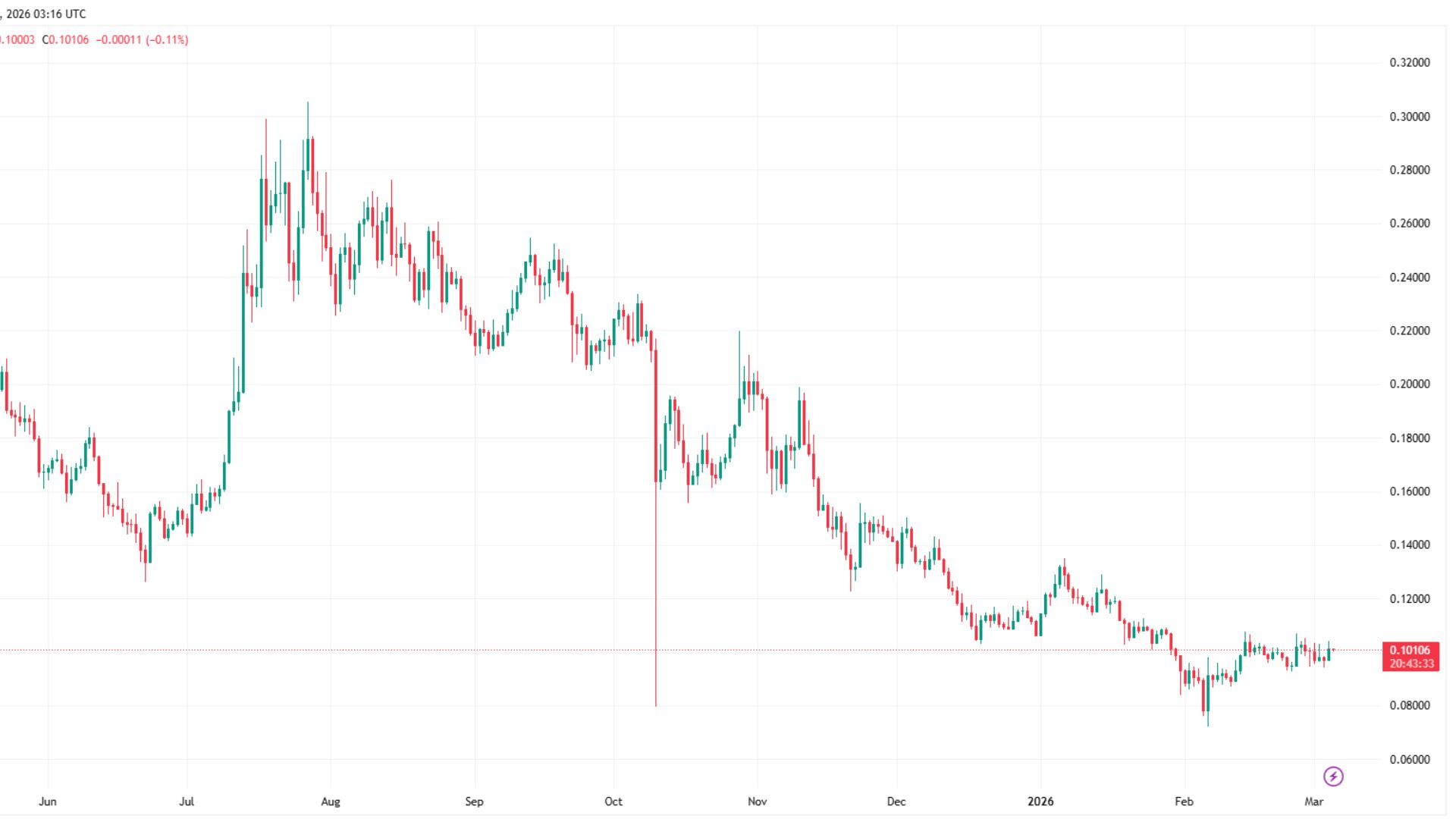
Let’s be straight about something that doesn’t get said enough in HBAR coverage: this token peaked at $0.57 in September 2021, collapsed to $0.036 by the end of 2022, bounced all the way back to $0.40 in January 2025 — and then quietly gave most of that back again. Right now it sits just above $0.10, down over 74% from that January 2025 high.
And still, Hedera’s underlying network keeps adding enterprise partners. Google Cloud. IBM. Boeing. The Australian Reserve Bank. The DTCC. Real institutions running real pilots on real infrastructure — not vaporware, not promises on a whitepaper.
So what’s actually going on? Is HBAR genuinely undervalued relative to its network traction, or has the market decided that enterprise blockchain adoption just doesn’t move token prices the way crypto Twitter assumes it does? That’s the question this piece tries to answer honestly — without the price-prediction cheerleading that dominates most HBAR coverage.
HBAR is trading at approximately $0.102, ranked around #21–24 by market cap, with a total valuation of roughly $4.4 billion and 24-hour volume near $132–137 million. On the face of it, those are respectable numbers for what is, fundamentally, an enterprise-grade distributed ledger that most retail crypto traders couldn’t explain at a dinner table.
The technical picture is interestingly split along timeframes. Weekly: bearish — the 50-day MA sits above price and is falling, the 200-day MA has been declining since August 2025. But flip to the 4-hour chart and the story changes: both moving averages are rising as of late February, suggesting short-term momentum is quietly turning. RSI on the daily sits around 47–48, which is neither here nor there — not oversold enough to trigger mechanical buyers, not healthy enough to confirm a trend shift.
Traders are watching $0.103 as the key level to confirm a bullish momentum shift in the near term, with $0.080 as the downside level to watch if that fails. The 30-day performance shows a correction of around 27%, but there was a 13% bounce during one week in mid-February, which is the kind of whipsaw HBAR holders have become grimly accustomed to.
One bright spot worth noting: HBAR rallied 8.7% in one week in early March, driven by a notable increase in stablecoin supply on the network and a general crypto market rebound — which suggests that when sentiment tilts even slightly, there’s a base of buyers ready to move.
Key levels to monitor:
LevelWhat it signals$0.080Critical support — losing this opens the $0.05 zone$0.095–$0.100Current floor; buyers appearing here$0.103–$0.120Reclaim is required to shift the short-term bias bullish$0.178–$0.193First meaningful resistance zone (mid-2026 targets)$0.401January 2025 cycle high — the big target$0.569All-time high (September 2021)
HBAR Price Prediction 2026
This is where the forecast landscape fragments completely, and understanding why it fragments tells you more than the actual numbers.
At the most conservative end, some algorithmic models project HBAR barely moving at all through 2026 — staying essentially flat around $0.10, which implies the market continues to treat Hedera as an enterprise curiosity rather than a speculative asset worth chasing.
Then you have mid-tier models: Binance community forecasts suggest a modest rise to around $0.177 by end of 2026, while DigitalCoinPrice puts the range at $0.12 to $0.15 — slow but steady. PricePrediction is slightly more optimistic, suggesting HBAR could reach $0.18 by year-end, a 75% gain from current levels.
At the aggressive end, CoinPedia’s model projects HBAR trading between $0.45 and $1.05 in 2026, with an average around $0.80 under favorable conditions — a scenario that assumes a strong altcoin cycle materializes in H2. Telegaon goes even further, projecting a range of $0.49 to $0.93 if a major adoption wave hits.
The honest read? For H1 2026, the bears probably have it right — HBAR is likely to grind between $0.10 and $0.18, influenced more by Bitcoin’s direction than by any Hedera-specific news. The bull case for H2 depends on two things happening simultaneously: the U.S. CLARITY Act passing (which executives from JPMorgan, Ripple, and Coinbase currently estimate at 80–90% probability by mid-2026), and an SEC decision on the pending spot HBAR ETF applications from Grayscale and Canary Capital.
If both materialize, $0.30–$0.45 by December 2026 is defensible. If neither does, $0.12–$0.18 is probably the ceiling.
HBAR Price Prediction 2027
By 2027, the gap between conservative and aggressive models doesn’t close — it widens. CoinCodex’s algorithm has HBAR trading within a $0.097 to $0.223 range, suggesting 2027 could be flat or even slightly down from a 2026 recovery.
On the other end of that spectrum, Telegaon’s model places 2027 HBAR somewhere between $0.96 and $1.84 — which would represent either a 10x from current levels or just a recovery to the January 2025 high, depending on whether you’re measuring from today or from wherever the market settles mid-cycle.
The $1 milestone is the psychological flashpoint for HBAR in 2027. Cryptonews considers it more realistic for HBAR to break $1 in 2029 or 2030 than in 2027, which feels like a grounded take given the current pace of institutional adoption versus actual price momentum.
What could push 2027 higher than most models expect: if the Kraken EVM and Hedera Token Service integration that launched in Q1 2026 actually generates developer momentum, and if the block node infrastructure upgrade planned for June 2026 noticeably improves transaction throughput metrics — two things that would make Hedera genuinely more attractive to DApp builders who currently default to Ethereum or Solana.
HBAR Price Prediction 2028
Most 2028 models cluster in the $0.35–$0.65 range as a base case, with CoinPedia projecting a minimum of $0.65 and a ceiling of $1.40. This is the year where the Real World Asset (RWA) tokenization narrative either starts delivering measurable on-chain activity or gets written off as another institutional blockchain promise that never quite arrived.
Hedera is uniquely positioned for the RWA story. The Hedera Council — which includes Alphabet (Google’s parent), IBM, LG, Deutsche Telekom, and others — gives the network enterprise credibility that permissionless chains genuinely struggle to replicate. Whether that credibility translates into HBAR token demand by 2028 is the core bet.
HBAR Price Prediction 2030
The 2030 forecasts are, candidly, all over the place in a way that should make anyone skeptical of pinning a number on them.
Conservative models like Changelly’s put HBAR between $0.207 and $0.281 by 2030 — modest growth, nothing dramatic. VentureBurn’s technical model suggests $0.294 as a reasonable end-of-decade target. These are the “adoption happens, but slowly” scenarios, and they’re probably the most common outcome historically for enterprise blockchain plays.
Then there’s CoinPedia’s bull model, which projects an average of $2.20 with a high of $1.70 — and Telegaon’s ultra-bull case of $3.82 to $5.25. For context, $5.25 would give Hedera a fully diluted market cap of roughly $262 billion, which would make it larger than JPMorgan Chase is today. That’s not physically impossible, but it requires believing that Hedera becomes foundational infrastructure for global financial markets within nine years.
The number most worth anchoring to, for investors who want something grounded: $0.50–$1.00 by 2030 in a base case where Hedera successfully executes on RWA tokenization, passes compliance hurdles in major markets, and benefits from one more broad crypto bull cycle.
What’s Actually Worth Watching on Hedera Right Now
Where the genuine bull case lives
The Hedera Council is unlike anything else in crypto
This is Hedera’s most underappreciated structural advantage. Most blockchains have foundations that are nominally decentralized but practically controlled by a small group of insiders. Hedera’s governing council reads like a Fortune 500 board meeting: Google, IBM, Boeing, LG Electronics, Nomura, Deutsche Telekom, Standard Bank, Wipro, and roughly a dozen others. Each member runs a consensus node and holds a council seat.
That structure means enterprise procurement teams can point to it and say “we’re running on infrastructure governed by IBM and Google” without anyone in legal raising an eyebrow. No other public network can say that. Whether it translates to HBAR price appreciation is a different question — but as a sales tool for institutional adoption, it’s genuinely powerful.
Hashgraph is meaningfully different from blockchain
Hedera doesn’t use a blockchain at all — it uses a directed acyclic graph (DAG) structure with a gossip-about-gossip consensus mechanism. The practical result: the network can process around 10,000 transactions per second with sub-3-second finality and transaction fees of approximately $0.0001. Compare that to Ethereum’s 15–30 TPS at peak, or even Solana’s occasional congestion problems. For high-volume enterprise applications — supply chain audits, micropayments, financial settlement — those specs matter.
CLARITY Act tailwinds
The U.S. CLARITY Act, which aims to divide regulatory oversight between the SEC and CFTC and end the “regulation by enforcement” era, has become the most important near-term catalyst for HBAR. If it passes by mid-2026 as executives from JPMorgan and Coinbase publicly estimate, it potentially classifies HBAR as a commodity — substantially reducing the compliance risk that has kept institutional allocators on the sideline.
Spot ETF applications are in play
Both Grayscale and Canary Capital have filed for spot HBAR ETFs. The SEC has delayed decisions, but those reviews extend into 2026 — meaning a decision is coming. An approval would be a significant institutional capital unlock, similar to what XRP ETFs did for that market in late 2025.
Network upgrades are consistent and real
Hedera’s testnet upgraded to v0.70.0 in February 2026, focused on smart contract automation and developer tooling. A transition from cloud storage to block nodes is scheduled to complete in June 2026, improving data access and reliability. These aren’t flashy announcements — they’re the unglamorous engineering work that either compounds into a durable platform or goes unnoticed. For Hedera, the track record of shipping is solid.
Where the skepticism is justified
The token-network disconnect is the defining HBAR problem
HBAR’s all-time high was $0.569 in September 2021. At that point, Hedera had a fraction of its current enterprise partnerships. Today, the network has significantly more adoption, more developers, more real-world pilots — and the token is 82% below that peak.
That gap doesn’t resolve itself automatically. You can build an incredible enterprise network and still have a token that doesn’t appreciate meaningfully if the token’s utility within that network is limited. HBAR is used to pay transaction fees (tiny amounts per transaction) and can be staked — but the economics of per-transaction HBAR consumption at $0.0001 per transaction don’t generate meaningful demand pressure at current scale.
“Enterprise blockchain” has a long track record of overpromising
IBM’s Hyperledger. R3 Corda. The Linux Foundation’s blockchain projects. Countless enterprise blockchain initiatives from 2016–2020 generated press releases, pilot programs, and conference keynotes — and then quietly failed to reach production scale. Hedera is better-positioned than most of those predecessors, but the pattern of enterprise interest without enterprise deployment is real and worth keeping in mind.
The supply picture is heavy
Hedera has a maximum supply of 50 billion HBAR, with approximately 43 billion currently in circulation. That’s an enormous float. For context, XRP has 100 billion total supply, Bitcoin has 21 million. When prices rise, there are a lot of coins available to sell — which creates structural headwinds for any sustained rally.
Competition for the enterprise DLT dollar is intensifying
R3, Quant Network, Polygon CDK, and Hyperledger Fabric are all competing for the same enterprise procurement budget that Hedera is pitching. And increasingly, private permissioned chains — where the customer controls everything — are winning deals over public networks simply because legal and compliance teams prefer them. Hedera’s public network model, despite its council governance, still faces this headwind.
The Technical Picture in More Detail
The weekly chart has looked bearish since August 2025, when the 200-day MA turned downward. The 50-day MA has been falling above price and acting as resistance — the classic configuration of a downtrend in progress.
What’s slightly interesting is the 4-hour chart behavior since late February. Both the 50-day and 200-day MAs started rising as of February 28, 2026 — a timeframe shift that can sometimes precede a weekly trend reversal, though it’s early to read too much into it.
The $0.10 level has become a psychological and technical battleground. HBAR dipped below it briefly in February and bounced hard both times — which suggests buyers are actively defending it. Whether they can defend it against a broader crypto market selloff is another question entirely.
If HBAR can hold $0.10 and reclaim $0.120 on a weekly close, the next realistic target zone is $0.178–$0.193 — roughly where Changelly’s mid-2026 models place the autumn price. Below $0.080, the picture deteriorates quickly toward the $0.055 demand zone.
Should You Hold HBAR?
The case for holding HBAR through 2026 rests on believing that eventually, network adoption translates into token demand. History of the current cycle (2024–2025) gave some hope for that thesis: the January 2025 pump to $0.40 happened, suggesting that when the market wanted exposure to “enterprise blockchain,” HBAR was where capital went.
The case against is that you might be waiting a long time for the adoption story to become a price story — and in the meantime, you’re holding a token that’s down 82% from ATH, in a market where attention rotates fast and patience is rewarded inconsistently.
For long-term investors who believe in the RWA and enterprise DLT narratives, HBAR at $0.10 offers a reasonable entry relative to the $0.40 it touched just 14 months ago. Position sizing conservatively, watching the $0.080 floor, and keeping an eye on ETF filing decisions seems like the sensible playbook.
For traders: $0.103 reclaim first. Weekly close above $0.120 is the confirmation you want before adding conviction.
FAQs
Will HBAR reach $1?
Most analyst models don’t project HBAR hitting $1 before 2029–2030. CoinPedia’s bullish 2026 scenario reaches $1.05, but that requires a strong altcoin bull market materializing in H2 2026 alongside regulatory catalysts. The base case for $1 is more realistically a 2028–2030 event.
What is the HBAR price prediction for 2030?
Forecasts range from $0.20 (Changelly conservative) to $5.25 (Telegaon ultra-bull). The most grounded base case from multiple analysts sits between $0.50 and $2.20, with VentureBurn’s technical model suggesting $0.294 as a reasonable floor and CoinPedia projecting an average of $2.20 under sustained growth conditions.
Why is HBAR price so low despite enterprise adoption?
The network charges roughly $0.0001 per transaction in HBAR fees. Even at millions of transactions per day, the token demand generated is tiny relative to the circulating supply of 43 billion HBAR. Unless token economics change — through significant staking uptake, ETF demand, or broader speculative appetite — enterprise adoption doesn’t automatically produce price appreciation.
What companies are on the Hedera Governing Council?
The council includes Google (Alphabet), IBM, LG Electronics, Boeing, Nomura, Deutsche Telekom, Standard Bank, Wipro, Ubisoft, and others — major multinationals that each operate a consensus node and hold a governance seat. This is meaningfully different from most crypto foundations and gives Hedera a compliance credibility advantage with enterprise customers.
Is there a Hedera ETF?
Grayscale and Canary Capital have both filed for spot HBAR ETFs with the SEC. Decisions have been delayed but are expected during 2026. An approval would be a significant catalyst for institutional capital inflows — similar to the effect XRP ETFs had in late 2025.
What is Hedera’s all-time high?
HBAR reached $0.5692 in September 2021. The most recent cycle peak was $0.4010 in January 2025 — a high that represented Hedera briefly entering the top 20 by market cap before giving back most of its gains through 2025 and into 2026.
Can HBAR reach $10?
Getting to $10 would require a fully diluted market cap of roughly $500 billion — making Hedera one of the most valuable financial networks on the planet. Most mainstream models don’t project $10 within a 10-year window. Technewsleader’s model suggests $10.94 is a potential 2030 peak in their most aggressive scenario, which they note requires conditions well beyond ordinary market cycles.



 Entertainment