Bitmine said its recent weekly purchases had averaged between 45,000 and 50,000 ETH, making the latest addition a noticeable step up.The firm’s ETH holdings represent about 3.76% of the total supply.The strategy reflects what Bitmine leadership views as the later stages of a market downturn.
Bitmine Immersion Technologies expanded its Ethereum (ETH) reserves last week, acquiring 60,976 ETH and increasing the pace of accumulation compared with previous weeks.
According to the official announcement, the company said its recent weekly purchases had averaged between 45,000 and 50,000 ETH, making the latest addition a noticeable step up. The strategy reflects what company leadership views as the later stages of a market downturn.
As of March 8, 2026, Bitmine reported total holdings of 4,534,563 ETH.
Ethereum dominates holdings
Bitmine’s crypto portfolio is dominated by Ethereum. Based on disclosed figures, Bitmine’s ETH position represents about 3.76% of the total supply, estimated at 120.7 million ETH.
In addition to Ethereum, the company holds 195 Bitcoin. It also reported $1.2 billion in cash and several equity investments, including a $200 million stake in Beast Industries and $14 million in Eightco Holdings.
Together, the company said its crypto assets, cash, and other investments total about $10.3 billion.
Movement backed by market patterns
According to Bitmine Chairman Thomas “Tom” Lee, the company increased its buying pace after reviewing historical market comparisons shared by advisor Tom DeMark of DeMark Analytics.
Lee said the firm’s analysis compares current crypto price movements to the S&P 500 market behavior in 2011 and 1987, periods that followed sharp corrections before recovery phases.
Based on those comparisons, the company expects the market to be near the end of what Lee described as a “mini-crypto winter.”
Majority of ETH already staked
A large portion of Bitmine’s ETH holdings is already used for staking. The company stated that 3,040,483 ETH, nearly 67% of its holdings, has been staked. At the current price used in its report, the staked amount is estimated to be around $6 billion.
Bitmine stated that its staking operations currently generate nearly $174 million in annualized revenue. The firm also reported a 2.91% seven-day staking yield, slightly above the Composite Ethereum Staking Rate (CESR) of 2.84%, which tracks average returns across the network.
Previous ETH purchases
Last week, Bitmine announced acquiring 50,928 ETH. The company has been expanding its holdings despite market volatility. At the time, Tom Lee stated, “Bitmine has been buying Ethereum, as we view this pullback as attractive, given the strengthening fundamentals. In our view, the price of ETH is not reflective of the high utility of ETH and its role as the future of finance.”
Also Read: Strategy Adds 17,994 Bitcoin to Its Treasury with 11th Consecutive Weekly Purchase
Disclaimer: The information researched and reported by The Crypto Times is for informational purposes only and is not a substitute for professional financial advice. Investing in crypto assets involves significant risk due to market volatility. Always Do Your Own Research (DYOR) and consult with a qualified Financial Advisor before making any investment decisions.
There are three things I’m unforgiving about in work headsets: comfort, microphone quality, and noise cancellation. I’ve been using Logitech Zone Wireless 2 ES at home for Microsoft Teams meetings, webinars, and some recordings — and overall I’m genuinely happy with it. Logitech provided the headset for testing, which I appreciate, and as always: opinions are my own.
TL;DR Zone Wireless 2 ES delivers where it matters: it’s very comfortable (even for longer sessions), the mic quality is excellent for Teams calls and recordings, and the noise cancellation is strong for working in a real home environment. The reversible boom mic (left or right) is one of those small details that quickly becomes a “why doesn’t everyone do this?” feature.
Why comfort mattersMicrosoft Teams call quality: clear, stable, reliableNoise cancellation necessary, not a “nice-to-have”The boom mic: small design choice, big daily benefitBattery life: good, predictable, and doesn’t demand attentionTwo minor Windows/laptop quirks I ran into (and the quick fixes)1) Bluetooth connectivity on Surface Copilot Laptop 72) Music audio sounded odd until I disabled “Audio enhancements”Zone Wireless 2 ES vs Zone Wireless 2 — what’s meaningfully different (without turning this into a full comparison)Specs & compatibility (quick reference)Verdict: a genuinely good headset
Why comfort matters
I’m not usually the best target audience for on‑ear headsets. Many on‑ear models feel fine for the first hour… and then slowly start applying pressure in exactly the wrong places. That’s why I give kudos to Zone Wireless 2 ES : it’s surprisingly comfortable, even over longer periods. The secret of this, on top of soft on-ear parts, is the extra band they included.
This matters more than people think. In modern work, comfort isn’t a “nice-to-have” — it’s the difference between “I’ll use this daily” and “I’ll keep it in the drawer for real needs.”. And yes, comfort is personal. For my ears, this is one of the few on‑ear headsets that stays comfortable through long sessions, and so far the winner in that.
Microsoft Teams call quality: clear, stable, reliable
Most of my headset testing is simple: do I trust it in a Teams meeting where I don’t have time to fight my audio?
With Zone Wireless 2 ES, the answer has been yes often. Audio has been clear and stable, and the microphone quality has been consistently strong in meetings, webinars, and recordings. People hear me clearly, and I don’t need to second-guess whether the headset is doing something strange mid-call.
The only issue there has been is related how my laptop seems to connect to this ( and some other) headsets occasionally. Looks more like the laptop issue, since this happens also with other headsets. This hasn’t been anything that an old-fashioned Bluetooth off and on (at laptop) would have not fixed.
Noise cancellation necessary, not a “nice-to-have”
I’ve used these at home only so far, and home is one place where you learn whether ANC is actually helpful.
For me, the ANC is very good — and that’s not just a technical detail. When the rest of the family is home, you don’t need silence; you need something that reduces distractions enough to let you focus and be present in meetings. Zone Wireless 2 ES does that job well.
What remains to be tested is a airport lounge, restaurant or busy office, where several people are talking loudly.. I hope this headset does a better job than what some other headsets did. But I do grant, it was a very very difficult situation for the headset when I was wishing the ANC would have been 2-3 times stronger ( multiple people talking loudly nearby) . Probably one reason I would choose over-the-ear headset..
The boom mic: small design choice, big daily benefit
One of my favorite features is the reversible boom mic. You can wear the mic on the right or the left — whichever suits your setup that day.
This is practical, not a gimmick. I prefer for my mic to be on right Desk layouts change. People have different needs and preferences. Being able to choose the mic side is simply convenient — and it’s surprisingly rare even in premium headsets.
Battery life: good, predictable, and doesn’t demand attention
Battery has been in the “no drama” category — which is the best kind of battery story.
In my daily use (meetings + some music), it lasts well (ANC always on) and I’m not constantly thinking about charging. I also appreciate that USB‑C charging is standard and straightforward.
Two minor Windows/laptop quirks I ran into (and the quick fixes)
These were minor, and based on how they behave, they look like Windows/laptop-side quirks rather than anything fundamentally wrong with the headset.
1) Bluetooth connectivity on Surface Copilot Laptop 7
Occasionally, I had to toggle Bluetooth off/on on the laptop to get the headset to connect. After re-pairing the headset, it became more reliable, but I still sometimes need to restart Bluetooth.
Once it’s connected, it’s stable — so this feels like a compatibility quirk on the laptop side.
2) Music audio sounded odd until I disabled “Audio enhancements”
When listening to music, audio sometimes sounded strange — not broken, just oddly processed. Disabling Windows Audio enhancements for the device fixed it immediately.
It’s a bit unusual because I haven’t had to do this earlier, but once disabled the audio quality was good again.
Neither of these changed my overall experience with the headset — they were quick fixes and felt more like modern Windows “audio plumbing” than a headset problem.
Zone Wireless 2 ES vs Zone Wireless 2 — what’s meaningfully different (without turning this into a full comparison)
I don’t want this review to become a feature-by-feature comparison, but it’s still useful to call out a few differences that may matter if you’re choosing between models. See my review of Logitech Zone Wireless 2 in review
From my use and from the product positioning, the theme is clear: Zone Wireless 2 ES is built as a focused, business-ready headset with great comfort and strong core performance. Zone Wireless 2 is positioned higher in the lineup, with different microphone architecture and additional “premium” features.
Here are the practical differences worth knowing:
Microphone setup differs between the models, and that shows in how the products are positioned for open office use and advanced call features.
Materials and feel are different, and for me Zone Wireless 2 ES is the more comfortable headset on my head.
There is also a price difference, which typically tracks with materials and positioning.
That’s the chapter you need. If you want deep spec-by-spec, Logitech has that — but my point here is: ES feels like the model designed to be worn all day by people who live in meetings.
Specs & compatibility (quick reference)
Here are the key specs and details from Logitech’s site.
Headset: 185.2 mm (H) × 183.6 mm × 73 mm (D)
Weight: 212 g
Microphone type: 2 noise-canceling mics with AI-based algorithms and Mic EQ
Battery type: Built-in Lithium ion
Talk time: up to 20 hours (ANC on), up to 25 hours (ANC off)
Listening time: up to 25 hours (ANC on), up to 48 hours (ANC off)
Charging: USB‑C
Cable: USB‑C to USB‑C, 1.5 m
Charging time: ~2 hours full charge, and a 5‑minute quick charge can give up to 1 hour talk time (conditions vary)
Bluetooth: 5.3
Connection type: Bluetooth; also supports audio over USB (use as a corded headset with the included USB‑C cable)
Wireless range: up to 50 m (line-of-sight; real-world range varies)
Zone Wireless 2 ES includes certified post-consumer recycled plastic:
Graphite: 57%
Off‑white: 50%
Rose: 50%(Excluding printed wiring assembly, speaker, cables, and packaging.)
Verdict: a genuinely good headset
Zone Wireless 2 ES has earned a spot in my home setup because it gets the fundamentals right:
Very comfortable for long sessions (rare for me with on‑ear models)
Strong mic quality for Teams, webinars, and recordings
Very good noise cancellation for a real home environment
Solid battery life
Reversible boom mic that’s genuinely useful
If you’re looking for a headset that supports modern work without becoming something you “tolerate,” Zone Wireless 2 ES is worth a look.
Sharing is Caring! #CommunityRocks
Aiheeseen liittyy
Published by Vesa Nopanen
Vesa “Vesku” Nopanen, Principal Consultant and Microsoft MVP (Microsoft 365 and Azure AI Foundry) working on Future Work at Sulava MEA.
I work, blog and speak about Future Work : AI, Microsoft 365, Copilot, Loop, Azure, and other services & platforms in the cloud connecting digital and physical and people together.
I have 30 years of experience in IT business on multiple industries, domains, and roles.
View all posts by Vesa Nopanen
WARNING: This article contains spoilers for today’s episode of EastEnders, which is streaming on BBC iPlayer now but has not yet aired on BBC One, and includes a brief appearance from Sam Mitchell.
EastEnders viewers who have been asking the same question for weeks at last got a glimpse of Sam Mitchell in today’s episode. The much-loved character made a short return to the screen, finally confirming she is still around in Walford.
But despite fans being happy to see her again, many are still scratching their heads over one big issue.
Don’t miss a single story! Add us as a Preferred Source in Google for all your entertainment news
It’s important to us that you never miss our articles when searching for stories! We have all the latest TV & Celebrity news to share with our community of loyal readers.
Click here and tick Entertainmentdaily.com to ensure you see stories from us first in Google Search.
Sam’s cancer storyline continues to unfold mostly away from the cameras, leaving viewers wondering why such a major plot is happening largely off-screen.
Sam’s cancer storyline has been playing out mostly off-screenon EastEnders (Credit: BBC)
EastEnders: Where has Sam been?
Ever since Kim Medcalf returned to Walford as Sam Mitchell, fans have been thrilled. And when Sam was sadly diagnosed with cancer, it seemed the character was facing her biggest storyline yet.
However, viewers have been left disappointed that Sam’s health storyline has always been happening off-screen. She has even attended most of her appointments behind the scenes.
While we have been treated to mentions of Sam’s radiotherapy appointments on screen via her family, Sam herself has been a rare occurrence in each episode.
Despite Sam deciding to stay in Walford more than a fortnight ago, we still haven’t seen much of her. Even when old family friend Nigel went into a home, Sam was nowhere to be seen, and fans are starting to get annoyed.
Sam Mitchell decided to stay more than a fortnight ago (Credit: BBC)
Sam makes a quick return
Today’s EastEnders sees Sam finally make a screen appearance. However, it is another fleeting blink-and-you’ll-miss-it moment. The scene comes as Phil is avoiding going to see Nigel in his care home after his emotional move there last week.
As Sam talks about the fact that she is a week into her radiotherapy treatment but still gets nervous about going, Julie asks Phil what time he is going to see Nigel. Phil pretends he is very busy, using accompanying Sam to her radiotherapy session as a reason he can’t see his friend.
While Sam is grateful that her big brother is coming to the appointment with her, Phil is soon distracted when Lexi arrives, asking to see Nigel herself.
Even Lexi’s request to see Nigel doesn’t get Phil to agree to go to the care home. And instead, Callum is the one to take her to see Nigel alone.
Sam’s back briefly in today’s EastEnders (Credit: BBC)
Fans demand more Sam screen time in EastEnders
This brief moment with Sam thrilled fans, and they are demanding more screen time for the character…
“SAM WE HAVE MISSED YOU!” said one fan on X. Another agreed: “It‘s been over 2 weeks since Sam confirmed she’s staying in Walford, yet she’s not had any screentime since. Sort it out, EastEnders! Kim Medcalf deserves so much better than this!”
“Honest to god, Kim deserves so much better than this. Why is she hardly getting any screentime? We should be seeing her cancer storyline play out on screen to raise awareness,” agreed another viewer.
Someone else suggested maybe Kim will get some screen time when Grant returns. “Are they going to keep Sam in the cupboard until Grant returns? Tell me why her cancer storyline is STILL OFF SCREEN!”
“Why has Sam decided to stay in EastEnders, and we don’t ever get to see her? Everything about her cancer appointments is always off-screen,” said another EastEnders viewer.
Beyond Connectivity: Accelerating Data Liquidity and Shortening the Trust Cycle with the Kypspr API Sandbox
MEMPHIS, TENNESSEE / ACCESS Newswire / March 9, 2026 / Kypspr, the universal interoperability fabric for healthcare, today announced a strategic expansion of its Semantic Refinery to solve the industry’s most expensive hidden problem: the Data Tax. For mid-market health systems, manual data reconciliation currently costs an estimated $15 per patient chart just to make legacy records compatible with modern billing and AI.
By providing an AI-native infrastructure layer, Kypspr transforms unstructured legacy data into high-fidelity Golden Records at the source. This allows hospitals to automate data integrity and ensure they meet federal 21st Century Cures Act mandates without the multi-billion-dollar IT budgets typical of national conglomerates.
“Connectivity without clarity is a liability,” said Ambar Prajapati, CEO and CTO of Kypspr. “Moving broken data just creates faster broken data. We aren’t just building pipes; we’re building the refinery. Our mission is to provide perfect, auditable translation-turning chaotic clinical data into high-fidelity assets that ensure federal compliance, recover margins, and eliminate the manual labor currently draining hospital resources.”
To address the industry’s “trust deficit,” Kypspr also announced that its platform is now Source-Available for Audit. Under a standard NDA, healthcare CISOs and security teams can inspect the engine’s code directly. This transparency, combined with Kypspr’s patent-protected “Federated Moat” architecture, ensures that Protected Health Information (PHI) never leaves the hospital’s secure environment.
By streamlining the onboarding process through its Compliant Enterprise Trial (API Sandbox), Kypspr is shortening the typical 18-month security review cycle. Technical teams can now test AI models against real-world data scenarios in weeks, not years, accelerating the transition to AI-ready healthcare.
Availability
Kypspr is currently engaging with select Design Partners and offering a Compliant Enterprise Trial (API Sandbox) for organizations ready to audit their data fidelity. Interested organizations can apply for the Design Partner Program by visiting Design Partner Program or contacting [email protected].
About Kypspr Based in Memphis, TN, Kypspr is the Universal Interoperability Fabric for Healthcare. Its Semantic Refinery transforms chaotic clinical data into high-fidelity Golden Records, allowing enterprises to embrace AI and data liquidity with absolute security and sovereignty.
Media Contact:
Ambar PrajapatiFounder and CEO, Kypspr[email protected]
SOURCE: Kypspr AI
About Web3Wire Web3Wire – Information, news, press releases, events and research articles about Web3, Metaverse, Blockchain, Artificial Intelligence, Cryptocurrencies, Decentralized Finance, NFTs and Gaming. Visit Web3Wire for Web3 News and Events, Block3Wire for the latest Blockchain news and Meta3Wire to stay updated with Metaverse News.
What is Fabric Protocol (ROBO)? This question helps explain a project that is drawing attention in the decentralized network space. You get to understand how Fabric Protocol combines robotics, blockchain, and verifiable automation in a practical way. As you read on, you’ll see what the ROBO token does, why the project stands out, and what it may mean for investors looking ahead to 2026.
In this article, we’ll break down how Fabric Protocol works, what gives the ROBO token value, and what its 2026 price outlook could look like. We’ll also help you decide whether this project is worth following more closely. Keep reading.
What Is Fabric Protocol (ROBO)?
Fabric Protocol (ROBO) is a blockchain project that links robots, autonomous systems, and on-chain coordination in one framework. It gives machines a way to register identity, receive tasks, verify completed work, and interact with smart contracts without relying on a single central operator. If you’re looking for a clear example while learning how blockchain works in real-world applications, Fabric Protocol shows how the technology can move beyond finance and support real machine activity.
The project is also tied to the fabric foundation, which supports the broader vision behind the protocol and its long-term development. In simple terms, Fabric Protocol aims to make robotic work more transparent, trackable, and easier to validate on-chain. That gives ROBO a role within a system where machines, data, and incentives work together under clear rules.
What Problems Does Fabric Protocol Solve?
Fabric Protocol addresses several challenges within the robot economy, creating a more efficient and collaborative system. Here are five key problems it solves:
Lack of Coordination: Robots often operate in isolation, leading to inefficiencies. Fabric Protocol enables seamless collaboration through a decentralized framework.Data Integrity Issues: Ensuring the accuracy and security of data shared between robots is critical. The protocol uses blockchain to maintain a reliable record of interactions.Task Allocation Challenges: Assigning tasks to the right robots can be complex. Fabric Protocol simplifies this by using decentralized task allocation mechanisms.Accountability in Robotic Work: Verifying completed tasks can be difficult. The protocol introduces Proof of Robotic Work (PoRW) to ensure accountability.Limited Scalability: Traditional systems struggle to scale as the robot economy grows. Fabric Protocol provides a scalable solution for managing large networks of robots.
Who Is Behind Fabric Protocol?
The Fabric Protocol was created by OpenMind. This is a team dedicated to advancing robotics and blockchain integration. They introduced the OM1 OS, an open-source operating system that serves as a universal platform for robots. This foundation laid the groundwork for the Fabric Protocol, enabling seamless collaboration within the robot ecosystem.OpenMind has implemented a transparent token distribution model to support the protocol’s operations and incentivize participation within the network. This ensures that resources are allocated effectively, fostering growth in the robot economy.
How Does Fabric Protocol Work?
Fabric Protocol functions as a decentralized network, allowing robots to operate as independent governance participants in the robot economy. It provides the infrastructure needed for robots to interact, collaborate, and complete tasks autonomously. Below are its main components:
Robot Identity & On-Chain Registry
Fabric Protocol assigns each robot a unique machine identity that is recorded on the blockchain. This identity allows robots to securely participate in the network, interact with other entities, and maintain a transparent record of their activities.
Decentralized Task Allocation
The protocol uses smart contracts to allocate tasks across the network. Robots can bid for tasks based on their capabilities, creating an efficient system where work is distributed without relying on a central authority.
Proof of Robotic Work (PoRW)
PoRW is a mechanism that validates tasks completed by robots. This system records completed work on the blockchain and rewards robots for their contributions, creating a transparent and accountable process.
Verifiable Compute & Smart Contracts
Fabric Protocol leverages smart contracts to enable robots to execute tasks and exchange data securely. Verifiable compute ensures that all operations are transparent and tamper-proof, making it an ideal AI crypto investment.
Key Features of Fabric Protocol
Fabric Protocol introduces a range of features that redefine how robots interact and operate within a decentralized network. These capabilities are designed to support the growth of the robot economy and enhance collaboration across the system:
Decentralized Network for Robots. Fabric Protocol creates a global, decentralized network where robots can operate autonomously, interact with other entities, and participate in economic activities without centralized control.On-Chain Identity System. Each robot is assigned a unique, verifiable identity stored on the blockchain. This identity allows robots to securely interact, maintain transparency, and build trust within the network.Autonomous Task Allocation. The protocol uses smart contracts to facilitate task allocation. Robots can bid for tasks based on their capabilities, promoting efficient work distribution and reducing operational bottlenecks.Proof of Robotic Work (PoRW). This feature validates and records completed tasks on the blockchain. Robots are rewarded for their contributions, creating a transparent and accountable system for task execution.Scalability for the Robot Economy. Fabric Protocol is designed to support a growing network of robots, making it adaptable to the increasing demands of the robot economy.ROBO Token Integration. The native ROBO token is used for transaction fees, staking, governance, and rewarding robotic work, creating a self-sustaining economic model.
What Is the ROBO Token?
The ROBO token is the native utility asset of the Fabric Protocol, designed to power the decentralized network and support the robot economy. It plays a central role in facilitating transactions, incentivizing participation, and enabling governance within the fabric ecosystem. Here is the working mechanism:
ROBO Tokenomics & Supply
The ROBO token has a fixed total supply of 10 billion, ensuring long-term stability and value alignment. Its tokenomics are structured to support various network operations:
Fees: The token is used to pay for transaction fees, such as identity verification and data provision exchange within the network.Staking: Robot operators can stake ROBO tokens as work bonds, which act as a commitment to perform tasks reliably.Governance: Token holders can participate in decentralized governance by voting on protocol updates and decisions.Payments: ROBO tokens facilitate payments for services and task settlements within the network.
Functions of the ROBO Token
Transaction Fees: Used to cover costs for blockchain operations, including identity registration and task execution.Staking for Work Bonds: Operators stake tokens to demonstrate reliability and gain access to task opportunities.Governance Participation: Token holders influence the protocol’s future by voting on proposals and updates.Incentives for Robotic Work: Rewards are distributed to robots for completing verified tasks through the Proof of Robotic Work mechanism.Task Settlements: Acts as a medium of exchange for payments between robots and users.
ROBO Real-World Use Cases
Autonomous Delivery Services: Robots use ROBO tokens to bid for delivery tasks and receive payments upon completion.Industrial Automation: Factories can allocate tasks to robots and settle payments using the token.Smart City Operations: Robots in smart cities can coordinate tasks like waste management or surveillance, with payments facilitated by ROBO tokens.Decentralized Marketplaces: Robots can participate in marketplaces to offer services or purchase resources using the token.Research and Development: Developers can use ROBO tokens to access network resources and test new robotic applications.
ROBO vs. Ethereum
FeatureROBO (Fabric Protocol)EthereumPrimary PurposeFocused on the global robot economy, enabling robots to act as independent economic agents.General-purpose blockchain for decentralized applications and smart contracts.Consensus MechanismProof of Robotic Work (PoRW) validates robotic tasks and contributions.Proof of Stake (PoS) secures the network and validates transactions.Native TokenROBO token, used for fees, staking, governance, and task payments.ETH, used for transaction fees, staking, and executing smart contracts.Target UsersRobots, robot operators, and industries utilizing robotics.Developers, businesses, and users building or interacting with dApps.Task AllocationDecentralized task allocation specifically built for robotic operations.General-purpose smart contracts for a wide range of use cases.Identity SystemOn-chain identity registry provides unique identities for robots.No native identity system and relies on third-party solutions.ScalabilityPlans to transition to a dedicated Layer 1 blockchain optimized for machine operations.Uses Layer 2 solutions like Optimism and Arbitrum to improve scalability.GovernanceDecentralized governance through token holder voting with veROBO.Governance through Ethereum Improvement Proposals (EIPs) and community consensus.Use CasesAutonomous delivery, industrial automation, smart cities, and robotic R&D.DeFi, NFTs, gaming, supply chain, and general-purpose decentralized apps.Transaction FeesLower fees tailored for robotic operations and task settlements.Variable gas fees based on network congestion and demand.InteroperabilityInitially deployed on Ethereum Layer 2, with plans for its own Layer 1 blockchain.Interoperable with multiple blockchains through bridges and Layer 2 solutions.
Fabric Protocol (ROBO) Price Prediction for 2026
The price of Fabric Protocol (ROBO) is influenced by several factors, including market conditions, adoption rates, and technological advancements. Below is an analysis of its potential price trajectory:
Expected Price Range
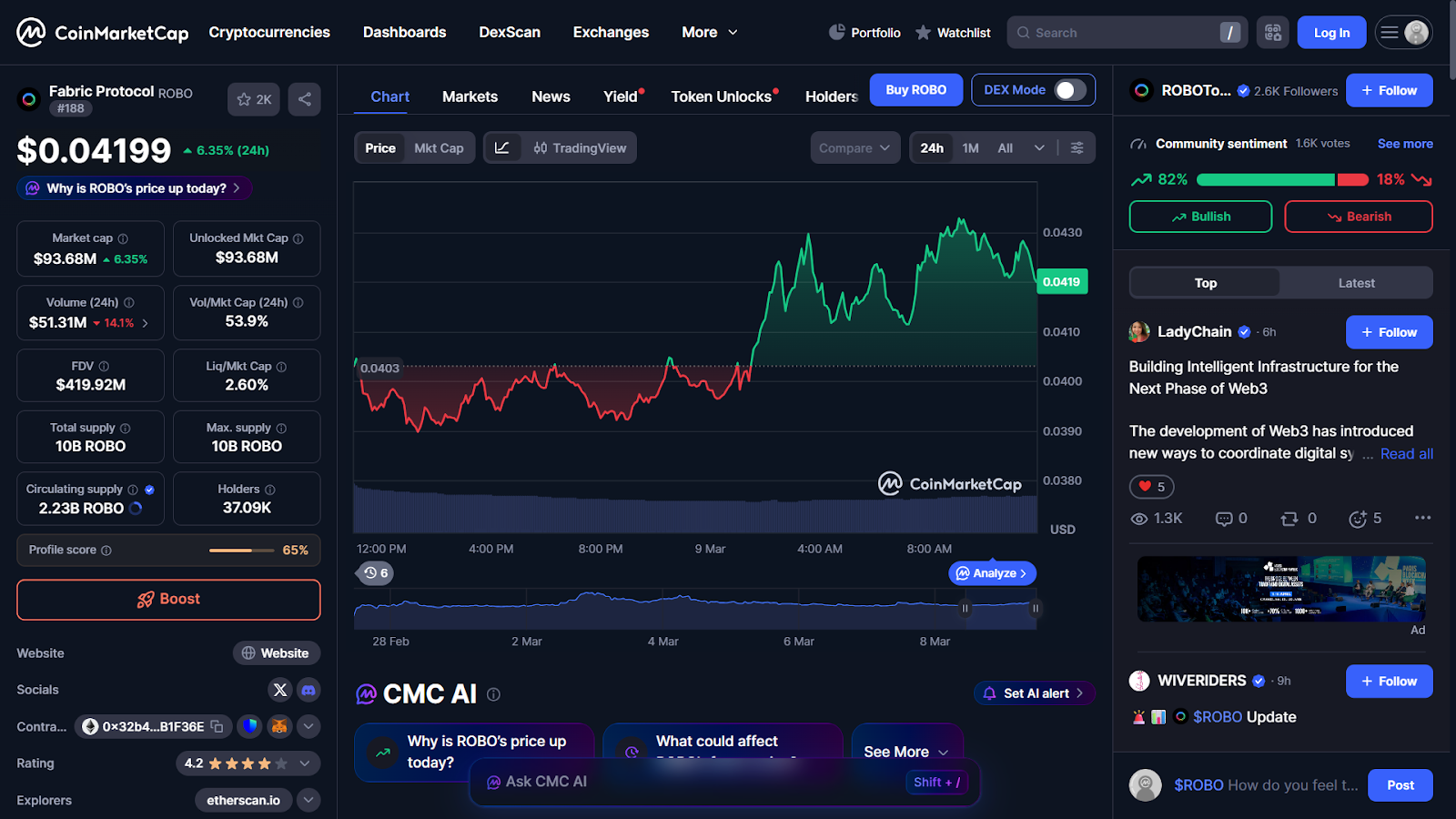
Under stable market conditions, ROBO is projected to trade within the $0.03 – $0.06 range.
During bullish cycles, with increased adoption in the robotics and blockchain sectors, the price could rise toward the $0.08 level.
Key Drivers of Price Movement
Market Sentiment: The overall sentiment in the cryptocurrency market, including liquidity inflows and trading volume, plays a significant role in short-term price fluctuations.Adoption and Use Cases: Increased participation in the Fabric Protocol ecosystem, such as task settlements and governance, can drive demand for the ROBO token.Technological Development: Advancements in the protocol, including its transition to a dedicated Layer 1 blockchain, may boost investor confidence and long-term value.
Future Growth Prospects
If Fabric Protocol continues to expand its role in the robotics and decentralized infrastructure industries, its value could see sustained growth. The integration of robotics with blockchain technology positions ROBO as a unique asset in the market, with potential for significant appreciation as adoption increases.
Is Fabric Protocol (ROBO) a Good Investment?
Fabric Protocol (ROBO) stands out as one of the best AI crypto projects, combining blockchain technology with robotics to create a decentralized network for autonomous AI agents. By anchoring robot identity, task coordination, and incentives on-chain, it addresses critical gaps in the robotics industry. This unique focus positions ROBO as a forward-thinking solution in the evolving AI and blockchain landscape, making it an attractive option for investors seeking innovative projects.
The protocol’s token distribution model emphasizes long-term alignment and sustainable growth. With a market cap of 1.60B and a fixed supply of 10 billion tokens, ROBO is designed to support fabric network fees, staking, and governance. This structure not only incentivizes participation but also ensures that the token remains integral to the ecosystem’s operations. As adoption grows, the demand for ROBO tokens is expected to increase, further enhancing its value proposition.
For those interested in the future of robotics and AI, Fabric Protocol offers a compelling investment opportunity. Its focus on autonomous AI agents and decentralized coordination creates a robust foundation for growth. However, like any investment, it carries risks, including market volatility and regulatory challenges. Investors should carefully evaluate their risk tolerance and conduct thorough own research before committing to ROBO.
How to Buy Fabric Protocol (ROBO)
The process of buying crypto, including Fabric Protocol (ROBO), is straightforward and can be completed in a few simple steps:
Create a Crypto Wallet. Start by setting up a secure crypto wallet. Choose a wallet that supports ROBO and offers features like self-custody and security tools.Deposit Funds into Your Wallet. Add funds to your wallet by transferring cryptocurrency from another wallet or purchasing crypto directly using a credit or debit card.Find a Supported Exchange. Locate a cryptocurrency exchange that lists Fabric Protocol (ROBO). Popular exchanges often provide trading pairs like ROBO/USDT or ROBO/ETH.Search for ROBO.Use the search bar on the exchange platform to find Fabric Protocol (ROBO). Select the appropriate trading pair to proceed.Place a Buy Order. Enter the amount of ROBO you want to purchase. Review the details carefully and confirm your order.Store Your ROBO Securely. After purchasing, transfer your ROBO tokens to your wallet for safekeeping. Avoid leaving them on the exchange to reduce security risks.Monitor Your Investment. Keep track of your ROBO holdings and stay updated on crypto market trends and project developments to make informed decisions.
The Future of Fabric Protocol
The future of Fabric Protocol is centered on its ability to revolutionize the robotics industry by integrating blockchain technology. As a decentralized network, it aims to establish a global ecosystem where robots function as autonomous economic agents, driving efficiency and innovation.
Key developments, such as the transition to a dedicated Layer 1 blockchain, will enhance scalability and optimize operations for machine-native tasks. This evolution positions Fabric Protocol as a leader in the robotics and blockchain sectors, with the potential to attract widespread adoption.
With its focus on verifiable contributions, governance, and task coordination, Fabric Protocol is poised to play a pivotal role in shaping the future of robotics infrastructure. As adoption grows, it could redefine how robots interact, collaborate, and contribute to the global economy.
Conclusion
Fabric Protocol represents a groundbreaking step in merging robotics with blockchain technology, offering a decentralized framework for autonomous operations and verifiable contributions. With its focus on scalability, governance, and real-world applications, it has the potential to transform the robotics industry and drive innovation in decentralized infrastructure. While its future depends on adoption and technological advancements, Fabric Protocol is well-positioned to become a key player in the evolving AI and blockchain landscape.
FAQs
Where can I buy ROBO tokens?
You can buy ROBO tokens on supported cryptocurrency exchanges that list Fabric Protocol, such as those offering ROBO/USDT or ROBO/ETH trading pairs.
What blockchain does Fabric Protocol run on?
Fabric Protocol currently operates on Base (EVM-compatible) and plans to transition to its own dedicated Layer 1 blockchain.
What is the “Proof of Units” mechanism?
The “Proof of Units” mechanism validates and records robotic contributions on-chain, ensuring transparency and rewarding verified work.
Is ROBO available for spot trading?
Yes, ROBO is available for spot trading on major exchanges, providing liquidity and accessibility for investors.
Monday, March 9th 2026Tags: SuitsDrapersRing Jackettrunk
Share
Share this post
Subscribe
34 Comments
||- Begin Content -||
Trunk have recently started offering Ring Jacket for made-to-measure tailoring alongside their existing made-in-Italy lines. The Japanese make from Ring is a step higher in terms of quality and at £2010 for a suit means they offer something in the same kind of bracket as Anglo-Italian (from £1980), Bryceland’s (from £2300) and others.
The Bryceland’s line is more handmade than the others and a little more stylised, but I can see readers considering this from Trunk alongside the likes of Anglo and indeed Thom Sweeney or Saman Amel.
One difference is that the Ring Jacket offering is partly based on trunk shows, with the team coming from Japan twice a year and requiring one meeting to take measures, before the suit is delivered to the store and the second appointment done with the Trunk staff. So that’s a little more restrictive, though the next visit is soon, April 17th and 18th.
I tried the service at the end of last year, and met Sasamoto-san from Ring Jacket during a trunk show. I wanted to replace my brown high-twist suit I had made by Dalcuore years ago – as that was now too small – and this was a good opportunity to do so.
That previous suit had been made in Holland & Sherry’s Crispaire fabric, but I’ve since found I prefer the slightly drier and sharper Ascot from Drapers (my Assisi suit was made in the four ply). Unfortunately, the dark brown I liked in the four-ply cloth had been discontinued, so I went up a weight to the six ply – an interesting opportunity to try that heavier, in some ways more traditional weight of high-twist suiting.
Sasamoto-san was fastidious with the measurements and consultation, which wasn’t a surprise as I’d seen him at work before – and indeed visited the Ring Jacket factory in Japan back in 2018.
I also tried a sample suit, which was useful to gauge the style. This is a very soft, round-shouldered look that feels like peak ‘stile italiano’ – the general Japanese name for the wave of popularity of such Neapolitan-like fashions in the 2010s and since.
That soft-shouldered look will appeal to lots of readers. It’s the kind of easy-to-wear tailoring that feels like a less corporate business suit, but could also make a great soft jacket in cashmere or cord, to wear with jeans and more casual trousers.
I was also able to update the cut by lowering the buttoning point a good inch, which I think looks good. But the style is limited in terms of the lapel, which has to retain this width and notch height. Some readers that tend to prefer wider lapels or lower notches might find this a little restrictive. Although I should note that the same restriction often applies to others as well, eg Saman.
The fit of the suit, when it arrived, was a nice balance between comfort and shape, which was pleasing. I was a little worried it would be tight, given I prefer slightly looser fits these days, but actually we ended up taking a little on the waist of the trousers and the leg line. The Trunk team do this in London and so have it ready within a few days.
I went for belt loops on the trousers because while I will wear this suit with a tie – as pictured – I will also often wear it with an open-necked shirt or even a knit, and the belt will add interest there.
This decision is always a bit of a compromise, and one I don’t find easy to make sometimes. But the key I find is to consider how often you’ll wear the suit one way and the other, plus perhaps how often wear the trousers on their own. Weigh that up and accept the compromise.
The fit of the suit was very good – not bespoke level of course, but for made to measure really nice. The collar is close on my neck, the sleeve pitch perfect, the jacket balance very good.
My lower right shoulder and generally sloping shoulders were coped with pretty well too. Even some bespoke tailors struggle with getting that right side clean, but Ring Jacket did a good job. There’s a little more wrinkling between my blades and under the arms than the best bespoke, but that’s about it.
The make is also what you’d want for the price – hand-attached collar and sleeves, precise finishing and buttonholes. There’s also some good shape to the jacket that comes from the pressing the Ring team do a lot at the factory.
If a friend asked me for the best place to get made to measure in London, this would certainly be one of the options I’d suggest. The necessity of waiting for a trunk show would be one restriction, but beyond that I’d say it’s mostly a question of style in terms of comparing them to somewhere like Anglo-Italian, and the price is under the likes of Saman and Thom Sweeney.
Bryceland’s is more expensive, but their level of make is more like bespoke and so a better comparison is with the likes of Saman’s Napoli line and Jean-Manuel Moreau, which are around £3500 and £3000 respectively.
Like Anglo and Bryceland’s, Trunk also has an advantage that there’s such a friendly team in the shop all the time, and a loyal client base as a result. I can particularly see the appeal of this service to existing Trunk customers.
Ring Jacket Made to measure details:
Suit – from £2010 Jacket – from £1490 Trousers – from £540 Trunk shows twice a year, the next being April 17-18 Delivery to the store after around four months Bookings made on the Trunk site here.
Made to order also available, suits from £1800
Trunk also offers:
Made to measure tailoring with Caruso in Italy (suit from £1750) Trunk brand MTM and MTO in Italy (suits from £1350 and £1200 respectively) Both are lower levels, but have the advantage of not requiring trunk shows
Clothes pictured:
Suit in Drapers high-twist wool, six ply and 510g, 18056in the Ascot bunch Lilac cotton-twill shirt from Simone Abbarchi Knitted cashmere tie from Church’s Piccadilly loafers in London Grain leather from Edward Green
Related posts
Who are my favourite made-to-measure tailors?
July 23rd 2025 – 194 Comments
Read More
The (17) made-to-measure tailors I have known
July 12th 2021 – 227 Comments
Read More
The Armoury tailoring: Ring Jacket, Orazio, Liverano
April 8th 2019 – 96 Comments
Read More
<!–
Subscribe to this post
You can follow the discussion on Trunk made-to-measure suit by Ring Jacket: Review by entering your email address in the box below. You will then receive an email every time a new comment is added. These will also contain a link to a page where you can stop the alerts, and remove all of your related data from the site.
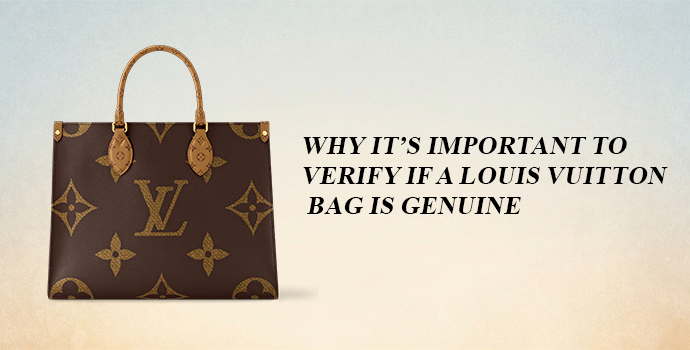
Fancy bags are not just things to carry— they show history, skill and long-lasting worth. Among the most known names in the fancy world, Louis Vuitton is unmatched. With a story that goes back over a hundred years, the brand is famous for its special pattern cloth, great work quality and classic styles. But this worldwide popularity also makes Louis Vuitton one of the most copied fancy brands around the globe. So knowing how to check if a Louis Vuitton bag is real has turned into an important skill for today’s buyers of luxury goods.
In today’s online shopping world, people more and more buy fancy bags through websites, second-hand sites and sellers from other countries. While this gives better access and lower prices it also raises the chance of meeting high-quality fakes that look a lot like real designs. A lot of fake bags now look real at first sight, making it hard for even skilled shoppers to spot mistakes without the right know-how.
Real Louis Vuitton bags stick to very strict quality and making rules. From picking materials and stitching well to placing logos and details on hardware, each part follows set brand guides. Even the tiniest mistake can show that a bag is not real. Knowing these facts helps buyers make smart choices, so they don’t lose money.
This guide is made to help you feel sure about knowing if your Louis Vuitton bag is real by explaining each step in a simple way. Whether you are buying a used bag, checking a new one or just wanting to learn how to save your money for the future, this full method will give you the know-how needed to check Louis Vuitton bags with trust and ease.
Why It’s Important to Verify If a Louis Vuitton Bag Is Genuine
Checking if a Louis Vuitton bag is real is an important step for any luxury shopper, especially in today’s world and online market. Louis Vuitton bags are not just style pieces but also big money͏ investments, made with top-notch materials, expert craft and a rich history. Not properly confirming a bag’s authenticity can lead to cash loss, frustration and long-term value drop.
One big reason why checks are important is the rise of clever fakes. New copies often copy logos, shapes and boxes very well, which makes it hard to tell fake goods from real ones quickly. Without good checking, shoppers might spend high amounts on stuff that doesn’t have the quality, strength and value usually linked with Louis Vuitton.
Real Louis Vuitton bags are made to last many years when taken care of. Fake bags, in contrast, are built with low-quality stuff that wears out fast – breaking canvas, flaking bits and bad sewing are common problems. Checking if it’s real makes sure you get the skill and lasting quality that explain the brand’s high cost.
Checking if something is real also matters a lot for selling again and getting insurance. A sure true Louis Vuitton bag has way more value when you sell it again and is simpler to put on sale or get insured. Buyers and places want proof that a Louis Vuitton bag is real before finishing big money deals, making checking realness an important part of owning it.
At last, checking if something is real keeps the brand’s value and good buying habits safe. Fake items hurt true skill and help bad trade ways. By making sure your Louis Vuitton bag is real, you back smart luxury spending while taking care of your own money spent. In brief, checking for authenticity isn’t a choice— it is a key move toward feeling sure, wise and safe in owning luxury items.
Understanding Louis Vuitton Craftsmanship Standards
To check if a Louis Vuitton bag is real, it is key to know the brand’s strict craft rules. Louis Vuitton has made its name worldwide on exactness, strength and reliability— ideas that show in every bag made. These rules allow little space for mistakes, which is why even tiny differences can hint at fake-ness.
At the heart of Louis Vuitton work is material quality. The brand’s well-known coated canvas is made to be light, water-proof and very strong, much better than common͏ printed canvas. Leather parts, especially natural cowhide vachetta are not treated and meant to grow old naturally, getting a rich look over time. This planned change is a sign of realness and can’t be correctly copied by fake stuff.
Building exactness is another key rule. Real Louis Vuitton bags show panels that line up just right, patterns that are the same on both sides and strong spots for stress. Sewing looks neat, spaced out evenly and always the same often with equal stitches in matching areas. Loose threads uneven seams or odd spacing do not match true quality of making.
The quality of the hardware shows the brand’s care in making things. Zippers, hooks and studs are made just for this bag, they feel heavy and are done well to not fade or chip. The markings are clear and easy to read, never light or fuzzy. These little parts might look small but they matter a lot when checking if a Louis Vuitton bag is real.
At last, Louis Vuitton sticks to tight quality rules. Each bag goes through many checks before it leaves the workshop, making sure it matches clear brand needs. This kind of checking makes sure there is no change over collections and years of making.
Knowing these craft rules helps shoppers spot real items with more trust. When a bag matches Louis Vuitton’s quality of stuff, how it’s made and the little details, it really backs up the idea that the bag is true and deserves its fancy place.
Step 1: Examine the Materials Closely
Canvas Quality
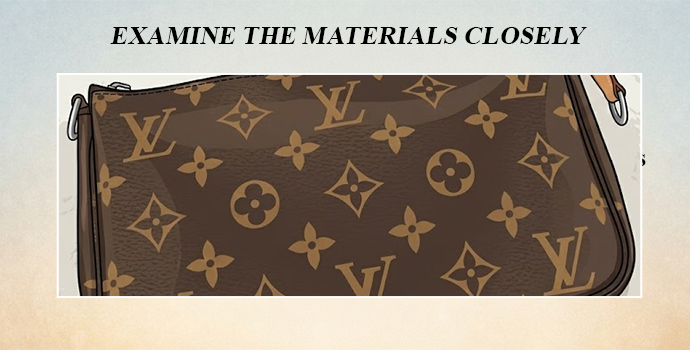
Louis Vuitton’s covered cloth is one of its most famous materials. Unlike cheap copies, real cloth feels:
Thick yet flexibleSmooth but not plastickyDurable and structured
The monogram design should not look fuzzy, dull or unclear. If the cloth feels weak, too bright or like rubber it is a sign that the claim about the Louis Vuitton bag being real might not be true.
Leather Trim (Vachetta or Treated Leather)
A lot of Louis Vuitton bags have real cow skin leather (vachetta), mostly on handles and edges.
Authentic vachetta leather:
Is pale beige when newDevelops a honey-brown patina over timeFeels smooth but firm
Fake bags often use darkened leather or fake stuff that do not wear out like real ones— this is a quick sign the Louis Vuitton bag is real but this claim raises questions.
Step 2: Inspect the Stitching
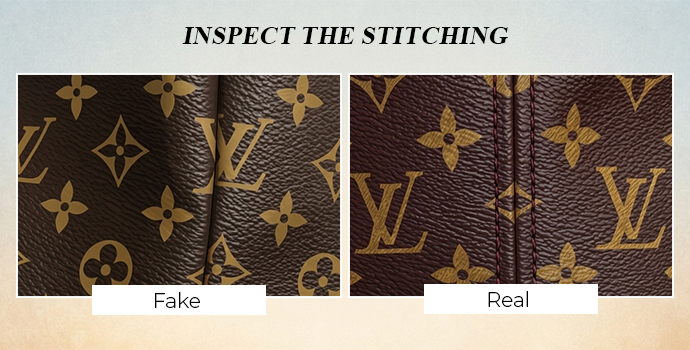
Sewing is one of the clearest signs of realness.
Authentic Louis Vuitton stitching:
Is perfectly straight and evenUses thick, durable threadHas an equal number of stitches on symmetrical areas
Louis Vuitton never uses messy, loose or uneven stitching. If you see different stitch lengths or bent lines it is not likely that the Louis Vuitton bag is real.
Step 3: Check the Monogram Alignment
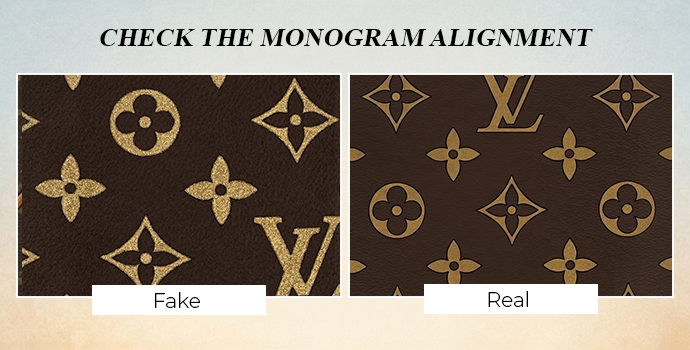
One of the most missed but key checks is where to put a monogram.
Key rules:
Monogram patterns are symmetricalLogos are never cut off awkwardly (except in rare vintage designs)Bags made from one piece of canvas often have upside-down logos on one side— this is normal
Fake bags usually have uneven logos, wrong gaps or twisted signs. These things show that the claim saying the Louis Vuitton bag is real is not true.
Step 4: Evaluate the Hardware
Louis Vuitton parts are made just for them and are very good.
Authentic hardware features:
Solid brass or gold-tone metalWeighty feel (never lightweight or hollow)Clean engravings with sharp lettering
Zippers must move easy, not get caught. If the parts break, flake or seem weak, the Louis Vuitton bag’s real claim looks unsure.
Step 5: Inspect Logos, Stamps and Fonts
Heat Stamps
In many Louis Vuitton bags, there is a hot mark that says:
“LOUIS VUITTON PARIS”“Made in France / Spain / Italy / USA”
Authentic heat stamps:
Use consistent font and spacingAre cleanly embossed, never printedDo not include “Made in China” (Louis Vuitton never manufactures there)
Wrong font thick, bad alignment or spelling mistakes are clear signs that the claim of a Louis Vuitton bag is real is wrong.
Step 6: Understand Date Codes (Not Serial Numbers)
Louis Vuitton bags made before 2021 have date codes, not serial numbers.
Key facts:
Date codes indicate location and production dateThey follow specific letter-number formatsPlacement varies by bag model
The lack of a date code doesn’t always mean the bag is fake, new bags use microchips but wrong formatting often shows that the claim of Louis Vuitton bag is real is not true.
Step 7: Microchip Authentication (Newer Bags)
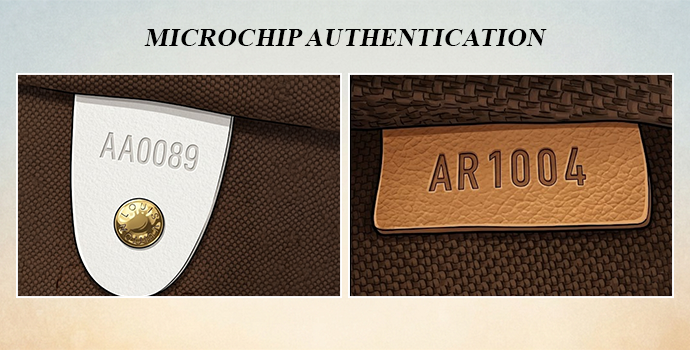
New Louis Vuitton bags (after 2021) hav͏e tiny chips inside of them.
Important points:
Chips are scanned by Louis Vuitton boutiques onlyNo visible serial number existsThird-party apps cannot fully authenticate chips
If a seller says there is a clear serial number on a new bag, the Louis Vuitton bag’s real claim should be doubted.
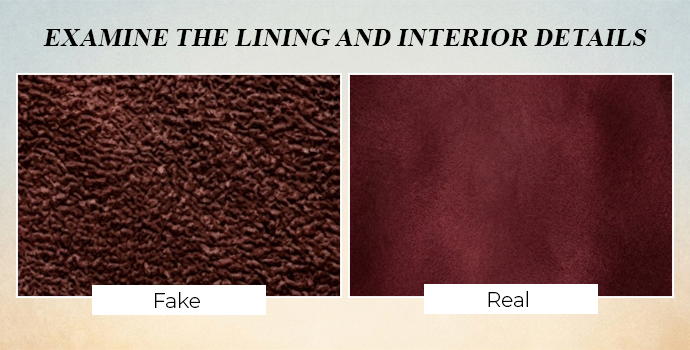
Step 8: Examine the Lining and Interior Details
Louis Vuitton uses various inside materials based on the type of bag model.
Authentic linings:
Are high-quality microfiber, textile or leatherFeel soft yet durableAre perfectly stitched and aligned
Low-cost cloth, flaking insides or colors that don’t match often show that the claim of Louis Vuitton bag is real is wrong.
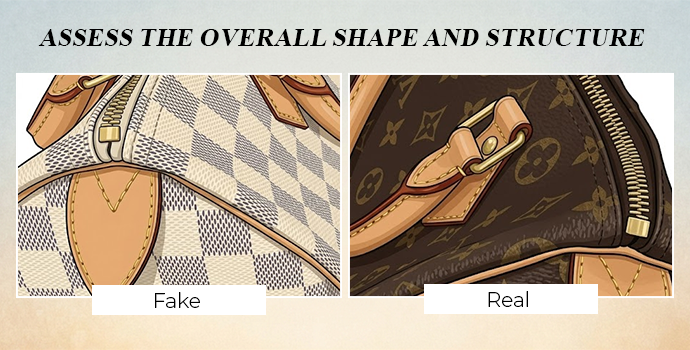
Step 9: Assess the Overall Shape and Structure
Real Louis Vuitton bags keep their form good.
Signs of authenticity:
Structured silhouetteNo collapsing or sagging when emptyClean edges and reinforced corners
A bad build is a big sign that the claim of a Louis Vuitton bag is real does not stand.
Step 10: Packaging and Accessories (Secondary Check)
While the box alone does not show realness it can help.
Authentic packaging includes:
High-quality dust bags with correct fontSturdy boxes with clean printingBranded ribbons and booklets
Keep in mind, the wrapping can be copied, so don’t trust it only to know if a Louis Vuitton bag is real.
Common Myths About Louis Vuitton Authentication
Even with more people knowing about luxury checks, some wrong ideas still trick buyers who want to know if a Louis Vuitton bag is real or not. These false beliefs often help fake sellers and can lead to expensive buying errors. Knowing and correcting these usual thoughts is important for making smart choices when buying luxury items.
A common belief is that a receipt guarantees realness. While an original slip can help show a bag’s past, it does not prove that the bag itself is real. Receipts can be faked, used again or matched with fake items. Checking if a bag is real should always look at the bag’s parts, skill in making it and how it was put together instead of just papers alone.
One more wrong belief is that higher costs mean real stuff. In truth, a lot of fake bags are priced near store prices to look real. A high cost does not prove that a Louis Vuitton bag is real, especially when bought from unofficial or untrustworthy sellers. Shoppers should check closely instead of just looking at the price.
Lots of buyers also think that every Louis Vuitton bag has a number. Louis Vuitton has not used normal numbers; older bags show date codes, while new styles have little chips inside. Sellers saying there are clear numbers on newer bags usually mean wrong info or fake items.
Another story is that small mistakes are okay in real bags. Louis Vuitton has tough rules for quality and big sewing problems, logos not lined up right or bad hardware aren’t traits of true items. While real leather can change over time, skill flaws aren’t normal.
At last, some shoppers think online pictures are enough for proof. Photos can be changed, edited or shown in a certain way. Looking at the item in person or getting an expert to check it is still the best way to make sure that a Louis Vuitton bag is real. By sorting truth from stories, buyers can look at fancy buys with clear minds, confidence and safety from fake risks.
Buying Pre-Owned: How to Protect Yourself
Buying a used fancy handbag can be a smart way to get classic styles at better prices. But, the second-hand market also has a bigger chance of fake items, so it’s important to take wise steps to make sure a Louis Vuitton bag is real before buying it. With careful checking and the right method, buyers can lower risks greatly.
The first thing is to pick a good source. Well-known resale sites, approved luxury sellers and allowed consignment shops often do their own checks and give buyer safety rules. Sta͏y away from sellers who don’t want to share clear details, show a few pictures or hurry the sale. Being open is a strong sign of trustworthiness.
Always ask for clear pictures of important signs of realness. These have the heat mark, date numbers or tiny chip place, sewing, metal carvings and inside material. Check these details with trusted examples from true Louis Vuitton styles. Differences in letters, space or work may show the bag is not real.
Pricing must be looked at closely. While used bags are usually cheaper than store prices, amounts that look very low for the state or style should make you worry. Fake sellers often use “too good to be true” costs to get buyers interested. A fair market price helps show that the Louis Vuitton bag is real.
Papers can help show that something is real, but they should not be the only thing to think about. Real bills, dust bags and boxes make it seem true but these things can also be copied. Their worth is in adding to looking at the item closely instead of taking its place.
At last, think about an expert check before finishing the buy, especially for big items. Expert check gives trust, guards your money and makes sure that your used Louis Vuitton buy brings the standard, history and worth the brand stands for.
When to Use Professional Authentication Services
While learning to spot key signs of truth is important, there are times when trusting expert checks is the safest way to make sure a Louis Vuitton bag is real. Expert checking services are really helpful when handling big buys or when looks alone don’t give full surety.
One of the usual times for checking if something is real is when getting a used or old Louis Vuitton bag. Bags found on resale sites, from single sellers, auctions or foreign markets often do not have clear brand checks. In these situations even if the bag looks real, subtle mismatches in materials stitching or hardware can be hard to see without an expert know how. Professional checkers are skilled at finding these details using special brand lists and lots of years in work.
Checking if bags are real is also very much advised for newer Louis Vuitton bags that use small chips instead of old date codes. Because these chips can’t be checked by other apps and need special tools or access to the brand, expert help fills the gap when store checks aren’t ready right away.
One more key use is resell or consignment. If you want to sell your bag again, having proof of realness from a pro can boost buyer trust and value when you sell it. It shows possible buyers that the Louis Vuitton bag is real, which cuts down on fights and speeds up the selling time. Expert checking is just as important when a bag is meant as a present or for long-term savings. Since Louis Vuitton bags have high prices, paying for checking is small next to the money and feelings lost from having a fake item.
In the end, professional checks give you calmness. When doubt is left after a personal look, an expert check makes sure you feel sure it gu͏ards your money and promises that the work and worth you are spending for truly belongs to Louis Vuitton.
Precision in Design and Pattern Engineering
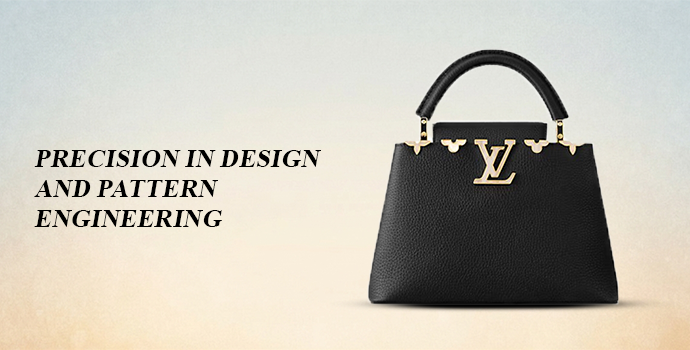
One of the most missed parts of Louis Vuitton making is the care in design planning and shape building. Every real bag is made using well thought out shapes that keep evenness, harmony and strong build. Whether it be a monogram canvas bag or a leather side bag each piece is cut with right sizes so that stitches match nicely and the bag stays in its true form as time goes on. This care is key to seeing if a Louis Vuitton bag is real since fake makers often have trouble copying such skills on a large scale.
A good example of this exactness can be seen in the putting of letters. Louis Vuitton uses long pieces of canvas when it can, so the monogram often goes on without breaks across seams and panels. In many real bags, the monogram might show up upside down on one side, this is meant to be and happens because a single piece of canvas is bent into shape. Fake bags, on the other hand, often have poorly cut logos, different symbols or wrong space between them due to bad pattern planning.
Just as important is edge finishing. Real Louis Vuitton bags have edges that are neatly folded, sealed and painted, smooth and even. With time, these edges may show some normal wear but they will not crack too much or peel when taken care of right. Poor copies often have uneven edge paint, rough finishes or early damage- clear signs that the bag does not match real craftsmanship standards.
The inside build also shows great skill in making things. Strong spots, solid bases and hidden sewing make sure it lasts even with daily use. These parts are not often seen when you first look at them but they matter a lot for how long it works well. When a bag feels safe, tough and good it truly supports the thought that a Louis Vuitton bag is real and made to last.
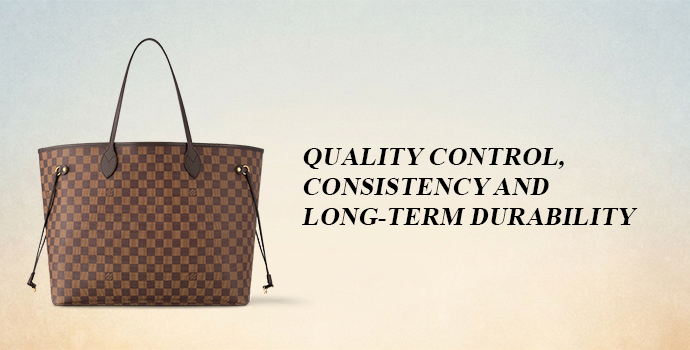
Quality Control, Consistency and Long-Term Durability
Another key part of Louis Vuitton’s skill is its strict quality check and sameness across lines and years. Each real bag goes through several checks while it’s made, making sure it fits the brand’s rules before it gets to the buyer. This tough way is why true Louis Vuitton bags show great consistency in sewing, metal parts places, logo stamping and whole look – no matter where or when the bag was made.
Being steady is very key when checking if something is real. Louis Vuitton does not use mixed-up letters, odd logo gaps or different making ways. Heat stamps, for one thing; stick to clear letter rules with exact space and tidy pressing. Changes like uneven titles, weak stamping or wrong wording are good signs that a Louis Vuitton bag’s true claim might be off.
Lasting quality is another sign of true skill. Louis Vuit͏ton bags are made for everyday use and lasting ownership. Coated cloth fights off water and scrapes, leather parts get better over time and metal bits keep their look even after lots of use. Real bags tend to keep their shape longer than fake ones, which often droop or lose form fast because of low-quality stuff and quick making.
This lasting performance helps with resale worth. Bags that keep their form, stitching strength and material good over time are much more likely to be proved real in the secondary market. Buyers and expert checkers depend a lot on these long-lasting signs when they check if a Louis Vuitton bag is real.
In the end, Louis Vuitton’s making rules are made not just to make fancy items, but to help with trust, sameness and long life. Knowing these thoughts helps buyers check truth with more trust and backs up why real Louis Vuitton bags are seen as long-lasting luxury buys instead of fast fashion finds.
Final Thoughts: How to Be Confident Your Louis Vuitton Bag Is Genuine
Making sure a Louis Vuitton bag is real goes more than just seeing a logo or having the receipt— it needs a clear understanding of the making, material and brand rules. Louis Vuitton’s name for care and sameness means each true bag shows great quality from its cloth and leather to its stitching hardware and inside finish. Knowing how to see these details helps buyers tell apart real luxury from even the best fakes.
As fake bags keep getting better, depending on one way to check is not enough. Instead, a full look— checking stuff like materials, build quality, logo placement, heat marks, date tags or tiny chips and the whole sh͏ape is really important. When these parts fit well together they show that a Louis Vuitton bag is real. But if there’s even one big mistake it should make you look closer.
For shoppers looking at the second-hand or used market, checking if items are real becomes really important. A true Louis Vuitton bag not just gives top-notch quality and lasts longer but also keeps its value well over time. Going the extra mile to check if it’s real guards both your money and your trust in being a luxury buyer. When unsure, expert checking services or brand proof through official stores give you more calmness.
In the end, knowing is your best shield in the fancy market. By learning how Louis Vuitton makes and finishes its bags, you help yourself make smarter buys and stay away from fake goods. Whether you are a new buyer or an expert collector, being able to check that your Louis Vuitton bag is real means your buy stays true, worth something and lasting; just like what the brand wants!
Quick Q&A: Louis Vuitton Bag Authenticity
Q1. Is a date code enough to confirm that a Louis Vuitton bag is genuine?
No. While time stamps can aid in finding the making time and place, they ought not to be used as the only way to check if it’s real. A Louis Vuitton bag is true only when lots of pieces, like the stuff, stitching, metal parts, logo and how it is made all fit with a brand’s rules.
Q2. Do all authentic Louis Vuitton bags have perfect monogram alignment?
Real Louis Vuitton bags have specific rules, but marks can be upside down or partly covered based on the style. This doesn’t mean it is fake! What matters is consistency, symmetry and intentional placement, which support the conclusion that the bag is genuine.
Q3. Should I authenticate a Louis Vuitton bag even if it was purchased from a trusted seller?
Yes. Even reputable sellers can occasionally make errors, especially in the pre-owned market. Professional or detailed self-authentication provides added assurance that a Louis Vuitton bag is genuine and protects both your investment and peace of mind.
The global digital entertainment and financial industries will hit a structural inflection point in the year 2026. This period is characterized by the increased integration of the elements of decentralized finance (DeFi) with the conventional online gambling (iGaming) industry. The convergence has led to the emergence of a new, highly profitable sub-sector called GambleFi.
With the discoveries in blockchain scalability, the omnipresent nature of smartphone technology, and a radical change in consumer demands in terms of possessing a digital asset, the old paradigm of casinos is being reconfigured at the core level.
This in-depth discussion examines the macroeconomic tailwinds driving the sector, the on-chain design of decentralized bankrolls, the quantitative yield dynamics driving these systems, and the regulatory environment that is becoming even more strict to become the future of Web3 gaming.
Macroeconomic Tailwinds and the $143 Billion iGaming Boom
In order to properly contextualize the disruptive opportunity presented by GambleFi, it is necessary to first examine the total addressable market (TAM) developed by the conventional iGaming industry. The online gambling market is projected to have reached the $143.17b mark in 2026, with an annual compound growth rate of 10.0%. It is projected that the industry will hit an all-time high of $212.44billion by 2030.
This continuous upward trajectory is fueled by several converging macroeconomic and infrastructure drivers:
Mobile-First Dominance: The mobile phone has become the main means of digital entertainment through affordable and well-endowed smartphones. In developed markets such as the United Kingdom, smartphone penetration has been close to 90 percent in recent years and is even expected to grow to over 96 percent by the year 2028.
5G Latency Reductions: International access to high-speed internet connections, 5G, has brought significant changes to digital interaction. International 5G networks are estimated to increase to 5.5 billion by 2030. As median 5G latency has fallen to less than 50 milliseconds, operators of iGaming can now maximize live-streaming dealer interactions, real-time sports betting odds, and decentralized wallet synchronizations immediately.
Emerging Market Growth: North America and Europe have historically contributed about 75 percent of the revenues, but they are experiencing a rampant acquisition customer acquisition costs. As a result, the Asia-Pacific (APAC) region will dominate the market contribution of 42 percent by 2026, due to increasing consumer discretionary spending. It can also be seen that Latin America is emerging as a critical growth driver with 18.4% CAGR, as it has new regulated markets in Brazil and Colombia.
The Paradigm Shift: From Play-to-Earn to Sustainable GambleFi
The traditional iGaming market is a linear market, whereas the Web3 gaming market is an exponentially growing market. The worldwide Web3 gaming market is estimated to have a value between 28.31 billion and 36.19 billion dollars, with the future estimates suggesting that it will have huge valuations of over 117.47 billion to 157.7 billion dollars by the middle of the 2030s.
The initial designs of blockchain gaming (20212023) were largely based on superinflationary Play-to-Earn (P2E) designs. They were economically unsustainable cost structures, which resulted in hyperinflation and crashing user bases. The market has formally reached an execution stage in 2026 because only by doing so will it stay afloat in the market.
Effective decentralized applications (dApps) are currently functioning as disciplined gaming enterprises initially and blockchain platforms subsequently. GambleFi is an extremely niche sector of this ecosystem that combines the high-volume transacting models of digital casinos with the decentralized liquidity models of DeFi.
The Evolution of the Casino Bankroll: Decentralized Liquidity
With a typical Web2 online casino, the operator has to have a huge centralized corporate bank account, the bankroll, to guarantee that they have the liquidity they need to payout the winning bets. This architecture places such a barrier around the entry of small developers that no one can overcome it, and makes the industry an oligopoly. Moreover, the gamers have no option but to blindly trust centralized random number generators (RNG) and put money in custodial wallets in which the operator holds total discretion.
GambleFi ferociously breaks this by launching novel Bankroll-as-a-Service protocols. These decentralized protocols do not have a closed corporate treasury; rather, they have an open, permissionless liquidity pool.
How Players are “Becoming the House”
Automated Market Maker (AMM) logic and liquidity pooling have been cleverly modified to address the casino counterparty risk. Users put in their capital, whether in the form of yield-producing stablecoins (such as USDC) or utility tokens native to the blockchain, into highly customized smart contracts. Such a pool of crowdsourced capital is made the common bankroll that everyone gambles on.
With the maturity of DeFi protocols, we are now witnessing the emergence of decentralized liquidity pools, driving common online slots that enable users to essentially become the house by offering bets on other participants. By having a player bet on a decentralized game, the smart contract will automatically take the payout of the deep liquidity pool and execute it upon a win using cryptographic finality as an instant payment. In case of the loss of the player, the assets bet are smoothly liquidated into the pool.
Since the casino games have a mathematically contrived advantage (the house edge), the liquidity pool is bound to inflate itself into more money than it gives back in the long term. The profits made are attributed according to the proportion of those who provided the initial liquidity.
Strategic Protocol Deep Dives: The Leaders of 2026
The GambleFi sector in 2026 is populated by a cohort of highly specialized protocols. Analyzing the diverse structural approaches reveals critical strategic variations in value accrual.
1. Rollbit ($RLB): Aggressive Deflation and Hybrid Execution
Rollbit is a hyper-successful hybrid product that combines conventional casino gaming, sportsbook business, and high-leverage crypto futures trading. Rollbit supports over $1 billion of leverage notional volume being processed every day without congesting the network by a lightning-fast off-chain centralized game engine with transparent on-chain tokenomics. The native token, which is known as $RLB, is based on a vicious hourly buyback and burn scheme. Rollbit will apply inflationary pressure by marketing 10% of casino revenue, 20% of sportsbook revenue, and 30% of futures trading revenue and then burning it.
The WINR Protocol is the plumbing or Bankroll-as-a-Service infrastructure on which several applications in the decentralized domain are based. The WINR Liquidity Pool (WLP) is an index of multiple ERC-20 assets, the core of the system, and which also serves as the capital reserves of a traditional gaming conglomerate. When the players lose, these assets are automatically absorbed into the WLP index, which makes the underlying fiat value of the WLP token appreciate.
3. Bitcoin.com Verse ($VERSE): DEX Liquidity and Gamification
The $VERSE token of Bitcoin.com is an example of how a casino-like liquidity pooling can be used in a Decentralized Exchange (DEX). VERSE is a rewards and utility token that is built into the Bitcoin.com Wallet and aims to gamify the conversion of retail users to DeFi. Liquidity providers are given a proportional portion of trading fees by enabling permissionless swapping, and are also motivated by gamified Verse Farms.
4. Azuro Protocol ($AZUR): The Base Layer for Prediction Markets
Whereas traditional online slots and roulette are dependent on the use of random numbers, sports betting necessitates dynamic odds pricing depending on the events happening in the real world. These complex markets are based on the decentralized base layer Azuro. It also deploys a new virtual Automated Market Maker (vAMM) architecture called the “Liquidity Tree,” which enables users to place stablecoins in one consolidated pool, which exposes their funds to thousands of active prediction markets in a way that has never been as capital efficient as this.
Quantitative Analysis of Yield Mechanics and Liquidity Risks
GambleFi yields are supported by mathematically verifiable, external sources of revenue, namely the player gambling losses and protocol trading fees. Nevertheless, financial risks are complex to negotiate for liquidity providers.
The Variance of the House
To the liquidity providers, the Annual Percentage Yield (APY) is very dynamic. Although the mathematical expectation is positive (with the help of the house edge) in the long term, short-term variance means that players may and will go through winning spurts. A new liquidity posture can give initial negative returns if bettors make a big score right after making the deposit.
The Mathematics of Impermanent Loss (IL)
The liquidity provision of the traditional dual-asset AMM pools implies the Impermanent Loss (IL). IL takes place when the price of the two deposited assets varies widely compared to the actual ratio during the original deposit.
1.25x (25% change): ~0.6% IL (Negligible)
1.50x (50% change): ~2.0% IL (Noticeable)
2.00x (100% change): ~5.7% IL (Significant)
5.00x (400% change): ~25.5% IL (Catastrophic)
To counter this, liquidity providers will target pools with very high trading volumes, where the accrued fees are significantly higher than IL, or they will use single-sided liquidity vaults (such as the WLP of WINR) to fully avoid dual-asset divergence risk.
The achievement of on-chain casinos with high-fidelity and full support is a direct consequence of the simultaneous progress of blockchain scaling and cryptographic infrastructure.
Layer-2 and Layer-3 Rollup Dominance
Ethernet-based Layer-1 networks that are traditionally monolithic are incapable of handling the quantity of transactions needed by a global online casino. One rotation of a decentralized online slot cannot sustain a delay of 12 seconds to complete the block. As a result of this, protocols have moved to dedicated execution environments. The WINR Protocol was, among others, ported to the WINR Chain – a custom Layer-3 rollup built on the Arbitrum Orbit framework. This shortened block times to a scalding 150 milliseconds, allowing settlement of bets instantly at insignificant on-chain expenses.
Provably Fair 2.0 and Verifiable Random Functions (VRFs)
The currency of the gambling business is trust. The standardized use of the GamblingFi has eliminated the veil of darkness in the old casinos through the use of the Provably Fair 2.0. Protocols rely on Verifiable Random Functions (VRFs) based on modern cryptography with elliptic curves to produce random values with cryptographic proofs in less than 300 milliseconds. This is to make sure that decentralized games are instant and have absolute verifiable integrity.
Account Abstraction
GambleFi platforms removed the drag of intricate crypto wallets to tap into the traditional iGaming market. In 2026, Account Abstraction (ERC-4337) allows platforms to create non-custodial smart contract wallets that a user can spin up with simple social logins, with integrated gas subsidies in the form of integrated paymasters. This results in a gasless Web2 UI and Web3 security environment.
The Regulatory Paradigm: MiCA, DAC8, and Geo-Fencing
The GambleFi maturation process is happening in the context of a broad regulatory reformation. This is the macro trend of 2026, the shift in unregulated offshore grey markets to highly scrutinized, licensed jurisdictions.
The Implementation of MiCA and DAC8
Markets in Crypto-Assets (MiCA) regulation has its full enforcement deadline for all Crypto-Asset Service Providers (CASPs) in July 2026 in the European Union. The MiCA compels digital asset platforms to adhere to stringent capital requirements and security standards of operations like a traditional financial broker. Similar to this, the DAC8 directive requires stringent tax transparency measures.
Putting in place extensive Anti-Money laundering (AML) and Know Your Customer (KYC) systems needs colossal capital investments in GambleFi protocols, which forms a harsh existential compliance filter.
The Geo-Blocking Dilemma
Decentralized smart contracts that are fully autonomous are currently not covered by MiCA, but hybrid approaches (such as Rollbit) are already subject to direct regulatory questioning. In order to evade huge fines, the non-compliant sites have to be subjected to vigorous geo-blocking measures that block the access of the IP addresses based in the EU or the US. As a reaction, progressive protocols are executing KYC-gated smart contracts and programmatically making sure that only clients with verified digital identities can place bets in liquidity pools or deposit into them.
James Van Der Beek 9-Year-Old Daughter Emilia Shares Struggles With Grief …In Emotional Video
Published
March 8, 2026
2:00 PM PDT
Play video content
Instagram/@Vanderkimberly
James Van Der Beek clearly raised some great kids … his 9-year-old daughter, Emilia, showed wisdom way beyond her years Sunday in an emotional video honoring her late father on what would have been his 49th birthday.
In the clip, posted on mom Kimberly Van Der Beek’s Instagram, Emilia says, “So today is my dad’s birthday, and the number one thing for somebody’s passing is to talk to them and let your emotions out. If you miss them, you can cry. You can talk to them. I talk to my dad every day. I start with a sentence, and I say, ‘Hi, Dad. I miss you and I love you so much, and I’ll never stop loving you.'”
She continued … “I know that my dad’s in a good place. He’s not in pain anymore. He’s in heaven above the clouds with God and the Lord.”
Emilia also gave priceless pearls of wisdom, telling viewers not to blame themselves for a loved one’s passing and to grieve in the way that best suits them.
“Everybody has different emotions in their body, and they express it in different ways,” she said.
According to Emilia, a lasting message her father gave her was that no matter how his story ended, she should still believe in miracles.
She said, “Miracles can still happen, just later on in life, and they’ll keep coming.”
James died on February 11 following a battle with stage 3 colorectal cancer. He was 48.
AlphaTON Capital and the Midnight Foundation introduced Vera Report, an anonymous reporting app integrated with Telegram’s ecosystem.
The app leverages technology like zero-knowledge proofs to preserve information provided by would-be whistleblowers, among features like scrubbing metadata.
Vera Report draws on CEO Brittany Kaiser’s experiences as a whistleblower, including outreach from “hundreds of people” wanting to make an impact against fraud.
AlphaTON CEO Brittany Kaiser views the Telegram-focused tech firm’s latest contribution to the messaging platform’s ecosystem as deeply personal.
Since she blew the whistle on Cambridge Analytica’s internal practices in 2018, which involved the misuse of personal data and its role in influencing elections through psychological profiling, she told Decrypt that swaths of people have reached out yearning to follow in her footsteps.
“I’ve had hundreds of people reach out to me from all over the world to ask about how they go through this,” she said. “Certainly, it was not straightforward for me.”
Earlier this week, AlphaTON introduced a Telegram app called Vera Report alongside the Midnight Foundation, the organization stewarding a network oriented around privacy and data protection, a vision led by Cardano founder Charles Hoskinson.
@AlphaTONCapital $ATON announces Vera Report : a whistleblower app on Telegram that protects your identity and, if applicable, facilitates getting you paid.
The DOJ recovered $6.8B under the False Claims Act in FY2025 alone. $5.3B came from whistleblowers. 1,297 new cases filed… pic.twitter.com/bblAgS67qV
— AlphaTON Capital 💎 🚀 (@AlphaTONCapital) March 3, 2026
Vera Report functions as an anonymous reporting platform, enabling would-be whistleblowers to submit data to government agencies and law firms willing to represent them in potential lawsuits.
But that information can’t be accessed without the permission of the person who provided it. That’s due to Vera Report’s use of so-called confidential computing and zero-knowledge proofs, among other features like scrubbing metadata from documents, according to a press release.
“There are very many different privacy features on here to make sure that people can fully anonymously submit evidence,” Kaiser said. “We’ve actually open-sourced the data so that everybody can contribute on what they actually need to see in this, either for whistleblowers to feel more comfortable or for different government agencies to actually make use of it.”
]]>
In September, the Nasdaq-listed firm rebranded from Portage Biotech, a clinical-stage immuno-oncology firm developing cancer treatments. The pivot entailed the creation of a Toncoin treasury, dedicated to the native currency of The Open Network, which was initially designed by Telegram founders Pavel and Nikolai Durov.
The Telegram app is partially a response to calls that the Trump administration has made, alongside figures like former DOGE head and tech CEO Elon Musk, for whistleblowers to step forward amid a push to identify government fraud, waste, and abuse.
“That seemed like a huge opportunity to create some privacy-centric technology tools so that more people from around the country would be able to do that safely,” Kaiser said.
Kaiser envisions it as a tool that different government departments and law enforcement agencies could actually integrate into their websites. Tips from whistleblowers have led to the detection of 43% of occupational fraud, dwarfing internal audits (14%) and management reviews (13%), according to a 2024 report from the Association of Certified Fraud Examiners.
As noted by Kaiser, whistleblowers typically receive a 15% to 30% cut of what is won out of lawsuits brought against companies committing fraud. If Vera’s users are eligible for a reward, then the app allows people to provide know-your-customer information for a payout.
“Obviously, that’s not an immediate process,” she added. “The result that they’re looking for […] is normally to solve the problem that they’re upset about.”
Daily Debrief Newsletter
Start every day with the top news stories right now, plus original features, a podcast, videos and more.



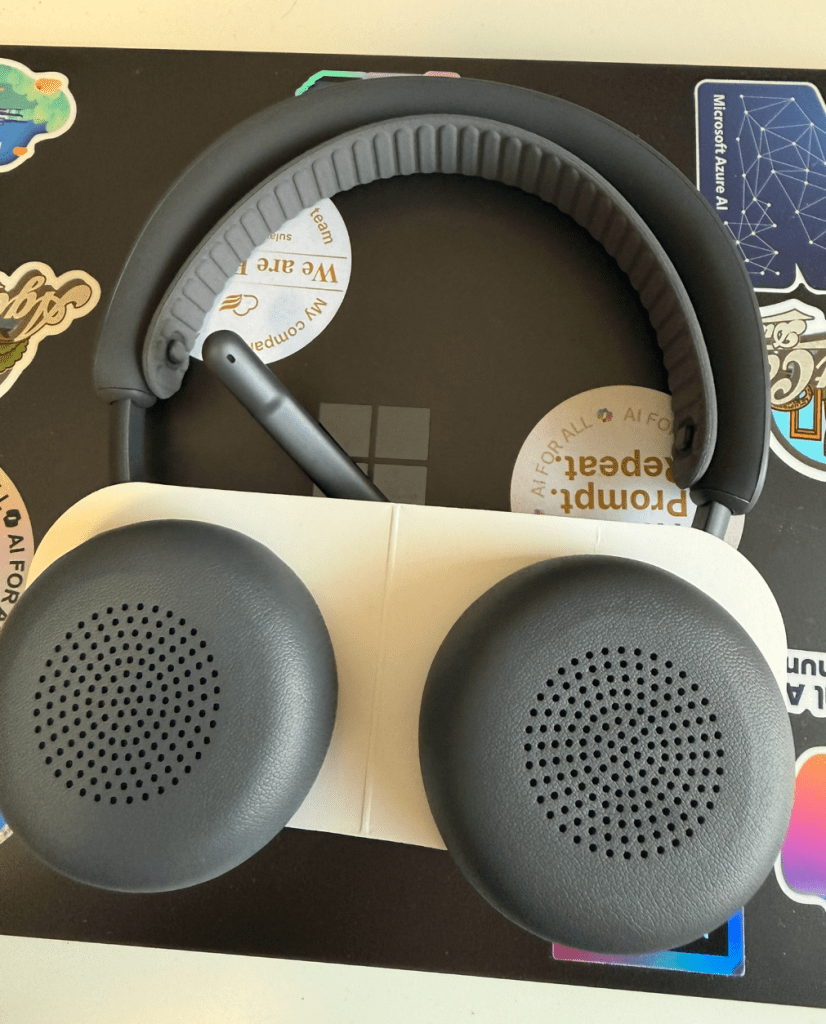
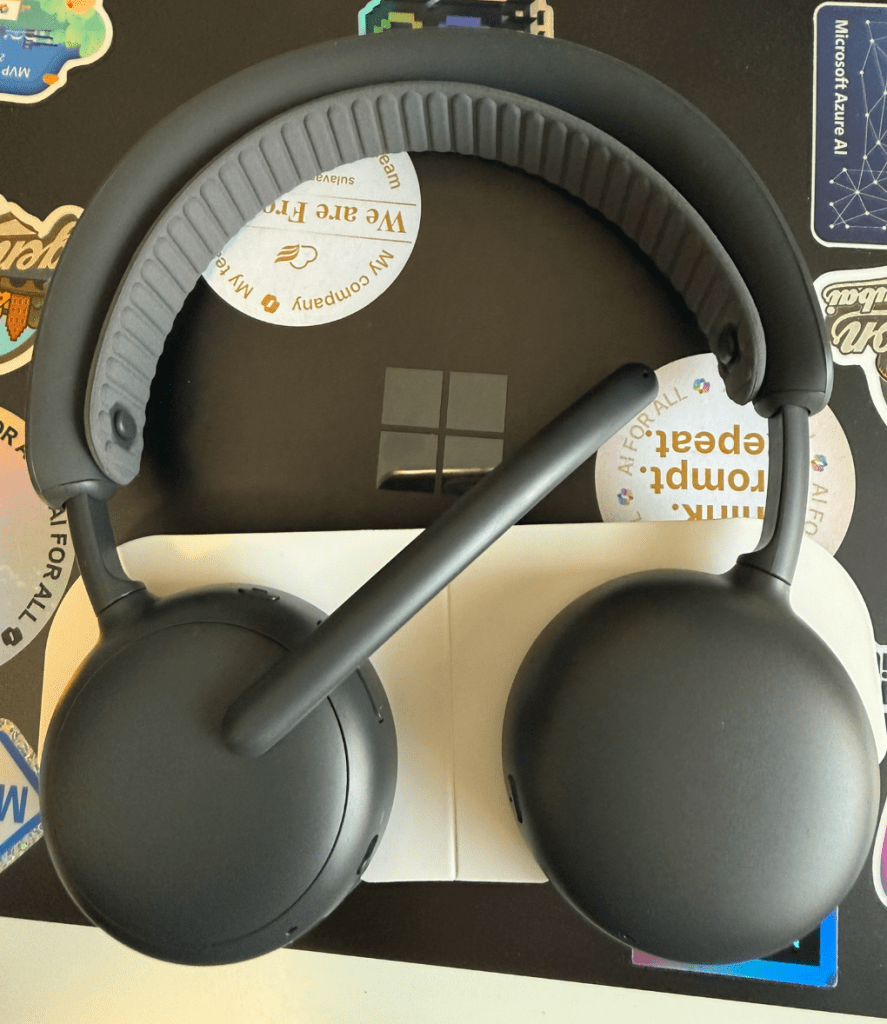
 × 73 mm (D)