Home Blog Page 16

EA confirms layoffs for Battlefield Studios, even with Battlefield 6’s record sales | TheSixthAxis

EA confirms layoffs for Battlefield Studios, even with Battlefield 6’s record sales | TheSixthAxis


EA are making redundancies at the combined Battlefield Studios teams, including members of DICE, Criterion, Ripple Effect and Motive Studios.

IGN reports that individuals are being informed of a “realignment” across the studios, affecting various teams, though all four studios will remain open. We hope those affected are able to find new work soon.

The scale of the layoffs is unknown, but in a statement to IGN, an EA spokesperson said, “We’ve made select changes within our Battlefield organization to better align our teams around what matters most to our community. Battlefield remains one of our biggest priorities, and we’re continuing to invest in the franchise, guided by player feedback and insights from Battlefield Labs.”

All of this is despite Battlefield 6 really striking a chord with shooter fans last year, setting records for the series in terms of sales and enjoying a much more favourable reception than Black Ops 7.

However, the game’s performance and community sentiments haven’t been quite so rosy since then. Even at launch, it was widely accepted that the single player campaign is weak, and that the game was lacking in the kinds of large scale maps that the series was previously known for.

While DICE has made adjustments to the game, fairly quickly reducing the Challenges grind, but they ended up delaying Season 2 by a month, and even then have said that they’re unable to produce more than two maps per season. I can’t imagine that layoffs are going to improve the company output, EA…

In that time, the player count has dropped – per SteamDB, the Steam headcount peaked at 750,000 concurrent around launch, but now tends to hover around 60-70,000. Lifetime user reviews of the game have also slid down to ‘Mixed’ on Steam, with general dissatisfaction at post-launch support.

We would have hoped that the starting sales and success might have bought Battlefield Studios more leeway, but there’s also nothing to say that a “realignment” wasn’t going to take place at this time anyway. The peaks and troughs of hiring and layoffs have plagued game studios for decades, and while live services have helped to shift that somewhat, it hasn’t always.

Whatever the underlying reason, the thousands upon thousands of layoffs we’ve seen the last few years have been awful to see. With EA set to be bought up by the Saudi PIF, I guess they’ve got a reputation to maintain.

Source: IGN


Source link

10 Best Adventure Games Still Stuck on Older Systems

10 Best Adventure Games Still Stuck on Older Systems


It could be said that one of the main purposes of gaming as a hobby is to take you on adventures you may otherwise be unable to experience. That’s why adventure games are one of the bedrock game genres, to the point that a statistical majority of all games could probably be categorized as one to some extent. Unfortunately, with such a massive breadth of games, some are naturally going to slip through the cracks of history, becoming unreachable to us like a dropped quarter in a storm drain.

Related

10 PS2 Games That Never Got Remastered, but Desperately Deserve One

There are so many excellent PS2 games that deserve to return with the remaster treatment.

Many adventure games have managed to successfully resurface in the modern age via remakes, remasters, and digital collections, demand for which is powered largely by fan demand and developer/publisher interest. Even with these revival efforts, some games have yet to make a comeback, remaining trapped on the forgotten corpses of their original systems and platforms. Perhaps, by shining a light on these precious games, we could at least get the rusted wheels of the industry turning and start on the path toward reviving them.

10

Dark Seed

Mike Dawson, Ace Detective

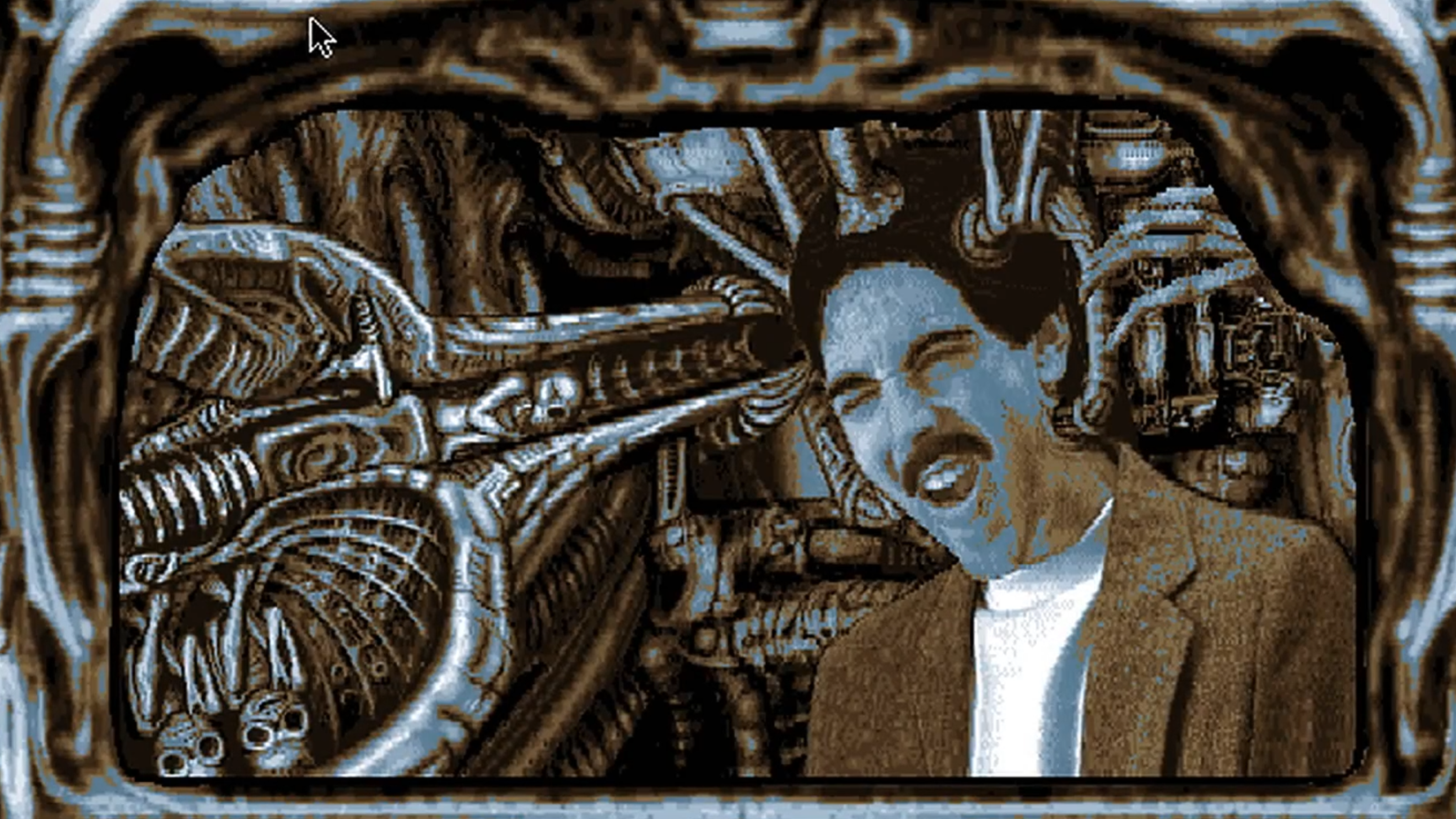
Dark Seed intro cutscene

In the olden days of PC gaming, an “adventure game” specifically referred to point-and-click adventures like King’s Quest or Monkey Island. There were a lot of games of this nature released throughout the 90s, with one particular cult classic being the original Dark Seed, released for MS-DOS in 1992.

Dark Seed follows Mike Dawson, a novelist who, after buying an old manor, has a nightmare about horrific extradimensional beings implanting an alien egg into his skull. He’s on a time limit to solve this supernatural mystery and defeat the invaders before his head pops like a water balloon, taking humanity with him. The game features art by the late H. R. Giger, giving it its distinctly unsettling, biomechanical aesthetic.

The game’s writing and voice acting is a bit on the cheesy side, but the creepy vibes are the real deal, especially when the art and animation get uncomfortably detailed. Unfortunately, its developer and publisher, CyberDreams, went defunct almost 30 years ago, so I can’t even begin to guess who to turn to for a port.

9

Amazing Island

Make-A-Monster Workshop

Amazing Island monster

When PokéMania rocked the world in the 90s, everyone and anyone began looking for any possible angle they could tackle the partner monster concept. This led to a lot of similar creature-collecting RPGs, but one little GameCube game, Amazing Island, decided to take things in a slightly different direction.

In Amazing Island, you can create a monster buddy of your own entirely from scratch, drawing its proportions and body parts with your controller, then tacking on accessories like claws, wings, and eyes, and customizing its voice and body color. That monster is then used to compete in a series of Mario Party-esque challenges, such as skipping over water or smashing stone pillars. The further you progress in the adventure, the more bits and bops you unlock for making new monsters.

Admittedly, Amazing Island didn’t knock anyone’s socks off critically, but I have an old soft spot for it as one of my favorite recurring Blockbuster rentals. It’s the kind of game that, if it can’t make a comeback itself, and it probably won’t, I could easily see an indie game inheriting its spirit.

8

Mystical Ninja Starring Goemon

Ninjas and Robots are a Great Combo

Mystical Ninja starring Goemon gameplay

The friendly ninja Goemon was one of Konami’s first mascots, making numerous appearances throughout the SNES days in the Ganbare Goemon series, known in the west as Mystical Ninja. On the N64, Goemon got two games, both of which actually managed to make their way westward. These games were the sidescrolling Goemon’s Great Adventure, and the more open-ended Mystical Ninja Starring Goemon.

Unlike Great Adventure, which is a slightly more straightforward sidescrolling platformer, Mystical Ninja is a full 3D adventure with towns and dungeons to explore, kind of like a diet Zelda. You have several playable characters to choose from, each with their own unique abilities for combat and exploration. Each major dungeon is capped off by a boss fight, following which may be an additional encounter against a giant enemy, which you battle in the equally gigantic clockwork robot, Goemon Impact, which also has its own theme song.

Sadly, Konami hasn’t paid much attention to any of Goemon’s games lately, so I don’t know how willing it’d be to fork over the cash for a remaster. I think both Mystical Ninja and Great Adventure would be great candidates for Switch Online’s N64 library, though.

7

Rocket: Robot on Wheels

Baby’s First Physics Platformer

Rocket Robot on Wheels gameplay

Around the late 90s, games started experimenting more with semi-realistic physics engines. The most prominent example of this is, of course, Half-Life, but over on the console side of things, there was another interesting effort, and from a source you may not expect. That game was Rocket: Robot on Wheels, released in 1999 for the N64 by Sucker Punch.

Rocket is a 3D collect-a-thon platformer adventure starring the titular robot as he visits the many attractions in a futuristic, malfunctioning theme park to restore their functions and depose the park’s mascot gone mad. The game is built largely around physics puzzles and interactions, with Rocket’s primary ability being a tractor beam that can pick up and throw small objects like crates and bombs. It’s not exactly cutting-edge by today’s standards, but it was charming for its time, not to mention distinctly colorful and creative in its visuals.

Sucker Punch doesn’t seem to like acknowledging its more cartoony productions like Rocket and the Sly Cooper games these days, focusing on more serious IPs like Ghost of Tsushima. If we wanted a remake or remaster, we’d probably have to turn to the game’s publisher, Ubisoft, and the odds of that panning out feel… slim.

6

Tony Hawk’s Underground

Somehow, this is Eric Sparrow’s Fault

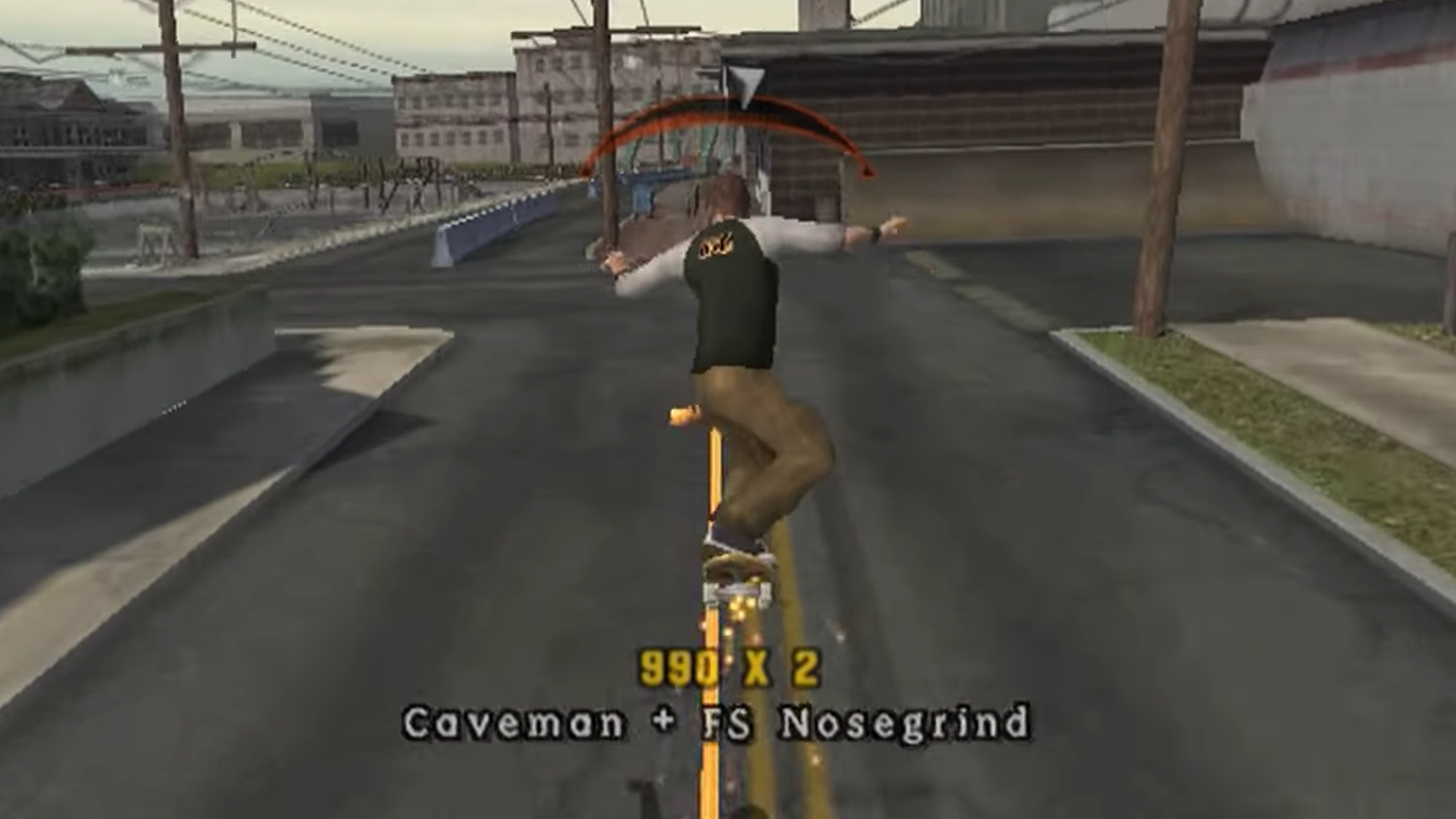
Tony Hawk's Underground gameplay

The vast majority of the Tony Hawk’s Pro Skater games are straight-up arcade-style affairs. You drop into an open map, you skate within the allotted time, and then you stop. The first major departure from this came to us in the form of Tony Hawk’s Underground, released for GameCube, PS2, and Xbox in 2003.

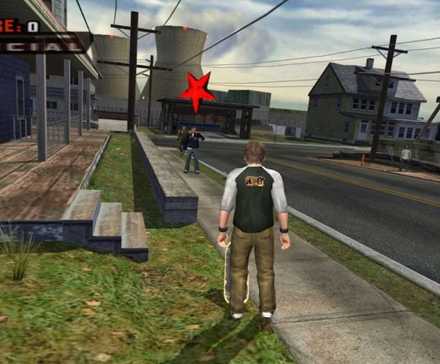
Underground has all the same basic skateboarding mechanics as its predecessors, but rather than being arcade-style, it’s a full skateboarding adventure. You can hop off your board and explore the various towns and cities you find yourself in, completing missions and uncovering secret areas as you progress the overarching story of becoming a skating legend while battling your nemesis, Eric Sparrow. Curse you, Eric Sparrow.

New Jersey open world gameplay in Tony Hawk's Underground.

Related

Tony Hawk Doubles Down On His Love For Tony Hawk’s Underground, Remake Sadly Still Not Confirmed

Fans of the Tony Hawk’s Underground series just had a collective heart attack, with Tony Hawk making yet another cheeky reference to the classic game.

As the Tony Hawk remakes have worked their way through the numbered entries, Underground would be the next logical choice, as the original is otherwise unplayable. At the time of writing, there haven’t been any commitments from Activision, although Tony Hawk himself has gone on record that he would personally like to see Underground get the remake treatment.

5

Ultimate Spider-Man

Save (or Devour) New York

Ultimate Spider-Man Spider-Man

Just about every major video game console has had its own take on Spider-Man, either as a linear action game or, in the later generations, open-world adventures. There were quite a few of the latter category during the sixth console generation, though one of the only ones that wasn’t based on one of the Sam Raimi movies was Ultimate Spider-Man, released in 2005 for PS2, GameCube, and Xbox.

Ultimate Spider-Man, based on the comic series of the same name, tells a two-pronged story of Peter Parker’s daily exploits as Spider-Man and Eddie Brock’s nightly hunts as Venom. At regular intervals, the game switches perspectives between these two characters, both of which have their own objectives and side missions to pursue in the open world. Web-head has all of his usual tricks and powers at his disposal, while Venom can perform soaring leaps and feed on bystanders to refill his constantly-draining health.

When it comes to asking for ports or remasters, Marvel games are a particularly thorny path, as they’re often a tangled mess of copyrights and IP permissions. Activision had the publisher slot back in the day, but at least to my knowledge, it doesn’t have any fingers in that particular pie anymore, leaving the matter up in the air.

4

The Incredible Hulk: Ultimate Destruction

Bring Back the Car Gloves

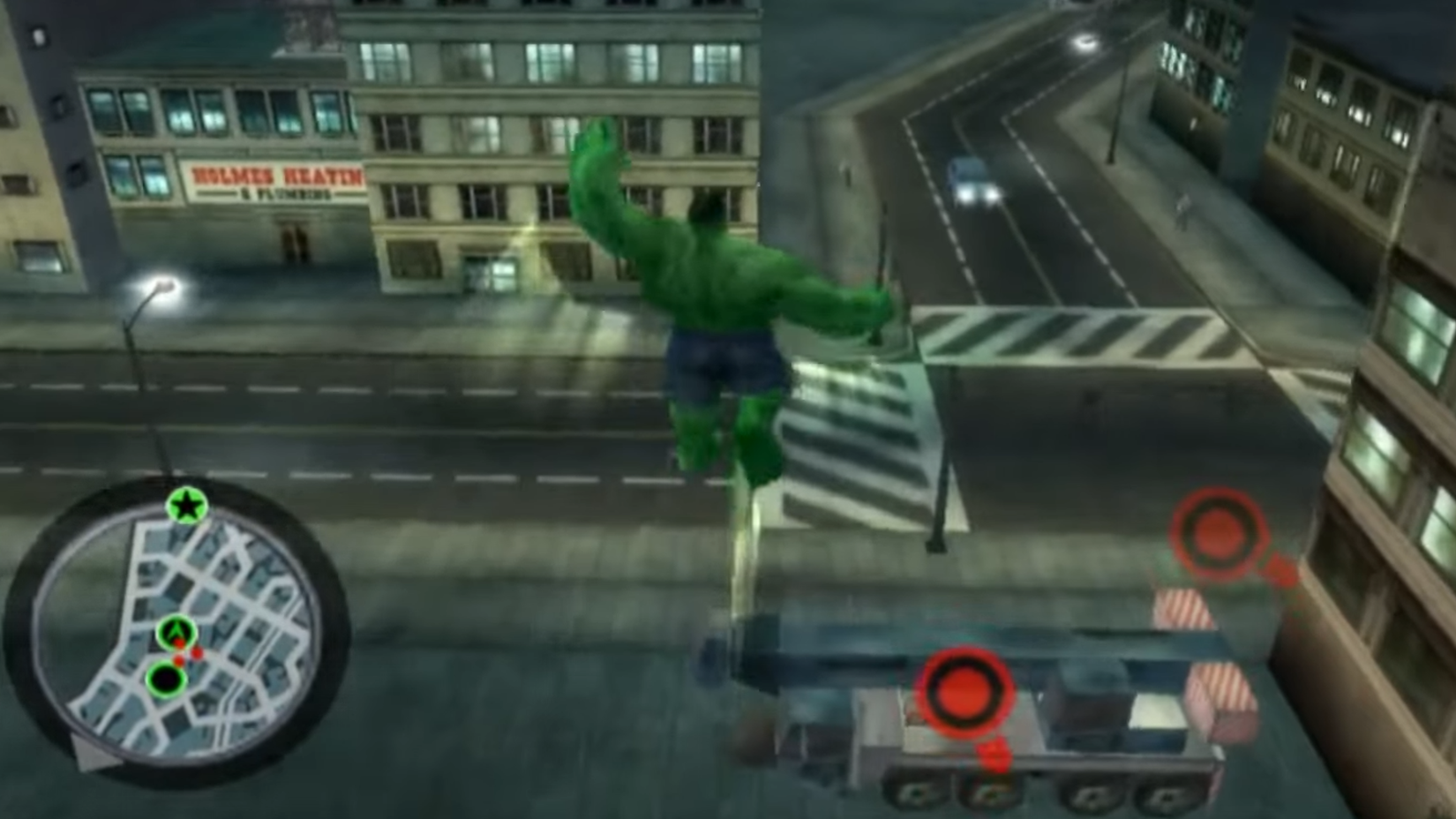
Incredible Hulk Ultimate Destruction gameplay

As open-world sandbox games were the style of the sixth generation, everyone and their grandma was getting one, including any other Marvel superhero that could theoretically handle one. Compared to Spidey, The Hulk hadn’t had nearly as much love in the gaming sphere, but one of his best showings came about in 2005 with The Incredible Hulk: Ultimate Destruction.

Ultimate Destruction was another sandbox adventure, albeit one tuned specifically to Hulk’s particular specialties, i.e. breaking lots of stuff. With his immense strength, Hulk can leap across massive swaths of the open world, crushing soldiers, buildings, and cars with his meatloaf fists. There are missions and side missions to pursue, of course, but you’re just as welcome to bum around and cause trouble. Both give you XP to unlock bigger and better abilities, including the game’s signature mechanic, having Hulk tear a car in half and using it as a pair of metal boxing gloves.

If there’s any hope of a remaster of this game, the ball is once again squarely in Marvel’s court. Vivendi Universal handled publishing originally, but it was absorbed by Activision in the Activision Blizzard merger, so presumably, it’d have first dibs, but only if Marvel deigns to offer them.

3

Mega Man Legends

Why, Capcom, Why

Mega Man Legends Mega Man Volnutt

In recent years, Capcom has been gradually restoring access to the greater spectrum of Mega Man titles, mostly through connections. He is supposed to be its mascot, after all, so it’s only right. Even with these efforts, though, there’s a particular subset of Mega Man that’s gone largely disregarded, that of Mega Man Legends.

Originally released on the PS1 and N64, Mega Man Legends was a full 3D adventure, featuring both large, explorable towns and labyrinthine dungeons full of hostile robots. It was a surprisingly dense game for its time, with lots of hidden sidequests and collectables like power-up items and swappable weapons. It also had a very lovable cast of characters, who even had voice acting!

While Legends is a cult classic, it’s treated as a bit of a black sheep by Capcom. It got one sequel and one spin-off, and has largely been abandoned since then aside from some cameos in fighting games. There have been some rumblings about a new Legends collection, but at the time of writing, rumblings is all they are.

2

Metroid Prime 2: Echoes

The Interest is There, Nintendo

Metroid Prime 2 Samus and soldier

It’s no secret that when it comes to software preservation, Nintendo has a bit of a… spotty track record. If we’re lucky, we get retro games on its various digital distribution systems or libraries, but if they aren’t available there, Nintendo would rather you not play them any other way. That’s rather frustrating, because there are a lot of classic adventure games from Nintendo’s own stable that remain inaccessible, such as Metroid Prime 2: Echoes on the GameCube.

A direct follow-up to the previous Prime, Prime 2 built on the 3D action-adventure principles established in that game, while adding the extra wrinkle of dual-world gameplay. Samus regularly has to hop between the light and dark iterations of the planet, braving the latter’s caustic atmosphere to find pockets of safety. It was a cool way to broaden the scope of the game’s world without overbloating it.

With the release of Metroid Prime Remastered, there is a spark of hope that Prime 2 (and Prime 3, for that matter) will get the same treatment at some point. Until that happens, and unless it’s added to the Switch Online GameCube library, we’re outta luck.

1

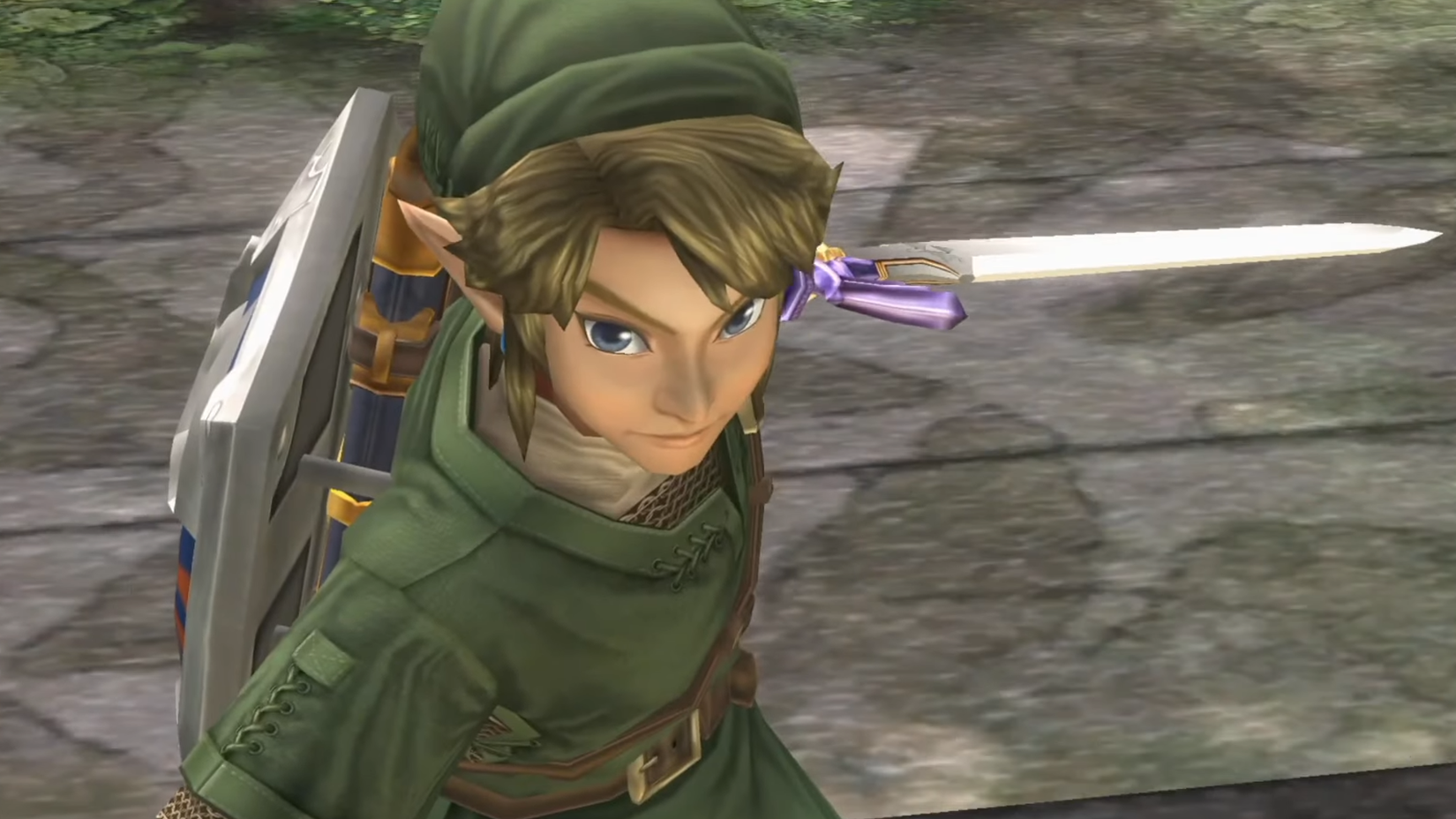
The Legend of Zelda: Twilight Princess

On Three Systems, All Dead

Twilight Princess Link

Speaking of Nintendo games, the company has done a relatively better job of preserving access to titles in the Legend of Zelda series, either through remasters, ports, or additions to digital libraries. However, for some reason, there’s a distinctive hole in the Zelda pantheon, right between Majora’s Mask and Skyward Sword: The Legend of Zelda: Twilight Princess.

Not unlike Metroid Prime 2, Twilight Princess also dabbled in dual-world gameplay; in the light world, Link is his usual self, solving puzzles and beating baddies with an assortment of items. In the dark, Twilight realm, he transforms into a wolf, using his enhanced agility and senses instead of items, while his partner Midna snarks away on his back.

Twilight Princess was originally released on the GameCube and Wii, then got an HD port on the Wii U. If I were to hazard a guess, someone at Nintendo doesn’t want to sink any more money into remastering a game that technically already had a remaster, even if said remaster is no longer available. Ergo, we’re just going to have to hope for an addition to the GameCube library.

Action games

Next

9 Best Action Games Still Stuck on Older Systems

The only thing these games can’t punch their way out of is their dead consoles.


Source link

SiN Reloaded from Nightdive Studios arrives this year and there’s a new trailer

SiN Reloaded from Nightdive Studios arrives this year and there’s a new trailer


Nightdive Studios have announced today that SiN Reloaded will release this year, and there’s a new trailer available to watch right now.

Originally released back in 1998 and set in a near-future dystopian world, SiN: Reloaded puts you in control of security consultant Colonel John R. Blade as you take on the seductively evil Doctor Elexis Sinclaire. When Elexis, CEO of SinTEK Industries, begins injecting the streets with a DNA-altering drug, it’s time to reassess the laws of morality by facing off against Elexis’ unholy army of genetically-engineered mutants. Plus this release comes with the remastered visuals, modern controls and the Wages of SiN extra mission pack.

See the new trailer below:

Highlight Features:

Play the original SiN and the SiN: Wages of Sin mission pack, optimized using the KEX Engine.
Beautifully remastered graphics with HD textures and models (up to) 4K resolution at 144 FPS, anti-aliasing, and upgraded 2D screens and menu art.
Overhauled control schemes and modernized UI for gamepads and M&K.
Improved maps throughout the game.
Swap between remastered visuals and the original SiN Gold version.
Brand-new achievements.
Higher resolution Zak Belika tracks mixed/engineered by Chris Mock.
A vault filled with exclusive, behind-the-scenes material.

Platform: ⚛ Proton / Wine

Article taken from GamingOnLinux.com.


Source link

Top 15 Best John Grisham Books Ranked: The Master of Legal Thrillers | MarkMeets Media

    0
    Top 15 Best John Grisham Books Ranked: The Master of Legal Thrillers | MarkMeets Media


    When it comes to legal thrillers, no name is as synonymous with the genre as John Grisham. Often hailed as the king of legal fiction, Grisham has penned some of the most gripping, edge-of-your-seat novels that have captivated readers worldwide. With over 400 million copies sold, Grisham’s storytelling prowess has made him one of the best-selling authors of all time. But what makes his books so irresistible? Perhaps it’s the fact that Grisham practiced law for a decade, bringing an authenticity to his writing that few can match. Or maybe it’s his ability to weave complex characters, moral dilemmas, and intricate legal plots into stories that are both entertaining and thought-provoking.

    In this article, we’ll explore the Best John Grisham Books, ranked by readers and critics alike. From courtroom dramas to high-stakes conspiracies, these are the novels that have solidified Grisham’s legacy as a master storyteller.

    The Intriguing Journey of John Grisham: From Lawyer to Literary Icon

    Before we delve into the Best John Grisham Books, it’s worth taking a moment to understand the man behind the stories. John Grisham’s journey to literary stardom was not an overnight success. Born in Arkansas in 1955, Grisham initially pursued a career in law. He practiced law for nearly a decade and even served in the Mississippi House of Representatives. It was during this time that Grisham began writing his first novel, “A Time to Kill,” inspired by a real-life court case he observed.

    Grisham’s early experiences in law and politics deeply influenced his writing, providing him with a wealth of material to draw upon. His legal thrillers are not just imaginative tales but are often grounded in real-world legal practices and ethical quandaries. This blend of fiction and reality is what sets Grisham apart and has endeared him to millions of readers around the globe.

    The Best John Grisham Books: A Comprehensive Ranking

    Now, let’s dive into the heart of the matter—Best John Grisham Books Ranked. Whether you’re a longtime fan or new to Grisham’s work, this list will guide you through his most compelling novels, offering a mix of legal battles, moral dilemmas, and thrilling plot twists.

    15. Camino Island (2017)

    Rating: 3.81/5

    Grisham took a surprising detour from his usual legal thriller genre with “Camino Island,” a crime mystery novel that captivated readers with its unique storyline. The plot centers around the heist of rare F. Scott Fitzgerald manuscripts from Princeton University’s library. These stolen manuscripts eventually end up in the hands of Bruce Cable, a charismatic yet enigmatic rare books dealer who operates a bookstore on the picturesque Camino Island. Enter Mercer Mann, a young writer grappling with financial woes, who is enlisted to infiltrate Cable’s circle and gather intelligence on the stolen manuscripts.

    “Camino Island” is a refreshing change of pace from Grisham’s typical fare, offering a lighter, more leisurely read while maintaining the tension and suspense that his fans crave. The tropical setting and literary intrigue make it a standout in Grisham’s bibliography, appealing to a broader audience beyond just legal thriller enthusiasts.

    14. The Chamber (1994)

    Rating: 3.84/5

    “The Chamber” delves into some of the darkest themes Grisham has ever explored, including hate crimes, capital punishment, and the complexities of redemption. The novel follows young attorney Adam Hall as he takes on the harrowing task of defending his grandfather, Sam Cayhall, a former Ku Klux Klan member sentenced to death for a 1967 bombing that killed two Jewish children. As Adam digs deeper into the case, he uncovers a tangled web of family secrets and is forced to confront ethical and moral dilemmas.

    While the novel was adapted into a film that didn’t quite hit the mark, the book itself is a powerful, thought-provoking read. Grisham doesn’t shy away from the harsh realities of the legal system, and his portrayal of Sam Cayhall as a deeply flawed yet almost sympathetic character adds layers of complexity to the narrative.

    13. The Street Lawyer (1998)

    Rating: 3.88/5

    In “The Street Lawyer,” Grisham introduces us to Michael Brock, a high-powered attorney whose life takes a dramatic turn after a homeless man named DeVon Hardy holds him hostage. The incident opens Michael’s eyes to the stark realities of homelessness and inequality, prompting him to leave his lucrative job and work for Mordecai Green, a dedicated advocate for the homeless. However, Michael soon discovers that his newfound sense of justice comes with its own set of challenges.

    Grisham expertly weaves social issues into this legal thriller, making “The Street Lawyer” not just a compelling read but also a commentary on the disparities in the legal system. The novel’s fast-paced plot keeps readers on their toes, though some may find the characters a bit underdeveloped. Despite this, the book’s exploration of homelessness and corporate greed remains as relevant today as it was when it was first published.

    12. The Racketeer (2012)

    Rating: 3.89/5

    “The Racketeer” offers one of Grisham’s most intriguing mysteries, centered around Malcolm Bannister, a former attorney serving a ten-year sentence for a crime he didn’t commit. The novel kicks off with the murder of Judge Raymond Fawcett and his secretary, found dead in a secluded cabin. Bannister, who possesses inside information about the crime, strikes a deal with the FBI to secure his release by revealing the identity of the real culprit.

    This novel is a masterclass in plot twists and suspense, with Grisham keeping readers guessing until the very end. The ambiguity of the title—it’s never entirely clear who the “racketeer” refers to—adds to the novel’s allure. “The Racketeer” was a massive hit upon its release, and it’s easy to see why; the story is a thrilling blend of revenge, mystery, and legal intrigue.

    11. The Testament (1999)

    Rating: 3.90/5

    “The Testament” begins with the death of billionaire Troy Phelan, who leaves his vast fortune to an illegitimate daughter, Rachel Lane, a missionary living in the remote Brazilian Pantanal. Tasked with finding Rachel and delivering the news of her inheritance is Nate O’Riley, a washed-up attorney battling his own demons. Nate’s journey into the depths of the jungle is as much a spiritual quest as it is a physical one, forcing him to confront his past and his faith.

    Set against the lush backdrop of the Amazon, “The Testament” is a gripping adventure that combines legal drama with a profound exploration of redemption and spirituality. While the novel may be bogged down by an excess of characters and a somewhat rushed ending, its vivid setting and emotional depth make it a must-read for Grisham fans.

    10. The Last Juror (2004)

    Rating: 3.94/5

    In “The Last Juror,” Grisham transports readers to the small town of Clanton, Mississippi, where the brutal rape and murder of a young woman rocks the community. The main suspect, Danny Padgitt, hails from a notorious local family with a history of corruption and violence. Despite threats and intimidation, a jury convicts Padgitt, who vows revenge as he is sent to prison. Years later, Padgitt is paroled, and jurors begin to die mysteriously, rekindling the town’s fears.

    This novel stands out not just for its gripping plot but also for its detailed portrayal of small-town life in the South. Grisham departs from his usual lawyer protagonist, instead focusing on a journalist as the central character, which adds a fresh perspective to the narrative. Fans of Grisham’s earlier work, “A Time to Kill,” will enjoy the crossover characters and the richly textured setting of “The Last Juror.”

    9. The Whistler (2016)

    Rating: 3.96/5

    “The Whistler” introduces Lacy Stoltz, an investigator for the Florida Board on Judicial Conduct, who finds herself drawn into a dangerous conspiracy involving a corrupt judge, organized crime, and a Native American casino. When Lacy receives a tip about the judge’s illicit activities, she embarks on an investigation that puts her life at risk.

    While the dialogue in “The Whistler” may sometimes feel a bit stilted, the novel compensates with a tightly woven plot full of twists and turns. Grisham paints a vivid picture of the murky intersection between law and corruption, making this one of his more memorable recent works. The novel’s exploration of judicial misconduct and the ethical dilemmas faced by those in power is both timely and thought-provoking.

    8. The Partner (1997)

    Rating: 3.97/5

    “The Partner” tells the story of Patrick Lanigan, a lawyer who pulls off the ultimate heist—embezzling $90 million from his law firm and faking his own death. For four years, Patrick lives a new life in Brazil, until he is discovered and captured by private investigators hired by his former partners. Now, Patrick must navigate a complex legal battle and confront the consequences of his actions.

    What makes “The Partner” particularly compelling is its morally ambiguous protagonist. Patrick is neither hero nor villain; he’s a deeply flawed character whose actions raise questions about justice, morality, and the desire for freedom. The novel’s fast-paced plot and intricate legal maneuvering make it a standout in Grisham’s oeuvre.

    7. The Rainmaker (1995)

    Rating: 4.01/5

    “The Rainmaker” is a David-and-Goliath tale that follows Rudy Baylor, a young, inexperienced lawyer who takes on a powerful insurance company in a wrongful death case. Rudy’s client, a poor family whose son died of leukemia after the insurance company refused to cover his treatment, is up against a team of seasoned corporate lawyers. Despite the odds, Rudy’s determination and moral conviction drive him to fight for justice.

    This novel is quintessential Grisham—full of courtroom drama, ethical dilemmas, and a protagonist you can’t help but root for. “The Rainmaker” is not just a legal thriller but also a critique of the insurance industry and the lengths to which corporations will go to protect their bottom line. The novel was adapted into a successful film, further cementing its place as one of Grisham’s best works.

    6. Sycamore Row (2013)

    Rating: 4.07/5

    “Sycamore Row” is a sequel to Grisham’s debut novel, “A Time to Kill,” and revisits lawyer Jake Brigance as he becomes embroiled in another high-stakes legal battle. The novel centers around the suicide of Seth Hubbard, a wealthy man who leaves behind a controversial will that disinherits his children and leaves his fortune to his African American maid, Lettie Lang. As Jake takes on the case, he uncovers deep-seated racial tensions and hidden family secrets.

    “Sycamore Row” is a powerful exploration of race, justice, and the legacies of the past. Grisham’s return to Clanton, Mississippi, brings with it the same compelling courtroom drama and richly drawn characters that made “A Time to Kill” a classic. The novel is both a worthy sequel and a standalone work that tackles difficult social issues with nuance and sensitivity.

    A Time to Kill (1989)

    Rating: 4.09/5

    “A Time to Kill,” Grisham’s first novel, is a gripping courtroom drama set in the racially charged atmosphere of Clanton, Mississippi. The story revolves around Jake Brigance, a young lawyer who defends Carl Lee Hailey, an African American father on trial for murdering the two white men who brutally raped his 10-year-old daughter. As the trial unfolds, Jake faces death threats, public outcry, and a system stacked against his client.

    The novel is a powerful indictment of racial injustice and the flaws of the legal system. Grisham’s portrayal of the moral complexities involved in the case, combined with the intense courtroom scenes, makes “A Time to Kill” one of his most enduring works. The novel’s success paved the way for Grisham’s illustrious career, and it remains a cornerstone of his legacy.

    4. The Pelican Brief (1992)

    Rating: 4.10/5

    In “The Pelican Brief,” Grisham delivers a taut political thriller that follows Darby Shaw, a law student who uncovers a conspiracy behind the assassination of two Supreme Court justices. After writing a legal brief outlining her theory, Darby becomes the target of a deadly manhunt, forcing her to go on the run as she seeks to unravel the truth.

    This novel is a masterclass in suspense, with Grisham skillfully blending legal intrigue with high-stakes action. The story’s pacing is relentless, keeping readers on the edge of their seats until the final page. “The Pelican Brief” was adapted into a successful film starring Julia Roberts and Denzel Washington, further solidifying its status as one of Grisham’s most popular works.

    3. The Firm (1991)

    Rating: 4.11/5

    “The Firm” is the novel that catapulted Grisham to fame, telling the story of Mitch McDeere, a young lawyer who lands a dream job at a prestigious law firm. However, Mitch soon discovers that the firm is not what it seems; it’s actually a front for a Mafia money-laundering operation. As Mitch tries to gather evidence and protect his family, he finds himself trapped in a deadly game of cat and mouse.

    Grisham’s depiction of the high-pressure world of corporate law, combined with the novel’s breakneck pacing and constant tension, made “The Firm” an instant bestseller. The book’s success led to a popular film adaptation and a television series, cementing its place as one of the defining legal thrillers of the 1990s.

    2. The Runaway Jury (1996)

    Rating: 4.15/5

    “The Runaway Jury” is a gripping exploration of jury manipulation and corporate corruption, set against the backdrop of a high-stakes tobacco trial. The novel follows Nicholas Easter, a juror with his own agenda, and his girlfriend, Marlee, as they manipulate the trial from the inside. As both the defense and the plaintiff’s attorneys try to sway the jury, Easter and Marlee work to turn the tables on the powerful interests trying to influence the verdict.

    Grisham’s insight into the legal system and the power dynamics at play makes “The Runaway Jury” a standout in his bibliography. The novel’s complex characters, moral ambiguity, and intricate plot twists keep readers engaged from start to finish. It’s a compelling commentary on the lengths to which corporations will go to secure a favorable outcome, and it remains one of Grisham’s most critically acclaimed works.

    1. The Client (1993)

    Rating: 4.18/5

    Topping the list of Best John Grisham Books is “The Client,” a novel that perfectly encapsulates Grisham’s ability to combine legal drama with heart-pounding suspense. The story follows 11-year-old Mark Sway, who witnesses the suicide of a lawyer and learns a deadly secret about the murder of a U.S. senator. With the Mafia and the FBI both desperate to uncover what Mark knows, he turns to Reggie Love, a feisty attorney, to protect him.

    “The Client” is a masterful blend of tension, emotion, and legal intrigue. Grisham’s portrayal of Mark as a resourceful, courageous child caught in a dangerous game of cat and mouse adds a unique emotional depth to the story. The novel’s success led to a blockbuster film adaptation, further cementing its status as Grisham’s finest work.

    Conclusion: Why These Novels Stand Out Among the Best John Grisham Books

    Ranking the Best John Grisham Books is no easy task, given the prolific nature of his career and the consistent quality of his work. However, the novels on this list represent the pinnacle of Grisham’s storytelling, each offering a unique glimpse into the complexities of the legal system and the human condition. Whether you’re a fan of courtroom dramas, political thrillers, or stories that tackle social issues, there’s a John Grisham novel for you.

    As we look back on these iconic works, it’s clear that John Grisham’s legacy as a master of legal thrillers is well-deserved. His ability to craft compelling narratives that resonate with readers is unparalleled, and his influence on the genre is undeniable. If you haven’t yet explored the world of John Grisham, any of these novels is a great place to start.

    Author Profile

    Web Desk


    Source link

    1000-Lb. Sisters’ Amy Slaton Reconciles With Sister Tammy

      0
      1000-Lb. Sisters’ Amy Slaton Reconciles With Sister Tammy


      1000-Lb. Sisters star Amy Slaton is ready to say “I do” with the support of her sister Tammy Slaton.

      In Us Weekly’s exclusive sneak peek of the Tuesday, March 10, season finale of TLC’s hit reality show, Tammy, 39, makes it clear that she is ready to move forward with the bride-to-be after too many weeks of feuding.

      “Well, today’s a new chapter in the beginning of your life,” she tells Amy, 38, in the clip hours before her wedding ceremony begins. “I don’t want no more fighting. I want to squash everything, just move past it. Let’s bury it. Let’s move on.”

      Amy replies, “Sounds great.”

      Soon after, the pair are joking like old times, with Tammy poking fun at her sister’s questionable shoes for the big day.

      “Bitch, I am even in heels for your ass,” Tammy says before recognizing Amy’s casual footwear. “Them the shoes, like, the shoes you’re wearing?”

      Amy replies, “I ain’t getting in no heels here. I got flats. They’re slides, but they’re diamond slides.”

      Amy and Brian Lovvorn tied the knot during a spooky Halloween ceremony in October 2025. The wedding took place at Talbott Tavern in Bardstown, Kentucky, which is rumored to be haunted.


      Amy Slaton and Tammy Slaton
      Courtesy of TLC

      For the big day, Amy wore a sleeveless lace bridal gown with a dark gray tiara that popped against her newly dyed red hair.

      “It’s not a surprise to me that Amy got diamond slides for her wedding shoes. That bitch could wear slides anywhere and everywhere,” Tammy jokes in the preview clip. “I think if she was climbing a mountain, she’d probably wear slides.”

      All jokes aside, Tammy is thrilled that she’s in a better place with her sister after cameras documented their tense interactions all season long.

      “I’m glad the conversation with Amy went well,” she says. “Showing love and affection, saying ‘I’m sorry,’ it’s not really something we grew up with. But if you don’t apologize, it’s like having a wound that never heals. It just gets worse until you have no relationship left. I don’t want that, and I love her, and I want to be sisters again.”

      1000-Lb. Sisters Sneak Peek Watch the Moment Tammy and Andrea Agree to Move in Together

      Related: Watch ‘1000-Lb. Sisters’ Star Tammy Slaton Agree to Move in With Andrea

      Tammy Slaton’s return to reality TV is filled with new beginnings. In Us Weekly’s exclusive sneak peek of the Tuesday, January 6, season premiere of 1000-Lb. Sisters, TLC cameras are rolling as Tammy has a very important discussion with partner Andrea Dalton. “I’ve been wanting to ask you something,” Andrea says in a preview. “There’s […]

      Before giving her sister space to finalize her wedding day look, Tammy also compliments Amy’s eyes after having surgery to correct her lazy eye.

      “Well, bitch, I’m gonna go and go ahead and get out of here and let you finish getting ready,” she says. “You look gorgeous, and I love you, and I’m proud of you. So keep that crown held high.”

      Watch more of the sisterhood bond when 1000-Lb. Sisters airs on TLC Tuesdays at 9 p.m. ET.


      Source link

      The Modular Blockchain Era: How Rollups and Appchains Are Reshaping Crypto Infrastructure | NFT News Today

      The Modular Blockchain Era: How Rollups and Appchains Are Reshaping Crypto Infrastructure | NFT News Today


      Blockchain networks have long struggled with scaling under real-world demand. During the 2020–2021 DeFi boom, Ethereum frequently faced severe congestion and triple-digit transaction fees. Other high-throughput chains, including Solana, demonstrated impressive performance but occasionally halted during periods of extreme activity. These episodes exposed a core limitation of monolithic blockchain design.

      In monolithic architectures, execution, consensus, settlement, and data availability are handled within a single network layer. As usage grows, this integrated structure becomes increasingly difficult to scale. Modular architectures address the problem by separating these functions into specialised layers that interact through shared infrastructure.

      By early 2026, rollups, dedicated data availability networks, shared security models, and app-specific chains are driving rapid ecosystem growth. This article looks at how modular systems differ from monolithic chains, the infrastructure enabling them, and why many applications are now choosing to launch their own blockchains.

      Modular vs Monolithic Architectures: Key Differences

      Monolithic blockchains operate as integrated systems. Every node in the network is responsible for processing transactions, verifying state transitions, maintaining consensus, and storing data. This model ensures simplicity and strong composability but places heavy demands on network infrastructure.

      Modular architectures separate these responsibilities across multiple specialised layers. Execution can occur on rollups or appchains, settlement on a secure base layer, and data availability on dedicated networks. By distributing workload across independent layers, modular systems can scale more efficiently while allowing developers to customise infrastructure for specific applications.

      The contrast between the two models can be summarised as follows:

      Scalability:Monolithic chains scale within a single network. Modular systems scale by distributing tasks across layers, allowing throughput to increase without overwhelming the base layer.

      Customization:Monolithic environments are general-purpose. Modular systems enable application-specific execution environments with custom block times, gas tokens, and governance rules.

      Security bootstrapping:New monolithic chains must establish their own validator sets. Modular ecosystems allow smaller chains to inherit security from established networks through shared security models.

      Cost efficiency:Modular architectures offload computation to rollups or specialised chains, reducing congestion and lowering transaction costs.

      Examples:Examples of monolithic systems are Bitcoin and Solana. Modular ecosystems include Ethereum rollups, Cosmos appchains, and rollups built on Celestia.

      Ethereum’s roadmap illustrates this shift. The Glamsterdam upgrade, expected in the first half of 2026, focuses on improving execution-layer efficiency, introducing proposer-builder separation through enshrined PBS (ePBS), and improving MEV fairness. Later in the year, the Hegota upgrade aims to further optimise node performance and expand account abstraction capabilities.

      These upgrades strengthen Ethereum’s position as a settlement and security layer in a larger modular ecosystem, instead of being just an all-in-one execution platform.

      Core Components of the Modular Stack

      The modular model relies on several specialised infrastructure layers that work together to support scalable decentralised applications.

      Rollups form the execution layer of many modular ecosystems. They process transactions off-chain and submit compressed transaction data or cryptographic proofs to a base layer such as Ethereum. Two primary rollup designs dominate the landscape:

      Optimistic rollups, which assume transactions are valid unless challenged.

      Zero-knowledge (ZK) rollups, which generate validity proofs that confirm correct execution.

      Both types of rollups greatly increase throughput while keeping the security of the main blockchain.

      Another essential component is the data availability (DA) infrastructure. DA layers ensure that transaction data remains accessible so that nodes can verify state transitions. Dedicated networks have emerged to perform this role efficiently.

      Celestia has become a leading provider in this category. As of early 2026, Celestia processes more than 160 gigabytes of rollup data and accounts for roughly half of the modular data availability market, according to ecosystem metrics.

      Security is addressed through shared security models. Instead of building independent validator networks, smaller chains can inherit security from established ecosystems. EigenLayer has popularised this approach through restaking, allowing staked ETH to secure multiple protocols simultaneously. Billions of dollars in restaked assets are now securing emerging networks.

      Finally, app-specific chains (appchains) represent the most visible expression of modular infrastructure. These chains are optimised for a single application or vertical, allowing developers to control execution logic, fee structures, and governance.

      Common 2026 use cases include:

      Gaming networks are designed for sub-second block times and high transaction throughput.

      DeFi and RWA platforms are implementing custom compliance logic and liquidity mechanisms.

      Social and creator platforms require low-cost microtransactions.

      AI-driven agent economies are processing large volumes of automated transactions.

      Rollup-as-a-Service (RaaS) providers like Conduit, Caldera, and Gelato have made it much easier to launch new chains. Now, you need much less technical know-how than in earlier blockchain eras.

      Drivers of the Modular Shift in 2026

      There are several reasons why modular architectures have become more popular in the industry.

      First, modularity helps solve the well-known scalability trilemma: balancing decentralization, security, and scalability at the same time. By splitting up tasks into layers, modular systems let networks specialize instead of making one chain do everything.

      Second, modular designs cut down on operating costs. Moving execution to rollups reduces congestion on the main layer and lowers transaction fees for users.

      Third, modular infrastructure enables application-specific optimisation. Applications no longer compete for block space with unrelated workloads, eliminating the “noisy neighbour” problem that often affects shared chains.

      Fourth, new economic models have emerged around modular infrastructure. Projects can monetise sequencer operations, MEV capture, and protocol-level fees, creating additional incentives to operate specialised chains.

      These advantages are reflected in ecosystem metrics. In early 2026, modular ecosystems have outpaced monolithic chains in both developer growth and total value locked across decentralised finance and infrastructure protocols.

      Several key trends reinforce this momentum:

      Rollup-as-a-Service platforms now let developers launch custom chains in just hours instead of months.

      Tokenised real-world assets (RWAs) have surpassed $25 billion on-chain, excluding stablecoins, creating demand for customizable execution environments and compliance tooling.

      Gaming and AI applications require transaction speeds and fee structures that modular systems can better support.

      Institutional infrastructure providers increasingly favour modular designs due to their flexibility and security guarantees.

      Monolithic chains still maintain advantages in some scenarios. Networks with extremely high native throughput offer simpler user experiences and strong liquidity concentration, particularly for high-frequency trading environments.

      However, these advantages are increasingly specific to certain niches rather than the broader blockchain ecosystem.

      Challenges and Emerging Solutions

      Despite their advantages, modular architectures introduce new complexities. Fragmentation across many chains can make liquidity management and user navigation more difficult. Cross-chain interoperability also increases the attack surface for bridging and messaging systems.

      Several infrastructure solutions are emerging to address these issues.

      Chain abstraction protocols aim to hide the complexity of multiple networks from users. Platforms such as NEAR’s chain abstraction framework and Particle Network allow applications to route transactions across chains without requiring users to manage separate wallets or tokens.

      Shared sequencing networks and cross-chain messaging protocols—including Hyperlane and LayerZero—are improving coordination between modular layers. Meanwhile, advancements in zero-knowledge proofs continue to reduce verification costs and enhance cross-chain security.

      These improvements point toward a future where users interact primarily with applications rather than individual blockchains.

      Conclusion

      The blockchain ecosystem in 2026 increasingly resembles a layered infrastructure stack rather than a competition between individual chains. Modular architectures separate execution, settlement, security, and data availability into interoperable layers, allowing networks to scale more efficiently while supporting specialised applications.

      For developers, this shift creates new strategic choices. Launching an application-specific chain through rollups or RaaS platforms may provide greater flexibility than deploying on a shared network. For investors and analysts, the most valuable opportunities may lie in the infrastructure layers enabling modular ecosystems rather than in individual application chains.

      Monolithic blockchains will likely remain relevant for specific high-throughput environments. However, the broader trajectory of blockchain development points toward a modular future—one defined not by a single dominant chain, but by interconnected networks of specialised components designed for distinct use cases.


      Source link

      MEXC Publishes January-February Bimonthly Security Report: $4.09M in Intercepted Fraud, 266% Bitcoin Reserve Coverage

      MEXC Publishes January-February Bimonthly Security Report: .09M in Intercepted Fraud, 266% Bitcoin Reserve Coverage


      In Brief

      MEXC, the fastest-growing global cryptocurrency exchange, redefining a user-first approach to digital assets through true zero-fee trading, today released its January-February 2026 security report.

      MEXC Publishes January-February Bimonthly Security Report: .09M in Intercepted Fraud, 266% Bitcoin Reserve Coverage

      MEXC, the fastest-growing global cryptocurrency exchange, redefining a user-first approach to digital assets through true zero-fee trading, today released its January-February 2026 security report. The data underscores how operational rigor in asset protection and regulatory compliance translates into measurable institutional trust.

      The report documents 34 successful fraud blocks totaling $4.09 million, with 26 cases progressing through judicial channels. Activity originated from coordinated rings in CIS, East Asia, and SEA—all identified and restricted before assets moved. MEXC also processed 924 user recovery claims, returning 553,228 USDT in mistaken transfers.

      MEXC maintains substantial reserve ratios across all major assets: Bitcoin reserves exceed user holdings by 266%, while Ethereum, USDT, and USDC maintain coverage of 112%, 117%, and 124% respectively. These figures are published in real time and independently verifiable through on-chain proof-of-reserves. The $100 million Guardian Fund and Futures Insurance Fund—which absorbs liquidation losses in derivatives trading—remained fully operational and transparently queryable by all market participants.

      MEXC Publishes January-February Bimonthly Security Report: $4.09M in Intercepted Fraud, 266% Bitcoin Reserve Coverage

      The report underscores MEXC’s commitment toward structured, verifiable security disclosures. Fraud interception data, reserve ratios, and fund status are published consistently, allowing users and institutional investors to track exchange health across two-month periods. 

      About MEXC

      Founded in 2018, MEXC is committed to being “Your Easiest Way to Crypto.” Serving over 40 million users across 170+ countries, MEXC is known for its broad selection of trending tokens, everyday airdrop opportunities, and low trading fees. Our user-friendly platform is designed to support both new traders and experienced investors, offering secure and efficient access to digital assets. MEXC prioritizes simplicity and innovation, making crypto trading more accessible and rewarding.

      MEXC Official Website| X | Telegram |How to Sign Up on MEXC

      For media inquiries, please contact MEXC PR team: [email protected]

      Source

      Disclaimer

      In line with the Trust Project guidelines, please note that the information provided on this page is not intended to be and should not be interpreted as legal, tax, investment, financial, or any other form of advice. It is important to only invest what you can afford to lose and to seek independent financial advice if you have any doubts. For further information, we suggest referring to the terms and conditions as well as the help and support pages provided by the issuer or advertiser. MetaversePost is committed to accurate, unbiased reporting, but market conditions are subject to change without notice.

      About The Author

      Gregory, a digital nomad hailing from Poland, is not only a financial analyst but also a valuable contributor to various online magazines. With a wealth of experience in the financial industry, his insights and expertise have earned him recognition in numerous publications. Utilising his spare time effectively, Gregory is currently dedicated to writing a book about cryptocurrency and blockchain.

      More articles

      Gregory, a digital nomad hailing from Poland, is not only a financial analyst but also a valuable contributor to various online magazines. With a wealth of experience in the financial industry, his insights and expertise have earned him recognition in numerous publications. Utilising his spare time effectively, Gregory is currently dedicated to writing a book about cryptocurrency and blockchain.


      Source link

      James Van Der Beek’s 9-Year-Old Shares Heartbreaking Tribute

        0
        James Van Der Beek’s 9-Year-Old Shares Heartbreaking Tribute


        Reading Time: 3 minutes

        This is a beautiful, devastating tribute.

        In February, James Van Der Beek passed away after his battle with colorectal cancer.

        On what would have, should have been his birthday, his family honored his memory.

        His young daughter’s video will break your heart. It certainly broke ours.

        James Van Der Beek smiles on Today in July 2025.
        For James Van Der Beek, having his family’s support during his cancer journey has meant so much. (Image Credit: NBC)

        He did not live to see his 49th birthday

        Saturday, March 8, would have been the late actor’s 49th birthday.

        Instead of the usual celebrations, his family and loved ones celebrates his life in a different way.

        9-year-old Emilia Van Der Beek posted an emotional (and emotionally devastating) video.

        “As you all probably know, my dad has passed away,” she said in a heart-wrenching Instagram video.

        “But,” she continued, “I’m just going to tell you little tips or anything that helps you getting through anybody you love passing.”

        Emilia offered her first piece of advice, which is “to talk to them and let your emotions out.”

        She suggested: “If you miss them, you can cry. You can talk to them. I talk to my dad every day.”

        Emilia described: “I start with a sentence, and I say, ‘Hi, Dad. I miss you and I love you so much, and I’ll never stop loving you.’”

        The 9-year-old elaborated: “And I just tell him about my day, how I’m feeling and I tell my family how I’m doing. And I know he can hear me, but I can’t hear him.”

        Emilia expressed that it is key to “feel them in your heart” because dead loved ones are “part of your body.”

        The children of James Van Der Beek.The children of James Van Der Beek.
        During James Van Der Beek’s appearance on ‘Today,’ the NBC program showed a photo of his large family. (Image Credit: NBC)

        ‘It’s not a good strategy for someone’s passing’

        During the video, Emilia expressed the belief that her late father is “in a good place” because he is “not in pain anymore; he’s in heaven.”

        She correctly affirmed that it is normal and okay to experience the full spectrum of emotions, including happiness and sadness and even anger.

        Emilia sagely added that you can’t blame yourself, saying: “It’s not a good strategy for someone’s passing.”

        She pointed out: “Everybody has different emotions in their body, and they express it in different ways. Many, many different ways.”

        Continuing, she instructed: “And don’t let anybody tell you that. Be like, ‘No, you don’t know how I feel.”

        A dark mode Instagram caption screenshot.A dark mode Instagram caption screenshot.
        James Van Der Beek’s widow, Kimberly, explained her 9-year-old daughter’s emotional video. (Image Credit: Instagram)

        Emilia then opined that everything “happens for a reason.” This can be a polarizing take after a tragedy.

        “Something my dad told me,” she shared, “was if this doesn’t work out the way he wanted it to and the way we wanted it to for him living, I still have to believe in miracles.”

        Emilia also admitted that she “stole” her father’s hat after he died.

        “My dad’s hat smells like him, and I love it so much,” she confessed.

        The photo and most recent level of the Van Der Beek GoFundMeThe photo and most recent level of the Van Der Beek GoFundMe
        As of the morning on Thursday, February 12, the GoFundMe for the Van Der Beek family had brought in over $1.3 million. (Image Credit: GoFundMe)

        ‘I know that he was a good man’

        Emilia also expressed her gratitude towards the thousands of people who had donated to the GoFundMe for her family.

        “I know that he was a good man,” she affirmed. “A lot of people loved him.”

        “And,” she highlighted, “people prayed for him, and he was loved by … many, many people.”

        Emilia is displaying a tremendous amount of emotional maturity — for an adult, let alone for a 9-year-old.

        She has had a long time to contemplate her father’s illness and loss, and clearly, her parents walked her through this possibility long before the end.


        Source link

        22 years later, Altered Carbon’s creator returns to the detective noir genre with a dark twist on World War I

        22 years later, Altered Carbon’s creator returns to the detective noir genre with a dark twist on World War I


        Richard K. Morgan is best known for his 2002 Philip K. Dick Award-winning debut novel Altered Carbon, a hardboiled detective cyberpunk story that was adapted into a visually stunning Netflix series in 2018. Along with continuing the story of Takeshi Kovacs in two more books and a pair of graphic novels, Morgan also penned Black Widow comics and wrote for the first-person shooters Crysis 2 and Syndicate. Now he’s returning to the hardboiled genre mashup with the standalone novel No Man’s Land, which follows a World War I veteran trying to find a baby stolen by the fae.

        In No Man’s Land, the ancient and monstrous Huldu ended the Great War by covering much of Britain in a dark forest. Duncan Silver works to recover babies who have been stolen by the Huldu and replaced with changelings. But his latest case pits him against a thousand-year-old Huldu who will force Silver to confront his own past while entangling him in a complicated power struggle. It’s a story that feels like it could be great on screen as a sort of fusion of Carnival Row and Perry Mason.

        Ahead of the book’s release on March 24, Del Ray offered Polygon an exclusive excerpt from No Man’s Land:


        Image: Del Ray

        Garner rang Irene Rush’s old landlord from the pay phone in the White Mare’s public bar. He offered money. It seemed to do the trick.

        “An hour,” he told Duncan. “He’ll send someone to let us in. It’s close; we can walk it from here in a quarter of that.”

        “You say why we wanted to see it?”

        Garner stared at him. “Don’t be daft.”

        An hour later, past sundown but with plenty of residual light in the sky, they stood waiting outside Number 17 Tegg’s Road. It was part of a modest Victorian terraced row in red brick, set back a little from the road behind waist-high iron railings and gates for the short paths up to each door. Tall sash windows looked out over the road from the first floor, gave views into fairly spacious front rooms at ground level. Soft curl of smoke from chimney pots, homely odor of it on the evening air. Duncan saw fires in fireplaces, lamps already lit against the promise of evening, cozy rooms. In one, a well-dressed middle-aged man sat and dozed over a book. In another, a young mother played with two toddlers on the rug. In sharp contrast, the windows of Number 17 were shuttered, nothing to see behind the glass but white-painted wood panels locked across.

        “Odd they haven’t rented it since,” Duncan mused.

        “Not necessarily. Lot of lost jobs around here the last year or so. Money’s tight, and they say it’s going to get a lot worse before it gets better.”

        “Aye, might be that.”

        Garner caught his tone. “Tha think different?”

        “I don’t think anything yet. Oh, look—here we go.”

        A taxi had come puttering to a halt just ahead of them in the smoky, early evening light. The rear door opened and a small, gray-whiskered man in a suit bustled out clutching a satchel. He introduced himself as Simon Wilkins, agent for the owner, opened the gate to seventeen and led the way up the path. At the door, he wrestled a large key ring out of his satchel and worked his way round it until he found the right key.

        “Most irregular, this,” he insisted in a slightly high-pitched voice, which, combined with his painfully unfashionable mutton chops, put Duncan in mind of comic characters out of Dickens. “We really would expect to see references before . . .”

        “Got thy references for thee right here,” said Garner impassively, handing over one of Duncan’s ten-shilling notes. “I was told that’d be acceptable.”

        “Oh, yes,” Wilkins sniffed. “Mr. Carruthers made himself very clear on the amount.”

        He made a show of unfolding and turning the note over, though the green and brown print was visible at a glance, marking it out pretty clearly as 1918 issue and perfectly legal tender. Duncan cleared his throat, shifted impatiently. Wilkins looked his way, flinched as their gazes met. He stuffed the note away and got on with opening the front door.

        Inside, the house offered a short no-nonsense hallway, staircase straight up on the right, doors off ahead and to the left.

        “As you can see, it’s spacious living over two floors,” Wilkins exaggerated and threw the switch by the door. A feeble bulb glowed to life inside a small stained glass lampshade over their heads “Fully electrified. Comes fully furnished, too, though I believe there’s space in one of the bedrooms for—”

        Duncan shouldered past him and up the stairs. Sudden gooseflesh along the inside of his arms. Whisper of something unquiet, up there waiting for him.

        “I say . . .”

        Garner slid in behind Duncan, turned to block Wilkins on the threshold. Duncan heard him talking in uncharacteristically plummy tones.

        “My client’s in the way of being a bit peculiar about these things, Mr. Wilkins. He’d rather form his own impressions alone, if that’s all reet with thee. It’s a habit of his. Perhaps tha could wait for us down here while he gets a feel for the property.”

        Wilkins coughing, muttering, “Irregular, highly irregular,” but by then, Duncan was up on the short landing, looking at another set of closed doors, listening to the stillness in the dark and dusty air. He found a light switch, flicked it, and watched more feeble light spring

        up in lamps along the wall. He felt the trace again. It wasn’t much—if it was four or five months old, he was honestly surprised it was there at all—but he could feel the slight rise in his pulse as he cast about and—

        This room.

        He opened the door. Stepped into a darkened bedchamber.

        Soft loom of furniture under dust sheets, the faintest filter of light through cracks in and around the shutters closed across the window. Bare boards underfoot, a threadbare Persian-style rug laid across the center of the floor, most of it under what looked, under its sheet, like

        a brass-frame double bed. The small fire grate in the far wall was dead and cold.

        By the shuttered window, a basketweave rocking chair, uncovered. He looked at it and felt every hair on his nape stand up.

        Something was sat there, grinning at him—

        Ah, there you are, Duncan, so glad you came. We’ve been waiting for you . . .

        Death and the Forest, right there, woven together in some nightmare embrace of bones and pale dead tree limbs, spilled and lolling in the embrace of the chair. A worm-eaten grayish skull crowned and grown through with ivy and thorns, a mossy rib cage hung with more of the same. Skeletal fingers gripped the arms of the chair, as if the thing was poised to rise and greet him in some parody of manners it had been told must be honored—What a pleasure to have you here finally!—and the twig-dry grip of those fingers around his own. The eager grin

        of the skull. So much to talk about, so many, many things to show you . . .

        A Huldu claim spell—marking territory, the way a wolf might raise its hind leg and piss on a tree. A vortex of disturbance in the order of things, chaos peeping through. Magic laid down like a proclamation nailed to a forest oak. I was here. I did this. Witness, if you dare.

        A Huldu claim spell—marking territory, the way a wolf might raise its hind leg and piss on a tree. A vortex of disturbance in the order of things, chaos peeping through. Magic laid down like a proclamation nailed to a forest oak. I was here. I did this. Witness, if you dare.

        High-pitched Faerie voices calling him from beyond—Duncan, Duncan, come to us, Duncan . . .

        Something behind him.

        It reached out and touched him lightly on the shoulder blade. He whipped around in the darkened room, fists clenched.

        “Duncan!” Garner, backing rapidly off, hands raised. “Come back, lad! Get a grip!”

        He swallowed, grunted. Nodded jerkily. Garner lowered his hands, but not all the way. Duncan stood aside a little, gestured at the rocking chair.

        “Can you see that?” he asked tightly.

        “Not clearly, no.” Garner grim faced, hands still partway to the instinctive guard. “But I know it’s there. I can feel that much.”

        The thing in the chair seemed to shrug. It rustled, it grinned. The shadowed empty eye sockets in the skull dragged at Duncan’s gaze. He felt like someone off the Titanic, flailing desperately against the suck of icy waters as the big ship plunged into the depths and tried to bring him with it . . .

        Duncan, Duncan, come to us, Duncan . . .

        “Are tha all reet, lad?”

        Garner’s voice, too faint, coming from too far away. He clung to it like a piece of driftwood, drew a deep breath and shut out the vision in the rocking chair.

        It’s just a fucking chair, Duncan. All right?

        As if huffily disappointed, the thing seemed to shrug again, fold in on itself in whispers and wavering resolution he had to blink to focus on, a cold wind moaning, a hole in something through which the core of the apparition flowed, and then nothing much at all but a musty green odor that hung in the air and a kind of floating dust that sparkled briefly and then went out.

        It’s just a fucking chair.

        It is now.

        But he knew that a little over four or five months ago, some Huldu of rank had sat in that same chair with unhuman immortal patience, watching Irene Rush and her daughter sleep together in the big brass frame bed, perhaps night after night, for who could tell how long. And then, at some point—maybe that night, maybe a few nights later—that same Huldu had risen unhurriedly, cast a casual glamour, taken the sleeping child from its mother, left a changeling in its place, and slipped away with its prize into the Forest.

        Duncan knew these things with the same conviction he knew that the men he’d killed in France and Flanders were still dead.

        And with the knowledge came the same icy, murderous rage he’d used to kill those men, the same rage he carried unslaked into the Forest with him, as ever, time and again, to unleash there in the woody gloom like some savage chemical flare.

        “Tha’re sure about this, lad?”

        “A trace that strong?” Duncan unrolled the oilskin gun wrap on the bed in his low-ceilinged room under the eaves at the inn. The McCulloch gleamed up at him in the low light. “A trace still hanging around like that, better than four months after the fact? You got any idea what it takes to leave that kind of imprint in our world? Had to be high-caste Huldu. No one else gives off magic like that. This fucker’s a thousand years old, at least.”

        “One for the trophy hall, eh?”

        Duncan took the trench gun from its retaining loops. “That isn’t what I meant.”

        “Is it not?”

        “I’m not being paid to kill Huldu. Not unless they get in my way.” He opened the ammo pouch on the wrap, scooped out a handful of Crumley & Kegg’s small grape cartridges. Fed them one by one into the McCulloch’s loading port. “What they pay me to do is bring back the weans. For that I need a trail. And a high-caste Huldu passing through the Forest with a human child in tow is going to leave a lot of trace. Local Fae will talk about it, the Haunts will talk about it, Christ, even the fucking trees will talk about it.”

        “And tha think they’ll talk to thee?”

        The McCulloch went one better than the American combat shotgun models it’d been copied from. It was built for a seven-shell load.

        Duncan fed in the final cartridge and laid the gun back down. He looked at Garner.

        “The Fae? It’s not like I’m going to give them a choice. You ever see what iron filings will do to a Huldu’s eyes?”

        The other man broke gaze, looked away, as if Duncan was suddenly somehow too bright to stare at directly. Duncan snorted.

        “Oh, come off it, Garner! Don’t get prissy on me. You choked one of these fuckers to death with your bare hands not so long ago. I bet they still stand you drinks on that story.”

        “That was him or me, lad. I took no pleasure in it, then or now.”

        “You think I take pleasure in these things?”

        Garner said nothing.

        Duncan sighed. “Look, it probably won’t come to that anyway. I can get the trees to talk to me most of the time. The Haunts are trickier; they like to play games, but you can usually work around that, too. It’s not like torturing Huldu is my preferred option. It’s just . . . it might come to that, is all. And if it does?” Duncan shrugged. “Well, I’m not squeamish about it.”

        “Aye, I’ve heard that.”

        Silence stretched in the cramped bedchamber. Garner would not look away. Duncan nodded. Started to lay out Crumley & Kegg’s Fae-fucker bombs on the oilskin.

        “Tell you a story,” he said quietly as he worked. “Back in the summer of ’16, I went out as part of a reconnaissance party at Delville Wood. We got pinned down there in a bombed-out sap, and we were still there when the German counteroffensive kicked off. We were low on ammo already, ran through what was left pretty fucking fast, and they just kept coming, so it was down to bayonets and whatever else you could grab. Fucking mud everywhere from days of rain and the artillery, men slipping and sliding in it as they fought. Screaming, bloody chaos—”

        “I don’t need to hear thy bloody war stories, lad.” Something abruptly broken off in Garner’s voice. Duncan raised a pacifying hand.

        “This won’t take a minute. I’m not trying to bore you.”

        They’d never talked about Garner’s loss, and he didn’t want to start now. What it must have done to the other man, to take his son back from the Huldu, to bring him home safe, bundled up in his arms, and then to lose him sixteen years later to a poster of a mustachioed

        fuckwit in a field marshal’s cap over the mawkish plea Your Country Needs You.

        Duncan held down the old rage. He drew a long breath.

        “So like I said—bayonets and whatever else you could grab. What

        I could grab was a signal pistol, and when this big fucking Fritz came

        over the top and down at me bayonet first, I shot him in the belly with

        it, pretty much point blank.”

        Garner grunted. “Guess that stopped him well enough.”

        “Aye, worked a treat. Flare went right into his guts, buried itself there. Killed him.” Duncan’s face twitched with the memory. “Eventually.”

        Silence again in the small, homely room. Beyond the attic window, above the Forest skyline, a fading glow as the last light of evening drained down to amber dregs.

        “You want to know what that sounds like?” Duncan asked. “A grown man screaming for his life as a flare burns his insides out? Slithering around in the mud and rain, tearing at the wound with both hands, trying to dig it out with his fingers as they scorch? You want to know what it smells like?”

        Garner shook his head, wordless.

        “That’s right, you don’t.” Duncan finished laying out the Kegg bombs, stared down at them for a long moment. “And you know the thing about that Fritz? He was a total stranger, probably a husband and father, a man who never did anything to me.”

        “Apart from come at thee with a bayonet.”

        “You know what I mean. He was just a man, slapped with a uniform that said he had to kill me, or I him. Seven years later, I close my eyes and I can still smell him burning to death. I can still hear and smell what I did to that man.” Duncan swung his gaze on Garner. “So if you think it should bother me in some way, working my way through a handful of these Fae fucks one scream at a time to get Mimi Rush back to her mother, well, that ship has sailed. Now, I’m going to the Forest. You’re welcome to sit this one out. Not sure I could afford to pay you enough to come along anyway.”

        Garner nodded at the window. “It’s getting dark out there.”

        “Aye, but it’s a good moon. Clear skies, still mild. Come on, it’s as perfect a woodsman’s night as you’ll get this time of year.”

        “Daylight would be better.”

        “Not for me, it wouldn’t.”

        Garner gave him a come-off-it look. “Forest is a quieter place during the day. A safer place, and tha know it.”

        “Aye. Which makes getting the answers I want a harder, slower slog.” Duncan found his rings in another pouch on the oilskin wrap, dug them out. “That’s no use to me, Garner. The evidence says Mimi Rush has been gone at least four months. If I don’t act fast, the trail is going to be cold. Look, you don’t have to come. I’ll understand if you don’t. But I’m not wasting any more time.”

        Garner stood for a moment, watching him slip on the rings in silence. Duncan finished, flexed his fingers a little, and glanced at the other man. Garner nodded.

        “I’ve a short-barrel Woodward’s over-and-under in the cart,” he said gruffly. “I’ll get it.”

        If you buy something from a Polygon link, Valnet Inc. may earn a commission. See our ethics statement.



        Source link

        Bitmine Adds 60K ETH in a Week as It Bets on Crypto Bottom

        Bitmine Adds 60K ETH in a Week as It Bets on Crypto Bottom


        Key Highlights

        Bitmine said its recent weekly purchases had averaged between 45,000 and 50,000 ETH, making the latest addition a noticeable step up.The firm’s ETH holdings represent about 3.76% of the total supply.The strategy reflects what Bitmine leadership views as the later stages of a market downturn.

        Bitmine Immersion Technologies expanded its Ethereum (ETH) reserves last week, acquiring 60,976 ETH and increasing the pace of accumulation compared with previous weeks.

        According to the official announcement, the company said its recent weekly purchases had averaged between 45,000 and 50,000 ETH, making the latest addition a noticeable step up. The strategy reflects what company leadership views as the later stages of a market downturn.

        As of March 8, 2026, Bitmine reported total holdings of 4,534,563 ETH.

        Ethereum dominates holdings

        Bitmine’s crypto portfolio is dominated by Ethereum. Based on disclosed figures, Bitmine’s ETH position represents about 3.76% of the total supply, estimated at 120.7 million ETH.

        In addition to Ethereum, the company holds 195 Bitcoin. It also reported $1.2 billion in cash and several equity investments, including a $200 million stake in Beast Industries and $14 million in Eightco Holdings.

        Together, the company said its crypto assets, cash, and other investments total about $10.3 billion.

        Movement backed by market patterns

        According to Bitmine Chairman Thomas “Tom” Lee, the company increased its buying pace after reviewing historical market comparisons shared by advisor Tom DeMark of DeMark Analytics.

        Lee said the firm’s analysis compares current crypto price movements to the S&P 500 market behavior in 2011 and 1987, periods that followed sharp corrections before recovery phases.

        Based on those comparisons, the company expects the market to be near the end of what Lee described as a “mini-crypto winter.”

        Majority of ETH already staked

        A large portion of Bitmine’s ETH holdings is already used for staking. The company stated that 3,040,483 ETH, nearly 67% of its holdings, has been staked. At the current price used in its report, the staked amount is estimated to be around $6 billion.

        Bitmine stated that its staking operations currently generate nearly $174 million in annualized revenue. The firm also reported a 2.91% seven-day staking yield, slightly above the Composite Ethereum Staking Rate (CESR) of 2.84%, which tracks average returns across the network.

        Previous ETH purchases

        Last week, Bitmine announced acquiring 50,928 ETH. The company has been expanding its holdings despite market volatility. At the time, Tom Lee stated, “Bitmine has been buying Ethereum, as we view this pullback as attractive, given the strengthening fundamentals. In our view, the price of ETH is not reflective of the high utility of ETH and its role as the future of finance.”

        Also Read: Strategy Adds 17,994 Bitcoin to Its Treasury with 11th Consecutive Weekly Purchase

        Disclaimer: The information researched and reported by The Crypto Times is for informational purposes only and is not a substitute for professional financial advice. Investing in crypto assets involves significant risk due to market volatility. Always Do Your Own Research (DYOR) and consult with a qualified Financial Advisor before making any investment decisions.


        Source link

        Popular Posts

        My Favorites