In an exciting move for the generative art and NFT community, OpenSea has partnered with Art Blocks, the leading platform for generative digital art. This collaboration marks a pivotal step in expanding access to generative art, fostering more opportunities for creators, and building a powerful new set of tools on OpenSea’s platform. Here’s a look at what this partnership means for creators, collectors, and the generative art ecosystem as a whole.
We’re excited to announce a partnership with our friends @OpenSea! This partnership opens up a dynamic chapter in the world of generative art as we work together to further support and empower creators.
As part of this collaboration, we’ll be teaming up to develop a custom Art… pic.twitter.com/NOlIhgUrRI
— Art Blocks (@artblocks_io) October 28, 2024
A Partnership to Empower Creators
Generative art has been a driving force behind the NFT movement, with Art Blocks leading the charge by showcasing some of the most compelling works in the space. Now, through this partnership, OpenSea and Art Blocks aim to push the boundaries of what’s possible by combining their strengths: Art Blocks’ innovative approach to generative minting and OpenSea’s unparalleled reach and user experience.
Key Highlights of the Collaboration
Art Blocks Engine Contract: At the heart of this collaboration is a unique Art Blocks Engine contract. This custom contract will enable generative minting directly on OpenSea’s platform, bringing a seamless experience for both creators and collectors. Art Blocks Engine has powered successful collections like Provenance and Factory, known for their dynamic, code-generated art. By integrating this capability on OpenSea, the partnership is opening doors for more creators to produce and mint generative art while connecting with OpenSea’s vast user base.
Guiding OpenSea’s Roadmap for Creators: Art Blocks’ founder, Erick Calderon (ArtOnBlockchain), and the Art Blocks team will collaborate closely with OpenSea to shape a creator-centric roadmap. This advisory role means new features and tools will roll out on OpenSea, specifically designed with generative artists in mind, creating a more supportive environment for innovation in digital art.
Art Blocks x OpenSea Artist Residency: To further empower artists, the partnership introduces the Art Blocks x OpenSea Artist Residency. This program will spotlight outstanding talent in the generative art space, offering artists the resources and visibility to explore new creative directions. More details about the residency will be unveiled during Art Blocks Marfa Weekend in mid-November, a significant event for the Art Blocks community and generative art enthusiasts.
Expanding the Reach of Generative Art
Generative art stands as a unique digital art form, combining code, creativity, and chance to produce one-of-a-kind pieces. This partnership allows OpenSea users easier access to this distinctive form of art by bringing generative minting to a familiar platform, which could inspire a new wave of collectors and foster a deeper appreciation of generative art.
This collaboration is also significant for OpenSea, which has continued to explore ways to support creators beyond traditional NFT minting. By integrating the Art Blocks Engine, OpenSea will not only provide artists with a space to mint generative art but also introduce more collectors to the distinctive experience of owning pieces that are truly unique and born from intricate algorithms.
Art Blocks Marfa Weekend: A Preview of What’s to Come
OpenSea and Art Blocks will reveal more about their joint vision during Art Blocks Marfa Weekend in mid-November, a gathering that celebrates generative art in the Texas town where Art Blocks originated. This event will be an opportunity for fans and creators to learn more about the Art Blocks x OpenSea Artist Residency, as well as other projects that this partnership will bring to life.
The Artist Residency is particularly exciting, as it is set to support artists at various stages of their careers and provide them with resources to advance their work in generative art. By elevating artists and introducing generative minting to OpenSea’s marketplace, this partnership not only honors Art Blocks’ legacy but also expands the horizons for digital art on OpenSea.
The Future of Generative Art and NFTs
This collaboration between OpenSea and Art Blocks is more than just a partnership—it’s a vision for the future of digital art. By creating opportunities for artists to mint generative art in a decentralized environment, it opens up new creative possibilities and fosters a more inclusive ecosystem. OpenSea’s sponsorship of upcoming events also underscores its commitment to growing the generative art movement and supporting artists who push the boundaries of what digital art can be.
As OpenSea and Art Blocks pave the way for the next wave of generative digital art, they invite the community to join them in Marfa for a first look at what’s in store. With both platforms dedicated to empowering creators, the future of generative art looks more promising than ever.
TL;DR
OpenSea and Art Blocks have partnered to bring generative art to a wider audience. With a new Art Blocks Engine contract for minting, a creator-focused roadmap, and an Artist Residency program, this collaboration is set to elevate generative digital art. More details will be shared during Art Blocks Marfa Weekend in November, where the community can learn about exciting new opportunities for creators on OpenSea.
The highly anticipated Champions Tactics: Grimoria Chronicles has finally launched, bringing Ubisoft’s latest entry into the world of blockchain-powered gaming to players worldwide. This dark fantasy, turn-based RPG invites players to craft their legend in Grimoria, diving into its rich lore and strategic combat. However, while Champions Tactics brings exciting innovations, the launch also highlights a persistent issue: mainstream media’s reluctance to embrace Web3 gaming.
Mainstream Media’s Resistance to Web3: Why It’s Holding Gaming Back
While Champions Tactics has excited its community, major outlets like Polygon, Kotaku, and IGN remain hesitant, if not outright dismissive, of blockchain and Web3 gaming. These platforms have shown little enthusiasm for the technological advancements that Web3 can bring to gaming—decentralized asset ownership, player-driven economies, and new layers of strategy and engagement.
Despite Web3’s potential to reshape how players experience and interact with games, the mainstream media’s skepticism often overshadows the benefits. Rather than focusing on innovations that can enhance gameplay, they tend to fixate on perceived pitfalls—security concerns, misunderstandings around NFTs, or fear of change. This cautious, often negative stance has dampened broader excitement around blockchain-based titles and left many in the gaming and crypto communities wondering: When will mainstream media finally get it?
What Blockchain Brings to Games Like Champions Tactics
Blockchain technology isn’t just a buzzword in Champions Tactics; it’s the backbone of many of the game’s most compelling features:
True Ownership: Players can truly own their in-game assets, from Ethereal Champions to rare items, and trade or sell them in a fully open marketplace.
Community-Driven Economies: The blockchain marketplace in Champions Tactics allows players to buy, sell, and trade Champions freely, creating an economy that goes beyond the game’s traditional boundaries.
Player Agency and Innovation: With Web3, games can give players more control and a greater stake in the worlds they love. In Grimoria, every Champion a player forges, collects, or sells becomes part of their journey, permanently recorded on the blockchain.
These are not just abstract benefits—they’re innovations that stand to reshape how players engage with their favorite titles, giving them both financial and emotional investment in their virtual experiences.
Why It Matters: Innovating Gaming with Blockchain
Mainstream media’s reluctance to embrace Web3 gaming has real consequences for the industry’s evolution. Blockchain technology is set to transform the gaming landscape, but slow acceptance from influential voices has led to a lag in widespread adoption. While gaming continues to innovate at a technological level, public discourse hasn’t kept pace, often sidelining the potential benefits and stalling progress on what could be gaming’s next evolutionary leap.
It’s disappointing that mainstream outlets haven’t given more space to discussing how Web3 empowers players or how blockchain could change the economic and strategic dynamics of gaming for the better. Instead, the conversation often stays focused on criticisms, leaving the gaming community to fill in the gaps on why this technology matters.
Champions Tactics: Pioneering the Future of Web3 Gaming
The launch of Champions Tactics: Grimoria Chronicles proves that Web3 gaming has the potential to captivate audiences, and it is one of several titles leading the way. As players step into Grimoria, they will experience first-hand how blockchain technology can elevate gameplay, allowing deeper immersion, asset ownership, and a genuine sense of impact on the world. It’s an exciting time, but one tempered by the knowledge that broader acceptance is still needed.
As Web3 continues to gain traction, perhaps mainstream media will eventually see the benefits, moving beyond skepticism to understand that blockchain is not just about “crypto hype” but about creating innovative, player-driven experiences. Until then, it’s up to pioneers like Champions Tactics and its community to demonstrate what the future could look like.
TL;DR
Champions Tactics: Grimoria Chronicles is officially live, showcasing the potential of Web3 in gaming with features like asset ownership and player-driven economies. However, mainstream media—like Polygon, Kotaku, and IGN—remain hesitant, focusing on perceived downsides over the benefits of blockchain. This reluctance to explore Web3’s potential is holding back gaming’s next big evolution. Champions Tactics invites players to experience these innovations first-hand, proving that blockchain-powered games are here to stay.
The atmosphere of this game is simply fantastic. The protagonist/main character is both likable and relatable. Not only have I replayed the game several times on my iPad, I also bought the PC version as soon as it came out. It actually makes me grateful for…
Well polished bagatelle
This is a rather short game with stylish graphics and a fairly nice science fiction plot. The difficulty level is unfortunately as low as they come, with always just one obvious thing to do. I am not a proponent of extremely hard puzzles but need some kind…
Surprisingly great!
I enjoyed the simplicity of this game and its original time traveling theme. When is the next episode schedule to be deployed?…
The Chainlink Platform is evolving to give developers substantially more power, freedom, and reach than ever before through a highly self-serve, scalable, and programmable architecture. The core functions of oracle networks are becoming reusable modular capabilities that developers can compose in any way into workflows and run via the new Chainlink Runtime Environment (CRE). Developers will be able to seamlessly combine all Chainlink capabilities to create customized apps and unlock use cases not bound by any chain, offchain resource, or product integration. The upgrade of the Chainlink Platform is key to expanding Chainlink to thousands of blockchains and meeting the growing demand from capital markets and Web3.
On the Main Stage at SmartCon 2024 today, we announced a major upgrade to the Chainlink Platform. This upgrade is designed to scale Chainlink across thousands of blockchains, meet the growing demand from financial institutions, and empower developers to build with Chainlink faster, more easily, and with more reach and flexibility than ever before.
Underpinning this initiative is a deep re-architecture of the Chainlink Platform. Drawing inspiration from microservices architecture, the Chainlink node software that manages decentralized oracle networks (DONs) is being broken down into distinct, modular capabilities (e.g., read chain, perform consensus, etc.) that are each secured by independent DONs. Developers can seamlessly combine these capabilities in any number of ways into executable workflows that run via the newly developed Chainlink Runtime Environment (CRE)—the system of DON-based capabilities, DON-to-DON communications, capability orchestration, and code execution on which workflows run with the appropriate consensus model.
The Chainlink Platform architecture will have DONs that each specialize in a capability, as well as empower developers to string together these capabilities to form workflows that the Chainlink Runtime Environment (CRE) DON executes.
The result of this upgrade is developers being able to build substantially quicker, connect their apps seamlessly across all chains connected to the Chainlink Platform, and create more powerful applications, including purpose-built financial apps that interact with capital markets infrastructure, incorporate custom compliance policies, and handle sensitive information in a privacy-preserving manner.
While developers will continue to write core application logic as onchain smart contracts, CRE enables them to deploy code directly on the Chainlink Platform for building and composing capabilities, removing the need to add Chainlink-specific code to their onchain contracts. This allows developers to leverage Chainlink’s capabilities regardless of which blockchains their application is deployed to, leading to unified applications secured end-to-end by consensus computing.
The Evolution Toward a Modular Developer Platform
Existing Platform
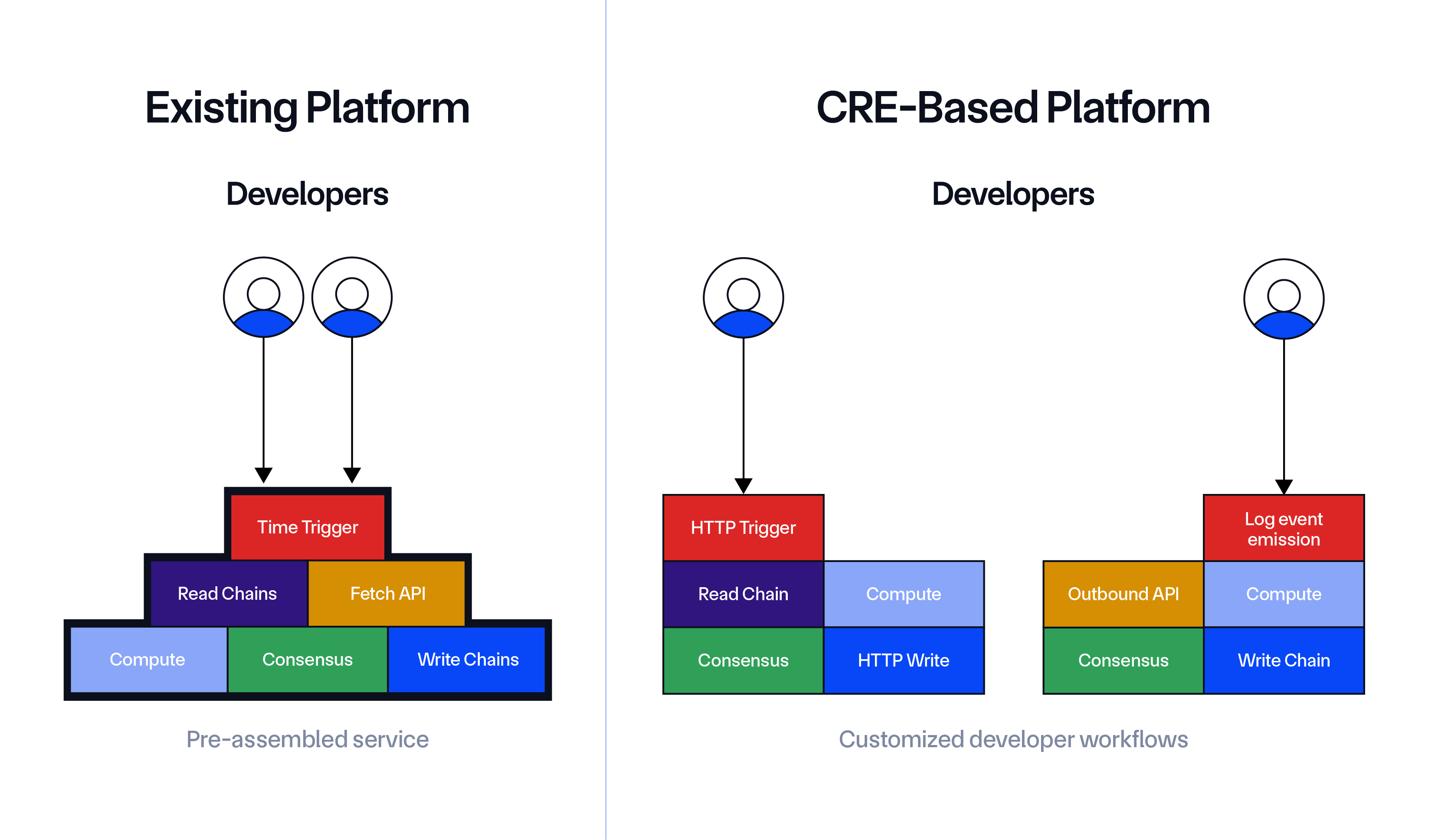
To date, the Chainlink Platform consists of a series of prepackaged services, with each service akin to a set of pre-assembled lego pieces that form a single design pattern (i.e., workflow). For example, Chainlink Automation combines 5-6 separate capabilities into a smart contract automation workflow. Each capability has its own parameters, and capabilities must be executed in order to produce a valid workflow output.
This service-oriented architecture helped scale Chainlink from 0 to 1, and in the process enabled Chainlink to become the most widely used oracle platform, with the most secure and reliable services across data, smart contract automation, verifiable randomness, cross-chain interoperability, and more.
However, to hyperscale Chainlink to thousands of chains, support millions of new developers at faster development speeds, and unlock a wider range of use cases and customizations across DeFi and fast-emerging TradFi adoption, an upgrade to the architecture of the Chainlink Platform is necessary. And since Chainlink is currently enabling trillions of dollars in transaction value, this transition must take place without any disruption to the security and reliability of existing Chainlink services.
CRE-Based Platform
Chainlink has embarked on a multi-phased initiative to re-architect the Chainlink Platform so developers can build their own custom workflows in a self-serve manner. Essential to this vision is distilling the bare essential functions of an oracle network (e.g., chain read, chain write, fetch API, do compute, etc.) into modular capabilities that developers can directly piece together into their own workflows.
Each capability in a workflow is run by a separate DON (i.e., akin to a microservice) as opposed to the previous architecture where the same DON executes all the capabilities of a particular workflow. For example, instead of having a single DON responsible for executing all 5-6 capabilities of Chainlink Automation, there is one DON per capability and all capability DONs are combined to form a workflow.
With DONs purpose-built to perform one capability, they are able to provide highly reliable and predictable services and quickly scale their support to many different users. Furthermore, the platform itself becomes more efficient as already developed capabilities can be reused as opposed to building the same ones from scratch.
The upgraded Chainlink Platform enables developers to compose individual capabilities of the Chainlink Network into workflows rather than only having access to a prepackaged service.
Chainlink Workflows
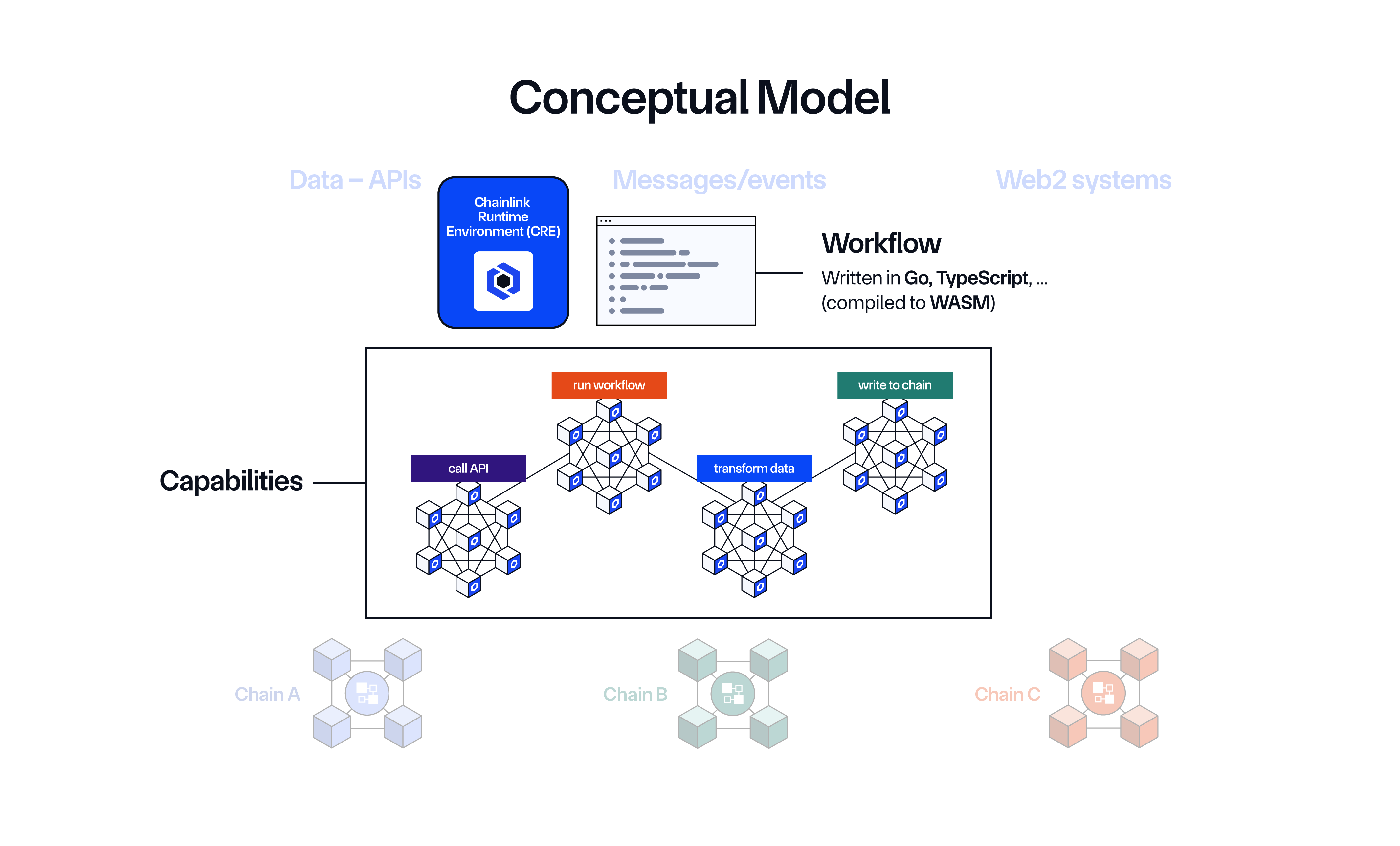
Workflows are the new programs that developers build and run on the Chainlink Platform. Instead of integrating a prepackaged service, developers can build their own workflows using different Chainlink capabilities. Capabilities can be bucketed into two categories: 1) trigger capabilities that start the workflow and 2) execution capabilities that compose and constitute the workflow.
We plan to support workflow development in Go, TypeScript, and other programming languages, which the platform compiles into WASM for execution by Chainlink nodes. Developers can create and manage their workflows using their IDE and the Chainlink SDK and CLI, as well as view and manage them in a UI.
During the initial launch phases, pre-built capabilities will be provided to devs that they can use to create their custom workflows. The longer-term plan is to enable anyone to create and deploy their own capabilities (e.g., custom self-serve chain integrations, connectivity to permissioned systems, etc.).
A Chainlink Workflow that calls an API, performs a consensus computation, and then writes the result onchain for a smart contract to consume.
Chainlink Runtime Environment
The Chainlink Runtime Environment (CRE)—the engine of the Chainlink Platform—executes developers’ workflows in a decentralized manner by interacting with different capability DONs. CRE provides the coordination of the DONs for each of the capabilities invoked in a workflow, as well as combines them with the right consensus overlay.
“The Chainlink Runtime Environment pulls all of the capabilities together by executing the workflows whenever their triggers fire and using DON-to-DON communications to connect the various capability DONs.” —Uri Sarid, Chainlink Labs Chief Architect
*For a deeper understanding of the different technical terms, refer to the References section at the end of this blog.
The Benefits of the Upgraded Chainlink Platform
The upgraded Chainlink Platform powered by CRE unlocks numerous benefits for developers, the Chainlink Platform itself, and the industry as a whole.
Limitless Developer Innovation
Easy to use: Effortlessly create workflows with programming languages you already know via a comprehensive set of SDKs and an intuitive CLI.
Customizable and programmable: Build to fit your bespoke needs with fully programmable workflows.
Seamless integration: Connect with offchain APIs and multiple blockchains within a single workflow using standardized components.
Secure: Safeguard your users by leveraging Chainlink’s proven security, providing consensus guarantees for offchain applications.
In the previous architecture, for example, standing up a single Proof of Reserve (POR) feed required carefully coordinated operational processes across multiple teams and components. This involved complex customization, deployment, and ongoing maintenance. Chainlink’s new architecture removes the complexity of customizing, setting up, and linking disparate components and reduces the required ongoing maintenance. In a few hours, a single developer can express a fully customized POR feed that writes to multiple chains as a workflow and leverages CRE to monitor and reliably execute it. This frees up precious development and maintenance time, so teams can focus more on meeting customer needs.
Next-Generation Platform
Hyper-scaling: Since capabilities can be long-standing and easily reused for new integrations, new chains can be adopted by simply creating a new read chain / write chain capability, which can then be leveraged by all other Chainlink capabilities to interact with those chains. Instead of a new EVM chain integration for multiple Chainlink products taking weeks, developers can compose workflows that use all Chainlink capabilities within a number of days.
Financial market workflows: Banks can connect the Chainlink Platform to their internal private chains and systems and seamlessly interface across other private and public chains. Financial institutions can also create workflows that work in compliance prior to onchain execution, such as building custom policy capabilities into their workflows.
Limitless use cases: Developers’ full creative potential is unlocked as capabilities can be programmed and combined in ways currently not possible to expand to new offchain resources and unlock innovative use cases.
Increased network efficiency: Optimized DON configurations mean less operational overhead for both Chainlink and Node Operators (NOPs). For example, existing DONs can be reused as Chainlink grows rather than the linear DON growth of today. Other efficiencies include more optimized utilization across DON deployments, more economical and efficient products, more sustainable NOP business models, and more efficient provisioning and revenue generation through a compute marketplace.
Overall Industry Growth
With app composability being a main driver in the expansion of DeFi, the composability of offchain services and onchain smart contracts across all blockchains can supercharge a similar expansion in onchain innovation. Every chain stands to benefit, as blockspace becomes more in demand thanks to more users, more transactions, and easier access and deployment to chains.
Making Consensus Computing the Way All Markets Work
The underlying power of Chainlink is greatly expanding the use of consensus computing, with the goal of making it an industry standard throughout financial markets, user applications, and beyond.
Consensus computing is when a decentralized network of nodes must form consensus as part of the network storing and executing code. It’s an evolution in computing because it provides users with unique guarantees such as tamper-resistance, hyper-availability, trust minimization, enhanced composability, and permissionless and universal accessibility.
On the foundation of consensus computing, truly secure and reliable automated services can begin to thrive, opening up major efficiency and utility gains and increasing global connectivity.
Blockchains first introduced consensus computing to store and maintain a permissionless and immutable asset ledger. Blockchain-based consensus computing then expanded to include smart contracts, where ledger transactions could have conditions attached to their execution, making way for decentralized applications (dApps).
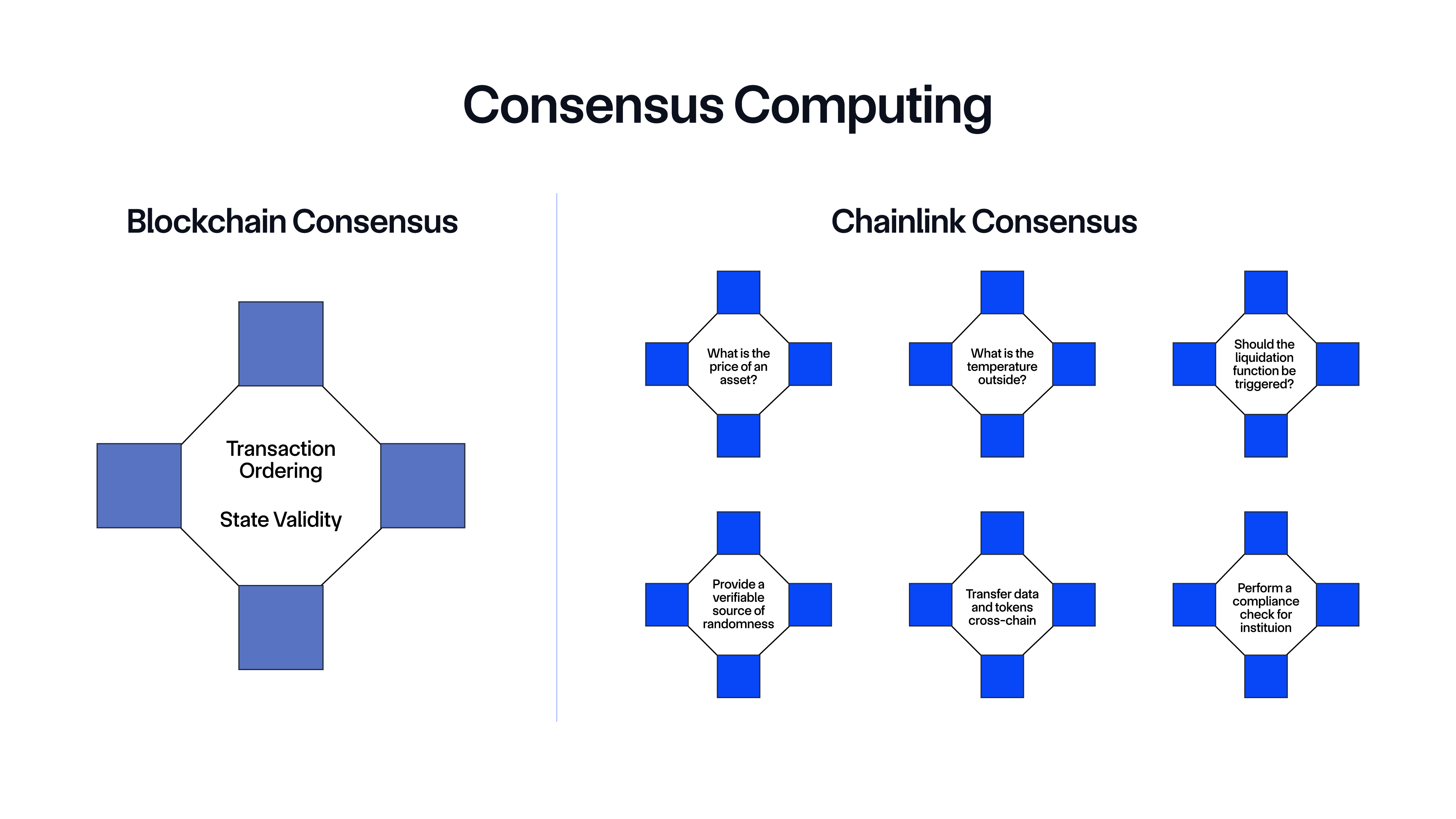
While blockchains will continue to power asset ledgers and dApps, they have limitations. Blockchain-based consensus is only focused on the validity and ordering of transactions, and produce deterministic results, which can be reproduced by anyone based on historical state. However, there is a much broader set of things that consensus could be generated about that blockchains are not applicable for, such as consensus with a median output based on data sources not available onchain (e.g., calculating the current temperature using data from multiple offchain APIs).
Chainlink expands consensus computing to virtually anything and enables the use of any offchain data and offchain computing method. This includes consensus computing on the current price of an asset, transmission of data between disparate networks, triggering smart contracts based on events, and now coordinating consensus across onchain and offchain systems. This expansion enables consensus computing to secure the entire application—such as its offchain data, offchain computation, and interoperability—and not just the state of its onchain code. Through doing so, consensus computing can fulfill a much wider range of use cases while bringing users newfound levels of confidence and verifiability to how the world actually works.
Blockchains use consensus computing to order transactions and validate the state of a ledger, while Chainlink is applying consensus computing to any offchain service.
Rolling Out the Upgraded Chainlink Platform
Similar to how Ethereum uses a phased-upgrade model, the Chainlink Platform upgrade is rolling out in phases to ensure that existing users of Chainlink services are unaffected throughout the transition. This is critical since Chainlink services are currently enabling trillions of dollars in value and securing critical functions for many of the most widely used onchain applications.
The initial phase involves the transition of Chainlink services like CCIP to the upgraded platform architecture. This will help Chainlink scale to chains faster and meet unique and immediate customer requirements. In parallel, the upgraded platform architecture is being implemented into new chain integrations, such as the integration of the Aptos blockchain with Chainlink. Furthermore, the upgraded Chainlink Platform architecture is also being leveraged by financial institutions to seamlessly connect existing infrastructure to blockchains for workflows such as Delivery vs. Payment.
If you are a developer, established application, or financial institution and want to start building and testing workflows using the Chainlink Runtime Environment, sign up for early access.
To learn more about Chainlink, visit chain.link, subscribe to the Chainlink newsletter, and follow Chainlink on Twitter and YouTube.
—
References
Consensus Computing—The broader computing paradigm that requires decentralized consensus as part of executing software and storing information.
Chainlink Platform—The totality of software and node networks that enable development and perform capabilities on Chainlink.
Capabilities—Individual functions of decentralized oracle networks on Chainlink, such as read chain, write chain, call an API, execute compute, apply a policy, etc.
DONs—Decentralized Oracle Networks that execute the capabilities requested by users.
Chainlink Network—All Chainlink nodes and DONs that are currently in operation.
Chainlink Workflows—What developers build in the Chainlink Platform. Developers combine Chainlink capabilities into their own workflows.
Chainlink Runtime Environment (CRE)—The engine of the Chainlink Platform, which executes workflows and provides a programming model on how to program workflows.
—
Disclaimer: This post is for informational purposes only and contains statements about the future, including anticipated product features, development, and timelines for the rollout of these features. These statements are only predictions and reflect current beliefs and expectations with respect to future events; they are based on assumptions and are subject to risk, uncertainties, and changes at any time. There can be no assurance that actual results will not differ materially from those expressed in these statements, although we believe them to be based on reasonable assumptions. All statements are valid only as of the date first posted. These statements may not reflect future developments due to user feedback or later events and we may not update this post in response. Please review the Chainlink Terms of Service, which provides important information and disclosures.
Telegram games and airdrops are quickly gaining popularity thanks to easy-to-play game mechanics and real token rewards. These community-driven and user-friendly games are not only fun but also give early adopters a chance to earn digital assets before they list on exchanges.
November Telegram Airdrops
This November’s Telegram airdrops offer standout token rewards and unique gameplay. Check out what makes each one special and why you should check them out.
MAJOR
MAJOR is a Telegram game where you play daily challenges to collect letters and words to win exclusive prizes. It’s wordplay with token rewards is perfect for casual gamers looking for a daily grind. As you complete tasks you accumulate tokens that can be used to unlock bigger rewards or exchanged as they gain value. Simple task structure and big rewards make it a must try for anyone who wants to get into Telegram airdrops.
BLUM
BLUM is a hybrid exchange platform with on-chain and off-chain transactions, so it appeals to a wide range of users. Backed by Binance Labs, BLUM has airdrops where you can get in early and accumulate tokens before they list on exchanges. With Binance Labs backing, the platform has high expectations thanks to its unique airdrop structure that rewards early participants. For users who are into gaming and investment, BLUM’s ecosystem is a good entry point.
SOON
SOON is a community driven Telegram game on the TON blockchain brought to you by TonStation. Leveraging TON’s existing and loyal community, SOON brings a new gaming experience to the Telegram app. The airdrop is timed perfectly with the token listing so you can accumulate tokens and get in early on the ecosystem. SOON’s airdrop rewards are expected to hold value given the steady backing and enthusiasm from the TON network.
Not Pixel
Not Pixel has a unique interactive gameplay where you can earn PX Points by drawing pixels. This Web3 twist on pixel based games is perfect for creative players. With PX Points earned through gameplay you can participate in additional challenges and events within the Not Pixel ecosystem and unlock more rewards. For players looking for something beyond token earning mechanics, Not Pixel’s art and interactivity is a breath of fresh air.
TapSwap
TapSwap is a Telegram tap to earn game that rewards you with TAPS tokens through a simple and fun gameplay loop. The game aims to attract a wide range of users by making the earning process easy and enjoyable. By tapping to earn tokens you can accumulate a tokens over time, offering a low barrier to entry for anyone who wants to get into token accumulation. Easy gameplay and steady token rewards make TapSwap one of the November airdrops to check out.
SEED
SEED has a nature theme where you can earn tokens by planting trees and harvesting resources in the game. This eco friendly twist attracts users who are into socially responsible gaming. You earn SEED tokens by participating in virtual “planting” activities and the rewards are tied to real world environmental themes. SEED is a good airdrop for those looking for a meaningful and immersive experience that rewards engagement with a sustainable message.
How to Join Telegram Airdrops
Joining a Telegram airdrop is easy: just subscribe to the game’s Telegram channel or group, follow the instructions and complete the in-game tasks to start earning tokens. Inviting friends to join will also multiply the rewards. Stay informed of each project’s token generation event (TGE) and token listing date to maximize your earnings. But always be cautious with airdrops, verify the project’s legitimacy to avoid scams and remember that token value can be volatile.
Risks
While airdrops are fun, be aware of the risks. Price volatility is common and tokens earned during airdrops can drop sharply. There’s also the risk of scams so only participate in airdrops from verified sources. Airdrops should not be considered as investments and be moderate, keep security in mind. With caution though, airdrops are a great way to try out Web3 games and get some rewards.
Final Thoughts
Telegram games are taking off, combining fun with real money making in ways that are appealing to a growing audience. As more projects launch in this space the future looks bright – from deeper community engagement to more token utilities and interactive features. Now is the time to get in, early adopters will benefit from the unfolding of Telegram gaming and its rewards.
Editor’s note: This article was written with the assistance of AI. Edited and fact-checked by Owen Skelton.
Owen Skelton is an experienced journalist and editor with a passion for delivering insightful and engaging content. As Editor-in-Chief, he leads a talented team of writers and editors to create compelling stories that inform and inspire.
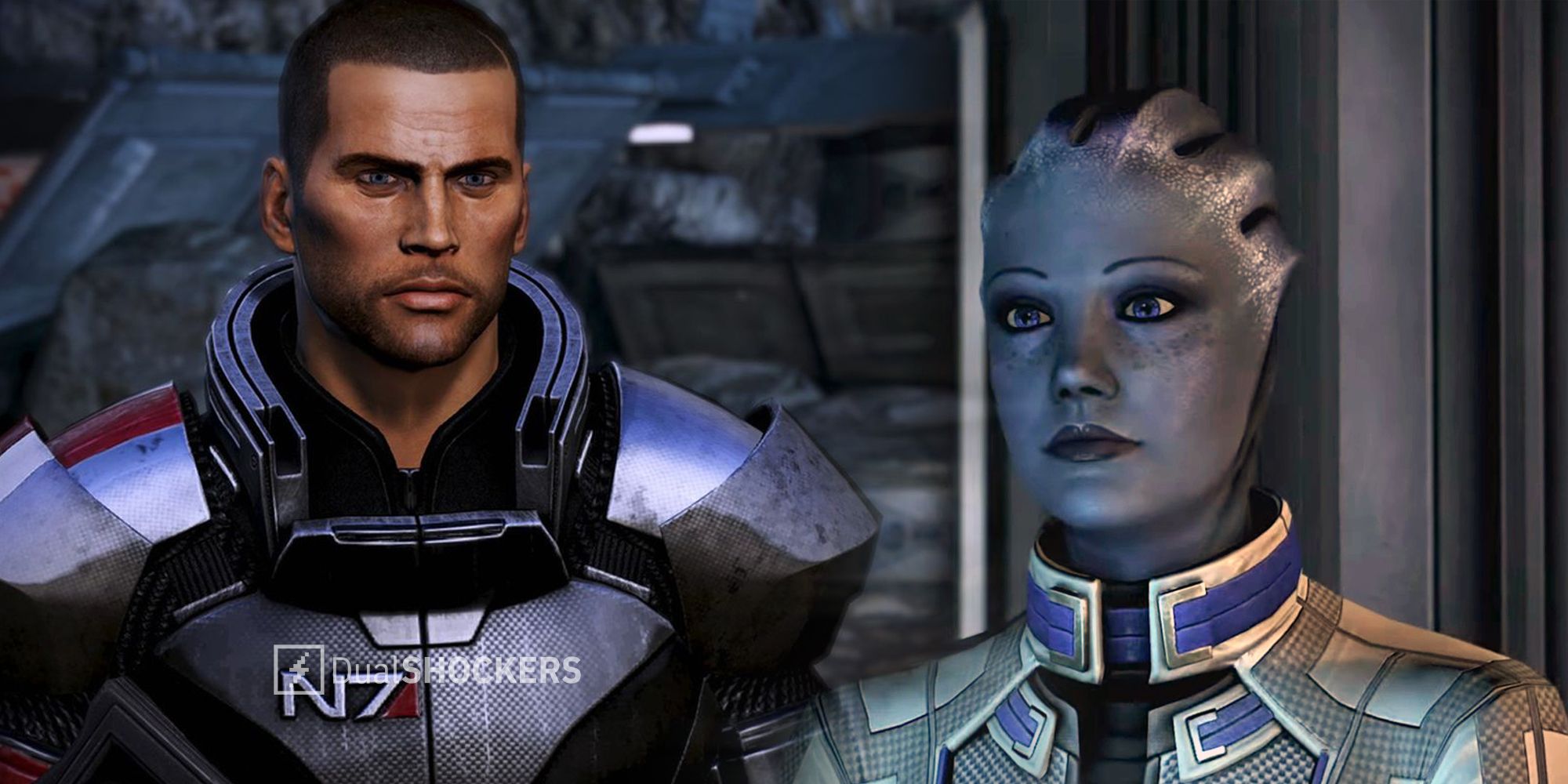
Next Mass Effect game will be photorealistic, departing from Dragon Age’s art style. BioWare confirms next Mass Effect game to maintain the mature tone of the original trilogy. The new game was announced in 2021 after Andromeda failure.
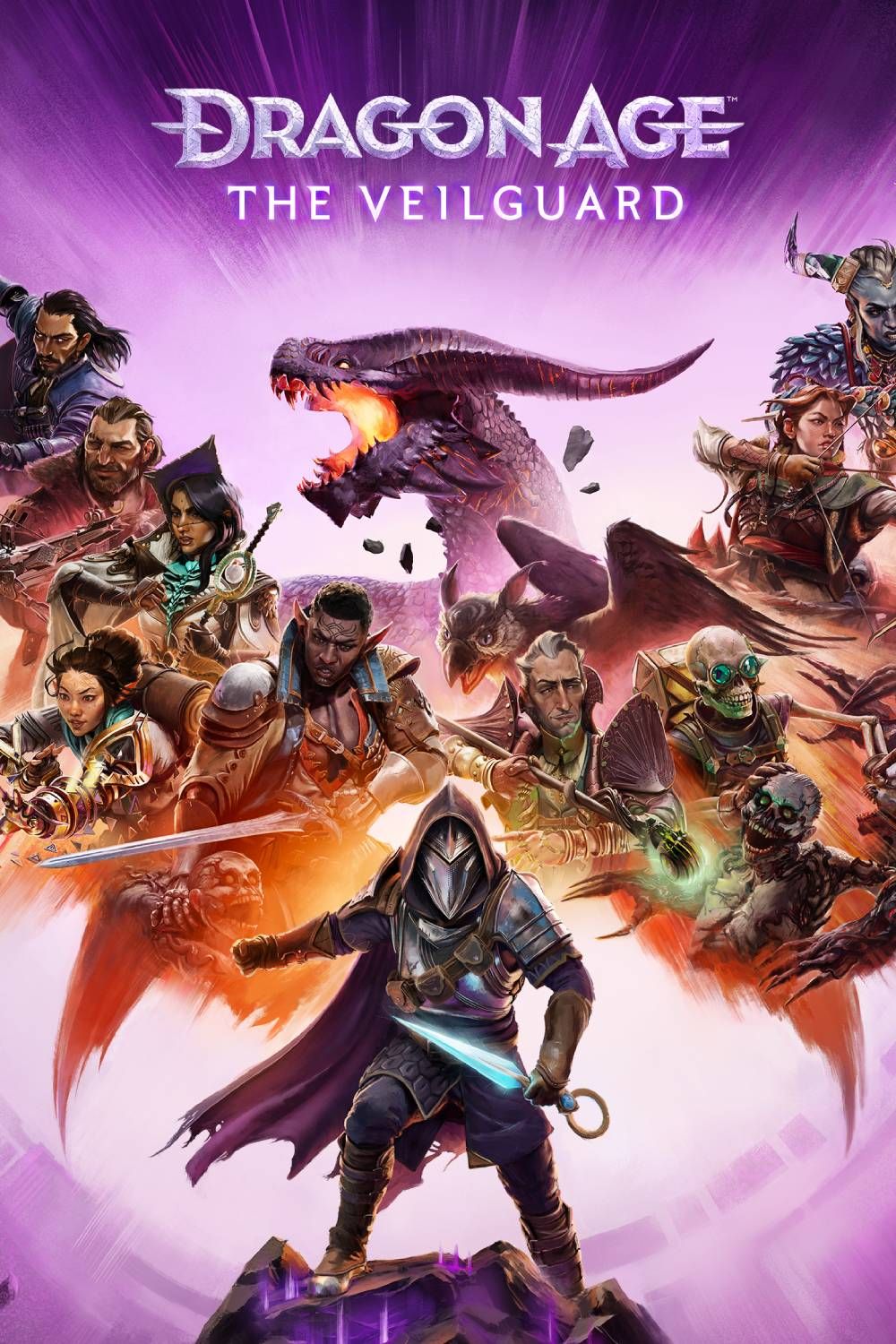
While BioWare is about to release its latest entry in the Dragon Age franchise in a couple of days in Dragon Age: The Veilguard, the studio already has another game in the pipeline, and that’s the next entry in the Mass Effect franchise.
If you’re not a fan of The Veilguard’s art style, you’ll be glad to know that the still-untitled Mass Effect game won’t follow its footsteps in terms of visual style. BioWare Project Director Mike Gamble confirmed this over on X, where he replied to a fan that Mass Effect is going the photorealistic route as long as he’s in charge.
The Next Mass Effect Game Will Be Photorealistic
As you can see from the tweet, Gamble disagrees that Dragon Age: The Veilguard resembles “Pixar-like” graphics. While calling it Pixar in nature might be a stretch, the art style used is definitely not something you’d see in a Mass Effect game.
Continuing the Mass Effect talk, Gamble also shared that the next game in the franchise will maintain the “mature tone” of the original trilogy.
Related
Bringing Commander Shepard Back To Mass Effect Would Be A Mistake
Let the Commander rest.
As a long-time Mass Effect fan, a mature tone is the only way to go, and I’d wager that franchise fans wouldn’t want it any other way.
I don’t blame you if you didn’t know that a new Mass Effect game is in development. In 2021, BioWare shocked gamers with a trailer announcingthat a new Mass Effect game was in the works during N7 Day. Unfortunately, after that initial announcement, nothing much has been shared, which is understandable given the studio would want all eyes to be on its new Dragon Age game that’s set to release much sooner than the next entry in the sci-fi RPG series.
What Happened to the Mass Effect Franchise?
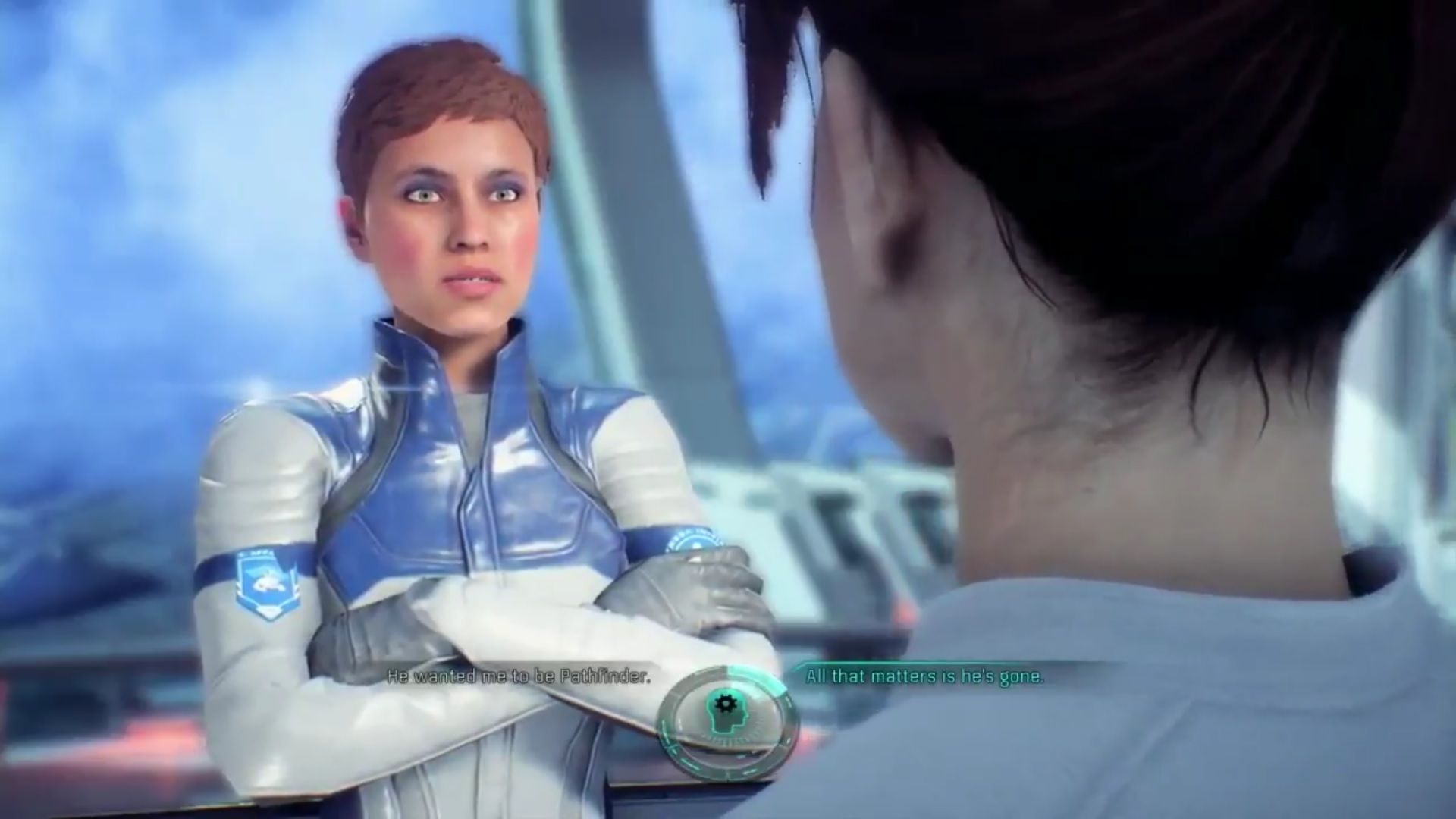
While the original Mass Effect trilogy is revered as one of the best gaming trilogies of all time, all the goodwill and love disappeared after the monumental failure of Mass Effect: Andromeda. Released in 2017, the follow-up to the trilogy was both a critical and commercial failure, with many people noticing how weird the faces looked, which was never an issue with the franchise before. Since then, the franchise has been on a hiatus, with the 2021 announcement the first sign of life that EA isn’t done with the brand yet.
Given that BioWare is about to release a game in a few days, our wait for the next Mass Effect game will be long. If you’re interested in checking out Dragon Age: The Veilguard, go read our review of it, which states, “Dragon Age: The Veilguard is a compelling new entry in the series, taking the franchise in a new direction with more RPG-lite ideals.”
Dragon Age: The Veilguard
Franchise Dragon Age
Released October 31, 2024
Publisher(s) Electronic Arts
Engine Frostbite
ESRB M For Mature 17+ // Blood, Nudity, Sexual Themes, Strong Language, Violence
Former EastEnders and Carol Jackson star Lindsey Coulson is returning to the BBC as new headteacher of Waterloo Road.
Lindsey will play newcomer Dame Stella Drake, with her first scenes on the BBC soap airing in 2025.
Stella is set to be an ‘unfiltered’ and ‘honest’ character who is also desperate to restore the school’s reputation.
Lindsey has joined the cast (Credit: BBC/ Composite ED!)
EastEnders star Lindsey Coulson joins Waterloo Road
With Waterloo Road having a current reputation of being the ‘murder school,’ and also with the downfall of former headteacher Steve Savage being rather fresh, a new face is now ready to swoop in and fix the mess as a result.
Lindsey Coulson will play the school’s new headteacher, Dame Stella Drake.
Stella’s described as having an ‘uncompromising work ethic, strict moral compass and no-nonsense approach.’
Her out of date methods will be put to the test though as she questions the school’s modern pastoral approach. This being said, she has the students’ best interests at heart even if she is about to ruffle some feathers.
As time goes on, Stella may have some skeletons unearthed as her professional and personal lives overlap.
Lindsey will be playing Dame Stella Drake (Credit: BBC/ Composite ED!)
Lindsey Coulson shares excitement over new soap role
Best known for playing Carol Jackson on EastEnders, Lindsey is thrilled to be appearing on a soap once again.
The actress shared: “I’m delighted to be joining Waterloo Road as the new headteacher, Dame Stella Drake. It’s a role I haven’t played before so I’m really enjoying peeling back the layers of who Stella is and seeing how the teachers and students react to her no-nonsense approach. Waterloo Road tackles social issues head on which is so important to see on television and this series will be no different.”
Cameron Roach, the Executive Producer of Waterloo Road and Founder of Rope Ladder Fiction also expressed: “We’re really thrilled that Lindsey Coulson is joining Waterloo Road, she has absolutely embraced the spirit and ethos of the show, and she completely inhabits the role of Dame Stella Drake, we can’t wait for the audience to meet her. The fact that the show has attracted an actor of Lindsey’s calibre is testament to the continued ambition and commitment from our writing and story teams, as well as our brilliant cast and crew.”
Read more: Who’s leaving EastEnders in 2024? Complete list of cast exits, arrivals and returns
EastEnders usually airs Monday to Thursday at 7.30pm on BBC One.
Are you looking forward to EastEnders next week? You can leave us a comment on our Facebook page @EntertainmentDailyFix and let us know.
Sister Wives stars Kody Brown and Robyn Brown bought a $2.1 million mansion in Flagstaff, Arizona. And some headlines suggest this house purchase is a violation of a court order. There’s even some outrageous talk he could go to jail over it. That’s all nonsense. We’ll explain why it’s hysteria.
Kody and Robyn bought the almost 8,000 square feet home Friday in the name of the trust they operate. The main house has 5,600 sq. ft. It’s got four bedrooms and 4.5 baths. There’s a bonus room, formal living room, and a theater room. Also, there’s a 2,300 sq. ft. guest house. It’s got two bedrooms and two baths. Plus, there’s a 2,200 square foot RV garage. And a multi-car garage.
Kody Brown and Robyn put down $420,000 on the 30-year mortgage. The loan principal is $1.68 million. If they have excellent credit and got the best loan rate, that’s a nearly $12,000 monthly mortgage payment. Plus, taxes and insurance. And they already have another home mortgage for about $2,800 a month. That’s a lot. Nearly $15k a month in home payments. That’s $180,000 per year!
Sister Wives: Kody Brown and Christine Brown
Sister Wives: Kody Brown & Robyn Brown Buy $2.1 Million Flagstaff Mansion
So, some sites are saying that Kody buying the house violates a court order in Christine Brown‘s lawsuit against Kody. She’s suing to establish his paternity of Truely Brown. Because he was not listed on her birth certificate. And she wants child support and back child support.
This is a family court case. With every family case in Utah, there’s an automatic injunction. It addresses harassment, disparagement, and assets and debt. So, these armchair experts say that Kody’s violating the part of not disposing of or concealing assets. However, that part of the injunction doesn’t apply. It only applies to cases that concern division of assets and divisions of debt.
For instance, in a divorce, when they divide up who gets the house, the car, and who pays student loan or credit card debts. That’s not the type of case Christine filed. And he owes her no debt as of now. The case is in process. So far, his paternity hasn’t been verified with Truely. Once that’s done, then the court will address a ruling on child support.
Even then, as long as he makes his payment on time and in full, Kody can buy and sell houses all he wants…
Sister Wives: Timing Matters for Kody?
However, there is one thing that seems to link the timing of this big house purchase to Christine’s case. One is the big down payment. They put down $420k. That was 20% of the house price. That means they can avoid costly PMI (private mortgage insurance). It also means that Kody doesn’t have a lump sum of cash sitting around in case the court decides he owes a big chunk in back child support.
Often, the courts will work out a payment plan when they rule on a lump sum like that. But if Kody had a fat stack of cash in the bank, they might make him pony it all up at once. Another issue with the injunction is the non-disparagement piece. It says the parties can’t say bad things about each other where the child can’t hear. I’m not sure how they could tape Sister Wives Season 20 if that was the case.
SW Season 20: Why Kody Bought New Mansion Before Christine Case Went to Court
The injunction went into effect the day Christine filed the case. That was the day after Season 19 debuted. So, what they said in their confessionals and scenes already filmed. So, the injunction doesn’t apply. And it stands until the final decree in the case. If there is a Season 20, they’ll have to get an exception to the injunction or Kody will have to learn to watch his mouth. Or he might really be violating the injunction.
But in terms of buying this big house. no Kody Brown is not at risk of going to jail. He has not violated a court order. He is not flaunting an injunction. He’s just flexing with a big house for his one wife he’s got left…
San Francisco 49ers player Charvarius Ward is mourning the death of his baby girl, Amani Joy.
“We are heartbroken that our beautiful baby girl, Amani Joy passed away on Monday morning,” Ward, 28, wrote via Instagram on Tuesday, October 29. “She was the best blessing we could have asked for, and her joyous spirit made us smile from ear to ear. She taught us to have patience, trust and a positive outlook on life. She showed us true strength and bravery.”
“She overcame adversity at a young age and was always happy, lighting up every room with her smile,” Ward’s statement continued. “Having the privilege of being her parents and seeing the world through her eyes has changed us for the better. She will forever be daddy’s best friend and mommy’s little girl. We’ll miss you and love you forever, Amani Joy.”
Ward and his partner, Monique Cook, welcomed Amani in November 2022. An official cause of death has yet to be announced.
Related: Celebrity Deaths of 2024: Stars We Lost This Year
Hollywood mourned many celebrities in 2024. Speed Racer star Christian Oliver (born Christian Klepser) died at the age of 51 during a fatal plane crash on January 5. Oliver was traveling home from a Caribbean vacation with his two daughters — Madita and Annik, whom he shared with wife Jessica Klepser — on January 4. […]
Back in March, Ward shared via social media that his daughter had Down Syndrome. At the same time, he called her “a gift from God.”
“Amani Joy Ward has been the best blessing I could’ve asked for,” the NFL cornerback wrote via Instagram on March 21. “I used to think Down Syndrome was a handicap but now I realize it is just a gift from God. Being Amani’s dad has taught me patience & how to surrender & let things be. We couldn’t control whether she had Trisomy 21 but we can control our attitude about it.”
Ward said he initially went through “feelings of sadness and anger,” but those feelings “transformed into pure joy” as soon as he laid eyes on baby Amani.
Courtesy of Charvarius Ward/Instagram
“She went from heart surgery to the happiest kid I’ve ever been around,” he said. “Amani is filled with pure joy & a contagious laugh. My baby makes me smile from ear to ear every time I see her.”
Amani’s death comes less than a month before she was expected to turn two on November 17.
Thank You!
You have successfully subscribed.
Related: NFL Tragedies of 2024: The Saddest and Most Shocking Deaths
Football fans have mourned a heartbreaking amount of NFL stars in 2024. In February, Tony Hutson passed away at age 48, according to an obituary shared at the time. No cause of death was given. “Lost one of my favorite teammates and great friends in Tony Hutson last night,” Hutson’s former teammate Randall Godfrey wrote […]
After her death was confirmed, the San Francisco 49ers organization shared their support for both Ward and Cook.
“The 49ers family is devastated by the sudden passing of Charvarius Ward’s beloved one-year-old daughter Amani Joy,” the team wrote via Instagram on Tuesday. “Amani truly embodied pure happiness and brought joy to all those around her with her sweet demeanor and contagious laugh. We will continue to grieve with Charvarius and Monique, while sending them our love and support during this unimaginable time.”
The San Francisco 49ers’ next game is scheduled for November 10 in Tampa Bay, Florida.
In the rapidly evolving landscape of blockchain technology, Web3 wallets have emerged as indispensable tools for crypto enthusiasts and investors. With the rise of decentralized finance (DeFi) and non-fungible tokens (NFTs), choosing the right crypto wallet is paramount. In 2024, several Web3 wallets have distinguished themselves as leaders in the field, offering users a range of features tailored to their needs. In this article, we delve into the top Web3 wallets of 2024, analyzing their pros and cons to help you make an informed decision.
MetaMask
MetaMask has long been a favorite among crypto users and continues to lead the pack in 2024. Known for its user-friendly design and seamless integration with DeFi applications, MetaMask offers a versatile and secure experience for both beginners and seasoned traders.
Pros of MetaMask
User-Friendly Interface: MetaMask’s intuitive design makes it easy for users to manage their assets and explore decentralized applications (dApps).Wide Compatibility: Compatible with major browsers like Chrome and Firefox, as well as a dedicated mobile app, providing versatile access options.Strong Security Features: Integration with hardware wallets and advanced encryption ensures high-level security for users.Extensive dApp Ecosystem: With access to thousands of dApps, MetaMask provides a gateway to the broader Ethereum ecosystem and beyond.
Cons of MetaMask
Gas Fees: Users may find transaction fees on the Ethereum network to be high at times, affecting cost-efficiency.Limited Multi-Chain Support: While MetaMask supports some blockchains, it’s heavily Ethereum-focused, which may limit users seeking diverse blockchain interactions.
Coinbase Wallet
Coinbase Wallet, an offshoot of the reputable Coinbase exchange, continues to make waves in 2024. It offers users the ability to manage their crypto assets independently of the main Coinbase platform, featuring an intuitive mobile application to support on-the-go management.
Pros of Coinbase Wallet
Integration with Coinbase Exchange: Seamlessly connects with the Coinbase exchange for easy transfers between wallet and trading accounts.Strong Security Protocols: Built on established security measures synonymous with the Coinbase brand.Support for Multiple Cryptocurrencies: Users can manage a broad range of digital assets beyond just Ethereum-based tokens.Direct dApp Access: The wallet includes a built-in dApp browser for direct interaction with various decentralized applications.
Cons of Coinbase Wallet
Custodial Challenges: Some users prefer non-custodial solutions, and while it offers some decentralization, Coinbase Wallet retains some custodial elements.Privacy Concerns: Integrating with a major exchange could present privacy challenges, as data may be shared across connected accounts.
Trust Wallet
Trust Wallet has steadily gained traction due to its reputation for supporting a wide array of cryptocurrencies and ease of use. Acquired by Binance in 2018, it has benefited from ongoing development and innovation.
Pros of Trust Wallet
Multi-Currency Support: Trust Wallet supports a vast array of cryptocurrencies, including those on the Binance Smart Chain, Ethereum, and more.Non-Custodial: Users have full control over their private keys, enhancing the security and autonomy of their crypto holdings.DeFi and NFT-Friendly: With built-in services to interact with DeFi platforms and NFT marketplaces, it’s highly versatile for different use cases.Seamless User Experience: Its intuitive interface and compatibility with various blockchains make it accessible for both new and experienced users.
Cons of Trust Wallet
Mobile-Only Access: Trust Wallet primarily functions as a mobile app, which might limit users who prefer desktop applications.Potential Security Risks: As with all mobile wallets, users must remain vigilant against potential security threats like phishing and malware.
Concluding Thoughts
As we glide through 2024, Web3 wallets like MetaMask, Coinbase Wallet, and Trust Wallet continue to provide robust solutions for storing and managing digital assets. Each wallet has its unique strengths and challenges, catering to different user needs and preferences. When selecting a Web3 wallet, consider your specific requirements such as currency support, ease of use, and security features.
Choosing the best wallet ultimately boils down to personal priorities. Whether you’re an enthusiast diving deep into DeFi and NFTs, or a novice starting your crypto journey, there’s an ideal solution out there for you. Stay informed, assess your options, and enjoy the exciting world of decentralized finance with confidence in 2024.
“`
This blog post is structured to provide an informative and SEO-optimized overview of the top Web3 crypto wallets in 2024, with a focus on their pros and cons, to assist readers in making an informed decision.
About Web3Wire Web3Wire – Information, news, press releases, events and research articles about Web3, Metaverse, Blockchain, Artificial Intelligence, Cryptocurrencies, Decentralized Finance, NFTs and Gaming. Visit Web3Wire for Web3 News and Events, Block3Wire for the latest Blockchain news and Meta3Wire to stay updated with Metaverse News.



 Posted by Totter on Jul 5, 2019