Published: November 18, 2024 at 3:00 pm Updated: November 18, 2024 at 10:56 am
To improve your local-language experience, sometimes we employ an auto-translation plugin. Please note auto-translation may not be accurate, so read original article for precise information.
The Dogecoin price is back in the spotlight as the popular meme coin rides a wave of bullish sentiment. With analysts targeting $12 as the next significant milestone, DOGE has captured the attention of traders looking for high-growth opportunities.
However, alongside this excitement, an emerging Altcoin, PropiChain (PCHAIN), has been drawing interest with projections of a 12,403% rally. Let’s explore what makes these assets appealing to investors and why PropiChain could outperform.
Dogecoin Price Gains Momentum
DOGE is capturing headlines as the top-performing crypto asset among major cryptocurrencies, fueled by the one-month 161% surge in Dogecoin price to $0.3778. This exceptional rally has propelled DOGE into the top seven cryptocurrencies by market cap, overshadowing Bitcoin’s 40% rise during the same period.
Analysts remain optimistic about DOGE’s potential, with price targets of $12 fueled by historical trends, bullish chart patterns, and political developments. Elon Musk’s influence and speculation around Donald Trump’s presidency have further heightened market confidence.
However, experts caution that DOGE’s meteoric rise will not be without dips. For instance, its 30,700% rally in 2021 saw corrections of over 50%. Investors are combining Doge with another altcoin, PropiChain, primed for a 12,403% rally.
As the crypto bull run gains momentum, DOGE and PropiChain offer significant opportunities, signaling the start of an exciting era for altcoin enthusiasts.
PropiChain: The Altcoin Set to Deliver 12,403% Returns
While the Dogecoin price climbs, PropiChain (PCHAIN) has emerged as a formidable Altcoin. It uses a mix of the latest technologies to disrupt the $300 trillion real estate industry.
PropiChain is not just another speculative token; it’s a platform designed to bring real-world value by leveraging blockchain and AI to address inefficiencies in real estate investment.
PropiChain allows smaller investors to enter a market traditionally dominated by large capital holders. Users can easily buy, sell, and trade tokenized property shares through its decentralized platform, providing unprecedented liquidity and accessibility. Let’s take a look at some of its core features:
Real Estate TokenizationPropiChain enables fractional ownership of real estate assets, making property investments accessible to a broader audience. This innovation removes barriers like high capital requirements, democratizing access to lucrative real estate markets.
AI-Driven AnalyticsPropiChain’s AI tools include automated property valuations, market analysis, and advanced filtering options, helping investors effortlessly make data-driven decisions.
Blockchain Integration and Smart ContractsPropiChain guarantees transparency and security in real estate transactions through blockchain. Smart contracts streamline processes, eliminating the need for intermediaries and reducing costs.
Metaverse ExpansionPropiChain is also exploring the metaverse, offering virtual property tours and meetings. This blend of digital and physical real estate creates exciting new investment opportunities.
Why Traders Are Eyeing PropiChain
Unlike the Dogecoin price, which depends largely on market sentiment, PropiChain offers tangible utility and high-growth potential. Its presale, priced at just $0.004 in Stage 1, presents a rare opportunity for early investors to maximize returns.
PropiChain has also been audited by BlockAudit to ensure the platform’s security and reliability. Additionally, its CoinMarketCap listing confirms its credibility in crypto, further boosting investor confidence.
PropiChain’s presale offers multiple advantages for early adopters:
Discounted Prices: Tokens are available at an entry-level price of $0.004, allowing investors to unlock significant upside potential.
First-Mover Advantage: Early participation provides priority access to the platform’s features, including tokenized real estate and AI tools.
High-Growth Potential: With projections of a 12,403% rally, PropiChain is poised to outperform many established tokens in the market.
Conclusion
As the Dogecoin price eyes $12, it’s clear that DOGE remains a top choice for traders seeking short-term gains. However, for those looking at long-term growth and utility, PropiChain (PCHAIN) stands out.
With its unique approach to real estate investment and a presale offering unmatched value, PropiChain is quickly becoming a reputable option in diversified crypto portfolios. Visit PropiChain’s official website to join the presale today and take your first step toward game-changing crypto investments.
For more information about the PropiChain Presale:
Website: https://propichain.finance/
Join Community: https://linktr.ee/propichain
Disclaimer
In line with the Trust Project guidelines, please note that the information provided on this page is not intended to be and should not be interpreted as legal, tax, investment, financial, or any other form of advice. It is important to only invest what you can afford to lose and to seek independent financial advice if you have any doubts. For further information, we suggest referring to the terms and conditions as well as the help and support pages provided by the issuer or advertiser. MetaversePost is committed to accurate, unbiased reporting, but market conditions are subject to change without notice.
About The Author
Gregory, a digital nomad hailing from Poland, is not only a financial analyst but also a valuable contributor to various online magazines. With a wealth of experience in the financial industry, his insights and expertise have earned him recognition in numerous publications. Utilising his spare time effectively, Gregory is currently dedicated to writing a book about cryptocurrency and blockchain.
More articles
Gregory, a digital nomad hailing from Poland, is not only a financial analyst but also a valuable contributor to various online magazines. With a wealth of experience in the financial industry, his insights and expertise have earned him recognition in numerous publications. Utilising his spare time effectively, Gregory is currently dedicated to writing a book about cryptocurrency and blockchain.
The metaverse is no longer a sci-fi concept but a rapidly evolving digital economy that intertwines immersive experiences, decentralized platforms, and innovative technologies. For investors, it’s a dynamic world of opportunity and potential growth. In this post, we’ll dive into leading companies with major investments in the metaverse, analyze their stock performances, and help you assess potential investment strategies for navigating this exciting virtual landscape.
Top Metaverse Stock Companies Leading the Revolution:
Top metaverse stock companies are:
1. Meta Platforms (formerly Facebook):
Picture Courtesy: androidheadlines.com
Meta Platforms is the tech giant that sparked widespread interest in the metaverse when it rebranded from Facebook in 2021. Meta’s ambition is to create a metaverse that combines social interactions, gaming, work, and commerce into an immersive 3D environment.
Key Initiatives:
Horizon Worlds and Horizon Workrooms: Meta’s social VR platform where users interact using avatars in a variety of virtual settings, whether for leisure or productivity.
Hardware Focus: Meta owns Oculus, a leading virtual reality headset manufacturer, and continues to invest in AR and VR hardware, such as its Quest headsets.
Reality Labs: Meta’s division for metaverse and VR development has been heavily funded, with investments in AI, immersive experiences, and developer tools.
Investment Insights:
Opportunities: Meta’s heavy spending on developing the metaverse positions it as a leader but also as a risky investment given its enormous R&D costs. If it succeeds, Meta could set industry standards.
Risks: Meta’s challenges include scrutiny from regulators over data privacy and high operating expenses.
2. Microsoft:
Picture Courtesy: ThoughtCo
Microsoft’s metaverse ambitions focus on merging the digital and physical worlds through gaming, enterprise solutions, and productivity software.
Key Initiatives:
Acquisition of Activision Blizzard: This acquisition aims to strengthen Microsoft’s gaming presence within the metaverse. With games like “World of Warcraft” and “Call of Duty,” Microsoft can use these properties to extend virtual worlds.
Mesh for Microsoft Teams: Mesh integrates mixed-reality capabilities into the popular Microsoft Teams, allowing employees to meet in 3D spaces using avatars, making it useful for corporate collaborations in the metaverse.
Azure Cloud Infrastructure: Microsoft Azure provides critical backend services to power metaverse applications and platforms.
Investment Insights:
Opportunities: Microsoft’s dual approach to gaming and enterprise gives it diversified exposure to the metaverse. Its cloud infrastructure and productivity software provide a competitive edge.
Risks: Heavy competition in gaming and challenges in integrating new acquisitions could impact Microsoft’s success.
3. Nvidia:
Picture Courtesy: investopedia.com
Nvidia provides high-performance GPUs essential for powering immersive 3D graphics, AI-driven applications, and simulations in the metaverse.
Key Initiatives:
Omniverse Platform: Nvidia’s Omniverse is a collaboration and simulation platform that allows creators, developers, and businesses to create immersive 3D worlds. The platform supports everything from 3D content design to real-time simulations.
Graphics Processing Units (GPUs): Nvidia’s GPUs are used extensively for VR/AR applications and high-performance gaming, making them a foundational element for building metaverse environments.
Investment Insights:
Opportunities: As the need for advanced computing power grows, Nvidia stands to benefit greatly. Its technology is critical for building, rendering, and expanding virtual worlds.
Risks: High competition in the semiconductor market and reliance on hardware sales could pose challenges.
4. Apple:
Picture Courtesy: blogspot.com
Apple’s approach to the metaverse focuses on augmented reality (AR) and hardware integration rather than creating a dedicated metaverse platform.
Key Initiatives:
AR Glasses (Rumored): Apple is reportedly developing lightweight AR glasses that could transform how users interact with the digital world. The focus on blending virtual elements with the real world sets it apart.
ARKit for Developers: Apple’s ARKit allows developers to build augmented reality applications, creating a broad base for AR content on iOS devices.
Investment Insights:
Opportunities: Apple’s emphasis on premium design and user experience could create highly immersive and user-friendly metaverse experiences.
Risks: Delayed product launches or limited adoption of new AR devices may impact growth.
5. Roblox:
Picture Courtesy: roblox.com
Roblox is a platform where users create, share, and explore games and experiences built by other users. It’s often described as a proto-metaverse due to its user-generated content and virtual economy.
Key Initiatives:
User-Generated Content (UGC): Roblox enables creators to monetize their games and experiences, driving a strong creator economy.
Virtual Economy: Roblox’s in-game currency (Robux) and marketplaces allow users to buy and sell digital items, making it a functioning virtual economy.
Investment Insights:
Opportunities: Roblox’s large user base and focus on community-driven content position it for long-term growth in the metaverse.
Risks: Challenges include retaining users, keeping content fresh, and ensuring a safe environment for younger audiences.
6. Unity Technologies:
Picture Courtesy: assetstore.unity.com
Unity is a leader in providing tools to create and operate interactive, real-time 3D (RT3D) content. Its software powers a large share of the world’s 3D content, making it a crucial player in metaverse development.
Key Initiatives:
Game and App Development: Unity’s game engine is used for creating immersive experiences across industries.
Cross-Industry Expansion: Unity is diversifying into non-gaming sectors, including architecture, automotive, and film.
Investment Insights:
Opportunities: Unity’s dominance in 3D content creation positions it as a backbone of metaverse content creation.
Risks: High competition from Unreal Engine and the challenge of scaling its platform could impact growth.
7. Tencent:
Picture Courtesy: wsj.com
Tencent is a major player in gaming, social media, and digital infrastructure, with significant metaverse ambitions.
Key Initiatives:
Gaming Focus: Tencent owns stakes in companies like Epic Games (creator of Fortnite), making it influential in shaping gaming metaverses.
Social and Commerce Integration: Tencent’s WeChat platform could serve as a hub for virtual commerce and social interactions in the metaverse.
Investment Insights:
Opportunities: Tencent’s diversified portfolio and partnerships with global tech firms position it as a metaverse leader in Asia.
Risks: Regulatory scrutiny in China poses challenges to its growth and operational freedom.
8. Alphabet (Google):
Picture Courtesy: napavalleyregister.com
Google’s approach to the metaverse is centered around AR capabilities, AI integration, and immersive experiences on mobile and web platforms.
Key Initiatives:
ARCore Development: ARCore is Google’s platform for building AR experiences, making it a key player in the AR metaverse space.
Immersive Content Initiatives: Google’s focus on content, cloud computing, and AI-backed features creates a versatile base for the metaverse.
Investment Insights:
Opportunities: Alphabet’s technological resources and cloud infrastructure offer strong growth potential in AR and VR-driven experiences.
Risks: Alphabet’s metaverse growth may lag due to its more measured approach compared to competitors.
9. Amazon:
Picture Courtesy: wallsdesk.com
Amazon is working on immersive experiences through AR and VR for shopping, while its AWS cloud platform supports various metaverse services.
Key Initiatives:
Immersive Shopping: Amazon is experimenting with AR features for its e-commerce business, enhancing customer experiences.
AWS Support: As a leading provider of cloud infrastructure, AWS supports metaverse companies with scalable solutions.
Investment Insights:
Opportunities: Amazon’s e-commerce and cloud strengths position it well to capitalize on both consumer-facing and infrastructure elements of the metaverse.
Risks: Amazon’s success will depend on its ability to stay competitive in AR/VR and deliver unique experiences.
Factors Influencing Stock Prices:
Picture Courtesy: stockamj.com
Based on the analysis, the factors influencing metaverse stock prices revolve around three main areas: technology advancements, consumer adoption rates, and the competitive landscape.
1. Technology Advancements:
AR/VR Hardware Progress:
The success of the metaverse largely hinges on improvements in augmented and virtual reality hardware. Companies like Meta (Quest headsets) and Apple (AR glasses) are investing heavily in wearable technologies, aiming to create immersive experiences that appeal to consumers and businesses. As hardware becomes more affordable, lightweight, and powerful, it is expected to drive greater adoption, directly influencing stock prices.
AI Integration:
The role of AI in enhancing user experiences, such as personalized virtual interactions and intelligent content moderation, is growing. Companies like Nvidia have a head start with their AI-powered solutions for graphics and simulations in the metaverse. AI advancements not only improve product offerings but also enable scalable, adaptive ecosystems.
Content Creation and Interoperability:
Unity Technologies and other platforms enabling real-time 3D content creation have become crucial for developers and creators in the metaverse. Enabling interoperability—allowing digital assets to move across different virtual spaces seamlessly—is a key challenge and opportunity.
2. Consumer Adoption Rates:
User Base Growth and Engagement:
For many companies, the value of the metaverse lies in the size and activity of their user bases. Roblox, for example, relies heavily on a growing community of creators and users to generate revenue. Higher engagement rates with platforms lead to more data-driven insights, refined content, and more advertising opportunities.
Cultural Acceptance and Practicality:
The broader public’s willingness to adopt metaverse experiences plays a crucial role. While younger demographics may embrace platforms like Roblox and immersive games, enterprise adoption (e.g., Microsoft’s Mesh for Teams) is essential for sustainable, widespread growth.
Barriers to Adoption:
High costs, privacy concerns, and clunky user interfaces can deter potential users. Companies that can mitigate these challenges through accessibility, affordability, and seamless experiences gain a competitive advantage.
3. Competitive Landscape:
Market Competition and Innovation:
The metaverse sector is fiercely competitive, with major players like Meta, Microsoft, and emerging platforms vying for dominance. Companies are continuously innovating to differentiate themselves, offering unique virtual worlds, better graphics, or more social features. The intensity of competition can both stimulate growth and pose risks, especially for smaller players.
Partnerships and Ecosystem Growth:
Strategic alliances among tech firms, entertainment brands, and content creators help establish strong ecosystems that draw users. For instance, Microsoft’s acquisition of gaming studios and partnerships with enterprise customers are aimed at expanding its influence within the metaverse space.
Global and Regional Competition:
Regional metaverse trends and regulations (like China’s metaverse restrictions) can shape how competitive dynamics evolve. Companies like Tencent face unique regulatory challenges, impact their global strategies.
Key Considerations for Metaverse Investors:
Here are some important points that you need to keep in mind before investing:
1. Technological Innovation:
Focus on companies leading in AR/VR hardware, AI integration, and content creation. Technological breakthroughs can drive growth and boost stock prices.
2. User Adoption and Engagement:
Look for platforms with strong, growing user bases and high engagement levels. Successful adoption is key to long-term profitability.
3. Competition and Market Position:
Invest in companies with a strong competitive edge, through partnerships, unique offerings, or market leadership. The ability to stand out in a crowded market is crucial.
4. Regulatory Landscape:
Be aware of regulatory risks, especially in regions with stricter regulations, which may impact company operations and growth potential.
5. Diversification:
Since the metaverse is still evolving, diversify investments across different sectors (gaming, social platforms, enterprise solutions) to manage risk and tap into various growth opportunities.
transformative force in technology and business. With advancements in AR/VR, growing user engagement, and fierce competition, there are both significant opportunities and risks for investors.
So, what do you think? Do you believe the metaverse will be the next big investment boom, or are you concerned about its long-term sustainability? Which companies do you see emerging as leaders in the metaverse space?
We’d love to hear your thoughts! Drop a comment below and share your insights. And for the latest trends, analysis, and investment tips on the metaverse, make sure to subscribe to our newsletter. Stay updated with all the critical developments and stay ahead in this exciting new frontier!
Work it out! SaltDrop founder and fitness instructor Dino Malvone opened his mat-based workout studio in 2022 in New York City, and ever since, celebrities including Greta Gerwig have flocked to the space to experience his beat-driven classes that combine low-impact cardio, strength training, and rhythmic movement.
“I started SaltDrop because I felt like there was a gap in the fitness world for something that was intense, but didn’t punish the body. … Our classes are different because they are not about pushing through or obsessing over the physical, they’re about feeling, both in your body and in the moment,” he tells ET.
SaltDrop
This approach is part of why stars love to get their sweat on with Malvone.
“Greta is an artist and I think she connects to the creativity and energy of SaltDrop. It’s not rigid or repetitive; it’s flowy and dynamic. Plus, the focus on music and rhythm makes it feel more like a moving meditation, which I think resonates with her,” the fitness guru notes.
As for how the classes accomplish this: “We emphasize fluid, functional movement that builds strength without breaking you down. … We use music to guide every step of the way, making it less about exercise and more about an immersive, energizing experience.”
Lionel Hahn/Getty Images
And expect to see major differences in your mind and body upon finishing your 45-60 minute long workout.
“You’ll leave feeling amazing, not just sore. … Physically, you’ll notice more strength, better posture, and increased mobility, but more importantly, you’ll feel stronger mentally and emotionally. … It’s not just a workout; it’s a reset for your mind and body,” he shares.
In between your sweat sessions, the workout instructor suggests sticking to a wellness regimen that works for you, especially as we approach the holidays.
SaltDrop
“Don’t stress perfection. Move when you can, hydrate, and enjoy the season. If you can balance indulgence with some intentional moment whether that’s a class, a walk, or just deep breaths, you’re already ahead of the game. It’s about being kind to yourself while staying connected to what makes you feel good,” he explains.
To experience SaltDrop ahead of Thanksgiving, sign up for their on-demand It’s Giving…Strength and Joy program until Nov. 26.
Director Ridley Scott hasn’t built such a legacy over his career by doing things halfway, as shown by the early reactions to his latest epic “Gladiator II” (you can check out /Film’s review by Chris Evangelista here for more on that). Still, the long-awaited sequel might be making more headlines these days for what’s not in it than what actually is. We recently heard it straight from star Denzel Washington that the blockbuster cut a gay kiss between his character and another. Of course, it wouldn’t be out of character in the least for Scott to resort to an extended director’s cut of the movie sometime down the line and restore even more deleted footage that ended up on the cutting room floor. Now, overseas audiences who’ve seen “Gladiator II” a smidge earlier than the rest of us are noticing that an actor best known for her Marvel work also didn’t make the theatrical version of the film … and there are competing theories as to why.
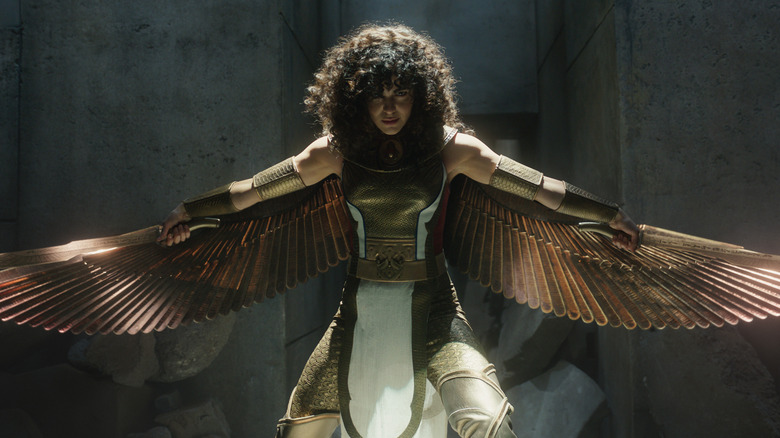
“Gladiator II” features a jam-packed ensemble led by the trio of Paul Mescal, Washington, and Pedro Pascal, but at one point the cast would’ve been even larger. Back in May of 2023, Variety reported that May Calamawy (best known for her starring role as Layla El-Faouly/Scarlet Scarab in the Disney+ series “Moon Knight”) would appear in an undisclosed role, yet her character is almost entirely missing from the final product. Only the most eagle-eyed viewers might ever even notice the precious few moments she appears in the background of a select handful of scenes, but ultimately Calamawy’s character has no bearing on the plot whatsoever. So, what happened? What role was she originally meant to have and are there any remaining clues as to what her purpose was supposed to be?
We’ll be steering clear of major story specifics here, but the extremely spoiler-adverse fans among us may want to tread carefully from this point onward.
May Calamawy recently confirmed that her Gladiator II role had been cut
Marvel Studios
If your filmography includes a major franchise like the Marvel Cinematic Universe and a historical drama from Ridley Scott, you must be doing something right as an actor. Unfortunately, May Calamawy’s second major casting ultimately wasn’t to be, as the version of “Gladiator II” that audiences will be seeing in theaters this month (which comes in under the runtime of the original “Gladiator”) doesn’t include the character she was meant to portray. This won’t be a major surprise to fans who’ve been closely following along, however, as the actor recently confirmed this sad state of affairs during London Comic Con, held in the UK this past weekend. According to a social media post by a fan in attendance, Calamawy affirmed that she won’t be appearing prominently in “Gladiator II,” but has fond memories of her filming experience anyway — even sharing scenes with Denzel Washington himself:
“[May Calamawy] says although she’s sad her character’s story didn’t make it to [‘Gladiator II’], it was one of the best experiences of her life. She loved working with Denzel Washington and said it was the coolest and she felt immediately comfortable with him.”
While not the most detailed information, this at least helps narrow down exactly what role she would’ve played in the film. Working alongside Washington’s Macrinus, a character described as a “Roman businessman who has amassed enormous wealth thanks to his acumen and brutal ambition,” implies that Calamawy would’ve been involved in the gladiatorial sequences with Paul Mescal’s Lucius to a certain extent — though not necessarily during the fights themselves. However, a closer look at some of the cast of “Gladiator II” characters might shed some light on what exactly she would’ve been up to in the highly-anticipated sequel.
There’s one credible fan-theory about May Calamawy’s Gladiator II character
Paramount
Unless Ridley Scott directly addresses this at some point, we may never know what May Calamawy’s original role would’ve been in “Gladiator II” and, most crucially, why she was left out of the story almost entirely — but that’s not stopping fans from pouring over every little detail in the blockbuster in an attempt to figure it out for themselves, anyway. It’s worth noting that Calamawy is of Egyptian and Palestinian descent, adding a potentially controversial and disturbing subtext to the decision to remove her from the film. (Actor Melissa Barrera underwent a blacklisting of sorts after her vocal support of Palestinian survivors of genocide in Gaza, while “Captain America: Brave New World” came under fire for the inclusion of an Israeli superhero.) However, it appears that there might be a more benign explanation with regards to “Gladiator II.”
One Reddit post purports to have the answer behind Calamawy’s absence from the movie. According to one user, the leading fan-theory is that she would’ve portrayed a character that, in the final version, is named Ravi and is played by Alexander Karim. Though not featured very prominently in the marketing, we know that Ravi is a doctor who attends to the wounds Lucius sustains from fighting in the arena. The Reddit user alleges that “Ravi’s scenes feel like very last-minute additions and the editing is off,” which can be explained away by the notion that Calamawy could’ve filled a similar narrative role and even served as a love interest to Lucius while binding up his wounds. So, why pivot away from this? Setting aside that this would’ve been yet another subplot in a movie already full of subplots, it also might’ve muddied up Lucius’ motivations. Loosely speaking, our hero is attempting to avenge the death of his family; adding a romantic complication might very well have felt like an unnecessary distraction.
Whatever the case may be, moviegoers will have a chance to make their own judgment when “Gladiator II” hits U.S. theaters November 22, 2024.
Tech-giant and e-commerce leader, Amazon, recently ventured into the immersive retail space with the launch of Amazon Beyond, the company’s newly minted 3D virtual shopping division—a major milestone in the advancement of immersive retail. With 10+ virtual stores on their app and website, Amazon engaged shoppers and encouraged product discovery across multiple brands. But what do Amazon’s latest virtual storefronts mean for the future of virtual shopping?
When industry leaders like Amazon invest in innovative technologies, it signals market acceptance and marks a clear path to going mainstream; brands and retailers are likely to follow suit as this technology gains mass adoption. The immersive retail industry is likely to undergo a rapid expansion as brands try to not lag behind, falling on the latter end of the adoption curve. This approach is set to become the norm, especially for brands looking to capture the attention of modern consumers.
Debuting with a mix of 3D rendered and photographed experiences, Amazon launched multiple virtual stores (available in the virtual showrooms hub) that showcase compelling 3D visuals, interactive content, must-have product selections and playful animations. For the 2024 holiday season, the e-commerce giant sought to help shoppers find the perfect gift for everyone on their list with multi-brand experiences in the Virtual Holiday Shop and Virtual Toy Shop. The hub also includes curated single-brand showrooms and shoppable tours of influencer homes.
In the Virtual Holiday Shop, visitors are greeted with a festive experience where they can explore 100+ gifts from brands like Kate Spade, Coach and more. The 3D experience features shelves in diverse store sections such as Gifts for the host, Perfect stocking stuffers, Next-gen gifts and more. Amazon plans to refresh the experience with new products throughout the holiday season, unlocking new surprises for gifting inspiration. The Virtual Toy Shop spotlights popular toys, games and activity kits from beloved brands like Play-Doh, Disney and more—visitors are immersed in a toy-themed 3D space with multiple animations, some of which show the toys in action. Amazon also released multiple single-brand virtual showrooms, creating 3D spaces dedicated to LEGO®, Samsung, Star Wars, SMEG and other notable brands. A few influencers even enabled Amazon to create shoppable tours of their homes to inspire shoppers on how to prep their homes for the holiday season.
“We’re always innovating to enhance the shopping experience and empower customers to discover products in easy and fun ways,” said Carmen Nestares Pleguezuelo, Amazon VP of North America Marketing and Prime Tech, in a statement. “With the Virtual Holiday Shop, we are excited to transport shoppers into a new immersive experience where they can browse over 300 of the most coveted gifts and toys of the season.”
Available on the Amazon website and the Amazon mobile app, each immersive experience showcased functionality found in Obsess-powered virtual stores: 3D 360 views, point-based navigation, product hotspots, high-res zoom in, add-to-cart capabilities, interactivity, animations, music, media content and more. As the world’s largest retailer, Amazon’s adoption of virtual stores affirms our mission at Obsess to create the next-generation e-commerce interface—immersing consumers in highly interactive and unique creative experiences targeted to product discovery and brand storytelling. Over the years, Obsess has partnered with the world’s leading brands and retailers in fashion, beauty, CPG, home and beyond to implement the virtual store technology on their own e-commerce websites and apps, with the same performance, quality and ease of access.
Obsess is the leading virtual store platform and has gathered robust spatial data from 400+ AI-powered virtual stores and experiences to optimize immersive retail environments that cater to the expectations of today’s consumers. Adding interactive, gamified elements into 3D virtual shopping experiences enhances customer engagement and amplifies product discovery; 80% of consumers game on a regular basis, and spend multiple hours a day in immersive environments such as Roblox. Personalized experiences are also important for modern consumers. AI-driven personalization remains at the forefront of virtual shopping, with features such as AI-powered virtual assistants making online experiences more tailored than ever. To learn how to set up a virtual store, book a demo or email us at contact@obsessvr.com.
Over the last few years, the retro floodgates have opened – and it’s honestly never been a better time to be an elderly gamer. If you want to relive the glories of your childhood there are now numerous options from a wide variety of companies – but this latest contender might be one of the most exciting yet.
I’ve seen a few Game Boy-alikes in my time. Just one year ago I reviewed the Super Pocket, a super cheap and simple offering from the team behind Evercade. The gold standard for the form remains the Analogue Pocket, a luxury and feature-filled device that keeps getting better with updates. The Chromatic slots into this pantheon on the higher end, rivalling the Pocket – though its approach is markedly different in important ways.
To see this content please enable targeting cookies.
Manage cookie settings
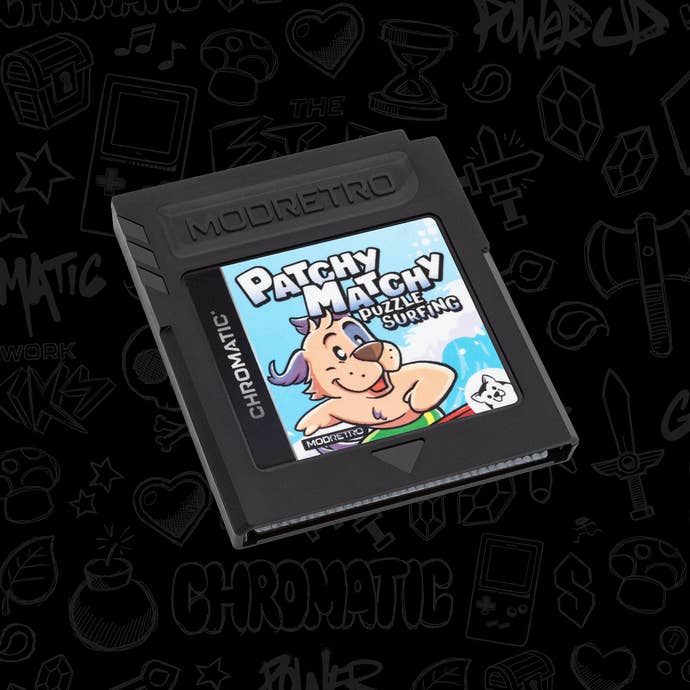
First thing’s first: this is a Game Boy. If it looks like a duck and quacks like a duck… well, this is that. It’s got that same familiar form factor – B and A buttons, Select and Start, a D-Pad, power switch, volume rocker… everything is where you’ll remember it. The form factor is alarmingly close to the Game Boy Color, though divergent enough to be ‘Legally Distinct.’ So, if we’re getting more specific, this is a Game Boy Color.
That definition brings interesting advantages, drawbacks, and considerations that we’ll dig into a little later in this article. But for now, let me start out with some broadly declarative praise – this is one of the nicest pieces of handheld gaming hardware I’ve ever used.
A lot of this is down to the shell – rather than plastic, as pretty much every other device like this uses, the Chromatic is crafted from magnesium alloy. This is still lightweight, but it feels bloody luxe. It’s a weirdly specific thing to zone in on, but when I popped off the battery compartment for the first time (this eschews the now-common rechargeable battery for three traditional Double-As, though a rechargeable battery pack is also available) I was shocked at how solid and firm the compartment feels, and how definitively it clicks into place.
The commitment to authenticity is strong. | Image credit: Chromatic
It just feels like quality. I’m envisioning that American Psycho business card scene with these damn things. Someone flashes some Abernic Android handheld. Then it’s an Analogue Pocket; “The operating system supports something called OpenFPGA.” Then the Chromatic gets slammed on the table. “Metal”. The tasteful weight of it. Oh my god, it even has an IR port…
The folks behind Chromatic claim that it’s also very, very sturdy – their website pictures a car driving over the device while it still happily runs Tetris. I don’t have the stones to test this out, but holding the device in my hands and feeling the natural heft of it, I believe them.
The build quality is good. The buttons are lovely; the D-Pad having that right amount of squishiness. The speakers are surprisingly loud, and output from the 3.5mm headphone jack is clear. Basically, it’s a nice device. Its IPS backlit LCD has a crisp, high clarity. It’s not the time of year for testing sunlight – but playing with artificial light I’m pretty sure it’ll fare quite well under nature’s glare. I like it a great deal.
But as ever, the real test for hardware like this comes in terms of the games you’ll be playing – and this is where the choices made for the Chromatic get interesting.
It is, frankly, impossible to talk about the Chromatic without talking about the Analogue Pocket. At this stage I must drop the facade and address them both, for they are such tightly-intertwined rivals that they have to be considered as a duo.
As I said before, this is a Game Boy Color. I mean it: those are the games this plays. It takes the original cartridges, and even has the matching Infrared and Link Cable ports. Using those functions, it can talk to original Game Boys – or Analogue Pockets, for that matter.
When we sit the Chromatic side-by-side with Analogue, there’s no Game Boy Advance support, no wider-reaching operating system with implied support for other types of software, and certainly no physical adapters to slot in things like Game Gear carts. This is a Game Boy Color. It takes those old cartridges and plays ‘em. With FPGA technology, it plays ‘em damn good, with near-100% accuracy to original hardware.
There’s a sense of deliberate simplicity here. The Chromatic does less, but it aims to be more impressive in what it offers for that less. For instance, a USB-C port on the bottom can be used not only to charge an optional battery pack, but also to directly video out the screen of the Chromatic to a PC. If you’re a streamer who wants to play Game Boy games without emulation, on a device that has the original machine’s form and function – the Chromatic is now the machine for you.
There’s also just something to be said for slamming a cart in, flicking the power switch… and away you go. This obviously won’t be for everybody. For a start, not everybody has libraries of games. Some want to dump a bunch of ROMs from their original carts (I assume – don’t tell me how you otherwise obtain them, I don’t want to know) and load them from an SD card, getting rid of the need to carry around and swap carts. But there’s something in the Chromatic that really channels the original experience, and I like that. Plus, if you really want to, the Chromatic does run an Everdrive without issue.
Combine that OG experience with that beautiful metal casing and this feels like a toy, sure – but it feels like a toy for grown ups.
There’s a certain… charm… to it. | Image credit: Chromatic
It’s got a grown-up price tag too. The Chromatic runs $200 (£161 for Brits, currently) – an unarguably premium product. Younger players less familiar with this hardware and without a cart collection are really not the target of this machine. In that context, and coupled with the super high quality, the price makes sense.
The $200 price puts the Chromatic just $20 cheaper than the Analogue Pocket. This is where the situation becomes a bit pricklier – that machine has more compatibility, runs just as well, and is only a smidge more expensive. However, Analogue’s offering lacks the gorgeous case, and some might find all the bells and whistles a bit of a distraction. The Analogue offers a bigger screen, but as a result comes in a much larger overall footprint – so it’s less pocket friendly.
Swings and roundabouts, as the saying goes. Ultimately, the feature and price comparison between the Analogue and Chromatic leads to what isn’t exactly an easy sell – but I can totally see the market for both devices.
Plus, the Chromatic has an ace up its sleeve. This is something that could completely flip the script around this machine in the years to come. The X-Factor is thus: Chromatic doesn’t just play Game Boy and Game Boy Color cartridges; it also plays Chromatic Cartridges.
Don’t but the cart before the horses, now. | Image credit: VG247
To be clear, these Chromatic Cartridges are just ‘new’ Game Boy Color carts, really. The Chromatic ships with an all-new port of Tetris created specifically for the machine, and if you take that cart and drop it into a GBC, Analogue Pocket, or any other similar device, it’ll run. But the curiosity here is the promise that ModRetro will release more ‘new’ games, licensed reprints of old games, or all-new ports on these carts, is intriguing.
Readily available modern cartridges back up the concept of the machine as a more simple, traditional, physical media-driven device. We’ve seen this sort of thing rolled out with great success by Evercade, which now has a pretty impressive line-up of classics available across many carts. Could the same happen here? I hope so.
Ultimately, I think this is a lovely device. The price might be difficult for some to swallow – but I think if you’re the sort of person who’d go in for this sort of thing, you’re likely already primed and ready to pay a premium. It’s one of the nicest of these devices I’ve used – and it’s one I’ll continue to use, which is saying something given how many I have access to.
The Chromatic is available to order now – and it could be a perfect Christmas gift for the ageing hardcore gamer in your life. Or, indeed, for yourself – if you’re also edging ever closer to picking up your gaming pension.
Coronation Street character Tyrone Dobbs could be off the cobbles for a while, as Alan Halsall entered the jungle last night.
Tyrone has been a staple on the Street since 1998 and is still here over 20 years later. But as the actor is due to spend at least the next few weeks Down Under in I’m a Celebrity Get Me Out Of Here, fans have been wondering what is the fate for Tyrone and his family.
Alan was reported to be due in the jungle last year but had to pull out due to an ACL injury. However, with pictures emerging last week of him at the airport in Australia, the news came out that he was back in.
But, where will he be in Coronation Street?
Tyrone might not be in Coronation Street for a few weeks (Credit: ITV)
Coronation Street: Tyrone Dobbs storyline
Fans will undoubtedly be seeing less of the mechanic in the soap, and some viewers were beginning to worry. One viewer asked on Facebook: “Where’s he going in the actual Corrie storyline?”
A second added: “Hope he’s not gone too long.”
A third person finished: “So will Tyrone just “disappear” from Corrie or will he head off to Romania?”
Corrie films around six weeks in advance, with many of the Christmas episodes already done and dusted. There’s a chance Tyrone will on screen towards the end of the year, but there will be a break into 2025.
However, Alan has assured fans he has no plans of leaving the soap and will pick up the role of Tyrone as soon as he can. Just maybe with a tan and a few spider bites this time…
But, how could Tyrone be temporarily be written out of the soap? Well, recently, Tyrone discovered that he has a son called Dorin. The young kid recently jetted back home to Romania with his mum, Alina… But, will Tyrone decide to visit him for a month or so? Or, will there be another reason for his exit?
Alan Halsall’s on I’m A Celebrity (Credit: ITV)
Alan Halsall enters the jungle
According to Manchester Evening News, Alan confirmed: “Corrie has been fantastic with it all and I am definitely not leaving the soap. You just won’t see my character for a while on-screen.”
He joked the news was the worst kept secret ever, and that he was delighted to be given a chance to do some Bushtucker Trials.
“It was a bit of a shock when I got the knee injury last year and whilst I am signed off surgically, I still had several months of physio ahead of me. But a top football professional like Rodri, for example, would take about a year to get back to playing football (after something like I’ve had) and he has the best medical staff in the world. So for your average Joe like me it is going to take longer.”
His colleagues Andy Whyment and Jennie McAlpine have both been on the show. They convinced him to give it a go. Alan said he hopes to ‘learn lots and enjoy his time’ before he reprises his role as Tyrone.
Read more: Complete Coronation Street cast list 2024 – meet them all here!
Coronation Street usually airs on Monday, Wednesday and Friday at 8pm on ITV.
So, what do you think of this story? You can leave us a comment on our Facebook page @EntertainmentDailyFix and let us know.
Large Language Models (LLMs) like GPT-4, BERT, and other transformer-based models are reshaping AI applications, driving significant advancements across fields. However, running these models requires substantial computational resources, especially for inference tasks. Choosing the right GPU is crucial for optimizing performance, controlling costs, and ensuring scalability for any AI project—whether it’s a small-scale endeavor, a research-focused setup, or a full-scale production environment.
In this article, we’ll examine the best NVIDIA GPUs for LLM inference and compare them based on essential specifications such as CUDA cores, Tensor cores, VRAM, clock speed, and cost. This guide will help you select the ideal GPU for your needs, ensuring you balance performance and budget best.
Understanding Key GPU Specifications for LLM Inference
Before we analyze the top NVIDIA GPUs, let’s review the core specifications that determine a GPU’s suitability for LLM inference tasks. Here’s a breakdown of the essential factors:
CUDA Cores: The primary units responsible for parallel processing within a GPU. Higher CUDA core counts improve the GPU’s ability to handle large, complex computations in LLM inference.
Tensor Cores: Tensor cores are specially designed for matrix operations, which are crucial for neural network calculations. A higher Tensor core count generally enhances model performance, especially for large-scale deep learning tasks.
VRAM (Video RAM): VRAM, or memory, stores the model and data during inference. More VRAM allows for efficient handling of larger models and datasets.
Clock Frequency: Clock speed, measured in MHz, indicates the rate at which a GPU performs computations. Higher frequencies translate to faster processing speeds.
Price: The cost of a GPU is always a key consideration, especially for teams or individuals working within a budget. It’s essential to find a balance between performance and affordability.
Top NVIDIA GPUs for LLM Inference: An Overview
When it comes to selecting GPUs for LLM inference, NVIDIA’s offerings are extensive, from high-end, enterprise-grade models to more budget-friendly options. Below are the top GPUs categorized by performance and price, with the highest-ranked options listed first.
1. NVIDIA H100: The Premium Choice for High-Performance LLM Inference
The NVIDIA H100 is the top-tier GPU currently available for LLM inference tasks. Built on the advanced Hopper architecture, the H100 is designed for enterprises and large research labs requiring top-notch performance. Here’s why it stands out:
Tensor Cores & CUDA Cores: It features a record-breaking number of Tensor cores, maximizing its capacity for AI-related computations. The CUDA core count is also the highest in NVIDIA’s lineup.
Memory: With 80 GB of HBM3 memory, it can manage even the largest language models, such as GPT-4, in production.
Performance: The H100’s clock speed and architecture make it one of the fastest GPUs available, ensuring minimal latency in LLM inference.
Best For: Enterprise use, large-scale production deployments, and advanced research laboratories that require the highest performance without compromise.
Cons: The H100’s capabilities come at a steep cost, making it an investment best suited for entities with substantial budgets.
2. NVIDIA A100: High Performance with Cost Flexibility
The NVIDIA A100 is another top performer and is slightly more budget-friendly than the H100. Based on the Ampere architecture, it offers high processing power and memory capacity for LLM tasks.
Tensor Cores & CUDA Cores: It has an impressive Tensor core count and is optimized for AI and LLM performance.
Memory Options: The 40 GB and 80 GB HBM2e memory variants are available, allowing users to choose based on model size and requirements.
Performance: Ideal for high-throughput inference, the A100 easily handles demanding models, providing a balance between speed and cost.
Best For: Large research teams and organizations needing strong performance with a more manageable cost.
Cons: Although more affordable than the H100, the A100 still carries a premium price.
3. NVIDIA L40: The Balanced Performer
The NVIDIA L40, based on the Ada Lovelace architecture, is a versatile option for those needing robust performance without the extreme costs of the H100 or A100.
Tensor Cores & CUDA Cores: High core counts allow it to manage complex models effectively, though it’s not as fast as the H100 or A100.
Memory: With 48 GB of GDDR6 memory, it’s well-suited for substantial model sizes and multiple inference tasks simultaneously.
Best For: Teams needing high performance at a lower cost than top-tier models.
Cons: Its GDDR6 memory type is less efficient than HBM2e or HBM3, which can impact performance in highly demanding scenarios.
4. NVIDIA A40: Efficient Performance at a Moderate Price
The NVIDIA A40 offers solid LLM inference capabilities with a more modest price tag, making it suitable for high-performance tasks in budget-conscious settings.
Tensor Cores & CUDA Cores: Equipped with 4,608 Tensor cores, it delivers high performance, albeit below the A100.
Memory: With 48 GB of GDDR6 memory, it can handle mid-to-large-sized models.
Best For: Research environments and mid-sized production applications where performance is essential but budget constraints are tighter.
Cons: It lacks the cutting-edge architecture of the H100 and A100, which limits its potential for extreme high-performance demands.
5. NVIDIA V100: Legacy Power for Budget-Conscious High-Performance
The NVIDIA V100 remains a strong contender despite being based on the older Volta architecture. It’s a great option for those needing powerful performance without investing in the latest technology.
Tensor Cores & CUDA Cores: While fewer than newer models, its core counts are still robust enough for serious LLM inference tasks.
Memory: Available in 16 GB and 32 GB HBM2 memory options, sufficient for many LLM projects.
Best For: Smaller production setups, academic research, and lower-budget deployments.
Cons: It’s less power-efficient and slower than newer models, making it best suited for those prioritizing budget over cutting-edge performance.
Budget-Friendly NVIDIA GPU Options for LLM Inference
NVIDIA’s consumer-grade GPUs offer a powerful alternative for individuals or smaller teams with limited resources. These GPUs are more affordable while still delivering adequate performance for smaller-scale LLM inference.
6. NVIDIA RTX 3090 & RTX 3080: High Power for Smaller Budgets
The NVIDIA RTX 3090 and RTX 3080 are popular consumer-grade GPUs that bring solid Tensor core performance to the table.
Memory: The RTX 3090 comes with 24 GB of GDDR6X memory, while the RTX 3080 has 10-12 GB, providing a decent range for mid-sized LLM models.
Best For: Local setups, independent developers, or smaller teams working on development or moderate inference tasks.
Cons: Their consumer-grade design limits their efficiency and longevity for continuous, large-scale AI workloads.
7. NVIDIA RTX 2080 Ti & RTX 2080 Super: Reliable for Moderate-Scale Inference
These models offer a mid-tier performance level, making them ideal for less intensive LLM inference tasks.
Memory: The 2080 Ti has 11 GB of VRAM, and the 2080 Super has 8 GB. These are sufficient for moderate-sized LLM models.
Best For: Smaller development environments or individual researchers handling lightweight tasks.
Cons: Limited Tensor core counts and memory capacity make these less suitable for high-volume inference.
8. NVIDIA RTX 3060, RTX 2060 Super, & RTX 3070: Best for Entry-Level LLM Inference
These models are the most budget-friendly options in NVIDIA’s lineup for LLM inference. While they lack the Tensor cores of higher models, they’re adequate for lightweight inference tasks.
Memory: The RTX 3060 offers 12 GB of VRAM, while the RTX 2060 Super and 3070 provide around 6-8 GB.
Best For: Individuals and small teams conducting entry-level LLM inference or prototyping.
Cons: Limited memory and fewer Tensor cores make these the least powerful options for LLM inference.
Conclusion
Selecting the right NVIDIA GPU for LLM inference is about balancing performance requirements, VRAM needs, and budget. The NVIDIA H100 and A100 are unbeatable for enterprise-scale tasks, though their costs may be prohibitive. For smaller teams or solo developers, options like the RTX 3090 or even the RTX 2080 Ti offer sufficient performance at a fraction of the cost.
Whether you’re a researcher, developer, or enterprise, consider the model size, memory demands, and budget to find the best fit. You’ll be well-equipped to power efficient, scalable LLM inference with the right GPU.
FAQs
1. Can consumer GPUs like the RTX series handle large LLM inference?Yes, but they’re best suited for smaller models or lightweight tasks. High-end GPUs like the H100 or A100 are ideal for large-scale LLMs.
2. Is the A100 a good choice for academic research?Absolutely. Its performance and VRAM options make it perfect for handling complex models, even if its price might be challenging for smaller budgets.
3. How much VRAM is ideal for LLM inference?For large models,
at least 48 GB is recommended. Smaller setups may function with 12-24 GB depending on model size.
4. Are older GPUs like the V100 still relevant?Yes, the V100 remains effective for many tasks, especially for those on a budget. However, it lacks some efficiency compared to newer models.
5. Do higher clock frequencies improve LLM inference performance?Yes, higher clock speeds generally lead to faster processing, though Tensor core counts and memory are equally important factors.
Blockchain gaming integrates blockchain technology into video games, allowing players to own, trade, and monetize in-game assets using NFTs and cryptocurrencies. Unlike traditional games, where assets are restricted to the game, blockchain games provide genuine ownership and the ability to transfer digital items.
Market Overview and Growth
The blockchain gaming market is seeing major growth. In 2022, it was $4.83 billion and is projected to be $301.53 billion by 2030, with a CAGR of 68.3% from 2023 to 2030.
This growth is driven by demand for decentralized games, NFTs, and cryptocurrencies, as well as big investments in blockchain gaming startups.
Types of Investments
Blockchain gaming is a broad landscape for investors to play in. Here’s an expanded breakdown of the investment opportunities:
1. In-Game Assets
Investing in in-game assets means buying NFTs that represent unique items within a game. These assets include:
Virtual Land: Digital real estate within virtual worlds, such as parcels in The Sandbox or Decentraland, which can be developed, leased or sold.
Characters and Avatars: Unique game characters that can be used or traded.
Items and Accessories: Special weapons, skins or tools that enhance gameplay and can be bought or sold in secondary markets.
The value of these assets is often driven by scarcity, utility within the game and demand from the player community. Investors can profit by trading these assets as their value increases over time.
2. Tokens and Cryptocurrencies
Many blockchain games have their own tokens that serve as in-game currency or provide governance rights. Examples:
AXS (Axie Infinity Shards): The governance token for Axie Infinity, to participate in decision making.
MANA: The cryptocurrency used in Decentraland for transactions and buying virtual land.
Investing in these tokens gives you exposure to the game’s economy. As the game grows and its user base increases, the demand for its native token may rise and value may appreciate.
3. Equity in Gaming Companies
Investors can buy equity in companies developing blockchain games through:
Crowdfunding Platforms: Participating in early funding rounds for startups.
Private Equity: Investing in established companies looking for capital to scale.
This way you benefit from the overall growth and success of the company, beyond individual game assets or tokens.
4. Metaverse Investments
The metaverse is a collection of interconnected virtual worlds where users can interact, work and play. Investing in metaverse projects that have gaming elements gives you diversified exposure to the wider virtual economy. Opportunities:
Virtual Real Estate: Buying land in metaverse platforms to develop or lease.
Metaverse Tokens: Buying tokens associated with metaverse projects, such as SAND for The Sandbox.
These investments are betting on the digital convergence trend where gaming, social interaction and commerce meet in virtual spaces.
How to Start Investing in Blockchain Gaming
Research the Industry
Research is key to investing. Here’s how you can do it:
Use Trusted Platforms: DappRadar has real-time data on blockchain games, user activity, trading volume and rankings. NFT News Today has the latest news, project updates and expert analysis.
Analyze Community Engagement: A project with an active community is often a good sign. Discord, Telegram and Twitter are great places to check community sentiment.
Evaluate the Team: Look for projects led by experienced teams with clear goals. Knowing who is behind the project gives you confidence in its viability.
Review the Game’s Roadmap: A detailed roadmap with milestones is a sign of a project’s commitment to long term success.
2. Set Budget and Risk Tolerance
Before you invest, assess your financial situation and set clear limits to protect yourself from losses:
How Much Can You Afford to Lose: Blockchain gaming investments, especially NFTs and tokens can be speculative. Only invest money you can afford to lose.
Diversify Your Portfolio: Don’t put all your eggs in one basket. Spread your investments across multiple games, tokens or asset types to minimize risk.
Know Your Risk: If you’re risk averse, focus on established projects with a track record. If you have a higher risk tolerance, you might look into newer, high-potential games.
3. Choose Your Investment Strategy
Your strategy will depend on your financial goals and level of involvement:
Long-Term Holding: This strategy involves buying assets like NFTs or tokens and holding onto them for extended periods, hoping their value will appreciate as the game or ecosystem grows. This is for investors who want less active management.
Short-Term Trading: Active investors can trade on market trends and asset price fluctuations by buying and selling tokens or NFTs frequently. This requires close monitoring of the market.
Combining Strategies: Some investors use a mix of long-term holding for steady growth and short-term trading for quick profits.
4. Use the Right Tools
You need the right tools to manage and secure your investments:
Trading Platforms: Marketplaces like OpenSea and exchanges like Binance are the places to trade NFTs and cryptocurrencies. These platforms give you access to a wide range of assets so you can explore and trade easily.
Wallets: Store your tokens and NFTs in secure wallets. Hardware wallets like Ledger and Trezor for offline storage or software wallets like MetaMask and Trust Wallet for ease of use.
Tracking: Apps and platforms like CoinMarketCap to track your portfolio and market movements.
Risks and Challenges in Blockchain Gaming Investments
Investing in blockchain gaming is promising but comes with risks and challenges you should be aware of:
1. Market Volatility
Token and in-game asset values in blockchain gaming can fluctuate wildly due to market sentiment, tech advancements and regulatory news. During crypto market downturns many in-game assets tied to crypto can plummet in value and impact returns.
2. Scams
The blockchain gaming space has seen some shady projects, including “rug pulls” where devs abandon a project after taking investor funds. Do your due diligence to avoid getting scammed.
3. Regulatory Grey Area
The ever-changing regulatory landscape around crypto and digital assets can impact the legality and profitability of blockchain gaming investments. Changes in tax laws or government regulations can affect some companies or industries.
4. Technical Risks
Blockchain gaming projects can have technical issues, security vulnerabilities, scalability problems and development delays. Security breaches can result in asset loss, technical shortcomings can kill a project.
How to Invest
To overcome these challenges:
Do Your Due Diligence: Research the dev team, tech, community. Read the whitepaper, roadmap and partnerships to gauge the project.
Stay Informed: Follow industry news, regulatory updates and market trends. Use trusted sources and platforms to stay up to date with developments that affect your investments.
Engage with Communities: Join investor and gaming forums, social media groups and community discussions. Engage with the community to get insights and spot red flags.
Pick Good Projects: Invest in projects with clear roadmaps and experienced dev teams. Look for transparency, regular updates and a proven track record in the project’s history.
Future of Blockchain Gaming Investments
The blockchain gaming space is about to get bigger, here’s what’s driving it:
Artificial Intelligence (AI) Integration: AI is making gaming more responsive with NPCs, personalization and in-game economy optimization. For example, DeepLink is using AI to improve cloud gaming performance so high-end gaming is more accessible.
Cross-Platform Gaming: Games that work across multiple devices are expanding player bases and engagement. Blockchain enables this by allowing asset interoperability so players can use their in-game items across different platforms.
Augmented Reality (AR) Adoption: AR is combining digital and physical worlds, gaming is getting more immersive. Blockchain enables this by securing ownership and transfer of digital assets in AR environments. Companies are building AR games that use blockchain to offer unique experiences.
Final Thoughts
The blockchain gaming sector represents an exciting investment opportunity. By understanding the market, knowing the risks, and using smart investment strategies, you can successfully navigate this space. Responsible and strategic engagement is key to maximizing the potential of blockchain gaming investments.
Ronan Mullaney, founder of NFT News Today, is a leading voice in the NFT, Metaverse, and Web3 space. Based in Bangkok, he combines journalism and tech expertise to explore the future of digital innovation.
Dune: Prophecy wasted relatively little time setting itself apart from the movies. In the season one premiere of the Dune prequel series, a war is violently declared by the killing of likely the youngest person ever murdered onscreen in director Denis Villeneuve’s Dune universe.
Blasphemous 2 Developer Interview
Set over 10,000 years prior to the events of the films, Dune: Prophecy is largely focused on the invisible influence of the Bene Gesserit sisterhood under the ruling of Mother Superior Valya Harkonnen (Emily Watson). The first episode, aptly titled “Hidden Hand,” shows the murderous origins of the Bene Gesserit, and their plans to arrange the right unions of families to keep the sisterhood in power. At the time, House Corrino are the ruling family of the Imperium after defeating the thinking machines feared to one day enslave mankind. Through silent communications and duplicitous advisory to Emperor Javicco Corrino (played with an unflappable stoicism by The Penguin’s Mark Strong) from his Truthsayer and confidant Kasha (Jihae), we see how the hidden hand of the Bene Gesserit moves the pieces on the chess board how it wishes, to deadly results.
Every event in the Dune films takes place during wartime. Walking like a regular person on Arrakis dunes can get you devoured by a sandworm in moments, and a simple counter-suggestion to the terrifyingly hairless Feyd-Rautha Harkonnen (Austin Butler) can get your throat slit quicker than you can finish their sentence. Brutality has always been used in the films as a way to never let the audience forget the life-or-death stakes at play. Dune: Prophecy takes that to a level we’ve never seen in the films.
Desmond Hart and Pruwet Richese establish the stakes in Dune: Prophecy
Image: Attila Szvacsek/HBO
Poor little Pruwet. All he wanted to do was play with his absolutely adorable, potentially homicidal AI-controlled lizard. As the nine-year-old Richese heir, he’s used as a pawn in the strategic union between his family and the imperial House Corrino. Emperor Corrino needs the Richese’s fleet of ships to protect his spice operation on Arrakis from the Fremen, and the duplicitous Duke Ferdinand Richese (Brendan Cowell) wants influential proximity to the Great Houses, so a marriage is arranged between pre-teen Pruwet and fully grown Princess Ynez (Sarah-Sofie Boussnina) to unite the families, with the surreptitious help of the Bene Gesserit.
Unfortunately for Pruwet, he becomes a sacrifice in an invisible war that soldier Desmond Hart implies is being waged against the Bene Gesserit’s manipulative influence over everyone’s actions. Just as death can come quick and sudden in the films, Pruwet goes from hanging on every word of Hart’s tales of war to writhing in pain as we see his skin begin to burn. Yes, for what seems to be the first time onscreen in Villeneuve’s Dune universe, a child is murdered…and we see it happen.
This isn’t, strictly speaking, the first time children have been killed in this series, as it’s safe to assume a number of them died when Feyd-Rautha bombed Sietch Tabr, which was inhabited by hundreds of Fremen. However, we never see any of the children’s deaths, nor has any one child been the focus of a killing on screen. In the films, children were seen but rarely ever heard. In Dune: Prophecy, even children can be taken out if it means winning the war.
Why did Desmond Hart kill Pruwet Richese?
Image: Attila Szvacsek/HBO
To oversimplify the reasoning for this shocking killing, Pruwet was killed by Hart because of his AI-controlled lizard toy. Expanding beyond that isolated incident, Pruwet was murdered because Hart had suspicions that an attack on his regimen and the theft of the Corrino family’s spice shipment were carried out in order to inspire their emperor to bring in the Richese’s fleet for protection, thusly bringing the family closer to the Great Houses through marriage. When Hart shared his report of the attack on the spice operation, which he suspiciously was not made aware of by Kasha, he remarked that equipment used in the attack was from the outside world. That toy, and the convenient marriage proposal from the Richese, was enough for Hart to believe they were behind the attack.
This is also why we see Kasha suffer the same burning fate as Pruwet. Hart has a feeling that the Bene Gesserit are manipulating powerful people like the Corrino emperor for their own ulterior motives. Pruwet’s death effectively dissolves the partnership between the families, removing them from inside of the Corrino family where they can do untold harm.
We still don’t know the true ramifications of Hart’s actions, or how he was able to kill both of these people in the same manner while only being next to one of them. But, if the series premiere is willing to cross a moral line the movies never explicitly touched, we can expect to find out, in graphic detail, just how violent this war can get.