Home Blog Page 1332

Facebook’s Vision of the Metaverse: A New Digital Frontier – Web3oclock

0
Facebook’s Vision of the Metaverse: A New Digital Frontier – Web3oclock


What is the Metaverse According to Meta?

Key Pillars of Meta’s Metaverse Initiatives

The Technologies Behind Meta’s Metaverse

Potential Challenges and Criticisms

1. Horizon Worlds:

2. Horizon Workrooms:

3. Horizon Venues:

4. Oculus and Next-Gen VR/AR Hardware:
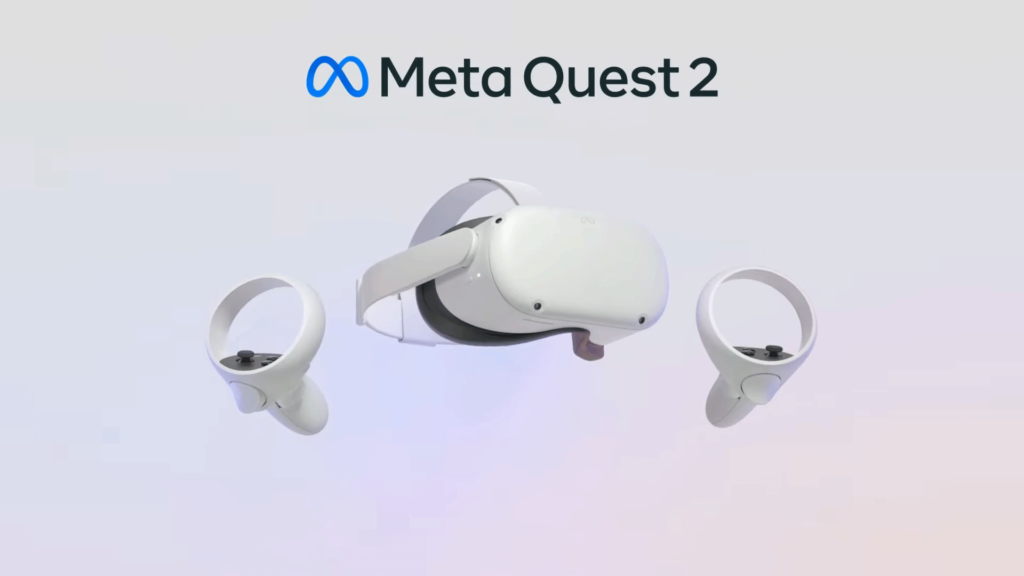
5. Meta Avatars and AI-Powered Personalization:

6. Spark AR and Augmented Reality Initiatives:

7. Virtual Economy and Digital Commerce:
8. Project Cambria (High-End VR Headset):
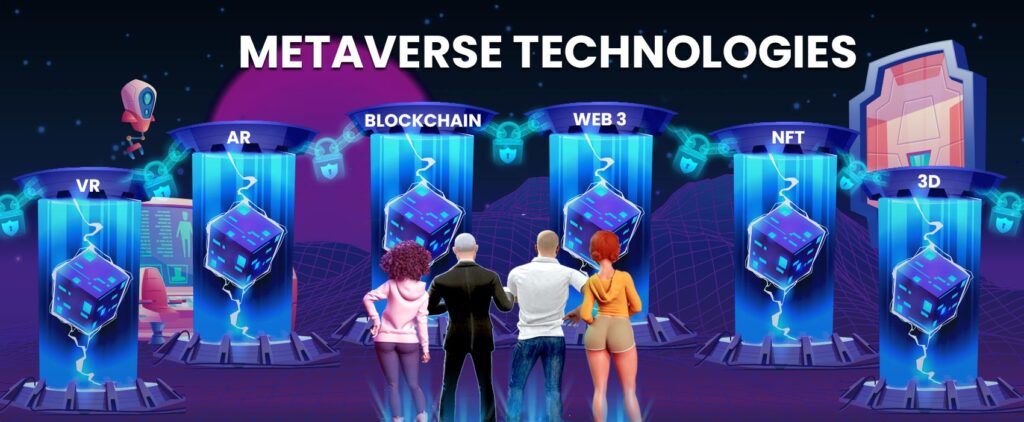
The Technologies Behind Meta’s Metaverse:
1. Virtual Events: 

Potential Challenges and Criticisms of Meta:


Source link

NBA Star Shaquille O’Neal to Pay $11 Million in Astrals NFT Lawsuit Settlement – Cryptoflies News

0
NBA Star Shaquille O’Neal to Pay  Million in Astrals NFT Lawsuit Settlement – Cryptoflies News


0

Former basketball player Shaquille O’Neal has agreed to settle a lawsuit related to the Astrals non-fungible token (NFT) project, committing to pay $11 million. The settlement awaits court approval, which would conclude the legal dispute tied to O’Neal’s involvement in the project.

The lawsuit began last year when investors in the Astrals project accused O’Neal of promoting and selling unregistered securities. 

The case revolved around Astrals NFTs, described as 10,000 “metaverse-ready 3D avatars,” and the associated Galaxy token. 

While O’Neal was not directly in charge of the project, a Florida court ruled in August that he played the role of a “seller,” linking him to its promotion.

Legal issues surrounding NFTs are not new, with other high-profile figures and companies facing similar accusations.

You Might Be Interested In

In June, Dapper Labs settled a lawsuit over its NBA Top Shot NFTs for $4 million. In July, a U.S. judge rejected DraftKings’ effort to dismiss a class action claiming its NFTs were unregistered securities. Shortly after, DraftKings shut down its Reignmakers NFT game and marketplace, citing legal risks.

Last November, Cristiano Ronaldo was sued over his NFT collaboration with Binance. 

Last year, media company Impact Theory paid a $6.1 million penalty for issuing unregistered NFT securities, while the creators of Stoner Cats NFTs were fined $1 million for similar violations.

Regulatory action has continued this year. Earlier this month, the SEC issued a Wells notice to Immutable, suggesting legal action might follow over alleged securities law violations tied to its IMX token. The SEC also targeted OpenSea, raising concerns about unregistered securities sold on its platform.


Source link

MetaMask Releases Extension V12.6, Introducing Gas Station And Chain Permission Controls

0
MetaMask Releases Extension V12.6, Introducing Gas Station And Chain Permission Controls


In Brief

MetaMask has released its v12.6 extension, introducing Gas Station for token swaps without requiring ETH for gas fees, and Chain Permission controls that provide users with control over account and network permissions.

MetaMask Releases Extension V12.6, Introducing Gas Station And Chain Permission Controls

Self-custodial cryptocurrency wallet MetaMask announced the release of extension v12.6, introducing a new feature that allows users to swap tokens without needing ETH to cover gas fees.

The update introduces the Gas Station feature, which becomes accessible when users enable Smart Transactions with MetaMask Swaps. This functionality simplifies and accelerates transactions by incorporating network fees directly into the quotes users receive. Furthermore, users are not restricted to a single liquidity source for their Swaps. Instead, the platform continues to aggregate data from a wide range of providers, including decentralized exchange aggregators, market makers, and decentralized exchanges (DEXs), ensuring competitive pricing and minimal network fees.

Currently, the Gas Station feature is available on the MetaMask Extension via the Ethereum mainnet, with plans to expand to mobile devices in the near future. In order to use it, the swap value must cover the cost of gas and include supported assets such as USDT, USDC, DAI, ETH, wETH, wBTC, wstETH, and wSOL.

Chain Permission Controls Enable More Granular Account And Network Management

Another update includes the ability for users to sign transactions on any permitted network without the need to manually approve network switches. This enhancement is made possible through the Chain Permission controls, which provide users with more detailed control over account and network permissions.

Permissions are granted to each decentralized application (dApp) at the time of connection, offering users flexibility and oversight. When a user connects to a dApp, the account in use and all default-enabled networks automatically gain permission for that dApp. However, users can modify these permissions either during the initial connection process or afterward through the All Permissions section. For those managing their own infrastructure, such as home stakers, the update also allows users to review and adjust their chosen RPC URLs as needed.

This feature not only enhances MetaMask‘s usability but also strengthens its security framework. By enabling users to limit dApp permissions, it reduces potential exposure to security risks while maintaining a seamless user experience.

MetaMask is a free digital wallet tailored for managing ETH and Ethereum-based tokens, acting as a gateway to the Ethereum blockchain. It allows users to perform a range of functions, including buying, sending, receiving, and swapping cryptocurrencies and NFTs. Additionally, it offers support for adding custom networks, extending its usability beyond the Ethereum ecosystem.

Disclaimer

In line with the Trust Project guidelines, please note that the information provided on this page is not intended to be and should not be interpreted as legal, tax, investment, financial, or any other form of advice. It is important to only invest what you can afford to lose and to seek independent financial advice if you have any doubts. For further information, we suggest referring to the terms and conditions as well as the help and support pages provided by the issuer or advertiser. MetaversePost is committed to accurate, unbiased reporting, but market conditions are subject to change without notice.

About The Author


Alisa, a dedicated journalist at the MPost, specializes in cryptocurrency, zero-knowledge proofs, investments, and the expansive realm of Web3. With a keen eye for emerging trends and technologies, she delivers comprehensive coverage to inform and engage readers in the ever-evolving landscape of digital finance.

More articles


Alisa Davidson


Alisa, a dedicated journalist at the MPost, specializes in cryptocurrency, zero-knowledge proofs, investments, and the expansive realm of Web3. With a keen eye for emerging trends and technologies, she delivers comprehensive coverage to inform and engage readers in the ever-evolving landscape of digital finance.


More articles


Source link

Grayscale to Launch Bitcoin ETF Options Following BlackRock’s Record Debut – Decrypt

0
Grayscale to Launch Bitcoin ETF Options Following BlackRock’s Record Debut – Decrypt


Crypto asset manager Grayscale Investments plans to roll out options trading on its spot Bitcoin ETFs on Wednesday amid the first glimpses of solid investor appetite for such products.

The announcement comes a day after BlackRock’s iShares Bitcoin Trust (IBIT) achieved record-breaking activity on its first day of options trading, pushing Bitcoin to a new all-time high.

Grayscale will launch options trading on GBTC (Grayscale Bitcoin Trust) and BTC (Bitcoin Mini Trust) to “further [develop] the ecosystem around our US-listed Bitcoin ETPs,” it said.

Following the Options Clearing Corporation’s (OCC) approval of Bitcoin ETF options, Grayscale quickly filed an updated prospectus for its Bitcoin Covered Call ETF on January 11.

The tooling aims to generate income by employing a covered call strategy—writing and buying options contracts on Bitcoin exchange-traded products (ETPs) while holding Bitcoin or GBTC as collateral.

Bloomberg ETF analyst Seyffart called attention to the speed of Grayscale’s response following the OCC’s clearance, tweeting Tuesday that the asset manager was “wasting no time.”

“They’ve filed an updated prospectus for their Bitcoin Covered Call ETF,” Seyffart tweeted. “The fund will offer exposure to $GBTC & $BTC while writing &/or buying options contracts on Bitcoin ETPs for income.”

Grayscale follows the unprecedented debut of BlackRock’s IBIT options, which recorded nearly $1.9 billion in notional exposure traded on its first day

Seyffart shared details on X, observing that 354,000 contracts were exchanged, including 289,000 calls and 65,000 puts, representing a 4.4:1 call-to-put ratio.

The ratio indicates that a significantly larger number of investors placed bets on Bitcoin’s price rise (calls) compared to those hedging against a potential price drop (puts). 

“These options were almost certainly part of the move to the new Bitcoin all-time highs today,” Seyffart wrote, referring to Bitcoin’s surge to $94,041 on Tuesday.

Bloomberg’s senior ETF analyst Eric Balchunas characterized the $1.9 billion trading volume as “unheard of” for any given options trading within an ETF during its first day.

“$For context, BITO did $363 million, and that’s been around for four years,” Balchunas wrote on X, referring to ProShares’ futures Bitcoin ETF.

Roughly 73,000 options contracts were traded in the first 60 minutes, placing IBIT among the top 20 most active non-index options on its opening day.

Grayscale’s launch comes a year after its major legal victory against the SEC. Last August, the U.S. Court of Appeals ordered the SEC to revisit its denial of Grayscale’s application to convert its Bitcoin Trust into a spot ETF.

This ruling was a turning point for crypto ETFs, challenging regulatory resistance that had stalled their approvals for nearly a decade.

Edited by Sebastian Sinclair

Daily Debrief Newsletter

Start every day with the top news stories right now, plus original features, a podcast, videos and more.


Source link

Step-by-Step Guide to Creating an LLM-Based App for Chat with Papers

0
Step-by-Step Guide to Creating an LLM-Based App for Chat with Papers


Staying updated with the latest in machine learning (ML) research can feel overwhelming. With the steady stream of papers on large language models (LLMs), vector databases, and retrieval-augmented generati on (RAG) systems, it’s easy to fall behind. But what if you could access and query this vast research library using natural language? In this guide, we’ll create an AI-powered assistant that mines and retrieves information from Papers With Code (PWC), providing answers based on the latest ML papers.

Our app will use a RAG framework for backend processing, incorporating a vector database, VertexAI’s embedding model, and an OpenAI LLM. The frontend will be built on Streamlit, making it simple to deploy and interact with.

Step 1: Data Collection from Papers With Code

Papers With Code is a valuable resource that aggregates the latest ML papers, source code, and datasets. To automate data retrieval from this site, we’ll use the PWC API. This allows us to collect papers related to specific keywords or topics.

Retrieving Papers Using the API

To search for papers programmatically:

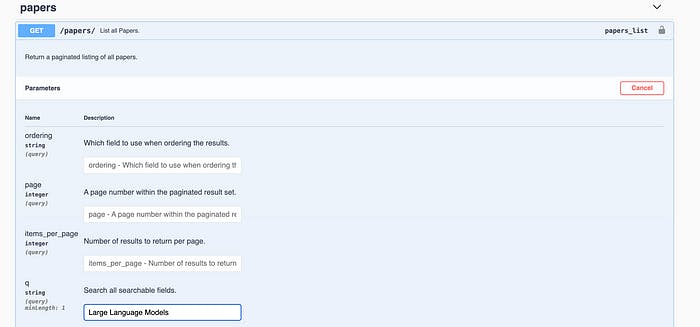
Access the PWC API Swagger UI and locate the papers/ endpoint.

Use the q parameter to enter keywords for the topic of interest.

Execute the query to retrieve data.

Each response includes the first set of results, with additional pages accessible via the next key. To retrieve multiple pages, you can set up a function that loops through all pages based on the initial result count. Here’s a Python script to automate this:

import requests
import urllib.parse
from tqdm import tqdm

def extract_papers(query: str):
query = urllib.parse.quote(query)
url = f”https://paperswithcode.com/api/v1/papers/?q={query}
response = requests.get(url).json()
count = response[“count”]
results = response[“results”]

num_pages = count // 50
for page in tqdm(range(2, num_pages)):
url = f”https://paperswithcode.com/api/v1/papers/?page={page}&q={query}
response = requests.get(url).json()
results.extend(response[“results”])
return results

query = “Large Language Models”
results = extract_papers(query)
print(len(results))

Formatting Results for LangChain Compatibility

Once extracted, convert the data to LangChain-compatible Document objects. Each document will contain:

page_content: stores the paper’s abstract.

metadata: includes attributes like id, arxiv_id, url_pdf, title, authors, and published.

from langchain.docstore.document import Document

documents = [
Document(
page_content=result[“abstract”],
metadata={
“id”: result.get(“id”, “”),
“arxiv_id”: result.get(“arxiv_id”, “”),
“url_pdf”: result.get(“url_pdf”, “”),
“title”: result.get(“title”, “”),
“authors”: result.get(“authors”, “”),
“published”: result.get(“published”, “”)
},
)
for result in results
]

Chunking for Efficient Retrieval

Since LLMs have token limitations, breaking down each document into chunks can improve retrieval and precision. Using LangChain’s RecursiveCharacterTextSplitter, set chunk_size to 1200 characters and chunk_overlap to 200. This will generate manageable text chunks for optimal LLM input.

text_splitter = RecursiveCharacterTextSplitter(
chunk_size=1200,
chunk_overlap=200,
separators=[“.”]
)
splits = text_splitter.split_documents(documents)
print(len(splits))

Step 2: Creating an Index with Upstash

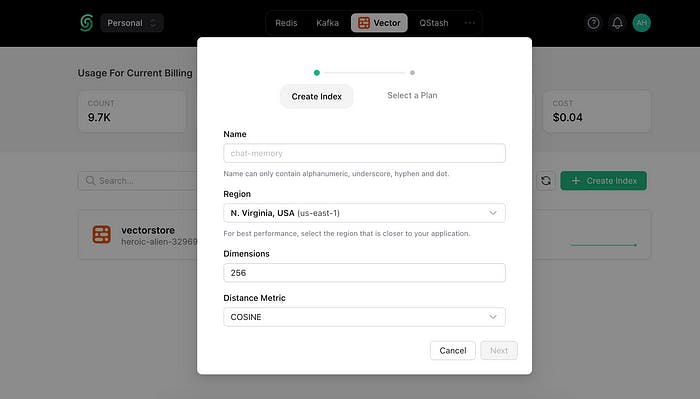
To store embeddings and document metadata, set up an index in Upstash, a serverless database ideal for our project. After logging into Upstash, set your index parameters:

Region: closest to your location.

Dimensions: 768, matching VertexAI’s embedding dimension.

Distance Metric: cosine similarity.

Then, install the upstash-vector package:

pip install upstash-vector

Use the credentials generated by Upstash (URL and token) to connect to the index in your app.

from upstash_vector import Index

index = Index(
url=“<UPSTASH_URL>”,
token=“<UPSTASH_TOKEN>”
)

Step 3: Embedding and Indexing Documents

To add documents to Upstash, we’ll create a class UpstashVectorStore which embeds document chunks and indexes them. This class will include methods to:

from typing import List, Optional, Tuple, Union
from uuid import uuid4
from langchain.docstore.document import Document
from langchain.embeddings.base import Embeddings
from tqdm import tqdm
from upstash_vector import Index

class UpstashVectorStore:
def __init__(self, index: Index, embeddings: Embeddings):
self.index = index
self.embeddings = embeddings

def add_documents(
self,
documents: List[Document],
batch_size: int = 32
):

texts, metadatas, all_ids = [], [], []

for document in tqdm(documents):
texts.append(document.page_content)
metadatas.append({“context”: document.page_content, **document.metadata})

if len(texts) >= batch_size:
ids = [str(uuid4()) for _ in texts]
all_ids += ids
embeddings = self.embeddings.embed_documents(texts)
self.index.upsert(vectors=zip(ids, embeddings, metadatas))
texts, metadatas = [], []

if texts:
ids = [str(uuid4()) for _ in texts]
all_ids += ids
embeddings = self.embeddings.embed_documents(texts)
self.index.upsert(vectors=zip(ids, embeddings, metadatas))
print(f”Indexed {len(all_ids)} vectors.”)
return all_ids

def similarity_search_with_score(
self, query: str, k: int = 4
) -> List[Tuple[Document, float]]:

query_embedding = self.embeddings.embed_query(query)
results = self.index.query(query_embedding, top_k=k, include_metadata=True)
return [(Document(page_content=metadata.pop(“context”), metadata=metadata), score)
for metadata, score in results]

To execute this indexing:

from langchain.embeddings import VertexAIEmbeddings

embeddings = VertexAIEmbeddings(model_name=“textembedding-gecko@003”)
upstash_vector_store = UpstashVectorStore(index, embeddings)
ids = upstash_vector_store.add_documents(splits, batch_size=25)

Step 4: Querying Indexed Papers

With the abstracts indexed in Upstash, querying becomes straightforward. We’ll define functions to:

Retrieve relevant documents.

Build a prompt using these documents for LLM responses.

def get_context(query, vector_store):
results = vector_store.similarity_search_with_score(query)
return “\n===\n”.join([doc.page_content for doc, _ in results])

def get_prompt(question, context):
template = “””
Use the provided context to answer the question accurately.

%CONTEXT%
{context}

%Question%
{question}

Answer:
“””
return template.format(question=question, context=context)

For example, if you ask about the limitations of RAG frameworks:

query = “What are the limitations of the Retrieval Augmented Generation framework?”
context = get_context(query, upstash_vector_store)
prompt = get_prompt(query, context)

Step 5: Building the Application with Streamlit

To make our app user-friendly, we’ll use Streamlit for a simple, interactive UI. Streamlit makes it easy to deploy ML-powered web apps with minimal code.

import streamlit as st
from langchain.chat_models import AzureChatOpenAI

st.title(“Chat with ML Research Papers”)
query = st.text_input(“Ask a question about ML research:”)

if st.button(“Submit”):
if query:
context = get_context(query, upstash_vector_store)
prompt = get_prompt(query, context)
llm = AzureChatOpenAI(model_name=“<MODEL_NAME>”)
answer = llm.predict(prompt)
st.write(answer)

Benefits and Limitations of Retrieval-Augmented Generation (RAG)

RAG systems offer unique advantages, especially for ML researchers:

Access to Up-to-Date Information: RAG lets you pull information from the latest sources.

Enhanced Trust: Answers grounded in source documents make results more reliable.

Easy Setup: RAGs are relatively straightforward to implement without needing extensive computing resources.

However, RAG isn’t perfect:

Data Dependence: RAG accuracy hinges on the data fed into it.

Not Always Optimal for Complex Queries: While fine for demos, real-world applications may need extensive tuning.

Limited Context: RAG systems are still limited by the LLM’s context size.

Conclusion

Building a conversational assistant for machine learning research using LLMs and RAG frameworks is achievable with the right tools. By using Papers With Code data, Upstash for vector storage, and Streamlit

for a user interface, you can create a robust application for querying recent research.

Further Exploration Ideas:

Use the full paper text rather than just abstracts.

Experiment with metadata filtering to improve precision.

Explore hybrid retrieval techniques and re-ranking for more relevant results.

Whether you’re an ML enthusiast or a researcher, this approach to interacting with research papers can save time and streamline the learning process.


Source link

Developing a Play-to-Earn Game: A Comprehensive Guide

0
Developing a Play-to-Earn Game: A Comprehensive Guide


The industry is evolving with the play-to-earn (P2E) models, where players earn real-world value through in-game activities. This guide will walk you through the steps to build a successful P2E game.

P2E games use blockchain, players own, trade and monetize in-game assets as NFTs. Players own true assets, can sell or trade on multiple platforms.

Conceptualize and Build Your Game

First, identify your target audience and understand the market. Design gameplay that’s fun and has earning mechanics and balance entertainment value with earning potential so players will keep playing.

Choose a blockchain and implement smart contracts to secure in-game transactions. Scalability and security for a growing user base: Consider the environmental impact of your chosen blockchain, and look for energy-efficient options.

Create a sustainable tokenomics by creating in-game currencies and assets. Plan carefully to prevent inflation and maintain value, implement token burns or staking to regulate the economy and incentivize player engagement.

Different P2E games have different tokenomics. Some use dual token systems to separate in-game currency from governance tokens to stabilize the economy. Evaluate these models to see how they impact player retention and game sustainability.

Understand regional regulations on crypto and NFTs to comply with gaming and financial laws. Address gambling and player protection concerns to build trust with the gaming community.

User Experience, Testing, Launch

Create blockchain-friendly interfaces to make the user experience smooth for new players to the tech. Build and grow a community around the game to build loyalty and gather feedback. Offer support and education to help players navigate blockchain gaming.

Test alpha and beta thoroughly to find and fix issues. Gather and implement user feedback to finalize the product. Plan a strategic launch, maybe with exclusive in-game events or rewards, to attract and retain players.

Post-Launch and Future Trends

Update content and features to keep the game fresh. Monitor and adjust the in-game economy. Engage the community with events and incentives to keep interest and attract new players.

Emerging tech like AR can change P2E games and offer new experiences. Shifts in player demographics and preferences, like mobile gaming and social interactions, will impact game development. Stay on top of these trends to innovate and adapt so your game stays relevant and fun.

Conclusion

Building P2E games has its challenges, technical, regulatory and economic. But the opportunities are big. As tech advances and the gaming community gets more familiar with blockchain, P2E games future looks bright.

By understanding the mechanics, integrating blockchain and focusing on user experience, developers can build fun and sustainable P2E games. Be ahead of the curve and tackle the challenges and you’ll be successful in this space.

Editor’s note: This article was written with the assistance of AI. Edited and fact-checked by Owen Skelton.

Owen Skelton

Owen Skelton is an experienced journalist and editor with a passion for delivering insightful and engaging content. As Editor-in-Chief, he leads a talented team of writers and editors to create compelling stories that inform and inspire.

View all posts


Source link

PS Portal beta update allows cloud streaming

0
PS Portal beta update allows cloud streaming


The PS Portal has proven to be a surprisingly solid device that is selling very well, and now a new update is set to make the handheld even better, allowing cloud streaming.

The new update will go live worldwide over the next 24-hours, promising gamers the ability to stream “over 120 PS5 games” at up to 1080p and 60FPS. Games available include Dave the Diver, Ghost of Tsushima, Marvel’s Spider-Man: Miles Morales and Ratchet & Clank: Rift Apart. PS4 and PS3 games are not currently supported in the beta.

However, not everyone will be able to use the feature as Sony has opted to limit it to PS Plus Premium subscribers. The feature will be available in any country where PS Plus Premium can be found, and to activate it you’ll need to head into the settings and turn on “Cloud Streaming (beta)”. Once that’s turned on, a new option should pop up on the PS Portal’s home screen that will take you to all of the supported titles.

It should be noted that you can stream PS5 games without needing a console at home, meaning the PS Portal can essentially be used as a completely stand-alone handheld gaming device. It isn’t quite a PSP successor, but it’s probably as close as we will get for a while.

“This update will also include a beta version of a new feature that many fans have been asking for – support for cloud streaming on PS Portal.” says the official blog post. “When the update is live, PlayStation Plus Premium members will be able to participate in a beta for cloud streaming on PS Portal, allowing select PS5 games in the PlayStation Plus Game Catalog* to be streamed directly from our servers, even without a PS5 console.”

If you want to give streaming a whirl, Sony says you’ll need a 7Mbps connection for 720p, and 13Mbps for 1080p.


Source link

Fateforge: Chronicles of Kaan Returns to Kickstarter with Kin of the Wild Expansion – TGN – Tabletop Gaming News

0
Fateforge: Chronicles of Kaan Returns to Kickstarter with Kin of the Wild Expansion – TGN – Tabletop Gaming News


The world of Fateforge: Chronicles of Kaan is expanding with the launch of Kin of the Wild, the second major expansion for the acclaimed board game. The Kickstarter campaign, which also includes a deluxe second printing of the core game, is set to begin on February 11th, 2025.

Kin of the Wild introduces a rich new chapter to the game, featuring the addition of animal companions known as Pets. These companions function as unique mini-characters with their own abilities, dice, and sculpted miniatures, enhancing both strategy and immersion. Players will explore the snow-covered northern regions of Kaan with these loyal allies.

The expansion’s storyline centers on the harbor city of Katafygia, where the disappearance of a shaman threatens the stability of a small forest clan. This mystery unfolds against the backdrop of rising tensions with the Kartaçöl empire, whose expanding influence endangers the peace of the region. Players will confront new challenges, including fresh adversaries and unpredictable encounters that introduce additional layers of complexity and excitement to the gameplay.

An illustration of a polar bear wearing detailed leather armor from the Kin of the Wild Expansion stands confidently on a snowy surface. The armor, adorned with metallic details and straps, gives the bear a regal and fierce appearance, reminiscent of tales from the Chronicles of Kaan.

In addition to expanding the narrative, Kin of the Wild adds new environments and items, enhancing the sense of exploration and discovery. Players will navigate through richly detailed forests and rustic interiors, face more challenging enemies, and uncover tools and weapons to aid them in their quest. The new content seamlessly integrates with the core game, offering a deeper and more dynamic experience.


Source link

I’m A Celeb’s Dean McCullough under fire as he’s comforted by Ant and Dec and viewers call out his tears

    0
    I’m A Celeb’s Dean McCullough under fire as he’s comforted by Ant and Dec and viewers call out his tears


    Tonight on I’m A Celebrity, Dean McCullough took on the latest Bushtucker Trial, The Sinister Sarcophagus.

    Tuesday night’s show (November 19) saw Dean locked inside an Egyptian coffin, as it filled with sand. Hosts Ant and Dec then asked him questions about Egypt, before a star dropped from above and he had to post it through the letterbox with his mouth.

    And, of course, Dean wasn’t alone in his coffin.

    The Egyptian-themed task was a struggle for Dean (Credit: ITV)

    ‘I’m freaking out’

    “I’m freaking out,” he declared, before getting inside. However, once the sand started to fill up, Dean panicked. And, after winning just two stars, he screamed those immortal words: “I’m a celebrity – get me out of here!”

    Once outside, Dean – who doesn’t like enclosed spaces – was in tears and struggling to breathe. Hosts Ant and Dec reassured him and moved him away from the trial so that he could breathe a little easier.

    Dean explained that he struggled because the sand that filled the tank meant he couldn’t move his legs. Once recovered, he headed back to his campmates to tell them he’d only won two stars.

    Ant and Dec console Dean on I'm A Celebrity

    Ant and Dec consoled Dean on I’m A Celebrity tonight (Credit: ITV)

    I’m A Celebrity: Dean cruelly trolled

    However, while they were all very sympathetic, Twitter really wasn’t.

    Some I’m A Celebrity viewers mocked the DJ, predicting he’ll be voted for all the upcoming Bushtucker Trials. Others cruelly joked about how long it would be before Dean was “exempt from a trial on medical grounds”.

    Bet you we hear Dean is exempt for the next 10 trials!

    Fans of the star had his back, though, defending Dean, while commenting: “He genuinely had a wee panic attack in there.”

    Wonder how long it is until Dean is exempt from a trial on ‘medical grounds,” said one.

    Pathetic. Bet you we hear Dean is exempt for the next 10 trials! He done my head in before but now he can do one,” said another. A third commented: “How long before Dean is made exempt from the trials?”

    Surprised they haven’t exempt Dean from next trial after that one,” said another.

    Dean crying on I'm A Celebrity

    Dean struggled to breathe and cried after exiting the task (Credit: ITV)

    ‘I feel awful for him and the backlash he’s going to get’

    However, Dean was supported by many I’m A Celebrity viewers.

    “Not another enclosed area trial y’all are SICK if you vote for Dean,” said one viewer of tonight’s trial vote.

    “OH! I hate when trials are wasted but he genuinely had a wee panic attack in there didn’t he,” said another. “Can people not take the [bleep] out of someone with claustrophobia,” said another, hitting back at the mean comments.

    “Aww I feel awful for him and the backlash he’s going to get from this,” said another. “If someone has claustrophobia it’s a genuine fear, don’t get why people are taking the [bleep]?” said another.

    “Claustrophobia ain’t a joke honestly, you feel like you can’t breathe when your legs are covered,” another agreed. “What kind of task though?? For someone that has stated they can’t cope with claustrophobia? He should have been exempt really,” said another.

    “Bless him apologising,” one more viewer added.

    Ant and Dec consoling Dean crying on I'm A Celebrity

    The hosts rushed to comfort Dean (Credit: ITV)

    Ant and Dec under fire

    However, others saved their backlash for the hosts.

    To be fair Dean could have done that but @antanddec took the [bleep] with how slow they were asking the questions and it was getting to much for him,” they said.

    At the end of tonight’s show, Ant and Dec went into camp to reveal who’d be taking part in the Drown in the Dumps trial tomorrow night. And, sadly for Dean, viewers stayed true to their word and voted him in.

    However, he won’t be facing it alone, as GK Barry will also take part in the Bushtucker Trial with him.

    Read more: Tulisa’s controversial tattoo explained – what it says and why it sparked Ofcom complaints

    YouTube video player

    So who do you want to win I’m A Celebrity this year? Tell us on our Facebook page @EntertainmentDailyFix.


    Source link

    Slay The Princess – The Pristine Cut Switch Review

    0
    Slay The Princess – The Pristine Cut Switch Review


    Slay the Princess – The Pristine Cut is a visual novel in the style of something called The Stanley Parable. I have not played The Stanley Parable, but I have it downloading since it is on sale as of the writing. The point is to make choices, usually a binary a or b, but sometimes more. There are no wrong choices, as no what matter you do, you are led towards a foregone conclusion. You are a hero, and your job is a slay a princess chained up in a cabin basement. If you try to slay the princess, like I did, you will fail, and then die. Then Chapter II will start and the cabin will be completely different. You will end up dying again and end up at the beginning of chapter I to repeat. But things will be different this time around…

    This princess is evil… or is she?

    Slay the Princess is straight Cosmic Horror, there’s even a trigger warning at the start. HP Lovecraft is a direct influence here. The game gets weirder and weirder as time goes on as you repeat trying to slay the princess. Even the narrator become unreliable. The Stanley Parable was a game made for critics to slobber over. Time will tell if I slobber over that game, but I’m not slobbering here. I love cosmic horror, but I was left with a giant sense of “meh” at the end. No emotional reaction whatsoever. Maybe I’m too jaded. Maybe I’m too hard to scare. It could be that Slay the Princess revealed too much at the end, or relied too much on metaphysical mumbo-jumbo at times to be scary.

    I won’t knock Slay the Princess too hard. The voice work is great. The art is well done. I just couldn’t muster up any reason to care. The only reason I sat through it is because its not that long. Two to three hours. Although the game is replayable because you can make completely different choices and see you how things play out differently. So how to score it? The verdict will be a Your Mileage May Vary, but the back end score will be an eight. Slay the Princess is a decent game, it just doesn’t bring the scary enough for me to truly recommend it.

    Overall: Slay the Princess The Pristine Cut is an interesting cosmic horror visual novel. Unfortunately, I just did not find it scary at all.

    Verdict: YMMV

    eShop Page

    Release Date10/24/24Cost$17.99PublisherSerenity ForgeESRB RatingM

    P.S. What to recommend here? Terminal 81? I hated it but I’m being attacked by fanboys so maybe I’ll revisit it.

    Game received for free from the publisher!


    Source link

    Popular Posts

    My Favorites

    Can You Just Walk Into a Hermès Store and Buy a...

    Well, yes—maybe—if the stars align and you’re blessed by the handbag gods. In Paris, for instance, you can try your hand at the...