Home Blog Page 1310

What is DYOR? Its Importance and Role in the NFT Space – Metaverseplanet.net

0
What is DYOR? Its Importance and Role in the NFT Space – Metaverseplanet.net


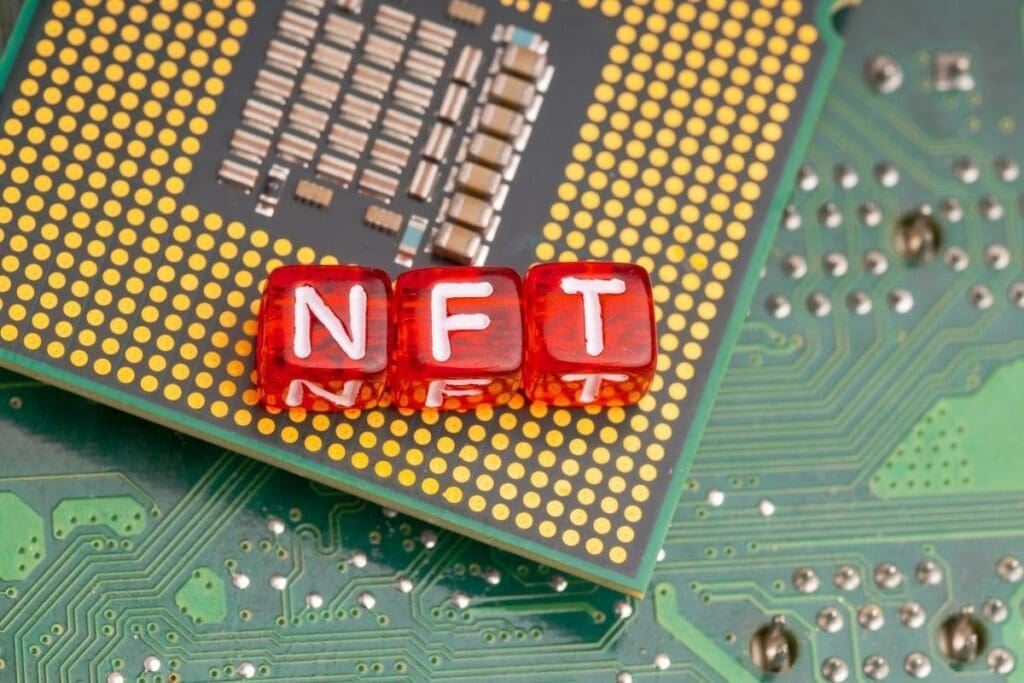
As the NFT and cryptocurrency world rapidly evolves, a key term frequently encountered by investors is DYOR (Do Your Own Research). This concept is fundamental to making informed decisions, especially for beginners entering the space. But what exactly does DYOR mean, and why is it so crucial?

What Does DYOR Mean?

DYOR stands for “Do Your Own Research.” This phrase is a cornerstone in the crypto and NFT space, urging investors to thoroughly investigate any project before committing their resources. Research involves analyzing the creators, technical infrastructure, roadmap, and community behind an NFT project.

The Importance of DYOR in the NFT World

NFT projects often enter the market with big promises, but some may present unrealistic goals or even turn out to be scams. This is where DYOR becomes an essential strategy. Here’s why DYOR is critical for NFT investors:

Reduces Fraud Risks: Scams are prevalent in the NFT market. By conducting research, you can avoid falling victim to fraudulent schemes.

Assesses Long-term Value: It helps you focus not only on a project’s current hype but also on its potential for future value.

Informed Decision-making: With research, you can better evaluate risks and opportunities.

How to Conduct DYOR

Here are key steps to perform effective DYOR on NFT projects:

Research the Team and Creators: Who are the people behind the project? What is their track record? Are they credible?

Examine the Community: Check the activity and support on platforms like Discord, Twitter, and Telegram.

Evaluate the Technical Infrastructure: Which blockchain does the project utilize? Are the whitepapers clear and well-documented?

Analyze Market Trends: What makes the project unique? How does it compare with competitors?

Inspect Smart Contracts: Are the smart contracts secure and reliable for ownership and transfers?

Tools to Aid DYOR

Etherscan and BscScan: For analyzing smart contracts and blockchain transactions.

OpenSea and Rarible: To explore NFT marketplaces and gauge the popularity of projects.

DappRadar: Useful for project insights and trends.

Twitter and Medium: Often the go-to platforms for the latest project updates.

Tips for Effective DYOR

Avoid making rushed decisions. Taking time to gather information can lead to better outcomes in the long run.

Use multiple sources of information and never rely solely on one.

Pay attention to community feedback but always prioritize your independent analysis.

By practicing DYOR, you not only protect yourself from scams but also enhance your chances of identifying worthwhile projects. In the high-risk, high-reward world of crypto and NFTs, knowledge is your most valuable asset. Always remember, conducting your own research is the golden rule for success.

You May Also Like

Follow us on TWITTER (X) and be instantly informed about the latest developments…

Copy URL


Source link

OpenAI CFO Hints at Future Ads for Free ChatGPT Users – Metaverseplanet.net

0
OpenAI CFO Hints at Future Ads for Free ChatGPT Users – Metaverseplanet.net


ChatGPT, the groundbreaking chatbot that has reshaped the internet landscape, is currently free of charge and offers users an ad-free experience across both web and app platforms. However, recent statements suggest this model could change in the future. According to OpenAI, there is a possibility that ads may be introduced for non-paying users as a strategy to boost revenue.

The Potential for Ads in ChatGPT

In an interview with the Financial Times, OpenAI CFO Sarah Frier highlighted that while there are no immediate plans to implement ads, the option remains on the table. Frier explained that the high operational costs of running servers and maintaining models might lead OpenAI to explore advertisements as a revenue stream. Despite OpenAI’s valuation of $150 billion, the company spends billions annually on training and sustaining its AI models. This financial pressure could make advertising a viable revenue source in the future.

Earlier this year, OpenAI took steps that may signal such intentions, including hiring professionals with advertising expertise from companies like Google and Meta. These recruits could indicate preparations for potential ad-based monetization strategies.

Ads Not Expected Anytime Soon

OpenAI CFO Hints at Future Ads for Free ChatGPT Users

Frier emphasized that OpenAI will need to carefully consider how and when to introduce ads, ensuring that they are thoughtfully placed and do not disrupt the user experience. She clarified that ads are not part of the immediate roadmap, meaning any such changes would likely take place in the coming years.

While OpenAI’s CEO Sam Altman has expressed openness to the idea, he has also publicly voiced his dislike for advertisements, calling them a “last resort” in previous statements. This sentiment suggests that the likelihood of ads appearing on ChatGPT remains relatively low for now.

Although ChatGPT ads could become a reality to support the platform’s sustainability, the company appears committed to thoroughly evaluating the implications before taking any steps. For the foreseeable future, users can continue to enjoy an ad-free experience on ChatGPT.

You May Also Like

Follow us on TWITTER (X) and be instantly informed about the latest developments…

Copy URL


Source link

e.l.f. Cosmetics Launches Virtual Luxe Lounge Exclusively for Loyalty Members

0
e.l.f. Cosmetics Launches Virtual Luxe Lounge Exclusively for Loyalty Members


Known as an innovator in the beauty industry, e.l.f. Cosmetics is constantly pushing the boundaries on digital innovation and leaning into retail shopping trends. Diving deeper into the immersive commerce space, the beauty brand partnered with Obsess to launch their latest Virtual Luxe Lounge—an interactive speakeasy exclusively for their loyal Beauty Squad Members. A first of its kind, the e.l.f. Cosmetics Virtual Luxe Lounge is the first time a brand has incorporated its loyalty program into a 3D, virtual experience, to exclusively offer its most engaged audience a new way to shop. 

“We’re thrilled to once again partner with Obsess and offer our most loyal customers a unique and interactive way to shop our most-coveted new products,” said Ekta Chopra, Chief Digital Officer, e.l.f. Beauty. “Our Beauty Squad members are very important to our brand, and we’re excited to bring them an exclusive shopping experience that will give them new ways to earn and redeem rewards.”

As a perk of e.l.f.’s loyalty program, the gated, digital shopping experience offers members early access to shop new holiday products and exclusive coupons to redeem at checkout; Beauty Squad members have to log in to their account to access the glittery 3D environment with a sultry speakeasy vibe.

Initially launched with a room full of holiday gift sets and the Holy Hydration Hall, the virtual experience expanded as the brand phased out new product drops. Each product drop unlocked a new room and corresponding member-exclusive reward, expanding the virtual experience in a dynamic and exciting way. A peek behind the curtain—once unveiled, the Finish Flawless room featured items from e.l.f.’s Camo collection and the Glimmer Dreams room launched the brand’s new lip oil collection. 

The e.l.f. team has previously partnered with Obsess to launch other firsts, including the first beauty shopping app in Apple Vision Pro and more. Following the success of our previous virtual reality beauty shops, this immersive holiday experience further cements e.l.f. as a pioneer and leader in the beauty industry. To learn more about Obsess-powered virtual experiences, email us at contact@obsessvr.com or book a demo.


Source link

Web3 x AI: Opportunities, Challenges, and Future Directions

0
Web3 x AI: Opportunities, Challenges, and Future Directions


Artificial Intelligence (AI) and blockchain technology are two transformative innovations reshaping industries and inspiring a new era of technological growth. AI has revolutionized Web2 with unprecedented levels of investment, including high-profile funding rounds for companies like Inflection AI and Anthropic, backed by major tech firms like Microsoft, Nvidia, and Amazon. Despite this momentum, the role of Web3 technologies like blockchain in AI development remains uncertain. However, a promising narrative is emerging: while AI redefines productivity, Web3 has the potential to revolutionize digital interactions. This integration poses unique challenges, particularly in infrastructure, as the demand for computing power grows.

In this article, we’ll explore the state of AI infrastructure, the GPU crunch, centralized and decentralized GPU solutions, and the opportunities for Web3 infrastructure to support AI. We’ll also look at exciting concepts like decentralized data, zero-knowledge machine learning, and the transformative potential of combining AI and Web3.

AI Infrastructure and the GPU Bottleneck

The rapid growth of AI applications, especially with the success of Large Language Models (LLMs) like OpenAI’s GPT-3.5, has created a huge demand for high-performance GPUs. In fact, ChatGPT, based on GPT-3.5, became the fastest-growing app to reach 100 million monthly active users, surpassing platforms like YouTube and Facebook by years. With applications multiplying across fields—from Midjourney’s AI-driven art to Google’s PaLM2-powered services—the computing power needed for training and running these models is enormous.

Deep learning, which powers these models, is computationally intensive. Each parameter in an LLM consumes GPU memory, and as models grow larger, the strain on GPUs increases. Companies like OpenAI face challenges in deploying more complex, multi-modal models due to the limited availability of GPUs, which results in a highly competitive landscape for AI startups vying for access to computing power.

Addressing the GPU Demand: Centralized and Decentralized Solutions

Centralized GPU Solutions

In the short term, centralized GPU solutions have gained momentum. For instance, Nvidia’s release of its tensorRT-LLM in August 2023 promises optimized inference and improved performance. The upcoming Nvidia H200, scheduled for a 2024 release, is also expected to help alleviate the GPU shortage. In addition, traditional mining companies like CoreWeave and Lambda Labs are shifting their focus to GPU-based cloud computing, offering hourly rentals of Nvidia H100s at competitive rates.

ASIC-based mining, which uses specialized circuits optimized for specific algorithms, is another viable approach. However, centralized solutions may not be scalable or cost-effective in the long run, and they often require users to commit to long-term contracts, which can be inefficient.

Decentralized GPU Solutions in Web3

The decentralized approach proposes a “marketplace” for GPUs, where individuals or organizations with idle GPUs can contribute to a blockchain-based network. Unlike centralized providers that require long-term commitments, decentralized systems allow users to join as needed, offering flexibility and reducing wasted resources. One example is Petals, a decentralized approach developed as part of the BigScience initiative, which splits a model across multiple servers. This setup allows users to connect and perform AI tasks without relying on a single central server, much like sharding in blockchain.

The decentralized GPU marketplace concept is particularly appealing for AI applications in Web3, where resource sharing aligns with the principles of decentralization. However, such networks may face challenges with latency and coordination, making real-time AI processing more difficult to achieve.

Opportunities for AI and Web3 Infrastructure Integration

The fusion of AI and Web3 infrastructure opens up avenues for decentralized computing, secure data management, and enhanced user control over AI interactions. Below are some promising areas where this integration could make a significant impact:

1. Decentralized AI Computing Networks

Decentralized compute networks connect users needing computational power with providers who have unused resources. This model allows individuals and organizations to contribute their idle GPUs or CPUs without additional costs, creating an affordable alternative to centralized options.

For example, blockchain-based networks could support decentralized GPU rendering for AI-driven 3D content creation in Web3 gaming. However, these networks face performance constraints, particularly in machine learning training, due to communication delays between various devices.

2. Decentralized AI Data Management

Training AI models requires extensive datasets, which need to be tested and validated for accuracy. Decentralized AI data management could allow blockchain to serve as an incentive layer, encouraging data-sharing and labeling across organizations.

However, this approach has hurdles, including a reliance on human oversight for data quality and privacy concerns. SP (Special-Purpose) compute networks, which are optimized for specific AI use cases, offer a potential solution. These networks pool resources to form a “supercomputer” and often operate on a gas-based cost model regulated by the community.

3. Decentralized Prompt Creation and Management

Prompt engineering is central to the success of LLMs, as prompts guide the model’s responses. Decentralized prompt marketplaces incentivize creators to develop and share effective prompts, which can be traded as digital assets, such as NFTs. This approach could lead to a marketplace where AI model owners have greater control and ownership over their creations.

Decentralizing prompt creation could encourage diverse AI contributions, but scalability and consistency across models remain challenges.

4. Zero-Knowledge Machine Learning (ZKML)

Zero-Knowledge Machine Learning, or ZKML, presents an innovative solution for executing AI tasks in a decentralized environment while maintaining data privacy. This approach could enable LLMs to operate off-chain and provide proof of output without directly revealing the data or model.

With ZKML, AI results could be used to inform blockchain-based decisions while ensuring transparency and security. For example, ZK-proofs could verify that an AI model performs consistently across different datasets, which is critical for applications like digital identity verification and combating deepfakes.

Challenges and Potential Roadblocks

While the integration of AI and blockchain holds immense promise, several challenges must be addressed:

Scalability and Speed: Decentralized networks can experience slower processing speeds due to the need for consensus and coordination across nodes, which may hinder real-time AI applications.

Data Privacy and Security: Handling sensitive data in decentralized environments requires robust encryption and access control. The decentralized approach could expose models to vulnerabilities if not properly secured.

Cost Efficiency: Gas fees and computational costs on blockchain networks can be high, particularly for extensive AI tasks. Developing cost-effective solutions will be critical for widespread adoption.

Interoperability: AI models and blockchain systems are often designed independently, making interoperability a challenge. Ensuring that diverse AI and blockchain solutions work together seamlessly will be essential.

Looking Ahead: The Future of AI and Web3 Synergy

The integration of AI with Web3 technology offers an exciting frontier of innovation. While Web2 has already harnessed AI’s potential to drive productivity, the intersection with Web3 may unlock new ways of organizing digital assets, incentivizing collaboration, and enhancing data privacy. As we move into an era of increased digital autonomy, the synergy between AI and Web3 infrastructure could reshape industries from gaming and finance to social media and beyond.

In this new paradigm, decentralized computing, data sharing, and prompt engineering models promise a future where individuals have more control and ownership over their interactions with AI. As advancements in GPU technology, zero-knowledge proofs, and blockchain-based networks continue to evolve, the full potential of AI x Web3 may soon be realized.

By addressing current limitations and building resilient, interoperable systems, we may unlock transformative capabilities that not only drive productivity but redefine the very nature of digital interactions.

FAQs

How does blockchain benefit AI?

Blockchain enables decentralized data management, secure transactions, and incentivized collaboration, providing a robust infrastructure for data sharing, secure computation, and transparent AI development.

What is a decentralized AI computing network?

A decentralized AI computing network is a peer-to-peer system that connects users needing computational resources with providers who have idle resources, offering a flexible and cost-effective alternative to centralized computing.

What is Zero-Knowledge Machine Learning (ZKML)?

ZKML is a technology that uses zero-knowledge proofs to verify AI computations on a blockchain without revealing underlying data, enabling privacy-preserving AI applications.

Can Web3 help solve the GPU shortage?

Web3’s decentralized GPU marketplaces offer a flexible solution for sharing computing resources, potentially easing the GPU crunch faced by AI developers and startups.

Is AI integration on Web3 feasible now?

While still in its early stages, AI on Web3 shows promise for future applications, but current limitations in scalability, privacy, and cost-effectiveness need to be addressed.



Source link

How Well Do You Know Mana Coin – Metaverseplanet.net

0
How Well Do You Know Mana Coin – Metaverseplanet.net


How Well Do You Know Mana Coin? – Metaverse Quiz

Explore the virtual world with Mana and take the Mana Coin quiz to find out how much you know!

7 Questions

Question 1: What is the total supply of MANA Coin?

6,345,234,523
10,000,000,000
999,999,999
2,193,655,427

Check Answers

Follow us on TWITTER (X) and be instantly informed about the latest developments…

Copy URL


Source link

Russia Implements New Cryptocurrency Tax Regulation Amid Bitcoin Surge – Metaverseplanet.net

0
Russia Implements New Cryptocurrency Tax Regulation Amid Bitcoin Surge – Metaverseplanet.net


Russia has introduced a new cryptocurrency tax regulation as Bitcoin (BTC) reaches an all-time high against the Russian ruble. The Federation Council, the upper house of Russia’s parliament, has approved the new taxation framework for cryptocurrency transactions.

Cryptocurrencies Recognized as “Property”

The Russian government has been actively exploring cryptocurrencies and blockchain technologies. Recently, Russia legalized the use of crypto assets for international payments and forex transactions. Building on this development, the Russian Federation Council has approved a regulation that officially defines cryptocurrencies as “property.”

This new law imposes a 13% to 15% personal income tax on cryptocurrency sales but provides an exemption for Russian cryptocurrency miners, who will not be required to pay value-added tax (VAT) on the coins they produce.

The bill, discussed three times in the State Duma, is now awaiting the signature of Russian President Vladimir Putin. Once signed, it will be published and officially come into force.

Cryptocurrency Mining Under State Control

The regulation strengthens state oversight of cryptocurrency mining by requiring mining infrastructure operators to report their activities to local authorities. Operators who fail to comply face a fine of 40,000 rubles (approximately $360). Notably, services provided by authorized mining operators will remain exempt from taxes within Russian territory.

Aimed at Regulating and Legalizing Cryptocurrencies

This new law is seen as an effort by Russia to combat informality and prevent misuse of cryptocurrencies, while providing a legal framework for cryptocurrency mining and transactions. By regulating the sector, the government seeks to bring greater transparency and stability to its growing crypto economy.

Russia’s approach to cryptocurrency taxation and mining regulation reflects its strategic effort to integrate blockchain technology into the country’s financial system while maintaining state control.

You May Also Like

Follow us on TWITTER (X) and be instantly informed about the latest developments…

Copy URL


Source link

A New Era of Digital Scents: Introducing Osmo’s Revolutionary Technology – Metaverseplanet.net

0
A New Era of Digital Scents: Introducing Osmo’s Revolutionary Technology – Metaverseplanet.net


Humanity is on the brink of a new era as digital advancements continue to transform how we experience the world. From visual and audio content dominating the digital space, the next frontier might just involve smell. Imagine a world where scents can be transmitted digitally. This once fantastical idea is now becoming a reality, thanks to the groundbreaking innovations of Osmo.

“I Wish Smell Could Pass Through the Computer!” Now It Can

Have you ever wished you could share a fragrance through your screen? The technology developed by Osmo, an initiative founded by Alex Wiltschko from the Google Research team, has achieved a remarkable feat: digitizing scents. This innovation, known as Scent Teleportation, integrates fragrance into the digital environment and has the potential to revolutionize several industries.

How Does Osmo’s Technology Work?

Osmo’s success lies in its ability to analyze and reproduce scents using Gas Chromatography-Mass Spectrometry (GCMS). By analyzing odor molecules and digitally processing the data, Osmo creates a Basic Odor Map (POM) with the help of artificial intelligence. This AI-supported system reshapes the molecules and reproduces them as liquid essences, enabling accurate representation and reproduction of complex fragrance formulas.

Transforming the Fragrance Industry

Osmo’s innovations are not limited to digitization; they aim to transform the perfume industry by leveraging deep learning and graphical neural networks. These technologies allow the prediction and creation of environmentally friendly and sustainable aromatic molecules. With Osmo’s advancements, processes that once took years in the perfume industry can now be completed in a fraction of the time.

Expanding Applications of Digital Scent Technology

Osmo’s digital scent technology has far-reaching implications, extending beyond perfume creation to impact health, safety, and well-being. By analyzing odor components, Osmo is paving the way for new molecules that are not only safer but also more sustainable. This approach is crucial for reducing the environmental impact of traditional fragrance production.

A Future Full of Possibilities

From digitizing fragrance formulas to enabling scent teleportation, Osmo is leading the charge in a field that blends technology and innovation. This groundbreaking technology has the potential to redefine how we interact with digital content and experience the world, offering endless possibilities for the future.

Osmo’s advancements in scent digitization and artificial intelligence mark a pivotal moment in the evolution of technology, making the dream of transmitting scents through the digital world a reality.

You May Also Like

Follow us on TWITTER (X) and be instantly informed about the latest developments…

Copy URL


Source link

Canadian News Organizations File Lawsuit Against OpenAI Over Copyright Violations – Metaverseplanet.net

0
Canadian News Organizations File Lawsuit Against OpenAI Over Copyright Violations – Metaverseplanet.net


Disputes between OpenAI and news publishers continue to escalate. Recently, Canada’s leading news organizations filed a lawsuit against OpenAI, alleging that the company used their content to train ChatGPT without obtaining proper permissions, thus violating copyright laws. The organizations involved include The Canadian Press, Torstar, Globe and Mail, Postmedia, and CBC/Radio Canada.

According to the publishers, OpenAI scanned their news content without authorization to train its artificial intelligence models and profited from it. In a joint statement, the media outlets emphasized, “OpenAI is making a profit by using content owners’ work without obtaining permission or compensating them.”

Media Outlets Stress “Intellectual Property” Rights

The publishers further highlighted that the unauthorized use of their content jeopardizes investments worth hundreds of millions of dollars. They argued that their content is protected under copyright laws and should not be exploited without proper agreements. While acknowledging the benefits of technological innovations, the media organizations stressed the importance of adhering to legal frameworks and ensuring fair use of intellectual property.

In response to the accusations, OpenAI claimed that its models are trained on data obtained from publicly available sources, adhering to the principles of fair use. OpenAI also stated that it provides options for media organizations to control how their content is used and expressed openness to collaboration.

Uncertain Legal Landscape in Canada

Canada recently enacted legislation requiring platforms to pay publishers for using their news content. However, it remains unclear whether this law applies to artificial intelligence applications. The outcome of this lawsuit could set a significant precedent for how AI models interact with copyrighted material in the future.

This case underscores the ongoing tensions between AI developers and content creators, emphasizing the need for clear legal frameworks to balance innovation and copyright protection.

You May Also Like

Follow us on TWITTER (X) and be instantly informed about the latest developments…

Copy URL


Source link

Nike-Owned NFT Studio RTFKT to Shut Down by January 2025 – Cryptoflies News

0
Nike-Owned NFT Studio RTFKT to Shut Down by January 2025 – Cryptoflies News


49

RTFKT, a Nike-owned non-fungible token (NFT) fashion studio, has announced it will wind down operations by the end of January 2025.

The news was shared through a post on X (Twitter), stating, “Today, we’re announcing the plan to wind down RTFKT operations.” 

Despite the announcement, the company clarified, “RTFKT isn’t ending. It’s becoming what it was always meant to be an Artifact of cultural revolution.”

Nike acquired RTFKT in 2021 as part of its push into Web3 and its goal to innovate in sports fashion. 

Since the acquisition, RTFKT has gained a strong following, with nearly 400,000 followers on X. 

You Might Be Interested In

The studio became known for its digital drops, such as the “MNLTH” NFT, which revealed a pair of digital Nike Dunk sneakers. Many of these digital releases were paired with physical products and collaborations, including partnerships with luxury luggage brand RIMOWA and artist Takashi Murakami.

Before winding down, RTFKT will release one final drop this month: the MNLTH X, featuring the BLADE DROP. The studio described it as “a testament to our commitment to pushing boundaries and merging worlds.” 

Afterward, RTFKT’s website will be updated to showcase “the groundbreaking work that defined the RTFKT journey.” Updates on collections, services, and other details will be provided through the company’s Discord and official channels.

The reasons behind the decision were not disclosed, but it comes amid broader challenges in the NFT market. Legal uncertainties and market downturns have affected many companies in the space. 

RTFKT’s decision follows a similar announcement by Kraken, which plans to close its NFT marketplace by February 2025. Other companies, including Immutable, Lacoste, Reddit, Starbucks, and GameStop, have also scaled back or exited the NFT market in recent months.


Source link

5 Unique Chanel Bags to Treasure Forever

0
5 Unique Chanel Bags to Treasure Forever


Chanel’s ageless designs and groundbreaking concepts are central to its revolutionary legacy. From the iconic little black dress to the Classic Flap bag, the brand has consistently created enduring pieces that have liberated women from the constraints of impractical fashion. Innovation lies at the heart of Chanel’s DNA. Here, we explore five unique Chanel bags that reflect the founder’s bold and imaginative spirit.

1. Chanel Perfume Bottle Bag 

The Chanel Nº5 perfume is the epitome of luxury—a timeless scent that has retained its iconic allure through the years. Inspired by this legendary fragrance, the House debuted the Chanel Perfume Bottle Bag as part of the 2014 Chanel Cruise Collection, instantly captivating fashion enthusiasts. This striking accessory boasts a transparent plexiglass construction, featuring the signature Chanel logo on the front and an interwoven chain strap for effortless wearability.

2. Chanel Dubai By Night Gas Can Evening Bag

unique chanel bag

Everything around us holds beauty to be inspired from, and Chanel proves it with the quirky Gas-can bag. Introduced in the 2015 Chanel Cruise Collection in Dubai, this inventive creation by Karl Lagerfeld drew inspiration from the everyday gas can. The iconic ‘CC’ logo takes center stage, while the shiny hardware transforms the bag into a true object of desire

3. Chanel La Pausa Lifesaver Bag

One of the most famous unique Chanel bags, the Lifesaver bag from the Chanel 2019 Cruise collection still has showstopper qualities, ready to turn heads with its playful design and bold aesthetic. Shaped in a perfect circle, it features the embroidered phrase ‘La Pausa’ on the front, with a transparent center revealing the iconic ‘CC’ logo nestled inside.

4. Chanel Boy Brick Lego Bag

unique chanel bag

Departing from conventional narratives, Chanel introduced the Boy Brick Lego bag during the Spring/Summer 2013 runway show. As expected, it quickly became a fan favorite of the maison. The whimsical design draws inspiration from iconic Lego toys while honoring the brand’s creative heritage with signature elements.

5. Chanel Evening In The Air Bag

The Chanel Evening In The Air bag reflects the rebellious and imaginative essence of the label. First seen during the brand’s Spring/Summer 2016 Airline collection, it is shaped in the form of an airport wheel and its interior is revealed through a magnetic closure at the top. This unique Chanel bag is simply eye-catching!

Guided by the power of masterful craftsmanship, each creation from Chanel invites you to a mesmerizing world of unceasing allure, all while embracing the ethereal beauty of femininity. The Luxury Closet is home to an exquisite selection of the label’s most stunning collections. Visit NOW!

Swati Rout

Swati views the world through the lens of art. Music and literature fascinate her creative side, while politics interests her practical side. Motivated by her favorite quote, ‘the pen is mightier than the sword,’ she hopes to pen down unforgettable words.


Source link

Popular Posts

My Favorites