Chaosium has released a remastered edition of Sun County, a beloved campaign supplement originally published in 1992 for the third edition of RuneQuest. This new version, part of the RuneQuest Classic series, is now available on DriveThruRPG in digital and print formats.
Sun County is set in the Gloranthan region of Prax, where a fiercely independent community of farmers has withstood generations of challenges, including hostile nomads and environmental hardships. Known as the Land of the Sun, the area is both forbidding and intriguing, attracting adventurers with the promise of wealth, fame, and discovery.
The remastered edition includes enhanced artwork, restored by Chaosium’s Rick Meints and Nick Brooke, and features a new foreword by RPG historian Shannon Appelcline. In his foreword, Appelcline reflects on the original release of Sun County as a landmark moment for RuneQuest, ushering in a brief but impactful creative period often referred to as the RuneQuest Renaissance. He highlights how the themes and innovations introduced during this era continue to influence Gloranthan creators and the broader RuneQuest community.
The new edition has been carefully crafted to maintain the integrity of the original while incorporating modern touches. Enhanced with color interiors in its hardcover version, it serves both as a nostalgic piece for long-time fans and an accessible entry point for new players. This edition includes scenarios, detailed cultural and historical notes, and contributions from a talented team of creators, including Michael O’Brien, Ken Rolston, and Greg Stafford, among others.
Chaosium’s remastered Sun County is now available for purchase in digital and print formats on DriveThruRPG, inviting players to once again explore the mysteries and adventures of the Sun Dome lands.
Roll 4 Ruins is a print-and-play solo dungeon crawler that blends strategic dice mechanics with immersive dungeon exploration. Designed for players who enjoy a challenge and a DIY approach, the game allows adventurers to assemble their own dungeon experience in minutes.
Players step into the role of a daring adventurer, navigating through dungeons filled with enemies, traps, and treasures. The gameplay revolves around a unique dice system that governs character abilities, combat strategies, and exploration, offering a balance of accessibility and depth. Each decision is shaped by the roll of the dice.
The game’s design emphasizes replayability, with every room presenting new events and encounters. The dungeons evolve with every playthrough, introducing fresh challenges and surprises. Upcoming features, such as the “Unknown Chamber,” promise to expand the game’s variety even further.
As a print-and-play game, Roll 4 Ruins offers a quick setup, allowing players to start their adventures without the need for extensive components or preparation. The focus on solo play and strategic decision-making makes it a compelling option for fans of dungeon-crawling games looking for a flexible and creative experience.
Roll 4 Ruins is now live on Kickstarter. For more information or to support the campaign, visit Kickstarter: Roll 4 Ruins.
Osprey Games has announced Ofrenda, a new card-placement game designed by Orlando Sá and André Santos, with artwork by Alex Herrerías. The game is rooted in the traditions of Día de los Muertos, offering players an opportunity to create vibrant altars in remembrance of loved ones.
In the game, players work to assemble an ofrenda, a bright and inviting altar that honors the spirits of family members who have passed away. Through careful placement of cards on individual boards, participants arrange portraits, candles, marigolds, and other offerings while fulfilling specific wishes of the spirits. This can involve seating relatives near their favorites or ensuring they are positioned away from things they may have disliked.
The game accommodates solo and multiplayer experiences, with an approximate playtime of one hour. Designed for players aged 14 and older, it combines strategy and cultural elements to create a thoughtful and engaging experience.
Hitpoint Press has announced the release of two new additions to the Humblewood setting. Humblewood Tales and Humblewood: For Want of a Nail are now available, offering new ways for players and game masters to explore the world of Alderheart.
Humblewood Tales is a comprehensive sourcebook that expands on the lore and locations of the setting. It introduces new adventures and content for campaigns, providing additional tools to enhance storytelling and gameplay. The book delves deeper into the world of Alderheart, featuring detailed guides and resources.
Humblewood: For Want of a Nail is a graphic novel written by Gail Simone and illustrated by Sarah Webb. The story follows Flit Lightstep, a courier who becomes entangled in dark magic and political intrigue. The comic also includes gameplay elements such as stat blocks, character tools, and hooks for integrating its narrative into tabletop campaigns.
Both products are now available through the Hitpoint Press store, adding new dimensions to the Humblewood experience for players and storytellers alike.
ETH Warsaw has established itself as a significant event in the Web3 space, gathering developers, entrepreneurs, and investors in the heart of Poland’s capital each year. The 2024 edition was filled with builders and leaders united in advancing decentralized technologies.
Leading Event of Warsaw Blockchain Week
As a blend of conference and hackathon, ETH Warsaw aims to push the boundaries of innovation. For companies and individuals eager to shape the future of tech, the premier summit during Warsaw Blockchain Week offers a unique platform to connect and collaborate.
$119,920 in bounties was awarded to boost promising solution development
Key Themes at ETH Warsaw 2024
This year’s discussions were centered around shaping the adoption of blockchain. To emphasize that future implementation requires a wide range of voices, perspectives, and understanding, ETH Warsaw 2024 encouraged participation from individuals of all backgrounds. As the industry stands on the cusp of a potential bull market, building resilient products brings substantial impact. Participants mutually raised an inhibitor posed by poor architecture or suspicious practices.
ETH Warsaw 2024: Featured Tracks and Topics
Infrastructure and Scalability
Layer 2 (L2) solutions
Zero-Knowledge Proofs (ZKPs)
Future of Account Abstraction in Decentralized Applications (DApps)
Advancements in Blockchain Interoperability
Integration of Artificial Intelligence (AI) and Machine Learning Models (MLMs) with on-chain data
Responsibility
With the premise of robust blockchain systems, we delved into topics such as privacy, advanced security protocols, and white-hacking as essential tools for maintaining trust. Discussions also included consensus mechanisms and their role in the entire infrastructure, beginning with transparent Decentralized Autonomous Organizations (DAOs).
Legal Policies
The track on financial freedom led to the transformative potential of decentralized finance (DeFi). We tackled the challenges and opportunities of blockchain products within a rapidly evolving regulatory landscape.
Mass Adoption
Conversations surrounding accessible platforms underscored the need to simplify onboarding for new users, ultimately crafting solutions that appeal to mainstream audiences. Contributors explored ways to improve user experience (UX), enhance community management, and support Web3 startups.
ETH Legal and Industry Debate
ETH Legal, co-organized with PKO BP and several leading law firms, studied the implementation of the MiCA guidelines starting next year and affecting the market. It aimed to dissect the complex policies that govern digital assets.
Currently, founders navigate a patchwork of regulations that vary by jurisdiction. There is a clear need for structured protocols that ensure consumer protection and market integrity while attracting more users. Legal experts broke down the implications of existing and anticipated changes on decentralized finance (DeFi), non-fungible tokens (NFTs), business logic, and other emerging technologies.
The importance of ETH Legal extended beyond theoretical discussions. It served as a vital forum for stakeholders to connect and share insights. Thanks to input from renowned experts in the field, attendees left with a deeper understanding of the challenges ahead.
Warsaw Blockchain Week: Nextrope’s Engagement
The Warsaw Blockchain Week 2024 ensured a wide range of activities, with a packed schedule of conferences, hackathons, and networking opportunities. Nextrope actively engaged in several side events throughout the week and recognized the immense potential to foster connections.
Side Events Attended by Nextrope
Elympics on TON
Aleph Zero Opening Party
Cookie3 x NOKS x TON Syndicate
Solana House
Nextrope’s Contribution to ETH Warsaw 2024
At ETH Warsaw 2024, Nextrope proudly positioned itself as a Pond Sponsor of the conference and hackathon, reflecting the event’s mission. Following a strong track record of partnerships with large financial institutions and startups, we seized the opportunity to share our reflections with the community.
Together, we continue to innovate toward a more decentralized and inclusive future. By actively participating in open conversations about regulatory and technological advancements, Nextrope solidifies its role as an exemplar of dedication, forward-thinking, and technological resources.
In machine learning, there are various stages and techniques for building and refining models, each with unique purposes and processes. Fine-tuning, training, pre-training, and retrieval-augmented generation (RAG) are essential approaches used to optimize model performance, with each stage building upon or enhancing previous steps. Understanding these concepts provides insight into the intricacies of model development, the evolution of machine learning, and the ways these methods are applied in fields such as natural language processing (NLP) and computer vision.
1. Training: The Foundation of Model Development
Training a model is the foundational process that enables machine learning models to identify patterns, make predictions, and perform data-based tasks.
What is Training?
Training is the process where a model learns from a dataset by adjusting its parameters to minimize error. In supervised learning, a labeled dataset (with inputs and corresponding outputs) is used, while in unsupervised learning, the model identifies patterns in unlabeled data. Reinforcement learning, another training paradigm, involves a system of learning through rewards and penalties.
How Training Works
Training a model involves:
Data Input: Depending on the task, the model receives raw data in the form of images, text, numbers, or other inputs.
Feature Extraction: It identifies key characteristics (features) of the data, such as patterns, structures, and relationships.
Parameter Adjustment: Through backpropagation, a model’s parameters (weights and biases) are adjusted to minimize errors, often measured by a loss function.
Evaluation: The model is tested on a separate validation set to check for generalization.
Common Training Approaches
Supervised Training: The model learns from labeled data, making it ideal for image classification and sentiment analysis tasks.
Unsupervised Training: Here, the model finds patterns within unlabeled data, which can be used for tasks such as clustering and dimensionality reduction.
Reinforcement Training: The model learns to make decisions by maximizing cumulative rewards, applicable in areas like robotics and gaming.
Training is resource-intensive and requires high computational power, especially for complex models like large language models (LLMs) and deep neural networks. Successful training enables the model to perform well on unseen data, reducing generalization errors and enhancing accuracy.
2. Pre-Training: Setting the Stage for Task-Specific Learning
Pre-training provides a model with initial knowledge, allowing it to understand basic structures and patterns in data before being fine-tuned for specific tasks.
What is Pre-Training?
Pre-training is an initial phase where a model is trained on a large, generic dataset to learn fundamental features. This phase builds a broad understanding so the model has a solid foundation before specialized training or fine-tuning. For example, pre-training helps the model understand grammar, syntax, and semantics in language models by exposing it to vast amounts of text data.
How Pre-Training Works
Dataset Selection: A vast and diverse dataset is chosen, often covering a wide range of topics.
Unsupervised or Self-Supervised Learning: Many models learn through self-supervised tasks, such as predicting masked words in sentences (masked language modeling in BERT).
Transferable Knowledge Creation: During pre-training, the model learns representations that can be transferred to more specialized tasks.
Benefits of Pre-Training
Efficiency: The model requires fewer resources during fine-tuning by learning general features first.
Generalization: Pre-trained models often generalize better since they start with broad knowledge.
Reduced Data Dependency: Fine-tuning a pre-trained model can achieve high accuracy with smaller datasets compared to training from scratch.
Examples of Pre-Trained Models
3. Fine-Tuning: Refining a Pre-Trained Model for Specific Tasks
Fine-tuning is a process that refines a pre-trained model to perform a specific task or improve accuracy within a targeted domain.
What is Fine-Tuning?
Fine-tuning adjusts a pre-trained model to improve performance on a particular task by continuing the training process with a more specific, labeled dataset. This method is widely used in transfer learning, where knowledge gained from one task or dataset is adapted for another, reducing training time and improving performance.
How Fine-Tuning Works
Model Initialization: A pre-trained model is loaded, containing weights from the pre-training phase.
Task-Specific Data: A labeled dataset relevant to the specific task is provided, such as medical data for diagnosing diseases.
Parameter Adjustment: During training, the model’s parameters are fine-tuned, with learning rates often adjusted to prevent drastic weight changes that could disrupt prior learning.
Evaluation and Optimization: The model’s performance on the new task is evaluated, often followed by further fine-tuning for optimization.
Benefits of Fine-Tuning
Improved Task Performance: Fine-tuning adapts the model to perform specific tasks with higher accuracy.
Resource Efficiency: Since the model is already pre-trained, it requires less data and computational power.
Domain-Specificity: Fine-tuning customizes the model for unique data and industry requirements, such as legal, medical, or financial tasks.
Applications of Fine-Tuning
Sentiment Analysis: Fine-tuning a pre-trained language model on customer reviews helps it predict sentiment more accurately.
Medical Image Diagnosis: A pre-trained computer vision model can be fine-tuned with X-ray or MRI images to detect specific diseases.
Speech Recognition: Fine-tuning an audio-based model on a regional accent dataset improves its recognition accuracy in specific dialects.
4. Retrieval-Augmented Generation (RAG): Combining Retrieval with Generation for Enhanced Performance
Retrieval-augmented generation (RAG) is an innovative approach that enhances generative models with real-time data retrieval to improve output relevance and accuracy.
What is Retrieval-Augmented Generation (RAG)?
RAG is a hybrid technique that incorporates information retrieval into the generative process of language models. While generative models (like GPT-3) create responses based on pre-existing training data, RAG models retrieve relevant information from an external source or database to inform their responses. This approach is particularly useful for tasks requiring up-to-date or domain-specific information.
How RAG Works
Query Input: The user inputs a query, such as a question or prompt.
Retrieval Phase: The RAG system searches an external knowledge base or document collection to find relevant information.
Generation Phase: The retrieved data is then used to guide the generative model’s response, ensuring that it is informed by accurate, contextually relevant information.
Advantages of RAG
Incorporates Real-Time Information: RAG can access up-to-date knowledge, making it suitable for applications requiring current data.
Improved Accuracy: The system can reduce errors and improve response relevance by combining retrieval with generation.
Contextual Depth: RAG models can provide richer, more nuanced responses based on the retrieved data, enhancing user experience in applications like chatbots or virtual assistants.
Applications of RAG
Customer Support: A RAG-based chatbot can retrieve relevant company policies and procedures to respond accurately.
Educational Platforms: RAG can access a knowledge base to offer precise answers to student queries, enhancing learning experiences.
News and Information Services: RAG models can retrieve the latest information on current events to generate real-time, accurate summaries.
Comparing Training, Pre-Training, Fine-Tuning, and RAG
AspectTrainingPre-TrainingFine-TuningRAG
PurposeInitial learning from scratchBuilds foundational knowledgeAdapts model for specific tasksCombines retrieval with generation for accuracy
Data RequirementsRequires large, task-specific datasetUses a large, generic datasetNeeds a smaller, task-specific datasetRequires access to an external knowledge base
ApplicationGeneral model developmentTransferable to various domainsTask-specific improvementReal-time response generation
Computational ResourcesHighHighModerate (if pre-trained)Moderate, with retrieval increasing complexity
FlexibilityLimited once trainedHigh adaptabilityAdaptable within the specific domainHighly adaptable for real-time, specific queries
Conclusion
Each stage of model development—training, pre-training, fine-tuning, and retrieval-augmented generation (RAG)—plays a unique role in the journey of creating powerful, accurate machine learning models. Training serves as the foundation, while pre-training provides a broad base of knowledge. Fine-tuning allows for task-specific adaptation, optimizing models to excel within particular domains. Finally, RAG enhances generative models with real-time information retrieval, broadening their applicability in dynamic, information-sensitive contexts.
Understanding these processes enables machine learning practitioners to
build sophisticated, contextually relevant models that meet the growing demands of fields like natural language processing, healthcare, and customer service. As AI technology advances, the combined use of these techniques will continue to drive innovation, pushing the boundaries of what machine learning models can achieve.
FAQs
What’s the difference between training and fine-tuning?
Training refers to building a model from scratch, while fine-tuning involves refining a pre-trained model for specific tasks.
Why is pre-training important in machine learning?
Pre-training provides foundational knowledge, making fine-tuning faster and more efficient for task-specific applications.
What makes RAG models different from generative models?
RAG models combine retrieval with generation, allowing them to access real-time information for more accurate, context-aware responses.
How does fine-tuning improve model performance?
Fine-tuning customizes a pre-trained model’s parameters to improve its performance on specific, targeted tasks.
Is RAG suitable for real-time applications?
Yes, RAG is ideal for applications requiring up-to-date information, such as customer support and real-time information services.
In October 2024, Call of Duty cemented its place as the top-grossing video game across six key markets – France, Germany, Italy, Spain, the UK, and the US. The franchise, including titles like Modern Warfare 2/3, Warzone, and Black Ops 6, showcased its enduring popularity and remarkable ability to capture player spending.
Close contenders on the revenue charts included Dragon Ball: Sparking! Zero, EA Sports FC 25, and Fortnite, which secured second, third, and fourth positions, respectively. Dragon Ball: Sparking Zero! demonstrated exceptional performance on consoles, ascending to second place in revenue despite not featuring in the overall top 20 for monthly active users.
Meanwhile, Silent Hill 2 Remake marked a significant comeback for Konami’s iconic survival horror franchise. The game’s strong debut in ninth place highlighted the appeal of well-executed remakes, resonating deeply with both longtime fans and new audiences. This release underscored Konami’s ability to breathe new life into a dormant series with carefully crafted updates.
Another noteworthy performer was Super Mario Party Jamboree, which made an impressive debut in sixth place on the overall revenue chart. Despite its exclusivity to the Nintendo Switch, the game topped the console’s individual rankings, further reinforcing the enduring popularity of Nintendo’s family-oriented titles.
On the engagement front, Fortnite maintained its position as the world’s most-played game across all platforms. Despite Call of Duty’s record-breaking launch weekend, which achieved unprecedented franchise sales, it ranked second in terms of player engagement.
Overall, October 2024 demonstrated the diverse tastes of gamers, with high-performing titles spanning genres from sports to battle royale, survival horror, and anime-inspired adventures. The month also highlighted the success of nostalgic franchises, reinvigorated with modern technology, alongside fresh and dynamic gameplay experiences that keep players coming back for more.
Artificial intelligence-supported marketing is one of the most transformative processes in today’s business landscape. Companies are increasingly shaping their marketing strategies around the vast potential of AI. For marketing managers, understanding the current state of AI and its applications is essential for maximizing its benefits.
This article provides a comprehensive framework for marketing managers to classify their ongoing projects and roll out future AI initiatives effectively. By doing so, it empowers organizations to plan strategically and stay ahead in the competitive market.
Categorizing AI in Marketing
Artificial intelligence can be categorized along two key dimensions:
Level of intelligence
Standalone functionality or integration within a broader platform
Simple, standalone task automation tools serve as an ideal starting point for companies new to AI. However, the real value lies in advanced, integrated applications that utilize machine learning to drive deeper insights and outcomes. Businesses should aim to gradually transition toward these sophisticated technologies as they develop their AI capabilities.
The Value of AI in Marketing
Marketing, more than any other business function, stands to gain the most from AI. The core activities of marketing—understanding customer needs, matching them to solutions, and persuading purchases—are areas where AI excels.
A 2018 McKinsey analysis of over 400 advanced use cases revealed that marketing holds the greatest potential for AI-driven value creation. Similarly, the American Marketing Association’s 2019 survey showed a 27% increase in AI adoption within 18 months, highlighting the rapid embrace of this technology. Moreover, Deloitte’s 2020 global survey of early AI adopters confirmed that three of the top five AI goals are marketing-focused:
Improving products and services
Creating new offerings
Enhancing customer relationships
The Future of AI in Marketing
While AI has already made significant strides in marketing, its role is expected to expand further. CMOs must understand the current applications of AI in marketing and prepare for its evolution.
AI capabilities in marketing include:
Leveraging real-time data, such as geolocation, to simplify the sales process.
Offering personalized recommendations to improve customer engagement.
Reducing cart abandonment rates through smart nudges like testimonials or purchase examples (e.g., “Great choice! James from Vermont bought this same mattress”).
These AI-driven initiatives can boost conversion rates by a factor of five or more, demonstrating the power of tailored experiences in influencing customer decisions.
As AI continues to evolve, marketing leaders have a unique opportunity to harness its potential. By adopting advanced AI tools, CMOs can drive innovation, improve customer engagement, and unlock unprecedented value for their organizations.
You May Also Like
Follow us on TWITTER (X) and be instantly informed about the latest developments…
The luxury watch market continues to thrive, with top auction houses such as Christie’s, Sotheby’s, and Phillips achieving record-breaking sales. Discover the latest luxury watch auction trends in this article.
High-end watch brands like Rolex, Patek Philippe, and Audemars Piguet remain popular among collectors, with pre-owned timepieces also in demand.
Watch auctions attract attention from around the world. Geneva remains a hub, while Hong Kong and New York are also key players in the market.
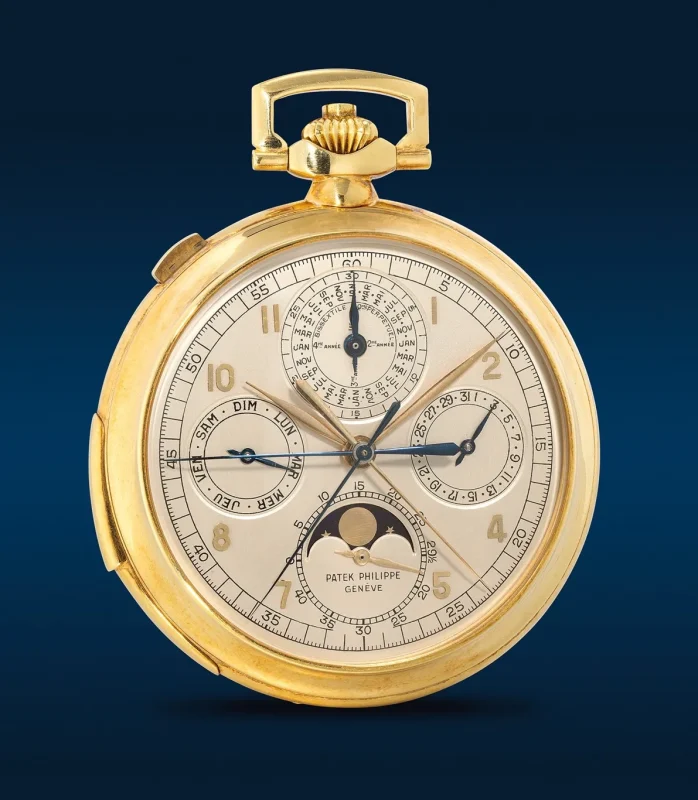
Notable recent sales include a rare Patek Philippe Minute Repeater 6301A-010 which sold for $17,320,032 in Geneva and a Richard Mille Rafael Nadal RM27-01 which went for $1.171 million in Hong Kong.
Nevertheless, recent watch auctions have timepieces on sale for most budgets, from a Tudor Black Bay 79030N that sold for $3,360 to a Patek Philippe GrandMaster Chime (6300G-010) which achieved a sales price of $5.4 million.
The Latest Luxury Watch Auction Trends
Trying to keep up with the latest in luxury watch auctions? This article explores key trends, from Rolex and Patek Philippe dominance to the rise of limited editions.
Read on for insights that could change your watch collecting strategy.
Key Takeaways
Online auctions are changing how people buy luxury watches, making it easier for collectors around the world to join in. These digital platforms have grown a lot and are expected to keep influencing the watch auction market.
The popularity of rare luxury watches keeps going up, with more people interested in buying them now than before. Reports from 2018 to 2024 show this trend clearly, pointing out that classic and vintage styles are especially sought after.
Patek Philippe and Rolex remain at the top of the market due to their high-quality craftsmanship and timeless designs. New players like Roger Smith are also gaining attention for their unique and finely crafted timepieces.
There’s a noticeable shift to dress watches instead of sports models among buyers, indicating a change in customer preferences toward elegance and simplicity.
With an increase in demand for modern and limited edition pieces, prices for these types of luxury watches may start to go up soon. Both sellers and buyers need to stay alert about these changes in the market.
Key luxury watch auction trends to be aware of
The Impact of the Pandemic on Luxury Watch Auctions
The pandemic shook the luxury watch auctions, causing a drop in overall sales at the time. Buyers now prefer dress watches over sports models, shifting the market trend.
Auctions adapted to meet collector demands during the pandemic.
Brands such as Patek Philippe and Cartier witnessed varied effects on their timepieces at auctions. While some models fetched lower prices than expected, others remained in high demand among collectors seeking timeless pieces amid the uncertainty of the pandemic era.
Increase in overall sales
Recent analysis shows that the luxury watch market saw an increase in sales. The latest data from the 2024 New York watch auction sales puts numbers on the up. This period, crucial for assessing pre-holiday interest, also suggests buyers are becoming more selective within the luxury goods space.
The number of unsold lots has also decreased significantly. Auction houses like Sotheby’s and Christie’s witnessed these changes at significant sales events, confirming the overall vibrancy of the watch industry auctions.
Shift towards dress watches over sports watches
Despite an increase in overall sales, a notable trend is the growing interest in dress watches over their sportier counterparts. Auction reports from 2018 to 2024 highlight this shift, particularly among luxury timepieces.
Brands like F.P. Journe and Cartier, especially with their iconic Crash model, are leading examples of this trend. This move reflects a changing preference among collectors and enthusiasts who now favor elegance and classic design over the more casual and sturdy aesthetic of sports models.
Data for specific auction seasons further underlines the rising demand for dress watches. The EveryWatch Auction Report indicates that buyers show a pronounced preference for such pieces.
This suggests not only a change in taste, but also points toward dress watches gaining ground as statement accessories within the luxury market space. It paves the way for brands often associated with high-end sporting designs such as the Rolex Daytona or Audemars Piguet Royal Oak to capture attention with their less celebrated but equally exquisite dress watch offerings.
The latest luxury watch auction trends
Top Players in the Market
Patek Philippe and Rolex consistently outperform other luxury watch brands at auctions, maintaining their stronghold in the market. With a legacy of exceptional craftsmanship and timeless design, these iconic timepieces continue to command high demand and top prices.
In recent auction reports, Patek Philippe and Rolex reaffirm their status as the top sellers in luxury watch auctions. The enduring appeal of these brands resonates with collectors and enthusiasts alike, showcasing their enduring popularity.
As discerning buyers seek investment-worthy pieces with a proven track record of value retention, these renowned brands remain at the forefront of auction success.
Emergence of Roger Smith in the top 10 millionaire lots
In the latest luxury watch auctions, an interesting shift has occurred with the emergence of Roger W. Smith among the top 10 millionaire lots. These auctions showcase a noteworthy trend towards recognizing independent watchmakers, highlighting a shift in consumer preferences towards unique and limited-production timepieces.
With this change, collectors are showing an increasing interest in owning exclusive pieces that embody exceptional craftsmanship and design, paving the way for independent artisans to make their mark on this prestigious stage.
The presence of Roger Smith alongside renowned brands like Patek Philippe and Rolex underscores the growing appreciation for artisanal craftsmanship and attention to detail in high-end watchmaking. This British watchmaker crafts just 12 watches each year.
On 5 November 2023 in Geneva, Roger’s own watch which is the only one he double-signed with George Daniels sold for 2,177,500 CHF ($2,422,142). This timepiece is the most valuable Roger Smith wristwatch ever sold at auction. What’s more, Roger’s Cornerstone Pocket Watch No. 2 achieved the highest auction price for any British watch ever sold at $4.9 million, in New York City on 10 June 2023.
Notable Luxury Watch Auction Trends
The luxury watch auction market has witnessed a noticeable surge in the popularity of modern timepieces. These watches, particularly coveted for their limited editions, have seen an increased demand.
Moreover, there is a growing preference for leather strap watches among collectors and enthusiasts at recent auctions. The focus on classic and timeless designs further underscores this trend, reflecting a shift in preferences within the luxury watch industry.
At the New York auction sales, buyers showed a preference for larger cases. Whilst 40mm cases remain popular, they are seeing a decline in average price and sales. Solid color dials are also in high demand.
In terms of watch case materials, white gold achieved the highest total sales with an increase of 83.66% on the previous year. Titanium watches showed a significant increase in demand.
Additionally, the year-over-year growth in the pre-owned market indicates a small yet sustained upward trajectory, suggesting continued opportunities for both buyers and sellers alike. Furthermore, there is potential for price increases in vintage and limited edition pieces as their scarcity drives up demand.
Patek Philippe World Time 2523 – photo: EveryWatch
Growing popularity of modern luxury watches
The demand for pre-owned luxury timepieces has been on the rise, with yearly analysis reports from 2018 to 2024 indicating an increasing trend. The latest auction reports highlight the ongoing popularity of modern luxury watches, with a 53% increase from 2023 to 2024.
This growing interest is evident across key locations such as New York, Hong Kong, and Geneva based on specific auction season reports for these regions.
Individual reports for specific watch brands like F.P. Journe and Cartier further emphasize the escalating interest in contemporary luxury timepieces. The statistics depict a surge in demand for these items among buyers.
Increasing demand for leather strap watches
We are witnessing an uptick in the demand for leather strap watches in the latest luxury watch auctions. This trend aligns with consumers’ preference for timeless and classic designs that exude elegance and sophistication.
Brands such as Patek Philippe, Rolex, and Vacheron Constantin are experiencing a surge in interest for their exquisite leather strap timepieces at auctions worldwide.
The allure of leather strap watches lies in their ability to elevate any attire while offering a comfortable wearing experience. Auction houses have observed an increase in bidding activity for these luxurious pieces, reflecting the shift towards embracing traditional craftsmanship and refined aesthetics.
Focus on classic and timeless designs
Classic and timeless designs are at the forefront of luxury watch auctions, appealing to collectors and enthusiasts seeking enduring elegance. This trend is reflected in the increasing demand for limited edition watches with a timeless aesthetic.
Luxury brands such as Patek Philippe and Rolex continue to produce iconic timepieces that epitomize classic design, resonating with discerning buyers in the market.
Moreover, this focus underscores the lasting value associated with exquisite horology that transcends fleeting trends or passing fads within the domain of luxury watches.
Patek Philippe Perpetual Calendar – photo: EveryWatch
The Future of Luxury Watch Auctions
Reports covering a period from 2018 to 2024 suggest that there’s increasing demand for vintage and limited edition pieces in the luxury watch auction sector.
This trend signifies a potential for price increases in such items.
Continued growth in the pre-owned market
The modern luxury watch market is on the rise with sustained growth in recent years. There has also been a small rise in demand for pre-owned timepieces.
This trend is evidenced by a significant increase in sales and interest from collectors and enthusiasts alike.
Online platforms have played a pivotal role in driving this growth, providing access to a wider range of contemporary and pre-owned luxury watches for potential buyers. The emergence of reputable online marketplaces has contributed to an increased comfort level among consumers when it comes to making high-value transactions.
With these developments shaping the landscape of luxury watch auctions, it’s clear that the continued expansion of these markets will have profound implications for both sellers and buyers alike.
Potential for price increases in vintage and limited edition pieces
As consumer demand for vintage and limited edition luxury watches continues to rise, there is a strong likelihood of price increases in this segment. Specific reports for June and May of 2024 in New York, Hong Kong, and Geneva offer localized data for potential price surges in these regions.
The emerging trends indicate a growing market appetite for modern luxury watches and increased interest in classic designs. It’s evident that limited edition pieces are poised to command higher prices moving forward.
Impact of online auctions on the industry
Online auctions have significantly impacted the luxury watch industry, contributing to how auctions are conducted and influencing market dynamics. Comprehensive reports and analyses highlight this growing influence, shaping consumer behavior and preferences.
The availability of online platforms has expanded access to a global audience, resulting in increased competition during auctions. This shift has also necessitated adaptation from traditional auction houses by integrating digital strategies while leveraging the potential for wider reach and an enhanced buyer experience.
The rise of online auctions is evident in the increasing participation of both seasoned collectors and new enthusiasts alike. The convenience offered by virtual bidding platforms has revolutionized the industry, allowing collectors worldwide to engage with renowned auction events without geographical limitations.
Enhanced accessibility through online avenues underpins the evolving nature of luxury watch auctions, signifying a profound transformation in a traditionally exclusive domain.
Final Thoughts on Luxury Watch Auction Trends
Luxury watch auctions have seen a shift in trends, with dress watches gaining popularity over sports watches. Patek Philippe and Rolex continue to dominate the market, while Roger Smith has emerged as a significant player.
The demand for modern luxury watches is on the rise, along with an increasing preference for leather strap timepieces. Looking ahead, the pre-owned market is expected to grow further, potentially leading to price increases for vintage and limited edition pieces.
Online auctions are also set to influence the industry’s future trajectory.
FAQs
1. What are the latest trends in luxury watch auctions?
The latest trends in luxury watch auctions include high demand for brands like Richard Mille, Patek Philippe, and Grand Seiko. Breguet and Zenith watches with tourbillon features also fetch high prices on the auction block.
2. How does insurance play a role in luxury watch auctions?
Insurance plays a significant role during transactions at these events. Companies such as Chubb Limited, Ace American Insurance Company, and surplus lines insurers provide coverage for these valuable pieces. Underwriting is crucial to determine deductibles.
3. Are there new entrants making waves in the auction market?
Yes! Philippe Dufour’s creations have been gaining traction due to their exquisite craftsmanship while FP Journe chronographs are becoming increasingly sought after by Gen Z collectors who appreciate their timeless appeal over fast fashion trends.
4. Is digital culture influencing luxury watch auctions?
Absolutely! The influence of digital culture can be seen through the rise of online platforms like Tourneau, owned by Bucherer, where one could bid on coveted models like the Rolex GMT Master II or Milgauss from anywhere around the globe.
5. Is speculation affecting prices at luxury watch auctions?
Indeed it is! Speculation often drives up prices especially when rare pieces come under the hammer.