Home Blog Page 1271

Natural Makeup Looks: How to Achieve a Flawless ‘No-Makeup’ Makeup – Hautelist

0
Natural Makeup Looks: How to Achieve a Flawless ‘No-Makeup’ Makeup – Hautelist


The allure of the ‘no-makeup’ makeup look lies in its simplicity and elegance. It’s about enhancing your natural beauty, creating a fresh, radiant appearance that seems effortless. However, achieving this look requires more than just minimal makeup; it’s about selecting the right products and applying them skillfully. Here’s how to master the art of natural makeup for a flawless, everyday look.

image1

1. Start with Skincare

The foundation of any great makeup look is healthy skin. A natural makeup look requires a well-moisturized, smooth canvas. Begin by cleansing your face to remove any impurities. Follow up with a hydrating moisturizer suited to your skin type to ensure your skin is supple and hydrated. If your skin tends to be dry, opt for a richer cream, while those with oily skin may prefer a lightweight, oil-free moisturizer.

Shop now

Don’t forget to apply sunscreen, even if you’ll be indoors. Sunscreen protects your skin from harmful UV rays and prevents premature aging, which is crucial for maintaining a fresh and youthful complexion.

Shop now

2. Prime for Perfection

Shop now

Primers can be your best friend when aiming for a natural look. A good primer smooths out your skin, blurs imperfections, and helps your makeup last longer. Choose a primer that suits your skin type; mattifying primers are great for oily skin, while illuminating primers add a subtle glow to dry or dull skin.

3. Keep It Light with Foundation

Shop now

For a natural look, less is more when it comes to foundation. Opt for a lightweight, sheer foundation or a tinted moisturizer that evens out your skin tone without masking your natural features. BB creams or CC creams are also excellent choices as they provide coverage while maintaining a natural finish.

Apply the foundation sparingly, focusing on areas where you need coverage, such as the T-zone, and blend well with a damp beauty sponge or brush for a seamless finish. If you have clear skin, you might skip foundation altogether and just use a concealer where needed.

4. Conceal Strategically

image2

Concealer is essential for a natural makeup look, but the key is to use it strategically. Choose a concealer that matches your skin tone exactly or is just a shade lighter. Apply it only on areas that need extra coverage, such as under the eyes, around the nose, or on any blemishes.

Shop now

For a bright-eyed look, apply a small amount of concealer in the inner corners of your eyes and blend it outwards. This will instantly lift and brighten your eyes without looking overdone.

5. Subtle Definition with Brows

Well-groomed brows frame your face and are crucial for a polished look. Use a brow pencil or powder that matches your natural brow color to fill in any sparse areas with light, feathery strokes. The goal is to enhance the shape of your brows while keeping them looking soft and natural. Finish with a clear or tinted brow gel to set them in place.

6. Enhance Your Eyes Softly

For the eyes, stick to neutral shades that enhance your natural eye color. A soft taupe or beige eyeshadow on the lids, blended well, adds depth without being obvious. You can define your lash line by applying a thin line of brown or black eyeliner close to your lashes, then smudge it slightly for a softer look.

Mascara is a must, but keep it minimal. One or two coats of a lengthening mascara will open up your eyes without making your lashes look clumpy. If you prefer a more natural look, opt for a brown mascara instead of black.

7. Add a Natural Flush

For a natural flush, cream blushes work best as they blend seamlessly into the skin, giving you a healthy, dewy glow. Choose a blush shade that mimics your natural flush—think soft pinks, peaches, or corals—and apply it to the apples of your cheeks. Blend well upwards towards your temples for a lifted effect.

 8. Luminous Lips

Finish your look with a lip color that enhances your natural lip shade. Tinted lip balms, sheer lipsticks, or nude lip glosses are perfect for this. They add a hint of color and moisture without overpowering your look. If you prefer a matte finish, opt for a nude lip liner all over the lips, topped with a balm to keep them hydrated.

Shop now

9. Set with a Mist

Shop now


To ensure your makeup stays put all day while retaining its natural finish, set it with a hydrating facial mist or a lightweight setting spray. This step will also help melt the makeup into your skin, giving it a fresh, dewy finish.

The ‘no-makeup’ makeup look is about enhancing your natural beauty with subtle, well-applied products. By focusing on skincare, using light, natural-toned makeup, and applying it strategically, you can achieve a flawless, radiant look that appears effortlessly chic. Whether for daily wear or a special occasion, this look is timeless and versatile, perfect for anyone who wants to feel confident and beautiful in their own skin.


Source link

Can Machine Learning Models Learn from Each Other?

0
Can Machine Learning Models Learn from Each Other?


Artificial Intelligence (AI) is evolving rapidly, particularly in how machine learning (ML) models learn and interact with one another. Traditional methods heavily depend on vast human-generated datasets, but recent advancements explore the idea of models teaching each other, resembling human learning dynamics. This approach, which uses synthetic data and novel learning paradigms, has significant implications for overcoming data scarcity, enhancing accessibility, and democratizing AI.

The Rise of Collaborative Learning in AI

Artificial intelligence has reached new heights with the development of collaborative learning techniques, where machine learning (ML) models learn from one another, mimicking human-like interactions. This approach moves away from traditional reliance on vast amounts of human-generated data, which is becoming harder to obtain and more expensive. Instead, AI models now generate synthetic data and use it to improve themselves and others in an efficient, iterative process. This shift could democratize AI, making advanced technology more accessible to small companies and individuals with limited resources.

The Role of Synthetic Data in Transfer Learning

At the core of collaborative learning is synthetic data generation, which allows models to create their own datasets rather than relying solely on human-generated data. This synthetic data is a crucial component of transfer learning, where a larger, more capable model acts as a teacher to a smaller, less powerful model. This teacher-student dynamic enables the smaller model to gain insights from the larger one without extensive retraining on expensive and scarce datasets.

Transfer learning with synthetic data transforms how models are trained, making it possible for even small-scale AI projects to benefit from the knowledge embedded in larger models. Two key projects, Self-Instruct and Alpaca, have demonstrated the immense potential of this approach.

Self-Instruct: Enhancing Models with Self-Generated Tasks

Self-Instruct is an innovative project that enhances a model’s instruction-following capabilities by allowing it to train on synthetic tasks it creates. The process, called iterative refinement, allows the model to generate instructions, perform tasks, and then evaluate and refine its own outputs.

In the Self-Instruct project, a pre-trained language model generates tasks that consist of instructions, contextual inputs, and expected outputs. These tasks are not manually crafted by humans but produced by the model itself. As the model continues to work through these tasks, it improves its ability to follow instructions in new, unseen scenarios. Notably, a quality filter ensures that only the best-generated tasks are used for further training, eliminating low-quality or irrelevant data.

The iterative nature of this refinement allows the model to continuously improve, making it increasingly adept at understanding and executing instructions with minimal human intervention. By reducing dependency on human-generated data, Self-Instruct offers a way to create highly specialized models that can perform well across various tasks without requiring vast datasets or retraining.

Alpaca: Efficient AI with Teacher-Student Dynamics

While Self-Instruct focuses on self-generated learning, Alpaca introduces a hierarchical approach, where a more advanced model teaches a smaller, less capable one. Alpaca leverages OpenAI’s text-davinci-003, a highly advanced language model, to create instruction-following tasks for LLaMA 7B, a smaller and less resource-intensive model developed by Meta.

The Alpaca project demonstrates that it is possible to train smaller models to follow complex instructions effectively, even with limited resources. This teacher-student setup replicates a real-world classroom scenario, where the more knowledgeable teacher provides guidance and tasks that help the student model learning. The student model, in turn, benefits from the teacher’s advanced capabilities, achieving a high level of performance without requiring the same level of computational power or data as the teacher.

This method reduces the cost of training AI models and allows smaller entities to participate in AI development. Companies and individual researchers with limited budgets can still produce AI models that perform well on specific tasks, such as natural language understanding or instruction-following.

How Collaborative Learning is Democratizing AI

The success of projects like Self-Instruct and Alpaca highlights the potential for collaborative learning to democratize access to advanced AI technology. Previously, training large models required immense computational resources and datasets, making it the domain of large tech companies with deep pockets. However, with collaborative learning techniques, smaller models can tap into the knowledge of larger ones, drastically reducing the need for resources.

Critical Benefits of Collaborative Learning:

Resource Efficiency: Smaller models can achieve high performance by learning from larger models, reducing the need for extensive computational power and large datasets.

Cost Reduction: Companies no longer need to invest heavily in hardware or data acquisition. Models like Alpaca prove that effective instruction-following models can be built on a budget.

Scalability: The teacher-student framework can be applied across industries, allowing for scalable AI development even in resource-constrained environments.

Increased Accessibility: Collaborative learning lowers the barriers to AI development, ensuring that smaller companies and individual researchers can contribute to the AI landscape.

The Future of Collaborative AI

As AI continues to evolve, the future will likely see an increasing reliance on collaborative learning methods. These techniques solve the pressing issue of data scarcity and introduce a more sustainable way to train and refine models. By utilizing teacher-student setups and synthetic data generation, the AI field is set to become more inclusive, with even small players able to develop powerful models for various applications.

The combination of transfer learning, iterative refinement, and hierarchical teaching structures presents an exciting future for AI development. Whether in healthcare, finance, customer service, or other industries, collaborative learning will enable more entities to harness the power of AI, regardless of their size or resources.

In essence, collaborative learning redefines how AI models are trained and deployed, making them more efficient, cost-effective, and accessible. This paradigm shift not only accelerates the pace of innovation in AI but also ensures that the benefits of these advancements are widely shared, empowering businesses and individuals alike to explore new frontiers in machine learning.

Learning Paradigms: Beyond Traditional Fine-Tuning

Machine learning has come a long way since the early days of simple algorithms and data processing. Today, researchers are exploring advanced learning paradigms that push the boundaries of what AI can achieve. These new methods go beyond traditional fine-tuning, offering innovative ways for models to learn, adapt, and improve without the typical limitations of human-generated data and extensive retraining. Let’s dive into three key approaches—iterative Refinement, Knowledge Distillation, and Learning by Teaching—that are reshaping the landscape of collaborative machine learning.

1. Iterative Refinement: Self-Improvement Through Continuous Feedback

Iterative Refinement is a process where models enhance their capabilities by generating and learning from their outputs. Unlike conventional training, which relies heavily on external datasets, Iterative Refinement creates a feedback loop where the model continuously assesses and improves itself.

Here’s how it works: the model generates synthetic data—often tasks or scenarios similar to what it’s already been trained on—and then uses these outputs as new training data. By iterating on this process, the model identifies errors, adjusts its parameters, and refines its performance over time. This approach is similar to a student reworking practice problems to master a concept, constantly learning from mistakes and refining their understanding.

Benefits:

Data Efficiency: Models can continue to learn without needing vast amounts of new, human-generated data.

Self-Sufficiency: The model independently identifies areas of improvement, leading to continuous growth.

Customization: Models can adapt to specific tasks, making them highly specialized without needing extensive retraining.

Challenges:

Quality Control: It is crucial to ensure that the synthetic data generated is of high quality; poor-quality data can lead to suboptimal learning.

Computational Resources: Iterative processes can be computationally expensive, requiring significant processing power and time.

2. Knowledge Distillation: Transferring Wisdom from Teacher to Student

Knowledge Distillation is inspired by the traditional educational model, where a knowledgeable teacher guides students through complex subjects. In this machine-learning context, a large, powerful model (the teacher) transfers its expertise to a smaller, less capable model (the student). This transfer allows the student model to perform highly without extensive retraining on large datasets.

The process involves the teacher model providing output predictions, which the student model then learns to replicate. Through this method, the student model not only learns the task but also picks up the teacher’s nuanced decision-making processes, resulting in a highly efficient and specialized model that performs well with fewer resources.

Benefits:

Resource Efficiency: The student model is much smaller and requires fewer computational resources, making it suitable for deployment in resource-constrained environments.

Performance Enhancement: The student model can perform at levels comparable to the larger teacher model, making high-quality AI accessible even without powerful hardware.

Scalability: This approach allows AI capabilities to be scaled down effectively, enabling practical applications in various industries.

Challenges:

Loss of Detail: The student model may lose some of the finer points of the teacher’s knowledge, potentially leading to reduced performance in highly complex tasks.

Dependency on Teaching Quality: This approach’s effectiveness depends heavily on the quality of the teacher model and the training process.

3. Learning by Teaching: A Two-Way Feedback Loop for Continuous Improvement

Learning by Teaching draws inspiration from a well-known human learning strategy: teaching others. This approach introduces a unique feedback loop where a student model doesn’t just learn passively but actively contributes to the teacher model’s improvement. Here’s how it works: after the teacher model instructs the student, the student’s performance is assessed, and this feedback is returned to the teacher. The teacher model then uses this performance data to adjust its teaching strategy, creating a dynamic and reciprocal learning environment.

This method mirrors how a tutor learns to refine their explanations based on how well their student understands and applies the material. In machine learning, this approach allows models to enhance their teaching methods, adapting and evolving to improve.

Benefits:

Enhanced Learning Efficiency: The feedback loop ensures that the teacher and student models continuously improve, leading to more effective learning outcomes.

Adaptive Teaching: The teacher model can adjust its approach based on real-time student performance data, leading to a more personalized learning experience.

Innovation in Learning Paradigms: This method introduces interactivity and adaptability beyond traditional model training techniques.

Challenges:

Complex Implementation: Setting up a feedback loop between teacher and student models requires sophisticated programming and robust evaluation metrics.

Risk of Overfitting: The teacher model might overly tailor its teaching to the student’s current performance, potentially limiting the broader applicability of the learned knowledge.

The potential applications of models learning from each other are vast and varied. From creating specialized models that perform specific tasks without needing large, general-purpose datasets to address privacy and copyright concerns, these techniques can redefine AI training.

However, challenges remain. For example, fine-tuning can lead to “catastrophic forgetting,” where a model loses its general abilities in favor of specialized skills. This trade-off raises questions about the broader applicability of collaborative learning methods beyond specific use cases.

Philosophical Implications: Machines Learning from Machines

The concept of machines teaching machines carries philosophical intrigue. It parallels human learning, where teaching often solidifies one’s understanding. Richard Feynman, a physicist known for his teaching techniques, highlighted the power of learning by teaching—a principle that now finds resonance in machine learning. The emerging AI techniques reflect a creative and experimental spirit, pushing the boundaries of how models can evolve autonomously.

Final Thoughts

Collaborative learning through synthetic data and model interaction is a promising avenue in AI research. It challenges traditional data-centric paradigms, offering new ways to train models efficiently and make AI accessible to a wider audience. While the full potential of these methods is still unfolding, they represent a significant step towards more flexible, resource-efficient, and innovative AI systems.

This exploration of machine models learning from each other underscores a pivotal shift in AI development. It embraces the creativity and ingenuity of human-inspired learning techniques, making the future of AI both exciting and accessible.


Source link

Christopher Ortiz AKA kiririn51 Talks .45 PARABELLUM BLOODHOUND, Inspirations, Fan Reactions, VA-11 Hall-A, The Silver Case, and Much More – TouchArcade

0
Christopher Ortiz AKA kiririn51 Talks .45 PARABELLUM BLOODHOUND, Inspirations, Fan Reactions, VA-11 Hall-A, The Silver Case, and Much More – TouchArcade


Over the years, I’ve been able to interview some of my favorite developers ever including a few I never though would be possible, but it isn’t often I get to talk to one of the few people responsible for what is likely my favorite game of all time. That’s where Christopher Ortiz AKA kiririn51 of Sukeban Games comes into the picture. We’ve covered their titles on TouchArcade for years because at one point VA-11 Hall-A was even supposed to come to iPad (and I asked about that later in this interview). With Sukeban Games’ newest project, .45 PARABELLUM BLOODHOUND, officially announced, I had a chance to have a long chat with Christopher Ortiz about the game, fan reactions, VA-11 Hall-A, inspirations, Suda51, The Silver Case, and also coffee of course.

TouchArcade (TA): Tell us a little bit about yourself and what you do at Sukeban Games.

Christopher Ortiz (CO): I’m Chris, I’m a game creator and I do way too much in this company. I like to hang out with friends and eat delicious food when I’m not locked in.

TA: I last spoke to you in 2019 around the time VA-11 Hall-A hit PS4 and Switch following its prior release on PS Vita and its debut on PC. Even back then, as a fan of the game, it was wild seeing so much merchandise and promotion in Japan. You recently visited Japan for Bitsummit. How has it been for you visiting Japan and seeing the reception to VA-11 Hall-A and now your new project, .45 PARABELLUM BLOODHOUND?

CO: Japan is like my home away from home even if its government doesn’t like it, so that’s a homecoming for me. Very emotionally charged. I also haven’t been at a game event as an exhibitor since Tokyo Game Show 2017; that was 7 years ago. That’s 7 years of roaming game events and being like “I want that” “I want some of this energy”. Now I feel like a pro-wrestler that’s coming out of retirement to a brand new world and industry; I’m lost, confused, not knowing if I still have it… but I was worried about nothing. People didn’t forget about us and still support the studio no matter what, so I’m never taking shit for granted, or letting these memories slip away. This will be my fuel to move forward.

TA: I consider VA-11 Hall-A one of my favorite games of all time, and I replay it each holiday season. When you worked on it many years ago, did you ever expect to see it grow this big and even get multiple figures with a new one coming for Jill soon?

CO: I didn’t expect the game to sell more than 10-15k copies, but we definitely knew we had something special brewing, or else we wouldn’t have pushed through with it. It’s just that the scale of said success was a little overwhelming and I think we’re still recovering from some of its unexpected side-effects.

TA: VA-11 Hall-A is now playable on PC, Switch, PS Vita, PS4, PS5 (through back compatibility). Whatever happened to that iPad version that was announced years ago? Are ports like that up to Ysbryd or do you also have some involvement? I’d love to see it hit Xbox as well if that’s possible.

CO: I actually playtested a build for iPad but it didn’t go anywhere for whatever reason. Maybe I failed to respond to an email. You’d have to ask the publisher.

TA: Many years ago, Sukeban Games were just Kiririn51 (yourself) and IronincLark (Fer). How has the team changed since then?

CO: We’re currently six people. Some have come and go, but overall we want to keep a small and tight operation.

TA: Leading into this question -> How has it been working with MerengeDoll?

CO: Merenge’s a trooper. She has this supernatural ability to pull ideas directly out of my brain and give them visual shape, so it’s always been a pleasure to work with her. It sucks that some of the projects she was working on as main artist got canned for reasons beyond our power, but it is what it is. The day will come when people will get to see Merenge’s true power. There’s still a lot of Merengedoll in 45pb so that’s cool as hell.
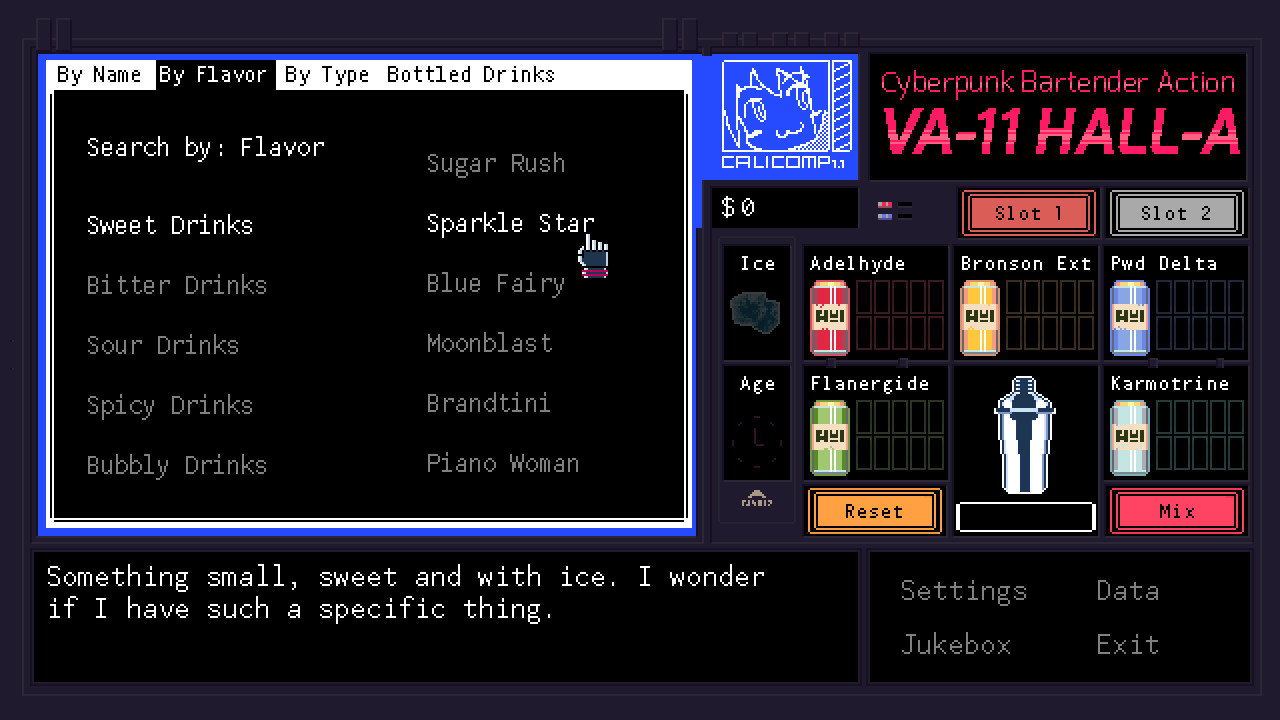
TA: Can you talk about how it was working with Garoad on the music on VA-11 Hall-A? Just like the game, the soundtrack is one of my favorites ever.

CO: Michael and I always had similar music tastes and influences, so the process was very free-form. He’d make a track, and I’d love the shit out. Repeat the process until the soundtrack is ready to go. Sometimes I would send him a song I liked as a reference, sometimes he’d create a completely original song that would inspire images in the game, then the images would inspire more music. This synergy gave the game a firm identity that stands the test of time in my opinion.

TA: I didn’t realize it until recently, but VA-11 Hall-A kind of became one of those indie games that had a very vocal fanbase and got a good amount of merch that keeps selling out. I think the vinyl box sets are also on multiple pressings now and that SLUT shirt keeps selling out. A good friend of mine recently bought it as well. How much input do you have in the merchandise? Is there anything you want to see made that hasn’t happened yet?

CO: I don’t have much input on merch creation. I mostly give the thumbs up or down once a whole chain of people already made the hard choices beforehand. Would like to be a little more involved for 45pb now that I know what I’m dealing with.

TA: I still have a few more questions before getting to your new game. Let’s go back to 2019 for a second. Playism’s JP release of VA-11 Hall-A included a fantastic art book cover. I really wish I could get that piece of art signed by you and framed. Can you talk about the inspiration for it and how you pay homage to your favorites like that in your work?

CO: Back when I drew that cover I was going through really tough times; even though I hadn’t fully realized yet. We were very focused on surviving the collapse of our country and many other things.

During this time, at our old office, we’d listen to a lot of Gustavo Cerati; his album Bocanada to be more precise and its tunes managed to keep us going in the face of uncertainty. So when I was asked to draw a new piece for the artbook I couldn’t help but pay homage to it. I admit now that it’s a little too overt and I would do it differently now, but I’m still proud of it. In fact, I’ve been reconsidering my approach to inspirations a lot in the past few years, and this will be obvious once people play 45pb.

TA: You and Fer have spoken a lot about VA-11 Hall-A over the years, but I cannot pass up a chance to talk about how amazingly written and designed the characters are. Looking back at the work you put into it, did you expect certain characters to become as popular as they did?

CO: I expected Stella to be the most popular one since her gifs would often go viral before release, but you can never predict this sort of thing. And it’s like I said before; I sort of knew certain things were gonna be a hit, I’m just unable to properly articulate why I thought that way or why it worked, and at this point I rather not know. The moment a hunch becomes a science the magic disappears. Formulas are terrible in this line of work. You gotta let things flow; Let them become their own beautiful thing.

TA: I’ve joked with friends about how N1RV Ann-A is my “Silksong”, but I have no problem waiting as long as it takes. I still enjoy revisiting VA-11 Hall-A often. Do you go back and try out whatever you had done for N1RV Ann-A or VA-11 Hall-A while working on unrelated projects?

CO: I like jotting down lore and characterization stuff for a rainy day. I love to draw Sam, I love coming up with new designs, characters; playing around with the general looks of the game, ideas for shots during cinematics; one liners, environments, atmosphere. I even like to imagine “what if this didn’t have to be a bartending game?” and other extreme musings, but that’s about the extent of the mindspace I dedicate to it currently.

Once we’re done with 45pb Nirvana’s development will pick up dramatically, though that really depends on if the spark is still there by then. So far it has no signs of extinguishing.

TA: As a huge Suda fan myself, I’m curious what you thought of No More Heroes 3 and Travis Strikes Again? As much as I love No More Heroes 3 (more than 11 playthroughs), I think Travis Strikes Again might just be Suda’s most “Suda” game yet.

CO: I REALLY like No More Heroes 3’s combat, but I wasn’t a fan of its writing. Maybe it was COVID, and game development is really tough; especially with the hardcore deadlines they had. But in general I think it wanted to be one thing at the start and then had to become another in order to be shipped. It’s a shame, and it is what it is. I just hope they only make new original games from now on and forget about sequels and reboots. Re-releases are OK; especially of the lost media kind, like Frog Minutes or the 25th Ward back in the day.

As for Travis Strikes Again, I agree it’s the best of the newer games. Feels like reading someone’s diary sometimes and that’s the kinda art I enjoy. I guess I didn’t see much of that in 3 outside of continuing some plot threads from TSA.

TA: What are your thoughts on Grasshopper Manufacture under Netease and the remasters announced? Suda even mentioned today that he’d love to bring Flower Sun and Rain to Steam.

CO: Netease is a big corporation so my hope would be that Grasshopper gets all the money and time they need to cook.

TA: VA-11 Hall-A’s journey from PC to PS Vita was quite something, and it involved many parties across regions. I remember buying the Japanese release just for the box art with no English included for publisher reasons. When it came to Switch and PS4, I think you wanted the JP release to have English so anyone could import it. How has it been for you now in Argentina trying to get your own game’s merchandise and merchandise in general? It is a pain over here with delays and extra import fees.

CO: I simply don’t import anything these days. I don’t wanna bother with Argentinian customs. Protectionist policies are stupid. Sure, make all electronics more expensive to import so the local market has a chance to compete, but there’s no Argentinian PlayStation to compete with, is there? There’s no Argentinian Steam, and so on. Only idiots come up with this sorta policy. Brazil does the same shit as well. Would be cool if they stopped.

TA: You’ve worked in PC-98 and PSX aesthetics a few times. When .45 PARABELLUM BLOODHOUND was announced, I was floored by how it looked like the perfect game I’d want from you. The reception has been largely positive, but I can’t imagine what you and the team went through leading into its reveal with N1RV Ann-A and such. Can you talk about how the last few months have been for yourself?

CO: We’ve been locked in and doing our thing. No crunch, all fun. We party, we feast, we travel. We touch that proverbial grass. Lots of insecurities and self-doubt for sure. We even tried to downplay things and manage expectations before the reveal, bracing ourselves for possible apathy from the crowd because it’s not Nirvana. But when it came to actually putting in the work there was no hesitation. I’m happy the announcement worked out, but now we gotta buckle up and finish the story.

TA: .45 PARABELLUM BLOODHOUND has been revealed, people can wishlist it on Steam, and I immediately thought of Vagrant Story x Sukeban Games’ Vibe when I saw the trailer. How has it been interacting with fans discussing it online and offline?

CO: It’s been incredibly fun, even though there’s so many comparisons with old games. Not that I mind but there’s been some ridiculous comments out there that boggle the mind.

One thing that surprised me was the amount of fanart right after the reveal. That shit was great. A fan even brought us a drawing that we proudly displayed on our table at Bitsummit for everybody to see.

TA: Probably too soon but when can I buy the key art as a poster and get it signed?

CO: Maybe on release.
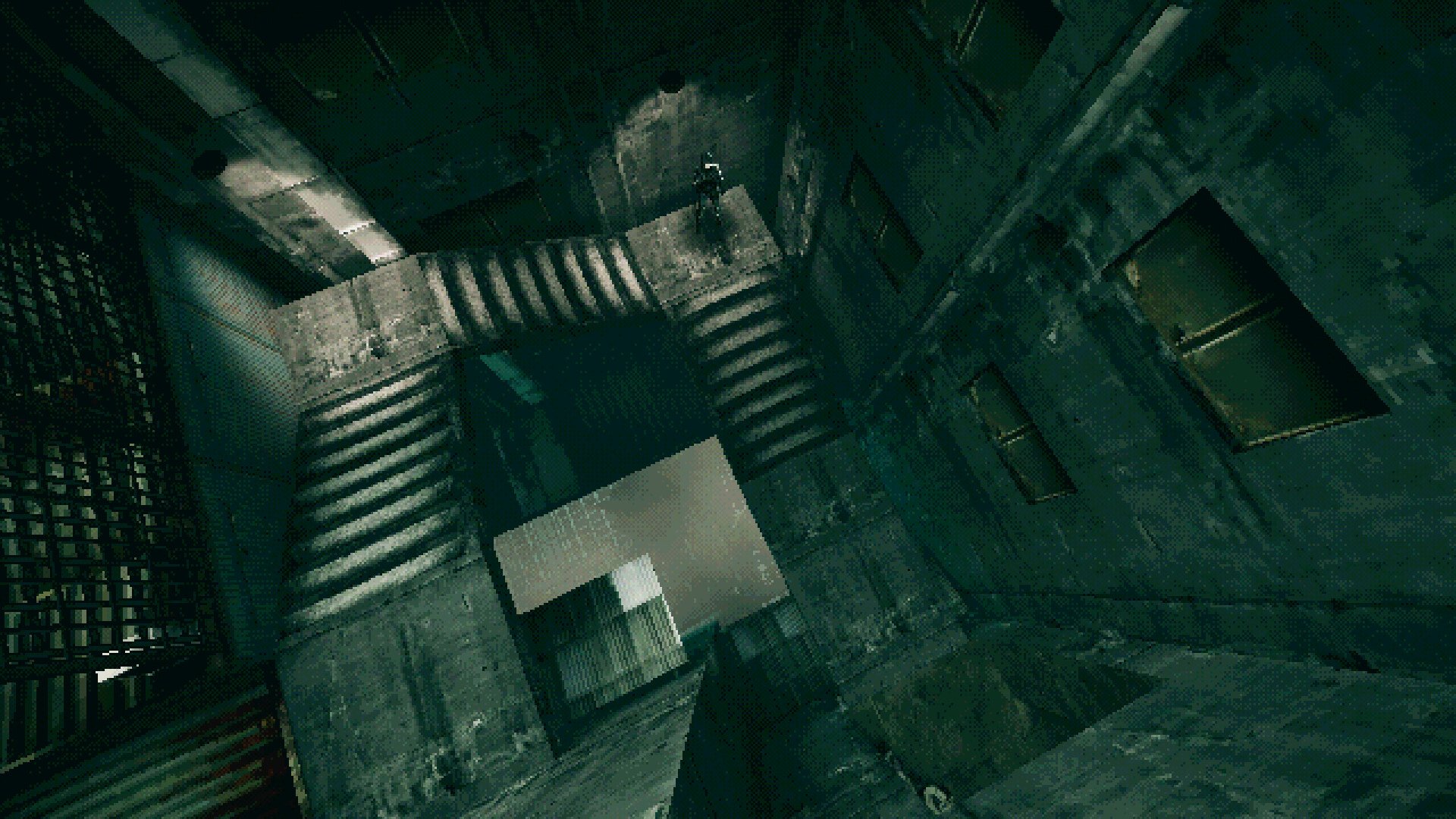
TA: What were your main inspirations for .45 PARABELLUM BLOODHOUND from a visual and gameplay perspective?

CO: When coming up with the actual gameplay for 45PB there was a unique concern. People know Sukeban as a Visual Novel/ADV developer because of Va11halla, and I wanted a sort of bridge between that audience and something more action-focused. I saw Parasite Eve’s battle system, but instead of saying “I want more of that” I thought “This is a good solution to my predicament” thanks to the hybrid of real time and turn-based gameplay. And that’s pretty much the way we work. Rather than wanting to imitate something, or wanting more of it, I look to games of the past in order to solve modern problems. We don’t need to reinvent the wheel every time.

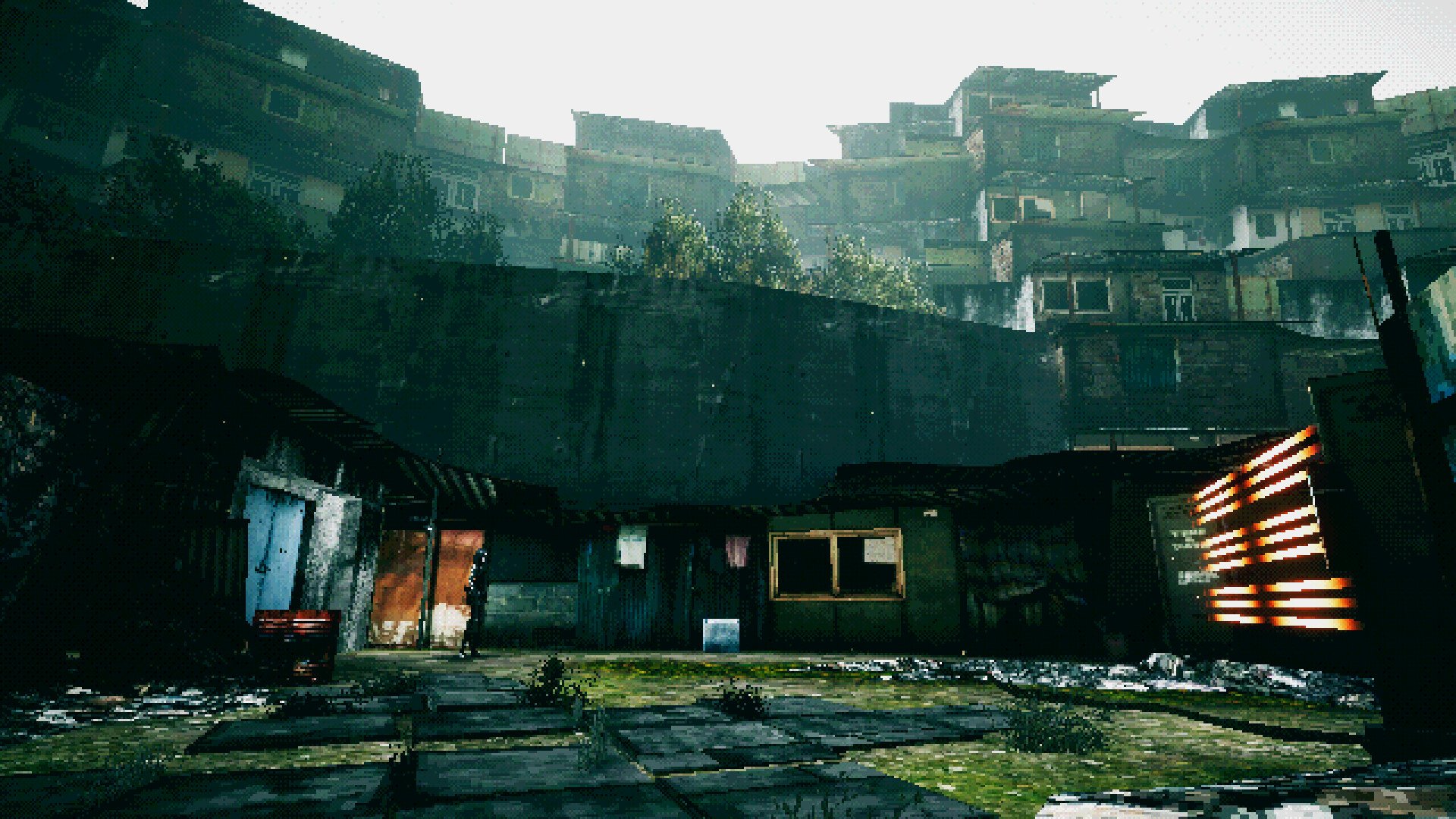
For the visuals, I remember roaming the streets of Milan in 2019. I was ultra depressed, and didn’t actually have a country to live in at the time so I was also in a state of limbo. The mix of modern structures and old buildings, then juxtaposed to all the neon lights and LED screens along the river had my imagination running wild. For me that was the genesis for the game’s look.

This marriage between the old, the new and the decadent. The cherry on top was when I moved to Buenos Aires and found a similar atmosphere, except it included that South American roughness and texture that’s absent in Cyberpunk worlds (which tend to be mostly inspired by east asian aesthetics), so I decided to lean on that to create something unique.
TA: Tell us a little bit about the team working on it including the composer, and how long it has been in the works.

CO: We’re two people working on it day-to-day (me and the programmer), plus Merenge helping with additional character and production design. The composer this time around is Juneji, who has been doing a LOT of work with us over the years. We have this massive stash of incredible music that he’s made, but it remains unfortunately private due to circumstances with failed projects. Same with Merenge’s art.

There’s been some hella demoralizing moments since it’s hard to work on things for so long, pouring your soul into them only to see them crumble in front of you, but we’ve remained a tight group over the years and one of my goals is that the world can finally witness their talents on a large stage. I owe them that much. We also added an old friend in a producer/babysitting role and it’s helped us to not neglect important non-game stuff.

As for how long it’s been in development: Technically since 2019 but the current iteration is roughly 2 years old. Before that it was all experiments until we arrived at the right “moment to moment” gameplay.

TA: .45 PARABELLUM BLOODHOUND had a teaser, gameplay, and now has a steam page. Are there any plans to offer a demo on PC in any of Valve’s demo fests on Steam in the near future?

CO: It’d be a pain in the ass to maintain a demo for this particular game so we rather keep those for offline events. Never say never though.

TA: A lot of my friends who love VA-11 Hall-A are excited for .45 PARABELLUM BLOODHOUND. Will it be accessible for everyone or is it too soon to say how the difficulty will be handled?

CO: It’s too soon to explain, but as I’ve mentioned before, the battle system itself is meant to be a bridge between vibes-based players and action-oriented players. Not that I’m trying to satisfy both, but rather ease one type of player into a new system.
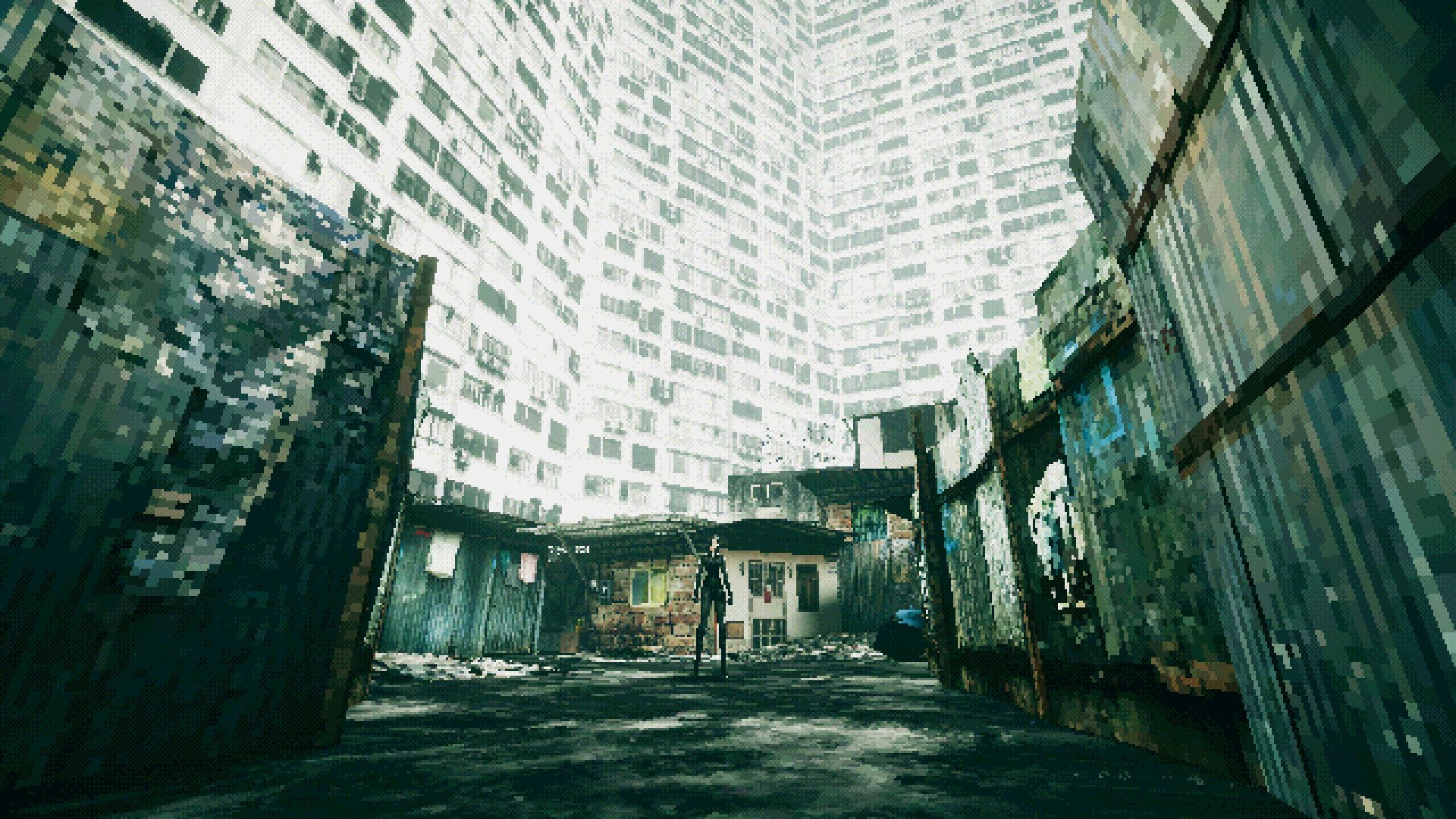
TA: What is your favorite aspect of .45 PARABELLUM BLOODHOUND right now?

CO: As a game? definitely the atmosphere and the script. I sometimes play it for leisure on my Steam Deck while tryna sleep and wonder “Damn, what’s gonna happen next?” only to be like “you wrote this shit! you know where it goes!”. Also the combat is fun as hell once it opens up after the first chapter. Chaining skills and upping the tempo of combat after pulling off sick tricks makes for addictive gameplay. This will make sense later unless we fumble it.
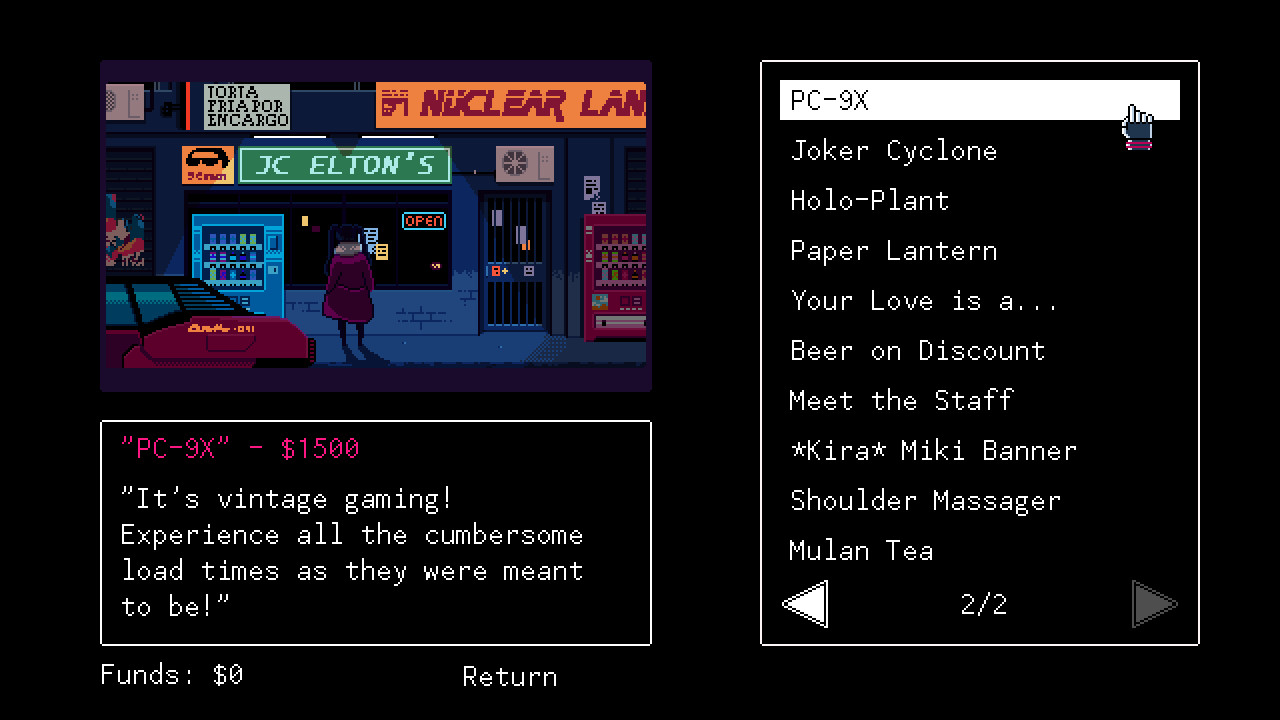
TA: Can you give us an interesting development / design anecdote for .45 PARABELLUM BLOODHOUND and VA-11 Hall-A?

CO: So I mentioned the influences of cities like Milan and Buenos Aires in the creation 45PB’s world, but one thing that people might have noticed by looking at very early screenshots was that it used to feature some locales reminiscent of Hong Kong. I actually scrapped a lot, if not all of it, in favor of the “South American Cyberpunk” I’m aiming for after a conversation I had with a friend from China.

I was consulting with him about getting the fonts and the text of the billboards just right so it felt authentic, but then my mind broke and I began asking to myself “Why go through all this effort trying to be authentic when I can just leverage my own culture?” and it’s a sort of mantra I’ve been following ever since. I find terms like “cultural appropriation” silly, but the word “appropriation” by itself is something I’ve been contending with a lot. “Is it my place to tell this type of story?” “Is it okay if these characters speak this or that way?” and so on. Not that it limits my creativity or that I’m afraid of hurting sensibilities; I frankly don’t give a shit. I just think that more original works can be born if we leverage what makes us unique instead of trying to make more of what we like. It’s all about balance.

TA: Since the announcement, you’ve no doubt had folks asking for a console version when we don’t even have a release year for .45 PARABELLUM BLOODHOUND, but I wanted to know if there was any thought into working with a publisher or will this be self-published?

CO: We want to self-publish on PC and let other companies handle consoles. We’re in the process of finding the right partner for this.

TA: What were the inspirations behind Reila Mikazuchi’s design and character?

CO: I don’t know if I’ll get in trouble for this but I admire actor and singer Meiko Kaji a lot.

I love her movies, you name them: Prisoner Scorpion, Stray Cat Rock, Lady Snowblood, Jeans Blues. Something in her look is so captivating and I wanted my own Meiko Kaji for 45PB. I needed a character design that can say a lot with just the eyes. Someone who can project that inner pain and tragedy effortlessly, so using Meiko Kaji as a point of reference was a must.

As for the writing, every time I come up with characters they’re always a composite of several people I know and myself. So as to not ruin your impressions of her, I shall keep these inspirations a secret.
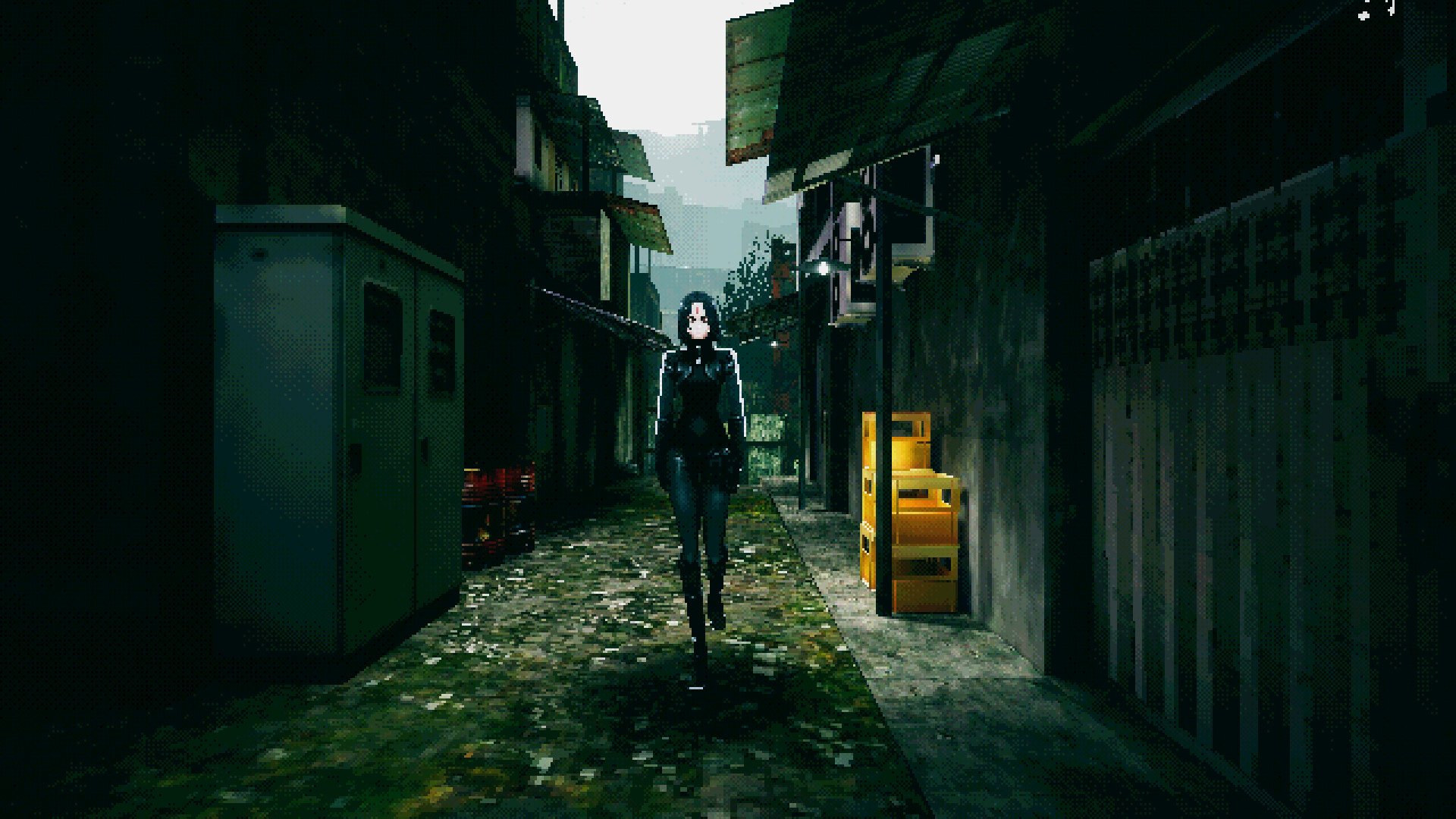
TA: How many iterations did you go through for her final design which rules by the way?

CO: I always had in mind the main look of long, black hair and pale skin. Plus the third eye. The thing that took me the most work was coming up with the outfit. She was wearing a suit at first actually! Then I wanted her to have a jacket, but finding the right type of jacket was a challenge. I gave her a biker jacket but it looked weird and I had to experiment a lot until I stumbled upon the current design. Merenge helped me with some accessories, such as the shoes, gloves and the logo on the back of the jacket.

TA: VA-11 Hall-A saw VA-11 Hall-A Kids and Sapphic Pussy Rhapsody released following the game. Ahead of .45 PARABELLUM BLOODHOUND, should we expect any smaller projects like that?

CO: Never say never but our plan with this game is to release it, let it be and move on to something new. No DLC or anything like that. Ports to future platforms are always on the table but that’s the extent of it.

If A24 or someone else wants to make a movie about it I’ll listen.

TA: What does a day in your life look like right now?

CO: Right now I’m a little f***ed up. I’m usually a good boy who works from 9am, takes a little lunch break then locks in again until 4 or 5pm, but sleep escapes me lately so I’m just trying to contend with that in whatever way I can. The key is to not stress over not having much sleep. As long as shit gets done it’s all good. When I’m not working I try to catch a movie at one of the many small cinemas in my neck of the woods, or go outside and take a walk and buy books I’ll take forever to read.

Buenos Aires has this magic that inspires me to go outside and have low key adventures. Can’t get too crazy because this is still latin america and we don’t f*** around, but I love it here and being surrounded by so much culture, great food, and a crazy clubbing scene keeps me sane. Especially when there’s friends around. I owe them a lot for my mental health even if I’m a huge recluse sometimes. I’m the type to uninstall messaging apps for a minute when I really need to be alone.

TA: What have you been playing lately that you’ve enjoyed a lot?

CO: There’s so many video games. This year I really loved Children of the Sun and Arctic Eggs. Late last year I was really into The Citadel, Lethal Company and RoboCop: Rogue City. I’m now in the process of going through The Evil Within, which feels like a lost Grasshopper game sometimes. There’s the Elden Ring expansion, and I also recently replayed Kane and Lynch 2 with a friend and had a blast as always. That game is so f***ed up in the right ways. We need more grit like that.

TA: What do you think of the current state of indie games?

CO: Every time I go to a game event I’m always madly inspired by all the unique games I see at the indie spaces and that energy is partly what kept me going despite all our production hiccups. That sense of community. That we all have this burning desire to create for the sake of creation. That shit is great. I f***ing love indie games and I think they’re better now more than ever.

BUT… I worry that we are trying to lean too much on familiar concepts and inspirations.

Games like Arctic Eggs do it right in that it’s trying to look like an old PSX game, but there were no PSX games like Arctic Eggs. Then there’s games that feel so blatant in their desire to be like one of the classics that I’m like “weren’t we supposed to be the creative ones?” not to mention the over reliance on “Roguelike” mechanics and such. But it’s not all bad. There’s some really cool shit all the time; especially on places like itch.io. It’s just that humans in general can be creatively bankrupt regardless of production scale. There’s triple A slop, there’s indie slop. There’s no escaping the slop. Being indie doesn’t make you inherently more creative and that’s okay. There’s always room for growth as long as we’re cognizant about our shortcomings.

TA: Are you looking forward to playing any specific game this year?

CO: I’m really looking forward to Slitterhead.

Dunno if they’ll be out this year but there’s also Sonokuni, Elation For The Wonder Box 6000, Studio System: Guardian Angel, Eating Nature (from the Arctic Eggs dev)… There’s a lot I’m excited about. My Twitter feed is an endless stream of cool indie games I doubt will ever see the light of day but the attempt is appreciated nonetheless.

TA: Obviously scheduling and such, but if we managed doing this interview on a call, I’d have taken this chance to nerd out about The Silver Case with you. I’m glad I listened to my friend and powered through it because that typewriter sound was too much for me. I adore The Silver Case and I know you love it as well. What elements from it inspired you the most and what’s your favorite track from the soundtrack?

CO: The Silver Case has always been one of those games that felt like a white whale to me. It was so utterly inaccessible that my mind pretty much created its own Silver Case by trying to fill the gaps. I used to browse this creepy Suda51 fansite way back in the day and I was always searching for every bit of info on this inscrutable-ass game, so when it actually released in a language I can understand I was afraid I wasn’t gonna like it but I think it was much more than I could ever have imagined. In that sense, the way Silver Case inspires me is tightly related to this need to fill gaps. The space between the real Silver Case and what I was imagining it to be is where a lot of the ideas for the presentation in games like Va11halla or The Radio Wave Bureau were born.

I can’t choose a single favorite song if I’m being honest. The whole soundtrack has such a vibe. Could be the Sayaka Baian theme that plays in Kamuidrome, but tomorrow it could be the opening theme, then the next day another one.
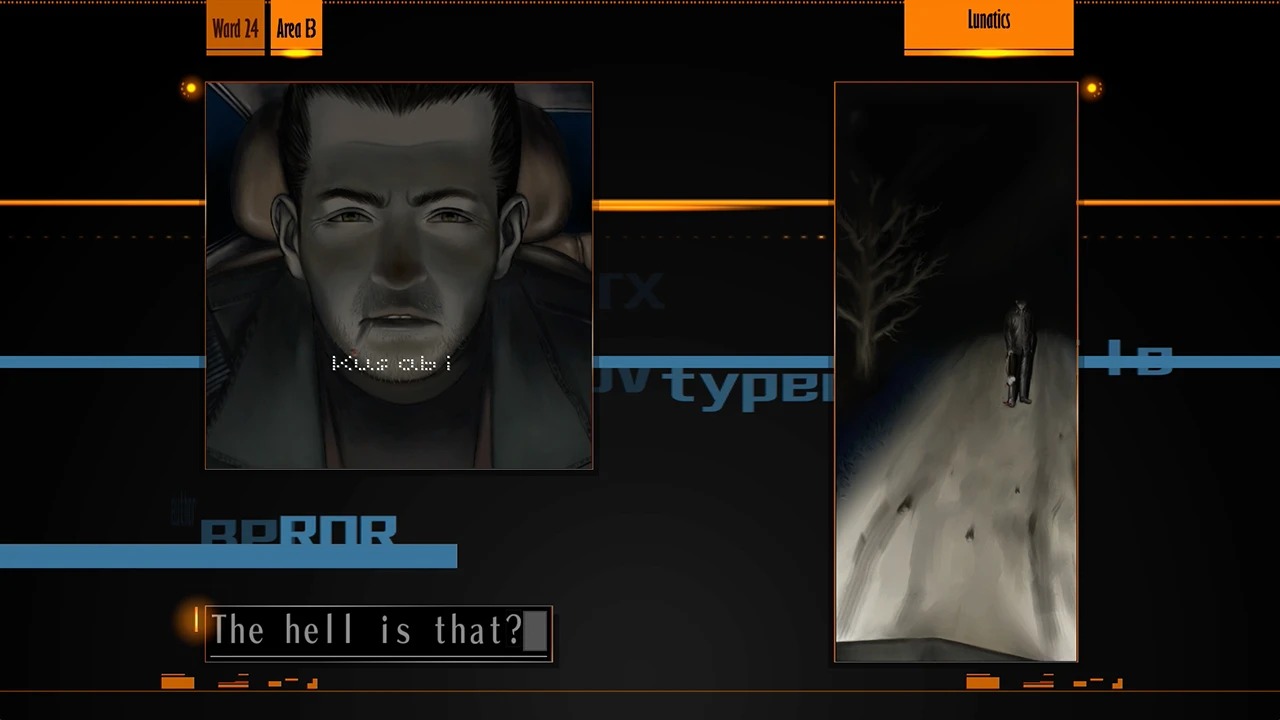
TA: Did you end up trying it out on console or just playing it on PC?

CO: I bought and played the game on every platform.

TA: The Silver Case’s original box art and aesthetic is probably the only thing I love as much as that in VA-11 Hall-A. What elements from its visual style had you curious back then?

CO: Definitely the stoic look of every character. Takashi Miyamoto is my goat along with Yoshitoshi Abe. For Va11halla I had to be very expressive with the characters because that’s what the story commanded, but ever since I was a kid I always had an affinity towards designs that say a lot with minimal facial expressions. Two of my favorite films are Patlabor 2 and Ghost in the Shell, and Serial Experiments Lain is also one of my favorites, so you can probably tell where I’m coming from with this.

I was also so transfixed by the UI. I could go on and on about this subject, but I’ll always lament that The Silver Case didn’t create a movement after its release. Visual Novels could look so much better if we had 1% the imagination of that original Grasshopper team. I’m not sure, but I think the look was done by Akihiko Ishizaka who would go on to work on Killer7 and Danganronpa. I wish he was still working with GhM. Or maybe he still does and I’m talking out of my ass.
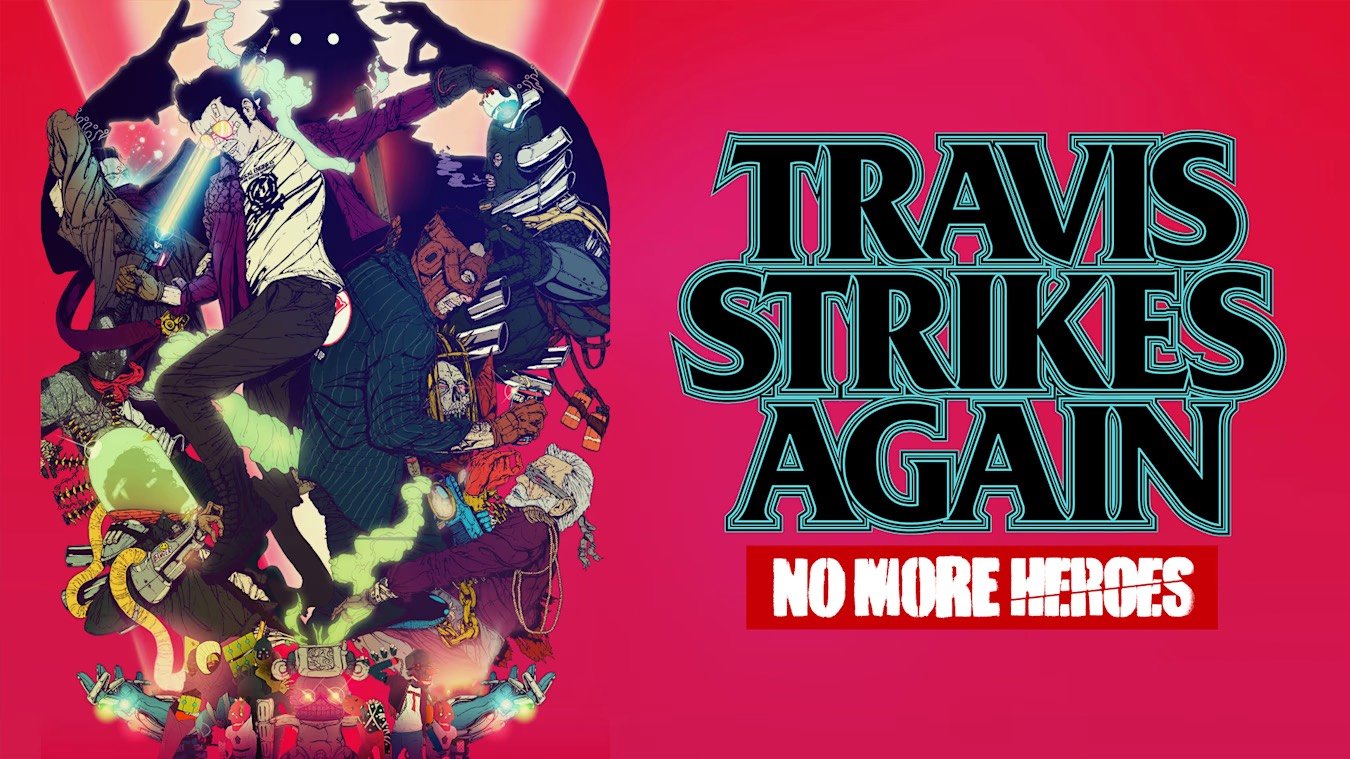
TA: I think you’ve met Suda more than once now. How has that been for you and has he played VA-11 Hall-A? I know Travis Strikes Again has a VA-11 Hall-A tshirt that is the objectively best and only one everyone should use.

CO: I’ve met the guy twice and I’ll always lament not knowing enough japanese to just talk and talk all day with him. We share a lot of common interests, though the generational gap can be felt when he starts yapping about Japanese media from the 70s. I do know he played my game but I’ve no clue if he actually enjoyed it. Will have to ask if I ever see him again.

TA: Are you still up for this if the opportunity arises?

CO: There’s a story behind this that I’ll have to sit on for a while longer.

TA: My current game of the year for 2024 is Like a Dragon: Infinite Wealth. I know you loved Yakuza: Like a Dragon, but did you end up trying Infinite Wealth/8 or Gaiden last year?

CO: I love Like a Dragon so much but I didn’t play Gaiden, and Infinite Wealth seemed like too much of a commitment when I played at launch. The game was throwing mechanic after mechanic at me in a way that made me feel overwhelmed. Like there was too much game ahead of me, so I put it off for the time being. Maybe once I’m in the mood again I’ll give it a honest shot.
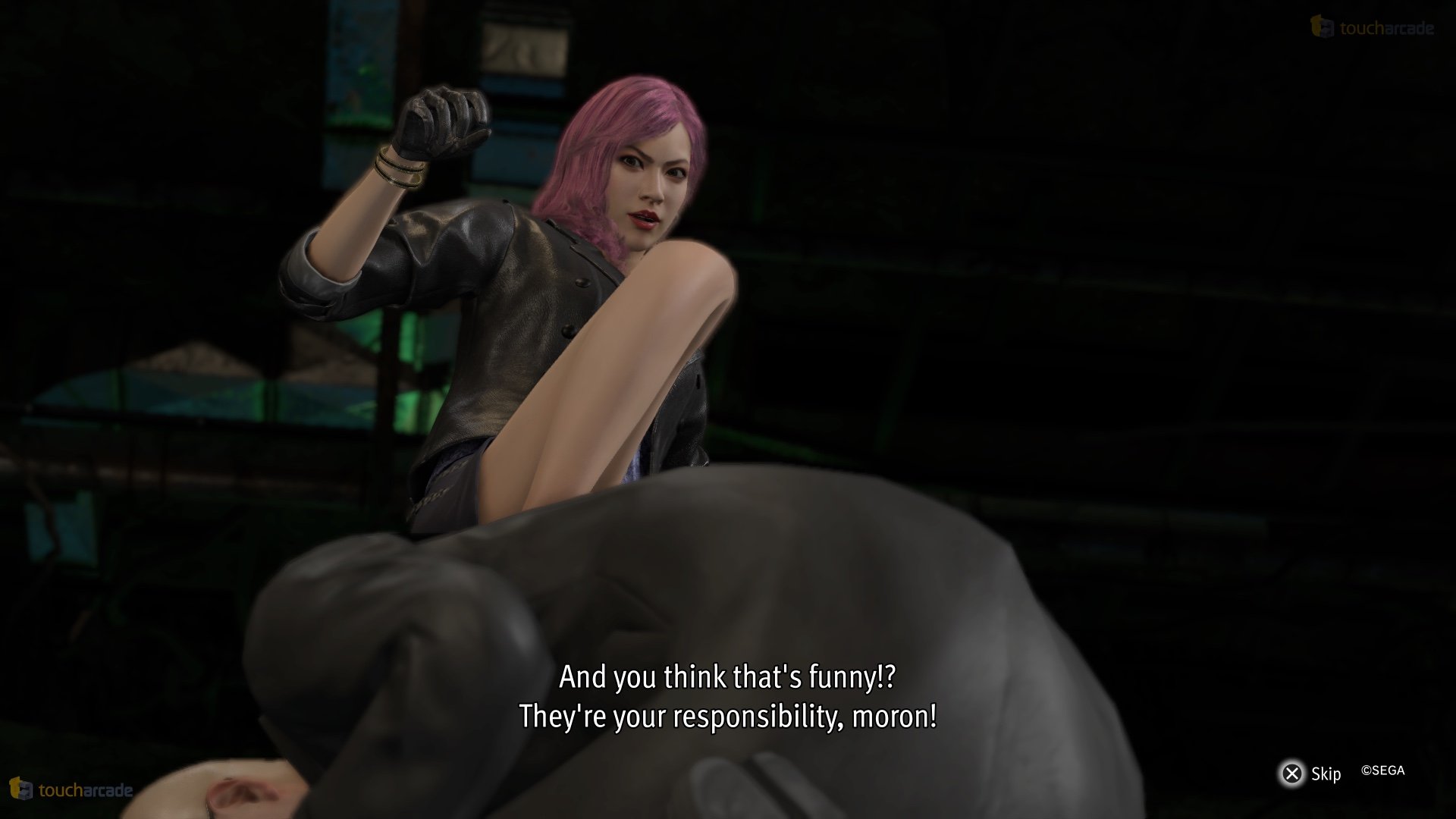
TA: VA-11 Hall-A has always been perfect to play on a portable. I loved it on Switch and recently found a mod that adds full controller support to the PC version. I’ve been revisiting it on Steam Deck. Have you had a chance to try it on Steam Deck yet?

CO: I did and saw it sort of works but not quite. I wish I could go back and tweak it but it’s not technically feasible. The Game Maker version we used doesn’t even work properly on modern Windows and it’s the reason we haven’t been able to do any sort of fix or update to it. Aside from simply not having the time to deal with all that mess we made (at a technical level).

TA: Honestly I still have a lot more I want to discuss with you, but I think I should save that for part 2 or a future interview. Let me end this with one final question. How do you like your coffee? Go into as much detail as you can. If not coffee, talk about your favorite beverage.

CO: I like my coffee black like a moonless night. Even better if it’s accompanied by cheesecake on a beautiful afternoon.

TA: Probably not smart, but it is nearly 2 AM and sending these questions over made me want to replay The Silver Case. Next time we talk, let’s do a dedicated discussion on The Silver Case.

CO: Absolutely!
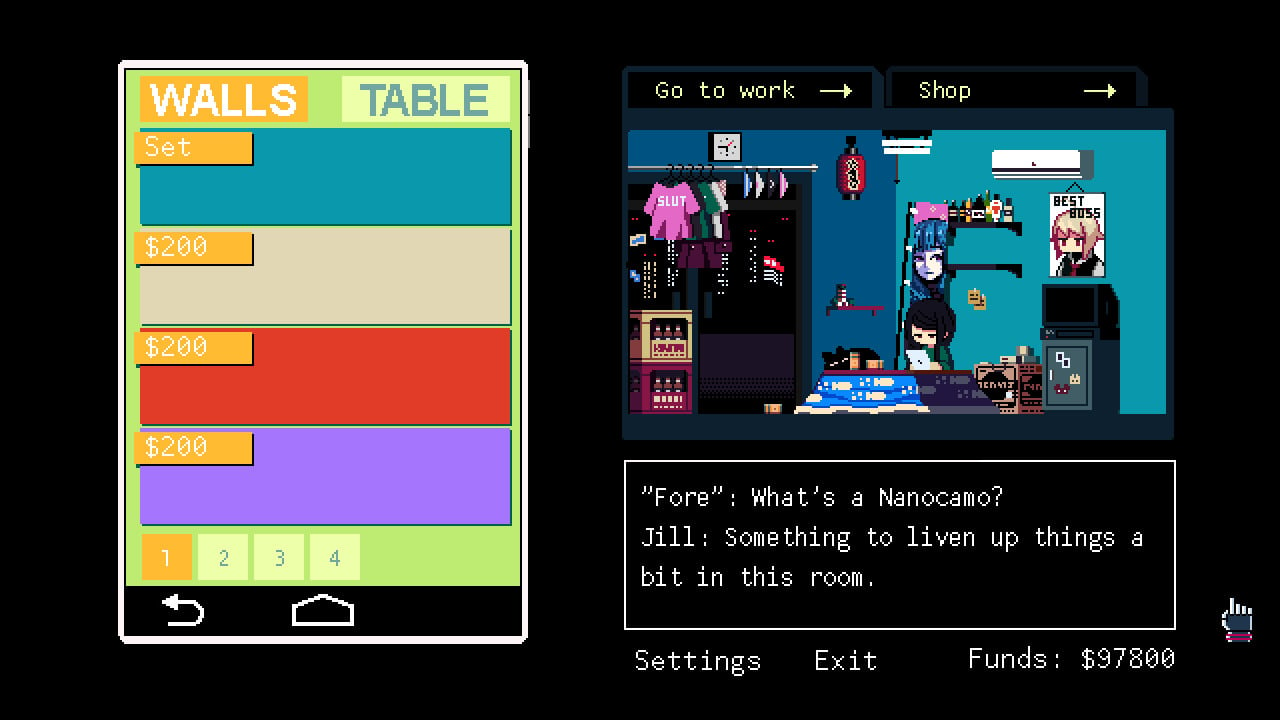
I’d like to thank Christopher Ortiz for their time and help with this interview over the last few weeks.

You can keep up with all our interviews here including our recent ones with FuturLab here, Shuhei Matsumoto from Capcom about Marvel Vs Capcom here, Santa Ragione here, Peter ‘Durante’ Thoman about PH3 and Falcom here, M2 discussing shmups and more here, Digital Extremes for Warframe mobile, Team NINJA, Sonic Dream Team, Hi-Fi Rush, Pentiment, and more. As usual, thanks for reading.




Source link

Heurist: A Comprehensive Overview

0
Heurist: A Comprehensive Overview


<![CDATA[

Heurist is a Layer 2 network designed for AI model hosting and inference, built on the ZK Stack. Its mission is to be the HuggingFace of Web3. By leveraging a decentralized computing resource network, Heurist provides serverless access to open-source AI models, utilizing blockchain technology to democratize AI and ensure accessibility and unbiased innovation.

Vision and Values

Heurist envisions AI to be instrumental in onboarding the next billion users to crypto. The project is grounded in the shared values of open-source AI and crypto, such as transparency, data ownership, and diversity. Heurist aims to foster a two-way onboarding process: empowering crypto enthusiasts to engage with AI through a permissionless mining network using their home PCs and enabling AI model developers to access increased compute resources, publicize their models, and earn revenue share.

By supporting the development of Web3-native AI applications, Heurist allows individuals to access AI services at low or no cost, showcasing the practical benefits of decentralized technologies. The Heurist ecosystem promotes innovation, collaboration, and inclusivity, uniting the strengths of AI and crypto to create a future where advanced technology is accessible to everyone.

Name and Inspiration

The name Heurist is derived from the concept of heuristics, which refers to mental shortcuts that help humans quickly arrive at reasonable solutions to complex problems, reflecting the projects goal to make sophisticated AI accessible and approachable for all users.

How Heurist was Founded

Jiewen Wang and Frank is the founder of Heurist. The journey began with an AI agent Heurist founders built to engage in crypto discussions on friend.tech. Through this project, they encountered several common challenges in AI Application development: high computational costs, censorship by major platforms like OpenAI, and a lack of AI model control.

To address these, they launched Heurist as a decentralized protocol to cut AI costs while maximizing customizability and sovereignty. With their teams extensive experience in Web2 and deep roots in crypto, the team is dedicated to democratizing technology and making an AI ecosystem safe, accessible, and resistant to central controls.

Heurist vision is to empower developers and users worldwide to harness the potential of AI without the limitations imposed by traditional centralized platforms.

The Heurist Team

Here’s how Heurist works🤔

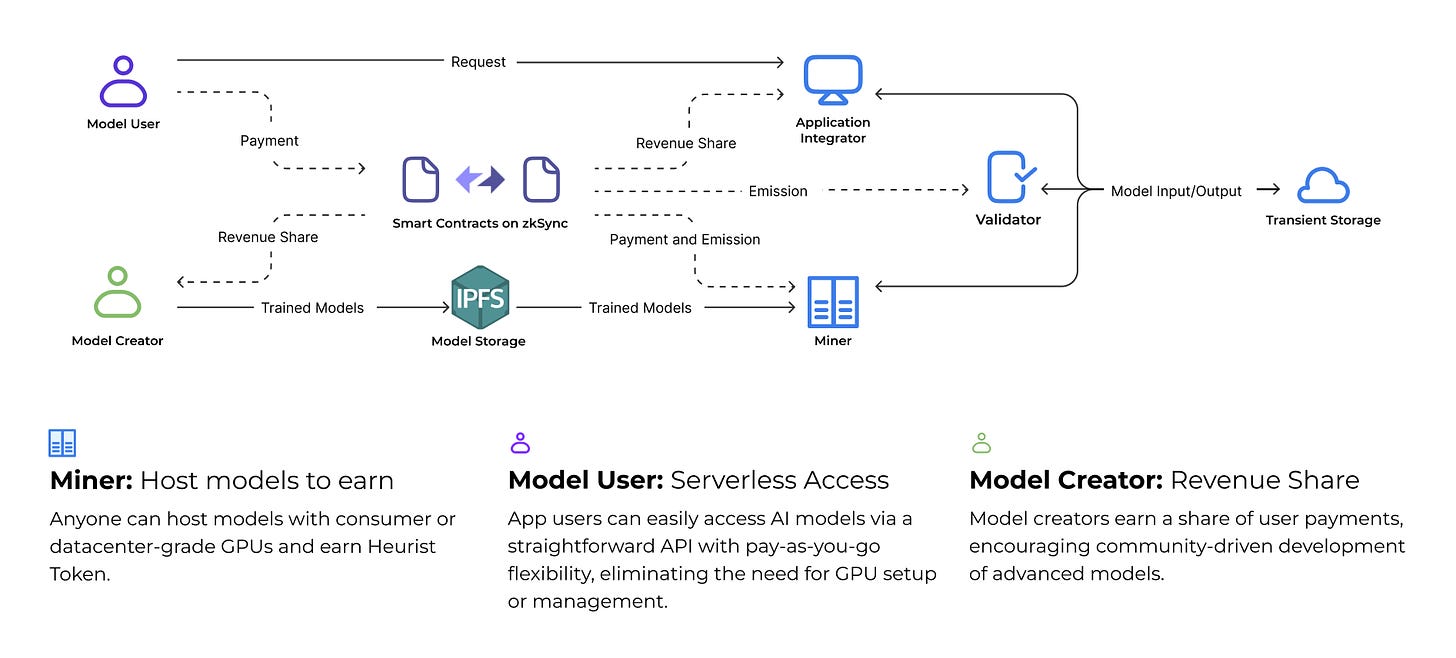
Heurist protocol intricately connects various participants, each playing a vital role in maintaining a healthy decentralized ecosystem. These participants include Model Users (Consumers), Miners (Model Hosts), Model Creators, Application Integrators, and Validators.

To ensure economic security and the integrity of data returned from AI models, we will launch a utility token, Heurist Token (HUE). Participants can spend, stake and/or earn HUE based on the rules defined in smart contracts.

Roles in Heurist Ecosystem

Model Users: Users interact with the Heurist protocol to run inference tasks, such as text generation and image generation. They can choose from a variety of hosted AI models and pay for the computational resources on a pay-as-you-go basis.

Miners: Individuals with GPU resources can mine Heurist Token by hosting AI models. They run models on their own hardware and are compensated with user payments and Heurist Token emissions when consumers execute inference tasks. Miners are required to stake a certain amount of tokens as a commitment to providing quality services.

Model Creators: AI model creators drive the vibrancy of Heurist ecosystem. They upload AI models to the model registry of Heurist network and, in return, receive a portion of the payments made by users. This incentivizes creators to develop more advanced models to satisfy user’s growing demand.

Application Integrators: Application integrators provide interfaces to end users that use Heurists AI models under the hood. Such interfaces might include chatbots, AI agents, and image generation tools hosted as web applications, and might also include SDK that can be integrated in web services. Application integrators earn a fraction of fees in Heurist Token whenever consumers make a payment through the application.

Validators: Validators maintains the integrity and trustworthiness of the Heurist network. They periodically check the correctness of the data produced by miners. If a miner is found to be producing invalid or fake data, their stake is slashed, with a portion awarded to the validator who identified the discrepancy.

Dynamic Resource Allocation

As the network grows, an increasing number of AI models and compute resources (mainly GPUs) will join it. We use token voting to allocate compute resources to every model.

The heurist protocol allocates more powerful GPUs to those models with (1) higher demand and (2) high token voting. An AI model creator can acquire more compute resources in two ways: by encouraging organic usage or by voting with their own tokens. Token holders are incentivized to vote for higher-quality models with higher demand as they will receive a larger revenue share from those models.

The Current Project Update of Heurist

August has been a month of exciting launches, milestones, and community-driven initiatives. Lets dive into the highlights. You can refer to the blog Heurists August Highlights for full details.

zkImagine Launches on ZKsync: Heurist’s AI-powered NFT collection, zkImagine, allows users to create and mint unique artworks with zero gas fees, thanks to the Paymaster feature. Explore zkImagine.

1 Billion Inference Requests Processed: Heurist has processed over 1 billion inference requests, maintaining a strong performance with over 1,000 active GPUs. Mining emissions are stabilized at an annualized rate of 2.1%.

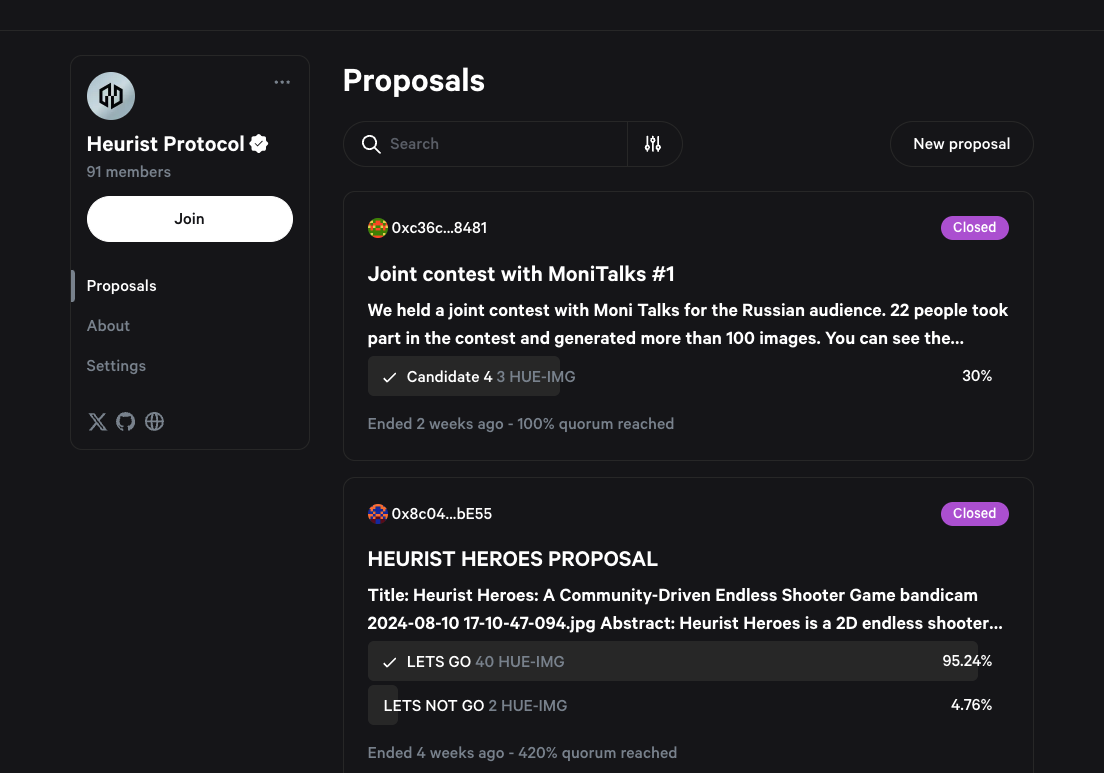
Heurist Heroes Game: A 50,000 HEU token grant has been approved for the Heurist Heroes Game, an engaging 2D endless shooter with AI quizzes and reward incentives.

%[https://vimeo.com/1005038193]

Create-to-Earn Campaign: Sprint 0 of the Create-to-Earn campaign is complete, refining a reward mechanism for users who create and mint NFTs with zkImagine.

Art Contest with Moni Talks: Over 100 images were submitted for the Russian-speaking communitys art contest, showcasing Heurist Imagines creative potential.

Heurist Roadmap

Heurist token (HUE)

HUE is a utility token with a dynamic supply, influenced by both emission and burning mechanisms. The maximum supply is capped at 1,000,000,000.

Emission Mechanisms

1. Mining

Process: Users can mine HEU tokens by hosting AI models on their GPUs.

Staking Requirement: A minimum of 10,000 esHEU tokens must be staked for a mining node to be active. Below this threshold, no rewards are generated.

Reward: Mining yields HEU tokens. Reward rate depends on GPU efficiency, availability (uptime), the type of AI model being run, and the total amount staked in a miner node.

Boosted POW Mining: For stakes between 10,000 to 100,000 HEU tokens, mining efficiency increases proportionally with the amount staked.

2. Staking

Process: Any user can stake esHEU tokens in mining nodes.

Reward: Staking yields are given in HEU token. Staking esHEU produces higher yields than HEU.

Vesting: esHEU rewards can be vested into HEU over a one-year period with linear vesting.

Transfer of Stake: Users can instantly transfer their HEU or esHEU stake from one miner to another. This promotes flexibility and competition among miners.

Burning Mechanisms

Similar to the EIP-1559 model in Ethereum, Heurist implements a token burn mechanism. When users pay for AI inference, a portion of the HEU payment is permanently removed from circulation.

The balance between token creation and burning is closely tied to network activity. During periods of high usage, the rate of token burning can exceed the rate of new token creation. This will potentially lead the Heurist network into a deflationary phase. This mechanism helps in regulating the token supply, and aligns the token value with the actual demand within the network.

Bribes and (3,3)

Bribes were a term first coined by users of DeFi, more specifically, by those of Curve Finance. These bribes are actually gamified incentivizes that help direct rewards for liquidity pools, in exchange for an incentive. We draw inspiration from the bribing mechanism of Curve, and apply it in boosted POW mining in Heurist.

Miners have the option to set a specific percentage of their mining rewards as a bribe to attract stakers. A staker may choose the miner with the highest bribe, but other factors should also affect the staker’s choice such as miner’s hardware performance and uptime.

Miners are incentivized to bribe because a higher stake in the miner node will result in higher mining efficiency. It creates a competitive yet cooperative environment where miners and stakers are aligned to provide better service to the network.

With this game theory-inspired (3,3) mechanism, we create an alignment between miners and token holders who take actions to achieve the best collective outcomes.

Proposal Page

Heurist Stats

Top 10 GPUs on Heurist Ecosystem

Heurist Unique Features and Advantages

Heurist offers many unique advantages and features:

Decentralized AI Network: Heurist is a decentralized protocol for AI model hosting and inference, built on the ZK Stack Layer 2 network. This decentralized approach aims to democratize AI and ensure accessibility, transparency, and unbiased innovation.

Incentivized Ecosystem: Heurist has a utility token (HUE) that facilitates an incentivized ecosystem. Participants can earn, stake, or spend HUE tokens based on their roles, such as miners (model hosts), model creators, application integrators, and validators.

Dynamic Resource Allocation: Heurist uses token voting to dynamically allocate compute resources (GPUs) to AI models based on demand and token voting. Models with higher demand and more token votes receive more powerful GPU resources.

Open-Source AI Models: Heurist emphasizes the use of open-source AI models, which are transparent, customizable, and often comparable in performance to closed-source models like ChatGPT or DALL-E.

Pay-as-you-go Model Access: Users can access and run inference tasks on a variety of hosted AI models, paying for computational resources on a pay-as-you-go basis, potentially at lower costs than closed-source alternatives.

Incentivized Testnet: Heurist has an incentivized testnet where participants can earn testnet rewards (Llama Points and Waifu Points) for hosting AI models on their GPUs. These points will be claimable as liquid HUE tokens at the mainnet launch.

Developer APIs: Heurist provides REST APIs for developers to integrate AI models, like Stable Diffusion for image generation and Mistral 8x7b (comparable to ChatGPT 3.5) for language models, into their applications.

Bribes and (3,3) Mechanism: Heurist implements a “bribes” mechanism inspired by DeFi, where miners can set a percentage of their mining rewards as a bribe to attract stakers, creating a competitive yet cooperative environment aligned with providing better services to the network.

Token Burning Mechanism: Heurist has a token burn mechanism similar to EIP-1559, where a portion of user payments for AI inference is permanently removed from circulation, potentially leading to a deflationary phase and aligning token value with network demand.

Anti-Cheat System: Heurist has an asynchronous monitoring system to track input and output of compute jobs, allowing for the slashing of testnet rewards for miners demonstrating malicious activities.

Node Rental Service: Heurist provides a managed GPU node rental service, sourcing deals from various data center partners, making it easier for participants without GPU hardware to join the network.

Community-Driven Innovation: Heurist aims to foster a culture of innovation, collaboration, and inclusivity, bringing together the AI and crypto communities to create an ecosystem where cutting-edge technology is accessible to all

Spheron X Heurist: Unleashing the Power of Decentralized AI

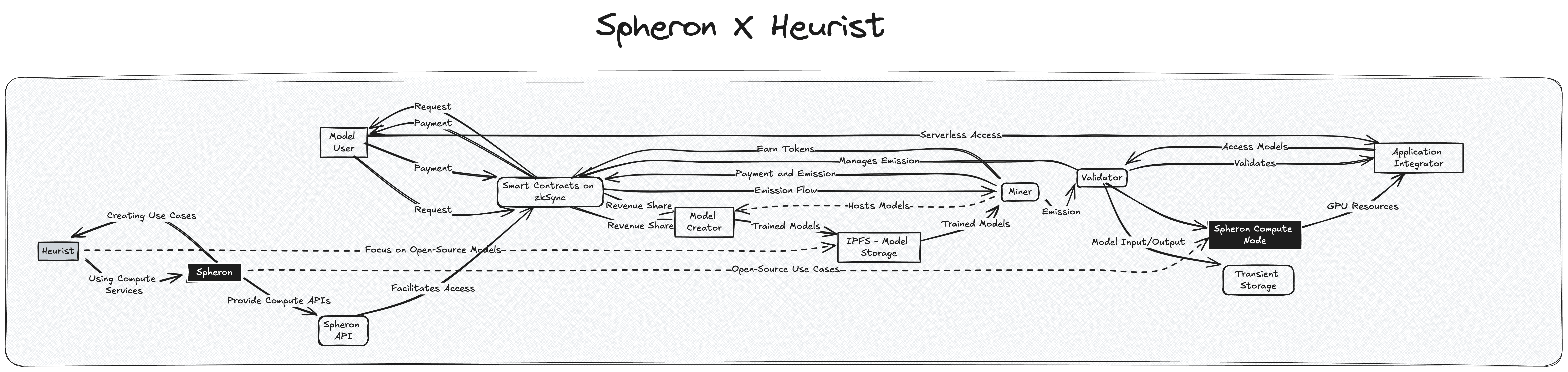
Heurist and Spheron are joining forces to redefine the landscape of AI and decentralized compute, empowering a community-driven future free from traditional barriers. By integrating Spherons cutting-edge, scalable compute solutions, Heurist will provide seamless access to open-source AI models for training and inference, significantly lowering costs and democratizing access to powerful AI tools.

In return, Spheron will leverage Heurists infrastructure to develop innovative, open-source use cases, showcasing the power of decentralized AI and GPU rental solutions. This partnership will also introduce a dedicated “GPU Rental” tab on Heurist’s platform, prominently featuring Spheron as a key partner, creating a unique synergy that accelerates the adoption of open, censorship-free AI technologies.

Heurist and Spheron are not just building tools; they are creating a decentralized, community-led ecosystem that prioritizes accessibility, transparency, and innovation in AI and compute.

Conclusion

In conclusion, Heurist is positioning itself at the forefront of a transformative movement in the AI and blockchain space. By leveraging decentralized computing and the ZK Stack Layer 2 network, Heurist aims to democratize AI access and foster innovation without the constraints of traditional centralized platforms.

The protocols unique structurewhere users, miners, developers, and validators collaborateensures a fair, incentivized, and transparent ecosystem that balances performance and community-driven governance. The vision of combining AI with crypto opens the door for billions to engage with advanced technologies in a cost-effective, unbiased, and censorship-free environment.

Through initiatives like zkImagine, the Heurist Heroes Game, and strategic partnerships with companies like Spheron, Heurist is advancing the technology and building a future where AI innovation is genuinely decentralized and accessible to everyone. As Heurist continues to grow, it is clear that the projects values of openness, collaboration, and inclusivity will be crucial to its long-term success.

FAQs

What is Heurist? Heurist is a decentralized Layer 2 network designed for AI model hosting and inference. It leverages blockchain technology to democratize AI and provide serverless access to open-source models.

How does Heurist work? Heurist connects various participantsmodel users, miners, creators, application integrators, and validatorsin a decentralized ecosystem where computational resources are allocated dynamically through token voting and incentives.

What role does the Heurist Token (HUE) play? HUE is the utility token of the Heurist network. It facilitates economic interactions like mining, staking, and payments for AI model usage, as well as governance through token voting.

What makes Heurist unique? Heurist offers decentralized AI services focusing on open-source models, pay-as-you-go access, a bribe mechanism for staking, and a token-burning system that can make the network deflationary during periods of high demand.

How does Heurist promote decentralized AI? Heurist decentralizes the hosting and usage of AI models, allowing individuals and developers to engage with AI services without relying on centralized platforms. Thus, it enhances accessibility, innovation, and fairness in the AI landscape.

]]>


Source link

GeForce NOW to Bring ‘Dead Rising Deluxe Remaster’ to the Cloud at Launch

0
GeForce NOW to Bring ‘Dead Rising Deluxe Remaster’ to the Cloud at Launch


Rise and shine — Capcom’s latest action-adventure game, Dead Rising Deluxe Remaster, heads to the cloud at launch next week.

It’s part of nine new titles joining the extensive GeForce NOW library.

‘Dead Rising’ Coming Soon

From the ground to the cloud.

Dead Rising Deluxe Remaster returns with modern graphics. More than just a remaster, this Deluxe Remaster is a full graphical overhaul of the first game in the zombie-slaughtering action series Dead Rising. The remaster has also been fully voiced, supports auto-saves and has various other quality-of-life features.

One day, the peaceful town of Willamette, Colorado, found itself put under quarantine by the U.S. army. Frank West, a freelance journalist, smells a scoop and finds his way into the only shopping mall in town. Unfortunately, the mall has turned into a living hell, crawling with countless zombies. Help will arrive in 72 hours, so it’s up to him to find out the truth behind this incident before it’s too late.

Witness the unmatched mayhem and freedom when Dead Rising Deluxe Remaster launches on Wednesday, Sept. 19. Stream it with a GeForce NOW Priority or Ultimate membership for longer gaming sessions and higher frame rates.

New Games to Drive You Wild

Test Drive Unlimited Solar Crown
Vroom, vroom.

Test Drive Unlimited Solar Crown, a new open-world racing game from KT Racing and Nacon, is now available for members to stream. Explore a fully recreated Hong Kong Island while taking to the road behind the wheels of exceptional cars and living the ultimate life of luxury. Test drive and purchase cars directly from dealerships, customize them in workshops and display them in the Solar Hotel garage. Each car offers a unique driving experience.

Members can look for the following games available to stream in the cloud this week:

Warhammer 40,000: Space Marine 2 (New release on Steam, Sept. 9)
Test Drive Unlimited Solar Crown (New release on Steam, Sept. 12)
Dawn of Defiance (Steam)
Flintlock: The Siege of Dawn (Xbox, available on PC Game Pass)
Fort Solis (Epic Games Store)
King Arthur: Legion IX (Steam)
Squirrel With a Gun (Steam)
Tyranny – Gold Edition (Xbox, available on Microsoft Store)
XIII (Xbox, available on Microsoft Store)

What are you planning to play this weekend? Let us know on X or in the comments below.


Source link

Launchpad: The Future of Token Distribution

0
Launchpad: The Future of Token Distribution


We’re redefining how entire crypto ecosystems are built, launched, and scaled. Introducing the Layer3 Launchpad for exclusive token launches and ecosystem campaigns. This is tokenized attention at scale. Buckle up.

For explorers, Launchpad means:

Exclusive access to pre-token protocols

Incentives from established ecosystems

High-quality, interactive experiences

For projects, Launchpad is new rocket fuel:

Exposure to a massive, targeted user base

Onchain engagement plus flexible incentives

Token distribution with powerful Sybil filters

Launchpad isn’t just another platform. It’s the future of how crypto projects launch, grow, and align with their communities. We’re bridging the gap between emerging protocols and millions of engaged users, creating a new standard for token distribution and ecosystem expansion.

Launchpad on Layer3

Launching Now: Caldera 🌋🚀

Meet the Metalayer — the unifying layer of Ethereum rollups in our exclusive Launchpad campaign. Easily connect to new protocols via the Caldera Metalayer including Plume, B3, & Manta.

Featuring $100K in exclusive incentives for discovering Caldera’s rollup ecosystem.

Meet the Metalayer

L3 Token Staking

By staking L3, your loyalty unlocks expanded utility:

Boosted rewards on all campaigns

Early and extended access

Tiered benefits that scale with your stake

This is how you align with the future of crypto.


Source link

Adventures in Gameland’ – TouchArcade

0
Adventures in Gameland’ – TouchArcade


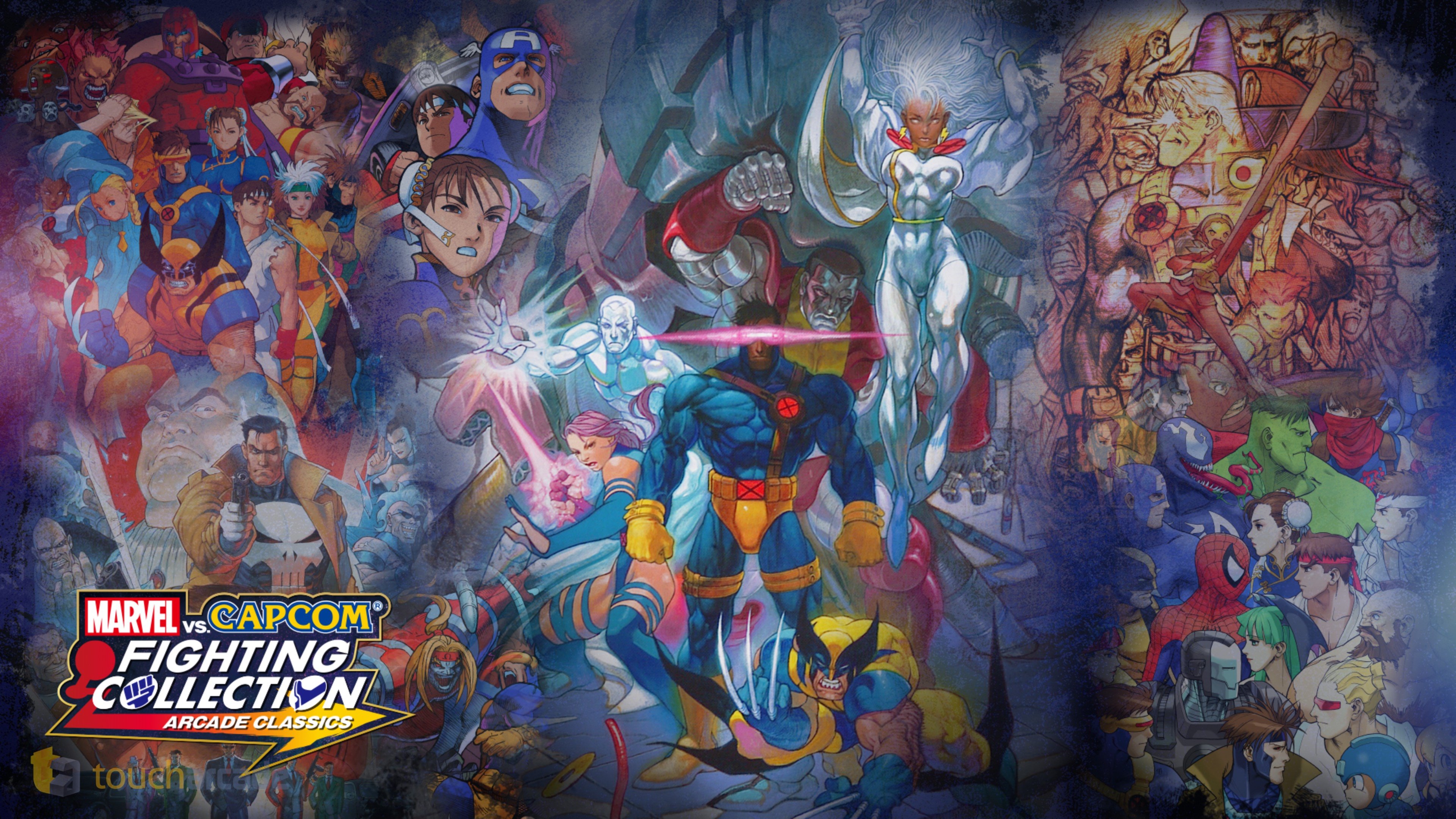
Marvel vs. Capcom Fighting Collection: Arcade Classics ($49.99)

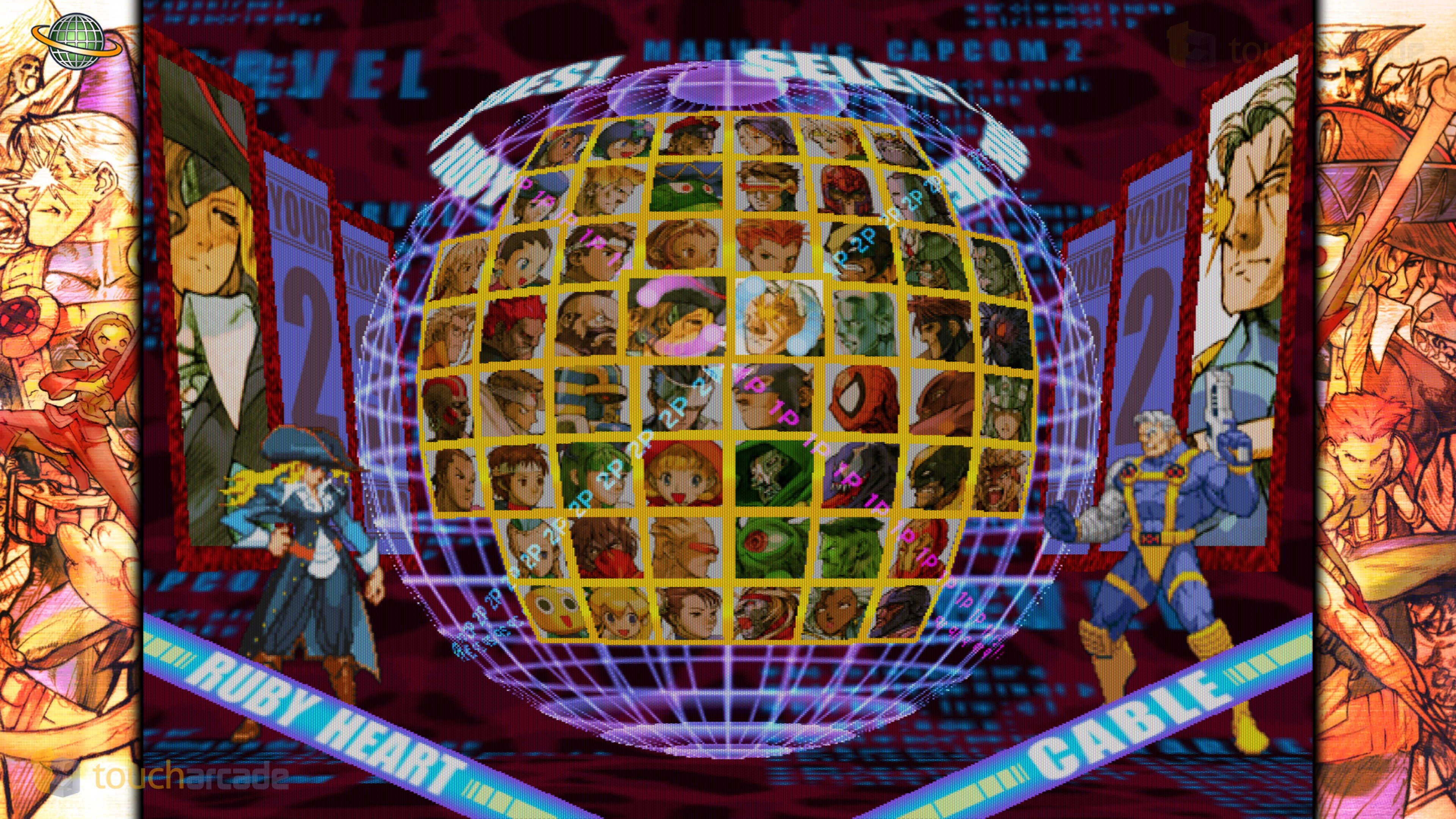
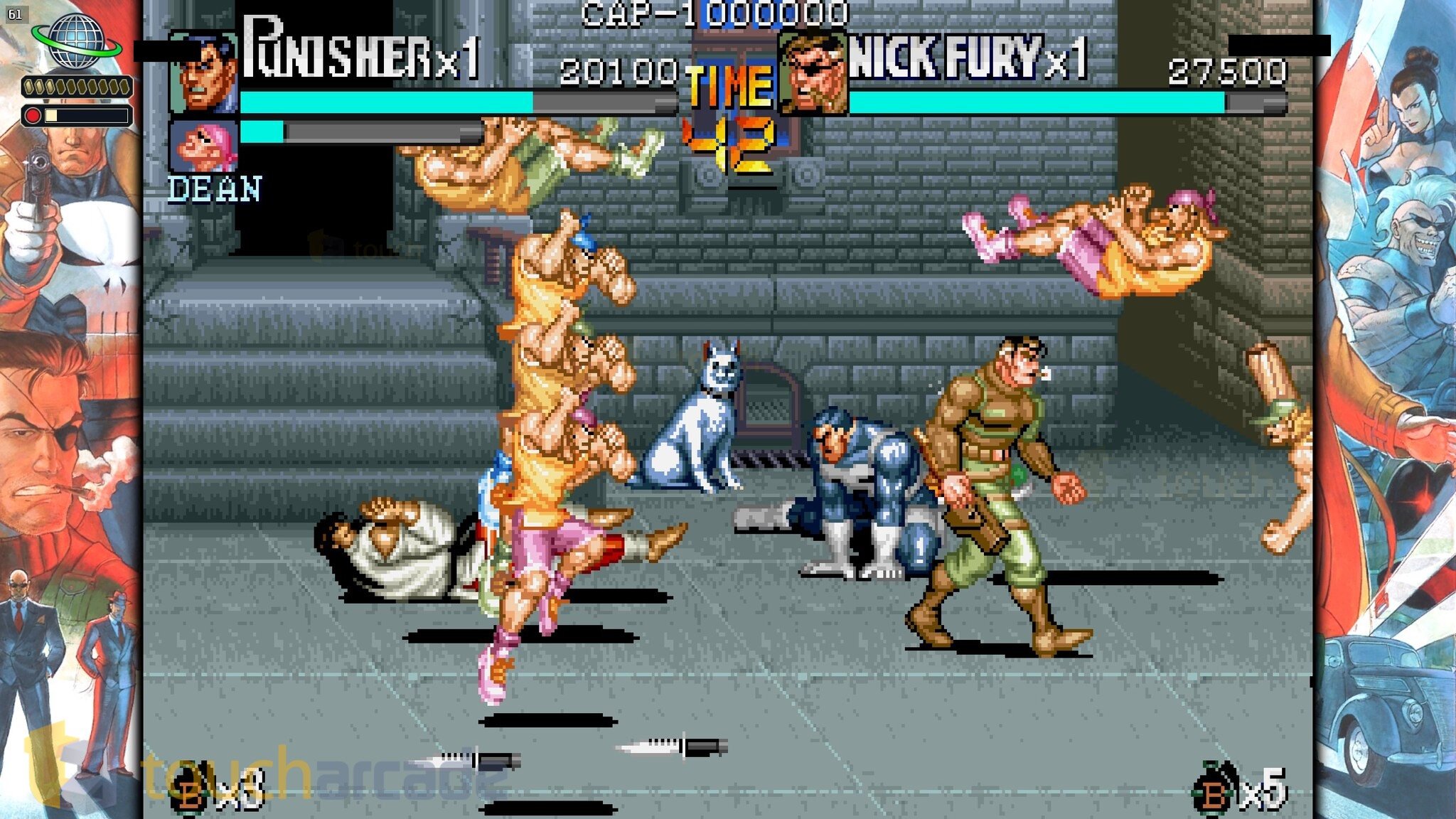
As a fan of Marvel, Capcom, and fighting games back in the 1990s, Capcom’s line of fighters based on Marvel’s characters were like a dream come true. Starting off with the excellent X-Men: Children of the Atom, these games just kept getting bigger and better. Moving on to the wider Marvel Universe with Marvel Super Heroes, then the at-the-time unbelievable crossovers between Marvel and Street Fighter, on to the over the top Marvel vs. Capcom, and then the wildly over-the-top in all the right ways Marvel vs. Capcom 2, Capcom kept raising the stakes. That wasn’t the end of the series, but it takes us up to the end of what is covered in Marvel vs. Capcom Fighting Collection: Arcade Classics. Oh, and you get Capcom’s excellent Punisher belt scrolling beat ’em up as some extra mustard. A fantastic set of great games.

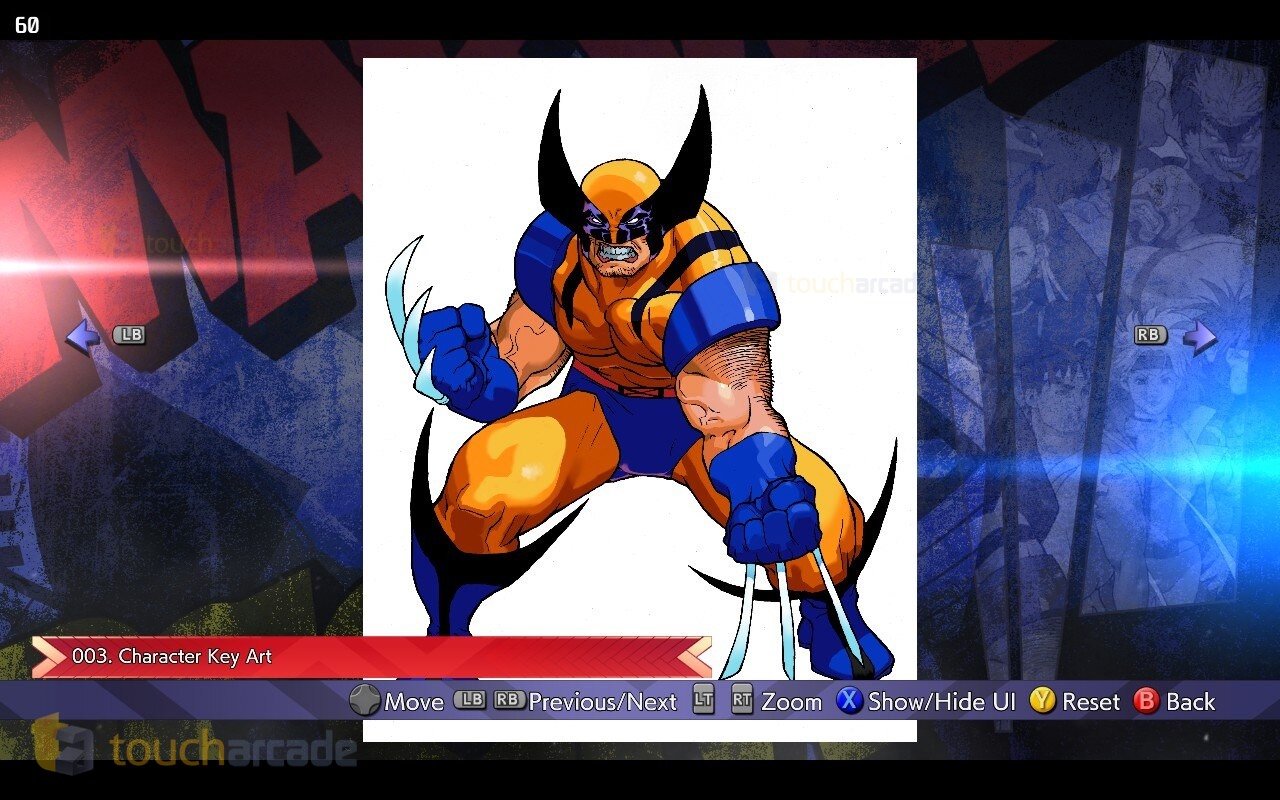
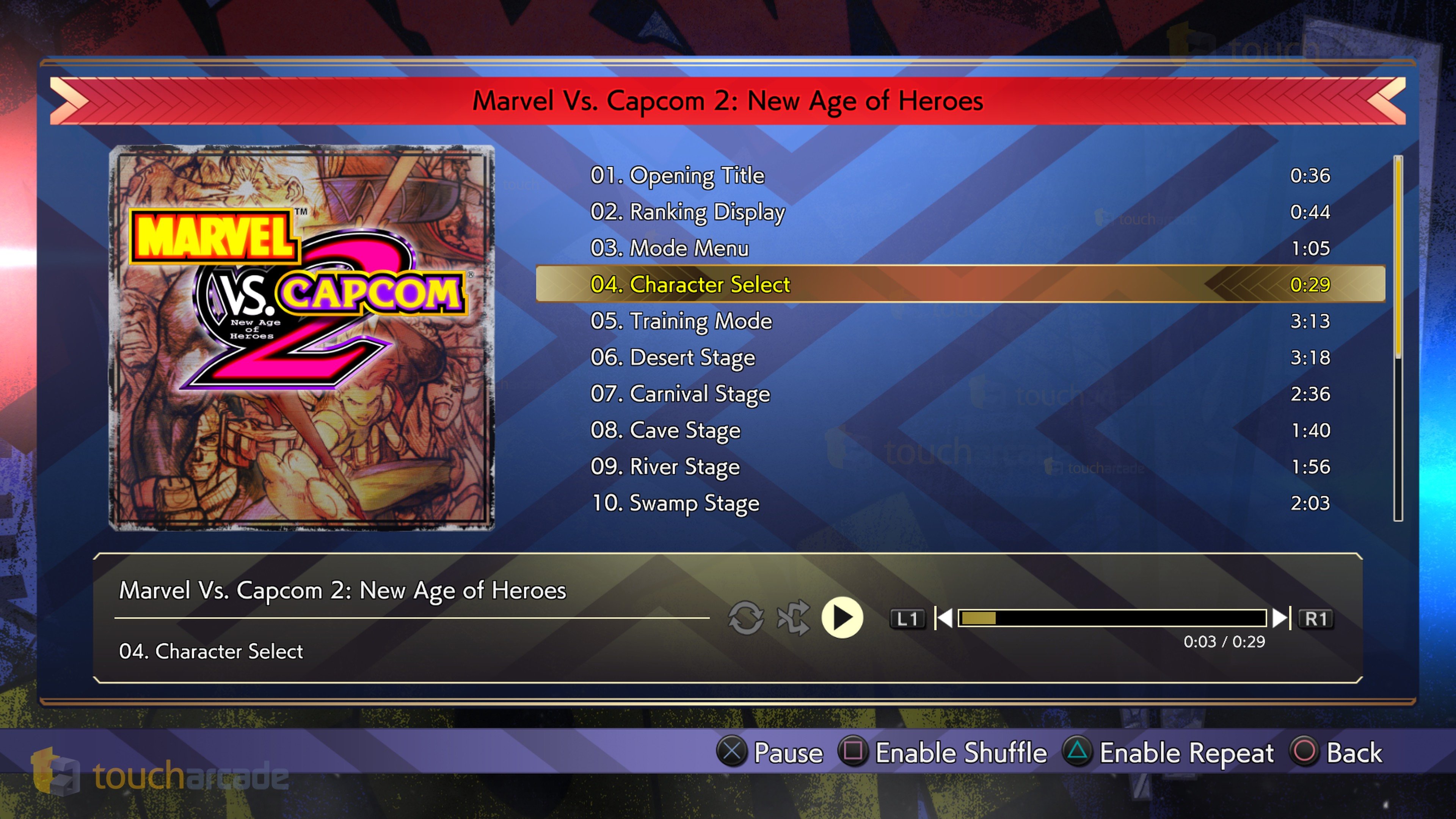
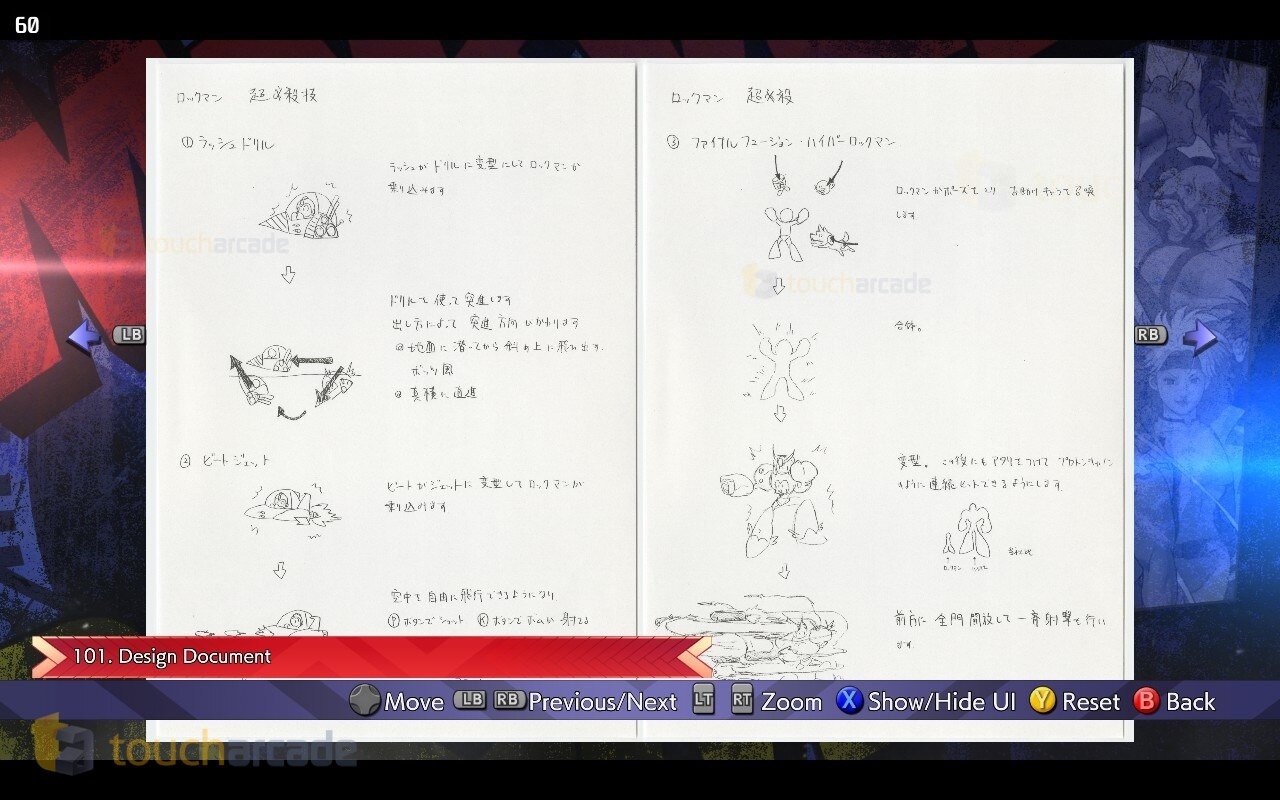
This collection appears to have been handled by whoever did the Capcom Fighting Collection, and in most respects it has similar features and extras. That unfortunately extends to only having a single save state across the entire collection, shared by all seven games. That was annoying enough in a collection full of fighting games, but it’s even worse with a beat ’em up in here where you might want to, you know, save your progress independently of whatever you’re up to in the fighters. Oh well. Everything else here is as you would want it. Lots of options like visual filters and gameplay options, great extras including an extensive array of art and a music player, and rollback online multiplayer. New to this set is NAOMI hardware emulation, and whoever Capcom had on the job did it well. Marvel vs. Capcom 2 looks and plays great.

I’m not going to knock it for this, but I do want to say that I wish some of the home versions were included. The PlayStation EX versions of the tag-team based games are different enough that it would be neat to have them in here, and the Dreamcast version of Marvel vs. Capcom 2 has a lot of fun extras that make it a superior choice for home play for the solo player. I also wouldn’t have minded if Capcom had tucked its two Super NES Marvel games in here, even if they aren’t the greatest of games. Well, the collection’s name says Arcade Classics, and unlike with Blizzard it seems the word is being properly applied here.

Marvel fans and fighting fans alike have a reason to rejoice with this fine collection. The games are superb, they’ve been treated with care, and you get a good suite of extras and options. Only having a single save state shared between the games is a serious bummer, but otherwise I can’t find much to pick on here. Marvel vs. Capcom Fighting Collection: Arcade Classics is another must-have compilation from the folks at Capcom, and it plays great on the Switch.

SwitchArcade Score: 4.5/5

Yars Rising ($29.99)

I’ll admit that I was pretty skeptical of this game from its announcement. I like Yars’ Revenge a lot. One of my favorite 2600 games. So when I read that WayForward had been tapped to make a Metroidvania-style Yars game starring a young hacker with a bare midriff code-named Yar, I felt like I had accidentally surfed over to a parody site. Just the perfect storm of “why”, you know? So do I have to eat those words? Yes and no. First and foremost, this is a good game. WayForward does a solid job with this kind of thing, and so it did here. Looks and sounds good, plays well, and the map layouts are fine enough. In true WayForward fashion, the bosses tend to drag on too long, but it’s not a deal-breaker.

Commendations must also be given to WayForward for doing its best to handle a bit of a tough ask in trying to connect this game to an ancient single-screen shooter. You get to play Yars’ Revenge-style sequences fairly often, the abilities you earn are evocative of the original game, and it connects to the relatively fleshed-out lore as well as it can. It still feels like a massive stretch, but I suppose Atari has little choice but to try to make long passes like this one. Its classic library can only be Recharged so much, after all. It just feels like a game that is torn between two audiences with very little overlap, and I’m not sure if that was the right call versus doing something wholly original.

Still, while the argument can rage on about whether or not this made sense conceptually, there’s no doubt the game itself is enjoyable. I don’t think the finest in the genre have much to worry about, but if you’re looking for a Metroidvania game to sink your teeth into over the course of a weekend or so, you won’t have a bad time with Yars Rising. And who knows? Maybe they follow up on this once or twice and it all feels natural.

SwitchArcade Score: 4/5

Rugrats: Adventures in Gameland ($24.99)

I’m a few years too old to have much nostalgia for Rugrats, though not so old that I didn’t watch it with my younger siblings from time to time. Like, I know the names of the main characters and the theme song. Don’t ask me about the movies or the grown-up versions, and certainly don’t ask me to recall any specific episodes. I know the Rugrats, but I have no special warm and fuzzies for the brand. With that in mind, I didn’t really know what to expect from Rugrats: Adventures in Gameland. I heard someone say it was like Bonk, and that does fit Tommy’s physical build if nothing else. Well, only one way to know for sure. I started up the game, picked Tommy, and went into the tutorial stage.

First thing to hit me was the crisp visuals. Crisper than the show, if my memory serves. The next thing to hit me was the awkward placement of the controls. Luckily, there’s an option for that. The music was the Rugrats theme, so that all checks out. There were some Reptar coins to collect, and some simple puzzles and enemies to deal with. Alright, no problem. Platformer with some exploration in the levels, a tried and tested formula. Not very Bonk-ish, but that was never promised.

At a certain point Tommy had taken a few hits, so I decided to swap over to Chuckie to enjoy his full life meter. I then noticed that he had a very familiar jump. A very high but somewhat hard to control jump. Surely they didn’t? I swapped over to Phil, who had a low jump, then to Lil who could… float. They did. They really did! Folks, this is a Super Mario Bros. 2 (USA)-inspired game! Sure enough, the enemies I had just been stomping on could also be picked up and thrown. There were also blocks I sometimes had to pick up and pile up to reach higher places. Slightly non-linear stages with lots of verticality! Stages where you have to dig in sand, and you know Phil is the expert digger of the bunch. Awesome.

I mean, there are some homages to other platformers in here, but the main gameplay evokes what is probably one of the higher-selling classic games that never gets riffed on. Not bad, not bad at all. The boss battles are even interesting and enjoyable. After playing for a while, I even noticed I could swap the visuals and soundtrack between the spiffy modern versions and NES-level 8-bit renditions. It plays well either way, and both styles have their merits. Oh, and you can use a filter. There if you want it. But yes, creative and fun. Inspired by a game I love quite a lot. Uses its license well. You can play multiplayer! Aside from the control issue, the only gripe I have is that it’s a bit too short and simple.

Rugrats: Adventures in Gameland is a better game than I expected it to be. It’s a quality platformer in the style of the Western Super Mario Bros. 2, with some extra elements and features to keep it from being too close to its source. The Rugrats license has been implemented well, though I did find myself wishing it had voice acting for the cut scenes. A little on the short and breezy side to be sure, but worth a play for fans of platformers and the Rugrats alike.

SwitchArcade Score: 4/5


Source link

Most expensive caps in the world that defines sleek luxury

0
Most expensive caps in the world that defines sleek luxury


September 10, 2024


Hats and caps have been more than mere headgear throughout human history, they have also been symbols of status, fashion, and power. Hat fashion can be as simple as which way one wears their tie, and from the royal regalia to Hollywood stars, the most expensive caps in world craze is as interesting as it gets.

Some people have transformed hats and caps into status symbols, valuing them as artwork that fetches astronomically high prices. In this blog, we have listed the world’s most expensive hats and caps, along with the world’s history and detailed information about them.

Why can hats and caps be so expensive? 

Self-consumption can be applied to hats and caps, although they can be very expensive for many reasons. With exclusive fabrics like fine wool, cashmere, silk, rare leathers, or actual handwork, including hand embroidery or made-to-measure, they will add to their tag price.

Brand recognition is rather important in this case, with brands like Hermès or Gucci that can increase the cost of production merely because their brand’s name is associated with quality and the exclusivity of the product. For similar reasons, the accessories also become limited edition and have unique designs coming from famous designers, making them even more valuable.

It increases the price if they appeal to famous people and popular cultural phenomena, or if they allow customization or a perfect fit. Also, brands that pay attention to such aspects as fair wages for workers and using eco-friendly materials are likely to set higher prices to cover these extra costs. Further in this blog, we will discuss the most expensive hats and caps in the world.

1. The Kobe Bryant Hat

The Kobe Bryant Hat

The Kobe Bryant Hat, one of the finest works of art, is extremely rare due to its association with the famous basketball star Kobe Bryant. 2 Chainz wore this hat in one of his interviews and talked about it. 3.5 ounces of 18-karat gold were used for its iconic “24” shape in the front. If we talk about the rarity of this cap, then only 8 of these were made, and due to this, its price skyrocketed. Fashion enthusiasts see this cap as a collectible and want to have this piece of art in their collection.

2. The Hat of the God Hermes

Most Expensive Hats and Caps in the World The Hat of the God Hermes

The Hat of the God Hermes As unbelievable as it might sound. A luxurious hat is the real mythology of the representatives of the diplomatic corps. Made by the famous hat maker, Maison Celestial, this splendid headgear was the creation of the Greek god Hermes. The hat is made of luxurious hand-embroidered silk, and looking at the material and intricate gold embroidery gives it an aura that is similar to the beauty of the charm of a god.

This masterpiece is also decked out in sapphires and emeralds, accompanied by an extensive and intricate design that represents mythology. The Hat of the God Hermes cannot be solely classified as fashion, it is art that one can wear. This item has a feeling and style that has an air of eternity and politeness.

3. The Papal Tiara

Most Expensive Hats and Caps in the World The Papal Tiara

The tiara of Pope Pius VI. It is made of gold and other precious stones and metals, it was believed to be cursed and is now displayed at the Vatican Museum. This royal piece of hat was used by the Pope for formal functions.

The hat is made with gold filigree, precious stones, and a lot of enameled work. This reflects on the three layers or levels of the building that symbolize the authority of the Pope in the heavens, the earth, and the church.

Entirely studded with diamonds, emeralds, and rubies, it is a splendid piece that clearly underlines the importance of the Queen’s crown as well as the aesthetic potential of the finest jewelers. It is more than a luxurious item, the Papal Tiara can be regarded as an object of great value that bears the centuries of Christian culture and the papal majesty.

4. The Prince of Wales’s Feather Hat

Prince of Wales’s Feather Hat

Prince Charles’s feather hat, called The Prince of Wales, is also a luxurious accessory for Royal Highnesses. This fabulous headpiece is well recognized for its timeless elegance, as it comprises a rich combination of velvet and silk combined with a gorgeous choice of plumes.

The tallest and most prominent of all the feathers are the three white ostrich feathers, whose white color and slick arrangement on a well-designed band make them impressive. Due to its royal origin and elegance, the hat looks traditional, but at the same time, it has the air of a classic style. The Prince of Wales’s Feather Hat is not only a symbolic fancy, but it is also an emblem of prestige in royalty and luxury.

5. The Wool Trilby Hat

The Wool Trilby Hat

This extraordinary Wool Trilby hat combines timeless tradition with luxurious innovation that reflects a superb style created out of the best materials. The headgear is beautifully crafted with wool fabrication.

This hat looks glamorous and manly due to the brilliant cut yet retains a warm, dark hue, making it just the perfect accessory for those who like stylish and exclusive accessories. Far from being an ordinary hat, the Wool Trilby Hatis a piece of real sophistication and refined elegance that will never go out of fashion and that reflects the finest craftsmanship that characterizes luxury items.

6. The Gucci GG Supreme Hat

Most Expensive Caps in the World The Gucci GG Supreme Hat

The Gucci GG Supreme can be associated with modern luxury associated with traditional Italian style. This symbolic product incorporates GG Supreme canvas, which is famous for its wear resistance and stylish looks. The patterns that are set on this hat are impeccable, accompanied by a rich leather lining, and thus the neat, structured form just defines elegance.

Bringing out a perfect blend of its traditional and contemporary lines of styles, the Gucci GG Supreme Hat is one of the industry’s most desirable items. Made from superior material, it blends tradition and fashion together, thus being a symbol of classic style and innovation at the same time.

7. The Charlie Chaplin Hat

The Charlie Chaplin Hat

One of the most expensive items of clothing is Charlie Chaplin. It is the perfect mix of fashion and artistry. This magnificent hat seems to be influenced by the famous artist itself and has sentimental value to it.

The hat is famous because of its historical significance in the fields of art and cinema. Due to its rarity, this piece of art was sold for a hefty amount of money and can only be bought in the auctions. The hat is simple and minimalistic, yet it is one of the most expensive hats in the world. 

8. The Royal Ascot Hat by Philip Treacy

The Royal Ascot Hat by Philip Treacy

The Royal Ascot Hat by Philip Treacy is a stunning example of high fashion and artistic brilliance. Renowned for his avant-garde designs, Treacy has created a hat that captures the grandeur of one of the most prestigious horse racing events in the world. This remarkable piece features an elaborate structure with intricate details, including sculptural forms and vibrant, luxurious materials.

Adorned with a blend of feathers, silk, and delicate embellishments, the Royal Ascot Hat combines elegance with a bold, innovative flair. Its eye-catching design not only makes a statement on the racecourse but also epitomizes Treacy’s mastery of creating extraordinary, one-of-a-kind headpieces.

9. The Givenchy bucket hat in cotton towelling with stripes

Most Expensive Hats and Caps in the World The Givenchy bucket hat in cotton towelling

The Givenchy bucket hat in cotton towelling with stripesis one of the most expensive hats, demonstrating a perfect combination of elegance and risk-taking as well as the company’s abilities. This continues to prove the beauty in design and craftsmanship featured in this chic headgear that has an engraving of beautiful stripes.

This cotton hat epitomizes this unique style of the Givenchy brand, fusing opulence with a touch of silk sensibility. It is not just a hat, it’s a statement that brings out the spirit of glamor in fashion, merging with the finesse of couture.

10. The Louis Vuitton Monogram Hat 

The Louis Vuitton Monogram Hat

Size and luxury are certainly hallmarks of the brand, and this piece signifies why the brand was willing to stick to timelessness. This headpiece is one of the staples associated with the brand, using only the highest quality castor stems with the recognizable monogram canvas, famous for its durability and class. The hat is perhaps one of the best examples, given how the monogram tradition has been given a touch of modernity by the designers.

The Louis Vuitton Monogram hat worn by Blake Lively at this event, identifying aesthetic leather actives and modesty with clean features, defines the traditional beauty of the company’s history for the classic and style lovers of the modern day. It is also a splendid extra that blends fashion and sophistication with the unique character of Louis Vuitton.

11. The Chanel Diamond Cap

The Chanel Diamond Cap

<br>

The diamond cap from Chanel reflects the true elegance and luxury of legendary fashion. This refined cap features a number of sparkling diamonds on it, and they are located in a strategic position to complement the given design.

Using the best quality material, the shape of the cap is uniquely beautiful and combined with the brilliance of the diamonds to create a one-of-a-kind cap that has a touch of class. That is why the Chanel diamond cap is not just a piece of jewelry, it is a symbol of luxury fashion, a result of the brand’s devotion to perfect beauty and individual style.

12. The Alexander McQueen Cashmere beanie

Most Expensive Hats and Caps in the World The Alexander McQueen Cashmere beanie

The Alexander McQueen Cashmere beanie is an audacious symbol of luxury. This cap features some unique designs and patterns. This cap is another iconic piece of Alexander McQueen’s lines that brings out the side of high fashion that is dark and edgy.

Being constructed with carefully selected materials and with an emphasis on the manifested severity of the cap accessories, the product creates a particular impression of a unique accessory for the fashion-conscious person. Alexander McQueen Cashmere Beanie is one of the most striking examples of the unique style of the brand, which manages to incorporate exclusivity and a deliberate crack into its products.

13. The Versace Medusa Hat

The Versace Medusa Hat

The Versace Medusa Hat is one of the best examples of luxury and fashion house design at its best. Available and exclusively designed by Versace, this hat comes with an eye-catching Medusa head adorned by patterns, sophisticated designs, and precious stones.

High-quality materials and impeccable workmanship emphasize the recognizable style of the brand as a combination of classical references and modern trends. Despite the fact that the Versace Medusa Hat is quite boastful, it is also rather stylish and radiates the glamour of today’s trends and the majestic mythology of the past.

14. The Prada Satin Bucket Hat

Most Expensive Hats and Caps in the World The Prada Satin Bucket Hat

Another example and a product of Prada Fashion House is the Prada satin bucket hat. This hat comes in a silk material with perfect workmanship, coupled with accessories with the perfect Prada signature touch.

This hat is elegant and aristocratic, owing to the complex design and the use of costly crystal material to make it. The Prada Satin Bucket Hat is proof of the constant combination of sophistication intact with today’s fashion acts, which makes it the best hat to acquire for any elegant fashionista.

15. The Balenciaga Piercing Cap

The Balenciaga Piercing Cap

Among the products, one can mention the Balenciaga piercing cap because of its outstanding and exclusive appearance. This Balenciaga cap is made with high-quality cotton and has a loud look and feel about it while assembling high-value workmanship.

Its unique design is enhanced by the perfection and solidity that can be attributed to Balenciaga cap, thus, it becomes the highlight of any outfit. The Balenciaga piercing cap is an excellent example of how extraordinary design and luxurious material may be combined to produce a cap that meets the standards of the luxury market.

16. The Burberry Equestrian Knight-appliqué checked cap

Most Expensive Hats and Caps in the World The Expensive Heritage Hat

Designed and created out of high-quality fabric and located in detail, this hat is a true reflection of Burberry heritage. The design is evergreen and made even more exquisite by the quality materials used in making the piece of furniture.

It is ideal for the classy and wise who prefer to make use of items that will remain fashionable for generations. Fantastically, the Burberry Equestrian Knight-appliqué checked cap represents true style, which can be accompanied by the highest quality of materials and is the real embodiment of Burberry’s tradition.

17. The Ralph Lauren Polo Hat

Most Expensive Hats and Caps in the World The Ralph Lauren Polo Hat

The Ralph Lauren Polo Hat is one of those accessories that is expensive and classy. As being a part of the Polo Ralph Lauren collection, this hat is made with elaborate details and the finest fabric. The finely detailed and polished work carefully enforced in the designs denotes the commitment of the firm and thus makes it an elegant piece for the fashion enthusiast. The Ralph Lauren Polo Hat is a sophisticated piece of accessory embodying American traditionalism perfectly and capturing Ralph Lauren’s vision.

18. The Givenchy bucket hat

The Givenchy bucket hat

The Givenchy bucket hat is a masterpiece made of high-quality material combined with luxury accessories in order to make what can be defined as a luxurious accessory. This form of decoration is an art work and has been made with lots of detail on this cap.

The use of high-quality material and the emphasis on the design are evidence that Givenchy was following the spirit of high fashion and art. The Givenchy bucket hat is a fine example of how beautiful craftsmanship can turn a simple hat into an art piece that people can wear.

19. The Armani Silk Fedora

Most Expensive Hats and Caps in the World The Armani Silk Fedora

Armani Silk Fedora is regarded as a symbol of elegance. Made out of silk, this fedora has refined ambition and refined details that fully express Armani’s commitment to sophistication. Due to its elegant design and utilization of premium leather, it would be the perfect accessory for people who like classics but with a little present-day approach. The Armani Silk Fedora cannot be considered just a hat, but it is a symbol of style, elegance, and sophistication.

20. The Fendi Fur Hat 

The Fendi Fur Hat

The Fendi Fur Hat is known as one of the most exclusive pieces that exist. Due to its rarity. This is not just seen as the finest accessory, but this hat carries a feel of premium craftsmanship. The brand emphasizes using high-quality material while creating this piece, which leads it to be on the list of the most expensive hats.

This luxury accessory can be seen as an aspirational collectible because of its fashion appeal. If you are looking for an accessory that makes you feel good about yourself and you want to utilize your money towards buying the finest luxury Fendi Fur Hat, this is what you need. 

Conclusion

In this modern era of continuously changing fashion, these iconic pieces stand out as the pedestal of luxury. Each hat carries a significant value within itself that cannot be measured in monetary value. These pieces were created with remarkable craftsmanship and precision, using the finest materials from around the world.

These pieces are not merely accessories but are considered the face of the brands, which reflects the pinnacle of sleek luxury in the modern era. Fashion enthusiasts from all over the world see these pieces as collectibles and aspire to collect one someday. These hats are a testament to the luxury that lies behind the stories and detailing, which makes them one of the most exclusive and expensive hats in the world. 


Source link

Top 10 most expensive mens dress shoes brands in 2024

0
Top 10 most expensive mens dress shoes brands in 2024


September 10, 2024


In the world of luxury fashion, every detail counts, and the most expensive mens dress shoes are one of the symbols of what designer pieces stand for, a statement in style, sophistication, and class. All those jaw-dropping shoes feature unmatched expertise, rare materials, and timeless design, which are normally reflected in that price tag.

These shoes are not just some accessory but they are a luxury and status statement from the opulent gleam of diamond-studded accents, right down to hand-stitched leather bespoke masterpieces. 

In this blog, come with us as we explore the best men’s dress shoes, those with the highest cost and that epitomize sartorial elegance. Whether by a fine connoisseur of footwear, a luxury fashion connoisseur, or one that enjoys being in the upper echelons of style, our top 10 most expensive mens dress shoes are going to provide you with a look inside. Be ready to have your breath taken by the lavishness, exclusiveness, and pure opulence that these creations exude.

Here’s a list of some of the most expensive mens dress shoes, known for their craftsmanship, materials, and luxury brand status:

1. Tom Ford Custom Oxfords –

Most expensive mens dress shoes Tom Ford Custom Oxfords

In the realm of men’s shoes, the Tom Ford Custom Oxfords are simply the epitome of luxury. The incomparable level of craftsmanship and minute detailing have been widely applauded. Ranked as one of the most expensive mens dress shoes in the world, these oxfords showcase the sophistication and class that is associated only with the Tom Ford Brand.

Handcrafted by professionals to give it the finest level of quality and durability. Indeed, it is quite a labor-intensive process, comprising many steps: cutting and shaping the leather, stitching it, and polishing.

Only the finest materials are used in this shoe, often gracing them with some of the finest leathers, such as alligator or crocodile skin, besides contributing to that ultra-luxurious look.

The Tom Ford Custom Oxfords is designed both in a classic and modern way. It is sleek for a silhouette perfect for a formal event but calls for a closer look to mention the works of skilled artisans featured in careful stitching, polished finish, and elegant proportions.

The luxurious raw material and exclusiveness set the price of this shoe at $12,000.

2. Louis Vuitton Manhattan Richelieu –

Most expensive mens dress shoes Louis Vuitton Manhattan Richelieu

The Louis Vuitton Manhattan Richelieu epitomizes the iconic house’s commitment to elegance, craftsmanship, and exclusivity. The shoes are one-of-a-kind luxury fashion pieces of high-end industry with their sleek design and imminently superior quality.

Louis Vuitton uses only the finest quality materials, and the Manhattan Richelieu is no exception. The shoes are made of high-quality calfskin leather, prized for its smooth texture and resiliency. To increase their luxury status, this shoe is also available in other versions that offer exotic leathers, such as alligator or crocodile.

The Manhattan Richelieu is slim and elegant in design, featuring clean lines and a classic silhouette. It epitomizes a feel of handmade tradition with modern luxury, classic enough for formal occasions, yet still professional. Most of the design of this creation is done with minutiae, such as brogue or perforated patterns, further finished to enhance its sophistication.

The price of Louis Vuitton Manhattan Richelieu shoes is one of the highest for men’s dress shoes, around $10,000. This hefty price represents not only the superiority of the raw materials and its craftsmanship but also the security of the Louis Vuitton brand image.

3. John Lobb 2010 Limited Edition –

John Lobb 2010 Limited Edition

The John Lobb 2010 Limited Edition shoes are one of the rarest shoes as they feature luxury footwear at the highest level of craftsmanship and exclusivity of a limited release. John Lobb is an old brand with history and heritage, dating back to 1866, highly acclaimed for tailoring and ready-to-wear shoes. In addition to this, the 2010 Limited Edition stands among the most prestigious products this company has ever offered.

The 2010 Limited Edition shoes have a design that radiates timeless elegance. Their sleek line silhouette has clean lines with polished finishes. The look is subtle, sophisticated, and hence a perfect fit for formal occasions or high-end business attire.

What distinguishes the 2010 Limited Edition from all other John Lobb shoes is the use of materials of the finest quality. For the uppers, primary premium calfskin leather is used for its good texture and durability. Other editions may have incorporated exotic skins such as crocodiles or alligators, further raising their luxury appeal.

These shoes are from the most expensive line of shoes from John Lobb, selling at around $9,000. It is worth paying this price, considering that the raw materials used are better, the workmanship is higher, and the limited edition makes it more exclusive.

4. Aubercy Diamond-Studded Shoes –

Most expensive mens dress shoes Aubercy Diamond Studded Shoes

To wear the Aubercy Diamond-Studded Shoes is to step into one of the most personal and extravagant offerings in the world of luxury footwear. Aubercy is a well-reputed bespoke shoemaker from Paris, which is celebrated for its traditional craftsman customs and innovative design. These diamond-studded shoes are the epitome of luxury and individuality. 

The Aubercy Diamond-Studded Shoes are simply classic in design, with a twist of modern luxury. The shoes follow the lines of a traditional Oxford or Derby, with a clean outline and bright polish that adds elegance to it. The touch that turns them into a class is the use of genuine diamonds meticulously embedded onto the surface of the shoe, normally found around the eyelets or on the toe cap.

Other than the diamonds, the shoes are made with the highest-quality material: Grade-A calfskin leather, or even exotic leathers such as crocodile or alligator. The choice of first-class materials, again like the choice of diamonds, is just right for the luxurious style, and thus every angle of the shoes is made perfectly.

The Aubercy Diamond-Studded Shoes have a price of about $4,500 for a pair The price is bound to vary because of the number and quality of diamonds used and the personalization one would desire.

5. Stefano Bemer Bespoke Shoes –

Stefano Bemer Bespoke Shoes

Stefano Bemer Bespoke Shoes represents the highest order of craftsmanship and luxury that Italy has to offer in men’s footwear. Stefano Bemer is a Florentine-based shoemaker, notable for preserving traditional techniques, offering exquisite materials, and delivering tailored service.

The creation of a pair of Stefano Bemer bespoke shoes starts with an extensive consultation to understand the client’s tastes, his way of life, and his foot measurements. Then, a custom wooden mold of the client’s foot will be created to guarantee a perfect fit. There are a number of fittings in the process for the adjustments that are made in the interest of comfort and precision.

Stefano Bemer’s bespoke shoes are made only of the finest materials. There is a wide range of luxurious leathers a client can select from calfskin, suede, cordovan, and exotics like alligator, crocodile, and ostrich. Top-quality leather provides not only a nice look but also durability and comfort.

The price for a Stefano Bemer bespoke shoe is normally upward of $4,000 but goes higher with the materials to be used, the style, and additional features one could add. The investment represents the level of craftsmanship, the quality of material, and bespoke service.

6. Edward Green Top Drawer Oxfords –

Edward Green Top Drawer Oxfords

The Edward Green Top Drawer Oxfords represents the apex of British shoemaking and illustrates craftsmanship at its best from the house of Edward Green. Known for exacting attention to detail, these shoes are favored by fastidious gentlemen who value elegance, quality, and timeless style.

Top Drawer represents Edward Green’s offerings, with every Oxford handcrafted by master craftsmen based in Northampton, England. The shoemakers hand-cut the leather, hand-stitch the seams, and hand-last the shoes to give each one an exceptional fit and finish. This meticulous process can take several weeks to complete, reflecting the brand’s commitment to excellence.

The Oxfords in the Top Drawer collection have a classic and tasteful design that is timeless and versatile at the same time. Many of them mostly come with sleekly designed closed lacing, which gives the shoes a clear, streamlined look, making them fit for formal occasions, business, and refined casual wear. The design lays great emphasis on simplicity and sophistication through clean lines and a polished look.

Edward Green is known for the use of high-quality materials, and the Top Drawer Oxfords do not differ in this aspect. The shoes are handmade from some of the finest quality calfskin leathers Europe’s great tanneries can buy. This leather selection shows smooth, richly colored, full-bodied qualities.

Top Drawer Oxfords by Edward Green are constructed at a cost of nearly $3,950, which makes this line of Edward Green most expensive. The price depicts top-of-the-line craftsmanship, superior prime materials, and exclusiveness of the Top Drawer line.

7. Gaziano & Girling Deco Wholecut –

Most expensive mens dress shoes Gaziano & Girling Deco Wholecut

The Gaziano & Girling Deco Wholecut is one of the most recognized luxury men’s footwear collections for its sleek design, exceptional craftsmanship, and modern elegance. Gaziano & Girling is a British shoemaker founded by Tony Gaziano and Dean Girling. It is known for combining traditional methods of making shoes with contemporary designs, following which, the Deco Wholecut represents Gaziano & Girling philosophy.

The Deco Wholecut is cut from a single piece of leather, without any seams. This whole design gives the shoe a clean and uninterrupted silhouette with its sophisticated minimal elegance attributed to the clean lines. This one is especially more contemporary with a bit of a slightly elongated toe creating a more defined shape within the classic style.

Only the finest materials are used in making a Deco Wholecut. The leather to be used is usually top-grade calfskin, which is extremely smooth and capable of developing a rich patina over the years.

The Gaziano & Girling Deco Wholecut is generally retailed at about $3,800, but the price is justified by the elevated workmanship, high-quality raw materials, and bespoke service delivered by this English firm.

8. Corthay Arca Shoes –

Most expensive mens dress shoes Corthay Arca Shoes

The Arca Shoes by Corthay represent one of the most defining dress shoes of this French shoemaker. The characteristics of their exceptional craftsmanship, distinctive design, and vibrant color can be seen in each pair of shoes. Founded by Pierre Corthay, Corthay has made a name for itself as synonymous with avant-garde luxury footwear, and the Arca shoes are some of the creations that elevate this brand to truly iconic status.

The Arca shoes are designed in a classic, confident design with an overall slim, elegant outline. They are usually constructed in an Oxford design, often minimalist with a smooth and clean frontal surface and slightly long, pointed almond-shaped toes. The design of the Arca gives it a timeless yet modern aesthetic for a formal look, yet stylish for modern ensembles.

This house is noted for using only the finest materials. Most of the time, from the Arca collection, shoes are made of high-quality calfskin leather, also referred to as grain, being soft and flexible. The expertise of this brand in the leather selection ensures every pair looks lavish, feels comfortable, and endures long.

Corthay produces very few pairs of Arca shoes, mostly made-to-order, whereby each client can select his color, finishing, and even bespoke details. This epitomizes the uniqueness that Arca shoes bring to the table, something that is treasured by owners with a special attachment to this aspect of the footwear.

It costs around $3,500 for the Corthay Arca shoes and this price represents top-quality materials and the very best craftsmanship, as well as a reputable brand name. This investment is justified by its unique design, luxurious finish, and lasting impression.

9. Berluti Alessandro

Berluti Alessandro

The Alessandro by Berluti is an iconic pair of shoes from a French luxury brand known for its sleek crafting and innovative usage of leather. This Alessandro has been touted as the perfect synthesis between timeless elegance and modern sophistication, making this particular model a favorite among many aficionados of high-end footwear.

The Alessandro of Berluti is a sophisticated dress shoe having an Oxford characteristic in its sleek and lean design. It has the traditional closed lacing with a totally clean, stretched line that makes it appear so sophisticated and formal. The neat, classic lines and proportions result in a pretty versatile shoe that could as easily be used in many formal meetings and occasions, from business to more festive events.

The Alessandro of Berluti is a sophisticated dress shoe having an Oxford characteristic in its sleek and lean design. It has the traditional closed lacing with a totally clean, stretched line that makes it appear so sophisticated and formal. The neat, classic lines and proportions result in a pretty versatile shoe that could as easily be used in many formal meetings and occasions, from business to more festive events.

Berluti is known for using high-quality leather, and the Alessandro is no different. Most often, it’s made of Venezia leather, a very unusual and highly regarded material that undergoes an extraordinary tanning and finishing process. This type of leather becomes very supple with use and is rich in color, developing a characteristic patina with time. Berluti also offers the Alessandro in a number of other luxurious leathers, including calfskin and several exotics.

Every pair of Berluti Alessandro shoes is handcrafted by skilled artisans in the brand’s workshop located in Italy. The craftsmanship involves more than 200 steps, which not only include hand-stitching, hand-polishing, and hand-lasting but also go as far as to ensure that every single pair is beautiful in looks and solid and comfortable to wear.

The Berluti Alessandro is $3,300 and above, the cost of quality materials, an even greater level of expertise, and an added level of brand cachet. For some, this investment is well worth it for its amazing design and long-term luxury.

10. George Cleverley Bespoke Shoes –

Most expensive mens dress shoes George Cleverley Bespoke Shoes

George Cleverley shoes are widely regarded as the pinnacle of British luxury shoe-making. Renowned for excellence in craft, timeless elegance, and highly personal service, George Cleverley is a name that is synonymous with bespoke shoemaking, having been established in 1958.

The making of a pair of George Cleverley bespoke shoes starts with a thorough initial consultation for measurement-taking of the client’s feet, establishing personal tastes, and needs for any specific style. A wooden mold and a custom last are commissioned, ensuring an ideal fit. Multiple fittings are done for adjustments where comfort and precision will need to be assured, and every pair is crafted according to the client’s specifications.

Designs can be as varied from classics, such as Oxford, Derby, or Brogue styles. In the bespoke service, all details can be customized right to the shape of the toe, leather type, color, and finishing. Hence, every pair is unique and allows expression of the taste of the customer who ordered it.

George Cleverley applies only the finest materials in the manufacturing of their bespoke shoes. The choice of leather can range from high-quality calfskin to full-grain leather and go further on to exotics like alligator or ostrich. The choice of materials does not only add to the aesthetic value of the shoes but also to their durability and comfort.

Every pair of George Cleverley shoes is handmade in London by one of the finest craftsmen in this specific field. The place of work supports hand-stitching and Goodyear welt construction, therefore ensuring that the shoes come out not only very durable but also comfortable beyond the expectation level. In each stitch and seam, a great amount of detail is put in, which reflects the commitment to excellence.

The cost of a pair of George Cleverley bespoke shoes usually is around $5,000, but the price can be higher if you choose special materials and design complications, among other add-ons. With very valid reasons, because the level of craft would be very high, and the quality of the materials is part of any bespoke.

In the world of men’s fashion, dress shoes occupy a special place, symbolizing not just status but also a commitment to craftsmanship, luxury, and timeless style. The most expensive men’s

dress shoes are often handcrafted from the finest materials, are more than mere footwear, they are works of art that reflect a rich heritage of shoemaking excellence. From the meticulous stitching to the exquisite leather, every detail is designed to elevate the wearer’s experience, ensuring that these shoes are not just purchased but treasured for a lifetime.

Owning a pair of these extraordinary shoes is about more than just aesthetics, it’s about embracing a tradition of sophistication that has been refined over centuries. Whether it’s the unparalleled elegance of a pair of John Lobb Oxfords or the bold statement of a bespoke Berluti, these shoes represent the pinnacle of luxury, offering a blend of comfort, durability, and style that few other items in a man’s wardrobe can match.

As we step into the future of men’s fashion, the allure of these luxurious dress shoes remains undiminished. They continue to be a symbol of success, worn by those who understand that true luxury is found not just in the price tag, but in the passion, skill, and history that each pair embodies. For the discerning gentleman, investing in the most expensive mens dress shoes is more than a fashion choice—it’s a declaration of taste, an appreciation for quality, and a nod to the enduring elegance that only the finest craftsmanship can provide.

In conclusion, while the price of these shoes might be steep, the value they offer in terms of style, comfort, and craftsmanship is immeasurable. For those who seek the best in life, the most expensive mens dress shoes are a worthy addition to any wardrobe, serving as a constant reminder that true luxury is timeless and, above all, priceless.


Source link

Arcade Classics Review – Switch, Steam Deck, and PS5 Covered – TouchArcade

0
Arcade Classics Review – Switch, Steam Deck, and PS5 Covered – TouchArcade


For a lot of folks who have been following Capcom’s fighting games over the years, the Marvel vs Capcom Fighting Collection: Arcade Classics announcement was unbelievable given recent events and the reception of the last Marvel vs Capcom game. As someone who has only played Ultimate Marvel vs Capcom 3 and Marvel vs Capcom Infinite, I had always wanted to play the earlier games given the praise a few of them got from competitive and casual players. I’d be lying if I said I also wasn’t just excited to hear the Marvel vs Capcom 2 music officially because it is that good. So here we are months after its announcement, and Marvel vs Capcom Fighting Collection: Arcade Classics is available on Steam, Switch, and PlayStation with Xbox coming in 2025.

Marvel vs Capcom Fighting Collection: Arcade Classics games included

Marvel vs Capcom Fighting Collection: Arcade Classics ships with seven games included. They are: X-MEN CHILDREN OF THE ATOM, MARVEL SUPER HEROES, X-MEN VS. STREET FIGHTER, MARVEL SUPER HEROES vs. STREET FIGHTER, MARVEL vs. CAPCOM CLASH OF SUPER HEROES, MARVEL vs. CAPCOM 2 New Age of Heroes, and THE PUNISHER which isn’t a fighting game, but a beat ’em up. These are based on the arcade versions so you don’t need to worry about missing features like some older console ports here. These include the English and Japanese versions so yes, Marvel Super Heroes vs Street Fighter does include Norimaro in this collection when you choose the Japanese version for that game.

This review is based on me having played Marvel vs Capcom Fighting Collection: Arcade Classics for about 15 hours on Steam Deck (both LCD and OLED), 13 hours on PS5 (via backward compatibility), and about 4 hours on Nintendo Switch. I’m not qualified enough to talk about the ins and outs of the games included here because this collection was my first time playing them, but I will say that the fun I’ve had with Marvel vs Capcom 2 pre-release has more than justified the asking price to the point where I want to buy both console physical releases just to own a physical version of it.

Marvel vs Capcom Fighting Collection: Arcade Classics new features

If you played Capcom Fighting Collection, the interface and front-end of Marvel vs Capcom Fighting Collection: Arcade Classics will feel familiar. In fact, it even has the same issues that collection has, but I’ll get to that a bit later. Marvel vs Capcom Fighting Collection: Arcade Classics includes online and local multiplayer support, local wireless support on Switch, rollback netcode for online play, a training mode, customizable options for games, an important option to reduce white flashes or light flickering per game, various display options, and a few wallpaper options.

Outside the games, the training mode included (you can access this per game), includes hitboxes, inputs displayed, and other options making it even better for newcomers. Speaking of newcomers, Marvel vs Capcom Fighting Collection: Arcade Classics has a new one button super option that you can enable or disable when you play online and search for other players.

Marvel vs Capcom Fighting Collection: Arcade Classics museum and gallery

Marvel vs Capcom Fighting Collection: Arcade Classics also includes a robust museum and gallery with all the game soundtracks (more than 200 tracks) and more than 500 pieces of artwork. Having played Marvel vs Capcom Fighting Collection: Arcade Classics online with a friend who is also covering it, he let me know how a lot of the artwork in this collection has never been public before. For me, it is all new, but I thought that was notable for longtime fans. It is worth noting that things like sketches or design documents don’t have translations on them for any Japanese text.

As for the music, I’m glad we finally have an official way to listen to these soundtracks in 2024, but I hope this is the first step to getting a vinyl release or streaming releases for them.

How is the Marvel vs Capcom Fighting Collection: Arcade Classics online multiplayer experience with rollback netcode?

Before getting into the online experience, the options menu features its own network settings letting you enable or disable microphone, voice chat volume, input delay, and connection strength on PC. On Switch, you can only adjust input delay. The PS4 version lets you adjust input delay and connection strength with no voice chat options. I assume folks will use the PS5 and PS4 native voice chat options here instead of an in-game one. It is disappointing to see the Switch version lack a connection strength option as of the build I have.

Pre-release, I only managed testing the online on Steam Deck wired and wirelessly with another player who was also on Steam. In our experience, Marvel vs Capcom Fighting Collection: Arcade Classics online is similar to Capcom Fighting Collection on Steam, but massively improved over Street Fighter 30th Anniversary Collection. You can adjust input delay and cross region matchmaking as well. We tested most of the games and also did a bit of co-op in The Punisher. It just works despite the distance between us.

Marvel vs Capcom Fighting Collection: Arcade Classics ships with matchmaking support for casual matches, ranked matches, and also leaderboards including a High Score Challenge mode.

I also want to note that when you rematch when playing online, the cursors remain correct so you can pick whoever you were playing as before in games like Marvel vs Capcom 2 instead of having to manually move the cursor each time to select your team. Little things like this add up to make the collection feel like a lot of love went into ensuring the best possible experience for players including ones learning the games for the first time.

Marvel vs Capcom Fighting Collection: Arcade Classics issues

My biggest complaints with Marvel vs Capcom Fighting Collection: Arcade Classics are with how it has just a single save state (quick save) for the entire collection. This isn’t one single save state per game, but one for the entire collection. I was hoping this issue from Capcom Fighting Collection wouldn’t carry over but here we are. Another minor complaint and settings not being universal or an easy apply or toggle the light reduction or adjust visual filters at once. Having options per game is good, but I would’ve liked to just enable light reduction and turn off the filter for every game at once.

Marvel vs Capcom Fighting Collection: Arcade Classics on Steam Deck – Verified already

I first tried Marvel vs Capcom Fighting Collection: Arcade Classics on Steam Deck and it works perfectly out of the box. Given it is Steam Deck Verified I shouldn’t be surprised, but you can never tell with new games until you try them yourself. When played on the Deck itself, Marvel vs Capcom Fighting Collection: Arcade Classics runs at 720p and it supports 4K when docked. I played at 1440p for the most part docked and then 800p handheld. It is still 16:9 though with no 16:10 support.

The Marvel vs Capcom Fighting Collection: Arcade Classics PC graphics options are under the PC Settings menu in options. These let you adjust resolution, display mode (fullscreen, borderless, windowed), and toggle v-sync.

Marvel vs Capcom Fighting Collection: Arcade Classics on Nintendo Switch

While Marvel vs Capcom Fighting Collection: Arcade Classics looks fine on Switch, the biggest downgrade from other platforms is the load times. Going in and out of games on Steam and PS5 is almost instant while the Switch version has loading for basically everything. This adds up and since I’ve been playing it on all three platforms at once, it was very noticeable. I hope the connection strength option is added eventually as well since PlayStation and PC have it. The Switch version does support local wireless while the others do not though.

Marvel vs Capcom Fighting Collection: Arcade Classics on PS5

I wish Marvel vs Capcom Fighting Collection: Arcade Classics was native on PS5 rather than played via backward compatibility because PS5 Activity Card support would’ve been amazing to get in and out of different games from the dashboard. Barring that, it looks excellent on my 1440p monitor and loads quickly even when played off an external hard drive. You can move it to the SSD for even faster loading. I have no complaints with the PS4 version on PS5.

Marvel vs Capcom Fighting Collection: Arcade Classics is one of Capcom’s best collections yet across everything and not just fighting games or arcade games. It offers superb extras, fantastic online play on Steam, and it has been a joy to experience these games for the first time. I just wish there was more than one save slot for the entire collection for save states.

Marvel vs Capcom Fighting Collection: Arcade Classics Steam Deck Review Score: 4.5/5


Source link

Popular Posts

My Favorites

GMK Metaverse: Dominating the Digital Landscape with Unstoppable Power – Web3oclock

0
Table of Contents: Key Features of GMK Metaverse What Sets GMK Metaverse Apart? Challenges for GMK Metaverse Future Prospects of GMK Metaverse The metaverse, the next frontier of...