When I first wrote about boomer shooters last year on Steam Deck and also on Switch, aside from New Blood and Nightdive, the most common name was Andrew Hulshult who has done some amazing music over the years. He recently was involved with the DOOM + DOOM II re-release that included his IDKFA soundtrack with new music for DOOM II, and having wanted to interview him for a while now, I finally had a chance to chat with him on call for a few hours to discuss game soundtracks, composition, bands he likes, guitar strings, pickups, cold brew coffee, his first film soundtrack, games he’s playing, and a lot more. This interview was done on video call and then it was transcribed and edited for brevity. Just like my interview with Dave Oshry from New Blood, this one was more casual than usual, and this is likely the longest interview on TouchArcade so strap in and grab a cold brew.
TouchArcade (TA): So for those unaware, tell us a little bit about yourself and what you do.
Andrew Hulshult (AH): Yeah, my name’s Andrew Hulshult. I’m a composer and sound designer for mainly video games, but I’m starting to move over into film as well. I like to just write music by myself sometimes when it’s not for a game or film. But that’s primarily what I do. I work in the game and film industry doing sound design, soundtracks, and sometimes voice acting.
TA: How did you end up working on the canceled Duke Nukem project and also Rise of the Triad 2013?
AH: Duke Nukem 3D Reloaded was actually just kind of like, I think that was 2010. That’s, I’m reaching back here a little bit. So I think Frederik at the time, Frederik Schreiber, the guy who runs 3D Realms now, or I think he still does, basically he was remaking maps in the middle of Unreal Engine 3 of like some of the original Duke 3D maps and posting them on Gearbox forums, which I think one of them that got a lot of hits was like all of the 3D renders of like Hollywood Holocaust, which is like E1M1 for Duke 3D. That caught my attention as well. I was like, wow, that looks really neat. You know, like I reached out on the forums, I was like, hey, do you need any music? Maybe this would be fun. Like, I really liked Duke 3D back in the day. And he said, yeah, sure. You know, like if you want to remake some of the stuff and hand it off to me.
So I just did some of that. I just had gear laying around and I wanted to kind of learn how to do this anyway. So I just dove in head first and started kind of remaking some of the old Duke 3D tracks. That kind of spawned into, you know, not a lot, not a lot was done in Duke 3D Reloaded. It was just like, you know, like some odds and ends stuff. Somehow that turned into Apogee, Terry Nagy, head hunting us and saying, hey, I have an IP that I’d really like you to work on called Rise of the Triad if you guys want to give it a try. And he had an investor with him at the time who was interested named Dave Oshry And this was a very long time ago. And it’s crazy. Like all those people now are like, you know, on the, we were all on the forefront of like the retro FPS revival stuff.
But basically after Duke 3D Reloaded, yeah, Apogee came, said, hey, we’re interested. And Fred said yes on our side. And we started making Rise of the Triad 2013.
TA: It was funny you mentioned Dave Oshry because when I finally got an interview with him, I think it was easier for me to meet Iron Maiden than get that interview, but after getting that done, I had New Blood covered. I recently also interviewed Nightdive about The Thing, but I needed to complete the trifecta for boomer shooters: Andrew Hulshult. Now that’s finally happening.
We both laugh.
TA: I remember in a prior interview you did, you mentioned how when you were doing the 3D realm stuff, you weren’t aware of how much you were in demand in the industry. So when that door closed, suddenly you had like a, like thousands of opportunities and stuff like that. But, and obviously you’ve gone on to do some of like some huge titles since then. Obviously Doom Eternal DLC is the one which a lot of people think about you. For me, it’s like other titles like Nightmare Reaper and Dusk and stuff like that. I want to know how you’ve changed as a musician and as a professional from back then to now.
AH: Oh, that’s a great question. Man, starting off in the industry with, you know, doing the whole stuff with Interceptor, like where we were, what we were just talking about, it was a completely fresh experience as a musician. So you don’t know what you’re getting into. And then a lot of times you’re like, I don’t even know what I should be getting paid, you know, like you have an idea, but you’re not, you don’t know. And so like wading through those waters is interesting and also dangerous territory. But the stuff that I have learned has been all from, you know, tripping on agreements as you go forward. You sign an agreement, you go for it, you make the money, and on the back end you’re either like, this didn’t really work out, or you’re like, hey, this worked out, we need to make sure that we do this again, you know.
It’s learning the entire time. Because this is the thing that I feel like musicians get hung up on a lot, which is, you know, they just, they want to make really, really awesome, beautiful art for games. And like, there’s absolutely nothing wrong with that. You should, that should be the core principle that you do. But you have to make sure that you get paid so that you can continue to do it. Because otherwise you burn yourself out and you don’t want to work in the industry anymore. And that, to go back to what you were talking about with, I didn’t know how much, like how in demand I was. I was right at that point. I was about to walk away from everything right after the whole stuff with 3D Realms. I was done with games. I was like, you know what, like there’s not a lot of avenues here and I’m just getting more bitter as time goes on. And the last handful of things I’ve worked on have just bombed so why am I putting all this effort into this?
I should try and do something else. And I didn’t realize until I stepped out from 3D Realms how many people wanted to hire me. And like, it’s one of those weird things where like, I’m sure you can probably relate. When you have a job, like a day job, if you’ve ever just held like a simple, simple day job, you can get sucked into that entire cycle of that job and nothing else matters around.
So an example of this would be, I worked for a music retailer for about 15 years, okay. I was doing well for them. They wanted to give me my own stores. I was working on management. And the cycle that comes with that where you get so wrapped up in the business of that makes you lose focus of lots of other things in life. And that’s kind of what happened to me while I was working with 3D Realms. That’s nothing bad about them. It’s just when you’re working for a company rather than working for yourself, it turns into that.
From the start to now has been like just a crazy learning process. You do have to walk on landmines. You do have to get blown up a couple of times until you figure out what works and what doesn’t. Stepping out from 3D Realms after they said, hey, we don’t have the cash to pay you. It’s like, oh, okay, I guess I’ll go figure this out now. And then all of a sudden, DUSK, you know, like that’s literally the next thing that and AMID EVIL were the very next things that I worked on. It was crazy.
TA: Obviously you get a lot of questions about game music, but what is like, since you brought up this whole thing about how you’ve changed, what is the biggest misconception that people both in the industry and like the players have about video games music right now?
AH: The biggest misconception. Oh, that anybody can do it and it’s a small part. laughs It’s like, you can’t just throw anything in there. Like, man, it’s I’d say that from a public like standpoint of I don’t play games that much and I’m casual kind of thing, some of my friends and some of my family are like, you have the easiest job. I’m like, you have no f***ing idea. You know, walk in my shoes for a day and let’s talk again. Yeah, it’s really difficult because you, you really have to trick yourself into getting into whatever atmosphere or whatever world someone else has painted already. Right. Like they’ve already built everything out. This is their vision. You have to step into it and you have to step into it with respect to their design philosophies. And you also have to have the confidence to say, well, this is what I think we should do and why we should do it. And there’s a lot of, there’s a lot of social confidence that’s needed to do a gig like this.
It’s complex in a lot of different ways. The art side of it is hard enough, like pulling shit out of thin air, is difficult already, but then, um, explaining to people why you want to go this direction and sometimes even arguing to get that direction can be a hassle in and of itself.
So yeah, I’d say the biggest misconception is that it’s easy and that it’s not easy. I swear to God, so many times my friends are like, ah, you’ve got the easiest job. I’m like, no, man, I live, I, I threw a hundred pound boxes from 6 AM to 4 PM. And sometimes I miss that.
TA: So I also want to talk a lot about your gear, but before that, I think we should discuss some of the game specific things. So let’s start with ROTT 2013. I’ve just sent you a tweet right now, which I wanted to reference. This is quite an old one (linked above). Well, I actually didn’t know much about this soundtrack until recently. I had heard about it and I had heard that a lot of my friends bought that release. They said that it wasn’t that great. I played the original on DOS but not the 2013 version, so I didn’t really hear it all in-game until the Ludicrous Edition and when folks made a big deal about it having Andrew Hulshult’s music. I decided I wanted to properly try it then. I wanted to talk about your thought process between like, you know, redoing those tracks and coming up with your own flare on them, because anyone who, at least any fan of yours, if they listen to that, they know it’s your music. It’s not like, oh, this is just like him doing a cover of someone else. It still feels like it’s you.
AH: The first and foremost thing was to make sure you respect your elders. I wanted to make sure that whatever I did obviously served the fanbase and by proxy served everything that Lee Jackson had written. Lee Jackson and Bobby Prince, as far as I’m concerned, that’s the de facto composers for FPS. The originators. You’re already stepping into something well established back in the day. People are very familiar with this. If you f*** it up, you are toast. That was my first professional gig. Stepping into that kind of pressure.
Just really what it came to, it was all really natural. I heard these songs and I saw the game and what they’re making and I’m like it is kinda jank, but it is fun. It is ridiculous. ROTT is so ridiculous. I was like man, I was talking to Dave and Fred about it. What if we did like rock and metal stuff predominantly? That’s the kind of music I listen to all the time. They said let’s try it. Even Terry was like you should do it.
Really they just kinda gave me free reign to give it a try on some of these things. The first one I did as a demo to work on it was “Goin Down the Fast Way” and I remember I handed that to Terry. Terry is awesome and he has been great to me for my entire career. Never had a bad piece of advice from him. He is the CCO for Apogee by the way. I remember handing him the very first demo of “Goin Down the Fast Way”. His comment coming back to me was “It is in the right direction but it sounds like a diarrhea of sound” Because it wasn’t mixed correctly. I was just excited to hand him something. I was like ok this is one of those moments where I’m going to have to learn how to accept feedback even if it is not from a musician and I know that they mean well. I remixed a couple of things and I think this is what he was talking about and I sent it back to him and he said it was way better and it was awesome. Ok cool, this guy doesn’t just hate me.
It kind of just came from the heart. All the soundtracks I work on, it’s me. Even if it is stepping into someone else’s shoes, I have to remember that the source material comes first, then you put your influences on. So the source material is the structure of the house but you can put up whatever walls you want and paint on it, and hang and decorate, but just make sure that the house is still the same house that people remember.
Now to address the Tweet above, Whiskey and coffee fueled half of the Rise of the Triad soundtrack. Most songs were composed between 9 p.m. and 3 a.m. That’s true. Here’s one little tidbit with it too. Terry Nagy, the guy I was talking about, the CCO from Apogee, he would regularly take me down to a bar called Hula Hands. And he would buy the drinks and then he would just take me home and be like, “Alright, now go write some more songs.” It was awesome. I miss those days.
TA: This reminds me of that one track in IDKFA where you used a tremolo to replicate a specific sound and it was the perfect way to do it.
AH: That was Dark Halls in DOOM. It has the tremolo guitar that’s supposed to be the rolling bass synth from that sound. I love that song.
TA: After ROTT 2013, another game I didn’t really play until recently was Bombshell and I literally only bought that game because of your soundtrack. I got it when I was researching boomer shooters for an article and was looking at the games I don’t own. I bought it and didn’t really care for much of it, but the music was great. I kind of think of that soundtrack with Nightmare Reaper where they feel like just metal albums from Andrew Hulshult rather than dedicated game soundtracks. Was this the point in your career where you realized you’re really good at bringing metal into these kinds of games? It felt like a turning point.
AH: That’s that’s a great question too like actually yeah like right around that time I was experimenting a lot with just you know making big atmospheric like synth stuff and like orchestral as you can hear on that soundtrack if you got far enough, laughs, but also like for the for the bigger fights and stuff, I really wanted to start dialing up you know my own sound and my own writing and you know I’d already done the cover stuff I wanted to want to show people what what I could do and so yeah that is kind of really where my introduction to like my own original pieces started coming into place, so yeah that is actually right. I never even thought about that that is where that started and also like I mean I gosh that’s if I think about it, that was 2013 is the end of 2013 is when development started on that, and it originally started as a Duke Nukem game before the lawsuit, and I had an eight string by that time. I was tuning down big time at that point, and there’s a lot of stuff that never made it maybe I’ll put that up on Twitter at some point but there’s a lot of stuff that never never showed up on it because it was a little too aggressive you know but that stuff would later show up in DOOM you know. laughs
TA: When just discovering your music many years ago, everything was really good metal, and this was probably around the time I was mainly listening to metal before I started broadening my horizons. I went through this phase when I was learning guitar and I started listening to more Dream Theater and then got a seven string guitar, and eventually got into Meshuggah. It got me thinking about how when I listen to your music now, you manage doing unique things for each game and make the songs fit the game properly. It isn’t just metal anymore so there’s no worry about being typecast. Did you have that fear that everyone is just going to expect metal from you when you’re behind a specific soundtrack?
AH: Oh man. You just saying that just out loud makes me wow. I still worry about that sometimes. There are moments where I’m like am I getting typecast at this point, and you saying, yeah I don’t have to worry about that anymore, I’m like oh thank god I heard it from someone else where they were you know like, because I don’t want to be like I don’t want to be like straight up known as metal guy you know like I love metal I love playing it I’ll make those records all day long as people as long as people will listen to it and even if they won’t I’ll probably make them, but yeah I like to paint with different brushes like especially when I get older, like I really enjoy mixing sound design with guitars.
I like mixing sound design with orchestral instruments, I like just going full hand on my Eurorack synth stuff over here and just getting lost. As a musician I’m fortunate enough at this point where I can just experiment, and I know I can find, I have the confidence now after working on all these games and having some success with it where I know if I get lost I can find a way out because I’ll find something that I like, and chances are if I like it, I can probably show it to some people who will dig it as well. I’m so glad to hear that you’re like I know that I can get some variety. laughs
TA: I mean if someone just heard DUSK and I’d say if they heard DUSK even that is pretty different. I mean if someone’s not into metal maybe they think dusk sounds the same as bombshell but you can totally tell that DUSK was trying to be like this middle ground of what you like and Nine Inch Nails’ Quake. I think it has one of my favorite guitar tones in gaming right now, and it’s still pretty timeless. I want to move to AMID EVIL. I love the soundtrack to the main game, but I want to ask about the DLC for two reasons. Now the first thing is kind of like a personal topic because I believe you were going through a family emergency during the time when you were recording the soundtrack, right? When I was playing Dragon Quest VIII on the 3DS and my grandfather was in the hospital before he passed away, whenever I think about Dragon Quest VIII now it reminds me of that. So do you go through the same thing with the AMID EVIL DLC music?
AH: I don’t think I’ve been able to sit down and digest it that way yet. But I know exactly what you’re talking about and I’m sure that is what I will absolutely go through. Yeah, to harp back to what you’re talking about, to what you’re referencing, my father had a heart attack. And it was just out of nowhere. And it was on, gosh, I think it was on New Year’s Eve. It was like 9 PM on New Year’s Eve. It was the year before it was released And I was halfway, I was like midway through working on that soundtrack. And it just scared the shit out of me. As anybody would. Your father’s dying And he ended up having like a, all four valves around his heart were like 90-95% clogged. So yeah, he had to have a quadruple bypass. And thankfully, We have a really, really good heart hospital right next to us. And they’re at an age now where they’re on Medicare. I think it’s Medicare. I can’t remember. It’s like once you’re past 64 at a certain age in this country, you can get on Medicare. And you know, like health stuff isn’t as much of a nightmare as it normally is. But they got great care, got taken care of. But it was months.
It took months for all that stuff to happen. And there’s like so many things that happened in between that. Like this was right in the middle of COVID. So like whenever he got, it was right in the middle of the big Omicron spike for the world. So as soon as he got admitted, he couldn’t get to an actual emergency room. He had to sit in another room for like two or three days and they actually had to sedate him for a few days before they could transfer him to another hospital to get looked at. Like it was just crazy. And I was out of my mind. I was crazy at that point. And so once they got to a point where they said we’re going to do surgery and he came out of surgery, I just needed something to occupy myself. Otherwise, I was going to self-destruct.
So I started writing a lot on the AMID EVIL stuff and started really finding that old like playing with a band and writing songs for you kind of vibe going in. And a lot of that stuff in a AMID EVIL, the stuff that’s like got a lot of energy behind it, that is pretty personal for me. There’s a lot of emotions on that soundtrack. There’s also something else that I haven’t talked about in public yet and I’m not going to talk about it here that I started working on that has a lot of that as well. And that’ll still be a while before that pops up. But I’d say that that was my main outlet for a while. You have something to look forward to.
But yeah, like that soundtrack let’s wrap it up. That soundtrack did have a lot of tension and a lot of emotions tied to my father almost passing away and me trying to wrap my head around that. You’re right. I hadn’t thought about that.
TA: The other thing about the AMID EVIL DLC is this specific song I want to touch on: Splitting Time. This song is interesting for a few reasons. It reminds me of some of my favorite game trailers like the song used in the Nioh 2 launch trailer, I’m not sure if you’ve seen it. But more interesting than that is I was playing Street Fighter 6 with a friend of mine and listening to this in the background and he asked me if I was listening to Killer Instinct music? I said it was the AMID EVIL DLC and he wanted to know who made it. It reminded me quite a bit of Mick Gordon’s non DOOM music. We spoke about Killer Instinct and my friend said “they should get Andrew for a new Killer Instinct album” and I wanted to ask if Killer Instinct influenced that song?
AH: No I didn’t actually. But there might be little hints of that back and forth because gosh, there are moments when I went back to that Killer Instinct reboot because I thought Mick did such a great job on it. Where I’m like, man, the production here is exactly what I have been trying to do for like a handful of years, And like that soundtrack was just really inspiring to listen to. I think he’s just, he’s a brilliant composer.
TA: That’s another game I bought because of the soundtrack because when I played DOOM 2016, I was like I need to play more games with this guy’s done the music for and everyone was like Killer Instinct. I was like I’ve never heard this. I didn’t own an N64. What the hell is this game? I bought it and liked the music a lot more than the game.
AH: That whole soundtrack slaps, man. He did a fantastic job on that.
TA: OK, so now let’s go to Nightmare Reaper a bit. I already mentioned how this could be your own metal album. I don’t even think it needs to be related to this game. And this is another game I just bought because the music was so good. And I was like there’s kind of like this disconnect between what I expected in the game and after I heard the music, because I heard the music before playing the game and I was like, OK, I need to get used to this. But so before I ask you about your thought process between doing the music, I want to just bring up this other tweet (linked above) from New Blood’s Dave Oshry, which is interesting for Nightmare Reaper. When I saw that Tweet, I knew I had to bring it up whenever I interviewed you in the future and here we are.
Laughs
AH: Whenever Bruno reached out to me, Bruno is the developer of Nightmare Reaper. Whenever he reached out to me, we just literally started talking about some of our favorite bands and we would just go off back and forth because he showed me a game that he was making. I was like, “That looks cool.” I was like, “Well, let me know if you’re ever interested.” And then we just started talking about music. He’s like, “Would you be interested in working with me on this?” And I said, “Yeah, I think that would be cool.” And he literally was like, “I just want this to be like a metal record from you.” I was like, “Really?” He was like, “Yeah.” He’s like, “You’ve got good influences.” He’s like, “I just want it to sound like you just made a straight metal record.” I was like, “Well, it can’t be just that.” I was like, “But it’ll be mostly that.” You still need to like, we need to, it needs to still be for a game. Because otherwise you’d have me, you know, screaming over top of everything as well.
But yeah, it is pretty close to something I would have written at that time. You know, as you go with a, as time moves on, tastes change. And you know, but like at that time, for sure, that’s what you would have gotten for a metal record. I think that’s pretty close, yeah.
TA: How do you manage doing that and also keeping the soundtrack dynamic for a game then?
AH: Um, play through it a lot of times where you can figure out where you can have rests and lulls. And where somebody’s gonna possibly just walk around and look for things. And then try to write something that you yourself would not get bored of. And that’s still interesting in terms of like, you know, like an ambient track or like a low energy track that still moves a little bit. Just music to explore to, right? And then try and make a piece that complements what that is, but is super high energy or, uh, just higher energy for it. So like, so that those two can work together. You really have to think of it as like, you’re gluing two or three different pieces together. Because like Prodeus has like three pieces.
It has an ambient, it has a light combat, and it has a heavy combat. And they’re structured in triggers throughout that game. So I have to think of how this ambient works with this low combat song and then work with this high combat song. Or this heavy combat song. And do they all move well between each other, um, if you were to just crossfade them at random times, you know? Because that’s what the engine is going to do. So yeah, it’s like, I don’t know, you just, you gotta take one of those pieces of music, build it out first, and then think about the other piece.
TA: Since you brought up Prodeus, that was the next game I was going to ask about. I don’t even remember what happened with Prodeus when it launched on Steam, because I remember being sent a code for it and just tried it out for review, but was blown away by the music. I remember I even joked about that when I wrote about boomer shooters. At the time, it felt like everything boomer shooters was all about New Blood, Nightdive, and Andrew Hulshult. So Prodeus feels like metal, industrial, bass heavy, and punchier in general. It works well with the aesthetic but I think Cables and Chaos is my favorite. You’ve spoken a lot about Prodeus, but I wanted to know what your favorite track is from that and whether you can give us an interesting anecdote from composing which people might not know about?
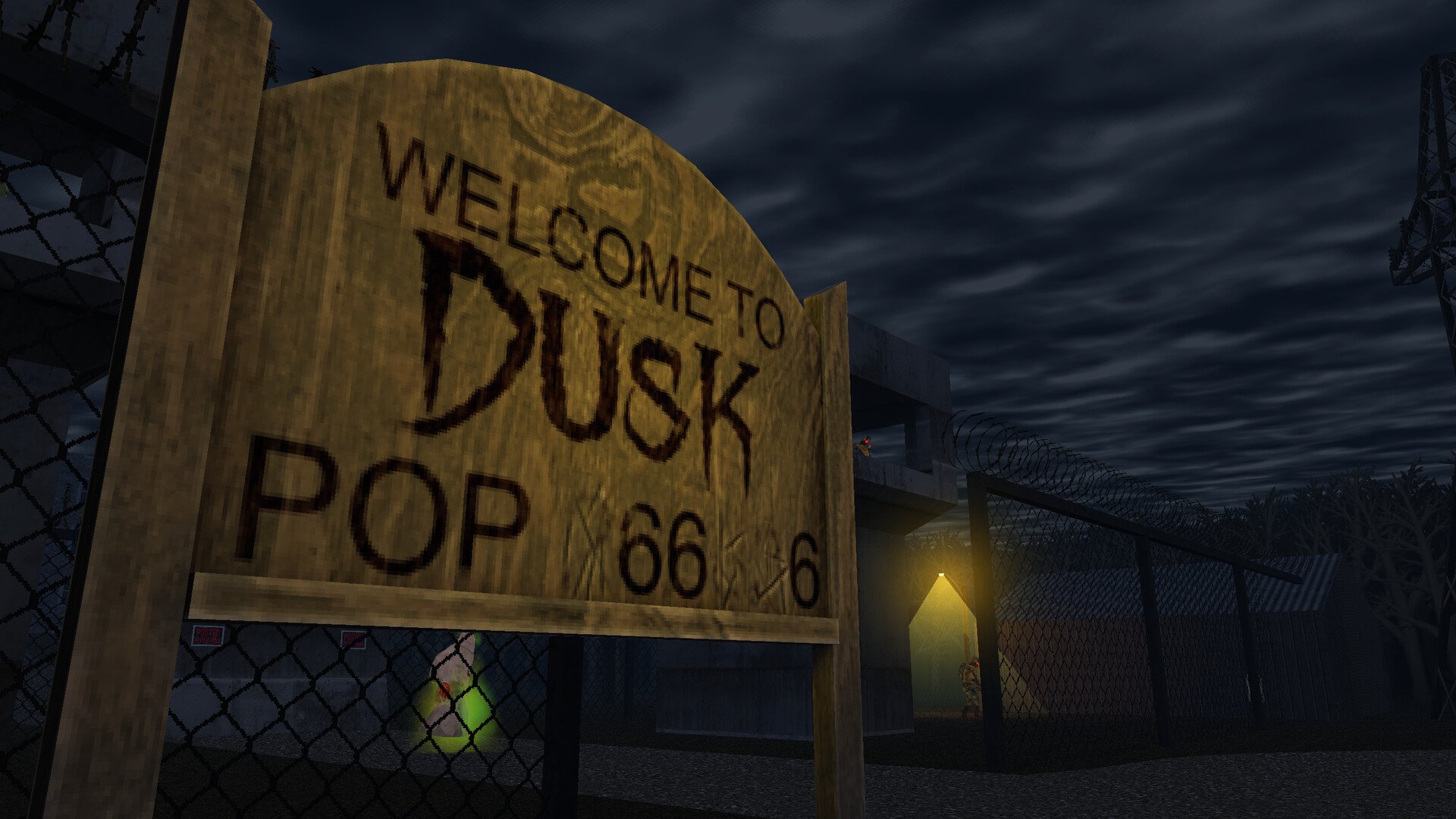
AH: Cables and Chaos is definitely my favorite one. Like, for sure. Like, that was the moment. Um, so, like, they originally only wanted me to work on, like, the music that first shipped. Not a lot of people know that I went through, like, this whole nightmare where I had to pull the entire soundtrack down across the entire, like, all this digital distribution and put it back up with all the songs because originally there was only, like, ten pieces of music with Prodeus. And then when they were getting closer to release they were like, “Hey, we want to… we want to… we want, like, ten more.” And I was like, “Oh, uh, okay. Well, I’ve already put out the soundtrack.We already agreed on this, so this is weird.” So, um, they showed me what else they were working on in terms of, like, the levels and everything that I hadn’t seen and I was like, “Good lord, these look incredible!” So I got really inspired with that and made a ton of really just more aggressive pieces of music which turned into things like Chaoscaster, Cables and Chaos, uh…I’m just trying to think of the other ones. Dystopian Dimension.
That whole soundtrack is awesome. Like, that whole soundtrack, like, it was built in an interesting time where it’s…it was… half of it was pre-pandemic and the other half was during isolation during pandemic. So, it’s got these really interesting tangents of, uh, the second half of the record’s way more aggressive than the first half. Just because, like, I don’t know, I was at home and I’m like, I can’t get anything out. Like, in terms of my outlet, I can’t go out. I can’t do this. So, like, all of my energy was focused on how aggressive can I make the rest of this, you know? Like, and then we finally get to put it out. I think that was 2022.
Here’s one thing from Prodeus that I thought was super neat. So, Spent Fuel is one of the only times that I’ve been…Well, it was one of the first times I’d done it at the moment. Where I’d taken an idea and I was like, how do I write a concept around this? And really, like, the map they showed me was just, you know, green sludge and radiated bullshit everywhere. It looked like Chernobyl. And, um…I was like, man, I really want to find ways to take things like Geiger counters, uh, and, uh, pulses from, from, uh, from fission reactions and, like, maybe even the sound of the, uh, the flash that happens in the video whenever they’re testing the atomic bomb stuff. Like, anything that’s gamma or uh, radiation that is audible, I want to take that and make a piece of music with it. So, there literally are all of those things in that piece of…that piece of music. So, there is the sound of a nuclear reactor turning on, doing what’s called a pulse, uh, for the first time. And that’s actually used in part of the beat. The Geiger counters used as portions of the beat that kind of sounds like a drum machine a little bit.
I reversed the sound of, uh, the atomic bomb, the initial flash hitting the camera, making this “bzzz” sound. I reversed that and made it pulse back and forth through the beat. And then, you know, later on the music is like a lot of guitar stuff to go with it and everything, but all that stuff that’s going on with the synthesizer is all based around, you know, like radiation. And I was like, “Ah, this is cool!”
Whenever I got done with it, I was like, “Finally!” I had an idea, like a concept idea for a piece of music that stems from like a real life thing and put it all together. So that was like, that’s one of the standout moments for me on that soundtrack. I was really proud of that.
TA: Can you say anything about the DLC music or is that just up to the devs for them to release?
AH: Uh, that’s up to the devs for them.
TA: Anything that’s different or interesting or should we just expect another banger soundtrack?
AH: I’m not sure if they’re going to use the base game stuff or if they want me to work on anything new. I have my suspicions that they’ll give me a shout probably somewhere in the near future, but I haven’t heard from them yet.
TA: I think in a recent interview where you spoke about the Iron Lung soundtrack, which you’re doing, obviously you can’t talk much about it, but I, don’t want to know about the soundtrack specifically, I’ll wait for the movie to come out, but I want to know three things: How is it working on a movie soundtrack? How is it working with Markiplier? How has the budget available for the soundtrack changed how you’re able to approach music composition?
AH: So the first one was, how’s it working on a movie soundtrack? Completely different. Like, I thought that, I thought that I’d be able to walk in and just be like, “Eh, this won’t, this’ll be simple.” Oh. Like, it’s just as challenging as the game stuff, but in a completely different direction. Where I would know exactly to talk to a developer about “Let’s put a piece of music here, let’s put a piece of music here, let’s do that.” I can do that with Mark, but they’re completely different conversations. One is, you know, I know exactly what’s supposed to be happening in the game here, this is, you know, you’re picking up this weapon, or you’re, this adventure is happening in front of you, this is the tone. The other is a film that I may get something out of, but Mark may be intending for a different emotion. So we have to talk about those things back and forth before I make a piece of music. So it’s really interesting. It’s a fun challenge, to be honest with you.
The second one was working with Mark? Mark is awesome. He is so much fun to work with. He hears things that I don’t hear, uh, brings things up in, in my own music, where I’m like, “Oh, I didn’t even think about that.” And he’s very much, um, a musician without, like, being a musician. Like, he doesn’t, he doesn’t write, like, as far as I know, he doesn’t write a bunch of music, like, on the regular, but he understands it very, very well. And will, uh, regularly make decisions when I hand him a piece of music, and he’s like, “Okay, this is, you know, sometimes we will have to cut these back and forth, but I promise you, like, like, to make it work for a scene.” He’s like, “But I promise you, we’ll do it as best as we can, or I’ll do it as best as I can.” I’m like, “Uh, you know, like, maybe I should just recompose the scene.” And every time he cuts something to, like, possibly make it, like, a tiny bit shorter, I’m like, “No, that’s exactly what I would have done. Like, how are you this good at editing this stuff?” Like, it’s, it blows my mind. Um, so he’s been fantastic to work with.
The third is about the budget for the movie soundtrack and how it changes how it affects composition? Budgets were a lot bigger. I’ll just, I’ll just keep it at that. They were, they were, they were much bigger. Um, just because of how much, it wasn’t, like, due to, um, you know, like, “Oh, you’re working on a film now.” It was, it was because of how much music we went through. Um, I wrote demos with them on the set. So, like, they flew me down to Austin and Mark said, “Hey, you know, why don’t you just write music while I’m doing scenes?” I’m like, “Wow, that sounds actually really, really f***ing cool, yeah.” So, I would go down there about once every two weeks and spend about two or three days there, just sitting at, uh, sitting out front while they’re, they’re doing scenes, and I’d be writing music with my headphones, just watching on a monitor, you know, what’s going on in front of me, like, 50 feet in front of me. And so, there was a ton of music from that, and there’s a lot more music that came afterwards that we wrote, and in fact, um, I’m actually about to jump on a call because I think they need one more, one more piece of music.
I’m gonna jump on a call in like two hours, ’cause I think they need one more piece of music. Um, but it’s, it’s just been a lot. There’s a lot there. And it’s picking the emotions that go where. So, like, there would be, I wrote all these songs for, you know, um, catching a vibe of depression, and these songs for catching a vibe of anger, and these vibes for tension, and this, and this, and we have this giant palette to just choose from and pick where we want things to go, and that’s what, that’s what Mark’s been doing. So, yeah, it’s, it’s pretty much, I mean, financially, the exact same thing as, that I would agree on with games, but it’s just, there’s the volume that, like, we’ve done with stuff is like, whoa, that’s a lot! So, yeah.
So, yeah, it’s been great. It’s helped me out a ton. I’d love to work with Mark again after this.
TA: Going from your first movie soundtrack, let’s talk about your first chiptune album, which was Dusk 82. So, was that actually the first time you did any sort of chiptune remixing or composition or arrangement, I should say?
AH: Yeah, the first real one, like, I mean, like, you could, you could argue that, like, the Rad Rodgers stuff has some of that on there, but that’s, like, closer to synth wave more than anything else, I feel like. And, like, that kind of retro feel. So, yeah, this was the first real time that I, like, approached, like, a chiptune. Like, this is, you have to stay within these boundaries of limited technology. And it was literally, like, you know, choose your, choose your sine wave. Do you want, you want sine, or choose your audio wave. Do you want sine, square, or, you know, triangle? So, it’s one of the three. Just building, like, drum kits based off of that and, like, white noise and everything. And, yeah, that was, that was interesting.
Like, when David approached me about that, I was like, “You wanna do what?” You know, like, completely make, like, the Dusk soundtrack and chiptunes of, like, why don’t we just, like, choose a handful of, like, the hits and go from there. Like, the ones that people remember the most, you know? And that was fun. Uh, that was super cool. Just bouncing those back and forth off Dave and David. But, yeah, that was, that was the first time I ever did that. And it was, it was pretty cool. I’m glad people like it.
TA: I think, uh, Dusk 82 was, like, this free pre-order bonus with the Nintendo Switch release. So when I started playing that, I was like, “Wait, did they actually do this for the soundtrack?” And then I looked it up and I’m like, “Of course they did!” I know obviously you’re, like, super busy with, like, a ton of projects, but if you had, like, unlimited time and resources, would you do a chiptune demake of any of your other albums? And if you would, which one would you pick?
AH: Gosh. Which one would be the most interesting is really the, uh, the question there. I think the one that would be the most interesting if I were to do that would be probably AMID EVIL. Because there’s so much going on in some of those, it would be, it would be a lot of fun to go back and, like, hear some of those melodies that are, like, on, like, all string sections and stuff, and here I’m taking all the way down to, like, 8-bit, you know? I think that that would fit really well too. But yeah, if money wasn’t an issue. Yeah, and time. Time’s the biggest one there.
TA: Speaking of time and money, I was going to ask you about remastering one of your old soundtracks, like bringing it to the modern Andrew Hulshult sound. You mentioned that you’d do ROTT 2013 if they paid you to remaster it.
AH: There’s a ton of work involved in that. Doing that just for IDKFA was a ton of work. Like, that was months of getting that together. Um, yeah, I’d love to do that for ROTT if Apogee would be interested in it, but, like, it’s a time thing more than anything else. I think it’s a time thing for them, and it’s a time thing for me. I mean, they’re literally down the street, so, like, they can open up that conversation anytime they want, and it’s just a matter of when, you know? When’s the right time.
TA: WRATH: Aeon of Ruin, I think is a game you composed a long time ago, at least in gaming, like, a few years ago, and it finally released this year. That’s a soundtrack where if anyone hears it, I think they probably wouldn’t expect it to be you when they listen to the soundtrack, and that’s one of the things I love about it, because here, like, he does more than just metal, like, you need to get that into your head, like, that feels like one of those things. How was it working on that soundtrack?
AH: It was interesting back and forth. Jeremiah, the developer on that, the original developer, at first, I think he’ll be okay with me saying this, at first we did not, we didn’t see eye to eye on things, because I wanted straight up, like, almost no guitar at all, Quake, Like, this is what you’re going for, this is the audience, we need to harp even further into this, and he wanted some guitar mixed in there, and like, we would butt heads back and forth on it quite a bit, until we finally came to like a mutual understanding, and I started hearing him out a little bit more, and he started hearing me out, and I was like, okay, okay, I think we’re all good on this.
But yeah, it was, that one was a little, a little more tough, just because the, like, the development cycle was, wasn’t, you know, as people know, like, didn’t, it didn’t go as great, like, towards about halfway through, maybe a little, even a little earlier than that, and I could see some of that happening in real time, just because I know all those guys, so like, it was unavoidable.
So that’s, that’s hard to make art for when you know that the product itself is having some problems. But I think Christalynne Pyle did a good job with wrapping everything up towards the end of it, which was a task in and of itself, for sure. But, I don’t know, there were some weird ideas pitched out there at one point, where like, I think Fred wanted like, like straight up, like really over the top metal tracks at one point. I think they even had a trailer at one point where I was like, this is not the tone of this game. I don’t know where you guys found that music, but like, this is, this is not that.
But I’m glad that everything in the end was able to have some cohesiveness and, and meld together. I really wish that we had time to do some action tracks, like, for that game. Like, I feel like there are moments where that could have, that could have been helpful, but also at the same time, that’s a big what if. You know, like, because there’s two things that you have to take into consideration. Which is, that’s the Quake engine. It’s like the OG Quake engine. You know, what are the limitations that we’re working with here? Can we dynamically swap music, and is it going to work well, just as well as you’ve heard in other titles? And number two, um, would that take people out of it?
Because everybody remembers like the OG Quake having like, you know, every map had its song. Well, I say that. It was a disc running that just played a bunch of music. But basically, every map had a song for it. So, yeah, there’s, there’s a handful of things there. But I like the soundtrack. I think it’s cool. I think it’s, it’s, it’s got some really interesting moments in it where like, one of them where I was, I just said, “F*** it, whatever. We’re gonna, we’re gonna bow a guitar through a bunch of pedals and see what that comes out like.” That’s one of my favorite pieces from that. I think that’s towards the end. But, um, yeah, it was a little bit of a struggle, but I’m glad I still went through it. I had fun, and I think that everybody that worked on it was pretty proud of it by the end.
TA: Now, DOOM Eternal’s DLC. How did it feel for you doing IDKFA and now doing official DOOM music? Like, it’s your soundtrack with David Levy? Did id Software actually talk to you about IDKFA beforehand?
AH: I know that IDKFA was, was passed around that studio a whole bunch, cause I, I’d get, um, DMs from people that work there that are now, like, I consider great friends, where they would reach out in, like, 2015, and 2016, and, like, all the way back as 2014, where they would be saying, you know, hey, I’m working at id right now, I just want you to know that I’m listening to your, to your music while I work, and I was always just like, oh, holy cow, that’s crazy, you know? Um, and I, you know, as far back as that, I was just like, hey, if you ever, you know, if you ever, if you ever need music, let me know, you know? So, but, like, never, never, you know, like, pushing like, the button or the boundaries, cause like, I think it was announced that Mick was working on there in, like, 2015? Like, it was like the year before, or something like that, when they really started showing some of the music, and I was like, oh, they’ve, they’ve, they’ve got that handled, okay, cool. So, um, but I was always interested in, in finding a, a way to work with that studio, cause I love DOOM, and, like, it’s really is, like, the core of my DNA wanting to work in games, is DOOM, and like, Duke 3D, um, so, yeah,
I always wanted to work with them, and IDKFA, I kinda looked at almost as a resume, like, I was like, I’m gonna put this out there, if it gets popular enough, it’ll speak for itself, and it did exactly that, because, uh, in, gosh, that was, that was right at, like, quarter one, quarter two of 2020, when, when they approached me, I think it was, actually it was, I think it was quarter two of 2020, and said, hey, we, uh, we are in a position where we need, we need music, where we need music, and, uh, we need it quickly, and would you be up to the task for this? They fully were, they knew what they were asking was, was a tall order, in a short period of time, and they said, you know, we can absolutely use the base game stuff, but we wanted to at least reach out and, and ask you, because we, we feel like we can trust you, cause I, I’d made relationships with, with, uh, with Marty, some light ones with Hugo, with Chad Mossholder, their sound guy, I knew all of those people by then, and, um, I was like, hey, you know what, it’s, it’s like 35 or 40 days, f*** it, we, let’s do it, it was like, this sounds like a challenge, I’m totally up for it, and, you know, I had to keep my composure the entire time, but in the inside I’m like, oh my god, you know, like, I’m working on an official DOOM game, uh, and when, but when we got done with that, like, I don’t know, it’s one of those weird moments where you go, holy cow, we went from, uh, you know, a mod project, uh, all the way to the official thing, and it’s just, it’s insane, it’s, it’s crazy, I keep running into those portions of my career, I hope they never stop, there are, something always surprises me like that.
TA: I think it’s safe to assume that a lot of people who tell you they love your music bring up Blood Swamps from DOOM Eternal’s DLC. Because I think every person I see on YouTube is like, everyone’s just doing Blood Swamps, it seems like the most popular thing and all, and for you that’s probably a weird feeling because you have this song which a lot of people love or something which you’re really proud of, but you can’t stream it or buy it legally. Can you comment on that in any form? What do you tell people who ask about buying your music from DOOM Eternal’s DLC?
laughs
AH: Well, Bethesda and id own all that stuff, they paid me well for it, so like I was happy to do all that, um, that’s not like a bullshit PR thing, like, for real, they took care of me. They own all that, so you know, if they, if they ever choose to put that stuff out, that would be awesome, I’d totally embrace it and get behind it with that, but sometimes studios do that, sometimes they don’t, and it’s just completely up to their call, but I will tell you that they have no problem with you, you know, grabbing it off YouTube or anything like that, so do that to your heart’s content, throw it on your phone, whatever you want to do, they just, they’re just glad that you like the stuff, and so am I, to be honest, but hey, hopefully one day we can get an official release, like, that would be cool.
TA: Yeah, because I have the DOOM 2016 vinyl soundtrack, and I’d love to have DOOM Eternal music on vinyl as well. Anyway that’s something I’ve been thinking about because it’s probably a difficult situation for you to be in, because people would who want to support you, like, obviously they can buy DOOM Eternal and buy the DLC and stuff like that, but it’s an unfortunate situation for fans, is all, like, I’ll leave it at that.
AH: It’s not really like a weird situation at all. I’m totally okay with whatever, Bethesda and id want to do with that, because they were completely up front, they’re like, we’re gonna own this, what we choose to do with that is…Yeah, yeah, and I was like, yeah, that’s fine, I just want to help, I want to make like, a cool DLC for everybody that’s stuck at home, and I want to write like, some kick-ass music for it. And, so there’s no feelings of like, you know, oh, this is weird because this isn’t out, or anything like that.
I know people are gonna rip it out of the game, I know, like, so do they, and like, that’s fine. But, you know, hopefully, I would like to see an official release one day, but that is completely up to them, and I will respect whatever they want to do, because they’ve been nothing but awesome.
TA: Now let’s just talk about Blood Swamps for a bit, because like, everyone loves the riffs and stuff like that, so, what was your thought process in creating that song? Did they ask you to make something that fit with the base game or tell you to just go wild and be Andrew with the music?
AH: They told me to go wild and just be me, which I was like, that felt pretty dangerous to me, because I was like, man, the, you know, what’s established here from Mick? I’m like, that’s pretty strong. Like, that’d be like somebody walking into another DUSK soundtrack, you know, like, for the Indie Shooter, and then being like, we’re gonna do all synthwave, you know, like, no, that’s not how that works. You have to serve what came before you. You have to show respect to what came before you. And that’s really important for the fans before anybody else. Doesn’t matter with an executive producer, doesn’t matter with the musician, doesn’t matter with the artist. It’s for the fans. Like, you have to make sure that whatever you’re going to do is going to, they’re gonna go, okay, cool, yeah, I understand, you know, why you chose this. So really, for me, looking at it when they were like, hey, you just be you, do whatever you want, what you think serves Doom the best. I was like, well, that’s a no-brainer. I’m gonna, I’m gonna, you know, I’m gonna source some inspiration from 2016 and Eternal, and then write what I would want to write.
So, the colors that I’m painting with are familiar, but the writing that I’m using, what I’m using to paint, or the picture I’m painting is different. So there’s some familiarity there. Because, you know, like, Blood Swamps is quite a bit different than stuff that you would hear on 2016 or Eternal. It’s a little bit more, this is, uh, this is like almost like a traditional metal song. And like, in fact, uh, I remember handing that over to Chad the first time and him being like, “Oh, metal. Alright.” And I was like, “Really? That’s like, you’re surprised. But, um, the, uh, it’s just a little bit more almost traditional. But, um, yeah, there’s, like, it was nice having David and Chad to bounce stuff off of. Because where I would hand them something, like Blood Swamps was originally like just guitar, just, just bass, and just drums. And it started, I started adding things in at, uh, after talking to, um, to Chad and David quite a bit. Where they would be like, you know, “Have you thought about any sound design stuff?” I’m like, “Well, what did you, you know, what are you thinking? Show me the instruments that you’re working with and, you know, like, let’s just talk stuff out.”
We’d have like hour long conversations every single day. And we would all just learn from each other. It was, it was so cool. But, yeah, like Blood Swamps comes from a point, I just remember, I have to write something that if this is the only DOOM game I work on, it has to be just, like, way out there. Like, I have to, I have to, I have to just take my shot. And it has, I have to rip out all of the barriers that are like, “Hey, should I do this? Shouldn’t I do this? Who gives a f***?” Just, just just write the fastest, most aggressive thing that you can think of at this point in time, and we’ll go from there. And that’s what, that’s what Blood Swamps was. And then everything else came after it, I was like, “Okay.” It was like, “We can do different things now.” You know?
TA: I think you mentioned how you had a few weeks to do the DLC soundtrack, but because you had the support system of those two, it was all possible in the end. I think you mentioned that in one of the other interviews.
AH: Yeah, because David was handling, like, on the first DLC, he was handling the cutscene work, and he had his own, like, stuff where he was working on a boss, and a level, and then I got these two levels, so they split up the work evenly between us on both DLCs. And there’d be so many times where I’d call David or Chad and just be like, “Hey, how are you doing today?” You know? And one of us would be like, “Oh my God, I don’t know where to go.” You know? And we would just talk back and forth, and somehow we would give each other ideas. It was magical. Like, it was crazy. Just after talking to David, if I had nothing in my head on what I should write, after talking to David or to Chad, I’d be like, “I know what I need to do now.” It was cool.
TA: Going back to IDKFA a bit, you mentioned how much work you had to put into revisit and, like, Remaster the original soundtrack. What did you think about revisiting those songs? Like, did you feel like, you know, maybe I should have done something differently? Or were you like, “No, I’m happy with this. I just want to preserve it for fans of IDKFA.”
AH: Yeah, it was more of a, it was a little tiny bit of, “I want to do things a little differently.” But, like, I’m talking to really, really small degrees. It was more about preservation than anything else. And if something was being destructive while trying to preserve it, those were the things that I would try to eliminate. An example of that is there was a lot of compression on the original IDKFA. Just because I was still in my early 20s at that point, early to mid 20s at that point, mixing in an apartment that isn’t, like, acoustically sound or anything like that. So I’m making mix decisions that aren’t the greatest, but still hold up. Like, that album still sounds great, but just some of the compression side, like, on the master of it, is a little aggressive.
So when I went back this time around, I actually went through every single one of those songs one by one and just gave it a little bit more head room, a little bit more breathing room, so that if you listen to it enough times, you’re not going to get, like, ear fatigue or something like that. That’s really what I was concerned about. And that’s all of the Doom 1 stuff from the original IDKFA all got that treatment where the threshold has been raised just a little bit so that it sounds a little bit more open and natural. And I replaced a couple snares here and there, and maybe like a kick drum and a bass, but they’re so small I still haven’t seen anybody notice them.
TA: You should revisit Metallica’s St. Anger and do this for all the fans.
AH: It is impossible to fix that! laughs There’s been bands that have done that. I’ve re-recorded that entire record and I see it on YouTube every now and then. I’m like this is… this would have been a cool record if it would have sounded okay, and maybe some structure changes were different, but yeah, it’s whatever.
TA: I think when Metallica did Death Magnetic, they had the Guitar Hero Metallica stems which people used to mix it better than the actual album. How does this keep happening?
AH: James attests to it. Those guys are so big that they legitimately have final say on everything that they do. So whenever they’re touring and you already have Tinnitus and you’re mixing in a tent, I remember them talking about “Yeah, no shit, the guitars are bright.” I was listening to mixes in a tent and making mix decisions on the road. I’m like, “Oh, that makes a lot more sense now.” Like, oh my god. Because the Guitar Hero mixes do sound way better.
TA: This reminds me of when I watched Deafheaven and how amazing they sounded live. You have so many bands that release albums with brickwall mastering ruining the sound of an otherwise good album. It is a shame that some bands don’t get outside help for things like mastering.
AH: Yeah, it’s…I mean I still do my own mastering stuff so I’m the start and finish with all my stuff but I totally get it whenever I see a band that has a record that’s just completely smashed. I’m like, “Yeah.” If I was just a musician who really knew how to play guitar and that’s about it or really knew how to play drums and that’s about it, I understand how this happens. It’s just a bunch of guys in the room going, “Louder! This needs to be louder.” laughs
TA: So you revisited IDKFA’s original DOOM 1 music, but you also did almost a complete Doom II soundtrack. I think there was one track which was on YouTube or two tracks. When you were doing these new songs, how did it feel for you because now you’ve come so far ahead as a musician and did you feel tempted to make it a modern Andrew Hulshult album versus trying to be Doom II? How did you approach that?
AH: Man. This whole IDKFA thing with id’s blessing has been an incredible experience. It feels like I’m closing a chapter of my career with the fans because IDKFA is what got me so many jobs and so much recognition beforehand. Well, IDKFA and Rise of the Triad, but IDKFA was a big one and I still get people that are like devs that reach out that are like, “I know you from the DOOM stuff.” And I’m like, “What? DOOM Eternal?” They’re like, “No, IDKFA. I played that DOOM WAD.” And I’m like, “Oh my god.” So I still get jobs because of that. So whenever I sat down… Whenever Marty Stratton sent me an email about a year and a half ago to ask if I had time to sit down at QuakeCon last year and talk about some things, I was like, “Uh oh. Something’s either gone terribly wrong or he just wants to hang out.”
So we sat down and he was like, “Hey.” He’s like, “I have an idea.” And I was like, “What’s that?” He’s like, “What if we give you a license for the DOOM soundtrack for IDKFA so that you can put that out on all of the streaming platforms yourself and do whatever you want and you give us a license to do with what we’re working on, which was the DOOM and DOOM II remasters.” And I was like, “That sounds cool.” I was like, “I’d love to finally get that out on official sites and everything.” And he was like, “Oh, it’s awesome.” He’s like, “I was hoping you’d say that because this would just be so cool to have this as a selectable thing. Like to go from the Bobby Prince to this if people wanted to.” And I was like, “Yeah.” And I’ve been doing that with soundtracks recently anyways.
About halfway through that whole thing, we were just trading war stories about the industry and just getting along. And I was having a blast. I was thinking, “Man, this is really going to be closing a chapter in my career.” I was getting a little emotional. I was like, “I’ll tell you what.” I was like, “I’ll do you one better.” I was like, “Why don’t we finish DOOM II and make it the real deal?” People have asked for it forever. I’m like, “That would really poke my audience.” They’d be like, “Holy shit! Doom 2 is finally finished!” And he was like, “If you’re up for it, yeah, absolutely.” He’s like, “We’ll get you a license for anything that you do on that as well so that you can put that out as well.”
So, yeah. It was…walking into doing DOOM II was so much fun. Every step of the way. Adam Pyle, the guy that worked with me on Quake Champions, was the guy that I bounced all my mixes off of. He told me at the beginning, he said, “Hey, you know, do whatever you want.” He’s like, “It’s you. It’s the reason people want to listen to it, so I don’t really have much of a say.” I was like, “Bullshit!” I was like, “You worked with me on Quake Champions. I’m going to bounce every mix that I do off of you, and I want to hear feedback from you.” It’s like, “I respect your opinion because we got stuff like we did on Quake Champions because we talked back and forth.” So we did. I’d send him… I’d finish Running from Evil and send it to him, and he’d go, “This sounds great, or, you know, like, what if you did this?” It was only a couple times where he was like, “What if you did this?” I was like, “Oh!” They were always cool ideas. But I really respect Adam’s ability to throw out things every now and then. He’s just a great person to bounce mixes off of. So, just doing those one after another and getting to the end of it.
Once it was all wrapped up, I’m not going to lie, once it was all together, I was just in my office and I was like, “Oh my god!” Having a moment where I had a grown man cry where I was like, “I can’t believe that this is happening. I can’t believe that, number one, I’m going to be part of the original DOOM in an official capacity. Number two, they’re going to ask me to talk at QuakeCon, like, live on stage and announce everything. And number three, they gave me a license for all this stuff so that I can put it out and I can actually make some money off of it. That doesn’t happen with a big studio. They don’t just go, “Here’s the soundtrack. Have fun.”
I don’t know. It’s just still so crazy. It hasn’t really sunk in for me still. I’m still in that weird spot where I’m like, “Yeah, this is out there. We’re promoting it.” And once that’s over, I’m sure I’ll be like, “Oh my god.” You know, like, “Holy cow.” But it’s been fun.
The DOOM II stuff, I wanted it to be something a little bit more fresh on where I’m at as an artist. I didn’t want it to be exactly like IDKFA, like the original DOOM I stuff. Because if I were to do that, I’d have to go back and completely remix all of DOOM I stuff, which I was like, “No, that has to be preserved. People know what that is.” So you can’t touch that. That’s already done. So I thought, “Okay, well what if I just gave them how I would do DOOM II right now?” Which is exactly what it is. All that stuff is like, “Yeah, f*** yeah.” Those are the exact decisions that I would make with synths, with guitars, with drums. I think everything slams. I think it sounds great. So it’s just a picture from 2011, 2012 with the original IDKFA. It got officially released in 2016, but it started working on it as far back as back. So it’s a picture of where I was as a musician, that far back. And then this one is a picture of 2024. So you get it’s kind of like a time capsule.
TA: Was The Healer Stalks one of the new songs because it definitely feels like modern Andrew Hulshult?
AH: Yeah, that was the second one written. I think I almost went in chronological order doing that entire soundtrack.
TA: You and I have both been playing DOOM since the 90s. When I started learning guitar and playing a lot, I started thinking about the DOOM soundtrack and some of the songs definitely have bits that remind me of other band music like Pantera. When you did IDKFA and just heard the music in general, what did you think of that and how does it feel revisiting some of those songs now? Stuff like A New Level and This Love from Pantera instantly spring to mind.
laughs
AH: Yeah. Some of that stuff’s pretty close. Like sometimes, right? But it’s different enough where you’re like, oh, okay. Yeah. But yeah, there’s definitely some inspirations that were taken from like thrash metal for sure. Because I mean, like they always talked about Romero having on like Slayer and Metallica and all that stuff like playing while they were making the game. So it only makes sense that they’re like, you know, hey, make something similar around this. I don’t know exactly how that story went. I wasn’t there. I was like, you know, I was like four. But that makes complete sense in my head. And yeah, going back and listening to them like, yeah, it’s there somewhere in the ballpark of it for sure. Like
TA: So after DOOM II, have you gotten people saying, when are we getting an IDKFA version of Quake and stuff? Because you did one song, right?
AH: Yeah, yeah, yeah. I did the theme. I think I did that just for fun. And I think I honestly did that as people were, I saw a bunch of forum posts. It was either forum posts or Discord about people not sure like about me on DUSK of all things. Like it wasn’t even like a fully announced game, but they were like, “I’m not sure Andrew”. And I was like, OK, you know what? I was like, f*** you. I’ll just remake the Quake theme. And then you’ll see if I’m the right person for the f***ing job. laughs And so I put that out and people were like, oh, and I remember like a bunch of the comments were like, oh yeah, okay, he can work on DUSK.
TA: Do you listen to that soundtrack often? The original Quake?
AH: Oh, man. I don’t listen to it. Listen to it. But like every time I go fire up Quake, which is about like once twice a year. A little more than that if I’m playing multiplayer with friends. That’s the thing I look forward to the most besides like the level design is the soundtrack just because it’s so out there. Reznor did such a good job on that. It’s incredible. God, I wish it’s a pipe dream, but I’d love to work with him on something and Atticus Ross on something at some point. That would be crazy. But they’re like way up there, you know.
TA: Their movie soundtracks are amazing. I’ve actually been watching some of the movies just because they’ve done the music because I think the audio design in The Social Network is incredible. I think they did like the recent Teenage Mutant Ninja Turtles thing, which I still need to watch.
AH: It’s so cool when artists step out of their comfort zone like that, where it’s like you’re known for like you’re angry and depressing music and then it’s like Teenage Mutant Ninja Turtles. It’s like now I’m interested. Yeah.
TA: Going back to your music, we covered Blood Swamps being the most popular song which people bring up when they meet you and stuff. I saw this interview with Final Fantasy 14’s composer Masayoshi Soken who was asked about a song which he really liked, but no one actually brings up, and that he thinks deserves more attention. He said Game Theory. I want to know what’s that for Andrew Hulshult.
AH: Splitting Time. Like whenever you brought that up, I was like, oh yeah, from the AMID EVIL DLC. I mean like it’s well it’s DLC. So like by nature, DLC doesn’t get as much attention, you know. But like the AMID EVIL DLC altogether before I talk about the music, the DLC is incredible. Like that’s my that’s one of my favorite things I’ve worked on like in recent memory. Like all the music’s great. Like it was , it was a joy to put it all together. All the sound design, all the traps and everything. It’s just an incredible DLC. If you don’t have it, you should go get it. That’s not me shilling and just oh go buy the game. Like it’s f***ing awesome. They did an incredible job.
TA: Everyone should buy that game and DLC.
AH: Well, I don’t want to look like a shill. If you like it, you like it. Like if you don’t, if you don’t dig it, don’t buy it. You know we’re not not here to like, you know try and sell a bunch of stuff.
But like splitting time finishing up that piece of music. It felt like a real moment where I don’t know. I felt like kind of a shift as an artist where I was. I was way more comfortable with a lot of the more aggressive sound design elements being mixed in with compositions and finding ways to make them gel better. And everything really came together on that track and out whenever halfway through I was like, this is the final boss track. I was like I don’t care what you’re designing. I’m like, this is the final boss track. And you know, two seconds after they started listening to it, they’re like, oh yeah, this is the final boss track. We hadn’t even made the character yet. I was just like, here it is. That one hung around for a long time. And yeah, that’s I feel like that song is very much a good indicator of where I am musically right now.
TA: Now let’s get a bit into the weeds. Let’s talk about your current guitar setup, your pedals, your amps, string gauge, pickups, I want to know whatever you’re using.
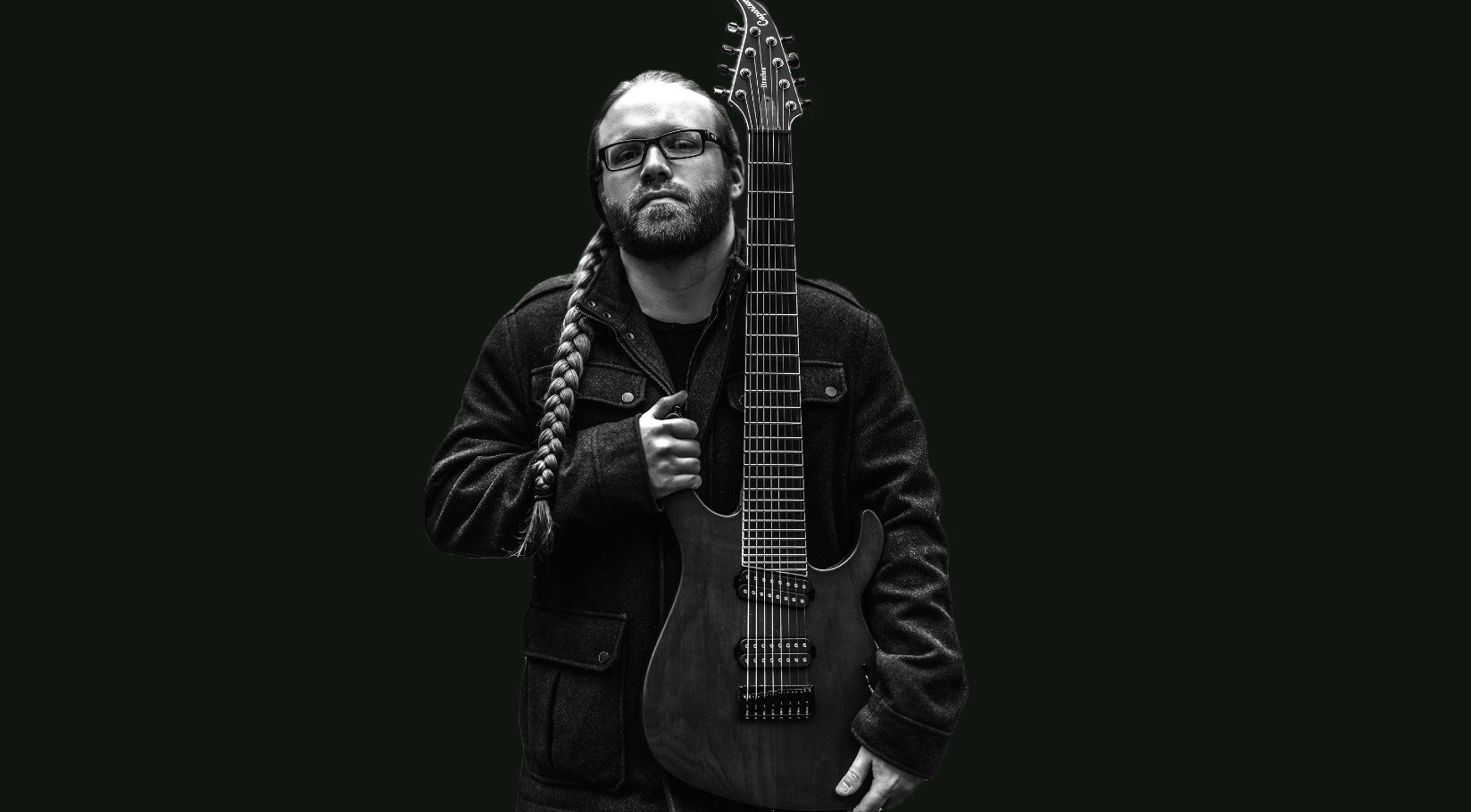
AH: So the guitar I’m using the most is a Caparison Dellinger 7. I actually just had a pickup swap on it where I put some Seymour Duncans. I think I put an SH5 in the bridge and an SH2 in the neck on this one. Specifically because the SH5 on it has a really interesting thing where it doesn’t emphasize the low mids a whole bunch but they still cut through really well. So whenever you’re sitting there and like, you know, like chugging on stuff and you have to track that four times, it just sits a lot better in the mix than if you were to just use like stock pickups. There’s nothing wrong with Caparison stock pickups. They’re great. They’re super, super punchy. But for my mixing style I just, I know what I want in terms of pickups so I just, I swap those out.
I also did the same thing actually last week with the 8 string. This is a Caparison Brocken 8 string. I don’t think they make this anymore. I swapped out the pickups on this one as well to a gosh, what is it? It’s Duncan. They’re really, really famous 8 string pickups by Duncan. And I can’t remember what they’re called now.
TA: I didn’t know Seymour Duncan even had 8 string pickups.
AH: They do 8 and like, I was originally going to get some Fishman Fluences for it because they seem like they would hold the top end in the midrange a little bit better but after I don’t know, I’ve just always been a Seymour Duncan guy. And after finding a couple that I really liked at a shop called Tone Shop up the street from me. I was like, man, I really want to put these in my 8 string and they have a tech there that’s just incredible at what he does with all my guitars. So I was just like, hey, order those and I’ll just leave the guitar with you and like a week later they came back and I was like, yeah, that’s exactly what I wanted, sounds incredible.
I’ve got my Caparison 7 and 8, and I still have all the guitars that I’ve had over the years for the most part. I’ve got another Schecter 8 string here that is a really cool color. It’s super neat, like, it actually changes from blue to purple.
TA: I think it is called Prism or something like that. John Petrucci has something like that on one of his guitars.
AH: But yeah, this one has like the EMGs in it and it’s a cool guitar. It still plays great. Like, I still like it. But let me show you something that’s actually pretty sweet. So I still have, I bought this in like 2004. And I still have it. This is the guitar that I actually wrote all of IDKFA or most of it on and I wrote all of, I tracked all of Rides of the Triad with. It’s just a Schecter C6. It’s like just stock. It even still has the plastic in the back which is crazy. But yeah, this is like, I still have this guitar. I was like I was so close to going up to id, like which is just on the street for me and being like after IDKFA was finished, I almost was just like, here, you guys, you need this. You know, like, hold on to this or something. Like this is the one. But like, I don’t know. It’s not like a mainline DOOM game, you know? Like, it has to be something like a mainline game where I’d be like, I wrote this on this guitar here. You know, if you want this, it feels like it belongs to you. And also, part of me is like, no, don’t do that. Like, hang on to it.
TA: Ok now string gauges.
AH: For string gauges, 10 to 59 on 7 strings. And on 8 strings, I think it’s 10 to 65. And then typically on 6 strings, I just like 10 to 46.
TA: Do you use D’Addario strings? I use them mostly.
AH: I use D’Addario for the most part, but I bounce back and forth sometimes to Ernie Ball.
TA: What about your amp setup and your pedals and stuff like that?
AH: So amps, I’ve sold almost every amp I’ve ever owned. I had a JC-120. I had a couple of those Crate Blue Voodoos way back in the day. The ones that were like, yeah, the ones that were, were basically copies of those Ampeg tube amps that they made a long time ago. I had a Valve State 8100. I had a bunch of amps and a bunch of VHT cabinets as well too. And I sold all of them years ago. I’ve really just been like working inside the box for the most part with like neural DSP plugins into an RME interface and I also went as far as getting one of these recently, which is a Neural DSP Quad Cortex. So basically this is all of their plugins built into like a really nice processor. But for a project I’m working on recently they were like, hey you need an amp. And I was like, yeah, you’re probably right. I do need an amp. So I went and bought this and I plug it into two 100 watt Seymour Duncan power stages. Okay.
They’re like, they’re these little tiny like 100 watt power amplifiers. They’re solid state power amplifiers. And I run the stereo out from that thing into the left and right side of those and those go into two Engel 2×12 cabinets. Which, okay, Engel 2×12 cabinets are awesome. Ever since I heard a Rammstein record that used them I always wanted to grab one because I was like, god, those things sound huge.
TA: I wasn’t sure about this because a friend of mine said he was sure AMID EVIL was recorded on an Axe FX Ultra.
AH: Any guitar stuff I’ve done has used either Native Instruments Guitar Rig from way back in the day. Like IDKFA used a ton of Native Instruments Guitar Rig 5 and Guitar Rig 4. But pretty much everything since DUSK has used Neural DSP for guitar work. It’s just me plugging directly into my RME UFX and sometimes I’ll use pedals going into it like the Exotic BB Preamp but most of the time it’s just a dry DI signal getting manipulated inside the box.
So, the ones that got the most use on DUSK were the Moogerfooger low pass filter. Believe it or not, like anytime you hear the sound of something becoming kind of lo-fi or anything. It was always run through this filter. It was pretty cool. But the thing I like about it the most is the drive circuit on it. Like I don’t even like it that much as like a filter filter. The drive section on it is just so aggressive that it’s a really interesting sound and like that sound that you hear on the DUSK soundtrack which is like all of the really high high end that’s like really high energy. It’s almost like the Nine Inch Nails stuff. A ton of that comes just from driving the front end of this thing. And same way with the Fulltone Catalyst. But yeah, it’s just a few of them. I think there’s one more that I use a lot. I don’t think I have it here. It’s the ZVEX Fuzz Factory which is just an insane sounding pedal. It just sounds like garbage. And that’s why I like it. It just sounds like you are destroying a signal which is perfect. I’m cool. That sounds cool. That’s a great effect. I like that.
TA: You’ve accomplished a lot in your career so far with recognizable music. As a musician, how have you been learning to improve your own skills like programming drums, software, and how do you balance doing that while you have a lot of folks who want to work with you on new projects?
AH: Every day is just like I don’t know. If you’re not teaching yourself something every day, this is my train of thought. If I’m not trying to sound better in my own head, whatever I think is better, I’m wasting my time. So if I feel like the drum kit I’ve used like two or three times on two to three different records, if I’m like that feels stale. If I then go if it feels stale and I know the ends and outs of it and how to make it sound good then I need to change that drum kit. I need to find something different and work with it and see if I can get some different sounds out of it. So I’ll change instruments and just purposefully put myself in positions where I don’t know where I’m at or what sounds good with it just so that I can find my way out of it.
It’s kind of like limiting yourself, like putting yourself in a box that’s really important as an artist to make sure that you are working within a certain scope of things and going hey, you know, here’s something that’s completely unfamiliar, get used to it and this is what you have to work with. So, yeah, like I don’t know, just constantly challenging myself is part of who I am for the most part. So, it’s just how it always goes.
TA: I’m glad you brought that specific bit up because in another interview of yours you mentioned how once you got to your thirties the most important thing became getting good sleep which a lot of people take for granted in their twenties. So my question is that trying to have a routine is very important even if you can’t stick to it 100%. What does a day in your life look like right now?
AH: A day right now looks like about, a typical day is about anywhere between 6 to 7 hours of sleep which is about what I need I’ve found out, like it’s like somewhere around there, sometimes 8 and then randomly I’ll have days where it’s like, oh you need like 11 hours I don’t know why, but I feel fine waking up completely recharged with like 6 and a half to 7 and a half hours of sleep. So what I’ll do every morning is I’ll wake up, I’ll go take a shower immediately, like that’s the only way I can start my day is like I feel like I’ve got to it feels like I’m washing off yesterday I don’t know how else to explain that and then I gotta have a coffee and then I gotta start writing things on a whiteboard that’s right over beside me to the left because otherwise I’m just gonna spin my wheels all day long and think, oh I should do this, I should do that, I’ll be thinking about everything I need to do and then never actually do anything. I don’t know if that’s ADD, ADHD or whatever that’s undiagnosed, I’m sure it is to some degree which I’ll get to that at some point but until then I have the whiteboard and as long as I write stuff down on it on what I want to do that day, I’ll knock it all out, every single piece of it. But what’s super important for me to do is just plan out the day early on and then everything just comes to it afterwards.
The other thing that’s kind of new for me too is around like 4 o’clock typically I’ll now try and do, this has been within the last 3.5 months, I’ll try and do about 20 to 30 minutes of cardio. Just because I feel like for some reason elevating my heart rate really takes me from hey I could focus before to now I’m super laser focused and can get through whatever I need to and it also puts me in a much better mood if I’m having a shit day.

TA: You’ve previously mentioned that you love playing Cities Skylines. Did you play Cities Skylines 2?
laughs
AH: Yeah, but you know like I haven’t gone back to it yet. I need to try it again at some point. But oh boy like it needed some more time in the oven whenever I tried it. Like no offense to them. I was just like wow.
TA: I mean you probably tried it on like your proper gaming PC. I just like to play Steam games on a Steam Deck and I could get it at 5 fps or something after a bit of playing.
AH: Even with the 3080 I think I was at points I was sitting there at like 35 frames a second. I’m like really? With the 3080? This is where we’re at huh? Okay.
TA: Do you still play Hunt: Showdown and did you try the new Hunt: Showdown 1896 update?
AH: Yeah. They had some really interesting choices with their UI that they just pushed with this one that a lot of people aren’t in favor of. I’m getting a little more used to it as time goes on. But man there are some things they need to hammer out with it. But yeah I still play that like a couple times a week with my buddies in New Blood. Like with Dylan who’s working on Gloomwood. I’ll play it with David every now and then. I’ll play it with Mason who’s the developer on Faith. Like we’re all, just like we all just hang out. We’re all just friends. So Leon, me and Leon play it I think the most. Leon’s the lead on AMID EVIL. But yeah like New Zealand and America playing an online fps game is a wild thing but we have a great time doing it.
TA: Before we wrap up, I want to know your favorite bands and artists right now in and out of video games.
AH: I’m pretty boring on this one to be honest with you. I need to branch out a little more. Favorite bands outside of video games right now like for sure and they’ve sat there for a while is Gojira. I really like their mixing. I like how tight they are live. I like their choices on composition. I don’t feel like they write a bad song. I could throw out the obvious ones. Metallica is another one just because James Hetfield’s right hand is like what inspired me to play guitar. Like how fast you can do those things is crazy.
Outside of or in video games I’d still say I still think and it’s going to be a weird choice because you’re like well you write all this aggressive music. What is Jesper Kyd? That guy is just like great on everything he touches and everything he touches is always unique. But I always go back to his early stuff like the Hitman franchise because it’s just so strange and like it really suits those early games really well. If you listen to it outside of it, it feels like a really weird cold kind of soundtrack. Even from the very first game which has a lot of interesting things like almost drum and bass choices. It still feels like a cold front.
You know, like a Hitman. And I always just find that stuff fascinating. How he was able to take so many different genres of music between all those games and still make them fit correctly for that character. So yeah and I think he worked on the Darktide stuff more recently which I need to give a listen to. Everybody’s told me that’s incredible but I don’t know I was knee deep in like four active developments whenever that game came out. So I just haven’t given it a chance.
TA: Hypothetical situation, if you had no time or budget constraints, if you could compose for any single game and any single movie which would you pick?
AH: So let’s see for any game if it had the right direction I’d really like to take a shot at like a Duke game. Because I feel like that is an IP that could be brought back if it’s brought back in the right way. And you have to think that’s really going to be dictated by whoever the creative production is at the time. So if it was done in the right way I’d love to step into that.
Either that or I’m going to throw another one out to you. I’d love to work on Minecraft. Just like chill out you know. Like just make something that’s completely chill. So those are completely two opposite sides of the spectrum.
But as far as a movie, man, that’s a great question. Let me think about it for just a second. Man on Fire. Like I love Denzel Washington’s work as number one: as an action hero I think he’s great. But number two whenever he is able to have enough time to put drama into things. And like either I don’t know how else to explain it other than he does a f***ing crazy fantastic job.
Either Man on Fire or American Gangster. One of those two soundtracks I think I could do would be great to work on. Because there’s so many different emotions between both of those films. It’s a big roller coaster that doesn’t go up and down once. It goes up and down and does like a loop. And like you know, it takes you side to side. Like both of those films do that really well.01:48:40.760 –> 01:48:42.760
TA: You have a lot of bands you’ve been listening to for a long time like Metallica. What are your thoughts on their recent or new albums?
AH: I can find things I like on like the records that they put out because like I’m a die hard. Even with this last Megadeth record. I could still find stuff that I like I can chew on. No problem. Absolutely. But you know these guys aren’t going to write like another Master of Puppets. That comes around once in a lifetime. You know what I mean? And they struck it four times. Like with Kill ‘Em All, Ride the Lightning, Master of Puppets and …And Justice for All. So like to even just get that is crazy. But I do find things that I like on all their newer stuff. Like I think What was the 2016 record that they had? Hardwired to Self Destruct. Yeah I think that that actually had some real moments of really really good writing on it.
Specifically the last track. I felt like Hardwired was a great track. But I also thought Moth into the Flame was written super well. There’s a handful of just really really really good writing on that record. On 72 Seasons, there’s still a handful that I really like. But they don’t sync as much for me. And I’m not sure if it’s because I’m looking for something faster or not. Which that’s just not where they’re at at the moment. That’s not what they’re writing. And that’s okay. I will say the last track on that record I feel like is perfect. It’s so good. I can’t remember what it’s called off the top of my head at the moment. I’m terrible with song names sometimes. It’s crazy. It’s like 11 minutes and it feels like a 5 minute and 30 second song. I remember listening to it the first time. I was like gosh. There’s so much emotion thrown into this song that it’s just a joy to listen to. I love it when I can tell that someone really dumped all their emotions onto something. That’s when it really strikes a chord for me.
But yeah even the last stuff from Slayer, there’s things that I can find that I enjoy. but I know I’m not going to get the revolutionary record that we had growing up. That’s okay. I’m just glad they’re still making music. And it’s still pretty sick.
TA: What’s the most random piece of music memorabilia that you’ve held onto for a long time?
AH: I had a friend that I worked with a long time ago who fell on hard times at one point and he was friends and and like worked with Pantera for a long time. And he was like man he’s like I’m trying to get rid of this stuff I’m like why don’t you just hold on to it and like like here’s here’s you know here’s some cash if you need some cash to get by. He’s like no no no he’s like you hold on to it just pay me for it. I was like okay so I’ve got this vinyl of the Great Southern Trendkill that’s one of the original vinyl releases, but I also have a plaque that came like it was given to one of their either their sound or their lighting crew at one point and it’s like for the tour in Japan for the Great Southern Trendkill that same time. And I was like where did you get this you know like what the hell. And he’s like yeah we just you know had him and I knew the guy and he had like five or six of them that they gave him by accident so he gave me one. I was like oh okay all right. So I have both of those things in my closet they’ve hung out with me for like gosh I want to say 15 16 17 years now but those old ones will never go away.
TA: Ok for my last question, how do you like your coffee? I usually ask this at the end, but I remember an old Tweet of yours (linked above) made me even more curious about your answer.
AH: Yeah man I like the cold brew stuff. I loved hot coffee forever but like cold brew I don’t know the longer I go the easier it is to just sit on a desk and sip on. I don’t have to be like that’s hot. I can just be like no we’re just getting all of the caffeine all at once if I want to. So cold brew coffee. Cold brew black.
I’d like to thank Andrew Hulshult for his time and help with this interview over the last few weeks.
You can keep up with all our interviews here including our recent ones with FuturLab here, Shuhei Matsumoto from Capcom about Marvel Vs Capcom here, Santa Ragione here, Peter ‘Durante’ Thoman about PH3 and Falcom here, M2 discussing shmups and more here, Digital Extremes for Warframe mobile, Team NINJA, Sonic Dream Team, Hi-Fi Rush, Pentiment, and more. As usual, thanks for reading.










 With the renovation, much of the artwork was updated. There are photographs, paintings and clever designs that showcase scenes from daily life in Vietnam. The lobby of the Opera wing has a rotating photography exhibition that is worth checking out each month. During my visit, a Ukrainian photographer was showcasing historic images from the Vietnamese countryside.
 The hotel has two wings: the iconic Heritage wing, which was just renovated, and the newer Opera wing. The latter is much larger and hosts business and tour groups regularly. These rooms are in a more modern and contemporary style.
 The centerpiece of each room is Sofitel’s MyBed featuring a pillowtop mattress, plush duvet and five enormous pillows. On either side are power and USB outlets, and even the light switches are designed to look like they came from the early 1900s. Antique phones sit in the corner, and tasseled door signs hang on gold hooks to indicate do not disturb or please make up the room.
 Bathrooms are bastions of light and comfort featuring all Italian marble surfaces, glass-enclosed showers with soaking tubs, plush robes and Diptyque toiletries in large pump bottles.
 Let’s start with its most famous restaurant, Le Beaulieu, which has been serving elegant French menus since its inception. This is one of the most sought-after dining rooms in the city, and its multi-course tasting menus with wine pairings are divine. I was impressed with the exquisite detail and caliber of the vegetarian tasting menu.
 Just outside is La Terrasse, which is a café-style setting facing the street. It opens during seasonal weather and is popular with locals and tourists.
 In the evening, a DJ entertains diners as they dance and drink the night away. Tucked behind a velvet curtain is the hotel’s cigar and cocktail lounge. This swanky hideaway has whimsical framed photographs and a more hushed atmosphere than the pool-facing Bamboo Bar.
 Spice Garden in the Opera wing serves Vietnamese food with an emphasis on all corners of the country. This is a must-visit venue if you don’t have time to explore beyond the hotel.
 Within walking distance of local attractions like the Opera House and the lake, this Hanoi landmark is convenient for travelers. Great dining options are within walking distance as are some of the city’s most expensive, high-end shopping. The hotel itself is home to some of these in its lobby shopping gallery.
 Each day at 5 and 6pm, the hotel offers complimentary tours to hotel guests, including the underground bomb shelter that was a safe haven for guests like Joan Baez and Jane Fonda. The bunker had been sealed after the war ended. It was only rediscovered by chance during renovations in 2011. Today, it serves as a reminder of the tragedy of war and a memorial to the courage and perseverance of the hotel employees.


