Home Blog Page 1269

Exploring MVFW: A New Era in Fashion Show Innovation
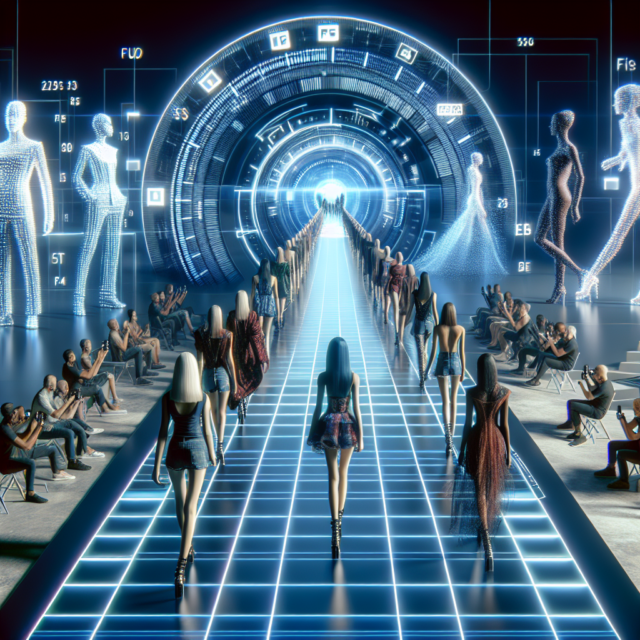
In the ever-evolving landscape of fashion, innovation has always played a pivotal role in shaping trends and redefining paradigms. As the world becomes increasingly digital, the fashion industry is embracing technology like never before. One of the most groundbreaking developments in this realm is the emergence of MVFW, or Metaverse Fashion Week. This digital fashion extravaganza is not just a fleeting trend but a significant shift in how fashion shows are conceptualized, executed, and experienced. In this article, we delve into the intricacies of MVFW, exploring its digital transformation, the fusion of technology and style, and the novel experiences it offers to fashion enthusiasts worldwide.

Unveiling MVFW: Fashion’s Digital Transformation

The concept of MVFW marks a revolutionary shift in the fashion industry, offering a fully immersive digital experience that transcends geographical boundaries. Unlike traditional fashion weeks that convene in iconic cities like Paris and Milan, MVFW takes place entirely in the virtual realm. This transformation allows designers and brands to showcase their collections to a global audience without the constraints of physical space or location. The digital platform enables real-time interaction, where attendees can explore virtual showrooms, interact with designers, and even purchase digital fashion items instantly.

At the heart of MVFW’s digital transformation is the metaverse—a collective virtual shared space created by the convergence of virtually enhanced physical reality and physically persistent virtual reality. This immersive environment enables fashion enthusiasts to attend shows as avatars, providing a personalized and interactive experience. The metaverse serves as a blank canvas for creativity, where designers can push the boundaries of fashion without the limitations of fabric and form. It represents a new frontier for artistic expression and innovation in the fashion industry.

MVFW’s digital transformation also addresses some of the industry’s most pressing challenges, such as sustainability and inclusivity. By eliminating the need for physical travel and reducing the environmental impact of traditional fashion shows, MVFW aligns with the growing demand for sustainable practices. Additionally, the digital format democratizes access to fashion, enabling individuals from diverse backgrounds and locations to participate and engage with the latest trends.

The transition to digital fashion shows has been accelerated by technological advancements, including the proliferation of high-speed internet, virtual reality (VR), and augmented reality (AR). These technologies have paved the way for a seamless and immersive experience, where attendees can feel as though they are present at the show, despite being miles away. The integration of blockchain technology further enhances the digital transformation by ensuring the authenticity and ownership of digital fashion assets.

MVFW’s digital transformation is not merely a response to the challenges posed by the COVID-19 pandemic but a long-term evolution of the fashion show format. It represents a paradigm shift that caters to the preferences and expectations of the digital-native generation. As technology continues to advance, MVFW is poised to become a permanent fixture in the fashion calendar, offering a glimpse into the future of fashion presentations.

In conclusion, the unveiling of MVFW signifies a momentous digital transformation in the fashion industry. By leveraging the power of the metaverse and cutting-edge technologies, MVFW offers an innovative platform that redefines how fashion is showcased and experienced. This digital revolution is set to reshape the industry, offering new opportunities for creativity, sustainability, and inclusivity.

The Intersection of Technology and Style at MVFW

At MVFW, the fusion of technology and style takes center stage, creating an unparalleled experience that captivates both the fashion-forward and tech-savvy. The integration of immersive technologies such as virtual reality (VR) and augmented reality (AR) allows designers to transcend the limitations of the physical world and explore new dimensions of creativity. With VR headsets, attendees can step into a virtual runway, witnessing models strut in digital garments that defy the constraints of traditional textiles.

One of the most exciting aspects of MVFW is the ability for designers to experiment with digital-only fashion. These virtual garments, which exist solely in the digital realm, offer endless possibilities for innovation. Designers are no longer bound by the laws of physics, allowing them to create avant-garde pieces that challenge conventional notions of style. This freedom encourages bold experimentation, resulting in collections that are as imaginative as they are boundary-pushing.

The intersection of technology and style also extends to the way fashion is consumed at MVFW. Attendees can purchase digital fashion items, also known as NFTs (non-fungible tokens), which can be worn by their avatars in the metaverse. This new form of digital ownership creates a unique value proposition for fashion enthusiasts, as these items can be collected, traded, and displayed in virtual spaces. The rise of NFTs in the fashion industry signifies a shift towards a digital economy, where the lines between physical and digital possessions are increasingly blurred.

Moreover, MVFW leverages cutting-edge technology to enhance the storytelling aspect of fashion presentations. Brands can create immersive narratives that transport attendees into a world of their own, using AR to overlay digital elements onto the physical environment. This blending of realities allows for a more engaging and interactive experience, where fashion becomes a multisensory journey rather than a passive spectacle.

The collaboration between technology companies and fashion houses is a key driver of innovation at MVFW. Tech giants provide the infrastructure and tools necessary to create these immersive experiences, while fashion designers bring their creative vision to life. This synergy results in a seamless integration of technology and style, where each complements and enhances the other.

In summary, the intersection of technology and style at MVFW is a testament to the limitless possibilities that arise when two dynamic fields converge. By embracing digital innovation, MVFW not only transforms how fashion is presented but also reimagines the role of technology in shaping the future of style. This convergence continues to push the boundaries of what is possible, paving the way for a new era of fashion show experiences.

How MVFW is Redefining Fashion Show Experiences

MVFW is at the forefront of redefining fashion show experiences by offering a level of interactivity and engagement that was previously unimaginable. Traditional fashion shows often involve a passive audience observing models on a runway, but MVFW turns this paradigm on its head. Through the use of virtual avatars, attendees can actively participate in the event, interacting with the environment and even influencing aspects of the show.

One of the most significant ways MVFW is redefining the fashion show experience is through its focus on personalization. Attendees can customize their avatars, choosing from a variety of styles and accessories to represent their unique fashion identity. This level of personalization extends to the virtual environment, where attendees can explore different settings and interact with digital installations that reflect their interests and preferences.

The immersive nature of MVFW allows for a more inclusive experience, breaking down barriers that have traditionally excluded certain groups from participating in fashion events. Individuals who may not have had the means or opportunity to attend physical fashion shows can now engage with the latest trends from the comfort of their own homes. This democratization of fashion access ensures that a diverse array of voices and perspectives are represented in the fashion conversation.

MVFW also redefines the concept of time in the context of fashion shows. Unlike traditional events that occur at a specific time and place, MVFW allows for asynchronous participation. Attendees can explore the digital fashion week at their own pace, revisiting shows and collections as they wish. This flexibility caters to a global audience, accommodating different time zones and schedules.

The interactive elements of MVFW extend beyond the runway, offering attendees the opportunity to engage with designers and brands directly. Virtual meet-and-greets, Q&A sessions, and behind-the-scenes content provide a deeper connection between creators and consumers. This level of engagement fosters a sense of community and collaboration, where fashion enthusiasts can share their insights and opinions, shaping the future of fashion.

In conclusion, MVFW is redefining fashion show experiences by leveraging technology to create an immersive, personalized, and inclusive environment. By breaking away from traditional constraints, MVFW offers a fresh perspective on what fashion presentations can be, inviting a broader audience to participate in the ever-evolving world of style. As this innovative platform continues to evolve, it promises to set new standards for how fashion is experienced and enjoyed.

As we navigate an era where digital innovation is reshaping industries across the globe, MVFW stands out as a beacon of change in the fashion world. By embracing the possibilities offered by the metaverse and cutting-edge technologies, MVFW is not only transforming how fashion shows are conducted but also how fashion is perceived and consumed. This new era of fashion show innovation offers endless opportunities for creativity, sustainability, and inclusivity, paving the way for a future where the digital and physical realms coexist harmoniously. As MVFW continues to evolve, it invites fashion enthusiasts, designers, and technologists alike to explore the boundless potential of this digital frontier, heralding a new chapter in the story of fashion.


Exploring Emerging Opportunities in the Web3 Landscape

The digital world is undergoing a significant transformation with the advent of Web3, a decentralized internet powered by blockchain technology. As we move away from the centralized model of Web 2.0, Web3 promises to bring about more transparency, security, and user empowerment. This article delves into the foundations of Web3 technology, identifies the key players and innovators shaping this new frontier, and explores the investment opportunities that arise within this burgeoning landscape.

Understanding the Foundations of Web3 Technology

Web3 represents the next evolution of the internet, characterized by its decentralized nature. Unlike Web 2.0, which relies heavily on centralized servers and control, Web3 leverages blockchain technology to distribute data across a network of nodes. This decentralization ensures that no single entity has control over the entire network, thereby enhancing security and reducing the risk of data breaches. Smart contracts, a crucial component of Web3, automate transactions and enforce agreements without the need for intermediaries, further decentralizing processes traditionally controlled by centralized entities.

At the heart of Web3 is the concept of decentralization, which extends beyond just data distribution. It encompasses decentralized finance (DeFi), decentralized applications (dApps), and decentralized autonomous organizations (DAOs). DeFi aims to recreate traditional financial systems like banks and exchanges using blockchain technology, eliminating the need for centralized intermediaries. dApps are applications that run on a decentralized network, offering users more control over their data. DAOs are organizations governed by smart contracts and community consensus rather than a centralized authority.

Another foundational element of Web3 is the emphasis on user ownership and control. In the Web3 paradigm, users own their data and have the ability to monetize it as they see fit. This is made possible through the use of cryptographic keys that grant users control over their digital identity and assets. This shift in ownership is expected to empower users and foster a more equitable digital economy.

Interoperability is a crucial aspect of Web3 technology. As various blockchain networks emerge, the ability for these networks to communicate and interact seamlessly is vital for the ecosystem’s growth. Interoperability protocols and standards are being developed to ensure that different blockchain networks can work together, facilitating the exchange of data and value across platforms.

The security of Web3 is enhanced through cryptographic techniques and consensus mechanisms like proof of work and proof of stake. These mechanisms ensure that the network remains secure and that transactions are verified in a trustless manner. As more participants join the network, its security and resilience are expected to increase, creating a robust infrastructure for decentralized applications and services.

Finally, Web3 is set to redefine digital identity. In the current internet model, users’ identities are often tied to centralized platforms, leading to privacy concerns and data misuse. Web3 aims to provide a decentralized identity system where users have full control over their personal information, deciding when and how it is shared. This shift towards self-sovereign identity has the potential to revolutionize privacy and security in the digital age.

Identifying Key Players and Innovators in Web3

The Web3 landscape is populated by a diverse array of innovators and organizations, each contributing to different aspects of this decentralized ecosystem. Ethereum stands out as one of the pioneering platforms in the Web3 space, providing a robust framework for building decentralized applications and smart contracts. Its open-source nature has fostered a vibrant community of developers and projects, driving innovation and adoption across various sectors.

Polkadot is another significant player in the Web3 arena, focusing on enabling interoperability between different blockchain networks. By allowing multiple blockchains to operate together, Polkadot aims to create a more connected and cohesive decentralized ecosystem. Its unique architecture and consensus mechanism have attracted attention from developers and investors alike, positioning it as a key player in the Web3 landscape.

In the realm of decentralized finance (DeFi), projects like Uniswap and Aave have made significant strides. Uniswap, a decentralized exchange, allows users to trade cryptocurrencies directly from their wallets without relying on a centralized intermediary. Aave, on the other hand, is a decentralized lending platform that enables users to borrow and lend cryptocurrencies in a trustless manner. These platforms exemplify the potential of DeFi to disrupt traditional financial systems.

Non-fungible tokens (NFTs) have emerged as a popular application of Web3 technology, with platforms like OpenSea leading the charge. OpenSea provides a marketplace for buying, selling, and trading NFTs, which are unique digital assets representing ownership of digital or physical items. The rise of NFTs has opened up new opportunities for artists, creators, and collectors, showcasing the diverse applications of Web3 technology beyond finance.

Decentralized Autonomous Organizations (DAOs) are reshaping how organizations are governed and operated. Projects like Aragon and DAOstack provide tools and frameworks for creating and managing DAOs, enabling decentralized decision-making and governance. These organizations operate transparently and democratically, often leveraging community consensus to make decisions, thus challenging traditional hierarchical structures.

Finally, companies like ConsenSys and Chainlink are playing pivotal roles in advancing Web3 infrastructure. ConsenSys develops tools and applications for the Ethereum blockchain, facilitating the creation of decentralized applications. Chainlink, a decentralized oracle network, connects smart contracts with real-world data, enabling more complex and versatile applications. These companies are instrumental in building the foundational infrastructure necessary for the growth and adoption of Web3 technologies.

Navigating Investment Opportunities in Web3

Investing in the Web3 space presents unique opportunities and challenges. As the ecosystem continues to evolve, early-stage investments in promising projects can yield significant returns. However, the nascent nature of Web3 also means that investments carry inherent risks. Understanding the landscape and identifying projects with strong fundamentals and innovative solutions is crucial for navigating investment opportunities in Web3.

One of the primary areas of investment in Web3 is decentralized finance (DeFi). DeFi platforms offer a wide range of financial services, from lending and borrowing to trading and insurance, all without the need for traditional intermediaries. Investing in DeFi protocols requires a thorough understanding of their underlying mechanisms, tokenomics, and potential risks. As the DeFi sector matures, it is expected to attract more institutional investors, further legitimizing and stabilizing the market.

Non-fungible tokens (NFTs) represent another burgeoning investment opportunity within Web3. The NFT market has seen explosive growth, with digital art, collectibles, and virtual real estate gaining significant traction. Investors looking to enter the NFT space should consider the uniqueness, provenance, and potential future demand for the assets they are investing in. While the market is currently experiencing a surge in interest, it remains highly speculative and volatile.

Investing in infrastructure projects is a strategic approach to gaining exposure to the Web3 ecosystem. Infrastructure projects provide the foundational technology and services necessary for the operation and growth of decentralized applications. Projects focused on scalability, interoperability, and security are particularly valuable, as they address some of the key challenges facing the Web3 space. Investors should look for projects with strong development teams and a clear vision for solving these challenges.

Token sales and initial coin offerings (ICOs) offer another avenue for investment in Web3 projects. These fundraising methods allow investors to acquire tokens that represent a stake in a project or platform. However, due diligence is essential, as the ICO space has been plagued by scams and fraudulent projects in the past. Investors should thoroughly research the team, technology, and market potential of any project before committing funds.

Finally, venture capital firms are increasingly entering the Web3 space, providing funding and support to early-stage projects. These firms often have the expertise and resources to identify promising startups and guide them through their growth journey. For individual investors, participating in venture capital funds focused on Web3 can provide diversified exposure to the ecosystem without the need for direct involvement in individual projects.

As the Web3 landscape continues to develop, staying informed about emerging trends and technological advancements is crucial for identifying investment opportunities. Engaging with the community, attending industry events, and following thought leaders in the space can provide valuable insights and help investors make informed decisions. While the Web3 space presents exciting opportunities, it is essential to approach investments with caution and a long-term perspective.

The Web3 landscape is rich with potential, offering a myriad of opportunities for innovation, collaboration, and investment. As we transition into this new era of the internet, understanding the foundational technologies, key players, and investment avenues is essential for navigating the Web3 ecosystem. While challenges remain, the promise of a more decentralized, transparent, and user-centric digital world is an exciting prospect that continues to drive interest and development in the Web3 space. As the landscape evolves, staying informed and adaptable will be key to unlocking the full potential of Web3 technologies.

Exploring Web3 Innovations in Design, Art, and Fashion

The advent of Web3 technology is heralding a new era of transformation across various sectors, with creative industries like design, art, and fashion at the forefront of this digital revolution. Web3, characterized by decentralized networks, blockchain technology, and smart contracts, is reshaping how creators and consumers interact, share, and value digital content. This article delves into the intriguing intersection of Web3 and creative industries, explores groundbreaking innovations in design within the Web3 ecosystem, and examines how art and fashion are being transformed by this burgeoning technology.

The Intersection of Web3 and Creative Industries

Web3 technology is fundamentally changing how creative industries operate by introducing new paradigms for ownership, distribution, and monetization. At the heart of this transformation is the decentralized nature of blockchain, which allows creators to establish direct relationships with their audiences, eliminating intermediaries. This shift is particularly beneficial for artists and designers who can now showcase their work on decentralized platforms, ensuring that they retain control over their intellectual property and receive fair compensation through smart contracts.

In the realm of art, NFTs (Non-Fungible Tokens) have become a game-changer, providing artists with a novel way to tokenize and sell their digital creations. These unique digital assets are stored on the blockchain, ensuring authenticity and provenance. This innovation has opened up new revenue streams for artists, allowing them to reach global audiences without the need for traditional galleries or agents.

Fashion, too, is experiencing a renaissance with the integration of Web3 technologies. Designers are leveraging blockchain to create digital fashion items that can be worn in virtual environments, such as metaverses. This not only expands the creative possibilities for designers but also offers consumers a new way to express their identities in digital spaces. Furthermore, blockchain’s transparency ensures that consumers can verify the ethical sourcing and production of fashion items.

Web3 has also facilitated new forms of collaboration within creative industries. Decentralized Autonomous Organizations (DAOs) are emerging as a popular model for collective decision-making and project funding. These community-driven entities operate on blockchain, allowing creators to pool resources, share ideas, and collaborate on projects without the constraints of traditional organizational structures.

Moreover, the intersection of Web3 and creative industries is fostering greater inclusivity and diversity. By removing geographical and economic barriers, Web3 platforms enable creators from underrepresented communities to participate in the global creative economy. This democratization of access is empowering a new generation of artists and designers to innovate and thrive in a digital-first world.

Finally, the integration of Web3 technology is also encouraging sustainability within creative industries. Blockchain’s ability to track and verify supply chains ensures greater accountability and transparency, promoting sustainable practices in design, art, and fashion. As consumers become more conscious of their digital and physical consumption, these innovations are helping to align creative industries with the values of the modern consumer.

Innovations in Design within the Web3 Ecosystem

The design industry is witnessing a wave of innovation driven by Web3 technologies, fundamentally altering how designers approach their craft. One of the most significant developments is the emergence of decentralized design platforms, which allow designers to showcase their work, collaborate with peers, and engage directly with consumers. These platforms are built on blockchain, ensuring that designers retain control over their creations and are fairly compensated for their contributions.

3D design and virtual reality (VR) are also being transformed by Web3, with designers creating immersive digital experiences that blur the lines between the physical and virtual worlds. Web3 technologies enable the creation of unique digital assets, such as virtual furniture and architectural designs, that can be bought, sold, and traded in virtual marketplaces. This shift is opening up new avenues for designers to monetize their work and reach a global audience.

Smart contracts are another innovation within the Web3 ecosystem that is revolutionizing the design industry. These self-executing contracts, which run on blockchain, automate the process of licensing and royalty distribution, ensuring that designers are compensated fairly and transparently. This technology is particularly beneficial for freelance designers, who often navigate complex and opaque payment systems.

The rise of generative design, powered by artificial intelligence (AI) and blockchain, is also reshaping the design landscape. Generative design processes leverage algorithms to create complex and innovative designs that would be impossible to achieve through traditional methods. By integrating these processes with blockchain, designers can ensure the uniqueness and provenance of their creations, adding value for consumers and collectors alike.

Web3 technology is also enabling greater collaboration and co-creation among designers. Decentralized design communities are emerging, where designers can contribute to open-source projects, share resources, and collectively solve design challenges. This collaborative approach fosters innovation and allows designers to build on each other’s work, accelerating the pace of development within the industry.

Lastly, the integration of Web3 in design is promoting ethical and sustainable practices. Blockchain’s transparency allows designers to trace the origin of materials and verify the ethical production of goods, aligning with the growing consumer demand for sustainable products. By leveraging Web3 technologies, designers can create environmentally conscious designs that resonate with modern consumers’ values.

Transforming Art and Fashion through Web3 Technology

Art and fashion are undergoing a profound transformation driven by the adoption of Web3 technologies, which are redefining how creators produce, distribute, and monetize their work. In the art world, NFTs have emerged as a revolutionary tool, allowing artists to tokenize their digital works and sell them directly to collectors. This innovation not only ensures authenticity and provenance but also provides artists with a new revenue stream, free from the constraints of traditional galleries and auction houses.

Virtual galleries and exhibitions are becoming increasingly popular, leveraging Web3 technology to create immersive and interactive art experiences. These digital spaces allow artists to showcase their work to a global audience, breaking down geographical barriers and democratizing access to art. Collectors can explore and purchase art from the comfort of their homes, with blockchain ensuring the security and transparency of transactions.

Fashion is also being transformed by Web3, with designers creating digital fashion items that can be worn in virtual environments. These digital garments, often sold as NFTs, allow consumers to express their identities in the metaverse, a growing digital space where people socialize, play, and work. This shift is expanding the creative possibilities for designers and opening up new revenue streams in the digital realm.

The concept of digital fashion shows is gaining traction, with designers leveraging Web3 technology to create virtual runways and immersive experiences for audiences worldwide. These events not only reduce the environmental impact of traditional fashion shows but also offer unprecedented access to fashion enthusiasts around the globe. Blockchain ensures the authenticity of digital garments and provides a platform for designers to reach a wider audience.

Web3 technology is also fostering greater inclusivity and diversity in the art and fashion industries. By removing intermediaries and reducing barriers to entry, Web3 platforms empower creators from underrepresented communities to share their work and connect with audiences. This democratization of access is enabling a more diverse range of voices and perspectives to thrive in the creative economy.

Finally, the integration of Web3 in art and fashion is promoting sustainability and ethical practices. Blockchain’s transparency allows consumers to verify the origin and ethical production of art and fashion items, aligning with the growing demand for sustainable and socially responsible products. By embracing Web3 technologies, artists and designers can create works that resonate with modern consumers’ values and contribute to a more sustainable future.

The integration of Web3 technologies in design, art, and fashion is fostering a new era of innovation, collaboration, and inclusivity. By leveraging decentralized networks, blockchain, and smart contracts, creators are redefining how they produce, distribute, and monetize their work. These advancements not only empower artists and designers but also enhance the consumer experience by offering greater transparency, authenticity, and ethical practices. As Web3 continues to evolve, it holds the potential to revolutionize creative industries, paving the way for a more equitable and sustainable digital economy.

Exploring Recent Innovations in the Metaverse World

The metaverse, a virtual universe where digital and physical realities converge, is rapidly evolving with technological advancements. As industries and consumers alike are drawn into this immersive digital realm, groundbreaking innovations continue to reshape how we interact, work, and play within these virtual spaces. This article delves into the latest technological breakthroughs within the metaverse, explores how these virtual worlds are revolutionizing digital interaction, and examines the pivotal roles of artificial intelligence (AI) and virtual reality (VR) in crafting rich, engaging metaverse experiences.

Unveiling Cutting-Edge Technologies in the Metaverse

The metaverse is a dynamic and ever-evolving space, driven by cutting-edge technologies that are pushing the boundaries of what is possible in virtual environments. One of the most significant innovations is the development of advanced graphics rendering techniques, which allow for the creation of highly detailed and realistic virtual worlds. These techniques enable developers to craft environments that are visually stunning and immersive, enhancing the overall user experience.

Blockchain technology is another cornerstone of metaverse innovation, facilitating secure and transparent transactions within virtual economies. By leveraging decentralized networks, users can buy, sell, and trade digital assets with confidence, knowing that their transactions are secure and verifiable. This has given rise to a thriving market for virtual goods and services, where everything from digital real estate to unique virtual items can be exchanged.

Interoperability is also gaining traction as a key technological advancement in the metaverse. Developers are working towards creating seamless connections between different virtual worlds, allowing users to move freely across various platforms while maintaining their digital identities and assets. This interconnectedness is crucial for the metaverse to function as a cohesive and expansive digital universe.

Haptic feedback technology is another exciting development, bringing a new level of sensory engagement to the metaverse. By simulating the sense of touch, haptic devices enable users to feel virtual objects and interact with their environments more tangibly. This technology is particularly promising for applications in gaming, training simulations, and virtual social interactions, where a sense of touch can significantly enhance the experience.

The rise of cloud computing has also been instrumental in advancing the metaverse. Cloud-based platforms provide the necessary infrastructure to support large-scale virtual environments, enabling real-time processing and rendering of complex graphics. This allows users to access high-quality metaverse experiences from a range of devices, democratizing access to this digital realm.

Lastly, the integration of Internet of Things (IoT) devices within the metaverse is creating new opportunities for interaction and data exchange. IoT devices can collect and transmit data from the physical world into virtual environments, enabling more dynamic and context-aware experiences. This fusion of physical and digital realities is paving the way for innovative applications in areas such as smart cities, healthcare, and education.

How Virtual Worlds Are Transforming Digital Interaction

Virtual worlds within the metaverse are revolutionizing the way we interact with each other and digital content. One of the most profound changes is the shift from traditional text-based communication to immersive, avatar-driven interactions. Users can express themselves through customizable avatars, adding a layer of personality and creativity to digital communication that text alone cannot convey.

Social platforms within the metaverse are fostering new forms of community and collaboration. Virtual spaces allow users to gather, share experiences, and collaborate on projects in real-time, regardless of geographical location. This has led to the formation of vibrant online communities where users can connect over shared interests and goals, transcending the limitations of physical distance.

The metaverse is also transforming how we consume and create digital content. Users can explore vast virtual environments, engage with interactive media, and even co-create content with others. This participatory approach to content creation empowers users to become active contributors rather than passive consumers, fostering a sense of ownership and agency within digital spaces.

Virtual worlds are providing new opportunities for education and training, offering immersive learning experiences that are both engaging and effective. From virtual classrooms to realistic training simulations, the metaverse is enabling learners to gain hands-on experience in a safe and controlled environment. This approach to education is particularly beneficial for fields that require practical skills, such as medicine, engineering, and the arts.

In the realm of entertainment, the metaverse is redefining how we experience games, music, and events. Virtual concerts, interactive performances, and immersive storytelling are just a few examples of how artists and creators are leveraging the metaverse to engage audiences in novel ways. This shift towards interactive and participatory entertainment is blurring the lines between creators and consumers, opening up new avenues for artistic expression.

Finally, the metaverse is reshaping the future of work by enabling remote collaboration and virtual workplaces. Companies are exploring virtual offices and meeting spaces where employees can interact and collaborate as if they were in the same physical location. This has the potential to increase productivity, reduce overhead costs, and provide employees with greater flexibility in how and where they work.

The Role of AI and VR in Shaping Metaverse Experiences

Artificial intelligence (AI) is playing a crucial role in enhancing metaverse experiences by enabling more intelligent and responsive virtual environments. AI-driven algorithms can analyze user behavior and preferences to deliver personalized content and interactions, creating a more tailored and engaging experience for each user. This capability is particularly valuable in social platforms and virtual marketplaces, where personalized recommendations can significantly enhance user satisfaction.

AI is also being used to power non-player characters (NPCs) within the metaverse, making them more lifelike and interactive. These AI-driven NPCs can engage users in meaningful conversations, provide assistance, and even participate in collaborative activities. This adds depth and realism to virtual worlds, making them more immersive and engaging for users.

Virtual reality (VR) technology is another key component in shaping the metaverse, offering users a fully immersive experience that engages their senses and transports them to virtual worlds. High-quality VR headsets and peripherals are enabling users to explore and interact with digital environments in a way that feels natural and intuitive. This level of immersion is crucial for applications such as gaming, training, and virtual tourism, where a sense of presence can greatly enhance the experience.

AI and VR are also being combined to create adaptive learning environments within the metaverse. AI algorithms can assess a learner’s progress and adapt the virtual environment to suit their individual needs, providing a personalized learning experience that is both effective and engaging. This approach is particularly promising for educational applications, where tailored instruction can lead to better learning outcomes.

In the realm of healthcare, AI and VR are being used to create innovative therapeutic and diagnostic tools within the metaverse. Virtual reality environments can provide a safe and controlled setting for therapy and rehabilitation, while AI-driven analytics can assist in diagnosing and monitoring patients. These technologies are opening up new possibilities for patient care and treatment, offering solutions that are both effective and accessible.

Finally, AI and VR are driving the development of new creative tools and platforms within the metaverse. Artists and creators can leverage these technologies to craft unique and interactive experiences, pushing the boundaries of digital art and storytelling. By providing new ways to create and interact with content, AI and VR are empowering users to become active participants in the metaverse, fostering innovation and creativity across various fields.

As the metaverse continues to evolve, the convergence of cutting-edge technologies, AI, and VR is driving unprecedented innovation and transformation. These advancements are not only enhancing the quality and depth of virtual experiences but are also reshaping how we interact with digital content and each other. As we move forward, the potential of the metaverse to revolutionize industries, education, entertainment, and everyday life is immense, promising a future where the boundaries between the digital and physical worlds continue to blur.

Exploring the Intersection of Digital Trends in Fashion and Art

In an era where technology permeates every facet of our lives, the worlds of fashion and art are no exception. The digital age has ushered in a new era of creativity, where the boundaries between fashion, art, and technology blur to create innovative and immersive experiences. This article explores the intersection of digital trends in fashion and art, examining how these two creative domains are being reshaped by technological advancements. From the convergence of fashion and digital innovation to the reimagining of artistic expression in the modern age, and the digital trends that are transforming the fashion industry, we delve into a world where creativity knows no limits.

The Convergence of Fashion and Digital Innovation

The intersection of fashion and digital innovation is a burgeoning frontier where creativity meets technology. Designers are increasingly leveraging digital tools to push the boundaries of traditional fashion, creating pieces that are both visually stunning and technologically advanced. The integration of digital elements into fashion design allows for the creation of garments that change colors, display digital patterns, or even interact with the wearer’s environment. This convergence not only enhances the aesthetic appeal of fashion but also opens up new possibilities for functionality and personalization.

Digital fashion shows have become a new norm, especially in the wake of the global pandemic, which restricted physical gatherings. Virtual reality (VR) and augmented reality (AR) technologies have been employed to create immersive fashion experiences that transcend geographical boundaries. These digital platforms allow designers to showcase their collections to a global audience, offering an inclusive and accessible avenue for fashion presentations. This shift has democratized the fashion industry, enabling emerging designers to gain visibility and reach audiences they might not have otherwise.

Moreover, the use of 3D printing in fashion is revolutionizing the way garments are produced and consumed. This technology allows designers to create intricate designs that would be impossible to achieve using traditional methods. 3D-printed fashion pieces are not only innovative in design but also more sustainable, as they reduce material waste and encourage on-demand production. This aligns with the growing trend of sustainability in fashion, as consumers become more conscious of the environmental impact of their clothing choices.

The influence of digital innovation extends beyond the design and production of clothing to the way fashion is marketed and consumed. Social media platforms have become powerful tools for fashion brands to engage with their audience and promote their products. Influencers and digital marketing campaigns play a crucial role in shaping consumer preferences and driving trends. This digital-first approach to marketing has transformed the fashion industry, making it more dynamic and responsive to consumer needs.

Furthermore, the rise of artificial intelligence (AI) in fashion is enabling brands to offer personalized shopping experiences. AI algorithms analyze consumer data to provide tailored recommendations, enhancing customer satisfaction and loyalty. This technology also aids in trend forecasting, helping designers and brands stay ahead of the curve by predicting consumer preferences and market shifts.

The convergence of fashion and digital innovation is a testament to the transformative power of technology. It challenges traditional notions of fashion design, production, and consumption, paving the way for a more inclusive, sustainable, and innovative industry. As digital tools continue to evolve, the possibilities for creativity in fashion are limitless, promising a future where technology and artistry coexist harmoniously.

Artistic Expression in the Age of Technology

Art has always been a reflection of the times, and in the age of technology, it is evolving at an unprecedented pace. Digital tools have become an integral part of the artistic process, offering new mediums and techniques for artists to explore. From digital painting and 3D modeling to virtual and augmented reality art installations, technology is expanding the horizons of artistic expression, allowing artists to create works that are not only visually captivating but also interactive and immersive.

The rise of digital art has democratized the artistic landscape, providing artists with platforms to showcase their work to a global audience. Online galleries and social media have become powerful tools for artists to gain recognition and connect with art enthusiasts worldwide. This accessibility has transformed the art world, breaking down barriers and fostering a more inclusive and diverse community of creators.

Moreover, technology is enabling artists to experiment with new forms of storytelling and narrative. Interactive digital art allows viewers to engage with the artwork in a personal and meaningful way, creating unique experiences that resonate on a deeper level. This interactivity blurs the line between the artist and the audience, inviting viewers to become active participants in the creative process.

The integration of technology into art is also fostering collaboration between artists and technologists. This interdisciplinary approach is leading to the creation of innovative works that combine art, science, and technology. From digital sculptures and installations to data-driven art projects, these collaborations are pushing the boundaries of what is possible, challenging traditional notions of art and creativity.

Furthermore, the use of blockchain technology in art is revolutionizing the way art is bought, sold, and authenticated. Non-fungible tokens (NFTs) have emerged as a new way for artists to monetize their digital creations, offering a secure and transparent method of ownership and provenance. This has opened up new revenue streams for artists, allowing them to capitalize on the growing demand for digital art.

Artistic expression in the age of technology is a dynamic and ever-evolving landscape. As digital tools continue to advance, artists are finding new ways to express their creativity, engage with their audience, and challenge the status quo. This intersection of art and technology is not only reshaping the art world but also redefining what it means to be an artist in the 21st century.

Digital Trends Reshaping the Fashion Industry

The fashion industry is undergoing a digital transformation, driven by a myriad of trends that are reshaping the way fashion is designed, produced, and consumed. One of the most significant trends is the rise of e-commerce, which has revolutionized the retail landscape. Online shopping platforms have made fashion more accessible to consumers worldwide, offering a convenient and seamless shopping experience. This shift towards digital retail has prompted brands to invest in their online presence, optimizing their websites and leveraging social media to engage with their audience.

Sustainability is another key trend that is influencing the fashion industry. Consumers are becoming increasingly aware of the environmental impact of their clothing choices, leading to a demand for more sustainable and ethical fashion. Digital tools are playing a crucial role in promoting sustainability, with technologies like 3D printing and AI helping brands reduce waste and improve efficiency in the production process. Additionally, digital platforms are enabling consumers to make informed purchasing decisions by providing transparency about the sourcing and manufacturing of garments.

The use of virtual and augmented reality in fashion is transforming the way consumers interact with brands. Virtual try-on solutions and AR mirrors allow shoppers to visualize how garments will look and fit before making a purchase, enhancing the online shopping experience. This technology not only reduces the need for physical try-ons but also helps minimize returns, contributing to a more sustainable fashion ecosystem.

Personalization is a growing trend in the fashion industry, with brands leveraging data analytics and AI to offer customized shopping experiences. By analyzing consumer preferences and behavior, brands can provide personalized recommendations, tailoring their offerings to meet individual needs. This level of personalization not only enhances customer satisfaction but also strengthens brand loyalty, as consumers feel valued and understood.

The rise of digital fashion is another trend that is gaining traction. Virtual clothing and accessories are being designed for avatars and digital platforms, catering to consumers who spend significant time in virtual environments. This trend is not only changing the way fashion is consumed but also challenging traditional notions of ownership and value in the fashion industry.

Digital trends are reshaping the fashion industry in profound ways, offering new opportunities for creativity, sustainability, and consumer engagement. As technology continues to evolve, the fashion industry must adapt and innovate to stay relevant in a rapidly changing landscape. These digital trends are not only transforming the way fashion is designed and consumed but also redefining the relationship between brands and consumers, paving the way for a more connected and sustainable future.

The intersection of digital trends in fashion and art is a dynamic and exciting frontier that is redefining creativity and innovation. From the convergence of fashion and digital innovation to the reimagining of artistic expression in the age of technology, and the digital trends reshaping the fashion industry, these developments are challenging traditional norms and opening up new possibilities. As technology continues to advance, the potential for creativity in fashion and art is limitless, promising a future where the boundaries between these domains are continually redefined. As we navigate this digital landscape, the fusion of fashion, art, and technology will continue to inspire and captivate, offering a glimpse into the future of creative expression.

Exploring Cutting-Edge Innovations in Web3 Technology

The digital landscape is undergoing a transformative shift with the advent of Web3 technology, a new paradigm that promises to redefine the way we interact with the internet. Unlike its predecessor, Web2, which is largely centralized and controlled by a few major entities, Web3 is built on decentralization, transparency, and user empowerment. This article delves into the cutting-edge innovations in Web3 technology, explores how it is transforming digital interactions, and envisions the future of decentralized technology within this revolutionary framework.

Unveiling the Latest Web3 Innovations

Web3 technology is built on the foundation of blockchain, a decentralized ledger that offers transparency and security. The latest innovations in this space are pushing the boundaries of what is possible. One such innovation is decentralized finance, or DeFi, which allows for financial transactions without intermediaries like banks. This has democratized access to financial services, enabling anyone with internet access to participate in the global economy. DeFi platforms offer services like lending, borrowing, and trading, all executed through smart contracts that automatically enforce agreements.

Another groundbreaking innovation in Web3 is non-fungible tokens (NFTs). These digital assets represent ownership of unique items, from digital art to virtual real estate, and have exploded in popularity. NFTs leverage blockchain technology to provide proof of authenticity and ownership, creating new opportunities for artists and content creators to monetize their work directly. This innovation is reshaping industries by offering new revenue streams and disrupting traditional models of ownership and distribution.

Decentralized autonomous organizations (DAOs) represent another leap forward in Web3 innovation. These organizations operate on blockchain technology and are governed by smart contracts, allowing for decentralized decision-making and management. DAOs have the potential to revolutionize corporate governance by eliminating hierarchical structures and enabling collective decision-making. This innovation empowers communities to come together, pool resources, and manage projects in a transparent and democratic manner.

Interoperability is a key focus in the development of Web3 technologies. Projects like Polkadot and Cosmos are working on creating networks that allow different blockchains to communicate and share information seamlessly. This innovation is crucial for the scalability and usability of Web3 applications, as it enables a more connected and efficient ecosystem. By facilitating cross-chain interactions, these projects are paving the way for a more integrated and cohesive decentralized web.

Privacy and security are paramount in the Web3 space, and innovations like zero-knowledge proofs are making significant strides in this area. Zero-knowledge proofs allow for the verification of information without revealing the information itself, enhancing privacy while maintaining trust. This technology is being integrated into various Web3 applications to ensure that user data remains secure and private, addressing one of the major concerns in the digital age.

Finally, the development of decentralized identity solutions is set to redefine how we manage and protect our digital identities. Projects like DID (Decentralized Identifier) are creating frameworks that give users control over their personal information, allowing them to share only what is necessary and with whom they choose. This innovation has the potential to shift the power dynamic from centralized entities to individuals, promoting data sovereignty and privacy.

How Web3 is Transforming Digital Interactions

Web3 technology is fundamentally changing the way we interact with the digital world by prioritizing user agency and decentralization. One of the most significant transformations is the shift towards peer-to-peer interactions. In the Web3 ecosystem, users can interact directly with one another without the need for intermediaries, thanks to decentralized applications (dApps). These applications run on blockchain networks and offer services ranging from social media to marketplaces, allowing users to connect and transact directly.

Social media platforms are experiencing a transformation with the integration of Web3 technologies. Decentralized social networks are emerging as alternatives to traditional platforms, offering users more control over their content and data. These networks leverage blockchain to ensure that users retain ownership of their posts and can monetize their contributions. This shift is empowering users and challenging the dominance of centralized social media giants.

Web3 is also reshaping digital commerce by introducing decentralized marketplaces that operate without intermediaries. These platforms enable direct transactions between buyers and sellers, often using cryptocurrencies as a medium of exchange. This model reduces transaction fees and increases transparency, offering a more equitable system for participants. As a result, Web3 is creating new opportunities for entrepreneurs and consumers alike, fostering a more inclusive digital economy.

The concept of digital ownership is being redefined through Web3 innovations like NFTs. In traditional digital interactions, users rarely own the content they create or purchase. However, NFTs provide a mechanism for true ownership, allowing users to buy, sell, and trade digital assets freely. This transformation is particularly impactful in the creative industries, where artists and creators can engage with their audiences directly and retain control over their intellectual property.

Web3 is enhancing collaboration and governance through DAOs, which facilitate decentralized decision-making and resource management. These organizations operate transparently on blockchain networks, allowing members to propose and vote on initiatives. This model is transforming how communities and organizations function, enabling more democratic and inclusive participation. DAOs have the potential to disrupt traditional corporate structures, offering a new way to organize and collaborate on a global scale.

Finally, Web3 is transforming digital interactions by prioritizing privacy and security. Traditional digital platforms often require users to surrender personal information, which can be exploited or mishandled. Web3 technologies, such as decentralized identity solutions and zero-knowledge proofs, empower users to control their data and protect their privacy. This shift is fostering a more secure and trustworthy digital environment, where users can interact with confidence.

The Future of Decentralized Technology in Web3

The future of Web3 technology is poised to be a transformative force in the digital landscape, driving decentralization and innovation. As blockchain technology continues to evolve, we can expect Web3 to become more scalable and efficient, addressing current limitations such as transaction speed and energy consumption. Advances in consensus algorithms and layer 2 solutions are set to enhance the performance of blockchain networks, making them more viable for widespread adoption.

Interoperability will play a crucial role in the future of Web3, as it enables seamless communication between different blockchain networks. This connectivity will allow for a more integrated ecosystem, where users can access a wide range of services without being confined to a single platform. Projects focused on cross-chain compatibility will continue to be at the forefront of Web3 development, fostering collaboration and innovation across the decentralized web.

Decentralized finance (DeFi) is expected to expand and mature, offering a broader array of financial services to a global audience. As regulatory frameworks evolve to accommodate DeFi, we can anticipate increased integration with traditional financial systems. This convergence will open up new opportunities for innovation and create a more inclusive financial landscape, where individuals have greater control over their assets and financial decisions.

The rise of decentralized identity solutions is set to redefine how we manage our personal information and interact with digital services. In the future, users will likely have more control over their digital identities, choosing what information to share and with whom. This shift towards data sovereignty will enhance privacy and security, reducing the risks associated with centralized data storage and breaches.

Web3’s impact on governance and collaboration will continue to grow, with DAOs leading the charge. As these organizations become more sophisticated, they will offer new models for managing resources and making decisions. The future may see DAOs playing a significant role in various sectors, from corporate governance to community management, offering a more democratic and transparent approach to organization.

Finally, the future of Web3 will be shaped by its ability to foster innovation and creativity. As the technology matures, it will enable new forms of expression and interaction, empowering creators and users alike. The decentralized nature of Web3 will encourage experimentation and collaboration, leading to the development of novel applications and experiences that redefine how we engage with the digital world.

Web3 technology is at the forefront of a digital revolution, offering a new vision for the internet that emphasizes decentralization, transparency, and user empowerment. From cutting-edge innovations in blockchain and DeFi to the transformative impact on digital interactions, Web3 is reshaping the way we engage with the digital world. As we look to the future, the continued evolution of decentralized technology promises to unlock new possibilities and opportunities, paving the way for a more inclusive, equitable, and innovative digital ecosystem.

The Finals dev confirms when Christmas update is coming out

0
The Finals dev confirms when Christmas update is coming out


You can trust VideoGamer. Our team of gaming experts spend hours testing and reviewing the latest games, to ensure you’re reading the most comprehensive guide possible. Rest assured, all imagery and advice is unique and original. Check out how we test and review games here

The Finals Season 5 began as an early Christmas gift from Embark. It introduced a new map to explore along with a couple of new weapons and gadgets while also introducing a fresh battle pass for players to grind. Another patch is on the horizon, and Embark has confirmed exactly when The Finals’ next update is coming out over the week of Christmas.

As part of update 5.1.0, Embark introduced a Christmas event for players to enjoy. This is an LTM still available in-game, and the community will want to make the most out of throwing snowballs at other players before the sun returns and the snow melts. In addition, if you haven’t already, players will want to grab the new Season 5 bundles that contain free Legendary and Epic weapon skins with Multibucks.

There is a lot to enjoy in The Finals right now, and the next update is on the cusp of coming out. However, fans shouldn’t expect a plethora of balance changes or fixes.

When The Finals Christmas update comes out

Updates and patches for The Finals typically come out on Wednesday. However, because of Christmas day, this week’s patch has slightly been delayed.

Per community manager, Dunlewey, on Discord, this week’s update is set to come out on Boxing Day, December 26th. It will come out at the same time as the weekly store rotation, so expect it to be shared around 2AM PT/5AM ET/10AM GMT.

In addition to confirming when the patch will arrive, Dunlewey said “it’s a minor patch”. No other details are provided, but fans should simply expect a rotation to the store and not much else.

Image credit: The Finals Discord

Although nothing has been said, it’s possible the first update of 2025 could be delayed also because Wednesday is New Year’s Day. Not only that, but it should be another minor patch as the development team are currently on holidays.

For more The Finals, check out our guide to the best weapons in the game ranked, and we also have a guide to the best gadgets. In addition, we have a guide to the best FPS settings to help you win matches along with a ranking of the best classes in the game.


The Finals


Platform(s):
PC, PlayStation 5, Xbox Series S, Xbox Series S/X, Xbox Series X


Genre(s):
Action, First-Person Shooter, Shooter


Source link

Deploy an Avail Light Client Node on Supernoderz in Minutes

0
Deploy an Avail Light Client Node on Supernoderz in Minutes


This guide delves into the seamless deployment of Avail Light Client using Supernoderz, a user-friendly platform that simplifies node configuration and participation. Supernoderz makes deploying an Avail Light Client simple, even for non-technical users. This guide will take you through each step to set up your node and contribute to the Avail ecosystem.

What is Avail?

Avail is a Web3 infrastructure layer that allows modular execution layers to scale and interoperate in a trust-minimized way. It is a powerful base layer for next-generation trust-minimized applications. Avail light client (LC) lets you interact with Avail DA without requiring a full node and without trusting assumptions about remote peers.

Deploy Avail Light Client using Supernoderz ✅

1.Create a wallet with an Avail Address. Go to https://www.subwallet.app/ and download the Chrome extension.

2. Open the extension and select Create New Account. During setup, you will receive a Seed Phrase. This phrase is crucial for recovering your account, so store it securely in a safe location.

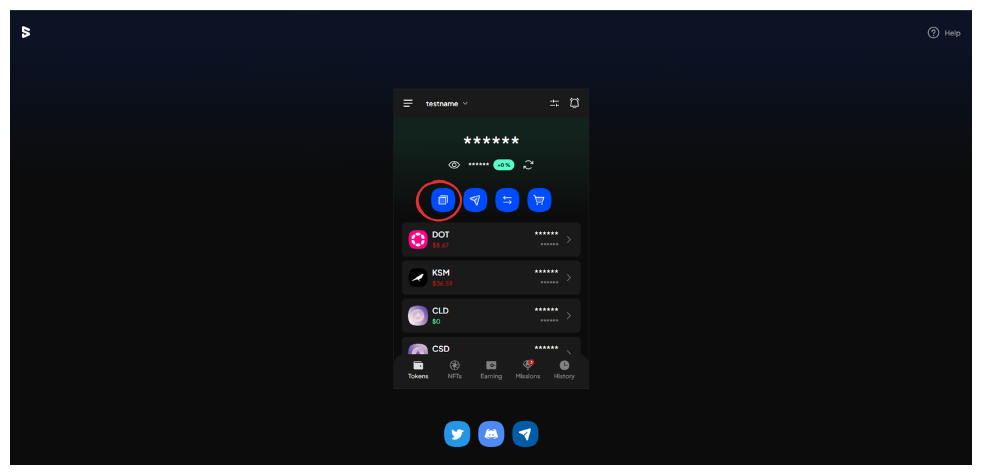
3.After setup, click on Get Wallet Address.

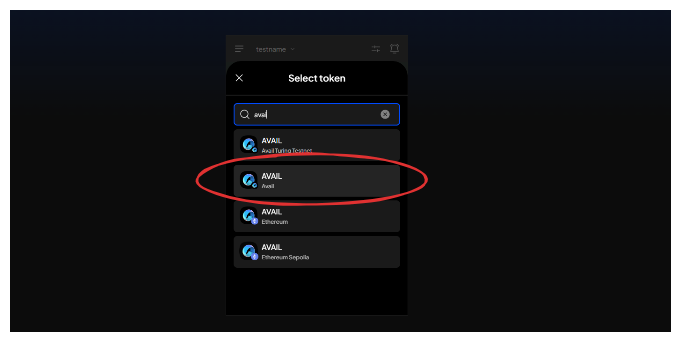
4.Once there, Search for Avail and select Avail Mainnet from the list. Copy your Avail address for use in later steps.

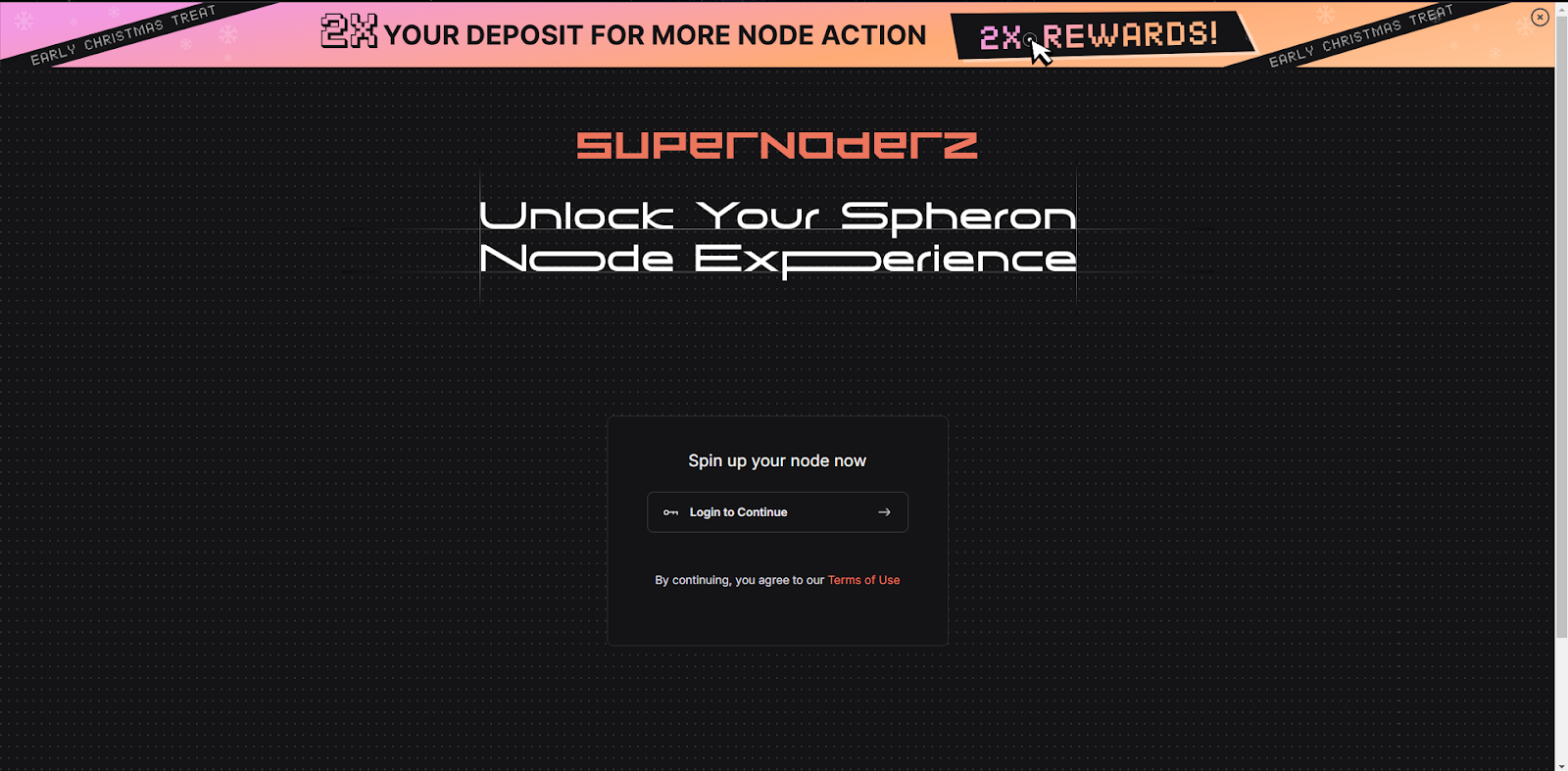
5.Now, go to https://www.supernoderz.com and log in using your Gmail account.

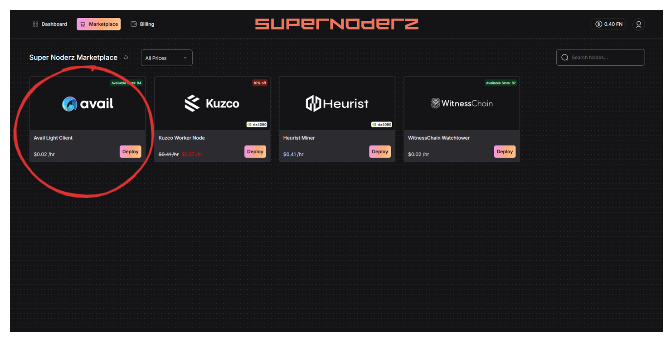
6.Navigate to the marketplace and select the Avail Light Client option.

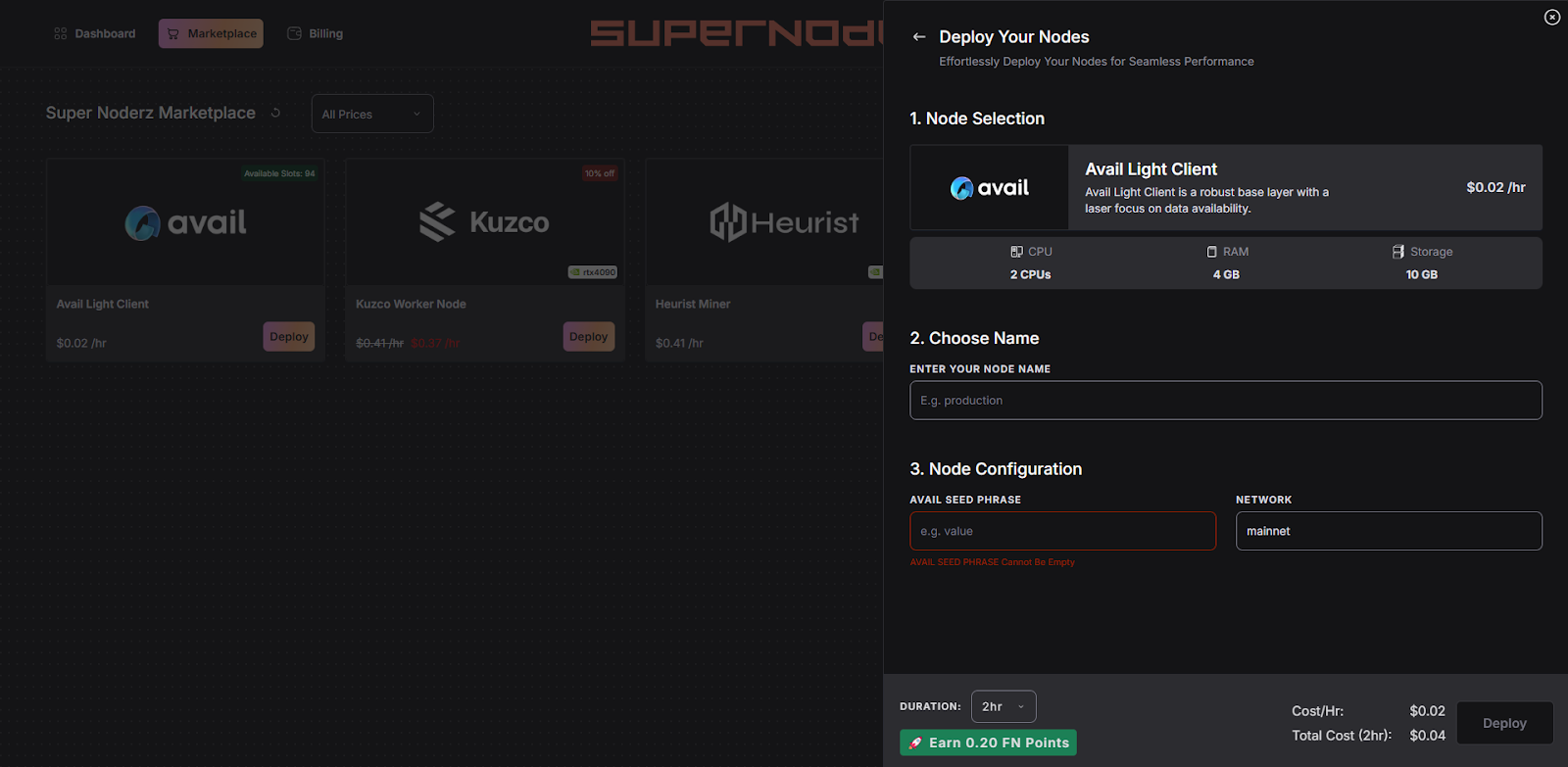
7. Fill in Deployment Details

Enter a name for your deployment.

Paste the Seed Phrase you saved in Step 1.

Click Deploy to begin the setup.

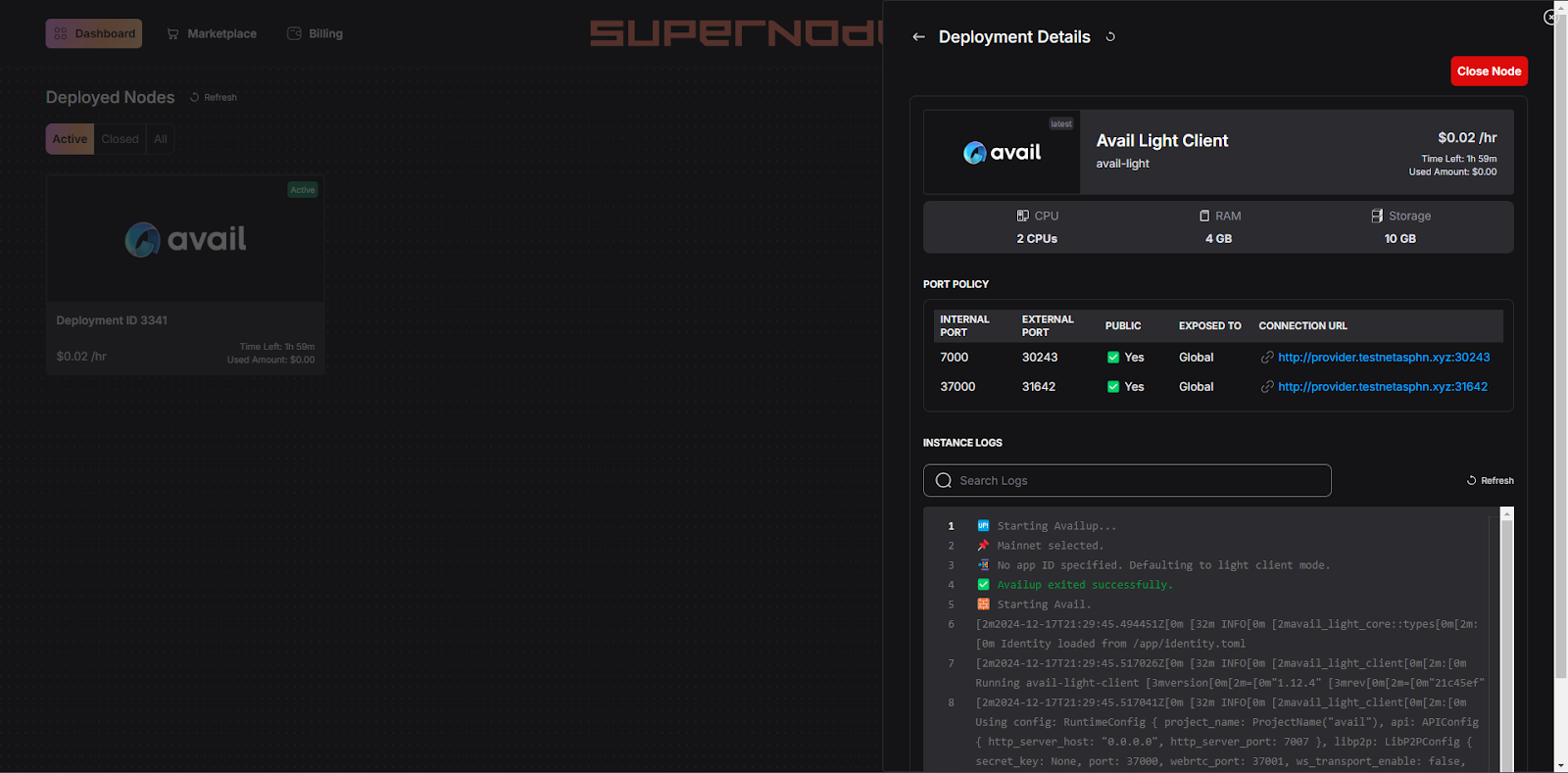
8. Once deployed, your node will be live, and you’ll see it listed on your Supernoderz dashboard. That’s all it takes—your Avail Light Client is now successfully deployed!

Why Use Supernoderz?

User-Friendly Interface: Deploy nodes with minimal technical expertise.

Quick and Efficient: Complete the process in just a few clicks.

Supports Decentralization: Contribute to the Avail network effortlessly.

Conclusion

Deploying an Avail Light Client using Supernoderz is a straightforward process that makes node configuration accessible to a wide audience. By following this guide, you can set up your node quickly and start contributing to the decentralized ecosystem.

If you encounter any issues or need assistance, refer to the Avail Documentation or join the community on Discord for support from the team.


Source link

Cryptocurrency Thefts Surge by 40% in 2024, Reaching $2.3 Billion – Metaverseplanet.net

0
Cryptocurrency Thefts Surge by 40% in 2024, Reaching .3 Billion – Metaverseplanet.net


Cryptocurrency thefts have reached alarming levels in 2024, with the total amount stolen increasing by 40% compared to 2023. According to a detailed report by Cyvers, a company specializing in web3 security services, a staggering $2.3 billion was lost to cryptocurrency thefts this year, across 165 incidents.

A 40% Increase in Losses Compared to 2023

The data highlights that in 2023, cryptocurrency thefts amounted to $1.691 billion, making the 2024 figures a significant increase. However, the industry has faced even worse periods; for instance, in 2022, total losses from cryptocurrency thefts were reported at a record $3.785 billion. This year’s resurgence in thefts has drawn renewed attention to the vulnerabilities of cryptocurrency investments.

Rising Markets Attract Hackers

The primary driver behind the rise in cryptocurrency thefts in 2024 appears to be the bull market trend. A pivotal moment occurred when Bitcoin (BTC) surpassed the $100,000 mark for the first time in its history. This milestone not only attracted investors but also hackers, who exploited the growing interest and increasing market activity.

The Risks for Investors

The report emphasizes the critical need for improved security in the cryptocurrency space. With thefts amounting to billions of dollars, investors are reminded of the risks associated with this volatile and vulnerable market. A momentary lapse in security could result in the loss of millions.

As the cryptocurrency industry continues to evolve, so too must its security measures. Enhanced awareness and robust safeguards are crucial to protecting investors from increasingly sophisticated cyberattacks. For now, the staggering figures for 2024 serve as a stark reminder of the challenges the sector faces.

You May Also Like

Follow us on TWITTER (X) and be instantly informed about the latest developments…

Copy URL


Source link

ASUS Announces Entry into the Humanoid Robot Sector – Metaverseplanet.net

0
ASUS Announces Entry into the Humanoid Robot Sector – Metaverseplanet.net


ASUS, a globally renowned technology company, has officially announced its plans to enter the humanoid robot market. The robot being developed by ASUS is expected to directly compete with Tesla Optimus, signaling a significant move in the tech industry.

Humanoid robots, once a futuristic concept limited to science fiction movies, are now becoming a tangible reality. Currently, several tech giants, particularly those focusing on artificial intelligence, are investing heavily in this area. Analysts predict that by 2050, the humanoid robot market could be worth a staggering $7 trillion. ASUS, known for its innovative technologies, is now joining this race with its own humanoid robot.

A Competitor for Tesla Optimus

ASUS Chairman Jonney Shih has confirmed that the company is developing its first humanoid robot. Shih emphasized that their team is working “at full speed” to bring this innovative product to life. Reports suggest that the ASUS robot aims to rival Tesla’s Optimus, one of the most advanced humanoid robots currently in development.

While ASUS is already known for its earlier robot, Zenbo, the company is now shifting focus to more advanced, human-like robots powered by artificial intelligence. Shih also highlighted that ASUS has made significant progress in AI technologies, which will be integrated into their upcoming robots to enhance functionality and intelligence.

What to Expect from ASUS Humanoid Robots

Details about the robot remain scarce at this stage. However, it’s well understood that designing and training humanoid robots is a highly complex and time-intensive process. This means the public may have to wait for several years before ASUS unveils its final product.

The success of ASUS in this ambitious venture will depend on how well their robot can meet market demands and stand against competitors like Tesla Optimus. For now, the world waits eagerly to see how ASUS plans to redefine the humanoid robot market.

You May Also Like

Follow us on TWITTER (X) and be instantly informed about the latest developments…

Copy URL


Source link

Popular Posts

My Favorites