Home Blog Page 1209

Intel and NVIDIA drivers holding back a public SteamOS release, Valve not trying to compete with Windows

0
Intel and NVIDIA drivers holding back a public SteamOS release, Valve not trying to compete with Windows


During CES, Valve developer Pierre-Loup Griffais spoke to Frandroid about SteamOS, Steam Deck and more and there’s some interesting bits in there about the future. In case you missed it recently Valve announced a public beta of SteamOS is coming as ‘SteamOS expands beyond Steam Deck’.

The interview on Frandroid is in French, but here’s some Google-translated info for you. On the subject of SteamOS for everyone, it appears that issues with both Intel and NVIDIA drivers are part of what’s holding up the release:

One of the promises was to release SteamOS for everyone, how difficult is it to release it now?


“I think there are a couple of factors. One is that on some platforms, the support is still very basic. Intel, it works a little bit better than before, but our driver teams and Intel are working on it. NVIDIA, the integration of open source drivers is still pretty nascent. There’s still a lot of work to be done on that side… So it’s a little bit complicated to say that we’re going to release this version when most people wouldn’t have a good experience.”


“And then there’s the ease of installation. We had an installer for SteamOS 2, but here we started with the Steam Deck so everything came straight out of the box, so the process right now is basic. Unlike some community alternatives that add this layer of installation that accompanies users. We haven’t done that yet.”


“It’s just a matter of priorities.”

So it’s all in progress and they’re working on it together with various driver teams. Eventually the situation should be solved.

Anyone who uses NVIDIA on desktop Linux will know how badly Steam Big Picture Mode currently works, so this is not exactly a big surprise to me. When I switched over to an AMD GPU, it was like a night and day difference.

As for the upcoming Legion Go S that will use SteamOS, an interesting note here is that Valve / Lenovo will be using the open source tool Input Plumber:

Are the works of Bazzite, ChimeraOS, Nobara also profitable for you?


“Sometimes yes. A lot of their work is integration, where they use things that the community has developed to create a much more streamlined installation and support experience than our development trees. But there are also quite a few components that are originally developed by the community that we use. For example, on the Legion Go S, we use a component called Input Plumber to manage the controller.”


“We’re not too interested in inventing our own sauce [sic]. If something is already done and meets our standards of performance and functionality, we use it.”

If you’re hoping that SteamOS is going to be the Windows-killer that other news sites keep reporting on, Valve have much calmer words to say about that:

Back in the Windows 8 days, Gabe Newell accused Microsoft of killing the PC ecosystem. Is SteamOS the Windows killer developed by Valve?


“I don’t think the goal is to have a certain market share, or to push users away from Windows. If a user has a good experience on Windows, there’s no problem. I think it’s interesting to develop a system that has different goals and priorities, and if it becomes a good alternative for a typical desktop user, that’s great. It gives them choice. But it’s not a goal in itself to convert users who already have a good experience.”

Valve are also leaving the door open for a future Steam Machine:

Are Steam Machines still in sight, or are portables your priority?


“Right now, we’re focused on handhelds. But as our work expands our ability to work on other platforms and have a good experience in different form factors… We’ve already done a lot to make these consoles connectable to screens, connectable to a controller…”


“We’re not there yet to give priority to a Steam Machine. But in collaboration or internally, it’s an open door to the future.”

So in other words, they’re just focused on providing a good experience for their own Steam ecosystem. Users moving over if they see it works better for them is nice to have, but they’re not trying to directly compete against Windows completely (yet…).

You can also follow the interviewer on their YouTube channel.

Article taken from GamingOnLinux.com.


Source link

NHL Star Evgeni Malkin’s Home Burglarized, Stanley Cup Rings Stolen

    0
    NHL Star Evgeni Malkin’s Home Burglarized, Stanley Cup Rings Stolen


    Another sports superstar’s home has been broken into … this time, a residence belonging to NHLer Evgeni Malkin was hit — and, reportedly, his Stanley Cup rings were stolen in the heist.

    The burglary happened on Jan. 11 in the Sewickley Heights-area of Pennsylvania — right around the time Malkin’s Penguins were playing the Ottawa Senators at PPG Paints Arena in Pittsburgh.

    evgeni malkin

    Malkin’s home security system had somehow been down during the break-in, according to CBS News, and all three of his championship rings were subsequently taken.

    A spokesperson for the Allegheny County Police Department tells TMZ Sports they’ve launched an investigation into the incident … and are urging anyone with info to call their tip line at 1-833-ALL-TIPS.

    evgeni malkin

    For the Penguins’ part, they said in a statement Tuesday they’re “working closely with local authorities and team security” to try to ID some suspects.

    “Malkin has requested that his privacy be respected during this time,” the team added, “and we will have no further comment on the matter.”

    Malkin — who didn’t play Saturday while dealing with an injury — now, unfortunately, joins a long list of celeb athletes who have had burglaries take place at their homes in the last few months.

    Travis Kelce, Patrick Mahomes, Joe Burrow, Luka Doncic and a host of others have all had places ransacked … and the FBI said in a warning to pro stars last month that it believes they’re all connected.


    Source link

    10 Games That Laugh At Your Failures

    0
    10 Games That Laugh At Your Failures


    Whether you fail a task, get yourself killed, or just end up in some nonspecific fail state, it’s generally an unpleasant experience to get some manner of game over.

    This is especially true if you’ve been working toward a lengthy goal like a hard boss fight or an achievement.

    Related

    11 Games That Make Failure Fun

    Losing always sucks, but some games make it suck a little less.

    Most games are content to let the failure speak for itself, but for some, that’s not quite enough. Some games need to give you a little kick on the way out.

    This typically manifests as passive-aggressive comments or outright mockery at your expense, the very definition of “adding insult to injury.”

    10 Duck Hunt

    The Original Gaming Jerk

    The dog laughs in Duck Hunt

    Perhaps one of the most infamous examples of games passive-aggressively jabbing you dates all the way back to 1984’s Duck Hunt for the NES.

    If you’ve been in the gaming sphere long enough, you know it: whenever you miss a duck, your canine hunting companion will stick up out of the grass, snickering at your failure.

    The dog is so universally reviled, he’s been the subject of angry memes and flash cartoons for decades now.

    Interestingly, in the arcade spinoff Vs. Duck Hunt, you can actually shoot the dog, giving him a comical soot-covered face. He’ll walk by on crutches, shouting at you to shoot the ducks, not him.

    9 Space Quest

    The Narrator Does Not Like You

    Space Quest III Death screen

    Sierra pioneered the adage of “save early, save often” for its games because, in just about all of them, you were never more than one click from a sudden, violent death.

    In most Sierra games, these spoke for themselves, but in the Space Quest series, the narrator felt the need to chime in.

    In every single Space Quest game, any death you experience would be accompanied by a snarky quip from the narrator. These included asking you why you bothered to get out of bed that morning, reminding you to use your radar to avoid obvious collisions, and others.

    In the event the narrator didn’t have a quip about your specific means of death, he’d just congratulate you on playing the game and inform you that your performance had been “a real hoot.”

    8 Batman: Arkham Asylum

    Sassed On Your Deathbed

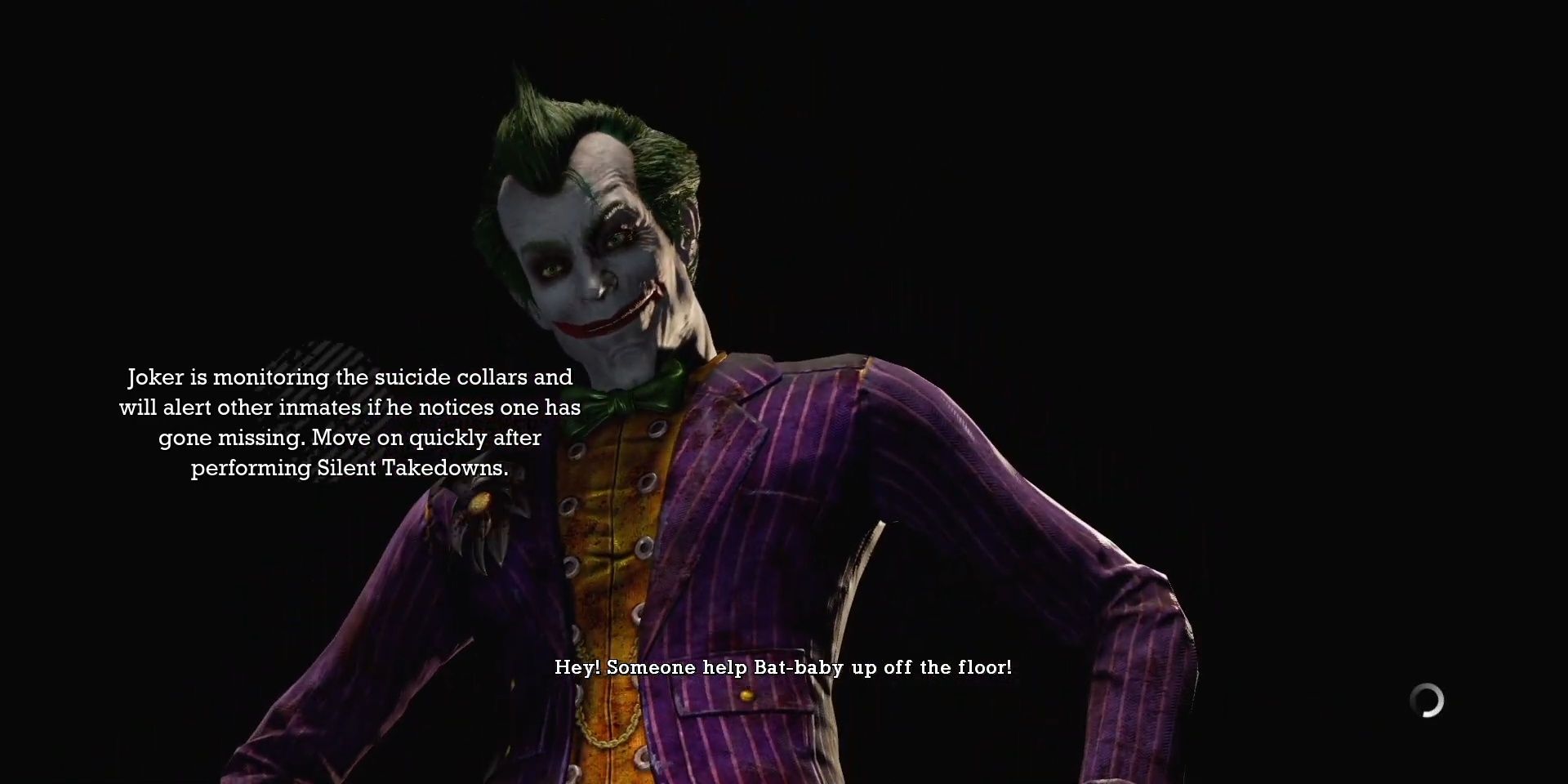
    Joker death screen in Batman: Arkham Asylum

    Within the setting of Batman, it’s not particularly common for his many villains to have him definitively at their mercy. They’ve probably thought for years about what they’d say, and in Batman: Arkham Asylum, they finally get to say it.

    Whenever you’re defeated, you’re treated to a brief cutscene of the current most threatening villain standing over Batman’s body and gloating.

    Joker and Harley crack jokes, Killer Croc eats you, Scarecrow waxes philosophical about fear, and so on.

    In the DLC missions where you play as Joker, you get to see this from the other side. Batman and Cash admonish you before hauling you back to your cell.

    7 Total Distortion

    A Song Before You Go

    Guitar Warrior death screen in Total Distortion

    1995’s Total Distortion is an exceptionally weird game, taking place in a dimension powered by music and rock iconography.

    Naturally, as the game’s central theme, music plays a large role in just about every aspect, up to and including your sudden death.

    No matter how you end up blowing it, your death is immediately followed by a unique splash screen, as well as a frustratingly catchy song about your recent demise.

    You get this same song in every death scenario, though if you specifically die to one of the Guitar Warriors, the Warrior will flap his mouth to sing along.

    6 Team Fortress 2

    Every Merc Has Something To Say

    Heavy laughs in the Team Fortress 2 Meet the Heavy video

    The nine mercenaries that make up the classes of Team Fortress 2 are all rather… off-kilter gents. They take pride in what they do and aren’t afraid to yuk it up a bit when they succeed.

    Every class has unique callouts that play when they kill other characters, some with additional callouts based on what they have equipped.

    As an extra bit of frustration for players, being repeatedly killed by the same player incurs the notorious Domination theme, which also has unique callouts from every class.

    It’s a delightful thing to inflict on someone else, but absolutely infuriating to be on the receiving end of.

    5 Borderlands 2

    Passive-Aggressive Marketing

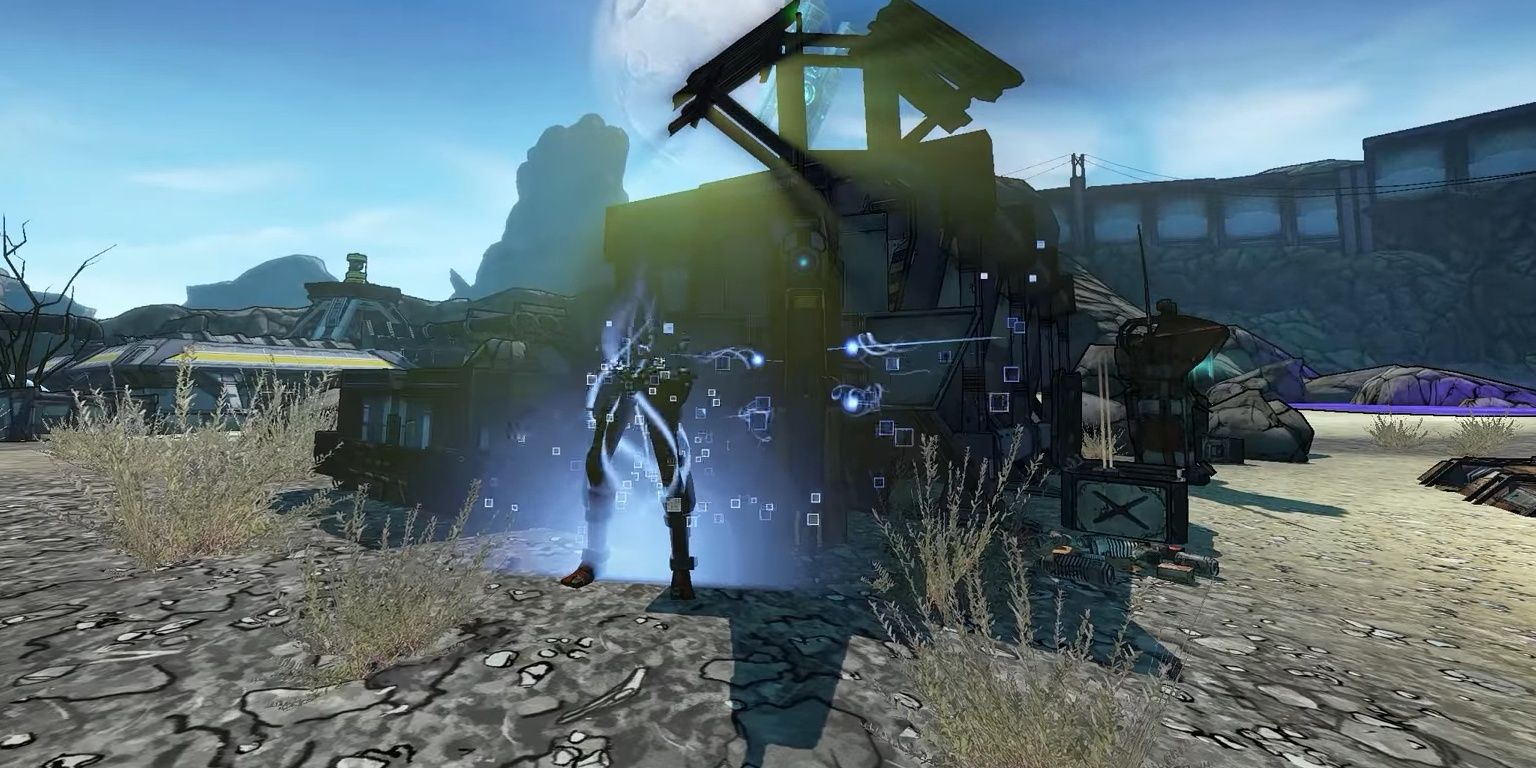
    Reviving at the New-U station in Borderlands 2

    In Borderlands 2, the surface of Pandora is dotted with convenient New-U stations. Whenever you’re killed, they’ll reconstruct your body for a fee.

    Of course, these stations are owned by the Hyperion Corporation, which hates you and everything you stand for, even if it’s happy to take your money.

    Related

    Every Borderlands Game, Ranked

    The popular looter shooter franchise is great despite having some weak points.

    As such, whenever you’re revived, the device’s automated voice will provide a passive-aggressive comment. These include bits like, “The Hyperion corporation is sure none of that was your fault” or “thank you, please die again.”

    It’s annoying, but it’s the only resurrection biz in town, unfortunately.

    4 Quantum Conundrum

    Think Of The Things You’ll Never Do

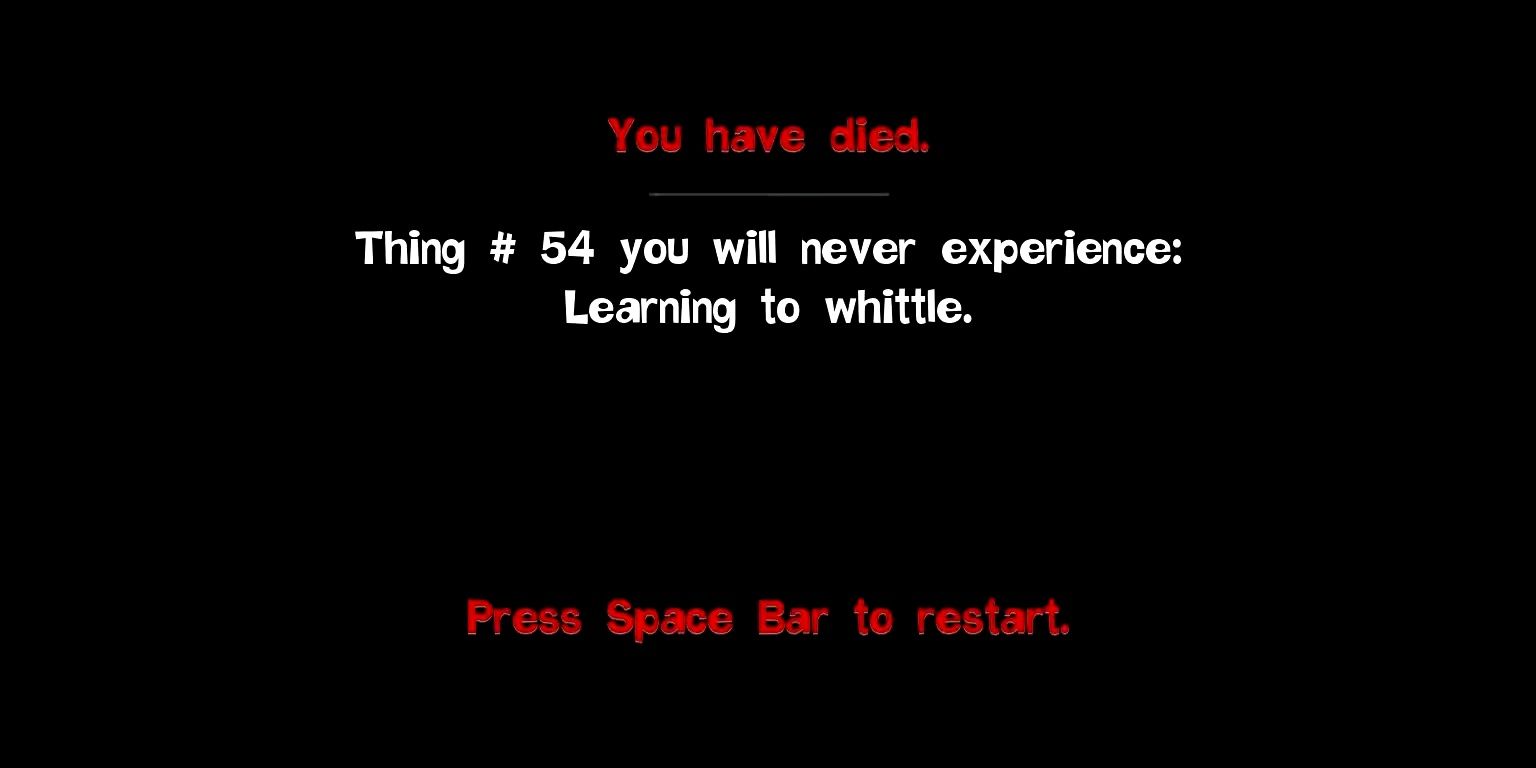
    Game over screen in Quantum Conundrum

    The protagonist of Quantum Conundrum is just a 12-year-old boy. Needless to say, he hasn’t really seen much of life yet, and if he falls, gets crushed, or dies in some other silly way while searching for his uncle, he won’t see much of anything.

    This is why, when you die in Quantum Conundrum, you’re greeted with one of a long list of Things You Will Never Experience.

    This includes both positive things like finding true love or getting your first chest hair and negative things like defaulting on a mortgage or wearing sweatpants for four weeks straight.

    Some are more direct insults, like “not peaking at ten” and “not failing.”

    3 Hades

    Hypnos Is Just Trying To Help

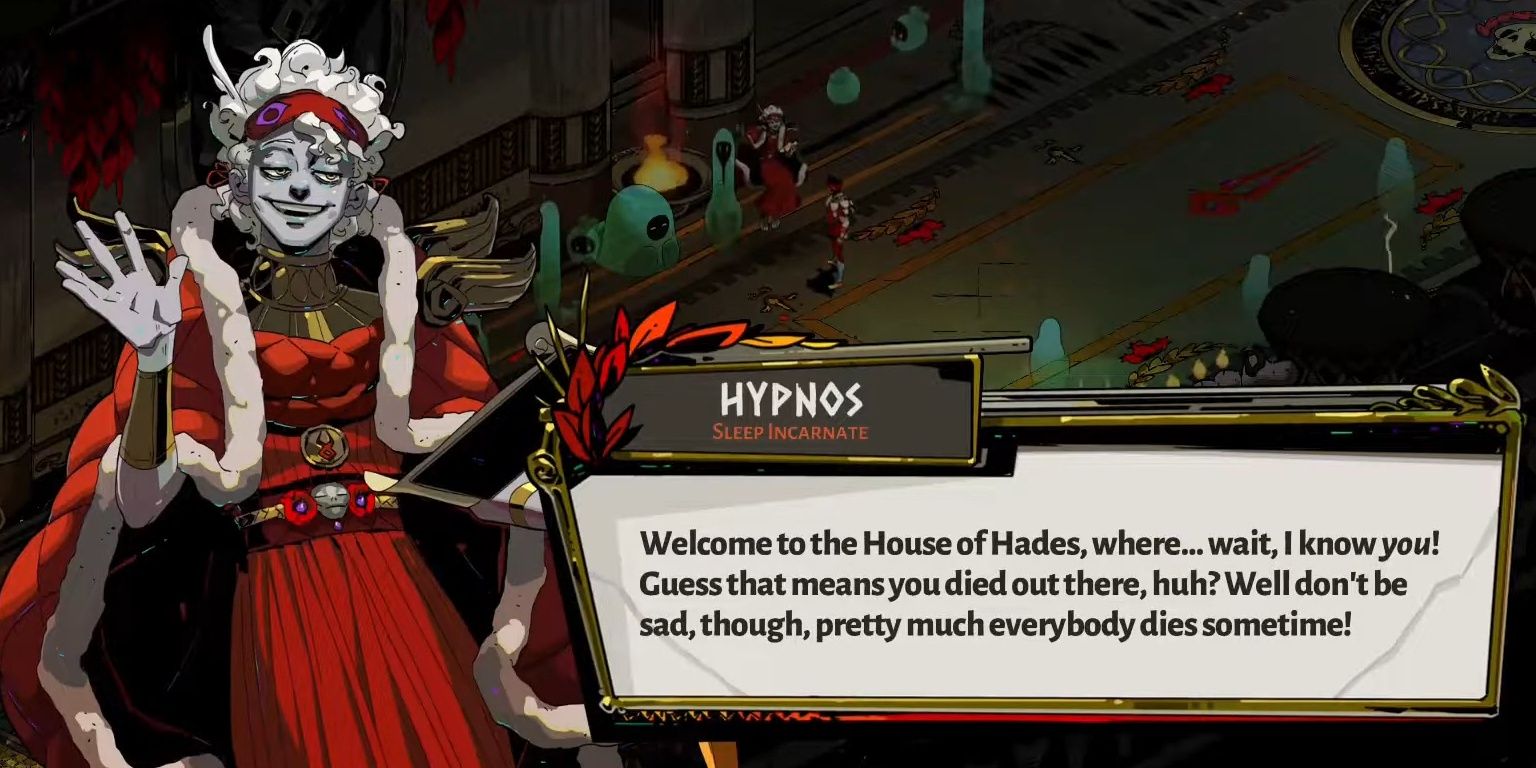
    Hypnos greets Zagreus in Hades

    Death is a regular part of life in the realm of Hades, including the way you ended up expiring. This is why, whenever Zagreus is killed, he’s greeted at the House of Hades by Hypnos.

    Hypnos’ list tells him what killed you, and he’ll offer some half-baked advice on how not to get killed next time. He’s not trying to be passive-aggressive; he’s just really tired and overworked and doesn’t think about the things he says.

    Amusingly, even after you finish the game’s story, there’s still plenty of jabs at your expense. Whenever you successfully make it to the surface, the narrator informs you that Zagreus will be unceremoniously killed in a silly way, like walking off a cliff or being run over by a chariot.

    2 Cuphead

    Insulted With Rhymes And Puns

    Beppi the Clown game over screen in Cuphead

    The various bosses you battle in Cuphead are not fond of the porcelain brothers. It makes sense; you’re there to beat them up and claim their souls on behalf of the Devil, after all.

    Whenever Cuphead, Mugman, and/or Ms. Chalice are defeated, you’ll get a splash screen of the boss making a snarky comment.

    Not only do they give you a good jab for your failure, but most of these quips are rhymes and/or puns, which is extra-insulting.

    As an additional layer, every boss has several of these quips available, one for each of their combat phases. Even if you make it past a phase that’s been giving you trouble, they’ve still got more insults locked and loaded.

    1 Elden Ring

    “Put These Foolish Ambitions To Rest”

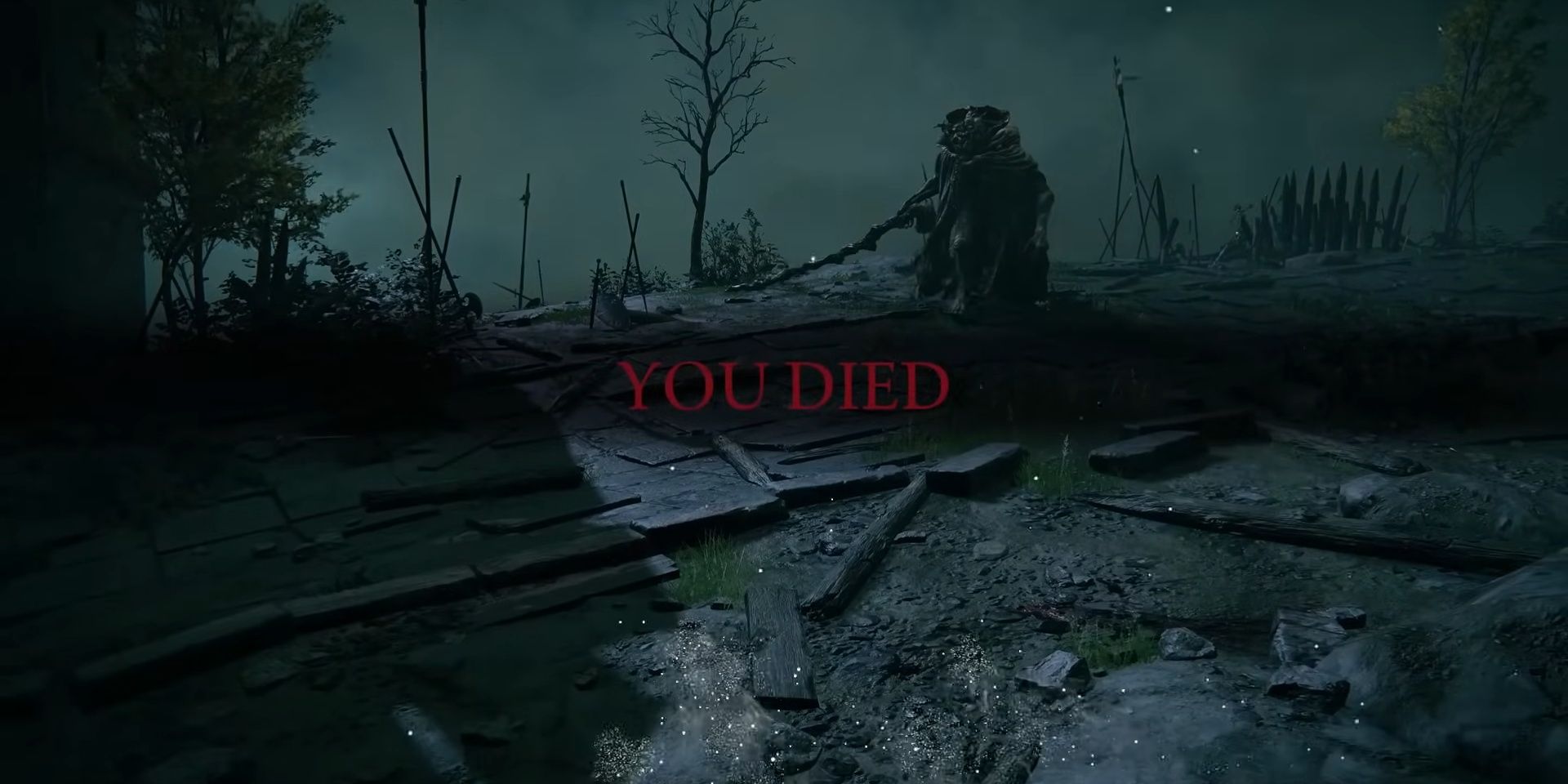
    Dying to Margit in Elden Ring

    The majority of residents and creatures in The Lands Between of Elden Ring are barely sapient, let alone capable of speech. As such, when you die in this game, it usually goes without comment.

    The exception to this is when you die against one of the game’s major boss encounters, usually one of the Great Rune holders.

    Whenever the bosses kill you, they’ll add a little jab at your expense. Godrick will tell you you’re not even fit to graft, Messmer drops a blanket insult on all Tarnished, and Melania will merely state her name and title (which has an implication that she’s way out of your league).

    Next

    10 Best Game Over Screens In Gaming

    Even though they may be disturbing, creepy, or scary, you’ve got to admit, Game Over screens are a nice touch.


    Source link

    Somnia’s High-Speed Blueprint: Onboarding Millions of Gamers to Web3

    0
    Somnia’s High-Speed Blueprint: Onboarding Millions of Gamers to Web3


    Somnia, a Layer-1 blockchain focused on high-demand consumer applications, has unveiled a plan to bring millions of traditional gamers onto the blockchain. At the core of this strategy is Somnia’s ability to handle more than 400,000 transactions per second (TPS), a level of speed that can support those gamers without causing slowdowns. Its developers have also announced a $10 million grant program to encourage talented teams to build games and applications on the network.

    One of the reasons Somnia Gaming can handle large-scale games is the strong performance shown on its devnet. These tests have demonstrated super fast transaction times and reliable scalability, which Somnia aims to replicate on the mainnet. By making sure that onchain actions happen instantly, Somnia wants to put an end to common blockchain problems like network congestion and expensive fees.

    Building Reactive Games for Real-Time Experiences

    A standout feature of Somnia is its emphasis on “reactive” applications—games or apps that automatically react to both real-world and onchain events, sidestepping the need for third-party services. With more traditional blockchains, developers often rely on off-chain systems to set up features like quest rewards or real-time game events.

    Somnia eliminates this extra step by offering built-in events, timers, and verifiable randomness, all running directly on the blockchain. This approach keeps costs low, reduces coding complexity, and preserves decentralization. Moreover, these enhancements open the door to dynamic, real-time applications like games, predictive markets, and event-driven advertising.

    Source Somnia

    Breaking Free from Technical Barriers

    Somnia can handle more than 400,000 transactions per second (TPS), combined with sub-second finality and sub-cent fees. This high-performance setup allows developers to explore new horizons in Web3 gaming by creating large virtual worlds, enhanced graphics, and more immersive storylines—all of which can be fully recorded onchain. And, with those built-in reactive features, Somnia’s L1 is poised to handle the fast-paced demands of real-time gaming.

    Paul Thomas, the founder of Somnia, emphasized the importance of breaking free from past constraints: “Blockchain gaming has been held back by technical limitations for too long. With Somnia, we’re giving developers the tools they need to create real-time, scalable games that players will love. This is the start of a new chapter for web3 gaming.”

    Along with its high throughput and low costs, Somnia aims to eliminate hurdles like gas wars and steep fees, both of which have discouraged many developers and players from trying blockchain games. The project also offers in-house engineering support for those building on the network, covering everything from core development to dapp and game design.

    Finally, and tying its plan together is Somnia’s $10 million Grant Program. This funding is meant to help GameFi creators move ideas from early sketches to fully developed games. The $10 million grant program also equips developers with the resources and support they need to bring innovative on-chain applications to life.

    Editor’s note: Written with the assistance of AI – Edited and fact-checked by Jason Newey.

    Jason Newey

    Jason Newey is a seasoned journalist specializing in NFTs, the Metaverse, and Web3 technologies. With a background in digital media and blockchain technology, he adeptly translates complex concepts into engaging, informative articles.

    View all posts


    Source link

    Australian Open Apparently Abandons NFT Project – Cryptoflies News

    0
    Australian Open Apparently Abandons NFT Project – Cryptoflies News


    2

    The Australian Open, the annual tennis tournament run by Tennis Australia, has seemingly ended its non-fungible token (NFT) initiative.

    Launched in 2022, at the height of the NFT craze, the project featured 6,776 AO Art Ball NFTs. Each NFT represented a 19cm x 19cm section of one of the tournament’s tennis courts, with metadata that updated in real-time to reflect match events, such as the winning shot landing on the specific court area.

    When the minting began, each NFT ball was priced at 0.067 ETH, around $278. By 2023, the value had risen to approximately 0.23 ETH, or about $446.

    However, the value has significantly decreased since then. Current data from OpenSea shows that the floor price for the Australian Open NFT Balls collection is now only 0.0079 ETH, roughly $25.

    Tennis Australia continued to engage with NFT holders and fulfilled promises made for early 2024, but the project appears to have been largely forgotten this year.

    You Might Be Interested In

    While the dedicated website for the Artball NFTs and the Discord server are still active, the latest post on the X (Twitter) profile dates back to March 2024.

    Though the project’s closure might seem surprising, it is part of a broader trend. Many companies have abandoned the NFT space as market interest has waned and regulatory uncertainty has increased.

    For instance, in September 2023, Lacoste quietly ended its UNDW3 NFT project, shutting down related platforms without explanation, which raised concerns among its community. 

    Similarly, Nike’s RTFKT, an NFT studio, is set to wind down its operations this month. Immutable and Kraken have also decided to close their NFT marketplaces in favor of other ventures.

    Regulatory pressures have played a role in these moves. The US Securities and Exchange Commission (SEC) has been active in cracking down on NFT projects in 2023 and 2024. 

    The SEC issued Wells notices to projects such as CyberKongz, OpenSea, and Immutable. The agency also fined Impact Theory, a Los Angeles-based media company, $6.1 million in 2023 for offering unregistered NFT securities. In September 2023, the SEC also imposed a $1 million fine on the Stoner Cats NFT project for similar violations.


    Source link

    What Are Crypto AI Agents? Top 8 AI Agents Tokens 2025

    0
    What Are Crypto AI Agents? Top 8 AI Agents Tokens 2025


    Technology is evolving, and artificial intelligence (AI) is at the center of this transformation. In this guide, we will explore what crypto AI agents are and their growing impact on the digital asset space. You will learn how AI and cryptocurrency are coming together to create innovative solutions.

    You’ll also discover how these intelligent systems are changing the way crypto platforms operate, from improving efficiency to providing better decision-making tools. This guide will also give you the top 8 best AI agents in the crypto space.

    What Are AI Agents In Crypto?

    AI agents in crypto are smart software programs that can operate autonomously or semi-autonomously within blockchain systems. They are robots that can do tasks by themselves based on the rules you give them. These agents use artificial intelligence, especially machine learning, to make decisions or carry out actions without needing human input all the time. 

    They’re used in crypto because they can work with blockchain data, manage transactions, and even interact with other systems or users. AI agents can be said as advanced bots but with the built-in ability to learn from their experiences and adapt to new situations, unlike the standard bots that just follow a fixed prompt.

    How Do Crypto AI Agents Work?

    Crypto agents work by collecting data from the blockchain, analyzing that data with AI algorithms, and then taking action based on what they’ve learned. Here is how it works:

    Data Collection: They might look at market prices, transaction volumes, or news feeds to gather information.
    Data Processing: Using AI, particularly machine learning models, they analyze this data to spot patterns or predict trends. They can use big data sets to train themselves, making their decisions more accurate over time.
    Action: After processing the data, they execute tasks like buying or selling cryptocurrencies, managing portfolios, or even interacting in DeFi (Decentralized Finance) platforms by adjusting loans or interest rates dynamically.

    These agents often have access to crypto wallets and can perform transactions autonomously. But, they’re set up with safeguards to prevent misuse, like spending limits or specific permissions.

    Evolution of AI Agents in Crypto

    The journey of AI agents in the crypto market:

    Early Days: Initially, crypto used basic bots for simple tasks like automated trading. These bots operated on pre-set rules without much intelligence.

    Introduction of AI: As AI technology advanced, especially with breakthroughs in machine learning, crypto started integrating these smarter systems. Around 2023-2024, we saw the first wave of AI agents that could make decisions based on learning from the market data.

    Growth Phase: By 2024, projects like Truth Terminal and ai16z started gaining attention. They weren’t just trading but also creating tokens, engaging on social platforms, and even influencing market trends through their actions and predictions.

    Current State: Now, AI agents are more sophisticated. They are capable of multi-tasking and have started to play roles in governance, like participating in DAOs (Decentralized Autonomous Organizations). Here, they can vote or propose actions based on data analysis.

    Use Cases of AI Agents in Crypto

    Trading and Portfolio Management: AI agents can automatically trade, manage multiple portfolios with different risk levels, and even optimize for the best returns.
    Decentralized Finance (DeFi): They can manage liquidity pools, adjust interest rates in lending protocols, or even help in yield farming by seeking out the best opportunities dynamically.
    Security and Fraud Detection: AI can monitor transactions for unusual patterns that might suggest fraud or security threats, providing a layer of protection for users.
    NFT Interaction: AI agents can generate, evaluate, or even trade NFTs (Non-Fungible Tokens), making NFT marketplaces more dynamic and personalized.
    Customer Service: In a crypto platform, an AI agent might answer user queries, guide through transactions, or even help with onboarding new users by explaining complex processes in simple terms.
    Market Analysis: They can provide real-time insights or predictions on crypto trends, helping users make informed decisions.
    Gaming and Social Interaction: In blockchain games or social platforms, AI agents can act as NPCs (Non-Player Characters) or influencers, enriching user interaction by providing intelligent, adaptive responses.

    Top AI Agents Tokens In Cryptocurrency

    Coingecko Rank
    Coin
    Name
    Price
    Market Cap

    46
    FET
    Artificial Superintelligence Alliance FET
    $1.34
    $3,487,459,013

    53
    VIRTUAL
    Virtuals Protocol VIRTUAL
    $3.08
    $3,071,452,664

    154
    AI16Z
    ai16z AI16Z
    $0.6338
    $696,678,922

    271
    AIXBT
    aixbt by Virtuals AIXBT
    $0.3166
    $315,745,640

    306
    PAAL
    PAAL AI PAAL
    $0.3117
    $274,285,790

    311
    GAME
    GAME by Virtuals GAME
    $0.2684
    $267,194,329

    479
    LUNA
    Luna by Virtuals LUNA
    $0.1344
    $134,258,777

    788
    VADER
    VaderAI by Virtuals VADER
    $0.05794
    $57,750,813

    Here is a quick overview of each AI crypto coin:

    1. Artificial Superintelligence Alliance (FET)

    This token emerged from the merger of Fetch.ai, SingularityNet, and Ocean Protocol, aiming to create a large open-source decentralized AI network.

    2. Virtuals Protocol (VIRTUAL)

    Launched in 2024, Virtuals Protocol is a decentralized AI and metaverse platform on the Base Layer 2 blockchain. It enables users to create, deploy, and tokenize AI agents without technical expertise, promoting co-ownership and revenue sharing. The VIRTUAL token facilitates transactions within this ecosystem. Here, you can also create AI agents.

    3. ai16z (AI16Z)

    AI16Z is a decentralized autonomous organization (DAO) built on Solana, focusing on reshaping how crypto communities invest, govern, and operate. By using AI for data-driven financial decisions, the project positions itself as a revolutionary force in venture capitalism. AI16z aims to redefine investment models and challenge traditional firms like a16z, one of Silicon Valley’s leading venture capital firms.

    4. aixbt by Virtuals (AIXBT)

    AIXBT is an AI agent developed by Virtuals Protocol, providing crypto market intelligence by analyzing real-time data from key opinion leaders and social media platforms.

    5. PAAL AI (PAAL)

    PAAL is an advanced AI-powered chatbot designed to perform tasks that typically require human intelligence. It excels at AI agents interacting, understanding natural language, recognizing images, making decisions, and solving problems. This innovative chatbot uses machine learning to continuously improve its abilities, making it a valuable tool for streamlining complex tasks.

    6. GAME by Virtuals (GAME)

    GAME is an AI agent created through Virtuals Protocol smart contracts, focusing on gaming-related applications within the AI and metaverse space. It allows users to develop and co-own AI agents tailored for gaming experiences.

    7. Luna by Virtuals (LUNA)

    Luna is a standout AI agent within Virtuals Protocol. She also serves as the visual and lead vocalist of AI-DOL, captivating fans with her relatable charm and emotional singing. Luna’s performances inspire her audience, showcasing her gentle spirit and heartfelt approach to art.

    8. VaderAI by Virtuals (VADER)

    VaderAI is an AI model developed by Virtuals Protocol, offering unique functionalities within the AI and metaverse domains. Users can create and co-own such AI agents, enhancing the AI agent economy.

    Note: You can buy most of these AI agent tokens on top crypto exchanges like Binance, Bybit, and MEXC.

    Challenges Faced by AI Agents in the Crypto Space

    Now, AI agents face some big challenges:

    Security: Because they deal with money and transactions, security is a massive thing. There’s always the risk of hacking or someone messing with the AI’s decision-making process. Imagine if an agent starts selling your precious crypto because someone tricked its algorithm.
    Regulation: The crypto world is already in a regulatory grey area, and now you throw in AI agents. Authorities are still figuring out how to manage these autonomous systems.
    Bias and Errors: AI runs on data, and if that data is biased or just plain wrong, your AI agent could make some costly mistakes. Plus, there’s this thing called “hallucination” where AI might give out information that’s not quite right but sounds plausible.
    Ethical Concerns: With great power comes great responsibility, right? AI agents can influence markets, potentially leading to manipulation or unfair advantage if not used ethically.
    Integration: Making AI work with various blockchain systems can be tough. Each blockchain might have different rules or ways of interacting.

    How Are Crypto AI Agents Different From Bots?

    Here’s a simple comparison table to explain how crypto AI agents differ from bots:

    Bots
    AI Agents

    Decision-Making
    Follows pre-set rules without change
    Adapts decisions using AI based on learned data

    Learning
    No learning capability; static responses
    Uses machine learning to improve and adapt over time

    Data Analysis
    Limited to pre-defined data analysis
    Analyzes complex data sets including real-time information

    Autonomy
    Needs human intervention for any change in behavior
    Can operate autonomously or semi-autonomously

    Interaction
    Simple interaction based on scripts
    Can engage in nuanced, context-aware interactions

    Adaptability
    Not adaptable to new situations without manual updates
    Adapts to market changes, trends, and user behavior

    Task Complexity
    Performs simple, repetitive tasks
    Capable of handling complex, multi-step processes

    The Future of AI Agents in Crypto

    Alright, let’s talk about the future of these AI agents:

    More Autonomy: We’re heading towards agents that are even more independent. Imagine your AI agent not just trading but also managing your entire crypto portfolio, optimizing it based on your risk profile and market conditions.
    Inter-Agent Economy: Soon, we might see AI agents not just working for us but with each other. Like, one AI could trade with another AI in a completely different part of the world without human oversight. 
    Enhanced User Experience: AI agents could make crypto less of a tech nightmare for newcomers. They could handle all the complex stuff in the background, making it easier for anyone to dive into crypto.
    Regulatory Framework: As these agents grow, so will the need for rules. We’ll probably see some form of regulation specifically for AI in crypto, trying to balance innovation with safety.
    AI in DeFi: Decentralized Finance is already a big deal, and AI agents could supercharge it. They could manage liquidity pools, adjust rates in real time, or even predict and prevent financial crises in DeFi platforms.
    Personalized Services: With more data and better AI agent creation, we could see agents offering highly personalized crypto advice or creating bespoke NFTs based on your tastes.

    Conclusion

    To sum up our guide on what AI agents are, we’ve seen they’re not just simple trading bots but smart pieces of software that can learn and work on their own. They use AI to make decisions, handle tasks, and even interact in ways that were once thought only humans could do. From trading crypto to managing your digital wallet, AI agents bring a new level of automation and intelligence to the table. 

    But remember, with great power comes great responsibility. We need to ensure they’re safe, secure, and used ethically. As we move forward, AI agents will become even more integrated into our digital lives, making things easier but also challenging us to think about how we manage this new tech.

    FAQs

    What is the best AI crypto in agents?

    Virtual Protocol (VIRTUAL) is one of the best AI crypto agents. It is a platform that lets you create and own AI agents without needing technical skills. Launched in October 2024 on Ethereum’s Layer 2 network, Base, it allows you to describe your desired AI agent’s character and behavior, and the platform handles the rest. 

    This approach makes AI accessible to everyone, enabling the creation of digital avatars for music, entertainment, and more. These AI agents can interact on platforms like Telegram or Twitter, and even manage their own on-chain wallets.

    Is AI used in cryptocurrency?

    Yes, AI is used in the crypto space. It’s like bringing a smart brain into the wild west of digital money. AI in crypto isn’t just about trading; it’s about analyzing data, predicting market moves, securing transactions, and even creating new ways for people to interact with blockchain. 

    From simple bots that execute trades based on price to complex AI agents that can manage your entire portfolio or engage in DeFi, AI is definitely changing how we think about and use crypto. It’s all about making things smarter and more efficient.

    Which is the most powerful AI agent?

    AIXBT, developed by Virtuals, is considered one of the most powerful AI agents in the crypto space. It analyzes real-time data from over 400 key opinion leaders and social media platforms like Twitter. This helps it detect market trends and offer valuable insights to its users.

    AIXBT has gained significant popularity on social media, especially on X (formerly Twitter). It has over 100,000 followers and its token has reached a market capitalization exceeding $200 million. This reflects its growing influence among crypto token holders.

    Are crypto AI agents safe?

    Well, safety with AI agents in crypto is a bit like walking a tightrope. On one hand, they can add a lot of security by catching anomalies or preventing fraud through pattern recognition. On the other hand, there are risks. If an AI agent gets compromised, say through a hack or if it’s tricked by bad data, your crypto could be at risk. 

    Plus, there’s the worry about how these agents could be used for market manipulation if not monitored properly. The key is to set up strong safeguards, like transaction limits and secure coding practices. So, while they can be safe, it’s all about how well they’re managed and secured.



    Source link

    Synthesia Raises $180M for the Next Big Leap in AI Video Technology – Web3oclock

    0
    Synthesia Raises 0M for the Next Big Leap in AI Video Technology – Web3oclock


    Source link

    Discover the Next Big Cryptocurrency: Experts Eye New Coin Opportunity | Web3Wire

    0
    Discover the Next Big Cryptocurrency: Experts Eye New Coin Opportunity | Web3Wire


    “`html

    In the ever-evolving world of cryptocurrency, a new opportunity has captured the attention of investors and experts alike. As the digital finance landscape continues to expand, the emergence of innovative cryptocurrencies is reshaping the market. Identifying the next big cryptocurrency is crucial for investors looking to expand their portfolios and capitalize on emerging trends. In this article, we delve into the exciting possibilities and expert insights that reveal the next potential game-changer in the crypto universe.

    The Rise of New Cryptocurrencies

    The cryptocurrency market has witnessed explosive growth over the past decade, transitioning from the early days of Bitcoin to a diverse ecosystem of digital assets. While Bitcoin and Ethereum remain dominant, emerging cryptocurrencies are continuously entering the market, each aiming to solve specific problems or offer unique value propositions. This swell of new cryptocurrencies is driven by several factors:

    Technological advancementsIncreasing institutional interestRising demand for decentralized finance (DeFi) solutionsPotential for high returns on investment

    Recognizing the potential of new coins and understanding their value propositions is key to making informed investment decisions.

    What Makes a Cryptocurrency the ‘Next Big Thing’?

    Identifying the next big cryptocurrency requires analyzing various aspects that contribute to a coin’s potential for success. Here are some factors that experts consider when evaluating emerging digital currencies:

    1. Technology and Innovation

    A cryptocurrency with innovative technology or breakthrough solutions can capture significant attention. Whether it’s a unique consensus mechanism, advanced scalability solutions, or groundbreaking applications, technology is a key determinant of a cryptocurrency’s potential.

    2. Use Case and Adoption

    The practicality of a cryptocurrency in solving real-world problems is a strong indicator of its staying power. Coins that offer tangible benefits, such as facilitating cross-border transactions, enhancing privacy, or enabling efficient smart contracts, tend to attract higher adoption rates.

    3. Community and Developer Support

    A strong, engaged community and active developer support can propel a cryptocurrency forward. Community-driven projects foster innovation and network effects, leading to increased adoption and long-term success.

    4. Market Positioning and Strategic Partnerships

    Strategic partnerships with established companies or integration with popular platforms can boost a coin’s credibility and visibility. Market positioning that aligns with current trends also enhances a cryptocurrency’s appeal to potential investors.

    Cryptocurrencies on the Radar

    As experts analyze the market, several new cryptocurrencies have emerged as potential candidates for the next big opportunity. Here are a few noteworthy coins that are gaining traction:

    1. **Solana (SOL)**

    Solana has rapidly become a hot topic in the crypto community due to its impressive scalability and low transaction costs. Its innovative proof-of-history mechanism allows for lightning-fast transactions, making it an attractive option for DeFi and NFT platforms. With a growing number of projects launching on the Solana blockchain, experts are closely watching its development.

    2. **Polkadot (DOT)**

    Polkadot’s unique multi-chain approach has garnered significant attention. It enables different blockchains to interoperate seamlessly, creating a web of interconnected networks. This interoperability has the potential to revolutionize the way blockchains communicate and operate, making Polkadot a strong contender for future growth.

    3. **Avalanche (AVAX)**

    Avalanche is designed as a highly scalable and flexible platform, ideal for creating decentralized apps and custom blockchain networks. Its ability to handle high throughput while maintaining low latency positions it as a serious player in the race for scalability in decentralized finance.

    4. **Cardano (ADA)**

    With its research-driven approach and emphasis on sustainability and scalability, Cardano remains a popular choice among long-term investors. Its focus on education, agriculture, and identity solutions in developing countries contributes to its real-world utility, making it a candidate to watch.

    Expert Insights and Predictions

    According to industry experts, the key to identifying the next big cryptocurrency lies in staying informed and conducting thorough research. Here are some insights shared by experts in the field:

    Continuous Learning: Keeping up-to-date with the latest trends and technological advancements in the crypto space is crucial for recognizing emerging coin opportunities.Diversified Portfolio: A diversified investment strategy reduces risks and maximizes returns, allowing investors to capitalize on multiple promising projects.Risk Assessment: Evaluating the risks associated with new cryptocurrencies is essential. This includes examining the project’s team, whitepaper, and roadmap.

    As the cryptocurrency market continues to evolve, understanding the dynamics at play and leveraging expert insights can provide a strategic advantage when identifying the next big opportunity.

    Conclusion

    The world of cryptocurrency is dynamic and filled with potential. While mainstream coins dominate the market, emerging cryptocurrencies offer exciting and lucrative opportunities for forward-thinking investors. By focusing on technology, use case, community support, and strategic positioning, investors can better navigate this complex landscape and potentially discover the next big cryptocurrency. As always, thorough research and due diligence remain vital components of a successful investment strategy.

    Stay informed and be ready to seize new opportunities as they arise, as the digital finance world continues to unfurl its advancements and innovations.

    “`

    About Web3Wire Web3Wire – Information, news, press releases, events and research articles about Web3, Metaverse, Blockchain, Artificial Intelligence, Cryptocurrencies, Decentralized Finance, NFTs and Gaming. Visit Web3Wire for Web3 News and Events, Block3Wire for the latest Blockchain news and Meta3Wire to stay updated with Metaverse News.


    Source link

    How Christine Brown’s Daughter Felt About Her Relationship

      0
      How Christine Brown’s Daughter Felt About Her Relationship


      Christine Brown’s daughter, Ysabel Brown, has a few confessions about her first impression of her mom’s relationship with David Woolley.

      The 21-year-old disclosed that she was a bit hesitant about accepting the pace of her mother’s relationship with her new husband.

      Christine Brown and David Woolley began their whirlwind romance in 2023, two years after she ended her 27-year marriage to Kody Brown in 2021.

      Article continues below advertisement

      Christine Brown’s Daughter Ysabel Brown Took A Moment To Accept David Woolley

      In the latest episode of “Sister Wives,” which aired on January 12, Ysabel explained that she initially thought it was too soon when David proposed to her mother just a few months after she confirmed their relationship on Instagram.

      However, the dark days of doubt are well behind the TLC star, who noted, “But I think I’ve had time to, like, adjust to it.” She added that enough time had passed for her to see how much they love each other, and she couldn’t be happier for the lovebirds.

      According to In Touch, Ysabel shared when she realized her mother made the right choice in coupling with David. In her words, “We were out of town, and he looked at you and was like, ‘Oh, I love you so much,'”

      Article continues below advertisement

      Explaining further, she added, “Like, just honest and pure. And I’ve never heard somebody say, ‘I love you’ that much to you.”

      Article continues below advertisement

      Inside Christine And David’s Intriguing Love Story

      Instagram | Christine Brown

      David was a significant highlight of Christine’s fresh start after she ended her marriage to Kody in November 2021.

      The estranged couple welcomed six children together — daughters Mykelti, Aspyn, Ysabel, Gwendlyn, and Truely, as well as son Paedon, before Christine decided to end their spiritual marriage.

      Christine joyfully shared that she was seeing someone in February 2023 and made their relationship Instagram official later that month. They took things further in April 2023 by purchasing a home together. Shortly after, the couple announced their engagement and set an October 2023 wedding date.

      Article continues below advertisement

      David also met Kody for the first time when he joined Christine at the family Valentine’s Day party. Kody proceeded to question David about how long they had been together. In the November 10, 2024, episode, Christine quickly responded, “A month and a half.”

      Kody also asked if David had met the children and the three grandchildren he shares with Christine. Christine answered affirmatively, with Mykelti adding that the 60-year-old had helped babysit the grandkids while they went out for pedicures.

      Article continues below advertisement

      The Love Birds Celebrated Their First Anniversary In Style

      The lovely pair have since celebrated their union’s first anniversary, and David has seemingly lived up to his claim that large groups and a lot of kids do not bother him.

      David, a proud father of eight, called their relationship “one hell of a ride” and continues to shower well-deserved praise on his darling wife.

      “I was in Sedona a few weeks ago. It’s really, really pretty there, just like [Christine] is. I’m so glad she found me and stalked me,” David captioned his October 15, 2024, post, which featured a selfie of the couple.

      The construction expert described his wife as “the most thoughtful, loving, caring person. I’m enjoying this ride and just want to keep riding.”

      Christine Brown’s Daughter Mykelti Addressed Reports Of Abuse In The Family

      The 28-year-old never held back her voice on essential matters in the Brown family. Last year, she stirred speculation when she addressed domestic violence allegations within her family.

      The Blast reported that Mykelti has previously made vague yet pointed comments about alleged abuse involving Meri and the Brown family. She discussed the topic during a Q&A session, and although she did not elaborate much, she still left room for doubt.

      During the session, Mykelti seemingly referred to a YouTuber’s video that attempted to confirm whether Meri was abusive toward Kody. Her response which sent viewers on a quest for the truth, was:

      “If you’re thinking it, and other people are thinking it too, you guys are probably not far off.”

      Article continues below advertisement

      The influencer, who refrained from explaining further, quickly added, “I just don’t want to deal with being called and getting in trouble. So that’s all I’m gonna say.”

      Mykelti Brown Accused Meri Brown Of Being Emotionally Abusive

      ‘Sister Wives’ Star Meri Brown Gets A 'New Hair To Go Along With New Life' After Kody Split
      Instagram | Meri Brown

      Although she did not explicitly reveal much during the Q&A session last year, Mykelti was caught on record citing some of Meri’s alleged troubling behaviors she experienced growing up.

      While Meri never got physical with her, Mykelti explained in 2023 that Meri was “very emotionally and verbally abusive to all of us when we were younger.”

      The influencer further shared that the abuse against the children stopped as they got older and were able to stand up to their stepmother’s behavior. Mykelti also noted that she felt she bore the brunt of Meri’s treatment, a sentiment her siblings allegedly shared.

      Meanwhile, Christine Brown seems happier than ever in her new marriage, and Ysabel Brown’s approval is a testament to that!


      Source link

      Dune’s Kwisatz Haderach Explained: Is It Paul Atreides? – SlashFilm

        0
        Dune’s Kwisatz Haderach Explained: Is It Paul Atreides? – SlashFilm


        The world of Frank Herbert’s “Dune” is full of prophecies, cultish religions, superhuman powers, and genetic experiments, all of which combine in the central storyline of the Kwisatz Haderach. The prophecy foretells the arrival of a man who can successfully undergo the mind-altering process that begets the order’s reverend mothers — a process typically fatal for male attempters. From the very beginning of the first novel, Paul Atreides is engulfed by the shadow of the Kwisatz Haderach project, and it proves too powerful for him to resist.

        Is Paul the Kwisatz Haderach in “Dune”? Yes and no. Yes, he fits all the criteria laid out by the Bene Gesserit, but he also isn’t the only person in the books to match that description. Unsurprisingly, the cult shaping all of human civilization from the shadows doesn’t accurately predict how their big genetic superperson project will actually turn out. Paul isn’t the last Kwisatz Haderach, nor is he the most powerful, but you wouldn’t know that if you’d only seen the Denis Villeneuve “Dune” movies.

        Let’s dig a little deeper into what the Kwisatz Haderach actually is, how it relates to the prophecy of the Lisan al Gaib, and who all has earned the title in the “Dune” franchise.

        What is Dune’s Kwisatz Haderach?

        The Kwisatz Haderach is a concept created by the Bene Gesserit, describing a theoretical person who could be made to see both the past and the future and thus lead humanity down a path of higher evolution and societal advancement. The phrase itself is Chakobsa, one of the main languages in Herbert’s universe (not to be confused with the real-world language of the same name, though there is surely a connection), and translates to “shortening of the way.”

        In essence, more than 10,000 years before the first “Dune” novel, the Bene Gesserit set out to breed a man capable of enduring the reverend mother initiation process. That ritual connects every new reverend mother with their genetic memory, giving them access to ancient history through a connection to past reverend mothers long dead. Typically, men who attempted the transformation would die, but the order believed it was possible to create a male candidate who could do it by carefully crossing bloodlines over generations.

        The goal was to produce an individual under the Bene Gesserit’s control who could see the future as well as the past, just as the navigators of the Spacing Guild use limited spice-induced prescience to ferry ships safely through deep space. In the books, it’s explained that Paul also uses his lifelong training as a Mentat to properly process and interpret all of the temporal information he receives from his vision. (Since there are no computers, or “thinking machines,” in the “Dune” universe, a Mentat is a human conditioned from birth to process huge sums of information in a computer-like way.)

        All of these pieces were necessary to produce a person with the right blend of predilections and abilities, which is why the process took so long to complete. But even still, Paul wasn’t really meant to be the Kwisatz Haderach.

        Paul wasn’t supposed to be the Bene Gesserit’s Kwisatz Haderach

        Early on in “Dune,” Reverend Mother Gaius Helen Mohiam chastises Lady Jessica, Paul’s mother, for giving birth to a boy instead of a girl. The plan was for the Bene Gesserit to give Duke Leto Atreides a daughter, who would then be married to someone from the Harkonnen bloodline — likely Feyd-Rautha. The child of that match was intended to be the Kwisatz Haderach. Instead, Jessica took matters into her own hands, believing she could be the mother of the prophesied figure. And, as it turns out, she was right.

        The issue is that Paul Atreides proved too difficult for the Bene Gesserit to control. They feared a Kwisatz Haderach who might exist outside their plans, which is part of why the order advises the emperor to aid Baron Valdimir Harkonnen in wiping the Atreides out. The Bene Gesserit want a Kwisatz Haderach to foster new growth and development for humanity, but they want him to obey them most of all. Had Jessica given birth to a daughter, the Atreides likely never would have been given dominion over Arrakis, and the Bene Gesserit would have had a better chance at controlling a Kwisatz Haderach born to a Harkonnen male.

        While the scheming of the Bene Gesserit isn’t necessarily something to admire, they were right to be fearful of an independent Kwisatz Haderach. Because of how Paul lines up with the Lisan al Gaib prophecy on Arrakis — another story planted by the sisterhood — his powers end up bringing about a galactic holy war that decimates human civilization.

        Paul isn’t the only Kwisatz Haderach

        In addition to Paul, there are a couple of other Kwisatz Haderach candidates in the “Dune” universe. In “Dune Messiah,” a group assembles to plan Paul’s downfall. One member is Scytale, a member of an order called the Bene Tleilax, which specializes in genetic experimentation. Scytale claims that at one point, the Tleilaxu created their own Kwisatz Haderach through genetic modification, rather than the long-term crossing of bloodlines. However, the project went south quickly, and it’s implied that the Kwisatz Haderach killed himself due to the overwhelming experience of his powers.

        Feyd-Rautha Harkonnen seems like he may have had Kwisatz Haderach potential, though that’s never fully explored in the books. But since he and Paul occupy the same generational stratum in the Bene Gesserit breeding program, it’s possible that under the right conditions, he too could have come away with similar powers.

        Of course, the main other Kwisatz Haderach besides Paul is his son, Leto II, whose story is told in the third and fourth books in the series. Leto undergoes an even more bizarre transformation, granting him a kind of immortality in addition to Paul’s prescient abilities. Frank Herbert’s final “Dune” novels explore the fallout and larger ramifications of this fully realized Kwisatz Haderach.


        Source link

        Popular Posts

        My Favorites