Home Blog Page 1067

Romantic Cinema: Exploring 20 Timeless Movie Classics | MarkMeets Media

    0
    Romantic Cinema: Exploring 20 Timeless Movie Classics | MarkMeets Media


    The Ultimate Guide to the Best Romantic Films of All Time

    Romance movies have a unique ability to capture our hearts, transporting us into worlds filled with passion, longing, and unforgettable love stories. Whether you’re a hopeless romantic or just looking for a cozy night in, these films offer something for everyone. From classic tales of star-crossed lovers to modern interpretations of love in the digital age, here’s a curated list of the best romantic films that have captivated audiences for generations.

    1. Beauty and the Beast (1991): A Timeless Tale of Love and Acceptance

    Beauty and the Beast, a beloved Disney classic, enchants audiences with its timeless story of love transcending appearances. Belle, a spirited young woman, finds herself drawn to the mysterious Beast, whose curse can only be broken by true love. As their unlikely romance blossoms, viewers are reminded of the beauty found within and the power of acceptance.

    2. Her (2013): Love in the Age of Artificial Intelligence

    In Her, director Spike Jonze explores the complexities of love in a technologically advanced world. Theodore, a lonely writer, forms a deep connection with Samantha, an artificial intelligence designed to meet his every need. Their unconventional romance challenges societal norms and raises thought-provoking questions about the nature of human relationships.

    3. The Princess Bride (1987): A Whimsical Adventure of True Love

    The Princess Bride is a whimsical fairy tale that delights audiences with its humor, adventure, and heartfelt romance. Westley, a brave hero, embarks on a quest to rescue his true love, Princess Buttercup, from the clutches of an evil prince. Filled with unforgettable characters and quotable lines, this timeless classic is a celebration of true love conquering all.

    4. La La Land (2016): A Musical Journey of Dreams and Heartbreak

    La La Land dazzles audiences with its breathtaking visuals, catchy songs, and poignant love story. Mia and Sebastian, two aspiring artists, navigate the highs and lows of pursuing their dreams in the vibrant city of Los Angeles. Their passionate romance unfolds against the backdrop of Hollywood’s golden age, reminding us of the sacrifices we make for love and art.

    5. Three Colors: Red (1994): A Serendipitous Encounter of Souls

    In Three Colors: Red, director Krzysztof Kieślowski crafts a mesmerizing tale of chance encounters and unexpected connections. Valentine, a young model, forms a profound bond with Joseph, a retired judge, after a fateful accident brings them together. As their friendship deepens, viewers are reminded of the beauty found in coincidence and the power of human connection.

    6. It Happened One Night (1934): A Screwball Comedy of Love and Adventure

    It Happened One Night is a timeless romantic comedy that continues to charm audiences with its wit and charm. Ellie, a rebellious socialite, teams up with Peter, a street-smart reporter, on a cross-country adventure filled with laughs and romance. As their unlikely romance blossoms, viewers are reminded of the joy found in unexpected connections and the power of love to conquer all obstacles.

    7. Before Sunset (2004): A Poignant Reunion of Kindred Spirits

    In Before Sunset, director Richard Linklater reunites audiences with Jesse and Céline, two star-crossed lovers who reconnect in the streets of Paris. As they reminisce about their past and contemplate their futures, viewers are drawn into a poignant exploration of love, regret, and the passage of time. Ethan Hawke and Julie Delpy deliver mesmerizing performances that capture the complexities of human connection.

    8. In the Mood for Love (2000): A Visually Stunning Meditation on Forbidden Love

    In the Mood for Love transports audiences to 1960s Hong Kong, where two neighbors find solace in each other’s company after discovering their spouses’ infidelity. Through subtle gestures and stolen glances, Mr. Chow and Mrs. Chan navigate the complexities of desire and longing in a society bound by convention. Wong Kar-wai’s masterful direction and the mesmerizing performances of Tony Leung and Maggie Cheung make this film a must-watch for fans of romance and visual storytelling.

    9. Portrait of a Lady on Fire (2019): A Hauntingly Beautiful Exploration of Forbidden Desire

    Portrait of a Lady on Fire is a visually stunning masterpiece that immerses viewers in the clandestine romance between Marianne, a painter, and Héloïse, her enigmatic muse. Set against the backdrop of 18th-century France, the film explores themes of love, art, and the constraints of societal expectations. Céline Sciamma’s sensitive direction and the electrifying chemistry between Noémie Merlant and Adèle Haenel make this film an unforgettable cinematic experience.

    10. Before Sunrise (1995): A Captivating Tale of Love at First Sight

    Before Sunrise captures the magic of chance encounters and fleeting connections as Jesse and Céline embark on a spontaneous journey through the streets of Vienna. Richard Linklater’s intimate storytelling and the natural chemistry between Ethan Hawke and Julie Delpy make this film a timeless ode to the power of human connection.

    11. The Handmaiden (2016): A Twisted Tale of Deception and Desire

    The Handmaiden is a genre-defying masterpiece that keeps audiences on the edge of their seats with its intricate plot and sensual romance. Set in 1930s Korea, the film follows the twisted relationship between Sook-hee, a young con artist, and Lady Hideko, a wealthy heiress with a dark secret. Park Chan-wook’s bold direction and the captivating performances of Kim Tae-ri and Kim Min-hee make this film a thrilling and unforgettable cinematic experience.

    12. Gone with the Wind (1939): An Epic Saga of Love and Loss

    Gone with the Wind is a sweeping historical romance that transports audiences to the antebellum South, where Scarlett O’Hara and Rhett Butler embark on a tumultuous journey of love and redemption. Vivien Leigh and Clark Gable deliver unforgettable performances that bring Margaret Mitchell’s iconic characters to life, while Victor Fleming’s epic direction captures the grandeur and tragedy of the Civil War era.

    13. The Apartment (1960): A Witty and Heartfelt Exploration of Love and Morality

    The Apartment is a classic romantic comedy that deftly blends humor and heartache in its portrayal of love in the corporate world. Jack Lemmon and Shirley MacLaine deliver standout performances as Bud and Fran, two lonely souls who find solace in each other’s company amidst the chaos of office politics. Billy Wilder’s sharp wit and keen observations of human nature make this film a timeless classic that continues to resonate with audiences today.

    14. Singin’ in the Rain (1952): A Joyous Celebration of Love and Showbiz

    Singin’ in the Rain is a beloved musical comedy that dazzles audiences with its infectious energy and timeless charm. Gene Kelly and Debbie Reynolds light up the screen as Don and Kathy, two aspiring performers who find love amidst the glitz and glamour of Hollywood’s golden age. Stanley Donen and Gene Kelly’s exuberant direction and the film’s iconic musical numbers make this film a joyous celebration of love, laughter, and the magic of the movies.

    15. Amélie (2001): A Quirky and Heartfelt Journey of Self-Discovery

    Amélie is a whimsical and enchanting tale that captures the imagination with its colorful characters and playful storytelling. Audrey Tautou shines as the titular character, a shy waitress who finds joy in bringing happiness to others. Jean-Pierre Jeunet’s whimsical direction and Yann Tiersen’s evocative score create a magical world where love and wonder abound.

    16. Eternal Sunshine of the Spotless Mind (2004): A Mind-Bending Exploration of Love and Memory

    Eternal Sunshine of the Spotless Mind is a thought-provoking and emotionally resonant film that challenges audiences to reconsider the nature of love and memory. Jim Carrey and Kate Winslet deliver powerhouse performances as Joel and Clementine, two former lovers who undergo a revolutionary procedure to erase each other from their memories. Michel Gondry’s inventive direction and Charlie Kaufman’s poignant screenplay make this film a groundbreaking masterpiece that lingers in the mind long after the credits roll.

    17. Your Name (2016): A Captivating Tale of Love Across Time and Space

    Your Name is a breathtaking animated film that transcends genres and conventions to deliver a truly unforgettable love story. Makoto Shinkai’s visionary direction and stunning animation bring to life the tale of Taki and Mitsuha, two teenagers who mysteriously swap bodies and embark on a journey of self-discovery and connection. As they navigate the intricacies of love and destiny, viewers are drawn into a world of magic and wonder that defies explanation.

    18. Modern Times (1936): A Timeless Comedy of Love and Resilience

    Modern Times is a classic comedy that continues to delight audiences with its timeless humor and heartfelt romance. Charlie Chaplin’s iconic performance as the Tramp is complemented by Paulette Goddard’s endearing portrayal of Ellen, a spirited young woman who captures his heart. Through a series of comedic misadventures, they discover that love can flourish even in the most unlikely of circumstances.

    19. City Lights (1931): A Silent Masterpiece of Love and Sacrifice

    City Lights is a silent gem that speaks volumes about the enduring power of love and sacrifice. Charlie Chaplin’s iconic Tramp falls for a blind flower girl and embarks on a series of comedic misadventures to help her regain her sight. Through laughter and tears, Chaplin reminds audiences that true love knows no bounds and that sometimes, the greatest gifts are those given from the heart.

    20. Casablanca (1942): A Timeless Tale of Love and Sacrifice

    Casablanca is a cinematic masterpiece that continues to captivate audiences with its unforgettable characters and timeless romance. Humphrey Bogart and Ingrid Bergman deliver iconic performances as Rick and Ilsa, two former lovers who are reunited in the midst of World War II. Michael Curtiz’s masterful direction and Max Steiner’s haunting score create a world of intrigue and passion that lingers long after the final scene fades to black.

    From timeless classics to modern masterpieces, these best romantic films capture the essence of love in all its forms. Whether you’re in the mood for a sweeping epic or a quirky comedy, there’s something on this list to warm your heart and ignite your imagination. So grab some popcorn, snuggle up with your loved ones, and let these enchanting tales sweep you off your feet. After all, love is in the air, and there’s no better time to celebrate the magic of romance on the silver screen.

    Author Profile

    Freelancer


    Source link

    How to edit your display name in Microsoft Teams meetings

    How to edit your display name in Microsoft Teams meetings


    Microsoft Teams continues to evolve, and one of the recent updates allows participants to edit their own display names during meetings. I know, this isn’t a big feature – just a meeting option- but for some it is a big thing. Changing you name in the meeting has been asked about for a long time, and it can be very useful in meetings with external participants join, or when clarity about roles or organizations is important. For example someone might want ( or need) to put organization in the name so it is clear for everyone who that person is, or perhaps you want to remove an unnecessary name part during meetings. In reality, I think we will see people using their nickname in meetings – and it is a good thing, if it is appropriate for the meeting. In this article, I’ll walk you through how to enable this feature from an administrative point of view, how meeting organizers can manage this capability, and finally, how end-users can easily update their display names in real-time.

    Why might you want participants to edit their display names?Enabling the display name change (Admins)Allowing display name changes in meetings (for Organizers)How to change your display name (end-user experience)Considerations

    Why might you want participants to edit their display names?

    There are several scenarios where participants might benefit from changing their display names:

    External participants who initially join with unclear or generic usernames.

    Participants representing an organization or team name rather than their personal identity.

    Making more apparent, you are in the meeting with your personal identity and do not represent the organization.

    Situations where clarity of roles (e.g., Moderator, Speaker, Observer, Gamemaster, DM) is beneficial.

    On the other hand, there are cases where changing display names might be inappropriate or confusing:

    Formal meetings requiring verification of identities.

    Secure or sensitive environments where accountability is critical.

    Risk that editing the display name is used to identity theft, or just appearing to be another person. Combine this with the feature that was just added to the roadmap: Real-Time text in meetings and calls, that lets participants type in the meeting while others’ speech is transcribed in real time. Ie: blame the mic and just RTT your responses.. RTT should roll out during May 2025.

    Admins and meeting organizers need to weigh these scenarios to decide when to allow this functionality. It is a setting in Teams meeting policy.

    Enabling the display name change (Admins)

    By default, this feature is turned off and needs to be enabled by administrators via PowerShell. The setting should appear in Teams Admin Center / meeting policies, but it isn’t there yet.

    Here’s how to enable the change using PowerShell for the Global identity:

    Set-CsTeamsMeetingPolicy -ParticipantNameChange Enable -Identity Global

    Meeting policies provide flexibility by allowing different settings for different groups. It is not necessary to enable the feature for everyone; instead, you can enable or disable features according to specific needs to specific groups.

    If you are a Admin who hasn’t visited the TAC (Teams Admin Center) for a while, note that the settings and policies have a new UI and place where to find them.

    This will take a while to get used to, I still jump to open Meetings from the left rail when I look for meeting policies. From there you only manage Meeting templates and Best practice configurations. Keep an eye on meeting policies, when this participant changing their name setting becomes available to UI

    Allowing display name changes in meetings (for Organizers)

    Once the feature is enabled by your admin, meeting organizers can control this setting directly within the meeting options. Test it out: schedule a Teams meeting or edit an existing one. If editing an existing one, you need to be organizer or co-organizer in the meeting to be able to access meeting options. Navigate to Meeting options, and scroll to Engagement where you can see the toggle for “Let people edit their display name“.

    On default editing the display name is off.

    This gives organizers flexibility depending on the meeting type and audience. In case you don’t have this enabled, in the meeting policy that has been assigned to you, you don’t even see the setting. That not seeing the setting, also applies to tenants where display name change has not been enabled.

    How to change your display name (end-user experience)

    For participants, editing your display name during a meeting is straightforward. When you join the meeting, you will see a message about that changing the name is possible. This message is very good: it tells to watch out that some names may have been edited, and that you can edit your display name.

    Open the People side panel and hover over your name and select “More options” (three dots).

    Click “Edit display name.” and then enter your preferred name and confirm the change.

    You can’t hide or change your identity, only the display name, with this feature. You original name will still appear in other places, like the meeting chat and the attendance report.

    Others will see the information in the same way.

    If someone join the meeting anonymous, they set their name to the meeting when they join and they don’t have option to change it during the meeting

    I think I know how I will be seen in some meetings from now on. 🤠

    Considerations

    While this feature is helpful and very welcome for various use cases, here are some thoughts, that may apply:

    Communicating to participants that names can be changed and/or when it’s appropriate to change names.

    If you know there is need for this in your organization, make sure to educate key people about the feature

    Admins might want to enable this capability only for some groups of users.

    This new feature offers additional flexibility to Teams meetings.

    Will you edit your name in meetings?

    Published by Vesa Nopanen

    Vesa “Vesku” Nopanen, Principal Consultant and Microsoft MVP (M365 and AI Platform) working on Future Work at Sulava.

    I work, blog and speak about Future Work : AI, Microsoft 365, Copilot, Microsoft Mesh, Metaverse, and other services & platforms in the cloud connecting digital and physical and people together.

    I have about 30 years of experience in IT business on multiple industries, domains, and roles.
    View all posts by Vesa Nopanen


    Source link

    Discover Everything About the New NVIDIA GeForce RTX 5090

    0
    Discover Everything About the New NVIDIA GeForce RTX 5090


    The long-anticipated NVIDIA GeForce RTX 5090 has finally arrived, bringing with it unprecedented power and innovative features that push the boundaries of what’s possible in gaming and AI. However, this flagship GPU’s launch hasn’t been without significant hurdles. From melting power connectors to hardware defects and severe supply constraints, early adopters face numerous challenges alongside the card’s impressive capabilities. This comprehensive analysis examines everything you need to know about NVIDIA’s latest technological marvel – its groundbreaking specifications, revolutionary features, defects, and what it all means for consumers and professionals alike.

    Unprecedented Power: RTX 5090 Specifications

    NVIDIA’s GeForce RTX 5090 represents the pinnacle of consumer graphics technology in early 2025. Built on the cutting-edge Blackwell architecture with the next-generation GB202 gaming chip, this GPU delivers formidable specifications that outclass its predecessors and competitors in nearly every category.

    The RTX 5090’s core specifications are truly impressive:

    CUDA Cores: 21,760 cores provide massively parallel processing power

    Memory: 32GB GDDR7 with a blistering 1,792GB/sec bandwidth

    Memory Interface: Super-wide 512-bit interface for lightning-fast data transfer

    Cache: 98MB L2 cache (up from 73MB on the RTX 4090)

    Display Support: PCIe Gen 5 with DisplayPort 2.1b connectors supporting 8K at 165Hz

    Power Requirements: 575W total graphics power (TGP) with 1000W PSU recommended

    Ray Tracing Cores: 170 fourth-generation cores

    Tensor Cores: 680 fifth-generation cores

    Clock Speeds: 2,017 MHz base clock, 2,407 MHz boost clock

    Perhaps most surprising is the redesigned Founders Edition’s form factor. Despite its incredible power, NVIDIA has slimmed down the RTX 5090 to a two-slot design with a dual flow-through fan configuration. This makes it compact enough for small form factor PCs – a remarkable achievement considering previous flagship GPUs size and cooling requirements.

    Several key differences become apparent when compared to its siblings in the RTX 50-series lineup and its direct predecessor, the RTX 4090. While the RTX 5090 maintains a similar boost clock to the RTX 4090 (2,407 MHz vs. 2,520 MHz), it compensates with significantly more CUDA cores (21,760 vs. approximately 16,384) and faster memory (28Gbps GDDR7 vs. 21Gbps GDDR6X). The 512-bit memory bus on the RTX 5090 delivers substantially higher bandwidth than the RTX 5080’s 256-bit bus, despite the latter’s slightly faster 30Gbps GDDR7 memory.

    Revolutionary AI and Professional Performance

    The RTX 5090 transcends gaming applications, establishing itself as a powerhouse for AI and professional workloads. Its 680 fifth-generation Tensor cores, combined with 32GB of high-speed GDDR7 memory, create an ideal environment for accelerating deep learning, 3D rendering, and other compute-intensive applications.

    The massive 98MB L2 cache and 512-bit memory interface work in tandem to deliver faster data access and reduced latency – critical factors for AI training, scientific computing, and professional content creation. These improvements translate to measurable performance gains in real-world applications. In Procyon’s AI XL (FP16) test, the RTX 5090 demonstrated a 40% speed advantage over the RTX 4090, while PugetBench’s DaVinci Resolve video processing benchmark showed a 12% improvement.

    The fifth-generation Tensor cores significantly boost AI inference efficiency across major frameworks like TensorFlow and PyTorch, while the fourth-generation RT cores enhance real-time ray tracing capabilities for animation, visual effects, and CAD applications. This combination makes the RTX 5090 exceptionally versatile for professionals who require both AI acceleration and high-fidelity visualization capabilities.

    Next-Generation Gaming Features

    The RTX 5090 truly distinguishes itself through its revolutionary AI-driven gaming features. The flagship technology—DLSS 4’s Multi Frame Generation—represents a paradigm shift in how games render frames. This AI-powered frame interpolation technique, exclusive to the RTX 50 series, generates up to three additional frames between traditionally rendered ones. The result is dramatically increased frame rates with minimal visual artifacts, potentially transforming gaming performance across supported titles.

    The RTX 5090 also introduces an impressive array of neural rendering capabilities designed to elevate in-game realism. RTX Neural Shaders improve texture compression and deliver film-quality lighting and shading in real-time, while RTX Neural Faces leverages generative AI to create astonishingly lifelike skin, hair, and facial details that were previously impossible to render in real-time gaming environments.

    These neural rendering techniques integrate directly into the graphics pipeline, taking full advantage of NVIDIA’s powerful Tensor cores. While game support remains in early development, demonstrations such as the Half-Life 2 RTX showcase have already revealed the technology’s potential for deeper shadows, realistic material translucency, and significantly richer environmental detail.

    Another groundbreaking innovation is Mega Geometry – a feature that harnesses the RTX 5090’s RT cores to increase the number of triangles in ray-traced scenes dramatically. This allows game engines to maintain full geometric detail without performance compromises, resulting in more realistic object depth, shadows, and fine details that were previously unattainable in real-time rendering.

    Performance Claims vs. Reality: A Critical Perspective

    While NVIDIA’s performance claims for the RTX 5090 are undeniably impressive, they warrant careful scrutiny. The company has been criticized for its heavy reliance on Multi Frame Generation-boosted FPS when comparing these new GPUs against previous generations. While frame generation technologies are powerful, they aren’t universal solutions and their effectiveness varies significantly across different games and use cases.

    Some titles benefit enormously from these AI-driven frame generation techniques with minimal visual trade-offs, while others may introduce noticeable artifacts or increased input latency. Moreover, these technologies depend entirely on developer implementation, meaning not all games will support them. This makes raw GPU performance still critically important for the overall gaming experience.

    The MFG-inflated benchmarks can create the impression of more substantial performance gains than users might experience in practice. Frame generation still requires a strong base frame rate to be effective, and in CPU-limited scenarios or games lacking DLSS 4 support, the real-world performance differential between the RTX 5090 and previous generations may be considerably smaller than advertised.

    This isn’t to diminish the RTX 5090’s remarkable capabilities in AI-driven rendering but rather to provide context that real-world results will ultimately depend on game support and implementation quality. Early adopters should temper expectations accordingly, especially given the GPU’s premium price point of $1,999.

    Early Defects and Controversies: A Troubled Launch

    Despite its technological prowess, the RTX 5090 launch has been marred by several significant issues that potential buyers should carefully consider.

    Melting Power Connectors

    Perhaps most concerning are widespread reports of melted power connectors on RTX 5090 Founders Edition cards. Multiple users have documented burnt plastic at both the GPU and PSU ends, with evidence suggesting these failures aren’t attributable to user error or third-party cables.

    This problem is particularly troubling given NVIDIA’s history with the RTX 40-series, which experienced similar power connector issues. The company introduced an updated 12V-2×6 power connector specifically for the RTX 50 series, featuring shorter sensing pins and longer conductor terminals to improve connection reliability. However, the RTX 5090’s massive 575-watt power draw – dangerously close to the cable’s 600-watt rating – appears to be stressing these connections beyond their practical limits.

    While power supply manufacturers have implemented precautions such as visual indicators to ensure secure connections, it remains unclear whether these measures fully mitigate the overheating risk. NVIDIA has thus far declined to comment on these reports, raising further concerns about the issue’s prevalence and potential solutions.

    The “Missing ROPs” Defect

    An even more unexpected problem affecting the RTX 5090 launch is what’s been termed the “missing ROPs” defect. NVIDIA has officially confirmed that a small percentage (approximately 0.5%, or 1 in 200) of RTX 5090, RTX 5090D, and RTX 5070 Ti cards shipped with fewer Render Output Units than specified. These ROPs are crucial rendering pipelines for 3D graphics, and their absence directly impacts gaming performance.

    Affected cards experience an average 4% reduction in graphical performance – not catastrophic, but certainly disappointing for purchasers who paid premium prices for top-tier performance. Since this is a hardware-level defect, it cannot be remedied through BIOS updates or driver modifications. NVIDIA has corrected the production issue and is offering free replacements for affected cards, but the impact on consumer confidence remains significant.

    Users can verify their card’s ROP count using diagnostic tools like GPU-Z; any RTX 5090 showing fewer than 176 ROPs should be eligible for replacement.

    Supply Chain Challenges and Shipping Delays

    Compounding these technical issues are severe supply constraints and shipping delays affecting the RTX 5090 rollout. A combination of production difficulties, unprecedented demand, and ongoing supply chain challenges has created a perfect storm for availability problems. UK retailer Overclockers has been particularly transparent, revealing that customers who have already pre-ordered may wait anywhere from 3-16 weeks to receive their cards.

    This situation appears consistent across most retailers globally, with limited stock and extensive waitlists becoming the norm rather than the exception. The scarcity has led to growing speculation about imminent price increases beyond the already premium $1,999 MSRP.

    Price Escalation Concerns

    Adding further complexity to the RTX 5090’s market situation is an unexpected factor: DeepSeek’s growing popularity. This AI model’s rapid adoption has triggered enormous demand for NVIDIA’s gaming GPUs in China, as these cards can be repurposed to run DeepSeek’s models – effectively circumventing U.S. export restrictions on advanced computing hardware.

    With both traditional gaming enthusiasts and AI developers competing for limited inventory, some market analysts predict RTX 5090 prices could potentially reach $5,000 or more in the secondary market. This dramatic inflation would place the card well beyond the reach of most consumers, regardless of its technological advantages.

    Is the RTX 5090 Worth It?

    Given these challenges, potential buyers must carefully weigh whether the RTX 5090 represents a worthwhile investment at its current price point. At $1,999 (assuming MSRP availability), the card commands a significant premium over the previous flagship RTX 4090, which launched at $1,599 and now frequently sells for less on the secondary market.

    For pure gaming applications, the raw performance gains over the RTX 4090 may seem modest relative to the price differential. The RTX 5090’s true value proposition lies in its advanced AI features like Multi Frame Generation and neural rendering – technologies that, while promising, depend heavily on future software support and optimization.

    Professional users focused on AI workloads, scientific computing, or content creation may find more immediate justification for the investment. The 40% improvement in AI performance and 12% boost in video processing represent tangible productivity gains that could offset the higher acquisition cost for those whose work depends on these capabilities.

    However, the documented issues with power connectors and potential ROP defects introduce additional risk factors that cannot be overlooked. Early adopters should be prepared for the possibility of RMA processes or other complications that might further delay their ability to fully utilize the hardware.

    Alternative Access: Cloud Computing Solutions

    Given the challenges of acquiring and operating an RTX 5090, cloud computing services that offer access to these GPUs present an attractive alternative for many users. Services like Vast.ai allow users to rent RTX 5090 computational power without the upfront investment, power requirements, or potential hardware issues associated with physical ownership.

    This approach is particularly appealing given the RTX 5090’s substantial 575-watt power draw, which necessitates not only a 1000W power supply but potentially upgraded cooling and electrical infrastructure for home or office deployment. Cloud access eliminates these concerns while providing on-demand access to the GPU’s capabilities.

    For users who need occasional access to the RTX 5090’s computational power for specific projects or workloads, cloud rental represents a cost-effective and practical solution that avoids both the acquisition challenges and the operational complexities of this cutting-edge hardware.

    Looking Forward: The Future of the RTX 5090

    Despite its troubled launch, the RTX 5090 represents an important milestone in graphics and AI acceleration technology. As production issues are resolved and software support for its advanced features expands, the GPU’s full potential will likely become more apparent and accessible to a broader range of users.

    The card’s revolutionary AI capabilities, combined with its impressive raw performance specifications, position it to remain relevant and valuable even as competing products enter the market. For those willing to navigate the current challenges or wait for supply and reliability issues to stabilize, the RTX 5090 offers a glimpse into the future of GPU technology – where traditional graphics processing and advanced AI acceleration converge to enable previously impossible real-time rendering and computational tasks.

    In conclusion, while the NVIDIA GeForce RTX 5090 represents a technological tour de force, its launch difficulties highlight the challenges of pushing hardware boundaries. Potential buyers should approach with both excitement for its capabilities and caution regarding its early issues, making informed decisions based on their specific needs, risk tolerance, and willingness to weather the current market turbulence surrounding this remarkable but imperfect flagship GPU.


    Source link

    Hopetown’s devs accept that Disco Elysium’s shadow looms over them, but say the “seed of an idea” for a spiritual successor has evolved into “something different”

    0
    Hopetown’s devs accept that Disco Elysium’s shadow looms over them, but say the “seed of an idea” for a  spiritual successor has evolved into “something different”


    If you’ve been following the news saga of Disco Elysium and its spiritual successors, there’s a chance you’ve seen a specific image of Hopetown, the would-be Disco successor from Longdue Games.

    It’s what looks to be a screenshot showing the main character engaging in pretty Disco Elysium-looking conversation with an old lady surrounded by pigeons, aptly-named Pigeon Lady Prudence. Lines like “I’d rather lick the bin [knock the bread from her hands]” and “Yeah, feed the masses! So let it be done. EAT UP, SKY RATS! (Take the bread)” are among what can be said. The screen’s been dissected with surgical precision by Disco fans like you and I, all asking one main question, the main question all of these studios have faced: does this feel worthy of being considered Disco-y?

    Manage cookie settings

    “Leading up to the Kickstarter, it’s really hard to get that message out to say, ‘Here’s what we’re about, here’s what the game is going to be, here’s why you should be interested in it’,” Hopetown narrative director Grant Roberts tells me. “We had an image that was showing a sample, like an example conversation in the game. The original purpose with that was for it to live on the Kickstarter page [and say] here’s what this looks like.

    “Before it, there’d [be a bit] talking about all the ways the conversation system is going to work, afterwards [a bit] talking about some of the skills, and in the middle here’s this [image]. But that image was also used for promotion, for marketing, and so the first example of the writing of Hopetown out in the world is basically this – it wasn’t a screenshot it was basically still a concept image [showing] here’s what a conversation would look like. Is that the best representation of what the writing is going to be ultimately [in] what we ship?

    “Probably not, but we won’t be able to get to that point of ‘here’s what the writing is going to be, here’s why you should consider backing us or consider joining us on this journey’ until much later. So, we’re considering doing things like Early Access. We’re considering doing something like a demo to give people an idea of what they could be getting into, but until we get to that point, all we can do is show you the kickstarter and show you what else is out there.”

    Is telling some sky rats to eat up Discoey enough? | Image credit: Longdue

    Roberts doesn’t blame folks for dissecting that image (and Hopetown’s other marketing and promo material) to the extent they have. “It’s been simultaneously hard and not,” he says. “When we’re making a game that’s so clearly inspired by this legacy of CRPGs up to and including Disco Elysium, when people look at something like that – and I would do the same thing – what I have in my head is my memory of the most amazing moments from those games. When I’m comparing that to a concept image that’s styled as a screenshot, because that’s the phase of development that we’re in right now, nothing is going to hold up to that level of comparison, that level of scrutiny. I’m in no way saying that it’s unfair for people to make that comparison. We put it out there, judge it for what you will.”

    Roberts joined Longdue as narrative director on Hopetown in October 2024, meaning he’s only been in the post for roughly five or six months. He tells me he was “one of the first people [brought on] full-time in the company”. By that time, as detailed in an extensive report from IGN in November last year, former ZA/UM developers Argo Tuulik and Dora Klindžić had already parted ways with CoGrammar, the company tech entrepreneur Riaz Moola founded Longdue through. This resulted in a dispute over release contracts that led to a court case which left Tuulik and Klindžić facing a six-month wait before commencing work on the kinda Disco Elysium spiritual successor studio they’d since announced, Summer Eternal.

    What Roberts and Hopetown technical lead Piotr Sobolewski tell me of the game’s development so far seems very much to reflect the effect you might expect such a situation to have on a game’s development.

    “When I started,” Roberts says, “There had been a little bit of work done on an original concept, before I got there slash right as I got there. But a lot of that work – the setting, the main character and stuff – has all been made obsolete by the work that we’ve been doing since then. So, there’s still a kernel of what was there in the original concept, but it was the seed of an idea basically, and now over the last few months it’s grown into what you’ll see on the Kickstarter.”

    “The people who are here early on, being ex-ZA/UM people, they were passionate about specific themes and specific settings and specific time periods and specific things that could happen in the world,” he says slightly later in our conversation, “As they moved away from the studio and other people started to come in, while we’re still extremely passionate about making something true and making something great and putting our blood and our passion into it, the things that were initially explored, that setting and those themes, they’re – not that they’re less interesting to us, but they’re someone else’s themes, someone else’s passions. With the dev team as it stands now, we have different passions, and we’re making a game about something different.”

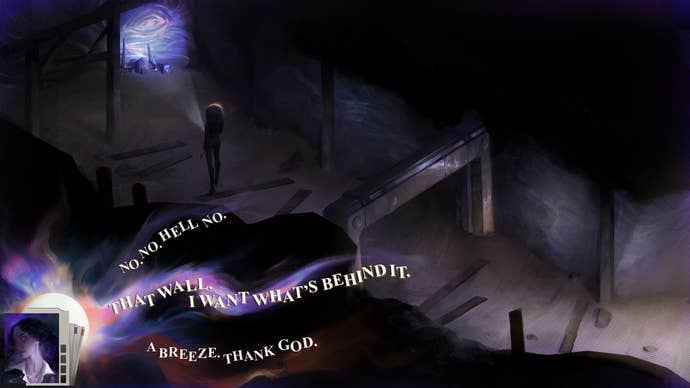
    A chat with a wall in Hopetown.

    Just your average chat with a wall. | Image credit: Longdue

    So, the kicker. What is the game about as it currently exists? Well, it casts you as a rogue journalist in a Northern English mining town that’s “steeped in corruption and power plays”. The journalist part of the equation has a direct link to Roberts’ past.

    “I was a journalism major for a while in college, back in the olden times,” he tells me. “I used to write for a video game magazine, Next Generation magazine back in the late 90s, so I’ve got a bit of a journalism background. There are other people on the team who have journalism backgrounds, other people’s families who have had backgrounds in journalism. We’re talking to all of them about the craft of journalism about what it meant to be a journalist during [certain times], what it means to be a journalist in modern times, what it will mean to be a journalist in [Hopetown’s] world.”

    He brings up the current state of the profession, how much things have changed for it in recent times with “a lot of more traditional journalistic endeavors, no longer having the support both from the public or from benefactors”, and the need for a “robust” press in 2025, when the world is undergoing a “sometimes slow, sometimes rapid slide into authoritarianism”.

    Meanwhile, he says that creating a fictionalised town in the north of England being the setting is something that Longdue’s art director has been looking into visual reference-wise. “The north east of England and the Yorkshire area is where I think we’ve looked for inspiration. The vibe up there, or at least the vibe around the time period that we’re looking at [for inspiration], as well as some of the visuals.”

    Roberts’ team also plan to use the real world UK’s long history of coal mining to “help inform the game”. “Not that we want it to be dry or a history lesson or a documentary or anything,” he says, “but we’re setting it in a world that [you] will recognise on purpose, so we can dig into that stuff, so to speak.”

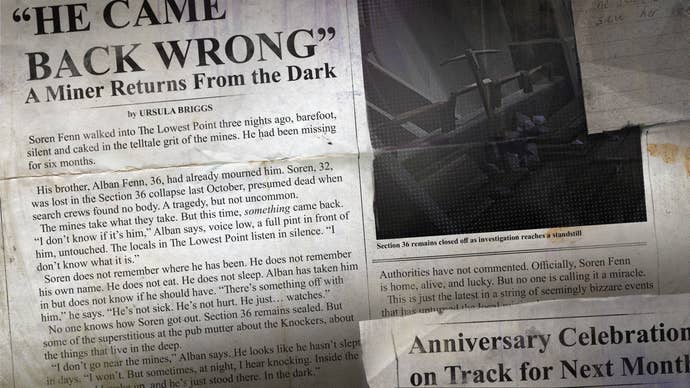
    A newspaper in Hopetown.

    It’s harder than it looks, you know. | Image credit: Longdue

    On the other hand, both Roberts and Sobolewski cleared up one thing that the game won’t involve: generative AI. Some speculation about this had been ignited by Sobolewski’s LinkedIn profile, which cites his Ph.D qualification in AI, as well as several roles involving the tech.

    “This is my other passion next to game development,” Sobolewski responds when I bring this up, “but I’m not mixing these two at Longdue. These are things that are my personal stuff that I’m doing for a living, and for my own personal growth. I’m not shy about it and not hiding anything. Yes, I am an AI consultant for various companies. For me, I think consuming art is kind of like consuming food, and if it’s not done by a human, it doesn’t have soul. It’s kind of like eating plastic.

    “I think that AI is great because it understands human language and can turn unstructured data into structured data, so it can actually extract some information from documents, etc,” he continues, “I don’t think AI should be used as a replacement for human creativity. I don’t think it’s a good direction.”

    “Our writing is from writers in everything that we put out,” Roberts adds, “Our art is from artists, and that will continue to be the case. Even if we wanted to use generative AI to make content for the game – which we don’t – the technology isn’t there to pull off good writing. It’ll write dialogue that sounds like good writing, but the people who appreciate good writing can tell the difference.”

    The narrative director, meanwhile, has a CV that’s not attracted as much attention from Disco fans. Throughout a long career in game dev, he’s worked as a writer on the likes of Bungie’s Destiny 2 and Rocksteady’s Suicide Squad: Kill The Justice League. He tells me that having seen how the development process works at large studios on triple-A projects like those has helped give him “a really zoomed-out view into how to do it well, while still leaving room for that passion” that he’s applying to the smaller-scale Hopetown.

    “It was still really satisfying to find new stories to tell with characters that people already loved and the worlds that people already loved,” he adds in terms of how incorporating the personal into writing can differ between larger games with established lore and a new IP like Hopetown. “But being able to build something new, a new world with new characters that people will love is, I think, exciting in a different way.”

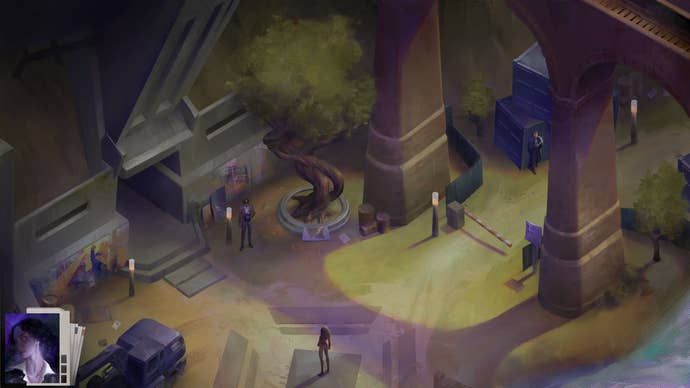
    A shot of the player exploring Hopetown from above.

    You’ll be looking down from the heavens, as you have in Disco and a bunch of other stuff. | Image credit: Longdue

    At the end of the day though, as that aforementioned non-screenshot has proven, this freedom for Hopetown is coming with one measuring stick Longdue has taped its game to. For better or worse.

    “There’s a lot of ways that it will be similar and a lot of ways that it will be different,” Roberts says when I ask him directly how Hopetown will set itself apart from Disco Elysium. “We’re not specifically honouring the legacy of any one game, it’s more about the history of the genre. While we did use that messaging early on, based on the people that were working on that early concept who are no longer with the company it made sense to say that it was a spiritual successor.

    “So, there are parts of Disco Elysium that we are inspired by and that we want to make in this game. Psychological complexity and storytelling, that is intelligent and modern and mature, but not in a dark and gritty way, but like an adult way. Really enormous, hugely impactful conversations with characters in the game, both inside and outside of your head. Disco inspired us a lot in those ways, and a lot of games over the last few decades have looked like Disco, they’ve got this camera perspective, either isometric or diametric, or however you want to think of it. We’re going to look like that, we’re going to have conversations with ranging dialogue and with skills that will speak up during conversations, and that will guide you during conversations.

    “So, it is for people who – I think the other day I described it as – if you like Disco Elysium, then you’re probably going to like Hopetown. And if you didn’t like Disco Elysium, then you might like Hopetown anyway.”


    Source link

    Pokémon TCG Pocket Is About To Have Some Competition

    0
    Pokémon TCG Pocket Is About To Have Some Competition


    Screenshot: Bandai Namco / Kotaku

    Some rivalries you just can’t let go, even if one side has clearly outpaced the other. There’s Nintendo vs. Sega, Kendrick Lamar vs. Drake, and of course, Pokémon vs. Digimon. Bandai Namco’s monster tamer series hasn’t kept the vice grip on pop culture that Nintendo’s has, but Digimon has been respectably trucking along with all manner of games, anime and products for a dedicated audience. These days, Digimon is mostly doing its own thing. But, it’s about to release its own mobile card game app to compete with Pokémon Trading Card Game Pocket.

    A teaser for the new game was posted on the official Digimon Trading Card Game social media channels, where the fox-like Digimon Renamon picks up a smartphone and is digitized and sucked into the device. The screen then states that more information will be available at Digimon Con, a dedicated live stream taking place on March 19 at 11 p.m. Eastern. The teaser is vague, so we don’t know if this will be an official digital platform to play the modern card game, or if it will have gacha mechanics similar to Pokémon TCG Pocket. But either way, Digimon is about to enter the card game app market again.

    While Pokémon has had one major TCG for 30 years, Digimon has had multiple iterations of a card game over the decades, the current one launched in 2020.

    Outside of the card game app, we’ll hopefully hear more about upcoming Digimon anime and video game projects like Digimon Story: Time Stranger coming later this year. Right now, there is no active Digimon anime on TV after Ghost Game ended in 2023, so it would be cool if we heard about a new series later this week.


    Source link

    Luxury Meets Legal Battles in NFT Tech Lawsuit

    Luxury Meets Legal Battles in NFT Tech Lawsuit


    In Brief

    Luxury collides with legal battles as Watch Skins sues LVMH over alleged NFT smartwatch patent infringement.

    Luxury Meets Legal Battles in NFT Tech Lawsuit

    The luxury fashion sector has increasingly embraced digital advancements, but a recent legal case underscores the obstacles that established companies face when incorporating innovative technology.  Watch Skins Corporation has launched a lawsuit against LVMH, alleging the global corporation of patent infringement in the NFT display technology in smartwatches.  The case, filed in a Texas federal court on March 10, claims that LVMH stole Watch Skins’ groundbreaking NFT display mechanism.

    Allegations Against TAG Heuer

    Watch Skins claims to have created a unique mechanism for consumers to show certified NFT artworks on smartwatches.  According to the complaint, the corporation owns many patents that cover various components of this technology. It claims that LVMH’s use of NFT display technology in the TAG Heuer Connected Calibre E4 wristwatch and other premium items directly violates three of its patents.

    The claims revolve around how TAG Heuer’s smartwatch interacts with NFTs.  Watch Skins claims that its first patent protects a method that confirms NFT ownership before displaying information on a wristwatch face.  The second patent concerns verifying the NFT’s legitimacy using a blockchain wallet before it is displayed.  

    The third patent relates to the retrieval and display of personalized watch faces based on NFT ownership.  Watch Skins claims that TAG Heuer’s instructions for consumers on how to use the NFT display functionalities contribute to the alleged violation.

    LVMH, recognized for its wide portfolio of luxury brands like Louis Vuitton, Givenchy, Tiffany, Christian Dior, and Hennessy, has aggressively investigated methods to incorporate digital assets into its goods. The case highlights the potential dangers that businesses face when implementing blockchain-based technologies, especially in industries where intellectual property rights are extremely valuable.

    Watch Skins is seeking a jury trial, compensation for lost earnings and royalties as a result of the claimed infringement, and a court order prohibiting LVMH from using the patented technology. The business has stated that it will launch its NFT-based smartwatch face marketplace at the Consumer Electronics Show in Las Vegas in 2020, establishing itself as a pioneer in the industry. Its smartphone app enables customers to purchase legitimately. Licensed smartwatch faces from a variety of companies, with blockchain certification to verify authenticity.

    Implications for the Luxury Industry

    This legal battle illustrates bigger difficulties surrounding the luxury industry’s use of digital technology. The outcome of the case might create critical precedents for intellectual property rights at the convergence of NFTs, wearable technology, and high-end fashion. 

    As luxury businesses continue to investigate digital assets and blockchain-based developments, they may need to negotiate complicated legal settings to guarantee compliance with current patents. To prevent such legal disputes, companies that integrate this technology must strike a balance between innovation and strict adherence to intellectual property restrictions.

    Future of Digital Ownership in Luxury

    The case also raises questions about how traditional luxury brands engage with the evolving digital economy. If Watch Skins prevails in its case, the decision may influence how other fashion businesses handle NFT integration.  As digital ownership becomes a more important component of customer experiences, businesses may need to engage more in due diligence to avoid potential legal difficulties.  The issue demonstrates that technology improvements, even when accepted by industry leaders, are not immune to intellectual property concerns.

     The consequences for the luxury industry and the larger NFT market will become obvious as the lawsuit develops.  A verdict in favor of Watch Skins might change the way manufacturers incorporate NFT-related elements into their goods, perhaps impacting future cooperation between luxury fashion houses and blockchain developers. If LVMH successfully defends its position, the judgment may inspire other companies to move forward with NFT integration without encountering similar patent-related challenges.

    Exclusivity and authenticity have traditionally been essential selling points for luxury companies. With the advent of NFTs, these concepts are being reformulated in digital form. The action against LVMH highlights the necessity of knowing the legal framework governing digital ownership and intellectual property. As the sector evolves, understanding these legal difficulties will become increasingly important for companies seeking to exploit blockchain technology while avoiding infringement lawsuits.

    The lawsuit between Watch Skins and LVMH exemplifies the convergence of luxury, technology, and intellectual property laws. Regardless of the conclusion, it marks an important milestone in the continuous integration of NFTs into high-end fashion. The issue is likely to affect how businesses treat digital assets, emphasizing the need for legal clarity in an era when technology and luxury are becoming increasingly connected.

    Disclaimer

    In line with the Trust Project guidelines, please note that the information provided on this page is not intended to be and should not be interpreted as legal, tax, investment, financial, or any other form of advice. It is important to only invest what you can afford to lose and to seek independent financial advice if you have any doubts. For further information, we suggest referring to the terms and conditions as well as the help and support pages provided by the issuer or advertiser. MetaversePost is committed to accurate, unbiased reporting, but market conditions are subject to change without notice.

    About The Author


    Victoria is a writer on a variety of technology topics including Web3.0, AI and cryptocurrencies. Her extensive experience allows her to write insightful articles for the wider audience.

    More articles


    Victoria d’Este


    Victoria is a writer on a variety of technology topics including Web3.0, AI and cryptocurrencies. Her extensive experience allows her to write insightful articles for the wider audience.


    Source link

    Unleash Creativity and Earn with Sogni AI’s Web3 Innovation

    Unleash Creativity and Earn with Sogni AI’s Web3 Innovation


    In Brief

    Unleash creativity and earn with Sogni.ai, the Web3 platform merging AI art generation, blockchain rewards, and decentralized ownership.

    Unleash Creativity and Earn with Sogni AI’s Web3 Innovation

    Sogni.ai  redefines digital creation by combining AI-powered art generation with blockchain technology. Unlike traditional AI tools, Sogni.ai offers an environment in which users may create, share, and profit by integrating $SOGNI tokens. This unique strategy appeals to professionals, enthusiasts, and content producers by providing more than simply digital art—it also includes cash incentives.

    Expanding Creative Boundaries

    Sogni.ai redefines digital arts by providing a variety of AI-powered features. The platform enables users to easily create high-resolution photos, animations, and even image-to-video transformations. Its easy-to-use design makes it accessible to everyone, from beginners to experienced artists. The tool is adaptable to a variety of applications, including personal projects, social media stuff, and professional branding.  Users may boost their artistic attempts by experimenting with various genres and compositions thanks to powerful AI algorithms.

     One of the distinguishing characteristics of Sogni.ai is its decentralized incentive system.  The $SOGNI token is the foundation for this system, allowing users to earn money while they create.  The platform’s worker mode enables users to contribute idle GPU power and earn passive revenue in exchange.  This concept turns digital creativity into a long-term economic activity, promoting increased involvement and deeper engagement with the AI art scene.

     Privacy and Ownership at the Core

     Unlike many digital platforms that put user privacy at risk, Sogni.ai prioritizes data security. Users maintain complete ownership of their creations, guaranteeing that they are not used without permission. The lack of intrusive watermarks or secret data-gathering techniques enhances user confidence. The method allows artists to create without worrying about intellectual property rights, making Sogni.ai a viable alternative to conventional AI art platforms.

    The use of crypto in the platform elevates Sogni.ai above a simple art generator. Users may utilize $SOGNI tokens to access premium services such as batch processing and ultra-high-resolution rendering. These tokens also enable smooth transactions throughout the network, which improves digital asset management efficiency. Users who participate in the Sogni Supernet contribute to the network’s strength while benefiting from its decentralization.

    Sogni Pocket provides on-the-go accessibility, allowing users to produce and improve ideas as inspiration strikes. Sticker Bot makes it simple to create personalized stickers, giving digital interactions a one-of-a-kind feel. These technologies make AI-powered creation a useful and pleasurable part of everyday life, enabling both casual experimentation and professional operations.

    Quality is still a primary consideration for AI-generated material, and Sogni.ai guarantees that every output satisfies professional standards. Users may create multimedia content for internet and print media at dimensions of up to 2048×2048 pixels. This degree of precision is very useful for artists and designers who want to include AI-generated content into their portfolios, business projects, and marketing materials.

    Sogni.ai easily blends into daily life, providing options for personal expression, work-related visuals, and entertainment. The platform allows you to rapidly create a one-of-a-kind greeting card, create custom images for presentations, or simply experiment with new artistic possibilities. The constant earning potential in worker mode guarantees that even downtime adds to financial benefits.

    The platform redefines the function of digital art platforms by merging powerful artificial intelligence and decentralized finance processes. It creates an inclusive environment in which users may not only produce but also gain financially from their participation. The interaction of AI capabilities with blockchain technology provides a sustainable platform for artistic creativity. 

    A Gateway to Limitless Possibilities

    Sogni.ai is a constantly developing ecosystem that promotes exploration, innovation, and economic engagement. Whether for creative development, financial gain, or pure fun, the platform provides a unique combination of technology and opportunity. Sogni.ai demonstrates the future of artistic expression by combining AI and blockchain. Its mix of easy-to-use design, high-quality output, and integrated rewards places it at the forefront of the Web3 creative sector.

    For anyone interested in exploring the convergence between AI art and cryptocurrencies, Sogni.ai is an excellent place to start. With its numerous tools, safe environment, and rewarding structure, it reimagines the possibilities for digital creativity. Whether pursuing creative excellence or exploring new ways to interact with AI, Sogni.ai allows you to put ideas into reality while earning. 

    Disclaimer

    In line with the Trust Project guidelines, please note that the information provided on this page is not intended to be and should not be interpreted as legal, tax, investment, financial, or any other form of advice. It is important to only invest what you can afford to lose and to seek independent financial advice if you have any doubts. For further information, we suggest referring to the terms and conditions as well as the help and support pages provided by the issuer or advertiser. MetaversePost is committed to accurate, unbiased reporting, but market conditions are subject to change without notice.

    About The Author


    Victoria is a writer on a variety of technology topics including Web3.0, AI and cryptocurrencies. Her extensive experience allows her to write insightful articles for the wider audience.

    More articles


    Victoria d’Este


    Victoria is a writer on a variety of technology topics including Web3.0, AI and cryptocurrencies. Her extensive experience allows her to write insightful articles for the wider audience.


    Source link

    Solana’s Explosive Breakout Ahead—What It Means for BONK and XYZ 

    0
    Solana’s Explosive Breakout Ahead—What It Means for BONK and XYZ 


    Solana seems ready for a powerful upswing that could send shockwaves through the market. This potential breakout may influence not only Solana but also tokens like BONK and XYZ. What is behind this movement, and how could it reshape the altcoin market? Explore these questions in the following analysis.

    XYZVerse Presale Surges Past $10M, Signaling Strong Market Demand

    XYZVerse Presale Surges Past $10M, Signaling Strong Market Demand

    XYZVerse ($XYZ), a crypto project blending sports and blockchain, has gained significant traction, drawing both retail and institutional investors. Unlike conventional memecoins, XYZVerse presents a structured roadmap and an active community, reinforcing its long-term ambitions. The project was recently recognized as the Elite New Meme Project, further enhancing its market credibility.

    Price Performance and Listing Strategy

    The presale phase has witnessed consistent price appreciation, with $XYZ climbing from $0.0001 to $0.003333. The next stage is set to push the token to $0.005, with a final presale price of $0.02 before exchange listings.

    Post-presale, $XYZ is slated for listings on major centralized and decentralized exchanges, with a projected debut price of $0.10. If market capitalization aligns with expectations, early investors could see up to 1,000x returns.

    Market Dynamics and Future Prospects

    Investor appetite for $XYZ stems from both marketing efforts and fundamental drivers. By tapping into sports fandom and integrating mechanisms to sustain token utility, XYZVerse positions itself for long-term value creation.

    With over $10 million raised and presale allocations depleting rapidly, the project is advancing toward its full market launch, reflecting strong demand and bullish sentiment in the sector.

    Join XYZVerse to Unlock Early Benefits 

    Solana (SOL)

    Over the past week, Solana has seen a price drop of 12.51%. The decline is sharper when looking at the past month, with a decrease of 36.61%. In the last six months, the price has gone down by 8.63%. These figures indicate a downward trend in Solana’s value in recent times.

    Currently, Solana’s price ranges between $108.17 and $162.24. The closest point of support is positioned at $89.77, which could be a critical point if the price continues to fall. On the upside, the nearest resistance level stands at $197. Breaking through this level could signal a shift towards a bullish trend. If momentum builds, the next resistance level is at $251, presenting a significant opportunity for growth.

    Technical indicators offer a mixed outlook. The Relative Strength Index sits at 54.93, indicating that the asset remains in a neutral zone, neither excessively bought nor significantly undervalued. The stochastic indicator is high at 89.38, pointing towards potential overbought conditions. The MACD level is positive at 0.1476, indicating slight bullish momentum. The simple moving averages over 10 and 100 days are close, around $124, showing consolidation. If Solana can surpass the $197 resistance level, it might see considerable gains. Conversely, dropping below the $89.77 support could lead to further declines toward the next support at $35.70.

    Bonk (BONK)

    Bonk (BONK) has recently caught the eye of crypto traders due to its significant price movements. Over the past week, BONK’s price has dropped by 9.15%. The decline is more pronounced over the past month, with a decrease of 38.10%. In the last six months, the coin has seen a downturn of 36.36%. These trends have raised questions about whether BONK is poised for a rebound or if the downward momentum will continue.

    Currently, BONK is trading between $0.000008157 and $0.000013857. The nearest resistance level is at $0.000017613, and the nearest support level is at $0.000006213. If the price breaks above this resistance, it could signal a potential rise of over 20%. However, if it falls below the support, further declines might occur. The 10-day simple moving average is slightly above the 100-day average, suggesting a short-term upward trend.

    Technical indicators present mixed signals. The Relative Strength Index (RSI) is at 63.65, approaching overbought territory. The stochastic oscillator is high at 94.94, which could indicate a possible price correction ahead. The MACD level is positive, hinting at bullish momentum. Traders are watching to see if BONK will test its resistance levels, which could lead to substantial gains, or if it will breach support levels, resulting in significant losses.

    Conclusion

    Solana’s breakout signals potential for BONK, but XYZVerse (XYZ) uniquely unites sports fans in a pioneering memecoin ecosystem.

    You can find more information about XYZVerse (XYZ) here:

    Site, Telegram, X


    Source link

    Dianne Buswell issues sad update on beloved dad following cancer diagnosis days after heartbreaking family loss

      0
      Dianne Buswell issues sad update on beloved dad following cancer diagnosis days after heartbreaking family loss


      Strictly champ Dianne Buswell has been flooded with support after issuing a sad update on her dad, Mark.

      Mark has been battling cancer since being diagnosed back in 2023.

      Strictly star Dianne Buswell shares sad update

      Taking to Instagram yesterday (Sunday, March 16), Dianne, 35, revealed that her dad is back in hospital.

      The Australian dancer, who won Strictly last year with Chris McCausland, shared a snap of herself and Mark from his hospital bed.

      In the picture, Dianne can be seen smiling as she leans down to pose alongside her dad.

      Mark can be seen smiling up at the camera, whilst wearing a hospital gown.

      “My dad my superhero,” Dianne captioned the heartwarming post.

      Dianne was supported by fans and followers (Credit: ITV)

      Fans show their support

      Plenty of Dianne’s 1.1 million followers took to the comment section to show the star their support.

      Amy Dowden posted a love heart emoji. Dianne’s boyfriend, Joe Sugg, posted a string of love heart emojis too.

      MAAAAAAARK! You are [strong arm emoji] We are all with you,” Vito Coppola commented.

      “Loads of love to Mark xxx,” Nikita Kuzmin said.

      “Love dad [heart emojis] love you be strong,” Shirley Ballas added.

      “Sending so much love and support keep strong,” Joe Sugg’s mum, Tracey, also wrote.

      Dianne returned to the post sometime later to thank fans and followers for the support.

      “Thank you all so much for the love and wishes,” she wrote.

      Dianne Buswell smiling slightly on This Morning

      Dianne’s nan died recently (Credit: ITV)

      Dianne’s sad news

      The update about her dad comes just days after Dianne sadly lost her grandmother.

      She announced the sad news during her podcast with Chris McCausland, Winning Isn’t Everything.

      “I won’t lie, I’ve had better weeks in my life,” she said.

      I was able to be here for my family, which has been really lovely.

      “I had my gorgeous, beautiful nan, she sadly passed away this week, which is very, very sad,” she then continued. “However, I have been looking at in a different way. I’m looking at it as, you know, I could have been in the UK, I could not have said goodbye to her, I could maybe not have been able to see her before she passed, so I’m seeing it in a very positive way. And I was able to be here for my family, which has been really lovely.”

      She then added that though it’s been sad, sharing stories about her nan has made it an “uplifting” and “almost joyous” time too.

      Read more: Dianne Buswell and Joe Sugg’s relationship questioned as Strictly star hits back over intrusive ‘personal’ messages

      Dianne Buswell: Strictly SECRETS, Overcoming Her Eating Disorder & Healing Power Of Movement

      Send Dianne your support on our Facebook page @EntertainmentDailyFix.


      Source link

      WAX Removes Wallet Creation Fee to Improve Accessibility

        0
        WAX Removes Wallet Creation Fee to Improve Accessibility


        The Worldwide Asset eXchange (WAX) has removed the fee required to create a blockchain account through its Cloud Wallet.

        Previously, new users had to pay 5 $WAXP to set up an account, a measure originally introduced to prevent automated bot activity. The removal of this fee is intended to make it easier for new users to join the WAX blockchain and encourage broader adoption by reducing the financial barrier to entry.

        WAX stated that its blockchain “is stronger than ever” and is therefore making account creation easy and free.

        WAX Removes Wallet Creation Fee to Improve Accessibility Source: WAX

        What is WAX?

        WAX is a blockchain network designed for high-volume transactions, with a particular focus on gaming, digital assets, and NFTs.

        Unlike some other blockchains, WAX does not charge transaction fees, allowing users to interact with dApps and trade assets without incurring costs for each transaction.

        The blockchain is built to support large-scale activity, processing up to 10,000 transactions per second. It has been adopted by various NFT projects, game developers, and digital marketplaces due to its efficiency and ease of use. WAX also offers a Cloud Wallet, which allows users to manage their assets without needing extensive technical knowledge of blockchain technology.

        WAX Removes Wallet Creation Fee to Improve Accessibility
        WAX Removes Wallet Creation Fee to Improve Accessibility Source: WAX

        What’s next for WAX?

        The removal of the wallet creation fee is one of several changes WAX has planned for 2025. Initially, the fee was introduced to prevent excessive bot activity and automated account creation, but WAX has stated that its security measures have since evolved, allowing the paywall to be lifted.

        In addition to this change, WAX has is rolling out several upgrades this year to enhance its blockchain infrastructure, developer tools, and marketplace. The Cloud Wallet will receive mobile apps for iOS and Android, expanded support for side chains, Testnet environments, and EVM compatibility.

        On the blockchain level, WAX is improving security and decentralisation, including quantum-proofing, decentralising its Random Number Generator (RNG) system, and making its Multichain Bridge open-source. Performance optimizations, such as RAM efficiency improvements, will help scale the network whilst maintaining smooth operations.

        For developers, WAX is simplifying node deployment and expanding documentation to support dApp integration. Meanwhile, the vIRL Marketplace will undergo improvements to enhance the trading experience.


        Source link

        Popular Posts

        My Favorites

        21 Space-Themed Movies to Expand Your Sci-Fi Horizons

        0
        We’ve rounded up the best space-themed movies for science fiction lovers. For centuries, people have wondered what lies in space and have dreamed...