Home Blog Page 1066

L.A. Reid Lists Bel Air Mansion for Millions

    0
    L.A. Reid Lists Bel Air Mansion for Millions


    L.A. Reid
    Sellin’ Bel Air Mansion …
    Can be yours for $17.5 MIL!!!

    Published March 18, 2025 1:00 AM PDT

    L.A. Reid is attempting to once again unload his Los Angeles mega mansion … because TMZ has learned he just relisted the property for millions.

    Real estate sources tell us … Reid put the Bel Air estate back on the market for a cool $17.5 million on Monday. The home has 7 bedrooms, 10 bathrooms and over 11,000 square feet of living space.

    The property has all the bells and whistles and is an entertainers paradise. There’s a massive pool, spa, and outdoor kitchen with a big grassy yard.

    0317-L.A.-Reid-Wine-Cellar-SUB

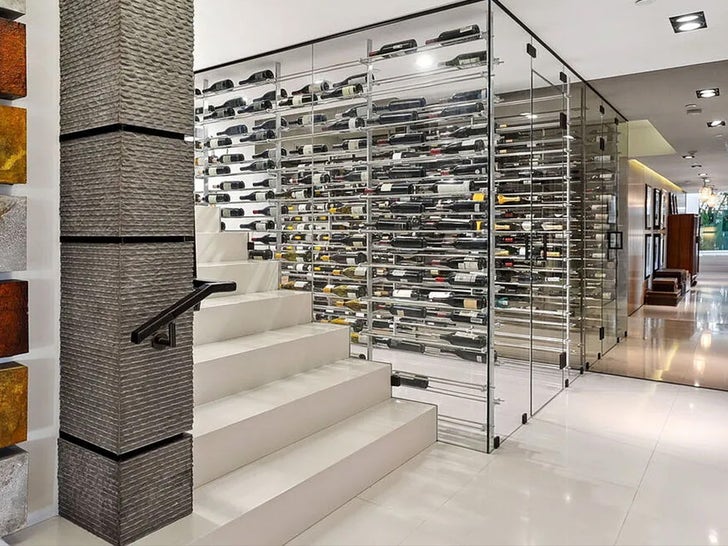
    There’s also a gym, home theater with an en-suite bar, a 300-bottle wine cellar, and canyon and city views.

    Reid has tried to sell the property a few times before. He first put it on the market in 2019 with a listing price of $22.9 million. He took it off and then relisted it in 2023 for $21.5 million.

    0317-L.A.-Reid-Movie-Theather-SUB

    Last year, he dropped the price down under $20 million. In 2024, he brought it back on the market for $20 million but again struggled to sell it.

    Jason and Brett Oppenheim of The Oppenheim Group hold the listing.


    Source link

    The Death of Subculture: How Cult Dressing Evolved into Mainstream Culture

    The Death of Subculture: How Cult Dressing Evolved into Mainstream Culture


    Joy in Freedom of Expression

    Beyond Netflix documentaries and newspaper headlines, in the context of fashion, “cult dressing” refers to a sartorial trope associated with specific subcultures or underground movements, where clothing choices are often used as a form of rebellion, identity or self-expression that is distinct from mainstream fashion. These subcultures could include groups like punk, goth, grunge, skaters or alternative styles that rejected conventional fashion norms. Cult dressing is typically defined by its exclusivity and uniqueness, often showcasing a specific set of aesthetics — such as do-it-yourself (DIY) fashion, obscure designer pieces or unconventional ensembles that signal membership in a specific cultural or social group. This style is usually adopted by those who want to differentiate themselves from the mainstream, often as a form of resistance or individuality.

    As fashion becomes more inclusive and accessible, consumers are now able to express their authentic selves without the barriers that once kept certain styles exclusive. This democratisation of fashion means that people from all walks of life can find joy in dressing uniquely, without feeling restricted by mainstream fashion’s norms. The key idea is that these styles were once rare, niche and inaccessible to the broader public, but as fashion becomes more democratised through social media and collaborations between high fashion and mass-market brands, these once “cult” styles are increasingly absorbed into the mainstream, losing some of their distinctiveness and rebellious power.

    The Rise of Social Media and the Death of Subcultural Significance

    @cynicalneoprincess If last night was anything to go by I guess I can expect a looot of Chappell Roan comparisons over the next few years. But I need everyone to know I was doing the whole white face drag look before I ever knew who she was 😭 . . . . . . . . . #fitcheck #altfashion #altmakeup #gothfashion #clubkid ♬ original sound – ICONIC AUDIO

    Fashion has always been a vehicle for self-expression, a tool to communicate identity and beliefs. For years, cult dressing — the hallmark of underground movements, niche subcultures and rebellious countercultures — was a bastion of inclusivity by means of exclusivity, a space where personal style was defined by what was different from the mainstream, a subculture of individuals who found their own sense of belonging amongst outsiders. In 2025, the landscape has shifted dramatically. Social media platforms — particularly TikTok — have democratised fashion, enabling subcultures once confined to the fringes to move into the mainstream, where their distinct styles are appropriated, commodified and mass-marketed causing the lines between what is “underground” and what is commercial to blur. What was once deemed “alternative” is now easily accessible to anyone with a phone and fashion has become a more collective, rapidly changing experience.

    To many, the unique essence of subcultures that once defined individuality has been commodified and marketed to the masses. As these styles trickle down to mass-market brands and their consumers, they eventually become mainstream trends losing the very essence of what made them special. What was once a symbol of authenticity — from punk’s safety pins and flannel shirts to the streetwear born from skate culture — becomes diluted when packaged for profit. This results in the erosion of the authenticity these movements once held, leading to a sense of disillusionment in the joy of dressing and the expression of being “uniquely you”. The “proliferation” of these once-unique styles forces us — as fashion consumers — to confront the dichotomy: can adopting elements of a subculture still allow space for true individuality? If not, does this disillusionment affect the very idea of what it means to be “uniquely you”?

    The Reconfiguration of Fashion Culture

    @noctez.collective blowin’ bubbles… #y2k #outfitinspo #aesthetic #y2kfashion #fyp ♬ son original – ∞

    The emergence of TikTok as a global cultural force has transformed the way many consume fashion. With TikTok’s algorithm-driven discovery tools, fashion trends can explode and evolve in a matter of hours. No longer do individuals need to belong to a specific subculture to gain visibility and the “cult” aspect of “cult dressing” is now diluted. In the age of TikTok, niche trends such as normcore, Y2K aesthetics or even specific clothing brands associated with subcultures are consumed and transformed by millions. While this level of visibility is empowering, it also raises the question of whether subcultures can retain their authenticity once they become commercially viable.

    Normcore — which initially stood out for its embrace of simplicity as a form of non-conformity — quickly evolved into a mainstream trend. What started as a rejection of ostentation became mass-marketed and adopted by major retailers, making it accessible while maintaining its roots in minimalism. This shift highlights how subcultures — even those rooted in resistance to trends — can find themselves co-opted by the very industries they once challenged.

    Similarly, Cottagecore — a style born from a romanticised, rural lifestyle that rejects modernity — draws inspiration from vintage, rural aesthetics with a countercultural edge. Originally a niche, it has seen a surge in popularity, driven in part by platforms like TikTok and Etsy, and compounded to mainstream culture by the popularity of the “Trad Wife” lifestyle trend. This movement — once defined by its “cultish” quality — has grown to see collaborations between indie brands and mass-market retailers like Urban Outfitters, blurring the line between underground and mainstream appeal.

    The Y2K aesthetic — rooted in nostalgia for the late 1990s and early 2000s — exemplifies how trends are revived with new intensity in the digital age. Defined by metallics, exposed underwear waistbands over baggy, low-rise jeans and bold logos, this trend has exploded across social media and into the fashion mainstream (re-energised by Diesel, who one could argue was a pioneer of the trend in the early 2000s, showcasing the cyclical nature of fashion as styles make their way back into the spotlight, often evolving yet remaining rooted in their origins), revealing the power of collective memory and viral influence in reshaping past styles for today’s audience.

    Finally, streetwear — which once emerged from skate, hip-hop, and punk subcultures — has ascended from its underground roots to become a dominant force in global fashion. Brands like Supreme and Off-White, which were initially part of countercultural movements, now stand at the forefront of high fashion, demonstrating how styles born in rebellion can redefine what is considered mainstream. This shift underscores the fluid nature of fashion, where the lines between subcultures and commercial success continue to blur. There is also an element of nostalgia, cultural relevance and timing at play. Cottagecore, for example, aligns with a collective desire for simplicity and a return to nature amidst digital overwhelm. Similarly, the resurgence of Y2K aesthetics taps into nostalgia — marketing it as a form of self-expression, but often reducing it to a way to commodify memories.

    Redefining Individuality in a Collective Fashion Culture

    Uniqlo Collab with Marni (left) and Jil Sander (right)

    One of the most notable markers of this shift is the increased frequency of collaborations between avant-garde designers and mass-market brands. Labels like Uniqlo, H&M and even fast-fashion titan Zara have long partnered with high-end designers to make their collections available to the masses. Designers with cult followings such as Jil Sander, Comme des Garçons and Alexander Wang have contributed to lines that bring high fashion into affordable retail spaces. This merging of high and low fashion serves to further dissolve the boundaries that once defined the two. These partnerships make luxury design more accessible but also challenge the concept of fashion as an expression of exclusivity. When cutting-edge designs are available at one’s local Uniqlo, it becomes difficult to claim that these pieces — once markers of individuality — are truly unique anymore.

    In a time where digital trends dictate what is “in” and fast fashion accelerates production and distribution, personal expression in fashion has become more about what the consumer can access than about being “uniquely you”. The digital age has also accelerated the speed at which these trends evolve, making it harder for any one style to remain “cult” for long. The individuals who originated the trend or belonged to these subcultures, lose the joy of being “uniquely you” and soon move on to the next trend. Subcultural fashion was once about constructing an identity through unique choices — clothes that represented a specific belief, group or idea. Today, that process has been shortened into digestible moments: a TikTok challenge, an influencer partnership or a viral meme. The notion of “individuality” is now framed within the context of a collective cultural moment. The challenge consumers face is how they intend to preserve individuality in a society where cultural trends feel increasingly orchestrated and how brands market this to consumers while still leveraging on market trends and maintaining profit margins.

    Luxury Labels, Cult Followings & Designer Reshuffle

    Another element of cult dressing in luxury fashion moves away from the underground rebellions and instead taps into an entirely different subculture — one built around an aspirational lifestyle defined by exclusivity. Designers like Jonathan Anderson and Demna tap into this niche by creating collections that attract a specific type of consumer — one who values individuality but also seeks to belong to an exclusive group. These collections embody a unique intersection of personal style and aspirational status.

    Jonathan Anderson’s tenure at Loewe — marked by surreal and often bold designs — pushed the boundaries of what was traditionally accepted in high fashion and gave rise to a form of cult dressing that resonated with underground and avant-garde movements. Anderson’s use of unconventional shapes, vibrant colours and unexpected materials brought joy in freedom of expression, aligning with the themes of individuality and rebellion that cult fashion represents. Jonathan Anderson’s creative direction at Loewe exemplified another element of cult dressing — pushing the boundaries of what was considered “fashionable” and mainstream. His work brought seemingly “outlandish” aesthetics to the forefront, often blurring the lines between high fashion and art. Loewe’s bold collections — with their surreal designs, oversized silhouettes and unconventional treatment of materials — resonated with a niche, cult-like following that embraced the rebellious spirit of individuality and avant-garde fashion. As Anderson leaves Loewe in 2025, this departure signals the end of an era where cult aesthetics and non-conventional beauty were embraced by a luxury fashion house. His departure raises questions about the future of outlandish aesthetics in the mainstream, as high fashion increasingly aligns with digital virality and fast fashion trends.

    Under Demna’s direction, Balenciaga cultivated a cult following, thanks to his subversive designs that often blurred the lines between high fashion and streetwear. His work resonated with a new generation seeking to challenge fashion’s traditional codes. The brand’s bold, boundary-pushing approach — coupled with its ability to offer both exclusivity (through high price points) and accessibility (through beloved staple pieces like the Triple S sneaker) — turned Balenciaga into a cultural phenomenon. Despite what some may consider a controversial tenure, Demna’s departure from Balenciaga marks the end of an era in which his unique vision transformed the brand into a symbol of both underground rebellion and aspirational luxury. His influence on Balenciaga’s evolution — from its sensationalist product releases to its cult-like appeal — was as divisive as it was marketing magic.

    It is also interesting to note that Gucci — during the Alessandro Michele years — similarly honed in on its own legacy of cult status, with his gender-bending, eclectic, maximalist designs that redefined the Maison’s heritage, breaking down traditional notions of menswear resulting in collections that resonated deeply with countercultural movements. As Demna transitions to Gucci, it will be intriguing to see how he navigates and meets the demands of Gucci consumers.

    For more on the latest in style and fashion reads, click here.


    Source link

    Top NFT Collections – March 18, 2025 | NFT CULTURE | NFT News | Web3 Culture | NFTs & Crypto Art

    0
    Top NFT Collections – March 18, 2025 | NFT CULTURE | NFT News | Web3 Culture | NFTs & Crypto Art


    Top NFT Collections (Last 24h)

    Here are the hottest NFT Collections of the day.

    Rank

    Name
    Volume
    Transactions
    Chains
    URL

    1

    Good Vibes Club
    756.45 ETH
    1224
    ethereum
    View

    2
    CryptoPunks
    CryptoPunks
    320.59 ETH
    7
    ethereum
    View

    3
    Pudgy Penguins
    Pudgy Penguins
    216.95 ETH
    24
    ethereum
    View

    4
    Uniswap v4 Positions NFT
    Uniswap v4 Positions NFT
    212.35 ETH
    6
    ethereum
    View

    5
    Bored Ape Yacht Club
    Bored Ape Yacht Club
    157.42 ETH
    12
    ethereum
    View

    6
    SMB Gen2
    SMB Gen2
    0.00 ETH
    86
    solana
    View

    7
    Lil Pudgys
    Lil Pudgys
    106.63 ETH
    105
    ethereum
    View

    8
    Autoglyphs
    Autoglyphs
    103.00 ETH
    1
    ethereum
    View

    9
    OnChainShiba
    OnChainShiba
    76.00 ETH
    8
    ethereum
    View

    10
    Mad Lads
    Mad Lads
    0.00 ETH
    21
    solana
    View

    The post Top NFT Collections – March 18, 2025 appeared first on NFT CULTURE.


    Source link

    Slingshot’s Triumph AI-Driven Game Investment Takes Flight with $16 Million – Web3oclock

    0
    Slingshot’s Triumph AI-Driven Game Investment Takes Flight with  Million – Web3oclock


    AI-Driven Game Investment: Slingshot employs advanced AI algorithms to analyze vast amounts of data, predicting the success potential of emerging games. This allows investors to make informed decisions and support projects with high growth potential.

    Decentralized Community Ownership: By utilizing blockchain technology, Slingshot ensures fair distribution of gaming assets and revenues among its community stakeholders. This fosters a truly player-owned gaming ecosystem, where participants are rewarded for their contributions and engagement.

    Proven Traction: It has already demonstrated its ability to create and scale successful games, boasting over 3 million monthly active players and 33 million total game plays. This track record underscores the platform’s potential to drive significant growth in the gaming sector.

    Impressive Metrics and Community Growth:

    3 million+ Monthly Active Players: A testament to the platform’s engaging and popular gaming experiences.

    33 million+ Total Game Plays: Indicating robust user engagement and successful game launches.

    155,000+ Onchain Holders: A thriving Web3 community supporting the project’s vision.

    1M+ Token Community Members: A rapidly expanding base of $SLING enthusiasts.

    Multiple CEX Listings on Day 1: Ensuring immediate liquidity and broad market exposure.

    Top Launchpads Partnering for IDO: Expanding accessibility for early investors.

    IDO and CEX Listings:


    Source link

    SEC’s Uyeda Signals Possible Revisions to Crypto Custody Rule – Decrypt

    0
    SEC’s Uyeda Signals Possible Revisions to Crypto Custody Rule – Decrypt


    The U.S. Securities and Exchange Commission (SEC) may revise or abandon former chair Gary Gensler’s controversial proposal that would tighten crypto custody standards for investment advisers.

    Under Gensler’s two-year-old proposal, the SEC sought to expand federal custody rules to include assets like crypto, requiring investment advisers to hold client assets with qualified custodians, such as federal- or state-chartered banks.

    In his remarks at an investment conference in San Diego on Monday, acting SEC chair Mark Uyeda acknowledged “significant concerns” raised by industry commenters over the “broad scope” of Gensler’s proposal. 

    “Given such concern, there may be significant challenges to proceeding with the original proposal,” Uyeda said. 

    The regulator mentioned he had directed the SEC staff to work with the agency’s crypto task force to explore alternatives, including withdrawing the rule altogether.

    The former SEC chair’s leadership was defined by stringent crypto oversight, but his resignation before Trump took office marked a pivot in the SEC’s regulatory direction.

    The SEC’s stance on crypto has shifted considerably under President Donald Trump’s leadership, with a more lenient and collaborative approach replacing the hostile regulatory posture of the Biden administration. 

    With Uyeda now at the helm, the SEC is reconsidering several major policies from Gensler’s era, including contentious crypto regulations, which led to a lawsuit by 18 states before his departure.

    The changes include rethinking the expanded definition of “exchanges” and halting the enforcement of certain rules that targeted crypto firms.

    The SEC under Trump also revoked the s Staff Accounting Bulletin (SAB) 121 rule that required firms holding crypto assets to record them as liabilities on their balance sheets.

    The regulator has since dropped enforcement actions against major crypto firms, including Binance, Kraken, and Coinbase, among others, signaling a major relief from the taxing legal battles and uncertainty that plagued the industry for the past few years.

    In line with the Trump administration’s approach to crypto regulation, a significant crypto initiative was the formation of a dedicated crypto task force led by Commissioner ‘Crypto Mom’ Hester Peirce. 

    The task force is tasked with working closely with the crypto industry, with its inaugural roundtable, “How We Got Here and How We Get Out – Defining Security Status,” scheduled to be held this Friday.

    Edited by Sebastian Sinclair

    Daily Debrief Newsletter

    Start every day with the top news stories right now, plus original features, a podcast, videos and more.


    Source link

    Ark: Survival Ascended’s First Expansion Lost Colony Is Coming This Year

    0
    Ark: Survival Ascended’s First Expansion Lost Colony Is Coming This Year


    Ark fans have been waiting for more information regarding Ark 2 since its debut trailer at The Game Awards 2020. Studio Wildcard may be getting closer to revealing more information, as the team announced the first original expansion for Ark: Survival Ascended, Lost Colony, that will directly link the Ark story to the upcoming sequel this November.

    Lost Colony will see players assume the role of heroine Mei Yin–voiced by Everything Everywhere All At Once’s Michelle Yeoh–as she searches a new world for hidden secrets. The expansion will add new abilities, gear, builds, beasts to tame, and more to the game, while those who preorder the expansion will receive “exclusive gameplay preview content” immediately after placing the order.

    The expansion will include multiple anime story sequences created by Studio MAPPA, which is known for multiple hit series including Attack on Titan, Jujutsu Kaisen, and Chainsaw Man. Along with Yeoh, the voice cast also includes The Wheel Of Time’s Madeleine Madden as Helena Walker and Moana’s Auli’i Cravalho as Meeka.

    Ark: Survival Evolved first launched in August 2017, with the updated Survival Ascended delivering it to the current console generation in late 2023. Lost Colony marks the first expansion made specifically for the Survival Ascended update; previous updates only included content from Survival Evolved with Ascended’s upgraded tech.

    Ark: Survival Ascended is available now for Xbox Series X|S, PlayStation 5, and PC. The Lost Colony expansion is set to launch in November, with preorders opening up in June. The expansion can be wishlisted on Steam today.


    Source link

    Meghan Markle Reveals She Has Friends With ‘Normal Jobs’

      0
      Meghan Markle Reveals She Has Friends With ‘Normal Jobs’


      Meghan Markle has seemingly addressed criticism of her Netflix series “With Love, Meghan” after she was called “out of touch” by critics.

      In a new interview, the Duchess of Sussex discussed her and Prince Harry’s efforts to maintain normalcy while raising their children.

      Meghan Markle also shared how she connects with fellow parents, arranges playdates, and enjoys fitness classes.

      Article continues below advertisement

      Meghan Markle Wants ‘Normalcy’ For Her And Prince Harry’s Kids

      MEGA

      Reflecting on the challenges of launching both the show and her lifestyle brand, As Ever, the duchess admitted, “I appreciate everyone who gave me the grace to make mistakes and figure it out and also to be forgiving with myself through that. It’s a learning curve.”

      She  then highlighted how she and Harry strive for normalcy while raising their children, stating: “Once you know us, I think you want us to have the same normalcy as parents and for our children as they do, despite however unique our situation is.”

      Article continues below advertisement

      The former “Suits” actress also revealed that she stays involved in her children’s social lives, frequently texting with Archie and Lilibet’s classmates’ parents to arrange playdates over weekends and holidays.

      Meghan added that Montecito has warmly welcomed her, Harry, and their two children, making them feel at home.

      Article continues below advertisement

      The Duchess Of Sussex Says She Has A ‘Couple Of Girlfriends’ Who Have ‘Normal Jobs’

      Meghan Markle and Prince Harry in Colombia
      MEGA

      A fellow parent from the school shared with the outlet that her bond with Meghan began when the duchess reached out to arrange a playdate for their children.

      At a recent birthday party, Meghan was described as relaxed and down-to-earth. “She was just fun and natural, chatting about mom stuff and life,” the friend shared. “She was very comfortable just chilling.”

      When the friend’s son underwent surgery, Meghan sent a bouquet of balloons and a stuffed octopus from her children. Attached was a sweet note that read, “We thought you could use a hug with eight arms.”

      Speaking about her social circle, Meghan shared that she has built friendships with women who are not in the spotlight.

      Article continues below advertisement

      “I have a couple of girlfriends up here – these are stay-at-home moms and working women with normal jobs, not in the public eye,” she shared. “We went from just connecting through our kids to having girls’ nights out or doing Pilates together.”

      Article continues below advertisement

      Meghan Markle Embraces Group Fitness: ‘It’s the Best, I Had Missed It’

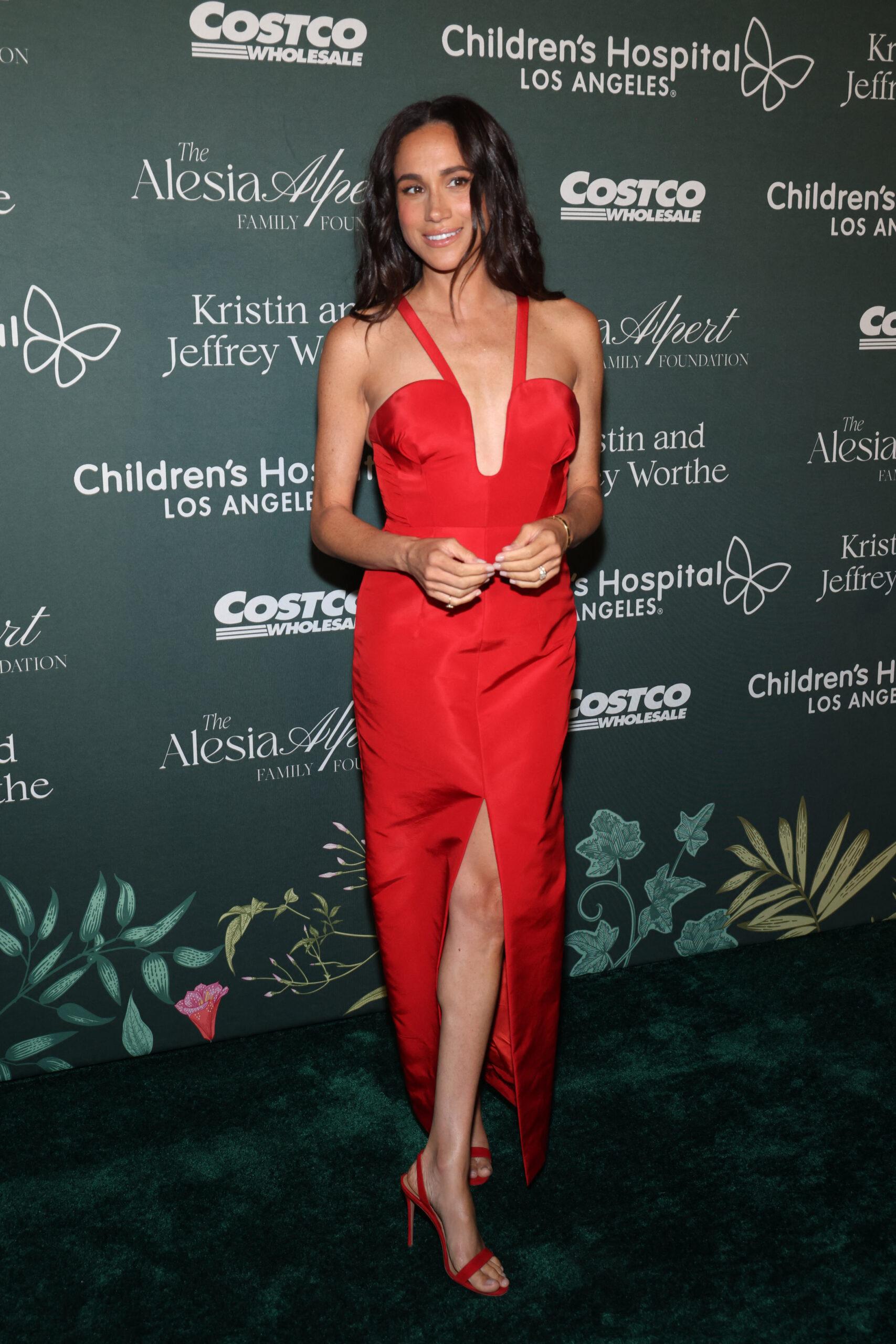
      The Duchess of Sussex at the 2024 Children's Hospital Los Angeles (CHLA) Gala
      MEGA

      Meghan revealed that she enjoys fitness classes with groups of 40 to 50 people. She said, “I go to group classes that sometimes have 40 to 50 people in them and just walk in like, ‘Hi!'”

      The duchess admitted that at first, stepping into a packed yoga class felt like a lot, explaining: “By the way, I think anybody walking into a yoga class with 50 people when you’re one of the last people that walk in and everyone looks up, it’s going to feel a little uncomfortable.”

      Recalling a recent session, she shared: “The other day in class, I was there by myself – sometimes I go with girlfriends, but I went by myself – and in the middle of the class they said, ‘Great, tell the person on your mat next to you that they’re doing a great job, give them a fist pump.'”

      “And I looked over, and there was someone over there, and I was like [miming a fist bump], ‘Well done!’ and then I looked to the other side, and there was someone else, and I went, ‘Nicely done! Come on, guys!'” she added. “I mean, that’s part of how you connect. I love it. It’s the best. I had missed it. It’s awesome.”

      Article continues below advertisement

      The Duchess Shared Her Wholesome ‘Nightcap Recap’ Ritual

      Prince Harry and Meghan Markle announce they will visit Colombia, Montecito, California
      MEGA

      In a previous interview with People Magazine, Meghan shared a personal evening ritual she enjoys with her husband, Prince Harry, combining winding down with a touch of reflection.

      The 43-year-old Duchess of Sussex revealed that she and Harry, 40, end each day with what they call “nightcap recaps.”

      As they prepare school lunches for their children, they take a moment to enjoy a drink together and talk about their day.

      “I think all parents in this phase with kids the same age know it’s rinse and repeat,” Meghan shared, referring to the nightly rhythm they’ve established.

      Once the kitchen duties are wrapped up, the couple often unwinds by enjoying some TV time.

      “We love ‘Shrinking.’ We just finished ‘Black Doves,’ and we’re excited for the new season of ‘The White Lotus,'” she said.

      Justine Bateman Slams Meghan Markle And Prince Harry For ‘Victim Olympics’

      Prince Harry and Meghan Markle announce they will visit Colombia, Montecito, California
      MEGA

      Meanwhile, actress and writer Justine Bateman recently took aim at Meghan and Harry, accusing them of capitalizing on victimhood and making it an Olympic Sport.

      Bateman believes the Sussexes’ approach has worn thin with the public, stating that people didn’t want to “watch someone playact at something they didn’t earn.”

      In her RACE TRACK Substack, the “Family Ties” star argued that their Netflix show struggled because viewers no longer resonate with what she describes as their performative storytelling.

      “The problem with Meghan Markle (and her husband, Harry) is that every opportunity they have explored or exploited over the past few years has been due to their very aggressive Victim Olympics campaign,” she wrote, per the Daily Mail.


      Source link

      Tycho and ISO50: How Scott Hansen Blends Music and Visual Art in Web3 | NFT News Today

      Tycho and ISO50: How Scott Hansen Blends Music and Visual Art in Web3 | NFT News Today


      Scott Hansen, better known by his musical alias Tycho and visual art brand ISO50, stands at the crossroads of digital creativity. His work combines electronic music production with visual art to create a multi-sensory experience that has found new expression through blockchain in the NFT space.

      Key Takeaways

      Scott Hansen operates dual creative personas: Tycho for music and ISO50 for visual design, with a 20-year history of blending these mediums

      His “Element” NFT collection launched in April 2021, featuring looping audiovisual experiences paired with unreleased music tracks

      Hansen entered the NFT space during the 2021 market peak with a focus on long-term utility rather than speculation

      The collection featured innovative technical elements including 3D-mapped photocomposites and seamless audio-visual loops

      Hansen views NFTs as a way to transform ephemeral digital content into permanent, community-owned media

      The Dual Creative Identity of Scott Hansen

      For over 20 years Scott Hansen has built a unique creative ecosystem through his dual identities: ISO50 for visual work and Tycho for music. Instead of keeping these separate he has chosen to blend them together, with ISO50 being the visual operating system that powers Tycho’s music. This synergy has earned him significant recognition in both fields, including two Grammy nominations for Best Electronic/Dance Album as Tycho and prestigious design awards like the FWA Award for ISO50.

      Hansen’s portfolio at ISO50 documents his work since 2001, showcasing album artwork and visual design not only for his own musical projects but also for other artists like Pretty Lights. This long-standing commitment to audio-visual synchronicity prepared him perfectly for the NFT space, where multimedia experiences hold special value.

      The Groundbreaking “Element” NFT Collection

      In April 2021, Hansen made his blockchain debut with the “Element” collection on Nifty Gateway. This pioneering project featured four distinct scenes, each pairing unreleased musical tracks with animations created in collaboration with Michael McAfee. The collection was structured as three open editions plus a special 1/1 auction piece that included lifetime VIP access to Tycho shows, a studio tour, and a signed print—demonstrating Hansen’s focus on creating tangible, long-term value for collectors.

      The Element pieces are best described as meditative, looping audiovisual experiences designed to mirror the immersive nature of Tycho’s live performances. Hansen faced significant technical challenges in creating these pieces, particularly in achieving seamless looping of both audio and video components and implementing 3D-mapped photo composites. One track, “Outer Sunset (Stripped),” was composed specifically for the NFT collection, highlighting Hansen’s commitment to creating original content for this new medium.

      By the time of release, the collection had achieved impressive initial adoption: 205 editions minted with 171 unique owners, and 29 pieces sold (representing 14.1% of the supply).

      Tycho’s NFT Entry Timing

      Hansen entered the NFT space in 2021 at the peak of the market when total sales volume was $25 billion according to Academy of Animated Art. This timing would prove to be significant as the market would later contract by 90% by 2023 according to Blockworks. Despite this volatility, long-term projections remain optimistic, with forecasts ranging from $264.6 billion by 2032 (28.7% CAGR) to $745.4 billion by 2034 (39.4% CAGR).

      Collectibles dominated 32.6% of the NFT market in 2024, with North America leading at a 34.3% market share and $9.2 billion in revenue. Hansen’s multimedia approach aligned perfectly with broader market trends, as 70.4% of NFT sales in 2024 involved digital assets that combine visual and experiential elements.

      What distinguished Hansen’s approach from many contemporaries was his emphasis on utility and artistic value rather than speculative trading. While many artists and platforms rushed to capitalize on the NFT boom with minimal consideration for long-term value, Hansen’s careful integration of VIP experiences and original content demonstrated a more sustainable approach.

      Tokenizing Ephemeral Experiences

      One of the coolest things about Hansen’s NFT view is tokenizing ephemeral content. He wants to turn Instagram video content that would otherwise be lost forever into community-owned media. This is a whole new way for artists to store and share their work.

      Hansen’s community engagement showed he was all in. He did AMAs (Ask Me Anything) in big Web3 communities like Friends With Benefits and Gremlins Discord to explain his NFT vision and gather feedback from potential collectors. He was direct with his audience in the blockchain space.

      Hansen’s Web3 Vision

      Looking ahead Hansen has plans to tokenise more of his music and visual work. This could include tokenised concert visuals, interactive experiences and potentially generative art tied to live performances. This direction treats NFTs not merely as digital collectibles but as a technological framework for creating deeper connections between artist and audience.

      Hansen’s approach treats ISO50 as an overarching creative system that can express itself through both traditional and Web3 channels. This holistic view allows him to experiment with blockchain technology without abandoning the established platforms and methods that have built his audience over two decades.

      By focusing on capturing “permanent moments” through NFTs, Hansen offers a compelling alternative to the typically ephemeral nature of promotional content in the music industry. This permanence, combined with community ownership, points toward a potential future where the relationship between artists and their supporters is fundamentally transformed by blockchain technology.


      Source link

      Coronation Street spoilers for next week: First look as Rob holds Carla at gunpoint

        0
        Coronation Street spoilers for next week: First look as Rob holds Carla at gunpoint


        In Coronation Street spoilers for next week, Tracy lures Carla to No.1 where Rob is waiting with a gun in hand.

        Elsewhere, Jenny takes her eye off Bertie and panics when he’s found alone in the water…

        All this and more in Coronation Street spoilers.

        Coronation Street spoilers next week: 1. Carla’s hostage ordeal

        Tracy does as Rob tells her and invites Carla round to No.1, pretending that she’s wanting a business meeting.

        Carla’s horrified when she turns up and is greeted by Rob, armed with a gun.

        It’s not long until Lisa hears about the hostage situation… But, as a gunshot rings out, will Lisa risk her own life to save her girlfriend’s?

        And, is Rob still plotting his escape? Or, is he now solely out for revenge? Later on at the hospital, the race is on to save the injured person’s life…

        2. Daniel catches Dylan out

        Sean sneaks a glasses case with Brody’s burner phone into Daniel’s schoolbag.

        Sean then calls the STC and gives Dylan a coded message to let him know it’s there.

        When Daniel is distracted in class, Dylan snoops in his bag but is soon caught…

        3. Julie has a narrow miss

        Planning on having cocktails with Todd at a bar, dying Julie pretends to take her medication. She then heads off for the tram…

        On the way though, she suffers some pain on the Street and a piece of scaffolding almost hits her.

        The scaffolder apologies but then suggests to George that Julie was faking her pain because the scaffolding didn’t even hit her.

        After George explains that Julie’s got cancer, Theo feels awful and offers to buy her some flowers. Todd then shows him the way…

        Coronation Street spoilers next week: 4. Todd and Theo hit it off

        With Todd interested in Theo but not getting much flirtation back, Julie decides to take up the role of cupid. She pretends that they’ve got a leaking roof and asks him to take a look.

        But, Julie’s plan backfires though because when Theo arrives at No.11 just to find Todd alone, he knows exactly what’s going on.

        He then tells Todd that he’s not gay and would like to be left alone by both him and Julie.

        5. Jenny’s in troubled water (and so is Bertie)

        Jenny buys Rita a spa voucher and tells her that Daisy’s dad invested some shares in her name ages ago and she’s set to get a £60k payout. Jenny keeps this information quiet from Daisy…

        Daisy worries about how they’ll pay Carla back, with Daniel suggesting that she moves in with him and Bertie. Jenny feels guilty and hands Daisy the spa voucher, pretending that she bought it for her.

        Daisy soon finds out about Jenny’s windfall, with Jenny offering Carla £60k as a part-payment. Carla’s not happy though and comes up with idea of Jenny getting a business loan to pay her back in full.

        Later, Jenny minds Bertie but takes her eye off him when calling the bank. With Bertie heading to the hot tub to catch his football, Steve and Cassie panic as they find him in the water.

        With Daisy ready to take Bertie to the hospital, she blames Jenny. Her mind immediately worried that Bertie would suffer the same fate as Tom. But, can Jenny gain Daisy’s forgiveness?

        6. Chaos for Debbie

        Debbie’s adamant she won’t pay Mick the rest of the money, and later finds her purse missing. With Debbie accusing Mick, Ronnie soon confronts him.

        And there’s more drama ahead as Debbie gets a call from the school to explain that Jack’s been in a fight. Debbie asks Mrs Crawshaw to backtrack her suspension plans, also getting her to not tell Kev about the incident.

        Coronation Street spoilers next week: 7. Dee-Dee reconsiders James’ offer

        Admitting to Sarah that the prospective parents don’t feel suitable, Sarah brings up James and Danny’s offer once again.

        Later on, over dinner with James, Dee-Dee experiences some contractions.

        James helps her as she heads to the hospital maternity unit to get checked over. However, Dee-Dee’s then informed that she’s experiencing false labour pains.

        Opening up to Dee-Dee, James admits that he and partner Danny came close to adopting a young boy in the past and were heartbroken when it fell through. Dee-Dee then reconsiders James’ offer of adopting her little one…

        Read more: David Platt exit storyline theories as Corrie legend Jack P Shepherd signs to Celebrity Big Brother

        8 dramatic Coronation Street spoilers for next week (March 10-14)

        Coronation Street usually airs on Monday, Wednesday and Friday at 8pm on ITV.

        What do you think of this story? Leave us a comment on our Facebook page @EntertainmentDailyFix and let us know your thoughts!


        Source link

        From NFT Exploits to Exchange Hacks: Smart Contract Vulnerabilities at Work | NFT News Today

        From NFT Exploits to Exchange Hacks: Smart Contract Vulnerabilities at Work | NFT News Today


        You might be surprised by how often you rely on digital agreements. Whenever you hear about decentralized services or see a blockchain-based payment, a piece of computer code—called a smart contract—runs behind the scenes. But here’s a question for you: what if that code has vulnerabilities?

        Smart Contract flaws are gaps or awkward behaviours in the code that can lead to problems. These problems could cause lost funds, broken systems, or people losing confidence in a project, as a single faulty line of code can open a window of opportunity for attackers. Keep reading to learn about some widespread security holes and real-life cases.

        Smart Contracts in Web3, Blockchain, and NFTs

        Blockchain networks—such as Ethereum and Solana—host the code that powers these new systems, making automated transactions possible without relying on a centralized authority. NFTs go one step further, letting you own unique digital collectibles, in-game items, or virtual property with transparent rules for minting and trading.

        At the heart of all this progress are smart contracts—tiny blocks of code that set the terms and handle the details independently. They’re the reason you can lend tokens, buy art, or join a DAO without asking for permission from a third party.

        But if these contracts contain flaws, entire projects can be thrown off course. That’s why security and clarity in smart contract design are so important.

        Common Smart Contract Vulnerabilities

        Reentrancy Attacks

        A reentrancy attack happens when a contract calls external code before it updates its records. This creates a tiny window for someone to do the same action again—like withdrawing funds—before the contract notices the first withdrawal. A famous example is the DAO hack, where multiple withdrawals occurred in a single transaction, causing a massive loss of assets.

        Integer Overflow & Underflow

        Numbers that go beyond (or below) their expected ranges can suddenly “wrap around” to an unexpected value. For example, an unsigned integer dropping below zero might become a huge positive number, giving attackers an edge. Developers often use libraries that check for arithmetic wraparounds to ward off these issues.

        Unchecked External Calls

        Many contracts depend on external code, and if the contract never checks whether these external calls succeed or fail, it can lose track of funds or let in malicious code.

        Unprotected Self-Destruct Functions

        Some contracts include a self-destruct function that can shut down the entire contract and hand over the remaining assets to a specified address. If anyone can call this function, an attacker could destroy your contract at will and walk off with whatever’s left.

        Front-Running Attacks

        On public blockchains, all transactions line up in a queue. Attackers can pay higher transaction fees to jump ahead, letting them profit from price changes or execute trades before others. Strategies like private transaction methods or careful contract design can reduce these risks.

        Poor Randomness Implementation

        Generating genuine randomness on a blockchain is difficult because the network’s outputs follow predictable patterns. If the contract relies on easily guessed values, like timestamps, attackers might sway the results. It’s safer to pull in random values from external sources or use special algorithms designed to produce less predictable outcomes.

        Access Control Issues

        Sometimes, developers set up insufficient checks on who can run sensitive contract functions. Depending on tx.origin is especially dangerous because other contracts can fake it. Always make sure you confirm the true caller to keep unauthorized users from taking over key parts of your system.

        Logic Errors & Business Logic Vulnerabilities

        Even if your code compiles without glitches, the actual logic might not match your intended rules. An auction contract, for instance, could let a bidder “win” without actually paying. Thorough testing is the best way to confirm that each function behaves the way you want

        Gas Limit & Denial of Service (DoS)

        Smart contracts have a built-in limit on how many operations they can perform before running out of gas. Too many complex operations or large loops might cause a failure. Attackers can also flood the network with lots of tiny transactions to bog things down and deny service to legitimate users.

        Real-World Examples

        Bybit Exchange Hack (February 2025)

        You might have heard of Bybit, which is a well-known spot for trading crypto. In February 2025, though, it took a huge hit. Attackers found a gap in the code that handled Ethereum transfers between Bybit’s cold and warm wallets, and they stole around $1.4 billion worth of ETH. Even a respected platform can lose big if just one part of its security puzzle is missing.

        zkLend Hack (February 2025)

        Over on Starknet, zkLend faced its own crisis—roughly $9.57 million disappeared because of an innocent-sounding decimal precision glitch. Basically, when the code tried to handle numbers with certain decimals, it left a loophole big enough for an attacker to slip through and inflate their balances. This episode shows how one tiny detail—like a small rounding slip—can balloon into a massive problem.

        GemPad Hack (December 2024)

        GemPad is all about making smart contract creation easier, but its ease of use still needs solid security. In December 2024, attackers used a reentrancy weakness to pull $1.9 million from various blockchains. If you leave any door open, someone will find a way in, no matter how user-friendly your platform might be.

        WazirX Hack (July 2024)

        WazirX, a large exchange in India, discovered how much damage can happen when a smart contract isn’t fully protected. Attackers changed the contract rules handling its multisignature wallet, giving them a green light to drain user funds—nearly $234.9 million. WazirX had to freeze operations on the spot. It’s a harsh lesson that if your wallet’s control code can be tampered with, having multiple signatures won’t save you.

        All these hacks highlight just how big the stakes are in smart contract security. And it’s not just centralized exchanges that face these dangers—NFT projects can also take a big hit if their code has weak spots.

        The Idols NFT Exploit (January 2025)

        Ethereum’s The Idols NFT project faced a serious setback, losing around $340,000 worth of stETH due to a coding slip in its _beforeTokenTransfer function. Attackers exploited the error by repeatedly moving their NFTs, which allowed them to claim staked Ether rewards more than once.

        Closing Thoughts

        The growth of Web3 and blockchain technology brings unprecedented opportunities, but as these real-world attacks remind us, they also raise the stakes for security. Single flaws in smart contract code can unravel entire ecosystems, wipe out user funds, and threaten a project’s reputation.

        Vigilance pays off. Careful code reviews, audits by experienced professionals, and well-tested functionality can go a long way toward protecting smart contracts.



        Source link

        Popular Posts

        My Favorites

        BTC, ETH, XRP Flash Bullish Reversal: Trendline Breaks Across Top 3

        0
        Key Highlights Bitcoin is trading at $74,949 (+1.55%) after breaking a 5-month descending trendline, Ethereum climbed to $2,296 (+1.47%), and XRP reclaimed $1.41 (+1.33%). US...