In Coronation Street tonight (March 13), villain Theo successfully destroyed George Shuttleworth’s reputation – but upcoming spoilers suggest his focus will soon shift back to tormenting Todd Grimshaw.
The storyline has been difficult for viewers to watch, with Theo’s abuse towards Todd escalating over recent months. Fans already know how dangerous Theo can be after he played a role in the crash that led to the death of Billy Mayhew. And despite Todd and Theo splitting up, it’s clear the ordeal is far from over.
After their breakup, Theo decided to lash out at the people around Todd – starting with George.
Don’t miss a single story! Add us as a Preferred Source in Google for all your entertainment news
It’s important to us that you never miss our articles when searching for stories! We have all the latest TV & Celebrity news to share with our community of loyal readers.
Click here and tick Entertainmentdaily.com to ensure you see stories from us first in Google Search.
Everyone turned against George (Credit: ITV)
George’s reputation was ruined in Coronation Street
The chain of events began in Thursday’s episode (March 12), when Theo discovered that James Bailey had stayed overnight at Todd’s flat.
Although Summer Spellman insisted nothing had happened between James and Todd, George pointed out that even if it had, Todd was single and free to do what he wanted.
Theo clearly didn’t like hearing that.
Later, when he spotted Adam Barlow speaking with Annie – the woman accusing George of fraud – Theo seized the opportunity to speak to her privately. During the conversation, he deliberately fuelled the allegations and painted George as dishonest.
In tonight’s episode (March 13), the fallout quickly became clear.
Todd spent the morning fielding calls from clients, desperately trying to reassure them that the allegations against George weren’t true. However, the damage had already been done, with online posts and news reports spreading the claims.
When Maggie Driscoll saw the story – complete with a photo of George in the pub – she was furious. Worried about the business’s reputation, she demanded George stay away from the premises.
Despite George protesting his innocence, it was clear his reputation had taken a huge hit.
Later, Theo tracked Todd down at Speed Daal using a location tracker. Pretending to be sympathetic, he spoke to Todd about everything that had happened – before suddenly turning cruel. He began showing Todd photos of men from the dating site he uses, leaving Todd visibly uncomfortable.
Todd is in danger (Credit ITV)
Theo spikes Todd’s drink next week in Coronation Street
Next week’s spoilers confirm Theo’s attention soon turns fully back to Todd.
Sarah Platt tries to cheer Todd up by taking him out for lunch, but his mood plummets when he spots Theo nearby with another man.
Later, Glenda Shuttleworth encourages Todd to start dating again. Todd tells Theo they should both move on with their lives – prompting Theo to flirt with Sean Tully just to provoke a reaction.
When Todd mentions that Glenda has arranged a date for him, Theo becomes visibly rattled.
Todd heads off to meet his date, while Theo attends Gary Windass’s birthday celebrations. During the evening, Theo tells Todd he’s thinking about taking a job in Belfast – news that clearly upsets Todd.
But Theo seems pleased by the reaction.
In a sinister twist, he then takes the opportunity to secretly spike Todd’s drink.
What happens next remains to be seen. But with Theo once again targeting Todd, viewers are bracing themselves for more shocking scenes ahead.
Read more: 4 things you must know before Megan Walsh’s grooming secret comes out next week
What do you think of Theo turning back to Todd in Coronation Street? Let us know by leaving a comment on our Facebook page @EntertainmentDailyFix.
Linden Lab opened a new Adult Hub in Second Life in early March 2026, with no official announcement, according to blogger Inara Pey, who first reported on the facility March 7.
The only official sign of the Adult Hub is the SecondLife teleport link.
Second Life first teased the hub in December 2023, describing it as “Something Spicy” that was coming, according to JuicyBomb blogger Gogo, who visited the facility shortly after it opened.
Adult content has always been one of Second Life’s biggest draws — the Lab famously created Zindra, a separate adult continent, back in 2010, after banning explicit content from the main grid. Now, with the platform in its third decade and a new mobile app to fill, Linden Lab appears to be leaning into that audience more openly.
What’s inside
The hub is open to new and existing residents, with mentors on hand to help newcomers, according to Pey. It has a dark, sci-fi aesthetic with neon and LED lighting, setting it apart from other Linden-built destinations.
At the center is the Illusions Lounge nightclub. Teleport portals near the entrance link to newcomer-friendly adult locations, adult clubs, and arts and culture destinations, Pey said. Other facilities include a pool, beach, glamping area with A-frame tents, spa, hotel, and gardens.
The hotel offers five private sky-rooms bookable in 30-minute increments, according to Pey. Most seating around the hub also lets visitors choose whether to control animations solo or share them with a companion.
A controlled environment, not a free-for-all
Gogo said the hub was not what she expected. “It feels more like a general adult social area where different things can happen,” she wrote.
Adult animations are built into the furniture rather than displayed openly, and pose balls are nowhere in sight, she said. Region rules are posted and enforced.
To enter, residents must set their maturity rating to Adult and agree to the rules, according to Gogo. Second Life has no real age verification system, however, meaning underage players could technically still access the hub, she noted.
One reader flagged a security problem in the comments on Pey’s post. Timothy McGregor, who created and operates The Fitting Room, a secure changing room facility, said he was able to camera into a private hotel room using an alternate account and remain for 15 seconds before being ejected. He said all five rooms share a single parcel and that security is only enforced inside the room itself — leaving them visible to anyone camming up from ground level.
A gamble on new users
“I guess Second Life felt Adult was the draw, and I hope their gamble pays off,” Gogo wrote. She noted that when she visited as a one-day-old test avatar, she encountered only established residents — no new users yet.
The quiet launch fits a broader pattern, according to Pey.
Commenter Doreen Elytis confirmed the hub was never announced on the Second Life forums, writing that Linden Lab’s changes “tend to appear quietly and get discovered by someone who notices something new or different.”
Which is odd, if they’re trying to use the Adult Hub to attract new users. Are they hoping for word of mouth? On the other hand, Inara Pey wrote about it, and so did other people — and I’m writing about it now — so I guess it’s kind of working?
Hypergrid Business editor and publisher Maria Korolov is a science fiction novelist. During the day, Maria Korolov is an award-winning freelance technology journalist who covers artificial intelligence, cybersecurity and enterprise virtual reality. See her Amazon author page here and follow her on Twitter, Facebook, or LinkedIn, and check out her latest videos on the Maria Korolov YouTube channel. Email her at [email protected]. Her first virtual world novella, Krim Times, made the Amazon best-seller list in its category. Her second novella, The Lost King of Krim, is out now. She is also the publisher of MetaStellar, a new online magazine of speculative fiction.
The FBI is investigating after several PC games on the Steam platform were found to contain malware.
Some titles appeared to function as normal games, but installed malicious software on players’ computers.
Similar malware campaigns have targeted gamers through fan games and cheat software.
The FBI is investigating the distribution of malware through several video games hosted on Steam, the popular PC gaming platform operated by Valve.
The agency said Friday it is seeking victims whose computers may have been infected after downloading games believed to contain malicious software.
“The FBI believes the threat actor primarily targeted users between the timeframe of May 2024 and January 2026,” the agency wrote.
The FBI’s investigation is targeting several PC games, including BlockBlasters, Chemia, Dashverse, DashFPS, Lampy, Lunara, PirateFi, and Tokenova.
]]>
Last summer, several games, including Chemia and PirateFi, were removed by Steam after they were discovered to include malware.
Steam is one of the largest digital distribution platforms for PC games. In 2025, Steam reached over 132 million monthly active users with over 117,000 games. While the infected titles appeared to be games and were approved for sale on the platform, the FBI says they instead installed malware on players’ computers.
The FBI is seeking information from gamers who may have been affected by the malware.
“The FBI is legally mandated to identify victims of federal crimes it investigates,” an FBI spokesperson told Decrypt. “Victims may be eligible for certain services, restitution, and rights under federal and/or state law. All identities of victims will be kept confidential,” they said, adding that the agency is unable to provide specific details.
Decrypt reached out to Valve for comment on the investigation, but did not immediately receive a response.
Malware targeting gamers has appeared in both game downloads and third-party tools linked to popular titles.
Back in 2023, a fan game based on Nintendo’s Super Mario franchise was found to contain malware capable of hijacking cryptocurrency wallets, deploying software designed to steal passwords, and installing crypto-mining software that ran in the background on infected computers.
In March 2024, cybersecurity firm VX Underground warned that players searching for cheat software for the first-person shooter series Call of Duty were exposed to malware capable of draining Bitcoin wallets. It’s unknown how many people were affected, but VX Underground said the attack potentially affected more than 4.9 million gaming accounts across multiple platforms.
And in December, Kaspersky identified an infostealer malware in pirated mods for Roblox and other games.
Daily Debrief Newsletter
Start every day with the top news stories right now, plus original features, a podcast, videos and more.
Television has the power to turn ordinary locations into landmarks, transforming them into must-see spots for fans worldwide. From iconic cityscapes to quaint small-town corners, the places featured in TV shows often become as famous as the characters themselves. These spots become synonymous with the stories they help tell, drawing visitors eager to step into the scenes of their favorite shows. Here’s a deep dive into some of the most famous places that gained worldwide recognition thanks to television shows.
Tom’s Restaurant – Seinfeld
Tom’s Restaurant, located at the corner of Broadway and 112th Street in New York City, is known to millions of Seinfeld fans as Monk’s Café, the beloved hangout of Jerry, George, Elaine, and Kramer. While the interiors were filmed on a set, the exterior shots are of Tom’s Restaurant. The diner has become a pilgrimage site for fans, immortalized not only by the show but also in the song “Tom’s Diner” by Suzanne Vega. This unassuming eatery has transcended its original purpose, becoming a cultural icon recognized worldwide.
The London Clinic – Bodyguard
Bodyguard, the intense British thriller, brought a real London location into the spotlight with The London Clinic, standing in for St. Matthew’s Hospital. The exterior of this private healthcare facility was used for key scenes involving the protagonist, David Budd, played by Richard Madden. The iconic setting played a significant role in the suspenseful plot, and its real-life counterpart has since been recognized as one of the most famous places associated with a TV show.
Bleak House, Broadstairs – Bleak House
Bleak House in Broadstairs, Kent, is not just the setting for the famous Charles Dickens novel but also became known to television audiences through various adaptations, including the 2005 BBC series Bleak House. The striking cliff-top mansion, where Dickens is said to have written part of the novel, provides an atmospheric backdrop for the drama. The real-life house has become one of the most famous places associated with a TV show, drawing literature enthusiasts and TV fans alike.
Capeside High School – Dawson’s Creek
Dawson’s Creek, the teen drama that captured the hearts of a generation, featured the Wilmington, North Carolina location of Capeside High School, actually E.A. Laney High School. This spot became iconic as the place where Dawson, Joey, Pacey, and Jen navigated their teenage years. The high school, along with other Wilmington locations, has since become one of the most famous places from a TV show, attracting fans eager to relive the nostalgia of the late 1990s and early 2000s.
The Blue Door in Notting Hill – Notting Hill
The blue door in Notting Hill, London, gained fame from the 1999 romantic comedy Notting Hill starring Hugh Grant and Julia Roberts. However, this door and the surrounding neighborhood also played a significant role in various British TV shows. Though more famous for its film appearance, the door at 280 Westbourne Park Road remains a recognizable landmark for fans of British television, making it one of the most famous places connected to the screen.
Howard’s End – Howards End
The house at Howards End, portrayed in the 2017 TV adaptation of the classic novel, is an idyllic English country home that captures the essence of Edwardian England. The house used in the series, Peppard Cottage in Oxfordshire, provides a perfect backdrop for the period drama. This location has become one of the most famous places associated with a TV show, representing the nostalgic charm and historical significance of the story.
The Shambles, York – Harry Potter
While not directly used in the Harry Potter TV series (as it does not exist), The Shambles in York served as the inspiration for Diagon Alley in both the books and the films. The medieval street’s narrow lanes and overhanging timber-framed buildings provide the perfect setting for the magical world of witches and wizards. The Shambles has become one of the most famous places associated with a TV show, especially for fans of the Harry Potter universe who can experience the enchanting atmosphere firsthand.
Highclere Castle – Downton Abbey
Highclere Castle in Hampshire, England, is no ordinary country house. The magnificent estate, which has been the family home of the Earls of Carnarvon since the late 17th century, was propelled to global fame by Downton Abbey. Fans of the show recognize Highclere Castle as the setting for the Crawley family’s dramatic lives. Both the exterior and many interior scenes, including the opulent library and grand staircase, were filmed on location, making the castle one of the most famous places from a TV show.
The Painted Ladies – Full House
The picturesque row of Victorian houses known as the “Painted Ladies” in San Francisco is instantly recognizable to fans of Full House. These homes, located across from Alamo Square Park, have become one of the city’s most photographed spots, largely due to their appearance in the show’s opening credits. Despite San Francisco’s many landmarks, the Painted Ladies stand out as one of the most famous places tied to a TV show, symbolizing the family-friendly vibe that Full House represented.
Police Beach – Lost
Lost captivated viewers with its mysterious island setting, which in reality, was filmed at various locations across Oahu, Hawaii. One of the most iconic sites from the show is Police Beach, also known as Papailoa Beach, on the North Shore. This serene stretch of sand was the crash site of Oceanic Flight 815 and served as the main camp for the survivors. The location’s natural beauty combined with its significance in the show’s plot has made Police Beach a destination for fans seeking to relive the drama of Lost.
94 Bedford Street – Friends
At the corner of Grove and Bedford Streets in New York City’s Greenwich Village stands an apartment building that has become one of the most famous places from a TV show. The exterior of 94 Bedford Street was used in Friends as the home of Monica, Rachel, Joey, and Chandler. Although the interiors were shot on a soundstage in Los Angeles, fans flock to this iconic building to capture a piece of the magic from one of television’s most beloved sitcoms.
St. Michael’s Mount – House of the Dragon
St. Michael’s Mount in Cornwall, England, might not be as well-known as its French counterpart, Mont-Saint-Michel, but it has gained recognition thanks to House of the Dragon. This tidal island, crowned with a medieval castle, served as the exterior for Driftmark, the seat of House Velaryon. Its dramatic landscape, surrounded by the sea at high tide, creates a perfect backdrop for the fantasy drama. The mount’s ancient allure has made it one of the most famous places connected to a TV show, drawing both history enthusiasts and fantasy fans alike.
Salish Lodge & Spa – Twin Peaks
Nestled above Snoqualmie Falls in Washington State, Salish Lodge & Spa is instantly recognizable to fans of Twin Peaks as The Great Northern Hotel. This stunning location served as the residence of FBI agent Dale Cooper during his investigation of Laura Palmer’s murder. The lodge’s dramatic setting, perched on a cliff overlooking the waterfall, has made it one of the most famous places to be immortalized by a TV show, attracting visitors eager to experience the eerie charm of Twin Peaks.
The Bull & Finch Pub – Cheers
Situated at the foot of Beacon Hill in Boston, The Bull & Finch Pub, now renamed Cheers, gained worldwide fame as the inspiration for the bar in the hit sitcom Cheers. The exterior of the pub was used for the show’s iconic opening credits, and while the interiors were filmed on a set, the pub has embraced its role in television history. Visitors from around the globe stop by to have a drink where “everybody knows your name,” making it one of the most famous places associated with a TV show.
Pasadena City Hall – Parks and Recreation
Parks and Recreation fans might be surprised to learn that Pawnee, Indiana’s City Hall is actually Pasadena City Hall in California. This stunning example of 1920s Spanish Colonial Revival architecture served as the backdrop for many of the show’s most memorable scenes. The building’s iconic dome and courtyard have become one of the most famous places from a TV show, embodying the quirky charm of the fictional town of Pawnee.
Richmond, London – Ted Lasso
The small London suburb of Richmond has become synonymous with Ted Lasso, the heartwarming comedy about an American football coach who finds himself leading a British soccer team. The alleyways, streets, and local pubs featured in the show have turned Richmond into one of the most famous places tied to a TV show. Fans flock to the area to see Coach Lasso’s apartment, visit the local pub featured in the show, and soak up the charm that the series has brought to this quaint part of London.
The Belnord – Only Murders in the Building
The Belnord, a historic apartment building on Manhattan’s Upper West Side, has found a new lease on life as the setting for Hulu’s hit series Only Murders in the Building. The grand architecture of the building perfectly complements the show’s quirky mystery, and its status as one of the most famous places associated with a TV show has only grown with the series’ popularity. Fans of the show can often be found taking photos outside the building, hoping to catch a glimpse of the fictional drama unfolding within.
Dubrovnik Harbor – Game of Thrones
The ancient city of Dubrovnik, Croatia, was already a UNESCO World Heritage Site before it was thrust into the global spotlight as King’s Landing in Game of Thrones. The city’s medieval walls, winding streets, and stunning harbor were used extensively throughout the series, making it one of the most famous places from a TV show. Dubrovnik has since become a major tourist destination, with fans of the show flocking to see the real-life locations where some of the series’ most pivotal scenes were filmed.
The Waybury Inn – Newhart
Newhart might have wrapped up its final episode decades ago, but The Waybury Inn in Middlebury, Vermont, continues to draw fans of the show. Known in the series as the Stratford Inn, the cozy establishment served as the backdrop for the quirky adventures of Dick and Joanna Loudon. Today, The Waybury Inn remains one of the most famous places linked to a TV show, where guests can still enjoy the charm and warmth that made the series a beloved classic.
Ranger’s House – Bridgerton
Bridgerton has captured the hearts of viewers with its lavish settings and opulent lifestyles. The grand home of the Bridgerton family is actually Ranger’s House, a Georgian villa located near Greenwich Park in London. Built in 1722, the house’s elegant façade has become one of the most famous places featured in a TV show, embodying the glamour and romance of the Regency era. Fans of the show visit Ranger’s House to step into the world of the Bridgertons and experience the history and beauty of this stunning location.
Mr. Beef – The Bear
The Bear, a gritty drama about a young chef returning home to run his family’s sandwich shop, has made Mr. Beef in Chicago a household name. The small eatery, known for its Italian beef sandwiches, was used as the setting for The Beef on the show. Since the series aired, Mr. Beef has become one of the most famous places associated with a TV show, with fans lining up to taste the sandwiches that play such a central role in the drama.
The Plaza Hotel – American Horror Story
American Horror Story: Hotel used the opulent interiors of The Plaza Hotel in Los Angeles to create the eerie atmosphere of the fictional Hotel Cortez. The hotel’s grand, Art Deco-inspired design, combined with its storied history, made it the perfect setting for the show’s chilling narrative. The Plaza Hotel has since become one of the most famous places linked to a TV show, attracting visitors intrigued by its haunting beauty and the mysteries it holds.
Conclusion
From charming small-town inns to grand city landmarks, these places have become icons in their own right, forever associated with the TV shows that brought them fame. For fans, visiting these locations offers a unique opportunity to step into the worlds of their favorite characters and experience the magic of television in real life.
Author Profile
Web Desk
Latest entries
EntertainmentFriday, 13 March 2026, 19:00TV Shows That Made Famous Places Iconic TVFriday, 13 March 2026, 18:15Best ’90s TV Shows: A Nostalgic Journey Through the Decade’s Greatest Hits FitnessFriday, 13 March 2026, 17:13Fitness Guide to Resting Between Gym Sets MusicFriday, 13 March 2026, 17:12Lainey Wilson Biography: Age, Height, Boyfriend, Career, and More
Nintendo loves to build on what it has already created. Donkey Kong Bananza, a game that mixes 3D platforming with freeform destruction, began as a prototype that built on ideas featured in Super Mario Odyssey, and the prototype featured a Goomba with giant fists.
Super Mario Odyssey’s Luncheon Kingdom, among other areas, featured breakable structures scattered throughout the environment. These objects could be smashed into pieces using many of the special abilities Cappy gave Mario. Nintendo producer Kenta Motokura and programmer Tatsuya Kurihara explained how that mechanic eventually helped inspire the creation of Donkey Kong Bananza during a talk at the Game Developers Conference in San Francisco this week.
After Odyssey was complete, Kurihara put together a simple prototype using assets from the game. He strapped two giant fists onto a Goomba to test how it would feel to smash through walls and even grab debris from those walls to throw. You can see our rendition of what that may have looked like above.
Many people exploring privacy in the crypto space eventually ask “what is Midnight (NIGHT)” and why it’s gaining attention in the Cardano ecosystem. Midnight is a blockchain project focused on protecting privacy while still allowing systems to meet legal and regulatory standards. Instead of hiding everything, the Midnight network lets users choose what information stays private and what can be shared.
In this guide, we’ll explore how Midnight works, the role of the NIGHT token, its real-world use cases, and what the future could look like for the project.
What Is Midnight (NIGHT)?
Midnight is a privacy-focused blockchain designed to protect sensitive data while still allowing applications to meet regulatory compliance requirements. Currently, many blockchains make every transaction publicly visible. While this is useful for transparency, it becomes problematic when handling sensitive data.
The Midnight network aims to address this by giving users greater control over what information they share. Instead of exposing everything on a public ledger, Midnight allows certain data to remain private while still verifying that transactions are valid. It leverages Cardano’s security and reliability to ensure every action is safe.
The NIGHT token powers the ecosystem. It plays a role in governance, incentives, and maintaining the overall operation of the network. By combining privacy tools with blockchain transparency, Midnight is designed to support a wide range of applications that need both network security and trust.
Why Is Midnight Trending Right Now?
Interest in Midnight has grown quickly as privacy concerns grow in the crypto industry. Both individuals and businesses want tools that protect sensitive data while still meeting regulatory compliance standards.
Several recent developments have also pushed the Midnight network into the spotlight:
These factors have made Midnight one of the most talked-about privacy projects and a contender for the best crypto to buy for those prioritizing privacy and compliance.
How Midnight Works
When you use Midnight to send funds or interact with an application, you can choose what information is visible and what stays private.
Instead of revealing every detail publicly, the network uses advanced cryptography to confirm that the transaction followed the rules. This means the system can verify that something happened without exposing sensitive data such as identities, amounts, or internal records.
For example, a user could complete private transactions, share proof of identity, or confirm compliance without exposing personal details. Also, Night serves alongside the broader Cardano ecosystem. It combines strong blockchain security with a layer of privacy that makes the technology more practical for everyday use and business applications.
Zero-Knowledge Proofs
One of the key technologies behind the Midnight network is zero-knowledge proofs. It allows someone to prove that information is correct without revealing the actual information itself.
For example, a system could verify that a user meets certain requirements, such as passing an identity check, without exposing the user’s personal details. In blockchain terms, this means transactions can be verified without making all the data public.
Why It Matters for Privacy
Privacy is one of the biggest challenges facing public blockchains. Many networks record all transactions in a completely transparent way. While this transparency builds trust, it can also expose personal financial information.
Midnight aims to give users more control over their data. Instead of making every detail visible, the network allows individuals and businesses to choose what information stays private.
This balance could make blockchain systems more practical for industries that handle confidential information, such as finance, healthcare, or enterprise services.
The Dual-Token Model: NIGHT & DUST Explained
The Midnight network uses a dual-token system that separates the value of the ecosystem from the cost of using it:
NIGHT token: NIGHT is the main token of the network. It is used for governance, crypto staking, and supporting the long-term growth of the ecosystem. Staking or Holding NIGHT generates DUST over time.DUST: DUST is a special resource used to pay for transactions and smart contract interactions on the private ledger. It cannot be traded like a normal privacy coin and gradually expires over time.
This system separates the store of value from the cost of using the network. As a result, people can use Midnight without constantly selling the NIGHT token to pay transaction fees.
NIGHT Tokenomics
NIGHT has a fixed total supply of 24 billion tokens, designed to support governance, staking, and the generation of DUST for transactions on the Midnight network. Its structure encourages long-term participation while helping the ecosystem grow.
Key aspects of the NIGHT token include:
Governance participation: NIGHT holders can vote on network upgrades and decisions that shape the future of Midnight.Staking and network support: Holding or staking NIGHT helps secure the network and generates DUST for private transactions, which you can manage safely in a compatible crypto wallet.Community-focused initial distribution: Tokens were initially distributed through programs like the Glacier Drop and Scavenger Mine, targeting millions of users across multiple blockchains.Gradual token release: Glacier Drop tokens unlock in four stages over 360 days, smoothing out selling pressure in the first year.
What Problems Can Midnight Solve? Real-World Applications
Midnight makes privacy on the blockchain practical, opening up use cases that were difficult or impossible before:
Financial services and DeFi: Banks and DeFi protocols can verify identity, credit, or compliance on-chain ensuring data protection.Healthcare: Providers can confirm patient authorizations, prescriptions, or insurance eligibility without revealing sensitive records.Real-world asset tokenization: With the RWA market hitting $23.6 billion in early 2026, Midnight lets institutions tokenizing property, bonds, and credit keep deal terms and investor identities private.Enterprise supply chains: Companies can protect trade secrets and supplier details while proving compliance to regulators or customers.Digital identity: Through Midnight, users can prove age, nationality, or credentials online without sharing full documents, enabling safer, selective verification.
The Future of Midnight
Midnight’s 2026 roadmap is ambitious, with the mainnet launch in late March as the key milestone. This will activate private smart contracts, start DUST generation, and transition NIGHT from a Cardano native asset to a fully independent Midnight token.
After launch, the team plans to expand cross-chain bridges, starting with Cardano and later connecting to Bitcoin, Ethereum, XRP, and other networks via LayerZero. Developer tools and an SDK are also being built to make creating private applications in the Compact language easier.
Long term, Midnight aims to become the standard privacy and compliance layer across blockchain ecosystems, providing solutions for institutional clients. Risks include technical complexity, evolving regulations, and competition from projects like Aztec Network, Railgun, and Mina Protocol.
Conclusion: Should You Invest in Midnight (NIGHT)?
Midnight represents a unique approach to blockchain privacy. Rather than hiding everything, the network focuses on giving users control over what information stays private and what can be shared.
The NIGHT token plays a central role in supporting governance and ecosystem growth. If privacy-preserving applications continue to gain importance, projects like Midnight could become increasingly relevant.
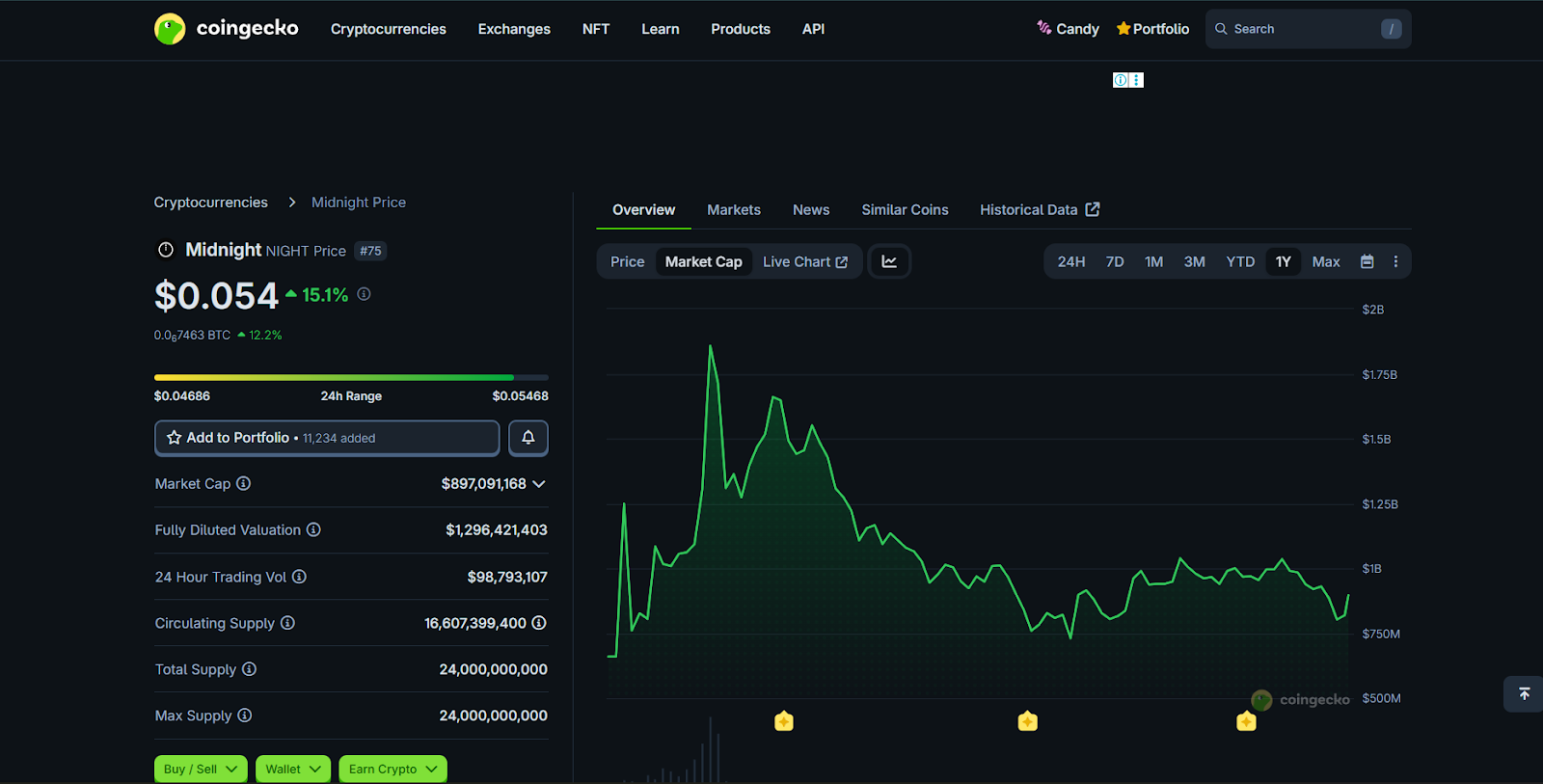
That said, as an investment, NIGHT carries significant risk. The token launched at a high of $0.1185 in December 2025 and had retreated to approximately $0.046 by mid-March 2026 – roughly 60% below its all-time high. Over 4.5 billion airdropped tokens are still thawing through December 2026, creating predictable quarterly selling pressure. The mainnet is not yet live, meaning the token’s utility is still largely theoretical.
FAQs
Is NIGHT a good investment in 2026?
NIGHT could be a good investment for those who believe in privacy-focused tools and are willing to hold long term. The project has strong use cases and ties to Cardano, which adds credibility. Like all early-stage crypto, prices can fluctuate, so invest only what you can afford to lose.
What is the NIGHT token price prediction for 2026?
Forecasts suggest NIGHT could trade between $0.04 and $0.12 by the end of 2026 under normal conditions. Strong adoption might push it toward $0.15–$0.20. Market trends and real network usage will ultimately determine the price, so watch the network’s growth closely.
How is Midnight different from Monero and Zcash?
Midnight lets you control what information stays private and what you reveal when needed. Monero and Zcash hide nearly everything, which can complicate compliance. Midnight is built for real-world use, combining privacy with verifiable proof for businesses, healthcare, and finance.
Where can I buy a NIGHT token?
You can purchase NIGHT on major exchanges like Binance, MEXC, or Crypto.com once full trading begins. Always check the official Midnight website for trusted sources and token addresses. After buying, store your NIGHT safely in wallets like the official Midnight wallet or MetaMask.
Are you looking for the best crypto payment gateway? Your choice of a crypto payment gateway influences how smoothly your business can accept Bitcoin and other cryptocurrencies. It also allows you to expand your customer base, streamline transactions, and stay ahead in the ever-evolving digital economy. Choosing the right gateway is crucial for ensuring security, efficiency, and customer satisfaction.
In this article, we help you by exploring the best crypto payment gateways, guiding you on how to set up a crypto payment gateway, and sharing insights into how we chose the top options. Whether you’re a small business or a large enterprise, this guide is tailored to help you make an informed decision. Keep reading to discover the top 10 best cryptocurrency payment gateways for businesses.
Top Bitcoin & Crypto Payment Gateways: Quick Picks at a Glance
10 Best Crypto Payment Gateways Reviewed & Ranked: Full Breakdown
Choosing the right crypto payment processor can have a big impact on how smoothly your business accepts digital payments. Some platforms are better for low fees, while others stand out for stronger fiat conversion. The best choice depends on your business model, the coins you want to accept, and how much control you want over your funds. Here are our top 10 picks for your business as we break down the best crypto payment gateways in detail.
1. NOWPayments — Best Overall Crypto Payment Gateway
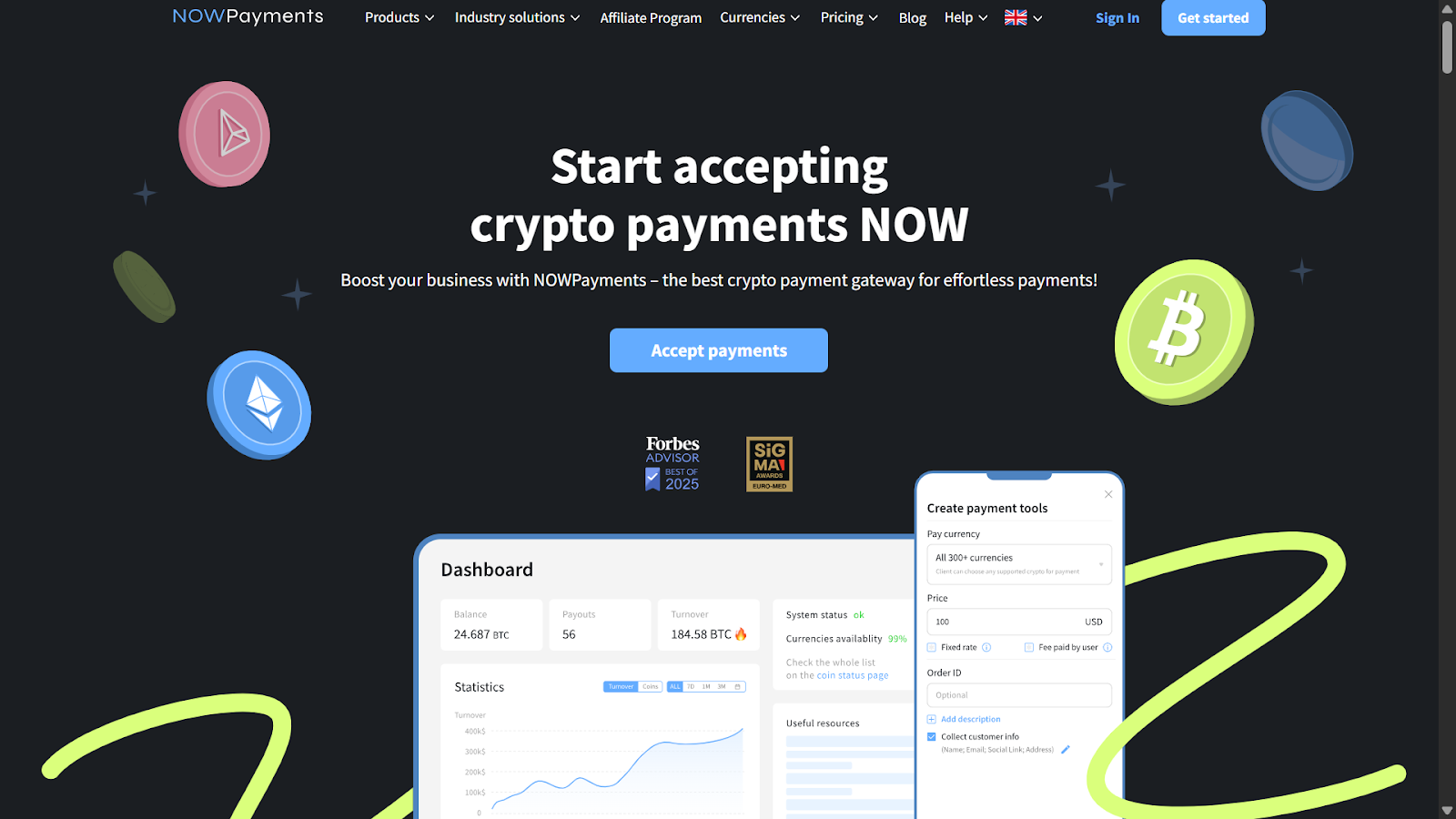
If you’re looking to accept crypto payments seamlessly, NOWPayments stands out as a top choice for businesses. With support for over 200 cryptocurrencies, it offers unmatched flexibility for SaaS platforms, e-commerce stores, and global services. Its auto-conversion feature simplifies transactions by converting between tokens at the point of payment.
Supported Cryptos: Over 200 cryptocurrencies, including Bitcoin, Ethereum, and altcoins.Transaction Fee: 0.5% per transaction on the standard plan, with custom pricing for high-volume users.Custody Type: Non-custodial model, giving businesses full control over their funds.
Pros & Cons
ProsConsSupports over 200 cryptocurrencies, offering broad altcoin compatibility.No direct fiat settlement; requires a third-party partner for fiat off-ramps.Auto-conversion between tokens simplifies payment processes.Limited enterprise track record compared to competitors like BitPay.Easy integration with plugins for Shopify, WooCommerce, and more.No cross-chain aggregation; tokens are processed on their native chains.Subscription and recurring billing support for flexible payment options.May not suit businesses needing advanced enterprise features.Non-custodial model ensures businesses retain control of their funds.
2. CoinGate — Best for Wide Crypto Selection
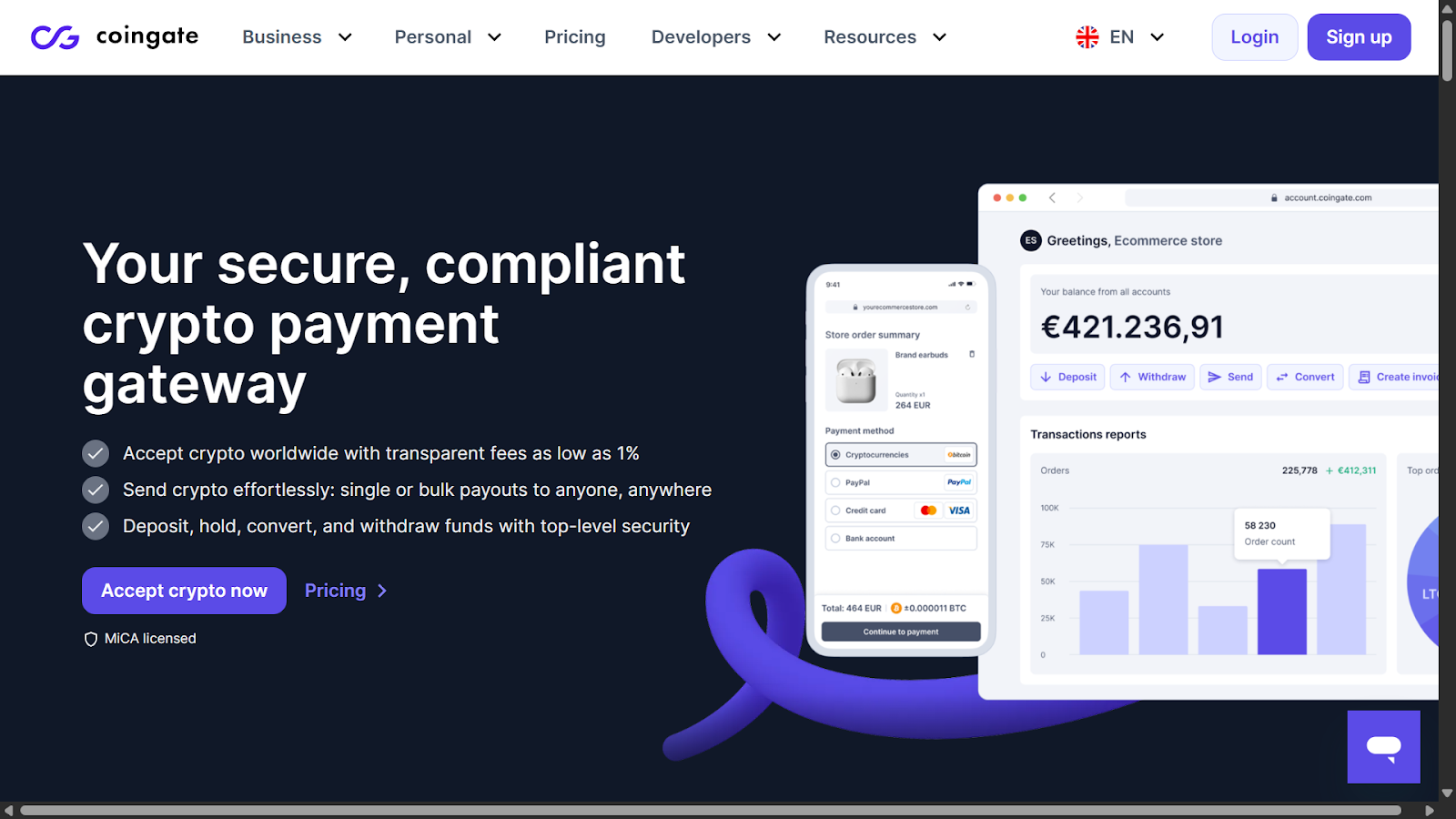
As a leading Bitcoin payment gateway, CoinGate is an excellent choice for businesses seeking to accept a wide variety of cryptocurrencies. Supporting over 70 tokens, it caters to small businesses and enterprises alike, offering flexibility and ease of use. CoinGate’s user-friendly interface and integration options make it a go-to solution for businesses looking to expand their payment options.
Supported Cryptos: Over 70 cryptocurrencies, including Bitcoin, Ethereum, and Litecoin.Transaction Fee: 1% per transaction, providing a straightforward pricing model.Custody Type: Custodial model, where funds are managed securely by CoinGate.
Pros & Cons
ProsConsSupports over 70 cryptocurrencies, including major tokens like Bitcoin.Custodial model may not appeal to businesses seeking full fund control.Simple 1% transaction fee structure with no hidden costs.No cross-chain functionality for token transfers.Easy integration with e-commerce platforms and APIs.Limited advanced features for enterprise-level businesses.Offers gift card purchases with crypto, adding versatility.Fiat conversion options are limited to EUR/USD.Reliable and user-friendly interface for small businesses.
3. BitPay — Best for Bitcoin Payments
When it comes to the best cryptocurrency payment gateways for business, BitPay is a standout option, especially for businesses focused on Bitcoin transactions. Known for its reliability and enterprise-grade solutions, BitPay simplifies the process of accepting Bitcoin and select cryptocurrencies. Its daily bank settlement feature ensures businesses can quickly convert crypto into fiat, making it a practical choice for those looking to integrate crypto payments into their operations.
Supported Cryptos: Bitcoin, Ethereum, and select tokens.Transaction Fee: 1% per transaction, offering a transparent and predictable cost structure.Custody Type: Custodial model, where funds are securely managed by BitPay.
Pros & Cons
ProsConsReliable and trusted by enterprise-level businesses.Custodial model may not suit businesses wanting full fund control.Daily bank settlement for quick fiat conversion.Limited support for altcoins compared to other gateways.Straightforward 1% transaction fee with no hidden charges.No cross-chain functionality for token transfers.Strong focus on Bitcoin payments, ideal for Bitcoin-centric businesses.Advanced features may not cater to small businesses.Robust security measures to protect transactions.
4. Coinbase Commerce — Best for Beginners
Coinbase Commerce is an excellent choice for beginners venturing into cryptocurrency payments. It supports a variety of popular cryptocurrencies and offers a managed plan for fiat conversion, making it user-friendly for those new to crypto. With its optional custody model, businesses can choose to manage their funds or let Coinbase handle them securely. Its intuitive interface and trusted brand make it a reliable gateway for small businesses and startups.
Supported Cryptos: BTC, ETH, USDC, DAI, and others.Transaction Fee: 1% per transaction.Custody Type: Optional custody, allowing businesses to choose between self-custody or Coinbase-managed funds.
Pros & Cons
ProsConsUser-friendly interface ideal for beginners.Limited advanced features for enterprise users.Supports popular cryptocurrencies like Bitcoin and Ethereum.Fiat conversion is only available through a managed plan.Trusted brand with a strong reputation in the crypto space.No cross-chain functionality for token transfers.Optional custody model for flexibility in fund management.
5. OpenNode — Best for Lightning Network Payment
OpenNode is a standout gateway for businesses looking to leverage the Lightning Network for fast and low-cost Bitcoin transactions. It supports Bitcoin and Lightning payments, making it ideal for businesses that prioritize speed and efficiency. With a non-custodial model, OpenNode ensures businesses retain full control over their funds. Its custom pricing structure caters to businesses of all sizes, from small merchants to large enterprises.
Description
Supported Cryptos: BTC + Lightning.Transaction Fee: Custom pricing based on business needs.Custody Type: Non-custodial, giving businesses full control over their funds.
Pros & Cons
ProsConsLeverages the Lightning Network for fast, low-cost payments.Limited to Bitcoin and Lightning payments only.Non-custodial model ensures businesses control their funds.No support for altcoins or cross-chain functionality.Custom pricing tailored to business needs.Ideal for businesses prioritizing speed and efficiency.
6. CryptoWoo — Best for WooCommerce Users
CryptoWoo is a specialized payment gateway designed for WooCommerce users, offering seamless integration with WordPress-based e-commerce stores. It supports Bitcoin, Ethereum, and other cryptocurrencies, making it a versatile option for online retailers. With its non-custodial model, businesses can manage their funds independently. Some of the best crypto wallets integrate smoothly with CryptoWoo, enhancing its functionality for WooCommerce users.
Description
Supported Cryptos: BTC, ETH, and others.Transaction Fee: Custom pricing based on usage.Custody Type: Non-custodial, allowing businesses to retain control of their funds.
Pros & Cons
ProsConsSeamless integration with WooCommerce for WordPress users.Limited to WooCommerce-based platforms.Supports major cryptocurrencies like Bitcoin and Ethereum.No fiat conversion options available.Non-custodial model for independent fund management.No cross-chain functionality for token transfers.Custom pricing tailored to business needs.
7. Plisio — Best for Low-Fee Crypto Payments
Plisio is a low-cost crypto payment gateway that supports over 50 cryptocurrencies, including Bitcoin and Ethereum. With a flat 0.5% transaction fee, it’s an affordable option for small businesses. While it doesn’t offer fiat conversion, its straightforward pricing and user-friendly interface make it a practical choice for cost-conscious merchants. Plisio operates on a custodial model, ensuring secure fund management.
Supported Cryptos: 50+ tokens, including BTC and ETH.Transaction Fee: 0.5% per transaction.Custody Type: Custodial, with funds managed securely by Plisio.
Pros & Cons
ProsConsLow 0.5% transaction fee, ideal for small businesses.Custodial model may not suit businesses seeking fund control.Supports over 50 cryptocurrencies, including Bitcoin and Ethereum.No fiat conversion options available.User-friendly interface for easy integration.No cross-chain functionality for token transfers.
8. TripleA — Best for Fiat Conversion
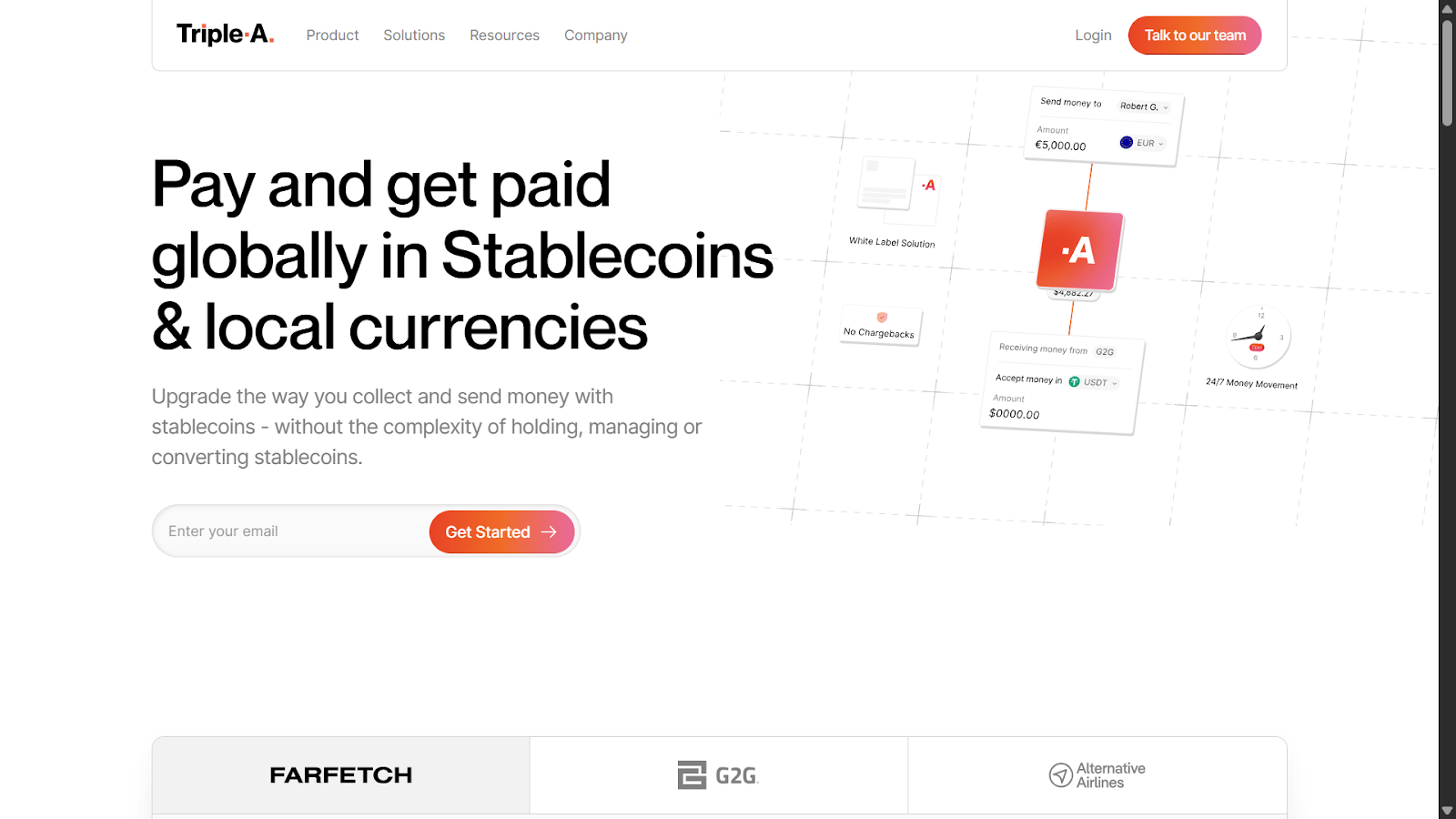
TripleA is a crypto payment gateway designed for businesses that prioritize fiat conversion. It supports Bitcoin, Ethereum, and other cryptocurrencies, offering seamless conversion to fiat currencies. With its custodial model, TripleA securely manages funds for businesses. Custom pricing ensures flexibility for businesses of all sizes.
Supported Cryptos: BTC, ETH, and others.Transaction Fee: Custom pricing based on business needs.Custody Type: Custodial, with funds managed securely by TripleA.
Pros & Cons
ProsConsSeamless fiat conversion for businesses.Custodial model may not appeal to all businesses.Supports major cryptocurrencies like Bitcoin and Ethereum.No cross-chain functionality for token transfers.Custom pricing tailored to business needs.Limited support for altcoins compared to competitors.Reliable and secure fund management.
9. Crypto.com Pay — Best for Crypto.com Users
Crypto.com Pay is a payment gateway tailored for users of the Crypto.com ecosystem. It supports CRO, Bitcoin, Ethereum, and other cryptocurrencies, offering a flat 0.5% transaction fee. While it doesn’t provide fiat conversion, its integration with the Crypto.com platform makes it a convenient choice for existing users. Crypto.com Pay operates on a custodial model, ensuring secure fund management.
Description
Supported Cryptos: CRO, BTC, ETH, and others.Transaction Fee: 0.5% per transaction.Custody Type: Custodial, with funds managed securely by Crypto.com.
Pros & Cons
ProsConsFlat 0.5% transaction fee for cost-effective payments.Custodial model may not suit businesses seeking fund control.Seamless integration with the Crypto.com ecosystem.No fiat conversion options available.Supports major cryptocurrencies like Bitcoin and Ethereum.Limited to Crypto.com users for full functionality.User-friendly interface for easy adoption.
10. Strike — Best for Bitcoin & Lightning Payments
Strike is apayment gateway focused on Bitcoin and Lightning Network transactions, offering fast and low-cost payments. It’s an excellent choice for businesses that prioritize Bitcoin payments and want to leverage the Lightning Network for efficiency. Strike operates on a custodial model, ensuring secure fund management. Custom pricing makes it accessible for businesses of all sizes.
Supported Cryptos: BTC + Lightning.Transaction Fee: Custom pricing based on business needs.Custody Type: Custodial, with funds managed securely by Strike.
Pros & Cons
ProsConsLeverages the Lightning Network for fast, low-cost payments.Limited to Bitcoin and Lightning payments only.Custodial model ensures secure fund management.No support for altcoins or cross-chain functionality.Custom pricing tailored to business needs.Ideal for businesses prioritizing Bitcoin payments.
What Is a Cryptocurrency Payment Gateway?
A cryptocurrency payment gateway is a digital platform that allows businesses to accept payments in cryptocurrencies like Bitcoin, Ethereum, and other altcoins. Acting as a bridge between customers and merchants, it simplifies the process of receiving, verifying, and processing crypto transactions. Unlike using a crypto wallet, these gateways often include features like automatic currency conversion, transaction tracking, and integration with e-commerce platforms. For businesses, a reliable crypto payment processor ensures secure and efficient handling of digital payments, making it easier to tap into the growing crypto economy.
How We Chose the Best Crypto Payment Gateways
Selecting the right crypto payment method requires careful evaluation of key factors that impact both businesses and their customers. From the variety of supported cryptocurrencies to the ease of integration, each gateway was assessed to ensure it meets the diverse needs of businesses. Our goal was to identify gateways that offer a balance of affordability, security, and functionality. Below, we break down the criteria that guided our selection process.
Supported Cryptocurrencies
A gateway’s ability to support a wide range of cryptocurrencies is essential for businesses catering to diverse audiences. Platforms that include popular options like Bitcoin and Ethereum, alongside altcoins, offer greater flexibility. Auto-conversion features were also considered, as they simplify transactions involving multiple tokens. This ensures businesses can adapt to the ever-evolving crypto landscape with ease.
Transaction Fees
Affordable and transparent fee structures play a significant role in a gateway’s appeal. Gateways with flat-rate fees or competitive pricing for high-volume transactions stood out. Hidden costs were a dealbreaker, as businesses need predictability in their expenses. By focusing on cost-effective solutions, we ensured these gateways are accessible to businesses of all sizes.
Security & Non-Custodial Options
Security is paramount in the world of cryptocurrency payments. We prioritized gateways with robust security measures, such as encryption and fraud detection. Non-custodial options were also considered, as they allow businesses to retain full control over their funds. Gateways with a strong reputation for reliability and secure fund management stood out in our evaluation.
Ease of Use & Setup
A user-friendly interface and straightforward setup process are essential for businesses adopting crypto payments. We selected gateways that offer seamless integration with popular e-commerce platforms like Shopify and WooCommerce. Additionally, gateways with comprehensive documentation and customer support were favored for their ability to assist businesses during onboarding.
Fiat Conversion Options
Fiat conversion is a valuable feature for businesses that want to minimize exposure to cryptocurrency volatility. Gateways offering automatic or partner-based fiat conversion were prioritized. This feature ensures businesses can quickly and easily convert crypto payments into traditional currencies like USD or EUR. Gateways with flexible fiat options provide added convenience for businesses operating in diverse markets.
How to Set Up a Crypto Payment Gateway
Setting up a crypto payment gateway can seem complex, but with the right approach, it becomes a straightforward process. Whether you’re a small business or a large enterprise, integrating cryptocurrency payments can open up new opportunities. From selecting the right tools to understanding wallet address functionality, each step plays a role in supporting setup. Here are the steps to set up your crypto payment solutions effectively.
1. Choose the Right Platform
Start by selecting a reliable crypto payment gateway platform that aligns with your business needs. Look for features like multi-currency support, low transaction fees, and ease of integration. Platforms that allow you to choose your Web 3 wallets provide added flexibility for managing funds securely.
2. Set Up Your Wallet
To receive payments, you’ll need a cryptocurrency wallet. Understanding wallet address functionality is crucial, as this is where customers will send their payments. Opt for wallets that support the cryptocurrencies you plan to accept and ensure they are compatible with your chosen gateway.
3. Integrate with Your Website or Store
Most gateways offer plugins or APIs for seamless integration with e-commerce platforms like Shopify or WooCommerce. Follow the provided documentation to connect the gateway to your website. This step ensures customers can easily make payments during checkout.
4. Configure Payment Settings
Customize your payment settings to match your business requirements. Set transaction fees, enable fiat conversion if needed, and configure notifications for payment confirmations. This step ensures smooth operations and a better customer experience.
5. Test and Launch
Before going live, test the gateway to ensure everything works as expected. Conduct test transactions to verify payment processing, wallet address accuracy, and integration functionality. Once satisfied, launch the gateway and start accepting cryptocurrency payments.
What Fees Do Crypto Payment Gateways Charge?
Crypto payment gateways typically charge transaction fees ranging from 0.5% to 1% per transaction. These fees are applied to the total payment amount and are significantly lower than traditional payment methods such as credit card processing fees. Some gateways, like NOWPayments, offer flat-rate fees, while others, such as OpenNode, provide custom pricing based on transaction volume. Additionally, certain gateways may charge extra for features like fiat conversion or advanced integrations, so it’s essential to review the fee structure carefully before choosing a provider.
Conclusion
Crypto payment gateways are vital tools for businesses embracing digital assets and expanding payment options. These platforms offer features such as multi-currency support, low transaction fees, and seamless integration, making them suitable for businesses of all sizes. Prioritizing security, ease of use, or advanced features like fiat conversion allows businesses to unlock new opportunities in the growing crypto economy.
FAQs
Which is the best crypto payment gateway for business?
The best crypto payment gateway for business depends on your needs, but NOWPayments is often considered the best overall for its low fees and wide token support.
How to accept Bitcoin payments on your website?
To accept Bitcoin payments on your website, integrate a crypto payment gateway like BitPay or Coinbase Commerce, which provides plugins or APIs for seamless setup.
Can I use a crypto payment gateway without KYC?
Yes, some crypto payment gateways, like NOWPayments, allow businesses to operate without KYC, but this may limit access to certain features like fiat conversion.
What is the cheapest crypto payment gateway?
Plisio is one of the cheapest crypto payment gateways, offering a flat 0.5% transaction fee with no hidden costs. This makes it a cost-effective option for businesses that want to accept crypto payments while keeping crypto processing fees low.
What is the difference between a crypto wallet and a payment gateway?
A crypto wallet is used to store and manage cryptocurrencies, while a payment gateway facilitates the acceptance and processing of crypto payments for businesses.
When we think of fashion, the image that often comes to mind is a stylishly dressed woman. Luxury fashion, after all, has long been created to cater to the tastes and aspirations of high-society ladies.
Yet despite women making up the majority of luxury fashion consumers, only a small percentage of the world’s major luxury houses were originally founded by them. But their overall influence has been phenomenal.
Influence of Women on Luxury Fashion
Female visionaries have profoundly shaped the industry, from pioneering founders who built iconic maisons to transformative designers and executives who redefined existing brands. Across more than a century of fashion history, women have introduced revolutionary silhouettes, forged artistic collaborations, championed sustainability, and expanded the cultural meaning of luxury.
From trailblazing founders to visionary creative directors and powerful executives, women have influenced luxury fashion at every level of the industry.
In celebration of International Women’s Day 2026, it is time to spotlight the women who helped define luxury fashion on their own terms. From historic pioneers like Coco Chanel, Jeanne Lanvin, and Elsa Schiaparelli, who introduced practicality and surrealism into couture, to modern designers like Stella McCartney, who are redefining sustainable luxury, women have continually expanded the boundaries of what fashion can represent. Alongside these creators, contemporary leaders are guiding global fashion houses with strategic vision and cultural insight. Together, their stories reveal how female creativity, entrepreneurship, and leadership continue to transform the luxury industry.
Luxury Brands Founded by Women: 10 Visionary Designers Who Shaped Fashion
Gabrielle “Coco” Chanel (1883–1971) launched her millinery in 1910, evolving it into a full-fledged empire that, after World War I. It freed women from corsets and restrictive norms, offering comfort and practicality. Her vision of casual chic, menswear-inspired pieces, and versatile elegance became a symbol of liberated femininity. Chanel became one of the most enduring luxury brands founded by women. She is the only fashion designer on Time magazine’s list of the 100 most influential people of the 20th century.
Turning Point
One of Chanel’s most significant business decisions came in 1925, when she partnered with Pierre Wertheimer to establish Parfums Chanel, the company that would commercialize Chanel No. 5 globally. That partnership ultimately shaped the brand’s ownership structure, which remains privately controlled by the Wertheimer family today.
Iconic Creations
Chanel Black Short Sleeve DressChanel Black Quilted Leather Classic 2.55 Reissue 226 Double Flap Pearl Chain Bag
The little black dress (1926); Chanel No. 5 perfume (1921); the 2.55 quilted flap bag (1955) with chain strap; classic tweed suit.
Today
More than a century after its founding, Chanel remains one of the most influential luxury houses in the world. Privately owned by the Wertheimer family, the brand continues to dominate the global luxury market with its iconic tweed suits, quilted handbags, and timeless fragrances.
In December 2021, Chanel appointed Leena Nair as Global CEO, marking a new chapter in the historic maison’s leadership.
Creatively, the house entered a period of transition in June 2024 when long-time collaborator Virginie Viard stepped down as artistic director after five years in the role and nearly three decades with the company. Viard succeeded Karl Lagerfeld in 2019, maintaining Chanel’s signature aesthetic while introducing a softer, more contemporary interpretation of the brand’s heritage.
Following her departure, Matthieu Blazy, formerly Bottega Veneta’s creative director, was appointed as Chanel’s creative director. His debut collection for the house in October 2025 signaled the beginning of a new creative era for the iconic maison.
Chloé – The Birthplace of Effortless Parisian Luxury
Origins
Gabrielle “Gaby” Aghion founded Chloé in 1952, introducing accessible prêt-à-porter luxury with romantic, effortless designs that contrasted traditional couture. She is credited with coining and popularizing the concept of high-fashion ready-to-wear, making luxury more democratic. Her contributions were celebrated in the 2023–2024 Jewish Museum exhibition “Mood of the Moment: Gaby Aghion and the House of Chloé.”
Interesting Fact
In the 1960s and 70s, Chloé became a launchpad for legendary designers, including Karl Lagerfeld, helping define the modern idea of luxury ready-to-wear.
Iconic Creations
Chloé Woody Small Beige/Black Canvas and Leather ToteChloe Black Calf Leather Marcie Small Hobo BagChloe Drew Medium Black/Beige Leather and Python Shoulder BagChloe Blue Chiffon Pleated Ruffle Maxi Dress
Paddington padlock bag; Marcie suede hobo; Drew bag; flowing chiffon dresses with lace and ruffles.
Today
Chemena Kamali’s creative direction continues to energize the house in 2026, with Richemont-backed growth and recent Winter and Fall collections that emphasize sustainable romanticism, folk influences, and effortless femininity.
Vivienne Westwood – The Punk Revolutionary of Fashion
Origins
Dame Vivienne Westwood (1941–2022) debuted in 1971, blending punk rebellion with historical tailoring and advocacy for human rights and climate issues. She was appointed Dame Commander of the Order of the British Empire (DBE) in 2006 for services to British fashion, won British Fashion Designer of the Year three times (1990, 1991, 2006), and received the Leonardo da Vinci Lifetime Achievement Award (2021).
Turning Point
Westwood’s 1976 “Anarchy in the UK” collection helped define the punk movement’s visual identity, transforming underground rebellion into global fashion.
Iconic Creations
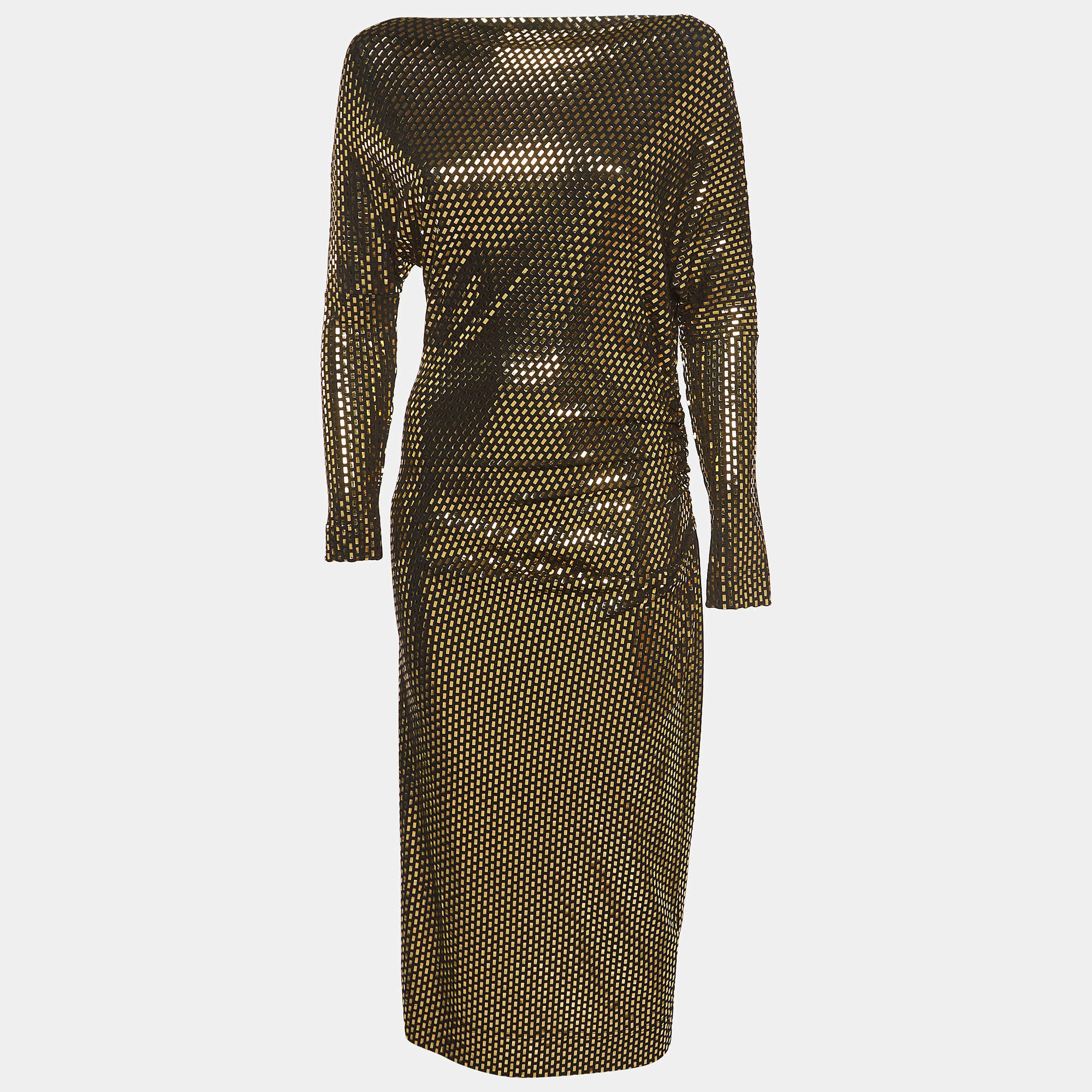
Vivienne Westwood Black Croc Embossed Leather Crossbody BagVivienne Westwood Anglomania Black/Gold Jersey Midi Dress
Corset designs; orb logo jewelry; tartan punk pieces; safety-pin jewelry.
Today
Andreas Kronthaler remains the driving force (Creative Director since Vivienne’s passing in 2022). He’s presenting Fall/Winter 2026 collections (e.g., theatrical, chaotic shows in Paris in March 2026) while maintaining the activist and punk heritage through reissues. The brand operates independently.
Elsa Schiaparelli (1890–1973) launched in 1927, drawing on Dada and surrealism (e.g., collaborations with Dalí) to create provocative, artistic luxury until 1954; revived in 2013. She was the first female fashion designer featured on the cover of Time magazine (1934) and the first European to receive the Neiman Marcus Award for distinguished service in fashion.
Interesting Fact
Schiaparelli famously introduced the color “Shocking Pink” in 1937, naming it after her fragrance Shocking. The vibrant color became one of the most recognizable signatures in fashion Origins. Her 1937 Lobster Dress, created with Salvador Dalí, remains one of the most famous surrealist garments ever produced.
Daniel Roseberry is still Creative Director (since 2019). He’s leading recent collections like Fall/Winter 2026 (“The Sphynx”) with surreal innovations and red-carpet dominance. Brand under Tod’s Group ownership.
Madame Grès – The Sculptor of Couture
Origins
Madame Grès, Image Source: Getty Images
Germaine Émilie Krebs, known as Madame Grès, founded the House of Grès in 1942. Renowned for her extraordinary draping techniques, she created sculptural gowns inspired by classical Greek statues, earning a reputation as one of the greatest couturiers of the 20th century.
Fashion Innovation
Madame Grès became famous for gowns made from yards of silk jersey, meticulously pleated and draped by hand. Her designs celebrated the natural female form and were widely regarded as masterpieces of couture craftsmanship.
Iconic Creations
Image Credit: drapingsociety[DOT]com/
Greek-inspired draped gowns; sculptural silk jersey dresses.
Today
Though the original house eventually closed, Madame Grès remains one of couture’s most revered pioneers, influencing generations of designers who view draping as an art form.
Lanvin – Parisian Elegance from Fashion’s Oldest Couture House
Origins
Jeanne Lanvin (1867–1946) began in 1889 with mother-daughter dressing, pioneering Art Deco elegance, perfumes (such as Arpège), and a full empire, including lingerie and furs, and was known for her brilliant eye for color (“Lanvin Blue”). She received France’s highest civilian honor, Knight of the Legion of Honour, in 1926.
Jeanne Lanvin was also among the first designers to build a true lifestyle brand, expanding into perfumes, menswear, and home décor decades before it became standard practice in luxury fashion.
Interesting Fact
Lanvin’s iconic logo, a mother and daughter holding hands, was inspired by Jeanne Lanvin’s close relationship with her daughter, Marguerite. The image was originally created for a 1920s invitation to a Lanvin ball and later became the house’s official emblem.
Iconic Creations
Lanvin Green Crepe Draped Mini DressLanvin Dark Brown Leather Flap Shoulder Bag
Robe de style, Arpège parfum, slips en soie à motifs de perles.
Today
Under Artistic Director Peter Copping (appointed 2024), Lanvin emphasizes revival through couture craftsmanship, archival research, and Parisian refinement in 2026, with recent collections reimagining Jeanne Lanvin’s legacy.
Fendi – Roman Craftsmanship and the Legacy of Fur and Leather
Adele “Adda” Fendi co-founded the company in 1925; her vision and family’s expansion built the iconic fur/leather legacy, emphasizing Roman craftsmanship (e.g., the Selleria collection) and handmade techniques that became foundational to the brand’s global success.
Turning Point
In 1965, the brand began collaborating with Karl Lagerfeld, who introduced the iconic double-F logo (“Fun Fur”) and helped transform Fendi into a global luxury powerhouse.
The Fendi Baguette became a cultural phenomenon in the late 1990s after appearing on the television series Sex and the City, helping turn it into one of the most recognizable luxury accessories ever created.
Iconic Creations
Fendi Baguette Multi-Pocket Convertible Green Nylon BagFendi Peekaboo Iseeu Girl Inlay Small Light Blue/Multicolor Leather Top Handle Bag
Baguette bag, FF monogram, Peekaboo satchel.
Today
Following Kim Jones’s departure as Artistic Director in October 2024, Fendi continues Roman innovation under LVMH, with Silvia Venturini Fendi leading accessories, men’s, and children’s lines. A new creative structure is expected, maintaining focus on heritage fur, leather, and iconic bags.
Céline – The Origins of Quiet Luxury
Origins
Image Credit: in.pinterest[DOT]com
Céline Vipiana started in 1945 with made-to-measure children’s shoes, expanding into refined leather goods, bags, and ready-to-wear. She introduced the iconic Blazon Chaine logo (inspired by the Arc de Triomphe) and opened a factory in Florence to maintain high standards of craftsmanship.
Interesting Fact
The Triomphe logo, today one of the house’s most recognizable emblems, was inspired by the chains
surrounding the Arc de Triomphe in Paris.
Iconic Creations
Celine Brown Teen Canvas and Calfskin Triomphe CrossbodyCeline Brown Canvas Triumph Ava Hobo Bag
Luggage tote, Triomphe canvas, Ava bag.
Today
Séverine Merle has been Chief Executive Officer since April 2017. Michael Rider, since 2025. serves as Creative Director (following Hedi Slimane’s departure in October 2024), presenting well-received collections that blend modern tailoring with Céline’s quiet luxury heritage.
Diane von Furstenberg – The Woman Behind the Wrap Dress Revolution
Origins
.Image Source:en.wikipedia[DOT]org
Diane von Furstenberg founded her eponymous brand (DVF) in 1972 in New York City after relocating from Europe, where she presented her first collection of jersey dresses and began building her ready-to-wear line. In 1974, she introduced the wrap dress—a knitted jersey design that wrapped around the body and tied at the waist—becoming one of the most iconic garments in fashion history. The brand helped define 1970s women’s fashion by combining elegance, independence, and practicality. Beyond design, she has played a major role in fashion leadership as chairwoman of the Council of Fashion Designers of America (CFDA) from 2006 to 2019. She remains a champion of female empowerment through philanthropy and mentorship. Though she stepped back in the 1980s to found a publishing house, she relaunched DVF in 1997, expanding into accessories and lifestyle products.
Turning Point
By 1976, millions of wrap dresses had been sold, earning von Furstenberg a Newsweek cover and making her a global fashion name. The wrap dress quickly became a cultural symbol of female independence during the 1970s feminist movement.
Iconic Creations
Diane Von Furstenberg Multicoloured Colour Block Crepe Wrap DressDiane Von Furstenberg Navy Blue Lurex Knit Evelyn Wrap Dress
Wrap Dress (the timeless, versatile jersey piece that symbolizes confidence and femininity).
Today
In 2026, DVF continues as a vibrant global luxury lifestyle brand with bold prints, ready-to-wear, and accessories. Recent highlights include a strategic European wholesale expansion through a partnership with Brama Group (starting Fall 2026), new collections evoking the Italian spirit (e.g., Fall 2026 “La Serenissima”), and collaborations with Estée Lauder Beauty. Nathan Jenden serves as Chief Design Officer (returned in 2025), with Graziano de Boni as CEO (since 2024), driving evolution while honoring the founder’s empowering ethos.
Stella McCartney – The Pioneer of Sustainable Luxury
Founded in 2001 with a no-fur/no-leather commitment, rooted in sustainability. McCartney has been awarded the OBE (2013) and CBE (2022) for services to fashion and sustainability, multiple British Designer of the Year honors, and accolades such as Green Designer of the Year (2008).
Interesting Fact
When Stella McCartney launched her brand in 2001, it became one of the first luxury fashion houses to commit entirely to a no-fur, no-leather policy.
Fashion Innovation
Stella McCartney has collaborated with material innovators to develop alternatives to leather and fur, including partnerships with companies exploring bio-fabricated materials and mushroom-based leather substitutes.
Iconic Creations
Stella McCartney Falabella Metallic Green Shimmering Faux Suede Belt Bag
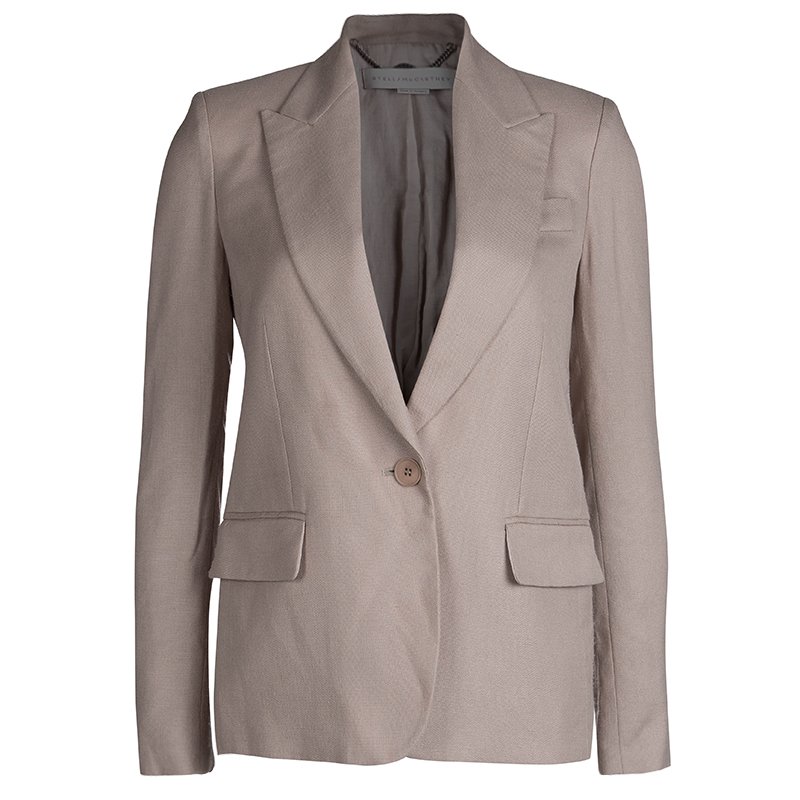
Stella McCartney Beige Tailored Blazer
Stella McCartney X Adidas Grey /Blue Pattered Jersey Top & Leggings Active Wear Set
Stella McCartney Stella logo Black Faux Leather Tote Bag
Independent leader in sustainable luxury (repurchased LVMH stake in 2025), Stella McCartney continues ethical innovation in 2026, recently honored as Chevalier de la Légion d’Honneur for contributions to fashion and sustainability.
Tory Burch launched in 2004, blending accessibility with aspirational style and founding the Tory Burch Foundation to support women entrepreneurs (providing access to capital, education, and resources). She has won the CFDA Accessories Designer of the Year award (2008), been named to Forbes’ lists of powerful women, and received multiple rising-star and launch awards.
Interesting Fact
Her debut collection famously sold out at Bergdorf Goodman on the day it launched, immediately establishing Tory Burch as a major new American luxury brand.
Tory Burch Monogram T Embossed Black/Off White Leather Contrast ToteTory Burch Miller Cloud Size 36 Cream Patent Leather Thong Sandals
Reva ballet flats, double-T totes, Miller cloud sandals.
Today
Tory Burch remains Executive Chairman and Chief Creative Officer. No dedicated creative director; she leads design. The recent executive appointment of Joëlle Grunberg as President has strengthened North American operations (November 2025). The foundation and empowerment focus is strong in 2026.
Luxury Brands Transformed by Women: Visionary Leaders Who Redefined Icons
Only a small percentage of major luxury houses were originally founded by women, yet many of fashion’s most influential moments have been driven by female designers. These visionaries redefined eras, aesthetics, and commercial success through bold creativity and strategic leadership.
Many major houses gained their modern identity through female creative direction:
Transformed by Miuccia Prada (who took over the family business in 1978 and founded Miu Miu in 1993) with intellectual minimalism, conceptual edge, and innovative fabrics that turned a leather-goods company into a global fashion powerhouse.
Gucci
Gucci Brown Small GG Supreme Flora Ophidia Dome Crossbody
Transformed by Frida Giannini (creative director 2006–2015), who revived heritage codes like the Flora motif, infused softer femininity and boho-chic glamour, drove massive accessories growth, and championed philanthropy (e.g., Gucci Museum opening and film preservation initiatives).
Dior
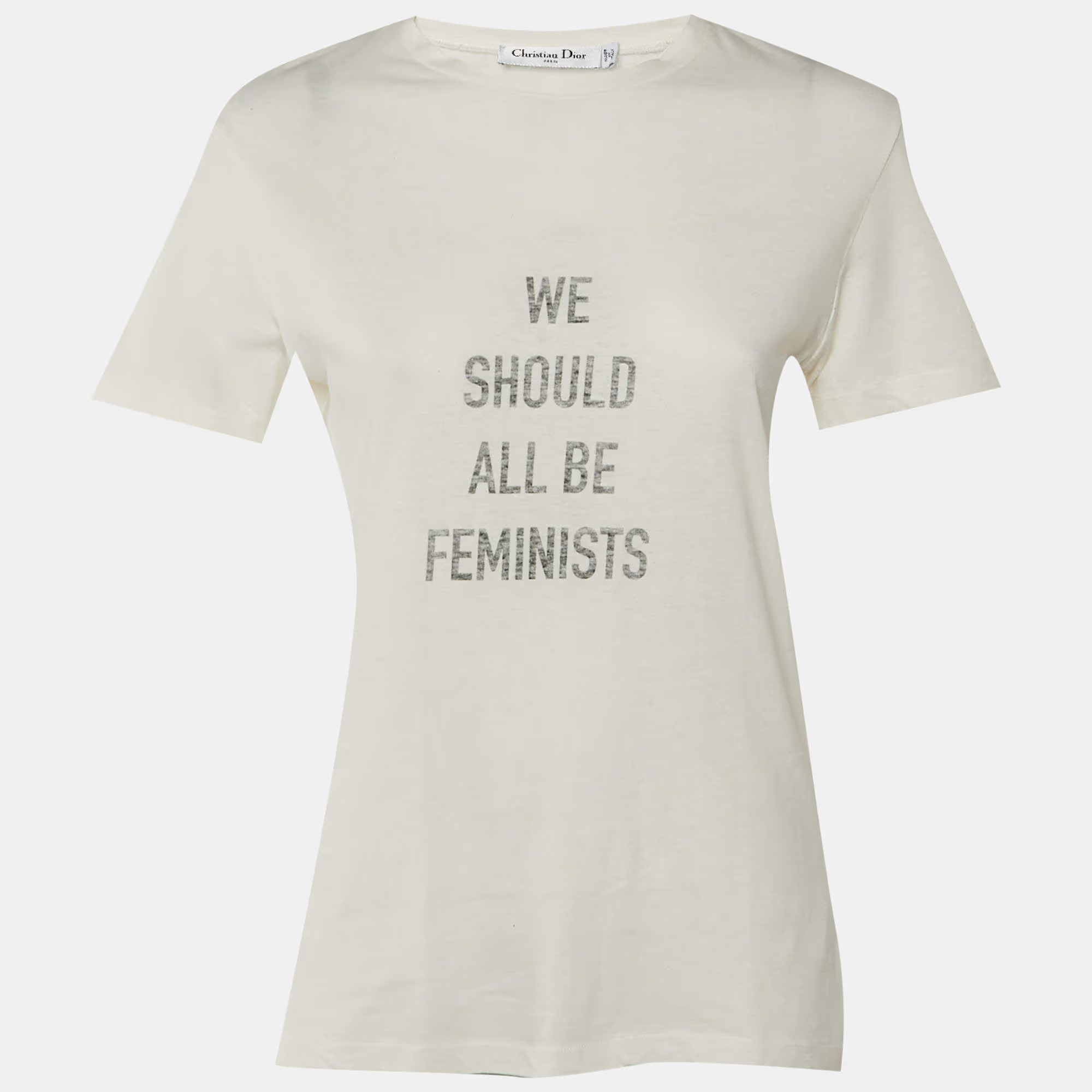
Dior Off White Cotton “We Should All Be Feminists” T-Shirt
Led by Maria Grazia Chiuri (creative director, womenswear 2016–2025), who brought overt feminist messaging, “We Should All Be Feminists” T-shirts, and empowered, inclusive designs—shifting the house toward bold social commentary while honoring its couture roots.
Pucci
Emilio Pucci Multicoloured Printed Jersey Belted Mini Dress
Founded by Emilio Pucci, yes—but the brand was rebuilt and creatively defined by women, especially Laudomia Pucci (his daughter) and later female creative directors who helped revive the house.
Burberry
Burberry Pink Crepe Trench Coat
Revitalized by Angela Ahrendts (CEO 2006–2014), who globalized the brand through digital innovation, trench-coat heritage elevation, and strong e-commerce growth—turning Burberry into a modern British luxury leader before her move to Apple.
Jimmy Choo
Jimmy Choo Purple Patent Leather Metal Logo Waist Belt Jimmy Choo Black/Silver Mirrored Andie/S Round Sunglasses
Globalized by Tamara Mellon (co-founder, 1996; built empire until 2011), who transformed a bespoke shoe brand into an international accessories powerhouse with celebrity appeal, red-carpet dominance, and commercial scalability.
Alexander McQueen
Alexander McQueen Navy Blue Denim Contrast Stitch Suit
Alexander McQueen Black Patterned Silk Knit Midi Skirt
Shaped by Sarah Burton (creative director 2010–2023), who preserved Lee McQueen’s dramatic DNA while adding romantic elegance and impeccable tailoring—most notably designing Kate Middleton’s 2011 royal wedding gown, which cemented the house’s cultural status before Burton’s departure and move to Givenchy in 2025.
Céline
Celine Luggage Mini Beige Leather Tote
Revolutionized by Phoebe Philo (creative director 2008–2018), who introduced refined minimalism, architectural silhouettes, and the iconic Luggage Tote that defined “sophisticated luxury” and intellectual chic for a generation. Her influence endures in 2026, with archival demand and echoes in the brand’s current evolution under Michael Rider.
These women not only elevated heritage labels but also set benchmarks for empowerment, innovation, and relevance, proving the lasting impact of female leadership in luxury fashion.
Women Leading the World’s Biggest Luxury Houses Today
While female designers have shaped the aesthetics of luxury fashion, a new generation of women is also influencing the global strategy and leadership of major fashion houses. From CEOs to creative directors, these leaders are redefining how luxury brands operate in an era of digital innovation, sustainability, and global expansion.
Leena Nair – Global CEO of Chanel
Appointed in December 2021, with her role beginning in January 2022, Leena Nair became one of the most prominent women leading a global luxury house. Before joining Chanel, she spent nearly three decades at Unilever, where she rose to the position of Chief Human Resources Officer.
At Chanel, Nair has brought a people-first leadership philosophy to the historic maison, emphasizing sustainability, craftsmanship, and long-term brand stewardship. Under her leadership, the company has also strengthened its global presence and expanded social initiatives through Fondation Chanel, including a $100 million annual commitment to support gender equality and climate resilience.
Her appointment reflects a broader shift within the luxury industry toward more diverse and modern leadership at the highest levels.
Francesca Bellettini – Deputy CEO of Kering
Francesca Bellettini is one of the most influential executives in luxury fashion today. After successfully transforming Saint Laurent into one of the fastest-growing brands in the industry during her tenure as CEO, she was promoted to Deputy CEO of Kering.
Her strategic leadership continues to shape the future of the group’s major luxury houses, including Gucci, Balenciaga, and Bottega Veneta.
Delphine Arnault – CEO of Dior
As the daughter of Bernard Arnault, Delphine Arnault grew up in the world of luxury fashion. After playing a key role in developing brands across the LVMH portfolio, she became CEO of Dior in 2023.
Arnault has focused on strengthening Dior’s heritage while expanding its global appeal, particularly among younger luxury consumers.
Emerging Modern Icons: Rising Women-Founded Luxury Brands in 2026
Contemporary female-founded luxury brands build on pioneers’ legacies with sustainability, minimalism, and bold creativity:
Carolina Herrera – Timeless Bold Elegance
CH Carolina Herrera Black Guipure Lace Flared Midi Dress
Founded in 1981 by Carolina Herrera, known for voluminous gowns and fragrances.
Staud White Sequin Embellished Long Sleeve Midi Dress
Founded in 2015 in LA, beaded bags and midi dresses for modern lifestyles.
FAQs: Luxury Brands Founded by Women
Which luxury fashion brands were founded by women?
Some of the most influential luxury brands founded by women include Chanel, Chloé, Lanvin, Schiaparelli, Stella McCartney, Carolina Herrera, and Tory Burch. These designers built globally recognized fashion houses and introduced groundbreaking ideas that changed how women dress.
Who was the first woman to create a major luxury fashion brand?
One of the earliest female founders in luxury fashion was Jeanne Lanvin, who launched Lanvin in 1889. Her designs for women and children became hugely popular, and Lanvin remains the oldest continuously operating French fashion house today.
Are there many female founders in luxury fashion?
Historically, relatively few major luxury fashion houses were founded by women. However, female designers such as Gabrielle Chanel, Elsa Schiaparelli, and Vivienne Westwood broke barriers and proved that women could lead global fashion movements.
Which luxury brands are currently led by women?
Female designers or executives, including Chanel, Prada, Dior, and Chloé, currently lead several major luxury houses. Women today hold some of the most influential creative roles in fashion.
Which female designers transformed existing luxury brands?
Some female designers dramatically reshaped the identity of major fashion houses. Miuccia Prada modernized Prada, Phoebe Philo revolutionized Céline, and Maria Grazia Chiuri brought feminist messaging to Dior.
A Lasting Legacy of the Women Who Shaped Luxury Fashion
From founders who built iconic maisons to creative visionaries who transformed established houses and executives guiding global luxury brands today, women have played a defining role in shaping the fashion industry.
More than creating beautiful garments, they challenged conventions, influenced culture, and reimagined what luxury could represent. Their creativity, resilience, and entrepreneurial spirit demonstrate that women possess not only an instinctive understanding of fashion but also the leadership and vision required to redefine the industry.
Today, that legacy continues through designers and executives who are guiding luxury fashion into new territories, from sustainability and ethical craftsmanship to global cultural relevance. Together, these founders, innovators, and leaders prove that the past, present, and future of luxury fashion have their reins in soft yet strong hands.
Pre-Owned CH Carolina Herrera White Eyelet Lace Belted Maxi Dress
Many of their enduring creations, from iconic handbags and statement jewelry to classic ready-to-wear and accessories, continue to circulate through the luxury resale market, allowing new generations of collectors and fashion enthusiasts to experience these designs firsthand. Platforms like The Luxury Closet, a leading destination for authenticated pre-owned luxury, help keep these iconic pieces in circulation while connecting collectors with some of fashion’s most celebrated creations.
As luxury fashion evolves, the influence of these pioneering women continues to remind the world that great style and great leadership never go out of fashion.
A new Honkai: Star Rail Special Program has concluded, which means some fresh news about the game’s upcoming major update. Version 4.1, unveiled today as Unraveled for Daybreak, is the action RPG’s next moment, kicking off on March 25.
Unraveled for Daybreak is the next chapter in the ongoing story of Planarcadia, with the Astra Express Crew now invited to a fan fest inspired by their own past journeys. The aptly named Star Rail Fest is ostensibly hosted to allow more of the citizens of Arcadia to experience the Trailblaze.
To see this content please enable targeting cookies.
Manage cookie settings
As everyone’s eyes is fixated on the grand Star Rail Fest, the Phantasmoon Games continue to be in full swing, as does the war with the Supplicants. Star Rail Fest is, however, the big focus of this update, in case it wasn’t obvious.
The event is made up of three large-scale zones, each themed around past excursions of the Astral Express. You’ll get to explore the Belobog Zone, Xianzhou Luofu Zone, and Penacony Zone. Later on, you’ll also be able to visit Pearluxe Tower, the headquarters of Pearluxe Corp.
Each area will feature its own attractions, such as the balloon figures of Supreme Guardian Cocolia and the Destruction Engine, the duel against the Lord Ravager Phantylia at Scalegorge Waterscape, and the Pearluxe Tower’s Alloy King Pom-Pom model.
Image credit: HoYoverse.
The hot new arrival is bumbling noirish detective Ashveil whom we’ve met in Version 4.0, and who becomes a playable character with this update. Ashveil is a 5-Star Lightning-Type character, on the Path of The Hunt. You’ll be able to pull for him throughout 4.1’s runtime, which is slightly reduced at four weeks instead of the usual six, in order to rebalance the schedule after the extra-long Version 3.8.
In combat, Ashveil is capable of increasing Crit Damage of all allies. He can also mark an enemy as Bait, which reduces the Defence of all enemies on the field so long as this tag holds. If Ashveil uses his Skill on the baited target, he will deal extra Damage and regain Skill Points for the team.
Ashveil can bully that baited target even further by launching Hounding Pursuit. If any of his teammates attacks the Bait, he can further deliver a follow-up attack that gradually accumulates Gluttony for as long as he’s in combat. Gluttony can later be consumed to boost follow-up attack damage.
If he lands a kill, Ashveil continues to deal damage to the next enemy he attacks. That buff is transferred if that enemy is killed. Even in map exploration, Ashveil can be deadly, capable of inflicting Stunned upon enemies within a specific range.
Watch on YouTube
Returning characters this patch will be Hyacine in the first half, and Boothill in the second half. Once again, due to the reduced runtime, their banner reruns will be slightly shorter than normal, at just two weeks each instead of three — so be sure to take that into account if you’re planning on pulling for either of them.
Version 4.1 also adds the Wispae War Saga, a new activity where you can practice your leadership skills by commanding different types of Wispae Soldiers in the Graphia Academy. You can upgrade each one, use spell cards to alter their effects, and later face other champions. You ultimately want to play this to unlock new Wispae Companions, not to mention complete the challenges within.
Finally, Version 4.1 marks the start of a new Arcadian Chronicles phase in the Divergent Universe. You’ll be able to use Waypoint Pass cards to explore the different areas. HoYo is also bringing back Planar Fissure and Garden of Plenty with double rewards. And as ever, if you log in for at least seven days after downloading the new patch, you’ll earn 10 premium banner pulls.
As the blockchain industry matures, the conversation around NFTs is shifting from speculation toward practical applications.
Today, many projects are exploring how NFTs can serve as more than just collectible assets. They can represent access rights, membership credentials, or keys to exclusive digital experiences.
The AIntuition Collection is built around this philosophy. By combining a limited NFT supply with platform privileges and token rewards, the project introduces a model where NFTs function as tools for engagement within a Web3 ecosystem.
Limited Supply Creates Exclusivity
The AIntuition Collection has a maximum supply of 15,000 NFTs, but they will not all be released at once.
Instead, the launch is divided into multiple seasons.
The first season introduces 5,000 NFTs, priced at 250 USDC each.
This gradual rollout strategy allows the project to build its community step by step while maintaining exclusivity.
An Interactive NFT Reveal
Purchasing an NFT from the AIntuition Collection is designed to be an interactive experience.
Buyers initially receive a sealed NFT chest.
Inside the chest is a randomly assigned NFT rarity that becomes visible only after the chest is opened.
The three rarity levels are:
Bronze – 3,000
Silver – 1,500
Gold – 500
This reveal mechanism introduces excitement and encourages collectors to participate in the ecosystem.
Connecting NFTs to the Platform
Once an NFT is revealed, it can be linked to the holder’s account on the AIntuition platform.
By connecting the wallet that holds the NFT, users activate the privileges associated with their asset.
The platform performs daily wallet checks to ensure the NFT remains in the linked wallet.
If the NFT is sold or transferred, the privileges automatically deactivate.
This ensures that benefits always remain connected to the current NFT owner.
A Three-Level Benefit Structure
Each NFT rarity unlocks a different set of privileges.
Bronze NFTs
Silver NFTs
Private club membership
Personal manager
$500 worth of AIN tokens
Exclusive deposits
Gold NFTs
NFTs That Build Communities
The AIntuition Collection places strong emphasis on community interaction.
By granting access to a private club environment, the project ensures that every NFT holder becomes part of a shared network.
Higher tiers deepen this engagement by introducing personalized services and real-world events.
These elements help transform NFTs from static assets into dynamic tools for networking and collaboration.
The Future of Utility NFTs
Projects like AIntuition demonstrate how NFTs are evolving into functional digital assets.
By linking NFT ownership with privileges, services, and rewards, the project highlights how blockchain technology can be used to create membership-based ecosystems.
As the NFT market continues to mature, collections that focus on real benefits for holders are likely to play an increasingly important role.
The AIntuition Collection represents one example of how NFTs can move beyond collectibles and become valuable access keys within the Web3 economy.






 Entertainment