Home Blog Page 28

Paybis: The Industry Obsessing Over Onboarding Is Missing The Real Signal In $5B Of Repeat Users

Paybis: The Industry Obsessing Over Onboarding Is Missing The Real Signal In B Of Repeat Users


In Brief

Paybis reports shift from first-time to returning users as crypto matures, driven by smoother onboarding, stablecoin growth, and rising enterprise adoption across global payment use cases.

Paybis At 12: $5B In Volume And A Retention Signal That Challenges Crypto’s Mainstream Narrative

Crypto payment provider Paybis says the long-running debate about whether digital assets have truly entered the mainstream still tends to focus on user churn, onboarding friction, and the assumption that casual customers rarely return. Yet new company data points to a different pattern. 

As Paybis marks its 12th year in business and nears its 7 millionth customer, the firm says its user base has shifted meaningfully: in 2017, close to 73% of its B2C activity came from first-time users, while in 2026 more than 76% is now generated by returning customers. 

The company links that change not only to a more mature market, but also to a deliberate effort to remove friction from the buying process (including a three-click purchase flow), support 22 payment methods worldwide, and build the kind of trust that encourages repeat use. Paybis also says it now ranks among the highest-rated crypto companies on Trustpilot.

Shift Toward Returning Users Signals Market Maturation

“I founded Paybis 12 years ago with a singular mantra — to make crypto simple, human and trustworthy,” said Innokenty Isers, co-founder and CEO of Paybis in a written statement. “The early days had a real garage startup spirit. Everyone wore multiple hats, we were learning as we went, and we genuinely enjoyed building something from the ground up,” he added. 

That founding period came in 2014, when most of today’s fiat-to-crypto on-ramps had yet to emerge and the regulatory framework around digital assets was still in its early stages. In that environment, Paybis describes itself as an experiment in connecting traditional finance with an asset class that many institutions were still unwilling to engage with. The company now says it holds licenses and registrations across the US, Canada, the EU, and the UK.

Twelve years on, the numbers suggest that the business has moved well beyond its startup phase. Paybis says it processed nearly $2.4 billion in transaction volume over the past 12 months, bringing lifetime volume above $5.4 billion. A notable share of that activity now comes from stablecoins, with nearly $1.8 billion in combined USDT and USDC volume over the past year alone. Much of that activity, according to the company, has been tied to payments and cross-border transfers rather than speculative trading (a sign that crypto use cases are broadening beyond market cycles).

Stablecoin Growth And Enterprise Adoption Drive Expansion Of B2B Operations

The company’s business-to-business segment has also evolved. When Paybis launched its enterprise products in 2023, corporate adoption of crypto was still largely experimental, with many firms testing infrastructure rather than embedding it into day-to-day operations. Three years later, the company says the market has changed materially. Businesses are now using crypto rails for recurring functions such as global payroll and supplier payments, and Paybis reports $2.29 billion in business transaction volume over the past 12 months, serving 624 companies worldwide.

“We’ve really driven innovation in the industry in the past 24 months with an award-winning Ramp solution alongside our unique stablecoin Mass Payouts offer,” said Co-Founder and CBDO Konstantins Vasilenko in a written statement. “Watch this space for even more business products in 2026,” he added. 

Disclaimer

In line with the Trust Project guidelines, please note that the information provided on this page is not intended to be and should not be interpreted as legal, tax, investment, financial, or any other form of advice. It is important to only invest what you can afford to lose and to seek independent financial advice if you have any doubts. For further information, we suggest referring to the terms and conditions as well as the help and support pages provided by the issuer or advertiser. MetaversePost is committed to accurate, unbiased reporting, but market conditions are subject to change without notice.

About The Author


Alisa, a dedicated journalist at the MPost, specializes in crypto, AI, investments, and the expansive realm of Web3. With a keen eye for emerging trends and technologies, she delivers comprehensive coverage to inform and engage readers in the ever-evolving landscape of digital finance.

More articles


Alisa, a dedicated journalist at the MPost, specializes in crypto, AI, investments, and the expansive realm of Web3. With a keen eye for emerging trends and technologies, she delivers comprehensive coverage to inform and engage readers in the ever-evolving landscape of digital finance.


More articles


Source link

A Night of Triumphs and Surprises at the BAFTA Game Awards | Metaverse Planet

A Night of Triumphs and Surprises at the BAFTA Game Awards | Metaverse Planet


I honestly didn’t expect a debut game to completely hijack the spotlight at the most prestigious gaming event in the UK, but here we are. I stayed glued to my screen as the final major event of the gaming awards season unfolded this past Friday in London, and let me tell you, the results have left me with a lot to think about.

If you thought you knew exactly how the industry was leaning, Sandfall Interactive just flipped the script. We are seeing a massive shift where fresh, daring ideas are dethroning established giants. Let’s dive deep into what went down at the BAFTAs, why these games won, and what it means for the titles we’ll be playing next.

The Absolute Dominance of Clair Obscur: Expedition 33

When I first looked at the nomination list, I was floored. A debut studio walking into the BAFTAs with 12 nominations? It sounded like a fairytale. But Sandfall Interactive didn’t just show up; they conquered.

Their action-adventure masterpiece, Clair Obscur: Expedition 33, didn’t just take home the coveted Game of the Year award. It completely swept its core categories. Here is why I think it resonated so deeply with both the players and the BAFTA voting academy:

A Breathtaking Debut: Winning Best Debut Game was a no-brainer. The level of polish, the intricate world-building, and the sheer audacity of its combat mechanics put it miles ahead of what we usually expect from a studio’s first outing.A Masterclass in Acting: The game also secured Best Lead Performer for the incredibly talented Jennifer English, who brought the character of Maelle to life. Her performance wasn’t just voice acting; it was raw, emotional, and anchored the entire narrative of the game.

I’ve played through Expedition 33, and what strikes me the most is how it never plays it safe. It takes risks with its pacing and its art direction, and seeing the industry reward that kind of bravery gives me so much hope for the future of new IPs.

The Heavyweights: Dispatch and Ghost of Yōtei

While Expedition 33 took the crown, the battle for the rest of the major categories was an absolute bloodbath between two incredibly different, but equally masterful titles.

Dispatch: A Technical and Auditory Marvel

Coming in hot with nine nominations, Dispatch proved that atmosphere is everything. The game walked away with Best Animation and Best Audio, which, if you’ve played it with a good set of headphones, makes perfect sense. The sound design in that game actually gave me chills.

More importantly, legendary actor Jeffrey Wright took home the Best Supporting Performer award for his unforgettable role as Chase. Seeing Hollywood-caliber acting seamlessly integrated into interactive media is something I will never get tired of.

Ghost of Yōtei: A Feast for the Senses

Sucker Punch’s highly anticipated Ghost of Yōtei (eight nominations) proved that they are absolute wizards when it comes to technical execution. Winning both Best Technical Achievement and Best Music, the game is a sensory overload in the best way possible. The way the environment reacts to the wind, combined with that hauntingly beautiful score, creates an immersion level that very few games can match.

Unforgettable Moments and Legendary Cameos

The BAFTAs aren’t just about handing out trophies; they are a celebration of gaming culture, and this year’s show was packed with moments that had me jumping out of my chair.

The 007 Reveal: As a massive James Bond nerd, I nearly lost it when legendary film composer David Arnold took the stage to present the Music award. But he didn’t just present; he debuted the brand-new theme song for IO Interactive’s upcoming 007: First Light. Hearing those classic brass swells adapted for a next-gen stealth game was the highlight of the night for me.Star-Studded Presenters: It was brilliant seeing Charlie Cox (who actually voices Gustave in Expedition 33!) presenting alongside heavy hitters like Abubakar Salim from House of the Dragon and Lennie James from The Walking Dead. Even the stars of Resident Evil Requiem, Angela Sant’Albano and Nick Apostolides, made an appearance to hand out the Supporting Role award.Live Music Magic: To cap it all off, we got a phenomenal live performance of “Stay the Night” by Talia Mar, bringing an incredible energy to the London venue.

The Complete Winners List (And My Quick Takes)

For those of you who want the scannable rundown, here is the complete list of who took home the golden masks. I’ve added a few of my own thoughts on some of the most interesting wins:

Game of the Year: Clair Obscur: Expedition 33Best Debut Game: Clair Obscur: Expedition 33 * Best Lead Performer: Jennifer English (Maelle, Clair Obscur: Expedition 33)Best Animation: DispatchBest Audio: DispatchBest Supporting Performer: Jeffrey Wright (Chase, Dispatch)Artistic Achievement: Death Stranding 2: On the Beach (Kojima doing what Kojima does best—making things look bizarrely beautiful).Best Technical Achievement: Ghost of YōteiBest Music: Ghost of YōteiBest British Game: Atomfall (A perfectly weird, atmospheric triumph for the UK scene).Best Evolving Game: No Man’s Sky (I am convinced Hello Games has discovered actual magic. A decade later, and they are still winning awards for their updates. Unbelievable).Best Family Game: Lego Party!Beyond Entertainment: DespeloteBest Game Design: Blue PrinceBest Multiplayer: Arc RaidersBest Narrative: Kingdom Come: Deliverance II (The writing in this sequel was incredibly sharp, truly deserved).Best New Intellectual Property: South of Midnight (Another massive win for originality).

What This Means for Us as Players

Looking at this list of winners, one thing is glaringly obvious to me: Originality is back in style. For years, we’ve seen sequels and remakes dominate the top tiers of award shows. But this year, games like Expedition 33, Dispatch, and South of Midnight proved that gamers and critics alike are starving for fresh universes, new mechanics, and daring storytelling. It makes me incredibly optimistic about the games currently being greenlit behind closed doors.

I spent the whole weekend digesting these results, and I can’t help but wonder if this is the start of a new golden age for debut studios. If a team like Sandfall Interactive can beat out industry titans on their first try, the playing field has officially been leveled.

I’ve shared my thoughts, but I really want to know where you stand on this. Do you think Clair Obscur: Expedition 33 truly deserved to sweep the Game of the Year and Debut categories, or do you feel a heavyweight like Ghost of Yōtei was robbed of the top spot? Drop your thoughts in the comments, let’s debate!

You Might Also Like;


Source link

Tempo Studio Review: The Ultimate AI Home Gym Tested | Metaverse Planet

Tempo Studio Review: The Ultimate AI Home Gym Tested | Metaverse Planet


I’ve always struggled with consistency at the traditional gym. Between the commute, waiting for equipment, and the lingering doubt that my squat form was secretly terrible, I often found excuses to stay home. When I first saw the Tempo Studio—a striking, easel-like cabinet that promised to not only store real weights but actually watch and correct my form using AI—I was both skeptical and intrigued. Dropping a couple of thousand dollars on a home gym is a huge commitment, but I wanted to know if this piece of tech could finally replace my unused gym membership.

Pros

✅ Incredible 3D sensor technology provides real-time, accurate form correction.✅ Beautiful, freestanding design that neatly conceals weights when not in use.✅ Uses high-quality real iron weights rather than digital or magnetic resistance.

Cons

❌ High upfront hardware cost compared to basic home gym equipment.❌ Requires an ongoing monthly subscription to access classes and AI features.❌ The unit is heavy and requires dedicated floor space to work out effectively.

Technical Specifications

FeatureDetailsDisplay42-inch HD TouchscreenAI Technology3D Time-of-Flight Motion SensorDimensions72″ H x 26″ W x 16″ DAudio60W Stereo Speakers + BluetoothWeight Set IncludedDumbbells, Barbell, and color-coded platesSubscription$39/month (Required)

My Experience

Having the Tempo Studio in my living room has genuinely altered my relationship with fitness. The delivery and setup were seamless, and the moment the massive 42-inch screen lit up, it felt like a premium experience. The cabinet itself is an impressive piece of furniture. It’s constructed from a sturdy aluminum frame with a minimalist aesthetic that easily blends into modern decor, cleverly hiding all the weights, collars, and the heart rate monitor inside the lower cabinet.

But the real magic happens when you start a workout. I queued up a lower-body strength session, grabbed the premium urethane-coated plates—which are color-coded so the machine can track exactly how much weight you are lifting—and got into position. The 3D Time-of-Flight sensor mapped my body as a skeletal structure of dots on the screen. During my first set of deadlifts, a pop-up alert appeared on the screen accompanied by a subtle chime, warning me that my lower back was rounding. I corrected my posture, the system acknowledged it, and I safely finished the set. It honestly felt like having a personal trainer standing right next to me, minus the awkward small talk.

The class variety is vast. With over 3,500 on-demand workouts ranging from heavy strength training to HIIT, mobility, and even boxing, I never felt bored. The instructors are engaging, and the screen is large enough that you feel completely immersed in the session. What kept me coming back, though, was the progression tracking. Tempo remembers what you lifted last week and actively suggests heavier weights when it senses you are breezing through the reps. It takes the guesswork out of progressive overload.

Of course, it isn’t flawless. You need a decent amount of clear space in front of the unit (about 6 to 8 feet) so the camera can see your full body. Additionally, paying $39 a month on top of a nearly $2,500 machine is a tough pill to swallow for some. However, if you compare that to a monthly premium gym membership and a personal trainer, the Tempo Studio starts to pay for itself within the first year.

Who is this for? / Alternatives

The Tempo Studio is perfect for people who genuinely love lifting free weights but lack the knowledge, confidence, or motivation to design their own routines and check their form. It’s ideal for busy professionals who want an elite, guided workout experience without leaving their house.

If you have less space and prefer not to deal with physical iron plates, the Tonal is an excellent alternative. It mounts to your wall and uses advanced digital magnetic resistance, though it requires professional installation. If you are more focused on cardio, yoga, and barre rather than heavy strength training, the Lululemon Studio Mirror provides a sleek alternative that is entirely out of the way when turned off.

Quick FAQ

Do I really have to pay the monthly subscription?Yes. The $39/month membership is required to access the AI form correction, personal training plans, and the vast library of live and on-demand classes.

Can I use my own weights with the Tempo Studio?While you can physically lift your own weights during a class, the Tempo camera is trained to recognize its proprietary color-coded plates. If you use your own, it won’t accurately track your volume or auto-suggest progressions.

What if I live in an apartment? Will the weights be too loud?The plates provided by Tempo are coated in a premium, rubber-like urethane. They are exceptionally quiet when clinking together or being set on the floor, making them very apartment-friendly.


Source link

Strategy and BitMine Just Spent $3 Billion on Crypto in One Week. Here’s What That Has Historically Done to NFT Floor Prices – NFT Plazas

    0
    Strategy and BitMine Just Spent  Billion on Crypto in One Week. Here’s What That Has Historically Done to NFT Floor Prices – NFT Plazas


    Two of the world’s most aggressive institutional crypto buyers have doubled down in a single week, and history suggests the NFT market is paying close attention.

    In the seven days ending April 19, 2026, Michael Saylor’s Strategy and BitMine Immersion Technologies combined to deploy just under $3 billion into Bitcoin and Ethereum. The scale is unusual, even by crypto standards, and it revives a familiar question: when institutional capital moves this aggressively into core assets, what tends to happen next, particularly in the NFT market?

    A Massive Week of Institutional Buying

    Strategy led the charge, acquiring 34,164 Bitcoin between April 13 and April 19 at an average price of roughly $74,395, for a total of $2.54 billion. The purchase marks the company’s third-largest on record and its most aggressive weekly accumulation since November 2024.

    The move pushed Strategy’s total holdings to 815,061 BTC, acquired for approximately $61.56 billion at an average cost basis of $75,527. With Bitcoin trading near $75,000, the firm is now sitting effectively at breakeven – a sharp reversal from the deep unrealized losses it faced earlier this year.

    The funding model remains consistent. Strategy raised capital through a mix of preferred equity (STRC) and common stock issuance, then deployed those proceeds directly into Bitcoin. It’s a playbook that has defined the company’s identity, and one that continues to inject steady, large-scale demand into the market.

    What stands out is not just the size of the purchase, but the persistence. Strategy has continued to accumulate through both bull and bear conditions, reinforcing its role as a structural buyer rather than a tactical trader.

    A Massive Week of Institutional Buying

    A Massive Week of Institutional Buying

    BitMine’s High-Conviction Ethereum Bet

    At the same time, BitMine has been executing an equally aggressive strategy on Ethereum. The firm purchased 101,627 ETH in a single week, its fastest pace of accumulation since December 2025, bringing total holdings to approximately 4.97 million ETH.

    A large portion of those holdings, more than 3.3 million ETH, has already been deployed into staking, generating an estimated $221 million in annualized returns. In total, BitMine reports around $12.9 billion in combined crypto assets, cash, and strategic investments.

    But the strategy carries significantly more risk than Strategy’s Bitcoin approach. BitMine’s average acquisition cost sits near $3,596 per ETH, well above current market levels, leaving the firm with substantial unrealized losses even as it continues to buy.

    Chairman Tom Lee has framed the move as a long-term bet, arguing that Ethereum is nearing the end of a “mini-winter” and is positioned to benefit from structural demand drivers such as tokenization and AI-integrated blockchain applications.

    That conviction, buying aggressively while underwater, is precisely what makes BitMine’s strategy a key signal for the broader market.

    BitMine’s High-Conviction Ethereum BetBitMine’s High-Conviction Ethereum Bet

    BitMine’s High-Conviction Ethereum Bet

    How Institutional Buying Flows Into NFTs

    Large-scale institutional accumulation rarely stays confined to Bitcoin and Ethereum. Instead, it tends to trigger a broader liquidity cycle, and NFTs sit at the far end of that chain.

    The mechanism is well established. Capital first enters core assets like BTC and ETH, stabilizing prices and restoring confidence. As volatility declines and sentiment improves, investors begin to take on more risk. Liquidity then rotates outward, into altcoins, ecosystem tokens, and eventually NFTs.

    Ethereum plays a particularly central role in this process. Most NFTs are minted, traded, and priced in ETH. When ETH rises, NFT floor prices often increase in dollar terms, even without significant new demand, simply because the underlying unit of account has appreciated.

    At the same time, large-scale accumulation reduces circulating supply. When firms like BitMine lock up millions of ETH in treasury holdings or staking contracts, it tightens available liquidity, amplifying the effects of demand when it returns.

    The Historical Pattern

    This pattern has played out repeatedly across previous market cycles.

    During the 2021–2022 bull run, institutional capital flowed heavily into crypto, driving Ethereum higher. NFT markets followed with a lag, but the response was dramatic. Blue-chip collections like Bored Ape Yacht Club saw floor prices surge, eventually exceeding 150 ETH at peak valuations.

    The magnitude of that rally reflected both rising ETH prices and a surge in speculative demand. As liquidity flooded the system, NFTs became one of the primary outlets for capital seeking higher returns.

    The reversal was equally instructive. As macro conditions tightened and crypto prices declined, liquidity exited the market. ETH fell sharply, and NFT floor prices collapsed alongside it, with many collections losing more than 90% of their peak value.

    By 2026, the NFT market remains far below those highs, having undergone a prolonged period of correction and consolidation.

    The key takeaway is not that NFTs always rise, but that they tend to amplify the direction of broader liquidity flows.

    The Historical PatternThe Historical Pattern

    The Historical Pattern

    A More Mature NFT Market

    What has changed since then is the structure of the NFT market itself.

    The speculative frenzy that defined earlier cycles has largely faded. In its place is a more selective, utility-driven ecosystem. NFTs are increasingly tied to real-world use cases, including gaming assets, digital identity systems, and financial applications such as collateralized lending.

    Institutional interest has also become more targeted. Rather than chasing hype, capital is concentrating in established collections and infrastructure layers.

    This shift matters. It suggests that even if liquidity returns, the response in NFT floor prices is unlikely to be as explosive as before. Instead, the market is more likely to experience a gradual, uneven recovery, led by higher-quality assets.

    Why Ethereum Still Drives the Outcome

    Despite Bitcoin’s dominance, the trajectory of NFTs remains closely tied to Ethereum.

    Bitcoin’s resilience has helped stabilize the broader market and supported Strategy’s recovery. But NFTs are fundamentally part of the Ethereum ecosystem. Their pricing, liquidity, and activity all depend on ETH.

    This creates a divergence in the current cycle. Bitcoin has shown relative strength, while Ethereum remains well below its previous highs. As a result, NFT markets have yet to see a meaningful recovery.

    That is why BitMine’s continued accumulation is so significant. It represents a direct institutional bet on Ethereum’s future, and, by extension, on the ecosystems built on top of it.

    If Ethereum begins to accelerate, the effects could cascade quickly. Higher ETH prices would lift NFT floor values, improved sentiment would attract buyers, and reduced circulating supply could intensify upward pressure.

    On-Chain and ETF Signals Align (Source: CryptoQuant) On-Chain and ETF Signals Align (Source: CryptoQuant)

    On-Chain and ETF Signals Align (Source: CryptoQuant)

    The Bottom Line

    Nearly $3 billion deployed in a single week is not just another accumulation headline – it’s a signal of persistent institutional conviction.

    Historically, moves like this have not remained isolated. They have triggered broader liquidity cycles that eventually extend into NFTs, lifting floor prices as capital flows outward from core assets.

    This time, the response may be more measured. The NFT market is more mature, more selective, and less driven by speculation. But the underlying mechanism remains intact.

    Liquidity still flows downstream.

    And if Ethereum follows through on the institutional bet now being placed at scale, the foundation for a gradual recovery in NFT floor prices may already be forming – not through hype, but through sustained capital and structural demand.


    Source link

    AI Diaries: Weekly AI News and Updates (April 21, 2026) | Metaverse Planet

    AI Diaries: Weekly AI News and Updates (April 21, 2026) | Metaverse Planet


    Welcome back to another entry of my weekly AI Diaries. Every time I sit down to write these updates, I feel like I’m trying to catch water with my bare hands—the pace of innovation in artificial intelligence is just that relentless.

    We used to look at AI through incredibly rose-tinted glasses. We talked endlessly about how it would cure diseases, revolutionize clean energy, and act as a universally positive force for humanity. We even saw massive tech conglomerates sign manifestos swearing they would never weaponize these models. Well, after looking at the news crossing my desk this week, it is safe to say those promises have officially been forgotten.

    Let me walk you through what happened over the last seven days, because we just crossed several major thresholds that are going to fundamentally change how we interact with technology.

    The “Dark Manifesto” and the Militarization of AI

    The biggest shift I noticed this week wasn’t a new piece of software; it was a shift in ideology. The boundaries of how AI can be used are being aggressively redrawn, and practically speaking, everything is now on the table.

    The clearest indicator of this pivot came from Palantir. They just published a 22-point document titled the “Technological Republic” manifesto. Reading through it gave me chills—social media is already calling it the “dark manifesto,” and for good reason. It essentially normalizes the use of AI as a weapon. Palantir, whose influence in the US defense sector is rapidly expanding, used this document to publicly argue that utilizing AI for lethal military purposes is not only acceptable but necessary. It’s an open declaration of what we all kind of suspected was happening behind closed doors.

    And they aren’t acting alone. Two massive developments dropped right alongside Palantir’s manifesto:

    Anthropic’s Reversal: Anthropic previously stated their most advanced model, Mythos, could be highly dangerous in the wrong hands. Now? It turns out they are exploring opening federal agencies’ access to it.Google and the Pentagon: Reports broke that Google is currently in talks with the Pentagon to create a framework that would allow Gemini to operate in highly classified, secure environments.

    The AI arms race is no longer a sci-fi concept; it is our current reality.

    Google Chrome Gets a Gemini Upgrade: Welcome to the “Skills” Era

    Moving away from the heavy stuff, Google dropped a genuinely fantastic update for those of us trying to speed up our daily workflows. They are deeply integrating Gemini into the Chrome browser with a new feature they call “Skills.”

    Here is how it works: Instead of typing out the same complex prompts over and over again, you can now save them as a “Skill.” Let’s say you have a specific way you like AI to summarize long articles or format data tables. You save that prompt, and the next time you need it, you just type a “/” in the Gemini interface or click a plus button, and your custom Skill runs instantly on your active tab.

    What I really love about this is the ecosystem integration. If you are signed into your Google account on desktop, your saved Skills sync seamlessly across your devices. It can even pull data from multiple open tabs simultaneously. It’s a massive time-saver.

    Microsoft’s Panic Button: “Copilot Code Red”

    It seems like Microsoft is feeling the heat. Despite pushing Copilot into basically every product they own, they aren’t seeing the user adoption or performance results they wanted. To prevent falling behind in the AI race, they’ve initiated a massive internal pivot officially dubbed “Copilot code red.”

    The goal is to drastically overhaul the user experience, but the strategy is what fascinates me. Just days after this “code red” leaked, we found out Microsoft is testing ways to turn Copilot into a 24/7 autonomous digital assistant.

    By integrating AI agents similar to the OpenClaw architecture into the Copilot ecosystem, Microsoft wants this tool to stop waiting for your prompts. They want it running in the background, independently executing tasks and managing your digital life around the clock. If they can pull this off without it becoming an intrusive mess, it could change everything about how we use Windows.

    Robots Are Finally Getting “Smart”: Gemini Robotics-ER 1.6

    If you read my articles regularly, you know I have a soft spot for robotics. This week, Google DeepMind blew my mind with their new Gemini Robotics-ER 1.6 model.

    Until now, most robots just blindly followed pre-programmed scripts. DeepMind’s new model gives machines “embodied reasoning.” This means the robot doesn’t just see its environment; it actually understands the context. It can analyze visual data, plan a multi-step task on the fly, and self-evaluate whether it completed the job correctly.

    Boston Dynamics wasted absolutely no time putting this into action. They equipped their famous robot dog, Spot, with the ER 1.6 model, and the demo video is wild. Spot is shown looking at a handwritten to-do list and just… doing the chores. I watched a robotic dog organize scattered shoes, pick up boxes, and actively sort laundry into a basket. In one scene, it even grabbed a leash to take a real dog for a walk based entirely on natural language commands. We are watching the transition from mindless machines to reasoning physical entities in real-time.

    The Posthumous Return of Val Kilmer

    Finally, we have to talk about the ethical gray area Hollywood just sprinted into. The legendary actor Val Kilmer, who sadly passed away last year after his long battle with throat cancer, is “starring” in a new film called As Deep as the Grave.

    Before his death, Kilmer had agreed to play the role of an American priest in the film, but his health prevented him from ever shooting a single scene. Now, with the explicit permission of his daughter, the studio has used AI to completely recreate Kilmer’s likeness and voice to play out the entire role.

    Even with the family’s blessing, this has caused a massive uproar in the entertainment industry. While the technology is undeniably impressive, it leaves us asking deep questions about legacy, art, and the commercialization of digital ghosts.

    Rapid Fire: New AI Tools & Industry Bites

    A lot of smaller, but equally important, updates flew under the radar this week. Here is my quick breakdown of the rest of the news:

    New Tool Drops:

    Claude Opus 4.7: Anthropic released what they are calling the most powerful model currently available to the general public.Claude Design: Powered by Opus 4.7, this new suite combines prototyping, slide deck creation, and visual generation. It is specifically built for people with zero design background.Happy Oyster & Lyra 2: Both Alibaba (Happy Oyster) and Nvidia (Lyra 2) launched massive tools that let users generate fully interactive, navigable 3D worlds using AI.Gemini 3.1 TTS: Google dropped an update to their Text-to-Speech model, and frankly, it’s one of the most natural-sounding vocal generation models I’ve heard to date.

    Industry Shorts:

    China’s Master Plan: China is rolling out a massive national initiative to integrate AI directly into their education system, from elementary schools all the way to lifelong adult learning. They are aggressively building a digital-first workforce.Meta & Broadcom: The two giants signed a long-term deal (stretching to 2029) to co-develop custom AI silicon chips.Opera Browser Connector: Opera One and GX browsers just got an update that allows ChatGPT and Claude to natively read open tabs and interact directly with the browser interface.Solving the Unsolvable: A Chinese AI model independently solved a complex math problem proposed by American mathematician Dan Anderson in 2014—completely without human intervention.Nvidia Ising: Nvidia revealed the first AI model capable of breaking quantum barriers. “Ising” accelerates calibration and error correction in quantum computers, boosting performance by 2.5x and accuracy by 3x.Subconscious Bias: A fascinating new study published in Nature proved that when AIs generate training data for other models, they pass down hidden biases and prejudices on a “subconscious” level.Native Mac Gemini: Google officially released a standalone, native Gemini app for macOS.Vercel Hack: The cloud deployment platform Vercel confirmed a recent cyberattack. The scary part? The breach originated entirely from the hijacking of a third-party AI tool.

    Over to you: I want to hear your take on the Val Kilmer situation. If a family gives their blessing, do you think it is acceptable for studios to resurrect deceased actors using AI for brand new movies, or should a performer’s filmography end when they pass away? Drop your thoughts in the comments, because I’m genuinely torn on this one!

    You Might Also Like;


    Source link

    Luxury’s Latest Sustainability Initiatives and Developments

    Luxury’s Latest Sustainability Initiatives and Developments


    Sustainability has become a structural feature of luxury business strategy rather than a standalone communications strategy. Today’s heritage houses are now implementing programmes that address environmental impact across sourcing, production and distribution — with increasing focus on traceability, emissions reduction and circularity. From regenerative materials to ethical sourcing and climate-conscious operations, these actions demonstrate how the luxury industry is integrating environmental and social responsibility into its core business strategies.

    Governance-wise, sustainability is operationalised through a multi-layer structure comprising a Sustainable Development Board, a cross-entity directors’ committee (C3D) and local sustainability committees embedded across métiers and subsidiaries, ensuring that Environmental, Social and Governance (ESG) priorities directly inform operational decisions rather than remaining at the reporting level.

    Louis Vuitton’s Regeneration 2030

    As part of its “Regeneration 2030” roadmap, Louis Vuitton is advancing a structured environmental transition strategy that integrates climate, biodiversity and water into a unified value-chain framework aligned with the Science Based Targets initiative. On climate, the House commits to an ambitious decarbonisation trajectory contributing to a -68 percent reduction in Scope 1 and 2 emissions by 2030 and aligns its broader footprint reduction across Scopes 1, 2 and 3 with the Paris Agreement. On biodiversity, the strategy moves beyond conservation toward ecosystem regeneration, targeting 1 million hectares of habitat restoration or protection by 2030, supported by regenerative sourcing programmes including leather, cotton and wool linked to deforestation-free supply chains and regenerative agriculture systems.

    A key external initiative includes its partnership with People For Wildlife, a five-year conservation programme covering 400,000 hectares in Northeastern Australia, focused on habitat restoration and species protection. Water is elevated as a standalone strategic pillar for the first time, with a target to reduce water consumption by 30 percent by 2030 and ensure 100 percent of sites implement sustainable water management systems, alongside efforts to improve water quality and strengthen watershed resilience in supplier regions.

    Prada Re-Nylon & SEA BEYOND

    Prada’s Re-Nylon initiative continues to position circularity as both a material innovation and a narrative framework for environmental responsibility. Built around regenerated nylon derived from recycled plastic waste, the programme signals a shift away from virgin synthetics towards closed-loop production systems, with the material now progressively integrated across accessories and ready-to-wear. However, its sustainability strategy extends well beyond fabric composition. Central to the initiative is SEA BEYOND, Prada Group’s long-running partnership with the Intergovernmental Oceanographic Commission of UNESCO, which focuses on ocean literacy and environmental education. Since its launch in 2019, the programme has reportedly reached tens of thousands of students globally through workshops, school initiatives and digital learning tools, alongside more localised projects such as outdoor education in Venice’s lagoon ecosystem.

    More recently, SEA BEYOND has expanded into broader institutional and advocacy territory, including funding mechanisms designed to support ocean-related research and policy work. A portion of proceeds from the Re-Nylon collection continues to be allocated to the initiative, embedding education and environmental storytelling directly into product-linked commercial activity. The 2026 evolution of the campaign further blurs the boundary between documentary, advertising and activism. Through collaborations with National Geographic CreativeWorks, actors including Benedict Cumberbatch and Letitia Wright appear in filmed narratives set across Japan and Hawai’i, framing the ocean not as backdrop but as subject. The campaign reinforces Prada’s wider positioning of sustainability as a knowledge economy — where environmental responsibility is communicated through cultural production as much as material change.

    Dior Parfums x CTAOP: Empowerment and Brand-led Social Infrastructure

    Christian Dior Parfums’ long-standing partnership with Charlize Theron Africa Outreach Project (CTAOP) reflects a form of luxury-brand philanthropy increasingly centred on social infrastructure, education and gender equality rather than product-level sustainability. Framed around International Women’s Day, the collaboration positions women’s empowerment as both a social mission and a narrative extension of Dior’s broader brand values around autonomy and opportunity.

    Since 2021, Dior Parfums has supported CTAOP’s Youth Leaders Scholarship Programme, which funds students from under-resourced backgrounds in South Africa pursuing studies across fields including health sciences, education, media and gender advocacy. The programme is structured around long-term capacity building rather than short-term aid, with participants positioned as future “community leaders” expected to reinvest skills and knowledge locally.

    Beyond scholarships, CTAOP also works through a network of grassroots organisations addressing gender-based violence, youth safety and social inequality. One such partner is Philisa Abafazi Bethu (“Heal Our Women”), a community-led safe space providing emergency shelter, childcare, trauma support and educational programmes in a township heavily affected by structural poverty and violence. The initiative combines immediate welfare services with longer-term social support, including after-school programmes, creative therapies and housing support for vulnerable groups.

    While the impact of these programmes is evident at community level — particularly in providing education access and safe spaces — they also illustrate how luxury brands increasingly engage with social sustainability through targeted, partnership-based interventions rather than systemic change within their own supply chains. For Dior, the partnership is presented as an extension of its stated commitment to women’s autonomy and equality of opportunity, aligning brand identity with global conversations around gender equity.

    Kering Unveils Its First Dedicated Water Strategy for a Net Positive Impact by 2050

    In 2025, Kering became one of the first major luxury groups to formalise a dedicated water-positive strategy, shifting from water reduction targets to a long-term ambition of achieving a net water-positive impact by 2050, with measurable improvements in key high-stress basins by 2035. The strategy is explicitly structured around a Climate–Nature–Water nexus approach, recognising the interdependence of water scarcity, biodiversity loss and climate change. It concentrates action on 10 priority water basins linked to the group’s supply chain, where interventions will focus on improving water quality, availability and ecosystem resilience.

    To operationalise this, Kering has defined three programme pillars: Water-Positive Raw Materials, which prioritises recycled textiles and regenerative agriculture to reduce water intensity and pollution at source; a Water-Positive Stewardship Programme, aimed at improving water efficiency and reducing chemical impact in operations and supplier networks, including the use of low-impact tanning technologies and Water Resilience Labs, which will be established in each priority basin by 2035 to coordinate local ecosystem restoration and stakeholder collaboration. The first of these hubs is planned for launch in 2025 in the Arno Basin in Tuscany — a critical industrial region for luxury leather production. This model reflects a broader 2025 to 2026 shift in luxury sustainability strategies, where water is moving from consumption management to active ecosystem regeneration embedded within supply chain geography.

    Samsonite’s Trade-in schemes and “Incremental Circularity” in Travel Goods

    Samsonite’s annual Luggage Trade-In campaign reflects a growing trend among legacy lifestyle brands attempting to integrate circularity into product categories traditionally defined by durability and long replacement cycles. The initiative allows customers to return suitcases of any brand, condition or age in exchange for discounts on new collections, effectively linking resale logic to new product consumption rather than decoupling use from purchase. Running across a defined seasonal window in 2026, the programme is positioned as a behavioural nudge towards more “mindful” consumption, while still anchoring participation in incentivised purchasing. Returned items are not explicitly positioned as part of a resale stream, but instead function as a catalyst for new sales — reinforcing a model of upgrade-driven replacement rather than extended product life.

    The campaign is also paired with a charitable component, with a fixed donation made per trade-in transaction to WWF-Singapore, alongside symbolic in-store actions such as reduced energy usage during Earth Hour. These gestures align the initiative with broader environmental advocacy frameworks, though they remain operationally separate from the core manufacturing system. Alongside the campaign, Samsonite continues to introduce material-level adjustments across key product lines, including the use of recycled PET linings and lightweight polycarbonate or polypropylene shells. Collections such as Minter and Upscape™ highlight incremental improvements in material sourcing and weight reduction, reflecting an industry-wide shift towards efficiency and partial recycled input rather than full circular redesign.

    Chaumet’s Sustainability Focus

    Chaumet positions itself as a “naturalist jeweller,” with nature as a long-standing source of inspiration. In recent years, the Maison has expanded this relationship into a set of environmental commitments focused on sourcing, biodiversity and emissions reduction. The brand is a partner of WWF in France, Japan and China, supporting projects linked to forest protection and biodiversity. Since 2023, it has also worked with Reforest’Action, funding assisted natural regeneration in the Chantilly forest to help improve its resilience to climate change. As part of the LVMH LIFE 360 programme, Chaumet has set targets across key areas of sustainability. These include ensuring that 100 percent of its strategic raw materials are certified by 2026 to standards that address environmental and water resource protection. On climate, the Maison aims to reduce greenhouse gas emissions from its energy use by 50 percent by 2026 and to transition to 100 percent renewable energy by 2030.

    Chaumet is also developing lower-impact retail and display solutions, including eco-designed presentation sets made primarily from cardboard to reduce material use and transport weight. The Maison is a long-standing member of the Responsible Jewellery Council and is regularly audited against its standards. It also follows the Kimberley Process for diamonds and applies sourcing criteria intended to improve traceability across its supply chain. In addition, Chaumet has introduced initiatives around circularity, including collaborations that repurpose textile waste into exhibition materials, such as a project with FabBRICK during Paris Fashion Week.

    Porsche: Venture Philanthropy and The “Innovation-led” CSR Model

    Porsche’s “Start-up Your Dream” initiative reflects a growing trend among legacy industrial brands adopting venture-style sustainability programmes that blend corporate social responsibility with early-stage innovation funding. Positioned as a global accelerator for startups, the programme supports founders working on solutions related to climate resilience, education and social equity, with a particular focus on the Global South. The first supported venture, Atera Water, develops filtration technology aimed at improving access to clean drinking water in regions affected by scarcity and pollution. Built in collaboration with academic partners, the project is framed around scalable, energy-efficient infrastructure designed for real-world deployment, particularly in Southeast Asia.

    Rather than direct product-level intervention, Porsche’s approach is structured around ecosystem building. Selected startups are integrated into a broader support framework that includes mentorship, university-led training, corporate networking and venture facilitation. Partnerships with external innovation platforms further embed the initiative within established startup and investment networks, reflecting a shift towards hybrid models of philanthropy and corporate incubation.

    The programme sits under Porsche’s wider “Partner to Society” sustainability strategy, which positions the brand as a facilitator of social progress through education, funding and capacity building initiatives. This framing aligns corporate responsibility with entrepreneurial enablement, emphasising “helping others realise their potential” as a central narrative. However, while the initiative signals engagement with urgent global issues such as water scarcity and climate adaptation, its structure also reflects how corporate sustainability initiatives are expressed through indirect investment in external innovation, rather than the transformation of core manufacturing or mobility systems.

    Hermès Sustainable Development Framework

    From 2025 to 2026, Hermès has positioned sustainability as an operational system embedded across production, governance and supply chains rather than a standalone CSR agenda. On climate and energy, the group reports 100 percent renewable electricity use globally and 77 percent renewable energy overall, while advancing a Science-Based Targets initiative (SBTi)-aligned pathway to reduce absolute Scope 1 and 2 emissions and Scope 3 intensity in line with a 1.5°C trajectory. This is reinforced by a structured internal climate programme focused on defossilisation, energy efficiency upgrades and the application of its “Harmonie” responsible construction standard for new and renovated sites.

    On industrial development, Hermès continues to expand its French manufacturing footprint with concrete capacity investments, including the 25th leather goods workshop inaugurated in Loupes (Gironde, 2026) and a pipeline of future sites planned in Charleville-Mézières (2027), Colombelles (2028) and Les Andelys (2030), explicitly linking production growth to local employment and training. In materials and supply chains, the group strengthens traceability and long-term sourcing partnerships while explicitly advancing regenerative agriculture pilots and stricter environmental and ethical certification requirements, particularly around animal welfare and raw material sourcing.

    Socially, the “Hearts & Craft” model formalises commitments across diversity, wellbeing and employability, supported by structured mechanisms for employee development through the École Hermès des savoir-faire, alongside recognised craftsmanship pathways such as MOF (Meilleur Ouvrier de France) and Entreprise du Patrimoine Vivant (EPV) labels. In 2026, value sharing is also made tangible through the distribution of EUR 328 million to employees linked to 2025 results, including profit-sharing and a EUR 3,000 group-wide bonus, reinforcing long-term retention and participation in growth.

    For more on the latest in luxury fashion and style reads, click here.


    Source link

    The Evolution of Smart Eyewear: Inside the New Huawei AI Glasses | Metaverse Planet

    The Evolution of Smart Eyewear: Inside the New Huawei AI Glasses | Metaverse Planet


    I’ve been keeping a close eye on the wearable tech market for a long time, especially smart glasses. If I’m being completely honest, most of the models I’ve tested or reviewed over the years have felt a bit disconnected from reality—clunky, heavy, and looking more like sci-fi props than something you’d actually wear to a cafe. But while watching Huawei’s recent Pura series launch event, their new Huawei AI Glasses totally caught me off guard and shook up my skepticism.

    We aren’t just looking at another heavy gadget that needs constant charging. This feels like a device that has finally managed to melt technology and fashion into one seamless package. So, what makes these frames so different? Let’s dive into the specs, the hardware, and my own take on why this might be a turning point for everyday wearables.

    Design: Tech That Doesn’t Scream “Tech”

    The biggest hurdle for any smart glass to overcome isn’t the software; it’s the aesthetics. Nobody wants to walk down the street looking like a cyborg with a massive camera strapped to their face. What I respect most about Huawei’s approach here is that these glasses look like they belong in a high-end optician’s display case, not a Best Buy aisle.

    Featherweight Comfort: They’ve managed to get the total weight down to an impressive 35.5 grams. To put that in perspective, the temple arms are incredibly thin at just 6.25 mm. This is basically the same weight and footprint as your standard prescription glasses.The “Golden Triangle”: Huawei didn’t just guess what would feel comfortable. They analyzed the head structures of over 300,000 people in Asia to nail down an ergonomic fit they are calling the “golden triangle.”Built to Last: To get rid of that fragile feeling older smart glasses had, they used a titanium alloy hinge system. Huawei claims this boosts structural stability by 21% compared to their competitors.

    You can grab these in either round or square frame designs depending on your face shape. The color lineup is also super premium: Titanium Silver Gray, Bright Silver, and Modern Black. Personally, the matte, stealthy look of the Modern Black is right up my alley.

    The Brains: Custom AI and the “Look to Pay” Era

    A sleek design gets you through the door, but the internal hardware is where the real show starts. Huawei packed these frames with their own custom-developed AI chip. This means the annoying lag we usually experience when talking to voice assistants is practically eliminated. The instant voice wake-up and one-touch AI access turn this device into a literal second brain.

    But while reading through the spec sheet, there was one feature that genuinely made me pause: “Look and Pay.” Integrated with Alipay and powered by the Xiaoyi assistant’s “See the World” function, this feature allows you to authorize payments just by looking at the terminal. Imagine walking into a coffee shop, grabbing your latte while your hands are full, and paying simply by staring at the checkout counter. It is mind-blowingly convenient! However, I have to admit, it also brings up some serious privacy and security questions. In a world where our gaze can authorize a transaction, we are definitely going to have to be careful about where we look!

    A Creator’s Dream: Multimedia and Cameras

    If you create content, vlog, or just love capturing moments hands-free, the multimedia setup on these glasses is going to get you excited.

    Heavyweight Sensor: The frames house a 1/2.8-inch image sensor, which is incredibly ambitious for a chassis this small.AI Photography: Your shots are processed using AI RAW multi-frame merging, and if your glasses are sitting a bit crooked on your face, the AI-supported framing correction automatically levels the horizon.First-Person Live Streaming: This is my absolute favorite feature. You can live stream directly from a POV (First-Person View) perspective. Whether you are riding a bike, cooking a meal, or walking through a new city, the hassle of holding a phone is entirely gone. Showing your audience exactly what your eyes see is a game-changer for storytelling.

    Everything ties together seamlessly through the Huawei Glasses App, which handles smart audio broadcasting, instant pairing, and automatic content transfer to your phone.

    What About Battery Anxiety?

    The million-dollar question for any wearable: “Am I going to have to charge this three times a day?” Thankfully, Huawei did their homework. A full charge gives you up to 12 hours of general use. If you are hammering it with phone calls, you’ll get about 8 hours, and if you just want to zone out and listen to music or podcasts, it will last for 9 hours. Being able to put these on in the morning and not worry about the battery until I get home at night is exactly the standard we need.

    Pricing and Launch Details

    Honestly, given the custom AI integration and the camera tech, I was bracing myself for a $600+ price tag. The actual numbers were a pleasant surprise:

    Titanium Silver Gray & Modern Black: 2,499 yuan (Roughly $367)Bright Silver: 2,899 yuan (Roughly $425)

    Pre-orders open on April 20th, with official sales starting on April 25th. While global availability dates are still up in the air, at this price point, Huawei is positioning themselves to take a massive bite out of the global wearables market.

    Over to you: I really think the Huawei AI Glasses represent the tipping point where smart glasses go from a “cool gimmick” to a “daily necessity.” But I’m super curious about your limits—would you feel comfortable wearing an always-active AI camera on your face just for the convenience of paying for your coffee with your eyes? Let’s debate this down in the comments!

    You Might Also Like;


    Source link

    10 Best Crypto Credit Cards: Rewards, Fees, Pros and Cons – NFT Plazas

    0
    10 Best Crypto Credit Cards: Rewards, Fees, Pros and Cons – NFT Plazas


    Finding a crypto credit card that can actually fit into everyday spend, deliver real rewards, manage fees, and still make sense in a volatile crypto market can be harder than it looks. Most crypto cards promise strong cashback, but the underlying structures for credit, wallet control, assets, and payment rules often determine how useful they are in practice.

    In this guide, the focus is on how these crypto credit cards actually work in real usage, not just marketing claims. It breaks down rewards, fees, credit line differences, and how each card connects to crypto wallets and exchanges.

    You will also see which crypto cards make sense for beginners, and which ones are better suited for users already active in crypto markets and managing digital assets daily.

    Top Crypto Credit Cards at a Glance: Quick Comparison

    CardCrypto Reward Rate (%)Supported CryptocurrenciesAnnual FeeBest ForGemini Credit CardUp to 3%70+$0Crypto-Savvy US UsersMetaMask Card3%9Free (virtual)Users who want to spend crypto from a self-custody walletCrypto.com Visa Card8%100+$0 (staking required)High cashback with staking rewardsVenmo Credit Card3%4$0Turning cashback into crypto easilyNexo Card2%100+$0Spending without selling cryptoWirex CardUp to 8%150+$0Multi-currency spend across crypto and fiatCoinbase One Card4%375+Subscription basedHigh-tier Bitcoin rewards tied to platform assetsBybit CardUp to 5%8$0Staking-free reward modelether.fi Card4%3+0$Non-custodial spending with yield-backed cryptoKAST CardVaries 25+Free (Core/Cash)Flexible global payment and multi-currency use

    10 Best Crypto Credit Cards in 2026

    1. Gemini Credit Card – Best for Crypto-Savvy US Users

    Gemini Credit Card - Best for Crypto-Savvy US Users

    The Gemini credit card is a crypto credit card designed for users who already understand how crypto works and want to earn rewards without changing how they use a regular credit card. It runs on a real credit line, so every purchase earns crypto rewards in Bitcoin or other supported tokens, sent directly to the Gemini wallet after each transaction.

    Gemini works best in the US because the underlying system is built around the US credit model. Approval is tied to a real credit line, billing cycles follow standard US payment behavior, and the structure feels familiar for users already used to a traditional credit card. 

    Key Details

    Card Type: Crypto credit cardAnnual Fee: No annual feeCredit Line: Based on approval and user account profileRewards: up to 3% back on dining, 2% on groceries, and 1% on other purchasesCrypto Rewards: Users can choose to receive their rewards in popular assets like Bitcoin (BTC), Ethereum (ETH), Solana (SOL), and stablecoins like Gemini Dollar (GUSD).Reward Payout: Sent to Gemini wallet after each transactionWallet Integration: Direct link to in-app wallet for managing assetsSupported Assets:  70+ different cryptocurrencies available on the Gemini exchange. Spending: Works for everyday spending, including groceries and billsMobile Payments: Supports Apple Pay and Google PayExchange Access: Built into a regulated cryptocurrency exchangeFees: Maker fee starts at 0.20%, and taker fee starts at 0.40%. Balances: Managed like a standard credit account with a monthly paymentVirtual Card: Available for online purchase and instant use

    Pros and Cons

    Pros ConsStrong regulatory compliance within the US marketDerivatives not available in the US, EU, or UKEasy to navigate for beginners entering crypto and managing a walletSmaller range of tradable assets compared to larger platformsMobile app supports on-the-go access and quick transaction trackingSOC 1 and SOC 2 certifications for added trust and infrastructure reliability

    2. MetaMask Card – Best for Self‑custody Spending

    MetaMask Card – Best for Self‑custody SpendingMetaMask Card – Best for Self‑custody Spending

    The MetaMask Card is a crypto card designed for users who want full control over their crypto and prefer to spend it directly from a self-custody wallet rather than relying on an exchange. Unlike most crypto credit cards, this is closer to a debit-style setup where your assets stay in your wallet until you pay, then convert to fiat at checkout. 

    It runs on the Mastercard network and works with Apple Pay and Google Pay, so it fits into normal everyday purchases even though it is built around self-custody. 

    Key Details

    Card Type: Crypto debit style card (not a traditional credit card)Wallet Integration: Direct connection to a self-custody walletSpending Model: Spend crypto directly from your wallet without preloading fundsSupported Assets: 9 (mUSD, amUSD, wETH, EURe, GBPe, USDC, aUSDC, aBasUSDC, and USDT).Conversion: Crypto is converted to fiat currencies at the point of payment Rewards: Up to 1% to 3% cashback depending on card type Annual Fee: Free virtual card, paid tier available (Metal)Virtual Card: Available instantly for online purchaseMobile Payments: Supports Apple Pay and Google PayApp Access: Managed through the MetaMask appControl: Full control of assets until each transaction is completed Fees: Small network and swap fees apply, depending on the tokens used ATM Access: Higher tiers may include free ATM withdrawal limits Spending Limits: Daily and tier-based limits on spend and withdrawalsAvailability: Limited regions, with gradual rollout across the market 

    Pros and Cons 

    ProsConsThe direct self-custody model lets you spend crypto straight from your wallet without moving fundsNot a true credit card, so no credit line or borrowing optionNo annual fee for the virtual card, which keeps the entry cost low$199 yearly cost for the Metal tierEarn cashback in stable tokens on every purchaseRewards structure depends on region and card tierInstant conversion at checkout keeps balances flexible

    3. Crypto.com Visa Card  – Best for High Cashback With Staking Rewards

    Crypto.com Visa Card  - Best for High Cashback With Staking RewardsCrypto.com Visa Card  - Best for High Cashback With Staking Rewards

    Crypto.com visa card rewards users who commit crypto to unlock higher cashback and stronger rewards across multiple tiers. This card does not operate like a traditional credit card, since funds are loaded into the account before each purchase. Users spend from available balances, making it closer to a prepaid model than a revolving credit setup.

    What sets it apart is the tier system tied to CRO tokens, where higher stakes unlock better benefits and more competitive rewards. Top levels offer some of the highest cashback rates in the market, along with added perks tied to ongoing spend. 

    Key Details

    Card Type: Prepaid crypto card (not a traditional credit card)Rewards: Up to 1% to 8% cashback in CRO tokens, depending on tier Staking Requirement: Higher rewards and benefits require locking CRO assetsAnnual Fee: No standard annual fee, but tier access may require staking or subscriptionSpending Model: Users fund the account first, then spend from available balancesWallet Integration: Linked to the Crypto.com wallet for managing assetsRewards Payout: Rewards credited in CRO after each eligible transactionMobile Payments: Supports Apple Pay and Google Pay, depending on regionATM Access: Tier-based free ATM withdrawal limits available Fees: 1% fee for top-ups via credit/debit card. ATM withdrawals are free up to monthly limits (based on tier), with a 2% fee thereafter. Foreign transaction fees range from 0%–3% depending on the card tier and regionExchange Access: Integrated with Crypto.com exchange and appVirtual Card: Available for online purchase before the physical card arrivesMarket Availability: Widely available, but features vary by region and market

    Pros and Cons

    ProsConsHigh cashback potential, with some of the strongest rewards in the marketHigh staking requirement to unlock top-tier benefitsNo annual fee, which improves long-term valueA complex tier system can be confusing for new usersEarn rewards in CRO tokens on every eligible purchaseSome transactions do not qualify for rewardsIntegrated with the Crypto.com wallet and exchange for managing assets

    4. Venmo Credit Card  – Best for Turning Cashback Into Crypto Easily

    Venmo Credit Card  - Best for Turning Cashback Into Crypto EasilyVenmo Credit Card  - Best for Turning Cashback Into Crypto Easily

    The Venmo credit card makes it easier for users to move from traditional cashback into crypto without changing how they already spend. Every purchase earns rewards in cash, which can be automatically converted to Bitcoin, Bitcoin Cash, or other supported tokens in the Venmo app. This setup removes the need to spend crypto directly or manage a separate crypto wallet at checkout.

    Key Details

    Card Type: Traditional credit card with optional crypto integrationAnnual Fee: No annual feeRewards: 3% cashback on the top spend category, 2% on the second category, 1% on all other purchase activity.Crypto Feature: Option to auto convert cashback into crypto monthly Reward Timing: Rewards paid monthly, not per transactionWallet Integration: Built into the Venmo wallet and accountMobile Payments: Supports Apple Pay and Google Pay Spending: Designed for everyday spending and bill paymentVirtual Card: Available for online purchase and useApp Access: Managed fully within the Venmo appFees: 3% fee on the transaction amount and 0% for foreign transactions.Balances: Standard revolving credit with a monthly payment

    Pros and Cons

    ProsCons Easy path to earn crypto from normal cashbackDoes not earn crypto rewards directly on each purchaseNo annual fee, making it accessible for most usersConversion spread can reduce real value of rewardsAutomatic category system boosts cashback without trackingWorks anywhere Visa is accepted for daily payment use

    5. Nexo Card  – Best for Spending Without Selling Crypto
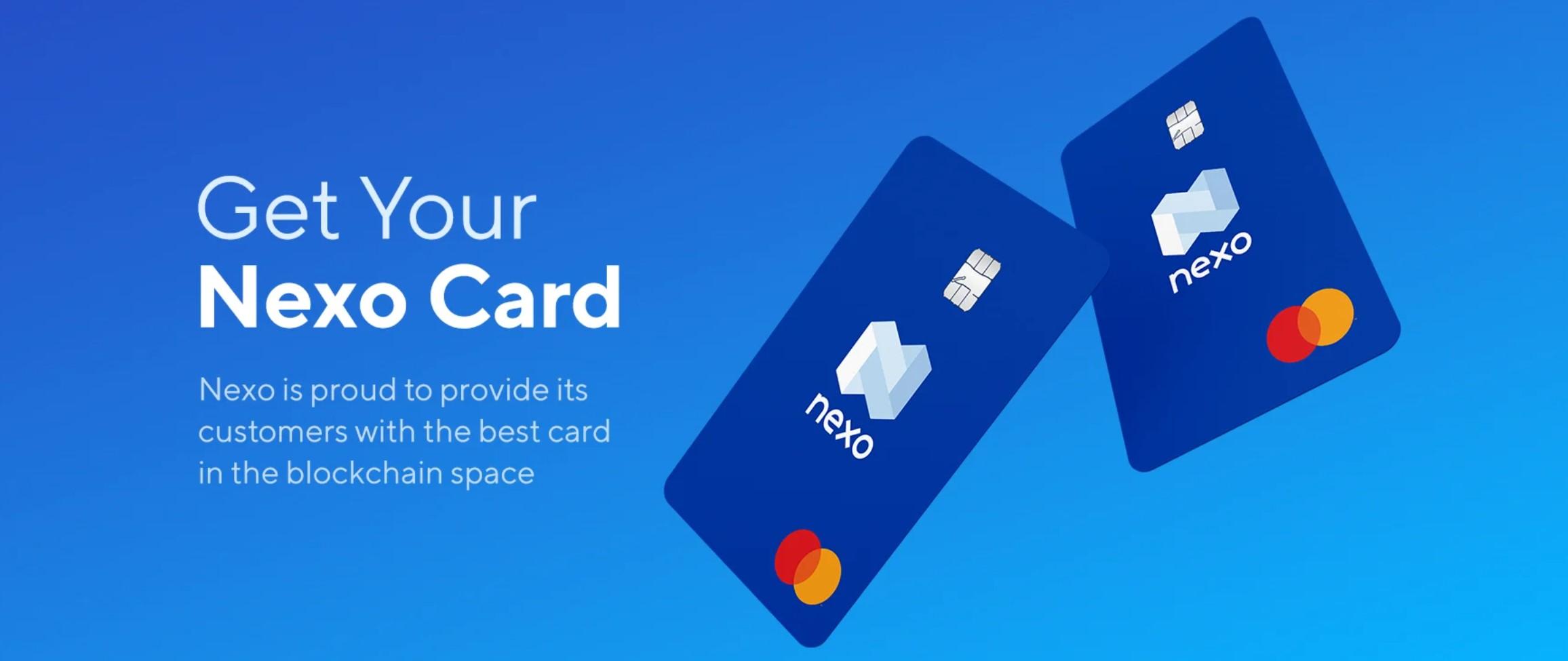
    Nexo Card  - Best for Spending Without Selling CryptoNexo Card  - Best for Spending Without Selling Crypto

    The Nexo card allows users to spend crypto without selling their assets outright. It works in two modes, Credit and Debit, allowing spending either through a credit line backed by holdings or directly from available balances in the wallet. In Credit Mode, users borrow against crypto while maintaining exposure to market movements.

    Making it more flexible than most crypto credit cards, since spending does not always require token liquidation. 

    Key Details

    Card Type: Dual-mode crypto card (Credit and Debit)Spending Model: Spend via credit line or direct crypto conversionRewards: Up to 2% cashback in crypto, depending on tierAnnual Fee: No monthly or annual feeWallet Integration: Connected to the Nexo wallet and appCredit Line: Available against held assetsMobile Payments: Supports Apple Pay and Google PayATM Access: Tier-based free ATM withdrawals availableFees: 2% charge on ATM withdrawalsRewards Payout: Paid in Bitcoin or NEXO tokensAccount Control: Managed through a single account dashboard

    Pros and Cons

    ProsCons Let users spend crypto without selling assetsAccess depends on the region’s availabilityDual Credit and Debit modes increase flexibilityComplex structure for beginnersUp to 2% cashback in crypto rewardsCredit Mode introduces borrowing riskWorks globally on the Mastercard network

    6. Wirex Card  – Best for Multi-Currency Crypto Spending
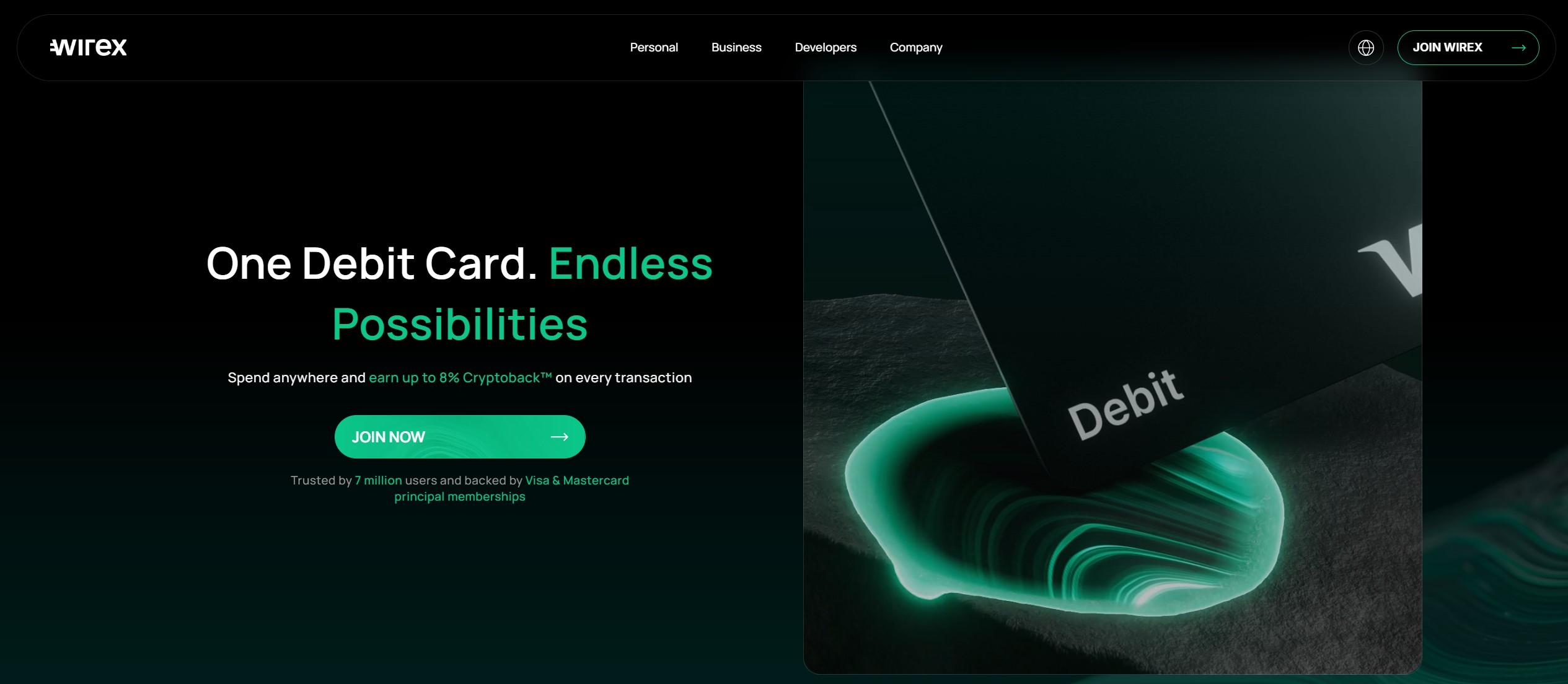
    Wirex Card  - Best for Multi-Currency Crypto SpendingWirex Card  - Best for Multi-Currency Crypto Spending

    The Wirex card is a crypto card designed for users who frequently move between fiat currencies and crypto. It allows spending directly from a crypto wallet, automatically converting assets at the point of purchase. The system supports both everyday spending and cross-currency transactions without requiring manual exchange steps.

    Key Details

    Card Type: Crypto debit cardNetwork: Visa or Mastercard, depending on regionSpending Model: Direct spend crypto or fiat conversion at checkoutRewards: Crypto rewards on select purchase categoriesAnnual Fee: No standard annual fee on the basic tierWallet Integration: Connected to Wirex walletConversion: Automatic exchange at the point of transactionMobile Payments: Supports Apple Pay and Google PayAccount: Single account for fiat and crypto balancesFees: 2% fee on ATM withdrawals Virtual Card: Available for online purchaseSpending: Designed for global everyday spending

    Pros and Cons

    ProsConsSupports both crypto and fiat currencies in one walletFees depend on region and transaction typeEasy spend crypto conversion at checkoutThe rewards structure is limited in some regionsWorks with Visa and Mastercard networksNot all crypto card features are available globallySimple account management for multiple assets

    7. Coinbase One Card  – Best for High Tier Bitcoin Rewards Tied to Platform Assets
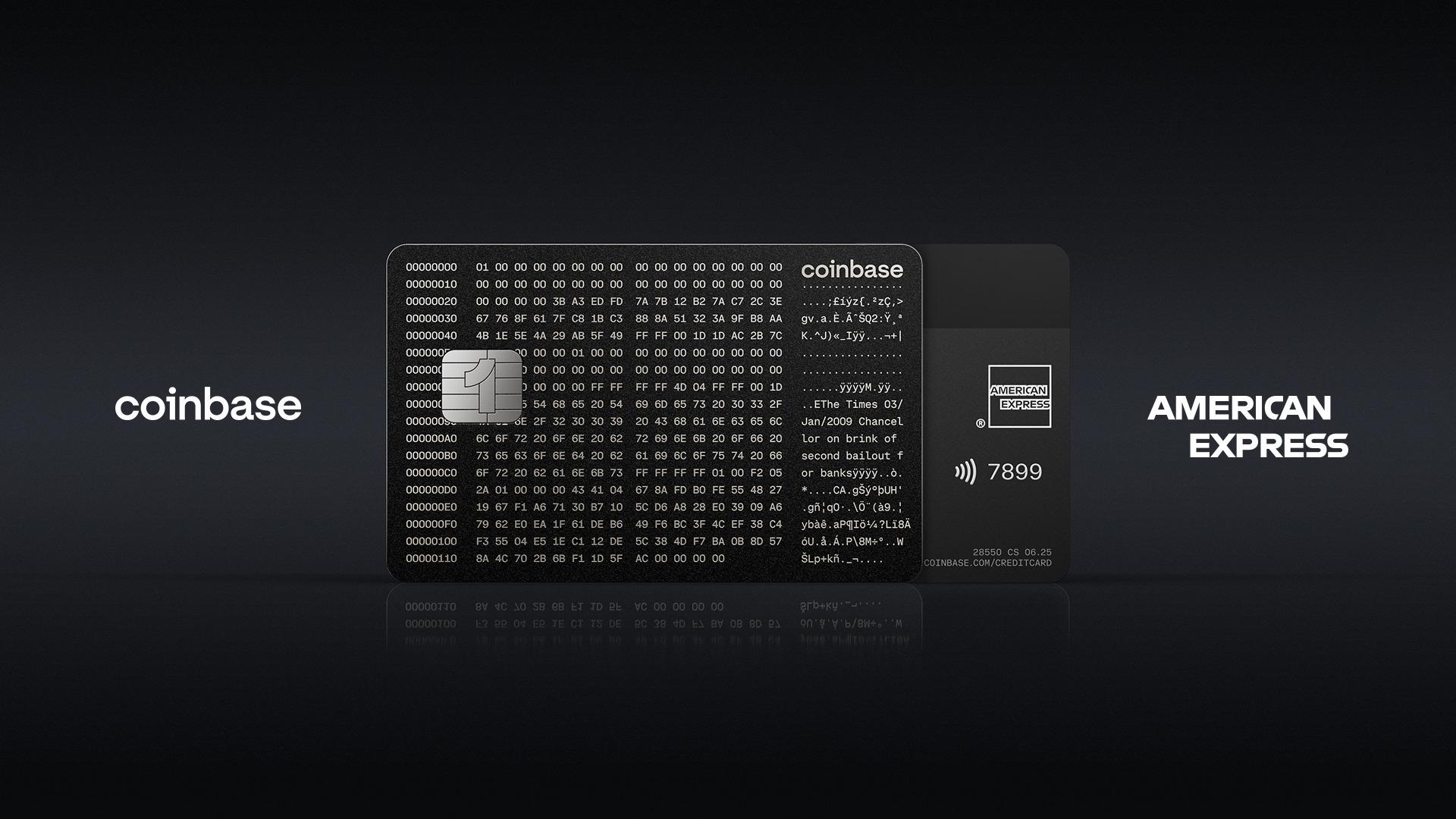
    Coinbase One Card  - Best for High Tier Bitcoin Rewards Tied to Platform AssetsCoinbase One Card  - Best for High Tier Bitcoin Rewards Tied to Platform Assets

    The Coinbase One card is primarily for users already active on the Coinbase exchange who want to earn Bitcoin rewards tied to their overall crypto holdings. It runs on a real credit line and gives up to 4% cashback in Bitcoin, with rewards increasing as more assets are held in the Coinbase account.

    The credit card has no traditional annual fee for eligible members, but access requires a paid Coinbase One subscription. Rewards are paid in Bitcoin after each eligible purchase, and the system adjusts based on spend, holdings, and tier level. 

    Key Details

    Card Type: Crypto credit cardNetwork: American Express (via Coinbase One program)Rewards: Up to 4% Bitcoin rewards based on crypto holdingsAnnual Fee: No direct annual fee, but a Coinbase One subscription is requiredCredit Line: Approved based on account profile and platform usageWallet Integration: Direct connection to the Coinbase wallet and exchangeRewards Payout: Paid in Bitcoin after an eligible transactionSpending Model: Standard credit card use for everyday purchase activityMobile Payments: Supports Apple Pay and Google PayEligibility: Limited to US Coinbase One members

    Pros and Cons

    ProsConsHigh Bitcoin rewards up to 4% based on assets heldRequires a paid Coinbase One subscriptionStrong integration with the Coinbase wallet and exchangeNot fully accessible to users outside the US usersWorks like a normal credit card with a real credit lineTier system affects real cashback consistency

    8. Bybit Card – Best for Staking-free Reward Model
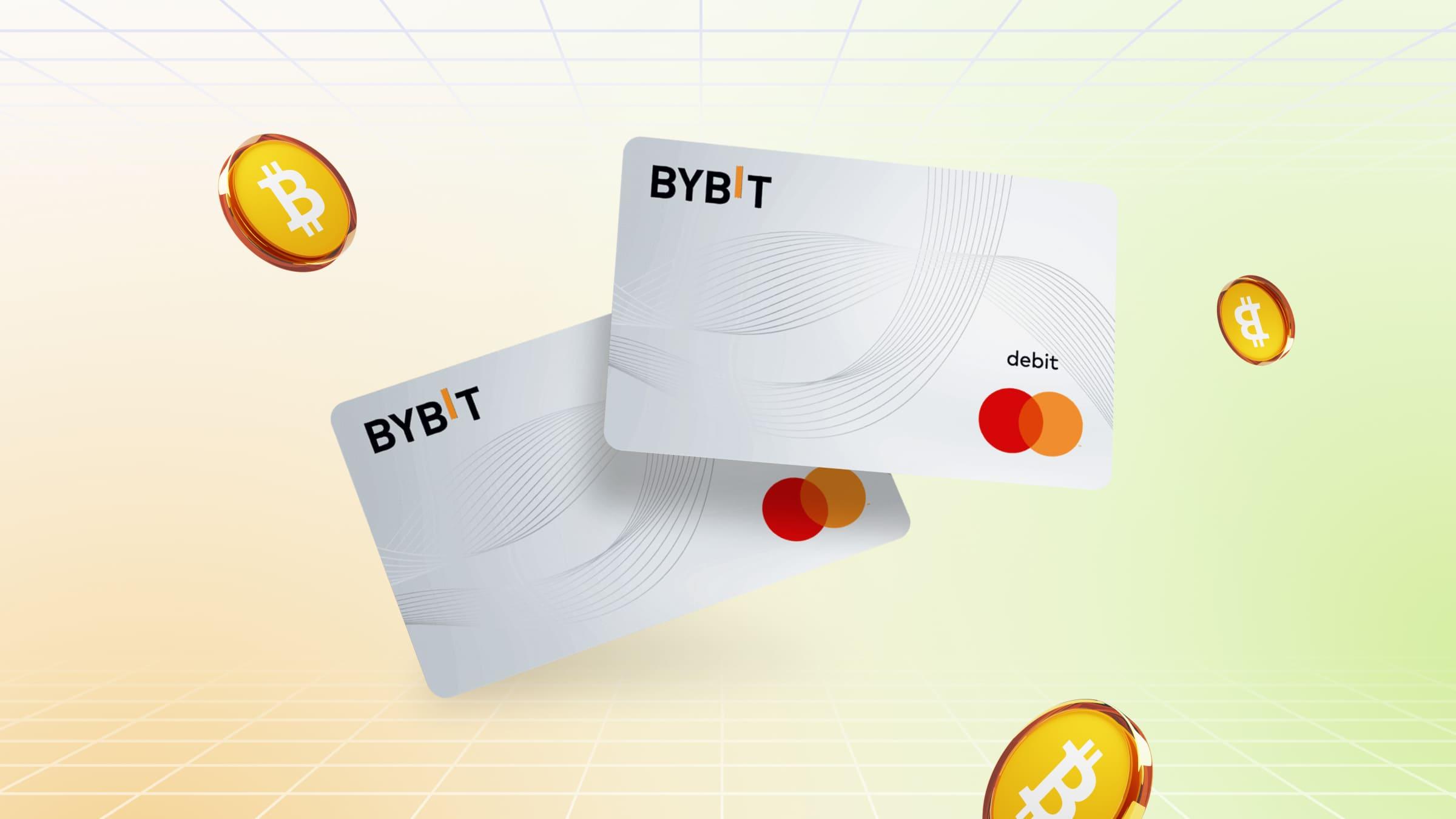
    Bybit Card - Best for Staking-free Reward ModelBybit Card - Best for Staking-free Reward Model

    The Bybit card does not require you to lock up or stake large amounts of native tokens to earn its baseline cashback and benefits.  It works as a prepaid style visa card where funds are converted at the point of each transaction, allowing users to pay with crypto or stablecoins without manual conversion steps.

    The card is most useful for users already active on the Bybit exchange, since rewards, limits, and features vary by region and spend level. Some versions offer cashback on eligible purchase categories, while others focus more on seamless payment and liquidity access 

    Key Details

    Card Type: Crypto credit cardNetwork: American Express (via Coinbase One program)Rewards: Up to 4% Bitcoin rewards based on crypto holdingsAnnual Fee: No direct annual fee, but a Coinbase One subscription is requiredCredit Line: Approved based on account profile and platform usageWallet Integration: Direct connection to the Coinbase wallet and exchangeRewards Payout: Paid in Bitcoin after an eligible transactionSpending Model: Standard credit card use for everyday purchase activityMobile Payments: Supports Apple Pay and Google PayFees: 0.9% crypto-to-fiat conversion fee, a 2% ATM withdrawal fee (after the first €100/USD monthly), and foreign exchange fees ranging from 0.5% to 2%.Eligibility: Limited to US Coinbase One members

    Pros and Cons

    Pros Cons Direct access to crypto for everyday spendCashback programs not available everywhereWorks globally on the Mastercard networkLimited transparency on tier consistencySupports flexible payment with multiple tokensUseful for active traders managing assets

    9. ether.fi Card  – Best for Non-custodial Spending With Yield Backed Crypto
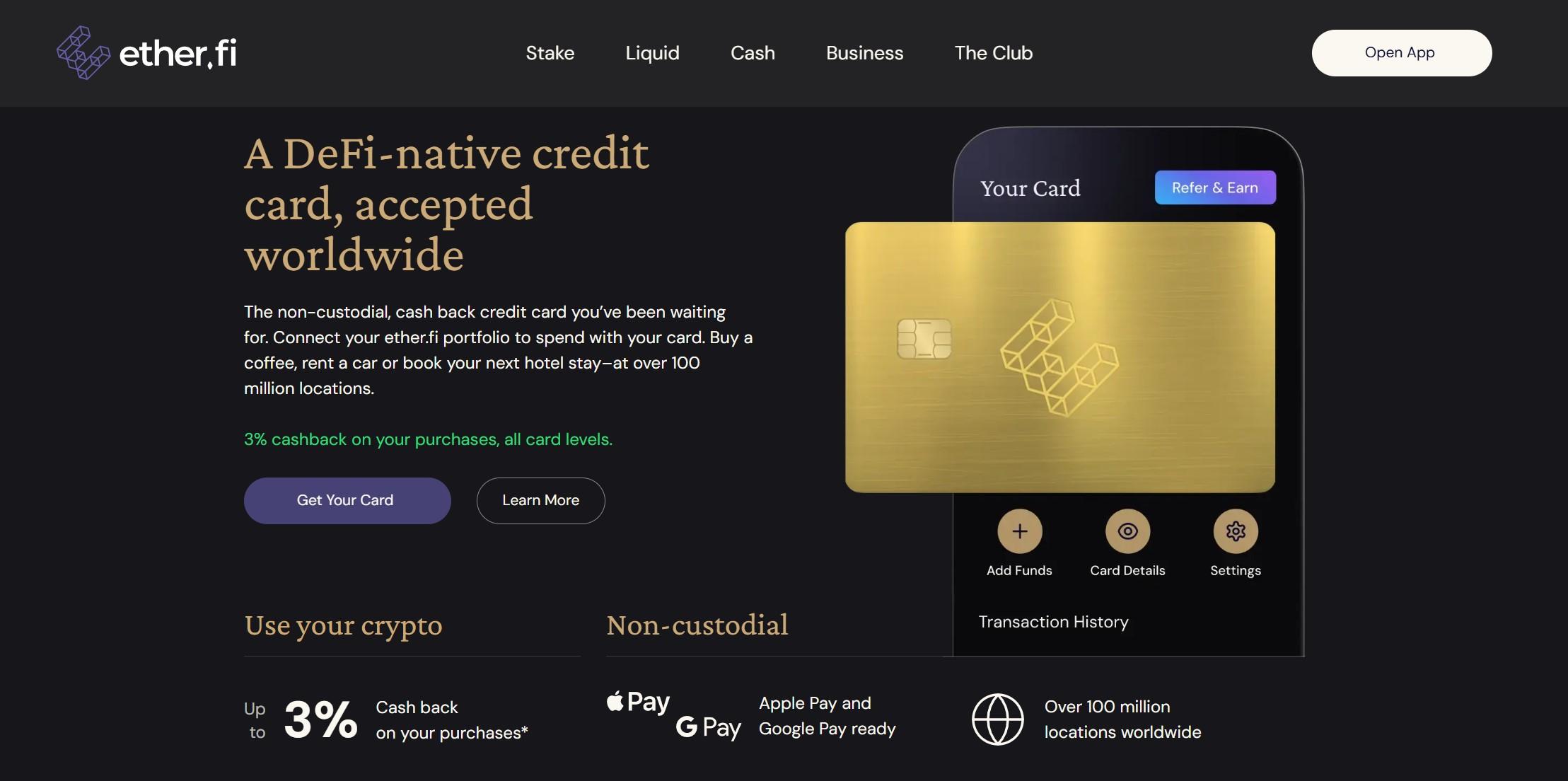
    ether.fi Card  - Best for Non-custodial Spending With Yield Backed Cryptoether.fi Card  - Best for Non-custodial Spending With Yield Backed Crypto

    The ether.fi card operates on a non-custodial model, meaning funds remain in a user-controlled wallet while still usable for real-world purchases. Spending can happen directly through borrowed value or collateral-backed credit, depending on how the account is set up.

    What sets it apart from most crypto credit cards is how it ties spend, yield, and rewards together. Users can keep earning staking or yield returns on deposited crypto assets while still using them for everyday payment. 

    Key Details

    Card Type: Crypto-backed non-custodial cardSpending Model: Spend via collateral-backed credit or direct crypto useWallet Integration: Self-custody wallet connectionRewards: Up to 3% cashback depending on tier and spend levelAnnual Fee: No standard annual fee for the basic tierYield Feature: Assets can continue earning yield while used for spendingMobile Payments: Supports Apple Pay and Google PayFees: FX and platform fees depend on usage and regionATM Access: Available in some regions with limitsApp Access: Managed through ether.fi app and dashboardSpending: Designed for global everyday spending and purchase use

    Pros and Cons

    Pros ConsNon-custodial setup gives full control of the crypto wallet and assetsRequires understanding of DeFi and collateral-based creditLets users spend crypto without selling underlying assetsSetup is more complex than typical crypto cardsEarns rewards while assets continue generating yieldCombines spend, yield, and crypto credit in one system

    10. KAST Card  –  Best for Stablecoin
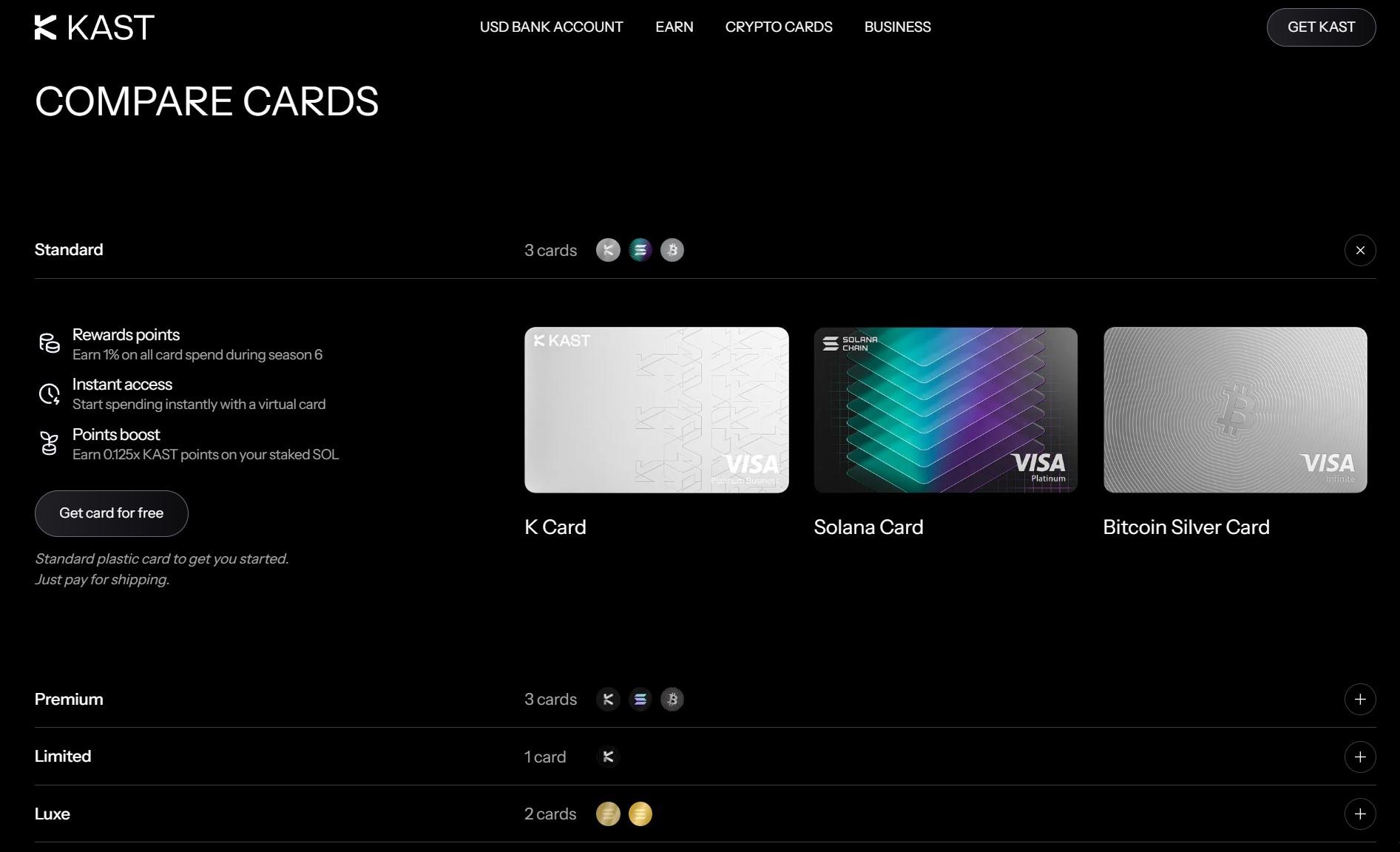
    KAST Card  -  Best for StablecoinKAST Card  -  Best for Stablecoin

    The KAST card allows users to spend crypto, stablecoins, or fiat balances directly from a linked wallet, converting assets automatically at the point of each purchase. This makes it useful for global payment activity where flexibility matters more than fixed credit structures.

    Unlike traditional crypto credit cards, the KAST system focuses more on multi-currency control and real-time exchange at checkout.  

    Key Details

    Card Type: Crypto debit style cardNetwork: Visa or Mastercard, depending on regionSpending Model: Direct spend crypto or fiat conversion at checkoutSupported Assets:  KAST supports 25+ cryptocurrencies and stablecoins Wallet Integration: Unified wallet and account systemRewards: 8%–12% for Premium cashback, 2% for Standard tier.Annual Fee: $0 for Standard  annual fee, premium $1,000, limited $5,000, and Luxe (Founders Card) is $10,000Conversion: Automatic exchange at the point of transactionMobile Payments: Supports Apple Pay and Google Pay in supported regionsFees: it offers 0% fees for top-ups, USD spending, and Apple/Google Pay. Other costs include a 0.5%–1.75% foreign exchange fee for non-USD transactions.Virtual Card: Available for instant online purchase

    Pros and Cons

    ProsConsSupports both crypto and fiat in one unified walletLimited transparency on reward consistencyEasy real-time spend crypto conversion at checkoutNot as well-known as major crypto cardsUseful for global payment and travel spendStill developing full market coverageSimple multi-currency account structureSome fees depend on FX and conversion usage

    What Is a Crypto Credit Card?

    A crypto credit card is a credit card that lets users earn crypto rewards instead of traditional points or miles when they spend. It works like a normal credit card, using a credit line to pay for purchase activity, with repayment handled through a linked account.

    Some crypto cards convert card rewards into Bitcoin, stablecoins, or other digital assets, which are sent to a wallet after each transaction or billing cycle. Others allow users to spend crypto directly by converting assets at checkout. In both cases, the goal is to link everyday spending with crypto exposure.

    How Crypto Rewards Credit Cards Work

    A crypto credit card works like a normal credit card: a credit line is used to pay for purchases, and the balance is repaid later through an account. The difference is in the rewards, where cashback or card rewards are converted into crypto such as Bitcoin, stablecoins, or other digital assets. In most cases, rewards are sent to a connected wallet after each transaction or billing cycle.

    Some crypto cards also let users earn crypto from everyday spending, with fees, limits, and reward structures varying by provider and market. Others integrate with a crypto trading platform, allowing users to manage assets, track balances, and decide how to spend or hold their crypto rewards.

    Crypto Credit Cards vs Crypto Debit Cards

    A crypto credit card allows users to pay now and repay later with a credit line, while still earning crypto rewards on purchases. A crypto debit card, on the other hand, uses existing wallet or account balances, meaning users can only spend crypto or fiat they already hold.

    With credit cards, rewards are often tied to spending behavior and credit usage, while debit crypto cards focus more on direct asset conversion at the point of transaction. Debit cards usually involve fewer fees, but they do not offer borrowing power or traditional credit flexibility.

    Who Should Use a Crypto Credit Card?

    A crypto credit card is best for users who already understand crypto, want to earn crypto on everyday spending, and prefer using a traditional credit system rather than prepaid wallet models. It suits people who regularly make purchases and want cashback in Bitcoin or other tokens instead of fiat rewards.

    It also works well for users who manage both credit and crypto assets, especially those who later use a crypto margin exchange to actively trade and grow their holdings. However, it may not suit users who want simple spending without dealing with credit, market exposure, or crypto volatility.

    Advantages and Disadvantages of Using Crypto Credit Cards

    Advantages of Using Crypto Credit Cards

    Earn crypto rewards: Earn crypto rewards like Bitcoin or other digital assets on everyday purchase activityCredit flexibility: Access a real credit line to pay and manage spending over time like a standard credit cardLow upfront cost: Many crypto cards come with no annual fee, which improves long-term valueWide acceptance: Works globally through Visa or Mastercard for regular payment needsPlatform integration: Connects directly to a crypto wallet or cryptocurrency exchange to manage assetsPassive exposure: Builds crypto holdings through normal spending without separate purchase actionsFlexible rewards structure: Adjusts rewards based on spend, tiers, or total assets held

    Disadvantages of Using Crypto Credit Cards

    Market volatility risk: Crypto rewards can lose value due to changes in the marketHidden and variable fees: Conversion, FX, and transaction fees can reduce overall cashback, especially if rewards are moved across platforms instead of using a zero fee crypto exchange.Complex reward systems: Tier based rewards structures can be difficult to trackStaking requirements: Locking assets is often required to unlock higher rewards or benefitsIndirect crypto exposure: Some credit cards convert cashback into crypto instead of offering direct crypto rewardsPlatform dependency: Full functionality often depends on a linked exchange or wallet system

    How to Choose the Right Crypto Credit Card

    1. Decide Which Crypto You Want to Earn

    Start with the crypto itself. Some crypto credit cards focus on Bitcoin rewards, while others offer multiple tokens or even stablecoins. The right card depends on whether the goal is long term exposure to specific assets or flexible rewards that can be moved or traded inside a wallet or exchange.

    2. Compare Reward Rates

    Not all rewards are equal. Some crypto cards offer high cashback rates, but only in specific categories or after meeting certain spend levels. Others provide lower but more consistent rewards across every purchase, so it comes down to how spending habits align with the card’s rewards structure.

    3. Check Annual Fees and APR

    Some cards come with no annual fee, while others tie better benefits to paid tiers or subscriptions. Interest also matters, especially for a true credit card, since carrying balances can reduce the overall value of any rewards earned.

    4. Consider Staking or Holding Requirements

    Some of the highest-earning crypto credit cards require holding or locking crypto assets to unlock better cashback and benefits. This adds another layer of risk, since the value of those assets depends on the market, and access may be limited during the lock period.

    How to Apply for a Crypto Credit Card

    Choose a card: Start by selecting a crypto credit card that fits your rewards, fees, and supported crypto assets. The right card depends on whether the goal is long-term exposure or flexibility, especially for users considering the best cryptocurrency to buy for long-term growth while earning rewards from everyday spending.Create an account: Sign up on the provider’s platform or cryptocurrency exchange and verify your accountComplete KYC verification: Submit required details to confirm identity before accessing credit featuresCheck eligibility: Approval depends on credit history, region, and in some cases, existing assets or platform activityApply for the card: Fill out the application to request a credit line and link it to your walletGet approved: Once approved, access a virtual card for immediate purchase and payment useActivate and fund: Set up the card in the app, review fees, and prepare for spendingStart using the card: Use the card for everyday transactions and begin earning crypto rewards on each purchase

    Conclusion

    The best crypto credit card comes down to how you spend, the type of rewards you want, and how comfortable you are managing crypto. Some crypto credit cards keep things simple with steady cashback, while others offer higher rewards tied to staking, tokens, or activity on a cryptocurrency exchange. The right card should fit your habits without adding unnecessary fees or complexity. In the end, a good crypto card makes it easier to build crypto assets from everyday purchase activity.

    FAQs

    What is the best crypto credit card for beginners?

    For beginners, the best crypto credit card is usually one with a simple rewards structure and no staking requirement. Cards like Gemini or Venmo work well because rewards are easy to track, there’s no need to manage complex tokens, and everything runs through a familiar credit card system. The goal at this stage is ease of use, not maximizing cashback.

    What is the best platform to buy cryptocurrency with a credit card?

    The best platform is typically a regulated cryptocurrency exchange that supports direct credit card purchases and has clear fees. Platforms like Coinbase, Gemini, and Crypto.com allow users to buy crypto using a credit card, though transaction costs are usually higher than bank transfers. Most exchanges process payments in fiat and then convert them into crypto assets behind the scenes.

    Do crypto credit cards require staking to earn rewards?

    No, not all crypto credit cards require staking. Some offer fixed rewards or cashback without locking assets, while others increase rewards based on staking or holding specific tokens. Staking means locking crypto for a period to earn additional returns, but it also reduces liquidity and exposes assets to market risk.

    Are crypto credit cards safe to use?

    Crypto credit cards are generally safe when issued by regulated providers and used like a normal credit card. Transactions still run through networks like Visa or Mastercard, and merchants receive fiat payment, not crypto directly. 

    The main risks come from fees, platform security, and the volatility of crypto rewards, not the card itself.

    What happens to my rewards if I cancel my crypto credit card?

    In most cases, earned crypto rewards remain in your linked wallet or account even after the card is closed. However, some platforms may require rewards to be redeemed or transferred before cancellation. It depends on the provider, so checking the details and the fee policy is important before closing the account.




    Source link

    98% of Enterprises Prioritize Digital Sovereignty, with More Than Half Taking Action | Web3Wire

    0
    98% of Enterprises Prioritize Digital Sovereignty, with More Than Half Taking Action | Web3Wire


    PRAGUE, April 21, 2026 (GLOBE NEWSWIRE) — (SUSECON 2026) — New research reveals while nearly all enterprises (98%) are prioritizing digital sovereignty, just over half (52%) are actively taking steps to achieve it – highlighting a growing gap between ambition and execution. SUSE, a global leader of enterprise open source solutions, today released insights from 309 IT leaders across France, Germany, India, Japan and the U.S. SUSE’s Navigating Digital Resilience report explores how organizations are redefining digital resilience in the age of AI, where pressure to innovate is accelerating faster than the foundational infrastructure required to support it.

    “Organizations are often forced to choose between accelerating AI and maintaining digital sovereignty, but it’s a false tradeoff,” said Margaret Dawson, Chief Marketing Officer, SUSE. “Sovereign AI makes it possible to achieve both, embedding control, compliance and innovation into the same foundation.”

    The Sovereignty Paradox: Urgency Outpaces ActionWhile digital sovereignty is widely recognized as essential to AI, many organizations remain early in their journey. The race to adopt AI reveals a clear tension between priority and readiness.

    Gap between ambition and execution: Nearly all respondents (98%) say digital sovereignty is a priority, yet only 52% are taking action. By country:62% of respondents in India say digital sovereignty is a genuine strategic priority they are actively investing, followed 57% in both Germany and Japan, 52% in the U.S. and 39% in FranceFactor in determining vendors: 45% included sovereignty in recent RFPs and 42% ultimately selected vendors based on it.External pressure as the catalyst: 41% say they only act on sovereignty when required by customers or regulation, suggesting external pressure remains the primary catalyst.

    AI is Driving Resilience and RiskAI is emerging as both the catalyst for digital resilience and a source of increased complexity, forcing organizations to rethink control over data, models and infrastructure.

    64% of IT leaders say AI transparency – control over model training and AI provenance – will be the top driver of digital resilience in the next five years.Even with an unexpected 20% budget increase, organizations overwhelmingly prioritize AI over sovereignty – signaling that pressure to adopt AI may be outpacing efforts to manage the risks it introduces.

    Defining Digital Resilience: Control as the Common ThreadWhile definitions of digital resilience vary, organizations are converging around a core principle: control. Resilience is no longer just about protection, but about maintaining control in increasingly complex, AI-driven environments.

    Top priorities for achieving resilience include cybersecurity and threat detection (63%) and multi-cloud or hybrid diversification (52%).Continuous monitoring (44%) and backup and recovery (45%) also rank as critical components of resilience strategies.

    Regional Divide Highlights Maturity GapAdoption and attitudes toward digital resilience vary by region, with some markets moving faster from strategy to execution.

    In the U.S., 61% of respondents are optimistic about digital resilience and 41% already have a formal digital sovereignty strategy in place.Meanwhile, more mature regulatory environments like Germany and Japan show different prioritization patterns, reflecting varying stages of adoption.

    Hyperscaler Tension: Scale vs. SovereigntyEnterprises continue to rely heavily on hyperscalers, even as sovereignty concerns grow.

    65% of respondents say hyperscalers are relevant for supporting sovereign workloads.

    This creates a balancing act between the scale and convenience of global providers and the need for jurisdictional control, driving demand for open, interoperable solutions and regional ecosystems.

    SUSE addresses these challenges directly through its open source infrastructure portfolio — including SUSE Linux, SUSE Rancher Prime, and SUSE AI — designed to give enterprises full control over their data, models, and infrastructure without hyperscaler dependency.

    To read the full report, please visit: https://suse.com/navigating-digital-resilience-2026.

    MethodologyThe research was conducted among 309 IT leaders across five countries (France, Germany, India, Japan and the U.S.), spanning three regions and 13 industries. Respondents were surveyed independently and were not aware SUSE sponsored the research.

    About SUSESUSE is a global leader of enterprise open source software. By transforming community innovations into secure, sovereign and AI-ready solutions, SUSE empowers customers to escape vendor lock-in and regain control of their IT destiny. Through industry-leading Linux, Kubernetes, Edge and AI infrastructure solutions, SUSE delivers the flexibility to innovate everywhere—from the data center to multi-cloud and out to the edge. Only SUSE also manages many Linux and Kubernetes distributions. At SUSE, Choice Happens because we prioritize community, interoperability and relentless innovation. Discover how we power mission-critical resilience at http://www.suse.com.

    Media Contact:Rachel Romoffrachel.romoff@suse.com

    About Web3Wire Web3Wire – Information, news, press releases, events and research articles about Web3, Metaverse, Blockchain, Artificial Intelligence, Cryptocurrencies, Decentralized Finance, NFTs and Gaming. Visit Web3Wire for Web3 News and Events, Block3Wire for the latest Blockchain news and Meta3Wire to stay updated with Metaverse News.


    Source link

    Best Websites to Watch Movies Online: Your Ultimate Guide | MarkMeets Media

      0
      Best Websites to Watch Movies Online: Your Ultimate Guide | MarkMeets Media


      The rise of online streaming services has significantly changed how audiences enjoy films and television shows. With countless platforms available today, selecting the ideal sites to watch the latest movies and TV series can feel overwhelming. To streamline your experience, we’ve compiled a list of some of the best websites to watch movies online, featuring a mix of popular choices and hidden gems that cater to all tastes. By the end of this guide, you’ll be well-equipped to navigate the exciting world of online streaming.

      Why Streaming Movies Online is So Popular

      Streaming movies online has become a prevalent choice among viewers for various reasons. The convenience of accessing a vast library from any internet-enabled device enables film and TV lovers to watch whenever and wherever they please. No longer limited by cable subscriptions, audiences now have the flexibility to explore various genres without commitment.

      Moreover, the accessibility of high-definition content, including the latest blockbusters and beloved classics, enhances the overall viewing experience. This shift has also fueled a surge in content creation, giving rise to diverse and innovative films and shows that cater to a wider audience.

      Best Websites to Watch Movies and TV Shows

      1. 123movies: A Streaming Powerhouse

      123movies is iconic in the online streaming landscape, praised for its extensive catalog of movies and television series. The platform stands out due to its user-friendly interface, which simplifies the search for various films and shows. Whether you’re looking for the latest releases or timeless classics, 123movies has something for everyone.

      Features of 123movies

      Broad Selection: The platform’s library includes titles from different genres, release years, and countries, ensuring a diverse viewing experience.
      Regular Updates: With consistent content additions, 123movies keeps its users informed about new releases and trending titles.
      Multiple Streaming Options: Each film and TV show offers several streaming links, ensuring minimal downtime for viewers aiming for a seamless experience.

      2. SolarMovie: A Versatile Choice for Film Enthusiasts

      When searching for the best websites to watch movies online, SolarMovie is a top contender. This platform shines through its organized layout and vast array of movies and TV shows, making it easy to find exactly what you want.

      Features of SolarMovie

      Intuitive Interface: SolarMovie’s clean and straightforward design facilitates easy navigation through genres, release years, and categories.

      HD Content: Users can access high-definition content, enhancing their viewing satisfaction.
      Regular Content Updates: With a commitment to providing the latest films and series, viewers can expect frequent new releases on SolarMovie.

      3. Putlocker: A Trusted Streaming Resource

      Putlocker has carved out a reputation for itself as a reliable source for watching movies and television shows online. Many users appreciate the extensive content library and the site’s straightforward functionality.

      Features of Putlocker

      Vast Library: The platform boasts a rich catalog of films and TV shows, appealing to diverse audience preferences.
      Multiple Links Available: For each title, Putlocker presents several streaming options, ensuring viewers find a working link without hassle.
      Robust Search Functionality: This feature helps users find specific titles quickly and efficiently.

      4. YesMovies: A Comprehensive Streaming Choice

      YesMovies is another excellent addition to our list of the best websites to watch movies online. This platform prides itself on providing a wealth of options that include both popular hits and hidden treasures.

      Features of YesMovies

      Wide Selection: The collection encompasses a range of movies and TV shows, ensuring something for every viewer.
      User-Friendly Layout: Navigating YesMovies is a breeze due to its well-organized layout and effective search features.
      Quality Streaming: YesMovies prioritizes delivering high-quality streams for an enjoyable viewing experience.

      5. Vumoo: A Reliable Option

      If you’re looking for a trustworthy site to watch movies online, Vumoo is worth considering. This platform features a straightforward design while still delivering a solid selection of films and shows.

      Features of Vumoo

      Straightforward Design: Vumoo’s minimalistic approach allows users to find their desired content without the clutter often present on other sites.
      Quality Streams: Vumoo focuses on offering high-quality streaming with minimal interruptions, ensuring smooth viewing.
      Diverse Content: The site’s library spans various genres, appealing to a broad range of tastes.

      6. WatchFree: Your Gateway to Movies and TV Shows

      WatchFree is another excellent website to watch the latest movies and TV shows online. It’s designed to make the search process simple and efficient, giving users access to a plethora of titles.

      Features of WatchFree

      Simple Interface: The user-friendly design makes locating and watching content a hassle-free experience.
      High-Definition Streaming: Enjoy the latest releases in crisp high-definition quality.
      Regularly Updated Library: WatchFree continuously adds new films and shows so users can stay on top of the latest entertainment offerings.

      Tips for Using Online Streaming Platforms

      To maximize your experience on the best websites to watch movies online, consider implementing these tips:

      Check for Ad Blockers

      Many streaming sites rely on advertisements for revenue. Having an ad blocker can enhance your viewing experience by reducing pop-ups and distractions. However, consider supporting sites that provide quality content for free.

      Create an Account

      Some platforms allow users to create accounts and customize their profiles. Signing up can provide benefits such as saving favorites, receiving recommendations, and accessing exclusive content.

      Pay Attention to Video Quality

      Most streaming websites offer varying video quality options. Choose the highest available quality for the best viewing experience, especially for visually stunning films and shows.

      Explore Genres

      Embrace the opportunity to venture into different genres. Exploring lesser-known titles can lead to delightful surprises and enhance your overall movie-watching journey.

      Engage with User Reviews and Ratings

      Many sites feature user reviews and ratings. Take advantage of these insights to help inform your viewing choices. Learning from others’ experiences can guide you to hidden gems and prevent disappointment.

      Conclusion

      With the abundance of websites available to watch the latest movies and TV shows, finding the right platform can significantly elevate your enjoyment. Sites like 123movies, SolarMovie, and Putlocker provide vast libraries of high-quality content, ensuring you have access to both brand-new releases and cherished classics. As you explore these options and seek out more websites to watch movies online, remember the value of diversifying your selections. Expand your horizons, delve into different genres, and uncover the best that online streaming has to offer.

      Whether you’re binge-watching your favorite series or catching up on the latest blockbuster, the world of online streaming is rich with choices. So sit back, browse through these platforms, and enjoy the exciting content waiting just a click away.

      Author Profile

      Web Desk


      Source link

      Popular Posts

      My Favorites